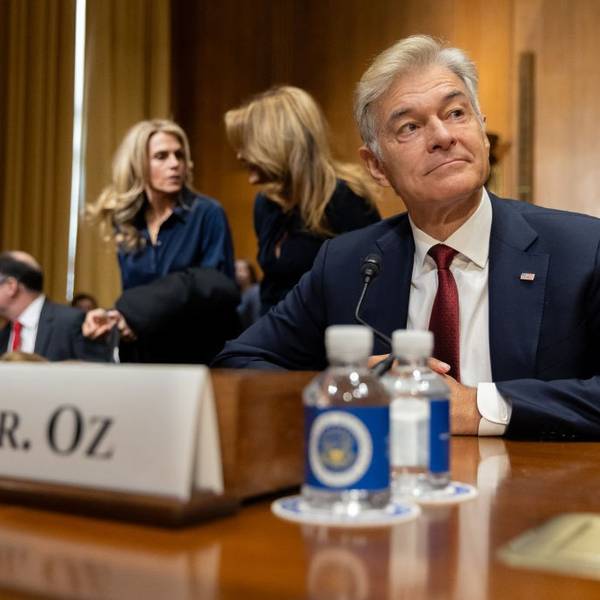
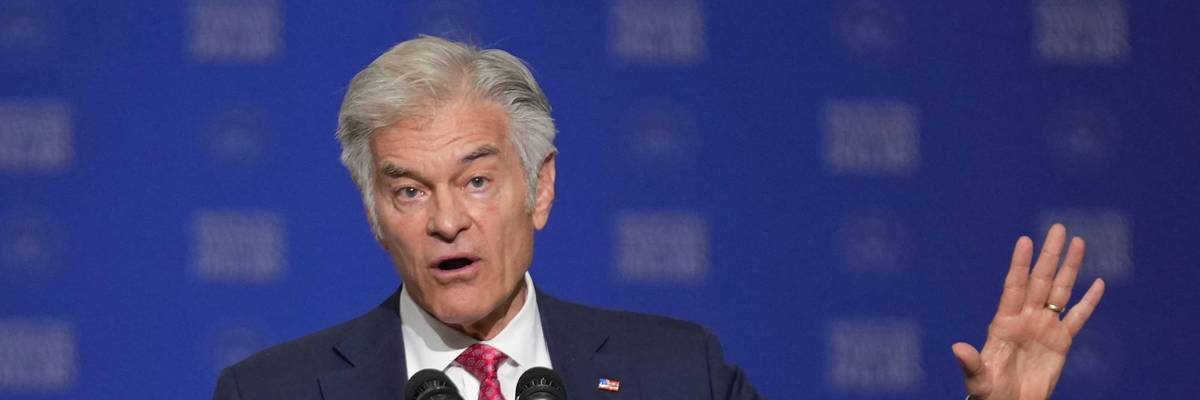
US Centers for Medicare and Medicaid Services Administrator Mehmet Oz speaks at the Wisconsin Air National Guard facility at Milwaukee Mitchell International Airport on July 8, 2026, in Milwaukee, Wisconsin.
'Countless Seniors Will Soon Pay More': Trump Ends Subsidy for Medicare Prescription Drug Plans
"Donald Trump and Republicans are making healthcare more expensive for seniors at every turn."
The Trump administration on Tuesday said it would end a subsidy program that helped lower premiums for seniors enrolled in Medicare Part D prescription drug plans, a move that's expected to increase monthly costs for millions of Americans amid a broader affordability crisis.
The Centers for Medicare and Medicaid Services (CMS), headed by Mehmet Oz, announced "the conclusion of the Part D Premium Stabilization Demonstration" for the coming year, just months before the start of Medicare open enrollment. Oz characterized the subsidy program as a "bailout" for insurance companies and said that "premiums will go up by less than $10 for most Medicare recipients."
But The Wall Street Journal, which reported the administration's move ahead of the public announcement, noted that nearly half of Medicare Part D plan enrollees would likely see increases "largely in the $11 to $20 range a month." The subsidy program, established in the wake of the Biden-era Inflation Reduction Act, cut the average Part D premium by more than 25% this year.
Leslie Dach, chair of the advocacy group Protect Our Care, said in a statement that President Donald Trump and his Republican allies "continue to force seniors to pay more while handing tax breaks to billionaires and big corporations."
"Trump and Republicans are making healthcare more expensive for seniors at every turn," said Dach. "In the middle of a GOP-induced affordability crisis, they are eliminating a key program that helps seniors afford their medications, meaning countless seniors will soon pay more just to get the lifesaving prescriptions they need. For older Americans living on fixed incomes, even an extra ten or twenty dollars a month can mean choosing between filling their prescription, paying the electric bill, or buying groceries. Seniors deserve lower prescription drug costs and affordable healthcare."
Around 25 million Americans are enrolled in standalone prescription drug plans through Medicare Part D, which is offered by private, Medicare-approved companies. Another 31 million Americans are enrolled in Medicare Part D via privatized Medicare Advantage plans.
Juliette Cubanski, vice president and director of the Program on Medicare Policy at the nonprofit research group KFF, wrote that standalone Medicare Part D prescription drug plans "may soon seem even less affordable" following the Trump administration's change, "leading to further enrollment growth in Medicare Advantage." (Prior to becoming head of CMS, Oz was a prominent booster of Medicare Advantage.)
Each year, millions of people across the US are forced to forgo or ration prescription medications due to high costs.
Kendall Witmer, rapid response director at the Democratic National Committee, said the Trump administration's decision to terminate the Medicare Part D subsidy program shows that the president and his party "are doing everything they can to make healthcare unaffordable for Americans, especially for seniors."
"Trump and Republicans’ massive healthcare cuts have pushed working families to the brink as they grapple with skyrocketing insurance premiums, even bigger medical bills, and rising prescription drug costs," said Witmer. "Americans are taking on record amounts of medical debt just to make ends meet—all while Trump and his family get even richer and his wealthy donors rake in tax cuts."
We are at a crossroads
This country and this world are at a monumental crossroads. In a few short weeks, US voters will have an opportunity to beat back the forces of fascism and confront the billionaires who are rigging the economy, our media system, and our democracy, making it increasingly impossible for ordinary people to get by. We’re not just talking about the election. We’re talking about what must be done once these fascist elements are vanquished from power. We need a bolder set of solutions than what either major party has so far been willing to offer and a working-class movement ready to fight like hell for it. Trump didn't emerge from nowhere. The conditions that fueled MAGA authoritarianism were created by decades of radical neoliberal economic policies and a corrupt political system dominated by corporate interests. They slashed taxes on the super-rich, promising that the benefits would trickle down. They said giveaways to the corporate titans would make life more affordable for the rest of us. It was all bullshit. And when a bitter, betrayed populace searches for someone to blame, right-wing demagogues have little trouble finding scapegoats. People know when they're being lied to, but you won't hear any of this from the corporate media. Only independent journalism—powered and funded by people who believe in building a better world—can deliver truly trustworthy daily news. Our Fall Campaign is underway, and we need your help. To power our newsroom through the rest of the year, we need to raise $125,000 by midnight on October 31. So if you share our vision, please contribute whatever you can to sustain our work. |
The Trump administration on Tuesday said it would end a subsidy program that helped lower premiums for seniors enrolled in Medicare Part D prescription drug plans, a move that's expected to increase monthly costs for millions of Americans amid a broader affordability crisis.
The Centers for Medicare and Medicaid Services (CMS), headed by Mehmet Oz, announced "the conclusion of the Part D Premium Stabilization Demonstration" for the coming year, just months before the start of Medicare open enrollment. Oz characterized the subsidy program as a "bailout" for insurance companies and said that "premiums will go up by less than $10 for most Medicare recipients."
But The Wall Street Journal, which reported the administration's move ahead of the public announcement, noted that nearly half of Medicare Part D plan enrollees would likely see increases "largely in the $11 to $20 range a month." The subsidy program, established in the wake of the Biden-era Inflation Reduction Act, cut the average Part D premium by more than 25% this year.
Leslie Dach, chair of the advocacy group Protect Our Care, said in a statement that President Donald Trump and his Republican allies "continue to force seniors to pay more while handing tax breaks to billionaires and big corporations."
"Trump and Republicans are making healthcare more expensive for seniors at every turn," said Dach. "In the middle of a GOP-induced affordability crisis, they are eliminating a key program that helps seniors afford their medications, meaning countless seniors will soon pay more just to get the lifesaving prescriptions they need. For older Americans living on fixed incomes, even an extra ten or twenty dollars a month can mean choosing between filling their prescription, paying the electric bill, or buying groceries. Seniors deserve lower prescription drug costs and affordable healthcare."
Around 25 million Americans are enrolled in standalone prescription drug plans through Medicare Part D, which is offered by private, Medicare-approved companies. Another 31 million Americans are enrolled in Medicare Part D via privatized Medicare Advantage plans.
Juliette Cubanski, vice president and director of the Program on Medicare Policy at the nonprofit research group KFF, wrote that standalone Medicare Part D prescription drug plans "may soon seem even less affordable" following the Trump administration's change, "leading to further enrollment growth in Medicare Advantage." (Prior to becoming head of CMS, Oz was a prominent booster of Medicare Advantage.)
Each year, millions of people across the US are forced to forgo or ration prescription medications due to high costs.
Kendall Witmer, rapid response director at the Democratic National Committee, said the Trump administration's decision to terminate the Medicare Part D subsidy program shows that the president and his party "are doing everything they can to make healthcare unaffordable for Americans, especially for seniors."
"Trump and Republicans’ massive healthcare cuts have pushed working families to the brink as they grapple with skyrocketing insurance premiums, even bigger medical bills, and rising prescription drug costs," said Witmer. "Americans are taking on record amounts of medical debt just to make ends meet—all while Trump and his family get even richer and his wealthy donors rake in tax cuts."
The Trump administration on Tuesday said it would end a subsidy program that helped lower premiums for seniors enrolled in Medicare Part D prescription drug plans, a move that's expected to increase monthly costs for millions of Americans amid a broader affordability crisis.
The Centers for Medicare and Medicaid Services (CMS), headed by Mehmet Oz, announced "the conclusion of the Part D Premium Stabilization Demonstration" for the coming year, just months before the start of Medicare open enrollment. Oz characterized the subsidy program as a "bailout" for insurance companies and said that "premiums will go up by less than $10 for most Medicare recipients."
But The Wall Street Journal, which reported the administration's move ahead of the public announcement, noted that nearly half of Medicare Part D plan enrollees would likely see increases "largely in the $11 to $20 range a month." The subsidy program, established in the wake of the Biden-era Inflation Reduction Act, cut the average Part D premium by more than 25% this year.
Leslie Dach, chair of the advocacy group Protect Our Care, said in a statement that President Donald Trump and his Republican allies "continue to force seniors to pay more while handing tax breaks to billionaires and big corporations."
"Trump and Republicans are making healthcare more expensive for seniors at every turn," said Dach. "In the middle of a GOP-induced affordability crisis, they are eliminating a key program that helps seniors afford their medications, meaning countless seniors will soon pay more just to get the lifesaving prescriptions they need. For older Americans living on fixed incomes, even an extra ten or twenty dollars a month can mean choosing between filling their prescription, paying the electric bill, or buying groceries. Seniors deserve lower prescription drug costs and affordable healthcare."
Around 25 million Americans are enrolled in standalone prescription drug plans through Medicare Part D, which is offered by private, Medicare-approved companies. Another 31 million Americans are enrolled in Medicare Part D via privatized Medicare Advantage plans.
Juliette Cubanski, vice president and director of the Program on Medicare Policy at the nonprofit research group KFF, wrote that standalone Medicare Part D prescription drug plans "may soon seem even less affordable" following the Trump administration's change, "leading to further enrollment growth in Medicare Advantage." (Prior to becoming head of CMS, Oz was a prominent booster of Medicare Advantage.)
Each year, millions of people across the US are forced to forgo or ration prescription medications due to high costs.
Kendall Witmer, rapid response director at the Democratic National Committee, said the Trump administration's decision to terminate the Medicare Part D subsidy program shows that the president and his party "are doing everything they can to make healthcare unaffordable for Americans, especially for seniors."
"Trump and Republicans’ massive healthcare cuts have pushed working families to the brink as they grapple with skyrocketing insurance premiums, even bigger medical bills, and rising prescription drug costs," said Witmer. "Americans are taking on record amounts of medical debt just to make ends meet—all while Trump and his family get even richer and his wealthy donors rake in tax cuts."