SUBSCRIBE TO OUR FREE NEWSLETTER
Daily news & progressive opinion—funded by the people, not the corporations—delivered straight to your inbox.
5
#000000
#FFFFFF
To donate by check, phone, or other method, see our More Ways to Give page.
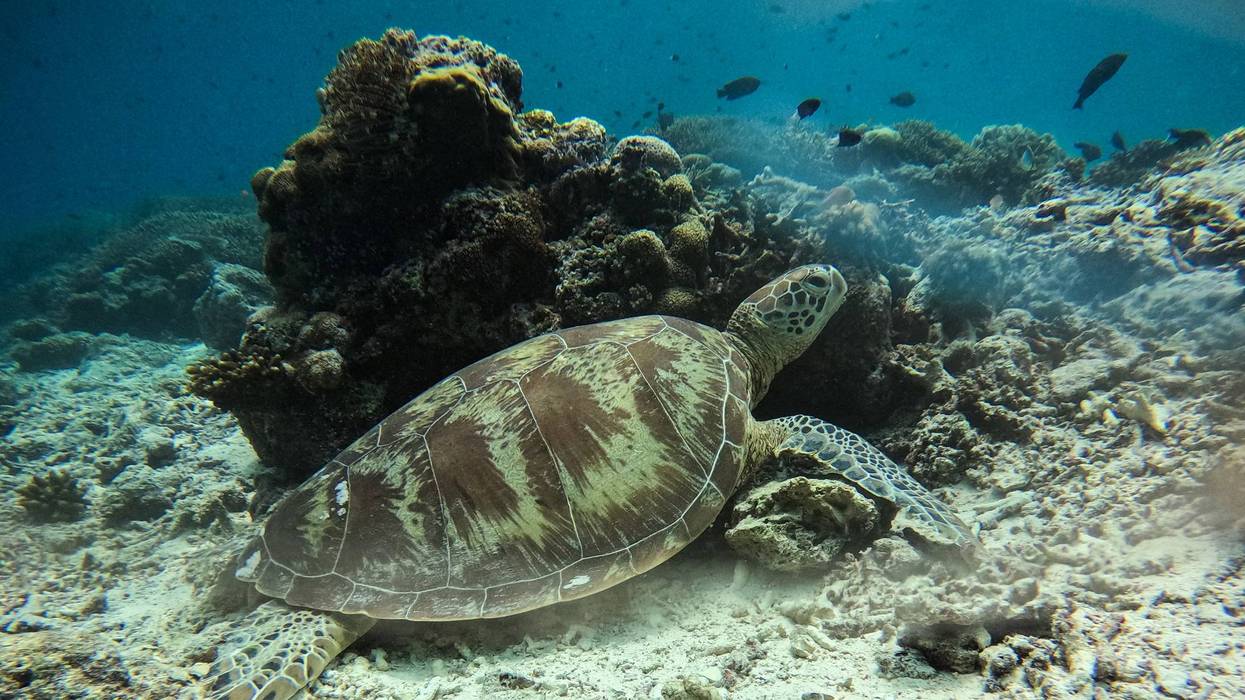
The study, published in the journal Nature, found that as of 2020, about 44% of coral species were threatened, compared with about one-third in 2008.
David Obura, a marine biologist and lead author of the study, said the new assessment "provides the most comprehensive evaluation to date of global extinction risk among reef-building corals, and a stark warning of the accelerating increase in global threats to coral reefs."
But he said it also "highlights the challenges we face in addressing major data and knowledge gaps on the status of species at global scales, at the same time as having to take urgent decisions to reduce the drivers of global declines in critical species and ecosystems.”
The researchers stressed that the data they analyzed understates the danger. The assessment does not take into account the damage from the devastating bleaching event that began in 2023 and lasted until mid-2025. According to the National Oceanic and Atmospheric Administration (NOAA), it was the largest such event ever recorded, exposing about 84% of the world's coral reef area to bleaching-level heat stress and causing widespread coral deaths.
It also doesn't take into account what meteorologists have projected could be the strongest El Niño ever, which could break ocean temperature records in the coming months, likely leading to another massive die-off of corals.
"It is entirely possible that reassessing the status of corals just after this coming El Niño may show them to have crossed the 50% mark of the proportion of species at elevated risk of extinction," Obura told AFP.
He noted that a previous "super" El Niño, in 1997-98, also caused tremendous damage to reefs.
"That this coming event is worse than that, after three intervening global bleaching events, is a terrifying reality," he said.
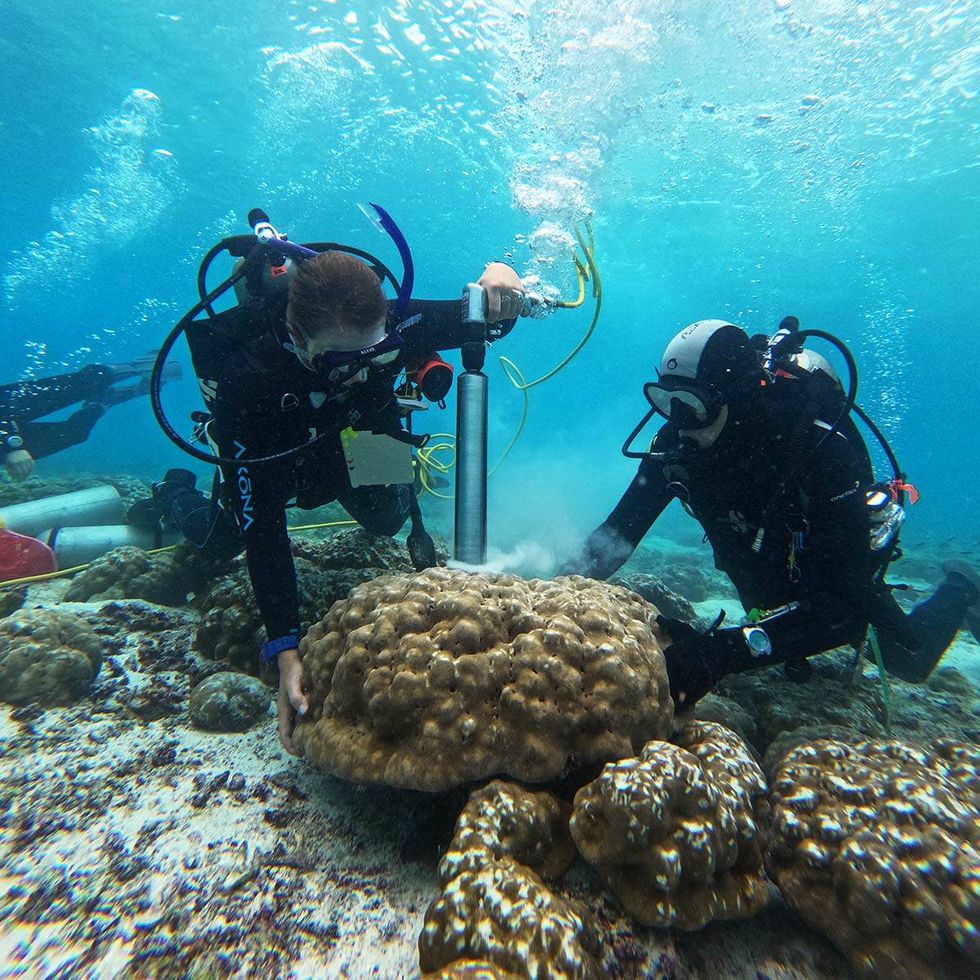 Researchers extract a fossil coral core sample from a massive coral colony in the Galápagos Islands to reconstruct historical climate and El Niño cycles as part of a study published in Science on August 27, 2026. (Photo by Julia Cole/Science)
In the new assessment, researchers found that human-caused climate change is the primary threat to reef-building coral, determining the fate of about 90% of the species at greatest risk.
They emphasized that coral reef health is more complex than simply "survival" versus "disappearance," and that every reduction in global greenhouse gas emissions matters.
“Coral reefs can feel a world away..." said Françoise Cabada-Blanco, a marine ecologist at the University of Portsmouth and co-author of the study. "But they cover a tiny fraction of the ocean floor, while supporting an enormous share of marine life and the food, coastal protection and livelihoods of millions of people."
"What happens to them affects all of us," she said. "The message from this assessment is that every tenth of a degree of warming we avoid gives corals a better chance—so action now really does count.”
A report published last year concluded that the globe had already passed the 1.2°C warming threshold for widespread coral reef dieback and found that unless global temperatures drop substantially, reefs could largely disappear.
“The crisis facing corals is deadly serious,” said Miyoko Sakashita, oceans director at the Center for Biological Diversity. “If we don’t take swift action to curb climate pollution, we could lose half of them forever.”
“We’ve already seen a lot of disruptions to sea life from the much warmer waters El Niño has brought this year, and I’m really worried about what that will do to threatened coral species," she added. "Coral reefs are the backbone of the ocean, and we can’t have a healthy marine ecosystem without them.”


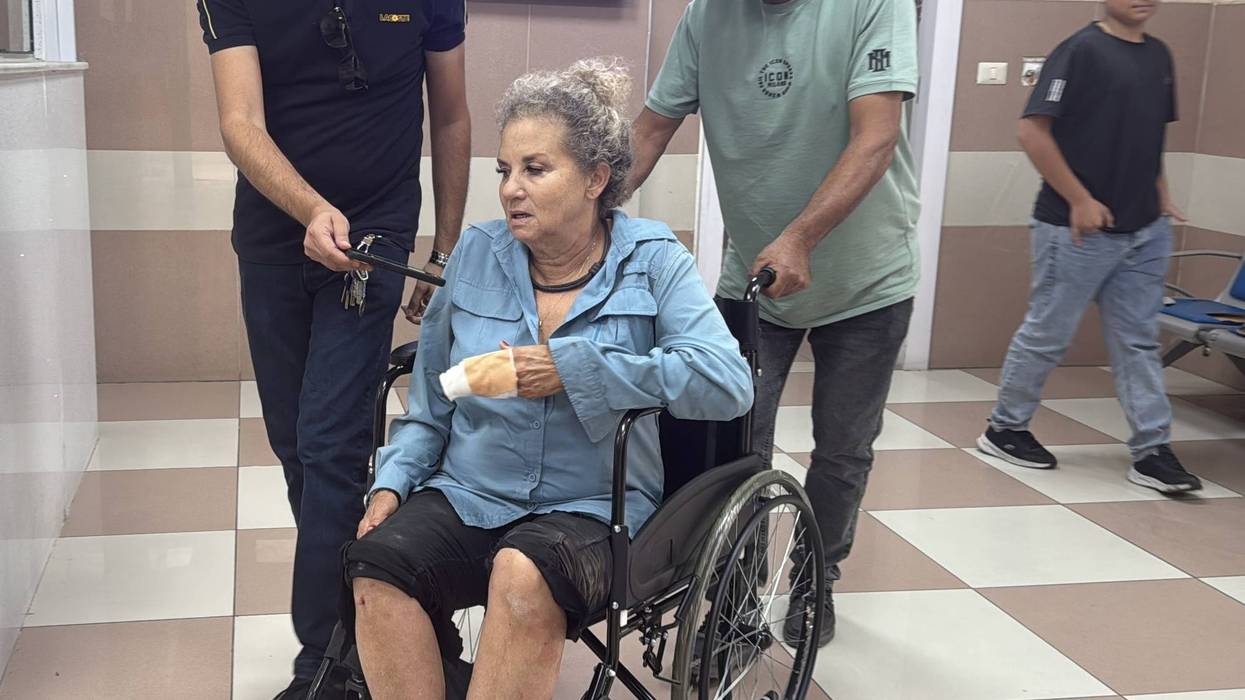
Gunfire could be heard, and at least two Palestinian men were reportedly wounded in the attack. Four more were reportedly hurt in separate attacks nearby.
Documenting the attack was 63-year-old Heidi Levine, an award-winning American photojournalist with the Post who has more than four decades of experience covering wars around the world.
Amid the rampage, Levine—clad in a helmet and a vest with a bright blue "PRESS" marker—was knocked to the dirt by a group of masked settlers, according to video posted by the American journalist Jasper Nathaniel, who was on the scene.
Another video shared by Israeli activist and journalist Andrey Khrzhanovskiy shows one of the settlers repeatedly beating Levine with a long stick while she lies on the ground defenseless. Levine later said she was kicked approximately 50 times and that the attackers took all of her recording equipment and other electronic devices.
Palestinian men reportedly threw stones to ward off the attackers, allowing other journalists to reach Levine.
A video shows Nathaniel, Khrzhanovskiy, and others rushing to a bloodied Levine and helping her to her feet. "They took everything," she said. "They took all my stuff." More Israeli settlers hurled rocks at them as they fled the scene.
Levine was taken to a hospital in Ramallah after Palestinian colleagues helped her get an ambulance. From her hospital bed, she spoke about the attack.
"My son Michael has always told me that his biggest fear would be that his mother would be killed by the settlers," Levine said, noting that she'd covered the Israel-Palestine conflict for more than three decades and also been attacked 15 years ago.
"I was attacked, pushed to the ground," she said. "Luckily I had my flak jacket and helmet; otherwise I probably wouldn’t even be here, because they just kept kicking me and kicking me."
Levine, who is Jewish by birth, described the attackers as "Jewish terrorists" who "are giving everyone in the country a horrible reputation."
"I don't know how a parent could raise such monsters," she said.
"While we are relieved that Heidi has received medical care and is safe," said Washington Post executive editor Matt Murray in a statement Friday morning, "we are outraged by this unwarranted attack on a journalist doing her job and urge a thorough investigation and follow-through from authorities.”
Levine, however, said she was confident that her attackers would never face justice. "Sadly, none of them will be prosecuted," she told reporters. "I am sure of it.”
Particularly in recent years, under a far-right government that has accelerated the expansion of illegal settlements, settlers almost never face legal consequences for violent attacks.
A Guardian investigation found that from 2020 to 2025, more than 96% of police investigations into settler violence concluded without indictments, and only 2% resulted in convictions. Since 2020, despite dozens of fatal attacks, only one Israeli has been charged with killing a Palestinian in the West Bank.
"This violence does not happen in a vacuum. Israel enables it."
Lt. Col. Ariella Mazor, chief international spokesperson for the Israel Defense Forces, told the Post that the incident is under investigation by the IDF and claimed the military had sent battalions to the West Bank to contain the outbreak of violence.
However, according to eyewitnesses, the Israeli military itself was reportedly involved in the attack on the village, firing tear gas at the Palestinians. Soldiers reportedly drove military jeeps through the olive groves and stood beside settlers rather than dispersing them.
Israeli activist Oren Ziv told the Post, “The army did nothing to stop the settlers."
This has been the case in many of the more than 1,600 documented attacks that have occurred over the first eight months of the year—during which at least 23 Palestinians were killed and over 1,100 injured, according to the United Nations.
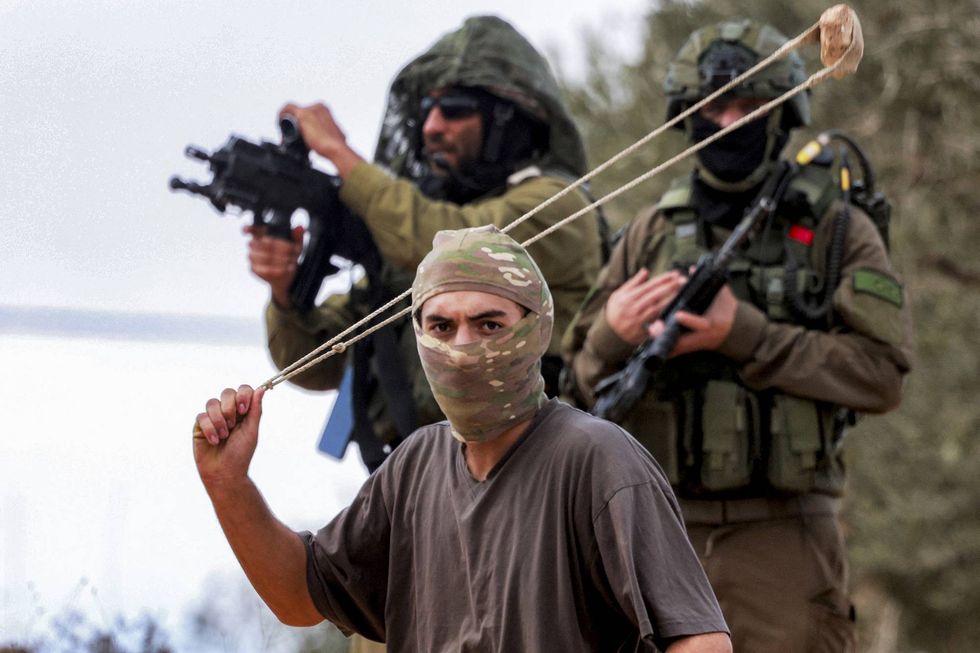 Israeli army soldiers stand behind a masked man swinging a slingshot while hurling stones at Palestinians who had gathered for the annual olive harvest season, during an attack by Israeli settlers on the Palestinian village of Beita, south of Nablus in the occupied West Bank, on October 10, 2025. (Photo by Jaafar Ashtiyeh/AFP via Getty Images)
Investigations by Amnesty International and Human Rights Watch have documented soldiers standing by as settlers attack Palestinians and destroy their property, shielding settlers from Palestinians attempting to defend themselves, and sometimes directly participating in attacks. Israeli authorities have also armed thousands of settlers and incorporated many into military units.
Israel's Foreign Press Association, which independently provided video of settlers brutalizing Levine, said it had repeatedly warned Israeli authorities about threats to foreign journalists working in the West Bank. "Our repeated calls for action to confront this lawlessness have been ignored," the group said.
"You can see the settlers who attacked Heidi Levine," said Breaking the Silence, a human rights group led by Israeli veterans. "But what you can’t see is the state behind them: a state that funds them, arms them, and, above all, grants them near-total impunity for their actions. This violence does not happen in a vacuum. Israel enables it."
At least nine Americans have been killed by Israeli settlers or security forces in the West Bank since January 2022, while numerous others have been injured—including journalists, human rights activists, and Palestinian Americans visiting family.
Members of Congress have requested information from the State Department about Israeli settler attacks on Americans, but have found themselves stonewalled by Trump administration officials.
Neri Zilber, a journalist and adviser to the US-based Israel Policy Forum, noted the lack of response from American institutions to the surge of settler terrorism.
"This happens every day in the West Bank. Every single day," he wrote on social media. "Palestinians attacked, journalists attacked, Israeli and foreign observers attacked. When is the IDF going to start taking this seriously? And where is the US Embassy and Trump administration?"