

SUBSCRIBE TO OUR FREE NEWSLETTER
Daily news & progressive opinion—funded by the people, not the corporations—delivered straight to your inbox.
5
#000000
#FFFFFF
To donate by check, phone, or other method, see our More Ways to Give page.
Daily news & progressive opinion—funded by the people, not the corporations—delivered straight to your inbox.
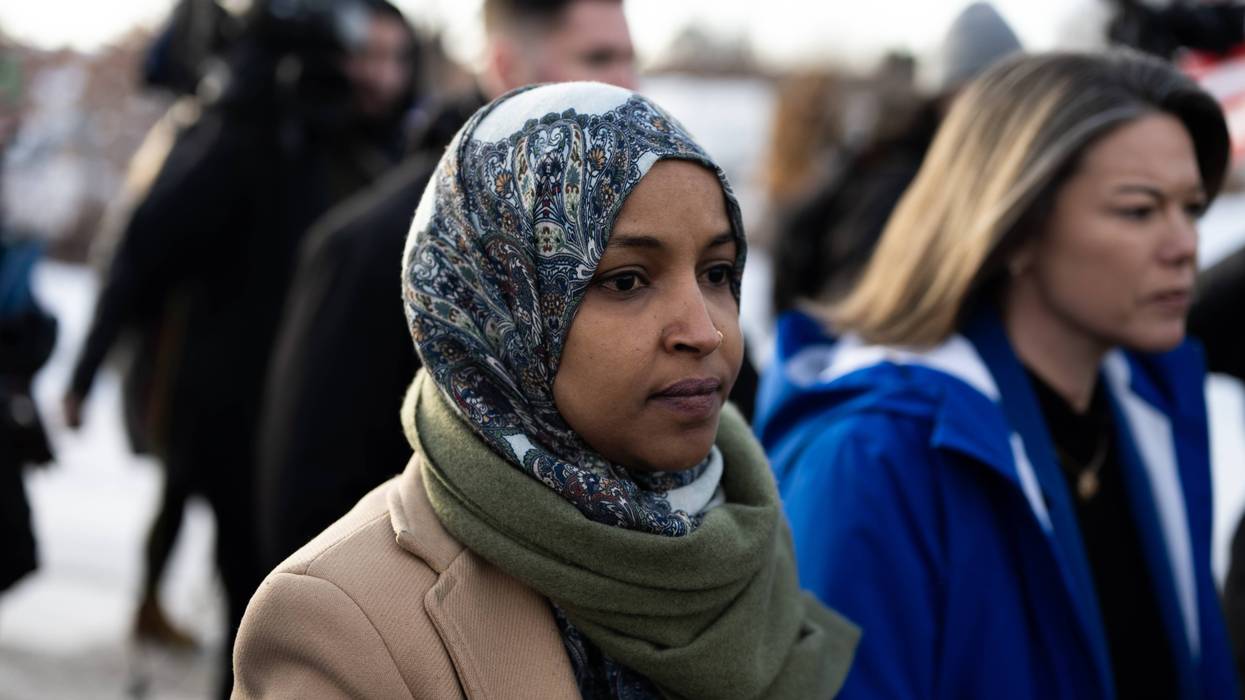
"Our bill will force ICE to pay the price for the damage they’ve left in their wake and ensure that these devastating operations can never be repeated," said the Minneapolis congresswoman.
On January 10, days after US Immigration and Customs Enforcement agents fatally shot US citizen and mother of three Renee Nicole Good in Minneapolis, US Rep. Ilhan Omar stood in the bitter cold of her home city, surrounded by a crowd of angry residents who'd taken to the streets.
It was just over a month into the Trump administration's "Operation Metro Surge"—a campaign that would come to be marked by the staggering scale of racial profiling that led to the arrests of US citizens, brazen defiance of court orders, and stunning displays of force, including two more shootings, one of them fatal.
Of the thousands of armed and masked agents who'd arrived to inflict terror upon the Twin Cities, Omar (D-Minn.) declared, "We are going to make sure that these people pay for what they have done to us." A cheer erupted from the crowd.
On Thursday, Omar introduced a piece of legislation aimed at fulfilling that promise. Titled the Make ICE Pay Act, the bill would block the roughly $140 billion allocated to immigration enforcement in last year's massive Republican budget law and redirect it to recovery efforts in communities reeling from ICE sieges.
"For over a year, ICE has been tearing through our nation, leading racist terror campaigns that have caused devastating damage to our cities, to our businesses, and to the lives of our constituents," Omar said.
"In Minneapolis, Operation Metro Surge cost our community nearly $700 million," she said, citing an estimate by the city of Minneapolis. "We have a moral responsibility to end this abuse of power. Our bill will force ICE to pay the price for the damage they’ve left in their wake and ensure that these devastating operations can never be repeated."
The Trump administration has used this funding to construct an enormous network of detention camps that have often held people in squalid conditions without contact with their loved ones or lawyers and to launch a hiring blitz that has swelled the agency's ranks with poorly vetted recruits, some of whom have gone on to commit deadly abuses of their newfound power.
It has also been used to supercharge ICE's footprint nationwide. With 51,000 arrests, August was the third consecutive month in which the agency set detention records.
And more than ever, the agency has gone after immigrants without criminal records, as well as asylum seekers, green card and visa holders, and Haitian and Syrian immigrants the administration abruptly stripped of Temporary Protected Status.
Through the US Department of Housing and Urban Development, Omar's bill would redirect this funding to states and cities on the receiving end of ICE abuses.
It would be used to provide them with economic relief, reimburse them for extra costs and lost economic activity resulting from raids, support schools and colleges that were disrupted, and provide mental health and social support to those affected.
Funds could also be allocated to support record-keeping and investigations into immigration agencies' conduct and to commissions that allow members of the public to testify about their experiences.
In addition to Minnesota, Omar's bill identifies several other localities that would be eligible for funding after being besieged by ICE, including California, Illinois, Louisiana, Maine, North Carolina, and Oregon, where numerous incidents of misconduct have also been documented.
The legislation is co-sponsored by Rep. Jesús "Chuy" García (D-Ill.), Rep. Rashida Tlaib (D-Mich.), Rep. Chellie Pingree (D-Maine), Rep. Sydney Kamlager-Dove (D-Calif.), Rep. Janelle Bynum (D-Ore.), and Rep. Angie Craig (D-Minn.).

“Nobody tell us that we’re going to Guantánamo Bay,” said one victim. “Just like kidnapping.”
Anger is growing this week as more details emerge about the Trump administration's detention of Somali immigrants at Guantánamo Bay, including people with no criminal records and, in at least one case, a legal US resident.
At least eight Somali men are being held at the notorious US military base in Cuba, while as many as 12 Somali deportees have passed through the facility in recent weeks, according to Sahan Journal. Seven of those still there are being held at Camp 6, which was originally opened under the George W. Bush administration during the so-called War on Terror to imprison men and at least one child in a facility rife with torture and other abuse.
“I never expected to be arrested in a prison established for the terrorists who I fled from,” 31-year-old Hassan Abdi Abtidoon told Sahan Journal's Mohamud Farah on Tuesday.
Among the other Somalis held at Guantánamo is 31-year-old Adam Abdullah, a St. Paul, Minnesota, resident who came to the United States as a legal asylum seeker in 2023. Abdullah had a work permit and Social Security number, operated an auto repair business, and had no criminal record, according to Minnesota court records. His past involvement with law enforcement appeared to include nothing more than two parking tickets.
US Immigration and Customs Enforcement (ICE) agents arrested Abdullah in December during the Trump administration's deadly Operation Metro Surge campaign, which targeted Minnesota's large Somali community amid widespread racist demonization and dehumanization by Republicans, including President Donald Trump.
After months of detention in Minnesota, Kentucky, and Louisiana, Abdullah said officials told him he was being deported to Somalia.
"From Miami, they say, 'OK, now we go to Somalia. Then, first we go to Cuba for refueling, and then we go to some other countries to Somalia,'" Abdullah told Minnesota Public Radio (MPR) earlier this month.
The flight never left Cuba. Abdullah was taken to Camp 6, where he has remained.
Another Somali detainee, Sakariye Abdi Mohamed, described Camp 6 as "the worst place ever I've been in my life."
Mother Jones reported Wednesday that Mohamed was one of 12 Somali men forced onto a plane last month by ICE agents, who told them they were being deported to Somalia.
"Nobody tell us that we're going to Guantánamo Bay," Mohamed said. "Just like kidnapping."
This is APPALLING. The Trump administration is detaining multiple random Somali immigrants with no criminal record at Guantanamo Bay, seemingly because the White House ordered ICE specifically to detain Somalis at Gitmo as part of its effort to punish an ethnic group Trump has attacked.
[image or embed]
— Aaron Reichlin-Melnick (@reichlinmelnick.bsky.social) September 16, 2026 at 12:36 PM
Seven or eight of the men reportedly remain at Guantánamo, where some of them have described being shackled and subjected to frigid temperatures. Detainees also said they are subjected to constant surveillance, including cameras inside bathrooms.
The US Department of Homeland Security claimed the flight included "some of the worst of the worst" with criminal histories including assault, weapons offenses, robbery, theft, drug charges, and drunken driving.
However, Sahan Journal reported that the attorney for six of the eight detainees had found that all had final deportation orders but no additional criminal charges. Four were recent asylum seekers, and two had lived in the United States for decades.
“The administration says we send the worst of the worst to Guantánamo,” US Sen. Tina Smith (D-Minn.) told MPR Wednesday. “Yet in the case of Mr. Abdullah, there has been no evidence presented about what he has done, no explanation for why he has been detained. I mean, there is really has been no due process.”
The Trump administration's use of Guantánamo for immigration detention is not unprecedented. The facility—which experts have placed within the centuries-long story of American concentration camps—has a long history as an offshore immigration detention site that predates the post-9/11 military prison camp.
During the George H.W. Bush administration, thousands of Haitian refugees fleeing political violence were intercepted at sea and taken to Guantánamo. The Clinton administration continued the policy and, at its peak in 1994, roughly 14,300 Haitians were held there. Clinton officials subsequently used Guantánamo for Cuban migrants, more than 30,000 of whom were jailed at the base.
The treatment of Somali immigrants at Guantánamo has also drawn renewed criticism regarding who has and has not been targeted for deportation from the United States.
Human rights activist Suleiman Bolaleh, who has documented atrocities committed under former US-backed Somali President Mohamed Siad Barre, noted in a recent social media post that Somali immigrants with no criminal records are being rounded up and sent to Guantánamo, while members of the former dictatorship's ruling family and senior figures have lived in the United States.
"Men once positioned at the heart of a regime accused of mass killings, war crimes, and ethnic cleansing continue to reside openly in American communities," Bolaleh wrote. "The contrast is jarring: An immigrant [who] has no criminal record is detained at Guantánamo, while figures tied to that dictatorship’s violent apparatus remain unexamined and unaccountable."
Multiple legal challenges to the Trump administration's use of Guantánamo Bay for immigrant detention have been launched.
Meanwhile, the longstanding habeas litigation involving War on Terror detainees at Guantánamo continues. In May, Somali national Guled Hassan Duran—who has been held at Guantánamo since 2006 without being charged—asked a federal court to order his release after years of inaction on his habeas petition.
Duran was approved for release by senior US officials in 2021, but remains imprisoned at Guantánamo along with 14 other men—none of whom has ever been convicted of any terrorism-related crimes. Former Bush administration and US military officials have said that most of the men and boys who were ever imprisoned at Guantánamo were innocent, and that senior administration officials knew it but kept them locked up for political purposes.
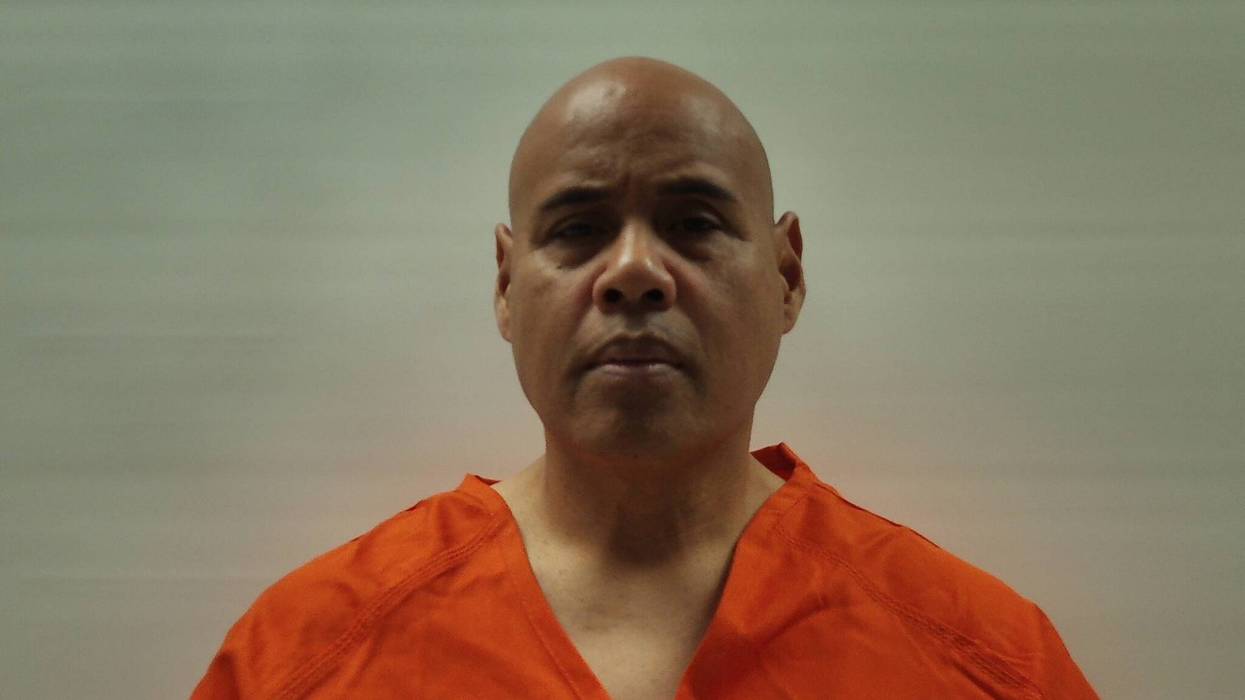
"By refusing to extradite Castro, Greg Abbott is turning Texas into a sanctuary state for violent criminals," said Minnesota Attorney General Keith Ellison.
A US Immigration and Customs Enforcement officer accused of shooting an unarmed man in Minneapolis and then lying about the incident walked free from a jail in Texas on Thursday as Gov. Greg Abbott refuses to honor Minnesota's extradition request.
Christian Castro, 52, was released from the Cameron County jail shortly after dawn, roughly three months after his May 29 arrest on a Minnesota warrant. Castro faces four felony counts of second-degree assault and one misdemeanor count of falsely reporting a crime.
Hennepin County, Minnesota prosecutors allege that Castro fired through the front door of a Minneapolis home, striking 24-year-old Venezuelan immigrant Julio César Sosa-Celis in the leg on January 14 during the Operation Metro Surge enforcement blitz in the Twin Cities Area, part of the Trump administration's deadly mass deportation effort.
Castro claimed afterward that Sosa-Celis and another man had attacked an ICE officer with a broom and snow shovel—an account investigators say was contradicted by surveillance footage, witness statements, and physical evidence. Criminal charges initially filed against Sosa-Celis were later dismissed.
On Wednesday, US District Judge Fernando Rodriguez Jr. of the Southern District of Texas—an appointee of President Donald Trump—denied Minnesota's request for a temporary restraining order that would have prevented Castro's release and declined to compel Abbott to sign the extradition warrant. The Republican governor has so far not yet formally responded Minnesota's extradition request.
Abbott has argued that Castro did not flee Minnesota to escape prosecution but was instead ordered back to Texas by federal authorities. And while Rodriguez acknowledged the possibility that Castro could flee to Mexico, the judge concluded that the court lacked any authority to force Abbott to act before he makes his decision on extradition.
The Texas governor has also attempted to condition resolution of the extradition request upon Minnesota officials' acknowledgment of the alleged fraud Trump used as a pretext for Operation Metro Surge.
Minnesota Attorney General Keith Ellison, a Democrat, denounced Castro's release in a social media post asserting that "Greg Abbott has a black-letter legal and constitutional duty to sign the rendition warrant to return fugitive Christian Castro to Minnesota—full stop."
"By refusing to extradite Castro, Greg Abbott is turning Texas into a sanctuary state for violent criminals," Ellison added. "Regardless of today’s ruling, I will keep fighting so that Agent Castro will face justice in Minnesota."
Abbott retorted: "You guys are such bad lawyers. You showed up unprepared, uninformed, and unpersuasive. You don't know the law, and it showed."
Minnesota "is the literal definition of a sanctuary state because you refuse to assist in enforcing immigration laws," the Texas governor said. Minnesota does not have a statewide sanctuary law.
"I'll put Minneapolis at the top of the list for future bus drop-offs if we ever have a president like Joe Biden again," Abbott added, referring to his deadly campaign of busing migrants to Democrat-led sanctuary cities and even the home of former Vice President Kamala Harris at a cost to Texas taxpayers of over $221 million.
Anders Folk, a former federal prosecutor now running for Hennepin County attorney, agreed with Ellison, writing on X that "Gov. Abbott is playing political games."
"Christian Castro should be extradited to Minnesota to stand trial," he added. "Accountability requires nothing less. This ruling essentially makes Texas a sanctuary state for ICE agents accused of violating state law."
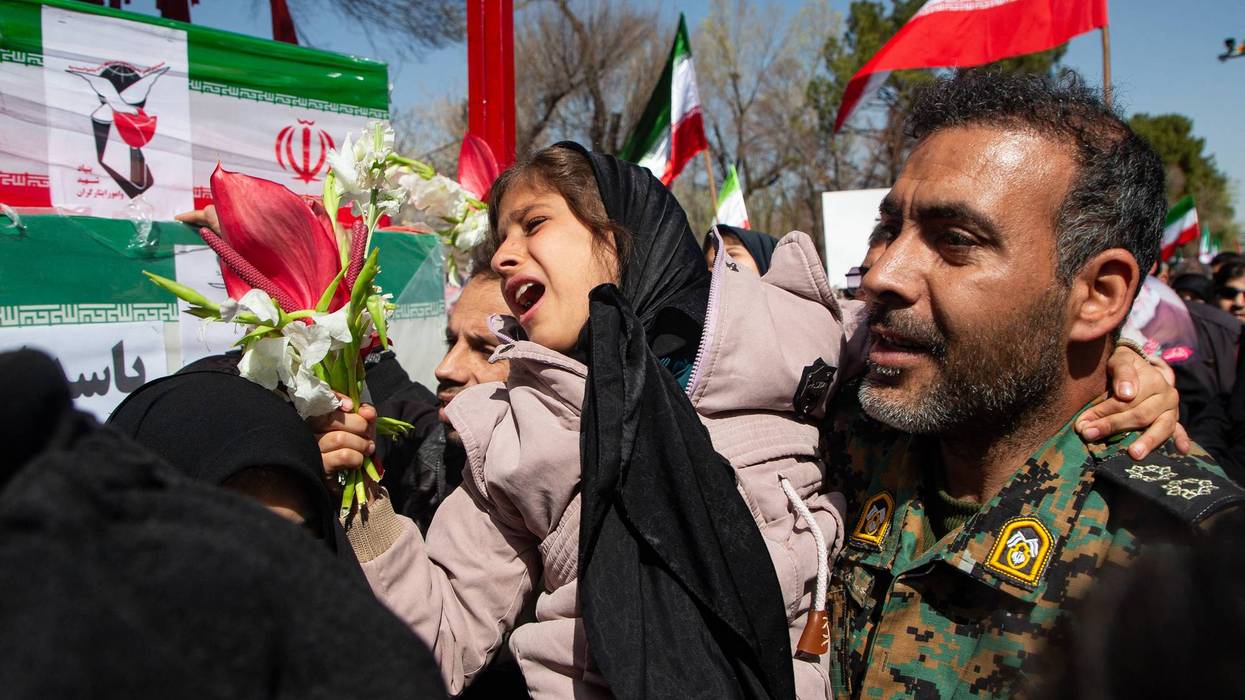
Can we open the national soul and become aware that those who died were loving people who deserved to live?
When is the last time the US government, or a fragment thereof, has truly been held accountable—not merely legally or politically, but morally accountable—for an act of violence, for its addiction to violence? Ever?
And what might that even mean?
These are not questions I’ve ever even asked until I began learning about a lawsuit that has been filed against Homeland Security Secretary Markwayne Mullin and acting Immigration and Customs Enforcement (ICE) director David Venturella. Technically, it’s a freedom of speech lawsuit, but it’s also so much more than that. At least that’s how it seemed to me, the more I learned about it.
The suit pulls back horrible January and the invasion of Minneapolis, aka, Operation Metro Surge, when armed and masked members of ICE and Customs and Border Protection began occupying the Twin Cities for the purpose of snatching and deporting (“allegedly”) undocumented immigrants, creating immense fear and chaos everywhere, and leading to huge protests.
This is militarism. The enemy dead are hidden behind patriotic propaganda and soon vanish from collective awareness. They’re subhuman; they’re evil.
As everyone knows, two of the protesters were murdered: Renee Good on January 7 and Alex Pretti on January 24. This was too much. The nation was outraged. The murders, combined with the fact that most of the arrestees were found to be in the US legally, quieted down the invasion—though hardly ending the arrests and deportations.
Five months later, David Streever, of Rochester, New York, was contacted—much to his stunned surprise—by agents from the Department of Homeland Security, who gave him a “Warning Notice: You May Be in Violation of Federal Law.”
Turns out, many months earlier, in the wake of the two protest murders, he had sent an email, titled, “What’ Next,” to Todd Lyons, who was the acting ICE director at the time. As quoted in The New York Times, this is part of what Streever wrote:
The director “will never know peace (and) will go down in history as America’s Reinhard Heydrich, the butcher”—referencing the Nazi SS security chief, who is considered to be a principal architect of the Holocaust.
“Even Trump will turn on you before the end, and you will be a sad, despised man who eats himself alive with shame at your own pathetic weakness,” the email read.
“You will seek to lose yourself, to escape the burden of knowing the truth about yourself. But wherever you go, you will find yourself. You will torment yourself until your last day on Earth.”
Sit with these words for a while. Yeah, I found them shocking. I even momentarily wondered if they had gone too far. But notice: There’s no actual threat in the words. Instead, the email is both a moral condemnation and a psycho-spiritual warning. Murder always comes back to haunt the perpetrator. As Adam Steinbaugh, a lawyer at the Foundation for Individual Rights and Expression, which is filing the freedom-of-speech suit, put it: This is not a threat in any way, but a plea to the ICE director to recognize what he has done. And, I would add, take responsibility for it, rather than try to make it vanish by turning the deaths—plus the shattered lives of thousands of deportees—into abstractions.
Indeed, Streever’s email challenges the basic, media-perpetuated belief that nationally committed deaths—mostly via war—are indeed an abstraction, and the more there are, the more abstract they become. I’m glad the email has gone public. This is a far bigger issue than freedom of speech, but the lawsuit is making this forgotten exchange public.
But wherever you go, you will find yourself. You will torment yourself until your last day on Earth.
This applies collectively. In the last three years, about 60 detainees have died in detention cells, according to ICE’s own statistics, described on their website as “detained alien deaths.” But these deaths are not abstractions. Nor are the thousands of alleged “aliens” arrested—pulled from their families—every day. Can we open the national soul, just as Streever pleaded with the ICE director to open his soul? This means being aware that the consequences come home... and beyond that, those who died were loving people who deserved to live.
Consider these words of Bita Iuliano, writing recently about the military jets flying over the nation’s capital, where she lives, that were part of the country’s 250th birthday celebration. Seven hours of flyovers were scheduled for July 4. “These flyovers,” she writes, are “an exercise of an illusion of force, domination, and strength. All to further prop up hyper nationalism and militarism. But we were lucky it was just for a ‘show.’”
She went on:
As an Iranian immigrant, as I watched my children tremble and cover their ears at the roar of bombers and fighter jets over our home, so loud the walls vibrated, I was struck by a haunting duality. My heart broke because I knew what that sound means to children just like them back in Iran.
The Iranian children, she pointed out, knew, as they covered their ears and cuddled, that this could be the last day of their lives. For too many of them, that’s exactly what it was.
This is militarism. The enemy dead are hidden behind patriotic propaganda and soon vanish from collective awareness. They’re subhuman; they’re evil. They’re radical leftists. We have no choice but to kill them, over and over and over. At least 7,300 Iranians (so far). More than 70,000 Palestinians.
People have a right to protest this, to voice their opinions. They also have the right to make moral values public—no matter how much fear this creates for those who are “above” such values.
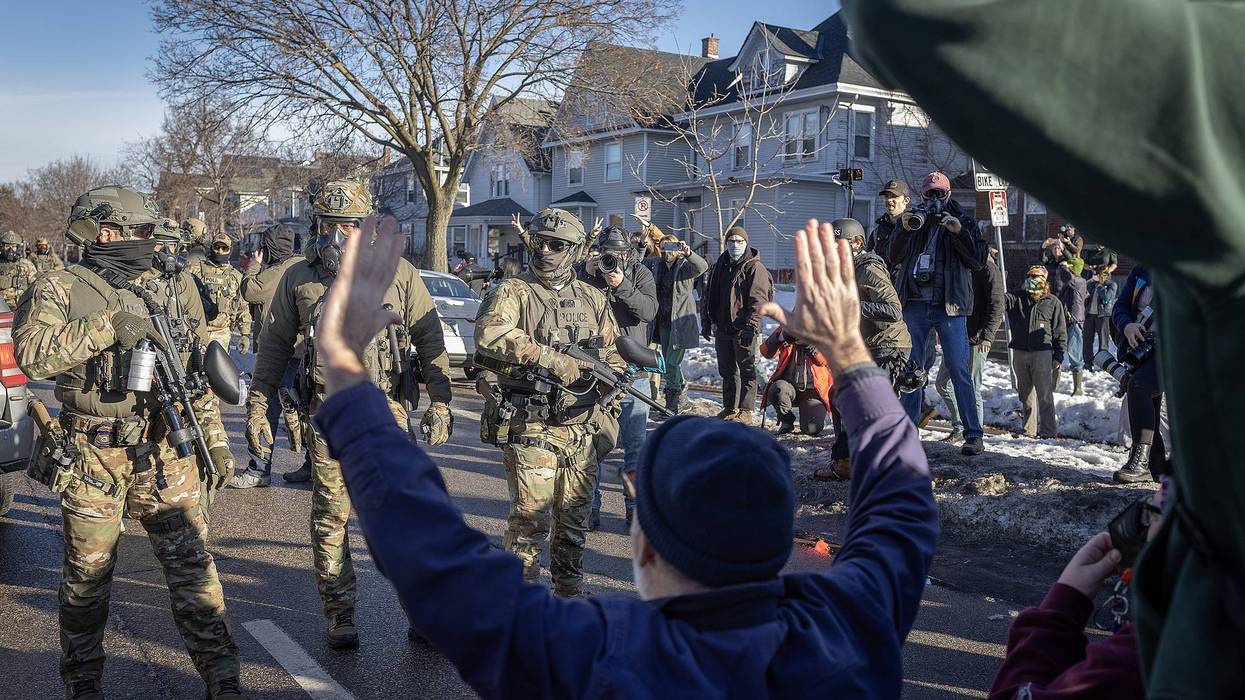
“The federal government sent hordes of masked, armed agents to grab people off the street, whisk them away in shackles, and abuse those who sought to bear witness,” Human Rights Watch said of the deadly blitz.
Human Rights Watch on Thursday published a scathing report detailing how President Donald Trump "caused a human rights crisis" in Minnesota by ordering the deadly federal invasion of the Twin Cities in service of the administration's mass deportation agenda.
HRW called Operation Metro Surge, launched by Trump last December, "an unprecedented deployment of thousands of federal immigration agents and officers to the state of Minnesota," including members of Immigration and Customs Enforcement (ICE) and Customs and Border Protection (CBP).
"The Trump administration claimed that Operation Metro Surge was designed to keep Americans safe and often stated that it was targeting noncitizens with violent criminal histories," the report states. "But the operation itself caused significant harm, and nearly two out of three immigrants arrested by ICE during Operation Metro Surge had no prior US criminal history whatsoever."
At least three people have been killed in connection with the operation. ICE agent Jonathan Ross fatally shot Renée Good, a 37-year-old US citizen, in Minneapolis on January 7. A week later, 36-year-old Nicaraguan detainee Victor Manuel Díaz, who was arrested during the operation, became the third person to die at the notorious East Montana concentration camp in Texas. On January 24, CBP officer Raymundo Gutierrez and Border Patrol agent Jesus Ochoa shot and killed nurse Alex Pretti, 37, also in Minneapolis.
"Federal agents shot a third Minneapolis resident and pulled guns on dozens more," the report continues. "Agents also violently smashed car windows without justification, physically threw people to the ground who were not resisting arrest, and deployed chemical irritants and flash-bang grenades on dozens of occasions, sometimes at close range and without warning, resulting in injuries, including to journalists."
Furthermore, federal agents "unlawfully arrested and detained hundreds; engaged in racial profiling, harassment, and surveillance; and terrorized Minnesotans, chilling their rights to freedom of expression and assembly, and impacting their rights to education and health, among others," HRW said, adding that "residents faced further abuses when they collectively acted to protest, prevent, and stop these violations of their rights."
The HRW report calls for an immediate end to abusive federal enforcement operations in Minnesota; independent investigations into alleged unlawful killings, racial profiling, arbitrary arrests, excessive force, and other rights violations; and full accountability for officials responsible.
“The federal government sent hordes of masked, armed agents to grab people off the street, whisk them away in shackles, and abuse those who sought to bear witness,” Reagan Williams, HRW's crisis and conflict researcher, said in a statement. “Minnesotans mobilized to protest, to document abuse, and to provide critical aid to one another. National-level action is needed to ensure accountability, end ongoing abuses, remedy the harm, and prevent another crisis of this scale.”
“Operation Metro Surge put the violent and abusive practices of these agencies on full display,” Williams added. “We have clear proof of how they operate when impunity prevails, and we need to urgently chart a new way forward through accountability and structural reforms that put an end to these abuses.”
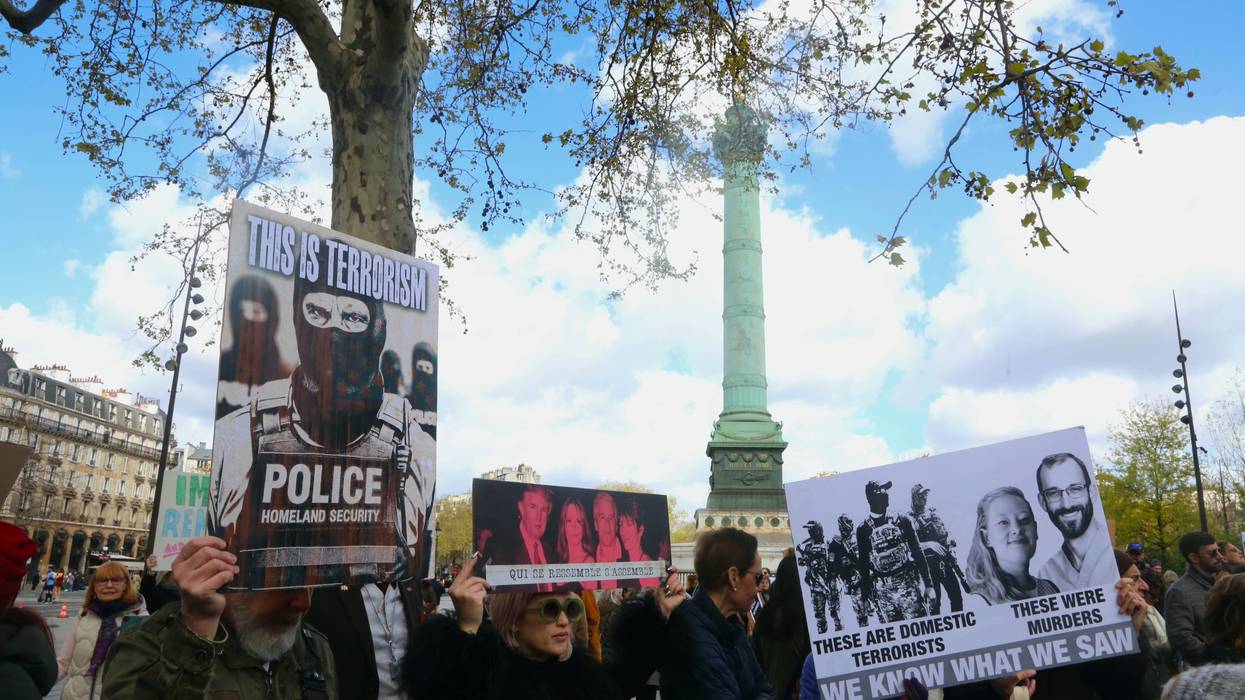
National Security Presidential Memorandum-7, which President Donald Trump issued last year, explicitly targets left-wing protesters and beliefs.
Federal prosecutors in Minnesota have struggled to come up with charges that stick as they've indicted dozens of people this year for protesting President Donald Trump's immigration crackdown, and observers suggested Tuesday's indictments of 15 organizers would likely fail to convince any court. But with a US attorney explicitly citing Trump's memo threatening to crack down on left-wing protesters, advocates warned the charges were a "major escalation" against First Amendment rights.
US Attorney Daniel Rosen, who was appointed by Trump for the District of Minnesota last year, noted in his announcement of the indictments that Trump issued National Security Presidential Memorandum 7 (NSPM-7) last September and that "Joint Task Force Vanguard," an investigative group set up "to investigate, prosecute, and disrupt those who engage in political violence and intimidation," had worked on the case.
NSPM-7, as Common Dreams reported last year, was issued weeks after the assassination of right-wing activist Charlie Kirk and focuses exclusively on left-wing and "anti-fascist" activities, mandating a "national strategy to investigate and disrupt networks, entities, and organizations that foment political violence so that law enforcement can intervene in criminal conspiracies before they result in violent political acts.”
Around the same time, Trump issued an executive order asserting that "antifa," or the anti-fascist movement, had been designated as a "domestic terrorist organization," despite the fact that there is no centralized antifa group and that the president does not have the authority to make such a designation.
The president's directives underpinned the indictment of 15 organizers, including at least one professor and several union leaders and members, who had led direct actions and protests against federal agents during Operation Metro Surge, a crackdown by US Immigration and Customs Enforcement (ICE) and other federal agencies in Minnesota earlier this year.
Rosen said the defendants were members of two Minneapolis-based groups—Direct Action Minnesota and Black Cat Workers Collective—that were associated with "antifa" and were "violently opposed to the enforcement of federal law in our state."
🚨 Feds point to NSPM-7 as basis for charging 15 anti-ICE protesters in Minnesota, alleging ties to "Antifa".
U.S. Attorney Daniel Rosen: "Last year, President Trump issued National Security Presidential Memorandum 7, which directed the Department of Justice to prioritize… pic.twitter.com/s3uCKCi09V
— Ken Klippenstein (@kenklippenstein) June 16, 2026
Twelve of the defendants were arrested on Tuesday, while one had already been in custody on other charges and two had not yet been detained.
The charges include conspiracy to impede or injure a federal officer, solicitation to commit a crime of violence, interstate stalking, assault on a federal officer, and destruction of government property.
But after examining the indictment, David Bier, director of immigration studies at the libertarian Cato Institute, found just one "documented, charged violence by any defendant in the actual indictment against any ICE agent's person": A defendant, William Morgan, "approached one of the agents and knocked the agent's notes out of his hand."
Bier listed the rest of the overt acts included in the 94-page indictment, which he described as a "cobbled together series of basically unrelated incidents or comments, nearly all of it not criminal with a few minor crimes, effectively all nonviolent acts of civil disobedience."
The other acts include "attending meetings," "posting on Facebook and social media about resistance to ICE," "posting flyers advertising direct actions," "conducting after-action reviews," "forming human blockades" at a building used for ICE operations in Minneapolis, and impeding ICE vehicles with sandbags, debris, and vehicles to block roads.
At the press conference Tuesday, evidence presented by Rosen included a Facebook post in which one defendant, Cameron Kennedy, said, "We need to become ungovernable."
Organizers expressed that they were "highly critical of nonviolent peaceful protest," said Rosen.
"Oh," said Bier in response on social media.
Journalist Ryan Grim of Drop Site News also pointed to a section of the indictment that accuses Isaac Auman Sant of engaging in conduct that "caused, attempted to cause, or would be reasonably expected to cause substantial emotional distress to a person."
"Actual federal charges in Minnesota for hurting ICE agents' feelings," Grim said.
The defendants appeared in the US District Court for the District of Minnesota on Tuesday, where Judge John Docherty said the defendants were being released for the time being and that the conditions for a detention hearing had not been met.
A defendant named Erik Davis, a religious studies professor at Macalester College, told Docherty that according to the indictment, he was being "indicted for holding meetings.”
While the charges were denounced as outrageous by a number of observers, an attorney for one of the defendants, Bruce Nestor, told Democracy Now! that the conspiracy charge "is really an attempt to broaden the net of federal law enforcement and to expand the ability of the federal government to target our movement and to foster repression."
Federal prosecutors have charged 15 Minnesotans for conspiracy to impede or injure immigration officers in Minneapolis earlier this year during President Trump’s so-called Operation Metro Surge. The indictment has linked the defendants to anti-fascist or "antifa" groups. Trump… pic.twitter.com/5eAI1WmUrI
— Democracy Now! (@democracynow) June 17, 2026
Adam Federman of Type Investigations said the administration's strategy for cracking down on those who oppose its political agenda appears to be: "Define a loose coalition of activists opposed to the government's immigration policies as Antifa, make the case that Antifa is a terrorist organization, and then prosecute them on conspiracy charges. We're going to see a lot more of this."
The indictment was announced weeks after federal prosecutors dropped all charges against four protesters who had been accused of interfering with ICE agents at a detention center in the Chicago area.
In March, the Trump administration won its first legal victory in its effort to criminalize groups that organize against its agenda when a federal jury convicted eight people of domestic terrorism because they wore all black to a protest outside ICE's Prairieland Detention Facility in Alvarado, Texas, where one of the protesters shot and wounded a police officer.
"Prairieland was exhibit A," said Federman on Tuesday. "My guess is that we will get to the end of the alphabet before this administration runs its course."
US Rep. Ilhan Omar (D-Minn.) noted that the federal officers who fatally shot two Minneapolis protesters, Renée Good and Alex Pretti, in January have not been criminally charged.
"While the killers of Renée Good and Alex Pretti walk free, the DOJ is busy bringing bogus charges against protesters," said Omar. "The administration thinks intimidation will make us back down. They keep learning the same lesson: Minnesotans don't scare easily. We organize for our rights."

“In Minnesota, we believe in equal justice under the law," said Minnesota Attorney General Keith Ellison. "That means nobody is above the law, including agents of the federal government."
A US Immigration and Customs Enforcement agent was arrested in Texas on Friday after he was charged by Minnesota officials for allegedly shooting a Venezuelan immigrant during an ICE operation in Minneapolis and lying about what happened.
Christian Castro, 52, was deployed as part of President Donald Trump’s mass deportation push in the Twin Cities, dubbed “Operation Metro Surge,” and was charged by Hennepin County Attorney Mary Moriarty earlier this month with four counts of felony assault and one count of falsely reporting a crime.
The charges stem from the shooting of Venezuelan national Julio Cesar Sosa-Celis at his home on January 14 as ICE agents pursued his roommate, another Venezuelan immigrant named Alfredo Alejandro Aljorna.
According to The New York Times, Castro was arrested Friday after being tracked down by investigators with the Minnesota Bureau of Criminal Apprehension (BCA). Texas Rangers and agents with the Department of Homeland Security Office of the Inspector General carried out the arrest, according to the Minnesota-based Sahan Journal.
“Today’s arrest is a critical step forward in our prosecution of Mr. Castro,” Moriarty said. “The BCA’s investigative work was instrumental in this process, and we’re grateful for their collaboration as we pursue accountability for this incident on behalf of Mr. Sosa-Celis, his family, and our community.”
Sosa-Celis and Aljorna were originally charged by the US Department of Justice (DOJ), after Castro claimed that he had shot in self-defense when the men assaulted him with a broom and a shovel, claims that were parroted by then-Department of Homeland Security (DHS) Secretary Kristi Noem and department spokesperson Tricia McLaughlin.
But the charges were later dropped after video of the incident and an examination of X-ray evidence demonstrated that Castro's claims were false. Castro and another agent were subsequently placed on administrative leave by DHS while they were investigated internally for lying under oath.
“In Minnesota, we believe in equal justice under the law. That means nobody is above the law, including agents of the federal government,” said Minnesota Attorney General Keith Ellison following news of Castro's arrest on Friday. “I am pleased to hear Christian Castro has been taken into custody and will stand trial for the crimes he allegedly committed in Minnesota. Justice demands no less.”
Castro is the second ICE agent to be charged by Moriarty's office for their role in Operation Metro Surge, which civil rights groups and Minnesota officials have characterized as a lawless immigration crackdown involving racial profiling, warrantless arrests, violent raids, and multiple shootings by federal agents.
Another agent, Gregory Morgan Jr., was charged last month with two counts of felony second-degree assault after he allegedly pulled a gun on two local residents during a traffic stop. Morgan turned himself in to local authorities last week and was released on bond.
Ellison also sued the Trump administration in March for refusing to cooperate with the state investigation into the shooting of Sosa-Celis, and other probes into the fatal shootings of two US citizens.
Moriarty's office has not yet brought charges against ICE officer Jonathan Ross, who fatally shot Minneapolis mother Renee Good in January, or Border Patrol agent Jesus Ochoa and Customs and Border Protection officer Raymundo Gutierrez in connection with the deadly shooting of Department of Veterans Affairs nurse Alex Pretti later that month.
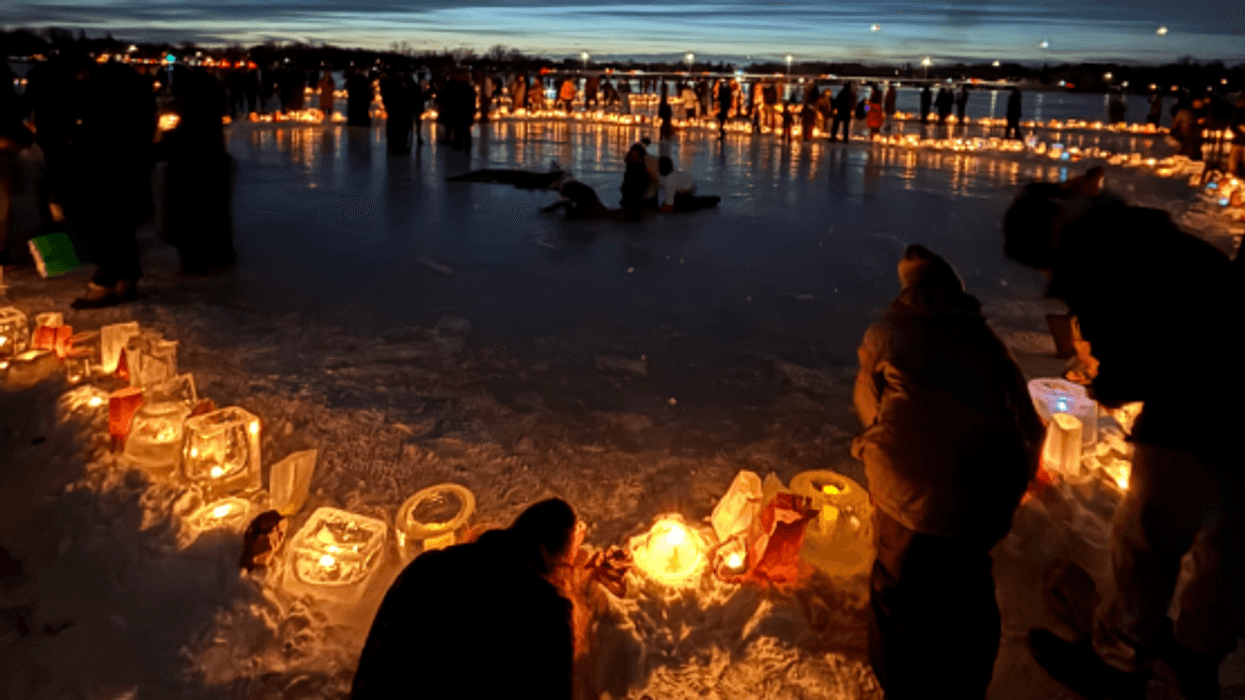
Minnesota's artists aren't that different from artists anywhere, but there are some unique parts of Minnesota's ecosystem that explain the breadth and depth of the creative response to the federal immigration enforcement surge.
Two thousand of us were standing on a frozen lake in the dark.
My mittened hand was gripping the mittened hand of a stranger; tears were freezing on my cheeks. It was not a particularly Minnesotan thing to hold hands with a stranger, especially while expressing emotion so openly. But we were not in normal times.
We were there to light ice lanterns, to spell out "ICE OUT" on the lake in the hopes that the planes flying above would see our message. After long days of school patrols, protests, grocery deliveries, and trying to figure out how to raise more money to help neighbors pay rent, we needed to be together in person. We needed to sing, we needed to move, we needed to feel. And so we did, led in a call-and-response by Brass Solidarity, a community brass band: "Hold on, change is coming!" It was powerful and beautiful and deeply connected to our culture, holding this community together. This is what a creative response looks like when artists are already woven into the fabric of a community before the crisis arrives.
This Sunday, May 31, the people of the Twin Cities will accept the John F. Kennedy Profile in Courage Award in Boston, an honor previously awarded to former Vice President Mike Pence and the September 11 first responders. The Kennedy Foundation cited the neighbors who risked their safety to protect their community from an unprecedented federal law enforcement operation: the 30,000 who trained as observers and rapid responders; the schools that organized patrols; the parent group chats, book clubs, and faith groups that became webs of mutual aid, delivering groceries, raising rent and legal funds for neighbors trapped in their homes.
It is not just what Minnesotans did in this crisis. It is what they had already built: a state that had spent decades recognizing artists not as a luxury or an afterthought, but as neighbors with something essential to contribute.
Journalists and historians have spent months trying to explain why Minnesota responded as it did. Was it the history of the cooperative movement that helped build a state where people looked out for one another? Or the recovery community and the Minnesota Model's belief that people heal together? Almost no one has asked why the artists were ready. That's what I want to share.
Minnesota's artists aren't that different from artists anywhere. But there are some unique parts of Minnesota's ecosystem that explain the breadth and depth of the creative response here.
Minnesota spends more on the arts per capita than any other state, $9.67 per person, backed by the Legacy Amendment, a 25-year constitutional commitment to the state's arts and cultural heritage, alongside other quality of life investments like clean water, parks, and trails. That's not a program. That's a value system encoded into law. A blend of public support and private philanthropy has built statewide artist fellowship programs, regional arts councils serving every county, and local governments that regularly hire artists to address community challenges. The nation's longest-running Guaranteed Income Pilot for Artists, launched in Minnesota with private funds, gives artists a monthly stipend with no strings attached. Participants have reported volunteering more, deepening their roots in their communities, and taking on creative work they never could have afforded before.
But money alone doesn't explain what happened here. Minnesota’s arts support is rooted within an ecosystem of support for organizers, activists, and community leaders, creating an arts community with a deep understanding of the skills, values, and ethics of effective community work. Artists in Minnesota view their artistry as integral to, not separate from, their identity as a neighbor and community member.
In 2013, when St. Paul installed a new light rail line, hundreds of artists were engaged alongside businesses and community groups on the construction corridor, turning disruption into connection. Those artists didn't just make murals. They staged performances, built installations, and animated storefronts. They learned who worked at City Hall. They built relationships with power structures. Because artists in Minnesota have had numerous opportunities like this to bring their creativity to critical community issues, and had spent years doing that work, they weren't strangers to this movement. They were already inside it.
Drive down any street in the Twin Cities today, and you will see house after house with signs: "ICE Out." "We Keep Us Safe." "We Love Our Immigrant Neighbors." Nearly all are artist designed, many of them handmade prints. This doesn’t only represent the beauty and creativity that artists bring to a movement, but also symbolizes a movement that has turned away from mass production and corporate extraction, and toward the handmade and the local. As Immigration and Customs Enforcement (ICE) agents photograph us and catalog our faces in AI databases built for harassment and intimidation, artists like Sean Lim, Marlena Myles, and D Guzman have worked through the night to generate human-made expressions of resistance.
This is what Minnesota's artists have been doing for months: showing up, leading, organizing, making the movement visible and felt. Thousands gathered in the cold with Singing Resistance to send a message to ICE agents that they could change their minds and join a loving community. Their tactics were rooted in Otpor, the student movement that brought down Slobodan Milosevic's authoritarian regime in 1990s Serbia by spreading one simple message: "You might not join us today, but you can join us tomorrow." Singing Resistance is now sharing training tool kits with communities across the country.
Brass Solidarity, formed at George Floyd Square in 2020, has played at hundreds of gatherings, connecting this moment to the movement for Black lives and bringing joy and resolve to these spaces. Mixed Blood Theater has trained neighbors to speak clearly and confidently about their constitutional rights. Drummers have organized mass protests. Poets have told our story, including Renee Good, who was herself a poet. Art spaces and creative businesses have become food pantries, coat donation sites, and whistle distribution points. I've lost track of the sold-out cabarets, concerts, and pottery sales to benefit the immigrant legal aid and rental assistance, often appearing in hours, without marketing campaigns. Neighbors talk to neighbors.
The art being made for our community is happening outside the competition of grants, outside formal arts institutions, outside the commodification of collectors, outside the pressure for clicks. It is urgent and rooted in our community's needs. It feels sacred.
Many of Minnesota's artists put their lives on hold for months at great cost to their economic stability and at great risk to their safety. The thing I have said most when people outside Minnesota ask how I am: It is so much more terrifying than the media can show you. Every noise sounds like a whistle. Every unknown car could be bringing horror to our doorstep. The damage to our community's sense of safety will take years to repair.
But it is so much more beautiful than the media can show you, too.
There is a reason the Kennedy Foundation recognized the people of the Twin Cities with one of the most storied honors in American civic life. It is not just what Minnesotans did in this crisis. It is what they had already built: a state that had spent decades recognizing artists not as a luxury or an afterthought, but as neighbors with something essential to contribute, as vital to a community's health as any doctor, organizer, or teacher.
When the moment came, Minnesota's artists were ready, gathering us on frozen lakes, calling on us to hold hands with strangers, and spelling out in light for all the world to see what it means to take care of one another.
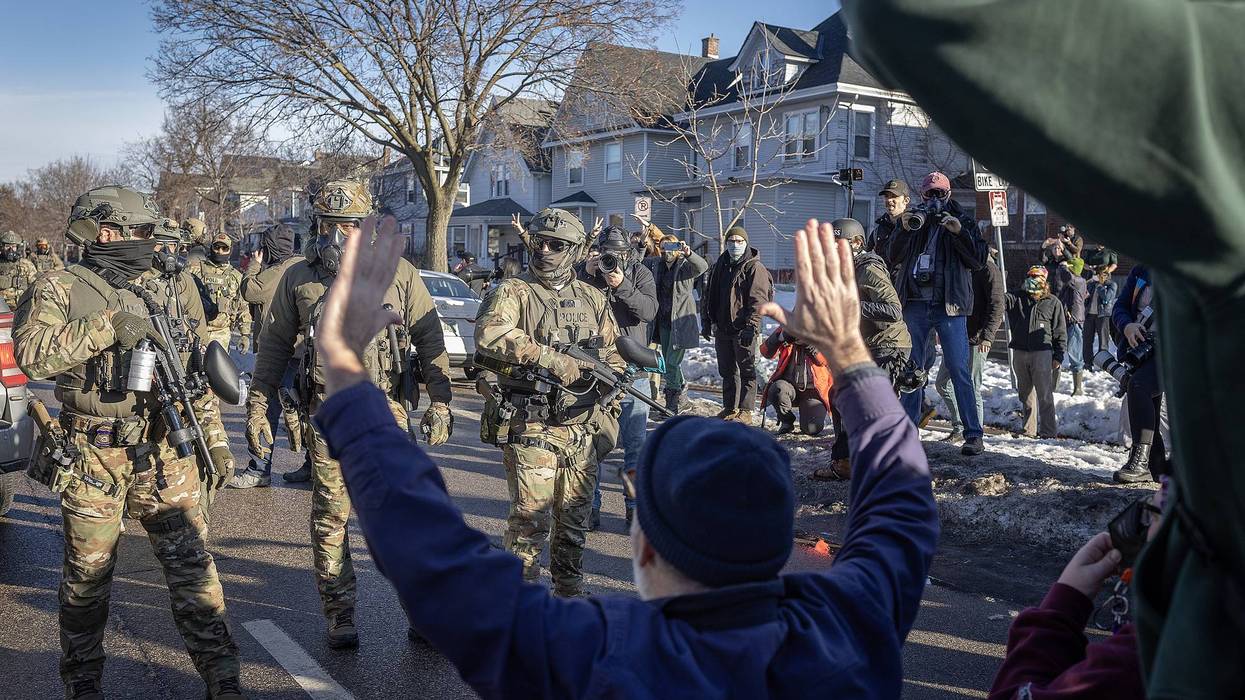
Christian Castro "is an ICE agent, but his federal badge does not make him immune from state charges for his criminal conduct in Minnesota," said Hennepin County Attorney Mary Moriarty.
Minnesota state prosecutors on Monday charged and issued a nationwide arrest warrant for a US Immigration and Customs Enforcement officer in connection with the shooting of a Venezuelan man during the Trump administration's deadly anti-immigrant crackdown in the Twin Cities area.
The Hennepin County Attorney’s Office charged 52-year-old ICE agent Christian Castro with four counts of second-degree assault with a deadly weapon and one count of falsely reporting a crime after Venezuelan national Julio Cesar Sosa-Celis was shot in the leg on January 14.
“Mr. Castro is an ICE agent, but his federal badge does not make him immune from state charges for his criminal conduct in Minnesota,” Hennepin County Attorney Mary Moriarty said in a video announcing the move. “There is no such thing as absolute immunity for federal officers who commit crimes in this state or any other.”
Federal authorities initially charged Sosa-Celis and his roommate, Alfredo Alejandro Aljorna, with assaulting an officer with a broom handle and a snow shovel that day.
Then-US Department of Homeland Security spokesperson Tricia McLaughlin claimed that Sosa-Celis and Aljorna “began to resist and violently assault" Castro, who fired his gun while on the ground out of fear for his life. Former Homeland Security Secretary Kristi Noem accused Sosa-Celis and Aljorna of “attempted murder."
However, US District Judge Paul Magnuson subsequently dropped the charges after video evidence directly contradicted the administration's claims, prompting Democratic Minneapolis Mayor Jacob Frey to assert that "bare due diligence would have shown that the agents were lying.”
Moriarty said Monday that Castro's "narrative about what he said happened before, like he was hit with a shovel and broom and all of that, in the head multiple times," was disproven by "a thorough examination, including X-rays."
“There’s no demonstrable trauma to his body, except for an abrasion to his left hand at the base of the thumb," she added.
As The Minnesota Star Tribune reported:
Last month, the city of Minneapolis released surveillance footage that its cameras captured near the duplex where Sosa-Celis and Aljorna live with their partners.
Aljorna, who was making a DoorDash delivery, called home in the middle of a car chase after he fled a traffic stop by Castro and another ICE agent in an unmarked vehicle. The federal agents believed they were stopping an immigration enforcement target, but it ended up being a case of mistaken identity. One of the adults in the duplex called 911 to report what was happening and Moriarty said an emergency dispatcher turned the camera to face the duplex.
The video evidence showed Aljorna racing to the house after he crashed his car into a light pole. Castro pursued him. Sosa-Celis was waiting outside. There was a brief scramble in the yard as the three men were entangled. A shovel and broom were present near the area, but there was no indication they were used as weapons.
A Minnesota Bureau of Criminal Apprehension investigation showed that the shot Castro fired passed through Sosa-Celis' leg and then penetrated a nearby home, lodging in the wall of a bedroom where several small children sleep.
ICE agents then broke down the home's door and arrested Sosa-Celis, Aljorna, and three other people. Gabriel Alejandro Hernandez-Ledezma, who had nothing to do with the incident, was accused of attacking Castro and jailed for two weeks without charges in Texas. Two women—who had no criminal records and were also not involved in the incident—were separated from their young children and also detained in Texas for two weeks before being released without charge.
Castro is the second ICE agent that Moriarty's office has charged in connection with Operation Metro Surge, the Trump administration's 70-day Twin Cities blitz. Last month, Gregory Donnell Morgan Jr. was charged with two counts of felony second-degree assault after he allegedly pulled a gun on two local residents during a February traffic dispute.
On Monday, Moriarty also addressed public concerns about why her office hasn't yet charged ICE officer Jonathan Ross, who fatally shot Minneapolis mother Renee Good in January, or Border Patrol agent Jesus Ochoa and Customs and Border Protection officer Raymundo Gutierrez in connection with the deadly shooting of Department of Veteran Affairs nurse Alexi Pretti later that month.
“I have really a lot of empathy for everybody who has said, ‘You have the videos, why haven’t you charged?’ We get that,” she said. “From the inside, we are doing a lot of work. These are unusual cases. It’s just a very unique scenario."
“We obviously are trying to be very thoughtful and intentional," Moriarty added. "While I understand people really want accountability, and they saw what they saw in the videos, this is incredibly complex. The last thing we want to do is make a mistake if we feel something is appropriately charged and get dismissed out of federal court.”
In March, Minnesota Attorney General Keith Ellison sued the Trump administration over its refusal to cooperate with state probes into the shooting of Good, Pretti, and Sosa-Celis.
Moriarty's announcement was hailed by immigrant rights advocates and opponents of Trump's sweeping crackdown, with one popular progressive account on Bluesky welcoming the prosecution of what it called a "lying ICE goon."
"This is BIG," attorney and American Immigration Council senior fellow Aaron Reichlin-Melnick said on X. "These are the first charges relating to an incident that occurred during an enforcement operation. The officers involved lied under oath about this shooting, as the Trump [administration] admitted."
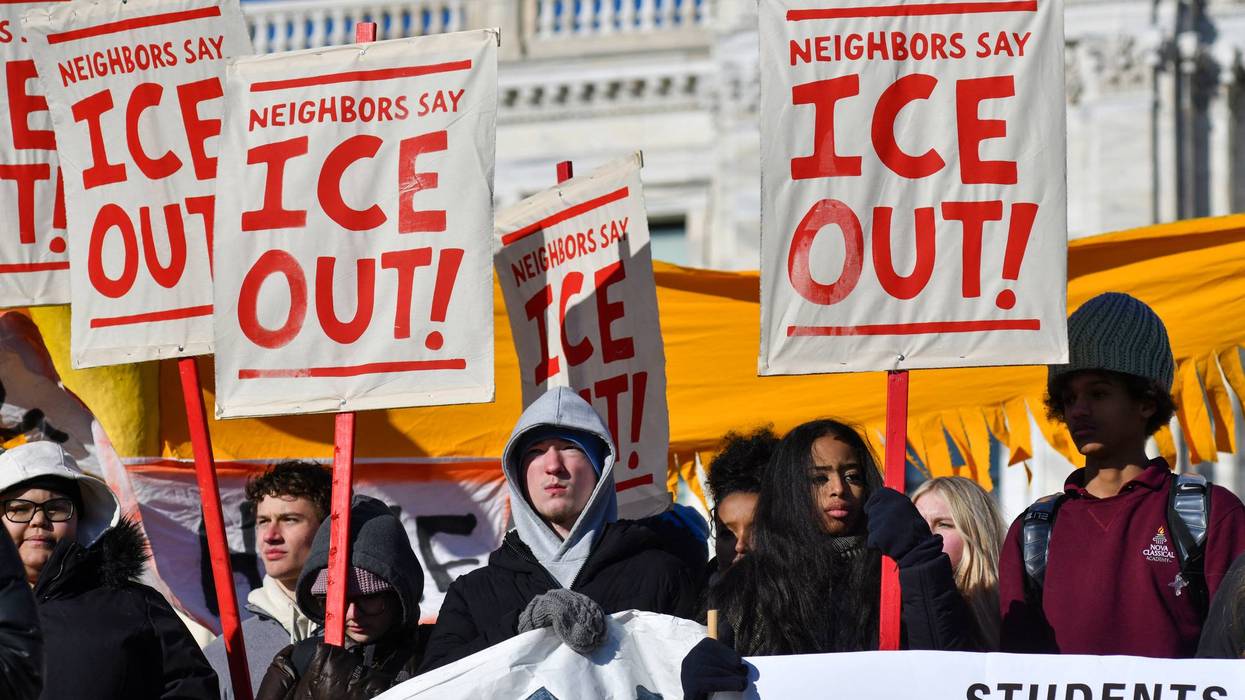
"Today's charges reflect an important milestone in our efforts to seek accountability for the harms inflicted on our community," said Hennepin County Attorney Mary Moriarty.
Prosecutors in Minnesota charged a federal immigration enforcement agent with assault on Thursday for pulling a gun on two local residents during a February traffic dispute.
The Hennepin County prosecutor's office charged US Immigration and Customs Enforcement officer Gregory Donnell Morgan Jr., a resident of Maryland, with two counts of felony assault for the incident that took place along Highway 62 on February 5.
During a press conference, Hennepin County Attorney Mary Moriarty alleged that Morgan was driving a rented, unmarked Ford Expedition illegally along the shoulder of Highway 62.
The alleged victims, objecting to Morgan illegally driving on the highway shoulder, swerved in front of him briefly to block him, then pulled back into the regular lane.
Morgan then allegedly sped up his vehicle, pulled up alongside the victims' car, and drew his gun on them.
Moriarty said that Morgan's alleged actions were unjustified and outside the course of his duties, which would be enough for the state to avoid violating the US Constitution's Supremacy Clause that prevents state governments from infringing upon the federal government's sovereignty.
"Our opinion is that illegally driving on a shoulder, pulling up to a car and pointing a gun at the heads of two community members who are not doing anything at the time, is well beyond the scope of their authority as federal agents," said Moriarty. "So they may say that, but we will litigate that in court. And there is no such thing as absolute immunity for federal agents who violate the law in the State of Minnesota or any other state."
Moriarty also brushed off concerns about the federal government retaliating against Minnesota for criminally charging ICE agents.
"Not a concern of ours," she said. "Our role, by the way, is to hold people accountable if they violate the laws of the state of Minnesota. And in this particular case, we feel strongly that this agent committed second-degree assault against both of these victims. We have charged the case and our intent is to hold them accountable."
Hennepin County Attorney Mary Moriarty: "Are we concerned as to whether there would be federal blowback? Not a concern of ours. Our role is to hold people accountable if they violate the laws of Minnesota. We feel strongly that this ICE agent committed 2nd degree assault." pic.twitter.com/G6aPyewU3q
— Aaron Rupar (@atrupar) April 16, 2026
The case against Morgan is the first state prosecution related to Operation Metro Surge, the federal immigration enforcement operation that targeted the Twin Cities earlier this year and generated unprecedented mass protests that included a one-day general strike.
Morgan's prosecution may also be a preview of future cases, as there have been calls for months to prosecute the federal immigration officers who fatally shot Minneapolis residents Renee Good and Alex Pretti.
While speaking with reporters, Moriarty emphasized that "today's charges reflect an important milestone in our efforts to seek accountability for the harms inflicted on our community during Operation Metro Surge," vowing "we will not rest until we get the answers we seek about federal agent conduct across Hennepin County, and accountability is delivered wherever appropriate."