
SUBSCRIBE TO OUR FREE NEWSLETTER
Daily news & progressive opinion—funded by the people, not the corporations—delivered straight to your inbox.
5
#000000
#FFFFFF
To donate by check, phone, or other method, see our More Ways to Give page.


Daily news & progressive opinion—funded by the people, not the corporations—delivered straight to your inbox.
"This is an escalation against the climate movement as a whole, and the next phase of this administration's crackdown on dissent," said Extinction Rebellion.
As the Trump administration broadens its efforts to criminalize dissent, a nonviolent climate advocacy group says the FBI is targeting it with a terrorism investigation.
Using a dubious legal designation of "domestic terrorism," the US Department of Justice (DOJ) has ramped up its efforts to surveil those it considers to be domestic enemies—including members of left-wing groups with no history of violence.
The New York City chapter of the group Extinction Rebellion said one of its former members came into the crosshairs earlier this month.
In a statement on Wednesday, the group said that a former member was visited by two special agents, one of whom was from the FBI's Joint Terrorism Task Forces, at their residence 200 miles outside New York City.
They said the agents asked about their involvement with Extinction Rebellion. The member declined to respond, referring the questions to their attorney.
The former member, who has chosen to remain anonymous, told the Intercept that they hadn't been involved with the group in two years and hadn't participated in any actions they thought would warrant FBI involvement.
“I believe this to be a significant escalation of the criminal legal system against Extinction Rebellion and find it very troubling,” Ron Kuby, an attorney for Extinction Rebellion, said. “This is usually the way we find out an actual investigation is underway and is often followed by other visits and other actions.”
He said he found it strange that Extinction Rebellion would become the target of a terrorism investigation. Members of the group take part in acts of what they call "nonviolent civil disobedience" such as blocking roads, sit-ins at public buildings, and occasional vandalism.
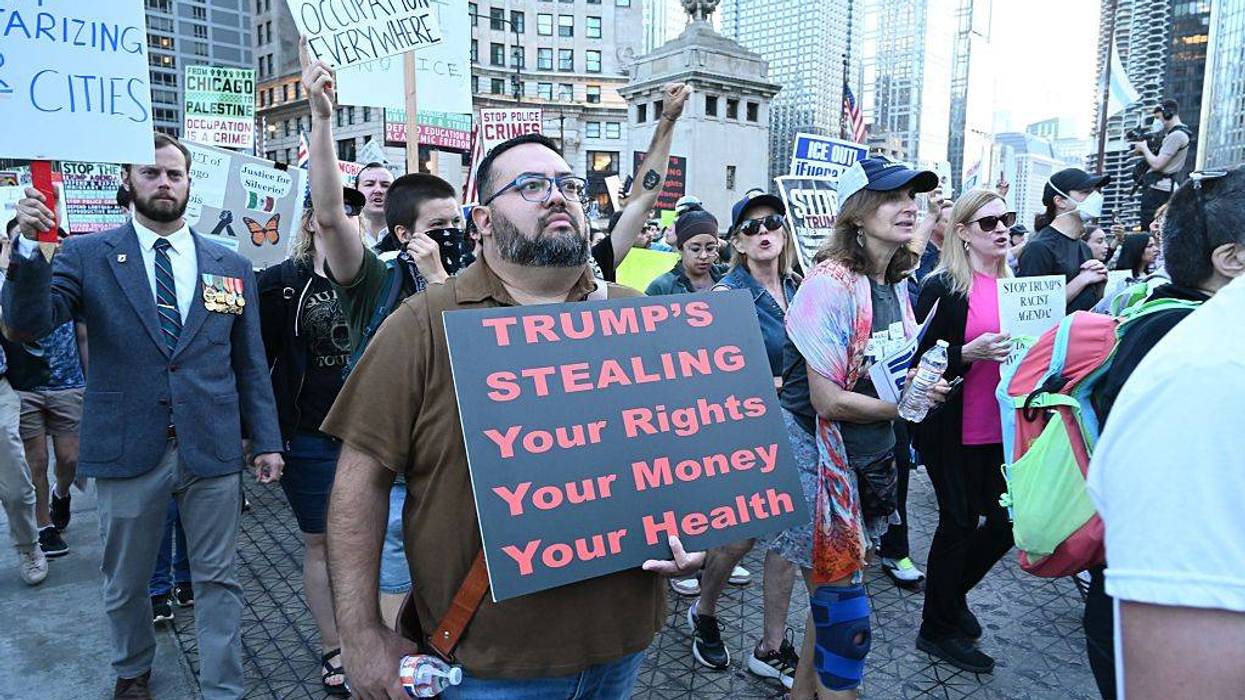
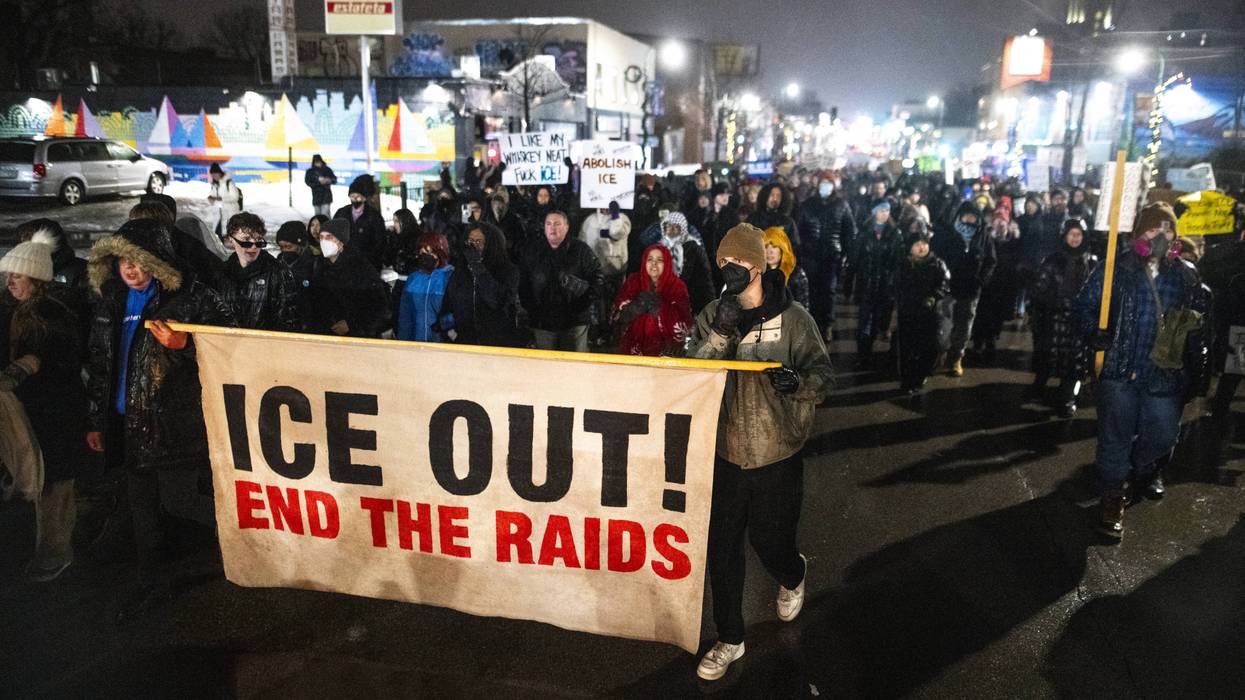
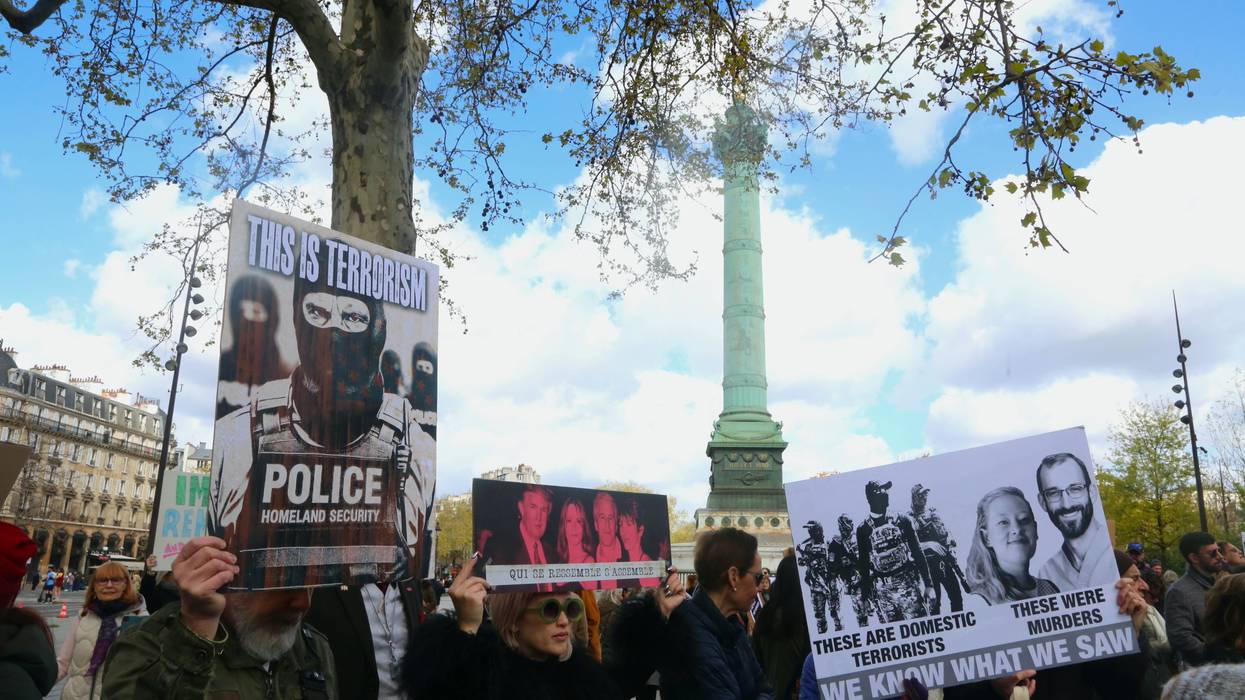
The group has sought to use these tactics to draw attention to leaders' inaction in fighting the climate crisis. Increasingly, they have launched protests against the Trump administration's policies more broadly, including its deployment of federal immigration agents in cities across the country.
While its actions can be disruptive, Extinction Rebellion has always been nonviolent, Kuby said, and its tactics are at worst misdemeanor offenses, which typically wouldn't interest federal law enforcement.
"[Extinction Rebellion NYC] is a nonviolent, decentralized group of artists, small business owners, parents, retired teachers, and everyday New Yorkers. We are not terrorists!" said a statement from Extinction Rebellion Global posted to social media on Tuesday. "We use artistic nonviolent organized protests, community outreach, and strategic advocacy to empower everyday citizens and drive meaningful environmental change."
"This is an escalation against the climate movement as a whole, and the next phase of this administration's crackdown on dissent that many of us have been expecting," the group continued.
The New York City chapter of Extinction Rebellion is not the first to receive FBI visits during the second Trump administration.
Last year, six members of its sister group in Boston said the feds came to their doors, all on the same day in March, and questioned them without providing any business cards or explanation for their visit.
According to WBUR reporting at the time, none of the activists questioned had a history of participating in violent protests or of facing felony charges in federal or Massachusetts courts.
Jeff Feuer, a lawyer in Cambridge who has represented climate activists for more than three decades, told the outlet, “Until this year, I have never heard about the FBI or any other federal law enforcement officer visiting or questioning any of the hundreds of climate activists that I have personally represented."
After months of denial, US Attorney General Pam Bondi acknowledged during a contentious House Judiciary Committee hearing earlier this month that the department does, in fact, have a list of "domestic terrorist organizations" being compiled under President Donald Trump’s National Security Presidential Memorandum 7, which was described as a national directive to use the Joint Terrorism Task Forces to focus on “leftist” political violence in America.
That memo, commonly referred to as NSPM-7, was first obtained by independent journalist Ken Klippenstein in September. It laid out a national strategy to “disrupt” individuals or groups that "foment political violence" before it takes place.
NSPM-7 described many vaguely defined political viewpoints as potential "indicators" that one is a possible domestic terorrist, including: "anti-Americanism," "anti-capitalism," and "Anti-Christianity"; "extremism" on "migration," "race," and "gender"; and "hostility to those who hold traditional views" on "family," "religion," and "morality."
In another memo that leaked in December, Bondi—who just months before pledged under oath there would “never be an enemies list” compiled by the DOJ—directed the department to compile a list of potential “domestic terrorism” organizations that espouse “extreme viewpoints on immigration, radical gender ideology, and anti-American sentiment.”
It directs federal law enforcement agencies to refer "suspected" domestic terrorism cases to the Joint Terrorism Task Forces, which will then undertake an “exhaustive investigation contemplated by NSPM-7” that will incorporate “a focused strategy to root out all culpable participants—including organizers and funders—in all domestic terrorism activities.”
During the hearing, Bondi refused to say which groups and entities were on the list of so-called "domestic terrorists," though she acknowledged it existed, saying, "I know antifa is part of that."
Trump designated "antifa," referring to a loose confederation of antifascist groups, as a "domestic terrorist organization" in October, even though there is no formal "domestic terrorism" statute in US law.
It is unclear whether a formal federal investigation into Extinction Rebellion is underway or if it is part of NSPM-7.
An internal document shared with the Guardian in November revealed that the FBI had launched “criminal and domestic terrorism investigations” into “threats against immigration enforcement activity” in at least 23 regions across the US—including New York. It acknowledged that some of the investigations were related to the "countering domestic terrorism" memo.
"'Domestic terrorism' may not yet be a criminal charge, but the Trump administration is gearing up to create it," Extinction Rebellion NYC said on Wednesday. "NSPM-7... will be the broadest criminalization of free speech since McCarthyism or the height of the Civil Rights Movement. And while this fossil-fueled administration has already failed in some attempts to silence critics, we understand the broader context within which our specific activities sit."
"Americans have never tolerated political demagogues who use the government to punish people on an enemies list," said one congresswoman.
Along with refusing to acknowledge the harm her Department of Justice has done to victims of convicted sex offender Jeffrey Epstein and yelling personal insults at Democratic members of Congress, US Attorney General Pam Bondi stonewalled at Wednesday's House Judiciary Committee hearing when Rep. Mary Gay Scanlon asked her direct questions about the Trump administration's attempts to label dissenters "domestic terrorists."
At the hearing focusing on oversight of the DOJ, Scanlon (D-Pa.) asked about National Security Presidential Memorandum 7 (NSPM-7), which President Donald Trump signed in September, weeks after claiming the "radical left" was "directly responsible" for the assassination of right-wing activist Charlie Kirk.
The memo directs federal agencies to develop a “national strategy to investigate and disrupt networks, entities, and organizations that foment political violence so that law enforcement can intervene in criminal conspiracies before they result in violent political acts," with an exclusive focus on anti-fascist or left-wing groups.
It classifies anti-capitalism; "extremism" on migration, race, and gender; and "hostility" toward "traditional American views on family" as some of the viewpoints that are held by groups that the Trump administration aims to disrupt, and the memo was expanded on by another memo in which Bondi directed the DOJ to compile a list of possible "domestic terrorism" groups that hold the views identified in NSPM-7.
The memos were signed months after Bondi said under oath that there would "never be an enemies list" compiled by the DOJ.
Scanlon noted in the hearing Wednesday that "Americans across the political spectrum were immediately alarmed by the memo's blurring of the line between unlawful conduct and constitutionally protected speech and activity, as well as its call to investigate, prosecute, and dismantle groups" with which the administration disagrees.
When the congresswoman asked Bondi to confirm whether the list she called for in her December memo has been compiled, the attorney general said she was "not going to answer yes or no" before saying that "an antifa member" was arrested earlier this month in Minneapolis for "cyberstalking."
🚨 Pam Bondi refuses to say if the list of "domestic terrorist organizations" she ordered the Justice Department to create has been completed.
"I'm not going to answer yes or no" pic.twitter.com/51oPYvaxQg
— Ken Klippenstein (NSPM-7 Compliant) (@kenklippenstein) February 11, 2026
The exchange was typical of the proceedings; members of the committee were continually frustrated during the hearing as Bondi refused to respond to straightforward questions about the Epstein files and other issues. Ranking Member Jamie Raskin (D-Md.) at one point implored the attorney general not to "go off on a wild goose chase, another tangent," when asked a question.
Scanlon later asked Bondi if she would commit to providing the committee with the list of entities that the DOJ believes should be "designated as domestic terrorist organizations."
"I'm not going to commit to anything to you because you won't let me answer questions," the attorney general replied.
CONGRESS: Will you commit to provide this committee with your list of entities that you recommend be designated as domestic terrorist organizations?
PAM BONDI: I'm not going to commit to anything pic.twitter.com/K9HySj72MU
— Ken Klippenstein (NSPM-7 Compliant) (@kenklippenstein) February 11, 2026
Scanlon responded, "We understand your current position is that you have a secret list of people or groups who you are accusing of domestic terrorism, but you won't share it with Congress."
The exchange came two weeks after independent journalist Ken Klippenstein reported that he had learned from senior administration officials that the FBI and the Department of Homeland Security (DHS) have already compiled over a dozen "secret and obscure" watchlists of pro-Palestinian and anti-Immigration and Customs Enforcement (ICE) protesters and other people who have been labeled "domestic terrorists."
An ICE agent deployed in Maine also sparked alarm last month when he told a woman who was filming him that doing so would land her in a "nice little database" the department has, where she would be labeled a domestic terrorist. Filming ICE agents is protected under the First Amendment.
And CNN reported that DHS sent a memo to ICE agents deployed in Minneapolis directing them to fill out forms with personal data about protesters and people the department labeled "agitators."
Despite the mounting evidence that the administration is compiling data about dissenters, DHS Assistant Secretary for Public Affairs Tricia McLaughlin said late last month that "there is NO database of ‘domestic terrorists’ run by DHS."
While Bondi similarly refused to confirm that DOJ has compiled a list of what it claims are domestic terrorist groups, Scanlon issued a warning that "Americans have never tolerated political demagogues who use the government to punish people on an enemies list."
Doing so "brought down" former Sen. Joseph McCarthy during the Red Scare, she said, as well as former President Richard Nixon.
"And it will bring down this administration as well," said Scanlon.
"If we don’t explore more why all of these secret lists exist," one US intelligence officer said, there could be "even more of an environment of paranoia on the ground and more tragic killings.”
Despite denials from a senior Trump administration official, secret watchlists of Americans are being used by federal agencies to track and categorize US citizens—especially protesters, activists, and critics of law enforcement—as “domestic terrorists," investigative journalist Ken Klippenstein reported Wednesday.
Klippenstein said that two senior national security officials speaking on condition of anonymity told him that there are over a dozen "secret and obscure" watchlists that the Department of Homeland Security (DHS) and the FBI are using to track anti-Immigration and Customs Enforcement (ICE) and pro-Palestine protesters, antifa-affiliated individuals, and "others who are promiscuously labeled 'domestic terrorists.'"
"I can reveal for the first time," he wrote, "that some of the secret lists and applications go by codenames like Bluekey, Grapevine, Hummingbird, Reaper, Sandcastle, Sienna, Slipstream, and Sparta (including the ominous sounding HEL-A and HEL-C reports generated by Sparta)."
"Some of these, like Hummingbird, were created to vet and track immigrants, in this case Afghans seeking to settle in the United States," Klippenstein explained. "Slipstream is a classified social media repository. Others are tools used to link people on the streets together, including collecting on friends and families who have nothing to do with any purported lawbreaking."
"There’s practically nothing available that further describes what these watchlists do, how large they are, or what they entail," he added.
Klippenstein's revelation seemingly flies in the face of DHS Assistant Secretary for Public Affairs Tricia McLaughlin's recent denial that the administration has a database containing the names of people accused of domestic terrorism.
"There's just one problem: She's lying," wrote Klippenstein.
🚨 I've obtained a list of secret watchlists the Department of Homeland Security uses to keep tabs on American citizenswww.kenklippenstein.com/p/ices-secre...
[image or embed]
— Ken Klippenstein (@kenklippenstein.bsky.social) January 28, 2026 at 1:07 PM
Many observers already thought as much, especially after a masked federal enforcer taunted an anti-ICE protester in Maine by telling her that "we have a nice little database, and now you’re considered a domestic terrorist."
White House "border czar" Tom Homan—who was recently sent to Minnesota to oversee the anti-immigrant blitz following the departure of Border Patrol commander Greg Bovino amid outrage over the killings of Renee Good and Alex Pretti—also said this month that "we’re going to create a database where those people that are arrested for interference, impeding, and assault, we’re going to make them famous."
Reporting Tuesday that Pretti—the nurse who was disarmed and then shot dead by federal enforcers in Minneapolis last week—was known to Trump officials after a previous encounter in which agents broke his rib raised further questions about government watchlists.
"We came out of 9/11 with the notion that we would have a single ‘terrorist’ watch list to eliminate confusion, duplication, and avoid bad communications, but ever since January 6, not only have we expanded exponentially into purely domestic watchlisting, but we have also created a highly secretive and compartmented superstructure that few even understand," a DHS attorney "intimately familiar" with the matter told Klippenstein on condition of anonymity, referring to the deadly January 2021 Capitol insurrection.
According to Klippenstein:
Prior to 9/11, there were nine federal agencies that maintained 12 separate watchlists. Now, officially there are just three: a watch list of 1.1 million international terrorists, a watch list of more than 10,000 domestic terrorists maintained by the FBI, and a new watch list of transnational criminals, built up to more than 85,000 over the past decade...
Among other functions, the new watchlists process tips, situation reports, and collected photographs and video submitted by both the public and from agents in the field; they create a “common operating picture” in places like Minneapolis; they allow task forces to target individuals for surveillance and arrest; and they create the capacity for intelligence people to link individuals together through geographic proximity or what is labeled “call chaining” by processing telephone numbers, emails, and other contact information.
Asked about how the Trump administration might try to legally justify these watchlists, Rachel Levinson-Waldman, the Brennan Center for Justice's Liberty and National Security Program director, cited President Donald Trump's National Security Presidential Memo 7 (NSPM-7), which mandates a “national strategy to investigate and disrupt networks, entities, and organizations that foment political violence so that law enforcement can intervene in criminal conspiracies before they result in violent political acts."
Levinson-Waldman also noted Attorney General Pam Bondi's December 5 memo directing federal agencies to expand the investigation and prosecution of "domestic terrorism," including groups "aligned" with antifa, an anti-fascist ideology that does not exist as an organization.
One senior intelligence official who confirmed the existence of the watchlists warned Klippenstein: "Lists of this and that—this social media post, that video taken of someone videoing ICE, the mere attendance at a protest—gets pulsed by federal cops on the beat to check for criminality but eventually just becomes a list itself of criminality, with the cops thinking that indeed they are dealing with criminals and terrorists. Watchlists, and the whole watchlisting process, should be as transparent as possible, not the other way around."
"If we don’t explore more why all of these secret lists exist," the official added, there could be "even more of an environment of paranoia on the ground and more tragic killings.”