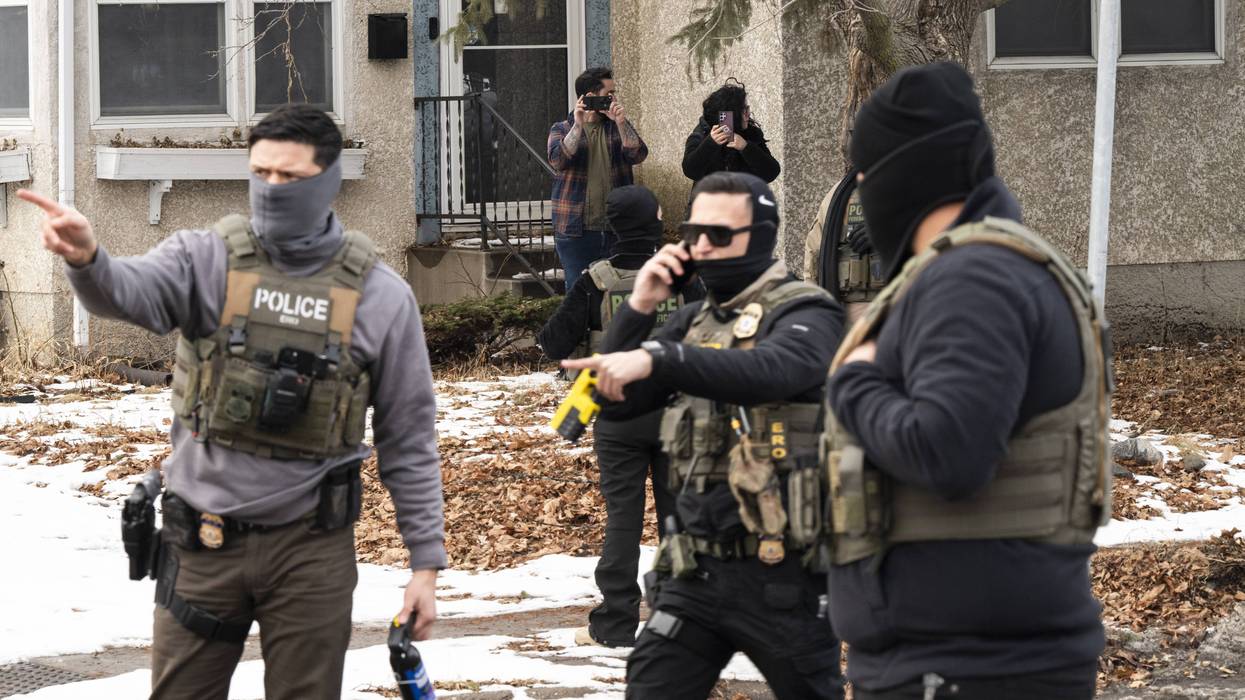
Both murders during Operation Metro Surge were followed by a similar pattern. First, Trump regime officials immediately assassinated the characters of Good and Pretti as “domestic terrorists.” When that backfired as the public learned about the victims — one, a poet and mother of three, and the other, a VA hospital nurse and registered gun owner — the regime quickly moved to cover up details of the murders, blocking Minnesota officials from the federal investigations.
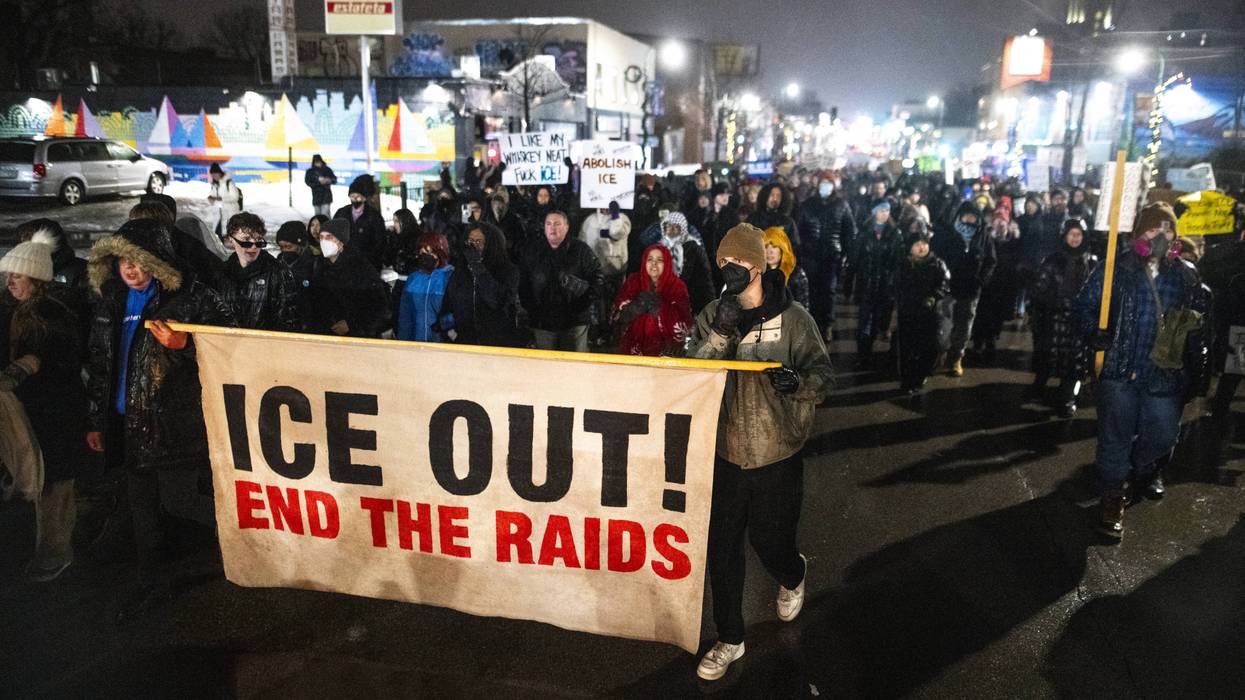
But something else also took place in between the mayhem. The day before Pretti was killed, more than 50,000 Minnesotans packed the streets of Minneapolis in subzero temperatures and a biting negative 30-degree windchill to demand the withdrawal of all federal agents from the city. The march was in response to calls for a general strike by local faith and labor leaders and saw hundreds of businesses closed in support of the protests.
This was a natural response for a city already primed for mass mobilization after weeks of building networks for community organizing and resistance to ICE’s draconian crackdown. Federal agents had all but suspended civil rights as they laid siege to Minneapolis, abducting at least 3,000 people, terrorizing neighborhoods, and conducting warrantless home raids. ICE aggressively targeted residents with harassment and assault based on nothing more than their skin color and accents.
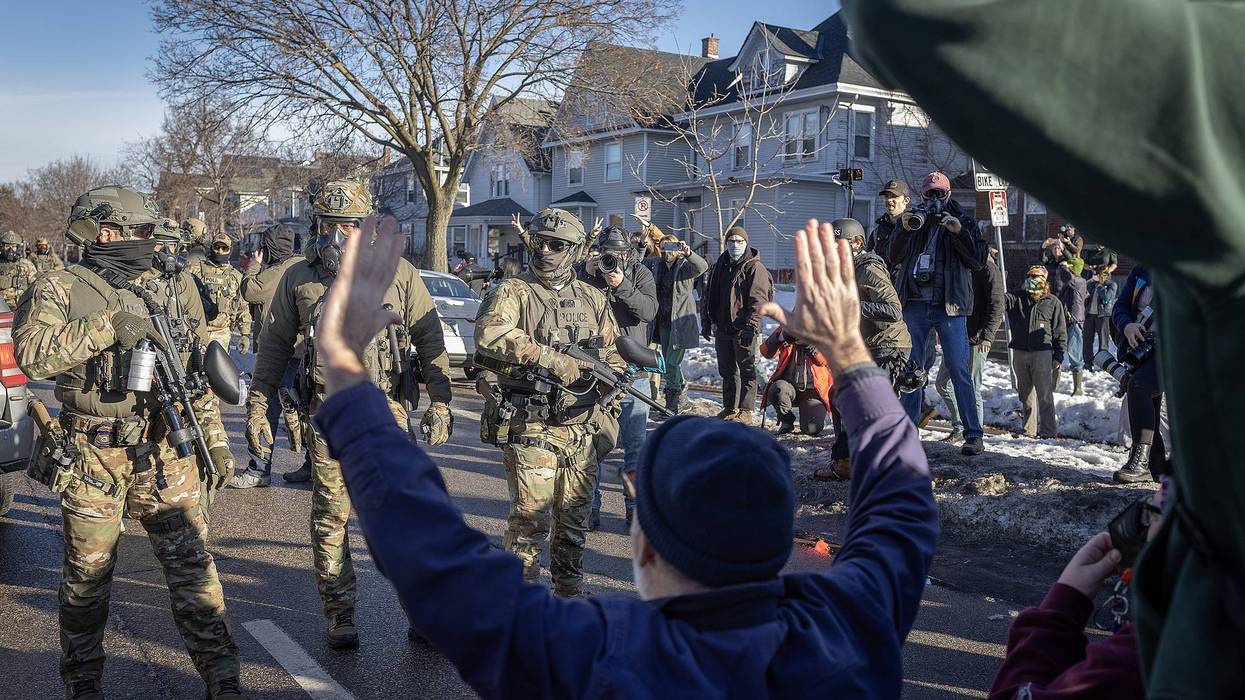
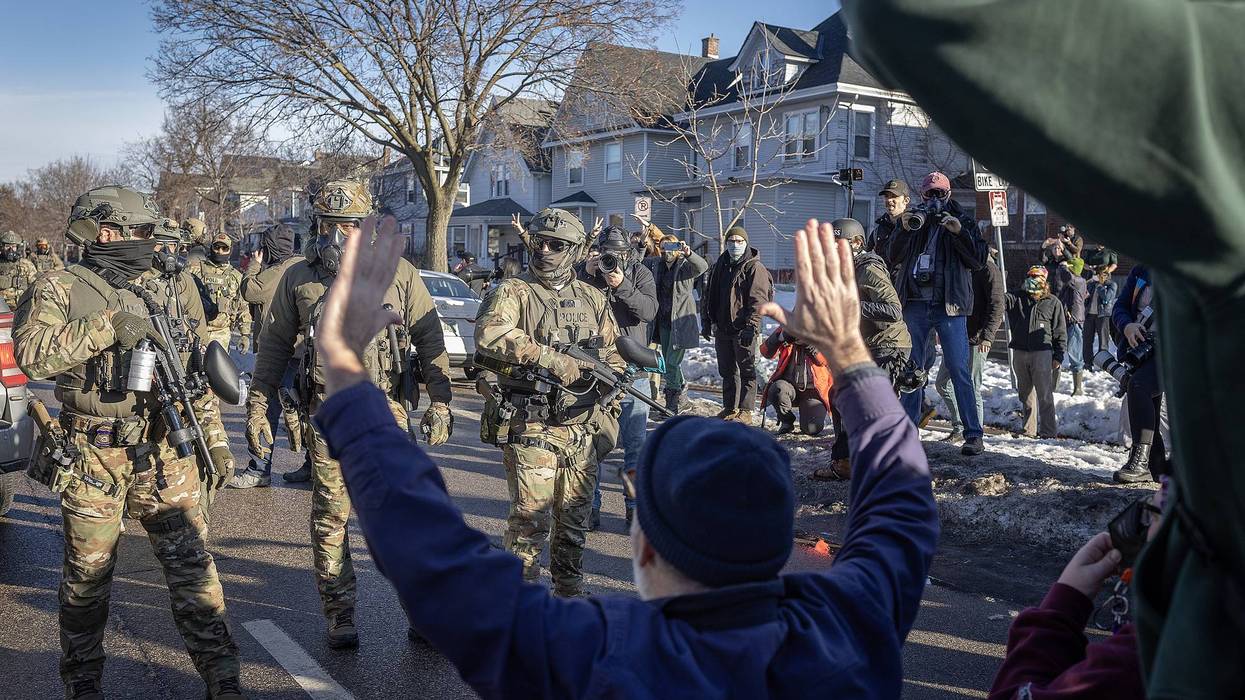
At first, the campaign of terror only escalated as the city fought back. Masked agents rammed into civilian vehicles; sprayed tear gas and pepper spray at families and children; beat protestors and threw bystanders to the ground; and, ripped people out of their vehicles. School attendance dropped by as much as 50 percent and businesses suffered. At the same time, resistance drew popular support, with residents turning out in droves to ICE observer trainings, joining Signal groups to rapidly respond to ICE activity, and supporting mutual aid for immigrant families too afraid to leave their homes.
While not a general strike in the traditional sense, the culmination of this organizing on January 23 showed a highly organized, popular movement growing in size and strength. That is significant because protests against Trump’s anti-immigrant shock-and-awe crusade have often been spontaneous outbursts of riotous fury, including last June in Los Angeles where Trump deployed thousands of National Guard troops to provide cover for ICE raids. This was followed by similar deployments and protests in Portland and Chicago.
At the same time, ICE's overreach prompted a national backlash. When agents in Minneapolis kidnapped and detained a father and his five-year-old son, Liam Conejo Ramos, heart-wrenching images of the child — his innocence evoked by the blue bunny ears hat and Spiderman backpack he wore — provoked a national outcry that ended in Liam and his father's release from ICE detention. Many other children, however, have not been as fortunate.
Whereas during the first Trump regime the images of children being separated from their families and held in camps outraged much of the world, today the regime detains children and parents together in detention centers with abhorrent conditions. At notorious facilities like the one in Dilley, Texas, children and families are subjected to verbal abuse by guards, inedible food, 24-hour fluorescent lights, and rampant medical neglect.
Now, with two-thirds of Americans opposed to ICE, it seems Trump’s manufactured anti-immigrant hysteria — drummed up by a steady stream of racist vitriol and demonizing tropes — cracks easily under the boot of ICE’s savage attacks. But how that public opposition to ICE is mobilized also matters. Rapid-response confrontations with federal agents are necessary and provide tantalizing content for social media but are generally less effective at drawing wider layers of society into the struggle.
Organized Labor Vs. ICE Fascism
Last June in Los Angeles, a large rally of union members and other activists gathered in Grand Park. Protesters demanded the immediate release of David Huerta, president of SEIU California and SEIU-United Service Workers, who was arrested during ICE worksite raids days before. Following a weekend of raids and violent clashes between federal agents and protesters, the rally in Grant Park was backed by the L.A. County Federation of Labor, AFL-CIO, and drew thousands in a defiant protest against ICE and National Guard troops.
In similar fashion, organized labor’s involvement has been integral to Minneapolis asserting itself as the latest flashpoint of resistance to the Trump regime’s authoritarian agenda.
No, January 23 did not see an economic shutdown of workers on strike across core industries. But the Minnesota AFL-CIO-endorsed “general strike” did show the capacity and appetite for such escalation in the future. Perhaps just as important, it elevated the call for a “general strike,” from the marginal domain of fringe leftist communities, further into popular consciousness.
Of course, Minneapolis is no stranger to struggle and mass strikes. Even before the city thrust the Black Lives Matter movement onto the national stage following the police lynching of George Floyd in 2020, Minneapolis was home to one of the most significant general strikes in U.S. labor history when Teamster truck drivers spurred an economy-wide work stoppage that shut down the whole city in 1934.
But in terms of power and militancy, today’s labor movement looks entirely different from what existed in 1934. Most workers are unorganized and unions are weak, paralyzed by anti-union laws and weighted down by their own institutional bloat and sclerotic leadership. With the top brass of most major labor unions more at home in their corporate-style offices while mingling with Washington DC’s professional class and Democratic Party functionaries, it’s no wonder there is an entire generation of workers in the U.S. today that lacks any literacy in working-class struggle and trade union principles.
This matters because unions have, in the past, commanded a unique juncture of society — a critical conduit for mass mobilizing among broad sectors of the population, recruiting whole communities into struggle while inoculating them against the racist and reactionary forces that sought to divide working people against each other.
Today’s war on immigrants is the opening salvo of a broader war against dissent and toward an American fascism that serves caviar for the corporate oligarchs and chains for the rest of us. Worse, we lack the collective class power to effectively fight back.
Building upon the regime’s anti-immigrant repression, Trump has expanded law enforcement power to target “anti-fascist” and “left-wing activities.” That means more government witch hunts against political dissent, like the activist in Texas currently facing federal charges and up to 40 years in prison for merely transporting “Antifa” literature.
As federal agents have withdrawn from Minneapolis in recent weeks, they leave in their wake communities that are organized but also deeply scarred. While local businesses begin to recover, the trauma lingers for many families and children who remain fearful of leaving their homes. There is also deep distrust and persistent doubts that ICE’s rampage has truly wound down.
The collective trauma in Minneapolis is by design, part of the intended pay-off of a massive surge in ICE funding to the tune of $75 billion. Alongside the funding surge, the DHS’s “Defend the Homeland” recruitment campaign — replete with xenophobic overtones and neo-Nazi iconography — has more than doubled the number of ICE agents with a fresh crop of deputized MAGA adherents now menacing communities nationwide.
“ICE is a descendent of violent systems, like slave patrols, boarding schools, Jim Crow law enforcement, and political policing,” writes Cris Batista of Mijente, a Latinx and Chicanx-led immigrant justice organization. “Immigration enforcement is deeply embedded in the racist, white supremacist foundation of the United States. Like their slave catcher ancestors, ICE and CBP disregard human rights to uphold systems that benefit the rich and the powerful.”
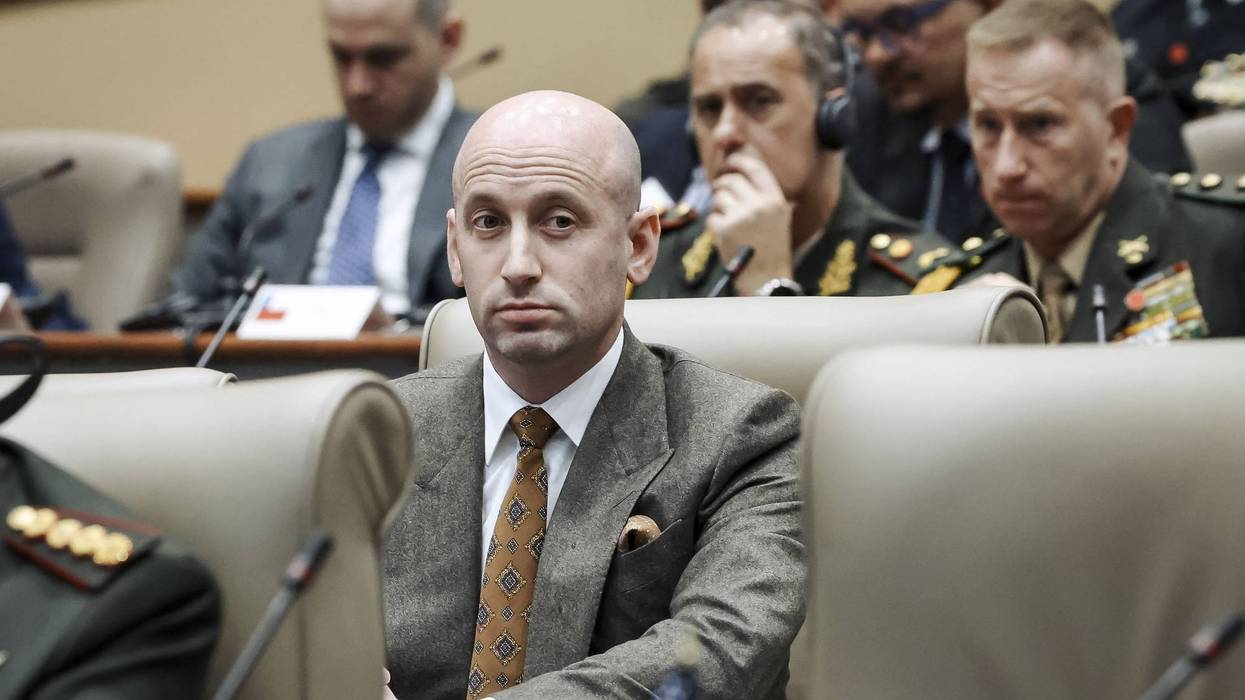
From this history, it follows that the propaganda of the Trump regime has been a barrage of callous and juvenile trolling to feed the far-right’s sadistic revelry in human suffering, including ASMR-style videos from deportation flights and “Alligator Alcatraz” merchandise. This posturing also makes sense given the ghoulish architect behind the regime’s anti-immigrant, culture-war agenda. While Stephen Miller has spawned so much of Trump’s policies and approach, he does not hide the larger dystopian future to which he hopes his war on immigrants will lead. It’s no secret that Miller’s obsessive homages to “Western Civilization” aspire to a nation dominated and led by whites only — a social and political order that can only be enforced by despotic repression.
Building Resistance from Within and Without Unions
In the midst of all the chaos and cruelty, something unexpected happened over the past year: more workers in the U.S. have joined the labor movement.
According to data released by the Bureau of Labor Statistics last month, union membership rose to a 16-year high in 2025. While reports frame this increase as taking place despite Trump attacks on labor, including thousands of union workers in the federal government, one can argue that the boost in union ranks is also because of the regime’s anti-worker policies. That’s particularly likely in the face of Trump’s dismissive attitude toward the affordability crisis, perhaps leading more cash-strapped workers to look for the higher wages and workplace protections secured in collective bargaining.
This growth in union membership also occurred despite the fact that most unions in the U.S., with some important exceptions, have declined to take on significant and sustained organizing efforts.
“Evidence abounds that many millions of workers would join the unions but for any opportunity to do so,” writes veteran union leader and organizer Chris Townsend. “Without unions organizing actively on any significant scale, there exist few avenues for the unorganized to connect with the unions, let alone join them. The assorted labor leadership in the unions for the most part consider new organizing to be too difficult, too expensive, too controversial, or too exhausting to seriously pursue. This justifies their inaction and profiteering from the unions, with lavish lifestyles and pursuits taking the place of the hard slogging work to reach out and mobilize the unorganized masses.”
Stronger unions are needed now more than ever to confront the oppressive machinery of Trump’s authoritarianism. But building union strength starts with a deep commitment to new worker organizing and aggressively educating existing union members, especially the 75,000-plus newly organized members who voted to unionize workplaces over the past year. These are tasks that existing union leaders have been either unable or unwilling to carry out.
For activists, there is no simple path to addressing these needs within the labor movement. It will take rank-and-file leaders agitating and building worker power inside of their unions, with militant caucuses pressuring leaders to answer the call of history to fight against the totalitarian oppression of working people and the poor. And, where union leadership is unresponsive and derelict in this struggle, the work of building organizations of workers outside of official union structures must be undertaken.
While none of that work is easy, it is existential for immigrant communities and the working class as a whole.
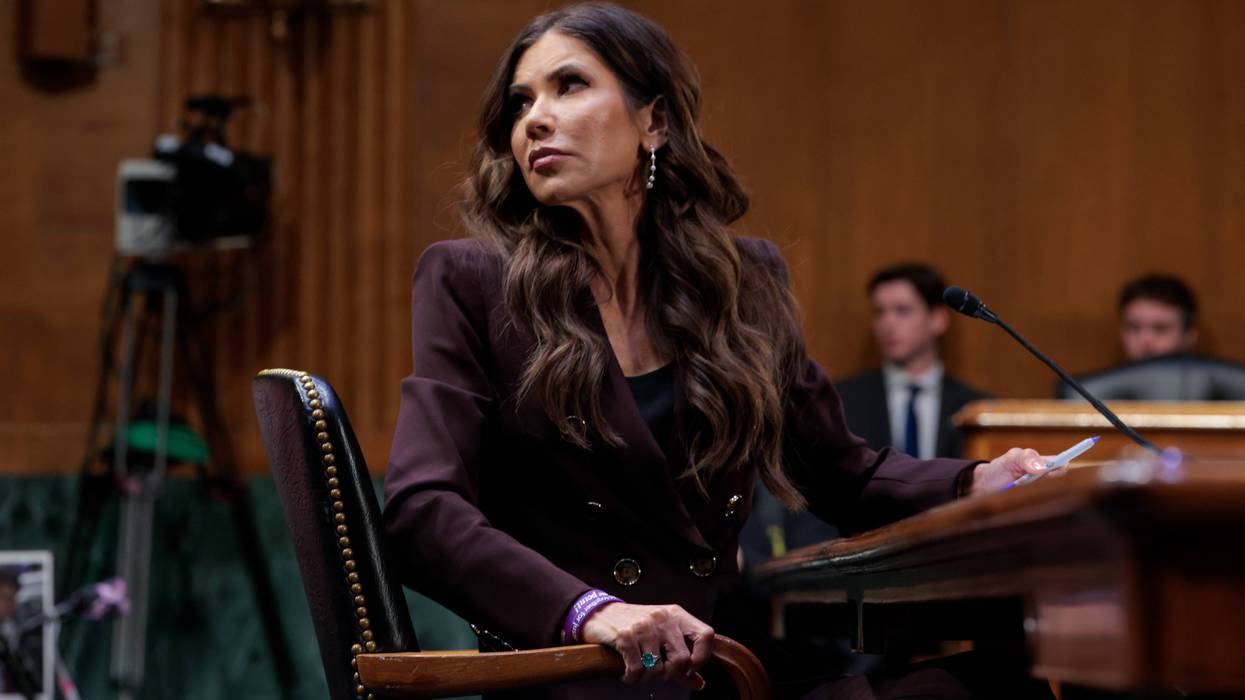
Yesterday’s firing of DHS Secretary Kristi Noem, like the removal of senior border patrol official Greg Bovino several weeks prior, is a profound testament to the power of Minneapolis’s fierce, union-backed resistance. Much like Bovino became the Gestapo-outfitted face behind Operation Metro Surge, Noem's tenure ends with an ugly legacy of shamelessly leading one of the most racist and violent crackdowns on immigrants and activists in U.S. history. And that's owing, in no small part, to the steadfast organizing of Minneapolis communities.
“One senior ICE official I asked about Noem’s firing attributed it in large part to the Minneapolis protests, saying the whole episode has been devastating for ICE and its morale,” journalist Ken Klippenstein reported. “The evidence for this seems overwhelming, with Congress repeatedly raising the killings of Alex Pretti and Renee Good throughout Noem’s Senate hearing yesterday.”
The lesson from Minneapolis is clear: we need movements with the capacity and courage to confront Trump’s nascent police state with mass strikes.
Because if there is an anecdote to ICE and rising fascism in the U.S., it is to be found in an organized and empowered working class.
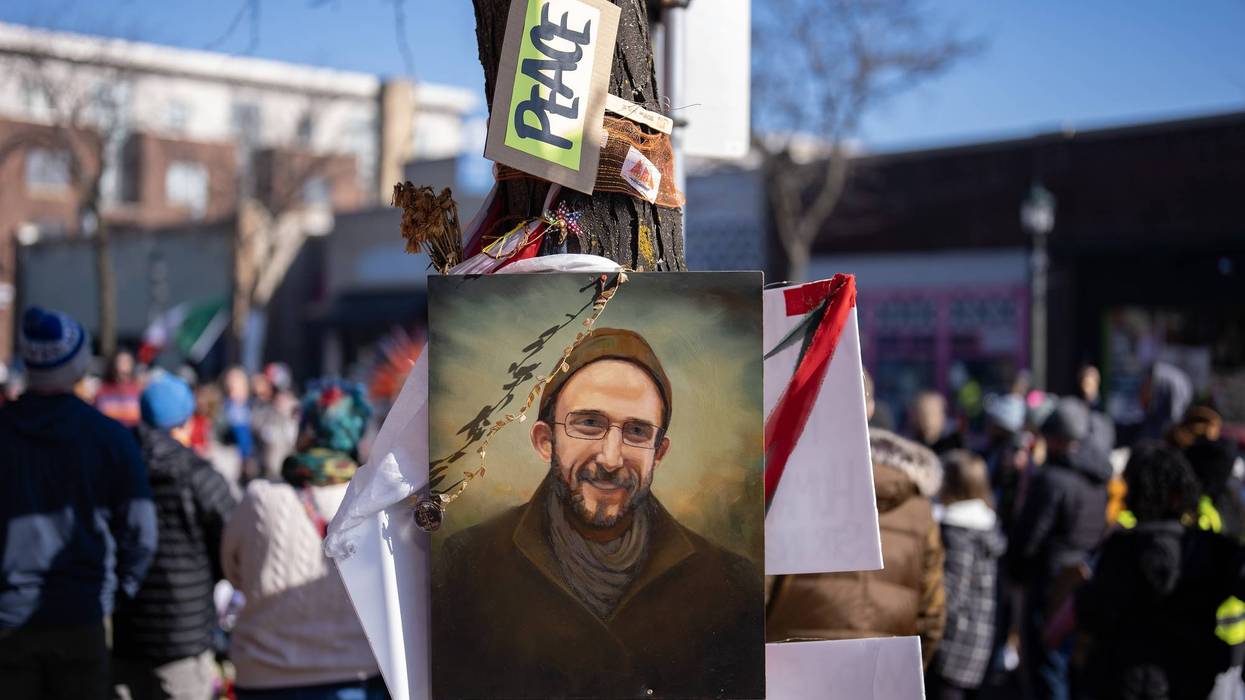

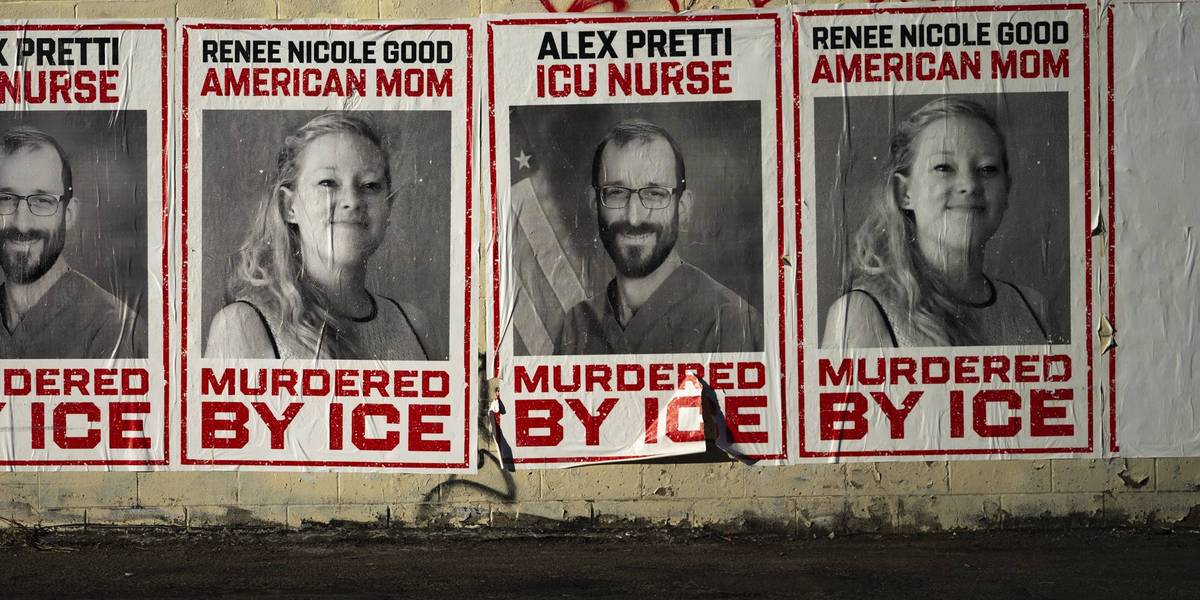 Signs memorializing Renee Good and Alex Pretti are seen pasted to the wall of a building on February 12, 2026 in Minneapolis, Minnesota. (Photo by Stephen Maturen/Getty Images)
 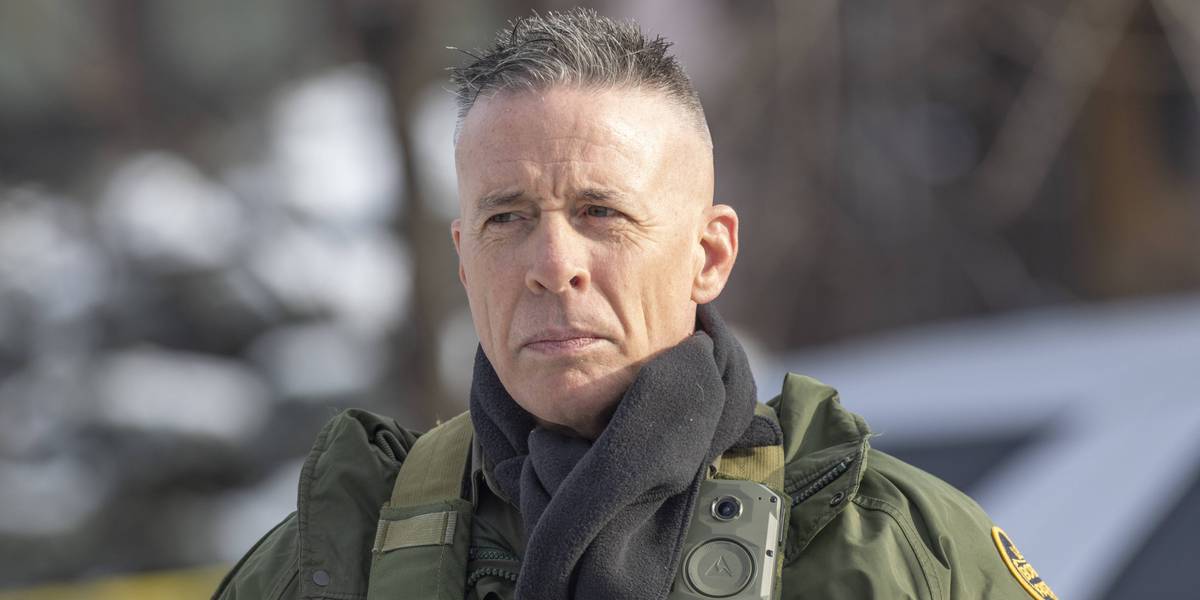 Gregory Bovino, the Commander-at-Large stands around the scene where ICE agents fatally shoot a woman earlier in the day in Minneapolis, Minnesota, United States, on January 7, 2026. (Photo by Christopher Juhn/Anadolu via Getty Images)