
SUBSCRIBE TO OUR FREE NEWSLETTER
Daily news & progressive opinion—funded by the people, not the corporations—delivered straight to your inbox.
5
#000000
#FFFFFF
To donate by check, phone, or other method, see our More Ways to Give page.


Daily news & progressive opinion—funded by the people, not the corporations—delivered straight to your inbox.
Summers’ influence was immense, but so were his blind spots. It’s time for economics that values people and the planet over power and prestige.
The era of Larry Summers’ dominance in American economics is over. It’s a good moment to take stock.
Summers has been just about everywhere money talks. From Harvard to the Treasury, through the Clinton and Obama White Houses, onto Wall Street, and into think tanks and policy networks that shape the nation’s economy—including the Center for American Progress, the Peterson Institute for International Economics, and the Hamilton Project at the Brookings Institution—he has left a mark few economists ever achieve.
Yet his career also shows the risks of concentrating authority in economists whose prestige, ambition, and attachment to abstract models can outweigh attention to real lives. Time and again, he let the interests of financial elites, spreadsheet obsession, and ingrained biases create troubling blind spots. The consequences for ordinary people and the planet simply faded into the background.
The silver lining: Summers’ record offers a clear road map for reform, highlighting what economics should not be: a discipline that prioritizes prestige, profit, and elegant equations. And it points toward what it could be: smarter, fairer, more accountable, and genuinely focused on human well-being and the Earth we inhabit.
Let’s be blunt: Economists who don’t see women as equals weaken the very core of their discipline.
Tasked with understanding how people, resources, and institutions interact, they can’t model societies, predict outcomes, or craft effective policy if they don’t accurately perceive half the population. Bias isn’t just a moral failure. It corrupts analysis.
If Summers had respected women’s intellectual authority, he might have heeded Brooksley Born when she pushed to regulate derivatives as chair of the Commodity Futures Trading Commission (CFTC).
Summers’ comments while president of Harvard suggesting women lack the natural faculties to excel in higher mathematics and science reveal a deeper flaw: outdated, discriminatory, and intellectually sloppy thinking. (Any lingering doubt about his mindset vanishes when you read his 2017 email to Jeffrey Epstein: “I observed that half of the IQ in world was possessed by women without mentioning they are more than 51% of population.” A leap beyond casual sexism, this was a bold assertion of women’s intellectual inferiority).
Such attitudes have real consequences for economics, leadership, and policy.
Consider: If Summers had respected women’s intellectual authority, he might have heeded Brooksley Born when she pushed to regulate derivatives as chair of the Commodity Futures Trading Commission (CFTC). Instead, he joined forces with Alan Greenspan and Robert Rubin to shut her down—a disastrous misstep that helped set the stage for the unregulated derivatives boom and the 2008 financial crisis.
America is still paying for that one.
The economics profession itself pays a steep price for sexism. Institute for New Economic Thininkig research by Giulia Zacchia, Orsola Constantini, and Moshen Javdani shows that structural bias in hiring, research evaluation, and theoretical norms pushes women and fresh ideas to the margins, producing models and policies that miss the full picture of how economies really function.
Summers’ personal conduct compounds his professional failings. In the Epstein files, Summers discussed a Chinese female mentee in explicitly sexual terms. He detailed his attraction and referred to the possibility of a sexual relationship, asking Epstein whether it was “meaningful” to discuss “the probability of my getting horizontal w peril,” a code name for the woman in question. He speculated about how to make himself seem “invaluable and interesting” to her, implying that intimacy could follow. This behavior obviously violates professional boundaries.
Sexual harassment isn’t just harmful to the people targeted—it hurts businesses, families, and the economy too, as I have documented (Parramore, 2018), while Zacchia and Izaskun Zuazu emphasize the need to challenge the deep-rooted gender inequalities that make harassment possible. Unfortunately, Summers’ sexism proved too deeply rooted to excise.
Summers’ departure opens the door to economics that not only produces more accurate models and better outcomes for society, but fully embraces the talents and insights of female students and economists.
Summers’ career offers a clear example of how cozy ties between elite economists and Wall Street create harm.
While president of Harvard (2001-2006), Summers had what colleagues described as a “huge influence over Harvard money matters.” He pushed for a risky investment strategy for the university’s endowment, even though as early as 2002, Iris Mack, an analyst at the Harvard Management Company (HMC), warned Summers’ chief of staff about what she described as “frightening” use of derivatives and inadequate risk-management protocols. But her warnings, and those of Jack Meyer, the head of the endowment, who warned of investments in “stocks, bonds, hedge funds, and private equity,” were disregarded by Summers. (Mack was dismissed, and alleges she was fired for voicing concerns; she later reached a settlement with the university).
Summers’ investment strategy backfired sharply when the 2008 crash hit, costing the university dearly: 27% of its endowment, to be precise. By then, Summers was working at a hedge fund and would soon spin through the revolving door into Barack Obama’s White House.
In another telling episode, Summers shielded his colleague Andrei Shleifer during the scandal over Harvard’s 1990s-era Russia privatization program. Shleifer and associates were found liable by a federal court for using insider access to invest in Russia while advising on US-funded economic programs: a clear conflict-of-interest. Harvard ended up shelling out a $26.5 million settlement, but Shleifer kept his tenured position, thanks in part to Summers’ influence.
Summers’ Wall Street-friendly instincts have reached deeply into policy. During the 1990s and early 2000s, he advocated deregulation and reduced oversight for banks, contributing to the conditions that triggered the 2007-2008 financial meltdown, when millions of regular people lost jobs, homes, and savings. After public office, he continued profiting from that same financial ecosystem, collecting large fees through consulting, speaking engagements, and corporate board positions.
In Wall Street’s corner he remained: In 2023, he pushed the government to guarantee all deposits at Silicon Valley Bank, arguing that failing to do so would be a “Lehman-like error,” while downplaying conflicts of interest with firms tied to the bank. He warned against listening to “moral hazard lectures” about bailouts. (It was not reassuring to learn that Summers turned out to have undisclosed ties to firms connected to SVB’s largest depositors).
In 2025, Summers warned that asset prices are “frothy,” but instead of calling for regulations or protections for people who might lose their savings, he framed his concern in a way that would calm investors. His focus seemed to be on keeping financial elites calm above all else.
Summers has consistently emphasized market stability over robust support for working people, advocating Fed policies that favor large banks and investors. Coupled with his continued advisory roles with financial-sector firms (many now lost due to the Epstein files), these moves reinforced a career-long pattern: prioritizing the interests of the wealthy while leaving Main Street to fend for itself.
Which brings us to the next lesson.
Regrettably, it bears repeating that economics has too often been treated as a game for elites, focused on numbers on paper, financial flows, and abstract deficits, while the jobs, homes, and livelihoods of working people are pushed aside. Summers personifies this very problem.
For example, Summers pushed interest‑rate hikes and emphasized deficit reduction over job creation. As political protégé of deficit‑hawk Rubin, and later as head of the National Economic Council (NEC), under Obama, Summers repeatedly plugged austerity, even at times when stimulus was badly needed to support working people.
In December 2008, a full month before Obama’s inauguration, Summers drafted a 57‑page memo warning of a grim economic outlook, but he also downplayed how severe the downturn could be. That memo laid the foundation for a flawed stimulus plan and economic strategy that prioritized deficit targets over urgent jobs recovery.
Larry Summers’s record on global economic policy offers a revealing portrait of his priorities: market logic over human lives, and financial returns over planetary survival.
The results were stark. Actual job losses far outpaced the administration’s optimistic estimates, and the recovery was painfully slow for millions of Americans. After leaving the NEC, Summers went on to warn against aggressive fiscal support, focusing instead on deficit risk and inflation concerns, often at the expense of middle‑class wage earners trying to get back on their feet.
In the wake of the Covid-19 pandemic, Summers repeatedly championed what many view as market-first, investor-friendly economic priorities over aggressive support for working-class Americans. In 2021 he blasted the stimulus bill (American Rescue Plan) as “the least responsible macroeconomic policy in 40 years,” warning that huge fiscal spending combined with loose monetary policy was “kindling” an inflation fire.
This neglect of working people is a failure of economics. When economists treat deficits and interest rates as ends in themselves, rather than tools to support lives and livelihoods, they lose the real purpose of economic analysis.
For too long, the rules of economic policy have been written by those fail to understand the stakes of unemployment, insecure work, or debt. Larry Summers isn’t just a powerful economist, he’s also very wealthy: His net worth rocketed from around $400,000 in the mid-1990s to $7-31 million by 2009, largely through high-paid Wall Street consulting, hedge-fund work, and speaking fees. Today, estimates put him at roughly $40-50 million.
Perhaps this background helps explain his longstanding emphasis on austerity over labor-market protections.
Larry Summers’s record on global economic policy offers a revealing portrait of his priorities: market logic over human lives, and financial returns over planetary survival.
Over decades, he repeatedly helped shape policies that forced vulnerable populations, particularly in developing countries, to subordinate basic needs like health, education, and environmental protection to debt repayment and economic “efficiency.”
One episode has come to symbolize this worldview. In 1991, while serving as chief economist for the World Bank, Summers’ office circulated an internal memo drafted by Lant Pritchet and cosigned by himself, which suggested that dumping toxic waste in developing countries would actually benefit them economically. The memo noted that, because wages and estimated “economic losses” from illness were lower in developing countries, the health costs of pollution would be “cheaper” there than in wealthier nations. Although Pritchett later insisted the memo was merely sarcasm, the fact that it moved through Summers’ office and carried his signature sparked international outrage.
After the memo became public, Summers told a reporter: "I think the best that can be said is to quote La Guardia and say, 'When I make a mistake, it's a whopper.'"
Many agreed. Brazil’s then-Secretary of the Environment Jose Lutzenburger, excoriated Summers’s logic as “perfectly logical but totally insane,” noting that it exemplified “the unbelievable alienation, reductionist thinking, social ruthlessness, and the arrogant ignorance of many conventional ‘economists’ concerning the nature of the world we live in.”
This was not just a one-off. In the 90s, Summers used his power to block meaningful climate action, opposing US participation in Kyoto Protocol. He claimed that rapid greenhouse‑gas reductions could carry “unknowable economic consequences.”
Even when he later moved toward what some considered climate-friendly policies, his proposals revealed much about his real concerns. For instance, in 2017 he backed a modest carbon-pricing scheme, but only if it replaced stronger environmental regulation and came with rebates and border adjustments. In an op-ed titled, “Why we should all embrace a fantastic Republican proposal to save the planet,” he favored “raising the price of carbon and less emphasis on command-and-control regulation.” That approach aligns neatly with the wish lists of deep-pocketed polluters and carries little of the urgency environmental scientists and communities fighting climate disaster demand.
Summers also supported the North American Free Trade Agreement (NAFTA), which has been widely criticized for undermining environmental regulations in Mexico, weakening labor protections, and allowing corporations to externalize ecological costs across borders. Once again, Summers appeared to prioritize trade liberalization and corporate profits over environmental justice and workers’ rights.
Under Obama, he continued to warn of potential economic risks of aggressive efforts to limit carbon emissions. More recently, in 2022, Summers promoted a World Bank plan to leverage massive new borrowing to address poverty and encourage a “global green transition.” On the surface, this looks progressive, until the focus on financing and efficiency is revealed. Rather than advocating real structural change, Summers continues a pattern of putting capital and market mechanisms over meaningful, just environmental action.
In the big picture, Summers’s retreat leaves both a gap and a long‑overdue opportunity.
More than ever, the US—and the world—needs economists who put real people first: who design policies that protect jobs, homes, and communities; who confront climate change rather than downplay it; who treat women, working people, and marginalized groups as full participants; and who put their focus on social well‑being.
As the 19h‑century critic John Ruskin famously wrote, “The only wealth is life.” Economics must finally reflect that truth (Spear, Parramore, 2015).
We now have a chance to build a life‑centered economics, one that prioritizes human flourishing, environmental stewardship, and equitable opportunity—not just the interests of the elite few.
The opportunity is here. Let’s seize it.
"These latest revelations ought to be the final straw," said a Summers critic.
Economist Larry Summers, a former president of Harvard University and top economic policy official under Presidents Bill Clinton and Barack Obama, is facing increased scrutiny after emails released this week showed he maintained a friendly relationship with convicted sex offender Jeffrey Epstein even after he served a term in prison for soliciting a minor.
The emails, which were released by investigators in the House of Representatives on Wednesday, revealed that Summers regularly conversed with Epstein on a wide range of topics, years after Epstein victims had filed lawsuits against him and his associates that contained lurid details about his alleged underage sex-trafficking ring.
In one email, flagged by writer Jon Schwarz, the then-64-year-old Summers asked Epstein for advice about a woman he appeared to be pursuing, while complaining about her relegating him to being a "friend without benefits." The email was sent in March of 2019, just months before Epstein would be indicted on charges of sex trafficking of minors and conspiracy to commit sex trafficking of minors.
Another email, flagged by historian Sam Hasselby, showed Summers' wife, Harvard English professor Elisa New, recommending that Epstein read the book Lolita by Vladimir Nabokov, which is about a middle-aged professor professor who kidnaps and sexually abuses a 12-year-old girl. New described the book to Epstein as the story of "a man whose whole life is stamped forever by his impression of a young girl."
In a statement given to the Harvard Crimson, Summers called his relationship with Epstein one of the "great regrets in my life," and "a major error of judgement."
This acknowledgement was not enough to satisfy the government watchdog group Revolving Door Project, which on Thursday said Summers should lose his positions at Harvard, where he is currently a professor at the Harvard Kennedy School, and at the OpenAI Foundation, where he currently sits as a member of its board of directors.
Revolving Door Project Executive Director Jeff Hauser said that the emails showed "a close personal bond between the two men, long after Epstein’s conviction for sex crimes against minors" and added that "it is well past time for the powerful institutions that work closely with Summers—including OpenAI—to distance themselves from him, and anyone with a close relationship to Epstein."
Hauser also emphasized that Summers' years-long relationship with Epstein was not a one-time moral lapse but part of a long history of unethical behavior.
"I have previously warned about Summers’ unethical behavior and ties to unsavory businesses, but these latest revelations ought to be the final straw," he said. "It is disgusting that Summers has played such a crucial role in government at one of America's premier universities for so long. Companies and institutions affiliated with him—including the world’s most influential AI company, and two of the nation’s premier news outlets—ought to demand his immediate resignation."
"The wealthy and powerful operate with a set of rules totally unrecognizable to the rest of us."
Although Democrats in the US House of Representatives have used newly unearthed emails from the late convicted sex offender Jeffrey Epstein as a cudgel against President Donald Trump, many observers have noted that the full trove of messages also implicates multiple members of the American ruling class as complicit in a criminal conspiracy.
In particular, the emails reveal that Epstein maintained friendly ties with several people with enormous influence in US politics even after he served a prison sentence for soliciting a minor.
Among the prominent elites who maintained contact with Epstein were Larry Summers, former president of Harvard University and director of the National Economic Council under President Barack Obama; right-wing billionaire Peter Thiel, whose financing helped launch Vice President JD Vance's political career; right-wing podcaster and former Trump administration official Steve Bannon; and Kathryn Ruemmler, former Obama White House counsel and current attorney for investment banking giant Goldman Sachs.
Writing on Bluesky, political scientist Ed Burmila argued that the true scandal surrounding Epstein isn't just about one person, but a "crisis of elite impunity" in which the rich and powerful will brush off the crimes committed by their peers, even if they involve the serial sexual abuse of underage girls.
"The crisis of elite impunity that is ruining our society cannot be more clearly or convincingly demonstrated than with the fact that all of these people wrote all this stuff into an email and hit send," he said. "Some of these people are lawyers; the rest are intimately (phrasing) familiar with courtrooms and lawyers in their professional lives. They didn't put this stuff in writing because they're naive or ignorant; they did it because they have no fear of consequences. None at all."
Burmila's argument was echoed by commentator David Kurtz, who wrote at Talking Points Memo that reading the Epstein emails left him "astonished not so much by the chumminess he enjoyed with elites even after he’d served time for soliciting prostitution with a minor but by their flagrantness, their casual disregard, and their indifference to consequence."
Kurtz argued that this level of ruling-class impunity symptomatic of the deep rot inside American political, legal, and academic institutions.
"It is the same impunity that got us Trump," he wrote. "Like Epstein, Trump built a career on a transactional chumminess, mutual self-indulgence, and an alarmingly high tolerance level for misbehavior by the layers of political, business, media, and cultural elites surrounding him."
Leah Greenberg, co-director of Indivisible, shared Kurtz's essay on her Bluesky account and declared the Epstein scandal "a story about total elite impunity, how the wealthy and powerful operate with a set of rules totally unrecognizable to the rest of us."
MSNBC host Chris Hayes also thought the Epstein emails showed American elites in an unflattering light, and he observed on Bluesky that many of Epstein's correspondents showered him with "fawning and flattery," even though he comes across as "a pompous, sub-literate lech."
"Lots of people say: that’s because he’s blackmailing them, but I don’t think he’s blackmailing Kathy Ruemmler!" Hayes wrote. "I don’t think that’s what explains it. I think the banal answer is: he’s very rich and powerful and good at networking and this is how people act around very rich and powerful people."
Although Epstein was only ever criminally convicted on one charge of soliciting a minor in 2008, he was subsequently indicted in 2019 on charges of engaging in a broad sex-trafficking conspiracy involving dozens of teenage girls. Epstein would die in prison before he could face trial for these charges, and law enforcement officials would subsequently claim that he took his own life.
Ghislaine Maxwell, Epstein's longtime accomplice, is currently serving a 20-year prison sentence for her role in helping Epstein groom and abuse underage victims.
“There is no greater indication that OpenAI is unserious about the interests of humanity than their elevation of Larry Summers to its board of directors," said one watchdog.
News that OpenAI co-founder Sam Altman will be returning to the artificial intelligence startup just days after he was ousted by the firm's board of directors was accompanied by the announcement Tuesday of a new initial board consisting of three individuals—one of whom is the Wall Street-friendly economist and former U.S. Treasury Secretary Larry Summers.
Given Summers' record of fighting tougher regulations for risky financial instruments and—more recently—his incorrect predictions about the trajectory and stubbornness of inflation in the U.S., his elevation to the board of a company whose AI work has profound implications for the future of humanity drew immediate alarm.
The Revolving Door Project, a progressive watchdog group whose research has uncovered Summers' deep corporate ties, called his selection to the OpenAI board "awful news for humanity."
"There is no greater indication that OpenAI is unserious about the interests of humanity than their elevation of Larry Summers to its board of directors," said Jeff Hauser, the group's executive director. "Summers energetically promotes cryptocurrency, inflation hysteria, and himself with equally misplaced ardor."
Economist and journalist Nomi Prins wrote on social media that Summers "holds the top spot of those responsible for the 2008 financial crisis," alluding to his opposition to more strictly regulating financial derivatives that fueled the economic collapse.
"If AI is to be focused on human policy and care, he's a dustbin for deregulation and recklessness," Prins argued. "As president of Harvard in 2005, Summers launched a disgusting tirade on women in math and science and seemed to believe it was based on 'research in behavioral genetics.' You want Larry to be involved with steering AI forward with human consideration?"
"Summers' ascent to the heights of AI should accelerate concerns that AI will be bad for all but the richest and most opportunistic amongst us."
OpenAI's decision to reinstate Altman as CEO under a new board consisting of Summers, former Salesforce co-CEO Bret Taylor, and Quora chief executive Adam D'Angelo came less than a week after the previous board removed Altman, sparking an immediate employee revolt.
The chaotic leadership shuffle at the $90 billion company was the culmination of infighting that had been building for more than a year, with some of the tensions surrounding Altman's pursuit of commercial expansion at the potential expense of safety, according to The New York Times.
"The tension got worse as OpenAI became a mainstream name thanks to its popular ChatGPT chatbot," the Times reported Tuesday. "At one point, Mr. Altman... made a move to push out one of the board's members because he thought a research paper she had co-written was critical of the company. Another member, Ilya Sutskever, thought Mr. Altman was not always being honest when talking with the board. And some board members worried that Mr. Altman was too focused on expansion while they wanted to balance that growth with AI safety."
Wired noted last week that "disagreements over the issue of prioritizing safe development of AI previously led several prominent OpenAI researchers to leave the company and found competitor Anthropic."
Earlier this year, Altman joined a number of industry leaders in signing a letter declaring that "mitigating the risk of extinction from AI should be a global priority alongside other societal-scale risks such as pandemics and nuclear war." But researchers have warned that the guardrails put in place at OpenAI are badly inadequate, particularly given the current regulatory vacuum in the U.S.
Last month, U.S. President Joe Biden signed an executive order aimed at bolstering AI safety standards, a move that watchdogs welcomed as a positive first step that must be followed by more ambitious action.
It's unclear precisely what influence Summers will have on the direction of OpenAI or artificial intelligence development more broadly.
As Bloomberg observed Wednesday, "The few comments he has made about AI have centered on the labor impact."
"In 2018, Summers disputed the claims from then-Treasury Secretary Steve Mnuchin that AI would not replace American jobs for 50 to 100 years," Bloomberg noted. "The robots are coming,' Summers wrote in The Washington Post. That year, he also warned of economic catastrophe if the U.S. 'loses its lead' in biotech and AI to China."
Last year, Summers told Bloomberg TV that "we are living in truly historic times" and said the AI revolution carries "opportunities and threats," adding that there's "no assurance at all" that advances in artificial intelligence will usher in progressive outcomes.
Critics suggested that with Summers involved in the management of OpenAI, the chances of guardrails operating in the public interest, as opposed to corporate profits and dominance, are worse.
"Summers' ascent to the heights of AI should accelerate concerns that AI will be bad for all but the richest and most opportunistic amongst us," said Hauser.
The macroeconomic situation today has confounded both those who called for interest rate hikes and those who warned against them.
Back in 2021 and early 2022, a posse of prominent economists—including Lawrence H. Summers, Jason Furman, and Kenneth Rogoff, all of Harvard—criticized the Biden administration’s fiscal and investment program, and pressured the U.S. Federal Reserve to raise interest rates. Their argument was that inflation, fueled by federal spending, would prove “persistent,” requiring a sustained shift to austerity. Unemployment, sadly, would have to rise to at least 6.5% for several years, according to one study touted by Furman.
While this trio (and many like-minded commentators) failed to sway the White House or Congress, they were in tune with Fed Chair Jerome Powell and his colleagues, who began hiking interest rates in early 2022 and have kept at it. The Fed’s rapid monetary-policy tightening soon prompted progressives, led by Senator Elizabeth Warren of Massachusetts, to fear that it will trigger a recession, mass unemployment, and (though they didn’t say it) a Republican victory in 2024.
But the macroeconomic situation today has confounded both positions. Contrary to those advocating austerity, inflation peaked on its own in mid-2022 (owing partly to sales from the U.S. Strategic Petroleum Reserve). There was no persistence, no surge from the 2021 fiscal stimulus, and no wage-driven inflation from low unemployment. The models and historical precedents that the Harvard trio had relied on clearly no longer apply (if they ever did).
The “fiscal channel” for interest-rate payments is an inconvenient concept for those who wring their hands over the “burden” of public debt.
There also has been no recession, unemployment has not risen, and higher interest rates have not deterred business investment. Residential construction took a hit, but the construction sector overall soon shook that off, and the banking crisis earlier this year has not led to financial contagion. A recession remains possible, of course, but so far there are very few warning signs.
These happy circumstances have led some observers to congratulate Powell and the Fed on achieving a “soft landing.” But crediting the Fed is magical thinking. There is no way, under any theory or precedent, that rate hikes beginning in January 2022 could have knocked back inflation by July of the same year. Whatever its consequences down the road, the Fed’s policy tightening has been irrelevant to the inflation slowdown so far.
But why haven’t 18 months of rising interest rates had any perceptible effect on employment, investment, or growth? That is as much of a puzzle for progressives as the fall of inflation is for austerians—especially considering that the pandemic-driven boost to household savings has ended, and Congress has started cutting back modestly on various spending programs.
Part of the answer surely lies in new tax incentives for investment, notably in semiconductors and renewable energy. But those sectors are fairly small, and their growth will have accounted for perhaps a hundred thousand jobs. Another part of the answer may lie in direct investment by companies fleeing Europe’s industrial decline, itself a byproduct of sanctions against Russia. But, again, these numbers cannot be very large.
What else is going on? One factor, suggested to me by Robert Aliber, an emeritus professor of economics and international finance at the University of Chicago, is that the top quarter of U.S. households became cash-rich during the pandemic. These households represent the largest share of U.S. purchasing power, and their spending is largely immune to high interest rates.
Another suggestion comes from Warren Mosler—the godfather of Modern Monetary Theory—who notes that U.S. national debt has risen to nearly 130% of GDP, up from about 60% in the early 2000s. The net interest paid on that debt increased by 35% from 2021 to 2022—reaching 2% of GDP—and about 70% of those payments went to the U.S. private sector. If one adds the effect of interest paid (starting in 2008) on $3 trillion in bank reserves, the fiscal support through this channel has been substantial.
History supports Mosler’s conjecture. Back in 1981, U.S. federal debt was only about 30% of GDP, and much of it was in fixed-interest, long-term bonds, with no interest paid on bank reserves. As a result, then Fed Chair Paul Volcker’s shockingly large interest-rate increases mostly hit private debtors and business investment, and the offsetting fiscal boost from interest payments was small.
In contrast, when the federal debt exceeded 100% of GDP in 1946, almost all of it was in war bonds held by U.S. households. Despite yielding only 2% in interest, those bonds provided a boost to private incomes and a base for mortgage borrowing through the 1950s—a time of largely stable middle-class prosperity.
The “fiscal channel” for interest-rate payments is an inconvenient concept for those who wring their hands over the “burden” of public debt. It suggests that Powell’s rate hikes may be powerless to slow GDP. Indeed, additional rate increases could even be expansionary, at least up to a point.
As in other extreme cases—like Argentina, where interest payments amount to a quarter or more of GDP—rate hikes will increase costs for businesses, pushing up prices, and also apply price pressures on fixed assets (land, minerals, oil) that will show up in our inflation measures. That, in turn, will discourage saving, spur borrowing, and impel the Fed to raise rates even more.
Over time, this process will lead toward economic chaos. But, if this narrative has merit and high interest rates don’t bring on the recession that the Fed so clearly desires, it will be difficult to change course. Ideology and habit can nurture the hope that doubling down on an ineffective policy will make it work.
What might stop this dynamic? One answer is severe fiscal austerity, with budget cuts used to provoke the recession that interest rates have failed to bring about. We are already seeing pressure for this option from Wall Street. Last week, Fitch downgraded its credit rating on U.S. sovereign debt, in a move clearly timed to scare Congress as its budget deadlines approach. Such a policy shift, if it is strong enough, would complete the ongoing obliteration of the American middle class.
Obviously, it would be better to do the opposite—to empower the middle class and disempower the bankers. That would means cutting interest rates while regulating new credit flows, controlling strategic prices, and strengthening fiscal support for household incomes and well-paying jobs. People with decent and secure incomes can reduce their reliance on unstable loans.
That is what we ought to do. But don’t hold your breath.
"As interest rates have risen to 'cool' the economy, who do you think has shouldered the burden? Working people," said Robert Reich. "There's no reason to continue punishing them when they aren't to blame for inflation."
After the latest consumer price index update signaled cooling inflation, the Federal Reserve's interest rate-setting committee on Wednesday temporarily paused hikes, an approach that progressive economists and others want the panel to continue.
The Federal Open Market Committee confirmation that, as expected, it will keep the federal funds rate at 5-5.25% follows 10 consecutive hikes since early 2022 that have increasingly generated concerns of a recession and major job losses.
University of California, Berkeley professor and former Labor Secretary Robert Reich is among the fierce critics of recent rate hikes.
"The Federal Reserve is pausing interest rate hikes for the time being. Good," Reich said Wednesday. "As interest rates have risen to 'cool' the economy, who do you think has shouldered the burden? Working people. There's no reason to continue punishing them when they aren't to blame for inflation."
U.S. Sen. Elizabeth Warren (D-Mass.) has also repeatedly raised alarm about the increases since last year and welcomed the newly announced pause while urging a long-term shift in strategy.
"With inflation falling by more than half since last summer, the Fed has finally heeded calls to halt its extreme rate hikes," she tweeted. "The Fed raised interest rates at the fastest pace in decades and it needs to maintain this pause or risk throwing millions of Americans out of work."
Groundwork Collaborative chief economist Rakeen Mabud, another longtime opponent of the Fed's rate-hiking, said in a statement Wednesday: "Inflation is down and the job market remains strong. We never had to choose between lower prices and a strong labor market."
Mabud urged Powell to "concede that you don't have to destroy the labor market to bring down prices," which she said "starts with not only skipping today's rate hike, but permanently halting this dangerous rate-hiking campaign."
Meanwhile, Groundwork Collaborative executive director Lindsay Owens highlighted a piece from Intelligencer's Eric Levitz which declares that Harvard University economist and former Treasury Secretary Larry Summers "was wrong about inflation."
"Larry Summers was right to anticipate impending inflation in February 2021. But from the beginning, his analysis was predicated on the idea that excessive stimulus would lead to unsustainably low unemployment and thus wage-driven inflation," Levitz explained. "There has never much reason to believe that the labor market was the primary driver of post-Covid price growth. And at this point, it's abundantly clear that, in 2023 America, a tight labor market will not inevitably trigger a wage-price spiral. We do not need to put millions of people out of work in order to contain inflation. Larry Summers was wrong to say otherwise."
Sharing the Intelligencer analysis on Twitter, Owens and Mabud's group wrote that "Larry Summers presented us with a false choice between strong labor markets and inflation. Groundwork said it then and we'll say it again: We never had to choose."
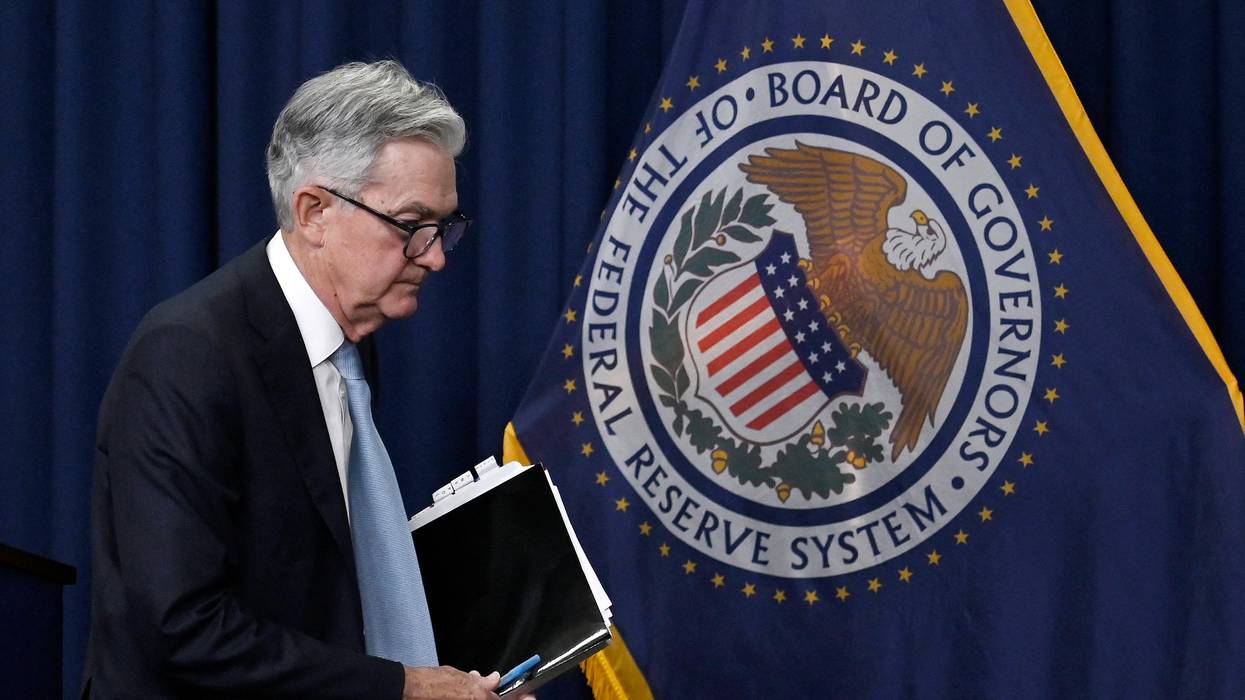
Despite progressive experts' demands for an end to interest rate hikes, Federal Reserve officials are projecting two more quarter-point increases this year. According to The Associated Press, Fed Chair Jerome Powell told reporters Wednesday that "given how far we have come, it may make sense for rates to move higher but at a more moderate pace."
Throughout the rate-hike campaign, critics have called out Powell and others for ignoring how corporate greed is driving inflation. The Hill noted that during the Wednesday press conference, he did not mention "the role that profits are playing in the current phase of inflation, despite mentions of 'unusually high' profits in the latest anecdotal summary of U.S. economic conditions in the Fed's beige book."
"Anyone who claims they have the absolute answer to every economic question isn't being honest with you. They're being a hack, and they shouldn't be considered serious sources."
Taking aim at "conflicts of interest and flat-out falsehoods in economics reporting and the so-called experts who perpetuate them," the Revolving Door Project on Wednesday launched a new website, Hack Watch, to name and shame Wall Street-friendly experts pushing often harmful neoliberal financial theories as absolute truths.
"Anyone who claims they have the absolute answer to every economic question isn't being honest with you. They're being a hack, and they shouldn't be considered serious sources," Max Moran, the personnel team director at Revolving Door Project (RDP), said in a statement introducing the new site.
"Economists like to sound certain, and they like to ridicule anyone who disagrees with them."
A follow-up to RDP's wildly successful Hack Watch newsletter—which began by scrutinizing former U.S. Treasury Secretary Larry Summers, often called "Wall Street's favorite economist," and his cryptocurrency partnerships—the website features an FAQ section on the federal debt as well as a "Trope Tracker" meant to dispel "common fallacies, falsehoods, and framing mistakes in economics coverage."
"Economists like to sound certain, and they like to ridicule anyone who disagrees with them," said Moran. "This can incline reporters, especially reporters who worry that they don't understand economics very well, to defer to economists unquestioningly."
Moran continued:
In the neoliberal age, economic analysis (from the right kind of neoclassical economists) was considered scientific truth. This is nonsense. Economics isn't a hard science, it's a method of analysis—a set of tools that help us to understand a few particular ways of how the economy works. Deciding what's actually right or wrong for the economy is always, ultimately, a matter of values and philosophy, which we express through politics.
"Top hacks" who already have bios on the new site include Summers, 2009 auto industry bailout architect Steven Rattner, Committee for a Responsible Federal Budget president Maya McGuineas, and senior vice president Marc Goldwein.
"Economics isn't a hard science, it's a method of analysis—a set of tools that help us to understand a few particular ways of how the economy works."
"When these hacks receive air time, they often present the existing socio-economic order as a natural phenomenon, softly echoing Margaret Thatcher's famous 'no alternative' declaration," said Dylan Gyauch-Lewis, who co-leads the Hack Watch project, in a reference to the former right-wing British prime minister's infamous neoliberal slogan.
"In a time of crisis after crisis, we cannot afford to restrict the public's imagination to the world as it was in 1992," Gyauch-Lewis asserted. "The staid old guard not only restricts the public conception of what economic policy can be, it misleads about what that view already is."
"To allow the same few Clintonian New-Democrats to monopolize discourse does viewers, policymakers, and the world a great disservice," he added.
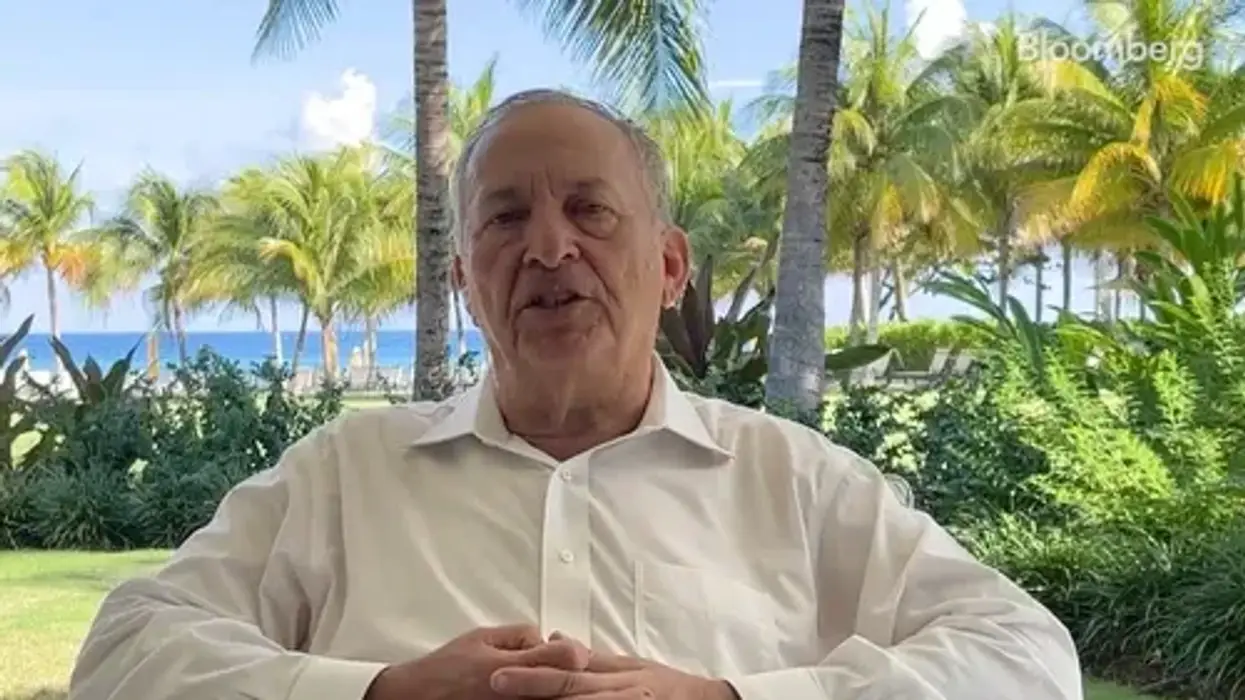
The least the media can do before he next urges a higher unemployment rate while lounging on a tropical beach is to ask him some hard questions.
On Tuesday, Cameron Winklevoss publicly accused Barry Silbert, the CEO of cryptocurrency conglomerate DCG, of engaging in an elaborate fraud to illicitly pump up the bitcoin holdings of its subsidiary Genesis Global Capital. The Securities and Exchange Commission and Department of Justice have both opened early-stage investigations into DCG and Genesis, likely to look into similar claims.
While we of course condemn fraud and hope that any retail investors will be made whole, the Revolving Door Project doesn’t especially care if one crypto tech bro (Silbert) happened to follow in the footsteps of Mark Zuckerberg and dupe a pair of crypto tech bro twins (Winklevoss). We do care about the individuals who are left as collateral damage, and that the architect of the possible con (Silbert) was advised the whole time by another person with whom the Winklevoss twins have an infamous history: former Treasury Secretary Larry Summers.
It’s not as if Summers is difficult to reach, the man clearly loves to be quoted.
According to a book about the rise of Bitcoin, Silbert brought on Summers as an advisor to DCG in 2016 specifically to open doors for him and his company on Wall Street and in foreign banks. At the time, Bitcoin was still widely (and rightly) seen as a gimmick at best and a scam at worst, but Summers’ support for Bitcoin made DCG, and Bitcoin, appear more respectable to investors, journalists, academics, and regulators.
Summers worked with DCG for over six years. Particularly last year, during a high point for Bitcoin and crypto more broadly, he issued widely-reported public pronouncements about the crypto industry, including declaring that Bitcoin “is here to stay.” Summers also called for new regulation of the crypto industry, saying “I think it’s a recognition that all industries need to come to that are systemic in their importance.” This call for new, crypto-unique regulation is actually in line with figures like Sam Bankman-Fried’s strategy at the time to establish a crypto-specific regulatory regime. This would have both institutionalized crypto as a permanent and systemically important part of the financial system, and held it to a separate, likely softer, standard than run-of-the-mill securities. Very few journalists, especially in the mainstream non-crypto-focused media, ever disclosed Summers’ connections to one of Bitcoin’s most prominent businessmen while quoting his views.
In fact, DCG is just one of several crypto-related firms to which Summers lent his name and reputation. Now, as DCG and the broader industry implodes, Summers’ name has mysteriously vanished from the company’s website. The crypto news website Protos also reported that Summers quietly removed any mention of DCG from his personal website after being contacted by Protos about his sudden disappearance from DCG’s site.
Considering how much of the financial press eagerly solicits Summers’ take on every imaginable economics topic, it’s bizarre that no reporters have gotten his thoughts about his involvement in this crumbling company, and the asset class it promotes. Is anyone going to ask the former Treasury Secretary why he worked for years with a possible fraudster? What did he know, and when did he know it? If Winklevoss’ assertions prove true, how was the former Treasury Secretary fooled by Silbert’s scheme, which seems to have been pretty obvious self-dealing? How much due diligence does Summers conduct before sharing his name, status as former Treasury Secretary, and time with a corporation as a formal “Board Advisor”? What value did Summers believe DCG provided the world? Does he still think crypto has emancipatory potential? If not, when did his mind change, and why?
By all appearances, Summers is dancing the same dance with crypto as he did in the 90’s and 00’s with traditional finance: preach the gospel of ‘innovation’ while the music plays, then change into a sober-minded skeptic when the music stops. Sure, everyday people lose their life savings in the bubble while he’s feeding it, but the important thing to Summers is that his reputation remains intact.
This intact reputation appears to also be of value to the journalists who quote him, regardless of whether figures as distinct as Brooksley Born, Robert Reich, Christie Romer, and crypto skeptics have proven far more accurate.
It’s not as if Summers is difficult to reach, the man clearly loves to be quoted. The least the media can do before he next urges a higher unemployment rate while lounging on a tropical beach is to ask him some hard questions, as DCG appears to circle the financial and legal drain. Better yet, financial reporters should take this as an opportunity to finally learn that just because a man has a fancy title and talks like a walking thesaurus neither means he’s right, nor means he isn’t playing you for a fool.
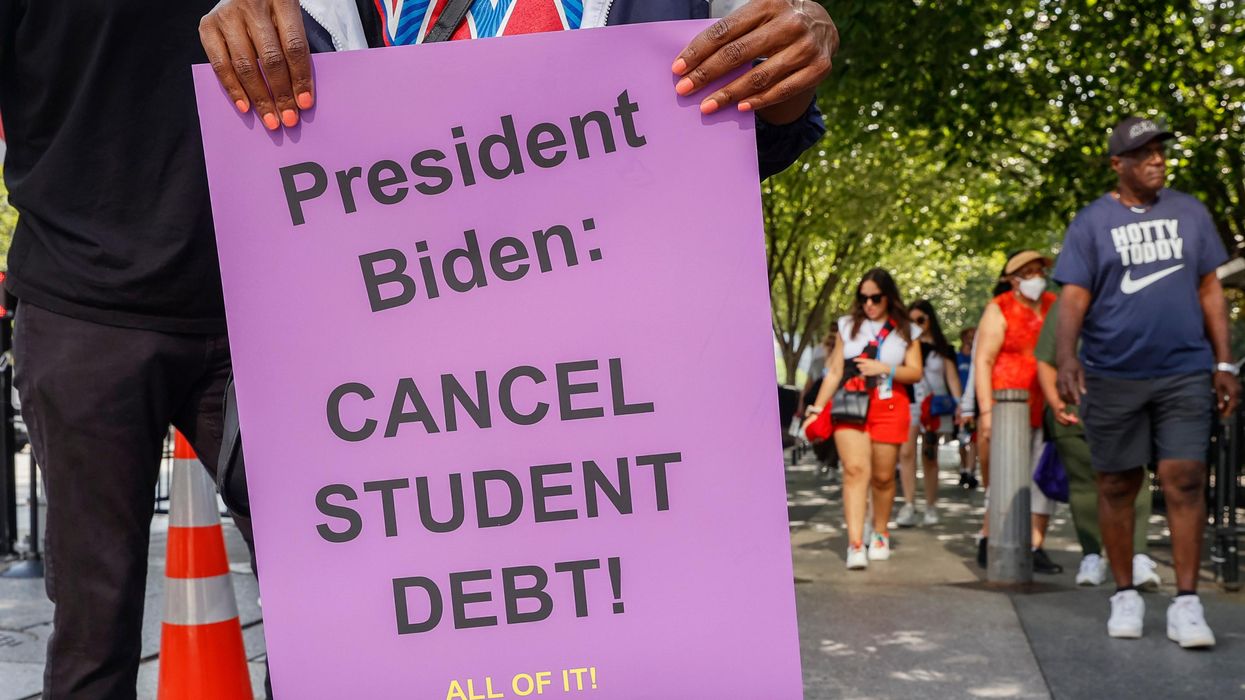
President Joe Biden is reportedly on the verge of announcing his plan to cancel $10,000 in federal student loan debt after months of delays, but not every borrower will be eligible for relief--and progressives are warning that the administration's commitment to mean-testing could leave millions of vulnerable people behind.
As soon as Wednesday, Biden is expected to make public his intention to unilaterally wipe $10,000 off the balances of undergraduate student loan borrowers with annual incomes of less than $125,000. The president is also poised to extend the student loan repayment freeze for "several more months," according to NBC News.
"If the history of means-testing in America is any guide, bureaucratic snarls will prevent vulnerable populations from receiving relief."
Groups representing borrowers cast the emerging details of Biden's plan as a betrayal. Melissa Bryne, executive director of We The 45 Million, said in a statement Tuesday that "the rumor of $125,000 means tests is an outrageous violation of President Biden's March 2020 campaign promise of a minimum of $10,000 cancellation for all borrowers."
"President Biden must refuse all pressure from unserious, generationally wealthy economists who have never lifted one finger to fight for free higher education and instead see themselves as allies of the banks," Bryne said in a thinly veiled reference to former U.S. Treasury Secretary Larry Summers, a multimillionaire who has vocally attacked the idea of student debt forgiveness.
"Every borrower was already means-tested--they didn't have the means to pay for college," Byrne continued. "Borrowers trust President Biden to do the right thing and tell the pro-means testers to take their concerns far away from him."
The predominant concern among opponents of means-testing isn't that people with high incomes will be denied student debt relief; it's that people eligible and desperate for relief will get lost in the bureaucratic maze that income-based restrictions inevitably create.
As The American Prospect's David Dayen put it recently, all borrowers seeking debt relief under a means-tested cancellation program "will have to navigate the often punishing bureaucracy of confirming their earnings level."
"It means a massive headache for millions to cut out a minuscule proportion of borrowers," Dayen wrote. "And if the history of means-testing in America is any guide, bureaucratic snarls will prevent vulnerable populations from receiving relief to which they are entitled."
Byrne voiced a similar concern Tuesday, saying, "The hoops of means-testing means that millions and millions of borrowers won't get help."
A new analysis released Tuesday by the Penn Wharton Budget Model shows that the majority of the benefits of canceling $10,000 in student debt for borrowers who earn less than $125,000 a year would go to the bottom 60% of earners.
Mark Huelsman, policy and advocacy director at the Hope Center for College, Community, and Justice, stressed the analysis makes clear that "the majority of relief would go toward the bottom 60% of earners even if there was no income cap."
"That's a lot of potential administrative burden for a very similar result," Huelsman added.
The plan Biden is expected to announce Wednesday is a far cry from the ambitious student debt cancellation that prominent Democratic lawmakers and advocacy organizations have been demanding from the president for more than a year.
Sen. Elizabeth Warren (D-Mass.) and Senate Majority Leader Chuck Schumer (D-N.Y.), among many other lawmakers, have called for at least $50,000 in student debt forgiveness per borrower, a proposal that would completely clear the student debt balances of 80% of federal borrowers.
By contrast, canceling $10,000 in student loan debt per person would amount to full forgiveness for just around a third of borrowers.
"President Biden should cancel student debt to: help narrow the racial wealth gap among borrowers, provide relief to the 40% of borrowers who never got to finish their degree, and give working families the chance to buy their first home or save for retirement," Warren tweeted Tuesday. "It's the right thing."
For months, Biden and White House officials have been deliberating over the right course of action to address a crisis affecting tens of millions of people across the U.S. The average federal student loan balance is nearly $38,000, according to the Education Data Initiative, and Americans collectively hold close to $2 trillion in student debt.
The Washington Post reported Tuesday that administration officials have weighed whether canceling student debt "could alienate voters who had already paid theirs off, and polling results have been mixed."
"Centrist Democrats have begun pushing back strongly," the Post added. "Summers and Jason Furman--two prominent Democratic economists who served in prior administrations--have stepped up their case against broad loan forgiveness, arguing it would exacerbate inflation by increasing overall spending."
"These claims have been strongly contested. The Roosevelt Institute, a left-leaning think tank, argued that canceling student debt would 'increase wealth, not inflation,'" the Post noted. "The Roosevelt Institute paper found that inflation resulting from debt cancellation would be negligible and that ending the payment moratorium would more than outweigh that effect. Requiring borrowers to resume payments would reduce inflation by slowing consumer spending."
On top of the potential economic benefits of broad-based student debt cancellation and the relief it would provide to countless hurting households, proponents and observers have also pointed to the political upside for Biden and the Democratic Party heading into the pivotal November midterms.
"At this point people want something, and they need something big like a big policy that they can look at and say, 'OK, he is trying to do something for us,' and debt relief would definitely be that," Robert Reece, a sociology professor at the University of Texas at Austin, told Inside Higher Ed.
Inaction, meanwhile, could be politically disastrous for Democrats. A survey released last year found that 40% of registered Black voters "are willing to stay home unless student loan debt is canceled."
Student debt relief is also massively popular with young voters, another key component of the Democratic base.
But Derrick Johnson, president of the NAACP, warned the president Tuesday that "$10,000 alone is meager, to say the least."
"It won't address the magnitude of the problem," he told the Post.
Amid fears by progressive economists that the U.S. Federal Reserve will move the country closer to a recession by raising interest rates, a new poll published Thursday revealed that American voters overwhelmingly oppose a call by former Treasury Secretary Larry Summers to tackle inflation by effectively taking jobs from millions of people.
"Larry Summers' cure for fighting inflation is worse than the disease itself."
"Larry Summers' cure for fighting inflation is worse than the disease itself," Groundwork Collaborative executive director Lindsay Owens said in a statement. "Manufacturing a recession and throwing millions out of work to bring down prices is not only cruel, it also reflects a fundamental misunderstanding of why prices are rising in the first place."
The Data for Progress and Groundwork Collaborative survey of nearly 3,000 likely U.S. voters found that inflation was by far the most important economic problem facing the country today. This was true across the political spectrum, with 36% of Democrats, 49% of Independents, and 58% of Republicans saying inflation was their number one economic concern.
On Wednesday, Summers--who served in the Ronald Reagan, Bill Clinton, and Barack Obama administrations, including as treasury secretary for Clinton and Obama--said it is "very unlikely" that inflation will decrease "without a significant economic downturn," an outcome made more likely by an interest rate hike.
The Fed approved a 75-basis point interest rate increase last month and is considering the implementation of what would be a historic 100-basis point boost for later this month. Economists are warning that further interest rate hikes could cost millions of people their jobs and plunge the nation into recession.
Survey respondents rejected Summers' argument that the unemployment rate should exceed 5% over the next five years to tame inflation, with only 6% of Democrats, 3% of Independents, and 6% of Republicans strongly agreeing with the former treasury secretary's assertion.
"Voters do not accept the idea that raising unemployment is the only way to curtail inflation," Ethan Winter, a lead analyst at Data for Progress, said. "Rather, a strong majority think that broad investments in healthcare and energy costs are the best path to growing the economy and reducing costs for families."
Groundwork Collaborative chief economist Rakeen Mabud said Wednesday that the root cause of inflation is the "rampant corporate profiteering and snarled supply chains," an assessment shared by numerous progressive economists--and nearly half of respondents to the new survey, including 74% of Democrats.
Summers' track record has long been subject to critical scrutiny by progressives including Canadian author and activist Naomi Klein, who in a Washington Post opinion piece published during the Great Recession called him "spectacularly wrong" about not regulating derivatives, "turning banks into too-big-to-fail welfare monsters" by killing the Glass-Steagall Act, and helping to "devise ever more complex tricks" while spending "ever more taxpayer dollars to keep the financial casino running."
The new poll was published in the wake of Wednesday's news that the Consumer Price Index soared 9.1% over the past year, its biggest increase in more than 40 years.