

SUBSCRIBE TO OUR FREE NEWSLETTER
Daily news & progressive opinion—funded by the people, not the corporations—delivered straight to your inbox.
5
#000000
#FFFFFF
To donate by check, phone, or other method, see our More Ways to Give page.
Daily news & progressive opinion—funded by the people, not the corporations—delivered straight to your inbox.
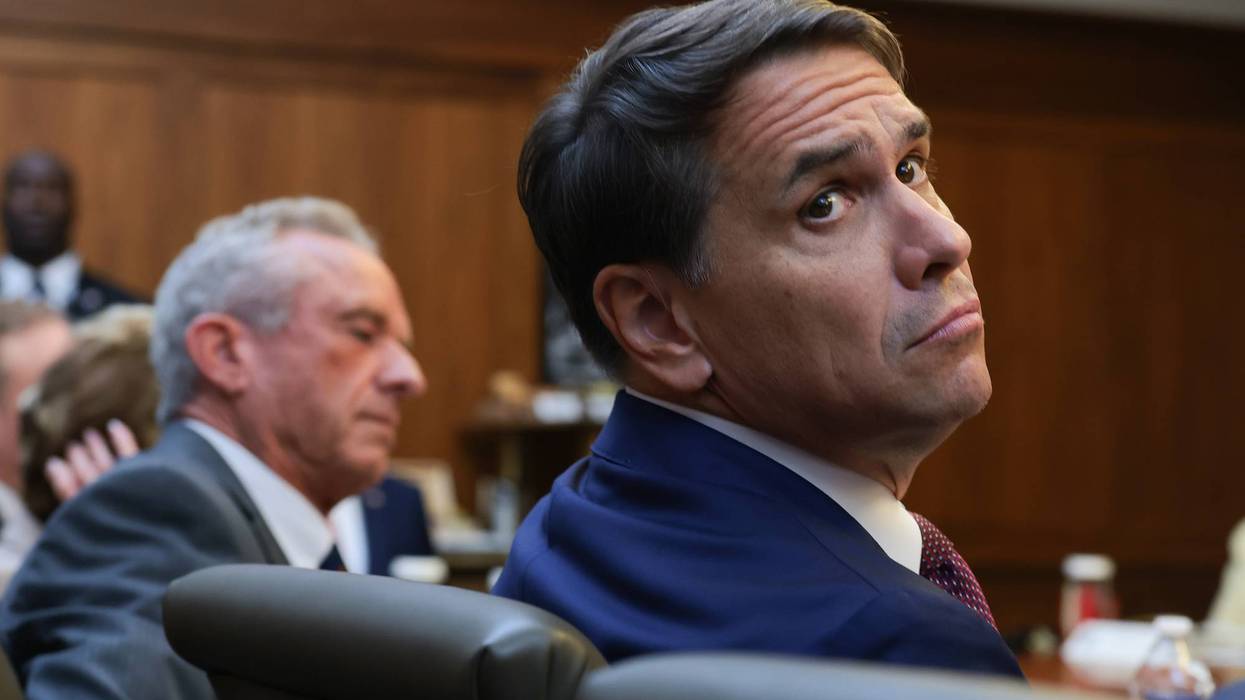
"Todd Blanche has one client, and it’s not the American people," said one coalition of advocacy groups.
Senate Democrats and advocacy groups are making the case for the full Senate to block Todd Blanche from being confirmed as US attorney general after Republicans on the Senate Judiciary Committee voted to advance his nomination Tuesday along party lines.
Sen. Dick Durbin (D-Ill.) said Blanche, currently President Donald Trump's acting attorney general, "has aided and abetted the most corrupt administration in the history of the United States."
Democratic colleagues described Blanche's support for Trump's $1.8 billion "weaponization fund," his neglect of survivors abused by Jeffrey Epstein, and his obstruction of investigations into killings and misconduct by immigration agents, as evidence that he is, in the words of Sen. Sheldon Whitehouse (D-RI), "probably the most discreditable person ever to seek the office of attorney general."
Their criticisms were echoed by anticorruption watchdogs and rights groups, who argued that Blanche, who was previously Trump's personal lawyer, was still acting like it even while serving as Acting Attorney General.
“Senators must urgently do the right thing and block Blanche," said Lisa Gilbert, the president of the watchdog group Public Citizen, who referred to him as a "Trump crony."
"If we make Todd Blanche America’s lawyer at the head of the Justice Department," Gilbert said, "we are accepting a man... who rubberstamped the corrupt IRS deal that Trump made with himself to shield all the Trumps and their businesses, not only from enforcement of any taxes they may have dodged or any fines or payments they may owe to American taxpayers, but from ‘any and all’ related consequences for violating any federal criminal or civil law."
In recent days, Blanche committed to kill the so-called "slush fund" in exchange for support from Republican holdouts like Sens. John Cornyn (Texas) and Thom Tillis (NC).
Gilbert and other co-chairs of the Not Above the Law Coalition—a collective of anticorruption advocacy groups—said that the agreement was "an unenforceable piece of paper that Trump never signed" and have warned that Blanche will revive efforts to pay government funds to Trump supporters, including those who took part in the January 6, 2021 Capitol insurrection, as soon as he is confirmed.
Following Tuesday's vote, Cornyn said that Blanche "gave us the assurances that [the fund] was dead and would not be revived, and in this case we have no alternative but to take his word."
Arisha Hatch, the executive director of the women's organization UltraViolet, said the Republicans who voted for Blanche had also sided against "the majority of the American people, who demand integrity from our elected leaders and want everyone involved in Jeffrey Epstein's network—including those who enabled it—to be held accountable."
Epstein survivors have criticized Blanche for his role in overseeing the DOJ’s highly scrutinized release of files related to his alleged crimes, including the department's exposure of victims’ private information and intimate photos while omitting information that identified prominent associates, including Trump himself.
At the urging of Tillis, Blanche held an hour-long meeting where he met with victims of Epstein's abuse, who said in a letter published Tuesday that he appeared dismissive of their concerns.
"When we met with Todd Blanche, he interrupted us. He told us to 'get to the point.' He told us to report what happened to us to the FBI. We already have," the survivors said. "Some of us have been reporting these crimes for decades. This was a check-the-box meeting designed to secure Senator Tillis' vote."
Maya Wiley, the president of the Leadership Conference on Civil and Human Rights, added that Blanche had "pursued baseless claims against civil rights organizations, sought sweeping access to state voter data, permitted a lawless [Immigration and Customs Enforcement]," echoing criticisms about the DOJ’s withholding of evidence from Minnesota prosecutors related to the killings of Renee Good and Alex Pretti by federal agents.
Republicans control the Senate by a margin of 53-47 and are down a vote with Sen. Mitch McConnell (R-Ky.) currently absent, meaning that just three defectors could be enough to block Blanche's confirmation, which could come to a vote within days.
"The Senate doesn’t need unanimous courage to block Blanche," said Brett Edkins, managing director for policy and political affairs at the progressive advocacy group Stand Up America. "It needs a few Republicans willing to put country over party.”
Gilbert, Edkins, and the other co-chairs of the Not Above the Law coalition—Praveen Fernandes, vice president of the Constitutional Accountability Center and Kelsey Herbert, campaign director at MoveOn—noted Blanche's own statements that the DOJ, long described as a politically neutral agency, was not independent from the president, and a slip-up during a confirmation hearing during which he referred to himself as Trump's lawyer.
"Todd Blanche has one client, and it’s not the American people," the advocates said. "Committee Republicans just chose not to see it. The full Senate now has the final word, and every senator should use it to reject this nomination.”

“This report is a ready-made roadmap for prosecutors, investigators, and members of Congress to finally start holding the Epstein class accountable," said Sen. Ron Wyden.
A yearslong Senate investigation released on Tuesday revealed how some of the world's largest banks allegedly broke federal money laundering laws by failing to stop or promptly report financial transactions that allegedly helped sustain the sex trafficking of children and young women by Jeffrey Epstein, the late billionaire and former friend of President Donald Trump.
Released by Senate Finance Committee Ranking Member Ron Wyden (D-Ore.), "Looking the Other Way" examines "how years of complicity by top officials at multiple Wall Street Banks enabled Jeffrey Epstein to transfer hundreds of millions of dollars around the world to finance his sex trafficking operation."
"Major compliance failures at several Wall Street banks enabled Epstein for years," the publication states. "By failing to report—or choosing not to report—his suspicious financial transactions to federal law enforcement, these banks allowed Epstein to send cash payments and wire transfers to his victims, friends, and collaborators around the world. The bankers who needed to be asking questions didn’t ask them. Jeffrey Epstein’s crimes were hiding in plain sight."
"The investigation found significant evidence that JPMorgan Chase (JPMC), Deutsche Bank, and Bank of America violated federal anti-money laundering laws by failing to screen and report Epstein’s suspicious financial transactions in a timely manner," the report continues.
"A review by Sen. Wyden’s staff of records housed at the US Department of the Treasury as well as internal bank records determined that top executives at major Wall Street banks were aware of Epstein’s suspicious financial activity for years but withheld information from the US government and protected Epstein from federal scrutiny," the publication says.
According to the report:
Wall Street banks looked the other way as Epstein withdrew millions of dollars in cash with no clear business purpose and was party to thousands of suspicious wire transfers worth more than $1 billion. These banks failed to conduct appropriate due diligence on more than $170 million in payments to Epstein from billionaire Leon Black. In fact, documents reviewed during this investigation demonstrate that JPMC’s senior leadership repeatedly protected Epstein as a client despite repeated warnings from internal compliance personnel.
The documents also show that even after JPMC formally terminated Epstein as a client due to human trafficking concerns, the bank still waited years to report his activity to regulators, and top bankers eagerly continued to work with him informally and through other channels where he could continue to be a source of referrals for other ultrawealthy clients.
The three banks were among four financial institutions from which House Judiciary Committee Ranking Member Jamie Raskin (D-Md.) last year demanded records concerning over $1.5 billion in “suspicious” financial transactions tied to Epstein’s trafficking ring.
“I said from the start that if you want to get to the bottom of the Jeffery Epstein cover-up, you had to follow the money," Wyden said Tuesday in a statement announcing the report's publication.
"My small team of investigators did what Trump’s attorney general and treasury secretary said was impossible: They connected the dots and found evidence of multiple crimes related to Epstein’s associates," the senator continued. "Bank records they reviewed, along with public court filings, detail a shocking pattern of the biggest Wall Street banks in the country choosing to ignore clear evidence of sex trafficking and money laundering, just to keep a wealthy client on the books."
"This report is a ready-made roadmap for prosecutors, investigators, and members of Congress to finally start holding the Epstein class accountable," Wyden added.
That's highly unlikely to happen under the current Republican-controlled Congress. Republicans spent years insisting the Epstein case exposed elite corruption, promising full transparency, and rallying behind Trump's 2024 reelection bid in part because he vowed to release every file.
Trump, former Attorney General Pam Bondi, FBI Director Kash Patel, and others promised transparency. Instead, the Trump administration has missed legal deadlines, released heavily redacted records, and withheld millions of pages in what critics say are violations of the bipartisan Epstein Files Transparency Act. Signed by the president last year, the law compelled the Department of Justice (DOJ) to publish all unclassified Epstein-related records within 30 days and explain every omission to Congress.
Acting US Attorney General Todd Blanche, Trump's former personal attorney, angered many Epstein victims and others by announcing that there was no evidence of a secret client list, by falsely claiming that the DOJ was fully complying with the law, and by meeting with Epstein’s co-conspirator Ghislaine Maxwell in prison shortly before she was suspiciously transferred to a lower-security prison.
The Senate Judiciary Committee voted 12–10 Tuesday along party lines to advance Blanche's nomination to become permanent attorney general, sending it to the full upper chamber for a confirmation vote expected later this week.
As the Trump administration fails to fully comply with the Epstein Files Transparency Act, its authors—Reps. Ro Khanna (D-Calif.) and Thomas Massie (R-Ky.)—recently proposed an updated version of the legislation, which strengthens the original by allowing state attorneys general, Epstein victims, members of Congress, and certain prosecutors to sue the DOJ if it fails to release required records.
The business-focused news site Bloomberg sought comment from the three banks. Deutsche Bank declined to respond, JPMC said it began notifying regulators “after the full scope of [Epstein's] crimes became public in 2019," and a spokesperson for Bank of America said that "we take our legal and regulatory responsibilities seriously and, as we have previously said, the bank did not facilitate wrongdoing.”
An attorney for Black told Bloomberg that the report's assertions “outrageous and false.”
Wyden's report came on the same day that The New Republic's Ellie Quinlan Houghtaling revealed that CBS' "60 Minutes" killed its own scoop on Wall Street's long-standing financial ties to Epstein after the network's incoming Trump-aligned boss, Bari Weiss, fired correspondent Sharyn Alfonsi, who led the investigative report. Alfonsi had interviewed Wyden for the segment.
Yep. Earlier this year I was interviewed by Sharyn Alfonsi of 60 Minutes about my Epstein investigation. Subsequently, CBS pulled the segment and fired the reporter. The MAGA buyout of media is aiding the Trump administration’s Epstein cover up.
[image or embed]
— Senator Ron Wyden (@wyden.senate.gov) August 4, 2026 at 7:17 AM
"Yep," Wyden said on Bluesky, confirming his interview with Alfonsi. "The MAGA buyout of media is aiding the Trump administration’s Epstein cover-up."
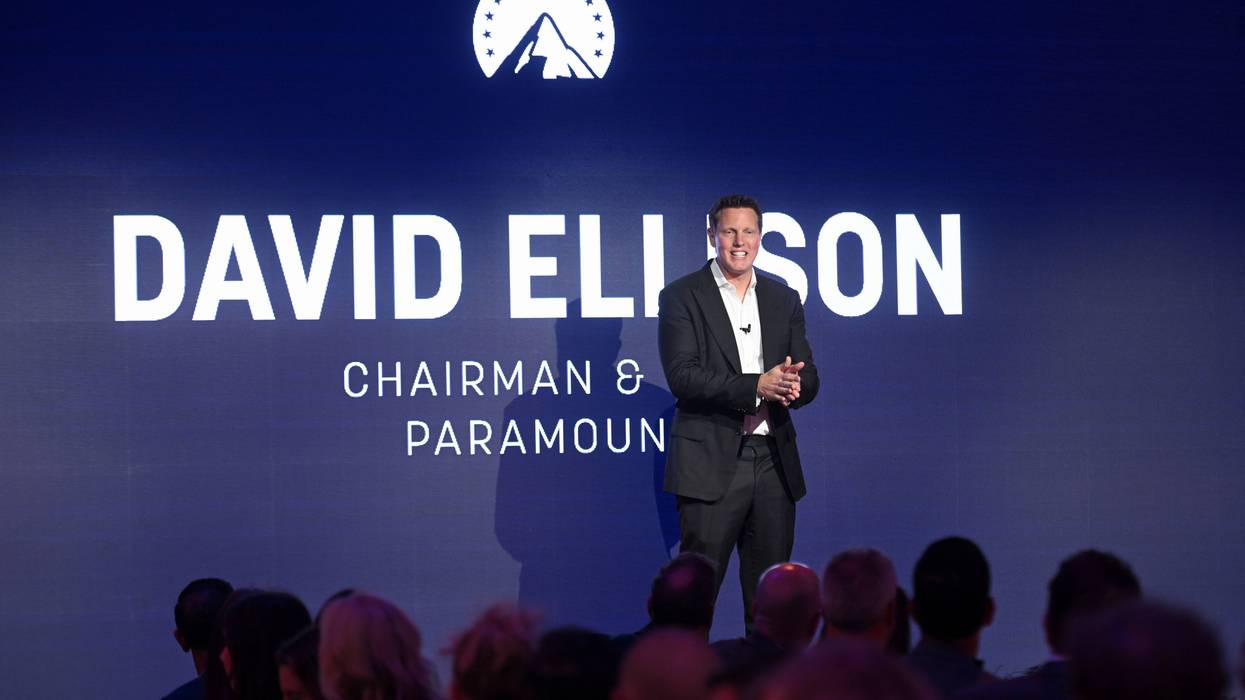
Wyden's claims about CBS came on the same day its parent company's CEO, David Ellison, defended the proposed megamerger between Paramount and Warner Bros.
Sen. Ron Wyden on Tuesday charged that the takeover of CBS by David Ellison, the son of right-wing billionaire Larry Ellison, helped President Donald Trump's White House cover up information about the late billionaire sex offender Jeffrey Epstein.
Wyden's (D-Ore.) claims about CBS came on the same day his office released a report alleging that top Wall Street banks "looked the other way and allowed Epstein to have ready access to the mountains of cash he used to lure, harbor, and transport his victims."
In a social media post, Wyden revealed that he was interviewed several months ago by former "60 Minutes" correspondent Sharyn Alfonsi, where he presented evidence his office had gathered about big banks' role in facilitating Epstein's illicit activities.
The interview never aired, Wyden said, because CBS "subsequently... pulled the segment and fired the reporter."
Wyden added that "the MAGA buyout of media has unquestionably aided the Trump administration’s cover up here."
David Ellison, whose father was a megadonor to Trump's 2024 campaign, assumed control of CBS last year after his media company Skydance merged with Paramount, the network's parent company.
Shortly afterward, Ellison hired right-wing commentator Bari Weiss to serve as CBS News' editor-in-chief, and she has since gone on a firing spree of several longtime "60 Minutes" producers and journalists, including Alfonsi, Scott Pelley, Tanya Simon, and Cecelia Vega.
The Paramount CEO's ambitions for controlling media properties extend well beyond CBS, as his company is currently in the process of acquiring Warner Bros. Discovery, the parent company of both CNN and HBO.
A federal judge last month paused the $110 billion megamerger between Paramount and Warner Bros., citing “compelling evidence that the combined firm resulting from the transaction will possess substantial market share in the wide-release theatrical distribution market,” making it “likely to violate antitrust laws.”
The New York Times on Tuesday published an editorial by Ellison in which he defended the merger and insisted that he could be trusted as a good steward of CNN, vowing to give its news team "independence."
"Our journalists will continue to answer to the facts and to all the people they serve—not to any party or cause," Ellison wrote. "These were founding principles for both CNN and CBS News, for legends like Ted Turner and Edward R. Murrow, and it is exactly that kind of independence that has always fueled the greatness of '60 Minutes.'"
However, CNN media reporter Brian Stelter noted in a Tuesday news analysis that Ellison's Times op-ed made no mention about "upheaval" that Weiss has caused at CBS News, which has led to a decline in ratings at both the network's evening news program and its morning show.
"His first year owning CBS News has been defined by ratings struggles, shakeups, and controversies, mostly stemming from his appointment of Weiss as editor-in-chief," Stelter explained. "I don't hear anyone making the case that CBS News has earned back a whole lot of trust... Ellison's op-ed sidesteps the debate altogether."
Former CNN anchor Jim Acosta similarly expressed skepticism of Ellison's claims in a social media post.
"Ellison appointed Bari Weiss to run CBS News and look at the damage done there," Acosta wrote. "Stands to reason he’ll do the same at CNN. Watch what they do. Not what they say or write."
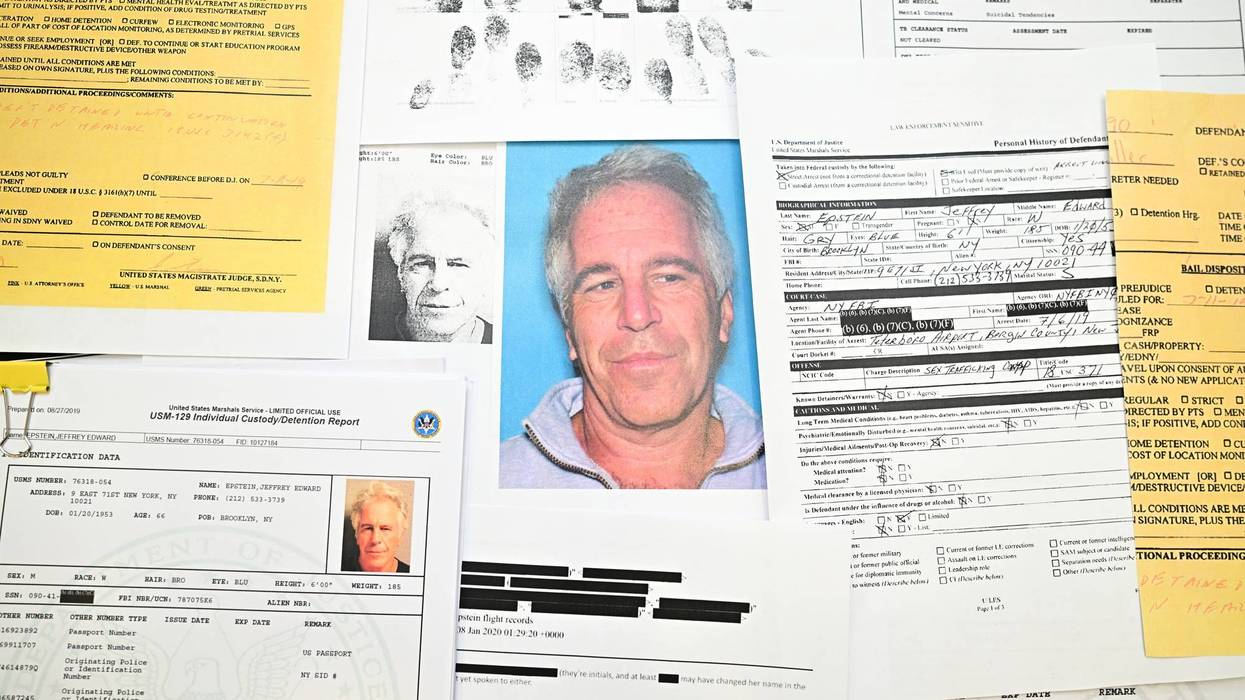
"Numerous recently released documents now show he acted aggressively on behalf of multiple foreign governments... in order to influence policies of the first Trump administration."
The top Democrat on the House Judiciary Committee, Rep. Jamie Raskin, launched an investigation Monday into whether the disgraced financier Jeffrey Epstein worked on behalf of foreign governments to influence President Donald Trump during his first term.
In a letter addressed to acting Attorney General Todd Blanche; Trump’s nominee to be director of national intelligence, Jay Clayton; and Secretary of State Marco Rubio, Raskin (D-Md.) said that files provided to the Judiciary Committee show “substantial evidence” that Epstein acted to advance the interests of Saudi Arabia and Kuwait, advised the Russian government on its dealings with Trump, and worked as a consultant to former Israeli Prime Minister Ehud Barak.
“Jeffrey Epstein never registered as a foreign agent," Raskin said. "Yet numerous recently released documents now show he acted aggressively on behalf of multiple foreign governments, including several with interests adverse to the United States, in order to influence policies of the first Trump administration."
Epstein, a convicted sex criminal who was found dead in his jail cell in 2019 after being charged with trafficking minors, has long been surrounded by questions about his relationships to foreign governments. But this is the first time an inquiry from the US Congress has expressly focused on them.
Raskin called attention to a trip taken by Epstein to Riyadh in November 2016, the week of Trump's first election, during which he met with Crown Prince Mohammed bin Salman (MBS) before sending one of his representatives an email offering to become the "financial confidant" to members of the Saudi government. "I am happy to represent [Kingdom of Saudi Arabia] interests. period," he said.
Epstein also apparently offered to represent Saudi Arabia's sovereign wealth fund in the US and serve as an adviser to a development project overseen by MBS. The crown prince's response to the proposal has not been provided to the committee, according to Raskin.
Several emails to friends and confidantes indicate that around the same time, Epstein was regularly boasting of his visits to Trump Tower and meetings with "Trump people" during the presidential transition, which he said presented "lots of opportunity."
Other correspondence seems to indicate that Epstein coached the emir of Kuwait on how to deal with Trump. In May 2017, prior to a summit of Gulf states in Riyadh, Epstein wrote to an unnamed political figure that he had “much to do around the Trump trip.”
The figure responded that he wanted “tips on how we should communicate with Trump,” specifically on the Saudi-led war against Yemen; Kuwait had played host to three months of UN-led negotiations related to the conflict the year before.
It is unclear from the records which US officials, if any, Epstein intended to engage on Kuwait's behalf.
Raskin also highlighted what is perhaps Epstein's most well-documented foreign government contact, Ehud Barak, who served as Israel's prime minister from 1999 to 2001 and later its minister of defense.
According to a trove of leaked emails published by Drop Site News last year, Epstein worked to create a backchannel between Barak and the Russian government and helped him to pursue a meeting with President Vladimir Putin in 2013 as he pushed for Russia to abandon its support for then-Syrian President Bashar al-Assad, which was a major national security priority of Israel.
Epstein also provided information about US officials to Barak as he tried to push the Obama administration to take a harder stance toward Iran and Syria.
It is one of many instances in which Epstein and Barak worked to advance Israeli interests across the world, including brokering security and surveillance agreements with the governments of Mongolia and Côte d'Ivoire and helping to build the relationship between Israel and the United Arab Emirates.
Other emails reveal Epstein advising high-ranking Russian officials on how to deal with Trump as they sought to avoid sanctions placed by the US over its interference in the 2016 election and its aggression toward Ukraine.
Raskin said that Epstein seemed to be consciously acting as a foreign agent despite never registering as one under the Foreign Agents Registration Act (FARA). The congressman pointed to exchanges in which Epstein appeared to advise Trump's former chief strategist Steve Bannon on how to avoid FARA reporting requirements.
Raskin argued that Epstein's deep well of knowledge about Trump and his apparent access to members of his circle "posed a major national security liability." Epstein often bragged that he had leverage over the president and said he was "the one able to take [Trump] down."
The congressman argued for transparency in light of the administration’s efforts to delay the release of the files and withhold information despite congressional requirements.
Beyond potentially embarrassing revelations about Trump, he said the repeated use of the White House Situation Room to discuss the Epstein scandal indicated that it posed possible national security concerns that have not been disclosed to the public.
Raskin called on the Department of Justice and State Department to release all files referencing Epstein and other foreign nations and information that may point to his efforts to avoid FARA requirements.
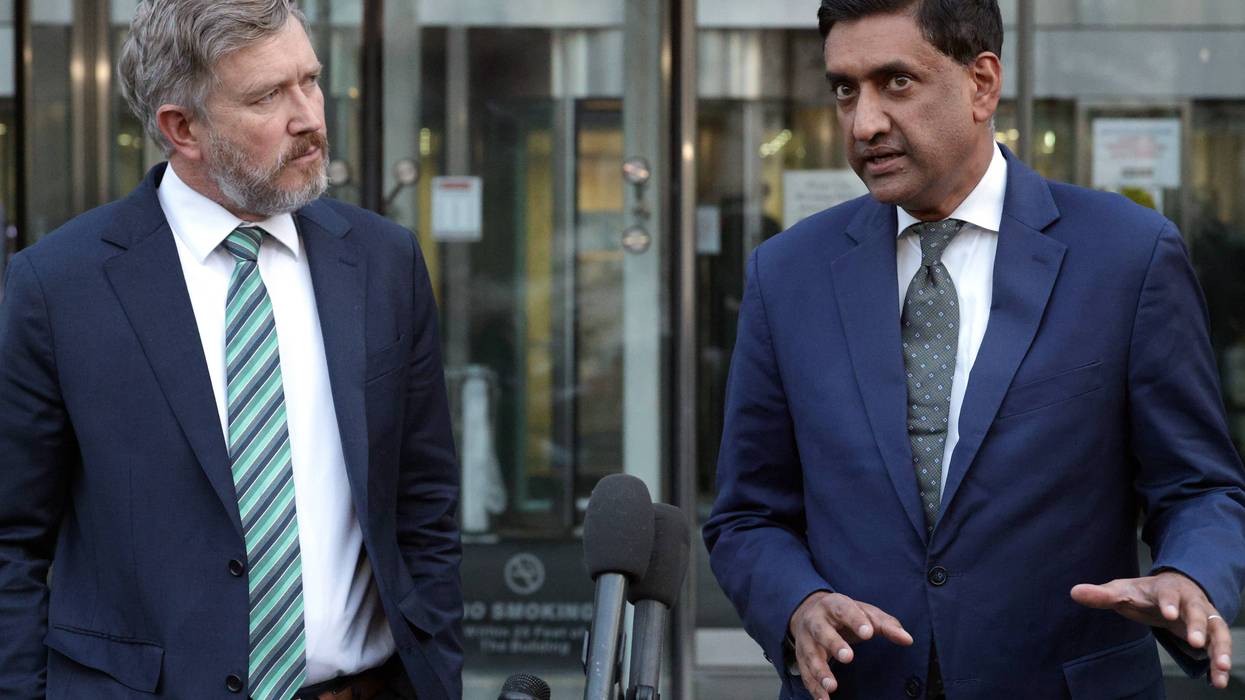
"We need the Epstein Files Transparency Act II to strengthen the original law we wrote, crack down on the DOJ's illegal noncompliance, and stand with survivors and those seeking justice."
After months of the Trump administration refusing to fully comply with the Epstein Files Transparency Act, Congressmen Thomas Massie and Ro Khanna appeared on MS NOW Thursday to promote their newly proposed second edition of the bipartisan law.
"We never anticipated that the chief law enforcement officer of the land wouldn't follow the law—and so, Ro and I took some heat because we didn't put in our original bill the ability to sue the chief law enforcement officer of the land," Massie (R-Ky.) said on "Morning Joe," a day after introducing the bill. "And so that's what the Epstein Files Transparency Act 2.0 does."
"It gives the victims standing to sue the attorney general, to get their own records, their own testimony, in these 302 forms. It also gives congressmen standing to enforce this law," he explained. "Basically, to get in front of a judge to say, 'judge, here's where they've overly redacted these files.'"
The bill also lets state attorneys general, "like the one in New Mexico, who's trying to prosecute crimes that happened at Zorro Ranch... prosecute crimes where the statute of limitations is not impeding him," added Massie—who will leave Congress at the end of this session after losing his May primary to a challenger backed by President Donald Trump, a former friend of Epstein. The convicted sex offender died in prison during his federal sex trafficking case.
The first Epstein Files Transparency Act was introduced last July, then passed by both chambers of Congress and signed by Trump in November. However, since it took effect, the US Department of Justice (DOJ), whose leaders are handpicked by the president, "has violated our law, delayed the release of millions of files, botched the redactions, and denied the survivors justice," Khanna (D-Calif.) said Wednesday.
Khanna and Massie—joined by Rep. Teresa Leger Fernández (D-NM), who chairs the Democratic Women's Caucus, along with Sens. Jeff Merkley (D-Ore.) and Ben Ray Luján (D-NM)—are outraged that the DOJ continues to withhold over 3 million Epstein files and maintain heavy redactions on the documents it has released.
As the sponsors introduced the Epstein Files Transparency Act II on Wednesday, acting US Attorney General Todd Blanche—who was previously Trump's personal lawyer—appeared before the Senate Judiciary Committee for a hearing about his nomination to take over the post permanently; he's been filling it in a temporary capacity since Pam Bondi's April exit.
Both Bondi—who was fired by Trump as she faced mounting calls for impeachment—and Blanche have earned intense criticism for their handling of the Epstein files, including from survivors. One of them, Dani Bensky, testified before the Senate panel on Thursday about her negative experience.
After the sudden death of Sen. Lindsey Graham (R-SC), all Republicans on the committee would have to vote "yes" to advance Blanche's nomination. At least one—retiring Sen. Thom Tillis of North Carolina—said Blanche would have to meet with Epstein survivors to secure his support, which the acting attorney general claimed Wednesday he cannot do if they have legal counsel.
Even if the nomination advances out of committee, Blanche will need approval from a full chamber that's also only narrowly controlled by the GOP amid frustrations that, as Merkley put it, "at Trump’s bidding, the Department of Justice's highest-ranking officials continue to break the law, denying justice to Jeffrey Epstein's victims with an unprecedented cover-up of the abuse of our most vulnerable."
"As long as those in power continue to side with the Epstein Class and shield abusers from accountability for their horrific crimes, we need the Epstein Files Transparency Act II to strengthen the original law we wrote, crack down on the DOJ's illegal noncompliance, and stand with survivors and those seeking justice," the senator argued. "The rich and powerful cannot be allowed to escape justice, and the American public deserves the transparency it is crying out for."
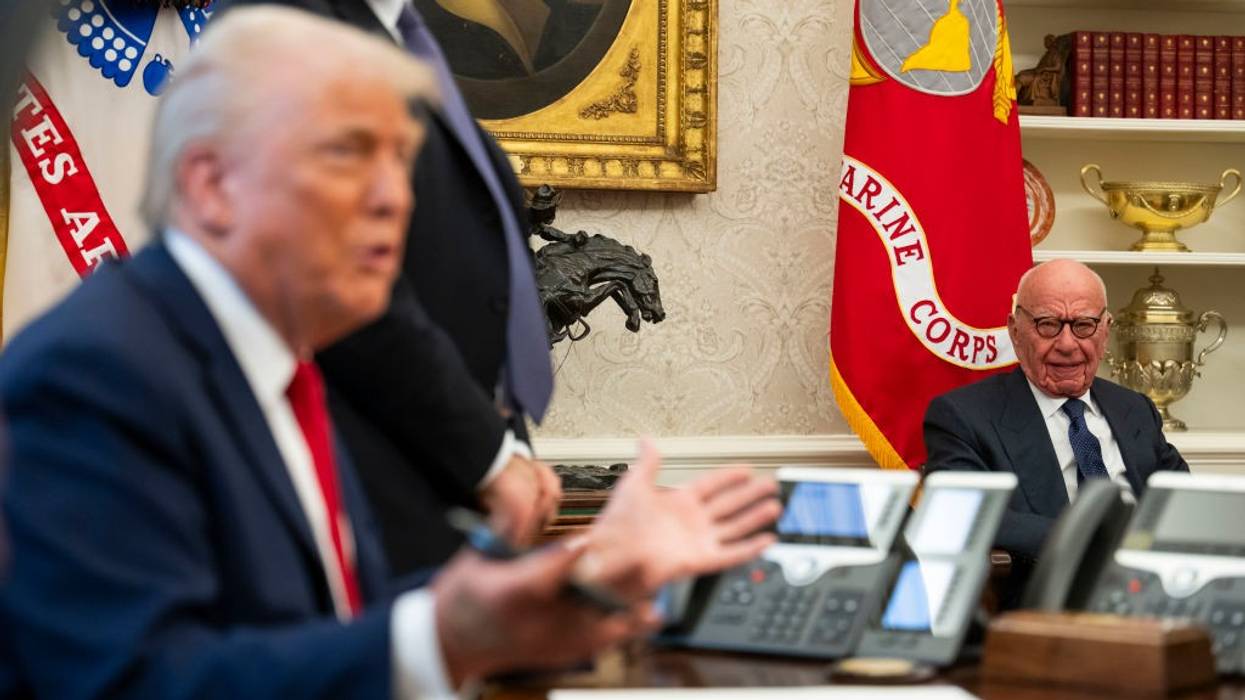
The fight seemingly isn't over, with a spokesperson for the president pledging that he will "refile this powerhouse lawsuit," which critics have called part of his war on free speech.
A Florida-based federal judge on Monday dismissed President Donald Trump's $10 billion lawsuit against The Wall Street Journal over its reporting on a "bawdy" birthday letter the Republican allegedly gave to the late convicted sex offender Jeffrey Epstein.
Trump denies writing the letter or drawing the outline of a naked woman around the text. He sued the journalists behind the July report—Joseph Palazzolo and Khadeeja Safdar—and the newspaper, plus its parent company News Corp, chief executive Robert Thomson, and founder Rupert Murdoch.
The US House Committee on Oversight and Government Reform subsequently subpoenaed the Epstein estate for all materials that now-imprisoned co-conspirator Ghislaine Maxwell allegedly compiled for the dead financier's birthday book, including the letter attributed to Trump—and in September, the panel published those documents online.
US District Judge Darrin P. Gayles, an appointee of former President Barack Obama, found on Monday that Trump's "complaint fails to adequately allege actual malice." However, Gayles also gave Trump the opportunity to amend his filing within the next two weeks.
While The Wall Street Journal did not immediately respond to CNN's request for comment, a spokesperson for Trump's legal team said in a statement that the president intends to continue the case.
"President Trump will follow Judge Gayles' ruling and guidance to refile this powerhouse lawsuit against The Wall Street Journal and all of the other defendants," the spokesperson said. "The president will continue to hold accountable those who traffic in Fake News to mislead the American People."
CNN noted that despite the legal battle, "the 95-year-old Murdoch has maintained a cozy if complicated relationship with the president, including multiple meetings at the White House in recent months."
The suit over the birthday letter to Epstein—whom Trump was publicly friends with in the 1980s and '90s until a reported falling out in the early 2000s—is just part of a sweeping effort by the president and his political enablers "to undermine and chill the most basic freedoms protected under the First Amendment," as the advocacy group Free Press put it in a December analysis.
In addition to the Journal case, examples included Trump's legal battles with the BBC and The New York Times, the White House taking control of the presidential press pool, the administration blocking The Associated Press from the Oval Office over its refusal to refer to the Gulf of Mexico as the Gulf of America, ABC temporarily suspending late-night host Jimmy Kimmel following comments from Trump's Federal Communications Commission chair, and the Pentagon's legally contested media policy.
Such attacks continue. Last month, as the costs of his unconstitutional war on Iran mounted, Trump floated "treason" charges against media outlets that he accused of reporting false information about the conflict.
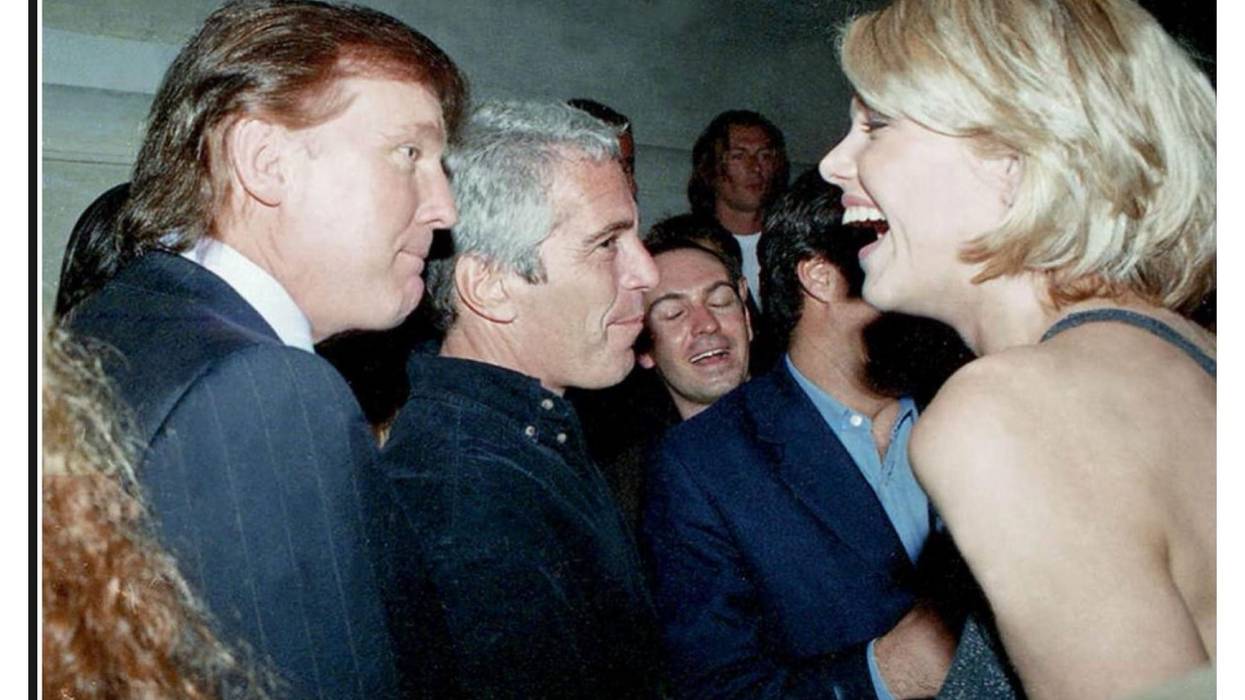
Epstein came to deeply believe in eugenics and genetic determination, as has Donald Trump.
Jeffrey Epstein was not only a rapist and a child predator, but also—wait for it—a white supremacist. While some speculate that the Epstein issue is just a distraction from President Donald Trump’s virulent and endless racism, others feel that the video the president posted at the beginning of Black History Month of Barack and Michelle Obama as apes was meant to divert attention from the growing Epstein fallout. Well, as it turns out, the two crises are not as far apart as you might imagine.
Bombshell articles in The Atlantic, Mother Jones, and at MS Now pulled the covers off Jeffrey Epstein’s noxious racism. Reporters culling the most recently released Epstein files discovered numerous pieces of evidence in emails and other documents suggesting that he advocated the faux “science” of racial eugenics and held racist views not distinct from those promoted for decades by Donald Trump. Epstein built (or at least tried to build) ties and develop friendships with some of the most notorious eugenicists and white nationalists around the globe, including Nobel Prize laureate and geneticist James Watson, political scientist Charles Murray, and artificial intelligence researcher Joscha Bach, among many others. He also circulated posts from white supremacist websites that promoted bogus, supposedly genetically-based intellectual differences between the races.
Eugenics is the “race science” that was developed in the latter part of the 19th century to justify European slavery and colonialism. Proponents contended that humans were biologically and genetically separated into distinctly unequal “races.” Everything from intelligence, criminality, and attractiveness to morality was, so the claim went, genetically determined. It should surprise no one that, in such an imagined hierarchy, whites were at the top and, in most configurations, people of African descent at the very bottom with Asians and Indigenous people somewhere in between. Those four (or five or six) categories were considered immutable. And it mattered remarkably little that, for a long time, social and natural scientists had overwhelmingly argued with irrefutable evidence that racial categories were social constructs invented by humans and distinctly malleable over time as political and social life changed.
The real-world impact of racial eugenics theory long shaped public policy, political status, and life opportunities. In the United States, a belief in the genetic inferiority of Blacks helped foster slavery and then Jim Crow segregation, and led to tens of thousands of African Americans, Latinos, Native Americans, and individuals with physical and mental disabilities, as well as prisoners, being sterilized. By 1913, 24 states and Washington, DC had passed laws allowing enforced sterilization. President Theodore Roosevelt was a firm believer in such eugenics and supported sterilization in order to prevent what he termed “racial suicide,” a perspective that echoes today’s “Great Replacement Theory.”
There is no bigger racist science believer than the current occupant in the White House.
In Nazi Germany, eugenics led not only to the sterilization of Jews, Blacks, and the disabled, but to the state-organized mass murder of literally millions of people. It was a core tenet of Nazism that all non-Aryans were genetically inferior and a threat to the white race. The Nazis railed against Jews “poisoning the blood” of white Germans, a term Trump used in describing non-white immigrants from the global South.
Despite this history, Epstein came to deeply believe in eugenics and genetic determination, as has Donald Trump. To that end, Epstein sought to connect with the notable race theorists of his day.
Perhaps the most notorious book in the modern era advocating a racial basis for intelligence and a social hierarchy that places whites on top and Blacks at the bottom was The Bell Curve by Charles Murray and the late Richard J. Herrnstein, published in 1994. Since then, in multiple books and articles, the research behind that book has been thoroughly debunked and overwhelmingly rejected by scholars in the social and natural sciences. Yet, at the time, many Republicans and some Democrats embraced its racist argument in order to contend that government welfare programs should be cut back. Murray aligned with Republicans in giving testimony to Congress in the 1990s that blamed the morality of poor people for their poverty (as a debate unfolded around the future of welfare programs).
According to the Epstein files, Epstein himself repeatedly tried to correspond with Murray. However, Murray claims he never received (or remembers receiving) any emails from Epstein and did not correspond with him. Regardless, it’s pretty clear that Epstein was writing because of Murray’s notoriety for his work on race and genetics. This was in 2018, more than a decade after The Bell Curve had been published and Murray had become famous for it.
Epstein, according to The Atlantic, was reportedly provided with Murray’s email address by James Watson. He and Francis Crick had, of course, discovered the structure of DNA in 1953. Nine years later, they and Maurice Wilkins won the Nobel Prize in Physiology or Medicine.
Around 2000, Watson’s regressive views on race began to surface. That year, he told an audience that “dark-skinned people have stronger libidos,” leaning into a centuries-old racial stereotype. In 2007, according to a former assistant in the London Sunday Times, he said that he was “inherently gloomy about the prospect of Africa” because “all our social policies are based on the fact that their intelligence is the same as ours—whereas all the testing says not really.”
Epstein also had ties to a number of other researchers and scientists, including Joscha Bach, who received funding from the convicted felon and was hired at MIT’s Media Lab with his help. In one exchange in 2016, Bach wrote to Epstein, stating that African-American children “have slower cognitive development” and “are slower at learning high-level concepts.” With the release of those files in January, Bach tried to explain why his statements were not racist and that “scientific discussion about the heritability of traits… [is] very complicated and not my area of research.”
Epstein also spent time on hardcore white supremacist websites. For example, he sent a link to a racist article entitled “Race and IQ: Genes That Predict Racial Intelligence Differences” to left-wing scholar Noam Chomsky. The article came from the outright white supremacist website the Right Stuff, according to The Atlantic. Chomsky, over email, expressed his disagreement with Epstein about race science. According to The Guardian, Chomsky had a “close friendship” with Epstein. There is no evidence that Chomsky participated in or witnessed any of Epstein’s sex crimes, and Valeria Chomsky, his wife, admitted that the couple made “serious errors in judgment” in maintaining ties to him. While the statement vigorously denounced Epstein’s offences, there was, however, no mention of his racist behavior, which few focused on in all those years.
Epstein’s eugenicist views are in line with the longstanding genetic determinism of Trump. There is no bigger racist science believer than the current occupant in the White House.
For decades, he has bragged about his genetic superiority relative to the rest of humanity. The examples are endless:
And, of course, in opposition to Trump’s “right genes” are those with the wrong kind. From the president’s perspective that would, of course, include migrants. In an interview discussing them, he opined, “You know, now a murderer—I believe this—it’s in their genes. And we got a lot of bad genes in our country right now.”
Over the years, Trump has also shown little empathy for individuals with disabilities. He famously mocked reporter Serge Kovaleski, who has arthrogryposis that affects his joints, by twisting and contorting his body to make fun of him. He also reportedly did not want to be around physically disabled soldiers, according to his former White House Chief of Staff John Kelly.
Trump often speaks with a strategic ambiguity so that he can later deny that he was disparaging migrants, people with disabilities, or wounded soldiers. He fools no one.
It’s notable that one of Trump’s go-to insults is to call someone “low IQ,” and in nearly every case, his target turns out to be a Black person and disproportionately female ones, including his opponent in election 2024 Kamala Harris and congressional Reps. Maxine Waters (D-Calif.), Alexandria Ocasio-Cortez (D-NY), Al Green (D-Texas), Jasmine Crockett (D-Texas), House Minority Leader Hakeem Jeffries (D-NY), radio host Charlamagne tha God, and New York Attorney General Letitia James among others.
Trump has been careful, at least publicly, to not explicitly say that Black people are genetically predisposed to criminality. However, he has endlessly attacked Black-led cities as crime zones, without ever labeling white-dominated cities or states the same way. He also posted fake data supposedly demonstrating that African Americans commit crimes at a higher rate (with the clear implication that race is the driving factor).
His eugenicist views are most manifest in his immigration policies and dreams. Theoretically, he is not able to run for president again, so he has little incentive to hide his true feelings. After spending years denying it, in December 2025, he proudly admitted that he had referred to nations in Latin America and Africa as “shithole” countries back in 2018. In a December 9, 2025 speech in Pennsylvania, he plugged for white—and implicitly white only—immigration to this country:
Remember I said that to the senators that came in, the Democrats. They wanted to be bipartisan. So they came in. And they said, "This is totally off the record, nothing mentioned here, we want to be honest," because our country was going to hell. And we had a meeting. And I say: Why is it we only take people from shithole countries, right? Why can’t we have some people from Norway, Sweden—just a few—let us have a few. From Denmark—do you mind sending us a few people?
In January 2026, Trump essentially halted almost all refugees coming from Africa. The administration stated that it would admit only 7,500 total refugees from around the world in 2026, the lowest number on record. This meant near zero for Black Africans.
At the same time, the Trump administration sought to process 4,500 white South African refugee applications per month starting in January. The president also issued Executive Order 4204 in February 2025 falsely claiming that whites in South Africa were being mistreated and deserved an expedited process to become permanent residents of the United States. The new target, contained in a previously unreported document from the State Department dated January 27 and reviewed by Reuters, signals a push to ramp up admissions from South Africa, while refugee applications from other areas have been severely curtailed.
Racial genetics is Trump’s defining worldview (full stop!). That he thinks of Barack and Michelle Obama as less than human should surprise no one who has followed his statements on race over the decades. A compilation of Trump’s views on the former president over all these years boils down to this: Barack Obama is an ape-like radical Muslim (founder of ISIS) and socialist who was not born in the United States but engineered a conspiracy involving thousands to pretend that he was (or maybe he actually was), then fraudulently assumed the presidency and now should be arrested for treason and illegally spying on the Trump White House, and no matter what your eyes and brain tell you, he is not as mentally and physically healthy as I am.
Beginning in the early 1950s, real science, as opposed to the fraudulent versions embraced by Epstein and Trump, was able to make life-changing breakthroughs as a result of access to what became known as HeLa cells. Those cells would be responsible for understanding and creating vaccines and treatment for polio, cancer, HPV, Parkinson’s, measles, HIV, mumps, Zika, and Covid-19, among other diseases. They would lead to the creation of the field of virology. It is highly unlikely (and would likely have been mortifying) that either Epstein knew, or Trump knows, that those cells came from an African-American woman named Henrietta Lacks. They were cynically named HeLa, combining the first two letters of her first and last names.
In 1951, when she was admitted to Johns Hopkins hospital in Baltimore, deadly ill with cervical cancer, cell tissues were taken from her body without her or her family’s permission. That unethical theft—legal at the time—would lead to countless billions in profits for pharmaceutical corporations. After the publication of Rebecca Skloot’s book The Immortal Life of Henrietta Lacks in 2010, her story became well-known and family-initiated lawsuits proceeded. In 2023, the family reached a settlement with Thermo Fisher Scientific, and, in February 2026, another settlement with Novartis, a Switzerland-based pharmaceutical mammoth.
Trump is easily the most intellectually incurious, ill-informed, unread, vacuous, and petulant president in US history. He will never acknowledge—or even understand—that his rise to power was not due to his having any extraordinary talents, skills, or genetically based genius. It was, without qualification, the result of a lifetime of perpetual race, gender, and class privilege.
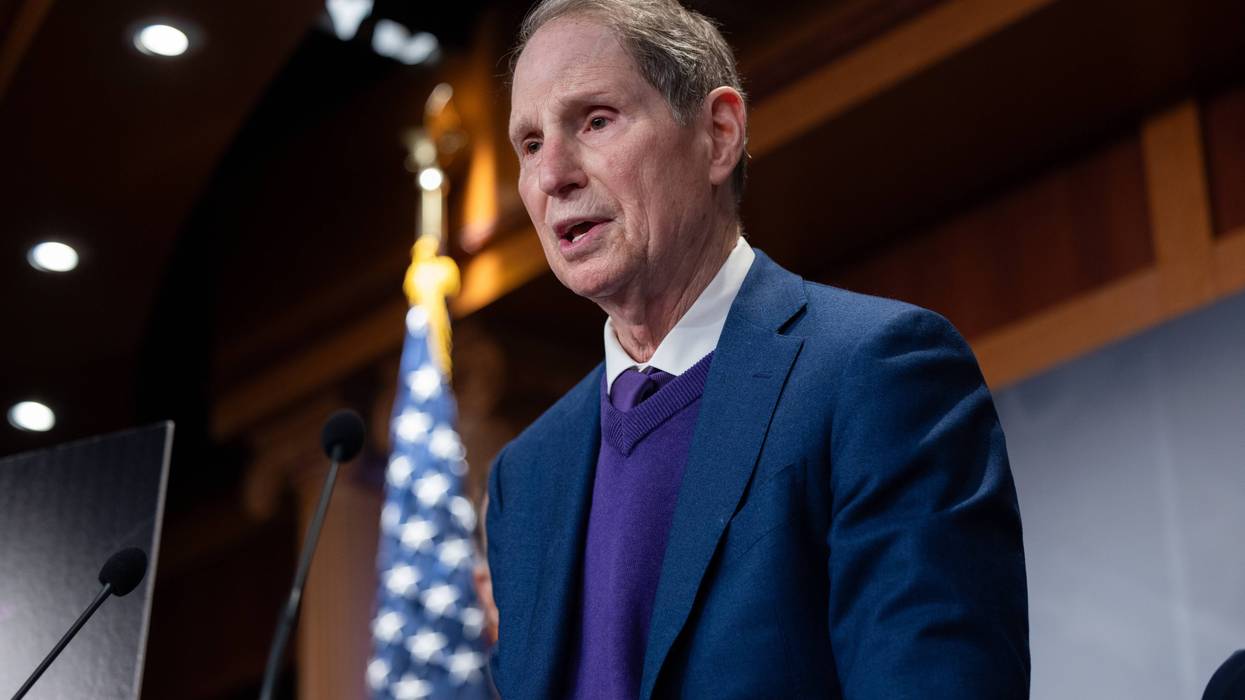
"I’m convinced there’s a mess of financial crimes running throughout the Epstein story, and a lot of other people who were directly involved are still walking free," said the senator.
US Sen. Ron Wyden has given the Drug Enforcement Administration two weeks to provide key information on a secretive, long-running investigation into potential drug trafficking and money laundering by the late convicted sex offender Jeffrey Epstein and 14 co-conspirators.
The Oregon Democrat wrote to DEA Administrator Terrance Cole asking for a fully unredacted version of a 69-page memo from 2015 that was prepared by the director of the Organized Crime Drug Enforcement Task Forces (OCDETF) Fusion Center, a specialized Department of Justice (DOJ) unit that President Donald Trump shut down last year.
A heavily redacted version of the memo was included in the Epstein files that were released last month and referred to an OCDETF probe nicknamed "Chain Reaction."
The investigation had been opened in 2010, according to the document, and was still active at the time the memo was drafted. Epstein's 14 co-conspirators, all of whom had their names blacked out in the file release, were being investigated for "illegitimate wire transfers which are tied to illicit drug and/or prostitution activities occurring in the US Virgin Islands and New York City."
The Epstein Files Transparency Act, which required the release of files related to Epstein's sex trafficking operation, requires that redactions are used to protect the identities of victims, "not members of a criminal sex trafficking organization," Wyden wrote in his letter.
“The fact that Epstein was under investigation by [OCDETF] suggests that there was ample evidence indicating that Epstein was engaged in heavy drug trafficking and prostitution as part of cross-border criminal conspiracy. This is incredibly disturbing and raises serious questions as to how this investigation by the DEA was handled,” Wyden wrote.
“Since Epstein and his 14 co-conspirators were never charged by the DOJ for drug trafficking or financial crimes, I am concerned that the DEA and DOJ during the first Trump administration moved to terminate this investigation in order to protect pedophiles," he continued. "I am also concerned that the excessive redactions of this memorandum for operation ‘Chain Reaction’ go well beyond the intent of the Epstein Files Transparency Act."
In a statement on social media Friday, the senator said the Senate Finance Committee, of which he is the ranking member, needs "to know the results" of the OCDETF's investigation.
"Did it result in any charges being brought against the targets? Why did it end, and when? Did the first Trump administration squash it?" he asked.
This document is proof that it’s essential to keep following the money. I’m convinced there’s a mess of financial crimes running throughout the Epstein story, and a lot of other people who were directly involved are still walking free. That’s unacceptable.
— Senator Ron Wyden (@wyden.senate.gov) February 27, 2026 at 10:15 AM
"This is a big one," Wyden said of the redacted memo.
Wyden has led efforts to get to the bottom of financial secrets regarding Epstein's sex trafficking and other criminal operations. Last summer he drew attention to Suspicious Activity Reports that were filed with the US Department of the Treasury, including information on more than 4,725 wire transfers involving Epstein's bank accounts, totaling $1.5 billion in value.
The redacted memo in the Epstein files, he said, "is proof that it’s essential to keep following the money."
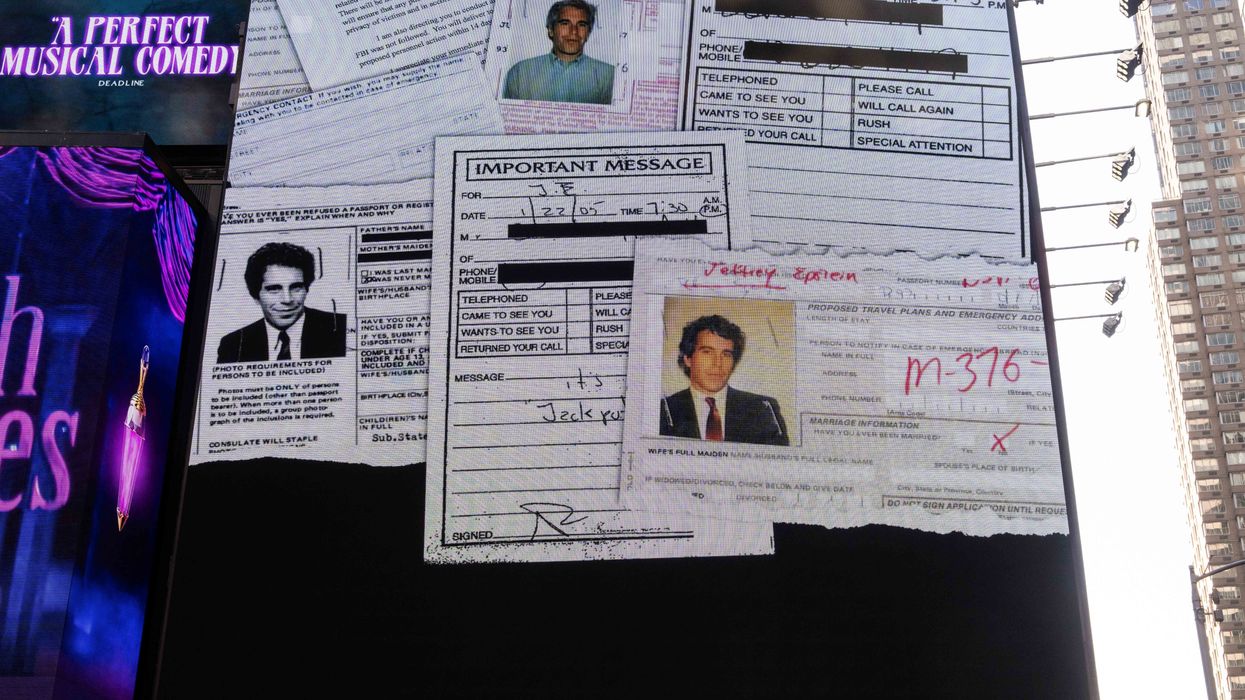
On top of the grotesque and horrifying photos and emails that appear to offer more evidence of systemic and widespread child abuse, the Epstein files revealed further allegations of his ties to Israel and its intelligence agency Mossad.
Late last month, the US Department of Justice published 3.5 million pages about convicted sex offender and financier Jeffrey Epstein.
On top of the grotesque and horrifying photos and emails that appear to offer more evidence of systemic and widespread child abuse, the Epstein files revealed further allegations of his ties to Israel and its intelligence agency Mossad.
The Epstein-Israel revelations have been covered at length by independent and overseas media outlets:
It is important to note that the Epstein emails contain allegations and intimations, and don’t prove that Epstein was an Israeli agent, formally or informally. However, they do add to the existing evidence that Epstein used his considerable connections and wealth to assist the Israeli state.
The Epstein-Israel ties were reported before the latest DOJ release by various independent media outlets, particularly Drop Site News. Drop Site’s reporting received scant coverage by US corporate media, as I documented at the time (FAIR.org. 11/14/25).
Drop Site based its reporting on a hack purportedly emanating from Iran’s government. The hack’s source seemed to have explained—at least in part—the lack of US corporate media coverage. The latest Epstein-Mossad ties, on the other hand, were uncovered in a release by the DOJ—a more acceptable source by US corporate media standards. (The Justice release confirmed some of the details in Drop Site‘s reporting based on the Iranian hack, such as Epstein’s close ties to the Israeli spy Yoni Koren—Drop Site, 11/11/25; Al Jazeera, 2/9/26.)
And yet only a few US corporate media outlets—most notably Axios, New York magazine, the New York Times, Wall Street Journal and Atlantic—have referenced the latest Epstein-Israel revelations.
Even then, these outlets cast doubt on the legitimacy of the connections by framing them as conspiracy theories, or conspiracy-adjacent—hardly a surprise, given previous US corporate media coverage.
Axios (2/3/26) wrote:
FBI source reports and internal emails contain unverified claims and secondhand suspicions about Epstein’s possible ties to Mossad and other intelligence services—material that stops well short of proof, but offers ample fodder for speculation.
A week later, Axios (2/10/26) acknowledged that Barak and his wife “stayed at Epstein’s apartment multiple times from 2015 to 2019,” citing Israeli media reports. Axios‘ Rebecca Falconer wrote that Barak “has said he ‘deeply regrets’ his past relationship with Epstein, and that he never saw nor participated in any inappropriate behavior during their meetings.” Falconer added:
Israeli Prime Minister Benjamin Netanyahu rejected conspiracy theories peddled online that his longtime political rival Barak’s “unusual close relationship” indicated that Epstein was an Israeli spy.
Although New York features writer Simon van Zuylen-Wood (2/6/26) mentioned “former Israeli prime minister Ehud Barak” as one of the “seemingly endless list of VIPs” corresponding with Epstein, it warned against looking too hard at Epstein’s ties to the Israeli state by linking an interest in the issue to antisemitism:
The horseshoe nature of the scandal makes it hard to untangle speculation about, say, Epstein’s intelligence ties from the antisemitism that is pervasive in Epstein discourse. “Yes, we are ruled by Satanic pedophiles who work for Israel,” announced the YouTuber Candace Owens, who may have been reading the same emails that prompted the left-wing commentator Cenk Uygur to post, “To my knowledge no one in legacy media has ever even discussed the possibility that Epstein was Mossad when it is all over the files.”
Right-wing conspiracy theories based in antisemitism (like Owens’) are a toxic form of discourse. But the latest batch of files—and Drop Site’s previous coverage, which Uygur has previously covered—is not hard to distinguish from antisemitism, and does more than just offer “ample fodder for speculation.”
Still, pundits like the Wall Street Journal‘s Barton Swaim (2/11/26) treated questions of Epstein and Israel as necessarily conspiratorial, heaping scorn on “influencers and politicos determined to attribute all bad things to the dark workings of cabals,” and citing how “Tucker Carlson conjectured that Epstein worked with the Mossad to blackmail its enemies.”
And the Atlantic (2/7/26) wrote that, “in death, Epstein has taken on far more significance than he did in life”:
Some Americans were already primed to believe in international pedophilia rings. Bonus points if they were run by wealthy Jews—Jews who were perhaps on the Mossad payroll, as many conspiracists have insisted Epstein was.
Jacob Shamsian of Business Insider (2/14/26) asked whether “there were any truth to the rumored connections to the CIA or the Mossad,” only to hand wave away those connections by citing anonymous sources. Shamsian pointed to “four people who had access to the Justice Department’s files,” who “said there was no trace of intelligence material, which would have been the case if Epstein or Maxwell’s crimes were tied to the CIA or Mossad.”
To Compact editor Matthew Schmitz (Washington Post, 2/12/26), the “scourge of rising antisemitism in recent years has found its latest manifestation in the government’s release of millions of files about sex offender Jeffrey Epstein.” Schmitz referenced “antiestablishment voices” that “have advanced the claim that Jewish networks and interests are corrupting American society.” He lumped together “antisemites on the left and right,” linking Owens and Tucker Carlson with “progressive influencers” Ana Kasparian and Briahna Joy Gray. But Schmitz omitted any mention of Epstein and Barak’s very real relationship.
The New York Times, for its part, largely downplayed the relationship between Epstein and Barak, and omitted key context. A Times article (2/5/26) on Epstein’s ties with tech start-ups briefly mentioned that Epstein “suggested to Ehud Barak, the former Israeli prime minister, that he speak with Mr. Thiel about an advisory role” at Palantir.
The Times quoted a Palantir spokesperson as denying “Epstein ever investing in or being a shareholder in Palantir,” and asserting that Palantir “has never had a business relationship with Ehud Barak.” They failed to mention that Palantir signed its first contract with the Israeli government a year after the Epstein-Barak conversation.
Less than a week later, the Times (2/11/26) wrote that “political score-settling has played a part in the reaction in other countries,” including in Israel, where Prime Minister Benjamin Netanyahu has “played up disclosures of emails” between Epstein and Barak.
The Times noted in that piece that “India’s foreign ministry dismissed an email from Mr. Epstein, in which he appeared to take credit for the ingratiating approach of Prime Minister Narendra Modi during a landmark state visit to Israel in 2017.”
The paper omitted the detail that Epstein had connected Barak to Anil Ambani, an Indian billionaire close to Modi, ahead of the trip. Drop Site (1/31/26) reported that the introduction “helped accelerate the burgeoning relationship” between Israel, India, and the US.
The sparse US corporate media coverage of the Epstein-Israel angle sharply contrasts with the extensive reporting of Epstein’s alleged ties to Russia.
Epstein visited Russia at least three times during the 2000s. He maintained a network of recruiters in Eastern Europe, including Russia and Ukraine, whom he tasked with finding “girls”—often using modeling agencies as a front to traffic them to the US or Europe. He maintained Russian bank accounts and sought investments in Russia.
Although Russia was referenced somewhat more often than Israel in the files—about 5,400 to 4,800 times—Epstein’s connections to Barak were far more tangible than his ties to Russian government figures.
Epstein tried to meet with Putin multiple times, but there is no evidence that he ever succeeded (Washington Post, 2/7/26). Epstein maintained relationships with Russian oligarchs, tech investors, and former Russian government officials, but there isn’t a Russian equivalent to Barak, with whom Epstein shared over 4,000 email messages.
Indeed, Epstein and Barak arranged to meet face-to-face more than 60 times between September 2010 to March 2019. At least seven of these meetings took place while Barak was serving as minister of Defense for Israel (Jacobin, 2/6/26).
At least one email thread even connected Epstein to an anti-Putin dissident. Politician Ilya Ponomarev sent an email in 2011 to Bill Gates’ adviser Boris Nikolic, asking how he could gain access to the World Economic Forum in Davos “to communicate what is going on, so that not only official Putin’s voice is heard.” His email came as Ponomarev was participating in mass protests against Putin and his reelection during the 2011 Russian presidential election.
Nikolic forwarded Ponomarev’s email to Epstein, writing: “We should go soon to Russia and you should meet my friend Ilya Ponomarev,” who he described as the “main organizer of the uprising against Putin.” He “might replace Putin and become a president by himself” if “he does not get killed before,” Nikolic said. He asked how Epstein could help, “not with Davos but with the other stuff in general.”
Epstein replied: “I can do end of March.”
It’s not clear from the files whether Epstein ever met with Ponomarev, but the email thread was noteworthy, showing Epstein’s willingness to meet with an anti-Putin dissident.
Yet it received only one mention in the US corporate media—from Yahoo (2/5/26), which republished an article from the Kyiv Independent (2/5/26), a Ukraine-based news outlet that receives funding from the CIA-linked National Endowment for Democracy.
Beyond including the email in the article, the Kyiv Independent didn’t bother expanding on its significance. Instead, the outlet wrote:
The documents do not prove that Epstein worked for Russian intelligence.
They do, however, reveal sustained, multi-year efforts by Epstein to embed himself in Russia’s political, financial, and diplomatic circles—efforts marked by persistence, access-seeking, and repeated attempts to present himself as useful to the Kremlin.
Among the US corporate media outlets to cover the Epstein-Russia connection in-depth are the New York Post, Washington Post, and New York Times.
A headline in the New York Post (2/2/26) read: “Emails Reveal New Theory About Whom Jeffrey Epstein Was Really Working For.”
The right-wing outlet relied on two anonymous sources—”people close to the Russian tyrant” and “US security officials”—and an article by the British tabloid Daily Mail (1/31/26), which based its reporting on “intelligence sources.”
In the final four paragraphs of the article, the New York Post acknowledged Epstein’s well-established connections to Israel—noting that his co-conspirator Ghislaine Maxwell was the daughter of British media tycoon Robert Maxwell, widely reported to be a Mossad agent—but excluded any mention of the recent revelations.
Two days later, the New York Post ran an article (2/4/26) that detailed how Poland was launching a probe into whether Epstein was working as a Russian spy.
The right-wing outlet also published an article (2/7/26) about Epstein’s ties to “key Russian government figures.” These figures included Sergey Belyakov, who the Post described as “Russia’s deputy economic minister at the time, and a Kremlin secret service-trained spy who Epstein often appeared to use as his personal fixer in Moscow,” as well as Vitaly Churkin, “Russia’s ambassador to the United Nations, between 2015 and his 2017 death.” The New York Post did not mention that Epstein introduced Belyakov to Barak in April 2015 (Reason, 8/27/25; Drop Site, 10/30/25; Washington Post, 2/7/26).
The Washington Post (2/7/26) similarly hyped up a Russia connection under the headline “Epstein Built Ties to Russians and Sought to Meet Putin, Files Show.”
Jeff Bezos’ Post—which recently largely gutted its foreign reporting desk—wrote that the files “show repeated attempts in the 2010s to arrange a meeting” with Putin, but added that there was “no evidence in the Justice Department files that such a meeting ever took place.”
The Post (2/6/26) ran another article about the Russia ties, this time about “Russian expatriate tech investors who have drawn scrutiny from US intelligence agencies over their past ties with the Kremlin.”
The Post speculated:
The newly revealed extent of Epstein’s Russian connections, which also include senior Russian government officials, has added momentum to previous suspicions that he worked with or was targeted by intelligence agencies because of his personal connections to international elites.
In its own long-form article on the Epstein-Russia connection, the New York Times (2/10/26) similarly wrote that the latest batch of files have “raised new questions among Russia’s critics about whether the relationships opened the door to Russian intelligence activity.”
It is possible that Epstein was a Russian intelligence asset. However, there is no good reason for the US corporate media to frame these allegations as a real possibility, while ignoring the Epstein-Israel ties, or continuing to paint them as a far-fetched conspiracy theory.
The latest batch of files deepens the evidence, documented by Drop Site and others, that Epstein was engaged in assisting the Israeli state, serving as a go-between on commercial, diplomatic, and intelligence matters. Although Epstein maintained relationships with Russian oligarchs, tech investors, and former Russian government officials, no evidence has yet surfaced that he advocated on behalf of Russian interests. The only reasons to think that the former is more newsworthy than the latter are purely political.
"Covering up direct evidence of a potential assault by the president of the United States is the most serious possible crime in this White House," said one Democratic congressman.
The top Democrat on the House Oversight Committee announced Tuesday that an investigation will be opened into the US Department of Justice's withholding of Epstein files related to an alleged sexual assault on a 13-year-old girl committed by President Donald Trump decades ago.
“For the last few weeks, Oversight Democrats have been investigating the FBI’s handling of allegations from 2019 of sexual assault on a minor made against President Donald Trump by a survivor," Oversight Committee Ranking Member Robert Garcia (D-Calif.) said in a statement.
“Yesterday, I reviewed unredacted evidence logs at the Department of Justice. Oversight Democrats can confirm that the DOJ appears to have illegally withheld FBI interviews with this survivor who accused President Trump of heinous crimes," he continued. "Oversight Democrats will open a parallel investigation into this."
"Under the Oversight Committee’s subpoena and the Epstein Files Transparency Act, these records must immediately be shared with Congress and the American public," Garcia added. "Covering up direct evidence of a potential assault by the president of the United States is the most serious possible crime in this White House cover-up."
Oversight Dems have access to a list of documents, including interviews detailing serious allegations against President Trump, that are missing from the DOJ’s so-called “unredacted” files.Where are the missing files? What do they say? This all points to yet another cover up.
[image or embed]
— Rep. Robert Garcia (@robertgarcia.house.gov) February 24, 2026 at 2:21 PM
The Trump administration is accused of continuously flouting the Epstein Files Transparency Act—which mandated that all materials related to convicted child sex criminal and longtime former Trump friend Jeffrey Epstein be released by December 19. But critically, the law gives Attorney General Pam Bondi wide discretion to redact large amounts of information that could harm "national security."
Files on Epstein—who died under mysterious circumstances in a New York City jail cell in 2019 while awaiting trial on federal sex trafficking charges—that have not been released to the public despite the transparency law "include what appears to be more than 50 pages of FBI interviews, and notes from conversations with a woman who accused Trump of sexual abuse decades ago when she was a minor," NPR reported Tuesday.
That minor was allegedly introduced to Trump around 1983, when she was 13 years old.
“[REDACTED] stated Epstein introduced her to Trump, who subsequently forced her head down to his exposed penis which she subsequently bit," a DOJ file on the alleged incident states. "In response, Trump punched her in the head and kicked her out."
The child is one of more than two dozen women who have accused Trump of raping, sexually assaulting, or sexually harassing them.
In 2023, a civil jury in New York City found Trump civilly liable for sexually abusing and defaming journalist E. Jean Carroll and awarded her $5 million. In a separate defamation trial, Trump was ordered to pay Carroll another $83.3 million.
Trump, who denies any wrongdoing, is challenging these civil awards. Trump also denies an allegation that he and Epstein "brutally raped" a 13-year-old girl identified by the pseudonym "Katie Johnson" at a 1994 party.
As NPR reported Tuesday:
Other files scrubbed from public view pertain to a separate woman who was a key witness for the prosecution in the criminal trial of Epstein's co-conspirator, Ghislaine Maxwell, who is serving a 20-year prison sentence for sex trafficking. Maxwell is seeking clemency from Trump. Some of those documents were briefly taken down and put back online last week, while others remain hidden, according to NPR's comparison of the initial dataset from January 30 with document metadata of those files currently on the Justice Department website.
Earlier this month, Rep. Jamie Raskin (D-Md.) said that the unreacted Epstein files, which he had viewed, contained "more than million" references to Trump.
Robert Glassman, an attorney representing a woman who testified against Maxwell, blasted the DOJ for its "ridiculous" handling of the Epstein files.
"The DOJ was ordered to release information to the public to be transparent about Epstein and Maxwell's criminal enterprise network," he told NPR. "Instead, they released the names of courageous victims who have fought hard for decades to remain anonymous and out of the limelight. Whether the disclosures were inadvertent or not—they had one job to do here and they didn't do it."
Responding to the NPR report, Rep. Ted Lieu (D-Calif.) said on X, "I guarantee if these files exonerated Trump, they would have been released," adding that Bondi "must resign, and she must be prosecuted."
Democratic National Committee Rapid Response Director Kendall Witmer released a statement Tuesday asserting that "Donald Trump continues to lie about his relationship with Jeffrey Epstein, while his administration works overtime to hide the truth about Epstein’s heinous crimes from the American people."
"Tonight at the State of the Union, Trump will be in the same room as survivors of Epstein’s crimes, whom he has denied transparency and justice," Witmer added. "He and his administration must be held accountable for protecting pedophiles.”
Democratic lawmakers including Garcia, Raskin, and Senate Minority Leader Chuck Schumer (D-NY) have invited Epstein survivors as guests to Tuesday night's speech by Trump.
Elisa Batista, campaign director at the advocacy group UltraViolet Action, said in a statement Tuesday that we are in solidarity with the courageous survivors showing up in defiance of Trump’s attempts to change the conversation at the State of the Union tonight."
Batista continued:
Their bravery represents the will of millions of Americans who are demanding accountability not just for all those who enabled Jeffrey Epstein, but also for public officials like Attorney General Pam Bondi who continue to protect those abusers and enablers by refusing to release all of the Epstein files.
When it comes to the Epstein class, the real state of the union remains unchanged: These powerful abusers and enablers believe they will be shielded by their wealth, networks, or influence. Now, like before, it’s been the fearless insistence of survivors that’s stood in the way of efforts by politicians like Trump and Bondi to sweep the full legacy of Epstein’s child sex trafficking network under the rug.
“No matter how much Trump and Bondi try to distract us from the fact that they broke the law to keep the public in the dark about the extent of Epstein’s child abuse, we, survivors and allies, will not allow them to forget their role in offering cover for Epstein and his enablers," Batista added.