SUBSCRIBE TO OUR FREE NEWSLETTER
Daily news & progressive opinion—funded by the people, not the corporations—delivered straight to your inbox.
5
#000000
#FFFFFF
To donate by check, phone, or other method, see our More Ways to Give page.
Daily news & progressive opinion—funded by the people, not the corporations—delivered straight to your inbox.
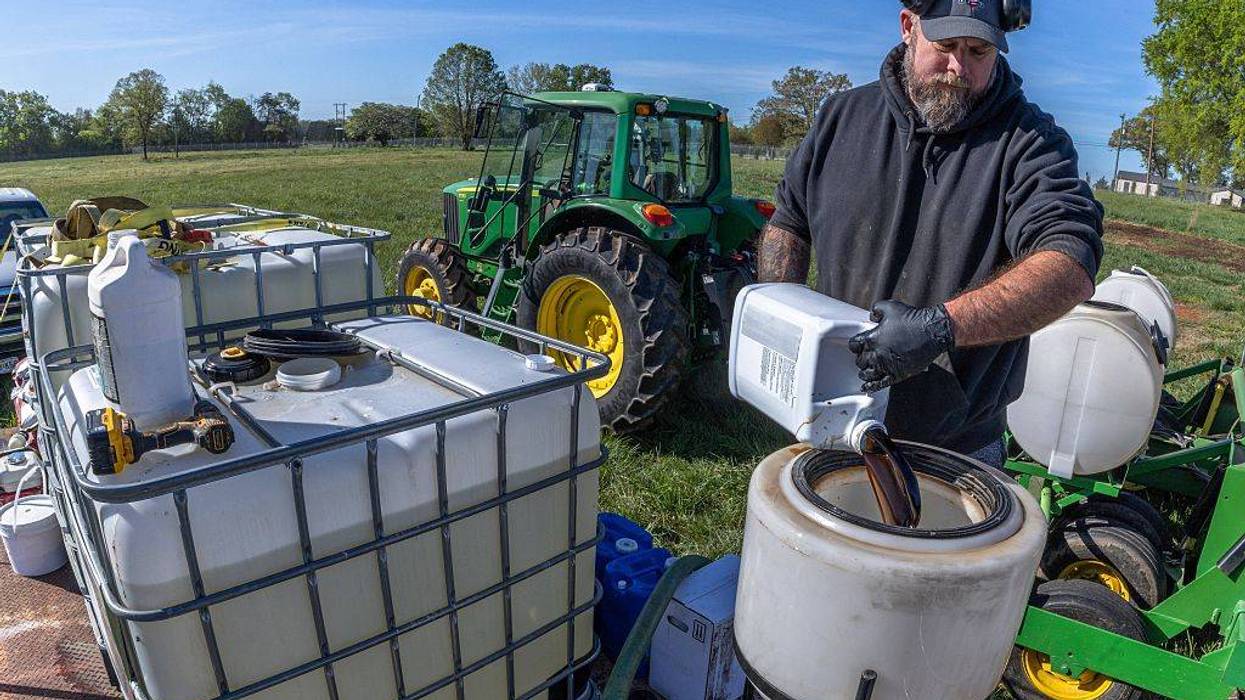
Buffeted by tariffs and an unprovoked war against Iran that sent the price of fertilizer through the roof, farmers easily stand out as the voting bloc most betrayed by Trump.
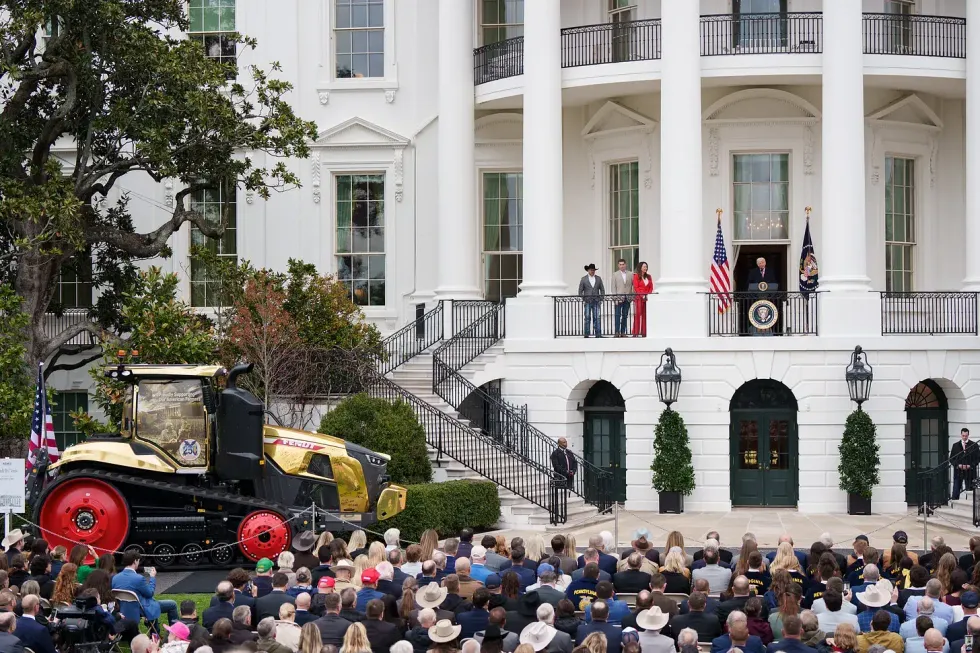
In late March, President Donald Trump addressed hundreds of farmers, ranchers, and agribusiness executives on the White House South Lawn at what he hyperbolically called “the single largest gathering of American farmers that the White House has ever seen.” In a rambling 35-minute speech that was ostensibly about the Farm Bill, he lambasted the Biden administration and “environmental terrorists,” lauded US military might, boasted that his ballroom will be the finest in the world, and gushed over a gold-wrapped tractor parked nearby. But he dedicated most of his speech to impress upon the crowd that “American farmers, ranchers, growers, and producers once again have a true friend and champion in the Oval Office.”
“You’re very, very special people,” Trump concluded. “I’ll never forget we won like such a number like nobody’s ever won before. You voted for me. I will never forget that. I’ll never forget the friendship—the great friendship that we’ve had.”
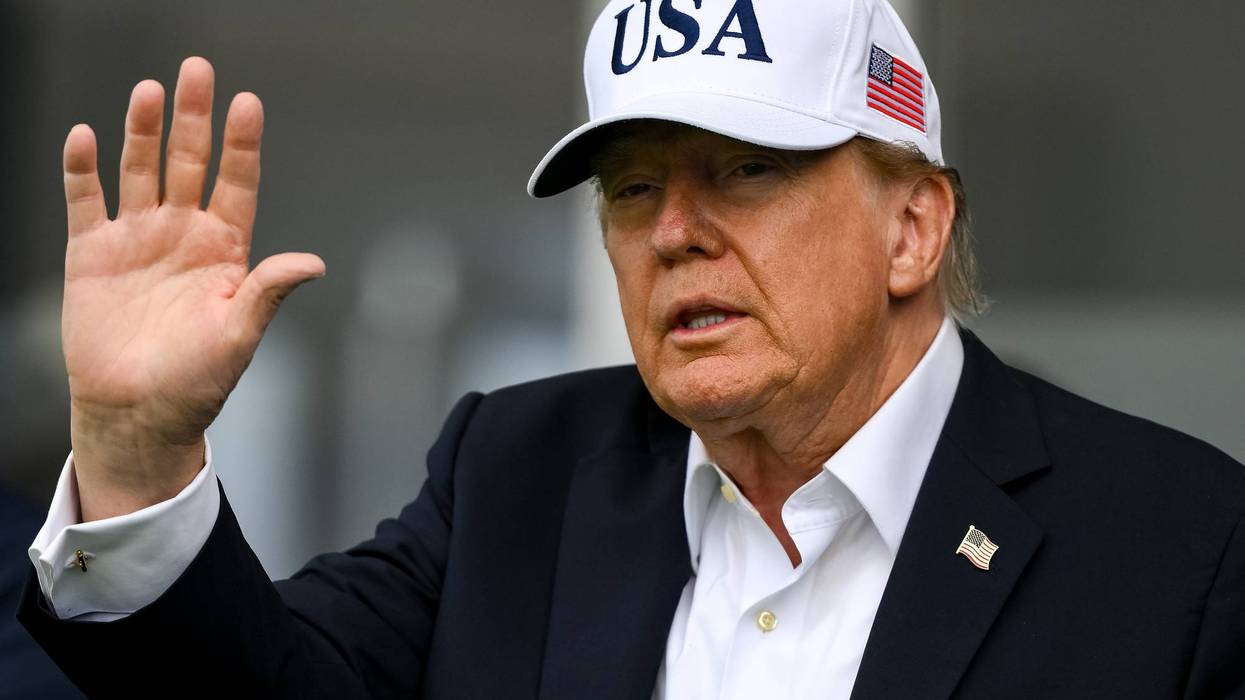
Indeed, the overwhelming majority of the nation’s 3.4 million farmers, 95% of whom are white, went for Trump in the 2024 election. He received nearly 78% of the votes in the 444 counties most dependent on agriculture.
But now, an increasing number of farmers are experiencing buyer’s remorse. Buffeted by tariffs and an unprovoked war against Iran that sent the price of fertilizer through the roof, they easily stand out as the voting bloc most betrayed by Trump. The resulting inflation has pushed many small farms to the brink of financial ruin. It has gotten so bad that even conservative think tanks generally aligned with Trump are griping.
It is virtually impossible to predict how farm country voters’ dissatisfaction with Trump administration policies will play out in the November midterm elections.
Earlier this year, researchers at the libertarian Cato Institute, founded by billionaire industrialist Charles Koch, bemoaned the impact Trump’s tariffs are having on farmers. “The Trump administration continues to tell America’s farm community that this is a golden age and that the administration’s tariffs are working,” they wrote. “The data tell a different story.”
More recently, Marc Short, a former Koch network official who now chairs Advancing American Freedom, a right-wing advocacy group founded by former Vice President Mike Pence, was even more explicit. In a June opinion piece in The Washington Post, he charged that “President Trump’s policies have punched farmers in the mouth.”
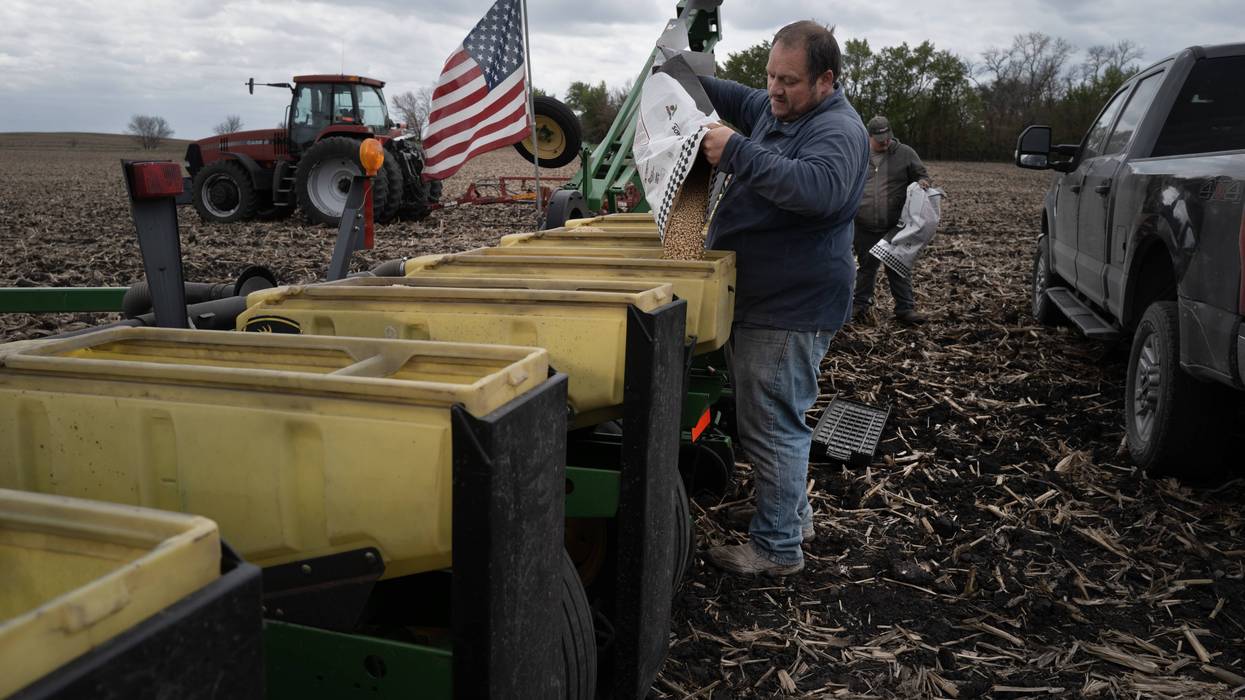
In April, the American Farm Bureau Federation published a survey of 5,700 farmers detailing the pain they are experiencing due to Trump administration policies. Nearly 60% said their financial situation has worsened since last year. Only 6% said they were doing better. Nationwide, 70% said they could not afford the fertilizer they needed, while in the Farm Bureau’s southern region, where Trump won 12 of 13 states, nearly 80% said they could not afford it. Smaller farms, which “are less likely to secure fertilizer ahead of the season” than larger operations, the Farm Bureau noted, were hardest hit.
Based on US Department of Agriculture (USDA) forecasts, Farm Bureau economist Faith Parum predicted that farmers may not receive any “meaningful” relief next year. Even if fuel and fertilizer prices drop, they will still face “higher prices for seed, chemicals, repairs, labor, machinery, and cash rents expenses,” she pointed out, concluding that at “a time when commodity prices remain under pressure and margins are already thin, higher operating expenses will place additional strain on farm viability.”
Many farmers have already lost their struggle for viability. Last year there were 315 Chapter 12 family farm bankruptcies across the country, a 46% increase from 2024. This year, according to the Trump administration’s own data, farm insolvency is expected to grow to as many as 330 bankruptcies and a record debt of $625 billion. In April alone, there were 62 farm-related bankruptcies, the highest one-month total since 2020 during the first Trump administration.
“Each year that we don’t start on the upswing is just more and more stress on farmers, and I think the higher diesel prices, the higher fertilizer prices, it’s just made 2026 the breaking point,” Robert E. Moore, an attorney at Ohio State University’s Agricultural & Resource Law Program, told Ag Daily in May. “I think farm bankruptcies are more likely to increase than decrease over the next few years.”
Farmers voted overwhelmingly for Trump in 2016 only to see him launch a tariff war against China and other US trading partners that cost them $13.2 billion in annualized export losses from 2018 through the end of 2019, according to the USDA’s Economic Research Service. That debacle prompted the first Trump administration to give farmers $28 billion in direct payments to compensate them for their losses.
By contrast, farmers largely benefited from Biden administration policies. During their first three years in office, according to a January 2024 Politico analysis, the Biden and first Trump administration each authorized roughly $57 billion in direct USDA payments to farmers. But there was a crucial difference: Much of Trump’s aid was emergency compensation for losses caused by his own trade war with China, while the Biden administration focused more on supporting agriculture through conservation, rural development, and other long-term investments.
“Biden has been better for farmers than Trump,” Politico concluded. “Net farm income has actually gone up since the Democrat entered the White House. On average, net farm income has totaled $165 billion between 2021 and 2023, compared to $94 billion between 2017 and 2019. Farm income reached a record high of nearly $189 billion in 2022.”
Nevertheless, nearly 4 out of 5 voters in agriculture-dependent communities backed Trump in 2024, and this time around, farm losses could be much worse than during Trump’s first term. To be sure, Trump’s policies don’t bear all blame for their woes—farmers have been struggling with high production costs and low crop prices for years—but he is certainly piling on.
In 2025, even before Trump’s war against Iran, the Agricultural Risk Policy Center at North Dakota State University estimated losses of $35 billion to $44 billion for major commodity crops. The center also calculated that Trump’s most recent tariff war with China resulted in nearly $15 billion in annualized losses between March 2025 and February 2026, alone, 40% more than the loss of $10.6 billion due to Trump’s 2018-2019 trade war with China during his first term.
Trump and the Republican-controlled Congress are now trying to mollify farmers with bailouts and price protections that could amount to a record $55 billion this year, The Wall Street Journal reported late last month. But it is not clear how quickly or efficiently that aid could get to farmers given Elon Musk’s Department of Government Efficiency cut 24,000 USDA staff members, many of whom assisted farmers with paperwork at the local level.
During a June trip to Wisconsin farm country, Trump urged farmers to be patient. “Your fertilizer prices are going to go way down, just like they were four months ago,” he promised. “Your fertilizer’s down, your energy’s down, your oil, your gas is all coming way down.”
So far, that hasn’t happened, but luckily for Trump, he has been able to depend on farmers’ patience, perhaps because they are aligned with him on so many other issues. Surveys show that white rural voters are more likely to believe that the 2020 presidential election was stolen; more likely to support political violence; and less likely to support democracy, racial diversity, and the idea that immigrants strengthen the nation—even though countless farming operations would fail without cheap immigrant labor.
Trump’s hold on farm country also is largely due to the real and imagined grievances rural whites have against “liberal urban elites” that Republicans have been stoking for decades, according to Nicholas Jacobs, an assistant professor at Colby College and co-author of the 2023 book The Rural Voter: The Politics of Place and the Disuniting of America. “It’s easy for an outsider to ask, ‘Why the hell are you still with this guy?’” Jacobs told the BBC. “But you have to understand that across rural America, the move toward Republicans long predates Donald Trump.”
On June 19, a Washington Post article quoted a Nebraska cattle rancher who questioned how much the agricultural sector can endure as more farmers go belly up. Farmers, he said, “have been rationalizing all of this chaos and saying it’s all going to be better later, but now they’re seeing that they may not be in the business any longer later.”
Four days before the Post story ran, Reuters/Ipsos posted a survey showing that Trump’s approval rating in rural America had hit a new low. Fifty percent of respondents approved of Trump, a 10% decline from February 2025. Trump’s disapproval rating among rural Americans, meanwhile, jumped from 34% to 48% over the same period.
A subsequent Harvard CAPS/Harris poll released last week, however, suggests that Trump’s falling support among rural voters may have stabilized. Trump had a 44% disapproval and a 52% approval rating, compared to an overall national approval rating of only 42%. For now, Trump’s appeal in rural America appears to be relatively strong.
It is virtually impossible to predict how farm country voters’ dissatisfaction with Trump administration policies will play out in the November midterm elections. Trump may not be on the ballot, but many of his Republican enablers in Congress and state governments will be. Will disillusioned farmers and their neighbors simply stay home, or has their “great friendship” with Trump soured enough that they pull the lever for Democrats? We will soon find out.
This article first appeared at the Money Trail blog and is reposted here at Common Dreams with permission.
The most vulnerable populations of the Global South are suffering ever-increasing distress, while most of the world has been experiencing rising inflationary pressures and increasing interest rates on government bonds.
For all the uncertainty about what will happen next on the military and diplomatic front in the Iran war, there is certainty about what has already happened on the economic front. And it is not good.
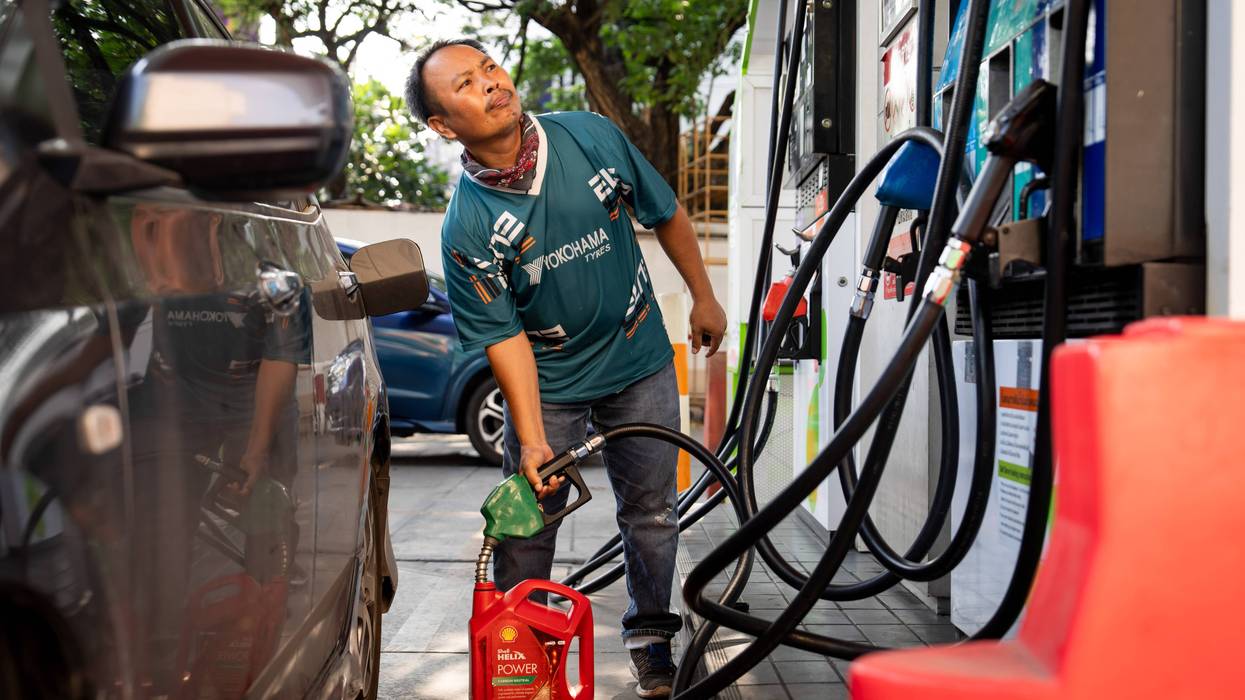
The world has seen a spike in oil prices that has been moderated so far by large drawdowns in global oil reserves. In addition, the most vulnerable populations of the Global South are suffering ever-increasing distress, while most of the world has been experiencing rising inflationary pressures and increasing interest rates on government bonds. And even if the US stock market appears relatively unperturbed, a version of this unpleasant mix has also hit the United States.
Global oil prices are much higher than they were before the war, with the financial market benchmark price of Brent crude late last week (down to $91 on weekend news of a possible deal), well above the $60 per barrel of early January. That said, crude prices have been relatively stable within a broad range over the last two months despite a dramatic drop in energy shipments out of the Persian Gulf since the war began.
According to the International Energy Agency (IEA), as of May 13, the cumulative shortfall in global oil deliveries from the Gulf was roughly 1 billion barrels. This shortfall has been absorbed by reduced oil demand (a consequence of higher prices); increased production outside the Gulf; and by a drop in global oil inventories of roughly 250 million barrels, as these were released to hold down prices in the absence of new production from the Gulf coming to the market. However IEA head Fatih Birol warned last week that inventories were dropping at an unsustainable pace, particularly with summer driving season approaching in the Northern Hemisphere.
For all that US energy exporters might benefit from higher global oil prices, US consumers do not.
The biggest shock from the higher cost (and outright shortage) of fuel, petrochemicals, and fertilizers is being felt by the poorest in the Global South. A recent story in The New York Times described how the price for transporting corn into refugee camps in Somalia had doubled or even tripled, as had the price of water at diesel-powered public tubewells. Meanwhile, protests this week in Kenya against fuel price hikes have led to four deaths, and political and financial stresses are mounting across the continent.
In India, sharp jumps in the price of Liquid Petroleum Gas have hit urban households hard, particularly those whose breadwinners work in small-scale industrial establishments. Many such enterprises rely on LPG as fuel and have shut down, displacing a workforce composed of recent migrants from the countryside. And because informal migrant workers in the city do not have access to India’s price-controlled public distribution systems, they have been forced to purchase cooking fuel on the black market at exorbitant rates. The combination has sparked fears of a repeat of a mass return to the countryside, as happened in the Covid-19 summer of 2020.
Stories like these abound across the Global South. A report from the World Food Program (WFP) two months ago (when the war was two weeks old) projected that 45 million more people could be thrust into acute hunger if the war persisted. And a panel of global officials had already warned the world at the International Monetary Fund meetings in Washington in mid-April that even an immediate cessation of the war would require at least two months before global shipping approached a semblance of normalcy.
Weakness in the real economy of many developing countries has been compounded by financial pressures in the form of larger trade deficits driven by the jump in oil prices, higher inflation, depreciating currencies, drawdowns in central bank reserves, and the threat of central bank rate hikes to keep inflation in check even if the economy is weakening.
In the face of such pressures, many countries were forced to sell foreign exchange or gold reserves to defend their currencies from further depreciation. According to Bloomberg, losses in the Philippines amounted to 8.1% of all reserves, in India to 5.1%, and in Indonesia to 3.8%. India has also imposed stiff tariffs and other restrictions on gold imports, and Prime Minister Narendra Modi has urged Indians to avoid “unnecessary foreign travel,” in additional efforts to limit further pressure on the Rupee from non-energy imports or tourism. And Malawi is reportedly selling not just gold reserves but also semi-processed gold bars bought from local miners.
Europe is less dependent on Persian Gulf oil, with only 7% of it sourced there, as opposed to Asia, which draws roughly 60% of its oil from the region. Even so, it is not immune to the impact of higher prices, with the European Commission’s economic czar warning that the continent faces a stagflationary shock. As a relatively wealthy continent, the EU (and the UK) can afford to grant fiscal subsidies to affected businesses, thus reducing the pain there. However, such measures also force the need to reduce oil demand on the poorest countries that are unable to afford such backstops.
Latin America has proven more resilient to the shocks from the Iran war, helped by the fact that Argentina, Brazil, Colombia, and Ecuador are all net energy exporters, while Mexico runs a small energy deficit but buys most of its natural gas from the US. Chile is the sole large outlier on the front. Still, the energy trade might cushion most major Latin American currencies from sharp depreciation and financial stress, but as an agricultural exporter, the region is vulnerable to higher fertilizer prices and to inflation that could force central banks to raise interest rates.
In the United States, the administration has downplayed the impact of the war on the American people and emphasized how the dramatic increase in US oil production has led to a substantially lower reliance on imported energy. Treasury Secretary Scott Bessent has said that the administration's policies of “energy abundance” have helped the country withstand the shocks from the Iran War. And President Donald Trump said in April that “the United States imports almost no oil through the Hormuz Strait and won’t be taking any in the future…We don’t need it.”
In his recent remarks, Bessent observed that the war had also allowed the US to “focus on the opportunity at hand” as global demand for US energy surged. And, indeed the war has led to a dramatic increase in US exports of crude oil and downstream products. A recent piece in The New York Times noted that the US has exported an additional 145 million barrels of oil since the war began, leading to an increase in revenues of roughly $50 billion.
However, the flip side to this is that US consumers have reportedly spent an extra $40 billion on gasoline prices since the war began. For all that US energy exporters might benefit from higher global oil prices, US consumers do not. And research from the New York Fed suggests that lower-income households were hit much harder by higher energy prices, changing travel patterns in order to keep their gasoline budgets from getting out of hand.
American agriculture, meanwhile, has been hit with a double whammy as two major operating costs, fertilizer and diesel, have both seen sharp price increases. A report last month by the Farm Bureau suggested that 70% of all farmers say they are unable to afford all the fertilizer they need. This in turn could translate into lower crop yields and higher food prices—a worry that is even more pronounced among smallholders in the Global South, underlying the global effects of this war.
And while the US stock market has remained relatively buoyant through all this, boosted primarily by Artificial Intelligence and Semiconductor stocks, there are signs of deeper worries in global bond markets, including in the United States. Concerns over inflationary pressures driven by rising energy and food prices have combined with worries over the rising fiscal costs associated with increased defense budgets, fuel subsidies, and massive reconstruction needs to push global bond yields up significantly.
After annual consumer price inflation in the US jumped to 3.8% (far above the Federal Reserve’s 2.0% inflation target), the US Treasury’s 30-year bond hit its highest yield in 30 years last week. And while that might be good news for those who own newly issued bonds and will receive the interest paid on them, it is less favorable for those looking to buy or refinance a home as mortgage rates rise alongside US government bond yields.
Thus, the impact of this war within the US might not be as severe as that in large parts of the Global South, but even within America, there will be many more who lose than gain from the economic consequences of this war.
The development of agroecological and regenerative approaches would see a food system that is not only less vulnerable to the supply chain shocks being felt today, but would be better for the environment, human health, and animals.
The global disruptions caused by the war in Iran have brought renewed focus to the vulnerability of global fossil fuel supply chains. But what has received less attention is how the war also highlights the vulnerability of industrial agriculture supply chains reliant on massive amounts of chemical fertilizers and other inputs. Like oil and gas, these frequently travel long distances through turbulent waters.
A big advantage of renewable energy technologies like solar is that sunlight doesn’t have to pass through the Straits of Hormuz. The same can be said for many of the inputs required for agroecological and regenerative farming systems. The development of these approaches would see a food system that is not only less vulnerable to the supply chain shocks being felt today, but would be better for the environment, human health, and animals. It would be healthier, kinder, and more resilient.
A global economic recession and possible food shortages are looming as the war in Iran grinds on. While the devastating impact of the current conflict on people, their families, and communities must be foremost in our minds, the shock waves from the crisis are having system-wide impacts on energy supplies, cost of living, and food prices. As the seasons turn and farmers prepare to plant their crops, they are facing a new pressure: a sudden and critical rise in fertilizer and fuel costs.
As the price of petrol and diesel have skyrocketed since the closure of the Strait of Hormuz, so too have fertilizer costs due to shortages of urea and ammonia. A third of the world's key fertilizer chemicals pass through the Strait, and prices have risen steeply since the outbreak of war, with predictions that prices for nitrogen-based fertilizers like urea could roughly double if the war drags on. Alongside a rise in red diesel prices, agricultural profit margins are highly volatile.
The current war is heinous, but inadvertently it has created an inflexion point, a moment to rethink global distribution of goods, and our broken food system.
Farmers taking the financial hit will likely pass on the costs to the consumer, but this isn’t sustainable and undermines the financial, social, and environmental health of the global food system. What if we flip it? Could the Middle East War not only accelerate a shift to renewable energy but also reduce our dependency on fertilizer-hungry crops? Legumes such as beans and peas, which fix nitrogen in soils, root vegetables, soybeans, and hardy grains such as rye could be viable alternatives.
Since the Second World War, a burgeoning (and hugely profitable for a few) chemical industry has created food systems dependent on inputs such as fossil fuel-based fertilizer, pesticides, herbicides, and fungicides. While delivering greater crop surplus, industrial farming has brought new problems: algal blooms, less wildlife and pollinators, monocultures, local air pollution, global climate change, and the loss of small-scale farming and farmers.
We’ve reached a tipping point; we overproduce food, a third of which is wasted, and too many people are eating too much of the wrong types of food. Noncommunicable diseases such as cardiovascular disease and diabetes are becoming a much bigger health burden than infectious diseases. Meanwhile, entrenched inequalities mean that, despite a global food surplus, millions of people go hungry every day, and 2.6 billion people can’t afford a healthy diet. An insatiable demand for meat now means that there are over 76 billion farmed chicken, pigs, and cattle in production around the planet, driving a largely invisible burden of animal suffering.
The current war is heinous, but inadvertently it has created an inflexion point, a moment to rethink global distribution of goods, and our broken food system. Growing crops that don’t need so many fossil fuel-derived chemicals but still provide enough food to feed our populations, and sustainable farming for current and future generations, is where we should be heading. We need to transition away from industrial agriculture, to food systems built on fairness—to people, animals, and the planet—not one geared toward feeding animals to feed ourselves. It’s a stark reality that over one-third of land used to grow arable crops is used to grow crops for animal feed.
Animal farming industry groups have been calling for public money to weather supply shocks, which begs the question of how resilient are the industrial systems we currently rely on. The US government provided $1 billion in response to avian flu, for example, while the European Union directed €46.7 million to Italian farmers, plus another €15 million for weather and animal-disease-related impacts in parts of Europe, and Canada extended livestock tax relief linked to bovine TB and extreme weather. The Food and Agricultural Organization of the United Nations (FAO) is also calling for urgent action in the form of government funds to protect the countries heavily exposed to import disruptions.
It’s clear that the current industrial animal farming model is not resilient. It depends heavily on unstable supply chains exposed to geopolitical shocks, climate change, extreme weather events, and disease outbreaks, and is a deeply inefficient use of plant resources to feed the world. Yet public money keeps being used to stabilize food systems that are structurally fragile, rather than directed toward sustainable and humane agriculture.
The current crisis in the Middle East has once again spotlighted our dependence on fossil fuels for energy and for food production. The growing success of renewable energy technologies—wind, solar, electric vehicles, and heat pumps—provides a roadmap to achieving energy independence at local and national levels. This has been achieved through several decades of policy and fiscal support, such as feed-in tariffs, technological advances, and growing public support.
Changing how we produce food could advance rapidly on the coat tails of our energy revolution. Calls for a just transition in farming and food production are growing from independent, small-scale farmers to development organizations, from Indigenous people’s groups to animal welfare charities. This transition would pivot away from destructive, insecure industrial agriculture toward more equitable, humane, and sustainable forms of agriculture, such as agroecology.
Rethinking food is not a nice to have, it’s essential if we are to strengthen the resilience of farmers, consumers, and nations, reducing exposure to geopolitical tensions, supply-chain disruptions, and future global shocks.
"While a few agrochemical giants shamelessly reap bumper profits, farmers are watching their livelihoods wither on the vine," said one Greenpeace campaigner.
Democratic lawmakers on Wednesday underscored how the US-Israeli war on Iran and Trump administration trade policies are hurting farmers and consumers while Big Ag profits from fast-rising fertilizer and food prices.
President Donald Trump's illegal war of choice has resulted in the closure of the Strait of Hormuz, through which around 30% of the world's fertilizer and 20% of its oil previously passed. In addition to increasing the risk of a global food crisis, the strait's closure has sent fuel and fertilizer prices soaring, with US farm diesel costing nearly 50% more than it did on the war's eve in February and nitrogen fertilizer rising by a similar percentage.
Meanwhile, Trump's erratic tariff war has further squeezed farmers and consumers. Tariffs have increased short-term prices, market volatility, and farmer costs while temporarily reducing import flows.
Vermont farmers "are footing the bill for Trump's reckless war in Iran," Rep. Becca Balint (D-Vt.) said Wednesday on social media. "Fuel and fertilizer costs are surging right amid planting season, hitting family farms that are already stretched thin. This needs to end."
Rep. Shri Thanedar (D-Mich.) said on X that "food prices are skyrocketing because 70% of farmers can't afford fertilizer, due to Trump's reckless Iran War," adding that "perhaps Trump should help them out by lending some, given that he's full of crap."
Rep. Betty McCollum (D-Minn.) noted Tuesday on Bluesky that "Minnesota’s farmers are dealing with tariffs, high fertilizer costs, expensive feed, and exorbitant fuel prices," while Trump is "planning to lay off dozens" of US Department of Agriculture workers "who help farmers protect their land and water."
The lawmakers' posts followed Tuesday's US Senate Agriculture Committee hearing on fertilizer market challenges, during which members of the Republican majority spoke vaguely of "trade disputes" and the "recent conflict in the Middle East" without naming names.
When it was her turn to speak, Ranking Member Amy Klobuchar (D-Minn.) noted the "direct link" between the soaring price of nitrogen fertilizer components and Trump's actions.
"In the months since the president started the war, with no consultation or authorization from Congress... urea has spiked more than 40%, the cost of diesel has hit near record highs in Midwest states," she said. "Now, why? Well, nearly half of the global urea goes through the Strait of Hormuz. Thirty percent of ammonia goes through the Strait of Hormuz."
Farmers are facing fertilizer prices that are through the roof because of the across-the-board tariffs, market consolidation, and uncertainties stemming from a war in Iran that was started with no consultation or authorization from Congress.
[image or embed]
— Senator Amy Klobuchar (@klobuchar.senate.gov) May 12, 2026 at 5:51 PM
"Yet, even before the war, farmers were walloped by the presence of across-the-board tariffs," Klobuchar continued. "An analysis by North Dakota State University... found that [International Emergency Economic Powers Act] tariffs added nearly $1 billion in costs to critical inputs like fertilizer, seed, machinery, and chemicals from February through October of last year."
"Acting now will ultimately help stabilize prices and give farmers the certainty they need," the senator added. "But it is going to have to be a combination of things: ending the tariffs, or reducing them, or making them much more targeted; ending this war; finding a way to resolve it, so the Strait of Hormuz is open again; and then going at this long-term systemic problem about the lack of competition in this area."
According to the advocacy group Farm Action, a handful of companies—primarily Nutrien, Mosaic, and CF Industries—dominate the North American fertilizer market, operating as an oligopoly that controls over 90% of nitrogen and potash production. Saskatchewan-based Nutrien, the world's leading potash producer, last week reported net first-quarter earnings of $139 million, up from $19 million one year ago.
"Fertilizer companies raise their prices because they can, and that's the market power that they have," Sen. Tina Smith (D-Minn.) said during Tuesday's hearing.
Noting record gains reaped amid the tumult of Russia's ongoing invasion of Ukraine, Smith said that during 2021-22, "the nine largest fertilizer companies made an estimated $84 billion in profits."
"In 2022, major fertilizer companies saw profits increase somewhere between 100 and 200%," she continued. "Their input costs did not go up by that much... How much do you think the profits of the average farmer in South Dakota [went] up during that time period?"
Pointing to new reports of robust fertilizer industry profits, South Dakota Corn Farmers president Trent Kubik replied, "during these last 75 days, a lot of money was being made, but it wasn't by farmers."
Addressing the question of "what can we do to change the behavior of companies that are in a position where they can charge such high prices and get such exorbitant profits," Smith suggested considering a "windfall profits tax" to "make the market more fair, particularly for folks that are doing the work."
The Trump administration's plan to counter high fertilizer prices includes reopening the Biden-era Fertilizer Production Expansion Program, which provides grants and financing to build or expand domestic manufacturing capacity. Some critics have slammed the program as a form of corporate welfare.
The administration is also considering further expanding a multibillion-dollar bailout program, which critics say has mainly benefited large-scale, export-oriented commodity farms.
Responding to recent reports of strong profits for nitrogen fertilizer producers, Greenpeace Aotearoa (New Zealand) Big Ag project lead Amanda Larsson said Tuesday that “the illegal US-Israeli attack on Iran has sent global fertilizer prices soaring, and while a few agrochemical giants shamelessly reap bumper profits, farmers are watching their livelihoods wither on the vine."
"This is war profiteering facilitated by a broken, fossil fuel-dependent food system—with farmers and consumers paying the price," she continued.
“Synthetic nitrogen fertilizer causes water and climate pollution, while propping up a system of industrial over-production, particularly to produce monoculture feed crops for livestock," Larsson said. "We are sacrificing our rivers, our climate, and our financial security to prop up a system that serves billionaires, not communities."
“We cannot buy food security on a volatile global chemical market," she added. "The only path to true food sovereignty and resilience is through a transition to ecological farming. By moving away from synthetic fertilizers and toward diverse, nature-based practices, we can break the cycle of chemical dependence, protect our water, and ensure that the price of food is no longer dictated by the whims of war and corporate greed.”