SUBSCRIBE TO OUR FREE NEWSLETTER
Daily news & progressive opinion—funded by the people, not the corporations—delivered straight to your inbox.
5
#000000
#FFFFFF
To donate by check, phone, or other method, see our More Ways to Give page.


Daily news & progressive opinion—funded by the people, not the corporations—delivered straight to your inbox.
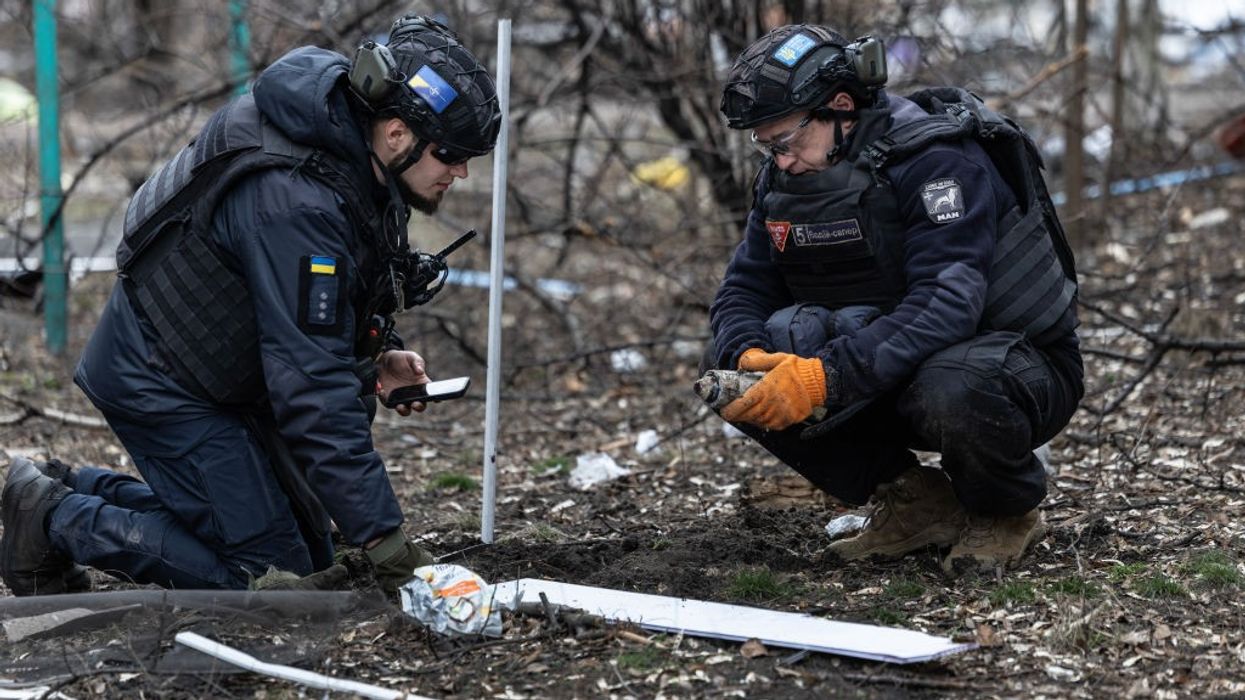
"The Trump administration's deep cuts to foreign aid are now disrupting mine clearance operations," one campaigner said ahead of International Day of Mine Action.
International Day for Mine Action on April 4 is typically an occasion to take stock of humanity's progress toward eradicating the scourge of landmines; however, with the administration of U.S. President Donald Trump dramatically slashing foreign aid and several European Union and North Atlantic Treaty Organization members withdrawing from the landmark Mine Ban Treaty, campaigners say there's little worth celebrating this Friday.
Mary Wareham, deputy director of Human Rights Watch's Crisis, Conflict, and Arms program, said Tuesday that International Day of Mine Action "is a moment to highlight the work of the thousands of deminers around the world who clear and destroy landmines and explosive remnants of war."
"They risk their lives to help communities recover from armed conflict and its intergenerational impacts," Wareham—a joint recipient of the 1997 Nobel Peace Prize for her work with the International Campaign to Ban Landmines (ICBL)—continued. "But due to devastating developments driven largely by two countries that have not banned antipersonnel landmines, the United States and Russia, this Mine Action Day does not feel like much of a celebration."
"For over three decades, the U.S. has been the world's largest contributor to humanitarian demining, mine risk education, and rehabilitation programs for landmine survivors," Wareham noted. "But the Trump administration's deep cuts to foreign aid are now disrupting mine clearance operations. Thousands of deminers have been fired or put on administrative leave pending the completion of so-called reviews. It's unclear if this crucial support will continue. The price of Trump administration cuts will be evident as casualties increase."
Responding to the Trump cuts, Anne Héry, advocacy director at the Maryland-based group Humanity & Inclusion—a founding ICBL member—said:
Any delay in clearance prolongs the danger of contamination by explosive ordnance for affected populations. Clearance operations save lives, especially children, who are often victims of explosive devices. They also enable communities to use land for agriculture, construction, and other economic activities. This funding cut will further displace vulnerable populations who cannot return home due to contamination. It will also result in limited access to schools, healthcare facilities, and water sources in contaminated areas.
The Trump administration's seeming disdain for Ukrainian—and by extension much of Europe's—security concerns, combined with Russia's ongoing invasion and occupation of much of Ukraine, has some E.U. and NATO members looking for other ways to defend against potential Russian aggression.
Earlier this month, Poland, Estonia, Latvia, and Lithuaniasaid they would withdraw from the 1997 Convention on the Prohibition of the Use, Stockpiling, Production, and Transfer of Anti-Personnel Mines and on their Destruction, also known as the Ottawa Treaty and the Mine Ban Treaty.
In a joint statement, the four countries' defense ministers explained that "military threats to NATO member states bordering Russia and Belarus have significantly increased" and that "with this decision we are sending a clear message [that] our countries are prepared and can use every necessary measure to defend our security needs."
As Wareham also noted: "Russian forces have used antipersonnel landmines extensively in Ukraine since 2022, causing civilian casualties and contaminating agricultural land. Ukraine has also used antipersonnel mines and has received them from the U.S., in violation of the Mine Ban Treaty."
In another blow to the Mine Ban Treaty, Finnish Prime Minister Petteri Orpo announced Tuesday that Finland is preparing to quit the pact, a move he said "will give us the possibility to prepare for the changes in the security environment in a more versatile way."
#Estonia #Latvia #Lithuania #Finland #Poland – DO NOT EXIT the Mine Ban Treaty! Your choices shape the future. "Young people are watching, and we’re counting on you" to uphold the ban on landmines! #MineFreeWorld #ProtectMineBan
[image or embed]
— International Campaign to Ban Landmines (@minefreeworld.bsky.social) April 1, 2025 at 7:04 AM
Wareham said that "the proposed treaty withdrawals raise the question of what other humanitarian disarmament treaties are at risk: chemical weapons? cluster munitions? The military utility of any weapon must be weighed against the expected humanitarian damage."
"To avoid further eroding humanitarian norms, Poland and the Baltic states should reject proposals to leave the Mine Ban Treaty," she added. "They should instead reaffirm their collective commitment to humanitarian norms aimed at safeguarding humanity in war."
"The Convention on Cluster Munitions provides a vital framework for ending the immediate and long-term harm and suffering caused by these abhorrent weapons," said one of the treaty's architects.
The overwhelming majority of cluster bomb casualties last year were civilians, with children making up nearly half of those killed or maimed by remnants of the internationally banned munitions, a report published Monday revealed.
Human Rights Watch (HRW) published its annual Cluster Munition Monitor report, which "details the policy and practice of all countries with respect to the international treaty that prohibits cluster munitions and requires destruction of stockpiles, clearance of areas contaminated by cluster munition remnants, and victim assistance."
That treaty, the landmark Convention on Cluster Munitions, has been ratified by 112 nations. However, numerous countries that are not parties to the agreement—including Myanmar, Russia, Syria, Ukraine, and the United States—continued to use or sell cluster bombs.
"Cluster munitions can be fired from the ground by artillery, rockets, missiles, or mortars, or dropped by aircraft," HRW explained. "They typically open in the air, dispersing multiple submunitions or bomblets over a wide area. Many submunitions fail to explode on initial impact, leaving unexploded duds that can indiscriminately injure and kill like landmines for years, until they are found and destroyed."
The results have been devastating. According to the report, 93% of cluster munition casualties reported by the monitor last year were civilians, while children made up 47% of those killed or wounded by cluster bomb remnants. Children are particularly vulnerable to unexploded cluster bomblets, which are often mistaken for toys.
According to the report, the following countries suffered more than 1,000 cluster bomb casualties in 2023: Laos (7,810), Syria (4,445), Iraq (3,201), Vietnam (2,135), and Ukraine (1,213).
HRW noted that "Russia has used stocks of old cluster munitions and newly developed models in Ukraine since 2022" and that "between July 2023 and April 2024, U.S. President Joe Biden approved five transfers to Ukraine of U.S. cluster munitions delivered by 155mm artillery projectiles and by ballistic missiles."
Meanwhile, unexploded cluster munitions dropped by the United States during the Vietnam War are still killing and maiming people, mostly children. In Laos, where the U.S. dropped more bombs than all sides in World War II combined, as many as 270 million cluster munitions were sprinkled over the country. Unexploded bomblets have killed an estimated 20,000 Laotians since the end of the war. It is believed that less than 1% of unexploded cluster munitions have been cleared in Laos.
The report highlighted some promising developments:
In December 2023, the convention reached a major milestone when Peru completed the destruction of its stockpiled cluster munitions, as it was the last state party with declared stocks to complete this obligation. Bulgaria, Slovakia, and South Africa announced the completion of the destruction of their respective cluster munition stocks in September 2023. These developments mean that member countries have collectively now destroyed 100% of their declared cluster munition stocks, destroying 1.49 million cluster munitions and 179 million submunitions.
However, there were also setbacks, such as legislation in Lithuania approving the Baltic nation's withdrawal from the cluster bomb treaty.
"Lithuania's ill-considered move to leave the Convention on Cluster Munitions stains its otherwise excellent reputation on humanitarian disarmament and ignores the risks of civilian harm," said HRW deputy crisis, conflict, and arms director Mary Wareham, who edited the new report. "It's not too late for Lithuania to heed calls to stop its planned withdrawal."
Speaking more broadly of the new report, Wareham—a joint recipient of the 1997 Nobel Peace Prize for her work with the International Campaign to Ban Landmines—said that "the Convention on Cluster Munitions provides a vital framework for ending the immediate and long-term harm and suffering caused by these abhorrent weapons."
"All countries should join and adhere to the convention if they are serious about protecting civilians from these weapons in the face of rising conflict," Wareham added.
It was just a few minutes before the Ryanair jet was set to cross into Lithuanian airspace when it diverted suddenly towards Minsk, the capital of Belarus.
A sliver of time and space, of international and national jurisdictions, that decided the fate of one of the passengers: Raman Pratasevich, 26, journalist and co-founder of NEXTA, a popular and influential Belarusian opposition Telegram channel which rose to prominence in the wake of last year's tumultuous presidential elections.
"The death penalty awaits me here," Pratasevich reportedly said as he was taken off the plane in Minsk, back into the clutches of a system that put him on a terrorism watchlist for his journalism. Pratasevich's girlfriend, Russian student Sofia Sapega, was also detained.
Details are still emerging about how the Belarusian authorities managed to get the plane to land in Minsk, though Ryanair has now called it a case of "state-sponsored hijacking." Pratasevich is now in custody, and faces up to 15 years in prison over charges of "organising mass riots", "disorder" and "raising social hostility to law enforcement."
Since election fraud and police violence brought people out on Belarusian city streets last year, NEXTA, now with some 1.2 million subscribers, has documented the country's post-election mobilisation in detail, rising to become one of its foremost information sources--and political factors. The authorities have since declared the channel "extremist". In March this year, the outlet released a film exposing the luxurious and wealthy lifestyle of president Alyaksandr Lukashenka, which, three days later, had already garnered three million views online.
NEXTA was founded by Pratasevich, who now runs a different Telegram channel, and fellow Belarusian journalist, Stsiapan Putsila, and is run from neighbouring Poland, alluding to the extreme difficulty of conducting journalism, or political activity, in Belarus. At least three demonstrators were killed in the aftermath of Belarus' August 2020 election, with 6,700 people detained, and hundreds, if not thousands, of people deliberately tortured or injured by the police. Ensuing criminal investigations have followed many participants of the protest wave, forcing them to leave their country and seek new lives outside Belarus. Pratasevich had, for example, been granted asylum in Lithuania.
"The Protasevich case is part of Lukashenka's general policy of restricting the media landscape," said Vadim Mojeiko, from the Belarusian Institute of Strategic Studies, who highlights recent changes to the country's law on mass media and last week's police raid on TUT.by, a major independent news outlet, over alleged 'tax evasion'. "Many journalists and bloggers are already behind bars, and now the danger is felt by those who are abroad or even flying over Belarus or Russia," he said.
"Protecting those who have already received asylum in Europe, as well as EU citizens, is a minimum task for European countries."
Indeed, European states are supposed to be 'safe havens' for journalists, exiles and dissidents from authoritarian regimes. Values of political pluralism and freedom of speech, rights-based protection for persons fleeing dangerous situations, together with supposedly neutral law enforcement and migration services are meant, in principle, to protect persons at risk from the long arm of their home country's security services.
But a steady stream of harassment and attacks, extraditions, deportations and kidnappings against those fleeing authoritarian states has put that idea under serious strain in recent years--as well as raising questions about how European states are reacting to transnational repression. The European Union may now have its own version of the Magnitsky Act, which imposes asset freezes and travel bans on individuals and entities suspected of human rights violations, but it is yet to stop repression in EU states. And while the Pratasevich case is clearly unprecedented--grounding an EU plane with EU citizens with a fighter jet is new territory--it points to the huge challenge of how states can respond to these acts.
Earlier this year, for example, an Azerbaijani blogger, Mahammad Mirzali, was beaten and stabbed in broad daylight in Nantes, France--in an attack he connected directly to his criticism of the Azerbaijani authorities. Meanwhile, since March, five Chechen exiles seeking asylum in France and Germany have been deported to Russia, where they face likely torture and fabricated criminal investigations.
"What would the EU be doing if Pratasevich were a prominent French journalist?" asked John Heathershaw, professor of politics at the University of Exeter, who researches how authoritarian states target dissidents abroad.
He pointed to the situation of Sharofiddin Gadoev, a Tajik political refugee and Dutch resident. In February 2019, Gadoev, a businessman and exile, was arrested by Russian officials in Moscow and forced onto a plane to Tajikistan, where he faced politically motivated prosecution.
Several weeks after Gadoev was "rendered" to Tajikistan, Heathershaw noted, the Netherlands "successfully demanded his return"--an example, he says, of "what the European Union should do" in the Pratasevich case.
"More broadly, we need to see recognition that anti-immigrant policies within the EU, encourage countries like Tajikistan and Belarus that they can get away with this without a vehement response," said Heathershaw. "They do it because they see Western countries as weak."
"Protecting those who have already received asylum in Europe, as well as EU citizens, is a minimum task for European countries," said Mojeiko. "If regimes like Lukashenka are able to hijack the planes of European airlines with impunity, then this will also be a signal to Putin and other authoritarian leaders that they can do more in relation to European countries they dislike."
"The EU needs to stop treating Belarus like a state with due process and recognise it as a kleptocracy where a cabal of Lukashenka's people keep control of wealth production, both legal and illegal, through vicious means," said Heathershaw. "If they do not step up with a flight ban to and from Belarus, and for the country's airline, then they will have failed."
More practically, it appears that this dramatic case has not only put Belarus back on the political agenda--it's also become a tragic reminder of the potentially extreme risks that journalists and exiles face even after they leave their homes.
"Expressions of 'deep concern' will not be enough," said Mojeiko. "Real action is necessary."
A federal judge in New York on Monday issued an injunction against President Donald Trump's June executive order sanctioning human rights lawyers cooperating with an International Criminal Court investigtion of alleged U.S. war crimes in Afghanistan.
U.S. District Judge Katherine Polk Failla in Manhattan issued a preliminary injunction (pdf) barring the Trump administration from targeting four law professors with criminal or civil penalties for supporting the work of the ICC in its investigation of alleged extrajudicial killing, torture, rape, and other potential war crimes committed by military and CIA personnel and allied forces during the ongoing 19-year war in Afghanistan--the longest campaign of the so-called War on Terror.
"The executive order is misguided and unconstitutional, violating our fundamental rights to free speech."
--James Goldston,
Open Society Justice Initiative
"The court is mindful of the government's interest in defending its foreign policy prerogatives and maximizing the efficacy of its policy tools," Failla wrote. "Nevertheless, national security concerns must not become a talisman used to ward off inconvenient claims, a 'label' used to 'cover a multitude of sins.'"
The ruling came in a case filed last October by the Open Society Justice Initiative and professors Diane Marie Amann, Margaret deGuzman, Gabor Rona, and Milena Sterio, who argued that Trump's order violates their constitutional rights.
Failla determined that Trump's order unconstitutionally prohibits free speech "so as to induce [ICC officials] to desist from their investigation of U.S. and allied personnel."
James Goldston, executive director of the Open Society Justice Initiative, welcomed Failla's decision, saying in a statement that the injunction "affirms what we have said from the start: the executive order is misguided and unconstitutional, violating our fundamental rights to free speech."
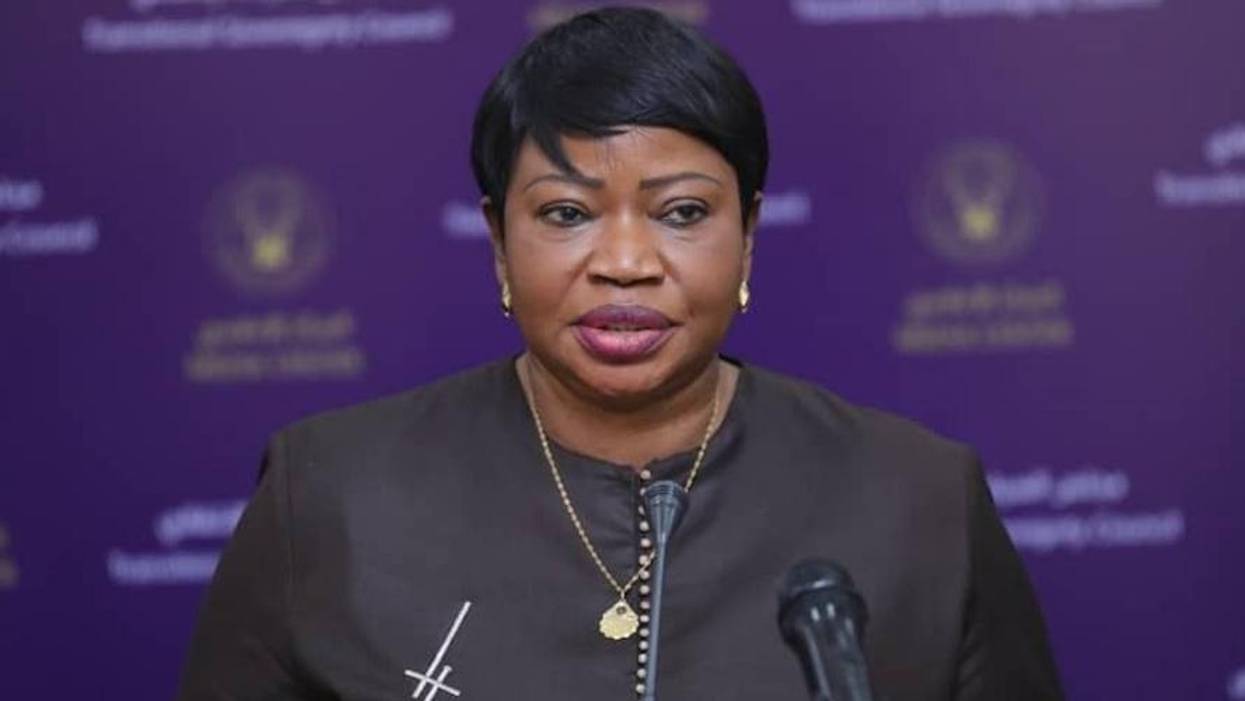
The lawsuit came a month after Trump imposed sanctions targeting Fatou Bensouda and Phakiso Mochochoko, the ICC's chief prosecutor and prosecution jurisdiction division director, respectively, in retaliation for their scrutinty of U.S. wartime conduct.
U.S. Secretary of State Mike Pompeo declared at the time that "the United States has never ratified the Rome Statute that created the court, and we will not tolerate its illegitimate attempts to subject Americans to its jurisdiction."
In April 2019, the ICC Pre-Trial Chamber II announced it would not grant a request by Bensouda to open an investigation into alleged war crimes and crimes against humanity, including deliberate attacks on civilians and child soldier conscription by Taliban militants, torture and sexual violence by members of Afghan National Security Forces, and torture of prisoners held in U.S. military and secret CIA prisons in Afghanistan, Poland, Romania, and Lithuania.
The decision was condemned by human rights advocates, many of whom accused the ICC of bowing to intense pressure from the Trump administration after it barred Bensouda, a Gambian national, from entering the United States. The administration threatened further retaliation, including travel bans and economic sanctions, against the ICC.
In December 2019, the ICC convened a three-day hearing in The Hague, Netherlands at which prosecutors and Afghan victims of alleged U.S. and Afghan government torture pleaded with court officials to reverse their April decision and conduct a war crimes probe. The ICC unanimously ruled in March 2020 that the investigation could proceed. Pompeo condemned the decision, calling the ICC "an unaccountable political institution masquerading as a legal body."
In July 2020, top Trump officials were further incensed after prominent Canadian jurist William Schabas submitted a request to the ICC to investigate senior U.S. and Israeli officials for alleged war crimes committed against the Palestinian people.
Looking ahead to Trump's January 20 departure from the White House, Goldston asserted that "rather than spending time defending an order in direct conflict with Washington's historic support for international justice, the incoming administration should rescind it on day one."
According to Reuters, the incoming Biden administration may consider lifting sanctions against the ICC officials, pending an evaluation of the role of sanctions in U.S. foreign policy.
This week Donald Trump, the awful man who currently occupies the U.S Presidency, brought his racist, xenophobic, and authoritarian campaign against liberal democracy to a new low, taking to Twitter both to denounce four Democratic members of the U.S. House of Representatives, women of color all, and to imply that they are "aliens" who don't belong in the country:
So interesting to see "Progressive" Democrat Congresswomen, who originally came from countries whose governments are a complete and total catastrophe, the worst, most corrupt and inept anywhere in the world (if they even have a functioning government at all), now loudly and viciously telling the people of the United States, the greatest and most powerful Nation on earth, how our government is to be run. Why don't they go back and help fix the totally broken and crime infested places from which they came. Then come back and show us how it is done.
Alexandria Ocasio Cortez, Ayanna Pressley, Rashida Tlaib, and Ilhan Omar, the four women in question, are of course U.S. citizens--as the Constitution requires of all members of Congress. The first three are indeed "from" the U.S., having been born here--it is worth remembering that the Trump administration has endorsed the idea of eliminating "birthright citizenship"--and the fourth, Ilhan Omar, who first arrived in the U.S. in 1992 as an asylum-seeking refugee from Somalia, has been a naturalized citizen since 2000.
[Trump] must be removed from office. For I do not think that constitutional democracy can survive another four years of his awfulness.
Trump's despicable tweets, like so many of his statements, were immediately and rightly denounced as racist and xenophobic by a wide range of journalists and virtually all Democrats, though no major Republicans. (Of his many hundreds of racist comments, these tweets perhaps most resembled his 2018 comments about immigrants "from shithole countries.")
Yet while these comments surely further fueled the vicious, racist right-wing attacks against AOC and her colleagues in "The Squad," it would be a mistake to reduce them to their racism. For they also articulated a broader reactionary agenda that goes beyond racism and that targets the left in general.
This was made clear this past weekend by the remarks of Trump's Sycophant Number One, Senator Lindsey Graham, who went on television to defend Trump from the charges of racism:
We all know that AOC and this crowd are a bunch of communists. They hate Israel, they hate our own country. They're calling the guards along our border, Border Patrol agents concentration camp guards. They accuse people who support Israel of doing it for the Benjamins. They're anti-Semitic. They're anti-America. Don't get down, aim higher. . . We don't need to know anything about them personally. Talk about their policies.
This morning Trump followed Graham's lead, slightly shifting his rhetorical ground while doubling down on his attack:
When will the Radical Left Congresswomen apologize to our Country, the people of Israel and even to the Office of the President, for the foul language they have used, and the terrible things they have said. So many people are angry at them & their horrible & disgusting actions!
In so doing, Trump made clear that his racism, powerful as it is, is linked to a broader hostility to the left, and to a campaign of red-baiting that has been central to his Presidency--only a few short months ago, in his February 2019 State of the Union address, he declared that "we renew our resolve that America will never be a socialist country"--and that will clearly loom ever larger as November 2020 approaches.
How far will this campaign against the broader political left go in the months to come? What forms might it take if Trump were to win re-election in 2020, and have another four years to do his damage?
Trump's recent Tweets are clearly motivated by xenophobic racism. But they also raise the specter of an even broader targeting of individuals because of their ideas, with a special emphasis on those who either are or might be considered "socialist."
It is worth recalling that a hundred years ago another woman of the left drew the ire of another President, this one, Woodrow Wilson, a Democrat. As the Jewish Women's Archive explains: "On December 21, 1919, Emma Goldman, along with 248 other radical 'aliens,' was deported to the Soviet Union on the S.S. Buford under the 1918 Alien Act, which allowed for the expulsion of any alien found to be an anarchist."
Goldman, born in 1869 in Kovno, Lithuania, came to the U.S. in 1885, as did millions of Eastern and Southern European immigrants during the closing decades of the 19th century. Goldman was an anarchist; a crusader for worker rights, women's rights, and sexual freedom; and, as both a supporter of the Russian Revolution in 1917, and an outspoken opponent of U.S. entry into World War One in 1918-19, she became a target of government surveillance and repression. The "Palmer Raids," launched by Attorney General Mitchell Palmer in late 1919 to arrest and deport "foreign radicals," took place in over 30 cities in 23 states; arrested between 6000 and 10,000 individuals; and led to deportation of almost six hundred resident aliens. Goldman was one of them. Along with her collaborator (and lover), Alexander Berkman, she was convicted; imprisoned; briefly detained, ironically, on Ellis Island; and then expelled from the country (while at Ellis Island, they co-wrote a powerful pamphlet, "Deportation, its Meaning and Menace: Last Message to the People of America"). While she was not originally "from here," she was expelled less because of her ethnicity than because of her ideas.
Deportation and denaturalization is currently making a comeback. Rafia Zakaria, writing last year in The Nation on "How Trump is Stripping Immigrants of their Citizenship," drew links between the administration's tactics and those used a century ago against Goldman:
The Trump administration's push to pursue denaturalization should be considered as one piece of the jigsaw that is closing off the United States to nonwhite individuals. Beginning with the Muslim ban, now upheld by the Supreme Court, extending to the vastly sped up ICE raids in areas with large Latino populations, to the detention and separation of asylum-seeking families at the border, these bits and pieces come together to reveal a worldview that accords with white nationalism.
Emily Pope-Obeda, writing last year in Jacobin on "Expelling Dissent," described the ways that the Trump administration was upgrading the effort to deport immigrants active in the sanctuary and immigration rights movements:
This string of deportations and detentions, while appalling, are anything but unprecedented. For well over a century, the US government has used its deportation powers to suppress opposition, intimidate movements, and silence critics. Frequently, it has acted in especially targeted ways, cracking down on individual leaders to send a message to any foreign-born activists who might consider speaking out.
While both Zakaria and Pope-Obeda recall the treatment of Goldman and other "alien" dissenters, they center their accounts on the ways that Trump seeks to close borders and to enforce a racially and ethnically exclusive conception of citizenship, using the power of the state to deport "dangerous aliens" and thus to undermine immigrant rights.
Trump's recent Tweets are clearly motivated by xenophobic racism. But they also raise the specter of an even broader targeting of individuals because of their ideas, with a special emphasis on those who either are or might be considered "socialist." In this way, they bring to mind not simply the horrible treatment meted out to Goldman, but the treatment meted out to thousands of other WWI dissenters, most famously Eugene V. Debs, who could not be told to "go back to where you came from"--Debs was a White Anglo-Saxon Protestant from Terre Haute, Indiana--but could be told to stop criticizing the government nonetheless. Debs did not run afoul of the 1918 Alien Act. But he did famously run afoul of the 1917 Espionage Act; his widely-publicized anti-war speech in Canton, Ohio in June 1918, led to his arrest, conviction, and imprisonment, and was part of a massive wave of anti-socialist repression (On this topic, I strongly recommend Ernest Freeberg's Prisoner of Democracy: Eugene V. Debs, the Great War, and the Right to Dissent).
Trump's racist Tweets are ominous both because of their xenophobia and because of their hostility to democracy. What Emma Goldman said at her deportation hearing on October 27, 1919, is worth quoting at length:
Every human being is entitled to hold any opinion that appeals to her or him without making herself or himself liable to persecution. Ever since I have been in this country--and I have lived here practically all my life--it has been dinned into my ears that under the institutions of this alleged Democracy one is entirely free to think and feel as he pleases. What becomes of this sacred guarantee of freedom of thought and conscience when persons are being persecuted and driven out for the very motives and purposes for which the pioneers who built up this country laid down their lives? And what is the object of this star chamber proceeding, that is admittedly based on the so-called Anti-Anarchist law? Is not the only purpose of this law, and of the deportations en masse, to suppress every symptom of popular discontent now manifesting itself through this country, as well as in all the European lands? It requires no great prophetic gift to foresee that this new Governmental policy of deportation is but the first step towards the introduction into this country of the old Russian system of exile for the high treason of entertaining new ideas of social life and industrial reconstruction. Today so-called aliens are deported, tomorrow native Americans will be banished. Already some patrioteers are suggesting that native American sons to whom Democracy is not a sham but a sacred ideal should be exiled. To be sure, America does not yet possess a suitable place like Siberia to which her exiled sons might be sent, but since she has begun to acquire colonial possessions, in contradiction of the principles she stood for over a century, it will not be difficult to find an American Siberia once the precedent of banishment is established. . .
I strenuously protest against this despotic law and its star chamber methods of procedure. I protest against the whole spirit underlying it--the spirit of an irresponsible hysteria. . . the people can only profit by a free discussion of the new ideas now germinating in the minds of thinking men and women in society. The free expression of the hopes and aspirations of a people is the greatest and only safety in a sane society. In truth, it is such free expression and discussion alone that can point the most beneficial path for human progress and development. But the object of deportations and of the Anti-Anarchist law, as of all similar repressive measures, is the very opposite. It is to stifle the voice of the people, to muzzle every aspiration of labor.
Trump hates immigrants. He hates people of color. He hates worker rights. He hates journalists, and scientists, and educators. He hates democracy. He must be removed from office. For I do not think that constitutional democracy can survive another four years of his awfulness.
One night in October 2001, shortly after al-Qaeda's attacks on the World Trade Center and Pentagon, a private jet touched down in Karachi. Masood Anwar, a prominent Pakistani journalist, received an unexpected tip from a friend in the airport: "There were men in masks. They took a hooded man onboard in the early hours. Someone videotaped the entire thing. No one was allowed near the site."
Anwar's story, although no one knew it at the time, would be the start of a thread which led to the heart of the Central Intelligence Agency's most secret "War on Terror" operation: the "rendition, detention, interrogation" (RDI) programme, a nine-year covert effort which had scores of prisoners flown around the globe to be tortured in undisclosed sites.
The CIA started by grabbing terror suspects off the streets and transferring them in secret to interrogators in the Middle East. But soon the agency decided it needed to run its own detention facilities, or "black sites". Over the next few years, it set up a network of prisons and a fleet of private jets to move people between them.
In December 2014, the Bureau, alongside The Rendition Project, began a major project to trace the history of the RDI programme. The impetus for our investigation came from the long-awaited publication of a report into CIA torture by the US Senate Select Intelligence Committee. The authors of this report had high-level access to internal CIA documents, which they mined to produce a damning assessment of the torture programme's brutality, mismanagement and ineffectiveness. But they were compelled by the Obama administration, and by the CIA itself, to censor -- "redact" -- all parts of the report that could identify specific times and places where abuses had occurred.
This is important, because without being able to tie illegal activities to specific times and places, the quest for redress is hamstrung, and meaningful accountability -- legal, public, historical -- remains a mirage.
The Senate report did offer a crucial insight, however: the first complete list of prisoners held in the CIA's black sites. 119 names, each with a date of custody (redacted) and a record of how many days they were held (also partly redacted).
In the days after the publication of the Senate report, we set to work reconstructing this list to reveal the hidden dates. Figuring out a date often meant that we could match it to a flight record; matching to a flight record meant that we could determine where a prisoner was brought from or sent to. As we cross-correlated thousands of data points -- from declassified government documents, footnotes in the Senate report, aviation data, records of corporate outsourcing of rendition flights, legal cases, media reporting and NGO investigations -- the contours of the CIA's programme of secret detention and torture began to emerge more clearly. Rather than just understanding certain individual histories, we could begin to discern the entire scope of the programme's development.
More than four years later, we're publishing the results of our investigation in a 400-page report entitled CIA Torture Unredacted. It is the first time that the entirety of the CIA's detention programme has been systematically revealed.
When the Senate Committee released their report, fewer than half the names on the list of prisoners were known. We reported in 2015 that only 36 of those held by the CIA had been taken on to Guantanamo Bay, while the fate of many of the others remained a mystery. Seized in secret, held in secret, they were then disposed of in secret -- some back to their homes, some into continued custody in other countries, again often in secret
Since then, we've been able to establish the histories -- at least to some extent -- of around 100 prisoners. We've traced over 60 operations to transport them to and from prison sites. We've uncovered who was held in Afghanistan, and revealed more fully than before who was sent to the European black sites, in Poland, Romania and Lithuania. We've also brought to light further details of how deeply implicated the UK was in the overall running of the CIA's torture network.
Last year, some of our findings were cited in two judgments at the European Court of Human Rights, which held that Romania and Lithuania had assisted the US in illegally holding prisoners incommunicado on their territory. Elsewhere, our work has assisted legal teams, police inquiries and citizen accountability projects.
CIA Torture Unredacted is the most comprehensive public account of one of the most disturbing elements of the 'War on Terror': a global programme of systematic disappearance and torture, carried out by the world's most powerful liberal democratic states in contravention of laws which they purport to uphold. In the face of continued obstruction and denial by the governments involved, we hope that it will stand as a central reference point for all those interested in accountability, truth and the rule of law.
In its latest budget request, the Trump administration is asking for a near-record $750 billion for the Pentagon and related defense activities, an astonishing figure by any measure. If passed by Congress, it will, in fact, be one of the largest military budgets in American history, topping peak levels reached during the Korean and Vietnam Wars. And keep one thing in mind: that $750 billion represents only part of the actual annual cost of our national security state.
There are at least 10 separate pots of money dedicated to fighting wars, preparing for yet more wars, and dealing with the consequences of wars already fought. So the next time a president, a general, a secretary of defense, or a hawkish member of Congress insists that the U.S. military is woefully underfunded, think twice. A careful look at U.S. defense expenditures offers a healthy corrective to such wildly inaccurate claims.
Now, let's take a brief dollar-by-dollar tour of the U.S. national security state of 2019, tallying the sums up as we go, and see just where we finally land (or perhaps the word should be "soar"), financially speaking.
The Pentagon's "Base" Budget: The Pentagon's regular, or "base," budget is slated to be $544.5 billion in Fiscal Year 2020, a healthy sum but only a modest down payment on total military spending.
As you might imagine, that base budget provides basic operating funds for the Department of Defense, much of which will actually be squandered on preparations for ongoing wars never authorized by Congress, overpriced weapons systems that aren't actually needed, or outright waste, an expansive category that includes everything from cost overruns to unnecessary bureaucracy. That $544.5 billion is the amount publicly reported by the Pentagon for its essential expenses and includes as well $9.6 billion in mandatory spending that goes toward items like military retirement.
Among those basic expenses, let's start with waste, a category even the biggest boosters of Pentagon spending can't defend. The Pentagon's own Defense Business Board found that cutting unnecessary overhead, including a bloated bureaucracy and a startlingly large shadow workforce of private contractors, would save $125 billion over five years. Perhaps you won't be surprised to learn that the board's proposal has done little to quiet calls for more money. Instead, from the highest reaches of the Pentagon (and the president himself) came a proposal to create a Space Force, a sixth military service that's all but guaranteed to further bloat its bureaucracy and duplicate work already being done by the other services. Even Pentagon planners estimate that the future Space Force will cost $13 billion over the next five years (and that's undoubtedly a low-ball figure).
In addition, the Defense Department employs an army of private contractors -- more than 600,000 of them -- many doing jobs that could be done far more cheaply by civilian government employees. Cutting the private contractor work force by 15% to a mere half-million people would promptly save more than $20 billion per year. And don't forget the cost overruns on major weapons programs like the Ground-Based Strategic Deterrent -- the Pentagon's unwieldy name for the Air Force's new intercontinental ballistic missile -- and routine overpayments for even minor spare parts (like $8,000 for a helicopter gear worth less than $500, a markup of more than 1,500%).
Then there are the overpriced weapons systems the military can't even afford to operate like the $13-billion aircraft carrier, 200 nuclear bombers at $564 million a pop, and the F-35 combat aircraft, the most expensive weapons system in history, at a price tag of at least $1.4 trillion over the lifetime of the program. The Project On Government Oversight (POGO) has found -- and the Government Accountability Office recently substantiated -- that, despite years of work and staggering costs, the F-35 may never perform as advertised.
And don't forget the Pentagon's recent push for long-range strike weapons and new reconnaissance systems designed for future wars with a nuclear-armed Russia or China, the kind of conflicts that could easily escalate into World War III, where such weaponry would be beside the point. Imagine if any of that money were devoted to figuring out how to prevent such conflicts, rather than hatching yet more schemes for how to fight them.
Base Budget total: $554.1 billion
The War Budget: As if its regular budget weren't enough, the Pentagon also maintains its very own slush fund, formally known as the Overseas Contingency Operations account, or OCO. In theory, the fund is meant to pay for the war on terror -- that is, the U.S. wars in Afghanistan, Iraq, Somalia, Syria, and elsewhere across the Middle East and Africa. In practice, it does that and so much more.
After a fight over shutting down the government led to the formation of a bipartisan commission on deficit reduction -- known as Simpson-Bowles after its co-chairs, former Clinton Chief of Staff Erskine Bowles and former Republican Senator Alan Simpson -- Congress passed the Budget Control Act of 2011. It officially put caps on both military and domestic spending that were supposed to save a total of $2 trillion over 10 years. Half of that figure was to come from the Pentagon, as well as from nuclear weapons spending at the Department of Energy. As it happened, though, there was a huge loophole: that war budget was exempt from the caps. The Pentagon promptly began to put tens of billions of dollars into it for pet projects that had nothing whatsoever to do with current wars (and the process has never stopped). The level of abuse of this fund remained largely secret for years, with the Pentagon admitting only in 2016 that just half of the money in the OCO went to actual wars, prompting critics and numerous members of Congress -- including then-Congressman Mick Mulvaney, now President Trump's latest chief of staff -- to dub it a "slush fund."
This year's budget proposal supersizes the slush in that fund to a figure that would likely be considered absurd if it weren't part of the Pentagon budget. Of the nearly $174 billion proposed for the war budget and "emergency" funding, only a little more than $25 billion is meant to directly pay for the wars in Iraq, Afghanistan, and elsewhere. The rest will be set aside for what's termed "enduring" activities that would continue even if those wars ended, or to pay for routine Pentagon activities that couldn't be funded within the constraints of the budget caps. The Democratic-controlled House of Representatives is expected to work to alter this arrangement. Even if the House leadership were to have its way, however, most of its reductions in the war budget would be offset by lifting caps on the regular Pentagon budget by corresponding amounts. (It's worth noting that President Trump's budget calls for someday eliminating the slush fund.)
The 2020 OCO also includes $9.2 billion in "emergency" spending for building Trump's beloved wall on the U.S.-Mexico border, among other things.Talk about a slush fund! There is no emergency, of course. The executive branch is just seizing taxpayer dollars that Congress refused to provide. Even supporters of the president's wall should be troubled by this money grab. As 36 former Republican members of Congress recently argued, "What powers are ceded to a president whose policies you support may also be used by presidents whose policies you abhor." Of all of Trump's "security"-related proposals, this is undoubtedly the most likely to be eliminated, or at least scaled back, given the congressional Democrats against it.
War Budget total: $173.8 billion
Running tally: $727.9 billion
The Department of Energy/Nuclear Budget: It may surprise you to know that work on the deadliest weapons in the U.S. arsenal, nuclear warheads, is housed in the Department of Energy (DOE), not the Pentagon. The DOE's National Nuclear Security Administration runs a nationwide research, development, and production network for nuclear warheads and naval nuclear reactors that stretches from Livermore, California, to Albuquerque and Los Alamos, New Mexico, to Kansas City, Missouri, to Oak Ridge, Tennessee, to Savannah River, South Carolina. Its laboratories also have a long history of program mismanagement, with some projects coming in at nearly eight times the initial estimates.
Nuclear Budget total: $24.8 billion
Running tally: $752.7 billion
"Defense Related Activities": This category covers the $9 billion that annually goes to agencies other than the Pentagon, the bulk of it to the FBI for homeland security-related activities.
Defense Related Activities total: $9 billion
Running tally: $761.7 billion
The five categories outlined above make up the budget of what's officially known as "national defense." Under the Budget Control Act, this spending should have been capped at $630 billion. The $761.7 billion proposed for the 2020 budget is, however, only the beginning of the story.
The Veterans Affairs Budget: The wars of this century have created a new generation of veterans. In all, over 2.7 million U.S. military personnel have cycled through the conflicts in Iraq and Afghanistan since 2001. Many of them remain in need of substantial support to deal with the physical and mental wounds of war. As a result, the budget for the Department of Veterans Affairs has gone through the roof, more than tripling in this century to a proposed $216 billion. And this massive figure may not even prove enough to provide the necessary services.
More than 6,900 U.S. military personnel have died in Washington's post-9/11 wars, with more than 30,000 wounded in Iraq and Afghanistan alone. These casualties are, however, just the tip of the iceberg. Hundreds of thousands of returning troops suffer from post-traumatic stress disorder (PTSD), illnesses created by exposure to toxic burn pits, or traumatic brain injuries. The U.S. government is committed to providing care for these veterans for the rest of their lives. An analysis by the Costs of War Project at Brown University has determined that obligations to veterans of the Iraq and Afghan wars alone will total more than $1 trillion in the years to come. This cost of war is rarely considered when leaders in Washington decide to send U.S. troops into combat.
Veterans Affairs total: $216 billion
Running tally: $977.7 billion
The Homeland Security Budget: The Department of Homeland Security (DHS) is a mega-agency created after the 9/11 attacks. At the time, it swallowed 22 then-existing government organizations, creating a massive department that currently has nearly a quarter of a million employees. Agencies that are now part of DHS include the Coast Guard, the Federal Emergency Management Agency (FEMA), Customs and Border Protection, Immigration and Customs Enforcement (ICE), Citizenship and Immigration Services, the Secret Service, the Federal Law Enforcement Training Center, the Domestic Nuclear Detection Office, and the Office of Intelligence and Analysis.
While some of DHS's activities -- such as airport security and defense against the smuggling of a nuclear weapon or "dirty bomb" into our midst -- have a clear security rationale, many others do not. ICE -- America's deportation force -- has done far more to cause suffering among innocent people than to thwart criminals or terrorists. Other questionable DHS activities include grants to local law enforcement agencies to help them buy military-grade equipment.
Homeland Security total: $69.2 billion
Running tally: $1.0469 trillion
The International Affairs Budget: This includes the budgets of the State Department and the U.S. Agency for International Development (USAID). Diplomacy is one of the most effective ways to make the United States and the world more secure, but it has been under assault in the Trump years. The Fiscal Year 2020 budget calls for a one-third cut in international affairs spending, leaving it at about one-fifteenth of the amount allocated for the Pentagon and related agencies grouped under the category of "national defense." And that doesn't even account for the fact that more than 10% of the international affairs budget supports military aid efforts, most notably the $5.4 billion Foreign Military Financing (FMF) program. The bulk of FMF goes to Israel and Egypt, but in all over a dozen countries receive funding under it, including Jordan, Lebanon, Djibouti, Tunisia, Estonia, Latvia, Lithuania, Ukraine, Georgia, the Philippines, and Vietnam.
International Affairs total: $51 billion
Running tally: $1.0979 trillion
The Intelligence Budget: The United States has 17 separate intelligence agencies. In addition to the DHS Office of Intelligence and Analysis and the FBI, mentioned above, they are the CIA; the National Security Agency; the Defense Intelligence Agency; the State Department's Bureau of Intelligence and Research; the Drug Enforcement Agency's Office of National Security Intelligence; the Treasury Department's Office of Intelligence and Analysis; the Department of Energy's Office of Intelligence and Counterintelligence; the National Reconnaissance Office; the National Geospatial-Intelligence Agency; Air Force Intelligence, Surveillance and Reconnaissance; the Army's Intelligence and Security Command; the Office of Naval Intelligence; Marine Corps Intelligence; and Coast Guard Intelligence. And then there's that 17th one, the Office of the Director of National Intelligence, set up to coordinate the activities of the other 16.
We know remarkably little about the nature of the nation's intelligence spending, other than its supposed total, released in a report every year. By now, it's more than $80 billion. The bulk of this funding, including for the CIA and NSA, is believed to be hidden under obscure line items in the Pentagon budget. Since intelligence spending is not a separate funding stream, it's not counted in our tally below (though, for all we know, some of it should be).
Intelligence Budget total: $80 billion
Running tally (still): $1.0979 trillion
Defense Share of Interest on the National Debt: The interest on the national debt is well on its way to becoming one of the most expensive items in the federal budget. Within a decade, it is projected to exceed the Pentagon's regular budget in size. For now, of the more than $500 billion in interest taxpayers fork over to service the government's debt each year, about $156 billion can be attributed to Pentagon spending.
Defense Share of National Debt total: $156.3 billion
Final tally: $1.2542 trillion
So, our final annual tally for war, preparations for war, and the impact of war comes to more than $1.25 trillion -- more than double the Pentagon's base budget. If the average taxpayer were aware that this amount was being spent in the name of national defense -- with much of it wasted, misguided, or simply counterproductive -- it might be far harder for the national security state to consume ever-growing sums with minimal public pushback. For now, however, the gravy train is running full speed ahead and its main beneficiaries -- Lockheed Martin, Boeing, Northrop Grumman, and their cohorts -- are laughing all the way to the bank.
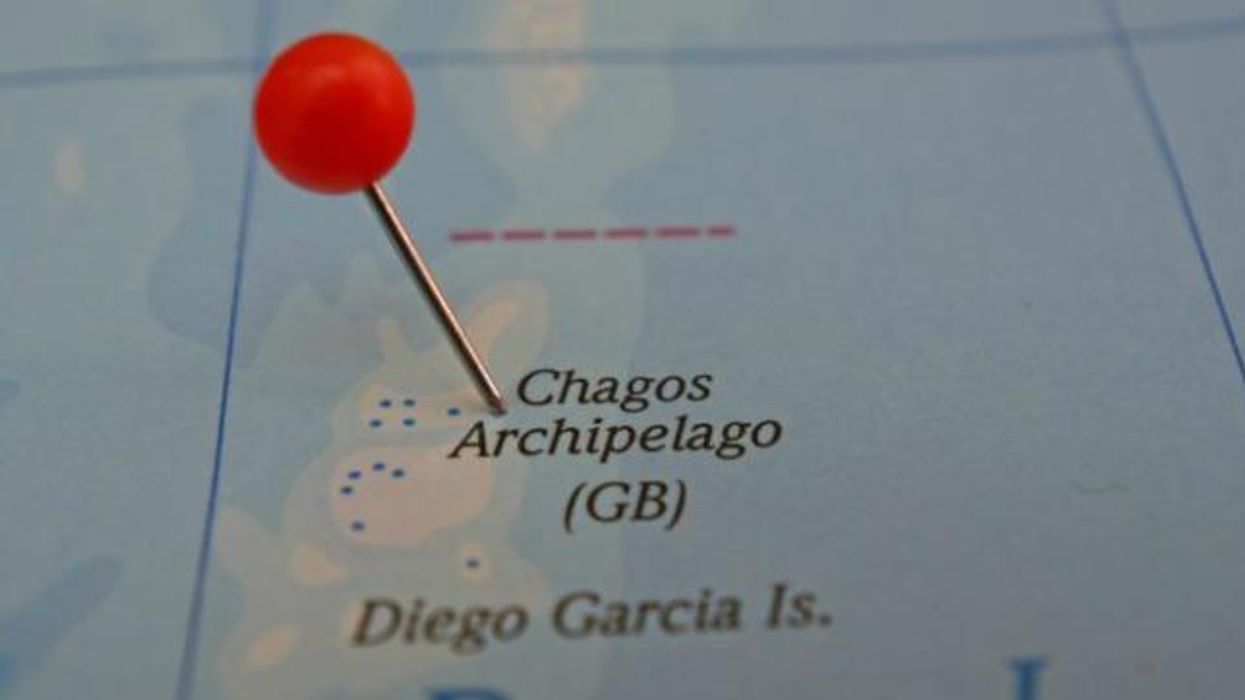
The recent decision by the Hague-based International Court of Justice that the Chagos Islands -- with its huge U.S. military base at Diego Garcia -- are being illegally occupied by the United Kingdom (UK) has the potential to upend the strategic plans of a dozen regional capitals, ranging from Beijing to Riyadh.
For a tiny speck of land measuring only 38 miles in length, Diego Garcia casts a long shadow. Sometimes called Washington's "unsinkable aircraft carrier," planes and warships based on the island played an essential role in the first and second Gulf wars, the invasion of Afghanistan, and the war in Libya. Its strategic location between Africa and Indonesia and 1,000 miles south of India gives the U.S. access to the Middle East, Central and South Asia, and the vast Indian Ocean. No oil tanker, no warship, no aircraft can move without its knowledge.
Most Americans have never heard of Diego Garcia for a good reason: No journalist has been allowed there for more than 30 years, and the Pentagon keeps the base wrapped in a cocoon of national security. Indeed, the UK leased the base to the Americans in 1966 without informing either the British Parliament or the U.S. Congress.
The February 25 Court decision has put a dent in all that by deciding that Great Britain violated United Nations Resolution 1514 prohibiting the division of colonies before independence. The UK broke the Chagos Islands off from Mauritius, a former colony on the southeast coast of Africa that Britain decolonized in 1968. At the time, Mauritius objected, reluctantly agreeing only after Britain threatened to withdraw its offer of independence.
The Court ruled 13-1 that the UK had engaged in a "wrongful act" and must decolonize the Chagos "as rapidly as possible."
"The Great Game" in the Indian Ocean
While the ruling is only "advisory," it comes at a time when the U.S. and its allies are confronting or sanctioning countries for supposedly illegal occupations -- Russia in the Crimea and China in the South China Sea.
The suit was brought by Mauritius and some of the 1,500 Chagos islanders who were forcibly removed from the archipelago in 1973. The Americans, calling it "sanitizing" the islands, moved the Chagossians more than 1,000 miles to Mauritius and the Seychelles, where they've languished in poverty ever since.
Diego Garcia is the lynchpin for U.S. strategy in the region. With its enormous runways, it can handle B-52, B-1 and B-2 bombers, and huge C-5M, C-17, and C-130 military cargo planes. The lagoon has been transformed into a naval harbor that can handle an aircraft carrier. The U.S. has built a city -- replete with fast food outlets, bars, golf courses and bowling alleys -- that hosts some 3,000 to 5,000 military personnel and civilian contractors.
What you can't find are any native Chagossians.
The Indian Ocean has become a major theater of competition between India, the U.S., and Japan on one side, and the growing presence of China on the other. Tensions have flared between India and China over the Maldives and Sri Lanka, specifically China's efforts to use ports on those island nations. India recently joined with Japan and the U.S. in a war game -- Malabar 18 -- that modeled shutting down the strategic Malacca Straits between Sumatra and Malaysia, through which some 80 percent of China's energy supplies pass each year.
A portion of the exercise involved anti-submarine warfare aimed at detecting Chinese submarines moving from the South China Sea into the Indian Ocean. To Beijing, those submarines are essential for protecting the ring of Chinese-friendly ports that run from southern China to Port Sudan on the east coast of Africa. Much of China's oil and gas supplies are vulnerable, because they transit the narrow Mandeb Strait that guards the entrance to the Red Sea and the Strait of Hormuz that oversees access to the oil-rich Persian Gulf. The U.S. 5th Fleet controls both straits.
Tensions in the region have increased since the Trump administration shifted the focus of U.S. national security from terrorism to "major power competition" -- that is, China and Russia. The U.S. accuses China of muscling its way into the Indian Ocean by taking over ports, like Hambantota in Sri Lanka and Gwadar in Pakistan that are capable of hosting Chinese warships.
India, which has its own issues with China dating back to their 1962 border war, is ramping up its anti-submarine forces and building up its deep-water navy. New Delhi also recently added a long-range Agni-V missile that's designed to strike deep into China, and the right-wing government of Narendra Modi is increasingly chummy with the American military. The Americans even changed their regional military organization from "Pacific Command" to "Indo-Pacific Command" in deference to New Delhi.
The term for these Chinese friendly ports --"string of pearls" -- was coined by Pentagon contractor Booz Allen Hamilton and, as such, should be taken with a grain of salt. China is indeed trying to secure its energy supplies and also sees the ports as part of its worldwide Road and Belt Initiative trade strategy. But assuming the "pearls" have a military role, akin to 19th century colonial coaling stations, is a stretch. Most the ports would be indefensible if a war broke out.
An "Historic" Decision
Diego Garcia is central to the U.S. war in Somalia, its air attacks in Iraq and Syria, and its control of the Persian Gulf, and would be essential in any conflict with Iran. If the current hostility by Saudi Arabia, Israel, and the U.S. toward Iran actually translates into war, the island will quite literally be an unsinkable aircraft carrier.
Given the strategic centrality of Diego Garcia, it's hard to imagine the US giving it up -- or rather, the British withdrawing their agreement with Washington and de-colonizing the Chagos Islands. In 2016, London extended the Americans' lease for 20 years.
Mauritius wants the Chagos back, but at this point doesn't object to the base. It certainly wants a bigger rent check and the right eventually to take the island group back.
It also wants more control over what goes on at Diego Garcia. For instance, the British government admitted that the Americans were using the island to transit "extraordinary renditions," people seized during the Afghan and Iraq wars between 2002 and 2003, many of whom were tortured. Torture is a violation of international law.
As for the Chagossians, they want to go back.
Diego Garcia is immensely important for U.S. military and intelligence operations in the region, but it's just one of some 800 American military bases on every continent except Antarctica. Those bases form a worldwide network that allows the U.S. military to deploy advisors and Special Forces in some 177 countries across the globe. Those forces create tensions that can turn dangerous at a moment's notice.
For instance, there are currently U.S. military personal in virtually every country surrounding Russia: Norway, Poland, Hungary, Kosovo, Romania, Turkey, Latvia, Lithuania, Estonia, Georgia, Ukraine, and Bulgaria. Added to that is the Mediterranean's 6th Fleet, which regularly sends warships into the Black Sea.
Much the same can be said for China. U.S. military forces are deployed in South Korea, Japan, and Australia, plus numerous islands in the Pacific. The American 7th fleet, based in Hawaii and Yokohama, is the Navy's largest.
In late March, U.S. Navy and Coast Guard ships transited the Taiwan Straits, which, while international waters, the Chinese consider an unnecessary provocation. British ships have also sailed close to Chinese-occupied reefs and islands in the South China Sea.
The fight to de-colonize the Chagos Islands will now move to the UN General Assembly. In the end, Britain may ignore the General Assembly and the Court, but it will be hard pressed to make a credible case for doing so. How Great Britain can argue for international law in the Crimea and South China Sea, while ignoring the International Court of Justice on the Chagos, will require some fancy footwork.
In the meantime, Mauritius Prime Minister Pravind Jugnauth calls the Court decision "historic," and one that will eventually allow the 6,000 native Chagossians and their descendants "to return home."
European countries and members of the United Nations Security Council are speaking out against U.S. President Donald Trump's recent recognition of Israeli sovereignty over the Syrian Golan Heights, which Israel has illegally occupied for more than five decades.
"If anybody feels any temptation to follow this poor example, we would urge them to refrain from this aggressive revision of international law."
--Vladimir Safronkov, Russian diplomat
The European Union (EU) issued a statement on Wednesday reaffirming its position that the occupation is illegal.
That came as members of the Security Council denounced Trump's decision at a meeting convened at the request of Syria, which called the president's move a "flagrant violation" of U.N. resolutions.
Trump initially announced his decision to support Israeli sovereignty over the territory on Twitter last week--immediately provoking international condemnation. He finalized the new stance by signing an official proclamation on Monday, as Israeli Prime Minister Benjamin Netanyahu visited the White House.
"This unilateral action does nothing to assist in finding a long-term peaceful solution to the conflict in the Middle East," South Africa's U.N. Ambassador Jerry Matjila said at the Security Council meeting on Wednesday, as Al Jazeera reported.
Vladimir Safronkov, the deputy ambassador from Russia--Syria's closest ally--added, "If anybody feels any temptation to follow this poor example, we would urge them to refrain from this aggressive revision of international law."
Representatives from Syria and Israel also joined the meeting. Israeli Ambassador Danny Danon--according to official meeting notes--declared, "Israeli sovereignty over the Golan Heights is forever."
Israel seized the Golan Heights from Syria in 1967, during the Six-Day War, and officially annexed it 1981. That same year, the Security Council unanimously adopted resolution 497, which states that the "acquisition of territory by force is inadmissible, in accordance with the Charter of the United Nations, the principles of international law, and relevant Security Council resolutions."
Resolution 497 specifically calls the Israeli occupation of the territory "null and void and without international legal effect."
In the E.U.'s statement on Wednesday, High Representative for Foreign Affairs and Security Policy Federica Mogherini cited the resolution, and confirmed that "the European Union does not recognize Israeli sovereignty over the occupied Golan Heights."
The Israeli newspaper Haaretz highlighted the significance of Mogherini's statement, given that it required a consensus among all 28 members of EU.
As the newspaper noted, "it reflects the official stance of countries such as Hungary, Poland, Czech Republic, Romania, Austria, Lithuania and Romania," nations that Netanyahu has "courted in recent years in order to break up the unanimity within the EU when it comes to Israel."
While a world leaders and human rights advocates continue to raise alarm about Israel's occupation of Golan Heights and other territories, Netanyahu--who will face a tough election on April 9--has celebrated the Trump administration's new position.
According to the New York Times, shortly before Netanyahu arrived at Ben-Gurion Airport in Israel on Tuesday--after cutting short his trip to the United States--the prime minister told reporters that the decision by Trump was enough for him.
"Everyone says you can't hold an occupied territory, but this proves you can," Netanyahu said. "If occupied in a defensive war, then it's ours."
Events just fly by in the ever-accelerating rush of Trump Time, so it's easy enough to miss important ones in the chaos. Paul Manafort is sentenced twice and indicted a third time! Whoosh! Gone! The Senate agrees with the House that the United States should stop supporting Saudi Arabia in Yemen (and Mitch McConnell calls this attempt to extricate the country from cooperation in further war crimes "inappropriate and counterproductive")! Whoosh! Gone! Twelve Republican senators cross party lines to overturn Trump's declaration of a national emergency on the U.S.-Mexico border, followed by the president's veto! Whoosh! Gone! Delegates to the March 2019 U.N. Environment Assembly meeting agree to a non-binding but important resolution drastically reducing the production of single-use plastic. The United States delegation, however, succeeds in watering down the final language lest it "endorse the approach being taken in other countries, which is different than our own"! Once again, the rest of the world is briefly reminded of the curse of American exceptionalism and then, whoosh! Gone!
Under the circumstances, it wouldn't be surprising if you had missed the Associated Press report about Secretary of State Mike Pompeo announcing that the United States "will revoke or deny visas to International Criminal Court personnel seeking to investigate alleged war crimes and other abuses committed by U.S. forces in Afghanistan or elsewhere." In fact, said Pompeo, some visas may already have been denied or revoked, but he refused to "provide details as to who has been affected and who will be affected" (supposedly to protect the confidentiality of visa applicants).
National Security Advisor John Bolton had already signaled such a move last September in a speech to the Federalist Society. In what the Guardian called an "excoriating attack" on the International Criminal Court, or ICC, Bolton said, "The United States will use any means necessary to protect our citizens and those of our allies from unjust prosecution by this illegitimate court."
By "unjust prosecution," he clearly meant any attempt to hold Americans accountable for possible war crimes. An exception even among exceptional nations, the United States simply cannot commit such crimes. Hence, by the logic of Bolton or Pompeo, any prosecution for such a crime must, by definition, be unjust.
In calling it "this illegitimate court," Bolton was referring to the only international venue now in existence for trying alleged war criminals whose countries cannot or will not prosecute them. By "our allies," Bolton appeared to mean Israel, a supposition Pompeo confirmed last week when he told reporters, "These visa restrictions may also be used to deter ICC efforts to pursue allied personnel, including Israelis."
And when it came to threats, Bolton didn't stop there. He also suggested that the U.S. might even arrest ICC officials:
"We will ban its judges and prosecutors from entering the United States. We will sanction their funds in the U.S. financial system, and we will prosecute them in the U.S. criminal system. We will do the same for any company or state that assists an ICC investigation of Americans."
This is a dangerous precedent indeed, as the director of the American Civil Liberty Union's Human Rights Project, Jamil Dakwar, told Democracy Now. It's outrageous, he pointed out, that the U.S. would prosecute "judges and the prosecutors of the ICC for doing their job and for doing the job that the United States should have done -- that is, to investigate, credibly and thoroughly, war crimes and crimes against humanity that were committed in the course of the war in Afghanistan."
What's all this about?
The story goes back to December 2017, when Fatou Bensouda, the ICC's chief prosecutor, announced an investigation into the possibility that U.S. military and CIA personnel had committed war crimes during America's Afghan War or in other countries "that have a nexus to the armed conflict in Afghanistan." These included some of the countries that hosted the CIA's so-called black sites, where, in the earlier years of the war on terror, detainees were held incommunicado and tortured. Specifically, the ICC opened an investigation into the possible commission of "war crimes, including torture, cruel treatment, outrages upon personal dignity, rape, and other forms of sexual violence by U.S. armed forces and members of the CIA on the territories of Afghanistan, Poland, Romania, and Lithuania."
When Bensouda made her announcement, it looked as if at least some Americans might finally be held accountable for crimes committed in the post-9/11 "war on terror" launched to avenge the criminal deaths of 3,000 souls in New York City and Washington, D.C. That never-ending war has seen the United States illegally invade and occupy Iraq; directly kill at least 210,000 civilians (not to mention actual combatants) in Iraq and Afghanistan; torture an unknown number of prisoners; and continue to detain without trial or conviction 39 men at the Guantanamo Bay prison in Cuba.
But wait. Aren't U.S. personnel immune from ICC prosecution, because Washington never ratified the treaty that created the court?
That's true, but the alleged crimes didn't take place in the United States. They were committed in Afghanistan, Poland, Romania, and Lithuania, all of which have ratified the treaty. Note that Thailand, site of egregious CIA abuses, doesn't appear on the ICC's list, nor does Iraq (the site of the now infamous Abu Ghraib prison, among other things), presumably because neither is a signatory to the treaty.
However, before it could prosecute such crimes, the ICC would have to investigate any potential charges, interview possible witnesses, and gather the evidence necessary to prepare an indictment. That would undoubtedly require its investigators to visit the United States. This, say Bolton and Pompeo, will never be permitted.
What Is the International Criminal Court and Why Does It Matter?
The ICC's origins go back to the Nuremberg trials at the end of World War II. In 1943, the leaders of the Allied powers -- England, France, the United States, and the Soviet Union -- met in Tehran, Iran. One subject on the table: how, once the war was won, the Allies would deal with Nazi war criminals. Soviet dictator Joseph Stalin is said to have proposed simply lining up and executing 50,000 Nazis. American President Franklin Delano Roosevelt reportedly tried to break the resulting tension by jokingly suggesting that 49,000 might be sufficient.
Two years later, at war's end, confronting evidence of barbarism on a scale previously unseen in history, the war's victors found themselves responsible for bringing accountability to the perpetrators of genocide and some modicum of justice to its victims. It was decided then to establish a tribunal, a court, where such criminals could be tried. The problem the Great Powers now faced was how to create a process that the world would consider something more than vengeance masquerading as righteousness, something more than "victors' justice."
The solution was to demonstrate that their prosecutions had a basis in the Geneva Conventions and other international treaties -- in, that is, the already existing laws of war. In the process of designing those prosecutions, they consolidated and advanced the meaning and power of international law itself, a concept particularly needed in a postwar world of atomic weapons and a looming U.S.-Soviet conflict. Three-quarters of a century and many wars and weapon systems later, enforceable international law still remains humanity's best hope for adjudicating past war crimes and preventing future ones -- but only if great nations like the United States do not declare themselves exceptions to the rule of law.
In addition to the verdicts rendered, the Nuremberg tribunal produced other enduring results, including the 1950 Nuremberg Principles, commissioned and adopted by the new United Nations. Those principles established that actions violating international law were punishable crimes, whether they violated any specific country's domestic laws or not. Even heads of state or other high government officials were not considered immune from prosecution for such war crimes or crimes against humanity. And no one could be exonerated for them on the sole grounds of following the orders of a superior.
In the end, however, was Nuremberg really anything more than victors' justice? There were those who said that was all it was, invoking what was called the "tu quoque" (Latin for "you did it, too") argument. After all, hadn't the allies also committed war crimes? Hadn't the British and Americans, for example, firebombed the German city of Dresden, killing 25,000 civilians in one night and destroying 75,000 homes? Indeed, it's been argued that, because the Allies didn't want to answer for Dresden, they excluded the earlier German air war against England from the charges brought at Nuremberg.
Nevertheless, many observers there believed that, after rendering verdicts for Nazi crimes, a more permanent tribunal would turn its attention to the crimes of the Allies. It might even, for example, have taken up the legality of the U.S. use of the world's first atomic weapons to obliterate the Japanese cities of Hiroshima and Nagasaki. This, of course, never happened.
Nor has any court ever prosecuted those responsible for the U.S. firebombing of 67 Japanese cities. Those lesser-known attacks killed hundreds of thousands of civilians and reduced many of that country's largely wooden urban areas to ashes. Robert McNamara, secretary of defense under Presidents John F. Kennedy and Lyndon Johnson (and an architect of American policy in Vietnam), described those attacks in Errol Morris's brilliant documentary The Fog of War. Reflecting on his own actions in World War II when, as an Air Force captain, he served in the Office of Statistical Control (where he analyzed the efficiency of bomber aircraft), he told Morris: "What one can criticize is that the human race, prior to that time -- and today! -- has not really grappled with what are called the rules of war. Was there a rule that said you shouldn't bomb, shouldn't kill, shouldn't burn to death a hundred thousand civilians in one night? [General Curtis LeMay, who oversaw the firebombing campaign in Japan] said if we'd lost the war, we'd all have been prosecuted as war criminals."
What does any of this have to do with today's International Criminal Court? The ICC is itself an outgrowth of the Nuremberg process. Even during the original Nuremberg trial, observers expected that the newly established United Nations would create a permanent war crimes court as one of its earliest actions.
In the end, it took more than half a century, but in 1998, at a United Nations General Assembly convention in Rome, 120 countries adopted the "Rome Statute," which established the court at The Hague in the Netherlands and described its jurisdiction and rules of operation. (Among the 148 votes, there were 21 abstentions and seven "no" votes, including the United States.) The ICC officially opened in 2002, when 60 nations ratified the Rome Statute. It took up its first prosecution in 2005. Today, about 120 member states back its role on this planet.
(A side note: The ICC is often confused with theInternational Court of Justice, commonly called the World Court. The ICC deals with the criminal prosecution of individuals. The World Court deals with civil disputes between nations. Unlike the ICC, the United States is a member of the World Court, although its record of abiding by that court's decisions is spotty at best.)
The United States and the ICC--a Strange Dance
Despite having participated in the work of formulating the Rome Statute, the United States never ratified it or joined the court. The first administration to deal with it would take a confusing and contradictory stance. In 1999, President Bill Clinton signed a Foreign Relations Authorization Act that included language prohibiting federal funding for the ICC and the extradition of any U.S. citizen to a country that might surrender him or her to that court for prosecution.
The following year, however, Clinton actually signed the Rome Statute, the treaty creating the ICC. In fact, the United States had been instrumental in drafting the court's procedures, rules of evidence, and definitions of various crimes. In spite of that Foreign Relations Authorization Act, it looked as if the U.S. was on the way to future full participation in the ICC. The year 2000, however, saw the election of George W. Bush. In 2002, the Bush administration rescinded Clinton's signature and notified the United Nations that the United States would not ratify the treaty. It was hardly a surprising move given that the Bush-Cheney administration had already begun torturing detainees in its newly born war on terror. (Torture techniques would even reportedly be demonstrated to some of those officials, including Vice President Dick Cheney and National Security Advisor Condoleeza Rice, in the White House.)
It was John Bolton, then Bush's undersecretary of state for arms control and international security, who sent the notification letter to U.N. Secretary General Kofi Annan and personally trekked to U.N. headquarters in New York City to "unsign" the Rome Statute. That, of course, is the very John Bolton who now is Donald Trump's national security advisor and who attacked the ICC at the Federalist Society last September. This was hardly surprising, since his record of opposing any international constraints on Washington has been long and consistent. In fact, when George W. Bush tapped him as ambassador to the United Nations in 2005, the Senate refused to confirm him. It took a recess appointment to get him the job. The Senate's reluctance was reasonble, given Bolton's contempt for the institution. (He'd once said that if its headquarters building "lost ten stories, it wouldn't make a bit of difference.")
In 2002, Bush signed the American Servicemembers Protection Act (ASPA), which, as the American Bar Association explains, contained "several provisions meant to prohibit or otherwise complicate U.S. cooperation with the ICC." These included "restricting U.S. participation in U.N. peacekeeping operations, and prohibiting use of any appropriated funds to support or cooperate with the Court." They also included a provision authorizing the use of military force "to liberate any American citizens held by the Court," leading it to be dubbed by critics "the Invade The Hague Act."
And yet even the ASPA demonstrated an American ambivalence towards the ICC. It had an amendment allowing the U.S. to cooperate with the court in order to bring "other foreign nationals accused of genocide, war crimes, or crimes against humanity" to justice. In other words, the ICC was considered good enough to try other countries' accused war criminals, just not ours.
Under President Barack Obama, the United States began a rapprochement with the court, opening diplomatic relations and starting to attend meetings of its Assembly of States Parties as an observer, which it continues to do today. In 2011, the U.S. sent a delegation to an ICC meeting in Kampala, Uganda, where important language was adopted defining the crime of aggression.
Making an aggressive war was the first of the three categories of crimes under which Nazi leaders were charged at Nuremberg. At the time, Washington officials strongly advocated for the position that all other Nazi atrocities sprang from that initial crime. The same could well be said of the Bush-Cheney administration's decision to invade first Afghanistan and then Iraq. Cooperation with the ICC continued under Obama, who also signed a law providing rewards of up to $5 million for the capture of individuals indicted by the court.
It should be noted that the ICC is not without its critics. African nations in particular have rightly complained that the only people who have stood trial so far are from that continent, leading some to threaten to withdraw. In 2017, Burundi did leave, but so far no other African members have followed suit. Nonetheless, the ICC remains a court of last resort when it comes to bringing war criminals to justice.
Reversing Course Under Trump
Given Trump's "America First" rhetoric, it should hardly be surprising that the ICC is among the international organizations he and his top foreign-policy officials particularly despise. As a result, his administration has already rolled back Obama's rapprochement and then some. In view of the president's lack of attention to detail (not to mention his short attention span), it seems likely that John Bolton is the true architect of this latest move. It's the State Department that grants (or doesn't grant) visas, so Mike Pompeo made the official announcement, but this approach fits Bolton's M.O.
The poison now seeping out of Washington continues to spread. On March 18th, Rodrigo Duterte's Philippines became the second country to leave the ICC, where it, like the U.S., is being investigated for possible crimes -- in its case, against its own people. As the Washington Post reports, the country is "under preliminary examination [by the ICC]for thousands of [domestic drug war] killings since Duterte rose to the presidency in 2016."
In its menacing rejection of the court, the Trump administration is turning its back on the system of international law and justice the United States helped establish at Nuremberg. The rule of law must not hold only, as hotelier Leona Helmsley once said about taxes, for "the little people." If Donald Trump had truly wanted to "make America great again," he would have recognized that international law is not just for the little countries. The greater a world power, the more consequential is its submission to the rule of law. The attacks of John Bolton and Mike Pompeo on the ICC, however, simply represent a new spate of lawless actions from a lawless administration in an increasingly lawless era in Washington.