

SUBSCRIBE TO OUR FREE NEWSLETTER
Daily news & progressive opinion—funded by the people, not the corporations—delivered straight to your inbox.
5
#000000
#FFFFFF
To donate by check, phone, or other method, see our More Ways to Give page.
Daily news & progressive opinion—funded by the people, not the corporations—delivered straight to your inbox.
"Millions of Americans' lives are affected by this report and it's crucial that the report tell the truth to American people and it's not degraded into another sales pitch for Big Food and Big Pharma."
Nearly half the members of the U.S. government panel that helps draft dietary guidelines for Americans have ties to the food, pharmaceutical, or weight loss industry, a report released this week revealed.
"Food and pharmaceutical industry actors have historically sought to influence the U.S. Dietary Guidelines for Americans (DGA), and have had financial ties to nutrition experts on the Dietary Guidelines Advisory Committee (DGAC), which reviews the latest science on diet, nutrition, and health outcomes to make recommendations for the DGA," states the report, which was authored by researchers at the advocacy group U.S. Right to Know.
"We found that 13 of 20 DGAC members had high-risk, medium-risk, or possible conflicts of interest with industry actors," the authors wrote.
Of these, nine were high- or medium-risk conflicts with companies and industry groups including Coca-Cola, the Nestlé Nutrition Institute, National Dairy Council, Weight Watchers International, Beyond Meat, the California Walnut Commission, and the National Egg Board. Big Pharma giants including Pfizer, Abbott, Novo Nordisk, and Eli Lilly are also named in the report.
U.S. Right to Know executive director Gary Ruskin told The Guardian that revelations like those in the report erode consumer confidence in government dietary guidelines.
"Millions of Americans' lives are affected by this report and it's crucial that the report tell the truth to American people and it's not degraded into another sales pitch for Big Food and Big Pharma," Ruskin said.
The report also notes some "encouraging findings," including that "seven members had no relationships in the past five years that met our definition" of conflicts of interest, and that "four members only had one instance" of possible conflicts.
"Surely, there is room for further improvement," the publication states. "With high-risk conflicts of interest still present on the DGAC,
the public cannot have confidence that the official dietary advice of the U.S. government is free from industry influence."
The report's authors offer recommendations for the U.S. Department of Health and Human Services and U.S. Department of Agriculture, including:
The group also called on Congress to expand the Physician Payments Sunshine Act to cover the nutrition field.
Beneath the veneer of public, seemingly good-faith attempts to clean up its operations and help solve the climate and plastic crisis, lurks a deep and systemic commitment to a take-no-prisoners approach to the bottom line.
The Coca-Cola Company has managed to do well this year when it comes to climate change—last winter it sponsored the annual climate change meeting COP27, and despite the indignation, the company still managed to get through it unscathed. This summer, sales are up as heatwaves rip across the globe and leave nearly half the world’s population parched and grasping for the nearest respite, often a cold bottle of sugary release.
The company has spent years perfecting the art of selling a heck of a lot of product that most of us would agree is not health food nor planet saving, while simultaneously convincing consumers that the company is indeed saving the planet and helping communities thrive. Confused? That may be the point.
In the past decade Coca-Cola has had a history of publicly declaring targets for reducing its contribution to plastic pollution—from selling its beverages in recyclable packaging, to using more recycled material in its bottles, to using more reusable packaging.
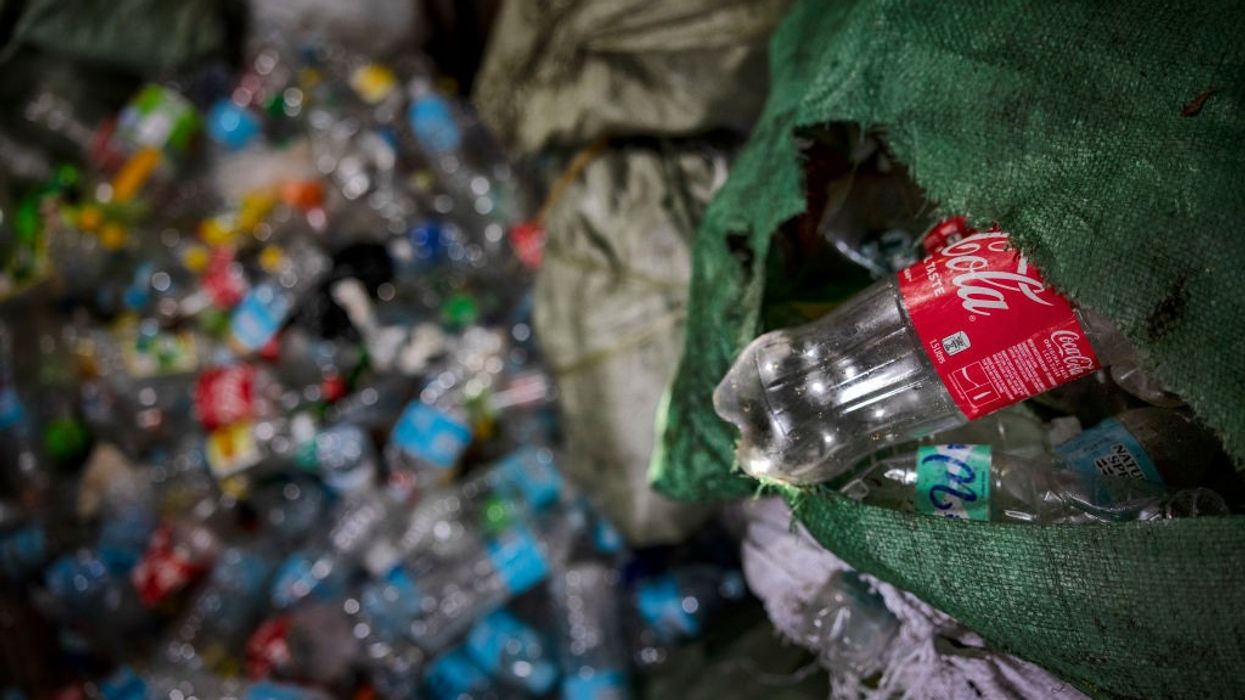
It has had the dubious distinction of being the largest plastic polluter for five years in a row, with its name on more pieces of plastic litter collected around the world than any other company.
But it’s all hot air, or fizzy water, or whatever. Its failure to meet self-imposed, largely unambitious goals, is well-documented. The company has been criticized for backsliding on its various “sustainable” commitments: to reduce the single-use plastic consumption (it in fact increased its consumption from 125 billion bottles in 2021 to 134 billion in 2022); use more recycled plastic in its bottles (a 1990 pledge to make its bottles from 25% recycled plastic has not been met over 30 years later); and to transition to reusable packaging (a gimmicky, piecemeal rollout in a handful of neighborhoods, with little to no scalable impact yet to be seen). In the meantime, it has had the dubious distinction of being the largest plastic polluter for five years in a row, with its name on more pieces of plastic litter collected around the world than any other company.
But these are actually the least of its failures: Beneath the veneer of public, seemingly good-faith attempts to clean up its operations and help solve the climate and plastic crisis, lurks a deep and systemic commitment to a take-no-prisoners approach to the bottom line. Coca-Cola Capitalism comes first.
Take, for example, a 2020 report on the food industry’s systemic greenwashing tactics that dedicates a full 50 pages to the world’s 10 biggest food and beverage industries’ concerted efforts to undermine plastic waste reduction policies in 15 countries. Documents from The Coca-Cola Company reveal its true commitments—to “fight back” against package regulations in Europe, to slow down the rollout of deposit return schemes in Europe and Kenya, and to oppose a plan to streamline recycling in the U.S. state of Georgia.
While at least reluctantly acknowledging its role in the plastic pollution problem, the company has done little to address the toxic impacts of its supply chain and product.
This sort of behavior isn’t just limited to the realms of plastic pollution and climate change. The control over national and state policy extends to how the company approaches toxic chemicals in plastics.
While at least reluctantly acknowledging its role in the plastic pollution problem, the company has done little to address the toxic impacts of its supply chain and product. Our reporting shows that the plastic bottle supply chain is a critical driver of the environmental racism behind whole communities being poisoned by dangerous air and water pollution and treated as sacrifice zones. Meanwhile, Coke’s consumption of PET plastic does not seem to be decreasing.
Perhaps the most problematic of The Coca-Cola Company’s sustainability failures is that as Coke goes, so goes the PET resin and PET bottled beverage industries. We found that Coke alone uses a fifth of all the PET bottles made in the world. And our in-depth reporting and follow-up conversations with beverage companies around the particularly dangerous antimony catalyst used to make the bottles confirm that the same bottlers that supply The Coca-Cola Company, brands like Amcor and CKS, are often the same bottlers used by other, often smaller brands that must rely on for their products. We held conversations with beverage companies of varying sizes as part of our Detox the Bottle Pledge, and an emerging theme revealed that the majority of PET bottles on the market are the product of a close relationship between the several biggest brands like Coke, big bottle manufacturers like Amcor and CKS, and giant resin producers like IVL and DAK. These relationships foster a shared interest in sustaining the plastics industry, even if it means compromising on consumer safety and ignoring established science on toxic impacts of their current practices. Smaller brands with an interest in selling safer products often have little sway within the industry and face difficulties when pushing for safer, more just packaging under the specter of strong business relationships among industry behemoths.
As long as The Coca-Cola Company maintains an iron grip on the PET bottle industry, makes little to no progress on its own goals, ignores the full impacts of its reliance on plastics on fenceline communities and consumers, and actively undermines legislation to reduce the harmful impacts of plastics, the entire interconnected universe of bottled beverage industry, bottlers, and resin makers will continue to harm people and the planet. If the company wants to be the global citizen it purports to be, it should start by telling its bottle manufacturers to make bottles with a safer alternative catalyst and it should rapidly scale up reuse and refill systems in countries like the U.S. where they’re woefully nonexistent. It’s time for the biggest plastic consuming companies to find safer packaging that doesn’t poison entire communities and their consumers.

'These partnerships embarrass the LGBTQ+ community at a time when much of the cultural world is rejecting ties to these toxic industries'
Just Stop Oil protesters temporarily blocked London’s Pride Parade Saturday afternoon to protest the event accepting sponsorship money from “high-polluting industries.”
Pride faced accusations of “pinkwashing” over its decision to make United Airlines the headline sponsor of this year’s event.
Seven protesters were arrested at 1:30 pm after blocking the road in front of a Coca-Cola truck. Coca-Cola is seen as the world's biggest plastic polluter.
LGBTQ+ members of Just Stop Oil called on organizers to condemn new oil, gas, and coal licenses and stop allowing the inclusion of floats from these corporations in the parade.
James Skeet, a Just Stop Oil spokesperson, said in a statement:
“Pride was born from protest. It speaks to how far we’ve come as a community, that high-polluting industries and the banks that fund them, now see Pride as a useful vehicle for sanitizing their reputations, waving rainbow flags in one hand whilst accelerating social collapse with the other. It is queer people, and particularly queer people of color in the global south, who are suffering first in this accelerating social breakdown. What would those who instigated the gay liberation movement during the Stonewall riots in 1969, make of the corporatized spectacle Pride has now become?"
“These partnerships embarrass the LGBTQ+ community, at a time when much of the cultural world is rejecting ties to these toxic industries. We call on Pride to remember the spirit in which it was founded and to respect the memory of all those who fought and died to secure the rights we now possess whilst taking the necessary steps to protect our community long into the future.”
London Mayor Sadiq Khan speaking before the parade said:
“I agree with protesting in a way that is lawful, safe, and peaceful. I think that Extinction Rebellion and Just Stop Oil are really important pressure groups trying to put power on those who have power and influence."
“I fully support the right to protest. It’s really important to recognize the joy of democracy is protest."
“I am somebody who feels quite passionately that we have to tackle the climate emergency. And I feel quite passionately about encouraging people to join the movement to tackle the climate emergency. In my view, protest should be peaceful, lawful, and safe.”
Peter Tatchell, the legendary LGBTQ+ rights campaigner, and prominent member of the Gay Liberation Front and the civil resistance group OutRage! Said:
“I helped organize the first Pride in the UK in 1972 and have attended every Pride London march since then. Pride was always meant to be both a celebration and a protest. From the outset, we stood in solidarity with other struggles for freedom and social justice, against corporate pinkwashing and all forms of exploitation. We saw queer liberation as just one aspect of a wider liberation movement.”
“Climate destruction is destroying communities, jobs, homes and lives across the world, especially in poorer countries. Fossil fuels are endangering the survival of humanity – including LGBTQ+ people. Our community must not collude with environment, species and climate destroying companies.”
International Agency for Research on Cancer listings do not say anything about how much of a substance a person must consume to be at risk, but they can be hugely influential.
A World Health Organization' agency will list the widely used artificial sweetener aspartame as "possibly carcinogenic to humans" July 14, Reuters reported, citing two sources familiar with the situation.
International Agency for Research on Cancer (IARC) listings do not say anything about how much of a substance a person must consume to be at risk, but they can be hugely influential. The body's 2015 determination that glyphosate was "probably carcinogenic to humans" has helped plaintiffs to win lawsuits and appeals against Bayer claiming that use of its glyphosate-containing herbicides caused their cancer.
"We have to wait until July 14 and see how it determines the assessment and in which group it encompasses it," Rafael Urrialde de Andrés, who sits on the board of directors of the Spanish Society of Nutrition and is a professor at the Faculty of Biological Sciences of the Complutense University of Madrid and the Faculty of Pharmacy of the San Pablo-CEU University, said in a statement. "From then on, the food safety agencies and authorities will have to determine whether to reevaluate, ban it, or maintain authorization and under what conditions."
"CSPI has long recommended that consumers avoid aspartame because of studies showing the sweetener caused cancer in animals."
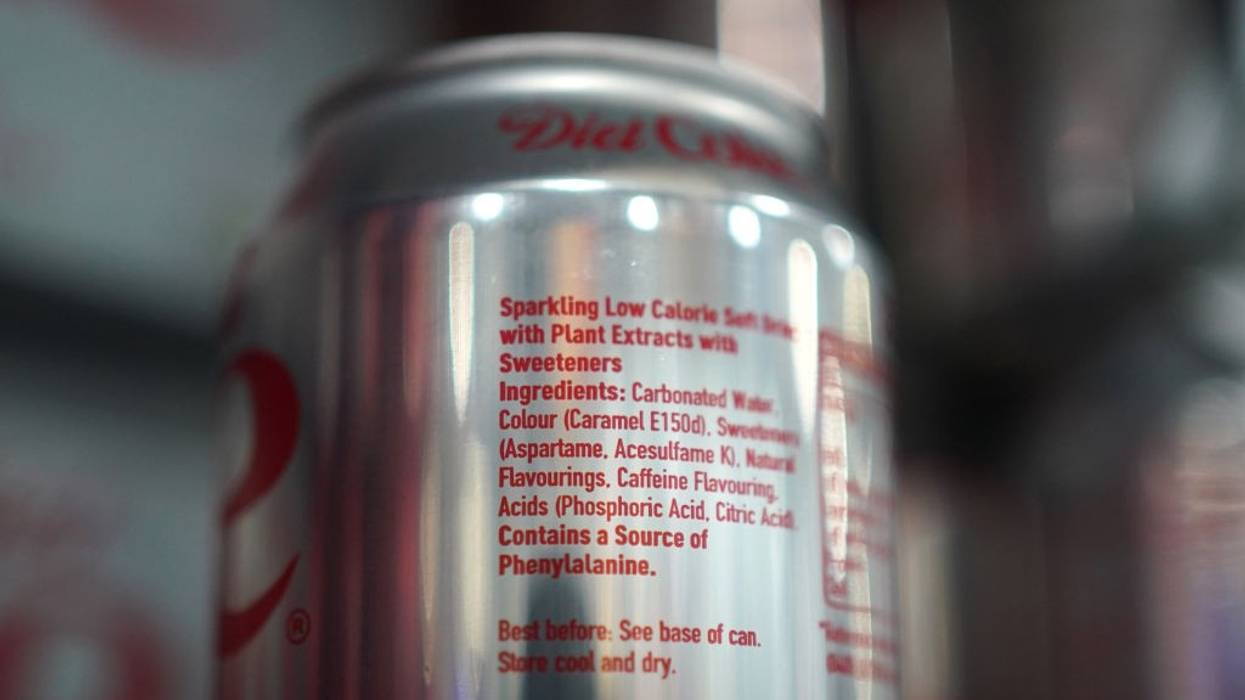
Aspartame is a popular artificial sweetener used in products from Diet Coke to Mars chewing gum. Around 95% of carbonated drinks and 90% of teas that use artificial sweeteners use aspartame, according to The Washington Post.
It has been deemed safe in more than 90 countries including the U.S., and the Food and Drug Administration (FDA) has affirmed its safety five different times. However, there have been calls from scientists to reevaluate the chemical based on a series of Italian studies finding it caused tumors in rats, and the Center for Science in the Public Interest (CSPI) has aspartame on its list of chemicals to avoid.
"CSPI has long recommended that consumers avoid aspartame because of studies showing the sweetener caused cancer in animals," the group tweeted in response to the Reuters story.
The IARC lists exposures as either possibly carcinogenic, probably carcinogenic, or carcinogenic to humans, with the ranking dependent on the strength and extent of the evidence. Experts point out that the IARC is assessing whether foods or chemicals represent potential hazards.
"This means that the IARC experts do not assess whether, in practice, a substance or exposure presents a cancer risk to people," Kevin McConway, emeritus professor of applied statistics at Open University, explained. "Instead they assess whether it would ever be capable of presenting a risk, under any circumstances, even if the only harmful circumstances are really, really unlikely to occur."
Because of this, the body has been criticized for causing unnecessary worry with its listings, such as its warnings that eating red meat and working overnight were probably carcinogenic, and that mobile phones were possibly carcinogenic, The Guardian reported.
That said, another World Health Organization (WHO) body is also scheduled to present a ruling on aspartame July 14 that could provide greater clarity. The Joint WHO and Food and Agriculture Organization's Expert Committee on Food Additives (JECFA), which sets dosage recommendations, is reviewing aspartame from June 27 to July 6, according to The Washington Post. It had previously set the safe level at 40 milligrams per kilogram of body weight per day, McConway said.
"To consume over that limit would require a very large daily consumption of Diet Coke or similar drinks," McConway added. "On 14 July, JECFA may change that risk assessment, or they may not."
Industry groups are already pushing back against a potential change in aspartame's status.
"IARC is not a food safety body and their review of aspartame is not scientifically comprehensive and is based heavily on widely discredited research," Frances Hunt-Wood, the secretary general of the International Sweeteners Association said, as Reuters reported.
Kate Loatman, the executive director of the International Council of Beverages Associations, said that public health bodies should be "deeply concerned" by the "leaked opinion" that she said "could needlessly mislead consumers into consuming more sugar rather than choosing safe no-and low-sugar options."
Even before the Reuters leak, industry and national regulatory bodies were concerned with the news that IARC and JECFA were reviewing aspartame at all, The Washington Post reported.
"There is a broad consensus in the scientific and regulatory community that aspartame is safe. It's a conclusion reached time and time again by food safety agencies around the world," Kevin Keane, American Beverage Association interim chief executive, told the Post last week. "The fact that food safety agencies worldwide, including the FDA, continue to find aspartame safe makes us confident in the safety of our products. And people all over the world should be, too."
The FDA also sent a letter to WHO in August 2022 advising against having two subcommittees consider aspartame.
"In our opinion, a concurrent review of aspartame by both IARC and JECFA would be detrimental to the scientific process and should not occur," Mara Burr, director of the Office of Multilateral Relations in the Department of Health and Human Services' Office of Global Affairs, wrote in the letter.
Burr argued that the review should be conducted by JECFA alone.
"They seem to be worrying in advance of the most authoritative review of the safety of this product," CSPI director Peter Lurie told The Washington Post. "But even if FDA chose to ignore what WHO has to say, the IARC pronouncement would still have a lot of pull in the rest of the world."
An effective treaty must reduce plastic production and prioritize protecting biodiversity, safeguarding the climate and ensuring a just transition to a low-carbon, reuse-based economy.
Climate-crisis-fuelled storms have hit New Zealand hard this year. In January, we suffered unprecedented extreme weather and flooding, followed by Cyclone Gabrielle in February—the worst storm in 55 years—which triggered a national state of emergency. In total, we had 5.5 times more rain than Auckland summers typically receive.
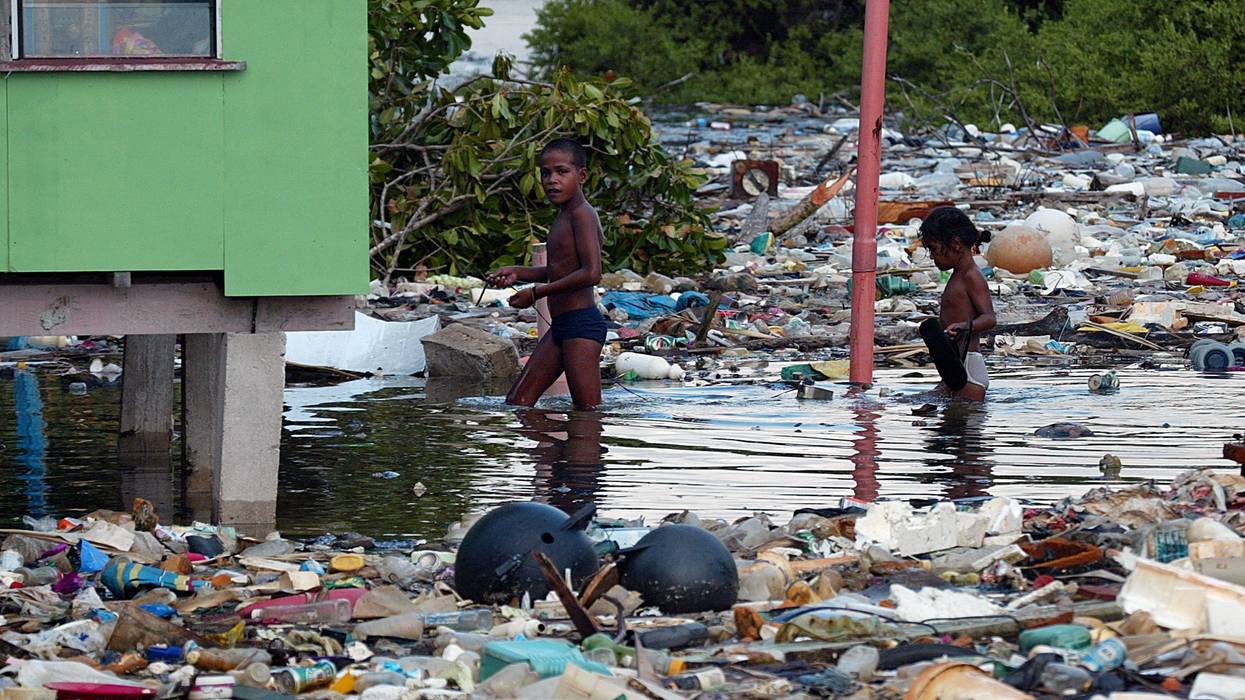
In the aftermath, we saw first-hand one of the causes of the climate crisis: single-use plastic. Te Wai Ōrea, a popular Auckland park, was covered with single-use plastic pollution.
Each stage in the lifecycle of plastic, from production to disposal, fuels the climate crisis—99% of plastics are made from fossil fuels, and corporations keep making more. According to the Minderoo Foundation, annual greenhouse gas emissions from single-use plastics in 2021 exceeded the total annual emissions of the United Kingdom.
Communities on the frontlines of any part of the plastic lifecycle, from oil extraction to trash dumps and everywhere in between, are hit with a trifecta of injustice: plastic pollution, social injustice, and the climate crisis. The plastic deluge that is left after every climate-crisis-fuelled storm only reinforces this point.
I am tangata whenua (Indigenous to Aotearoa New Zealand) and tangata Moana (Indigenous to the Pacific). What I call home is more ocean than it is land, and this ocean is our livelihood. It provides our traditional diet and is a rich source of the stories of our existence. Each Pacific island nation ties to the next through our ancestors’ great migration across the ocean by their navigational skills.
On the east coast of New Zealand’s North Island, heavy rainfall floods the waterways and plastic waste hits the beaches and the waters where locals spend a good chunk of their lives, where they fish and gather food. And every time, they clean up that trash. No one wants to see pollution in places that they have held sacred for many generations.
Communities on the frontlines of any part of the plastic lifecycle, from oil extraction to trash dumps and everywhere in between, are hit with a trifecta of injustice: plastic pollution, social injustice, and the climate crisis. The plastic deluge that is left after every climate-crisis-fuelled storm only reinforces this point.
Right now, nothing is being done ‘upstream’ to stem the flow of plastic so ‘downstream’ action—as effective as an ambulance at the bottom of a cliff—is all that local communities can do.
In Paris from May 29 to June 2, governments from all over the world will meet to continue negotiating a Global Plastics Treaty—a once-in-a generation opportunity. An effective treaty must reduce plastic production and prioritize protecting biodiversity, safeguarding the climate and ensuring a just transition to a low-carbon, reuse-based economy.
Instead, big consumer goods companies, in league with the fossil fuel industry, produce more and more plastic, reaping the profits while disregarding the cost and damages to the climate, environment, and people.
This is where we draw a line in the sand—a treaty that does not stop runaway plastic production and use is bound to fail.
Consider the Cook Islands, where my mother’s parents were raised and married. The way of life has been transformed from a traditional one of circularity and living gently with the land, to one where consumer products—much of it in plastic packaging—have been pushed upon our people since colonisation.
The islands, surrounded by the Pacific Ocean, are now filling up with so much plastic that some might reluctantly feel there are just two options, burn it or bury it. Burning would accelerate the climate crisis and rising sea levels, and there is no land on the islands for bottomless landfills.
Coca-Cola, the world’s worst plastic polluter for five years now according to the Break Free from Plastic brand audits, sells their products in plastic bottles in small island nations without any recycling infrastructure or product stewardship. Coke sells over 100 billion bottles each year and is one of the wealthiest fast-moving consumer goods brands in the world, yet its single-use plastic packaging wreaks havoc on the environment.
In the Global South, single-use sachets that contain only enough product for one serving from consumer goods conglomerates like Unilever and Nestle flood some regions, especially during the regular typhoon season. In 2020, the CEO of Unilever expressed his interest stop selling sachets, yet, since then, Unilever has lobbied against sachet bans in India, the Philippines, and Sri Lanka.
The treaty negotiations so far have seen New Zealand push for an ambitious position that will keep oil and gas in the ground, stop the relentless production and use of plastic, and ensure a just transition to a low-carbon, zero-waste economy with leadership and expertise from Indigenous and most affected communities. In the next round of talks, we need to lift the ambitions of other member states.
My ancestors shared a deep connection with Papatūānuku (our Earth mother), and our well-being is interdependent. We don’t see ourselves as being separate from nature. This Indigenous worldview can lead treaty negotiations, creating systems that are less demanding of our planet and value nature over profit.
A Global Plastics Treaty can stop plastic production at the source and deliver a cleaner, safer planet for us and future generations. Governments need to step up to this moment and not let it go to waste.
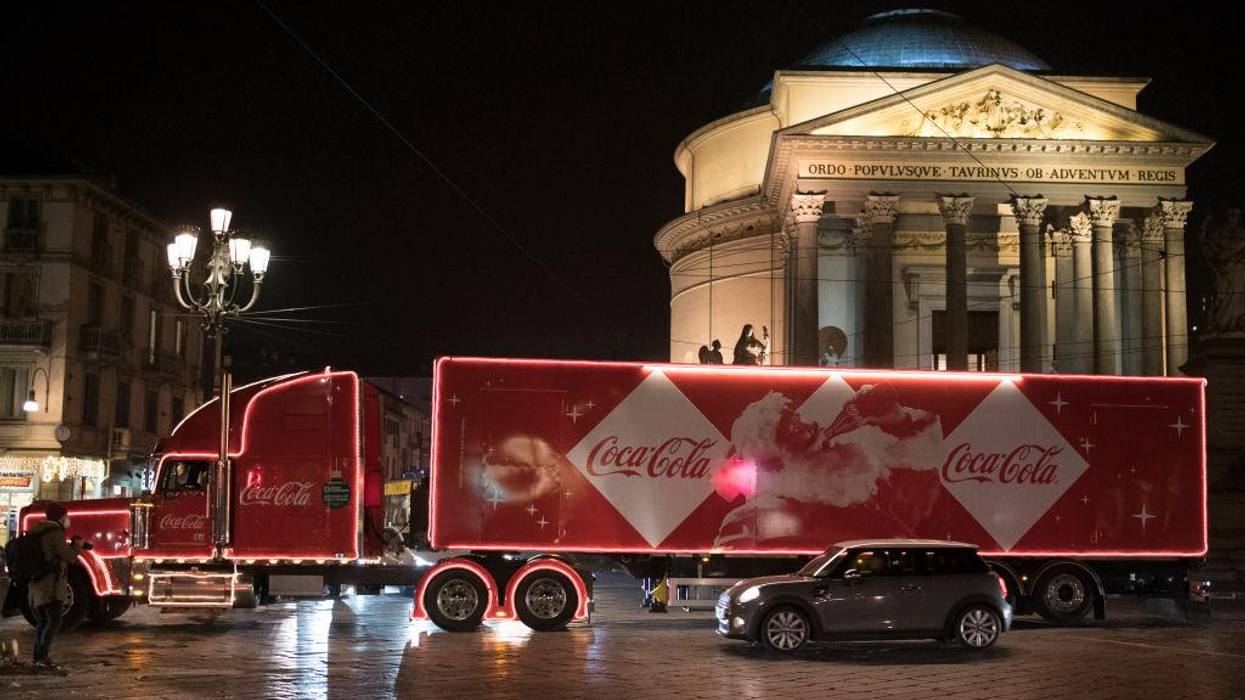
Coca-Cola and Amazon among giants that hand over a fraction of their profits as part of promotional stunts.
Corporate Scrooges in the UK have boasted about donating as little as 0.007% of their cash to charities at Christmas, analysis by openDemocracy has revealed.
Amazon and Coca-Cola are among the giants that have been accused of "giving pennies from their back pocket" to good causes as part of promotional stunts over the holiday period.
This year, Coca-Cola announced that it would donate the equivalent of a meal to charity for every person who visits its Christmas truck tour in the UK this year. It's only at the very end of its announcement that the world's richest beverage company explains it will give a maximum of just £25,000 to the charity Fairshare, which redistributes surplus food to the hungry.
According to Fairshare, £25,000 is enough to supply 100,000 meals. But the donation amounts to less than 0.01% of the £259.9m profit Coca-Cola made in the UK—the equivalent of a millionaire donating three £30 turkeys to charity. By contrast, Coca-Cola handed £440m in dividends to shareholders in 2021, dipping into its reserves to do so.
BAE Systems, also among the 30 biggest companies in the UK, donated £150,000 to food banks last Christmas—just 0.007% of its £2.3bn profit for 2021. The arms manufacturer said it gave £11m overall to charity in 2021. By comparison, it handed out £1.1bn to shareholders in dividends and share buybacks.
British Gas owner Centrica—among the top 100 largest UK companies—also gave £250,000 to food bank operator Trussell Trust last Christmas. The donation was equivalent to 0.03% of its profits in 2021—which stood at £948m, double what it made the previous year. The charity says the number of people using food banks rose by 40% between April and September this year.
"These companies' charitable giving is too small even to call it reputation washing. This seems more like the corporate equivalent of using a drop of spit to clean something off the side of your mouth," said Alex Cobham, chief executive of the Tax Justice Network.
"The UK could today simply allow the Treasury to use existing legislation to make multinationals like Amazon publish their country-by-country reporting data. But both as chancellor and now as prime minister, Rishi Sunak has blocked this measure—meaning companies can continue to keep their questionable tax behaviour in the shadows, while they claim the plaudits for trivial charitable giving."
Amazon, meanwhile—one of the world's richest companies—donated an estimated £256,000 to charity in the UK last Christmas.
In a blog post, the company said it gave £120,000, split between 120 local charities nominated by employees: £50,000 to children's charity Barnardo's, £25,000 each to homeless charity Depaul and family support charity Home-Start, and £10,000 to rapper Stormzy's #MerkyFoundation.
Amazon UK also said it also donated £500 to "every local food bank" near its 24 warehouses. openDemocracy estimates this could amount to a £26,000 donation given there are 52 food banks run by the Trussell Trust within five miles of Amazon's 24 sites.
Amazon UK Services, the warehouse and logistics arm of its business, made profits of £204m before tax in the UK last year, according to accounts filed at Companies House. The corporation's Christmas donations in the UK would amount to 0.13% of this income.
But Amazon's total profits in the UK were likely much higher than this figure. The company reported that revenue for all its business in the UK—including retail and cloud computing services not included in the £204m figure—was £23.2bn in 2021. It would not reveal how much profit it made from this.
Amazon paid no corporation tax in the UK that year, thanks to the "super-deduction" scheme for businesses that invest in infrastructure that was introduced the same year by the then chancellor, Rishi Sunak, according to research from the Fair Tax Foundation.
Other companies have applauded their employees' personal generosity while seemingly giving nothing themselves. For the last two years, staff working at Jaguar Land Rover have donated £5,000 of their own money to charity and tens of thousands of grocery items to food banks—but, asked if the company itself had contributed, a spokesperson told openDemocracy they were only aware of the donations given by employees.
"Big businesses like to pretend that, left to their own devices, they will do the right thing. These figures show clearly how hollow those claims are," said Nick Dearden, director of campaign group Global Justice Now.
"In a period of historically low corporate taxation, these giants will do anything they possibly can to further push their taxes down, as well as shift their costs onto the public sector and drive down the wages of their employees. The idea that putting a few pennies from their back pocket into the charity tin is going to make up for this is ridiculous.
"Big corporations and the multi-billionaires that run them now have so much more power than the average citizen—even here in the UK. Frankly, you could multiply these paltry charitable donations a thousand times and you'd still get nowhere near the amounts necessary to change this."
Coca-Cola, Centrica, Amazon and BAE did not respond to requests for comment.
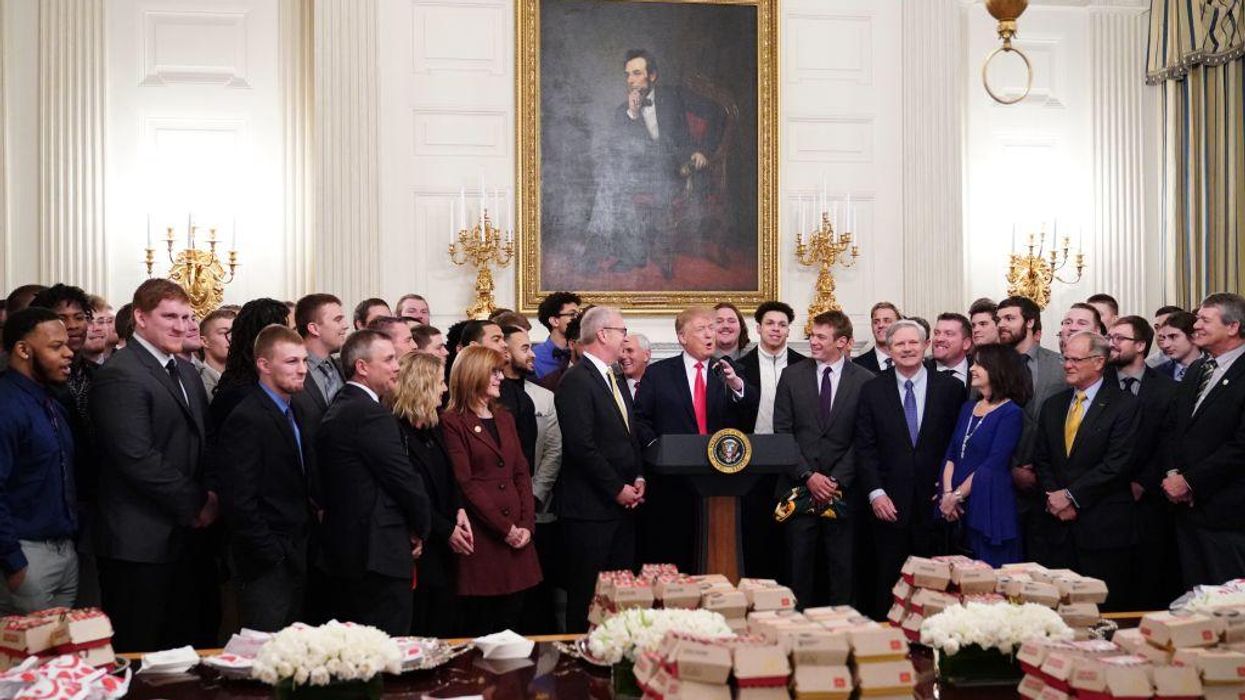
Here is my National Mandate. Close all fast-food chains. Put orange cone roadblocks on all Dunkin' Donuts drive-thrus. Ban the sale of Coca-Cola and Pepsi. The war was not between those two Colas; it was a war against the human body.
The masks mask the elephant in the room. No human being can make a potent immune system with a diet of processed food and sugar. This promiscuous virus seems to have a field day with the obese and the immune-compromised. The national and worldwide addiction to sugar presents a feeding frenzy for a virus that, like all viruses, feeds on sugar. Where are the scientists and leaders who can guide the populations of the world to actually combat the virus by starving it and also by strengthening its targets? We are told to behave like boxers in a corner with our gloves up to our faces as we are pummeled.
We need to resuscitate the slogan Resist and put it at the center of our actual physical bodies. The Thymus gland makes T-cells. Thymus is a Greek word for courage and anger; two strong words that will strengthen resistance.
Ireland determined recently that the rolls produced by the fast-food chain Subway have too much sugar in it to be called bread. This just begins to tell the tale. Biden, Fauci, and the posse of "experts" say nothing about what evolution and nature has made clear - T-cells are our Personal Protective Device. You cannot make powerful T-cells from a Big Mac, fries and Coke or a cream filled, white flour doughnut. A virus can present itself to a human body and a human body armed with healthy T-cells will most likely evict it quickly and not give it a chance to colonize and inflame. The primary exhortation from the top should be about about this aspect of human health.
Government guidance and a support stipend is the best path forward. Like Victory gardens during WWII, there ought to be individual citizen projects of cultivating potent health as the wall of resistance to this virus which, like a predator, will pick out the weak targets in a herd.
I can't speak for the rest of the world but America seems to have a romance with disease. Cable stations exist to sell drugs and as they do, they romanticize disease. The wistful looks of the stricken, the sentimental music, the loving looks of spouse and family on the patient all work to make the disease seem to be a pathway to love and enlightenment, and the patented drug you must take forever will keep you alive long enough to bask in this glow. Hopefully one day we will look at these commercials the way we look at doctor-recommended cigarette ads from the 1950's we now watch on Youtube with horror and macabre amusement.
In the case of COVID, we are presented with numbers and charts and interviews with beleaguered hospital workers. Experts tell us what they know and what they don't know both ending up by the end of the interview to be useless. By omission or myopia, these experts seem to be saying to all of us is, "Eat any junk you want and live any way you care to but wear a mask and wash your hands and stay six feet apart." This has always had the echo of six feet under - a distance that has the hint of death to it.
The ultimate infantilizing of the citizenry - mask, wash up, and go to your room. Not to say that these prescriptions don't have a place at this moment but to me, if this is all you've got, it smacks of impotence and surrender and a serious abdication.
Driving here in Connecticut in the morning I will pass a line at the drive-thru at Dunkin' Donuts - 20 cars long. Burger King will do "no contact delivery." It's not the contact that's the real or only risk factor it's what is being delivered. Processed, sugar-laced food is like sludge in a human body and a human body can only make new cells with what it is being given. The revolution does indeed start in the kitchen.
Until the feckless and myopic experts begin to take this point as seriously as they do the mask instruction, no matter how much obedience they are able to influence, we will continue to have more spikes than the shoe franchise at a Trump golf course.
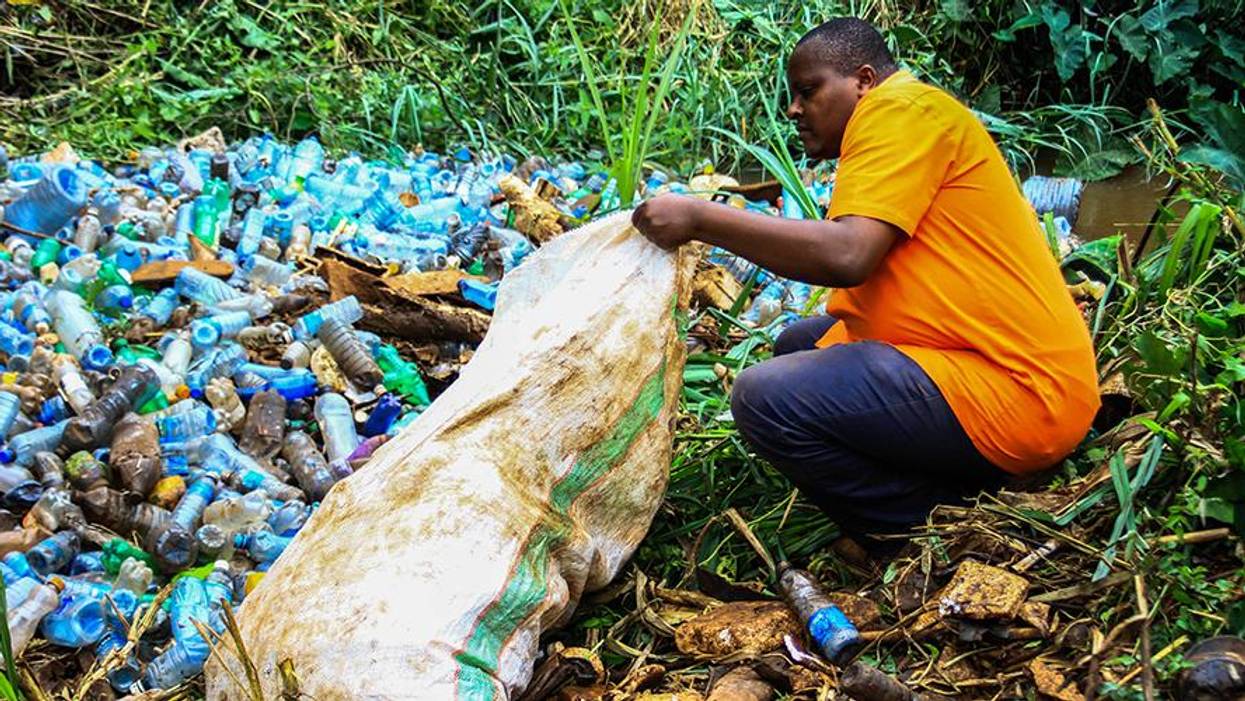
Analysis released Thursday of the world's top 10 biggest plastic polluters in 15 countries reveals how major corporations hide behind the veneer of corporate responsibility while actively working to thwart regulatory legislation around the globe.
"This report is a damning expose of the tactics employed by the plastics industry and shines a welcome light on the shadowy world of corporate lobbying," Natalie Fee, founder of City to Sea, which supported the research conducted by the Changing Markets Foundation, said in a statement.
"For too long," said Fee, "the true cost of plastic production has been externalized, meaning plastic producers continue to get away with ecocide while waste management companies, consumers and marginalized communities around the world are left to deal with millions of tons of toxic plastic waste."
The report--titled "Talking Trash: The Corporate Playbook of False Solutions,"--exposes how Coca-Cola, Colgate-Palmolive, Danone, Mars Incorporated, Mondelez International, Nestle, PepsiCo, Perfetti Van Melle, Procter & Gamble, and Unilever deploy "tactics to undermine legislation in individual countries are in fact part of a global approach by Big Plastic to ensure that the corporations most responsible for the plastic crisis evade true accountability for their pollution."
According to Changing Markets Foundation Thursday, the investigations found:
"This report exposes the two-faced hypocrisy of plastic polluters, which claim to be committed to solutions, but at the same time use a host of dirty tricks to ensure that they can continue pumping out cheap, disposable plastic, polluting the planet at a devastating rate," said Nusa Urbanic, campaigns director for the Changing Markets.
"Plastic is now pouring into the natural world at a rate of one garbage truck a minute, creating a crisis for wildlife, the climate and public health," Urbanic continued. "The responsibility for this disaster lies with Big Plastic--including major household brands--which have lobbied against progressive legislation for decades, greenwashed their environmental credentials, and blamed the public for littering, rather than assuming responsibility for their own actions."
Big Plastic jumped at the opportunity presented by the Covid-19 pandemic--which has caused a surge in single-use plastic consumption--to pressure lawmakers to roll back current regulations and prevent new ones, according to the report.
Additionally, Changing Markets noted that plastic pollution has devastating effects on the environment and is a key contributor to the climate crisis.
According to the group:
"The plastic pollution crisis is a deeply interconnected climate crisis, a biodiversity crisis, and a public health crisis all combined... Plastic saturates almost every surface of the planet--from the deepest abysses to the highest mountains and remotest islands--causing an unprecedented crisis for wildlife... Virgin-plastic production is a major contributor to climate change, generating enough emissions--from the moment they leave the ground as fossil fuels, and throughout their entire life cycle--to use up 10 to 15% of our entire carbon budget by 2050 at current rates of growth. Disposal of plastics through incineration and backyard burning also contributes to climate change and creates a toxic fallout undermining human and planetary health."
The industry's contribution to the global climate emergency is nothing new, but progressive legislators continue to face an uphill battle when it comes to regulating these powerful corporations.
President Donald Trump, for example, has called climate change a "hoax," and, despite pleas from environmental advocacy groups and progressive lawmakers, many Democratic lawmakers, including House Minority Leader Nancy Pelosi (D-Calif.) and Senate Majority Leader Chuck Schumer (D-N.Y.)--as well as presidential nominee Joe Biden--still do not support the Green New Deal.
Urbanic urged lawmakers to act to protect the planet.
"The voluntary initiatives and commitments by the industry have failed," she said in a statement. "Policymakers should look past the industry smokescreen and adopt proven, progressive legislation globally to create the systemic change that this crisis so urgently needs."
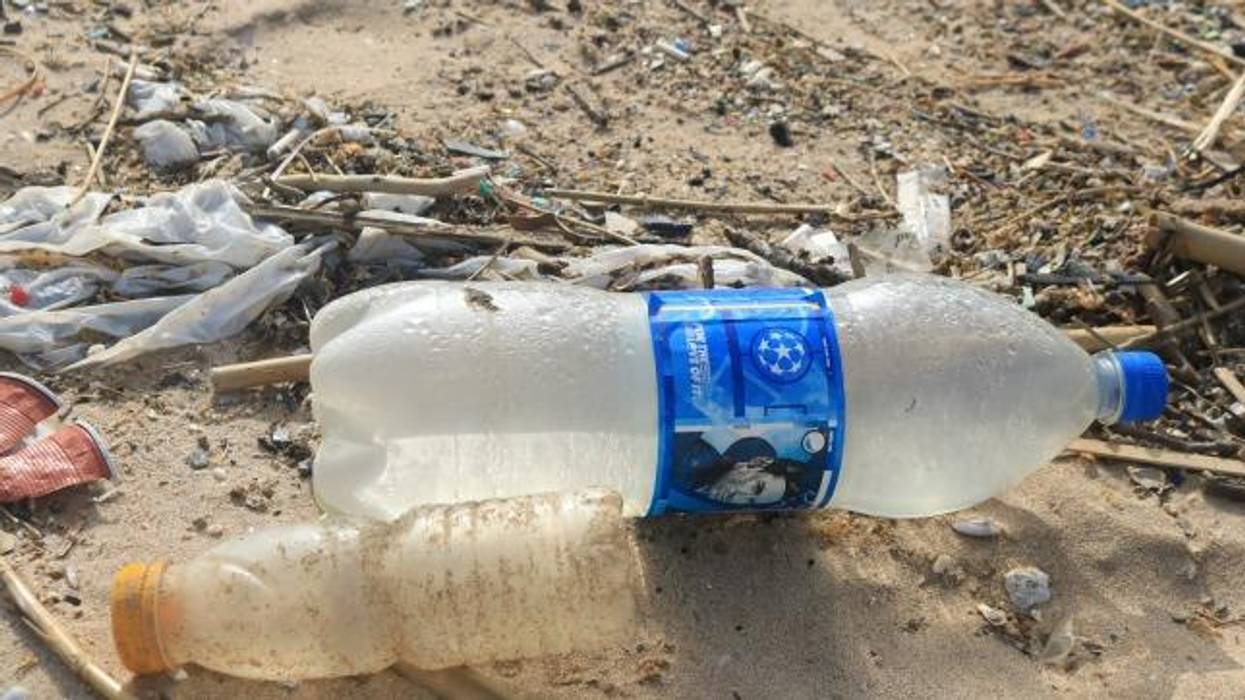
A new report out Wednesday from a global environmental coalition named the corporate giants responsible for the most global plastic pollution in a recent tally--with Coca-Cola and Nestle topping the list--even as those same companies engage in greenwash efforts to continue "the plastic pollution crisis."
"This report provides more evidence that corporations urgently need to do more to address the plastic pollution crisis they've created," said Von Hernandez, global coordinator of the Break Free From Plastic movement, in statement.
For its analysis, the coalition engaged in a "brand audit." That means "identifying, counting, and documenting the brands found on plastic and other collected packaging waste to help identify the corporations responsible for pollution," in other words, finding "the companies polluting the most places with the most plastics."
The tally took place last month on World Cleanup Day, and involved over 70,000 volunteers in 51 countries across six continents. They gathered and assessed "476,423 pieces of plastic waste, 43 percent of which was marked with a clear consumer brand," the report said.
The top 10 most frequently identified companies were Coca-Cola, Nestle, PepsiCo, Mondelez International, Unilever, Mars, P&G, Colgate-Palmolive, Phillip Morris, and Perfetti Van Mille.
What did it take for Coca-Cola to take top spot--a dubious honor it takes for the second year in a row?
"A total of 11,732 branded Coca-Cola plastics were recorded in 37 countries across four continents," the report said, "more than the next three top global polluters combined."
Nestle and PepsiCo, meanwhile, still claim spots two and three, respectively, swapping the positions they held in the coalition's 2018 audit.
"We must continue to expose these real culprits of our plastic and recycling crisis."
--Denise Patel, Global Alliance for Incinerator Alternatives (GAIA)Break Free From Plastic's name-and-shame effort has a clear goal: "Only by highlighting the real culprits can we push them to change their packaging and destructive throwaway business model." In addition, said the group, it's "a powerful tool to challenge the corporate narrative that plastic pollution is a waste management issue caused by individual consumers."
Companies may tout that their plastic products are recyclable, but that's an incomplete description, said the report. Labeling a product recyclable provides no guarantee that it will actually get recycled. The report noted that "since the 1950's, only 9 percent has actually been recycled globally."
Even if the product is recycled, that's no "magic solution."
This is because plastic polymer chains get shorter when they are recycled, which means the quality deteriorates. A plastic bottle can only be recycled a few times and in reality most recycled plastic is made into clothing, construction materials, or other products that will not get recycled again.
What's more, the production of plastic generally relies on climate-wrecking fossil fuels and causes air pollution, while the use of it can threaten consumers who face potentially leaching chemicals. All of these problems, the report said, "disproportionately impact the world's poorest communities," who are often the dumping ground for wealthier nations' plastic waste.
"The products and packaging that brands like Coca-Cola, Nestle, and PepsiCo are churning out is turning our recycling system into garbage," said Denise Patel, U.S. Coordinator for the Global Alliance for Incinerator Alternatives (GAIA). "China has effectively banned the import of the U.S. and other exporting countries' 'recycling,' and other countries are following suit. Plastic is being burned in incinerators across the world, exposing communities to toxic pollution. We must continue to expose these real culprits of our plastic and recycling crisis."
The industry response to the crisis is of no help.
"In the face of the undeniable evidence provided by the global brand audits, top industry polluters have been quick to acknowledge their role in perpetuating the plastic pollution crisis, but have been equally aggressive in promoting false solutions to address the problem," said the report, noting that they do so as they "reap billions of dollars while avoiding paying the full cost of their design and production choices."
These "false solutions, such as switching to paper or 'bioplastics' or embracing chemical recycling, are failing to move society away from single-use packaging and only continue to perpetuate the throwaway culture."
From the report:
Nestle for example has committed to making all of its packaging recyclable or reusable by 2025, but has no clear plans for reducing the total amount of single-use plastic it puts into the world, and the company sells over a billion products a day in single-use packaging. Coca Cola has recently unveiled a single-use plastic bottle using plastic collected from the oceans, and in 2009 they promoted a plastic bottle made from plants. None of these products will stop or reduce Coke's growing plastic pollution, and reinforce the myth that single-use plastic can be sustainable. And finally, PepsiCo has joined the Alliance to End Plastic Waste that brings together plastic producers, oil companies and other consumer goods companies to promote beach cleanups and improving recycling as a way to ensure future demand for petrochemicals to make more plastic. Efforts like these, and others focused on making packaging recyclable or compostable, do not get to the heart of the problem and all but guarantee the plastic pollution crisis will grow worse.
"Real solutions," said the report, "must change systems and power structures."
That means looking at examples set by so-called "zero waste" communities, who boost waste reduction, recycling, and composting. Business must also get on board with "the one true solution: reduction and reuse."
That's because, according to Hernandez, "Recycling is not going to solve this problem."
"Break Free From Plastic's nearly 1,800 member organizations are calling on corporations to urgently reduce their production of single-use plastic," said Hernandez, "and find innovative solutions focused on alternative delivery systems that do not create pollution."
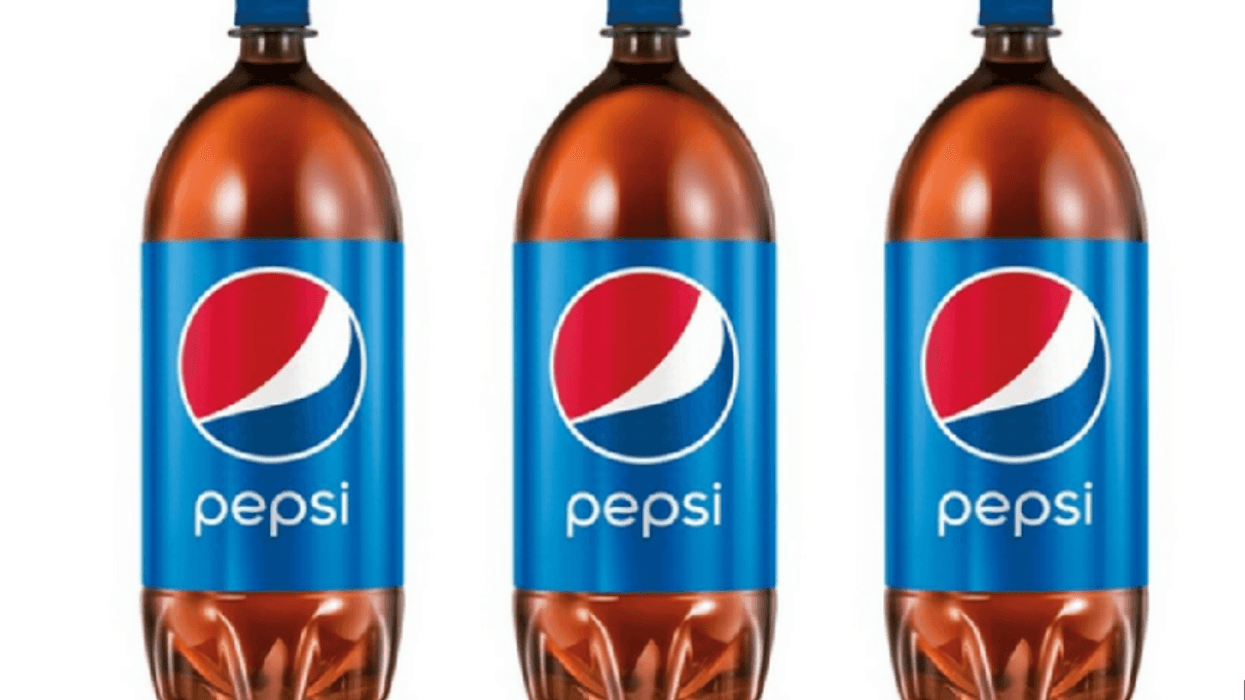
Pepsi has been vying for advertising dominance in Atlanta, Coca-Cola's home turf, while Coke's pre-game commercial embraces diversity, a message that feels political in today's climate. This follows a growing trend of major brands taking progressive stances on social issues from toxic masculinity, solidarity with Colin Kapaernick and Brexit. But is the moral high ground yours to take when it's not reflected in your business model?
PR campaigns aside, both Coca-Cola and PepsiCo are major contributors to the plastic crisis. Last summer my organization, The Story of Stuff Project, helped coordinate hundreds of 'brand audits' in collaboration with the #breakfreefromplastic movement. Adding a twist to the traditional beach clean up, volunteers identified the type and brands associated with 187,000 pieces of plastic pollution collected across the world. The companies with the biggest plastic footprint? Coca-Cola, PepsiCo, and Nestle.
Although much of today's packaging is inherently problematic, the second most commonly found item in our audit was plastic bottles (PET). It's one of the few types of plastic that can be widely recycled so long as it's collected, and herein lies the challenge of a product designed to be consumed 'on the go.' Enter an ingenious solution: container deposits. By adding a refundable deposit to the price of a bottle you incentivize its return for recycling.
It's a proven measure that reduces the chances of a bottle of Coke or Pepsi from getting landfilled or polluting the environment after use. It's virtually eliminated polluted bottles in Michigan and Oregon, two of the US's ten states with 'bottle bills'. Their systems recover over 90% of their beverage bottles, as opposed to 20% - 30% of bottles collected on average in curbside recycling across the US.
Rather than embrace this solution, Coca-Cola and Pepsi embrace industry lobbying groups that undermine such legislation.
But rather than embrace this solution, Coca-Cola and Pepsi embrace industry lobbying groups that undermine such legislation. Last December, a group of legislators backed by the Michigan Soft Drink Association attempted to rush through legislation in lame-duck season to end Michigan's world-class deposit system. These skirmishes occur periodically to weaken existing systems as well as obstruct new container deposit laws addressing the plastic blighting their communities.
But the growing stature of the plastic crisis is forcing the idea into consideration. Coca-Cola Europe recently completed a 180-degree turn and is now participating in shaping an effective container deposit system in the UK. While at last week's World Economic Forum in Davos, James Quincey, the CEO of Coca-Cola stated that the "value" of their packaging was the key to higher recycling rates.
These companies are presumably concerned that container deposits don't revolve around convenience: a concern that embodies the "disposable" mindset that led us to the current plastic crisis. Polling across locations where container deposits exist, however, show high levels of support for the system. I believe that's because, in an age where plastic is entering our air, water, and food, contributing to part of the solution can feel rewarding.
Globally, one million plastic bottles are sold every minute. By endorsing container deposits, the big brands can reduce their plastic footprint, their carbon emissions, and celebrate a transformative shift on the plastics crisis. Those sound like good ingredients for next year's winning Super Bowl commercial.