

SUBSCRIBE TO OUR FREE NEWSLETTER
Daily news & progressive opinion—funded by the people, not the corporations—delivered straight to your inbox.
5
#000000
#FFFFFF
To donate by check, phone, or other method, see our More Ways to Give page.
Daily news & progressive opinion—funded by the people, not the corporations—delivered straight to your inbox.
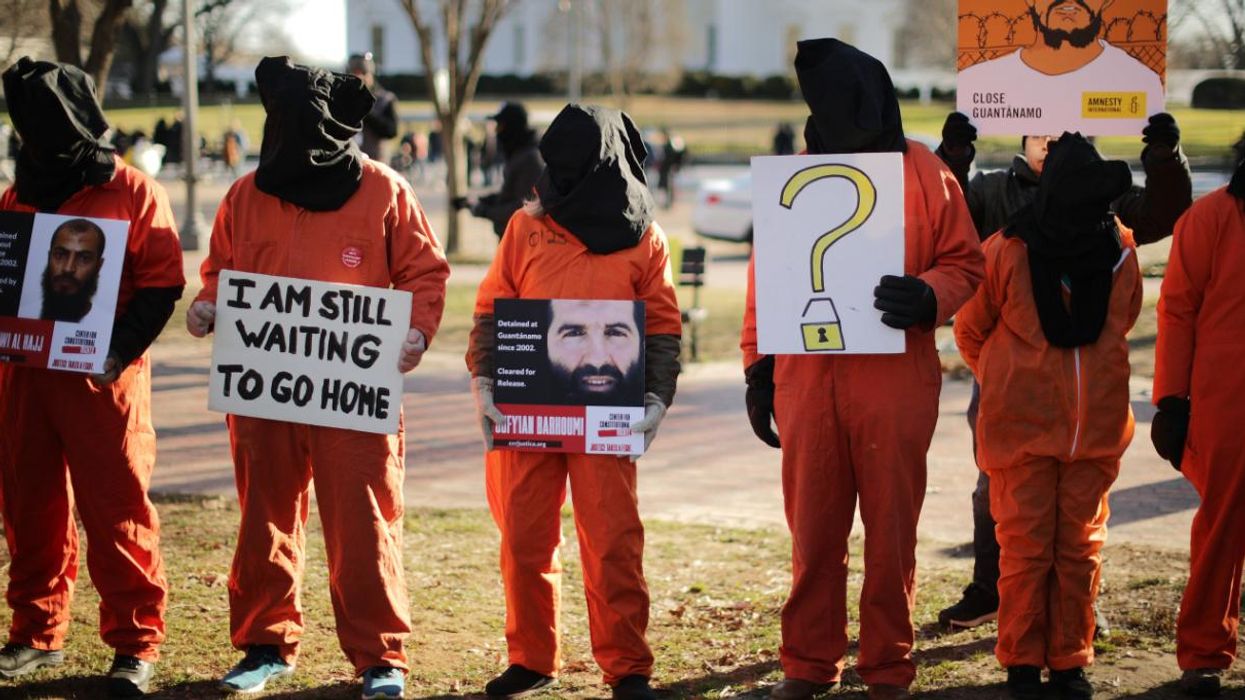
We cannot afford to turn a blind eye to his plight or the plight of countless others who have been wrongfully detained and subjected to abuse.
On May 11, Saeed Bakhouche, a survivor of Guantánamo Bay, was abruptly sentenced to three years in prison and fined $2,000, taken immediately to jail from the courtroom.
An anonymous source said: "We were all stunned by the court's decision. Here's a man who spent over 21 years in Guantánamo, barely had eight months of freedom, homeless and unable to feed himself, and yet the court sends him to what is essentially another Guantánamo, if not worse."
The sentence came only two days after the United Nations experts warned that Bakhouche, 57 years old, would face terrorism charges in Algeria, not receive a fair trial, and risked renewed arbitrary detention.
From Guantánamo to Algeria, the road to justice has been littered with obstacles, with individuals like Bakhouche caught in the crossfire of geopolitical maneuvering and security theater.
The courtroom drama marked yet another chapter in the harrowing saga of Bakhouche, a man whose life has been entangled in the complex web of post-9/11 counterterrorism measures. As the gavel struck, sentencing him to three years behind bars, it was a stark reminder of the injustices that continue to plague him even after his release from Guantánamo Bay.
Bakhouche's journey from the confines of Guantánamo to the courtroom in Algeria has been marred by a litany of human rights violations, a fact that has not gone unnoticed by international observers. The recent warning issued by U.N. experts underscores the gravity of the situation, highlighting the inherent flaws in the legal proceedings against him.
In April 2022, Bakhouche was cleared for release from the notorious prison in U.S. Naval Station Guantánamo Bay after enduring over two decades of arbitrary detention and torture. His transfer to Algeria in April 2023 was accompanied by assurances of humane treatment, yet the reality has been anything but humane.
The decision to return him to his home country came with assurances from the U.S. State Department regarding his treatment upon arrival. Bakhouch's lawyer, H. Candace Gorman, was led to believe that her client would be treated humanely, with access to legal representation and support to reintegrate into society.
However, upon his arrival in Algeria, he was quickly thrown into a bewildering ordeal of imprisonment, intense interrogations, and legal limbo, resembling a nightmarish scenario of Guantánamo. Deprived of legal representation and held incommunicado, he found himself caught in a complex legal situation where the principle of innocence until proven guilty appeared to have vanished.
The charges leveled against Bakhouche under Algeria's Penal Code reek of political opportunism, a thinly veiled attempt to scapegoat a man who has already suffered immeasurable trauma at the hands of the U.S. government. His prosecution flies in the face of fundamental principles of justice and fair trial, raising serious concerns about the integrity of the legal process.
The U.N. experts' assertion that Bakhouche faces the risk of renewed arbitrary detention further underscores the urgent need for international scrutiny and intervention. His plight serves as a stark reminder of the enduring legacy of Guantánamo, where justice has often taken a backseat to political expediency.
Bakhouche's case is not an isolated one; it is emblematic of a larger pattern of abuse and impunity that has characterized the so-called "war on terror." From Guantánamo to Algeria, the road to justice has been littered with obstacles, with individuals like Bakhouche caught in the crossfire of geopolitical maneuvering and security theater.
Fionnuala Ní Aoláin, the former U.N. special rapporteur on counterterrorism and human rights, recently highlighted ongoing concerns regarding the U.S. government's handling of detainees released from Guantánamo. In her comprehensive report published in June 2023, Ní Aoláin detailed numerous rights violations stemming from the transfer of detainees to foreign countries.
Among various violations, Ní Aoláin revealed instances of torture, arbitrary detention, and disappearances among released prisoners. Shockingly, in 30% of documented cases, recipient countries deprived these individuals of proper legal status.
The U.N. report underscored the United States' involvement in these problematic transfers, emphasizing a clear legal and moral obligation for the U.S. government. It must use diplomatic and legal resources to ensure these men are relocated, providing proper assurance and support to the recipient countries.
As the Biden administration seeks to extricate itself from the dilemma of Guantánamo, it must reckon with the human cost of its actions. Bakhouche and others like him are not mere statistics; they are individuals whose lives have been irreparably altered by the machinery of state-sanctioned violence.
The recent sentencing of Bakhouche serves as a grim reminder of the urgent need for accountability and justice. It is not enough to simply close the doors of Guantánamo; we must also reckon with the legacy of injustice it has left behind. Anything less would be a betrayal of the principles we claim to uphold.
In the pursuit of justice for Bakhouche and others like him, the international community must remain vigilant. We cannot allow the shadows of Guantánamo to continue to darken the lives of innocent individuals who have already suffered far too much.
As Bakhouche begins his journey behind bars once again, in Guantánamo 2.0 this time, let us not forget the injustices that have brought him to this point. His story stands as a testament to the depravity of both the U.S. and Algerian governments, subjecting him to abuse and torture, and it is a call to action for all those who believe in the sanctity of justice and the dignity of every individual.
In closing, let us heed the words of the U.N. experts who have sounded the alarm on Bakhouche's case. Let us demand accountability, transparency, and above all, justice for those who have been failed by the very systems meant to protect them. Only then can we truly begin to heal the wounds inflicted by Guantánamo and its legacy of injustice.
Saeed Bakhouche's case underscores the urgent need for action and accountability in the pursuit of justice. It is a stark reminder of the human cost of unchecked power and the devastating impact of prolonged detention without charge or trial. We cannot afford to turn a blind eye to his plight or the plight of countless others who have been wrongfully detained and subjected to abuse.
We must demand transparency, accountability, and fair treatment for all detainees, regardless of their circumstances. We must advocate for Bakhouche's immediate release and call for reforms to ensure that such injustices never occur again. Only through collective action and unwavering commitment to human rights can we bring about meaningful change and ensure that justice prevails.
This article was first published by Cage International.
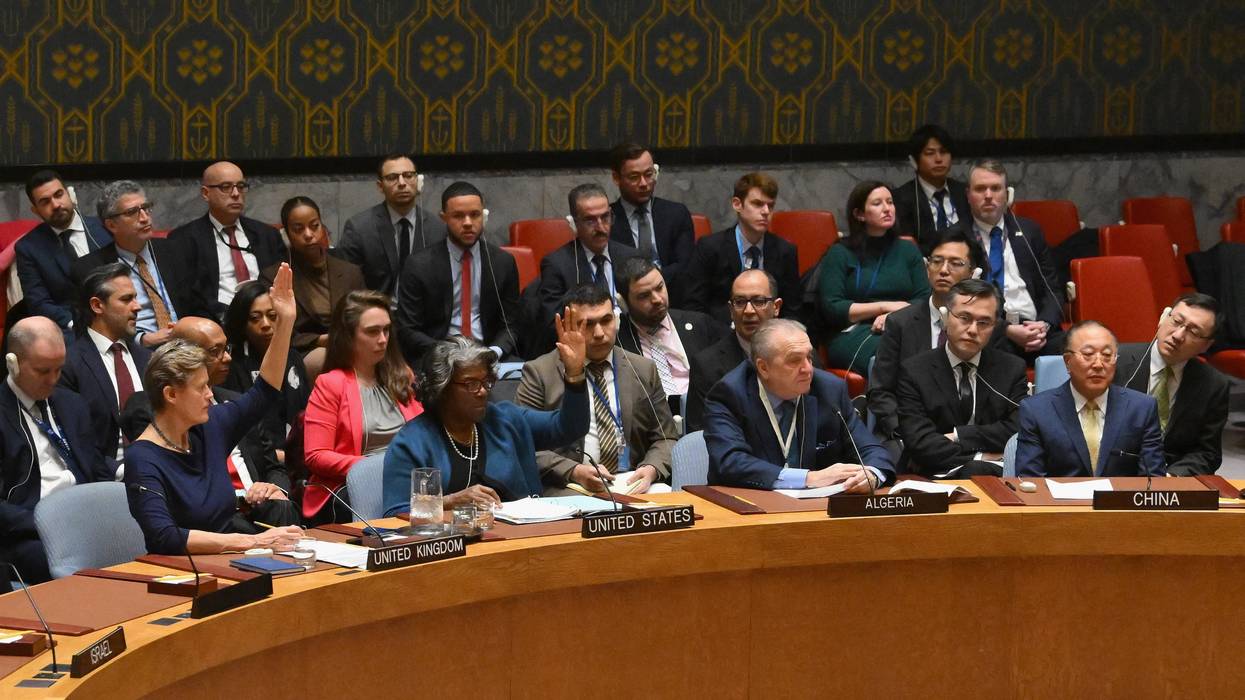
"Only by ceasing hostilities we can alleviate the immense suffering and ensure that large-scale humanitarian assistance reaches those in need," said Algeria's ambassador to the United Nations.
Russia and China on Friday vetoed a U.S. resolution at the United Nations Security Council that called a Gaza cease-fire "imperative" but stopped short of demanding a halt to Israel's monthslong assault on the besieged enclave.
Algeria, which does not have veto power, joined Russia and China in opposing the U.S. resolution, which 11 Security Council members supported. Guyana abstained.
Friday's 11-3-1 vote came just over a month after the U.S. used its veto power to tank an Algeria-led resolution demanding "an immediate humanitarian cease-fire that must be respected by all parties."
Amar Bendjama, Algeria's ambassador to the U.N., said Friday that he was speaking not only for his country "but as a representative of the whole Arab world" as he explained their shared opposition to the U.S. resolution. Bendjama said Algeria proposed edits to the U.S. draft, but the final resolution left central concerns "unaddressed."
"We echoed the demands of millions of people and humanitarian actors for an immediate cessation of hostilities," said Bendjama. "Regrettably, the draft resolution falls short of our expectations. It fails to adequately address these main issues and the immense suffering [being endured] by the Palestinian people."
"Those who believe that the Israeli occupying power will choose to uphold its international legal obligation are mistaken," he argued. "They must abandon this fiction."
Bendjama, who cited the 32,000 people killed by Israel so far and the tens of thousands more wounded or permanently disabled, said the draft of the resolution "does not convey a clear message of peace" and "tacitly allows for continuing civilian casualties and lacks clear safeguard to prevent further escalation."
Russia's ambassador to the U.N., Vassily Nebenzia, argued the U.S. resolution was "not enough" and accused the Biden administration of "deliberately misleading the international community."
Outside analysts also criticized the U.S. resolution. Trita Parsi, executive vice president of the Quincy Institute for Responsible Statecraft, said that while the resolution is "significantly stronger" than previous U.S. drafts, "it still falls short of a clear and unequivocal demand for an unconditional cease-fire."
Craig Mokhiber, a former U.N. official who resigned in late October over the international body's failure to respond to Israel's assault on Gaza, said the U.S. measure "is not a cease-fire resolution. It is a ransom note."
Instead of clearly demanding a cease-fire, the U.S. resolution proposed more ambiguous language expressing "the imperative of an immediate and sustained cease-fire to protect civilians on all sides, allow for the delivery of essential humanitarian assistance, and alleviate humanitarian suffering."
The resolution also tied support for a cease-fire to "the release of all remaining hostages."
Parsi said in a statement Friday that "undoubtedly, Biden's rhetorical shift in favor of a ceasefire is noteworthy, but the devil is in the details."
"The unnecessarily convoluted operative clause raises concerns that this shift is less straightforward than it could and should be," Parsi added.
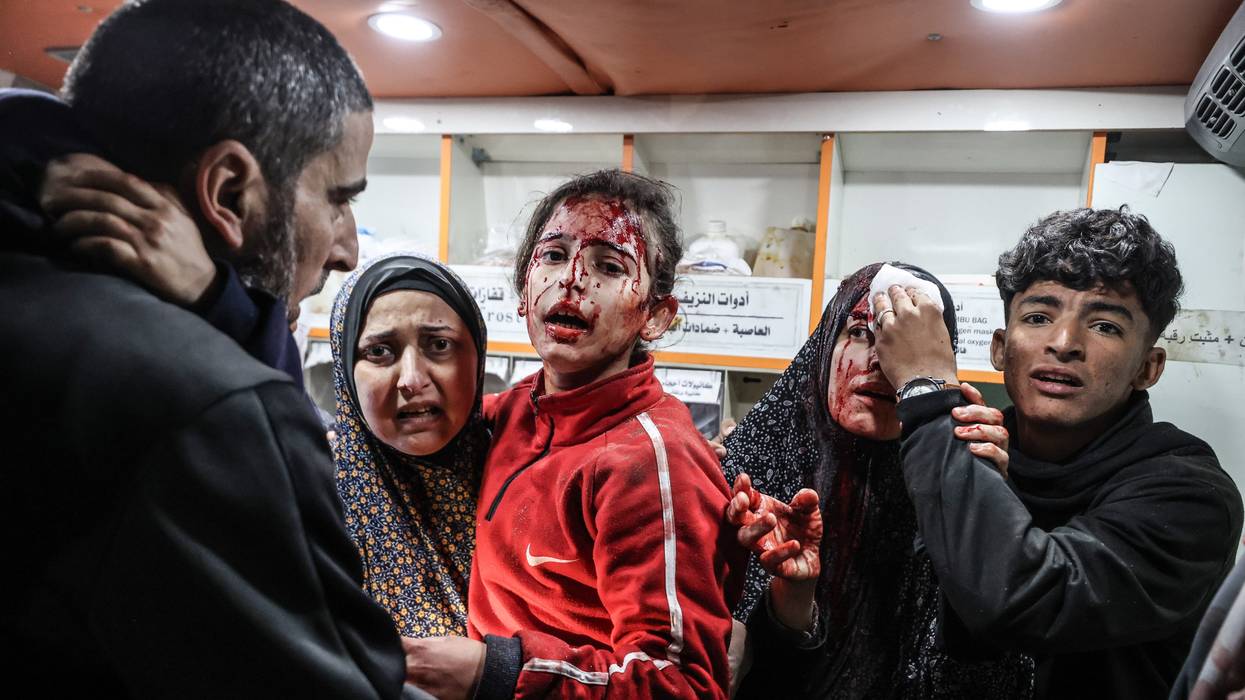
"We should ask ourselves: How many innocent lives must be sacrificed before the council deems it necessary to call for a cease-fire?" said the Algerian envoy to the United Nations.
As a United Nations agency halted aid deliveries in northern Gaza, where acute malnourishment is rampant among children, citing a "breakdown of social order" fueled by Israel's bombardment of and blockade on the enclave, the United States for a third time on Tuesday vetoed a cease-fire resolution at the U.N. Security Council—saying it was an inopportune time to demand that Israel end its massacre of Palestinians.
U.S. Ambassador to the U.N. Linda Thomas-Greenfield said the cease-fire resolution, proposed by Algeria, would "negatively impact" negotiations for a truce that are ongoing.
Amar Bendjama, Algeria's ambassador to the U.N., said the U.S. ambassador's lone vote against the resolution "implies an endorsement of the brutal violence and collective punishment inflicted upon" Palestinians in Gaza.
Thirteen countries supported the resolution, while the U.K.—which has veto power, like the U.S., China, France, and Russia—abstained from voting.
The vote marked the third time the U.S. has vetoed a cease-fire resolution at the U.N. Security Council (UNSC). Meanwhile, the Biden administration has approved weapons transfers to Israel without the oversight of the U.S. Congress since the assault began in October, and has vehemently defended the bombardment as being focused on defeating Hamas, even as Israel has killed more than 29,000 Palestinians including more than 11,500 children.
"We should ask ourselves: How many innocent lives must be sacrificed before the council deems it necessary to call for a cease-fire?" said Bendjama. "Palestinian lives matter. Each one of us decides where to stand in this tragic chapter of history."
As the U.S. rejected the cease-fire resolution, Al Jazeera reported on the chaos that has erupted in northern Gaza as Israel has blocked aid trucks from reaching starving civilians there.
The World Food Program (WFP) said Tuesday it was pausing deliveries after crowds of desperate people overwhelmed aid workers.
As Al Jazeera reported, children collected flour that spilled from an aid truck in Gaza City, before Israeli forces began firing on the crowd.
"We want to feed our children just like everyone else," one Palestinian man told Al Jazeera, "so we went to get some flour. But then we were shot at, shells were fired, and tanks advanced at us."
The WFP and the U.N. Children's Fund said Monday that starvation is particularly severe in northern Gaza, with 1 in 6 children under age two—more than 15%—acutely malnourished. An estimated 3% of children under two are experiencing a severe form of wasting—being underweight for their age and height.
In December, 15 agencies including the WFP warned that northern Gaza is at risk for a famine by May unless conditions significantly improve.
The United States' veto of Algeria's resolution on Tuesday, said Bendjama, should be understood as "approval of starvation as a means of war against hundreds of thousands of Palestinians."
The U.S. proposed its own resolution calling for a "temporary cease-fire as soon as practicable," and warning Israel not to conduct an expected ground operation in Rafah, where more than 1.5 million people—most of whom have been forcibly displaced from other parts of Gaza—are now sheltering.
The Permanent Mission of Liechtenstein to the U.N. called on the U.N. General Assembly (UNGA) to take action to protect Palestinians.
Under Section A of Resolution 377A of the U.N. Charter, also known as "Uniting for Peace," the UNGA can convene an emergency meeting and make recommendations for collective measures, if members of the UNSC can't reach an agreement and fail to exercise their "primary responsibility for the maintenance of international peace and security."
Hossam Baghat, executive director of the Egyptian Initiative for Personal Rights, suggested the U.S. veto should trigger "mass resignations of U.S. diplomats and public servants from the State Department and across the administration."
Al Jazeera reported that Palestinians in Gaza expressed anger over the United States' latest veto.
"There is a great deal of pessimism and frustration. Palestinians no longer trust the international community, as we have been hearing from locals here in Gaza," correspondent Tareq Abu Azzoum reported from Rafah. "During the Security Council meeting there have been more attacks on the ground here in Gaza. People here are completely frustrated."
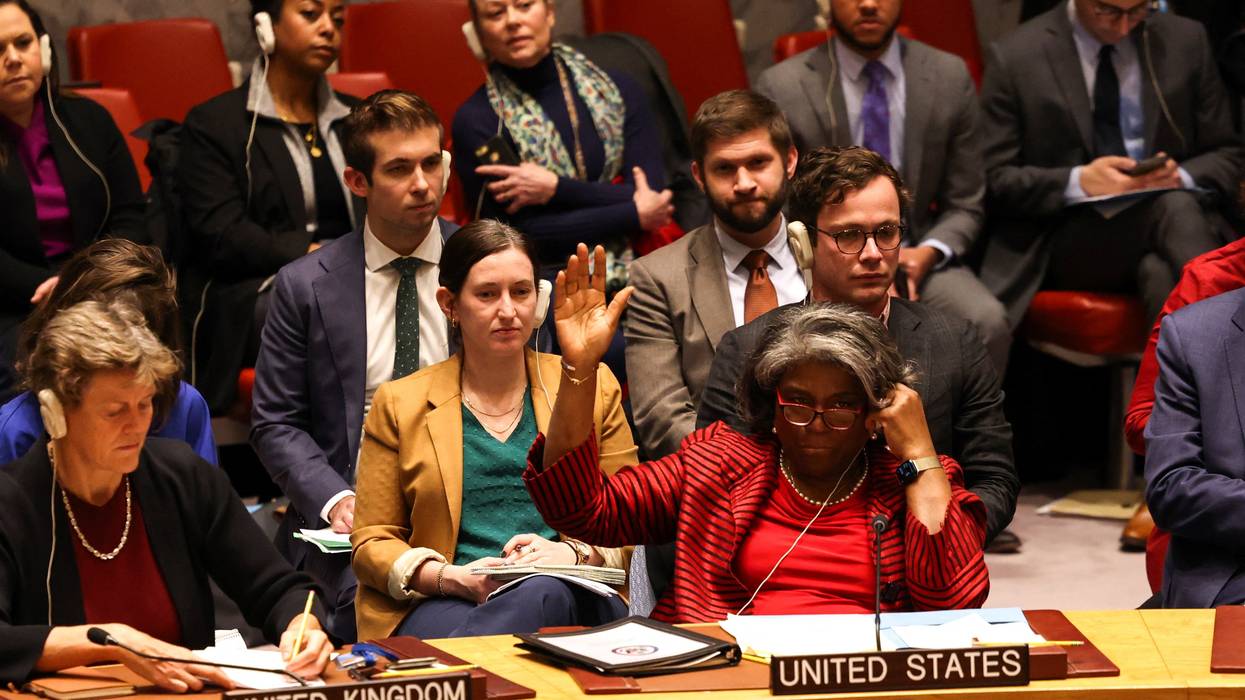
While some welcomed the Biden administration's evolving stance, others decried the vague language of its proposal, which comes as Israeli forces kill and maim hundreds of Palestinians daily.
After signaling that it would block a United Nations Security Council demand for an immediate cessation of hostilities in Gaza, the United States on Monday proposed an alternate resolution calling for a "temporary cease-fire" in the besieged Palestinian enclave "as soon as practical."
A draft of the U.S. resolution seen by media outlets including Reuters and Al Jazeera also calls for "lifting all barriers to the provision of humanitarian assistance at scale" in Gaza while warning against Israel's planned invasion of Rafah, the southern city packed with 1.5 million residents and refugees who fled there from other parts of the embattled strip on orders from Israeli authorities.
The U.S. move follows a threat to veto a draft resolution by Algeria urging an immediate cessation of hostilities in Gaza. The measure is based on last month's provisional International Court of Justice ruling ordering Israel to "take all measures within its power" to prevent acts of genocide.
Algeria's resolution is scheduled for a Tuesday vote. However, U.S. Ambassador to the U.N. Linda Thomas-Greenfield said last Friday that the measure "could put sensitive negotiations in jeopardy, derailing the exhaustive, ongoing diplomatic efforts to secure the release of hostages, and secure an extended pause that Palestinian civilians and aid workers so desperately need."
The U.S. proposal follows remarks by President Joe Biden, who said last week that he has called for a "temporary cease-fire" during private phone calls with Israeli Prime Minister Benjamin Netanyahu.
It is not clear when—or even if—the U.S. resolution will be up for a Security Council vote.
While some observers praised the U.S. for finally endorsing a cease-fire, others wondered just how much longer Israel's 136-day war that's killed or wounded over 100,000 people must rage before a pause is considered "practical."
Still, as Al Jazeera diplomatic editor James Bays noted Monday: "For the first time, the U.S. is proposing the word cease-fire. That is significant because Israel did not want the word cease-fire in any resolution, and now it is the U.S. which is proposing it."
"So something very clearly has changed in Washington in the last 24 hours," Bays added. "They've decided to be tougher on Israel."
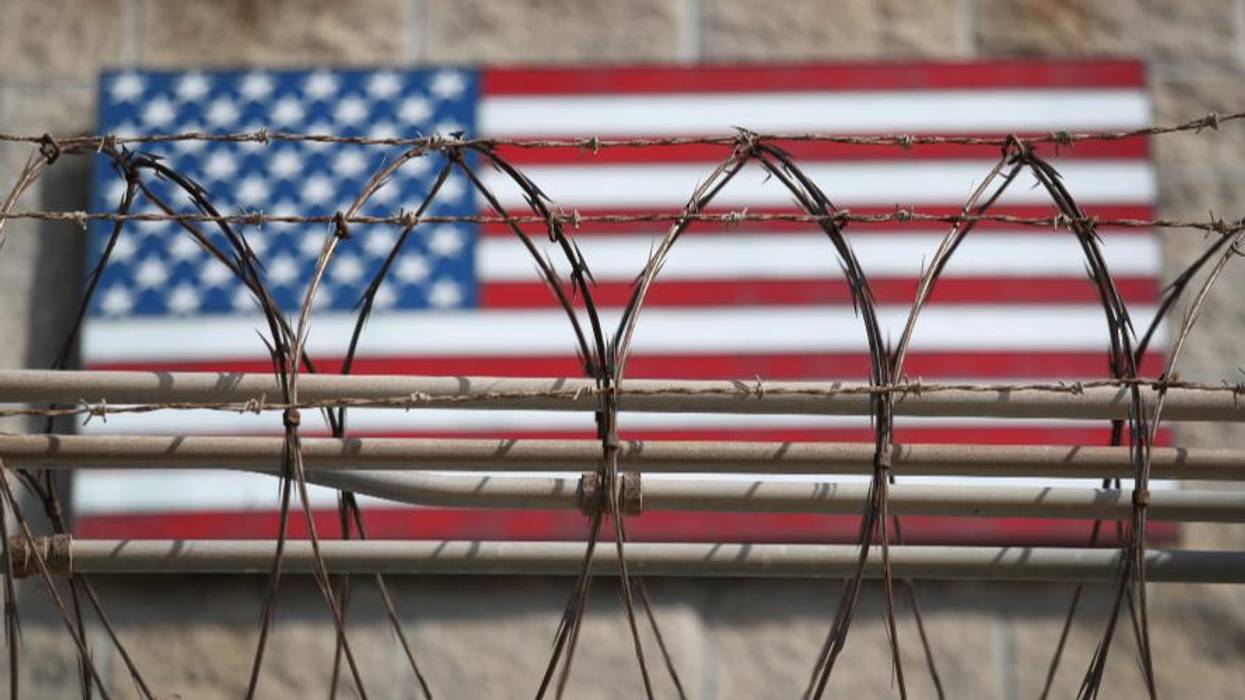
Many former detainees who have been repatriated to their home country or resettled in a third country have found themselves in either another prison or in what we call Guantánamo 2.0.
Shortly after the U.S. repatriated the cleared prisoner and Saudi engineer Ghassan Abdullah al-Sharbi to his home country, he disappeared, adding to the growing list of men who, once released from Guantánamo, walk into conditions much worse, including execution. Attempts to find these men are met with silence from the U.S. and the implicated countries. Why?
When given the opportunity to be transferred out of Guantánamo, it’s hard to think of any reason why any incarcerated person would want to stay. That is, unless they were going to be sent somewhere that likely could be or would be worse than the U.S.’ infamous offshore prison. This past March, Ghassan al-Sharbi, a Saudi engineer who was detained at Guantánamo for over two decades without trial, was transferred to his home country. Instead of being cause for celebration however, al-Sharbi feared for his life and shared his fears with a fellow prisoner with whom he was departing to Saudi Arabia.
Despite the fact that al-Sharbi cited threats from the Saudi delegation that had met with him in Guantánamo, and previously informed the International Committee of the Red Cross (ICRC) and the State Department that he did not want to return to his home country for safety reasons, his transfer back to Saudi Arabia was nevertheless authorized by Defense Secretary Lloyd J. Austin in September, following extensive diplomatic efforts by the Biden administration.
Those of us who remained in Guantánamo while our brothers were released heard shocking stories about their predicaments.
The Pentagon’s statement announcing al-Sharbi’s transfer home expressed gratitude to Saudi Arabia and other nations for their assistance in reducing the detainee population at Guantánamo Bay. The statement also said in part that “...in consultation with our partners in the Kingdom of Saudi Arabia, we completed the requirements for responsible transfer.” Of course, “responsible,” was left undefined and notably absent from the statement, as well as any mention of how al-Sharbi’s safety and rights as an ex-prisoner innocent of all charges would be assured or the exact circumstances surrounding his repatriation.
Upon being transferred, al-Sharbi was reportedly sick and on a hunger strike in protest of forced repatriation. According to a Guantánamo source, al-Sharbi allegedly cut his veins, resulting in significant bleeding that necessitated hospitalization. The act was purportedly driven by his apprehension of facing torture and execution in Saudi Arabia.
Unfortunately, as it turned out, al-Sharbi’s apprehensions about his safety in Saudi Arabia were not unfounded. In fact, since he was transferred to Saudi Arabia, he has effectively disappeared and no one including his family or his lawyer Sabrina Shroff—who expressed deep concerns prior to his repatriation—have been able to contact him, let alone receive any information about his well-being.
In correspondence with Shroff, the State Department exhibited a total disregard for al-Sharbi’s condition or whereabouts; Shroff stated that they “had been most unhelpful. Their response consists of a bunch of words—like the ones you read in a Hallmark card. Bunch of platitudes with zero information. No information as to his whereabouts in Saudi.” Given the almost complete and total disregard for the men’s fate, the State Department’s response is not surprising. However, it doesn’t make them any less accountable for being bystanders to Saudi violence.
The story of al-Sharbi’s ordeal began in the early 2000s when he was accused of being part of a group captured in Pakistan that was allegedly manufacturing explosive devices intended for use against U.S. soldiers in Afghanistan.
He was charged with “providing material support for terrorism.” Higher courts ruled that this charge was not recognized as an international war crime at the time of his alleged actions, which led to the case being dropped. Nevertheless, he was subjected to years of indefinite detention and suffered egregious human rights abuses including torture, including extreme sleep deprivation, isolation, and sexual abuse. He spent over a decade on hunger strikes protesting his imprisonment, and because of this he was subjected to force feeding, with serious physical health and psychological problems.
Instead of al-Sharbi receiving any adequate care or treatment for the abuse he has suffered, like other Guantánamo survivors transferred to Saudi Arabia, he will likely be sent to a transitional rehabilitation center. There is little that is transparent about the rehabilitation center and how it operates; however, the center’s precondition for release is an admission of guilt. This injustice raises the potential for coerced confessions.
While the repatriation of Ghassan Abdullah al-Sharbi is a stark reminder of the long-lasting consequences of the United States’ abysmal record at Guantánamo Bay, it raises urgent questions about the treatment of former prisoners upon release; the lack of accountability for human rights abuses not only at Guantánamo, but also afterwards; and the need for transparency in the repatriation process.
In addition to the disappearance of Ghassan Abdullah al-Sharbi, three other former Guantánamo prisoners were transferred to Saudi Arabia only to be detained once arriving. For example Mohammed al Qahtani was repatriated to Saudi Arabia almost exactly a year before al-Sharbi, on March 6, 2022, only to be disappeared upon his return home. In addition, Zayed al-Hussain (also known as Zaid al-Ghamdy), who was repatriated in 2007, and Mohammad al-Shumrani, who was repatriated in 2015, have both disappeared.
Al-Hussain was sentenced to 23 years in prison for refusing to shake hands with former Crown Prince Mohammed bin Nayef, and under the present Crown Prince Mohammed bin Salman, he has been sentenced to death by execution.
Al-Shumrani was sentenced shortly after his release to Saudi Arabia to eight years in detention for criticizing a judge at the court and for challenging the Saudi monarchy to a public debate. The Saudi prosecutor in charge of his case is seeking the death penalty, and a confidential source indicated that it is highly likely that al-Shumrani will in fact be executed.
According to an in-depth report on over 1,000 executions carried out in the kingdom since Crown Prince Mohammed bin Salman assumed power in 2015, the death penalty in Saudi Arabia has almost doubled. This year alone, Saudi Arabia has executed over 100 people. These numbers make the fate of the men even more worrisome—not to mention that the Saudi Embassy in Washington and the Saudi Ministry of Foreign Affairs have not responded to any questions about these men.
Despite the fact that the transfer out of Guantánamo was supposed to offer survivors some reprieve from the abuse at the prison, many of those who have been repatriated to their home country or resettled in a third country have found themselves in either another prison or in what we call Guantánamo 2.0. Those of us who remained in Guantánamo while our brothers were released heard shocking stories about their predicaments. This includes Uyghur prisoners being released to a refugee camp in Albania and having their beards forcibly shaved by the Albanian police; a prisoner who was resettled in Slovakia and beaten by police so severely he had to be hospitalized; and many former prisoners who have simply disappeared in prisons where they were abused, tortured, and killed..
One of the most shocking cases was the death of a man I knew and lived with for years in Guantánamo—the Arabic poet Asim al-Khalaqi, who was released to Kazakhstan in 2014. The Kazakh government has a long history of mistreating men released from Guantánamo, and survivors have no legal rights and are effectively under house arrest.
Al-Khalaqi had dreams to raise his family and publish his book of poetry, which he wrote in Guantánamo. But we heard he had suddenly died a few months after his release. The Kazakh government denied mistreating al-Khalaqi then and subsequently denied him medical care. When he fell ill, his family was not allowed to visit him. Moreover, aside from being denied visitations, his family was prevented from attending his funeral and receiving his body. With the utmost cruelty, the Kazakh secret service buried al-Khalaqi in a location that is unknown to this day.
Life after Guantánamo is filled with even more harrowing cases, including the stories of several men who were released to the UAE (in 2015, 16, and 17) as part of a resettlement agreement. These men—four Afghans, 18 Yemenis, and one Russian—found themselves in conditions they described as worse than Guantánamo because they were suffering brutal abuse at the hand of the UAE’s prison guards. While the Afghanis and Yemenis were eventually transferred back to their home countries, with some facing imprisonment again, Russian survivor Ravil Mingazov remains in solitary confinement.
“He is under constant harassment and abuse by the UAE prison guards,” a released prisoner stated in a text message when I asked about Mingazov. Last month Cage launched a campaign to highlight his ordeal and to push for his release. My attempts to reach the Embassy of the UAE in Washington and the UAE Ministry of Foreign Affairs for comment have been met with silence.
Rather than exhibiting any care or taking precautions for the well-being, safety, and security of survivors of Guantánamo, the U.S. State Department has continued to repatriate and send former prisoners to their home countries and third-party countries where they are denied basic rights as citizens and human beings.
The most recently released prisoner from Guantánamo, Saeed Bakhouch, was repatriated to Algeria in late April after 21 years of detention without charge. I have been tracking and working for his release since his repatriation. While his lawyer was assured by the State Department that he would be treated humanely, Bakhouch was subjected to intense interrogation by the Algerian secret service. He was denied legal representation and was deprived of his medicine as a way of pressuring him to confess to a false accusation of being linked to al Qaeda in order to prosecute him. Absurdly, he was charged with “swearing allegiance to Osama bin Laden,” a man he had never met, and he had never set foot in Afghanistan.
All our attempts to reach out to the State Department, the Algerian Embassy in Washington, and the Algerian Ministry of Foreign Affairs about Bakhouch’s case have been ignored.
Bakhouch was eventually released last October on parole awaiting a trial; his release came after the intervention of the U.N. rapporteur to Guantánamo Fionnuala Ní Aoláin
In the midst of this official silence, a few of us working to trace and try to assist released prisoners from Guantánamo to secure their rights are left to return to the U.S. State Department, who authorized these repatriations in the first place.
Rather than exhibiting any care or taking precautions for the well-being, safety, and security of survivors of Guantánamo, the U.S. State Department has continued to repatriate and send former prisoners to their home countries and third-party countries where they are denied basic rights as citizens and human beings. Moreover, the State Department has done nothing to track these cases. While lawyers, NGOs, and activists attempt to contact the State Department, they are often told that the U.S. government can’t intervene in how other countries treat former prisoners. However, in most cases the department does not even respond.
That’s why we will keep appealing to the U.S. government to:
This is the least the U.S. can do to attempt to repair the insidious legacy of Guantánamo.
Guantánamo is approaching its 22nd anniversary, and despite the passage of time, 30 individuals remain imprisoned in the military prison in the U.S. naval base in Guantánamo. Among them, 16 have been granted clearance for release but are still in a state of uncertainty.

The United States’ best shot at peace would be insisting on an immediate and permanent cease-fire and the withdrawal of Israeli forces from Gaza.
While Secretary of State Anthony Blinken has been frantically shuttling around the Middle East trying to stop the Israeli conflict in Gaza from exploding into a regional war, the United States has also sent two aircraft carrier strike groups, a Marine Expeditionary Unit, and 1,200 extra troops to the Middle East as a “deterrent.” In plain language, the United States is threatening to attack any forces that come to the defense of the Palestinians from other countries in the region, reassuring Israel that it can keep killing with impunity in Gaza.
But if Israel persists in this genocidal war, U.S. threats may be impotent to prevent others from intervening. From Lebanon to Syria, Yemen, Iraq, and Iran, the possibilities of the conflict spreading are enormous. Even Algeria says it is ready to fight for a free Palestine, based on a unanimous vote in its parliament on November 1.
Middle Eastern governments and their people already see the United States as a party to Israel’s massacre in Gaza. So any direct U.S. military action will be seen as an escalation on the side of Israel and is more likely to provoke further escalation than to deter it.
U.S. support for Israel has already created tremendous damage to the U.S. reputation in the region and beyond, and direct U.S. involvement in the war would leave it more isolated and impotent than its previous misadventures in Vietnam, Afghanistan, and Iraq.
The United States already faces this predicament in Iraq. Despite years of Iraqi demands for the removal of U.S. forces, at least 2,500 U.S. troops remain at Al-Asad Airbase in western Anbar province, Al-Harir Airbase, north of Erbil in Iraqi Kurdistan, and another small base at the airport in Erbil. There are also “several hundred” NATO troops, including Americans, advising Iraqi forces in NATO Mission Iraq (NMI), based near Baghdad.
For many years, U.S. forces in Iraq have been mired in a low-grade war against the Popular Mobilization Forces (PMF) that Iraq formed to fight ISIS, mainly from Shia militias. Despite their links to Iran, the armed groups Kata’ib Hezbollah, Asa’ib Ahl al-Haq, and other PMFs have often ignored Iranian calls to de-escalate attacks on U.S. forces. These Iraqi groups do not respect Iran Quds Force leader General Esmail Qaani as highly as they did General Qasem Soleimani, so Soleimani’s assassination by the United States in 2020 has further reduced Iran’s ability to restrain the militias in Iraq.
After a year-long truce between U.S. and Iraqi forces, the Israeli war on Gaza has triggered a new escalation of this conflict in both Iraq and Syria. Some militias rebranded themselves as the Islamic Resistance in Iraq and began attacking U.S. bases on October 17. After 32 attacks on U.S. bases in Iraq, 34 more in Syria, and 3 U.S. airstrikes in Syria, U.S. forces conducted airstrikes against two Kata’ib Hezbollah bases in Iraq, one in Anbar province and one in Jurf Al-Nasr, south of Baghdad, on November 21, killing at least nine militiamen.
The U.S. airstrikes prompted a furious response from the Iraqi government spokesman Bassam al-Awadi. “We vehemently condemn the attack on Jurf Al-Nasr, executed without the knowledge of government agencies,” al-Awadi said. “This action is a blatant violation of sovereignty and an attempt to destabilize the security situation… The recent incident represents a clear violation of the coalition’s mission to combat Daesh (ISIS) on Iraqi soil. We call on all parties to avoid unilateral actions and to respect Iraq’s sovereignty…”
As the Iraqi government feared, the Islamic Resistance in Iraq responded to the U.S. airstrikes with two attacks on Al-Harir airbase on November 22 and several more on November 23. They attacked Al-Asad airbase with several drones, launched another drone attack on the U.S. base at Erbil airport, and their allies in Syria attacked two U.S. bases across the border in northeastern Syria.
Short of a cease-fire in Gaza or a full U.S. withdrawal from Iraq and Syria, there is no decisive action the U.S. can take that would put a stop to these attacks. So the level of violence in Iraq and Syria is likely to keep rising as long as the war on Gaza continues.
Another formidable and experienced military force opposing Israel and the United States is the Houthi army in Yemen. On November 14, Abdul-Malek al-Houthi, the leader of the Houthi government in Yemen, asked neighboring countries to open a corridor through their territory for his army to go and fight Israel in Gaza.
The Houthi Deputy Information Secretary Nasreddin Amer told Newsweek that if they had a way to enter Palestine, they would not hesitate to join the fight against Israel, “We have fighters numbering hundreds of thousands who are brave, tough, trained, and experienced in fighting,” Amer said. “They have a very strong belief, and their dream in life is to fight the Zionists and the Americans.”
Transporting hundreds of thousands of Yemeni soldiers to fight in Gaza would be nearly impossible unless Saudi Arabia opened the way. That seems highly unlikely, but Iran or another ally could help to transport a smaller number by air or sea to join the fight.
The Houthis have been waging an asymmetric war against Saudi-led invaders for many years, and they have developed weapons and tactics that they could bring to bear against Israel. Soon after al-Houthi’s statement, Yemeni forces in the Red Sea boarded a ship owned, via shell companies, by Israeli billionaire Abraham Ungar. The ship, which was on its way from Istanbul to India, was detained in a Yemeni port.
The Houthis have also launched a series of drones and missiles towards Israel. While many members of Congress try to portray the Houthis as simply puppets of Iran, the Houthis are actually an independent, unpredictable force that other actors in the region cannot control.
Even NATO ally Türkiye is finding it difficult to remain a bystander, given the widespread public support for Palestine. President Recep Tayyip Erdogan of Türkiye was among the first international leaders to speak out strongly against the Israeli war on Gaza, explicitly calling it a massacre and saying that it amounted to genocide.
Turkish civil society groups are spearheading a campaign to send humanitarian aid to Gaza on cargo ships, braving a possible confrontation like the one that occurred in 2010 when the Israelis attacked the Freedom Flotilla, killing 10 people aboard the Mavi Marmara.
On the Lebanese border, Israel and Hezbollah have conducted daily exchanges of fire since October 7, killing 97 combatants and 15 civilians in Lebanon and 9 soldiers and 3 civilians in Israel. Some 46,000 Lebanese civilians and 65,000 Israelis have been displaced from the border area. Israeli defense minister Yoav Gallant warned on November 11, “What we’re doing in Gaza, we can also do in Beirut.”
How will Hezbollah react if Israel resumes its brutal massacre in Gaza after the brief pause is over or if Israel expands the massacre to the West Bank, where it has already killed at least 237 more Palestinians since October 7?
In a speech on November 3, Hezbollah leader Hassan Nasrallah held back from declaring a new war on Israel, but warned that “all options are on the table” if Israel does not end its war on Gaza.
As Israel prepared to pause its bombing on November 23, Iranian foreign minister Hossein Amirabdollahian held meetings in Qatar, first with Nasrallah and Lebanese officials, and then with Hamas leader Ismail Haniyeh.
In a public statement, Amirabdollahian said, “The continuation of the cease-fire can prevent further expansion of the scope of the war. In the meeting with the leaders of the resistance, I found out that if Israel’s war crimes and genocide continue, a tougher and more complicated scenario of the resistance will be implemented.”
Amirabdollahian already warned on October 16 that, “The leaders of the resistance will not allow the Zionist regime to do whatever it wants in Gaza and then go to other fronts of the resistance.”
In other words, if Iran and its allies believe that Israel really intends to continue its war on Gaza until it has removed Hamas from power, and then to turn its war machine loose on Lebanon or its other neighbors, they would prefer to fight a wider war now, forcing Israel to fight the Palestinians, Hezbollah, and their allies at the same time, rather than waiting for Israel to attack them one by one.
Tragically, the White House is not listening. The next day, President Joe Biden continued to back Israel’s vow to resume the destruction of Gaza after its “humanitarian pause,” saying that attempting to eliminate Hamas is “a legitimate objective.”
America’s unconditional support for Israel and endless supply of weapons have succeeded only in turning Israel into an out-of-control, genocidal, destabilizing force at the heart of a fragile region already shattered and traumatized by decades of U.S. warmaking. The result is a country that refuses to recognize its own borders or those of its neighbors, and rejects any and all limits on its territorial ambitions and war crimes.
If Israel’s actions lead to a wider war, the U.S. will find itself with few allies ready to jump into the fray. Even if a regional conflict is avoided, the U.S. support for Israel has already created tremendous damage to the U.S. reputation in the region and beyond, and direct U.S. involvement in the war would leave it more isolated and impotent than its previous misadventures in Vietnam, Afghanistan, and Iraq.
The United States can still avoid this fate by insisting on an immediate and permanent cease-fire and the withdrawal of Israeli forces from Gaza. If Israel will not agree to that, the U.S. must back up this position with an immediate suspension of arms deliveries, military aid, Israeli access to U.S. weapons stockpiles in Israel, and diplomatic support for Israel’s war on Palestine.
The priority of U.S. officials must be to stop Israel’s massacre, avoid a regional war, and get out of the way so that other nations can help negotiate a real solution to the occupation of Palestine.

At least nine nations in northern Africa and southern Europe are struggling to contain blazes. Meanwhile, policymakers are still allowing corporate interests to pour more fossil fuels onto the raging fire of climate chaos.
Algeria, Croatia, France, Greece, Italy, Portugal, Spain, Tunisia, and Turkey.
What do these nine countries have in common? All of them are currently battling deadly infernos made worse by the fossil fuel-driven climate emergency.
And yet, governments worldwide continue to greenlight new coal, oil, and gas production—exacerbating planet-heating pollution and ensuring that heatwaves, wildfires, and other extreme weather disasters will increase in frequency, duration, and intensity.
In Algeria, roughly 8,000 firefighters on Tuesday struggled to control conflagrations burning across 15 provinces in the country's drought-stricken north, where temperatures reached 122°F. The fires, which prompted the evacuation of more than 1,500 people, have killed at least 34 individuals so far.
"Witnesses described fleeing walls of flames that raged 'like a blowtorch,' destroying homes and coastal resorts and turning vast forest areas into blackened wastelands," The Guardian reported.
Amid heavy winds, two border crossings with neighboring Tunisia have been closed, as authorities there grapple with fires burning in the northwestern region of Tabarka.
In Croatia, firefighters on Tuesday worked to contain blazes spreading just south of Dubrovnik, a major tourist destination. The task has been made more difficult by fierce winds in the area, which are keeping firefighting aircraft grounded.
In France, hundreds of firefighters were mobilized Tuesday in an attempt to control wildfires near the Nice international airport and on the outskirts of Arles.
In Greece, more than 20,000 people have been evacuated in recent days from homes and hotels as wildfires rage on the island of Rhodes.
At least three people have died so far, including two pilots whose firefighting plane crashed on Tuesday.
Italy has been pummeled by a combination of storms in the north, which killed at least seven people on Tuesday, and wildfires in the south, which have also led to multiple deaths.
"While the north was drenched, the heatwave across the south persisted, with temperatures of 47.6°C (117°F) recorded in the eastern Sicilian city of Catania on Monday," The Guardian reported. "The bodies of two people in [their] 70s were found in a house destroyed by the flames, while an 88-year-old woman was found near the Sicilian city of Palermo."
"Italian firefighters said they tackled nearly 1,400 fires between Sunday and Tuesday, including 650 in Sicily and 390 in Calabria, the southern mainland region where a bedridden 98-year-old man was killed as fire consumed his home," the newspaper noted.
On social media, Sicily's civil protection minister Nello Musumeci wrote: "We are experiencing in Italy one of the most complicated days in recent decades—rainstorms, tornadoes, and giant hail in the north, and scorching heat and devastating fires in the center and south. The climate upheaval that has hit our country demands of us all... a change of attitude."
In Portugal, hundreds of firefighters scrambled Tuesday to extinguish blazes near Cascais, another popular tourist destination. The country is already hard-hit by drought, and wind gusts are accelerating the spread of flames.
A fast-moving wildfire in the heart of the Spanish island of Gran Canaria prompted authorities to order evacuations, close roads, and deploy dozens of firefighters and several helicopters on Tuesday.
In Turkey, officials on Tuesday evacuated a hospital and a dozen homes in the coastal town of Kemer, where firefighters continued to battle flames.
Europe is the fastest-warming continent on the planet, which has already endured 1.3°C of temperature rise since the late 1800s. July has seen the hottest day and week in recorded history and is on pace to be the hottest month ever. 2023 will likely go down as the hottest year ever, though the potential record is not expected to last long because newly arrived El Niño conditions are projected to make 2024 even hotter.
Last year's brutal heatwaves killed more than 61,000 people in Europe alone. Existing policies put the world on track for up to 2.9°C of temperature rise by the end of the century, prompting United Nations Secretary-General António Guterres to call business-as-usual a civilizational "death sentence."
"Most people still don't know what peril they are in," climate scientist Peter Kalmus tweeted last week. "This will be the coolest summer for the rest of your life, and that shouldn't be just a meme—it should be actually terrifying. The only path out of this heat nightmare is to end fossil fuels ASAP."
"Keep in mind that climate catastrophe is caused by those who run the fossil fuel industry, who have lied and blocked action for decades," he added. "It will get far, far worse until we stop them. We can stop them, but we need to get angry, take risks, and do it!"

Donald Trump's attempted coup on Jan. 6, for which he has now been referred to the Department of Justice on sedition and other charges by the January 6 Committee of the House, evoked in me a powerful feeling of deja vu. It reminded me of Algeria 1991.
This danger to the Republic is one reason that Trump must be prosecuted, since it is clear that if he won the presidency again, it might be the last presidential election in the United States.
Algeria had been ruled by France from 1830 until 1962, when it became an independent country after a deadly decade of guerrilla war and popular mobilization. Like many postcolonial countries, Algeria jumped from the frying pan of a racist, colonial regime into the fire of a post-colonial one-party state. The leaders of the National Front for Liberation (French acronym FNL), having organized the revolution of 1962, settled into ruling the country for decades.
By the late 1980s, however, the military officers and state oil company managers and other FLN cadres came to see a downside in one-party rule. The people knew exactly whom to blame for everything that went wrong. Moreover, Algeria's oil wealth had created a wealthy class connected to the FLN that was able to afford the latest French fashions and flaunted its new riches.
In 1986 the bottom fell out of the world oil market, with the price hitting less than $10 a barrel. The government suddenly couldn't afford to perform all the services for people that it had previously. A stark cultural divide grew up between the urban wealthy, who spoke French fluently and were comfortable with European styles of life, and the Arabic speakers of the hardscrabble villages, who resented the newly rich elite and its Westernized ways while they could barely make ends meet, and who thought that stricter Islamic ways would help solve the country's problems.
To share the political pain around more, the FLN decided to hold free municipal elections in 1990, which were won in about half of constituencies by the Islamic Salvation Front (French acronym FIS). Despite this strong signal of popular discontent, President Chadli Bendjedid forged on with parliamentary elections late in 1991.
The first round, for the lower house, proved to be a political earthquake. The ruling FLN only got 15 seats. A supermajority looked likely to be gained by the Islamic Salvation Front. About half the races went to a run-off, but the writing was on the wall.
The Algerian officer corps, the majority of whom had a background as secular leftists, put their feet down and cancelled the run-off elections to be held in January 1992. One problem the country's elite worried about was that the Algerian constitution allowed a super-majority of parliament to amend it. A triumphant Islamic Salvation Front could just have turned the country into an Islamic Republic like Iran with a simple up and down vote. The more secular-minded officer corps and the country's economic elite decided they could not permit that outcome.
The officers forced President Bendjedid to step down, since this whole elections idea had been his. They created a commission to run the country, and brought in a political exile, Mohammed Bou Diaf, to run it, but he was promptly assassinated. They then turned to Ali Kafi. Algeria cut off relations with Sudan and Iran, which its leaders accused of meddling to help FIS.
In February 1992 the officers dissolved the Islamic Salvation Front and banned it as a party.
As a result of the officers' reversal of the 1991 election, Algeria was thrown into a bloody civil war, some of which took the form of urban versus rural, though of course it was more complex than that. Militant Muslims, radicalized by the coup, began attacking unveiled women. A branch of al-Qaeda became established and active- the Armed Islamic Front. There were assassinations and counter-assassinations. The government flew attack helicopters at night against villages and city quarters known as Muslim fundamentalist strongholds, committing one massacre after another, with dozens or even hundreds mown down in each one. Prominent anti-clerical secularist figures were assassinated.
By the time the civil war wound down about 2002, something on the order of 150,000 people had been killed. Algeria's politics has been fragile --that is, authoritarian and sullen -- ever since.
So that is what can happen in a highly polarized society when the results of an election are arbitrarily cancelled. That is the sort of chaos into which Trump could have thrown us on January 6 if his minions really had hanged Mike Pence and other politicians, and if the US officer corps had remained neutral or backed Trump -- as many seemed to have done in refusing to intervene against the Capitol insurrectionists. We know that many local police forces in the U.S. are infested with Trumpists, and that they could not be counted on to resist such a coup.
While the U.S. Right glories in its gun ownership, and the gun nuts were out in force on Jan. 6, it should be remembered that anyone can go to a Walmart and buy an assault rifle and that semi-automatic weapons don't require marksmanship or long familiarity to be deadly. With 300 million guns, the U.S. is a powder keg that could blow sky-high if a truly polarizing event like a political coup were attempted.
This danger to the Republic is one reason that Trump must be prosecuted, since it is clear that if he won the presidency again, it might be the last presidential election in the United States. At the same time, the irresponsible insurrectionists in the Republican Congress must be punished, as well. They have no idea what a tiger they are riding, and are made over-confident by the backing of the super-wealthy. In history, the super-wealthy haven't actually been much help in a fight. They tend to run away to other countries with their bank accounts. Or the people rise up and expropriate them. So I wouldn't count on them carrying the day for the Jim Jordans and Scott Perrys.
The United States has been a relatively stable country since the end of our Civil War. But it isn't inherently stable. It is made stable by political compromises and by the people's faith in the integrity of the system. Destroy those two things, and Americans would be no different from the Algerians of the 1990s.
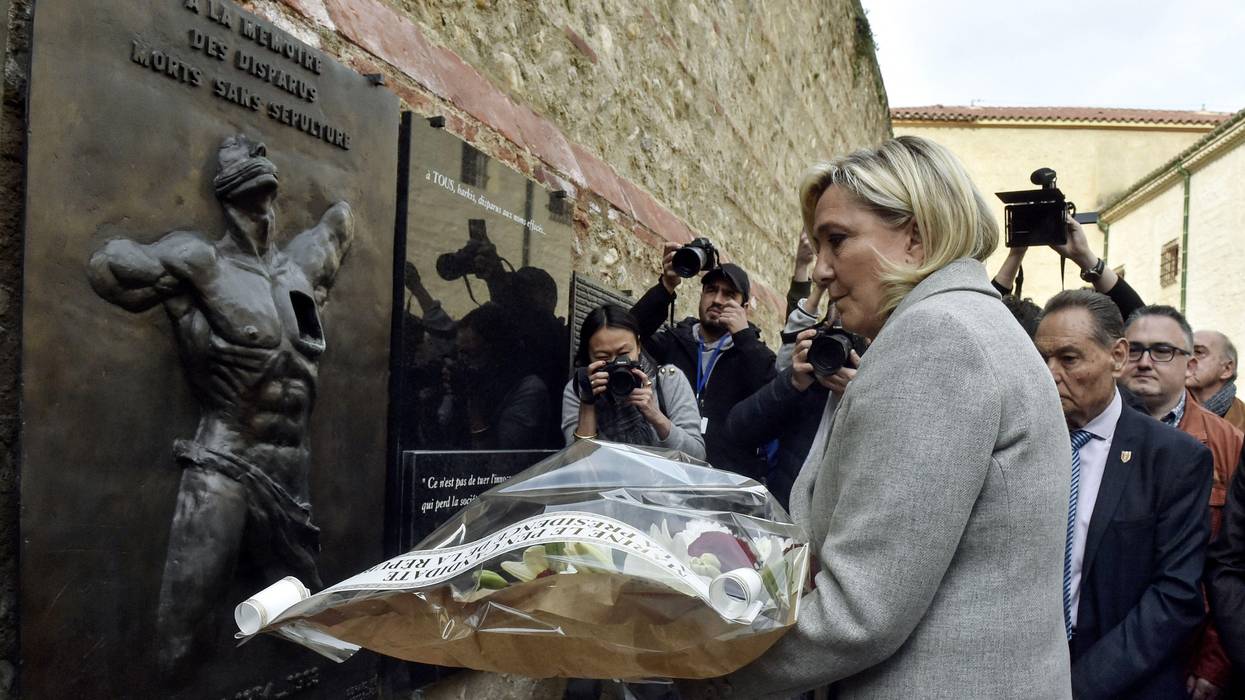
Whether France is voting, commemorating D-day, or debating French identity in terms of Republic Values, Algeria is always present in some way. It is almost impossible to discuss anything of substance in France in which Algeria does not feature and, sometimes, dominate the debate. After all, Algeria was not just another d'outre-mer colony in North Africa whose independence in the 1960s failed to end all the emotional ties to its former colonizer, France. It is one of the few history cases in which the relationship between the former colony and its former colonizer has not been settled once and for all. It just lingers under the surface.
Almost all far-right policies in France appear to be related to Algeria's colonial years.
It will be a long time before France shakes off its Algerian legacy of brutality and atrocities.
Next July, Algiers will be celebrating 60 years of independence from France, while Paris, this Sunday 24 April, will be voting for its next president by choosing between incumbent Emmanuel Macron and his rival, Marine Le Pen, as the first round of voting failed to produce a conclusive winner. Algeria is present here, too.
In the first round of voting two weeks earlier, voters clearly rejected the traditional left and right that dominated French politics since Charles de Gaulle, in 1958, inaugurated the Fifth Republic. The French left, usually led by the Socialist Party and the traditional mainstream right, led by Le Republic, failed to score enough votes and was left to foot a huge expenses bill. To qualify for a state refund of half of its campaign expenses, it must win at least 5 percent of the votes. De Gaulle's heroic legacy is, in part, built on his Algerian connection.
This great rebuff by the French came after the left-leaning electorate voted for the far-left, while the far-right voted for a new boy in town, Eric Zemmour, who managed to cut through Marie Le Pen's traditional support, thus becoming the real far-right. His anti-immigration, anti-European, anti-Islam platform seemed to have worked, this time, in drawing away many of Ms. Le Pen's base voters.
Mr. Zemmour, who once described himself as "the blessed fruit of colonization," shares in the Algerian legacy as he is a descendent of an Algerian family who fled Algeria shortly before the brutal war of independence broke out in 1954. Millions of European settlers and Algerians, Harkis, who fought with France, fled Algeria and settled in France during and after the battle for Algeria. For Eric Zemmour to get over 7 percent of the vote in the first presidential round meant that the troubled French-Algerian past still sends its shadows over France.
Ms. Le Pen is also linked to Algeria. Her father, Jean Marie Le Pen, was a volunteer in the Algerian war heading a small unit of French intelligence in what is known as the "battle of Algiers." It is now confirmed that he was involved in carrying out atrocious torture techniques against Algerian fighters, including filling them with water to force confessions. Marine Le Pen expelled her father and renamed the party, but her anti-immigration policies and unfavorable anti-Muslim attitude are rooted in the Algerian experience.
France's far-right politics has been dotted with a long history of near fascist policies that have, over the years, become part of French mainstream politics. And almost all far-right policies in France appear to be related to Algeria's colonial years.
Centuries ago, France led the European rush of colonizing the rest of the world; it invaded Algeria, making it just another French colony, starting in 1830. However, within three decades, Algeria--a country that is more than four times the size of France--disappeared, giving way to what became known as "French Algeria", while most other French colonies were known, simply, as overseas territories or what the French call "d'outre-me" territories.
Instead, Algeria was integrated into mainland France more than 30 years before present-day Nice, a major city in the south of France, became French in 1860. Within fifty years after colonization, the department, "French Algeria," dominated the world wine market, despite the fact that Algeria is predominantly a Muslim country. It is estimated that after the 1930s, French Algeria was exporting some 1.5 billion liters of wine a year, mostly to ever-thirsty French consumers.
Official France and its army of European settlers never thought, let alone believed, that Algeria could become independent.
This in itself made France, and its more than a million European settlers, see Algeria as anything else but a French department, not a colony--not another country forcibly taken over.
French Algeria became part of France in every aspect, including in the way the French bureaucracy handled it. Almost all other colonies did not have this privilege. Official France and its army of European settlers never thought, let alone believed, that Algeria could become independent.
Algeria, at one point, became the jewel in the French "colonial throne," just as India became the jewel of the British Crown in 1858--28 years after Algeria deserved that nickname. Yet, such a description was never used in French history simply because Algeria, then, was seen as French--as Marseilles or Lille, rather than a colony.
Not accepting Algeria as a colony became part of the French colonial thinking, and it continues today by manifesting itself in different ways.
Emmanuel Macron, who is widely expected to narrowly win a second term, is the first French president to recognize some of the atrocities committed by France in Algeria, but failed to apologize. In 2021, his office rejected the idea of an apology simply because that would have been completely anti-established French colonial history which never considered Algeria anything but French. He is also credited with being the only French President to authorize an official history revisit by delegating the task to historian, Benjamin Stora.
Mr. Stora produced a report on France's conduct in colonized Algeria but the document, published in January 2021, did not recommend an apology. However, it is seen as a step forward towards a more self-searching French initiative to come to terms with that dark history. The report recommended establishing a "memory and truth commission" to determine the facts.
However, little has been done so far and, if anything is to happen, it has to wait until President Macron wins his second term in office on Sunday. Should Marine Le Pen win, she is likely to shelf the matter.
French people, across France, are constantly reminded of Algeria. Many streets and public places are named after infamous French war generals like General Thomas Bugeau, who was governor-general of Algeria in 1840, is given to an avenue in one of Paris's elegant neighborhoods. While the name Charles de Gaulle features in almost every square and avenue in every French town or city--he was the man who agreed to Algeria's independence. Names of Algerian independence heroes are, also, carried across Algeria today.
Algeria might not be, yet, the ghost in French public life but it will continue to dominate any serious French debate for a long time to come.

Officials from the Pacific Northwest in the U.S. to Southern Europe are warning of extreme heatwaves expected in the coming days, sparking fears of even more wildfires like those that have laid waste to millions of acres worldwide in recent weeks, including in Oregon, California, Greece, Turkey, and Siberia.
The prime minister of Portugal warned Wednesday that with temperatures expected to reach 104 degrees Fahrenheit this week, officials are bracing for potential wildfires like the ones that killed more than 100 people in 2017.
In Spain, the national weather service warned that a heatwave could bring temperatures as high as 111 degrees Fahrenheit.
More than 5,000 miles away in the northwestern U.S., Oregon Gov. Kate Brown declared a state of emergency Tuesday as the state prepared for its second major heatwave of the summer, less than two months after extreme heat was linked to more than 60 deaths there. Seattle authorities were also opening cooling stations and preparing to protect bridges and roads from heat damage.
Temperatures are expected to climb into the hundreds in the typically temperate region, in "a direct result of the climate crisis" according to Oregon state climatologist Larry O'Neill.
"This would be kind of a heatwave that maybe we experience every two to three years in the past, but this will be the second strong one this summer," O'Neill told The Guardian.
In neighboring California, the Dixie Fire, which had torn through more than 500,000 acres over the past four weeks as of Tuesday, is still active in four counties due to dry conditions, according to Cal Fire.
The wildfire is now the second-largest in California's history and has destroyed sacred sites of the Native American Maidu community, razed nearly 1,000 homes and other structures, and decimated the historic town of Greenville, home to more than 1,000 people.
The blaze has also sent smoke and ashes more than 1,000 miles from the flames, raising fears of toxicity in the coming weeks.
On the other side of the globe in Siberia, more than 190 forest fires have forced widespread evacuations, with smoke drifting as far as the North Pole for the first time in history.
Emergency workers have given up on fighting nearly 70 additional fires that have burned through nearly 8,000 square miles, making the fires 10 times as large as the Dixie Fire and bigger than the wildfires that have raged in recent days in Turkey, Greece, Italy, and other countries combined.
Fires that have spread for nine days across the Greek island of Evia are gradually being brought under control by nearly 900 firefighters, but the Peloponnese peninsula in southern Greece faced more fires on Wednesday and authorities in Evia are now left struggling to help hundreds of newly displaced people.
As of Tuesday, an extreme heatwave like the one Portuguese, Spanish, and American officials are now warning of was contributing to nearly 600 wildfires burning in "all corners" of the country, leading to what Prime Minister Kyriakos Mitsotakis called a "disaster of unprecedented proportions."
On the other side of the Mediterranean Sea, at least 65 people have been killed in wildfires that have burned in Algeria's mountainous Kabyke region over the past two days.
The wildfires, driven by the climate crisis and the continued extraction of carbon-emitting fossil fuels, are also worsening the planetary emergency by releasing even more carbon into the atmosphere, according to Mark Parrington, a senior scientist at the Copernicus Atmosphere Monitoring Service.
"Already by mid July, the total estimated emissions is higher than a lot of previous years' totals for summer periods, so that's showing that this is a very persistent problem," Parrington told CNN last month.
The latest fires come on the heels of Monday's Intergovernmental Panel on Climate Change (IPCC) report on the urgent need to rapidly cut down on greenhouse gas emissions to mitigate the disastrous consequences of the climate crisis.
As Josh Saul, climate and disasters reporter for Bloomberg, said in a video he posted to Twitter on Tuesday, the prevalence of fires across the globe and in a wide variety of climates, starting weeks earlier this year than in previous years, shows annual "wildfire seasons" are a thing of the past.
"With hotter temperatures and dryer conditions lasting longer into the fall and winter than they used to, the fire season is also lasting longer," Saul said.
"It's not a wildfire season anymore, it's a wildfire year," he added.