

SUBSCRIBE TO OUR FREE NEWSLETTER
Daily news & progressive opinion—funded by the people, not the corporations—delivered straight to your inbox.
5
#000000
#FFFFFF
To donate by check, phone, or other method, see our More Ways to Give page.


Daily news & progressive opinion—funded by the people, not the corporations—delivered straight to your inbox.

Draw the Line is a global action (15-21 September) with widespread events taking place across the world peaking over the weekend of September 19–21, 2025.
In the lead-up to COP30 and as world leaders gather in New York for the General Assembly of the United Nations tens of thousands of people across the globe are taking to the streets in a wave of coordinated protests under the banner “Draw the Line” in 93 different countries around the world.
Communities are demanding urgent action from governments to end extracivism and stop fossil fuel expansion, deliver a fast, fair, funded and just transition away from fossil fuels, address the injustices and inequalities driven by the current neo-liberal and imperialistic economic systems and ensure a just transition to a world that protects life. Workers, women, farmers, fishers, young people, Indigenous Peoples, migrants, refugees, pastoralists, people of color and LGBTI* People are rising together to demand system change and reclaim the commons for a world that is in harmony with nature,centred on solutions by and for the people and not on false solutions.
This global moment comes at a critical time when the rich and the powerful countries and corporations continue their colonial and extractivist agenda, while world leaders fail to prevent and stop the genocide taking place in Palestine, Sudan, and Congo, and the governments across the world are veering towards authoritarianism, undoing decades of progress. With every tenth of a degree of global heating, the consequences for people and ecosystems multiply, as seen in the devastating wildfires, typhoons, cloudbursts, floods, and extreme heatwaves already sweeping across continents this year.
The Draw the Line mobilisations are a global call to action against inequality, destruction, and climate chaos and for rights, jobs, justice, and a safe planet. Across the world, people are demanding a feminist, fast, fair, funded, and forever phase-out of fossil fuels, investment in renewable energy,resilient food systems, real peoples led solutions funding for the future through climate finance from rich countries to the Global South, debt cancellation and taxing billionaires. At its heart, this movement is about justice, defending human rights, reclaiming democracy, restoring ecosystems, and building solidarity across peoples and nations.
Protests, artistic actions, vigils, and marches will take place in hundreds of cities around the world during this Global Week of Action in September, showing that people everywhere are united in demanding climate justice. Draw the Line will be taking place alongside the Disrupt Complicity Weekend, 18 - 21 September called for by the Boycott, Divestment, and Sanctions movement (BDS) and stands in solidarity with their call to action.
As COP30 approaches in Brazil, activists stress that leaders must make the most of this narrowing window of opportunity: the choices made in the next few years will define the future of generations to come.
List of Key Events
Events will take place in over 100 countries, with large mobilisations expected in Belem, Berlin, Dhaka, Istanbul, Jakarta, Sao Paulo, Buenos Aires, Johannesburg, Istanbul, Suva, London, Manila, Melbourne, Mumbai, Nairobi, New Delhi, New York, Paris, Tokyo, and Wellington, among other cities, territories, and villages.
Quotes
| Lidy Nacpil, Coordinator, Asian Peoples' Movement on Debt and Development (APMDD) | "We are drawing the line against deceptive tactics led by rich nations and big corporations to perpetuate fossil fuel dominance and delay the equitable just transition to a fossil free and healthy planet. We demand a complete coal phase out in Asia by 2035 and a rapid and just energy transition out of fossil fuels and to 100% renewable energy before 2050. We demand the full delivery of climate finance obligations of the Global North to the Global South for urgent climate action including Just Transition! This is a crucial part of their reparations for historical and continuing harms to our people." |
| Tasneem Essop, Executive Director, Climate Action Network International | “We are living through immensely challenging times right now: increasing injustices, human rights violations, wars, conflict and genocide, devastating climate impacts, rising cost of living and more. A global movement of movements is rising up to respond to the moment with the launch of the ‘Draw the Line’ Global Week of Action. Youth and women, workers and communities, young and old, across our ravaged planet are drawing the line against those fighting to keep us locked in a world of pollution, exploitation, wars and injustice. We are saying enough is enough and call for a Just Transition that puts people at the centre and serves the needs and interests of the masses of people who are suffering. As laid out by the UN Secretary General today, the energy transition is here and it is unstoppable, but it has to be just, fair, inclusive and fast. Our united actions across the globe in September will be our call for a just future.” |
| Rachitaa Gupta, Global Coordinator, Global Campaign to Demand Climate Justice (DCJ) | “We are drawing the line against genocide, against fossil fuel expansion, and against false solutions that destroy our lands and extract from our communities. We refuse to let corporations profit off our lands, our resources, our food systems, and our bodies while our communities at the frontline continue to face the devastating impact of this crisis that we did not create. We demand an end to corporate capture and to the systems that turn war and extraction into profit. We call for a complete overhaul of the international financial architecture to dismantle debt traps, tax injustice, and neocolonial control. The Global North must pay up urgent climate finance in trillions, not as charity, but as reparations for centuries of plunder and pollution. This is not just a protest, it is a global movement for liberation. We demand a system change rooted in justice led by the peoples and communities. Our fight for climate justice is the fight for freedom, for dignity, and for life. And we are not backing down.” |
| Anne Jellema, Chief Executive, 350.org | “This mobilisation is about power, people power. The power to reject the lies of fossil fuel billionaires and remake our world for the many, not the few. We are drawing the line, because when governments fail to act, we rise. When polluters and profiteers try to divide us, we unite. We have the answers to this crisis, and we are calling on world leaders to listen, act, and follow the will of the people, not the whims of autocrats and billionaires. It’s our future, and it is for us to decide what it looks like.” |
| Tyrone Scott, Senior Movement Building & Activism Officer, War on Want | “In the UK, we’re joining movements worldwide and are drawing the line against inequality, climate breakdown, and the billionaires fuelling our global crises. On 20 September, thousands of us, backed by over 60 organisations, will march through the streets of London to demand justice. We’re part of a global movement rising together to say: enough is enough. From debt and poverty to fossil fuel tyranny, we are uniting across borders to resist more destruction and reclaim our future. This is a moment of reckoning. We are drawing the line for justice, for life, for the planet. Ordinary people didn’t cause this crisis, billionaires and corporations did. Now it’s time to make them pay to fix it.” |
| Omar Barghouti, co-founder of the BDS movement for Palestinian rights, recipient of the 2017 Gandhi Peace Award. | “In the current, most depraved, induced starvation phase of the US-Israeli livestreamed genocide against 2.3 million Palestinians in the Gaza ghetto, Palestinian civil society stands united in calling on people of conscience and grassroots movements for racial, economic, social, climate and gender justice worldwide to help us build a critical mass of people power to end state, corporate and institutional complicity with Israel’s regime of settler-colonial apartheid and genocide, particularly through effective BDS actions and pressure. We are not begging for charity but calling for true solidarity, and that begins with doing no harm to our liberation struggle, at the very least, as a profound moral and legal obligation.” |
| Hari Krishna Nibanupudi, Global Climate Change Adviser, HelpAge International | "Twenty-nine COPs and a million broken promises. Another summit, another letdown. It's time to radically reform how global climate negotiations are conducted—and take power out of the hands of the polluters who profit from delay." |
| Brice Böhmer Climate & Environment Lead, Transparency International | "Too many past COPs have been undermined by undue influence and a lack of integrity. COP30 offers a vital opportunity to change course. Transparency International calls for clear rules of engagement, a strong conflict of interest policy, and an accountability framework to ensure that climate decisions serve the public good, not private profit. This is our chance to put ethics at the centre of climate action." |
| Sara Washburn, Ottawa-Gatineau Climate March Organizer, Fridays For Future Ottawa, Canada | "I’m here because I’m a parent, and I worry about the world my kids are inheriting. We’re drawing the line because we all deserve a future built on care, not chaos. I’m taking action now because I want my children—and all our children—to have a safe, just, and livable planet." |
| Gan Golan, Co-Founder, Climate Clock Website: climateclock.world | “Who is running out the clock? On the same day that this campaign launches, July 22, the Climate Clock will tick down to less than 4 years for the first time in history. That means we will only have 3 years and 364 days remaining before we hit the critical 1.5 degree temperature rise. That is a clear red line that has been drawn by scientists and humanity, that the world does not want to cross. The thing is, we know the solutions. Most of the world is already taking action. However, a few fossil fuel billionaires are running out the clock, and risking humanity's survival. Humanity has drawn the line. These billionaires are the ones crossing it.” |
| Adrian Bornmann, Press Spokesman, PowerShift, https://power-shift.de, IG: powershift_ev | “COP30 must mark a turning point toward true climate justice. Communities on the frontlines of the climate crisis cannot afford further delays - governments must commit to bold, equitable action now. We are drawing the line against climate destruction and economic injustice.” |
| Kumi Naidoo, President of the Fossil Fuel Non-Proliferation Treaty Initiative | "We stand at a pivotal moment in history. This September, the line we draw is a collective act of resistance against destruction, and a bold demand for a better future, where justice and survival are non-negotiable. Fossil fuels fuel inequality, conflict, and climate chaos, benefiting a few at the expense of many. This global wave of action shows the power of people united across borders, backgrounds, and generations. Together, we are seeking to dismantle the systems of exploitation and demanding an end to fossil fuel expansion. Our collective power will shape a world that is sustainable, equitable, and just - for everyone." |
| Coraina de la Plaza, Hands Off Mother Earth (HOME) Alliance Global Coordinator, Spain | “Geoengineering is a dangerous distraction from real climate action that gambles with the Earth’s systems and places power in the hands of the few. We will continue to resist geoengineering and remind governments that our planet is not a laboratory, but a shared home that we all must protect through proven and just sustainable solutions, not by experimenting with risky and unproven geoengineering schemes. To protect people and the Earth, we must resist these climate scams and fight for just, community-driven solutions to climate justice.” |
| Shady Khalil, Global Policy Senior Strategist, Oil Change International | “At COP 28, every country committed to transition away from fossil fuels thanks to the tireless fight of millions of everyday people, frontline communities, and their allies. Rich Global North countries, who hold the greatest responsibility for the climate crisis, must phase out fossil fuels first and fastest. But some are ignoring their commitment, intent on squeezing every last dollar out of a dying, dirty industry —no matter the human cost. People power secured the first ever win for fossil fuel phaseout at COP28. People power will ensure that countries follow through on the equitable transition off of fossil fuels we were promised.” |
| Njoki Njehu, Principal Political Advisor, Fight Inequality Alliance. | "We draw the line, here and now. Big corporations exploit our resources, and billionaire jets worsen the climate crisis, making the world unlivable for communities in Asia, Africa and Latin America. These communities are losing their homes and livelihoods, while simultaneously being burdened with taxes and charges to repay national debts. The powerful and influential manipulate the system, and we refuse to remain silent. The insatiable greed of a few must be confronted by the collective power and fundamental needs of all. " |
| Kathryn McCallum, Director of Strategy, Climate Action Network Australia | “Big corporations export more fossil fuel pollution from Australia than from any country except Russia. For too long, fossil fuel CEOs and a handful of politicians in high-polluting countries like Australia have divided people with lies about the possibility for change, while the few profit from polluting our air. We will hold our government accountable, drawing the line on new coal and gas approvals.” |
| Maureen Santos, ONG FASE | “Movimentos sociais, povos indígenas e tradicionais, e organizações do Sul Global estão indo às ruas para defender seus direitos e desafiar grandes corporações e o sistema financeiro. Estamos traçando um limite para que nossas comunidades não mergulhem em uma crise que não causamos. Sem uma transição justa e popular, e sem justiça climática, nossas comunidades e bens comuns continuarão a sofrer. As mobilizações de setembro também são cruciais para o processo que culmina com o grande dia global de ação em 15 de novembro, em Belém.” |
| Mwanahamisi Singano, Director of Policy, WEDO. Women and Gender Constituency co-focal point | “As rights are rolled back and climate disasters intensify, feminists refuse to surrender to militarization, extractivism, and corporate capture. On September 17, we draw the line for bodily autonomy, racial justice, gender equality, and intersectionality. For care over capital, community-led solutions over corporate control, and for food, water, energy, and economic sovereignty. We fight for gender-just transition and regenerative economies.” |
| YOUNGO | We refuse to inherit a planet destroyed by billionaires and fossil fuel companies while our communities bear the brunt of a crisis we didn't create. We're drawing the line against extractive models that prioritize profit over people and planet. We demand transformative action now. Our future depends on a just transition that puts rights, equity, and life at the center. |
| Ann Harrison, Climate Justice Policy Adviser, Amnesty International | “The human rights harms that hurt those who are least responsible for the climate emergency are made much worse by the unjust economic structures that keep lower income countries in debt and extract their wealth for the benefit of a few. It’s time to tax the super rich and make big polluters pay for their climate harms. We are drawing the line against climate destruction and economic injustice. There is no climate justice without human rights.” |
| Kate Raworth, founder of Doughnut Economics. | “In the face of worsening climate and ecological breakdown, widening inequalities, and escalating conflicts it’s clearly time to draw the line—rejecting economic systems that exploit people and violate Earth’s boundaries—so we can move toward economies that meet the needs of all people within the means of the living planet, on which all life depends.” |
| Lauren Latour, Member Services and Movement-Building Manager, Climate Action Network Canada | “On September 20th, we’re coming together in communities across Canada to demand a safe and just future for all, and to build the power we’ll need to win this fight. No more fascism and authoritarianism. No more status quo politics that enable fossil fuel expansion and climate destruction. No more violations of Indigenous rights and scapegoating of migrants. We’re drawing the line—for people, for peace, for the planet.” |
| Mohammed Usrof, Executive Director of the Palestinian Institute for Climate Strategy | “We are drawing the line because the same forces destroying our climate are bombing our people and stealing our future. We cannot separate climate justice from the struggle for freedom. From Gaza to the Amazon, we see how militarism and fossil capitalism fuel both ecocide and genocide. That’s why we are – to say: no more. No more war machines, no more climate colonialism, no more geoengineering experiments over our skies. The time to act is now. For justice, for life, for liberation.” |
| Meena Raman, Head of Programmes, Third World Network (TWN) | “We are drawing the line at Global North countries delaying urgent climate action by expanding and continuing to rely on fossil fuels and not reducing their emissions fast enough. They are also reneging on their legal obligations to fund and enable climate action in the Global South. Our people are least responsible for and most affected by the climate crises. For us in Asia, our communities have been reeling with climate catastrophes for years, and even as I write this floods in Northern India and Pakistan have ravaged millions of lives and resources. Just Transition and Adaptation are 'not just words' for us but our chance at survival. The Global North, instead of honouring their historical responsibility, is orchestrating a 'Great Escape' from climate commitments. They cite lack of resources even as several G7 countries are funding a genocide in Palestine. Their leaders are evading accountability and passing on the burden to the Global South. It is high time that along with us, the people in the Global North draw a line against the injustices and destruction their countries are complicit in. This is THAT moment.” |
| Lise Masson, Climate Justice & Energy International Programme Coordinator, Friends of the Earth International | “Whilst elites and transnational corporations continue to plunder our communities and our environment, to fuel the genocide in Gaza, to push a capitalist, colonial, and extractivist agenda, we the people draw the line. We say enough - no to the advance of fascism, to land grabs and to the financialisation of nature in the name of profit, and to so-called solutions to the climate and social crises that only further inequity. We stand for justice, for solidarity. We demand a feminist just energy transition that benefits our communities. We demand democracy, sovereignty, freedom for Palestine, and liberation for all.” |
| Dr Arjun Kumar Karki, Executive President, Rural Reconstruction Nepal (RRN) Nepal | "The Global North owes a climate debt to countries like Nepal, where rural and mountain communities are already paying the price for a crisis they did not cause. Climate finance must be delivered as a binding obligation to support adaptation, build resilience, and address loss and damage, because anything less is a betrayal of justice." |
| Sharif Jamil, Coordinator, Waterkeepers - Bangladesh Bangladesh | "We must draw the line against the fossil fuel systems that endanger our shared future, and directly shift to safe, clean, and affordable renewables, especially solar and wind. This shift will build resilient economies, enhance energy security, and generate green jobs while protecting public health and vital ecosystems. We demand delivery of Climate Finance obligations by the Global North governments to enable a successful just transition in the South." |
| Armayanti Sanusi, Chairperson of National Executive Body Solidaritas Perempuan (Women's Solidarity for Human Rights) Indonesia | “Global food systems are propped up by neoliberal trade policies that serve profit over people, starving millions in the Global South. But this time, we draw the line on leaders' refusal to address climate impacts on our food systems. We draw the line on forced starvation as a weapon of war, illegally used in genocides across the globe and most primarily by the US and Israel in Gaza.” |
| Rifat Maqsood, Chairperson of the Tameer-e-Nou Women Workers Organization Pakistan | “Women especially in the grassroots are hardest hit by crises and injustice. These include the tightening grip on the Pakistani people of repaying unsustainable and illegitimate public debts, with women bearing some of the heaviest burdens that come in the form of austerity loan conditions, such as cutting budgets for essential social services. With up to 60 percent of tax revenues allocated to pay interest payments alone, the Pakistani government is not only close to debt default. It is in fact already defaulting on its sworn mandate to protect and fulfill the rights and needs of its people.” |
| India Saktiman Ghosh, General Secretary, National Hawker Federation | "We must defend vulnerable communities. In India, 40 percent of the people struggle for a day's worth of food. We should start righting the disparity with a wealth tax on the rich 1% that controls 90% of the country's wealth." |
| Luke Espiritu, President, Bukluran ng Manggagawang Pilipino (Solidary of Filipino Workers) | “Social movements, communities, and labor movements are mobilizing in many countries to demand a rapid, equitable, and just transition. This transition must address potential dislocations and disruptions, guarantee the protection and promotion of the rights and welfare of people. This just transition must ensure that the costs and benefits of the transition are shared fairly.” |
| Ivan Gonzales, coordenador político da Confederação Sindical das Américas (CSA) | “Nos oponemos a la crisis climática, la crisis del capitalismo y las acciones de las corporaciones transnacionales. La aceleración de las prácticas económicas capitalistas ha obligado a muchas comunidades en diferentes países y regiones a vincular su lucha y la construcción de respuestas a la cuestión de la justicia climática, lo que nos ha traído a este momento.” |
| Natália Lobo – militante da Marcha das Mulheres e da Sempreviva Organização Feminista (SOF) | “Estamos traçando limites e organizando marchas e manifestações ao redor do mundo em setembro, enquanto também nos preparamos para nossa grande marcha em Belém, em 15 de novembro. Em nosso chamado à ação, enfatizamos a urgência da luta por justiça ambiental e nos posicionamos contra todas as guerras e genocídios ao redor do mundo, bem como contra o poder das corporações transnacionais, a face do capitalismo que destrói a natureza hoje.” |
| Beatriz Moreira, Peoples' Summit Secretariat | “We draw the line against false solutions poisoning our territories and demand an end to all wars and genocides. Against imperialism and corporate power, the People’s Summit Towards COP30 stands firm, raising the real solutions to today’s crises. We hear the cry of the people: from the countryside, waters, mangroves, seas, and forests, to urban workers, women, youth, and children. There is no future without system change, and we can only see its beginnings within ourselves. That’s why we are taking the streets on November 15, raising our voices for climate justice on a massive global day of action.” |
| Antonio Lisboa, CUT Brazil, for TUNGO | “Workers and their unions are calling on governments to deliver climate protection and prosperity. Promises on quality green jobs need to be kept. Finance and investments fail to materialise at scale and new jobs lack decent work standards. The result is an ‘unjust’ and fragmented transition that is leaving workers and vulnerable groups unprotected and unprepared for a runaway climate crisis, especially in the Global South. The global trade union movement calls on governments to draw the line!” |
| Claudia Rubio Giraldo, Coordinator, Women's Environment and Development Organization | “Many times, the most effective (and beautiful) ways to resist is by demonstrating the unity and steadfastness of a community. At this moment, where gender is being pushed back and climate change ignored or outright rejected, we will demonstrate the power of our collective feminist voice, that we won't sit silently while our rights are being squashed, and that we are here, and here to stay.” |
| Greenpeace, Mads Christensen, Executive Director of Greenpeace International | “Nowhere – and no one – is safe from deadly heatwaves, wildfires, toxic air, and rising seas. Absurdly, those most shielded from the fallout are the very ones profiting from it: oil and gas barons and the super-rich. It’s time for governments to flip the script and make polluters – not ordinary people – pay for the damage they’ve caused.” |
350 is building a future that's just, prosperous, equitable and safe from the effects of the climate crisis. We're an international movement of ordinary people working to end the age of fossil fuels and build a world of community-led renewable energy for all.
"Americans are hungry for leadership that challenges the status quo, ends America’s forever wars, and takes on entrenched wealth and corporate power," said Data for Progress' executive director.
Progressive Democrats' midterm victories from Maine to Michigan to Texas signaled that US voters are fed up with GOP officials bought by billionaires and want lawmakers in Congress who fight for the needs of everyday people—and a Data for Progress report released Thursday, two days after the election, supports that conclusion.
The think tank and polling firm's "2026 Post-Election Report: How Democrats Rode Economic Populism to Landslide Victory" lays out "where the election was won," how Democratic candidates attracted voters as "the GOP playbook flopped," the issues that defined this cycle, and what the 2028 contests may look like. It highlights various pieces of polling.
"When swing voters were asked which issue they consider most when deciding whom to vote for, a clear plurality (41%) said the economy, jobs, and the cost of living," the publication says, citing surveys conducted in September and October. "Among that plurality of swing voters, about 3 in 4 (76%) said 'inflation or the cost of living' best explained why the economy was their top issue."
"When asked which political party they trust more to handle inflation and the cost of living, 34% of swing voters said the Democratic Party, while 19% said the Republican Party... A plurality (47%) said they don't know which party they trust more," the report notes. "Democrats also carried a large trust advantage on healthcare (+29) and programs like Social Security and Medicare (+23)," but "at least 40% of swing voters said they didn't know which party they trust more on nearly every issue tested."
Reiterating that lack of trust in both major parties, large majorities of swing voters also said they don't think that either Democrats or Republicans "have a solution for the cost of living." However, over 70% specifically said they don't think GOP President Donald Trump, who returned to power last year after losing reelection in 2020, has a solution.
Since Trump's second inauguration, he has been intensely criticized for enriching his family and wealthy allies while driving up costs for the public with his key policies, including sweeping tariffs, a deadly crackdown on immigrants, and the ongoing illegal war on Iran. Faced with soaring prices for everything from gasoline and groceries to healthcare and housing, voters on Tuesday ousted enough of Trump's fellow Republicans to give Democrats majorities in both chambers of Congress.
Key wins that helped Democrats secure the US Senate occurred in Maine, Michigan, and Texas, which elected Troy Jackson, Abdul El-Sayed, and James Talarico, respectively. Data for Progress surveyed likely voters in all three states in the weeks before the election and found that the economy and cost of living were most important to them, followed by government corruption.
Voters in these three states trusted Democrats over Republicans on cost of living, and also expressed significant support for a range of progressive policies, including higher taxes on millionaires, a $15 minimum wage, a pause on construction of artificial intelligence data centers, making fossil fuel giants pay for climate disasters, creating a Medicare for All healthcare system, and ending military aid to Israel.
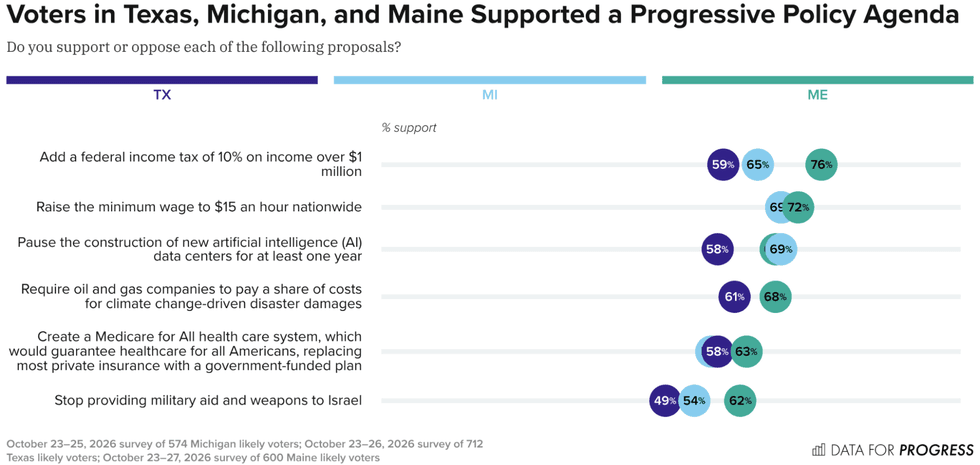
While some Democratic leaders and consultants have argued that the party's candidates need to embrace "moderate" platforms to get elected—particularly in districts or states previously won by Trump—Data for Progress found that this cycle, voters "associated Democrats with an economic populist platform" and "the more centrist messages registered far less."
As for Republicans, likely voters believed congressional candidates would "mostly support" the president's agenda if elected, and residents of Maine, Michigan, and Texas similarly thought the party's Senate candidates "would mostly follow Trump's lead." Majorities said that the president hasn't kept key campaign promises, including gasoline below $2, no more wars, ending inflation, cutting electricity prices in half, eradicating veteran homelessness, and capping credit card interest rates.
During Republicans' federal trifecta over the past nearly two years, their biggest legislative "accomplishment" was passing the 2025 budget package they dubbed the One Big Beautiful Bill Act (OBBBA). The Data for Progress report points out that with Trump's popularity tanking, some GOP candidates tried to focus on that law—but "the argument wasn't convincing."
"When asked if Republican claims that their tax cuts had helped working families were mostly true or false, a majority (61%) said false," the document details. "In the days ahead of the election, a majority of voters (54%), including 61% of independents, also said wealthy people and large corporations benefited most from the bill's tax cuts."
When voters were asked which Trump administration policies concerned them most, passage of the OBBBA ranked second, only behind the Iran War. Other top issues included directing US Immigration and Customs Enforcement to conduct mass deportations, the tariff regime, Trump promoting his family's cryptocurrency and enriching properties like Mar-a-Lago, and the Department of Justice withholding files about his dead former friend, sex criminal Jeffrey Epstein, while probing the president's political enemies.
Political advertisements attacking Democrats that caught the attention of voters this round often focused on socialism, immigration, and transgender girls and women participating in sports. The report says that the GOP's "focus on culture war issues—and on attacking transgender people specifically—was misaligned with what voters wanted to hear from their candidates."
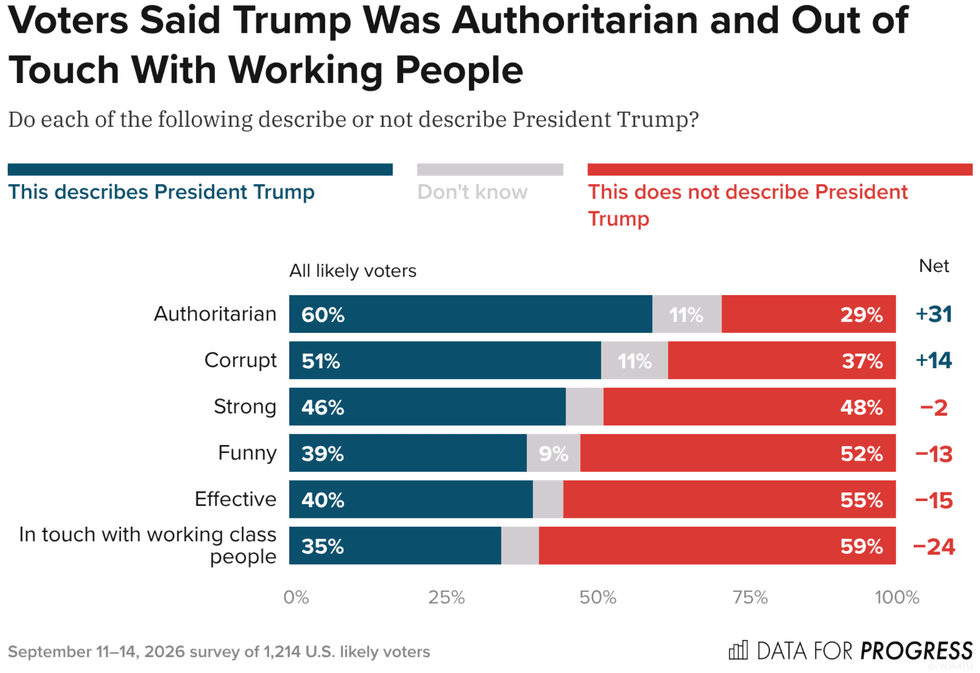
A majority of all voters told Data for Progress that they wanted candidates to talk more about food prices, fuel prices, healthcare costs, and political corruption—topics that have long been key focuses of Sen. Bernie Sanders (I-Vt.), who caucuses with Democrats and ran for the party's presidential nomination in 2016 and 2020. In the wake of the "blue tsunami," as some have described Tuesday's results, Sanders has been widely recognized for his impact on the Democratic Party and its priorities over the past decade.
"The Bernie Sanders economic playbook is now mainstream in the Democratic Party—the data is clear that economic populism was central to these historic election results," Data for Progress executive director Ryan O'Donnell said in a statement about the group's new report.
"Candidates across the country made fighting billionaires, elites, and corporations the centerpiece of their campaigns, successfully connecting affordability and anti-corruption," he continued. "But while swing voters strongly rejected Trump and the Republican Party's handling of the cost of living, our data underscores that they are not yet convinced Democrats have a solution either. This gap presents both a risk and an opportunity."
"Data for Progress has found that voters' trust in the Democratic Party increases after hearing it supports anti-corruption and economic populist policies," he added. "Americans are hungry for leadership that challenges the status quo, ends America's forever wars, and takes on entrenched wealth and corporate power."
Sanders himself argued after the midterms that the job of the new Democratic majorities in Congress "is to represent where working families are." Citing a poll that found "well over 60% of the American people want Medicare for All," the senator proposed passing his longtime healthcare policy—and said that "if Trump wants to veto it, that's his constitutional right."
Medicare for All is just part of what many progressive lawmakers and advocacy groups want Democrats to take on in the next two years, whether or not the White House fights back. Other priorities include a federal wealth tax, ending the Iran War, and possibly even impeaching Trump a third time.
While the New York Democrats who currently lead the party in the Senate and House of Representatives, Chuck Schumer and Hakeem Jeffries, may become majority leader and speaker in January, progressives have emphasized that "we need commitments" from them, as Sen. Chris Van Hollen (D-Md.) put it, because "it's not a time for incrementalism. It's a time to move forward a very bold kitchen table agenda."
US Sen. Elizabeth Warren's (D-Mass.) similarly stressed in a post-election op-ed that "now, Democrats must deliver," and the party should force Trump "to do that on the affordability and corruption issues that drove this election—or call his bluff."
As Google faces allegations that its Gemini chatbot helped a 13-year-old girl plan how to kill herself, the company, plus Meta and TikTok, sued to block a California law meant to safeguard minors from social media addiction.
The parents of a 13-year-old girl who allegedly used Google's Gemini artificial intelligence chatbot to plan her suicide sued the tech titan Wednesday on the child's behalf, a move that came as Google, Meta, and TikTok filed lawsuits to block California from enforcing a new law designed to protect children from the addictive features of social media platforms.
Parents of a girl identified as "Emma" in a lawsuit filed in Santa Clara County Superior Court in California alleged that Google effectively turned a school-issued Chromebook laptop computer into a tool allowing a dangerous psychological relationship between their daughter and Gemini.
Although Emma ultimately did not attempt to kill herself, the lawsuit states that she "told her mother that she had thought about wanting to be dead."
"Over several months, [Google's] Gemini chatbot diagnosed a previously active, well-adjusted 13-year-old girl with a battery of severe psychological disorders, helped her plan her suicide and funeral, and coached her to conceal her distress and self-harm from her family—all without providing a single alert to school personnel or her parents," EdTech Law Center, which is representing the plaintiffs along with the firm Quereshi Law, said in a statement.
According to the lawsuit, at one point, Emma reportedly pleaded with the chatbot, "How do i stop my addiction of asking AI random questions and yappi[n]g with AI?"
"Emma never sought out Gemini—it just showed up in [a] Google search one day—but by March 2026, she was exchanging thousands of messages a month, unable to free herself from the chatbot’s grip," EdTech said.
"The complaint alleges that Google executives knew that the Gemini model it released in December 2025 was the most dangerous yet but rushed it out anyway to gain ground on its competitors," the firm explained. "Emma brings claims for defective design, failure to warn, negligence, fraudulent concealment, and infliction of emotional distress, as well as a claim under California’s Companion Chatbot Law (Cal. Bus. & Prof. § 22601), which took effect in 2026."
Google spokesperson José Castañeda said Thursday in a statement that “for years, we’ve shown hotline information directly in search when someone may be experiencing a mental health crisis."
"We’ve built those same protections into search AI features, connecting people with real-world support," he added.
Brendan Bouffard, associate general counsel for AI and privacy at the children's advocacy group Fairplay, said Thursday: "The idea of an untested AI chatbot helping a 13-year-old girl plan her own suicide should terrify all of us, but this is the sick new reality Google has created by forcing its AI products onto school-issued devices."
"Google claims its Chromebooks are there to help students learn, but in reality, the company was experimenting on kids like Emma by pushing them to use Gemini, a product the company knew was dangerous but rushed out anyway," Bouffard continued.
“As this lawsuit shows, AI chatbots are not safe for kids," he added. "They also undermine students’ ability to learn and think critically. Yet just this week, Google announced it would turn off 'search' for schools that refuse to use its AI products. It’s clear this massive corporation does not care about children’s safety—it only cares about profits."
There has been an increasing number of lawsuits targeting AI companies whose chatbots have allegedly helped users plan to kill themselves or others.
Emma's suit was filed on the same day that Google, TikTok, and Meta—which operates platforms including Facebook, Instagram, and Threads—launched separate lawsuits seeking to stop California from enforcing AB 1709, a law signed by outgoing Democratic Gov. Gavin Newsom in September prohibiting social media platforms from providing children under 16 with features deemed psychologically exploitative and addictive.
The tech titans argue that the restrictions violate their First Amendment rights and Section 230 of the Communications Decency Act, which generally shields online platforms from liability for content posted by third parties.
Meta's lawyers asserted that California's attempt to “appoint the state as the editor, curator, and controller of online speech” and “override Meta’s editorial judgment about how to curate and display these billions of posts of third-party speech" runs afoul of the Constitution.
In 2023, Democratic California Attorney General Rob Bonta joined dozens of other states in suing Meta, alleging that the company deliberately designed Facebook and Instagram to addict children and teenagers through features such as infinite scrolling, personalized recommendations, and constant notifications, while concealing evidence of the platforms' mental health harms.
A proposed $17 billion settlement was announced in August, under which Meta agreed to changes including restrictions on nighttime use, notifications, and certain features available to minors.
A Los Angeles jury found in March that Meta and Google acted negligently by harming a child user with their social media platforms’ addictive design features in a landmark verdict that came on the heels of a $375 million fine imposed on Meta by a New Mexico jury, which found that the company violated the state’s Unfair Practices Act by misleading users and exposing children to harm.
The 988 Suicide & Crisis Lifeline—which offers 24/7, free, and confidential support—can be reached by calling or texting 988, or through chat at 988lifeline.org.
"The death penalty is a flawed, expensive, and error-filled practice that fails us all," said Equal Justice Initiative's Bryan Stevenson, urging other elected officials to follow the California governor's lead.
Opponents of capital punishment applauded on Thursday after Gov. Gavin Newsom moved to commute all of California's death sentences, sparing up to 548 lives as the term-limited Democrat prepares to leave office with eyes on the White House.
The New York Times had reported last month that Newsom was mulling the move, which he addressed in a Thursday letter initially obtained by The Sacramento Bee: "After nearly 30 years in public office, I have come to understand the limits of what government can justly accomplish. I take this action because I firmly believe that state-sanctioned killing is incompatible with California's values, undermines the foundations of our legal system, and diminishes each of us."
The Bee explained that "Newsom can commute single-felony sentences, but must receive the California Supreme Court’s approval to commute sentences for people with multiple convictions. Four of the seven justices must approve those requests, though there is no time limit for them to do so. If they do not approve before Newsom leaves office on January 3, 2027, the requests lapse and do not roll over to the next governor, according to attorney Natasha Minsker, an anti-death penalty advocate."
However, Democratic Gov.-elect Xavier Becerra has pledged to maintain the death penalty moratorium that Newsom issued in 2019, and could keep pushing to make all 548 sentences life without parole if the state's high court doesn't initially sign off. In his letter, Newsom cited his decades of publicly opposing state-sanctioned killings and his executive order seven years ago, which "formalized the de facto moratorium on executions in place since 2006, the last year California executed anyone."
"The people sentenced to death in California caused indescribable suffering to victims, their families, communities, and our state as a whole," but "I have concluded the state cannot morally kill them," Newsom wrote. "Because the death penalty is inherently incompatible with our legal system's commitment to justice, I have determined that this clemency decision, while difficult in many respects, will ultimately affirm the strength and integrity of our state and its justice system."
The outgoing governor called the decision "among the most difficult" of his career, but also "a righteous action." He said it follows "the moral leadership of past presidents, including our Founding Fathers, and governors across America," and is informed by what he has heard from "crime victims and survivors, public safety experts, and religious, civil rights, and other community leaders."
Coalitions of civil rights groups, business executives, faith leaders, victims' family members, former corrections professionals, and ex-prosecutors have recently urged Newsom to take this action before leaving office. According to the Death Penalty Information Center, he is now among a dozen state and federal leaders who have made sweeping clemency grants to death row inmates since capital punishment was reinstated in the United States in 1976.
It is arguably the most significant of those actions because of its scope. California has the largest death row in not only the United States, but the Western Hemisphere, according to the governor's letter. The Times reported that "Newsom's action cancels approximately one-fourth of all death sentences nationwide."
The national ACLU and its three affiliates in the state were among the groups pressuring the governor to act. The organization's executive director, Anthony Romero, declared Thursday that Newsom "made history" and "honored his commitment to end a system that conflicts with human dignity, fairness, and the values enshrined in our Constitution."
"These commutations reflect what justice demands: an end to a racist, error-prone, and inhumane punishment that has burdened California for far too long," Romero continued. "By taking this step, Gov. Newsom has affirmed that the death penalty has no place in California, and he showed real courage by confronting racialized injustice head-on."
US Campaign to End the Death Penalty's executive director, Laura Porter, also offered praise: "We are grateful that Gov. Newsom, like other Republican and Democratic leaders across the country, has decided to grant clemency to individuals on death row. The historic number of commuted sentences would set a new record and offer an acknowledgment that the death penalty process is flawed."
Bryan Stevenson, Equal Justice Initiative's founder and executive director and the author of the award-winning memoir Just Mercy, similarly welcomed the development, saying: "The death penalty is a flawed, expensive, and error-filled practice that fails us all. I commend Gov. Newsom for this historic act and hope that other state elected officials follow his lead... Now more than ever, Americans need leaders who act on our beliefs, protect the vulnerable, and stand up for human rights and human dignity."
As the Times noted:
Death penalty opponents have planned a national ad campaign praising him for the move. The minute-long commercial casts the governor’s decision as an act of courage and leadership inspired by the Rev. Dr. Martin Luther King Jr., Dolores Huerta, and Robert F. Kennedy. It will air on dozens of news and political shows nationwide, said Dan Newman, a Democratic strategist who advises both Mr. Newsom and the anti-death penalty groups sponsoring the ad.
Mr. Newman said that the governor had been motivated by personal conviction. But the ad could also help Mr. Newsom in a 2028 presidential campaign.
Among the Californians cheering Newsom's move is Jeanne Woodford, who presided over four executions as warden of San Quentin State Prison, signed a recent letter to Newsom, and shared that "as someone who has carried out executions in California, I am haunted by the fear that we will execute an innocent person."
"Innocent people have been sentenced to death in California," she stressed. "Since 1973, more than 200 individuals nationwide, including eight in California, have been freed from death row after they were found to have been innocent. Gov. Newsom will ensure that California will never execute an innocent person."
Newsom's move may save some innocent prisoners, but it is also set to spare some notorious ones. The Times pointed out that the state's death row includes "Richard Allen Davis, who murdered Polly Klaas, a 12-year-old, after kidnapping her from her home in 1993," as well as "Cary Stayner, who killed four women near Yosemite in 1999, and the 1980s serial killer Charles Ng."
Relatives of the 12-year-old are divided: Her father, Marc Klaas, has criticized Newsom for the 2019 moratorium, but her stepsister, Jess Nichol, recently met with the governor and encouraged his action. She said in a statement that "I won't pretend I've always opposed the death penalty. I used to think the man who killed my sister deserved execution. But over time I've realized that whether he's executed has absolutely nothing to do with my recovery or with real public safety."
"The system tells survivors that execution matters to our healing," Nichol added. "It doesn't. It's a distraction from what we actually need."
While President Donald Trump—whose Republican Party just lost its majorities in Congress—is infamously pro-death penalty, fresh calls for ending capital punishment nationwide have mounted since late September, when Christa Pike survived two injections of pentobarbital from a doctor involved with an earlier botched execution at the maximum security prison in Tennessee.
"There hasn't been a moment since that night when I haven't been in pain," Pike said last week. "My body hurts. My arms hurt. My hands hurt. My throat hurts. I still struggle to speak. And the pain isn't just physical. There is pain in my mind and in my soul. I had not contemplated life beyond that night, and I'm deeply hurt by the incompetence that has put so many people in this terrible position. I continue to think about my victim's family and the terrible pain and loss they have endured. I am recovering, and I know that I am getting stronger. But healing is not the same as being okay."
“Santiago Peña and the Colorado Party have stolen all our savings,” said one protester in the streets of Asuncíon. “We are fed up with 70 years of plunder.”
Paraguayan President Santiago Peña, a close ally of US President Donald Trump, on Thursday announced his resignation after a major digital bank with close ties to his government collapsed, freezing millions of customers' savings, sparking mass protests, and spurring the lower house of the South American country's Congress to unanimously impeach him.
“I have made the decision to submit my resignation as president of the republic,” Peña declared in a video posted on social media. “I do so thinking of the stability of our country, social peace, and the need to preserve our democratic institutions.”
"I wish to apologize to the people," he said. “It was never my intention to betray the trust they placed in me.”
Minutes after Peña's announcement, lawmakers in the Chamber of Deputies—the lower house of Paraguay's Congress—voted 78-0 to impeach the president. Charges were then sent to the Senate, which must now decide whether to try him, given the evidence and considering his resignation. Conviction would require the votes of 30 of 45 upper chamber's lawmakers.
Paraguay's crisis centers on Ueno Bank, a fast-growing digital lender whose operations were suspended after the country's Central Bank intervened over a severe capital shortfall. The bank had approximately 2.9 million customers in a country of just over 6 million people, leaving much of the population adversely affected by the collapse.
In the streets of the capital Asunción, furious residents demanded their money back and accountability for the officials responsible for the collapse. Police responded by firing rubber-coated steel bullets and pepper spray in a bid to disperse demonstrators.
“Santiago Peña and the Colorado Party have stolen all our savings,” protester Luis Pineda told The Associated Press. “We are fed up with 70 years of plunder.”
Peña's departure marks a dramatic setback for the right-wing Colorado Party, which has governed the country for most of the past seven decades, including during the genocidal, US-backed military dictatorship of Gen. Alfredo Stroessner.
Another protester decried what he called “yet another assault on honest, hard-working citizens; people whose small savings are the fruit of years of labor."
The outrage in Paraguay is massive, 60% of people have lost all their money because the National Bank collapsed due to the corrupt Right Wing Government who were robbing it.There are even people in wheelchairs confronting riot police.Take back Paraguay from the thieves.
[image or embed]
— BladeoftheSun (@bladeofthes.bsky.social) November 5, 2026 at 5:43 AM
Ueno Bank reportedly held approximately $800 million in public deposits, including money belonging to the country's social security and health funds and operators of major hydroelectric dams. Peña's previously had financial connections to the Ueno-linked Grupo Vázquez. He also appointed Carlos Carvallo, the former head of Ueno's predecessor company, to lead the Central Bank of Paraguay, which was responsible for supervising Ueno.
Prosecutors have charged 27 Ueno Bank officials and associates with alleged crimes including breach of trust and attempted fraud. Six executives, including founder Miguel Vázquez and bank president Juan Manuel Gustale, were ordered jailed pending trial, while two others were placed under house arrest.
Peña was among Trump's closest allies in Latin America, enthusiastically embracing two of the US president's signature but highly controversial international initiatives. In January 2026, he became a founding member of Trump's so-called Board of Peace, initially established to oversee Gaza's postwar reconstruction.
In March, Peña joined fellow right-wing regional presidents, including Javier Milei of Argentina, Nayib Bukele of El Salvador, and Daniel Noboa of Ecuador ,at the inaugural Shield of the Americas summit at Trump's Doral resort in Florida.
"Peña’s rapid fall from power comes on the heels of the Democratic Party’s massive victory in Tuesday’s US midterms elections, Brazilian President Luiz Inácio Lula da Silva’s surprise reelection in Brazil the week before, and plummeting approval ratings of recently elected Trump-aligned presidents across South America," observed Lee Schlenker, a researcher at the Quincy Institute for Responsible Statecraft.
"These trends all point toward a shift in the regional balance of power that has produced unprecedented levels of ideological alignment across the Western Hemisphere," he added.
One labor leader said Democrats must not take union support for granted: "We lifted you up. Now it’s time for you to deliver for us."
A record number of labor union members were elected to public office across the US in Tuesday's midterm elections as voters nationwide issued a furious rebuke to corporate interests that spent record sums trying to influence the vote.
The AFL-CIO, America's largest labor federation, said Wednesday that 639 card-carrying union members were elected across the country—including Democrats Troy Jackson in Maine, Abdul El-Sayed in Michigan, Gina Hinojosa and James Talarico in Texas, Bob Brooks in Pennsylvania, Brian Poindexter in Ohio, Randy Villegas in California, Donavan Mitchell in Illinois, and Sam Forstag in Montana, as well as hundreds of others who won state legislative and local offices.
Responding to attacks on organized labor by the Trump administration and a soaring cost of living amplified by President Donald Trump’s tariff regime and war with Iran, union households favored Democrats over Republicans by 21 percentage points nationwide on Tuesday, according to the AFL-CIO.
The results mark a significant improvement for the historic party of organized labor from two years prior, when Democrats outperformed the GOP among union households by just nine points.
Gearing up for an election in which fury at the billionaire class was a core theme, labor unions mounted historic efforts to bring disengaged union members to the polls. The AFL-CIO said it reached more than 16 million union voters.
Union members made up a record 15% of the electorate this year, according to the AFL-CIO, compared with 11% in 2024.
“This blue wave was union-made. The billionaires had the money in this election, but working people had the power,” said AFL-CIO President Liz Shuler. "The people who make this country run issued a clear mandate... Speaking with a unified voice, workers demanded that their elected leaders fight to raise their wages and lower costs, expand access to healthcare and unions, hold billionaire CEOs accountable, and check the Trump administration’s attacks on their freedoms."
While labor leaders celebrated the large Democratic majorities elected to the US House and Senate on Tuesday, they made it clear that their support cannot be taken for granted.
April Verrett, the leader of the Service Employees International Union (SEIU), said Democrats must now deliver on their promises to the millions of workers who voted for them.
"Working people voted for change they can feel in their lives," Verrett said. "That hope cannot be answered with politics as usual—a system where billionaires and giant corporations call the shots while the people who keep this country running struggle to get by."
"To the leaders we elected: We are proud of what we accomplished together. We lifted you up. Now it’s time for you to deliver for us. To lower costs, make care affordable, protect immigrant families, and make it easier for every worker to join a union," she said. "SEIU members will bring our energy, our organizing power, and our determination to these fights. And we will hold you accountable for delivering."
"Two thousand verses in the Bible talk about poverty and taking care of the poor. That’s not what you hear from Christian nationalists," said Democratic Sen.-elect Adam Hamilton.
Democrats won sweeping victories across the US on Tuesday, including in states that have for decades been Republican strongholds.
Democratic US Senate candidates James Talarico of Texas and Adam Hamilton of Kansas both won major upsets over their Republican rivals while making their Christian faith a central feature of their campaigns.
In an analysis published Wednesday, Vox correspondent Christian Paz argued that the twin victories of Talarico and Hamilton signal the assent of a "Christian left" that is not shy about mingling religious rhetoric with political appeals.
Writing of Talarico, Paz explained that the Texas Democrat's winning strategy throughout the campaign was to "expand the base by reclaiming religion, forgiving political rivals, and loving neighbors, even if they voted differently," which opened doors to voters in the state who helped elect President Donald Trump two years ago.
Hamilton, who for decades has been the pastor of the United Methodist Church of the Resurrection in the Kansas City, employed a similar approach to woo over voters in a deep-red state that hadn't sent a Democrat to the US Senate in nearly a century.
In an interview with Paz, Hamilton said that he wanted to see Democrats "talk about faith and to do so in a way that reflects a difference from what you see in Christian nationalism," of the kind promoted by members of Trump's MAGA movement.
“Our faith reflects the ideas of justice and fairness," the senator-elect explained. "Two thousand verses in the Bible talk about poverty and taking care of the poor. That’s not what you hear from Christian nationalists. But it is what you hear from Christians who are Democrats."
Hamilton echoed those themes during a Wednesday interview with CBS when asked about the role faith plays in his politics.
"I start my day reading scripture," he said. "The Gospel and Psalms is usually what I'm reading. And so when I get to Washington... I see a lot of people who claim to be Christians, and I wonder, 'What Gospels are you reading?' Because what you do doesn't reflect Jesus in the Gospels of Matthew, Mark, Luke, and John."
Senator-elect Adam Hamilton (D-KS) says he is not focused on potential investigations or impeachments when he gets to Washington: “I want to spend the next two years doing everything we can to help the people in Kansas and the people in our country.”Senator-elect Hamilton shares what his priorities will be in the House and how he plans to work to “restore a sense of decency and bipartisanship in Washington.”
— CBS Mornings (@CBSMornings) November 4, 2026
In a column published by The Guardian on Thursday, environmentalist Bill McKibben wrote that Hamilton and Talarico could prove to be a potent counterforce to the right-wing interpretation of Christianity and offer "a brand-new vision of the faith to lots of people who had written it off."
In contrast to the fire-and-brimstone preaching of Republican evangelicals, Hamilton and Talarico offer a Christianity that is "appealing, warm, open," added McKibben, a Methodist who has taught Sunday school.
"Those are novel traits for American Christianity in this century," McKibben commented. "Perhaps they’ll give Americans a very different sense of what their professed tradition is all about."
The two Democratic senators-elect weren't the only Christian Democrats to win elections on Tuesday, as two Iowa pastors—Sarah Trone Garriott and Lindsay James—both defeated Republican incumbents in the US House of Representatives.
In an interview with NPR published in August, Garriott outlined her views on a more progressive vision of Christianity than that offered by many Republican candidates.
"Jesus tells the parable of the good Samaritan—everyone is your neighbor," Garriott said. "Anyone who is overlooked and left behind and forgotten. That's who you were called to help, and that is the calling of government."
A bill that could speed up data center construction is being pushed "in blatant disregard for the overwhelming public backlash to Big Tech that helped drive voters to the polls," said one environmental advocate.
Protesters are planning to gather outside the Brooklyn home of US Sen. Chuck Schumer on Friday morning, demanding he block what they've dubbed a "dirty data center deal" from passing through the Senate.
The bill, known as the Bipartisan American Affordability and Jobs Act (BAAJA), is aimed at speeding the permitting process for energy infrastructure, including renewable energy projects, transmission lines, oil and gas pipelines, and other major industrial developments.
The Senate is preparing for a procedural vote on Monday to advance the bill, which will require Democratic support. Schumer (D-NY)—who is hoping to be reelected as Senate majority leader by his party next month—has not publicly taken a position on the legislation, according to Heatmap.
The bill has faced opposition from environmental justice and Indigenous rights groups who warn it will gut long-standing environmental protections, undermine tribal sovereignty, and fast-track fossil fuel and other polluting projects, while restricting the public's ability to challenge harmful developments in court.
They warn that the legislation would also accelerate the expansion of energy-hungry artificial intelligence data centers and the gas-fired power plants and pipelines needed to power them, while making it harder for state and local communities to block or challenge their development.
Specifically, the bill would expand the authority of the Republican-controlled Federal Energy Regulatory Commission (FERC), which is chaired by an appointee of President Donald Trump, to approve permits for interstate transmission lines.
Jeremy Symons of the Environmental Protection Network has warned that under the BAAJA, the commission could hypothetically issue permits to Elon Musk to build a coal-powered data center in the Grand Canyon and “no one can do anything” about it.
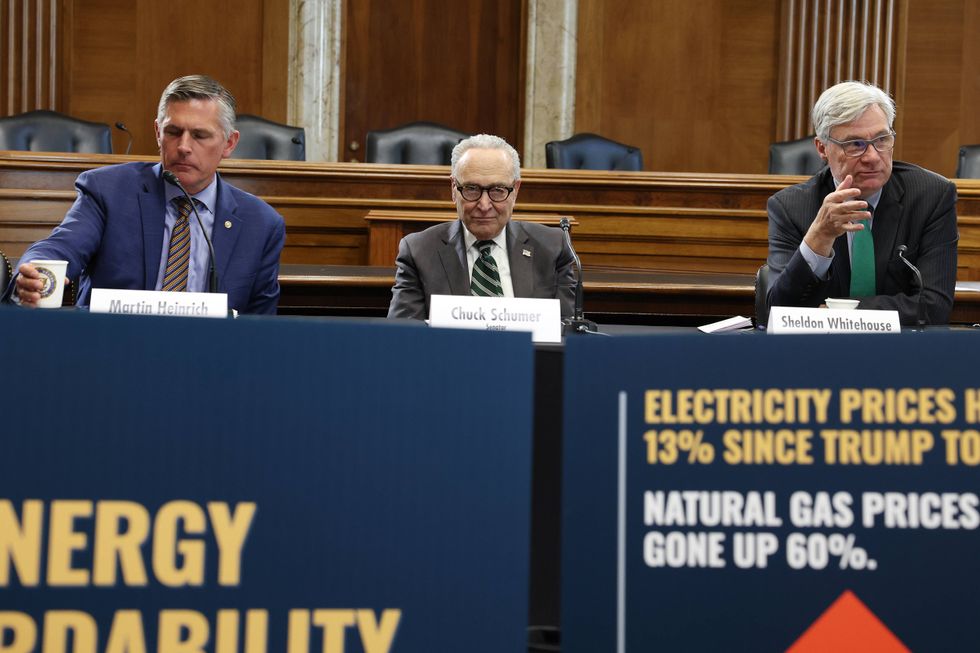
The bill was introduced in September in the Senate by Sens. Shelley Moore Capito (R-W.Va.), Sheldon Whitehouse (D-RI), Mike Lee (R-Utah), and Martin Heinrich (D-NM), and referred to the Committee on Energy and Natural Resources.
Whitehouse, the bill's lead Democratic sponsor and the ranking member of the Senate Environment and Public Works Committee, holds the most investments of any US senator in data center-related holdings—between $2.1 million and $8.6 million, according to Forbes. According to Sludge, he and his wife hold up to $12.3 million in AI-related stocks, including major tech companies and data center operators.
In a letter sent Thursday, Food & Water Watch and more than 160 other environmental, health, consumer, and religious groups urged Congress to reject the BAAJA.
"Data centers can have impacts beyond the lands they occupy, driving significant energy demand and need for grid infrastructure, which can increase cost for the public, as well as create new sources of air and water pollution, which can adversely impact public health and the climate crisis," they wrote. "This push to expand data centers comes as lawmakers in Washington, DC, are considering a backroom deal that will drive forward a massive buildout of AI data centers and the fossil fuel infrastructure to power them."
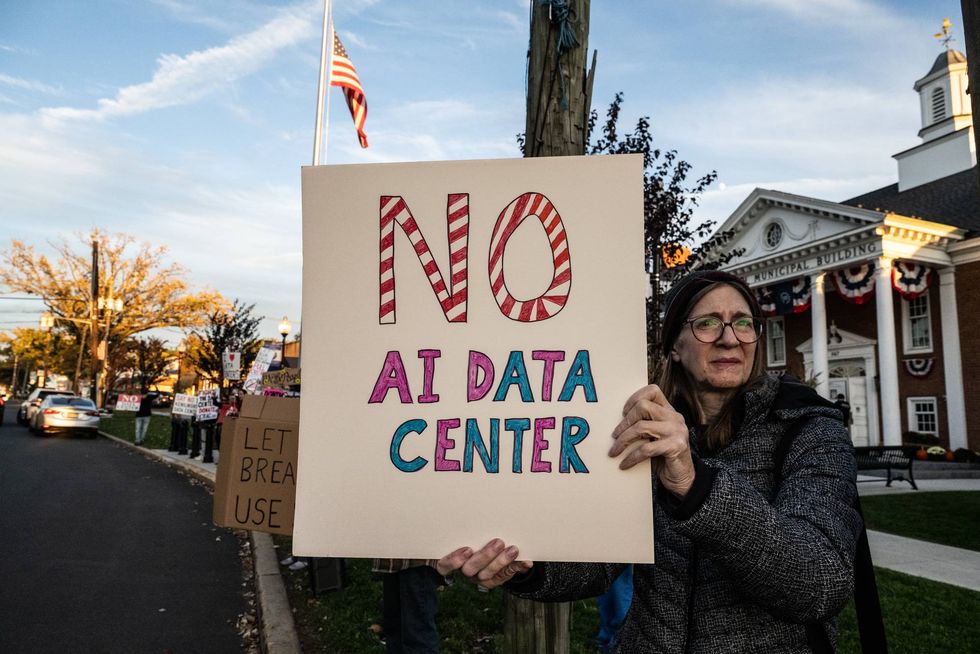
Activists with Food & Water Watch, New York Communities for Change, 350Brooklyn, Climate Families NYC, and Indivisible Brooklyn plan to gather outside Schumer's Park Slope apartment on Friday with a large, smoking AI data center prop and a giant "blank check."
With signs that read “No blank checks for Big Tech” and “stop the dirty data center deal,” they plan to continue the protest afterward at the Fort Greene office of Rep. Hakeem Jeffries (D-NY), who is currently the front-runner to become the next speaker of the House.
Rep. Rashida Tlaib (D-Mich.), who has proposed banning data centers on federal lands and vocally opposed the BAAJA, noted that the bill would be brought to the floor just days after voters across the country sent "a clear message that Americans want their representatives to protect their health and environment, not sell them out to Big Tech and Big Oil."
On Tuesday, communities across 10 US states passed 43 out of 44 initiatives that proposed banning or pausing construction on data centers or infrastructure of a certain size. Meanwhile, candidates who made opposition to data centers central to their campaigns, including Abdul El-Sayed in Michigan, Sherrod Brown in Ohio, and Troy Jackson in Maine, won convincingly over their Republican opponents.
“People across the country are rightfully chasing data centers out of their communities, and the industry is eyeing public lands as a way around this growing opposition," said Jim Walsh, policy director at Food & Water Watch.
He said that the lawmakers pushing for the BAAJA were doing so "in blatant disregard for the overwhelming public backlash to Big Tech that helped drive voters to the polls."
After Tuesday's blue wave handed Democrats at least 54 Senate seats, Schumer predicted, "I’ll be reelected as majority leader.”
But many incoming Democratic senators, including El-Sayed, Jackson, and Sen.-elect Peggy Flanagan (Minn.), were vocally critical of Schumer on the campaign trail. Meanwhile, pooled state and district polls found that 59% of Democratic voters wanted someone else to lead the Senate while just 22% backed Schumer.
A former aide to a lawmaker on the Senate Committee on Energy and Natural Resources told Common Dreams that the BAAJA is "a test for Schumer’s leadership campaign."
“Will the first thing Schumer does after the overwhelming rebuke of Trump that voters delivered be giving Trump nearly unlimited power to build data centers where he wants?” the former aide asked. "Or will he see the opportunity to send a message that he's up to lead the mandate voters gave Democrats?”
“It is essential that we show the American people where we stand,” said Sen. Chris Van Hollen. “If Trump vetoes it, it will just show people that he’s on the side of billionaires.”
With tech mogul Elon Musk pouring nearly half a billion dollars into the midterm elections and just 20 individuals spending over $2 billion in an effort to elect Republicans who would continue President Donald Trump's corporate-friendly MAGA agenda, the results—including at least seven US Senate seats, 30 US House seats, and five governorships taken over by Democrats—sent a resounding message to GOP megadonors.
But economic justice advocates on Thursday said the Democratic Party must not stop there, demanding that the party's new majorities take immediate action after the new Congress is sworn in in January to pass a federal wealth tax—the kind that was central to campaigns including those of Sens.-elect Troy Jackson (D-Maine), James Talarico (D-Texas), and Abdul El-Sayed (D-Mich.).
“This election was a referendum on who has control over our democracy and our economy," said Meghan Schneider, senior spokesperson for Tax the Greedy Billionaires. "The ultrawealthy funneled billions of dollars into state and federal races to manipulate public opinion and buy influence, to further enrich themselves. From Michigan to Texas, voters across the political spectrum rallied against the billionaires and the cronies they bankrolled."
By electing candidates including El-Sayed, Talarico and Sen.-elect Peggy Flanagan (D-Minn.), said Schneider, voters sent a clear message: "We want leaders who will improve the lives of working people, not billionaires."
While billionaire opponents of California's proposed wealth tax, which would have established a one-time 5% tax on the state's richest residents, succeeded in crushing the proposal after spending more than $379 million against it, experts are expecting Democrats in Congress to consider bills, including one proposed by Sen. Chris Van Hollen (D-Md.).
"From Michigan to Texas, voters across the political spectrum rallied against the billionaires and the cronies they bankrolled."
The senator has called for a graduated surtax on people earning more than $1 million per year. Those who earn $1 million-$2 million would be taxed 5% and households earning more than $5 million would be taxed 12%, while the capital gains top tax rate would be raised from 23.8% to 35.8%.
Rep. Ro Khanna (D-Calif.) has also joined Sen. Bernie Sanders (I-Vt.) in proposing the Make Billionaires Pay Their Fair Share Act, which would establish an annual 5% tax on households whose net worth is more than $1 billion.
Senate Minority Leader Chuck Schumer (D-NY) has proposed quadrupling a tax on stock buybacks, while Sen. Ron Wyden (D-Ore.), set to become the chair of the Senate Finance Committee, said in a post-election statement Wednesday that "the committee will redouble its efforts to ensure billionaires pay their fair share and hold tax cheats accountable."
Van Hollen, who has been floated as a potential 2028 presidential contender or a successor to Schumer—but has said he doesn't plan to run for the latter—told Politico Thursday that even if President Donald Trump vetoes a potential billionaires' tax, putting forward the proposal would show the American public whose side the Democrats are on ahead of 2028.
“It is essential that we show the American people where we stand,” said Van Hollen. “If Trump vetoes it, it will just show people that he’s on the side of billionaires.”
Schneider said that with the artificial intelligence boom and looming initial public offerings by wealthy corporations "already accelerating historic wealth inequality and worsening the affordability crisis, the need to act decisively and quickly at the national level is dire."
"Leaders in the new Congress must deliver on their promises to put working people over billionaires," she said, "and introduce a national wealth tax within the first 100 days of the new Congress.”
“Abu Shehadeh’s imprisonment comes amid a targeted campaign of repression against Palestinian citizens of Israel," said one critic.
Palestine and press freedom advocates on Thursday demanded the immediate release of journalist and activist Abed Abu Shehadeh, a Palestinian citizen of Israel who was arrested during a Tuesday raid on his home, with critics calling his detention part of a "campaign to silence" critical reporting and dissent.
Abu Shehadeh, 38, was arrested by a group of 15 Israeli police officers and agents from the internal intelligence agency Shin Bet, some of them masked, who stormed his family's home in Jaffa and seized him in front of his wife and two children, according to The New Arab.
The arrest of the prominent Arabic-language journalist, podcast host, and political activist was reportedly connected to an interview he conducted with Palestinian intellectual and former Knesset member Azmi Bishara, the exiled leader of the Balad party, which advocates for Israel to become a nation of all its citizens rather than what critics, including the Israeli human rights group B'Tselem, describe as a Jewish supremacist apartheid state.
Bishara fled Israel in 2007 and is accused of helping Hezbollah during Israel's 2006 war on Lebanon. Israeli authorities suspect him of being a foreign agent.
On Wednesday, the Tel Aviv Magistrate's Court prolonged Abu Shehadeh's detention after police sought an eight-day extension on suspicion of "contact with a foreign agent."
According to the New York-based Committee to Protect Journalists (CPJ):
During the court hearing, a police representative initially acknowledged that Abu Shehadeh was a journalist, but after a recess she retracted this statement and instead said he is a political adviser. The defense objected to this new description and asked whether there was evidence that the meeting went beyond recording a podcast interview or contained information not available to the public.
Adalah, also called the Legal Center for Arab Minority Rights in Israel, noted Thursday:
The legal team representing Abu Shehadeh claimed that there was no justification for holding him in detention. The interview, which dealt with the Israeli election campaign, was widely published and available to all... The mere criminal investigation for a media interview is a serious violation of freedom of expression and freedom of the press, and his detention is completely arbitrary.
Abu Shehadeh's arrest sparked accusations that Israeli authorities are using national security allegations to intimidate Palestinian journalists and suppress political expression.
"Arrest for an interview is not a legitimate criminal procedure, but a tool for political silencing," Adalah civil and political rights attorney Hadeel Abu Salih said Thursday in a statement. "The police are asking to send a message to the entire Arab public: Even a public conversation with a political figure can lead you to the detention cell. Abu Shehadeh must be released immediately.”
Abu Salih told The New Arab that police illegally arrested Abu Shehadeh, lacking a court order for the apprehension and prosecutorial permission to interrogate.
"We cannot disconnect this arrest from the attack on the free speech of Palestinians of Israel since 7 October," she said, citing over 1,000 arrests for speech-related "offenses" in the years since the Hamas-led attack on Israel.
"This is not a criminal investigation, it is a campaign to silence Palestinian journalists and political activists," Abu Salih added.
CPJ regional director Sara Qudah said Thursday: "Journalists should not be punished for platforming views critical of the state. We demand the immediate unconditional release of Abu Shehadeh, the dropping of all charges against him, and an explanation of why he was targeted in what some have described as a political campaign.”
Adalah further called Abu Shehadeh's arrest "part of a broad pattern of arrests and investigations [of] Palestinian citizens in Israel due to political statements" that's "worsened" following last week's Israeli elections.
The editors of the progressive US magazine Jewish Currents (JC) wrote Wednesday that "Abu Shehadeh’s imprisonment comes amid a targeted campaign of repression against Palestinian citizens of Israel in the wake of the electoral gains made by Palestinian parties in last week’s elections."
"Spearheaded by Israeli Prime Minister Benjamin Netanyahu and Shin Bet chief David Zini, this campaign follows years of systematic targeting, silencing, and killing of Palestinian journalists," JC continued, referring to Gaza, where at least 200 media professionals are among the more than 74,000 Palestinians, including upward of 21,500 children, killed during Israel's three-year genocide.
"These attacks reflect the Israeli state’s effort to ensure Jewish supremacy and silence the work of those reporting on its human rights abuses," the JC editors added.
Balad leader Sami Abu Shehadeh, who is the journalist's cousin, told The New Arab "Netanyahu and Zini are escalating their efforts to steal the election," calling his relative's detention "part of a broader campaign of arrests, interrogations, and threats against political activists designed to undermine the election results through the weaponization of the police and the Shin Bet."
The JC editors wrote that, as a media outlet, it "generally refrains from encouraging our readers and allies to take specific action."
"But as journalists in community with Abed Abu Shehadeh," they added, "we call on elected officials and others in the US government to demand his immediate release."
"People just want to live, not survive," said one organizer.
Hundreds of thousands of workers across France held demonstrations to protest the high cost of living and the French government's proposed budget that includes a number of austerity measures.
As reported by Euronews, the government of French President Emmanuel Macron is attempting to pass a budget that has been decried by major trade unions for "targeting the most vulnerable and those who are ill, freezing social benefits, and undermining the protective role of the social security system."
Sophie Binet, head of the General Confederation of Labor, acknowledged the need to curb the country's budget deficit, but told Euronews that "we need to reintroduce taxes on the wealthiest individuals and the largest companies," which "will enable us to fund our public services."
The French Interior Ministry estimated that 600,000 people attended Thursday's demonstrations, which took place across 180 different locations, according to Bloomberg.
The Ministry of Public Action and Accounts estimated that nearly 10% of French public servants were on strike Thursday, including almost 16% of all teachers, according to The New York Times.
The nationwide protests began in September when students blockaded their schools to protest staffing shortages, dilapidated buildings, and a widely criticized university application system.
They have since spread to encompass a wide range of grievances in the country, including the cost of living and the high cost of fuel sparked by US President Donald Trump's illegal war with Iran.
While earlier demonstrations had been marked by violent unrest, Thursday's protests were overwhelmingly peaceful, and included a festive performance from the Orchestre du Nouveau Monde in Paris.
« J'ai deux passions ! »Ambiance festive pour le concert géant de l'orchestre du Nouveau Monde sur la Place de la République à Paris.#grevegenerale #5Novembre #greve5novembre https://t.co/A5KhOjGxmN
— Luc Auffret (@LucAuffret) November 5, 2026
In an interview with the Times, 27-year-old Antonia Barot said that she attended the Thursday protests because of the government's "disregard for young people's and workers' living conditions," adding that "we need to realize how powerful we are."
Florence Eliakine, 61, told the Times the protests should "make it clear to our government, which pursues right-wing policies, that there is a social and ecological crisis that must be taken into account."
Gaëlle Martinez, national secretary of the trade union Solidaires, told France 24 that the motive behind the demonstrations was a simple one.
"People just want to live, not survive," Martinez explained.
She also said that the government needed to draft "a new budget" that would "tax the biggest companies, the richest companies where the profits are made," while eliminating proposed cuts to vital programs.