

SUBSCRIBE TO OUR FREE NEWSLETTER
Daily news & progressive opinion—funded by the people, not the corporations—delivered straight to your inbox.
5
#000000
#FFFFFF
To donate by check, phone, or other method, see our More Ways to Give page.
Daily news & progressive opinion—funded by the people, not the corporations—delivered straight to your inbox.
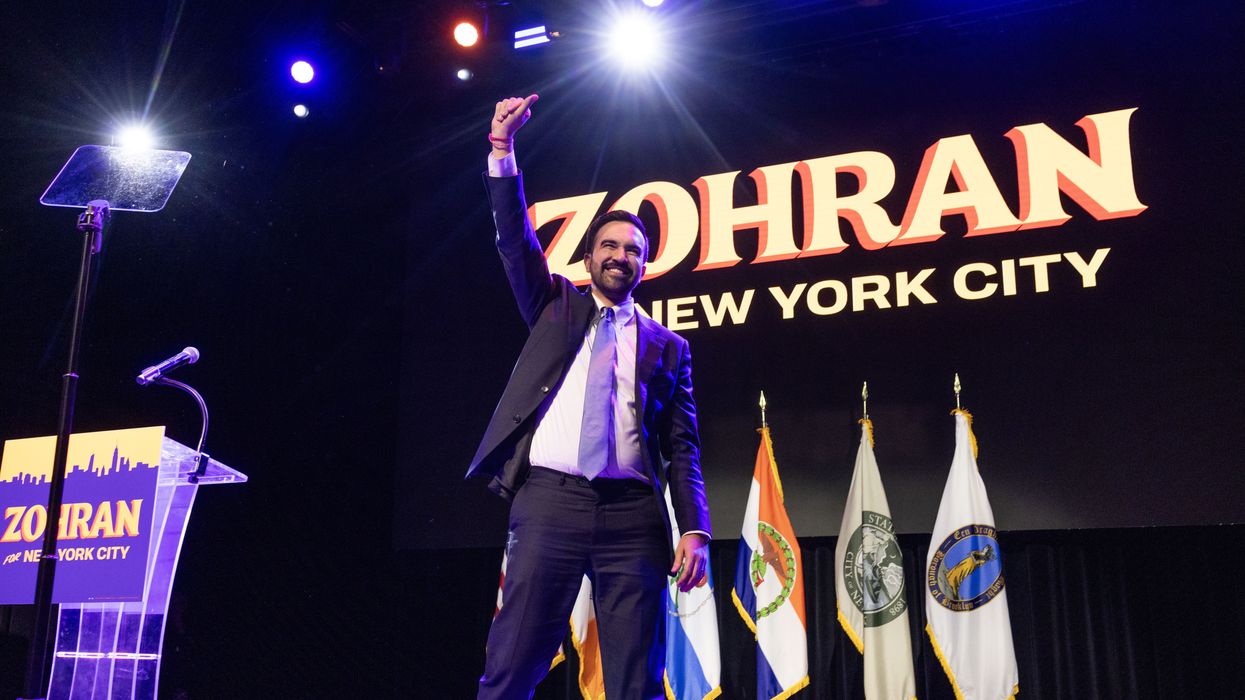
Palestine is the moral litmus test of our time, and against all odds, the people of New York City voted for conscience.
The New York City mayoral race has been called, and the dust is settling: A young, Democratic Socialist, immigrant Muslim will be the next mayor of the largest city in America. But a big part of why this victory is pivotal to many Americans isn’t just because he was on the ballot.
It’s because Palestine was on the ballot.
Zohran Mamdani’s election as the 111th mayor of New York City—its first Muslim, first South Asian, and youngest mayor in over a century—marks a seismic shift in American political consciousness. But this victory isn't merely about representation; it's about realignment.
New York is home to some of the nation’s most powerful pro-Israel lobbies, and candidates of all parties seeking public office have long outright ignored the topic of Palestinian rights for political expediency.
Voters delivered a message that amid our nation's moral bankruptcy, corruption, and affordability crisis, the American electorate is rejecting power hungry politicians who deliver platitudes while orchestrating widespread suffering both domestically and globally.
The fact that Mamdani championed ceasefires, divestment, and dignity for Palestinians makes his win extraordinary: It's unheard of in modern history to meet a Muslim candidate who openly supports BDS without having to sacrifice their political ambitions.
This is substantially due to the shifting of public opinion on Israel and a diverse electorate increasingly critical across party lines amid its US-backed genocide in Gaza.
According to research by the Council on American-Islamic Relations, Israel reportedly increased its global public relations budget in late 2024 by $150 million to rehabilitate its image by "fomenting fear of ‘Radical Islam’ and ‘Jihadism.'"
Islamophobic attacks were evident throughout the NYC mayoral campaign.
But when detractors ramped up their race baiting, Mamdani replied by producing campaign ads in Arabic and doubling down on his identity. His refreshing, bold rejection of these smear attempts resonated with voters.
Mamdani won not despite his moral clarity, but rather because of it. And a city that once punished and policed the remotest dissent of Israel has decisively chosen as its leader a man who defies the political doctrine that conflates criticism of Israel with antisemitism.
Voters delivered a message that amid our nation's moral bankruptcy, corruption, and affordability crisis, the American electorate is rejecting power hungry politicians who deliver platitudes while orchestrating widespread suffering both domestically and globally.
This affirms empathy as a legitimate and transformative political force upending the political framework upholding oligarchy and plutocracy in America.
It tells people of conscience who've felt erased or silenced that integrity is not an obstacle—it’s our most valuable asset.
What began as a local race for mayor has ended as a global referendum on our collective conscience. Palestine is the moral litmus test of our time, and against all odds, the people of New York City voted for conscience.
This triumph belongs not only to the broad-based coalition of working-class New Yorkers and progressives who powered Mamdani's campaign, but also to Palestinians exposing the decades-long brutality of Israel's injustices amid its genocide of their people.
While we celebrate this historic milestone, we cannot ignore their sacrifices, courage, faith, and steadfastness that are redefining Americans' values and priorities.
We cannot forget that Israel continues to violate the terms of the so-called ceasefire and has resumed its bombings, killings, detentions, torture, and land theft of Palestinians.
And we cannot stop calling on all of our elected officials to exercise their power and privilege to end US complicity in Israel's crimes.
Arriving to the halls of power is an enormous first step of a long journey ahead.
Those who voted for conscience—and many across the country—will be watching closely and working hard to make sure that every journey centers human rights for Palestinians too, for those who seek to serve.

Groups and individuals targeted by efforts to penalize BDS or to compel people to reject it will now have an important new tool in their legal arsenal as they assert their rights either administratively or judicially.
Israel and its lobby have, for years now, been engaged in a frenzy of activity to further insulate Israel from accountability by using their influence in the West to effectively outlaw organized opposition to Israel. Foremost among these efforts has been the Israeli campaign to penalize calls to boycott, divest from, and sanction Israel for its gross violations of human rights. As a result, countless laws and policies are now on the books across the U.S. and the broader West, trampling on core constitutional principles and internationally guaranteed human rights in defense of Israeli impunity. But an advisory opinion issued last month by the International Court of Justice (ICJ) should help to turn that around.
In its historic ruling, the ICJ found that Israel’s occupation of the West Bank, East Jerusalem, and Gaza is entirely unlawful, that Israel practices apartheid and racial segregation, and that all states are under a duty to help bring this to an end, including by cutting off all economic, trade and investment relations with Israel in the Occupied Palestinian Territory. In other words, as a matter of international law, all countries are obliged to participate in an economic boycott of Israel’s activities in the occupied Palestinian territory and to divest from any existing economic relations there.
Because the court was bound by the parameters of the request from the UN General Assembly that triggered its findings, it did not address duties and obligations relating to activities inside the 1948 Green Line. However, the court’s authoritative statement of the requirements of international law makes clear that proponents of BDS have not only the moral high ground but also a firm grounding in international law.
The court’s advisory opinion in July comes on the heels of the commencement of genocide proceedings against Israel in the ICJ last December, and a request in May by the Prosecutor of the International Criminal Court for arrest warrants for the Israeli Prime Minister and the Defense Minister for crimes against humanity, including extermination. Together, they represent a historic shift away from 76 years of Western-sponsored Israeli exceptionalism and impunity, feeding hope of a new era of accountability.
Recognizing this, Israel, as well as its Western allies accused of complicity in Israel’s international crimes (chief among them, the U.S., UK, and Germany) have been scrambling to oppose, delay, and obstruct action by these courts, both by intervening in court proceedings and, in some cases, by threatening court officials. And indeed, the ICC warrant process has already been inordinately delayed when compared to previous cases. Nevertheless, for its part, the ICJ advisory opinion was both timely and uncompromising in its application of international law to Israel.
Israel and its allies also defensively claim that advisory opinions of the ICJ are “non-binding” and, indeed, the court cannot compel a state to comply with its findings. But what this tactic ignores is that the laws to which the court refers in its authoritative opinion are, in fact, binding on all states. For example, the court observed that the right of the Palestinians to self-determination, their rights under international human rights and humanitarian law, and the prohibition of Israel’s acquisition of territory by force impose so-called “erga omnes” obligations, that is, binding obligations that apply to all countries.
Among these obligations are the duty not to recognize or assist the occupation in any way, and the duty to take action to realize the equal rights and self-determination of the Palestinian people. It follows that any policies or acts by a Western country that in any way recognize Israel’s occupation, assist Israel in that occupation (economically, militarily, diplomatically, etc.), or prohibit persons under its jurisdiction from respecting international law by boycotting or divesting from Israel’s illegal occupation, would be unlawful.
Of course, the U.S., which has long ignored the constraints of international law and invested decades of effort in carving out an exception for Israeli impunity, is likely to reject the court’s findings and oppose the implementing resolution of the UN General Assembly, which is expected to follow. Some other Western states invested in the Israeli axis, like the UK and Germany, may follow suit. But it is likely that most countries, including other Western states, will adjust their policies to ensure legal compliance.
Groups and individuals targeted by efforts to penalize BDS or to compel people to reject it will now have an important new tool in their legal arsenal as they assert their rights either administratively or judicially. They can now invoke the authoritative ruling of the World Court to credibly assert that participating in boycotts, divestment, and sanctions against Israeli occupation, colonization, and apartheid is not only a moral imperative and constitutional and human right, but also an international legal obligation.
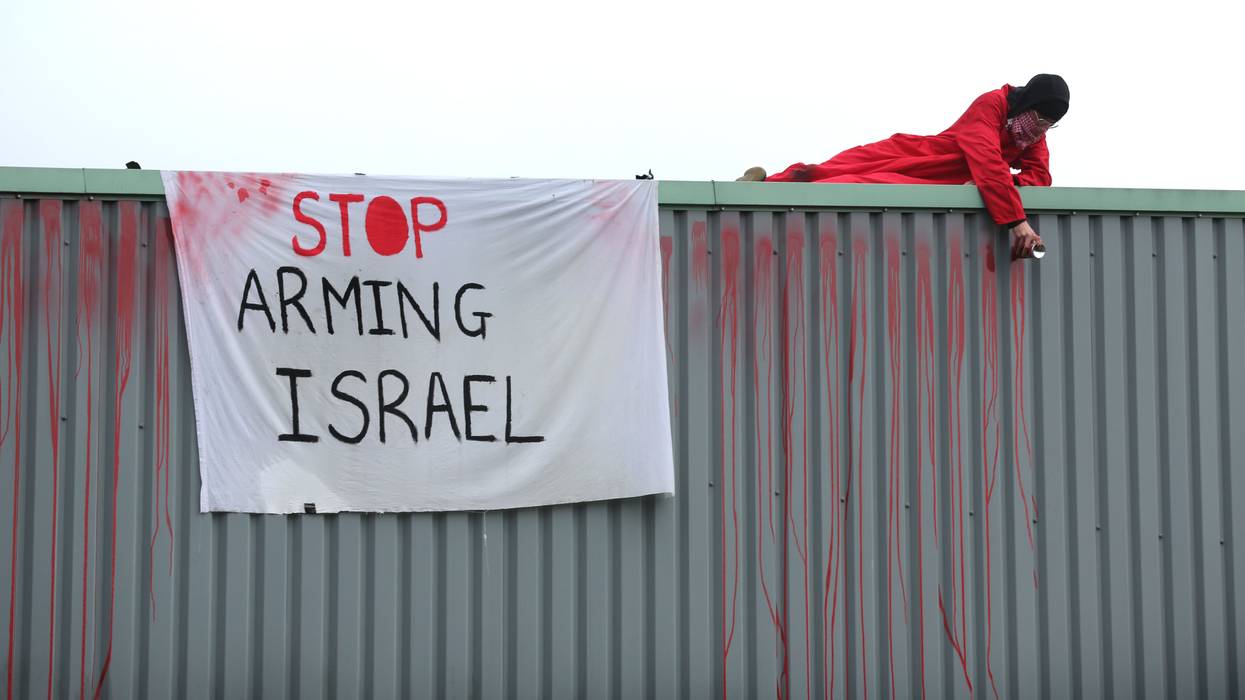
They can invoke the S in BDS and sanction Israel, prohibiting imports and exports of oil, weapons, and technology.
If the nations of the world—particularly the United States and the Arab countries—wanted to stop Israel’s slaughter, torture, and ethnic cleansing in Gaza, they could do so tomorrow with suspension of oil, arms, and technology imports and exports to and from Israel.
Though “Free Palestine” and “and Let Gaza Live” protesters may shut down bridges, occupy train stations, and march by the millions in cities across the globe, key governments—the U.S., U.K., Germany, Canada, Turkey, UAE, Saudi Arabia, Jordan, and India—continue to keep commerce humming, monarchies in place, and an empire standing even in the midst of what the World Court ruled was a plausible case of genocide. Members of the United Nations would do the world a favor if they followed the lead of South Africa at the International Court of Justice to condemn both in deed and action the crimes of Israel.
First the good news.
U.S. Labor for a Cease-Fiire
In a February press release, seven national unions and over 200 local unions announced the formation of the National Labor Network for Cease-fire (NLNC) to “end the death and devastation” in the Middle East, and to build support for the cease-fire among unions around the country. According to the NLNC, unions calling for a cease-fire represent over 9 million union members, more than half the labor movement in the United States. The seven national unions include, American Postal Workers Union (APWU), the Association of Flight Attendants (AFA-CWA), the International Union of Painters and Allied Trades (IUPAT), the National Education Association (NEA), National Nurses United (NNU), the United Auto Workers (UAW), and the United Electrical Workers (UE).
Whether the NLNC will join CODEPINK, Teachers Against Genocide, Doctors Against Genocide, and other organizations on Capitol Hill opposed to President Joe Biden’s request for a $95 billion war-spending supplemental—including $14 billion for weapons for Israel—seems unlikely, though not impossible, in an election year when the specter of another Trump union-busting presidency casts a fearful shadow. The AFL-CIO, representing 12.5 million workers, voted in January to endorse Biden’s reelection.
The NLNC joins the Democratic Party of five states: Texas, Hawaii, New Mexico, Arizona, and Washington—and over 40 cities calling for a cease-fire.
Italy, Spain, and Belgium Suspend Arms
Until recently Italy was responsible for 5% of Israeli weapons purchases—helicopters and naval artillery—over the last 10 years. Italian Foreign Minister Antonio Tajani claims, however, that Italy stopped all weapons shipments to Israel following that nation’s collective punishment of Gaza for October 7.
If true, Italy joins Spain and Belgium, which have also suspended arms sales or ammunition shipments to Israel during its bombardment of Gaza.
Dutch Court Says No
In mid-February, a Dutch appeals court instructed the Netherlands to stop sending F-35 fighter jet components to Israel.
“The court finds that there is a clear risk that Israel’s F-35 fighter jets might be used in the commission of serious violations of international humanitarian law,” ruled the court in response to a lawsuit filed by Oxfam and other human rights groups.
The court ruled the Dutch government had seven days to halt the supply of fighter jets and eight weeks to appeal.
U.K. Outrage
Human rights organizations the Global Legal Action Network in the U.K. and Al-Haq, in Ramallah, have taken legal action against the U.K. to halt arms sales to Israel totaling over $600 million since 2015, with the U.K. sending F-35 fighter jets to Israel for its assault on Gaza.
Palestinian rights activists, among them two Israeli dissidents Stavit Sinai and Ronnie Barkan, were put on trial in the U.K. in January after the Bristol-area office of Elbit U.K. was sprayed with red paint, its windows sledgehammered. Elbit U.K. is a subsidiary of Elbit Systems, an Israeli-based company that manufactures 500-pound bombs, artillery shells, and drones for Israel’s genocide in Gaza. Sinai, who lives in Germany but flew to England for the protest, said, “Taking action outside of the country where the crimes are taking place… has been proven to be extremely efficient to exert pressure on the perpetrators.”
Pushback in Canada
In an open letter (2/5/23) to Mélanie Joly, Canada’s foreign minister, over a dozen organizations, including the Anglican Church of Canada, Human Rights Watch, and Oxfam Canada, demanded Canada halt its weapons and military hardware sales to Israel that have totaled more than $100 million during the past decade.
Canada’s foreign ministry insists it has not issued any permits for “full weapon systems for major conventional arms or light weapons to Israel for over 30 years.” Cease-fire advocates argue their government is not being transparent about the parts it supplies for missiles and bombs while continuing “to approve arms exports since October 7 despite the clear risk of genocide in Gaza.”
U.S. as Biggest Arms Exporter to Israel
Chief among those governments that aid and abet Israeli genocide is the United States, which has has a history of raiding the treasury to subsidize its proxy in the oil and gas rich Middle East. According to the State Department, the U/S. has handed Israel’s military apparatus over $130 billion since 1948, when Zionist terrorists destroyed over 500 villages, burning some to the ground, to establish a Jewish state on Palestinian land.
The State Department proudly asserts U.S. subsidies have made the Israel Defense Forces (IDF), known to critics as Israel Occupation Forces (IOF), “one of the world’s most capable, effective militaries…”
Since the U.S. provides Israel with roughly 15% of its military budget, Israeli Prime Minister Benjamin Netanyahu and his far-right coalition might have to rethink their campaign of Palestinian erasure or step up their shopping elsewhere.
Since October 7, the U.S. has supplied Israel with 15,000 bombs, 57,000 artillery shells, and 100 2,000-pound bunker busters to penetrate deep underground tunnels beneath apartments, hospitals, and refugee camps, turning densely populated neighborhoods into graveyards.
War Profiteers
In a report entitled, “The Companies Profiting from Israel’s 2023-2024 Attacks on Gaza,” the American Friends Service Committee documents the role of U.S. military contractors in aiding and abetting genocide in Gaza.
Raytheon, now part of RTX, headquartered in Waltham, Massachusetts, outfits the Israeli military with air-to-surface missiles for its F-16 fighter jets, as well as internationally-banned cluster bombs and bunker busters. Northrop Grumman, based in Falls Church, Virginia, furnishes Israel with Longbow missile delivery systems while Lockheed Martin, its main office in Bethesda, Maryland, supplies Israel with Hellfire missiles and F-16 and F-35 fighter jets. F-15 and F-16 engine parts are maintained by Pratt & Whitney, a Farmington, Connecticut, company that in 2015 signed a 15-year contract with the Israeli military.
“Pratt & Whitney is humbled and honored by the confidence Israeli leadership has placed in us, and we look forward to working with local industries to provide continued, long-term support to the Israeli warfighter,” said Bennett Croswell, president of Pratt & Whitney Military Engines.
China as Producer of F-35 Parts for the U.S.
A deeper dive into the weapons supply chain suggests China could play a decisive role in stopping the genocide by shutting down production of magnets used in Honeywell-supplied turbo machine pumps and circuit boards for the F-35 fighter jets bombing Gaza. In 2022, the Pentagon—upon realizing the F-35’s parts were manufactured in China—placed deliveries of the parts on hold only to reverse itself two days later with a waiver for parts deemed too critical to block.
What If… ?
What would happen if U.S. military contractors acceded to the demands of anti-war protesters in Massachusetts, California, and Arizona holding demonstrations and die-ins in front of Raytheon’s offices? If Congress and the White House pulled the plug on the annual near-$4 billion subsidy for the Israeli military? If universities followed through on student resolutions, such as the measure passed at the University of California, Davis, to divest from companies profiting off the Israeli occupation?
Since the U.S. provides Israel with roughly 15% of its military budget, Israeli Prime Minister Benjamin Netanyahu and his far-right coalition might have to rethink their campaign of Palestinian erasure or step up their shopping elsewhere, perhaps in Germany which has increased its weapons exports to Israel tenfold since October 7, with permit approvals close to $323 million, according to Reuters.
Arab Complicity With Israeli Genocide
In June 2023, a few months before the Hamas raid, on the eve of a normalization agreement with Saudi Arabia, Israel’s Defense Ministry reported the country had in 2022 exported over $12 billion in military products—drones, missiles, rockets, air defense systems—with almost a quarter of the sales to Arab countries party to the Abraham Accords, bilateral normalization agreements. The Israel Defense Ministry would not identify its arms clients, but signatories and supporters of the Abraham Accords include the United Arab Emirates, Bahrain, Morocco, and Sudan.
Mint Press News’ Minar Adley reports Morocco is building a military intelligence base for Israel in Afso on the border with Algeria, a country that has resoundingly condemned Israel’s genocide and pushed the U.N. Security Council to support a cease-fire. In “Why Morocco will not cut ties with Israel,” the Atlantic Council’s Sarah Zaaimi argues that despite massive street heat and a Moroccan consulate in Gaza, the government of Morocco will not break with Israel because the relationship is “a matter of national security for a monarchy that’s succeeded in surviving for twelve centuries.” Elbit Systems, Israel’s largest weapons manufacturer, plans to construct two weapons factories in Morocco, while Elbit Systems has established Elbit System Emirates in the UAE to promote “long term cooperation” with the Israeli military.
CNN reports that in January the U.S.—under the radar, without fanfare or press—sealed a deal with Qatar to continue operating for another 10 years the U.S.’ largest military base in the Middle East. The base that can house up to 10,000 troops is a “pivotal hub for the U.S. Central Command’s air operations in or around Afghanistan, Iran, and across the Middle East.” Next door, at U.S. naval headquarters in Bahrain, the U.S. Fifth Fleet—stationed in the Red Sea with 7,000 U.S. sailors—takes its cue from a command center.
Let’s Not Overlook India
India tops the list as the largest importer of weapons from Israel, accounting for over 40% of Israel’s exports, but the relationship is not limited to imports from Israel. According to Middle East Eye, India co-produces weapons with Israel while coordinating joint military drills. For Indian leader Narendra Modi, a right-wing nationalist bent on violent subjugation of India’s 20% Muslim population, Netanyahu’s brutal treatment of the Palestinians raises few concerns. In fact, Israel’s 75-year history of Palestinian erasure serves as a model for Indian nationalists spewing hateful rhetoric, forming lynch mobs, and looting and torching Muslim homes.
Al Jazeera reports an estimated 130 countries, including Colombia, have purchased drones and spying technology from Israel, though Israel suspended weapons shipments to Latin America after Colombia’s left-leaning President Gustavo Petro, a former Marxist revolutionary, declined to condemn the Hamas October 7 attacks, later comparing Israel’s destruction in Gaza to the heinous actions of Nazi Germany.
First the Good News (Well, Sort of…)
Yemen’s Houthis launched a solidarity blockade of Red Sea shipments to Israel resulting in an 85% drop in activity at Israel’s port of Eilat. Unfortunately, the Ansar Allah’s demands for a cease-fire and commitment to uphold the U.N. Convention on Genocide have resulted in U.S. bombings of the impoverished nation’s capital Saana, one of the oldest cities in the Middle East.
Oil: From Azerbaijan through Turkey to Israel
Despite Turkish President Recep Tayyip Erdoğan’s tough anti-Israel rhetoric, Turkey remains a principal oil supplier to Israel with miles of pipelines that deliver oil from Azerbaijan and Kazakhstan, suppliers of anywhere from 40- 60% of Israel’s oil, through Turkey’s port of Ceyhan in the eastern Mediterranean. Earlier, on October 21, the tanker Seaviolet reportedly carried one million barrels of oil from Muslim Azerbaijan to Israel’s port of Eilat on the Red Sea, though since then Yemen’s Houthis have blockaded Red Sea shipments to Israel.
So How Is Oil Reaching Israel Now?
British Petroleum, which has drilled for oil in Azerbaijan for three decades, is circumventing the Red Sea blockade to ship crude oil via the Cape of Good Hope in Africa, but there’s a more efficient solution for those intent on undermining the U.N. Convention on the Prevention and Punishment of the Crime of Genocide.
“Zionist Land Bridge”
Mint Press News cites Israel’s Hebrew television station Channel 13 reports that Jordan, Saudi Arabia, Egypt, and the UAE are together undermining the Houthis’ efforts to block the Bab-el-Mandeb Strait, the passageway to the Suez Canal for a quarter of global trade, including oil to Israel. Rather than reroute ships through the treacherous waters of Africa’s Cape of Good Hope—adding a month and a million dollars in fuel to the journey—the four Arab countries have established land corridors, with goods first unloaded at the ports of Dubai and Bahrain, then transported overland on highways from the UAE to Saudi Arabia, then onto Jordan until the cargo reaches Israel via the 115-mile long Jordan Highway overlooking the Dead Sea.
While Israel imports almost all of its oil, it also exports crude to Bulgaria, India, Italy, Palestine, and Australia, according to the Observatory of Economic Complexity (OEC), a data visualization tool developed at the MIT Media Lab.
A Gas Grab
For months there’s been speculation that Israel viewed October 7 as an opportunity to ethnically cleanse Gaza in order to exploit the coastal area’s natural gas resources. To grab the goods, however, Israel would first have to remove the Palestinians who might claim title.
In keeping with a plan hatched by the euphemistically named Defense Ministry, Israel told a million Palestinians to go south to Rafah for safety, only to bomb residential buildings while ramping up for a ground invasion of the city that straddles Egypt. Palestinian rights advocates say this “go south” edict is to push Gazans further south into the scorching Sinai desert, into Egypt’s lap, into tent cities, into an exile reminiscent of the first Nakba in 1948 when Israel drove 750,000 Palestinians from their land to bar them from ever returning.
The Pieces of the Puzzle Come Together
In February Israel approved gas exploration licenses to six Israeli and international companies for natural gas exploration in Palestine maritime areas off the coast of Gaza. Several organizations—Al Mezan Center for Human Rights and the Palestinian Center for Human Rights—warn Israel it had better cancel those contracts or face the consequences for violating international law.
In a world, however, where Israel repeatedly violates international law—including orders from the World Court to stop killing Palestinians and provide massive humanitarian aid—it’s unlikely those contracts will be canceled any time soon unless there is a tsunami of civil unrest or a collective uproar in the 193-member U.N. General Assembly. Under the Uniting for Peace resolution, the General Assembly could with a two-third’s vote (129 members) exert enormous pressure by sanctioning Israel and suspending it from U.N. activities.
First the Good News…
Internal dissent rocks Google in the United States, where employees waving Palestinian flags shut down Market Street (12/14/23) in San Francisco to protest Google’s Project Nimbus, a $1.2 billion contract with the Israeli military for cloud computing engineered by Google and Amazon. Months earlier, before October 7, hundreds of Amazon and Google tech workers protested the contract in four cities across the country with signs reading, “No Tech for Apartheid.” In an open letter, anonymous employees in 2021 charged that the Nimbus contract greenlights “unlawful data collection on Palestinians, and facilitates expansion of Israel’s illegal settlements on Palestinian land.”
Multinational corporations like Microsoft, Google, IBM, and Intel all have offices in Israel. Google’s 8,000 square mile campus in Tel Aviv occupies eight floors of Electra Tower, with one floor reserved for Google’s “Campus Tel Aviv,” a hub for entrepreneurs and start-up companies. Hewlett-Packard—a target of the global BDS movement—profits off the Israeli occupation with biometric identification, hand and facial recognition, used at checkpoints throughout the West Bank, where excruciating wait times can take Palestinians all day to reach family in a village 30 miles away.
A boycott of Israel’s technology—computers, electronics, cybersecurity software—could send Israel’s economy into an inflationary spiral, for high tech contributes 18% of the gross domestic product, employs over 12% of the workforce, accounts for half the country’s exports, and contributes 30% of the tax base, according to CNN.
If the U.S., Canada, U.K., Germany, India, and the Arab countries complicit in Israel’s slaughter refuse to reverse course—if they insist on aiding and abetting genocide in the face of the International Court of Justice’s condemnation and global outrage over Israel’s slaughter—then it’s time for other countries to expose Israel and its abettors in a criminal tribunal on the floor of the United Nations to put the criminals, from Biden to Netanyahu, on trial for genocide.
Israel’s surveillance technology includes Pegasus spyware that can invade your cell phone, capture text messages, and collect passwords; border drones that monitor the movement of migrants across the Mediterranean; thermal cameras that can see through walls during police raids; and facial-recognition software for cameras at checkpoints and borders.
One of Israel’s biggest trading partners is the European Union, which in 2018 purchased Elbit Systems drones to track and collect intelligence on asylum seekers. Critics charge the use of these drones without offering rescue operations for refugees, risking their lives, violates the U.N. Convention on the Law of the Sea. The Euro-Mediterranean Human Rights Monitor has long wanted the contracts canceled. Professor Richard Falk, chair of Euro-Med’s Board of Trustees, said the purchase is outrageous considering the “repressive and unlawful ways” drones are used to oppress Palestinians in the occupied territories.
In the UAE, where dissent is outlawed and labor unions forbidden, those who might protest their country’s cozy relationship with Israel risk prison and torture, so it’s not surprising that the royal family easily welcomed an Israeli tech hub to Abu Dhabi in 2022 and announced plans for a UAE technology institute in Haifa come 2024. “We will work on some of the most interesting challenges in AI and at the same time contribute to the vision of scientific collaboration articulated in the Abraham Accords,” writes Yoelle Maarek, the soon-to-be director of the center, who previously worked as an executive at Google, IBM, Amazon, and Yahoo.
Another top shopper for Israeli tech is India, which, according to The New York Times, bought Pegasus Spyware in 2017 to keep tabs on opponents of Modi’s ultra-nationalist regime.
And it’s no secret that Saudi Arabia is one of Israel’s best customers for tech used to hack the phones and spy on people deemed enemies of the state. Though the planned normalization agreement between Saudi Arabia and Israel is off the table for now, Saudi Arabia’s $620-billion Public Investment Fund (PIF) continues to invest in Israeli tech start-ups.
Coming Attractions on the Tech Market…
The Israeli military says it’s relying on an artificial intelligence-based system called Habsora (the Gospel) to “produce targets at a fast pace” in Gaza, where to date Israel has killed over 28,000 and wounded over 68,000 people. Richard Moyes, a researcher for Article 36, a team of policy experts based in the U.K., discounts the accuracy of AI algorithms, telling The Guardian, “We’re seeing the widespread flattening of an urban area with heavy explosive weapons, so to claim there’s precision and narrowness of force being exerted is not borne out by the facts.”If nations anywhere in the supply chain are serious about ending genocide in Gaza and preventing a wider war, they can invoke the S in BDS and sanction Israel, prohibiting imports and exports of oil, weapons, and technology. If the U.S., Canada, U.K., Germany, India, and the Arab countries complicit in Israel’s slaughter refuse to reverse course—if they insist on aiding and abetting genocide in the face of the International Court of Justice’s condemnation and global outrage over Israel’s slaughter—then it’s time for other countries to expose Israel and its abettors in a criminal tribunal on the floor of the United Nations to put the criminals, from Biden to Netanyahu, on trial for genocide.
Until that time, CODEPINK joins the global call to the U.N. General Assembly to sanction Israel as it brazenly violates International Court of Justice orders to stop killing and wounding Palestinians and start providing massive humanitarian aid. Our New York City delegation, which has encouraged countries to file declarations in support of South Africa’s case at the ICJ, delivers a strategic message as the delegation visits the U.N. missions: “NO MORE WEAPONS, OIL ,OR TECH FOR ISRAEL.”
It may be cliche to say, “If there’s a will, there’s a way,” but the truth is the collective power of the world—or even a sliver of the world—could stop the slaughter tomorrow.
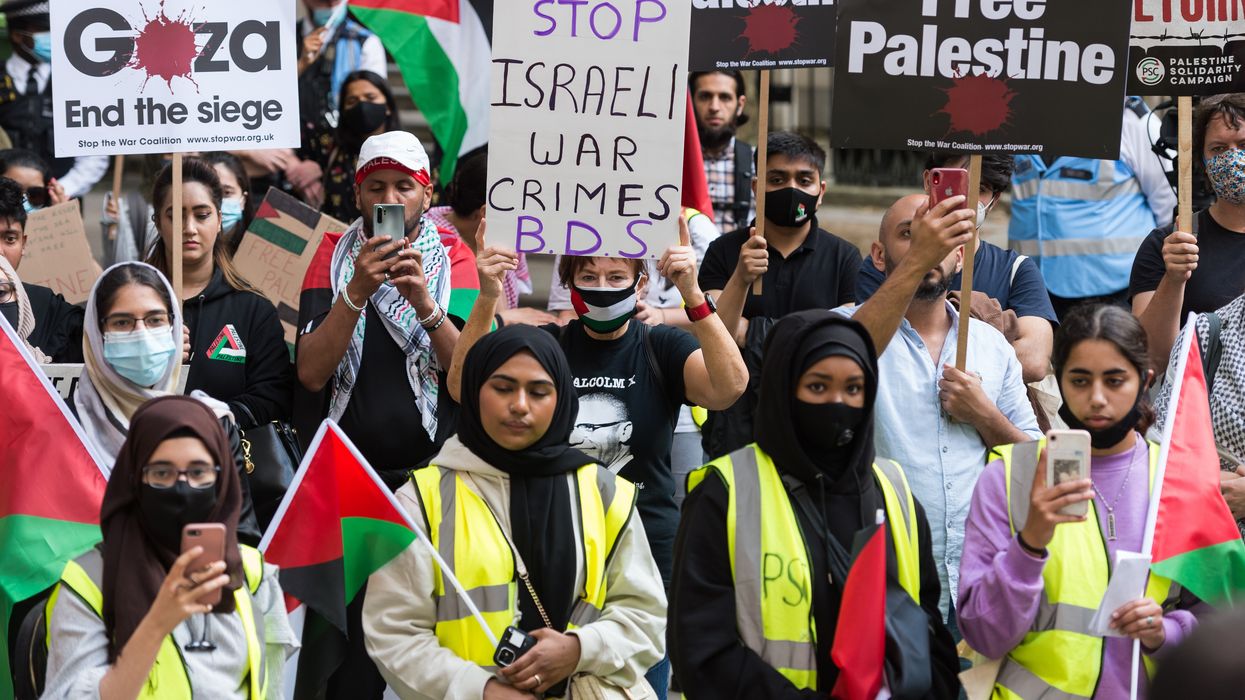
Civil society critics argue the proposal threatens "freedom of expression, and the ability of public bodies and democratic institutions to spend, invest, and trade ethically in line with international law and human rights."
Advocacy organizations raised the alarm on Monday as a bill to ban local councils and universities in the United Kingdom from boycotting Israel over human rights abuses was introduced in the U.K. Parliament.
The Economic Activity of Public Bodies (Overseas Matters) Bill—tabled by Michael Gove, the Conservative secretary of state for leveling up, housing, and communities—aims to "prevent public bodies from being influenced by political or moral disapproval of foreign states when taking certain economic decisions, subject to certain exceptions."
While the long-anticipated proposal would allow the U.K. secretary of state or minister for the Cabinet Office to "specify a country or territory" for which the policy does not apply, the bill makes clear that such exceptions cannot relate "specifically or mainly to Israel, the occupied Palestinian territories, or the occupied Golan Heights."
Middle East Eye, exclusively reporting on a draft of the bill Friday, noted that "it is the only reference to any specific countries or territories."
"If passed, this law will stifle a wide range of campaigns concerned with the arms trade, climate justice, human rights, international law, and international solidarity with oppressed peoples struggling for justice."
Dozens of U.K. groups—including the Campaign Against Arms Trade, Campaign for Nuclear Disarmament, Communication Workers Union, European Legal Support Center, Friends of the Earth, Global Justice Now, Greenpeace U.K., Jews for Justice for Palestinians, Liberty, National Union of Students, Palestine Solidarity Campaign, Stop the War Coalition, and War on Want—have signed a joint statement of opposition.
"As a group of civil society organizations made up of trade unions, charities, NGOs, faith, climate justice, human rights, cultural, campaigning, and solidarity organizations, we advocate for the right of public bodies to decide not to purchase or procure from, or invest in companies involved in human rights abuse, abuse of workers' rights, destruction of our planet, or any other harmful or illegal acts," says the coalition's statement. "We therefore oppose the government's proposed law to stop public bodies from taking such actions."
Noting that the bill is meant to block boycotts of Israel, the statement adds: "We are concerned that this would prevent public bodies from deciding not to invest in or procure from companies complicit in the violation of the rights of the Palestinian people. We affirm that it is the right of public bodies to do so, and in fact a responsibility to break ties with companies contributing to abuses of rights and violations of international law in occupied Palestine and anywhere else where such acts occur."
The statement continues:
From bus boycotts against racial segregation to divestment from fossil fuel companies to arms embargoes against apartheid, boycott, divestment, and sanctions campaigns have been applied throughout history to put economic, cultural, or political pressure on a regime, institution, or company to force it to change abusive, discriminatory, or illegal policies. If passed, this law will stifle a wide range of campaigns concerned with the arms trade, climate justice, human rights, international law, and international solidarity with oppressed peoples struggling for justice. The proposed law presents a threat to freedom of expression, and the ability of public bodies and democratic institutions to spend, invest and trade ethically in line with international law and human rights.
Along with declaring that "this proposal must be understood in the context of the current government bringing in some of the most repressive legislation we've seen in decades," the coalition's webpage provides some key global context.
"At least 35 states in the U.S. have passed similar laws, as has Germany, and similar legislation has been proposed in several other European countries," the site says. "Broadly speaking, many of these laws have targeted the Palestinian-led Boycott, Divestment, and Sanctions (BDS) movement, which aims to pressure Israel to meet its obligations under international law in relation to justice for Palestinians."
A growing list of global human rights groups worldwide condemn Israeli policies and actions against Palestinians as apartheid.
While organizations such as the Board of Deputies and the Jewish Leadership Council are backing the new bill, leaders of 14 Israeli groups sent a letter Monday urging Tory U.K. Prime Minister Rishi Sunak and three other top ministers to oppose it.
As the U.K.-based Jewish News reported:
The letter's authors, who include the directors of Peace Now, the co-directors of Ofek: The Israeli Center for Public Affairs, and the executive director of Combatants for Peace, claimed the bill compromised the U.K.'s current position of "recognizing the illegality of settlements" in the West Bank, and also raised concerns about civil liberty and free speech issues.
They also suggested that rather than preventing antisemitism, the bill was "deeply damaging to the very real fight" against anti-Jewish racism.
Husam Zomlot, head of the Palestinian Mission to the United Kingdom, also criticized the proposal, according to The National.
"By providing a cloak of impunity, this bill encourages more violations of international law, including the acquisition of territory by force, the moving of civilian settler populations to occupied territory—a war crime—or land confiscations and home demolitions," the ambassador warned, as Israel plans to expand illegal settlements.
"We are deeply concerned that this has broader implications for Britain's supposed commitment to the global rule-of-law-based order," Zomlot added. "We view the proposed legislation as yet another sign that the U.K. is abdicating its historic responsibility for and direct role in creating the plight of the Palestinian people."
Meanwhile, Gove said Monday that "it is simply wrong that public bodies have been wasting taxpayers' time and money pursuing their own foreign policy agenda. The U.K. must have a consistent approach to foreign policy, set by U.K. government."
The Tory minister also claimed that "these campaigns not only undermine the U.K.'s foreign policy but lead to appalling antisemitic rhetoric and abuse. That is why we have taken this decisive action to stop these disruptive policies once and for all."
As the Israeli newspaper Haaretz highlighted:
Local councils in Lancaster, Leicester, and West Dunbartonshire (near Glasgow) have previously voted to divest from Israel, while many student unions across the country have adopted motions in support of the BDS movement that calls to boycott, divest from, and sanction Israel.
The proposal was first laid out in the Conservative Party manifesto for the 2019 election and is the brainchild of Gove and Cabinet Secretary Oliver Dowden. Both of their ministries have already published internal guidelines against such boycotts.
There was no formal debate on the U.K. bill in the House of Commons on Monday, as is standard for a first reading. A second reading, which involves debate, "is already slated for July," according to Haaretz. After that, there are several more stages before it may become law.
The measure's introduction in the United Kingdom came as an Israeli forces attack on a West Bank refugee camp killed at least five Palestinians, including a 15-year-old boy, and wounded dozens more—among them, a critically injured teenager who was shot in the head.
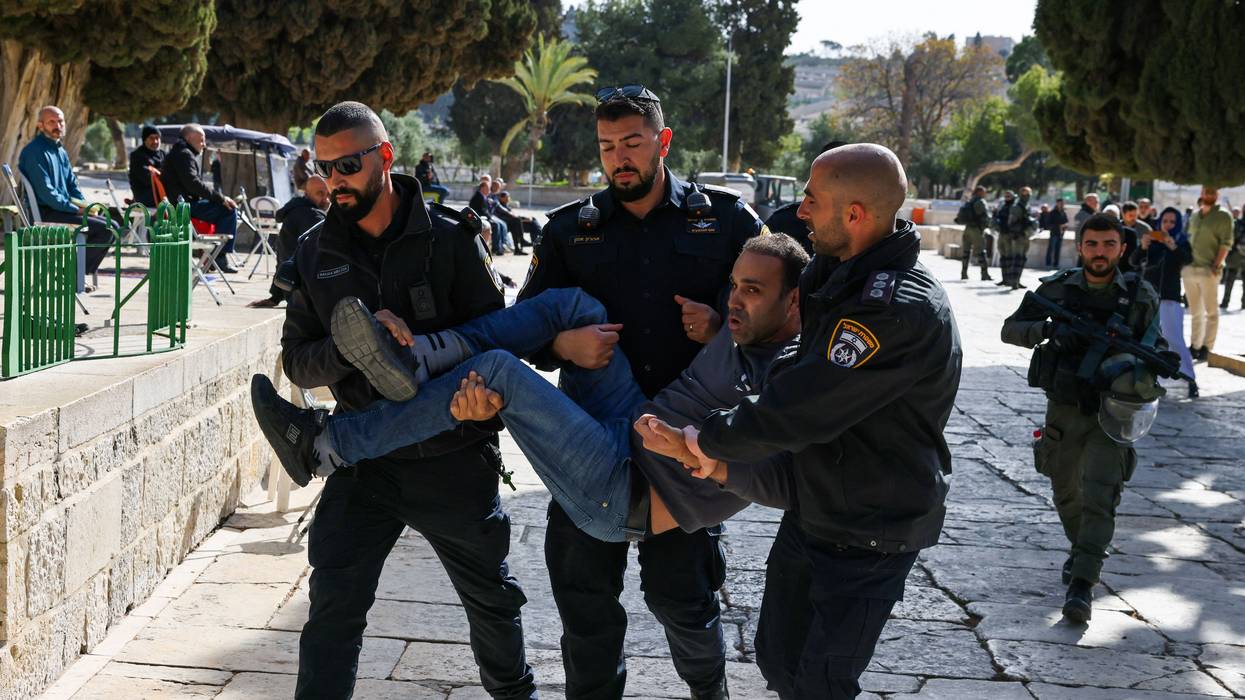
"The army broke the upper windows of the mosque and began throwing stun grenades at us," said one Palestinian worshiper who was arrested alongside hundreds of others.
Israeli police brutally attacked Palestinians inside the Al-Aqsa Mosque compound in occupied East Jerusalem on Tuesday night, injuring at least a dozen peaceful worshipers and arresting more than 400 during the Muslim holy month of Ramadan.
"Dozens of heavily armed officers stormed the site, used stun grenades, and fired tear gas into the Qibli prayer hall—the building with the silver dome—where hundreds of men, women, elderly people, and children were staying overnight to pray," Middle East Eye reported. "Some eyewitnesses said rubber-coated steel bullets were also fired."
"Israeli officers then beat worshipers with batons and riot guns, wounding many, before arresting them," the outlet noted. "Videos from inside the mosque showed Israeli officers repeatedly hitting people with batons while they appeared to lie on the floor. Meanwhile, the cries for help from women and children could be heard in the background."
The violent raid "continued into the morning when Israeli forces were once again seen assaulting and pushing Palestinians out of the compound and preventing them from praying–before Israelis were allowed in under police protection," Al Jazeera reported. "At least 400 Palestinians were arrested on Wednesday and remain in Israeli custody... at a police station in Atarot."
Bakr Owais, a 24-year-old student who was detained, told the outlet: "The army broke the upper windows of the mosque and began throwing stun grenades at us... They made us lay on the ground and they handcuffed us one by one and took us all out. They kept swearing at us during this time. It was very barbaric."
The Palestinian Commission of Detainees' Affairs estimates that between 400 and 500 men have been taken into custody.
According to Middle East Eye: "The Palestine Red Crescent Society (PRCS) said it received multiple reports of injuries at Al-Aqsa Mosque but was unable to estimate the number of casualties as Israeli forces blocked medics from reaching the wounded. One medic was attacked by an Israeli police officer and wounded outside one of the mosque's gates."
Al Jazeera reported that at least 12 Palestinians have suffered injuries—including bruises, fractures, and breathing problems caused by tear gas inhalation—at the hands of Israeli police officers. At least three of the victims have been transported to a hospital.
"As we approach Passover—a celebration of freedom—the Israeli military is beating Palestinians inside Al-Aqsa Mosque... The contradiction speaks volumes."
The Israeli crackdown, which one observer described as a premeditated attack intended "to send a message to the Palestinians that Israel is the sole sovereign over Al-Aqsa that can decide who can enter the site and when," was widely condemned.
Hamas leader Ismail Haniyeh denounced the latest assault on Islam's third holiest site as "an unprecedented crime" and urged Palestinians "to go en masse to the Al-Aqsa Mosque to defend it."
Palestinian Authority (PA) Prime Minister Mohammad Shtayyeh said that "what happened in Jerusalem is a major crime against the worshipers."
"Prayer in Al-Aqsa Mosque is not with the permission of the [Israeli] occupation, but rather it is our right," said Shtayyeh. "Al-Aqsa is for the Palestinians and for all Arabs and Muslims, and the raiding of it is a spark of revolution against the occupation."
PA presidential spokesperson Nabil Abu Rudeineh added that "what the occupation is doing right now at holy sites such as in Al-Aqsa, and the attacking of worshipers is an example of the relentless war against Palestinian people and Arab nations, which will ignite fires across the region."
Following the raid, "local mosques around Jerusalem called on people through speaker phones to rally in support of those assaulted," Middle East Eye reported. "Confrontations between residents and police broke out in several locations across the city."
The outlet continued:
In the occupied West Bank, hundreds of Palestinians took to the streets to condemn the assault and confront Israeli troops at checkpoints and army posts. Rallies also took place in Gaza, Umm al-Fahm (a Palestinian town in Israel), and the Jordanian capital Amman.
Rockets were later fired from the Gaza Strip toward Israel. At least one rocket landed inside the country and caused damage to a food factory, according to Israeli media.
This was followed by air strikes from the Israeli military targeting several locations in the besieged strip. No casualties were recorded from either side.
The final two weeks of Ramadan overlap with Passover—a weeklong Jewish holiday that begins Wednesday—sparking fears of additional violence in and around the Al-Aqsa Mosque compound.
According to Middle East Eye: "Israeli authorities have been removing worshippers from Al-Aqsa Mosque every night since the start of Ramadan after the Taraweeh prayer ends around 9:00 pm local time, albeit without this widespread use of violence. They have also been restricting who can enter the site and when, in what Palestinians say is an infringement on their freedom of religious practice. Itikaf at Al-Aqsa Mosque is not allowed by Israeli authorities outside of the last ten days of Ramadan, a ban that Palestinians refuse to comply with."
"Israeli forces regularly empty the mosque of Palestinians outside the five Muslim prayers, especially overnight and after dawn prayer to ensure a smooth incursion of Israeli settlers which takes place daily around 7:30 am local time," the outlet noted. "Temple Movement groups, which facilitate the settler incursions and advocate for the destruction of Al-Aqsa, have called for mass stormings throughout the week... They have also called for conducting ritual animal slaughter at the site which could trigger anger from Palestinians and Muslims worldwide. Palestinian groups have urged mass presence at the site this week to prevent the planned animal slaughter and mass incursions."
"Israel has murdered over 90 Palestinians, including at least 17 children, so far this year, and it is only April."
On Tuesday night, Jewish Voice for Peace tweeted: "As we approach Passover—a celebration of freedom—the Israeli military is beating Palestinians inside Al-Aqsa Mosque and blockading Palestinian cities across the occupied West Bank. The contradiction speaks volumes. Liberation cannot come at the cost of another people's freedom."
Alluding to recent protests against a far-right takeover of Israel's judiciary, Palestinian journalist Rula Jebreal similarly argued that "there cannot be a movement for an exclusive liberal democracy for Jews, and apartheid for Palestinians."
Numerous human rights groups around the world have condemned Israel as an apartheid state and called on the United States to cease providing $3.8 billion in annual military support to the anti-democratic regime.
According to the Palestinian national committee of the global Boycott, Divestment, and Sanctions (BDS) movement, "Israel has murdered over 90 Palestinians, including at least 17 children, so far this year, and it is only April."
"The BDS movement calls particularly on our brothers and sisters in the Arab world and on supporters in countries that reject diplomatic relations with Israel to intensify pressure against normalization of any relations with apartheid," the committee continued. "What ties with Israel normalize is unmasked Islamophobia, colonial violence, and apartheid brutality."
"Globally we call for pressure on states to impose an immediate military embargo and lawful targeted sanctions on apartheid," it added. "We call on our supporters worldwide to escalate all BDS campaigns! The time is now to end Israeli apartheid."
As Haaretz reported: "Jordan and Egypt, both involved in recent U.S.-backed efforts to de-escalate tensions between Israel and the Palestinians, issued separate statements condemning the incident. Saudi Arabia also condemned the Israeli police's actions, with its foreign ministry putting out a statement saying it undermines peace efforts."
Arab League Secretary-General Ahmed Aboul Gheit, meanwhile, said in a statement that "the extremist approaches that control the policy of the Israeli government will lead to widespread confrontations with the Palestinians if they are not put to an end."
Officials from Jordan, Egypt, and Palestine have called for an emergency meeting of the League in the wake of Israel's latest assault on the Al-Aqsa Mosque compound.
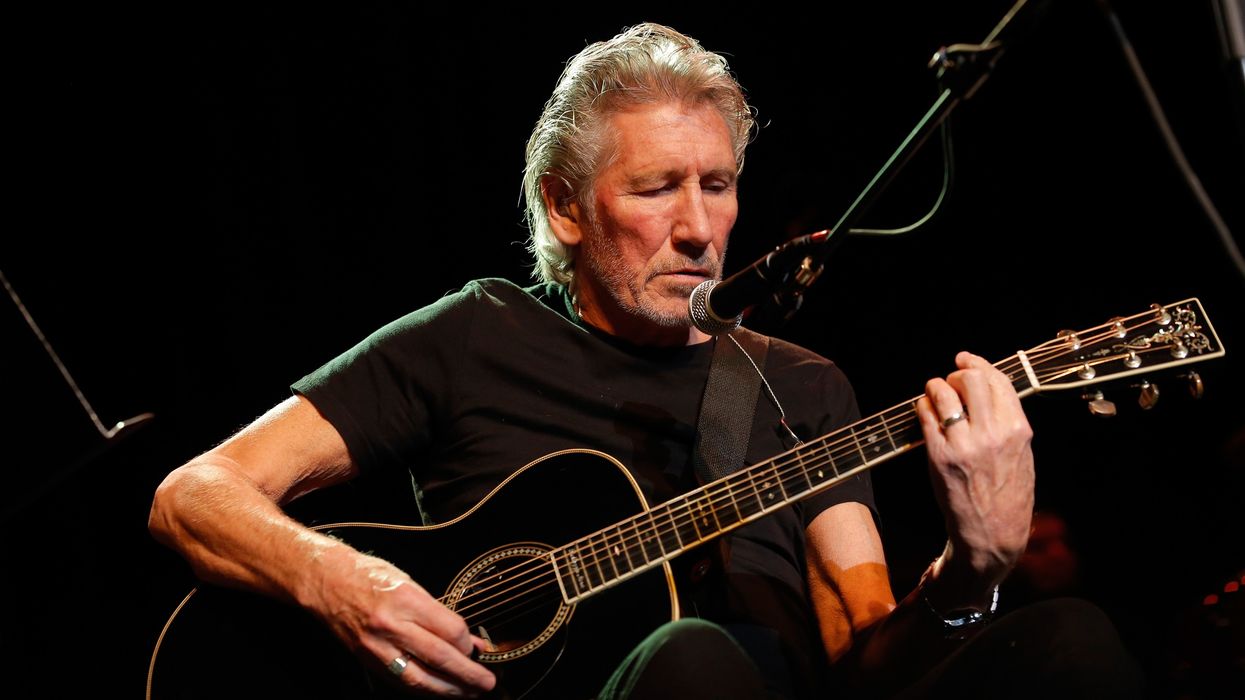
In a more civilized world, the German city would be giving the well-known musician an award for his courage, not trying to silence him with state censorship for his criticism of Israeli apartheid.
After a highly acclaimed run in North America, Roger Waters will take his “This Is Not a Drill” tour across Europe. The long journey includes shows in Germany, with the final concert in the country originally planned to take place in Frankfurt on May 28. On February 24, however, Frankfurt’s city council and the Hessian state government announced the cancellation of the Frankfurt concert, for “persistent anti-Israel behavior,” and called Waters an antisemite.
The cancellation of Waters’s concert is a threat to free speech and artistic freedom. It is designed to silence legitimate criticism of Israel’s government emanating from the world human rights community and within Israel itself. Waters’s music has captivated the world for more than five decades. Over that time, he has also become a respected human rights advocate. In response to the decision by Frankfurt’s city council, artists and human rights leaders, including Peter Gabriel, Julie Christie, Noam Chomsky, Susan Sarandon, Alia Shawkat, and Glenn Greenwald, have signed a petition calling on the German government to uncancel the concert.
In a more civilized world, Frankfurt would be giving him an award for his courage, not trying to silence him with state censorship.
To be clear, the position of Waters regarding the disparate treatment by the Israeli government of Jews and Palestinians—with numerous legal policies and laws that favor Jews over Palestinians—is well within the mainstream of the international human rights community.
"My support of universal human rights is universal. It is not antisemitism, which is odious and racist and which, like all forms of racism, I condemn unreservedly.” —Roger Waters
A range of prominent human rights groups, including Human Rights Watch and Amnesty International, as well as United Nations agencies and experts such as the UN special rapporteur, argue that Israel’s policy has created an “apartheid” state within Israel through its occupation of the Palestinian territories. Indeed, in 2021, the respected Israeli human rights group B’Tselem issued a strong statementcalling the Israeli government “a regime of Jewish supremacy from the Jordan River to the Mediterranean Sea” and concluding, “This is apartheid.” The statements Waters has made about Israel are entirely in line with these criticisms from these respected organizations and institutions.
The conflation of criticism of Israel and antisemitism is dangerous and perpetuates the common antisemitic perspective that all Jews monolithically support Israel. Because antisemitism is a real issue, its weaponization and distortion to stifle legitimate criticism of Israel is reckless, and undermines the fight against antisemitism.
The Frankfurt City Council’s statement offered no evidence for its claim except that Waters has “repeatedly called for a cultural boycott of Israel and drew comparisons to the apartheid regime in South Africa.” The statement about the “cultural boycott of Israel” is a reference to Boycott, Divestment, Sanctions (BDS), the Palestinian-led movement launched in 2005 that has since gained significant support across the globe.
We reached out to Waters for his response to the campaign against him, and he told us: “My platform is simple: it is implementation of the 1948 Universal Declaration of Human Rights for all our brothers and sisters in the world including those between the Jordan River and the Mediterranean Sea. My support of universal human rights is universal. It is not antisemitism, which is odious and racist and which, like all forms of racism, I condemn unreservedly.”
The official equation of criticism of Israeli policy with antisemitism is problematic, but it is not new in contemporary Germany. In May 2019, the German Parliament passed a nonbinding resolution that associated BDS with antisemitism. This resolution followed a series of attacks on organizations, including numerous Jewish groups (such as the Germany-based group Jewish Voice for Just Peace in the Middle East) whose advocacy on behalf of Palestinians was, at the same moment, being classified by the Israeli government as antisemitic.
In response to this targeting of critics of Israel’s government over its mistreatment of Palestinians, more than 90 Jewish scholars and intellectuals signed an open letter in defense of Jewish Voice for Just Peace in the Middle East. The last line of that letter called upon “the members of German civil society to fight antisemitism relentlessly while maintaining a clear distinction between criticism of the state of Israel, harsh as it may be, and antisemitism, and to preserve free speech for those who reject Israeli repression against the Palestinian people and insist that it comes to an end.”
In its attack on Waters, the Frankfurt City Council mimicked the current thinking followed by the extremist Israeli government in its weaponization of antisemitism to try to undermine critics of its official narrative.
The attack on Waters by the Frankfurt City Council is part of a disturbing pattern in contemporary Germany. The Berlin-based Jewish photographer Adam Broomberg, who is well-known for his work on the cruelty and irrationality of violence, found himself being targeted by the city of Hamburg’s antisemitism commissioner, Stefan Hensel.
In its attack on Waters, the Frankfurt City Council mimicked the current thinking followed by the extremist Israeli government in its weaponization of antisemitism to try to undermine critics of its official narrative.
Hensel has used his social media and various newspapers to attack anyone who supports the BDS movement as being “antisemitic.” His campaign against Broomberg raised the ire of the photographer, who was born in South Africa and who has an intimate and very personal understanding of apartheid. Broomberg told the art magazine Hyperallergic that he was confounded by this attack: “For a commissioner of antisemitism, for his first and most vehement and powerful attack to be on a Jew and to put a Jew’s life and profession at risk, is totally ironic. … I just buried my mother who knew the Holocaust and I come back and I’m accused of being a hateful antisemite advocating for terrorism against Jews. I couldn’t be more Jewish,” he said. “It’s affected me profoundly.”
In early March 2023, Hensel posted a photograph of Roger Waters on Instagram in the film version of his 2010-2013 concert tour “The Wall.” Alongside the picture, Hensel wrote: “The motto should be: ‘Roger Waters is not welcome in Hamburg.’” Adam Broomberg respondedon Twitter that Hensel’s image of Waters appearing in character as a fascist villain was taken out of context from an “undeniably anti-war film by Waters and [Sean] Evans called ‘The Wall’ to depict him as a Nazi in an attempt to cancel his concert.”
This distortion, Broomberg wrote, is an example of “German propaganda.”
In July 2022, South Africa’s Foreign Minister Naledi Pandor while addressing a meeting of the Palestinian Heads of Mission in Africa said that “The Palestinian narrative evokes experiences of South Africa’s own history of racial segregation and oppression.” Reflecting on the findings of human rights reports and UN documents, Pandor said: “These reports are significant in raising global awareness of the conditions that Palestinians are subjected to, and they provide credence and support to an overwhelming body of factual evidence, all pointing to the fact that the State of Israel is committing crimes of apartheid and persecution against Palestinians.”
Nothing that prominent international artists like Waters or Broomberg have said would be alien to the content of these reports or different from what Naledi Pandor said at that meeting in Pretoria. Indeed, everything she said mirrors the library of UN resolutions demonstrating the illegality of the Israeli occupation of Palestine and the apartheid conditions being faced by Palestinians inside Israel and its territories. The attack by the Frankfurt City Council on Waters is not actually an effort to call out antisemitism; it is, rather, an attack on the human rights of Palestinians.

Human rights defenders on Friday welcomed a move by Chile's progressive president to put off accepting the new Israeli ambassador's credentials in response to the killing of a Palestinian teenager earlier in the day.
"All states should cut diplomatic relations with Israel for its continuing crimes against humanity. Enough is enough."
A spokesperson for the Chilean Foreign Ministry confirmed to Reuters that the decision to delay a meeting between President Gabriel Boric and Israeli Ambassador Gil Artzyeli was made "because of the death of a minor."
Israeli occupation forces fatally shot 17-year-old Odai Trad Salah in the head during a Thursday morning raid in the village of Kufr Dan outside Jenin in the illegally occupied West Bank of Palestine.
According to The Palestine Chronicle, Artzyeli was inside the Chilean presidential palace awaiting his scheduled meeting with Boric when Foreign Minister Antonia Urrejola informed him that his credentials would not be accepted that day, and that the formal ceremony would be delayed until next month.
Ahmad al-Deek, an adviser to Palestine's foreign ministry, said in a statement that "we welcome the Chilean president's position, which is in line with international law and resolutions, and we appreciate this position aimed at applying pressure on the Israeli government to stop its ongoing daily crimes against our people."
Israel's Ministry of Foreign Affairs responded by calling the snub "puzzling and unprecedented behavior" that "seriously harms the relations between the two countries."
Chile is home to the largest Palestinian community outside the Middle East. The advocacy group Comunidad Palestina de Chile published a statement Thursday saying it "highly values" the decision by Boric to postpone Artzyeli's credential ceremony.
"As long as the world continues to treat Israel and its diplomats with normality, while committing war crimes, crimes against humanity, human rights violations systematically, and subjecting the Palestinian population to an apartheid regime, the situation of the Palestinians will not change," the group added.
Michael Bueckert, vice president of the group Canadians for Justice and Peace in the Middle East, tweeted that "the fact that Gabriel Boric's extremely normal and reasonable actions in response to Israeli violence against civilians is seen as 'unprecedented' reflects incredibly poorly on the rest of the international community."
The Palestinian BDS National Committee--part of the global boycott, divestment, and sanctions movement--thanked Boric for "courageously postponing the accreditation of apartheid Israel's ambassador."
"Israel is escalating its massacres, ethnic cleansing, siege, land theft, and colonization in broad daylight," the group added. "As with apartheid South Africa, there should be no normal relations with Israel's abnormal, decades-old regime of settler-colonialism and apartheid."
The Israeli raid that killed Salah targeted the home of cousins Ahmed Ayman Abed and Abdulrahman Hani Abed, who were killed on Wednesday after attacking an Israel Defense Forces checkpoint outside the Jenin refugee camp and killing IDF Maj. Bar Falah.
According to the anti-occupation news site Mondoweiss, six Palestinians, including four from the Jenin area, were killed by Israeli forces over the past week. Among those killed was 16-year-old Haitham Hani Mohammad Mubarak.
The Palestine Chronicle reports at least nine Palestinians--including an 8-year-old child--were injured Friday as Israeli occupation forces attacked demonstrators taking part in a weekly protest against the expansion of an illegal Jewish settler colony in the village of Kafr Qaddum near Qalqiliya. According to witnesses, IDF troops attacked the protesters with rubber-coated steel bullets and tear gas.
Sixteen children were among the 45 people killed last month during IDF attacks on Gaza in response to rockets fired at Israel by Palestinian resistance fighters.
Since the beginning of the century, more than 2,200 Palestinian children have been killed by Israeli military, police, and settler attacks, according to the group Defense for Children International Palestine (DCIP).
"Israeli soldiers kill Palestinian children with complete impunity," DCIP accountability program director Ayed Abu Eqtaish said last week. "With each killing, Israeli forces highlight their complete disregard for international norms, brazenly perpetrating war crimes over and over again, as the international community merely expresses concern."

Dedicated to the memory of Ghassan Kanafani, an iconic Palestinian leader and engaged intellectual who was assassinated by the Israeli Mossad on July 8, 1972
This is, according to the Italian socialist Antonio Gramsci, the 'interregnum'--the rare and seismic moment in history when great transitions occur, when empires collapse and others rise, and when new conflicts and struggles ensue.
"There's over two million people now living in hideous conditions, barely survivable."
The Gramscian 'interregnum, however, is not a smooth transition, for these profound changes often embody a 'crisis,' which "consists precisely in the fact that the old is dying and the new cannot be born."
"In this interregnum a great variety of morbid symptoms appear," the anti-fascist intellectual wrote in his famous "Prison Notebooks."
Even before the Russia-Ukraine war and the subsequent deepening of the Russia-NATO crisis, the world was clearly experiencing an interregnum of sorts--the Iraq war, the Afghanistan war, the global recession, the rising inequality, the destabilization of the Middle East, the 'Arab Spring', the refugee crisis, the new 'scramble for Africa', the US attempt at weakening China, the US' own political instability, the war on democracy and decline of the American empire ..
Recent events, however, have finally given these earth-shattering changes greater clarity, with Russia making its move against NATO expansion, and with China and other rising economies--BRICS nations--refusing to toe the American line.
To reflect on all of these changes, and more, we spoke with the world's 'most cited' and respected intellectual, MIT Professor Noam Chomsky.
The main objective of our interview was to examine the challenges and opportunities facing the Palestinian struggle during this ongoing 'interregnum.' Chomsky shared with us his views about the war in Ukraine and its actual root causes.
The interview, however, largely focused on Palestine, Chomsky's views of the language, the tactics, and solutions affiliated with the Palestinian struggle and the Palestinian discourse. Below are some of Chomsky's thoughts on these issues, taken from a longer conversation that can be viewed here.
Chomsky on Israeli Apartheid
Chomsky believes that calling Israeli policies towards Palestinians" apartheid" is actually a "gift to Israel," at least, if by apartheid one refers to the South-African style apartheid.
"I have held for a long time that the Occupied Territories are much worse than South Africa. South Africa needed its black population, it relied on them," Chomsky said, adding: "The black population was 85% of the population. It was the workforce; the country couldn't function without that population and, as a result, they tried to make their situation more or less tolerable to the international community. (...) They were hoping for international recognition, which they didn't get."
So, if the Bantustans were, in Chomsky's opinion, "more or less livable," the same "is not true for the Palestinians in the Occupied Territories. Israel just wants to get rid of the people, doesn't want them. And its policies for the last 50 years, with not much variation, have been just somehow making life unlivable, so you will go somewhere else."
These repressive policies apply in the entirety of the Palestinian territory: "In Gaza, (they) just destroy them," Chomsky said. "There's over two million people now living in hideous conditions, barely survivable. International law organizations say that they are not likely to even be able to survive in a couple of years. (...) In the Occupied Territories, in the West Bank, atrocities (take place) every day."
Chomsky also thinks that Israel, unlike South Africa, is not seeking the international community's approval. "The brazenness of Israeli actions is pretty striking. They do what they want, knowing the United States will support them. Well, this is much worse than what happened in South Africa; it's not an effort to somehow accommodate the Palestinian population as a suppressed workforce, it's just to get rid of them."
Chomsky on the New Palestinian Unity
The events of May 2021 and the popular unity among Palestinians are "a very positive change," in Chomsky's opinion. "For one thing, what has severely impeded the Palestinian struggle is the conflict between Hamas and the PLO. If it's not resolved, it's a great gift to Israel."
Palestinians also managed to overcome the territorial fragmentation, according to Chomsky: "Also, the split between the legal boundaries" separating Israel from "the expanded area of greater Palestine" was always a hindrance to Palestinian unity. That is now being overcome, as the Palestinian struggle "is turning into the same struggle. Palestinians are all in it together."
"B'tselem and Human Rights Watch's description of the whole region as a region of apartheid--though I don't entirely agree with it for the reasons I mentioned, because I think it's not harsh enough--nevertheless, it is a step towards recognizing that there is something crucially in common between all this area."
"So, I think this is a positive step. It is wise and promising for Palestinians to recognize 'we're all in it together,' and that includes the diaspora communities. Yes, it's a common struggle," Chomsky concluded.
Chomsky on One State, Two States
Though support for one state has grown exponentially in recent years, to the extent that a recent public opinion poll conducted by the Jerusalem Media and Communication Center (JMCC) concluded that a majority of Palestinians in the West Bank now support the one-state solution, Chomsky warns against discussions that don't prioritize the more urgent conversation of Tel Aviv's colonial quest for a "greater Israel."
"We should not be deluded into thinking that events are developing towards a one-state outcome or towards a confederation, as it's now being discussed by some of the Israeli left. It's not moving in that direction, that's not even an option for now. Israel will never accept it as long as it has the option of greater Israel. And, furthermore, there is no support for it in the international community, none. Not even the African states."
"The two-states, well, we can talk about it but you have to recognize that we have to struggle against the ongoing live option of a greater Israel." Indeed, according to Chomsky, "much of the discussion of this topic seems to me misplaced."
"It is mostly a debate between two states and one state that eliminates the most important option, the live option, the one that's being pursued, namely greater Israel. Establishing a greater Israel, where Israel takes over whatever it wants in the West Bank, crushes Gaza, and annexes--illegally--the Syrian Golan Heights .., just takes what it wants, avoids the Palestinian population concentrations, so, it doesn't incorporate them. They don't want the Palestinians because of what is called the democratic Jewish state, the pretense of a democratic Jewish state in which the state is the sovereign state of the Jewish people. So, my state, but not the state of some Palestinian villager."
Chomsky continues, "To maintain that pretense, you have to keep a large Jewish majority, then you can somehow pretend it's not repressive. But so the policy is a greater Israel, in which you won't have any demographic problem. The main concentrations of Palestinians are excluded in other areas, they are basically being expelled."
Chomsky on BDS, International Solidarity
We also asked Chomsky about the growing solidarity with Palestinians on the international stage, on social media, and the support for the Palestinian struggle among many public personalities and celebrities.
"I don't think mainstream celebrities mean that much. What matters is what is happening among the general population in the United States. In Israel, unfortunately, the population is moving to the right. It is one of the few countries I know, maybe the only one, where younger people are more reactionary than older ones."
"The United States is going in the opposite direction," Chomsky continued, as "young people are more critical of Israel, more and more supportive of Palestinian rights."
Regarding the Boycott, Divestment, and Sanctions movement (BDS), Chomsky acknowledged the significant role played by the global grassroots movement, though he noted that BDS "has a mixed record." The movement should become "more flexible (and) more thoughtful about the effects of actions," Chomsky noted.
"The groundwork is there," Chomsky concluded. "It is necessary to think carefully about how to carry it forward."

A federal court ruling allowing Arkansas to penalize government contractors that support boycotts of the Israeli government was decried as "dangerous" and a threat to First Amendment rights on Wednesday, as civil liberties defenders vowed to appeal the decision to the U.S. Supreme Court.
The 8th Circuit Court of Appeals ruled that an Arkansas law does not violate Americans' constitutional rights by requiring state contractors with contracts of $1,000 or more to reduce their fees by 20% if they refuse to sign a pledge saying they won't support the Boycott, Divest, and Sanction movement (BDS).
"This will flip the First Amendment on its head. It's shocking to see we're living in a time where our courts are deteriorating our rights and abilities to express ourselves."
The law was previously found to be unconstitutional by a panel of three judges who sit on the court, but Judge Jonathan Kobes wrote in the majority opinion that "economic decisions that discriminate against Israel... are not inherently expressive and do not implicate the First Amendment."
The BDS movement aims to end international support for Israel's oppressive policies targeting Palestinians and pressure the country to comply with international law, which prohibits its occupation of Palestine.
Palestinian civil society organizations have led the call for supporters of human rights to boycott Israeli companies and businesses in order to pressure the government to end its oppression.
The Arkansas Times, a progressive magazine, sued the state over the law in 2018, saying it was unconstitutional. The Little Rock-based outlet refused to sign the state's pledge as it sought an advertising contract from a public university.
The Times is being represented by the ACLU, where senior staff attorney Brian Hauss on Thursday expressed hope that when the group files an appeal, "the Supreme Court will set things right and reaffirm the nation's historic commitment to providing robust protection to political boycotts."
While the case centers around The Times' pursuit of a government contract, said filmmaker Julia Bacha, the ruling has "huge implications for free speech in America."
Alan Leveritt, publisher of The Times, wrote in a New York Times op-ed last year that "states are trading their citizens' First Amendment rights for what looks like unconditional support for a foreign government."
Leveritt agreed Thursday that the high court should review the ruling, saying that the decision "that politically-motivated consumer boycotts are not protected by the First Amendment misreads Supreme Court precedent and departs from this nation's longstanding traditions."
"It ignores the fact that this country was founded on a boycott of British goods and that boycotts have been a fundamental part of American political discourse ever since," said Leveritt.
Arkansas officials' goal of banning businesses and individuals from working with the state is "a ridiculous government overreach that has nothing to do with Arkansas," the publisher added, noting that the ruling could damage The Times financially. "In our particular case it requires The Arkansas Times to take a political position in return for advertising. We don't do that... The good news is that we have received tremendous support from our readers to the point that we now have over 3,000 paid online subscribers, which has done much to cushion the financial impact of this law."
The nation's largest Muslim civil rights group, the Council on American-Islamic Relations (CAIR), said the ruling "tacitly endorsed a Palestine-exception to the First Amendment" and noted that several federal courts have blocked anti-BDS laws like Arkansas's 2017 measure.
"By ruling against The Arkansas Times, the Eight Circuit has broken with nearly every other court that has reviewed and struck down these unconstitutional, un-American anti-boycott laws," said Edward Ahmed Mitchell, national deputy director of CAIR. "We hope The Arkansas Times fights this ruling, which endangers the free speech rights of every American."
At least one judge on the 8th Circuit Court of Appeals dissented from the majority opinion. Judge Jane Kelly wrote that the Arkansas law "seeks not only to avoid contracting with companies that refuse to do business with Israel [but also] to avoid contracting with anyone who supports or promotes such activity."
"One could imagine a company posting anti-Israel signs, donating to causes that promote a boycott of Israel, encouraging others to boycott Israel, or even publicly criticizing the act with the intent to 'limit commercial relations with Israel' as a general matter," she added. "And any of that conduct would arguably fall within the prohibition."
Abed Ayoub, legal director of the American-Arab Anti-Discrimination Committee (ADC), told Al Jazeera that the 8th Circuit handed down "a very un-American ruling and position."
"This will flip the First Amendment on its head. It's shocking to see we're living in a time where our courts are deteriorating our rights and abilities to express ourselves," he said. "This is not just about boycotts. This is opening the door to strip away First Amendment rights of all Americans."
"It's very frightening," Ayoub added.

After a massive earthquake killed more than 1,000 people and leveled entire villages in southeast Afghanistan, the Biden administration on Wednesday faced fresh calls to return the roughly $7 billion in central bank assets it seized from the war-torn and impoverished nation as it attempts to recover from the catastrophe.
"Aid organizations have long cited the frozen assets as well as the sanctions regime as insurmountable barriers to ensuring Afghans receive basic needs and emergency aid," tweeted the advocacy group Afghans for a Better Tomorrow. "[President Joe Biden] should move quickly and decisively at this critical moment; time is of the essence."
"Just because we don't like the Taliban doesn't make our collective punishment of Afghan women, children, and the entire population of ordinary Afghans an acceptable policy."
The earthquake added to the already horrific humanitarian crisis facing ordinary Afghans, tens of millions of whom are facing acute hunger as the nation's economy--strangled by U.S. and European sanctions and other punitive measures--verges on total collapse. The United Nations has warned that 97% of the Afghan population could be plunged into poverty this year.
Clare Daly, a socialist member of the European Parliament, demanded Wednesday that Biden administration officials "give back the billions they stole like crooks from the Afghan people."
Those funds, Daly wrote on Twitter, are "needed now more than ever to address the devastation."
Earlier this year, the Biden administration announced a ploy to permanently seize $7 billion in Afghan central bank assets that it froze after the Taliban retook power last August. The administration said it would split the assets between an ill-defined fund to assist ordinary Afghans and family members of 9/11 victims.
The New York Times reported earlier this month that "at least six major groups of victims of the Sept. 11, 2001, attacks have struck a tentative deal to divide about $3.5 billion in Afghan central bank assets they are trying to seize to pay off legal claims against the Taliban."
In a letter to the editor of the Washington Post earlier this week, Kelly Campbell of 9/11 Families for Peaceful Tomorrows--a group that opposes the Biden administration's seizure of Afghan assets--wrote that "just because we don't like the Taliban doesn't make our collective punishment of Afghan women, children, and the entire population of ordinary Afghans an acceptable policy."
"In addition to withholding aid funds, the administration froze billions of dollars in Afghan central bank funds, crippling the country's economy," Campbell added. "If we care about Afghan people, including Afghan women, the United States must release Afghan central bank funds to get the economy on its feet and ensure that aid money is flowing to prevent immediate disaster and, ultimately, a failed state."
Related Content

In response to Wednesday's earthquake, National Security Advisor Jake Sullivan said the Biden administration is "deeply saddened to see the devastating earthquake that took the lives of at least 1,000 people in Afghanistan"--but gave no indication that it is considering returning the country's seized assets.
"President Biden is monitoring developments and has directed USAID and other federal government partners to assess U.S. response options to help those most affected," said Sullivan.
Adnan Junaid, the International Rescue Committee's vice president for Asia, warned in a statement that "the toll this disaster will have on the local communities the affected provinces is catastrophic, and the impact the earthquake will have on the already stretched humanitarian response in Afghanistan is a grave cause for concern."
"Funding is needed now to save lives and support essential services, but the international community must go further and establish a roadmap that sets out strategies to resume development assistance, provide technical support to the central bank, and ultimately release Afghanistan's foreign exchange reserves," said Junaid. "Only a bold strategy that addresses the causes of this crisis will put an end to the spiral of misery being faced by its population."