
SUBSCRIBE TO OUR FREE NEWSLETTER
Daily news & progressive opinion—funded by the people, not the corporations—delivered straight to your inbox.
5
#000000
#FFFFFF
To donate by check, phone, or other method, see our More Ways to Give page.


Daily news & progressive opinion—funded by the people, not the corporations—delivered straight to your inbox.
"They've built a billion-dollar industry on stolen voices because they thought no one would make them pay for it," said a lawyer for the plaintiffs.
In yet another display of how Illinois' pioneering biometric privacy law can be used to protect Americans, state residents who work as audio storytellers, broadcast journalists, podcasters, voice actors, and more filed class-action lawsuits against Big Tech this week for "stealing their voices" to develop artificial intelligence products.
Since Illinois legislators passed the groundbreaking Biometric Information Privacy Act (BIPA) in 2008—regulating the collection, use, safeguarding, handling, storage, retention, and destruction of biometric identifiers, including fingerprints, voiceprints, and scans of a retina, iris, hand, or face geometry—there have been thousands of lawsuits filed and major settlements with Clearview AI, Facebook, and Six Flags.
Represented by the award-winning civil rights firm Loevy + Loevy, the Illinoisans are suing Adobe, Alphabet and its subsidiary Google, Apple, Amazon, ElevenLabs, Facebook parent company Meta, Microsoft, NVIDIA, and Samsung under BIPA.
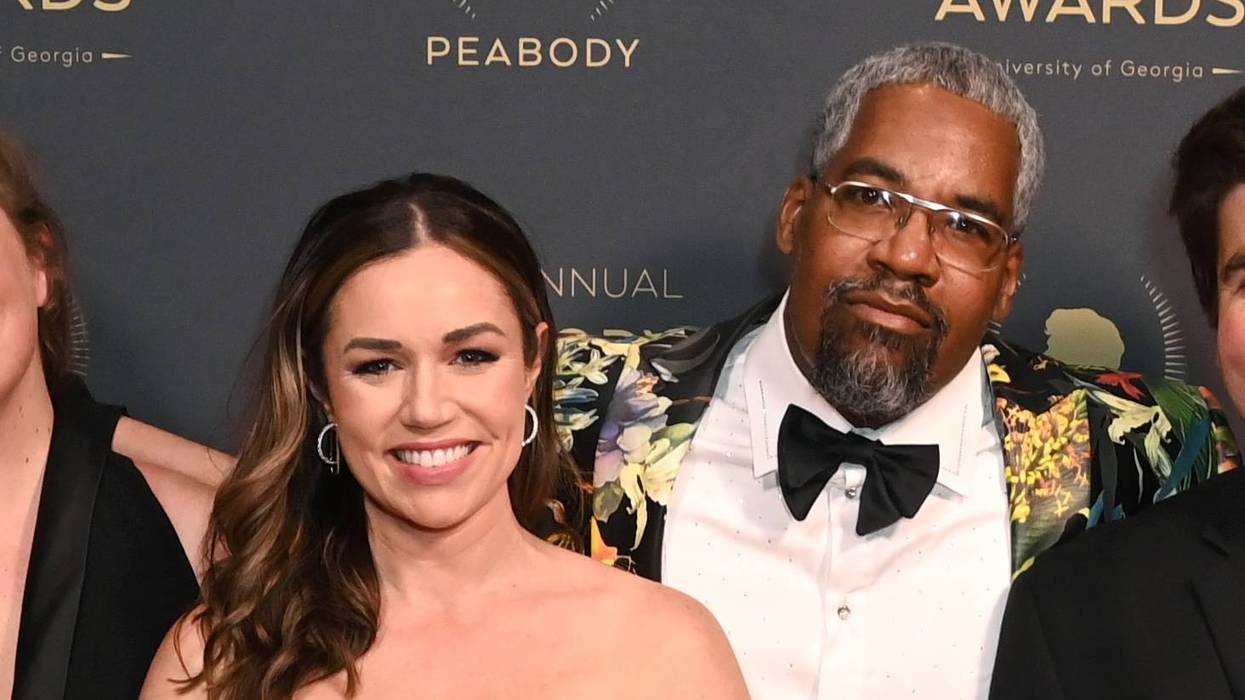
The plaintiffs are audiobook narrators Lindsay Dorcus and Victoria Nassif as well as journalists Robin Amer, Yohance Lacour, Carol Marin, and Phil Rogers. Journalist Alison Flowers is part of all lawsuits except those against Amazon and Apple. Their lawyers noted that "between them, they have multiple Emmy and Peabody awards, several Pulitzer Prizes, several Alfred I. duPont-Columbia University awards, an Edward R. Murrow award, a James Beard award, a SOVAS award, and many, many other honors."
Their cases focus on the voiceprint of each plaintiff, which is "a digital fingerprint of the human voice," as the complaints explain. "It is a mathematical capture of the acoustic features—pitch, timbre, resonance—that emerge from a person's distinctive physiology, combined with the speech patterns that person develops over a lifetime: accent, cadence, articulation. Like a fingerprint, a voiceprint identifies the individual. Like a fingerprint, it cannot be changed."
The Adobe case targets Firefly, the company's family of generative AI models. The complaint states that the company "treated the human voices that built Firefly as ownerless—ignoring the speakers' rights, taking their voiceprints without asking, paying them nothing, and giving them no notice that their voices were being used at all, and "built a mirage of commercial safety around products whose construction violated the one thing Illinois law requires before collecting a voiceprint: consent from the person."
The Google filing points out that the company "has been a repeat defendant in BIPA cases" and even "paid approximately $100
million to settle BIPA claims arising from Google Photos' face grouping feature," among other high-profile settlements.
The Meta suit highlights that "no defendant in any biometric-privacy matter pending in the United States has had more direct, more sustained, or more financially consequential notice of BIPA than Meta," given that the company "has paid the three largest biometric-privacy settlements in American history," including $650 million to resolve claims under the Illinois law regarding Facebook's photo tag suggestions.
"By the time Meta released Voicebox in June 2023, MMS in May 2023, and SeamlessM4T in August 2023, Meta had been a BIPA defendant for nearly a decade and had paid more than $2 billion in biometric-privacy settlements," the complaint continues. "The technology Meta built using plaintiffs' voices now competes with plaintiffs in the markets where they earn their living."
The Amazon filing details similar harm to plaintiffs:
Amazon extracted plaintiffs' voiceprints without notice or consent, depriving them of the right BIPA guarantees to make an informed decision about the collection and use of their biometric data. Amazon retains those voiceprints in its commercial models and continues to profit from them. Amazon has further disseminated those voiceprints, encoded in model parameters, through its cross-affiliate, subprocessor, and integration-partner networks. The technology built on those voiceprints now displaces plaintiffs in the markets where they earn their living—the broadcast journalism, investigative podcast, audiobook narration, voiceover, and voice performance markets that the voice products are designed and sold to serve.
"What we are seeing is an illegal and unethical exploitation of talent on a massive scale, and one of the largest violations of biometric privacy ever committed," said Loevy + Loevy attorney Ross Kimbarovsky in a Thursday statement.
"The legislators who wrote and passed BIPA had the foresight to realize that biometric privacy was going to be a major civil rights issue in the 21st century," the attorney continued. "Social security numbers can be changed, passwords can be reset, and credit cards can be canceled, but once your biometric data is compromised, there's nothing you can do about it."
"These companies know the law, know their liability, and know exactly how to build consent systems that comply with BIPA," Kimbarovsky added. "They've built a billion-dollar industry on stolen voices because they thought no one would make them pay for it."
In addition to Illinois, Texas and Washington state have enacted biometric privacy laws, while California, Colorado, Connecticut, Utah, and Virginia have comprehensive consumer protection policies that apply to such information, according to Bloomberg Law. However, efforts in Congress to enact federal legislation—such as the National Biometric Information Privacy Act and the Facial Recognition and Biometric Technology Moratorium Act—have been unsuccessful.
"Chicagoans and all Americans suffer from a healthcare system that is insanely complicated, medically unsound, and ruinously expensive for individuals, businesses, and the nation as a whole."
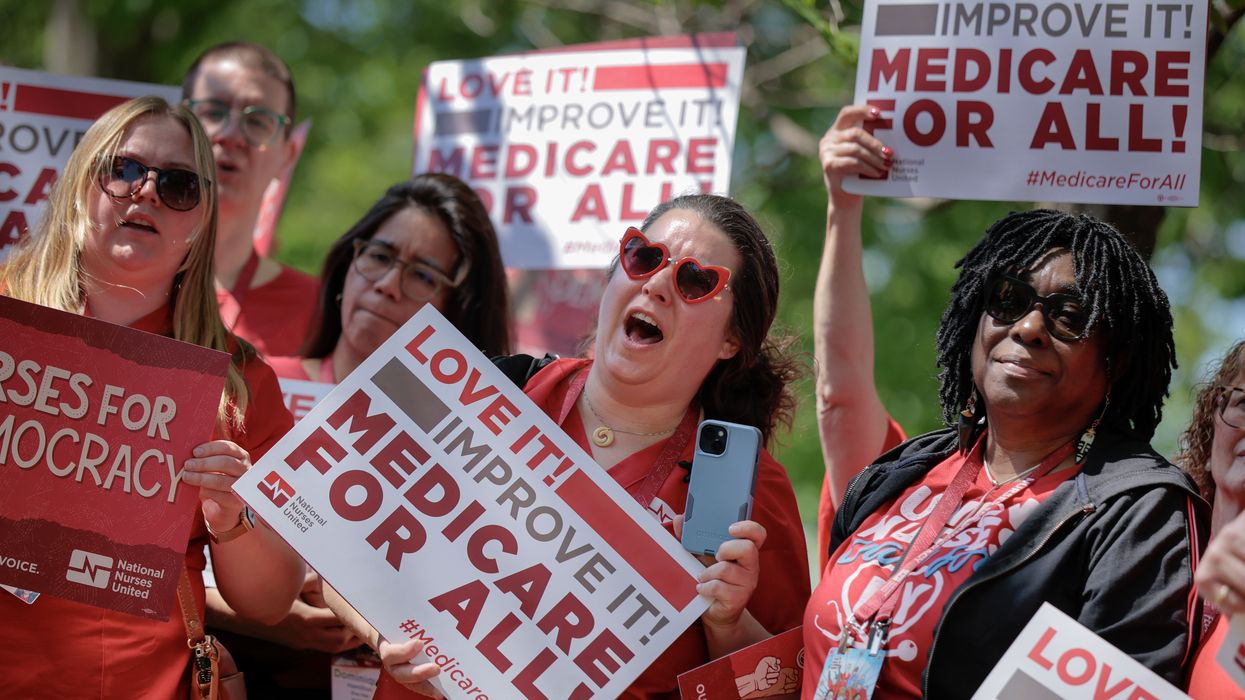
As Americans contend with skyrocketing health insurance premiums and a Republican congressional majority unwilling to extend even meager subsidies, the City Council in the third-largest US city—Chicago, Illinois—on Wednesday unanimously approved a resolution pressuring Congress to pass Medicare for All legislation.
Chicago's resolution from Alderwoman Ruth Cruz, a Democrat representing Ward 30, "enthusiastically" endorses the Medicare for All Act introduced last year by Sen. Bernie Sanders (I-Vt.) and Reps. Pramila Jayapal (D-Wash.) and Debbie Dingell (D-Mich.), and calls on federal legislators "to work toward its swift enactment."
The resolution notes that if passed, the congressional bill would cover "all necessary primary, preventative, and medical care; including hospital, surgical, and outpatient services, prescription drugs, mental health, and substance abuse treatment; emergency services; reproductive care; dental, hearing and vision care; and long-term care" for all Americans throughout lifetimes without without co-payments, deductibles, or other out-of-pocket costs.
Speaking at Wednesday's five-hour meeting, Cruz declared that "healthcare is a human right."
"Chicagoans and all Americans suffer from a healthcare system that is insanely complicated, medically unsound, and ruinously expensive for individuals, businesses, and the nation as a whole," Cruz said in a statement. "Medicare for All would put actual medical care back at the center of our healthcare system, leading to better outcomes and lower costs for millions of Americans."
"Every other developed nation on Earth—and some developing nations as well!—has figured out how to provide universal health coverage to their people," she continued. "It is long past time for Congress to do the rational, responsible thing and adopt Medicare for All in the United States."
Chicago has now joined dozens of US cities and counties that have, in recent years, formally supported replacing the nation's for-profit healthcare system with a public single-payer one. The Board of Commissioners for Illinois' Cook County—which includes Chicago—approved a similar resolution in 2019.
US Rep. Jesús "Chuy" García (D-Ill.), a cosponsor of the federal bill and "proud" supporter of the Chicago resolution, argued Wednesday that "Medicare for All is the right step toward addressing high costs and inequalities in the current system, which particularly affect underserved populations and minorities."
García, who plans to retire after this term, represents Illinois' 4th Congressional District, which spans parts of Cook and DuPage counties. He said that "my district in Chicago has a 14% uninsurance rate, and many cannot afford healthcare even though they work full time."
President Donald Trump's "cruel spending bill passed in 2025 will leave 10 million more people nationwide without health insurance by 2034, because of changes his bill made to the Affordable Care Act and Medicaid," he highlighted, referring to the One Big Beautiful Bill Act. "Passing the Medicare for All Act is more urgent than ever."
"At a time when people are struggling to pay for medications, groceries, and gasoline because of President Trump's policies, Medicare for All will guarantee that all Chicago and other US residents will be fully covered for healthcare anywhere in the United States, regardless of employment status, marital status, citizenship status, income, age, or geography," García concluded. "We owe it to America. We owe it to the hardworking people in our communities."
Physicians for a National Health Program, an organization that fights for a single-payer system at the federal level, pointed out on social media Wednesday that "this makes Chicago the biggest city in the country to endorse Medicare for All."
Breaking news: Chicago’s City Council has voted unanimously to pass a resolution in support of Medicare for All 🎉This makes Chicago the biggest city in the country to endorse Medicare for All, and sends a message to federal legislators that their constituents expect them to support single payer.
[image or embed]
— Physicians for a National Health Program (PNHP) (@pnhp.bsky.social) March 18, 2026 at 9:01 PM
The Chicago-based group's national coordinator, Dr. Claudia Fegan, retired as chief medical officer of Cook County Health in December 2024. While publicly advocating for the resolution earlier this month, she said that "I am reminded of a woman I admitted to the hospital one night a few years ago. Both of her breasts were rock hard. They were infiltrated with cancer with palpable lymph nodes in her axilla. She worked as a hairdresser, owned her own shop, but had no health insurance."
"She was sitting at home waiting to die," Fegan explained. "She believed she had no other choice. She knew she could not afford her care. Her daughter made her come in. Remarkably, we were able to get a dramatic response with treatment. No one should ever have to sit at home waiting to die in this country, when we have treatments that can be lifesaving."
Eagan Kemp, healthcare policy advocate at another national group, Public Citizen, said Wednesday that "the fragmentation of our healthcare system creates instability and inequity for Chicago residents every day."
"Right now, the situation is dire," Kemp acknowledged, "with the recent actions by the Trump administration and its MAGA allies in Congress to further unravel an already tenuous system that leaves tens of millions of Americans without coverage and even more without adequate coverage."
"But the federal government already has the capacity and funding to efficiently address this through a universal insurance program," the advocate emphasized. "Thankfully, we also have an excellent plan for how to accomplish that in the Medicare for All Act of 2025. This resolution ushers the solution into the spotlight as a key demand for Americans to voice to our government."
After the Chicago resolution's approval, Susan Hurley, executive director of the Illinois Single Payer Coalition, which organized communities to advance the measure, stressed that "our collective misery, suffering, and impoverishment is allowed to happen so that health insurance CEOs and others in our bloated, corrupt system can make hundreds of millions of dollars."
"The companies hoard billions in profits," Hurley said. "It is monstrous madness to allow this to continue for no other reason than satisfying greed beyond all comprehension at the expense of human lives."
The city's Wednesday move came on the heels of Illinois' primary elections, in which state residents chose Lt. Gov. Juliana Stratton, a supporter of Medicare for All, in a nationally watched race to run for retiring US Sen. Dick Durbin's (D-Ill.) seat in November, when Democrats aim to reclaim both chambers of Congress.
"It’s time to kick AIPAC and other billionaire-funded super PACs out of Democratic primaries."
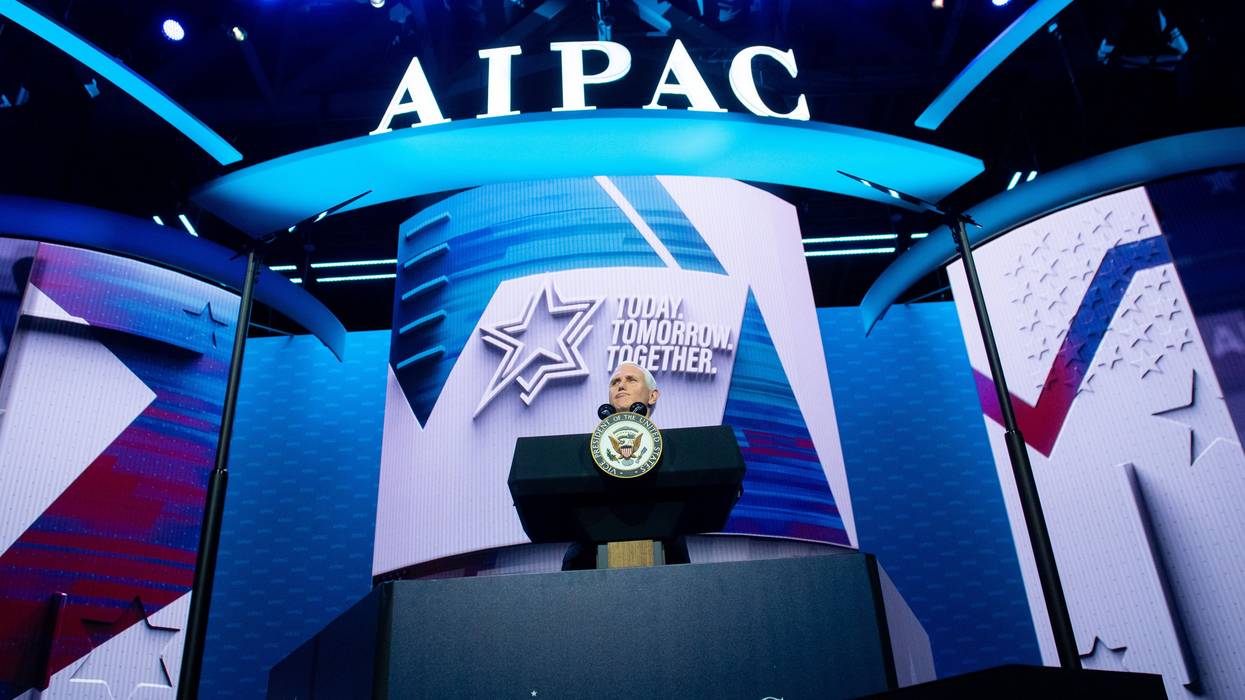
The American Israel Public Affairs Committee failed on Tuesday to secure wins in the two Illinois US House primaries it invested the most money in, the latest electoral flop for the pro-Israel lobbying organization whose brand has become increasingly noxious to Democratic voters amid Israel's genocidal assault on Gaza.
In Illinois' 7th and 9th Congressional Districts, AIPAC spent millions backing Chicago treasurer Melissa Conyears-Ervin, who finished second, and Democratic State Sen. Laura Fine, who finished third. In the latter race, AIPAC pivoted from initially attacking Evanston Mayor Daniel Biss—who ultimately won—to concentrate on defeating Justice Democrats-backed Kat Abughazaleh.
AIPAC, which faced backlash for trying to conceal its spending in the Illinois contests using shell organizations, tried to spin the 9th Congressional District results as a win, despite spending more against Biss than against Abughazaleh.
"Though Kat narrowly lost this race, we are proud to have backed this campaign that helped ensure the people of IL-09 would not be represented by another AIPAC shill," Alexandra Rojas, executive director of Justice Democrats, said in a statement. "This outcome is a massive loss for AIPAC as they lose more and more influence within the Democratic Party. No amount of shell PACs or covert funding can hide their toxicity from Democratic voters, their monopoly over this party’s agenda is coming to an end.”
Two AIPAC-backed candidates did prevail Tuesday: Cook County Commissioner Donna Miller in the 2nd Congressional District and former Rep. Melissa Bean in the 8th Congressional District.
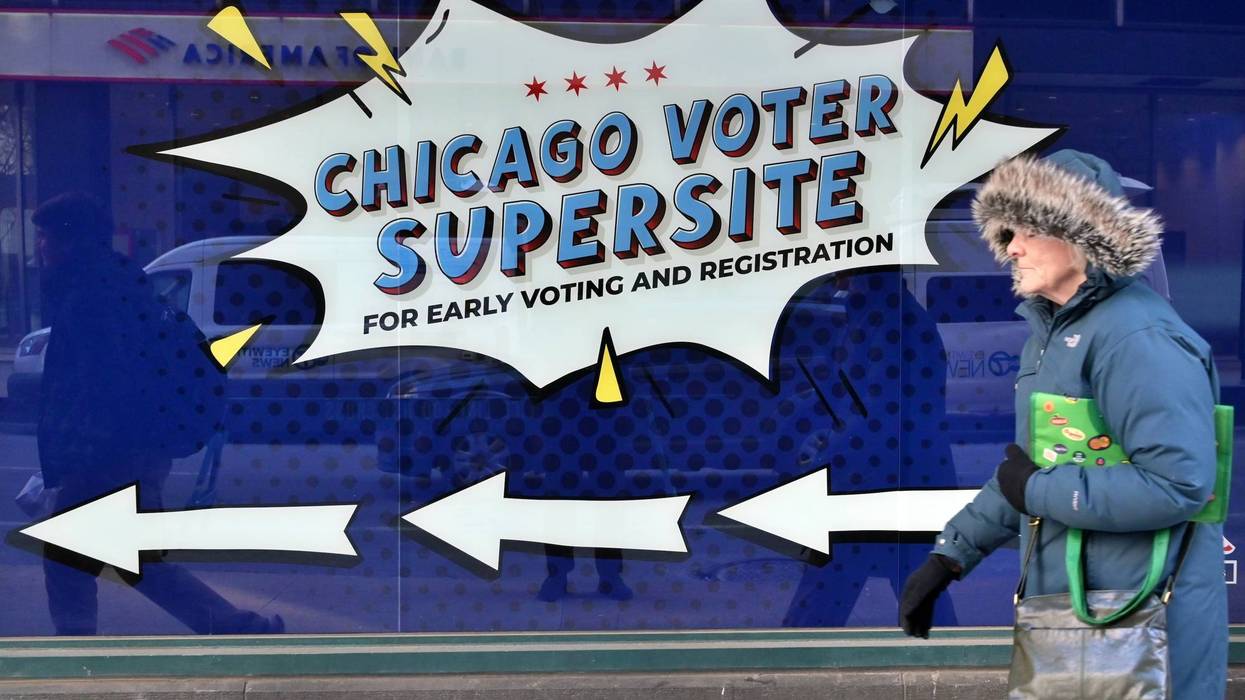
AIPAC's mixed results came amid broad alarm over outside spending that flooded Tuesday's midterm primary elections in Illinois, driven by pro-Israel, crypto, and AI special interest groups. Overall, more than $92 million was spent on campaign ads in Tuesday's contests in Illinois, a state record.
"I think we can safely say that almost $100 million spent in a handful of primaries is a full-spectrum disaster for democracy," wrote David Dayen, executive editor of The American Prospect, which called the torrent of spending "a corruption of democracy that is relatively unprecedented in modern elections."
The National Journal reported Tuesday that when the national midterm cycle is over, "the price tag for the Illinois primary will be an important footnote in what’s projected to be the most expensive midterm election ever."
"The nonpartisan research firm AdImpact estimates that more than $10.8 billion will be spent on ads alone this cycle," the Journal observed. "Even as the competitive map gets smaller, the price tag keeps increasing as more outside deep-pocketed groups invest more in primaries."
Super PACs, entities that can spend unlimited sums boosting their preferred candidates, pumped roughly $31 million into Tuesday's US House primaries in Illinois. AIPAC-linked organizations accounted for around $22 million of the total.
"It’s time to kick AIPAC and other billionaire-funded super PACs out of Democratic primaries," US Sen. Bernie Sanders (I-Vt.) wrote ahead of Tuesday's races.