

SUBSCRIBE TO OUR FREE NEWSLETTER
Daily news & progressive opinion—funded by the people, not the corporations—delivered straight to your inbox.
5
#000000
#FFFFFF
To donate by check, phone, or other method, see our More Ways to Give page.
Daily news & progressive opinion—funded by the people, not the corporations—delivered straight to your inbox.

New Rules Would Allow E-Bikes on Park Backcountry Trails
The Trump administration is trying to allow more electric bikes onto national park trails, according to Public Employees for Environmental Responsibility (PEER). New rules being finalized by the National Park Service (NPS) weaken the environmental reviews required under a successful PEER lawsuit brought during the first Trump term challenging an attempt to allow e-bikes wherever pedal bikes are allowed to travel.
Today marks the end of the public comment period for these proposed new rules. In its public comments, PEER raises concerns that the rules expanding e-bike access to park trails:
“This is yet another example of the Trump administration’s deep aversion to considering consequences before acting,” stated PEER Executive Director Tim Whitehouse, noting that the primary rationale for the rules are executive orders promoting deregulation and reducing environmental reviews. “Safeguards against abuse from e-bikes will depend upon shrinking cadres of park law enforcement rangers trying to cope with ever-growing demands on their time.”
One major issue PEER raises is e-bike access to park wildlands. While e-bikes and other mechanized transportation are not allowed inside congressionally designated wilderness, there are 26 million acres of park backcountry lacking such protection. Several “flagship” parks such as Yellowstone, Glacier, Big Bend, and Grand Canyon, for example, do not have any designated wilderness and are “protected” only by NPS policies that can be waived or changed. The proposed NPS rules open doors for park managers to allow e-bike access to backcountry trails.
“Our concern is that e-bikes could be allowed in the most remote, wild places within the national park system,” added Whitehouse, pointing out that PEER has no objection to e-bike access on paved roads or trails in parks’ developed front-country. “It will become harder to appreciate the wonder of nature above the constant whir of e-bike motors.”
Another complication is that the new NPS rules would not preempt the growing number of state laws governing e-bike equipment and use. As a result, future e-bike restrictions may vary widely from park to park.
###
PEER protects public employees who protect our environment. We are a service organization for environmental and public health professionals, land managers, scientists, enforcement officers, and other civil servants dedicated to upholding environmental laws and values. We work with current and former federal, state, local, and tribal employees.
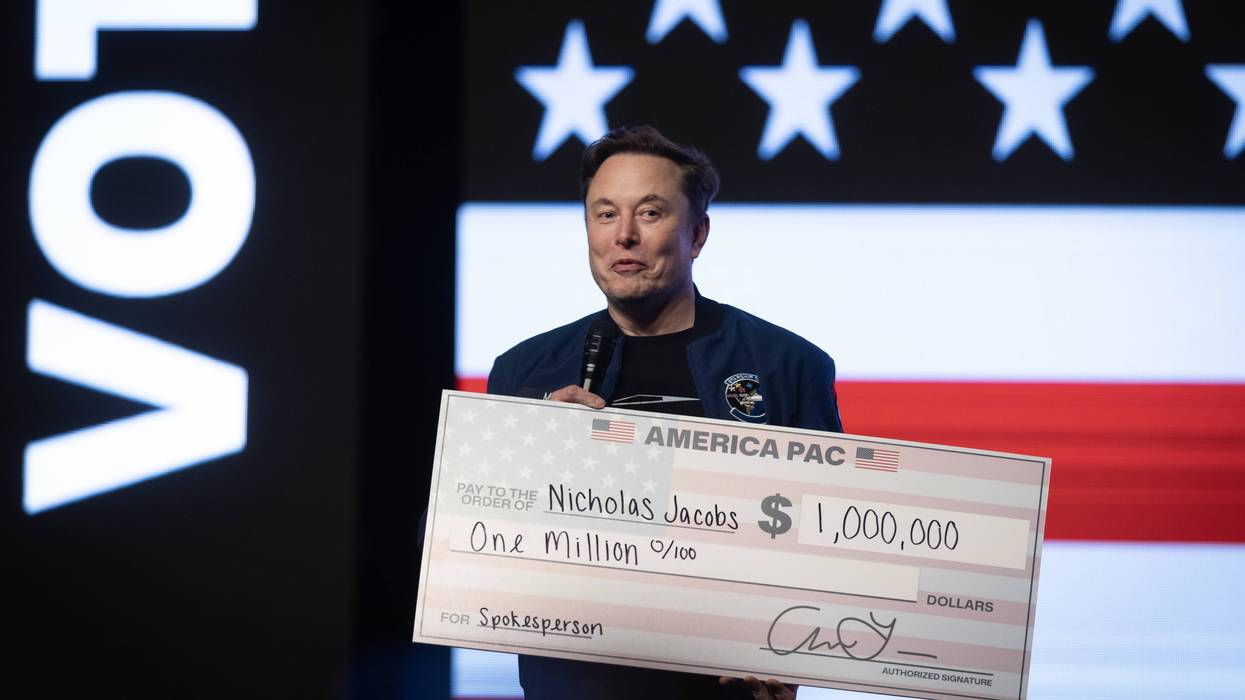
"In a democracy, it’s supposed to be one person, one vote, and the more one person can influence, the less egalitarian our system becomes," said one expert.
Some of the richest people in the US have spent unprecedented sums of money to influence the outcome of the 2026 midterm elections, and a Sunday report in The New York Times estimated that the top 20 biggest donors alone have spent a combined $2 billion in federal races this cycle.
The single largest funder of the 2026 midterms, by a wide margin, is far-right billionaire Elon Musk, who has shoveled nearly $450 million to help GOP candidates.
In fact, pro-Republican donors account for the five largest individual contributors to midterm races.
In addition to Musk, the other largest donors this cycle are industrialists Richard and Elizabeth Uihlein, who have given $150 million to help elect Republicans; flagship GOP Senate super PAC One Nation, which has spent $138 million; venture capitalists Marc Andreesen and Ben Horowitz, who have given $116 million; and hedge fund investor Jeff Yass, who has given $110 million.
On the Democratic side, the top spenders have been flagship Democratic Senate super PAC Majority Forward, which has spent $104 million, and George and Alexander Soros, who have given $103 million.
The Times' report echoes an analysis published last week by the Brennan Center for Justice showing that the 40 largest individual donors to the 2026 elections had spent a combined $2.4 billion as of mid-October.
According to Brennan, this represents the single largest amount of money spent on a midterm election ever since the US Supreme Court's landmark 2010 ruling in Citizens United v. FEC unleashed limitless political campaign spending.
The Brennan analysis reveals that the spending of the very largest donors has grown dramatically over the last decade.
"The donations coming from the top 40 donors for the midterms total eight times the amount from the top 40 donors by mid-October in the 2014 midterms (the first full midterm cycle after Citizens United), adjusted for inflation," the analysis explains. "The cutoff to be in the top 40 has also increased to 10 times what it was four cycles ago, to $25 million."
And while the biggest spenders used to favor Democrats, their loyalties have since shifted to the GOP, and in this election cycle "donors loyal to the GOP now give more than three times the amount that reliably Democratic donors give."
And while labor unions were once at least represented in the list of top 40 election donors, they have since fallen out and have been replaced by donors from the cryptocurrency industry, the Brennan Center analysis finds.
Ian Vandewalker, senior counsel at Brennan and co-author of the analysis, told The Guardian in an interview published Monday that it's become easier for politicians to be totally beholden to a single large donor while ignoring the needs of voters.
"In a democracy, it’s supposed to be one person, one vote," Vandewalker explained, "and the more one person can influence, the less egalitarian our system becomes."
Economist Paul Krugman expressed similar concerns about the influence of big money in US politics, writing on his Substack page Monday that "oligarchy is on the ballot" in the 2026 midterms.
In assessing the massive spending by megadonors on elections, Krugman said the Supreme Court's Citizens United decision deserved significant blame. However, he said it was also a simple reflection of the fact that the US economy for decades has been rigged to provide benefits primarily to the ultrawealthy.
"Now we... have men big enough to own the government of the United States," Krugman commented. "This midterm is a test of whether they will get away with it."

"I did it for J6," President Donald Trump said of the Capitol insurrectionists he pardoned just hours into the start of his second term.
US President Donald Trump said in a podcast interview released Monday that he would not hesitate to issue preemptive pardons for mega-billionaire Elon Musk and other allies to shield them from potential investigations if Democrats retake control of Congress in this week's midterms and win back the White House in 2028.
"I would not even think about it. I'd do it," Trump said of preemptive pardons for Musk, White House staff, and other allies during an interview on the Pod Force One podcast, hosted by New York Post columnist Miranda Devine. "I did it for J6."
The president claimed that Democrats—who have signaled plans to investigate Musk should they win the House or Senate in Tuesday's elections—"want to arrest" the world's richest man and leading GOP donor, along with his lackeys who rampaged lawlessly through the federal government with the so-called Department of Government Efficiency (DOGE).
"Big Balls. They want to arrest him," Trump said, referring to Musk associate Edward Coristine.
As Wired reported last year, Coristine—who was 19 when he was hired at DOGE—was one of the Musk operatives at the Small Business Administration "who sought access to HR, contracting, and payment systems and information."
Watch Trump's comments:
The Wall Street Journal reported in April that Trump has "repeatedly promised his top administration officials pardons before he leaves office," saying during one closed-door meeting that he would "pardon everyone who has come within 200 feet of the Oval [Office]."
The president's remarks came days after Politico reported that congressional Democrats are eager to investigate Musk's "alleged conflicts of interests" as his companies "rake in multibillion dollar federal contracts and subsidies."
"Members of House Oversight and other panels also want to examine Musk’s role in eliminating over 250,000 federal jobs during his time at DOGE, withholding congressionally appropriated money and accessing sensitive government data," the outlet noted. Democrats have also named Musk's deadly dismantling of the US Agency for International Development (USAID) as a potential target of investigation.
Musk, whose tenure at the head of DOGE ended in May 2025, has benefited massively from Trump's second White House term.
According to a recent analysis by the consumer advocacy group Public Citizen, Musk is among the "top beneficiaries of the cancellation of corporate enforcement actions" under Trump. Musk's companies have "benefited from at least eight canceled enforcement actions," the group found.
Musk has funneled around $445 million in the 2026 election cycle to super PACs supporting Republican candidates in an effort to help the party maintain its congressional majorities.
"Billionaires and Big Tech have poured $2.7 billion and counting into Republican midterm campaigns, with Elon Musk breaking a new record as the largest political donor in American history," Democrats on the House Judiciary Committee wrote in a social media post on Monday. "This is what happens when the administration puts pardons, regulatory changes, tax cuts, and public policy up for auction to MAGA world."
"Democrats in Congress will investigate and uncover all the corrupt deals under the surface," the committee Democrats added.

"We know he will fight for the economic interests of working families in Michigan, unlike Mike Rogers, who is a tool of Donald Trump and billionaire donors."
Democrats across the party's ideological spectrum—in Michigan and around the country—rallied behind US Senate candidate Abdul El-Sayed after his erstwhile primary opponent, Rep. Haley Stevens, endorsed Republican Mike Rogers two days before a race that could decide control of the upper chamber.
While Stevens claimed in a CNN appearance Sunday night that she's "been hearing from a ton of Dems" privately voicing support for her decision, she received nothing but backlash from fellow Democrats in public. Senate Minority Leader Chuck Schumer (D-NY), who quietly supported Stevens in her primary contest against El-Sayed, said that "this is a despicable betrayal from Rep. Stevens."
"Senate Democrats are united in our support for Abdul El-Sayed," Schumer added, "because we know he will fight for the economic interests of working families in Michigan, unlike Mike Rogers, who is a tool of Donald Trump and billionaire donors."
Rep. Debbie Dingell (D-Mich.), a member of the Congressional Progressive Caucus who has represented Michigan in the House for more than a decade, suggested in a statement that Stevens' endorsement of Rogers was an effort to "get attention," and that "Michiganders are worried about how they are going to pay their mortgage and fill up their gas tanks, and the ability to afford groceries, healthcare, and housing."
"If we are going to fight to improve the lives of working men and women in Michigan," said Dingell, "we must stay focused on electing Democrats up and down the ballot, and that includes electing Abdul El-Sayed as Michigan's next senator."
Leaders of the Michigan Democratic Party, Michigan Sens. Elissa Slotkin and Gary Peters, Michigan's Democratic gubernatorial nominee Jocelyn Benson, Democratic National Committee (DNC) chair Ken Martin, DNC Black Caucus Chair Virgie Rollins, and House Minority Leader Hakeem Jeffries (D-NY) were among the many leading party officials and lawmakers who issued statements backing El-Sayed following Stevens' move.
So did two of the party's leading progressives: Rep. Alexandria Ocasio-Cortez (D-NY) and New York City Mayor Zohran Mamdani.
"What is so galling about this moment is we have to be clear about what the choice is," said Mamdani. "The choice is whether or not you want to fight for working people like what Dr. Abdul El-Sayed has been on, or whether you want to provide additional oxygen and amplification to a candidacy of someone who wants to cut Medicare even further than it’s already been cut. That’s what’s on the ballot.”
In addition to top Democrats reiterating their support, El-Sayed saw a major surge in donations in the hours after Stevens' endorsed his Republican opponent. The Wall Street Journal reported that El-Sayed raised $1.2 million in a span of hours on Sunday, making it "his second-best fundraising day since he clinched the Democratic Party’s nomination for Senate."

The administration quickly appealed the ruling, making it clear that it "still wants to interfere in Alaska's election and pursue an investigation that would violate the right to a secret ballot."
With numerous recent court rulings dismissing the Trump administration's attempts to intimidate election officials and its push to discount tens of thousands of ballots due to the dubious claim they were cast by noncitizens, a key midterm strategy of President Donald Trump—questioning the results of the election before it happens—is falling apart.
The US Department of Justice has focused in recent days on the Alaska US Senate election, with Trump personally calling on the DOJ to file a lawsuit arguing that a federal court must block the certification of the results if Republican Sen. Dan Sullivan narrowly loses his reelection bid—but Chief Judge Sharon Gleason of the US District Court in Alaska threw that effort out on Sunday, as well.
The administration has focused on the election because, along with Sullivan and former Rep. Mary Peltola, the Democratic candidate, another Dan Sullivan appears on the ballots Alaskans have begun casting: Daniel J. Sullivan, a retired teacher.
The DOJ argued in its lawsuit that if Sullivan loses his reelection race but would have won if the votes for Daniel J. Sullivan had gone to him instead, the election results should not be certified.
The Republican senator is clearly marked with his party affiliation and the word "incumbent" on the ballots, and observers have noted that the state's ranked-choice voting system would likely stop Daniel J. Sullivan from acting as a "spoiler."
"Voters are familiar with the system," wrote Anna Griffin at The New York Times Sunday. "Any voter confused by the existence of two Dan Sullivans could simply rank both candidates."
Voters interviewed at the polls in recent days have said the ballot did not cause confusion.
Alaska Voter: I saw that it showed incumbent and Republican for the current incumbent, I wasn't worried about it at all. People are smart enough to see it's labeled clearly. It's already been determined by our Supreme Court in Alaska. I wasn't worried about it https://t.co/003wocOV7N
— Acyn (@Acyn) November 1, 2026
Still, the DOJ in its lawsuit called for an investigation should Sullivan lose narrowly, without explaining how officials would conduct a probe into the secret, anonymous ballots that American voters have a right to.
The administration, said Gleason as she rejected the lawsuit, "offers no rebuttal to the concerns regarding preservation of the secrecy of voting and provides no explanation of how its request for ballot segregation and a court-ordered investigation by law enforcement officers into certain voters’ intent could be implemented while preserving the secrecy of the ballot.”
As the DOJ filed an appeal to the ruling Sunday, a spokesperson for the department complained to the Times that Gleason had not addressed “the argument of the United States that Daniel J. Sullivan (a/k/a Decoy Dan) entered the race as a frivolous candidate to confuse voters.”
Entering an electoral race to act as a "spoiler," while potentially inconvenient and aggravating for another candidate and sometimes denounced as a "dirty trick," is generally not against the law in the US, according to legal experts. Neither is recruiting or encouraging someone to run as a spoiler, as Peltola's campaign has been accused of doing in the Alaska case.
"Regardless of who encouraged him to run, the second Dan Sullivan validly qualified for the ballot. And this is a matter of state law," Joshua Douglas, a law professor at the University of Kentucky, told Reuters this week.
Gleason rejected the DOJ's claim that the administration is not attempting to interfere in "the time, place, and manner of Alaskan elections," which the Constitution stipulates are to be determined by state officials.
"A court order preventing the state from certifying the election if certain circumstances occur; a court order requiring the state to segregate and preserve certain ballots; and a court order permitting the United States to conduct an investigation into the intent of those voters who cast ballots for Daniel J. Sullivan... certainly involve the time, place, and manner of Alaska’s election,” the judge wrote.
Sullivan said Sunday that he would accept the election results regardless of who wins, while also claiming the election could be "stolen."
The DOJ's decision to immediately appeal Gleason's ruling, said journalist Adam Klasfeld, made clear that the administration "still wants to interfere in Alaska's election and pursue an investigation that would violate the right to a secret ballot."

"Politicians like Haley Stevens always had more in common with Republicans like Mike Rogers and Donald Trump than with the Democratic base," said House candidate Darializa Avila Chevalier. "And now she admits it."
Rep. Haley Stevens, the pro-Israel Democratic congresswoman who was backed by top party leaders, establishment figures, and tens of millions of dollars from the American Israel Public Affairs Committee and other outside groups in the primary race earlier this year, suggested Sunday that being disinvited from campaigning with Michigan's Democratic US Senate candidate, Abdul El-Sayed, was all it took to convince her to endorse his Trump-allied Republican opponent, former Rep. Mike Rogers.
But one former Obama administration adviser Ben Rhodes said this weekend that Stevens' alignment with the Republican was the "logical endpoint" of her politics after months of attacking El-Sayed for his critical views on US military aid for Israel—views that are now shared by a majority of US voters after more than three years of Israel's relentless assault on Gaza.
Stevens announced her endorsement in a video posted online after she appeared with Rogers at Perfecting Church in Detroit, where she asserted that the Republican would support investments in Black-owned businesses—a ploy, said Melat Kiros, a Democratic congressional candidate in Colorado, to use Black voters "as a prop to embrace a racist who will do nothing but rubber stamp this fascist administration."
"Abdul was very clear. He said, 'Don't come,'" said Stevens, standing next to Rogers at the press conference where she was called "traitor" by one bystander. "When it really comes down to it, this is how I'm casting my ballot."
Haley Stevens gets heckled. She is called a traitor and the press conference ends as she is ushered away. https://t.co/O6q2LaYt23
— Acyn (@Acyn) November 1, 2026
She added that "nothing's perfect" when asked why she was supporting a candidate who "stands so firmly for some of the policies that you've stood so firmly against."
Rep. Debbie Dingell (D-Mich.) made clear Saturday that she, not El-Sayed, had directly asked Stevens to stay away from the candidate's events in the last days of the campaign after Stevens put out a statement criticizing El-Sayed's position on Israel. She told CNN: "I'm the one. I am the one that talked to Haley. And I am the one that said this isn't working."
On Sunday, Dingell issued a brief statement saying that she, El-Sayed, and Michigan Democrats are "focused on electing Democrats up and down the ballot" instead of Stevens' "continued efforts to get attention."
The political action committee American Priorities, which was established to counter AIPAC's funding of Republicans and Democrats who support Israel, said that with Stevens' choice, "what’s been clear to us all along is now plain to see: AIPAC and its candidates, including this failed primary one, are committed to electing Republicans."
"Every Democrat should be crystal clear on what AIPAC is and is not: It is an outside interference in Democratic politics, not a legitimate stakeholder in the party's future," said the group.
Stevens' endorsement came a day after reproductive rights advocates highlighted a recent interview Rogers did with WMUZ radio host Bob Dutko, in which he affirmed he would support a nationwide abortion ban.
"You don't even have to think about it twice," said Rogers on Thursday. "I mean, I feel I’ve been very open about all of those issues, including for the time I was in Congress having a 100% pro-life rating... This is the only way that I know how to be when I go back to the United States Senate."
Stevens' appearance with and endorsement of Rogers capped the congresswoman's months of political attacks on El-Sayed, a progressive who has also made Medicare for All a key part of his platform.
El-Sayed's positions on the Middle East and the human rights of Palestinians, Stevens and other pro-Israel politicians and groups have claimed, threaten the safety of Jewish communities in Michigan—despite the fact that 61% of Jewish Americans last year expressed agreement with leading human rights groups and Holocaust experts, saying in a Washington Post poll that they believed Israel's US-backed military had committed war crimes in Gaza.
El-Sayed has repeatedly spoken about protecting Jewish communities from acts of antisemitism, and his campaign is engaging directly with Jewish voters on the issue in the final days of the race. Meanwhile, Rogers has joined President Donald Trump in waging anti-Arab and Islamophobic attacks against El-Sayed, accusing him of being aligned with the Muslim Brotherhood and standing alongside Trump at rallies where the president has openly called the Michigan-born candidate, whose family immigrated to the US from Egypt, a "jihadist."
During the primary, Stevens spent weeks condemning El-Sayed for campaigning with another Arab American, popular streamer and Israel critic Hasan Piker. Last week, nearly three months after losing the primary, she demanded the candidate apologize for statements made in a digital ad by an outside group, which criticized the use of taxpayer dollars to fund Israel's military.
On Sunday, her appearance with Rogers reportedly led to the collapse of her own political operation, with her chief of staff and other aides abruptly resigning.
El-Sayed was asked about Stevens' actions, but reiterated his focus on securing a federal government that serves the needs of Michiganders and other families across the country, saying: "At the end of the day, I actually don't think about Haley Stevens. Because you know what? I'm just less interested in the politics of it all than I am in the policy of it all."
El-Sayed: At the end of the day, I actually don't think about Haley Stevens. Because you know what? I'm just less interested in the politics of it all than I am in the policy of it all… If you are somebody who believes that we should stand up to hate, and you have watched this last campaign, I think we probably would not want to support Mike Rogers and Donald Trump and JD Vance. If you're somebody who believes that we need more health care, not less than you probably don't want to vote for the guy who voted to raise prescription drug prices or keep them high 19 times and takes money from big pharma and big insurance. If you're somebody who believes in public education, you probably do not want to support the guy who architected the initial legislation in 1999 that ended up stripping local control from Detroit public schools and the local community. If you're somebody who believes that you should have a right to a union, you probably don't want to support the guy who busts unions. So I'm just saying that the principles that we believe in as Democrats are really quite clear. I stand for all of them.
— Acyn (@Acyn) November 1, 2026
Jesse Brenneman, an editor for the podcast "Know Your Enemy," expressed hope that "this debacle drops the blinders from many eyes and allows people to see things clearly."
"The Democratic establishment is not primarily concerned with winning elections. It is concerned with preserving its power and pushing certain outcomes," said Brenneman. "They are usually more subtle than this, but when push comes to shove they will explicitly blow things up to serve this end. They don’t want majorities full of popular politicians, unless those politicians serve the interests that they care about."
Stevens' decision, said congressional candidate Darializa Avila Chevalier, who is running in New York's 13th District, showed "that politicians like Haley Stevens always had more in common with Republicans like Mike Rogers and Donald Trump than with the Democratic base. And now she admits it. That’s why it’s so important to run democratic primaries. It’s not enough to send Democrats to Washington, we have to send Democrats who are fighting for the things working-class voters want!"
Stevens' alignment with Rogers and Trump would leave Democrats across the state "feeling even better today about nominating Abdul El-Sayed to fight for our working-class families," said Rep. Rashida Tlaib (D-Mich.), the only Palestinian American in the US Congress. "Three days to go, let’s tune out this nonsense and turn out the vote. Let's make sure Haley loses to Abdul twice."

"Democrats must block Iran war funding in 2026."
As President Donald Trump and Iranian officials traded threats over the weekend, and with the Trump administration reportedly considering renewed attacks against an underground complex it claims is a nuclear site—which Iran denies—critics of the illegal US-Israeli war on the Middle Eastern country called on Democrats to take decisive action to end the conflict after the midterm elections, in which the party could take control of one or both chambers of Congress.
The nonprofit group Just Foreign Policy (JFP) was among those pointing to comments from last week by US Sen. Chris Murphy (D-Conn.), who said members of Congress recently attended a confidential briefing about possible strikes on Iran after the midterms—a plan whose details he called "insane."
As Common Dreams reported Friday, Iranian officials are taking steps to prepare the population for a potential US nuclear attack, which Trump has threatened multiple times since launching the war in February. He went to war with the preemptive aim of defending Israel from Iran's retaliation if the Israeli government waged an attack on its own, according to Secretary of State Marco Rubio.
Iranian Supreme Leader Mojtaba Khamenei warned the US and Israel on Saturday against renewing attacks, saying they would be met with "geographically unrestricted" retaliation. He expressed hope Sunday that "that there is rationality on the other side to prefer diplomacy to other paths."
But with government funding expiring December 11, including money for the US Department of Defense "that is illegally bombing and blockading Iranian civilians," said JFP, "Democrats can block war funding" before the new year.
"Senate Democrats must not send another dollar to [Defense Secretary Pete] Hegseth's War Department unless the US stops the illegal war that is harming 90 million Iranian civilians and 300 million US drivers," said JFP, referring to the skyrocketing gas prices that have resulted from the conflict. "No excuses. Not another dollar for this illegal war."
JFP referred to Murphy's comments at the Middle East Institute last Wednesday, where he said Democrats in Congress must "use our spending power to end the war."
"I imagine what will happen is that there will be a continuing resolution after the election, and we'll push off the budget until January or February of next year," said Murphy. "And then if Democrats are in charge, we will essentially say we want to fund the Department of Defense, but we are not going to fund the Department of Defense if it's funding this war. And so there will have to be some provision in the bill that denies any funding to be used for the continuation of a war against Iran that's making us less safe and costing billions to American citizens."
JFP emphasized that even if Democrats don't win a majority in Congress in Tuesday's elections, Democratic senators would be able to block the continuing resolution that would keep the war funded into February, because Republicans with their current majority would need seven Democrats to join them in supporting the funding.
"Democrats must block Iran war funding in 2026," said JFP. "Democrats do NOT need to win or wait. Murphy's approach here means Democrats would agree to fund the Iran war for months or years to come."
"If Democrats win a big blue wave rebuke of this patently unconstitutional war, and Trump comes out of the midterms escalating it, Democrats should move to block it and impeach him over it," said another commentator. "Voting to enable it would be a corrupt abdication."
Al Jazeera reported Sunday that Iran was continuing negotiations with the US through Qatari mediators, "but it does not have the slightest optimism about Trump’s intentions even for a moment,” according to a security source.
“We think that there may be different voices in the US, but experience has shown that the US president and his circle are succumbing to the temptations of [Israeli Prime Minister Benjamin] Netanyahu and the warmongering extremists who support him,” the source said. “For this reason we are obliged to maintain our focus on being fully prepared for a decisive and punitive defense against any aggression and crime by the United States and Israel.”

"Our campaign is and has always been focused on addressing the most critical challenges Michiganders are facing: skyrocketing gas prices, unaffordable groceries, and the inability to see a doctor."
After issuing a brief statement in response to Rep. Haley Stevens' demand that he apologize for the views he's expressed—in line with a growing majority of Democrats—that are critical of US funding for Israel, Michigan's Democratic US Senate candidate, Abdul El-Sayed, headed into the final weekend before the midterm elections with the same focus he has maintained throughout his campaign.
"While Congresswoman Stevens seems intent on relitigating a primary that ended three months ago," said El-Sayed, "let's all focus on the task at hand: That's beating Mike Rogers, holding [President Donald] Trump accountable, and getting money out of politics, putting money in pockets, and passing Medicare for All."
The statement followed Stevens' latest attempt to suggest that El-Sayed's candidacy has threatened Jewish communities, by tying him to an anti-Rogers ad by an outside group, Rebellion PAC, that addressed how the billions of dollars and political support the US provides to Israel each year costs Americans. The Trump administration has publicly said the US launched its illegal war on Iran after being pushed to do so by Israeli Prime Minister Benjamin Netanyahu—a decision that has markedly worsened the affordability crisis for Americans.
El-Sayed's campaign has said the digital ad does not "speak for" the progressive candidate, while others have pushed back on the claim by the vehemently pro-Israel Stevens and pro-Israel groups that the video is antisemitic, noting that it says nothing about Jewish people.
In his statement Friday evening, El-Sayed appeared to have little interest in engaging with Stevens further regarding persistent accusations by corporate Democrats who have claimed he hasn't done enough to reach out to Jewish communities, whom his campaign has been speaking with extensively about fighting antisemitism and their views on Israel at "deep canvassing" events.
"Our campaign is and has always been focused on addressing the most critical challenges Michiganders are facing: skyrocketing gas prices, unaffordable groceries, and the inability to see a doctor," said El-Sayed, noting that his message had allowed him to win the primary in August despite "a historic $70 million in outside spending by big corporations" and the pro-Israel lobby on behalf of Stevens.
Two sources told Politico that El-Sayed's campaign was asking Stevens not to campaign with him in the final weekend, which the congresswoman had begrudgingly said she planned to do in her statement demanding an apology from the candidate.
But El-Sayed himself was applauded by progressives for "holding firm and ignoring the whines and threats of extremists," as art director Lindsay Ballant said.
"For those folks demanding that El-Sayed condemn that ad, he isn’t playing your stupid game," said another observer. "He understands that whatever he does, it won’t be enough. There will always be another demand. So take your cudgel somewhere else."
Even if El-Sayed took time away from the statewide door-knocking tour he had planned for the weekend to address Stevens' demand, podcaster and former Obama administration staffer Tommy Vietor asserted that "people would then say he didn't condemn it firmly enough."
"The guilt by association shit is endless," said Vietor. "Meanwhile, Abdul is literally being called a jihadist by the president of the United States!"
Rep. James Clyburn (D-SC) and Sens. Elizabeth Warren (D-Mass.), Elissa Slotkin (D-Mich.), and Angela Alsobrooks (D-Md.) are set to join El-Sayed at the "Knock Out the Vote" canvassing event from Saturday through Monday.
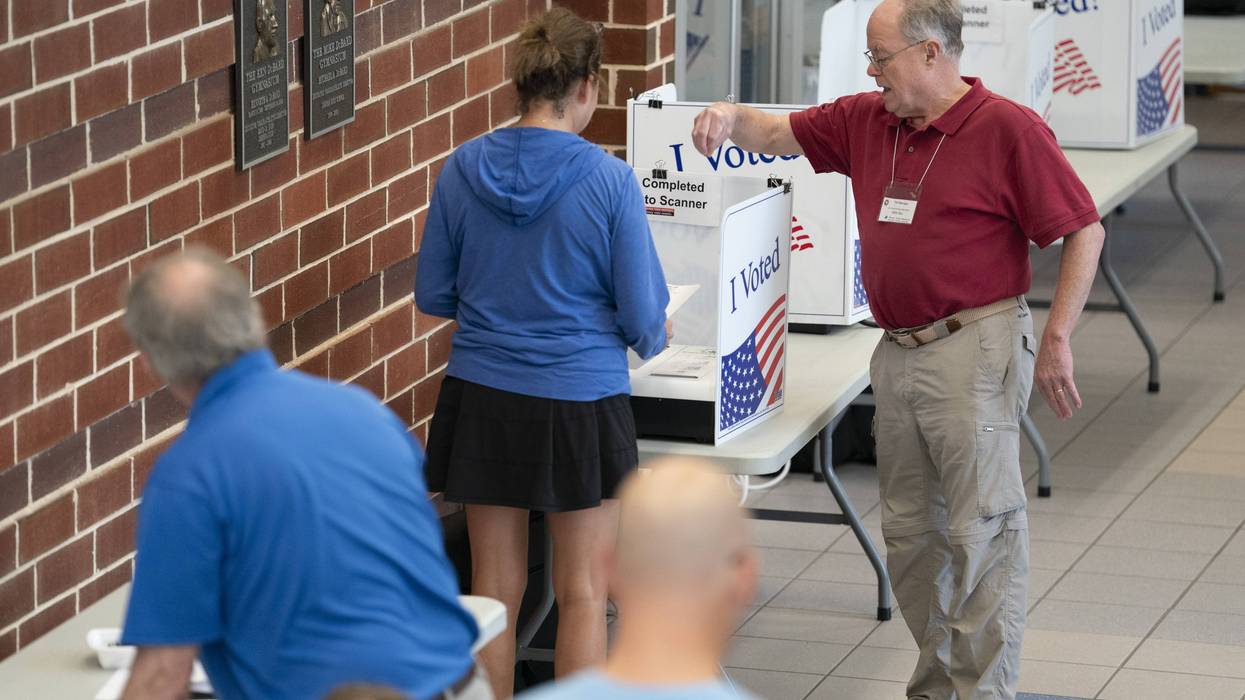
A labor leader called the ruling "a resounding win for the election workers who make our democracy happen and for all Americans’ freedom to vote."
Days after the US Department of Justice threatened election officials in all 50 states with possible prosecution unless they preserve election records—the latest push by the Trump administration to cast doubt on the validity of the upcoming midterm elections—a federal judge on Friday ordered the DOJ to reach out to the officials again, this time to rescind the threat.
The DOJ must contact the state and local officials who received warnings this week and inform them that the "threats of prosecution to election officials and workers... have been enjoined," said District Judge Trina Thompson in the US District Court for the Northern District of California.
Thompson ordered officials with the Trump administration to stop demanding that election workers remove voters from rolls, sequester ballots cast by people the White House has claimed are ineligible to vote due to being noncitizens, and refuse to issue ballots to people who have been included on the administration's error-riddled lists of residents whom it says have voted illegally.
"Because the public has a paramount interest in ensuring that election officials and workers are able to carry out their work in accordance with federal law and election procedure, and the official day of the elections is only a couple of days away, the balance of the equities and public interest weigh in plaintiffs’ favor," said Thompson.
The ruling was handed down in connection with a lawsuit filed by the Service Employees International Union (SEIU), the American Federation of State, County and Municipal Employees (AFSCME), and other groups.
Protect Democracy, part of the coalition that sued, called the threat "yet another attempt designed to shake Americans’ confidence in the election results and undermine our electoral process."
Patrick Moran, president of AFSCME, said Thompson's ruling and the temporary restraining order she issued were "a resounding win for the election workers who make our democracy happen and for all Americans’ freedom to vote."
"We applaud the court for granting a temporary restraining order protecting election workers from unlawful prosecution simply for following the law and forbidding the administration from interfering with the lawful administration of elections," said Moran. "Now, our nation’s nonpartisan election workers, many of them AFSCME members, can continue to do their jobs, and our elections can continue to proceed freely and fairly.”
With President Donald Trump's approval rating at an historic low and Republicans facing widespread disapproval of the illegal war on Iran they've supported, healthcare cuts they voted for, and violent mass deportation operations they've funded, the White House has approached the midterms with a laser focus on sowing doubt about the results before the elections are completed.
The DOJ demanded confidential voter roll data from states across the country last year, pushing the baseless claim that the lists were rife with the names of noncitizens who would be illegally permitted to vote. The administration has been rebuffed by dozens of officials.
In response, the Department of Homeland Security and DOJ have used commercially available data and federal records to cobble together their own lists of voters they say have cast ballots illegally. The results of the effort have included a list of 185 people in Nevada, all of whom were proven to be citizens, and a list of 28 immigrants in California whom federal officials said were suspected of voting before they became naturalized citizens—representing about .0001% of all registered voters in the state.
The administration has also pushed for the certification of Alaska's election results to be blocked, citing the presence of two Dan Sullivans on the ballot—one clearly labeled as the incumbent Republican senator, the other not—and on Thursday, sent the threatening letters to election officials across the country.
Earlier this week, Judge David Carter in the US District Court for the Central District of California said that the administration's threats "must stop," throwing out the DOJ's attempt to force the state to sequester ballots cast by 20,000 people officials claimed were not citizens.
"DOJ tried to bully election workers with threats and intimidation," Norm Eisen, co-founder of Democracy Defenders Action, said Saturday. "Last night, a federal court shut it down. We and our partners are fighting to protect elections in the court of law."
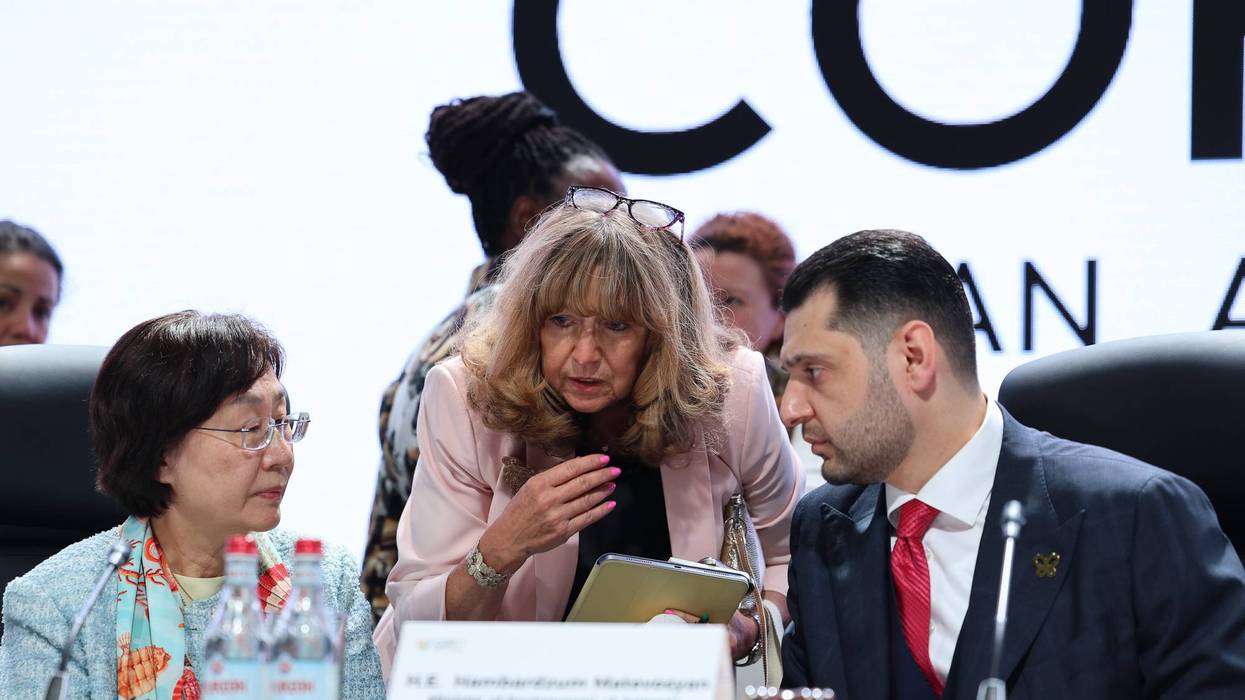
“This meeting should have been a turning point, not just a stocktake. Success required governments to commit the political will and financing needed to reverse biodiversity loss," said one advocate.
The 17th United Nations summit on biodiversity ended in Yerevan, Armenia on Friday with more than 200 countries adopting a "forward-looking" agreement aimed at speeding up and scaling up action to protect nature, reforming "harmful subsidies fueling nature’s demise," and closing the biodiversity finance gap—with the global economy spending $1 on nature protection for every $30 it spends on destruction, according to a recent UN report.
But conservation advocates warned that with four years to go until 2030, when 30% of land and water is meant to be protected under the 30x30 goal set by the Kunming-Montreal Global Biodiversity Framework in 2022, biodiversity conservation is behind schedule, and the goal of accelerating beneficial finance is still falling short in the Yerevan Pathway that came out of the meeting.
The conference produced about $1.8 billion in nature-finance agreements, including a commitment of $500 million from the Netherlands to the Tropical Forest Forever Facility, which rewards countries for protecting their tropical forests. Six contributors also pledged $60.13 million to the Global Biodiversity Framework Fund, which supports the Global South in implementing the 2022 framework.
However, "overall spending on biodiversity remains far short of the $200 billion per year target in the Kunming-Montreal framework," wrote John Cannon at Mongabay, while the framework's demand to reform "damaging subsidies remains largely unmet."
Experts say $700 billion in additional annual spending is needed to protect and restore ecosystems damaged by mining, drilling, and other industries, pollution, and other human activities.
Governments committed to reducing subsidies by at least $500 billion per year by 2030, but about $2.4 trillion "is still estimated to flow annually toward subsidies that can harm nature," said Sustainable Business Services.
Daudi Sumba, chief conservation officer at World Wildlife Fund International (WWF), said that the Global Review that came out of the summit was “a strong signal to countries that they must do better when it comes to action for nature."
"But without clear scaling of the funds to be able to deliver, I fear finance will remain the key issue that continues to haunt the UN biodiversity summits," said Sumba. "Negotiators returning home must now turn the Global Review into clear dedicated action, scaling nature’s recovery by transforming the most damaging sectors and activities across our food and finance systems.”
The Cali Fund, a mechanism that came out of COP16 in Colombia and is designed to share digital sequence information on genetic resources, is also falling short of the goals set for it by last year's conference. The fund aims to raise at least $1 billion annually from companies that access DSI from genetic resources for pharmaceuticals and other products, but "with only $10,000 pledged at the close of [COP17]," said WWF, "follow-up work at intersessional meetings will be important."
“Back when the UN Convention on Biological Diversity was first adopted in 1992, one of the main pillars was ensuring the fair and equitable benefit-sharing from biodiversity, especially from provider countries and local communities,” said Vishaish Uppal, director of governance, law, and policy at WWF-India. “Almost 35 years later, we’re still not seeing the companies that profit off nature sharing their benefits with the Indigenous peoples and local communities that act as the custodians of much of the biodiversity that their businesses rely upon. It really is about time that countries iron out these differences, so that funding can reach the people and places that need it the most.”
An Lambrechts, a biodiversity politics expert at Greenpeace International, said that "giant corporations did everything they could to keep the Cali Fund voluntary two years ago, and then did everything they could to stop the fund from working in Yerevan."
"It is unacceptable that big multinational corporations are turning massive profits from what they take from nature while contributing very little to its protection and leaving people across the world to face the impacts of the biodiversity crisis," said Lambrechts.
"It is unacceptable that big multinational corporations are turning massive profits from what they take from nature while contributing very little to its protection and leaving people across the world to face the impacts of the biodiversity crisis."
Negotiators also established a permanent body for Indigenous peoples and local communities under Article 8(j) of the Convention on Biological Diversity, but Sustainable Business Services warned that "questions remain over institutional status, representation, and the extent of their participation in decision-making."
COP17, said the Wildlife Conservation Society (WCS), "put forth a clearer picture of the global biodiversity crisis and the gaps that must be closed to meet the world’s 2030 targets."
But Susan Lieberman, vice president for international policy at WCS, said that "the negotiations themselves ended up weak on ambition."
“This meeting should have been a turning point, not just a stocktake. Success required governments to commit the political will and financing needed to reverse biodiversity loss," said Lieberman. "That means protecting and restoring ecological integrity, respecting the rights and leadership of Indigenous peoples and local communities, and reducing the drivers of decline. With just four years until 2030, we cannot afford another conference that diagnoses the crisis without accelerating the cure."
Twenty-two of the 23 targets set by the Kunming-Montreal framework are behind schedule, and Lieberman said that COP17 "has clarified the challenge" of ensuring they are met.
"Now governments must summon the political will, resources and resolve to meet it," she said. "We applaud the Armenian government, the [Convention on Biological Diversity] secretariat, and many governments and partners for keeping the momentum moving toward achieving the 2030 goals and targets. But ‘good enough’ should never be acceptable.”
Friends of the Earth International (FOE) also said the two weeks of negotiations had "ended with weak decisions and many unanswered questions," pointing to "the capture of this space by transnational corporations" and the "greenwashing and false solutions like biodiversity offsets and credits" that it said would continue.
Along with calling out harmful subsidies, FOE helped launch a campaign during COP17 highlighting how "business sectors contribute to biodiversity destruction and related human rights impacts," such as in the pulp and paper and biomass industries.
"In Indonesia, the expansion of industrial plantations and biomass production continues to drive forest loss and biodiversity decline," said the Environmental Paper Network, which joined the initiative.
With the Yerevan Pathway, said Nele Marien, coordinator of the forest and biodiversity program at FOE, "the structural drivers of biodiversity loss remain an elephant in the room: the financial and legal systems that undermine biodiversity need to be addressed."
Wilmer Lucitante, member of the Kofan nation and spokesperson for the Union of People Affected by Texaco and FOE Ecuador, said that COP17 is "a turning point, as the ways of operating of the Indigenous body of the convention were established."
"Yet the measures are voluntary, and do not alter the power transnational corporations wield in our territories," said Lucitante. "In the Kofan territory, from the time of Texaco and until now, fossil fuel companies have contaminated our lands and violated our rights. Voluntary measures are clearly not enough."
WCS said the overall outcome of the summit, just before countries meet in Türkiye for the 31st UN Climate Change Conference, where climate finance is expected to be a major topic, was "too timid."
"The COP17 decision merely encourages countries to begin applying a set of voluntary guidelines, which will be negotiated further before COP18," said the group. "This 'kicking the can down the road' falls far short of what is needed at a time when climate change poses a significant threat to biodiversity ecosystems, and the loss and degradation of ecosystems is driving emissions and reducing the capacity of people and nature to adapt."
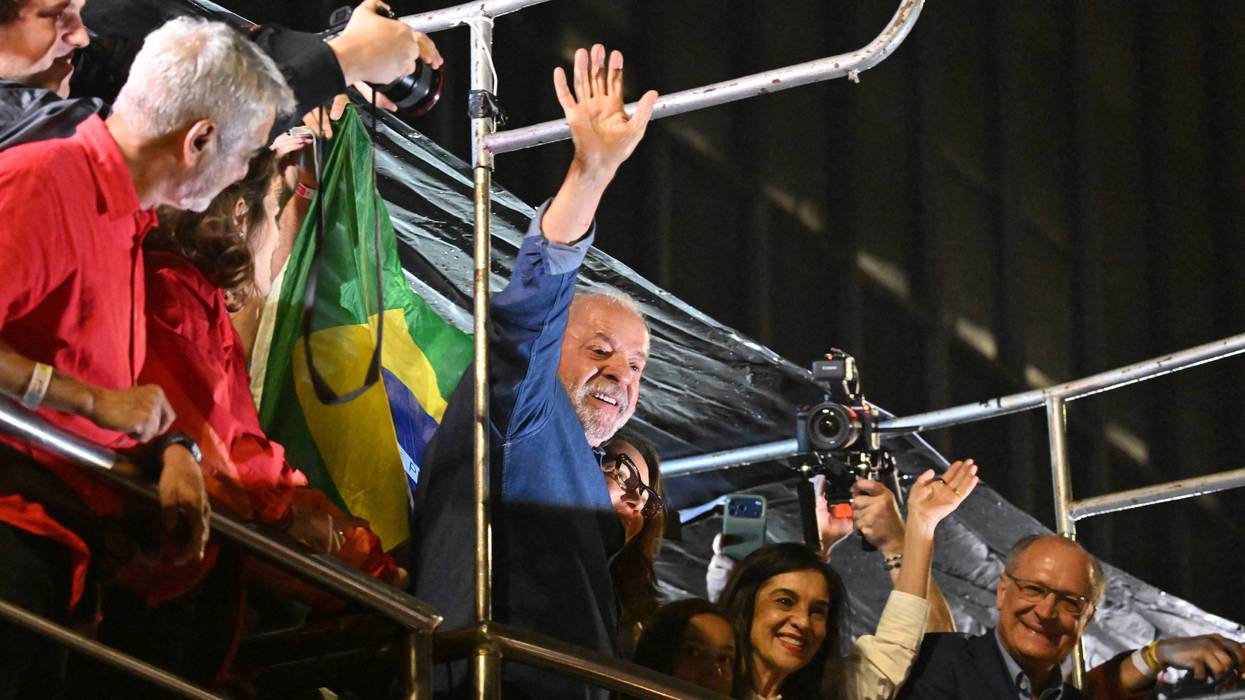
"In the two largest democracies in the hemisphere, we cannot tolerate authoritarian efforts to deny election results, overturn the will of hundreds of millions of voters, or violently interrupt the peaceful transfer of power."
Progressive leaders in the US House of Representatives on Friday demanded that President Donald Trump recognize Brazilian President Luiz Inácio Lula da Silva's reelection victory, accusing the Republican of joining defeated far-right candidate Flávio Bolsonaro's bid to undermine democracy in Latin America's largest country.
“Trump continues to ramp up his election denialism," Congressional Progressive Caucus Chair Greg Casar (D-Texas), CPC Deputy Chair Ilhan Omar (D-Minn.), and CPC Whip Jesús G. "Chuy" García (D-Ill.) said in a statement, adding that Lula won by "more than 4 million votes. Yet Trump called it 'rigged’ and ‘corrupt’ and refused to recognize the outcome."
Turning to loser Bolsonaro's flight from Brazil to the United States, where senior Trump officials said he and his family would be granted visas, the progressives continued, "As soon as Flávio Bolsonaro touched down in Florida, he thanked Donald Trump for his support and claimed that Brazil’s election was stolen, outrageously declaring himself the rightful ‘president-elect.’"
"Trump’s and Bolsonaro’s partnership in election denial must stop immediately," they stressed. "We demand that the United States join the rest of the world in accepting the results of Brazil’s election. In the two largest democracies in the hemisphere, we cannot tolerate authoritarian efforts to deny election results, overturn the will of hundreds of millions of voters, or violently interrupt the peaceful transfer of power."
“As November approaches, we are committed to using every congressional tool at our disposal to defend election integrity at home and stop Trump’s election interference and denialism abroad," the lawmakers added, alluding to next week's US midterm elections.
The Trump administration's response to the results of the Brazilian runoff has angered many in Brazil, especially those on the left.
According to Folha de São Paulo, the US State Department had prepared a customary statement congratulating Brazil on its election but was ordered to withhold its release after Bolsonaro challenged the results. The US Embassy in Brasília subsequently offered no indication of when the statement would be issued.
Lula's leftist Workers' Party addressed Trump's behavior in a resolution saying that "Brazil will not accept foreign interests interfering in its democracy, nor will it accept political disputes serving as a pretext to disrespect the sovereign will of the Brazilian people, in elections that were widely monitored and recognized for their integrity."
"The position of US President Donald Trump regarding the election results and [Bolsonaro's] presence on US territory also requires attention," the resolution added.
Dan Beeton, communications director at the Center for Economic and Policy Research, told Common Dreams on Friday that "the CPC leaders are right."
"Trump should join the rest of the world and recognize Lula’s historic electoral victory and, hopefully, turn a new page in US-Brazil relations, which have deteriorated significantly during Trump’s second term, with Trump’s unprovoked and unnecessary tariffs, sanctions against officials responsible for holding former President Jair Bolsonaro accountable for his 2023 coup attempt, and other hostile actions," Beeton added. "Trump will risk further isolating the US on the world stage as long as he doesn’t.”