SUBSCRIBE TO OUR FREE NEWSLETTER
Daily news & progressive opinion—funded by the people, not the corporations—delivered straight to your inbox.
5
#000000
#FFFFFF
To donate by check, phone, or other method, see our More Ways to Give page.

Daily news & progressive opinion—funded by the people, not the corporations—delivered straight to your inbox.

The Don't Run Joe campaign issued the following statement on Friday:
President Biden's move to reorder the Democratic Party's 2024 political calendar is an inappropriate, self-serving intervention dressed up in noble rhetoric. Biden received a mere 8 percent of the vote in the 2020 Democratic primary in New Hampshire, finishing fifth. Now he wants to dislodge New Hampshire from its longstanding first-in-the-nation primary role. On the other hand, Biden was the big winner of the South Carolina primary in 2020. Now he wants that state to go first.
Biden's decision to intrude into the Democratic National Committee's painstaking process for setting the 2024 presidential primary schedule appears to be a sign of anxiety in the White House about potential obstacles to his winning renomination. The president has indicated repeatedly that he plans to run again, so how ethical would it be for the DNC to allow a contestant to determine key rules of the game before the race begins?
South Carolina is a state that Biden obviously sees as vital to a renomination bid, but - unlike all other states under consideration for early primaries - it is not a battleground state. Everyone knows that the Democratic ticket will not win the deep-red state of South Carolina in 2024. Georgia, on the other hand, is one of the most important battleground states, and is more racially diverse than South Carolina. If Biden's proposal to supplant the New Hampshire primary as first-in-the-nation were truly about diversity and not about improving his own prospects for renomination, he would be promoting a state other than South Carolina to be first.
Joe Biden should climb down from attempting to manipulate the Democratic primary schedule for his own narrow political purposes. As we pointed out when announcing the Don't Run Joe campaign, "A president is not his party's king, and he has no automatic right to renomination."
RootsAction is dedicated to galvanizing people who are committed to economic fairness, equal rights for all, civil liberties, environmental protection -- and defunding endless wars. We mobilize on these issues no matter whether Democrats or Republicans control Washington D.C.

“The concerning rise in measles cases is due to a decrease in childhood vaccines driven by misinformation,” said the chair of the New York state Senate’s health committee.
As measles cases surge around the country—including in neighboring Pennsylvania, where the largest outbreak in decades is surging—New York declared a measles "emergency" on Monday.
The statewide emergency declaration, announced by Democratic New York Gov. Kathy Hochul, marks the first issued by a US state since last year, when the US saw over 2,000 cases of the illness after decades of it having been essentially eliminated.
This year has been even worse, with more than 3,900 cases reported across the US according to the Centers for Disease Control and Prevention (CDC) as of October 2—the worst outbreak since 1991. By comparison, 2024 saw just 285 reported cases. Outbreaks over the past two years have resulted in eight deaths across the country.
New York has identified at least 108 measles cases this year, mostly in rural communities with low vaccination rates.
The emergency order, which will be in effect through November 4, is set to expand the number of health professionals who can administer the measles-mumps-rubella (MMR) vaccine and order measles tests, allow pharmacists to vaccinate children as young as 2, and require vaccines to be reported to state immunization registries within 72 hours.
"No one should get seriously ill or die from a vaccine-preventable disease," Hochul said, announcing the order on Monday.
At the same time, Pennsylvania is experiencing a statewide outbreak unprecedented in the last three decades, surpassing 1,000 infections on Monday, according to state health officials. Since the outbreak began in April, at least 198 people have been hospitalized, and five have died. Officials said less than 1% of those cases were in people who'd been appropriately vaccinated.
Pennsylvania's Democratic Gov. Josh Shapiro has blamed the Trump administration's reversal of decades of federal vaccination policy for amplifying the crisis. He has singled out Health and Human Services Secretary Robert F. Kennedy Jr., who has spent decades sowing doubt about the safety and efficacy of vaccinations, including—as recently as August—pushing the long-discredited myth that the MMR vaccine is linked to autism.
Amid the measles resurgence over the past two years, RFK's approach has faced widespread criticism. He has repeatedly urged Americans to get the MMR vaccine. But he has often undercut that recommendation by claiming, without evidence, that the vaccine also causes deaths each year and that its benefits are "exaggerated" while promoting unproven alternative treatments.
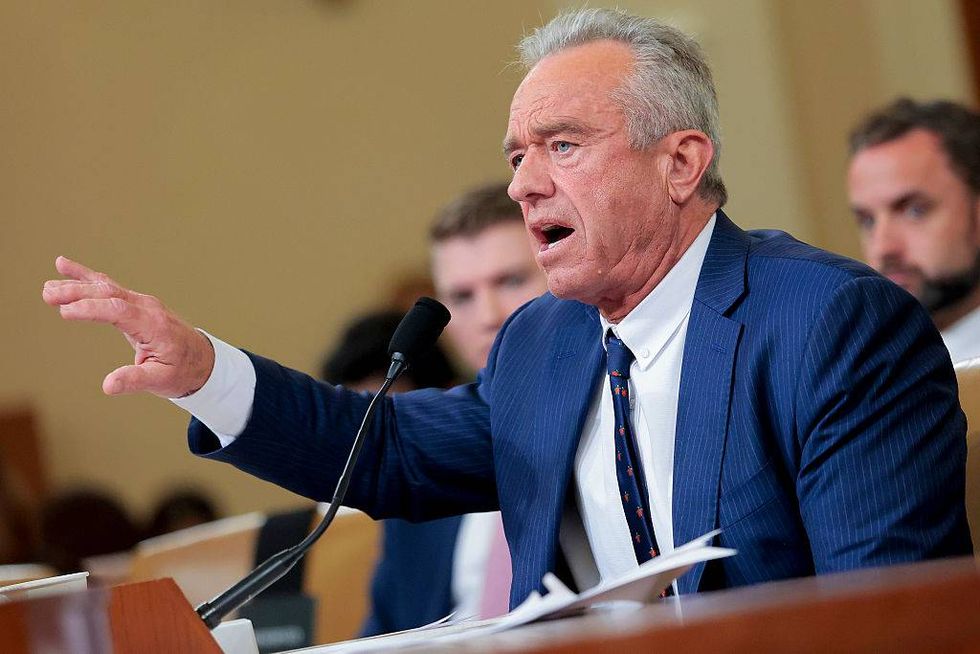
As measles rampaged across Pennsylvania, Kennedy spoke on September 17 at a Washington, DC, convention hosted by Children's Health Defense, an anti-vaccine organization he helped to co-found.
He told the attendees, which included prominent anti-vaccine activists, that they "have a strong and steadfast friend in the White House" and praised Trump's executive order calling to divide the MMR vaccine into separate doses, against the recommendation of major medical organizations. Several Republican lawmakers were also in attendance.
When the first two measles deaths in Pennsylvania—of two unvaccinated people in Lancaster County—were reported in August, Kennedy suggested that they may have been “altogether fabricated by one of the governor’s hopeful staffers,” a claim that state health officials strenuously rejected. Since then, three more deaths have been recorded.
“RFK is playing games with people’s lives here in Pennsylvania, not just by discouraging vaccination," Shapiro said in an interview on the Meidas Touch News Network Monday. "He won’t even acknowledge the five deaths here in Pennsylvania. He actually accused me of fabricating it and making it up, even when the families of those loved ones who have perished have expressed publicly their sadness and their grief."
Despite the federal rollback, Shapiro said on Monday that Pennsylvania is making progress fighting the measles surge. He touted that the Department of Health had administered more than 53,000 doses of the MMR vaccine in September—more than double the average month's total.
Measles was declared eradicated in the US in 2000, with about 97% of kindergarten-age children having been fully immunized against the disease. Since then, vaccination coverage has dipped across the US to roughly 92%, with substantially lower rates in some communities where the largest outbreaks have taken hold.
The majority of that national dip has taken place in just the past half-decade, since the Covid-19 pandemic: In 2019-20, MMR coverage for kindergarteners was still at over 95%.
“The concerning rise in measles cases is due to a decrease in childhood vaccines driven by misinformation,” said New York state Sen. Gustavo Rivera (D-33), who chairs the state Senate’s health committee.
Jeanne Franklin, the health director for Chester County in Pennsylvania, told The Guardian that the rampant misinformation surrounding vaccinations, amplified by anti-vaccine influencers, has made efforts to fight the measles epidemic in her state more challenging.
"We have people in key positions saying it isn’t an outbreak, it isn’t a problem," Franklin said. "We have people who approach our nurses and say that they were told the vaccine will make them sterile, or that there’s a microchip within it."
"The role of a president is to protect the country, not to actively threaten it and encourage attacks on American lives," said the mayor of Los Angeles.
"Keep our city out of your reckless war talk," said San Diego's mayor, Todd Gloria, Monday night after President Donald Trump's rambling speech at a rally in Nebraska included a particularly violent mention of the California city.
Gloria was among several Democratic political leaders who were incensed after Trump—moments after predicted the Republican Party would see a "tremendous victory" in the November 3 midterm elections—suggested that he would not object to an Iranian military or nuclear attack on San Diego and Los Angeles.
The president said that soaring prices for gas, groceries, and other essentials are a "small price to pay for keeping the world safe—keeping our country safe."
Trump on Iran: Let 'em take out Los Angeles and San Diego, it's a small price to pay https://t.co/Fc4BcjVDKj
— Headquarters (@HQNewsNow) October 6, 2026
He warned that Iran could "take out a city," before adding that he would "let them" attack the two deep-blue cities—home to a collective 5.2 million people, with more than 20 million residents in the surrounding areas
“Let them take out Los Angeles. Let them take out San Diego," Trump said at the rally in Grand Island. "This is a very small price to pay... It’s gonna be over very soon."
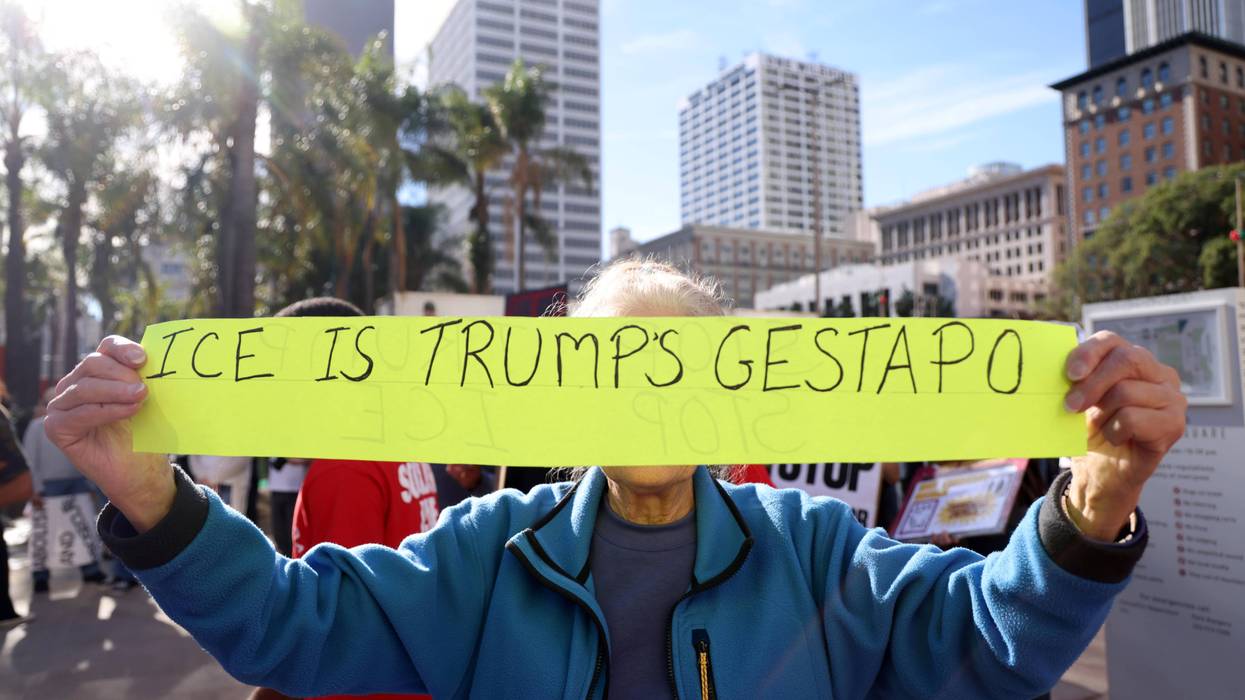
The crowd responded to Trump's comments with laughter and cheers. The president has frequently made Democratic strongholds like Los Angeles, Chicago, and his own hometown of New York City the targets of rhetorical attacks. He has also targeted those cities with the deployment of armed federal agents as part of his mass deportation agenda.
California Gov. Gavin Newsom, a Democrat whose name has been floated as a potential 2028 presidential candidate, condemned Trump's remarks as "deranged and dangerous."
"After sending the National Guard and Marines to occupy California, Donald Trump is now saying our foreign enemies should 'take out' Los Angeles and San Diego," said Newsom, who later criticized Trump's vice president and secretary of state for not speaking out against the comments.
"The SILENCE from JD Vance and Marco Rubio today is deafening," said the governor.
Gloria added that San Diego, which is home to major military installations, "is not collateral damage. We are not expendable. And we are never a 'small price to pay.'"
Los Angeles Mayor Karen Bass accused Trump of compromising the safety of the nation's second-largest city.
"The role of a president is to protect the country, not to actively threaten it and encourage attacks on American lives," said Bass. "In the face of irresponsible threats, as Angelenos, we know how to stand together and protect our city."
Jim Desmond, a Republican running for Congress in California's 48th District, which lies in San Diego, was also quick to distance himself from the president's comments.
Some observers claimed the president had simply been speaking in an "especially confusing style," as journalist Daniel Dale suggested, and did not intend to suggest that the two cities could be acceptable collateral damage.
"Of course you can say it’s inappropriate regardless for the president to casually float the possibility of a city being wiped out," he added.
Trump's comments came days after it was reported that the Pentagon is prepared to send thousands more troops and a third aircraft carrier to the Middle East, as talks between the US and Iran remain stalled. Gas prices remain elevated, at $4.36 per gallon on average, and nearly two-thirds of respondents to an Associated Press poll in June said they disapproved of how Trump had handled the war, which he joined Israel in starting in February without congressional approval.
Sen. Alex Padilla (D-Calif.) had a succinct response to Trump's remarks, referring to the constitutional amendment that allows members of a president's Cabinet to remove him from office on the ground that they cannot fulfill the duties of the president.
"Twenty-fifth amendment NOW," said Padilla.
“How many more of these investigations have been opened up because of political pressure coming from the White House, despite the questions and concerns about legality and constitutionality?” said US Sen. Alex Padilla.
A whistleblower report filed by a former FBI intelligence analyst alleges that the Trump administration pushed the law enforcement agency to violate the constitutional rights of US citizens demonstrating against federal immigration enforcement operations.
According to a Tuesday report from NBC News, Jill Fields, a former supervisory intelligence analyst in the FBI’s Los Angeles Field Office, has filed a formal complaint with leaders on the Senate Judiciary Committee alleging violations of Americans' rights to free speech and peaceful assembly.
The complaint alleges that Emil Bove, a loyalist to President Donald Trump who served as acting deputy attorney general before being confirmed to the federal judiciary, told the head of the field office to open an investigation into protesters holding events outside federal buildings, even though such demonstrations are explicitly protected by the US Constitution's First Amendment.
The administration also ordered FBI Director Kash Patel to investigate demonstrators who were using megaphones to warn their immigrant neighbors about the presence of US Immigration and Custom Enforcement (ICE) operations in the area.
Additionally, the complaint claims that Fields was removed from supervising three programs at the office after she raised internal concerns about violating civil liberties, which "created a chilling effect within the workforce" and "signaled to other employees that raising constitutional or legal concerns could carry professional consequences."
Fields would subsequently resign from her position.
Sen. Alex Padilla (D-Calif.), ranking member of the Senate Judiciary Committee's subcommittee on immigration, citizenship, and border safety, told NBC that whistleblower complaints will be crucial to investigating administration activities given how the president has gutted inspectors general within the federal bureaucracy.
“That’s going to be a significant challenge," Padilla said of gathering information on the administration, "but it begins with good, honorable professionals being willing to come forward and tell us what’s going on and what’s wrong with what’s going on. We're hoping others may be inspired, as well."
Padilla also speculated that Fields' whistleblower complaint was just the tip of the iceberg.
"How many more of these investigations have been opened up," he wondered, "because of political pressure coming from the White House, despite the questions and concerns about legality and constitutionality?"
"Let’s not wait to find out," wrote Sen. Bernie Sanders. "Pause advanced AI NOW!"
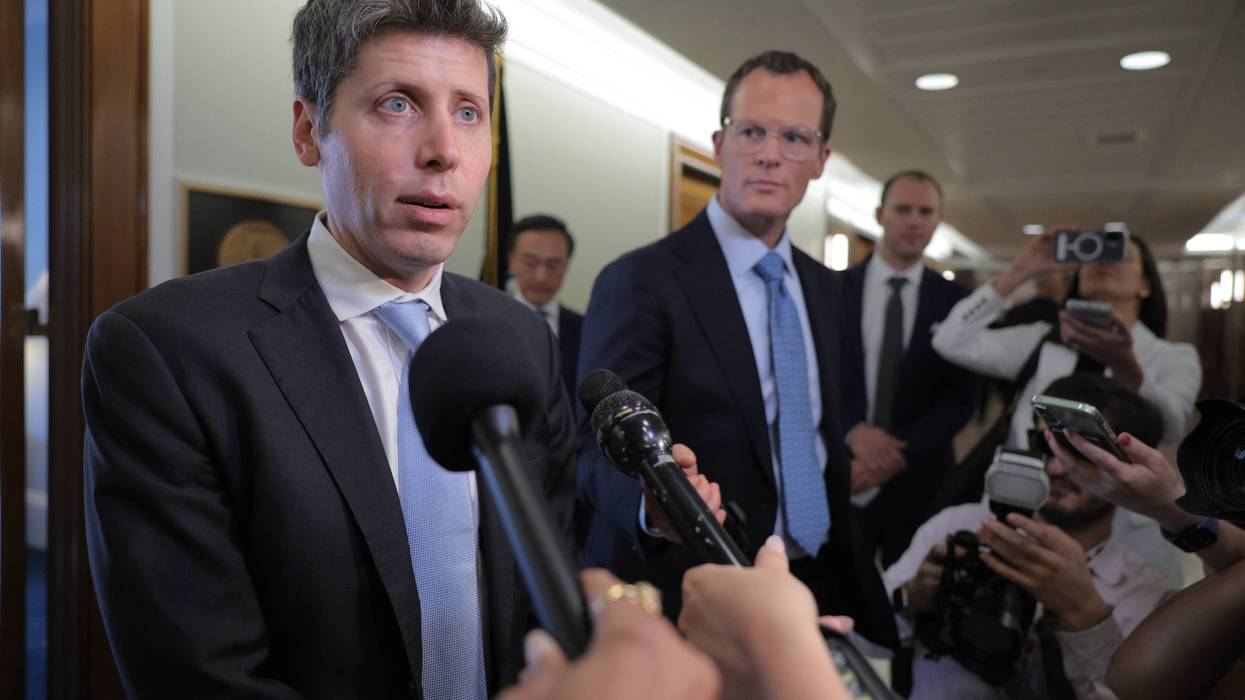
US Sen. Bernie Sanders asked OpenAI CEO Sam Altman precisely what "bad things" the world should accept for the sake of advancements in artificial intelligence, a question that came after the billionaire executive said people must be willing to tolerate some unspecified negative outcomes to enjoy the potential long-term benefits of the technology.
"Mr. Altman: What 'bad things' should we accept to advance AI?" Sanders (I-Vt.) wrote in response to the OpenAI CEO's interview with Politico. "Losing tens of millions of jobs? A mass surveillance state? A mental health crisis for our kids? A global financial crisis? Mass extinction?"
"Let’s not wait to find out," the senator added. "Pause advanced AI NOW!"
Altman told Politico in an interview released this past weekend that he believes the world "should accept some bad things happening for the benefits of this technology and people having the agency." The OpenAI CEO didn't elaborate on the kinds of "bad things" he views as an acceptable price to pay for AI development, which some researchers and industry insiders say poses an existential threat to humanity.
Altman was among the leading AI executives who met with US President Donald Trump at the White House last week and signed a commitment to self-police their respective companies' AI models in the wake of recently uncovered security incidents and amid mounting concerns that—if left unrestrained and in the hands of profit-seeking firms—AI could have catastrophic impacts on humankind.
Sanders is calling for an immediate halt to advanced AI development as well as a permanent ban on artificial superintelligence, defined as "AI that exceeds human cognitive performance and capabilities across most domains, or has sufficient capabilities to destroy or disempower humanity, including by overthrowing the federal government."
Sanders, Rep. Greg Casar (D-Texas), and other US lawmakers who support strict AI regulation are also calling on the Trump administration to pursue international agreements aimed at reining in artificial intelligence worldwide.
Volker Türk, the United Nations high commissioner for human rights, said in a speech on Monday that "the clock on AI regulation is ticking" and warned that unfettered AI "can undermine equality, freedom, privacy, and public debate in a million subtle, sophisticated ways—letting dystopia creep in unnoticed."
"No country and no company can—or should—define the future of AI and people’s rights alone," said Türk. "The clock on AI regulation is ticking. If we fail to move quickly, we risk unforeseeable consequences—for ourselves and future generations."
"Wherever there is resistance to this industry, more people learn that they are not powerless and that they can play a role in determining what happens in their community and with the future of AI and data centers," one organizer said.
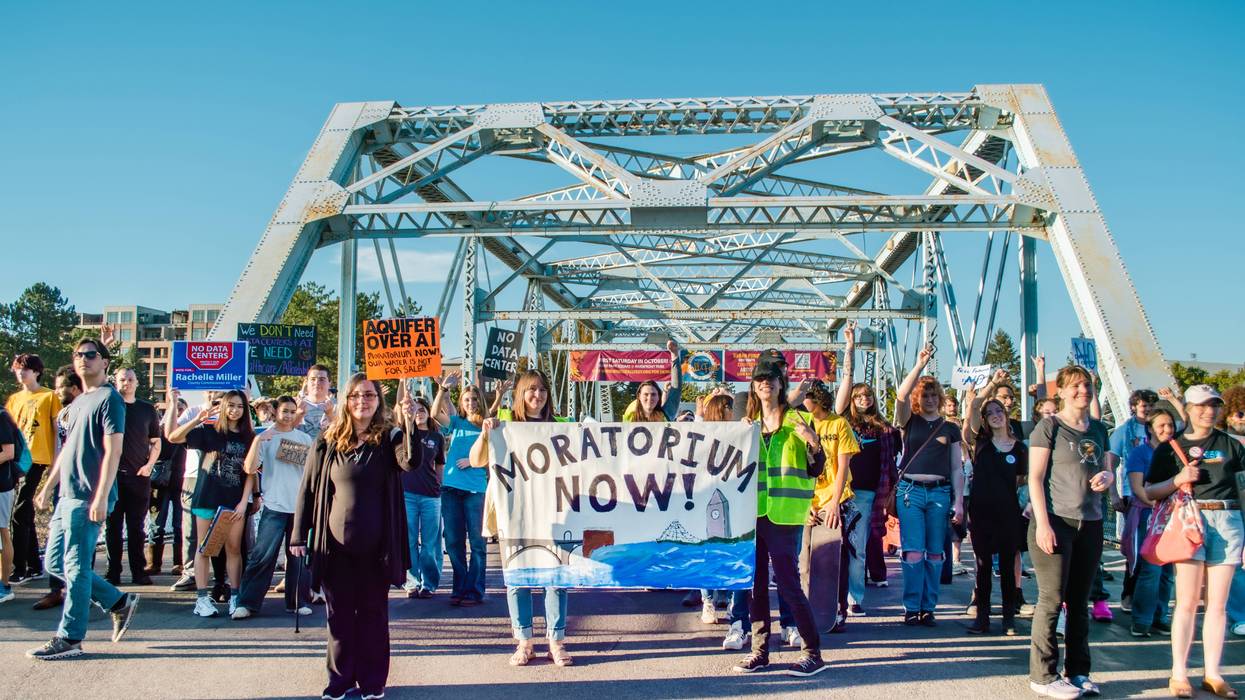
As the national backlash against hyperscale data centers and the artificial intelligence they power grows, hundreds of people turned out to 19 events across Washington state on Sunday as part of a day of action to demand a statewide moratorium on data centers.
The call for a Washington-wide pause builds on momentum at the city and county level, as Seattle became the largest US city to halt the data center buildout in June, followed by other major municipalities including Spokane and Tacoma’s Pierce County.
Several of the communities that organized events on Sunday are also trying to stop projects already planned in their backyards. But concerned residents across the state—mobilized under the banner of Washington AI Resistance (WAAIR) in partnership with several other environmental and public interest organizations—want state-level protections to ensure that no community falls through the regulatory cracks. To do that, they aimed to raise their voices louder than the powerful Big Tech lobby in a state where both Microsoft and Amazon have headquarters.
"Communities have a right to determine which industries get to move into their backyards."
“We need to demonstrate to candidates and sitting legislators that there is real public demand for a data center moratorium in every corner of the state,” Evan Sutton, a Seattle-based activist with WAAIR, told Common Dreams.
Lauren Redfield, WAAIR president and co-chair of the Seattle Democratic Socialists of America (DSA) Ecosocialism working group, said the day of action was significant “because it demonstrates wide-ranging support from diverse communities across Washington that people are angry about data centers.”
“Communities have a right to clean air, clean water, affordable energy. Communities have a right to determine which industries get to move into their backyards. Representatives who are more responsive to the tech industry than their community constituents, who are allowing data centers to drive up electricity prices and pollute air, water, and land systems—these representatives are going to be held accountable,” Redfield told Common Dreams.
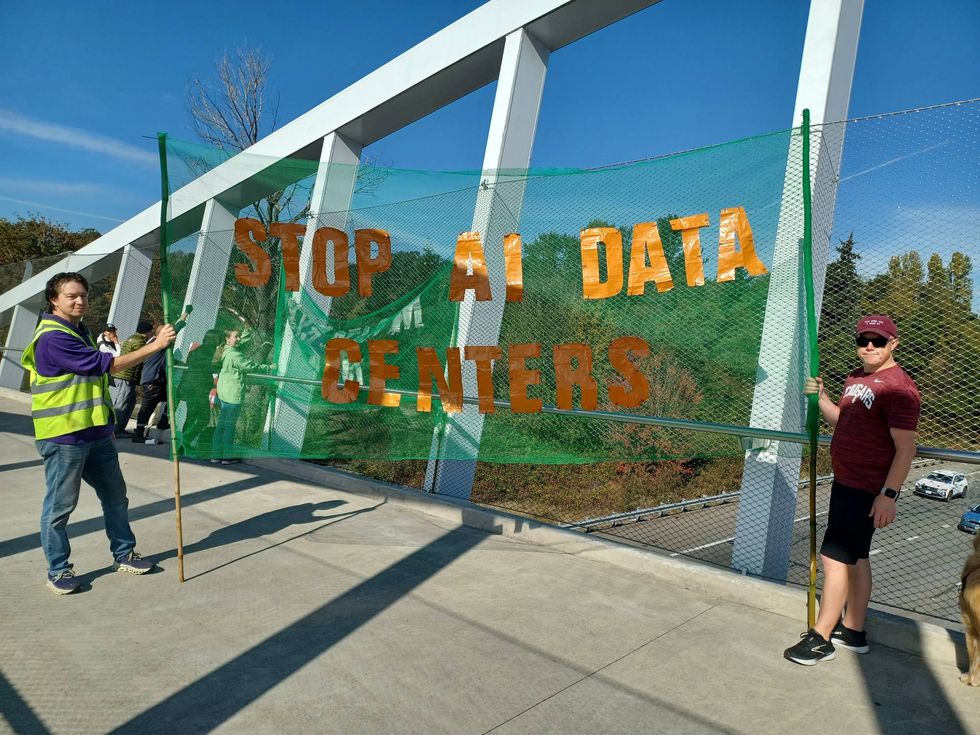
In Seattle, activists held four separate events over the course of the day: one at a freeway bridge in the north of the city, another in West Seattle, a third outside the light rail station in the south Seattle neighborhood of Beacon Hill, and a fourth at a central square of the University of Washington.
Sutton, who organized the north Seattle action, said it was important to look beyond local regulations and stand in solidarity with communities across the state.
“In the end our natural resources are shared by everyone,” he told Common Dreams, explaining that Seattle's moratorium might push developers to look to unincorporated parts of the county, and if Seattle’s King County passed a moratorium, they would then turn to other parts of the state.
“We shouldn't have to play whack-a-mole with billionaire developers and AI tech bros,” Sutton said as passing cars honked in support of the protest. “Our legislature should step up and pass rules that everybody has to follow everywhere in the state.”
Thomas Meyer, the deputy political director of Food & Water Watch, who led a group of 10 volunteers in distributing flyers and gathering signatures for a moratorium in Beacon Hill, said that “data centers in Seattle are most likely to be proposed in the south end or in nearby cities like Tukwila, Burien, and Renton. Just like in other parts of the state and the country, data centers are more often proposed in areas with larger populations of people of color.”
Indeed, a study by Washington environmental justice group Front and Centered found that 57% of the data centers it surveyed were placed in census tracts with the highest proportion of people of color.
“It's important to pass a data center moratorium to protect Washington residents from the pollution and extraction from these facilities, and to prevent big tech companies from further concentrating their wealth and power at our expense,” Meyer told Common Dreams.
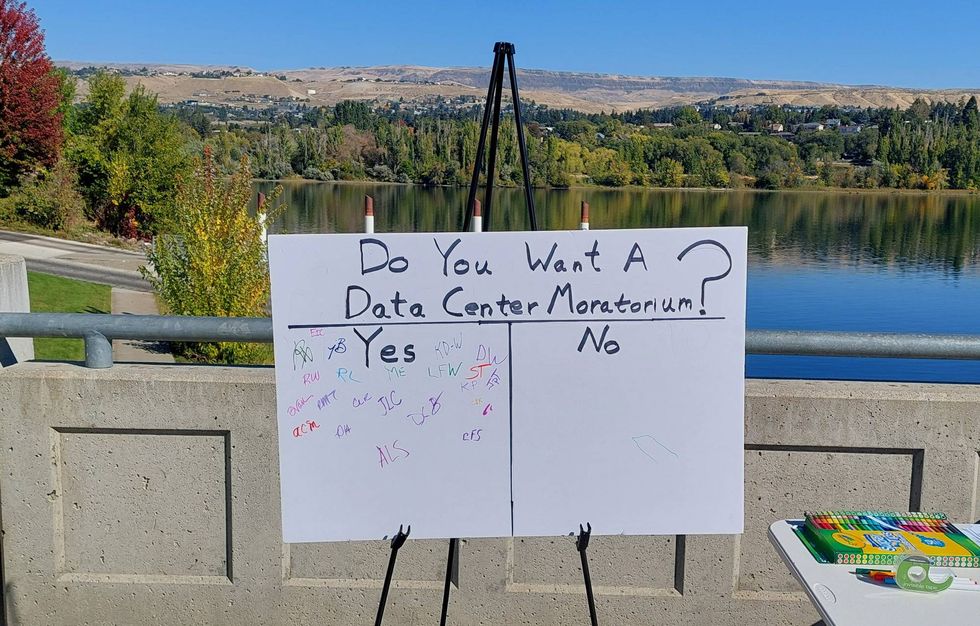
In Wenatchee in central Washington, concerned residents gathered by the Loop Trail along the Columbia River and asked passersby if they would like to see a data center moratorium.
“We had them sign their initials on a poster board under ‘YES’ or ‘NO,’ one of the organizers explained. “During the time that we were there, we collected 24 ‘YESes’ and zero ‘NOs.’"
The activists plan to bring the board to a meeting with Chelan County Commissioner Kevin Overbay on Wednesday to oppose data centers in Malaga, an unincorporated community in the county.
“Malaga is ground zero for hyperscale data centers in Chelan County, and currently hosts a 288 megawatt Microsoft data center,” the organizer said. “We want to show Overbay that the Wenatchee community as a whole does not want to see any more data centers. The Columbia is the lifeblood of our community. It provides us with power as well as water. These resources do not belong to private corporations like Microsoft to use as they please.”
While Wenatchee is focused on the county fight, a statewide moratorium would ease their efforts.
“A statewide moratorium would save us from having to spend our time fighting for a moratorium on a county-wide level,” the organizer said. “We could spend our time fighting instead for long-term protections to ensure that our region is permanently protected from exploitation.”
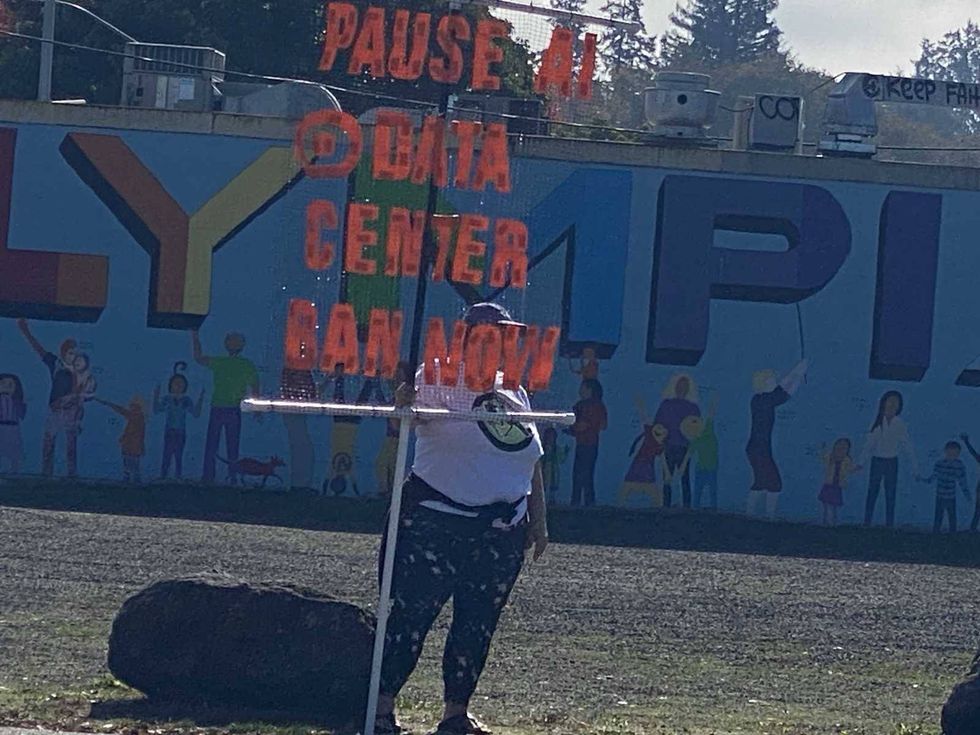
In Olympia, the state capital, activists gathered to put pressure on state Rep. Beth Doglio (D-22). Doglio introduced a bill in the 2026 legislative session with some basic data center regulations that was watered down due to pressure from the tech lobby before dying in committee. Protesters wanted Doglio to know she would have public support to back a moratorium and push for stronger regulations.
“Washington needs to halt the out-of-control tech oligarchs with a moratorium on data center construction,” said Tina Simcich of Olympia DSA. “Working-class jobs and our land, water, energy, and air resources must be protected from this greed-driven grab.”
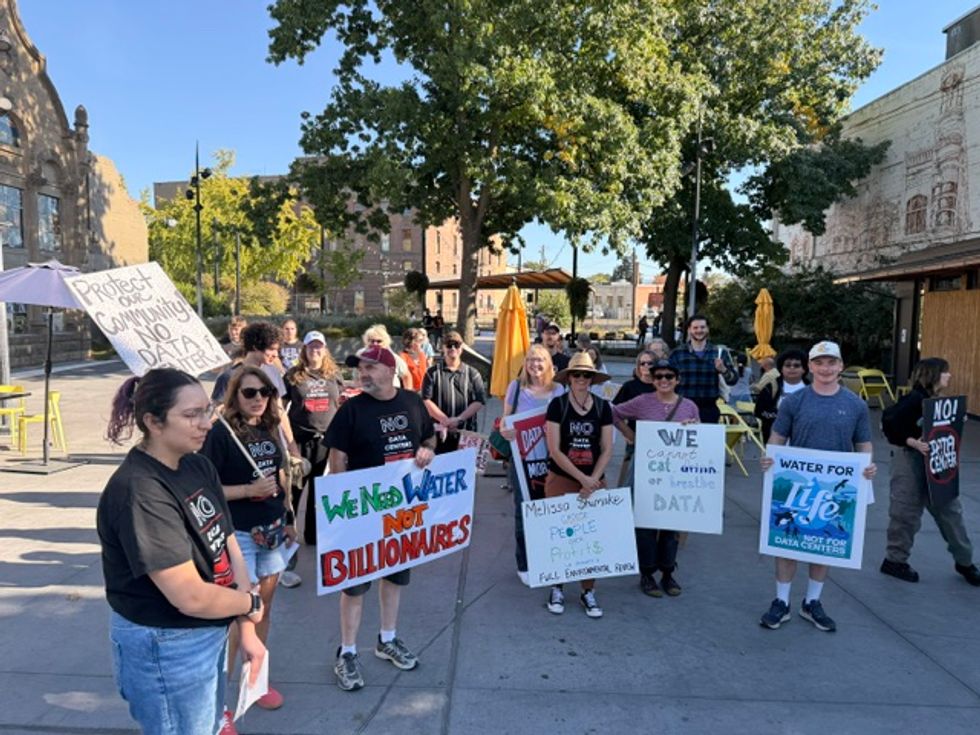
In Walla Walla, residents are mobilizing to stop a planned Amazon data center after the Port of Walla Walla sold land to the company in the nearby Wallula Gap.
“Everyone has their own concerns” about the proposed data center—which is projected to use as much power as Seattle–Allison Carney, a member of the Walla Walla Anti Data Center League, told Common Dreams, “whether it be not knowing if their power bills are going to go up, not knowing if their land is going to be seized through eminent domain,” water pollution and availability, noise, light, and the fact that it will be located near the McNary National Wildlife Refuge and could potentially harm endangered wildlife.
However, she said, “The biggest thing that unites everyone's concerns is the fact that we don't trust Amazon. We don't trust this company coming into our community. We don't trust that they're going to be doing what's best for us. We trust that they're going to do what's best for their profits."
Beginning at 2:00 pm PT on Sunday, around 60 people attended a rally and march in downtown Walla Walla to the County Office of Community Development, where Community Development Department Director Melissa Shumake will determine whether to require a full environmental impact statement for the project, something community members are demanding.
A statewide pause would assist in their efforts by increasing the chance that any data center would be governed by stronger rules to protect the community and environment.
“A statewide moratorium would give time for regulators to catch up with this industry,” Carney said.
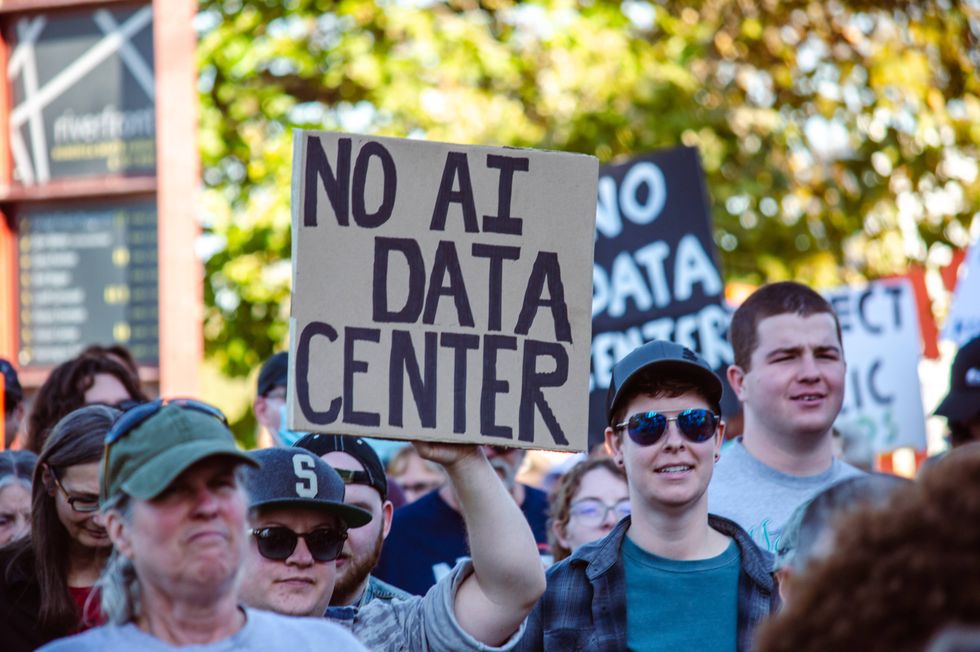
The largest action of the day took place starting at 3:30 pm PT in Spokane, where 150 people marched from Riverfront Park, past the City Hall and the Public Works Building where the County Commission meets, and back to the park to say, "This is what we're fighting for: our river,” Zenthia Peterson, the lead organizer for the event, told Common Dreams.
Demonstrators, including members of WAAIR, 350 Spokane, the Visibility Brigade, West Plains Water Coalition, and long-time local environmental campaigner Terry Horne, demanded statewide action but also expressed concern about how local data centers would impact a region already under pressure from the climate crisis. The march came about two months after a devastating wildfire scorched Spokane in August, destroying homes and forcing 600,000 to evacuate. Locals are concerned that a large data center could deplete the water resources needed to fight the next blaze.
“We're doing a march tomorrow to save the literal world."
In particular, activists are watching a 1,000-megawatt project slated for the nearby community of Airway Heights, outside the bounds of the city moratorium. While Spokane County has also announced a pause, it ends in December. It is unclear whether it will be extended, and the ordinance that was supposed to follow it has been delayed.
These concerns make a statewide moratorium all the more important, Peterson said, as that “would protect us even if the county sits on their asses."
Organizers had intended to have participants call Washington Gov. Bob Ferguson to demand state action, only to discover the night before that he had turned off his voicemail. Peterson encouraged participants to call him during the week instead.
"My speech was quite literally, ‘May you get bit back tenfold,” Peterson said, referring to Ferguson.
Jeremiah Harding, who organizes with WAAIR and the Spokane Community Organized Response Network, also decried the use of AI technology for layoffs, mass surveillance, and military targeting.
“We're doing a march tomorrow to save the literal world,” Harding told Common Dreams the night before the protest.
He continued: “It's bad enough that it pollutes the environment and fills the air with noise, while draining our water and destroying local homes. It's bad enough that Spokane just had the single largest fire in our history, and we need all the water we can get. But the technology itself is also used to disempower, leech, destroy, and kill people.”
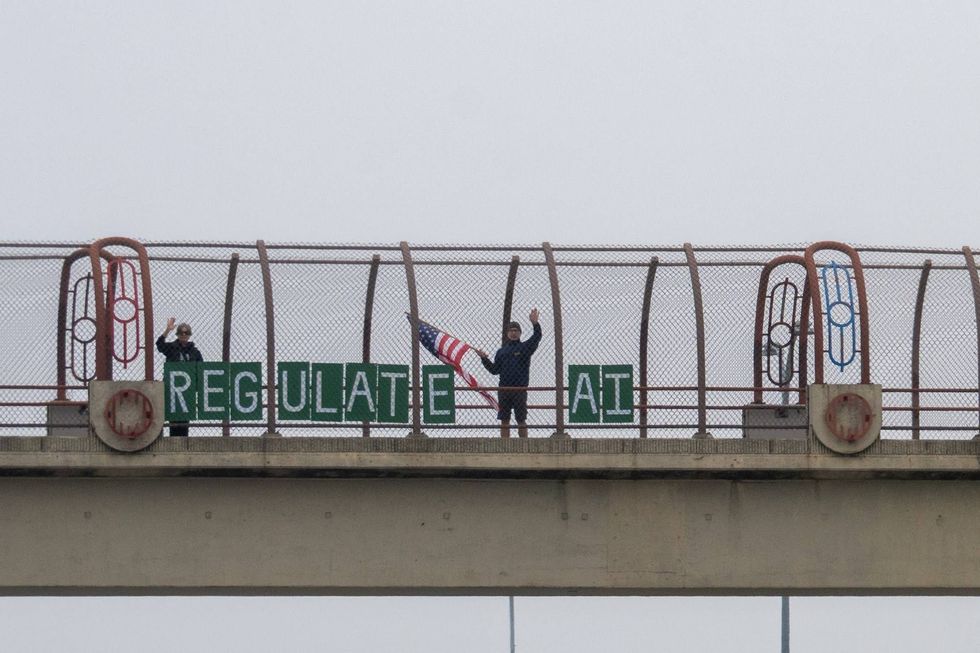
Now that the day of action has passed, WAAIR will continue to put pressure on state lawmakers and Gov. Ferguson, Sutton told Common Dreams. After the November election, activists will also seek out lawmakers to sponsor moratorium legislation and other AI regulations while “pushing forward with future actions that people can take to make sure that legislators understand this isn’t an issue they can ignore.”
At the same time, organizers realize that the actions in Washington are part of a national struggle.
Meyer of Food & Water Watch said Washington was "one of dozens of states with active grassroots campaigns against data centers. Wherever there is resistance to this industry, more people learn that they are not powerless and that they can play a role in determining what happens in their community and with the future of AI and data centers.”
Within that broader movement, Washington may have a unique role to play, Sutton said.
“As the home of Microsoft and Amazon and a state that is deeply tied to Big Tech, if we can achieve this here, then I think it creates momentum for states everywhere else to believe that they can do the same,” he told Common Dreams.
Editor’s note: Olivia Rosane is a member of WAAIR and Seattle DSA.

"Walmart has amassed the most intimate information about its customers and is developing the technology that can be used to put that data to work at checkout," said Lindsay Owens of Groundwork Collaborative.
As Walmart attempted to debunk research into its pricing practices by watchdog group Groundwork Collaborative on Monday, the organization released a new report detailing more than a dozen patents the $833 billion corporation holds or has applied for—all aimed at monitoring customers' behavior to determine what products to market to them, deceiving them about an item's price, and upcharging them.
“Corporations don’t spend years building high-tech pricing tools, hiring experts, and filing patents just to let them collect dust. They do it because they see a path to higher profit—one that runs right through everyday consumers’ budgets," said Lindsay Owens, president and CEO of Groundwork and the author of the book Gouged: The End of a Fair Price—And What That Means for Your Wallet.
On Monday, Owens and Elizabeth Pancotti, Groundwork's vice president of policy, advocacy, and research, released “The Walmart Watchtower: Patents Speak Louder Than Pledges,” noting that Walmart CEO John Furner just recently attempted to do damage control on Owens' reporting in Gouged regarding the company's artificial intelligence-enabled pricing tactics.
While Walmart executives have "openly touted" the ability of "Sparky," the AI shopping assistant the company launched last year, to push customers to spend an average of 40% more during a shopping trip, Furner insisted last month that Walmart will "price the product, not the person.”
But Groundwork said that beyond its deployment of Sparky, "Walmart’s own investments and patents suggest that the retail giant is building a vast arsenal of tools that can be used to track shoppers and even potentially determine what they pay."
The report reveals that technology patented by Walmart can:
The company has also filed applications for technology that could:
"Walmart has amassed the most intimate information about its customers and is developing the technology that can be used to put that data to work at checkout," said Owens. "Shoppers will have to decide whether to believe Walmart’s patent applications or its PR statements.”
As the report was released, Dan Bartlett, Walmart's executive vice president of corporate affairs, released a public letter accusing Owens of "mischaracterizations" regarding the company's pricing practices.
"Walmart does not and will not use an individual customer’s personal information, income, shopping history, urgency, or willingness to pay to set an individualized price," said Barlett. "We do not engage in dynamic pricing, raising prices in response to a hot afternoon or an approaching snowstorm, for example."
He also said Groundwork has wrongly taken Walmart's patents "as evidence that we will pursue individualized or dynamic pricing," and said the company has "committed not to."
Although Bartlett denied that the company uses AI to upcharge customers, Walmart US CEO Dave Guggina told investors just last month that “when customers engage with Sparky, their average order value jumps 40%.”
Owens responded to Bartlett's letter by saying that any "confusion around Walmart’s pricing practices is of its own making."
"Walmart says one thing in its damage-control letters to customers, another to its investors behind closed doors, and a different thing entirely to the United States Patent and Trademark Office," said Owens.
She called on Walmart to publicly release information about "what data Sparky can see, how that information shapes the recommendations and purchases it makes, and whether sensitive consumer information could be exposed, misused, or used against shoppers," especially considering recent hacking incidents by AI models.
"The arsenal of technologies the company is building that can be used to profile and track us should worry every American who is concerned about their privacy and pocketbooks," Owens said. "This personal data, according to Walmart’s own patents, is a critical element of the new pricing strategies the company is developing."
The report on Walmart's patents released by Groundwork on Monday, said Owens, will allow Americans to "decide for themselves" whether to believe executives' denials.
"Federal law prohibits officeholders from controlling a super PAC or directing its spending," noted one campaign finance expert.
Facing widespread backlash, President Donald Trump said late Monday that he would stop unlawfully funding political ads with taxpayer dollars and instead use money from a pro-Trump super PAC—a scheme that watchdogs said would also be illegal.
Trump wrote in a post on Truth Social that he has "decided to do the Patriotic Ads, among others, and pay for them myself, and with money I raised for MAGA, Inc." The president's announcement came amid growing outrage over his administration's use of more than $10 million in taxpayer funds for political propaganda, a violation of federal law.
But Brendan Fischer, director of strategic investigations at Campaign Legal Center (CLC), said Trump's new scheme to finance the ads with super PAC cash would also run afoul of federal law.
"After charging taxpayers $10 million for thinly-veiled campaign ads, Trump now says he'll have his super PAC pay instead. One problem: Federal law prohibits officeholders from controlling a super PAC or directing its spending," said Fischer, who noted that his organization "has already filed a complaint" against the president for directing MAGA Inc. spending.
CLC's complaint, filed last month, notes that Trump and his allies have openly indicated that he controls MAGA Inc., in violation of the Federal Election Campaign Act.
“President Trump’s repeated assertions that he controls a super PAC show that he has committed a clear-cut violation of campaign finance law,” said Saurav Ghosh, CLC's director of federal campaign finance reform. “Our laws are clear: No federal officeholder or candidate is allowed to direct the money raised or spent by a super PAC. President Trump, MAGA Inc., and anyone else who breaks campaign finance laws must be held accountable to help ensure that our political system is free of corruption.”
The recent ads launched by the Trump White House just weeks ahead of the November midterms were funded by money from the Department of Homeland Security. Major networks, including CNN and MS NOW, faced intense backlash for airing the ads even though they were financed illegally.
"These campaign ads never should have run on the taxpayer’s dime to begin with. Clearly wrong. Clearly illegal," Sen. Maggie Hassan (D-NH) said following Trump's announcement on Monday. "But there’s a lesson here: We can’t underestimate the difference that citizens can make in our country when they speak out and hold their leaders to account."
A recent analysis by the Center for American Progress Action Fund found that donors to the MAGA Inc. super PAC include:
“The fossil fuel industry’s conduct has become some of the most harmful and culpable in human history," said one campaigner. "Eventually, it will be held to account.”
The US Supreme Court on Monday appeared skeptical of efforts by ExxonMobil and Suncor Energy to prevent a Colorado climate liability lawsuit from going to trial, with justices across the ideological spectrum questioning the fossil fuel companies’ arguments for shutting down the case before evidence of their alleged deception can be heard.
The case—Suncor Energy Inc. v. County Commissioners of Boulder County—could determine the fate of nearly 60 similar lawsuits filed by states, counties, cities, and Indigenous tribes seeking to hold fossil fuel companies financially accountable for climate-related harms.
Boulder sued ExxonMobil and Suncor in 2018, alleging that the companies knew for decades about the dangers associated with burning fossil fuels while misleading the public about those risks. The city and county seek compensation for costs associated with wildfires, drought, flooding, extreme heat, and other climate impacts.
The companies, backed by the Trump administration, argue that federal law preempts the state law claims because greenhouse gas pollution crosses state and national borders. The Colorado Supreme Court ruled 5-2 in May 2025 that the climate lawsuit against ExxonMobil and Suncor could proceed under state law.
Today at the Supreme Court, my home town of Boulder, Colorado is going head-to-head against ExxonMobil in a case that could determine the future of climate litigation and holding Big Oil accountable for the toll of its harms and lies.Boulder County residents who have lost homes and health spoke.
[image or embed]
— Antonia Juhasz (@antoniajuhasz.bsky.social) October 5, 2026 at 7:55 AM
Kannon Shanmugam, an attorney for the companies, contended in oral arguments Monday that climate accountability lawsuits "reflect an all-too-regrettable trend of trying to resolve political issues in court rather than in the political branches where they belong.”
However, Chief Justice John Roberts appeared unconvinced that the interstate argument means that state courts can't consider climate claims.
“There are a lot of familiar situations where conduct outside of a state has broad effects among other states,” the conservative justice said, “and yet we allow state courts in a particular state to bring litigation that affects that.”
Justice Elena Kagan, one of the court's three liberals, also pressed the companies over their claim that federalism prevents Boulder’s lawsuit from proceeding. Kagan repeatedly demanded a legal foundation for the argument, asking: “Where’s the text for that? Where’s the support for that? Where’s the precedent for that?”
Kagan also compared the case to successful lawsuits against tobacco and opioid companies, calling the fossil fuel cases “Chapter 3” in that legal history.
“This is the same kind of lawsuit against the same kind of actors for the same kind of harm,” she said. “And I guess I’m not understanding how this one would be preempted, and the other is not?”
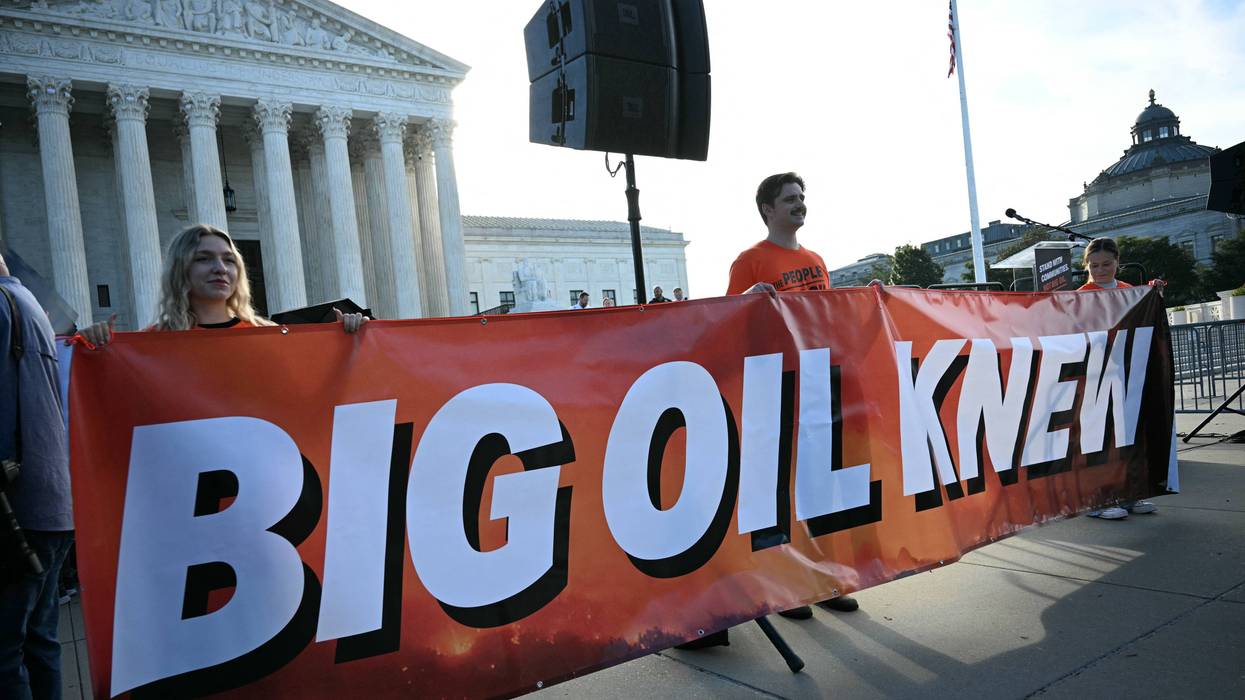
Climate defenders rallied outside the Supreme Court Monday as the justices heard oral arguments in the case.
Corey Riday-White, legal director at the Center for Climate Integrity, said in a statement Monday that "Big Oil’s desperation to escape trial for climate deception is still in search of a legal justification. Justices across the ideological spectrum asked good, skeptical questions that poked holes in Big Oil’s attempt to stop Boulder’s case before it can go to trial."
“Boulder’s case is about holding corporations accountable for deceptive conduct, and the people of Boulder should have their day in court to present the evidence of Exxon and Suncor’s deception," he added.
Kathy Mulvey, director of the Fossil Fuel Accountability program at the Union of Concerned Scientists (UCS), said Monday that “today’s oral arguments in Suncor v. Boulder were the latest act in Big Oil’s desperate attempt to preempt state tort lawsuits and prevent evidence of the fossil fuel industry’s campaign of deception from being heard in court."
"ExxonMobil and Suncor Energy’s efforts to evade accountability hinge on misrepresenting Boulder’s lawsuit as an attempt to regulate emissions," she stressed.
“This last-ditch effort before the Supreme Court is part of a coordinated, well-resourced push to shut down fossil fuel accountability efforts across the country," Mulvey noted. "So far, Big Oil has not achieved its top federal lobbying priority—a bill to grant the industry sweeping immunity from climate laws and lawsuits such as Boulder’s."
“Communities deserve to have their day in court," she added. "The Supreme Court should let this case be heard on its merits in Colorado, and Congress must not stand in the way by gifting Big Oil a get-out-of-jail-free card.”
“Boulder’s case is about holding corporations accountable for deceptive conduct."
In August, UCS and other experts filed an amicus brief in the case "offering a historical account of ExxonMobil’s and Suncor Energy’s concealment and denial of the hazards they knew would result from the normal use of their fossil fuel products."
The brief notes that in 1965, "Frank Ikard, then president of the American Petroleum Institute, informed the organization’s member companies—including Exxon and Suncor’s predecessor Sun Oil—that then-President Lyndon Johnson’s Science Advisory Committee had concluded continued fossil fuel combustion could produce significant climatic changes by the end of the 20th century."
"Ikard warned industry leaders the report would generate significant public concern, noting that ‘there is still time to save the world’s peoples from the catastrophic consequence of pollution, but time is running out,'" the brief added.
In 1977, an Exxon senior scientist briefed company leadership that the “general scientific agreement that the most likely manner in which mankind is influencing the global climate is through carbon dioxide release from the burning of fossil fuels.”
Exxon then conducted rigorous research on the matter, and concluded in a 1982 internal document that there was “little doubt” that atmospheric carbon dioxide was rising due to fossil fuel burning and that the resulting greenhouse effect “would warm the Earth’s surface, causing changes in climate affecting atmospheric and ocean temperatures, rainfall patterns, soil moisture, and … potentially melting the polar ice caps.”
Despite this, starting in the late 1980s, Exxon—later ExxonMobil—publicly stressed uncertainties, questioned models, and supported organizations such as the Global Climate Coalition that challenged the need for climate action.
Local governments sued to hold Big Oil accountable. So on Monday, with backing from the Trump administration, fossil fuel companies like Suncor will ask the Supreme Court to let them off the hook for their lies. Why? Because giant corporations know they have an ally in the corrupt Roberts majority.
[image or embed]
— Demand Justice (@wedemandjustice.bsky.social) October 2, 2026 at 9:28 AM
David Arkush, director of the consumer advocacy group Public Citizen's Climate Program, said Monday that “this case is about whether local communities experiencing devastating climate harms should get their day in court against Big Oil companies that spread climate deception."
"The fossil fuel industry has been going to extraordinary lengths to attack these climate cases, not just asking the Supreme Court to end the lawsuits, but also pushing Congress and state legislatures to grant fossil fuel companies immunity from all climate-related liability," Arkush noted.
"The current offensive isn’t just about defeating the cases. It’s also about preventing the public from learning the extent and severity of the industry’s wrongdoing," he continued. "It’s about fossil fuel CEOs’ profound fear of sitting in front of a jury of 12 Americans and trying to defend their companies’ deceptive conduct—because they know it’s indefensible."
“Regardless of how the Supreme Court rules in Suncor, it’s hard to imagine these companies can bury the evidence and escape accountability indefinitely," Arkush added. "The fossil fuel industry’s conduct has become some of the most harmful and culpable in human history. Eventually, it will be held to account.”
The justices are expected to issue a ruling by the end of June. Far-right Justice Samuel Alito—who holds stock in fossil fuel companies facing dozens of lawsuits that could be affected by the Suncor decision—last week recused himself from the case, leaving his eight colleagues to decide it, and raising the prospect of a 4-4 split that would leave the Colorado Supreme Court’s ruling intact.
Hundreds of people have been arrested in recent days at youth-led protests over the removal of more than 130 million names from voter rolls.
As one advocate warned India's Supreme Court on Monday that "this country will burn" unless action is taken to stop what thousands of protesters have denounced as an illegal purge of voters by the head of the country's Election Commission, the court demanded accountability from Prime Minister Narendra Modi's government.
Chief Justice Surya Kant said in a hearing that the court had not approved changes to a new form used by the Election Commission of India for registering new voters, contradicting a statement from the ECI last month which said the document had been upheld by the court.
"Modified Form 6 has not been approved by us, let us be very clear," said Kant.
The court called on Modi's government, the ECI, and the head of the commission, Gyanesh Kumar, to answer "in a clear, transparent manner” for the massive upheaval of the national voter rolls, from which more than 130 million names have been removed in recent months.
The changes to the voter list have sparked calls for Kumar's resignation, particularly at protests that have erupted across the country, led by student groups and the Cockroach Janta Party (CJP), a political movement led by young people whom Kant compared to cockroaches earlier this year.
The group's website declares, "Gyanesh, it's done, bro," and thousands of people have joined protests like those that forced the resignation of India's education minister over the summer.
Last week, hundreds of protesters were detained, with journalists reportedly among those who were arrested—prompting outcry from Amnesty International over the government's "blatant attack on the rights to liberty and freedom of peaceful assembly."
In New Delhi in particular, police have been denounced for their aggressive response to the uprising, forcing hundreds of people into police vehicles. Authorities said they were investigating reports that officers had sexually assaulted three journalists at the protests over the weekend.
The Supreme Court took up two petitions Monday, questioning the credibility of the ECI's efforts to "purify" the voter rolls, as the commission has said, and calling for an independent inquiry into Kumar's management of the "special intensive revision" (SIR) process.
Another hearing will be held later this week.
Kant said the court wanted a response from Kumar and the commission about allegations that decisions about the SIR were made unilaterally by Kumar. Media reports last month said the two other ECI commissioners had objected to the revision of voter rolls, which the government has claimed is aimed at eliminating duplicates and the names of dead and ineligible voters, as well as "illegal infiltrators."
People across Delhi and states including Bihar and West Bengal have said they were wrongly removed from voter rolls, and protesters have said the revision appeared to target Muslim voters, who have opposed Modi's Bharatiya Janata Party.
Protesters on Monday symbolically posed as dead people to show that voters have been wrongly eliminated from voter rolls, despite still being alive and eligible to participate in elections.
“Deletions of voters have been made in the largest democracy,” Menaka Guruswamy, a lawyer for one of the petitioners who brought the cases to the Supreme Court, told The Guardian. “We have grown up with free and fair elections, that is not the case now.”
"The argument that I think we continue to need to learn is that less war in the world is usually safer."
Democratic US Senate candidate Abdul El-Sayed on Monday schooled Fox News anchor Martha MacCallum about President Donald Trump's illegal war with Iran.
While appearing on MacCallum's show, the Michigan Democrat made the case that Trump's war, which he launched without congressional authorization in February, was one "we shouldn't be fighting."
"Why are we fighting this war, to what end?" El-Sayed asked. "Who benefits from it? Why did we do this? What are we paying for it?"
El-Sayed: Why are we fighting this war?FOX: Iran created a huge threat to the neighborhoodEl-Sayed: The nuclear threat had been contained. FOX: I don't know, they had been breaking JCPOA by many estimations. El-Sayed: By estimations people like to cherry-pick, sure https://t.co/qYiCeq4lB3
— Acyn (@Acyn) October 5, 2026
MacCallum responded that Iran "created a huge threat" in the Middle East, and pointed to Iran's role in the 1983 bombing of a barracks that was housing US Marines in Beirut, Lebanon as evidence.
El-Sayed noted that former President Barack Obama had signed a deal with Iran to halt its nuclear weapons program, which Trump scrapped during his first term even though Iran was complying with the terms of the agreement at the time.
"Donald Trump came and tore that agreement up, and then, in his second administration, created a war that the people of Michigan are now paying for," said El-Sayed. "Then you ask yourself, does more war make us actually safer? And the argument that I think we continue to need to learn is that less war in the world is usually safer."
"We're in a situation right now where we could have chosen peace," he added. "And instead we chose war. And right, you've got a situation with the Strait of Hormuz where we can't move oil and gas."
Elsewhere in the interview, El-Sayed explained his rationale for raising taxes on the wealthy, whom MacCallum credited with making the US the "engine of the world."
FOX: I understand thinking that some people have too much money. We are engine of the world for these things and people end up being billionaires as a result. El-Sayed: The issue is not that some people have too much money. It’s that the engine that created their opportunity to make money is being underfunded…FOX: You said you wanted to choke them out.El-Sayed: I don't want to choke anyone out. I want to make sure everyone can breathe. Right now, you have an economy where people are getting choked out because they don’t have the basic means for a dignified life because we are more focused on allowing a billionaire to make another billion…
— Acyn (@Acyn) October 5, 2026
"I would rather live in a society where, rather than a billionaire making a second billion, I'm invested in a public school," he said, "so that some kid out there gets a great education, gets to participate in capitalism, builds an amazing business, and gets to make money too."
"I don't want to choke anyone out," El-Sayed explained. "I want to make sure everyone can breathe. Right now, you have an economy where people are getting choked out because they don’t have the basic means for a dignified life because we're all a lot more focused on allowing a billionaire to make a second, third, fifth billion than we are in making sure a kid gets good schools."