
SUBSCRIBE TO OUR FREE NEWSLETTER
Daily news & progressive opinion—funded by the people, not the corporations—delivered straight to your inbox.
5
#000000
#FFFFFF
To donate by check, phone, or other method, see our More Ways to Give page.


Daily news & progressive opinion—funded by the people, not the corporations—delivered straight to your inbox.
"If we choose to stay on the current path—powering our economies with fossil fuels, extracting virgin resources, destroying nature, polluting the environment—the damages would stack up."
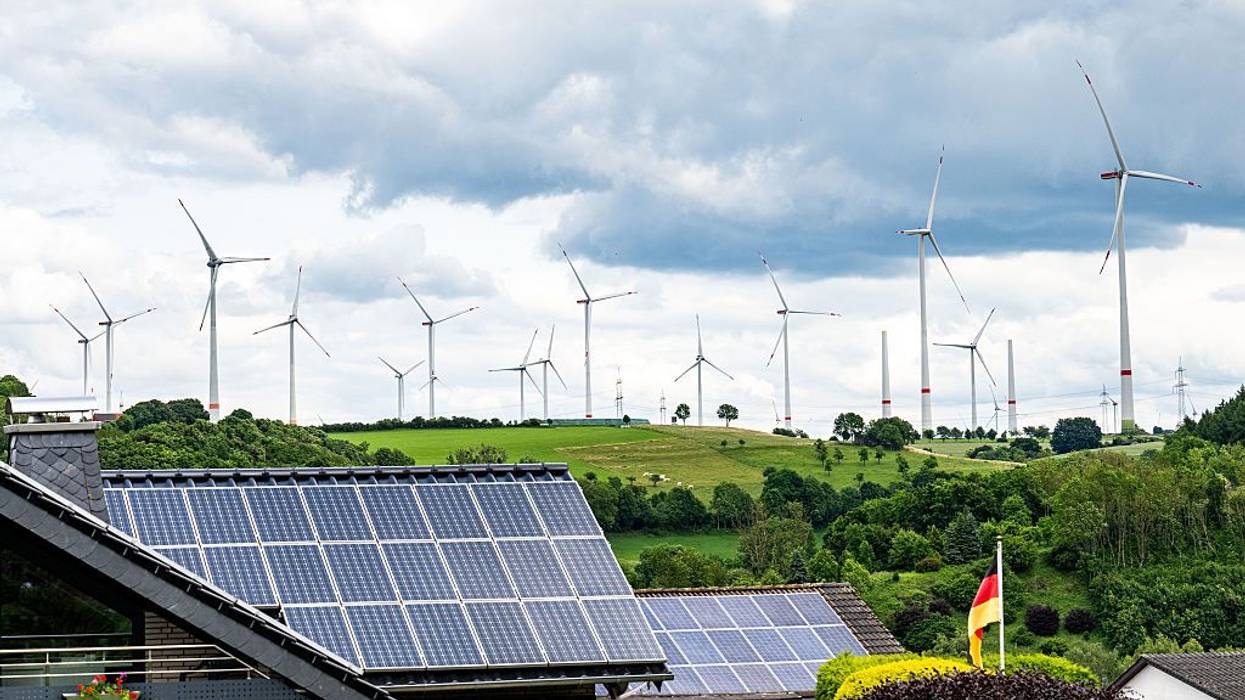
A new report from the United Nations Environment Program has found that addressing the global climate emergency would deliver major economic benefits, in addition to creating a cleaner and more habitable planet.
The seventh edition of the Global Environmental Outlook (GEO), released on Tuesday, estimates that making up-front investments in climate action now would begin to yield global macroeconomic benefits starting in 2050, potentially growing to $20 trillion per year by 2070 and $100 trillion by 2100.
The report, which was the product of nearly 300 multi-disciplinary scientists across more than 80 countries, argues that a total of $8 trillion in annual investment from this year until 2050 would be needed to achieve its climate goals. But, the report stresses, the cost of inaction would be far greater.
"If we choose to stay on the current path—powering our economies with fossil fuels, extracting virgin resources, destroying nature, polluting the environment—the damages would stack up," the report warns. "Climate change would cut 4% off annual global GDP by 2050, claim many lives, and increase forced migration."
Other likely consequences of inaction, warns the report, include "Amazon forest dieback and ice-sheet collapse," along with the loss of "hundreds of millions more hectares of natural lands." The report also projects that global food availability will fall if the climate crisis is not addressed, and that increased air pollution will cause an additional 4 million premature deaths per year.
The report recommends a rapid move away from fossil fuels, as well as a drastic rethinking of agricultural subsidies so that they no longer "directly favor activities that have significant harmful effects on the environment, including on biodiversity."
Robert Watson, a co-chair of the GEO assessment, said in an interview with the Guardian that the climate crisis cannot simply be seen as an environmental issue given that it is now "undermining our economy, food security, water security, human health," and also creating national security problems by increasing "conflict in many parts of the world."
In an interview with BBC, Watson also accused US President Donald Trump's administration of sabotaging the report by refusing to even accept its conclusions about the damage being done by human-induced climate change.
"The US decided not to attend the meeting at all," he explained. "At the very end they joined by teleconference and basically made a statement that they could not agree with most of the report, which means they didn't agree with anything we said on climate change, biodiversity, fossil fuels, plastics, and subsidies."
Instead of funding industrial agriculture the IFC should help small-scale farmers move to agroecology and regenerative farming which can boost yields, reduce the use of expensive inputs, and improve livelihoods.
The International Finance Corporation’s website brands many of the well-founded criticisms of industrial animal production as “myths.” This reflects the regrettably polarized debate between those who believe that industrial agriculture is needed to feed the growing world population and those who, like me, argue that a far-reaching transformation of our food system is needed.
The International Finance Corporation (IFC) website states that it is a myth that industrial animal production is bad for food security. The truth, however, is that factory farming diverts food away from people; it is dependent on feeding grain—corn, wheat, barley—to animals who convert these crops very inefficiently into meat and milk. For every 100 calories of human-edible cereals fed to animals, just 7-27 calories (depending on the species) enter the human food chain as meat. And for every 100 grams of protein in human-edible cereals fed to animals, only 13-37 grams of protein enter the human food chain as meat.
The scale of this is massive. International Grains Council data show that 45% of global grain production is used as animal feed, while 76% of world soy production is used to feed animals. The inefficiency of doing this is recognized by the United Nations Environment Program (UNEP), which states that it is “essential to fight food insecurity and malnutrition… Reducing the use of much of the world's grain production to feed animals and producing more food for direct human consumption can significantly contribute to this objective.” I calculate that if the use of cereals as animal feed were ended, an extra 2 billion people could be fed even allowing for the fact that if we reared fewer animals we would need to grow more crops for direct human consumption. My figure is very cautious; other studies calculate that ending the use of grains as animal feed would enable an extra 3.5-4 billion people to be fed. Moreover, industrial livestock’s huge demand for these cereals pushes up their price, potentially placing them out of reach of poor populations in the Global South. So, sorry IFC, but it really is not a myth to say that industrial animal production is bad for food security.
To dismiss the harsh suffering endured by industrially farmed animals as a myth is extraordinary
The IFC website dismisses as a myth the argument that industrial animal production is bad for the environment. However, factory farms disgorge large amounts of manure, slurry, and ammonia that pollute air and watercourses. When ammonia mixes with other gases it can form particulate matter; this is a key component of air pollution, which can lead to heart and pulmonary disease, respiratory problems including asthma, and lung cancer.
Industrial livestock’s huge demand for cereals as feed has been a key factor fuelling the intensification of crop production. This pivotal link between the livestock and arable sectors is often not recognized. With its monocultures and high use of chemical pesticides and nitrogen fertilizers, intensive crop production leads to soil degradation, biodiversity loss, and overuse and pollution of water. In short, it erodes the key fundamentals—soils, water, and biodiversity—on which our future ability to feed ourselves depends.
Arjem Hoekstra (2020) calculates that animals fed on cereals and soy (industrially farmed animals) use 43 times as much surface- and groundwater and are 61 times as polluting of water as animals fed on grass and other roughages. Its adherents claim that factory farming saves land by cramming animals into crowded sheds. But in reality it eats up huge amounts of cropland for feed. European Union studies show that feed production accounts for 99% of the land use of the pig and broiler sectors. It is feed production—not the tiny amount of space given to animals on the farm—that makes factory farming so land-hungry.
The contention that industrial systems undermine the socioeconomic potential of small-scale farmers in the developing world is also branded a myth by the IFC. The World Bank, however, takes a different view. Its 2024 report Recipe for a Liveable Planet states, “The global agrifood system disproportionately and detrimentally affects poor communities and smallholder farmers who cannot compete with industrial agriculture, thereby exacerbating rural poverty and increasing landlessness.” Instead of funding industrial agriculture the IFC should help small-scale farmers move to agroecology and regenerative farming which can boost yields, reduce the use of expensive inputs, and improve livelihoods.
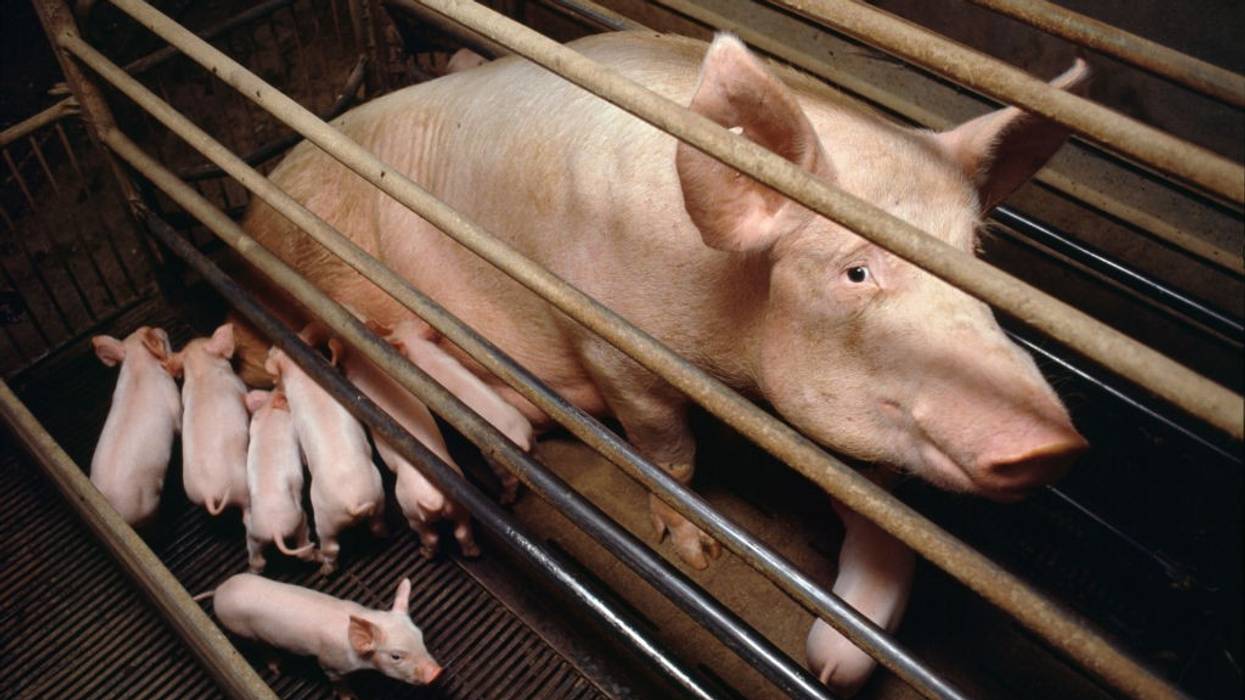
Also swatted aside as a myth is the mountain of scientific evidence that industrial livestock production results in poor animal welfare. To dismiss the harsh suffering endured by industrially farmed animals as a myth is extraordinary. In its own Good Practice Note on animal welfare the IFC lists what are commonly recognized to be the key characteristics of factory farming—confinement in narrow stalls, overcrowding, barren environments, painful procedures, hunger, and breeding for high yields leading to health disorders—and identifies them as “welfare risks” that need to be tackled. But now, in a remarkable volte-face, the IFC airily dismisses these problems as a myth.
IFC’s position stands in sharp contrast to UNEP, which states that “intensive systems deprive animals of some of their most basic physical and psychological needs.” World Bank economist Berk Özler has written about the value of policies under which low-income countries can grow without causing massive increases in suffering among farmed animals. He writes, “Perhaps many low-income countries can leapfrog the stage of industrial animal farming, towards something more sensible.”
I urge the IFC to recognize that industrial animal agriculture is destructive—destructive of food security, the environment, small-scale farmer livelihoods, and the well-being of animals.
"We call for the bullets and bombs to be silenced so that the growing voices for peace can be heard," said the group.
As part of its quest for "a green and peaceful future," Greenpeace International on Tuesday urged the Israeli government and Hamas to "unequivocally agree to support and abide by" a recent United Nations Security Council resolution and declare "an immediate and permanent cease-fire" in the Gaza Strip.
"We call for the bullets and bombs to be silenced so that the growing voices for peace can be heard," the environmental advocacy group said in a statement that acknowledges "the horrific events" of October 7—in which Hamas-led militants killed more than 1,100 people in Israel and took around 240 hostages—and the over 37,000 Palestinians who Israeli forces have slaughtered since.
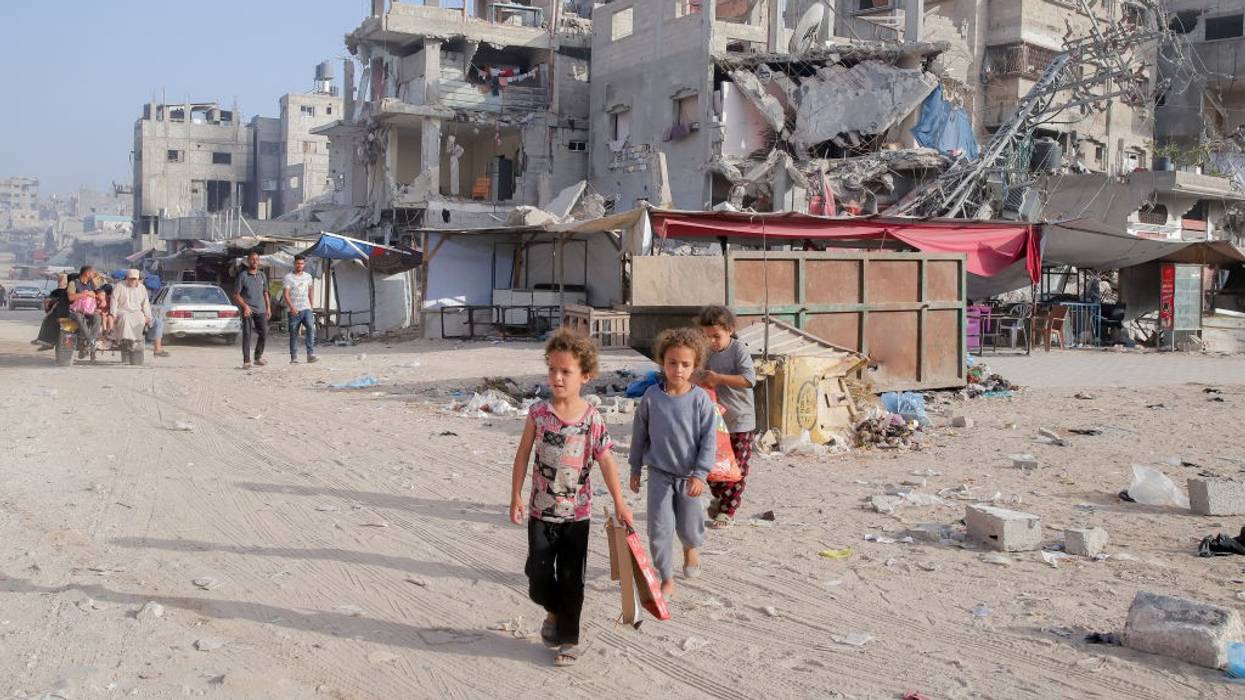
In addition to the rising death toll and at least 85,523 Palestinians injured by the war, "the majority of Gaza's 2.3 million people have been forced to flee their homes," Greenpeace highlighted. "Much of Gaza has been reduced to rubble, famine and disease are rife, nowhere and no one is safe. Sanity and humanity must be restored in the face of this unfolding genocide."
"Beyond the urgent need to end the civilian suffering and ecological devastation, all parties must resume peaceful negotiations."
The organization pointed to South Africa's genocide case against Israel at the International Court of Justice as well as a U.N. commission's report from last week that concludes the Israeli government and Palestinian militants have committed war crimes.
"We call on Hamas to immediately release all hostages," Greenpeace said. "We call for the Israeli government to immediately end the blockades on the supply of food, water, medicine, and fuel to the people of Gaza and release all illegally detained civilians."
"Violence is never the answer, it only brings more violence," the group emphasized. "Beyond the urgent need to end the civilian suffering and ecological devastation, all parties must resume peaceful negotiations towards a lasting peace built on safety, justice, and equal rights for all. International law must be upheld."
The United States and European countries that are arming Israel have faced international pressure to use their leverage to halt crimes by its forces. Greenpeace called for "a global embargo on all arms sales and transfers that could be used to further increase the toll of war crimes to be answered by both sides once this war and conflict ends."
"Greenpeace recognizes the deep historic roots that need to be discussed and negotiated if a permanent peace is to be established," the group said. "Greenpeace calls for an end to the illegal occupation of Palestine. Greenpeace supports the UNSC resolution ambition that 'Israel and Palestine live side by side in peace within secure and recognized borders, consistent with international law and relevant U.N. resolutions."
The Greenpeace statement was released the same day that the U.N. Environment Program (UNEP) published a preliminary assessment of the "environmental impact of the conflict in Gaza," which features three main sections. The first part addresses the state of the environment and natural resources in the Hamas-governed enclave before October 7.
The second section discusses topics including water, wastewater treatment, and sewage systems; solid waste collection and treatment; destruction of infrastructure and related debris; energy, fuel, and associated infrastructure; marine and coastal environments; terrestrial ecosystems, soil, and cultivated lands; and air pollution.
The third section focuses on chemicals and waste associated with armed conflicts as well as construction, destruction, and flooding of tunnels in Gaza—which, as the report notes, "is a small, densely populated coastal area, the environment of which has been affected by repeated escalations of the decadeslong conflict, unplanned urbanization, and population growth."
"We urgently need a cease-fire to save lives and restore the environment."
Inger Andersen, UNEP's executive director, said in a statement that "not only are the people of Gaza dealing with untold suffering from the ongoing war, the significant and growing environmental damage in Gaza risks locking its people into a painful, long recovery."
"While many questions remain regarding the exact type and quantity of contaminants affecting the environment in Gaza, people are already living with the consequences of conflict-related damage to environmental management systems and pollution today," she continued. "Water and sanitation have collapsed. Critical infrastructure continues to be decimated. Coastal areas, soil, and ecosystems have been severely impacted."
"All of this is deeply harming people's health, food security, and Gaza's resilience," Andersen added. "We urgently need a cease-fire to save lives and restore the environment, to enable Palestinians to start to recover from the conflict and rebuild their lives and livelihoods in Gaza."
The UNEP report and Greenpeace's statement followed a study that was posted to SSRN earlier this month and is currently under peer review. Ben Neimark, a co-author of the preprint and lecturer at Queen Mary University of London, said that "while the world's attention is rightly focused on the humanitarian catastrophe, the climate consequences of this conflict are also catastrophic."
As Common Dreams reported, Neimark's team estimated that up to 200,000 Gaza buildings were destroyed or damaged during just the first four months of the war, and the resulting climate costs were greater than the annual emissions of each of the world's 135 lowest-emitting countries.
"The fossil fuel and petrochemical industries are heavily resisting people- and planet-saving measures in the global plastics treaty. Their growing presence in the negotiations is very telling," said a Greenpeace campaigner.
Three days into the third round of negotiations for a global plastics treaty, an analysis revealed Wednesday that 143 fossil fuel and chemical lobbyists registered to attend the talks—heightening green groups' fears about nefarious industry influence over the final deal.
The third session of the Intergovernmental Negotiating Committee (INC-3) is scheduled to run through Sunday at the United Nations Environment Program (UNEP) headquarters in Kenya. Building on previous meetings in Uruguay and France, this event is focused on "the so-called zero draft of the international legally binding instrument on plastic pollution, released earlier this year, with the goal of concluding negotiations by the end of 2024," according to U.N. News.
The Center for International Environmental Law (CIEL), which is behind the new lobbyist analysis, noted Wednesday that over the past year of talks, "civil society organizations and scientists have petitioned UNEP and the INC Secretariat to safeguard the negotiating process from industry influence and to implement strong conflict of interest policies."
Despite such demands, polluters' presence at the talks is increasing. Based on the UNEP's provisional list of INC-3 participants, CIEL found that there was a 36% rise in registered fossil fuel and chemical lobbyists from INC-2. Additionally, industry representatives outnumber the 70 smallest member state delegations at the Kenya meeting.
The group pointed out that its "estimate is likely to be conservative, as our methodology relies on delegates to the talks disclosing their own connections to fossil fuel or chemical industry interests, and many lobbyists may choose to obscure that link."
CIEL global petrochemicals campaign manager Delphine Lévi Alvarès compared polluters targeting the plastics treaty talks to similar behavior at annual U.N. climate summits—the next of which, COP28, kicks off in the United Arab Emirates this month.
"Time and time again, we have seen how industry influence has blocked substantive progress in environmental treaty negotiations, including in spaces like the climate COP," she said. "At INC-2, the Secretariat stated that there were 'not a lot of fossil fuel companies in the venue.' Our analysis shows that is simply not true—their presence is only increasing. We must course-correct immediately to ensure that the plastics treaty is grounded in science and does not become a fossil-fueled treaty."
The CIEL analysis is supported by groups including Greenpeace, whose head of delegation to the talks, Graham Forbes, said Wednesday that "the fossil fuel and petrochemical industries are heavily resisting people- and planet-saving measures in the global plastics treaty. Their growing presence in the negotiations is very telling."
"We urge U.N. member states to listen to the millions of people around the world who want an end to plastic pollution, rather than the fossil fuel lobby," declared Forbes, whose group has issued five detailed demands for the final agreement.
Greenpeace argues that the treaty must:
Other organizations supporting CIEL's analysis include Beyond Petrochemicals, Break Free from Plastic, and the International Pollutants Elimination Network (IPEN). Representatives from those groups also called for swift action to curb industry influence.
"Fossil fuel, chemicals, and plastics corporations are here en masse to ensure that they can exponentially increase toxic plastics production at the expense of our health and that of future generations," warned IPEN co-chair Pamela Miller. "We must have a strong, health-protective treaty that is based on independent science and free of these conflicts of interests."
Like Lévi Alvarès, Break Free from Plastic global coordinator Von Hernandez stressed that "this is not the first time that fossil fuel interests have tried to influence a process intended to check and curtail the pollution they have spawned and created."
"That they have descended in great numbers in Nairobi shows what and how much is at stake here," he added. "People and planet must come first—they cannot be left hostage to these predatory interests."
"Our work identifies hundreds of species—including 370 critically endangered and endangered species—in need of protections, and we also know data gaps mean the true figure could be much higher," said a study co-author.
New research identifying the hundreds of at-risk plant and animal species that lack international trade protections under a decades-old treaty led experts to call for key biodiversity-saving reforms on Tuesday.
The Convention on International Trade in Endangered Species of Wild Fauna and Flora (CITES) entered into force in 1975 and there are now 184 parties to the agreement, which currently protects nearly 41,000 species—including over 6,600 animals and 34,300 plants—from overexploitation.
"CITES listings should respond to the best available information on a species' status and be adopted where they will be likely to benefit the species," said University of Oxford research fellow Dan Challender, lead author of the analysis, in a Tuesday statement.
Challender worked with ecologists and wildlife trade experts at the International Union for Conservation of Nature (IUCN), the United Nations Environment Program World Conservation Monitoring Centre (UNEP-WCMC), and the Zoological Society of London for the study, published last week in the journal Nature Ecology & Evolution.
"CITES includes 59% (1,307 species), leaving two-fifths overlooked and in potential need of international trade regulation."
The paper explains that because "there is no established method to systemically determine which species are most at risk from international trade to information potential trade measures under CITES," the research team developed a mechanism using IUCN's Red List of Threatened Species, which includes assessments over 150,000 species.
"While our research shows CITES performs moderately well at identifying species in need of trade regulation, it also suggests that hundreds of species are overlooked," said Challender. "Cross-referencing data from the Red List with CITES listing information brings these potential protection gaps to light."
The team found that "of 38,245 globally threatened and near threatened species, 5.8% (2,211 species) are likely to be threatened by international trade." Of those at risk, "CITES includes 59% (1,307 species), leaving two-fifths overlooked and in potential need of international trade regulation." In other words, 904 species lack protections.
"Our work identifies hundreds of species—including 370 critically endangered and endangered species—in need of protections, and we also know data gaps mean the true figure could be much higher," noted study co-author Kelly Malsch of the UNEP-WCMC.
The endangered or critically endangered species that researchers said require safeguards from trade include 31 types of rays and sharks caught for fins and meat as well as 23 species of palm traded for horticulture.
Both Malsch and Challender expressed hope that the countries behind the treaty will use the new findings to inform future conference of the parties meetings. The next summit is scheduled for 2025.
"To achieve the aims of both CITES and the new Global Biodiversity Framework on tackling nature loss, it is vital that the international trade in animal and plant species is both sustainable and does not threaten the survival of the species in the wild," said Malsch, referencing an international plan agreed to in December. "We hope that CITES parties will be able to use our new methodology in future to ensure that CITES listings are based on the best available science."
The paper also points out that the number of species threatened by local and national resource depletion "is four times greater than species likely threatened by international trade," indicating the broader challenges faced by endangered plants and animals worldwide.
"To effectively address the overexploitation of species," the study stresses, "interventions focused on achieving sustainability in international trade need to be complemented by commensurate measures to ensure that local and national use and trade of wildlife is well-regulated and sustainable."
As Common Dreams reported in December, the Global Biodiversity Framework—whose overarching goal is protecting 30% of all land and water—did not alleviate fears about looming extinctions. While some U.N. and civil society leaders lauded the deal, others, particularly representatives of the Global South, sounded the alarm about corporate capture of protection efforts, promotion of agribusiness, and failures to adequately involve Indigenous peoples.
"Will you be the president who helped put an end to the plastic pollution crisis, or someone who let it spiral further out of control?"
Actors known for their environmental advocacy—including Jane Fonda, Jason Momoa, Joaquin Phoenix, Susan Sarandon, and Laura Dern—joined Greenpeace USA on Thursday in an open letter to U.S. President Joe Biden urging his administration to "protect the planet from plastic pollution" and slash carbon emissions "by supporting a strong global plastics treaty."
"We appreciate your leadership in securing a global oceans treaty that creates a path to protecting 30% of our oceans by 2030," the letter's signers told Biden. "Winning the treaty was truly a historic moment, one of the greatest environmental achievements in history."
"We're calling on President Biden to put aside fossil fuel and plastics industry interests and lead us on the path that prioritizes human health, biodiversity, and our communities."
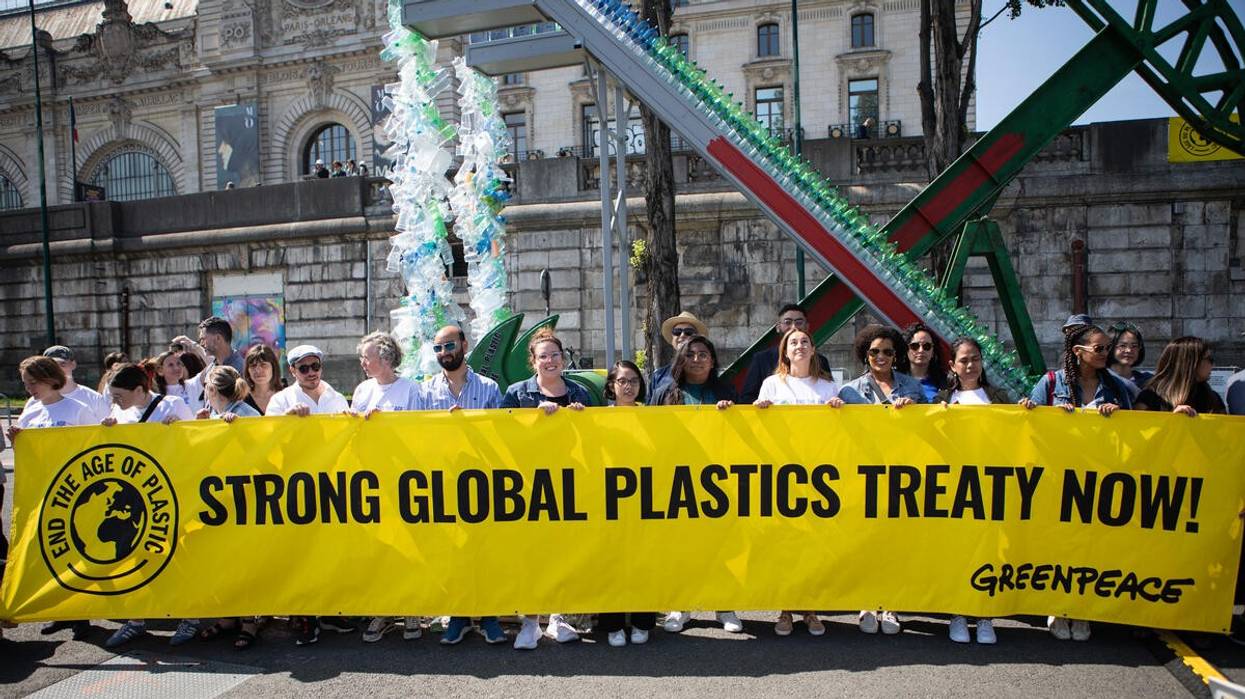
"At the end of May, delegates from around the world will convene in Paris for the second round of negotiations on a global plastics treaty," the letter continues, referring to talks hosted by the United Nations Environment Program (UNEP).
"While you have signaled support for this treaty, the U.S. position is not yet strong enough," the letter argues. "Currently, the U.S. is not calling for a cap on plastic production—which is the only real way to stop plastic pollution. In 2021, the U.S. only recycled a mere 5% of plastics produced."
The letter continues:
Plastics are polluting and harmful at every stage of their life cycle—from extraction to disposal. Ninety-nine percent of plastics come from fossil fuels; cutting plastic production will make a significant dent in carbon emissions. There are communities living next to refineries and petrochemical facilities who are bearing the combined brunt of the climate and plastic crises. People living near these facilities—overwhelmingly people of color—face higher rates of cancer, asthma, and adverse birth outcomes.
"President Biden, you have a once-in-a-lifetime opportunity to help our climate, our oceans, and our communities this year by supporting a strong and ambitious global plastics treaty," the signers asserted. "The decision you make on this critical issue will help define your legacy—will you be the president who helped put an end to the plastic pollution crisis, or someone who let it spiral further out of control? We're calling on you to do the right thing."
Other actors who signed the letter include Rosana Arquette, Alec Baldwin, Ed Begley, Ted Danson, Piper Perabo, Kyra Sedgwick, William Shatner, and Shailene Woodley.
Greenpeace is proposing a seven-point plan for the global plastics treaty:
"Many environmental groups and frontline communities are disappointed with the U.S.' current position on the treaty, as it does not call for a cap on plastic production and instead focuses on recycling," Greenpeace USA senior plastics campaigner Lisa Ramsden said in a statement.
"Recycling will never solve the plastic waste problem," Ramsden added. "We must stop plastic waste at its source, and we're calling on President Biden to put aside fossil fuel and plastics industry interests and lead us on the path that prioritizes human health, biodiversity, and our communities."
On Tuesday, UNEP published a report contending that global plastic pollution can be reduced by 80% by 2040 if countries and corporations enact major changes using existing technologies. However, the report was criticized by some environmentalists for promoting the burning of plastic waste.
UNEP has also come under fire in recent days for issuing just one pass per organization attending the Global Plastics Treaty negotiations in Paris.
The vast majority of the world's countries agreed Wednesday to forge a legally-binding global treaty restricting plastic pollution, in a move one official said demonstrated "multilateral cooperation at its best."
Negotiators representing 175 nations met over the past week in Nairobi, Kenya to discuss a joint proposal originally presented by Rwandan and Peruvian representatives.
The countries reached an agreement Wednesday to forge a treaty by 2024, with the details of the pact to be decided in upcoming talks.
The United Nations Environment Program (UNEP) said the agreement marked an "historic day in the campaign to beat plastic pollution," which was responsible for more greenhouse gas pollution in 2015 than all the world's airplanes combined, according to one study.
"Plastic pollution has grown into an epidemic," said Espen Barth Eide, president of the U.N. Environment Assembly and Norway's minister for climate and the environment. "With today's resolution we are officially on track for a cure."
The resolution calls on countries to hammer out a final treaty which could ban single-use plastics. Making up the vast majority of all plastic products in the world, only 9% of single-use plastic is ever recycled while 79% is incinerated.
"This landmark decision sets the stage for an all-inclusive approach to resolve the plastic pollution crisis."
As Common Dreams reported in January, scientists believe at the current rate of plastic pollution buildup the weight of plastics in the world's oceans "could exceed the collective weight of all fish in the ocean."
The production, incineration, and disposal of plastics in landfills all produce greenhouse gas emissions and release toxic compounds.
The agreement reached on Wednesday recognized "the importance of promoting sustainable design of products and materials so that they can be reused, remanufactured, or recycled and therefore retained in the economy for as long as possible along with the resources they are made of, as well as minimizing the generation of waste, which can significantly contribute to sustainable production and consumption of plastics."
"This landmark decision sets the stage for an all-inclusive approach to resolve the plastic pollution crisis," said Von Hernandez, global coordinator for the grassroots movement Break Free From Plastic. "Receiving the recognition that this problem needs to be addressed across the whole plastics value chain is a victory for groups and communities who have been confronting the plastic industry's transgressions and false narratives for years."
According to Break Free From Plastic, 75% of people polled in a recent global survey believe single-use plastic should be banned.
Negotiators said the final treaty will be modeled on the Paris climate agreement of 2015, demanding that countries set legally-binding targets to change how products are packaged, improve recycling systems, and assist the Global South in addressing plastic pollution.
" Africa is not a major producer of chemicals or plastics," Tadesse Amera , co-chair of the International Pollutants Elimination Networkin Ethiopia, told the New York Times.
Yet countries including the U.S. export more than one billion pounds of plastic waste to countries all over the world. The U.S.--the second-largest plastic producer in the world after China--has yet to sign onto a 2020 agreement limiting plastic waste exports.
"Some legal obligations arising out of a new international legally binding instrument will require capacity-building and technical and financial assistance in order to be effectively implemented by developing countries and countries with economies in transition," the resolution stated.
The agreement also recognizes microplastics, which build up over time in the world's oceans, drinking water, and rainfall as a driver of pollution.
"This is the most significant environmental multilateral deal since the Paris accord," said Inger Andersen, executive director of UNEP. "It is an insurance policy for this generation and future ones, so they may live with plastic and not be doomed by it."