

SUBSCRIBE TO OUR FREE NEWSLETTER
Daily news & progressive opinion—funded by the people, not the corporations—delivered straight to your inbox.
5
#000000
#FFFFFF
To donate by check, phone, or other method, see our More Ways to Give page.
Daily news & progressive opinion—funded by the people, not the corporations—delivered straight to your inbox.
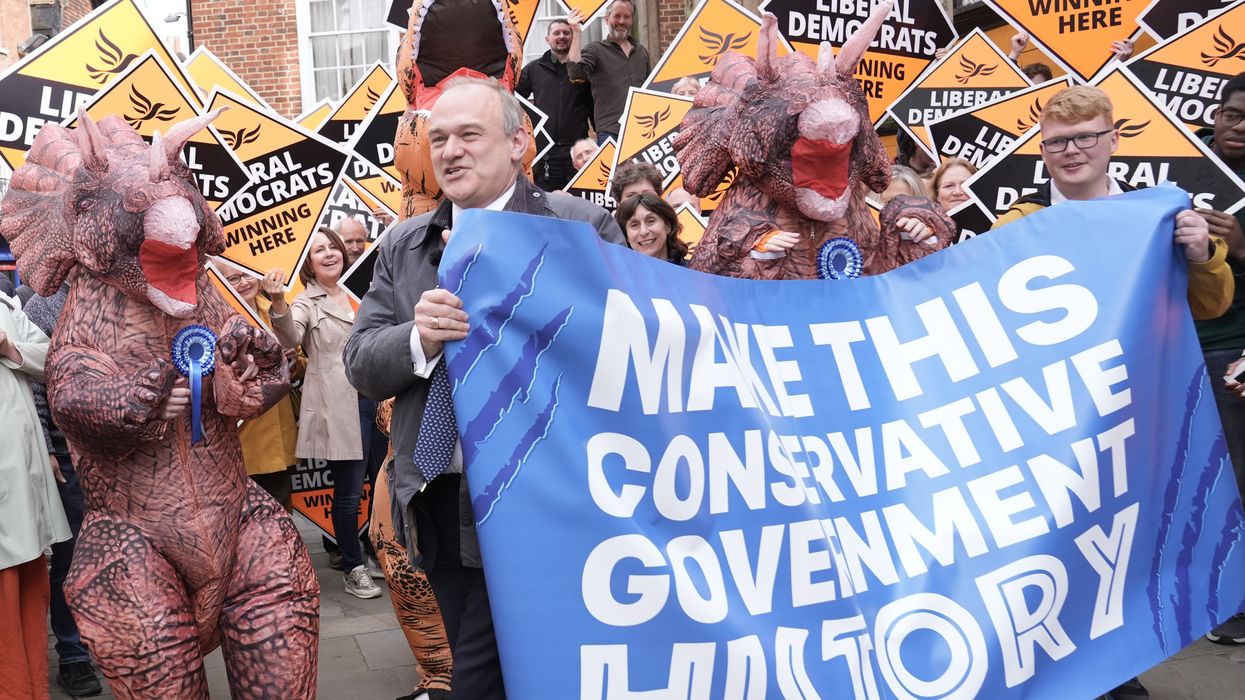
"We are probably looking at certainly one of the worst, if not the worst, Conservative performances in local government elections for the last 40 years," said one analyst.
Nearly two weeks after the British Conservative Party pushed through a proposal to deport asylum-seekers to Rwanda in what one lawyer called "performative cruelty" in the name of winning the general election expected later this year, the local election results announced throughout the day Friday made increasingly clear the ploy hadn't worked.
Elections expert John Curtice projected the Tories could ultimately lose up to 500 local council seats as vote counting continues into the weekend, following elections in which voters cast ballots for 2,661 seats.
The Conservatives have lost around half of the seats they are defending Curtice told BBC Radio.
"We are probably looking at certainly one of the worst, if not the worst, Conservative performances in local government elections for the last 40 years," the polling expert said.
Curtice added that if the results were replicated in a general election, Labour would likely win 34% of the vote, with the Tories winning 25%—five years after the right-wing party won in a landslide in the last nationwide contest.
Labour leader Keir Starmer said the results represented a decisive call for "change" from British voters, particularly applauding the results of a special election in Blackpool South, where Labour candidate Chris Webb won nearly 11,000 votes while Conservative David Jones came in a distant second with just over 3,200.
Webb's victory represented a 26% swing in favor of Labour.
"That's the fifth swing of over 20% to the Labour party in by elections in recent months and years. It is a fantastic result, a really first class result," Starmer said. "And here in Blackpool, a message has been sent directly to the prime minister, because this was a parliamentary vote, to say we're fed up with your decline, your chaos... your division and we want change. We want to go forward with Labour."
"That wasn't just a little message," he added. "That wasn't just a murmur. That was a shout from Blackpool. We want to change. And Blackpool speaks for the whole country in saying we've had enough now, after 14 years of failure, 14 years of decline."
The Conservatives also lost ground in the northern town of Hartlepool, where they lost six council seats. The region swung toward the Tories after the party led the push for Brexit, the U.K.'s exit from the European Union.
A similar result was recorded in York and North Yorkshire, which includes the area Conservative Prime Minister Rishi Sunak represented as a member of Parliament.
"Yorkshire voted for Brexit in 2016," wrote William Booth, London bureau chief for The Washington Post. "But long gone are the days when many Conservatives want to stand before the voters and extol the advantages of leaving the European Union, which has been, in most sectors, a flop."
Sunak, added Booth, is "betting that immigration is still an issue with resonance and has promised to 'stop the boats,' the daily spectacle of desperate migrants risking their lives on rubber rafts trying to cross the English Channel. Sunak's government plans to fly asylum seekers arriving by boat to Rwanda. No flights have taken off yet. But the Home Office last week began a self-proclaimed 'large scale' operation to detain asylum seekers destined for removal."
The Labour Party has called Sunak's Rwanda plan a "gimmick" and said it would reverse a Tory policy blocking refugees from applying for asylum.
Average wages in the U.K. last year were "back at the level during the 2008 financial crisis, after taking account of inflation," according to The Guardian.
"This 15 years of lost wage growth is estimated by the Resolution Foundation thinktank to have cost the average work £10,700 ($13,426) a year," reported the newspaper in March. "The performance has been ranked as the worst period for pay growth since the Napoleonic wars ended in 1815."
Analysts noted one setback for Labour in Oldham, where the party lost some seats in areas with large numbers of Muslim voters to independent candidates, costing it overall control of the council.
Arooj Shah, the Labour leader of the Oldham Council, told the BBC that the party's support for Israel in its bombardment of Gaza was behind its losses.
" Gaza is clearly an issue for anyone with an ounce of humanity in them, but we've asked for an immediate cease-fire right from the start," said Shah. "We have a rise of independents because people think mainstream parties aren't the answer."
The losses "should be a wake-up call for the Starmer leadership: Every vote must be earned," said the socialist and anti-racist group Momentum. "That means calling for an immediate arms ban to Israel, calling out Israeli war crimes, and delivering real leadership on climate."
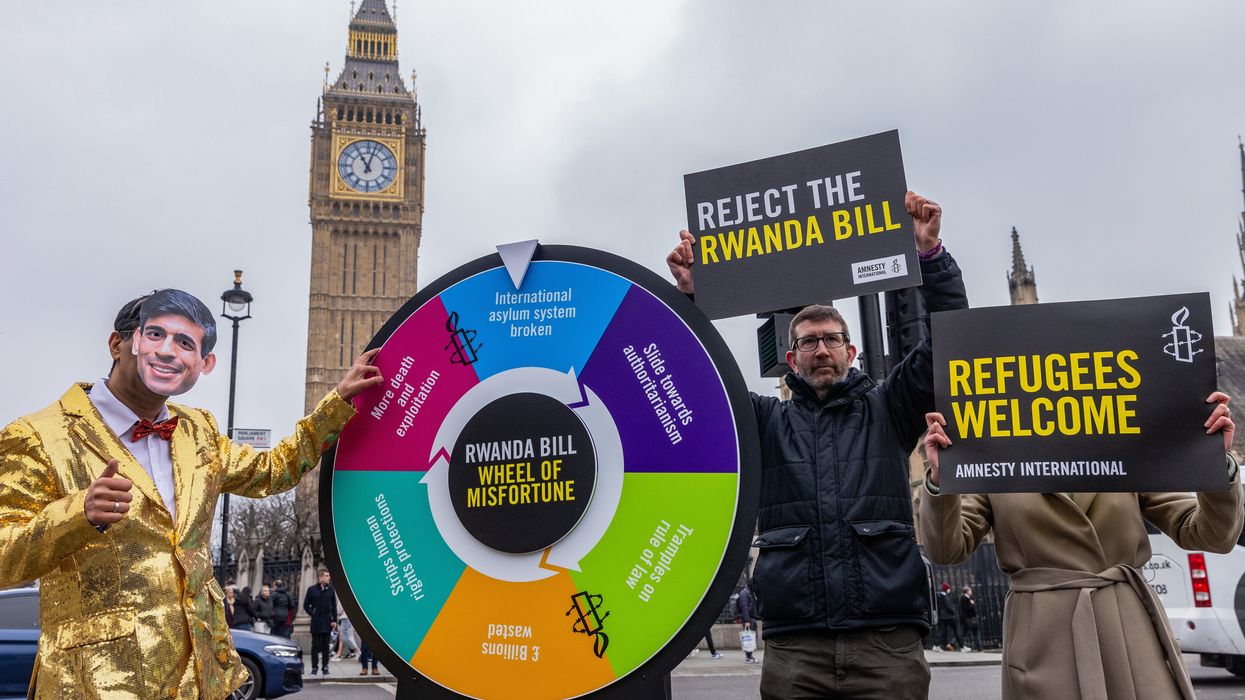
"The U.K. government could literally pay every refugee a £30,000 annual salary for life, and it would be cheaper," said one critic. "We're burning money just to enjoy the cruelty."
Legal and human rights experts on Tuesday said the British Conservative Party's decision to push through a bill allowing the government to deport asylum-seekers to Rwanda—effectively overriding last year's Supreme Court ruling—represented a "desperate low" from lawmakers eager to exploit migrants ahead of elections expected later this year.
"A lot of this is performative cruelty," Daniel Merriman, a lawyer whose clients have included some asylum-seekers whom the Tories tried to deport after it first introduced its plan in 2022, told NPR. "The elephant in the room is the upcoming election."
After a prolonged debate, the unelected House of Lords cleared the way to pass the Safety of Rwanda bill early Tuesday morning, after dropping several proposed amendments including one that would have required independent verification that the central African country is a safe place to send migrants.
The House of Commons then passed the bill, and King Charles III is expected to formally approve the legislation in the coming days.
The bill requires courts and immigration officials to "conclusively treat the Republic of Rwanda as a safe country" to send asylum-seekers, even though the Supreme Court ruled in November that people deported to the country would face a significant risk of refoulement, or being sent back to the countries where they originally fled persecution or violence.
The Conservative government signed a treaty with Rwanda last December to strengthen protections for asylum-seekers, including a provision that partially bans Rwanda from sending people back to their home countries.
But the United Nations Office of the High Commissioner for Human Rights (OHCHR) called on the U.K. to abandon the plan and instead "take practical measures to address irregular flows of refugees and migrants, based on international cooperation and respect for international human rights law."
"The new legislation marks a further step away from the U.K.'s long tradition of providing refuge to those in need, in breach of the Refugee Convention," said Filippo Grandi, the U.N. high commissioner for refugees. "Protecting refugees requires all countries—not just those neighboring crisis zones—to uphold their obligations. This arrangement seeks to shift responsibility for refugee protection, undermining international cooperation and setting a worrying global precedent."
"The U.K. has a proud history of effective, independent judicial scrutiny," Grandi added. "It can still take the right steps and put in place measures to help address the factors that drive people to leave home, and share responsibility for those in need of protection, with European and other international partners."
Dorothy Guerrero, head of policy and advocacy at Global Justice Now, noted that "disastrous foreign and economic policies of successive governments have contributed to the need for people to seek refuge."
"These same people's lives are continually used as a political football, after years of being scapegoats for bad government decisions," said Guerrero. "Statements from politicians are now even more blatantly devoid of any pretense of care for human rights. We will not stop pushing for a change of course, with safe routes to seek asylum in the U.K. so that people no longer have to risk their lives in the Channel."
"The passing of the Rwanda Bill is a shameful day for the U.K.," she added.
Hours after the legislation was passed, French officials announced that at least five people, including a seven-year-old child, had been killed while attempting to cross the English Channel, bound for the U.K. in an overloaded inflatable boat.
At The New Statesman, associate political editor Rachel Cunliffe wrote Tuesday that the tragedy reveals "the flaws of the Rwanda plan," which proponents say could deter migrants from seeking refuge in Britain.
Proponents of the Rwanda plan will inevitably point to today's disaster as further evidence that strong measures are needed to address the issue of Channel crossings. They will accuse Labour and opposition parties of ignoring the human cost of letting this crisis continue and argue that lives are at stake if the government does not act.
[...]
The reality is that a substantial number of people who pay people traffickers large sums of money to crowd them on to a tiny boat do so because they feel they have no other option. Fleeing war and persecution, they are desperate. And so they are prepared to take desperate measures. Measures that sometimes lead to tragedy, but which are deemed necessary given the hopelessness of their situation.
It is hard to see how the threat to send a tiny fraction of those who arrive (Rwanda has said it will only take 150-200 migrants) changes this calculation.
The Labour Party, which is leading Conservatives in polls ahead of the expected elections, has vowed to scrap the legislation if it wins control of the government later this year, and critics have expressed doubt that Prime Minister Rishi Sunak will actually secure deportation flights before Britons vote.
One flight was grounded in June 2022 after the European Court of Human Rights intervened, and on Monday the OHCHR warned aviation authorities that they would risk violating international law if they allow "unlawful removals" of asylum-seekers to Rwanda.
Critics have also pointed to a finding by the National Audit Office that the deportations would cost £1.8 million ($2.2 million) per person.
"The U.K. government could literally pay every refugee a £30,000 annual salary for life, and it would be cheaper than sending them to Rwanda," said David Andress, a history professor at the University of Portsmouth. "We're burning money just to enjoy the cruelty."
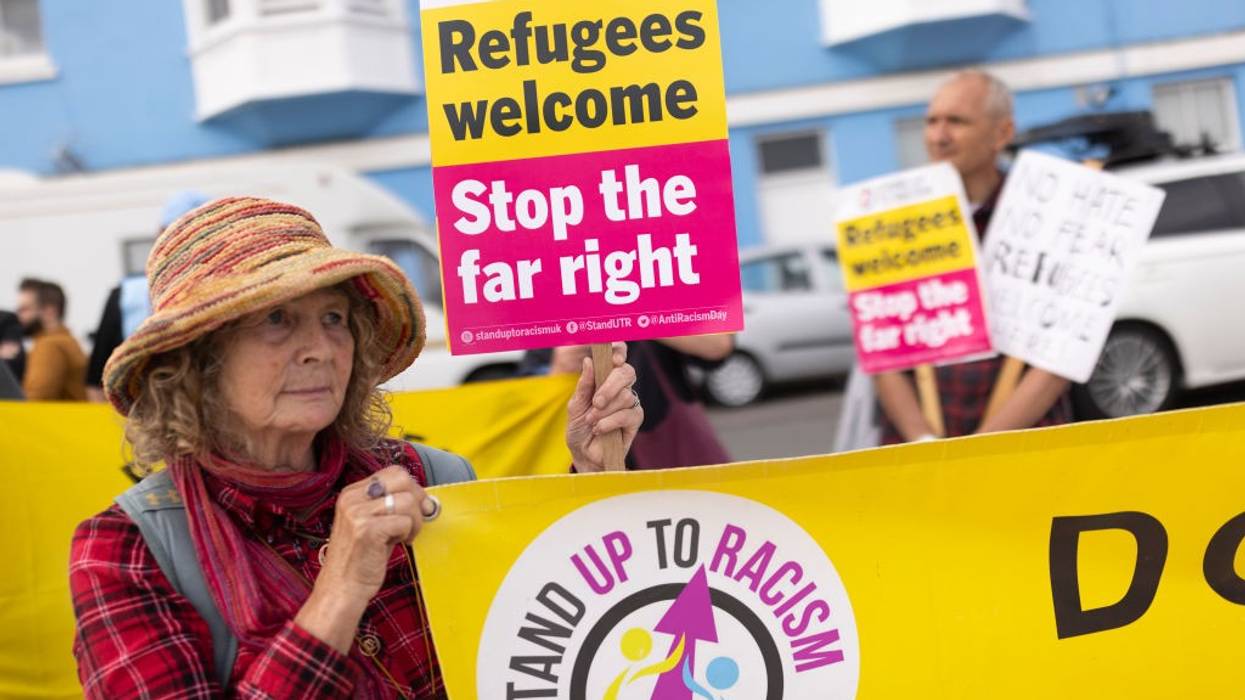
"This bill sets a worrying precedent for dismantling asylum-related obligations that other countries, including in Europe, may be tempted to follow," said the U.N. human rights chief.
A pair of United Nations commissioners on Tuesday accused the United Kingdom of violating its international human rights and refugee law obligations after the country's Conservative Party-led Parliament approved legislation cracking down on asylum-seekers.
Tories passed the so-called Illegal Migration Bill, the centerpiece of right-wing U.K. Prime Minister Rishi Sunak's pledge to "stop the boats" crossing the English Channel, on Monday night. It is set to become law once King Charles III gives his "royal assent," which a monarch hasn't used to block a bill in 315 years.
After that formality, the measure "will have profound consequences for people in need of international protection," U.N. High Commissioner for Human Rights Volker Türk and U.N. High Commissioner for Refugees Filippo Grandi warned in a joint statement.
As the U.N. Human Rights Office explained:
The bill extinguishes access to asylum in the U.K. for anyone who arrives irregularly, having passed through a country—however briefly—where they did not face persecution. It bars them from presenting refugee protection or other human rights claims, no matter how compelling their circumstances. In addition, it requires their removal to another country, with no guarantee that they will necessarily be able to access protection there. It creates sweeping new detention powers, with limited judicial oversight.
"For decades, the U.K. has provided refuge to those in need, in line with its international obligations—a tradition of which it has been rightly proud," said Grandi. "This new legislation significantly erodes the legal framework that has protected so many, exposing refugees to grave risks in breach of international law."
According to the U.N. Human Rights Office, the legislation "denies access to protection in the U.K. for anyone falling within its scope—including unaccompanied and separated children—regardless of whether they are at risk of persecution, may have suffered human rights violations, or whether they are survivors of human trafficking or modern-day slavery and may have other well-founded claims under international human rights and humanitarian law."
In Türk's words, "Carrying out removals under these circumstances is contrary to prohibitions of refoulement and collective expulsions, rights to due process, to family and private life, and the principle of best interests of children concerned."
"In addition to raising very serious legal concerns from the international perspective," Türk continued, "this bill sets a worrying precedent for dismantling asylum-related obligations that other countries, including in Europe, may be tempted to follow, with a potentially adverse effect on the international refugee and human rights protection system as a whole."
Last month, the U.K. Court of Appeal ruled that the Tories' widely condemned plan to deport asylum-seekers to Rwanda is unlawful because the African nation cannot be classified as a "safe third country."
Sunak and U.K. Home Secretary Suella Braverman have vowed to challenge the ruling in the U.K. Supreme Court. The courtroom battle over the legality of the so-called U.K.-Rwanda Asylum Partnership Arrangement could have implications for the fate of the broader Illegal Migration Bill. It also underscores how the newly approved legislation threatens to leave asylum-seekers in limbo.
The U.N. Human Rights Office warned Tuesday that "in the absence of viable removal arrangements with third countries, or without adequate operational capacity to remove large numbers of asylum-seekers, thousands can be expected to remain in the U.K. indefinitely in precarious legal situations."
"The legislation will exacerbate the already vulnerable situation of people who arrive irregularly in the U.K., drastically limiting the enjoyment of their human rights, and putting them at risk of detention and destitution," the office added. "As a result, their rights to health, an adequate standard of living, and to work are at risk, exposing them to the risk of exploitation and abuse."
According to the Financial Times:
The end of the legislative debate between the Commons and the Lords came as the Bibby Stockholm barge docked in Dorset where it is expected to house up to 500 migrants, with the first arrivals expected this month.
Ministers' plans to house asylum-seekers in the 93-meter-long vessel have faced intense backlash from local people and council members, who said the proposal was cruel and would place undue strain on the community.
Türk noted that "the U.K. has long had a commitment to upholding international human rights and refugee law."
"Such steadfast commitment is needed today more than ever," said Türk. "I urge the U.K. government to renew this commitment to human rights by reversing this law and ensuring that the rights of all migrants, refugees, and asylum-seekers are respected, protected, and fulfilled, without discrimination."
"This should include efforts to guarantee expeditious and fair processing of asylum and human rights claims, improve reception conditions, and increase the availability and accessibility of safe pathways for regular migration," added the U.N. human rights chief.
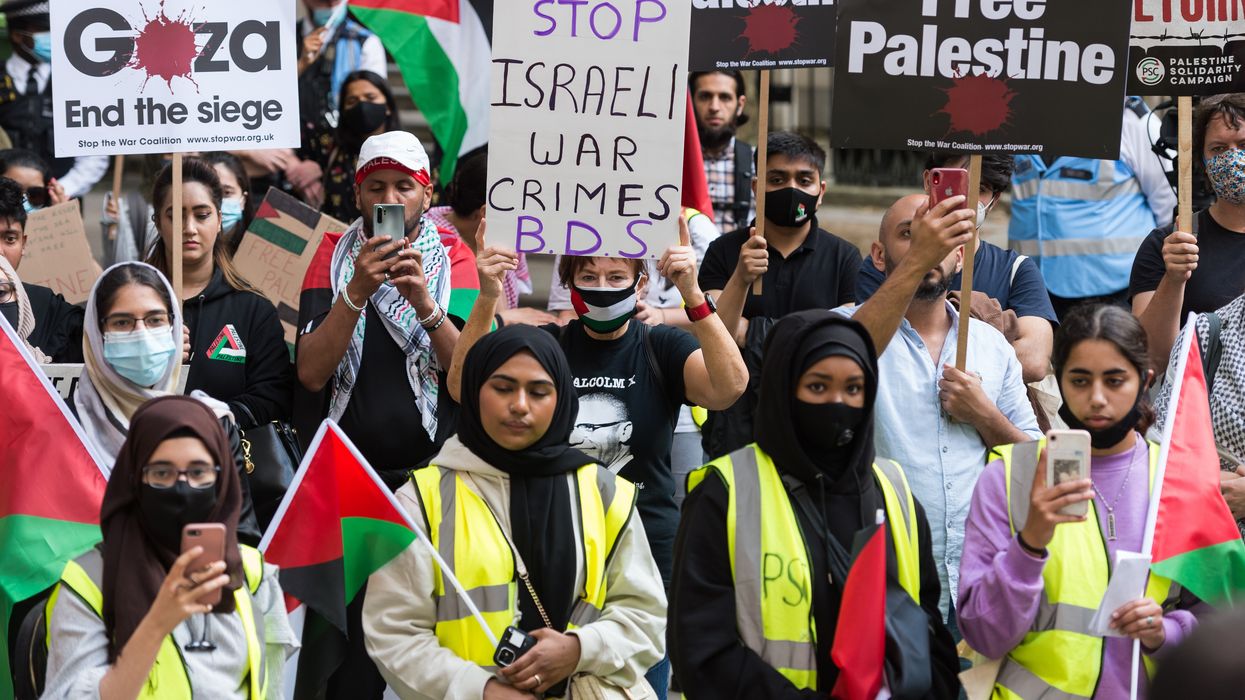
Civil society critics argue the proposal threatens "freedom of expression, and the ability of public bodies and democratic institutions to spend, invest, and trade ethically in line with international law and human rights."
Advocacy organizations raised the alarm on Monday as a bill to ban local councils and universities in the United Kingdom from boycotting Israel over human rights abuses was introduced in the U.K. Parliament.
The Economic Activity of Public Bodies (Overseas Matters) Bill—tabled by Michael Gove, the Conservative secretary of state for leveling up, housing, and communities—aims to "prevent public bodies from being influenced by political or moral disapproval of foreign states when taking certain economic decisions, subject to certain exceptions."
While the long-anticipated proposal would allow the U.K. secretary of state or minister for the Cabinet Office to "specify a country or territory" for which the policy does not apply, the bill makes clear that such exceptions cannot relate "specifically or mainly to Israel, the occupied Palestinian territories, or the occupied Golan Heights."
Middle East Eye, exclusively reporting on a draft of the bill Friday, noted that "it is the only reference to any specific countries or territories."
"If passed, this law will stifle a wide range of campaigns concerned with the arms trade, climate justice, human rights, international law, and international solidarity with oppressed peoples struggling for justice."
Dozens of U.K. groups—including the Campaign Against Arms Trade, Campaign for Nuclear Disarmament, Communication Workers Union, European Legal Support Center, Friends of the Earth, Global Justice Now, Greenpeace U.K., Jews for Justice for Palestinians, Liberty, National Union of Students, Palestine Solidarity Campaign, Stop the War Coalition, and War on Want—have signed a joint statement of opposition.
"As a group of civil society organizations made up of trade unions, charities, NGOs, faith, climate justice, human rights, cultural, campaigning, and solidarity organizations, we advocate for the right of public bodies to decide not to purchase or procure from, or invest in companies involved in human rights abuse, abuse of workers' rights, destruction of our planet, or any other harmful or illegal acts," says the coalition's statement. "We therefore oppose the government's proposed law to stop public bodies from taking such actions."
Noting that the bill is meant to block boycotts of Israel, the statement adds: "We are concerned that this would prevent public bodies from deciding not to invest in or procure from companies complicit in the violation of the rights of the Palestinian people. We affirm that it is the right of public bodies to do so, and in fact a responsibility to break ties with companies contributing to abuses of rights and violations of international law in occupied Palestine and anywhere else where such acts occur."
The statement continues:
From bus boycotts against racial segregation to divestment from fossil fuel companies to arms embargoes against apartheid, boycott, divestment, and sanctions campaigns have been applied throughout history to put economic, cultural, or political pressure on a regime, institution, or company to force it to change abusive, discriminatory, or illegal policies. If passed, this law will stifle a wide range of campaigns concerned with the arms trade, climate justice, human rights, international law, and international solidarity with oppressed peoples struggling for justice. The proposed law presents a threat to freedom of expression, and the ability of public bodies and democratic institutions to spend, invest and trade ethically in line with international law and human rights.
Along with declaring that "this proposal must be understood in the context of the current government bringing in some of the most repressive legislation we've seen in decades," the coalition's webpage provides some key global context.
"At least 35 states in the U.S. have passed similar laws, as has Germany, and similar legislation has been proposed in several other European countries," the site says. "Broadly speaking, many of these laws have targeted the Palestinian-led Boycott, Divestment, and Sanctions (BDS) movement, which aims to pressure Israel to meet its obligations under international law in relation to justice for Palestinians."
A growing list of global human rights groups worldwide condemn Israeli policies and actions against Palestinians as apartheid.
While organizations such as the Board of Deputies and the Jewish Leadership Council are backing the new bill, leaders of 14 Israeli groups sent a letter Monday urging Tory U.K. Prime Minister Rishi Sunak and three other top ministers to oppose it.
As the U.K.-based Jewish News reported:
The letter's authors, who include the directors of Peace Now, the co-directors of Ofek: The Israeli Center for Public Affairs, and the executive director of Combatants for Peace, claimed the bill compromised the U.K.'s current position of "recognizing the illegality of settlements" in the West Bank, and also raised concerns about civil liberty and free speech issues.
They also suggested that rather than preventing antisemitism, the bill was "deeply damaging to the very real fight" against anti-Jewish racism.
Husam Zomlot, head of the Palestinian Mission to the United Kingdom, also criticized the proposal, according to The National.
"By providing a cloak of impunity, this bill encourages more violations of international law, including the acquisition of territory by force, the moving of civilian settler populations to occupied territory—a war crime—or land confiscations and home demolitions," the ambassador warned, as Israel plans to expand illegal settlements.
"We are deeply concerned that this has broader implications for Britain's supposed commitment to the global rule-of-law-based order," Zomlot added. "We view the proposed legislation as yet another sign that the U.K. is abdicating its historic responsibility for and direct role in creating the plight of the Palestinian people."
Meanwhile, Gove said Monday that "it is simply wrong that public bodies have been wasting taxpayers' time and money pursuing their own foreign policy agenda. The U.K. must have a consistent approach to foreign policy, set by U.K. government."
The Tory minister also claimed that "these campaigns not only undermine the U.K.'s foreign policy but lead to appalling antisemitic rhetoric and abuse. That is why we have taken this decisive action to stop these disruptive policies once and for all."
As the Israeli newspaper Haaretz highlighted:
Local councils in Lancaster, Leicester, and West Dunbartonshire (near Glasgow) have previously voted to divest from Israel, while many student unions across the country have adopted motions in support of the BDS movement that calls to boycott, divest from, and sanction Israel.
The proposal was first laid out in the Conservative Party manifesto for the 2019 election and is the brainchild of Gove and Cabinet Secretary Oliver Dowden. Both of their ministries have already published internal guidelines against such boycotts.
There was no formal debate on the U.K. bill in the House of Commons on Monday, as is standard for a first reading. A second reading, which involves debate, "is already slated for July," according to Haaretz. After that, there are several more stages before it may become law.
The measure's introduction in the United Kingdom came as an Israeli forces attack on a West Bank refugee camp killed at least five Palestinians, including a 15-year-old boy, and wounded dozens more—among them, a critically injured teenager who was shot in the head.

"The commitment from Labour to oppose new fossil fuel developments is a welcome first step, but it needs to come with plans for a just transition to renewable energy," said one advocate.
While welcoming the Labour Party's vow to block new offshore oil and gas drilling if it wins control of the United Kingdom Parliament, climate justice campaigners on Tuesday implored the party to ensure that a shift to clean power is fair to displaced workers.
"The science is clear that to prevent further climate breakdown, we need to leave fossil fuels in the ground," Freya Aitchison, oil and gas campaigner at Friends of the Earth Scotland, said in a statement. "The commitment from Labour to oppose new fossil fuel developments is a welcome first step, but it needs to come with plans for a just transition to renewable energy."
On Sunday, an unnamed Labour Party source told The Times, "We are against the granting of new licenses for oil and gas in the North Sea." Alluding to a 2022 admission from John Gummer, a Conservative Party MP and chair of the U.K.'s independent Committee on Climate Change, the source said that such licenses "will do nothing to cut bills as the Tories have acknowledged."
"They undermine our energy security and would drive a coach and horses through our climate targets," said the source, who added that "Labour would continue to use existing oil and gas wells over the coming decades and manage them sustainably as we transform the U.K. into a clean energy superpower."
Labour Leader Keir Starmer is expected to formally announce the party's promise in Scotland next month when he unveils a net-zero energy policy blueprint. The Guardian reported Sunday that it "will involve not just a ban on new North Sea oil and gas licenses, but a pledge that any borrowing for investment should be limited to green schemes."
"Setting an end date for the extraction of fossil fuels will allow workers and communities to prepare for this transition."
Labour MP Jonathan Ashworth, shadow secretary of state for work and pensions, confirmed the party's plan. Speaking with Trevor Phillips of Sky News on Sunday, Ashworth said that "what we'll be doing in the coming weeks is outlining how we want to invest in the green jobs of the future to bring bills down, to create a more sustainable energy supply."
"We know we've got to move to more renewable sources of energy," said Ashworth. "It's important for our climate change commitments, but it's also the way in which we can bring energy bills down for consumers."
"This isn't about shutting down what's going on at the moment, we will manage those sustainably," the lawmaker continued.
Although Labour doesn't intend to halt already-approved offshore extraction in most cases, two key exceptions are drilling schemes in the Cambo and Rosebank oil fields, both of which the party vowed to block after Tories greenlighted them, The Guardian noted. The North Sea Transition Authority held another licensing round for fossil fuel exploration projects in January, receiving more than 100 bids and granting new licenses for Cambo as well as the Jackdaw gas field.
"If you stop all new exploration, you are going to have to fill the gap from somewhere and it won't all come from wind," said Ashworth. "We know that but the sums have been done."
"We do need to invest in wind. We need to invest in tidal, we need to invest in nuclear," he added. "We need more sustainable sources of energy supply in order to bring bills down for consumers and actually create jobs in this green transition."
According to Ashworth, "There are hundreds of thousands of jobs that will come online from the transition."
In Aitchison's words, "Starmer rightly recognizes that extracting new oil and gas in the U.K. will not bring down our skyrocketing energy bills—rather, it will cost the U.K. public money through huge loopholes in the windfall tax which incentivize companies to drill for more fossil fuels."
Last August, the U.K. Treasury estimated that the nation's energy firms were on track to enjoy up to £170 billion ($211 billion) in excess profits—defined as the gap between money made now and what would have been expected based on price forecasts prior to Russia's invasion of Ukraine—over the next two years.
A 25% windfall tax on oil and gas producers approved last July is expected to raise £5 billion ($6.2 billion) in its first year. However, the existing surtax on excess fossil fuel profits, which lasts through 2025, includes loopholes enabling companies to significantly reduce their tax bill by investing more in oil and gas extraction, something the industry has claimed will increase supply.
But as Aitchison noted, "The majority of oil from U.K. fields is exported and sold to the highest bidder, so increasing our domestic production only benefits the oil companies that are already making record profits."
Aitchison called it "vital" for Labour's announcement to be accompanied by "plans to support workers in the oil and gas industry to transition to jobs in the renewables industry."
In March, Friends of the Earth Scotland and Platform, a London-based social and environmental justice group, published Our Power, a report that provides a roadmap for a just energy transition in the North Sea. The plan, backed by a coalition of offshore oil and gas workers, trade unions, and climate groups, is based on surveys of more than 1,000 workers who developed 10 demands to guide a rapid and equitable shift to renewables.
"Setting an end date for the extraction of fossil fuels will allow workers and communities to prepare for this transition," Aitchison said Tuesday. "It will provide certainty for the sector, making it clear that investing in renewables is the only choice for our energy future, and enabling workforce planning."
"The coming decade," she added, "must see concerted government intervention and investment to ensure a fast and fair phaseout of fossil fuels and a massive upscaling of renewables that protects livelihoods and creates plentiful decent green jobs."
As The Guardian reported:
The proposal is the latest in a series of Labour pledges over a move towards a greener economy, much of it pushed by Ed Miliband, the shadow climate change secretary.
In 2021, the shadow chancellor, Rachel Reeves, announced the party would invest £28 billion [$34.7 billion] a year in climate crisis-related measures, covering not just green energy but also areas such as home insulation, active travel, and flood defenses.
At last year's Labour conference, Starmer said Labour would set up a publicly owned energy company run on clean U.K. power, to be known as Great British Energy.
The next U.K. general election is scheduled to be held no later than January 28, 2025.
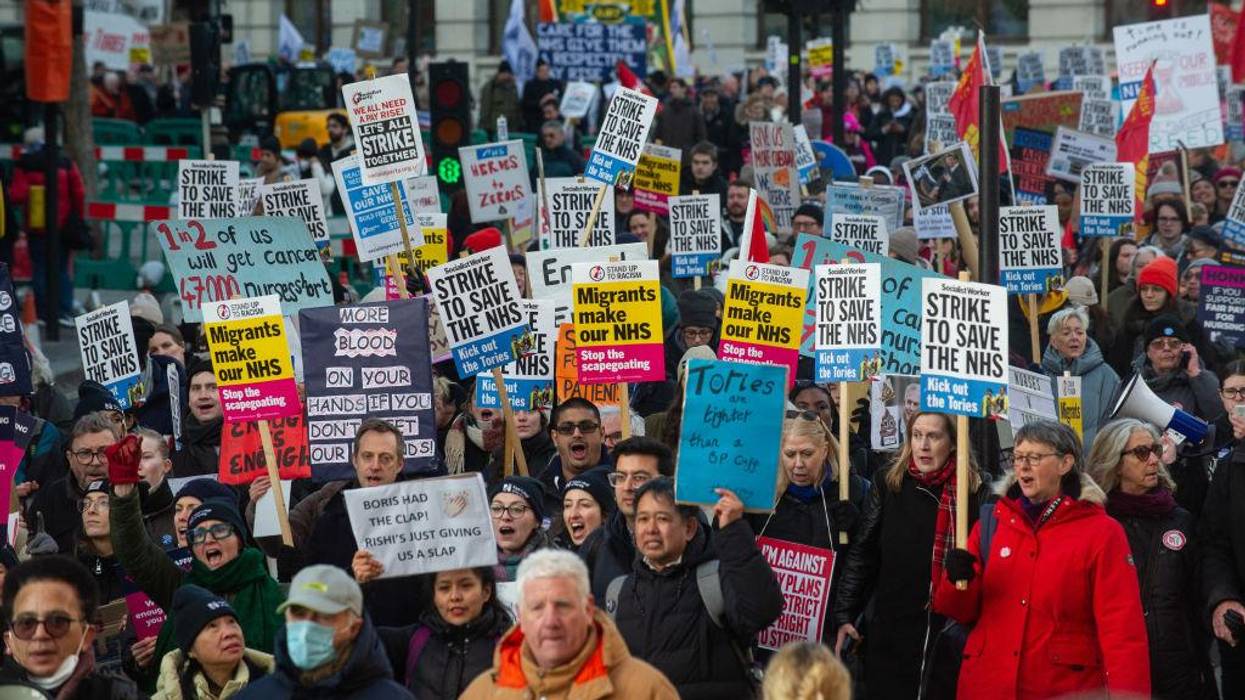
"People aren't dying because nurses are striking," said one union leader. "Nurses are striking because people are dying."
Nurses at 55 National Health Service facilities across England launched a two-day strike on Wednesday after the United Kingdom's right-wing government, led by Tory Prime Minister Rishi Sunak, refused to open formal negotiations over pay and patient safety.
Royal College of Nursing (RCN) general secretary Pat Cullen called the 12-hour work stoppages on Wednesday and Thursday—which come after nurses at dozens of NHS facilities in England, Wales, and Northern Ireland participated in the union's first-ever national strike in December—"a modest escalation before a sharp increase in under three weeks from now." There is a strike fund, and picket line locations can be found here.
The nearly 500,000-strong nurses' union announced earlier this week that if progress is not made by the end of January, members at 85 NHS facilities in England and Wales will walk off the job again on February 6 and February 7. RCN members in Northern Ireland are not slated to join next month's walkout. In Scotland, strike action remains paused amid ongoing negotiations.
"Rather than negotiate, Rishi Sunak has chosen strike action again."
"It is with a heavy heart that nursing staff are striking this week and again in three weeks," Cullen said Monday. "Rather than negotiate, Rishi Sunak has chosen strike action again."
On Wednesday, the registered nurse and union leader added: "People aren't dying because nurses are striking. Nurses are striking because people are dying. That is how severe things are in the NHS and it is time the prime minister led a fight for its future."
"Today's record number of unfilled nurse jobs cannot be left to get worse," said Cullen. "Pay nursing staff fairly to turn this around and give the public the care they deserve."
A 2021 study commissioned by the RCN found that in real terms, the salaries of experienced U.K. nurses have fallen by 20% due to successive below-inflation pay bumps since 2010. The current dispute is fueled by discontent over a proposed 4-5% raise, which fails to keep pace with the soaring cost of living, up by 10.5% in 2022. RCN is seeking a 5% raise above inflation.
According to the RCN, "Low pay is pushing nursing staff out of the profession and contributing to record vacancies."
Because there are "tens of thousands of unfilled jobs," Cullen said, "patient care is suffering like never before."
As the union pointed out, the upcoming February strike dates coincide with the tenth anniversary of the final report of the Robert Francis inquiry, which documented the relationship between inadequate nurse staffing levels and higher mortality rates.
"Pay nursing staff fairly to turn this around and give the public the care they deserve."
If the U.K. government invested in better pay for nurses, it "would recoup 81% of the initial outlay in terms of higher tax receipts and savings on future recruitment and retention costs," the RCN noted, citing London Economics researchers.
"My olive branch to government—asking them to meet me halfway and begin negotiations—is still there," said Cullen. "They should grab it."
Also on Wednesday, the GMB union announced that 10,000 ambulance workers in the U.K. plan to strike on February 6, February 20, March 6, and March 20.
"Ambulance workers are angry. In their own words, 'They are done,'" said GMB national secretary Rachel Harrison. "Our message to the government is clear—talk pay now."
February 6 is set to become the first time in history that nurses and paramedics strike on the same day.
The past year has seen a surge in labor unrest across the U.K., with teachers in England and Wales voting Monday afternoon to strike on February 1, the same day 100,000 other public sector workers were already scheduled to walk off the job to demand improved pay and benefits.
The Tories further angered organized labor this week by advancing a bill that threatens to take away the right of nurses, ambulance workers, teachers, firefighters, rail workers, and others to strike.
Progressive critics argue that the Tories' proposal to fire striking public sector workers who refuse to comply with a mandatory return-to-work notice amounts to a "pay cut and forced labor bill" and would constitute a "gross violation of international law."
During a recent speech inveighing against the anti-strike legislation, left-wing Labour Party MP Zarah Sultana said that the bill is about "shifting the balance of power: weakening the power of workers and making it easier for bosses to exploit them and for the government to ignore them."

"You're either with nurses, teachers, firefighters, and frontline workers. Or you're with the Tory government," said the Enough Is Enough campaign. "It's time for everyone to pick a side."
Lawmakers from the United Kingdom's Conservative Party advanced anti-strike legislation on Monday night despite the objections of tens of thousands of petitioners and thousands of demonstrators outside, but economic justice advocates made clear that the fight for fundamental workers' rights is far from over.
"After last night, the choice is clear," the Enough Is Enough campaign against neoliberalism tweeted Tuesday morning. "You're either with nurses, teachers, firefighters, and frontline workers. Or you're with the Tory government. It's time for everyone to pick a side."
Thousands of trade unionists and progressive activists gathered in London on Monday night to protest the Tories' so-called Strikes Bill as it was being read for a second time in the Palace of Westminster.
"This bill is really about... weakening the power of workers."
If finalized, the legislation would allow right-wing British Prime Minister Rishi Sunak's administration to impose undisclosed "minimum service regulations" to force striking nurses, teachers, firefighters, rail staff, and others back to work. If they refuse, workers can be terminated, even during a labor stoppage to prevent pay cuts, and the union can be sued into bankruptcy.
The anti-democratic proposal comes amid a surge in labor unrest across the U.K., with teachers in England and Wales voting Monday afternoon to strike on February 1, the same day 100,000 other public sector workers were already scheduled to walk off the job to demand better pay and benefits.
Monday night's rally, which began at 6:00 pm local time, featured several speakers. Those who took the stage include Mick Lynch, the popular Rail, Maritime, and Transport union leader behind Britain's recent rail strikes; Communication Workers Union general secretary Dave Ward; Jo Grady, general secretary of the University and College Union; Fire Brigades Union general secretary Matt Wrack; Jordan Rivera from National Health Service Workers Say No!; Paul Nowak, general secretary of the Trades Union Congress; and left-wing Labour Party MP Zarah Sultana.
"Make no mistake," Nowak told the crowd. "This bill is a fundamental attack on the right to strike that will force workers across the public sector to cross picket lines or face the sack."
Public and Commercial Services Union organizer Clare Keenan described the bill as an "attack on my human rights and those of my fellow workers."
"You can't make people go to work five days a week and hav[e] to use food banks and remov[e] their ability to protest," said Keenan. "It's just a hurdle that they're putting in the way to stop workers from taking industrial action."
Inside the House of Commons, meanwhile, Sultana delivered a fiery speech outlining why she voted against the Tories' anti-strike legislation.
"There was a brief period in the pandemic, where we all recognized who keeps our country running. And it wasn't the city bankers, hot-shot lawyers, or big business executives," said Sultana. "It was the people who drive our buses, who sweep our streets, who post our mail, it's people who teach our kids, and nurse us back to health."
"Briefly, even the members opposite thanked them," Sultana said, referring to Conservative MPs. "They called them 'key workers' and 'heroes,' and clapped for them with the cameras rolling."
"But as key workers knew, clapping doesn't pay the bills, and with a decade of falling wages, they couldn't go on," Sultana continued. "As the cost of living has soared, workers are saying, 'enough is enough,' and they are demanding a better deal."
"Of course, the government's line has changed," said Sultana. "Members opposite are now calling workers 'greedy,' saying they are 'selfish.' They've started pitting workers against each other, saying that railway workers couldn't get a pay rise if nurses weren't, but that nurses weren't allowed a pay rise either."
"And now they've stooped to this: An anti-worker bill that threatens the civil liberties of us all," she added. "This new law would see key workers like nurses, railway workers, firefighters, and teachers fired for going on strike. From clapping nurses, they're sacking nurses."
According to Sultana: "They say it's about safety, but that word isn't mentioned even once in the pages of this bill. They say it's about bringing us in line with other European nations, but Britain already has some of the most restrictive anti-union laws in the Western world. And no matter what they say, it's definitely not about resolving current disputes; it's only inflaming tensions and making negotiations harder."
"What this bill is really about," she argued, "is shifting the balance of power: weakening the power of workers and making it easier for bosses to exploit them and for the government to ignore them."
On social media, Sultana slammed Tory MPs for "disgracefully" backing the bill but stressed that "the fight isn't over."
"Let's now build a movement to defend the right to strike and build a Britan fit for workers," she wrote, linking to an Enough Is Enough petition that has been signed by more than 160,000 people.
The Tories' anti-strike bill is not yet law. It remains at the committee stage in the House of Commons, where it must be passed for a third time. If that happens, the House of Lords must approve the legislation on three separate occasions as well before it becomes law.
"The right to strike is the vanguard of democracy and freedom."
Sunak's attempt to curtail the right to strike has been widely condemned. According to King's College, London law professor Ewan McGaughey, the legislation is best characterized as a "pay cut and forced labor bill" and would constitute a "gross violation of international law."
"The right to fair pay and collective action are inalienable rights, enshrined in the Universal Declaration that followed the Second World War, and the International Bill of Rights of 1966," McGaughey wrote Monday. "These rights exist because workers, faced with authoritarian employers and governments, could always do one thing: they could just say 'No. If they don't pay, we won't work.'"
McGaughey continued: "Strikes brought down the Kaiser. Strikes forced the Empire to quit India. Strikes opened the Iron Curtain. Strikes finished Apartheid in South Africa. The right to strike is the vanguard of democracy and freedom, and whether they have the self-awareness or not, Sunak and [Business Secretary Grant] Shapps are treading blindly down the road to tyranny, like Viktor Orbán's Hungary, or Vladimir Putin's Russia."
"What should the government do to stop the strikes?" McGaughey asked. "First, it should not cut public workers' pay: an inflation-protected pay rise would cost just £10 billion, after tax and National Insurance receipts, on the government's own figures. This money can come from taxing Shell, BP, and big fossil fuel polluters whose excess profits have inflated bills and prices. Second, it should rebuild fair pay scales through sector-wide, good faith collective bargaining, and the right of workers to elect at least a third to half of directors on their enterprise board. Third, it should repeal the anti-strike laws, and enshrine a positive right to take collective action, including in solidarity, against reckless management shut downs."
Speaking in the House of Commons on Monday night, Labour Party deputy leader Angela Rayner gave voters a reason to show up for the next election, vowing to repeal the Tories' anti-strike bill, which she dubbed the "sacking nurses bill" and called one of the most "indefensible and foolish pieces of legislation to come before this House in modern times."
Sultana, for her part, delivered "a message to those watching at home who aren't sure about the strikes."
"If your pay is too low and your bills are too high, if you're struggling to make ends meet, if you can't get a doctor's appointment, you're not alone," said the lawmaker. "But the problem isn't striking workers. Your problem isn't migrants, refugees, or trans people either, or whoever the right-wing press is scapegoating today. Your problem is this Tory government and their 13 years of disastrous rule and the rigged economy that they've built."
"Because alongside record numbers of food banks, Britain has a record number of billionaires, record profits for big business, and record wealth for the top 1%," Sultana noted. "So let's bring together everyone who's had enough, and from the picket line to Parliament, let's fight for a better deal."
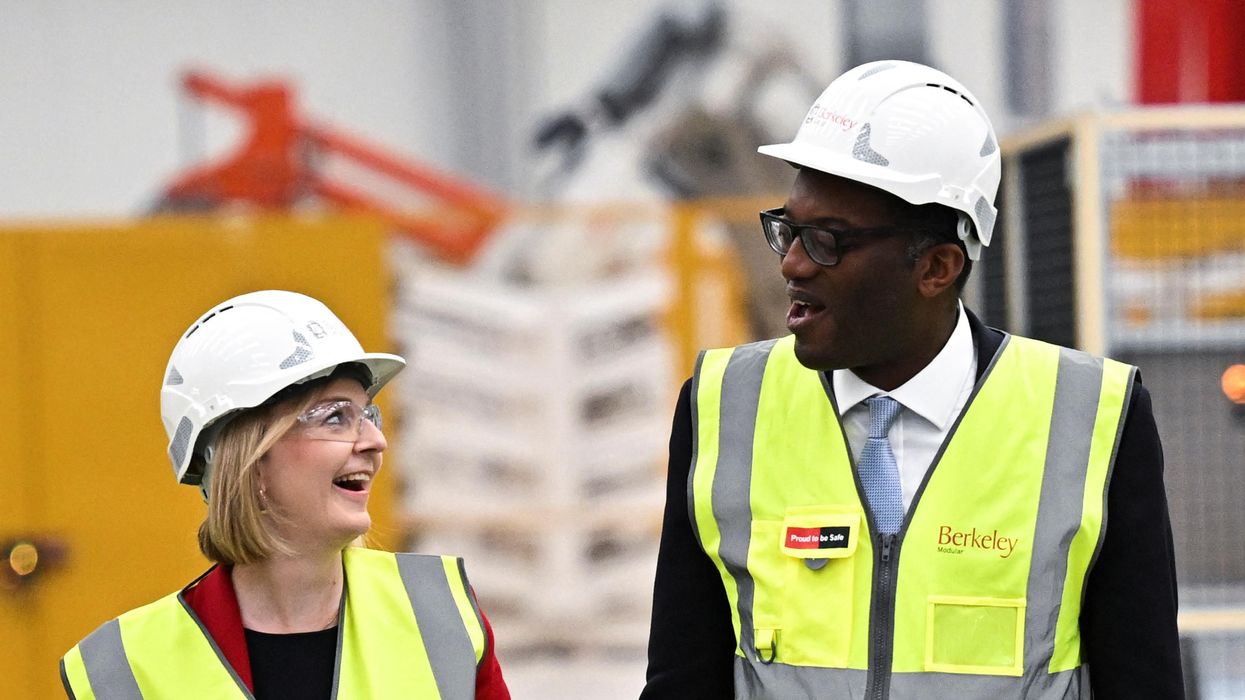
"So now the Tories are going to slash your already shredded local services because they crashed the economy because they want to cut the taxes of the top 1%."
"What was intended as mere bribery has turned out to be a gigantic financial bomb."
That's how socialist Guardian columnist Owen Jones on Wednesday summarized the recent revelations about U.K. Prime Minister Liz Truss and other Conservative leaders' fiscal policies.
Following reports that U.K. Chief Secretary to the Treasury Chris Philp will send letters asking government departments to identify potential "savings," the Tory confirmed on television Wednesday that they are being asked to "look for efficiencies wherever they can find them."
The push to cut public spending came as The Guardian revealed Wednesday the National Health Service (NHS)--the U.K.'s publicly funded healthcare system--has admitted that "dangerous roofs that could collapse at any time at hospitals across England will not be fixed until 2035."
That admission came in response to a request from Liberal Democrats, whose health spokesperson and deputy leader, Daisy Cooper, took aim at Chancellor of the Exchequer Kwasi Kwarteng's "mini-budget," which was unveiled last Friday and includes major tax cuts for the rich, funded by extra borrowing.
"Kwasi Kwarteng's first budget prioritized slashing taxes on the big banks over fixing crumbling hospitals. There was a deafening silence from government on how it intends to deal with dangerous ambulance wait times or lack of local NHS dentists, let alone buildings at risk of collapse," Cooper told the newspaper. "This is a disaster waiting to happen and Conservative ministers just don't seem to care."
The tax plan--which caused the pound to fall to its lowest level against the U.S. dollar in nearly four decades and ultimately led to emergency action by the Bank of England to calm the markets--has been criticized across the British political spectrum and around the world, including by the credit agency Moody's.
Even Tory members of Parliament are voicing concerns. BBC reports:
Few Conservative MPs are commenting publicly about Chancellor Kwasi Kwarteng's handling of the economic turmoil sparked by his mini-budget--but they are not mincing their words in off-the-record conversations.
Inept, humiliating, naive, and reckless are just some of the words that have cropped up.
Perhaps most notably, the International Monetary Fund (IMF), known worldwide as "a bastion of free market economics and fiscal austerity," on Tuesday delivered a rare critique of the policy--which Guardian economics editor Larry Elliott called "a global embarrassment for Truss and Kwarteng."
The mini-budget "will likely increase inequality," the IMF warned, adding that the next full budget announcement--which Kwarteng is expected to outline in November--gives the U.K. government "an early opportunity... to consider ways to provide support that is more targeted and re-evaluate the tax measures, especially those that benefit high-income earners."
Nick Dearden, director of the U.K.-based group Global Justice Now, tweeted Tuesday, "When the IMF tells you, 'hang on guys, this is going to be so bad for inequality it needs a rethink,' you've got a serious problem."
Economist and former Greek Finance Minister Yanis Varoufakis said the IMF and the U.S. Federal Reserve are concerned the United Kingdom "may trigger a financial crisis" by doing to the United States and other wealthy nations what "Greece did to the Eurozone."
"The particular focus of the concern... is the impact that the destabilization of the markets in Britain will have on the U.S. treasuries, in other words on the public debt of the United States," he said. "Because that kind of domino effect would have quite severe repercussions for the whole world."
Keir Starmer, the Labour leader, said during a BBC radio interview Wednesday that Truss must urgently review the budget following "very serious" criticism from the IMF, noting concerns that November would be too late.
According to Starmer, Truss needs to explain: "How are you going to fix the problems that you caused ...on Friday? The government caused this on the theory, the ideology that the way we fix our country is to make the rich richer."
Other critics also delivered broader rebukes of Truss-aligned ideology, with some going as far back as former Conservative U.K. Prime Minister Margaret Thatcher.
"September 2022 will forever be remembered as the month in which the febrile fantasies of neoliberalism ran full-tilt into reality," said Guardian columnist and author George Monbiot.
Referencing a London road that's home to various think tanks, one Twitter user dubbed this September "the month of the Tufton Street Massacre." Monbiot concurred.
"This catastrophe isn't all on Truss and Kwarteng," Jones stressed Wednesday.
"This is the logical end point of a 43-year-long Thatcherite experiment--brought to us by Tory MPs, right-wing newspapers, and think tanks--which has brought nothing but stagnation, economic turmoil, and mass insecurity," he continued.
Summarizing the chaos since last week, Guardian columnist and and senior economics commentator Aditya Chakrabortty wrote Wednesday:
What was intended as mere bribery has turned out to be a gigantic financial bomb. The pound dived so far that it won a new name: shitcoin. (One wag mused on Reddit: "Apparently britbongs use it to purchase crumpets and tea, but other than that doesn't have any usage.") Lending rates in the markets soared, so Halifax and other big mortgage firms had to pull some of their products. The Bank of England essentially lost control over interest rates, while pension funds and other investors began scrabbling around for cash. Finally, today, the bank started buying government bonds in a bid to quell panic.
A week is a long time in financial wreckage. Thanks to Kwarteng and Truss, you have just got a lot poorer. If you're a homeowner on a standard variable mortgage or looking to renew, your bills have spiraled. If you have a money-purchase pension or a nest-egg ISA, you probably don't want to check your balance. Prices for pretty much anything from overseas--from food to T-shirts to cars--have just gone up.
Institutionally, the Treasury's credibility has been ruined and the Bank of England's monetary policy destroyed.
"This is their crisis, not ours," Chakrabortty concluded of the Conservatives. "You didn't benefit from these big tax cuts, the Tory donors did. Truss can reverse her stupid, cynical budget, resign, and force a general election--and Labour should demand she does so."
Meanwhile, Tory leadership is showing no sign of reconsidering its path, with Financial Secretary to the Treasury Andrew Griffith claiming Wednesday that the proposals were the "right plans" for the U.K.'s economy--despite the mounting evidence to the contrary.
As U.K. Conservatives doubled down on their controversial policies, a coalition of civil society groups launched the End Austerity campaign and warned that next year, 85% of the global population is set to live under "deadly" measures, from cuts to social programs to privatization of public services.
"This austerity recipe has been tried and failed many times," the campaign's website says, "and only inflicted hardship and pain on populations all over the world, supercharging the inequality crisis."
Workers are decrying the demise of "one of the great inventions of our social history" after the British government announced on Monday that it was completing the privatization of the UK's state-run mail service by selling off its final 14 percent stake.
In a press statement, the Department for Business, Innovation & Skills said that "current market conditions should allow a successful sale," Guardian reporting indicated that banks are hopeful the shares would be sold for less than a 5 percent discount on the Royal Mail's share price.
Since the Royal Mail sell-off was first announced in 2013, it has been criticized by the country's leading trade unions as a deal where only "the rich get richer."
On Monday, the Communications Workers Union (CWU) issued a statement saying the privatization underscores the Tory party's commitment to austerity "ideology" over the interests of the British people.
"This fire sale nails the lie that the Tories stand up for the interests of ordinary people," said CWU general secretary Dave Ward. "By their actions today, they have made it abundantly clear that they are only interested in privatizing dogma and making the rich richer- even when their actions place public services at risk."
In June, the UK government sold half of its then-remaining stake, roughly 15 percent. Ward said this final portion "should have been used to safeguard the public's voice in Royal Mail and ensure the continuation of daily deliveries to every address in the country."
"The Tories have instead chosen and ideological course that puts the fundamental ethos of a centuries old national institution in jeopardy," he added.
The announcement comes one week after the recently-elected Labour leader Jeremy Corbyn gave a rousing speech demanding that the remaining shares be kept in public control.
"Our party is committed to opposing austerity, committed to opposing the privatization of Royal Mail, committed to the public control of Royal Mail and other public services," he told a rally outside Manchester Cathedral. "We must demand immediately an end to the whole notion to the sale of the remaining 15 percent that is publicly owned--keep it public, keep it safe, keep it ours."
A massive and growing anti-austerity movement will take to the streets of London on Saturday, June 20, with demonstrators demanding "an alternative to austerity and to policies that only benefit those at the top."
| Tweets about #endausteritynow OR #junedemo |
Tens of thousands are expected to march from the Bank of England to Parliament Square on Saturday, protesting the conservative government's "nasty, destructive cuts to the things ordinary people care about--the [National Health Service], the welfare state, education and public services."
Organized by The People's Assembly--a politically unaffiliated national campaign against austerity--the demonstration comes in the wake of UK elections in early May that saw the Conservative (Tory) Party seizing the majority of Parliamentary seats and Prime Minister David Cameron sweeping back to power.
"David Cameron and George Osborne can hardly contain their enthusiasm for the torrent of cuts and privatizations they are about to unleash," wrote the Guardian's Seumas Milne on Wednesday. "This is to be austerity on steroids."
In fact, Milne warned, "indefinite austerity, which transfers wealth from public to private and poor to rich, is Osborne's aim."
But "there's no necessity to put up with the attacks they're about to launch on millions of people's living standards, and every reason to resist them," Milne concluded. "The austerity program needs to be opposed in parliament, but also with industrial action, demonstrations, and local campaigns. That process is already kicking off, with a national anti-austerity march in London this Saturday."
A separate but similarly themed rally is planned for Glasgow, Scotland on Saturday. As Al Jazeera explains, the political landscape is different in Scotland, where the Scottish National Party (SNP) won an overwhelming victory in May.
"The SNP's victory was widely seen as an endorsement of nationalist leader Nicola Sturgeon's anti-austerity stance," Al Jazeera reports, while noting that "the party also benefited from a wave of grass-roots enthusiasm whipped up during last year's referendum on independence from the U.K.--which generated unprecedented levels of political engagement among previously apathetic sections of Scottish society."
Stephen Boyd, the assistant secretary of the Scottish Trades Union Congress, which represents more than 600,000 Scottish workers and is one of the main sponsors of Saturday's event, told Al Jazeera: "We expect George Square [in central Glasgow] to be packed. The rally will reflect the significant anger in Scotland at Tory plans to widen and deepen austerity."
He continued: "With the Tories having achieved an overall majority at Westminster, it is essential that progressive forces in Scotland work together more closely than ever before to counter this unnecessary attack on society's most vulnerable people."
Ahead of Saturday's march, the People's Assembly made the following video outlining their grievances and demands: