

SUBSCRIBE TO OUR FREE NEWSLETTER
Daily news & progressive opinion—funded by the people, not the corporations—delivered straight to your inbox.
5
#000000
#FFFFFF
To donate by check, phone, or other method, see our More Ways to Give page.
Daily news & progressive opinion—funded by the people, not the corporations—delivered straight to your inbox.
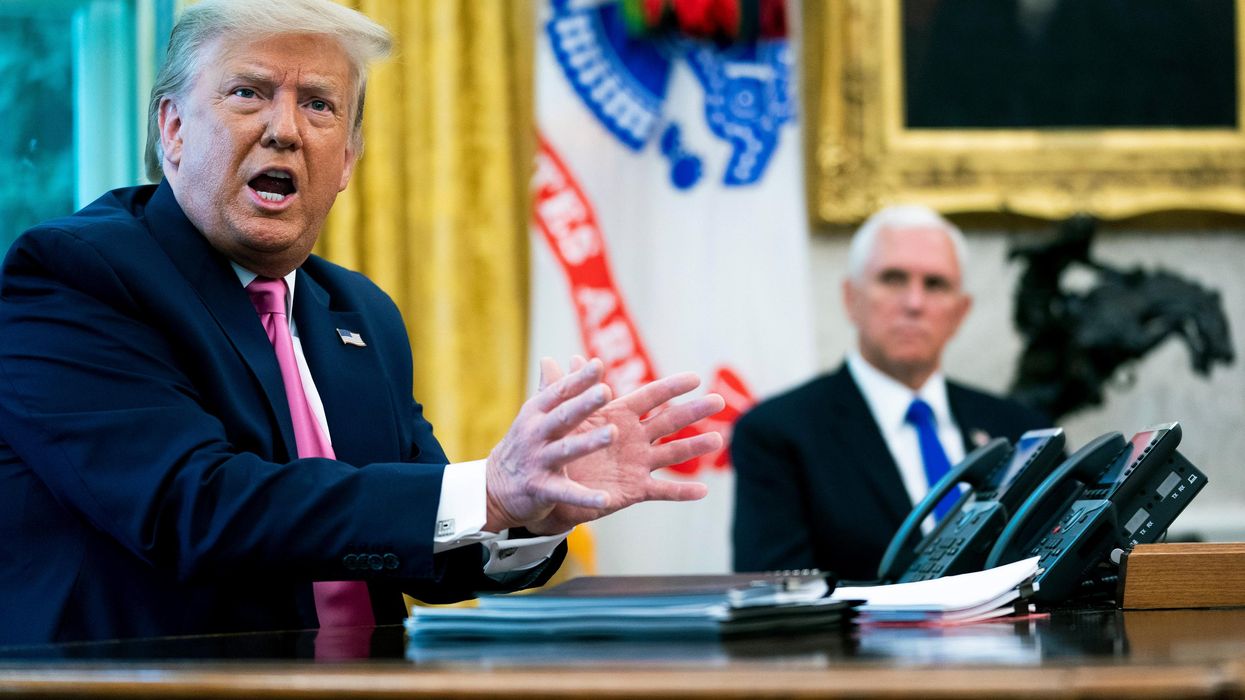
The group's leader said the media should "cover the Biden vs. Trump election as a comparison between how each president administered the immensely important executive branch."
The Revolving Door Project on Monday released a set of reports on corruption and mismanagement in executive agencies during the Trump presidency, calling on the media to focus on presumptive Republican nominee Donald Trump's poor governing record as he campaigns to retake the Oval Office.
The new reports, called "retrospective memos," show that Trump's executive branch was rife with cronyism and corporate influence from 2017 until 2021. RDP, a watchdog group focused on the executive branch, released the reports as a way to fight "Trumpnesia" and focus the political discussion on the governance records of Trump and President Joe Biden, a Democrat seeking reelection.
"Donald Trump's most important legacy as president wasn't what he said, or even what bills he signed, but how he turned the federal government into a favor machine to benefit his family and cronies," Jeff Hauser, RDP's executive director, said in a statement. "The media should not focus on the aesthetics of this week's presidential debate but rather cover the Biden vs. Trump election as a comparison between how each president administered the immensely important executive branch."
"It's important to revisit how poorly he ran the executive branch his first time round."
RDP issued eight memos, covering disaster management, the environment, financial regulation, housing, immigration, labor, education, and transportation.
Each provides evidence of a Trump administration that was "utterly indifferent to the public interest," as Timi Iwayemi, RDP's research director, said in the statement.
In many cases, Trump appointees were hostile to the original aims of the agencies. they served.
Mick Mulvaney, Trump's choice to lead the Consumer Financial Protection Bureau, tried to roll back rules limiting predatory payday lending—a practice that "preys on the working poor," the financial regulation memo says.
Mulvaney—who's now suggesting a "revenge-a-thon" against Trump's foes—also appointed political cronies and failed to undertake the enforcement actions against companies that were the CFPB's raison d'être. A 2019 feature in The New York Times Magazine was titled, "Mick Mulvaney's Master Class in Destroying a Bureaucracy From Within."
Trump's National Labor Relations Board was led by Peter Robb, a management-side lawyer who was the Reagan administration's lead attorney on litigation dealing with the air traffic controllers' strike of 1981, in which the federal government fired about 11,000 workers and banned them from being rehired. Like Trump's Department of Labor, which was ultimately run by the son of former Supreme Court Justice Antonin Scalia, the NLRB under Robb was pro-management—and reportedly dysfunctional.
Other federal agencies were hardly more committed to serving the public interest in the late 2010s.
"Trump's Interior Department advanced the interests of extractivist industry on public lands while refusing to account for how its actions would worsen climate change," according to RDP's environment memo. "The Trump administration auctioned off over 10 million acres of land and water to oil and gas drilling, including by drastically reducing the size of national monuments like Bears Ears in Utah, a sacred homeland to five tribal nations, in order to open them up to development."
The Department of Housing and Urban Development, run by former presidential candidate Ben Carson, was plagued by "handouts to friends and family," a series of "deadly budget cut proposals," and a "war on fair housing," according to the RDP's housing memo.
Trump's disaster management choices were particularly consequential. The Federal Emergency Management Agency " horrifically" mismanaged the response to two consecutive hurricanes that hit Puerto Rico in 2017, which got minimal—and very delayed—relief compared to Texas communities that were hit by a hurricane during that period.
RDP's catalog of Trump administration failures is designed to clarify the stakes of the 2024 election.
"The series serves as a reminder to the public that the president's primary responsibility is to direct the vast apparatus known as the executive branch of the federal government," RDP said. "Sadly, former president Donald Trump either neglected this responsibility or wielded it in favor of corporations throughout his four years in office."
Iwayemi said "Even as current conversations wisely focus on Project 2025 and Trump's promise to leverage executive power to harm political enemies, it's important to revisit how poorly he ran the executive branch his first time round as a cure to the public's apparent Trumpnesia."
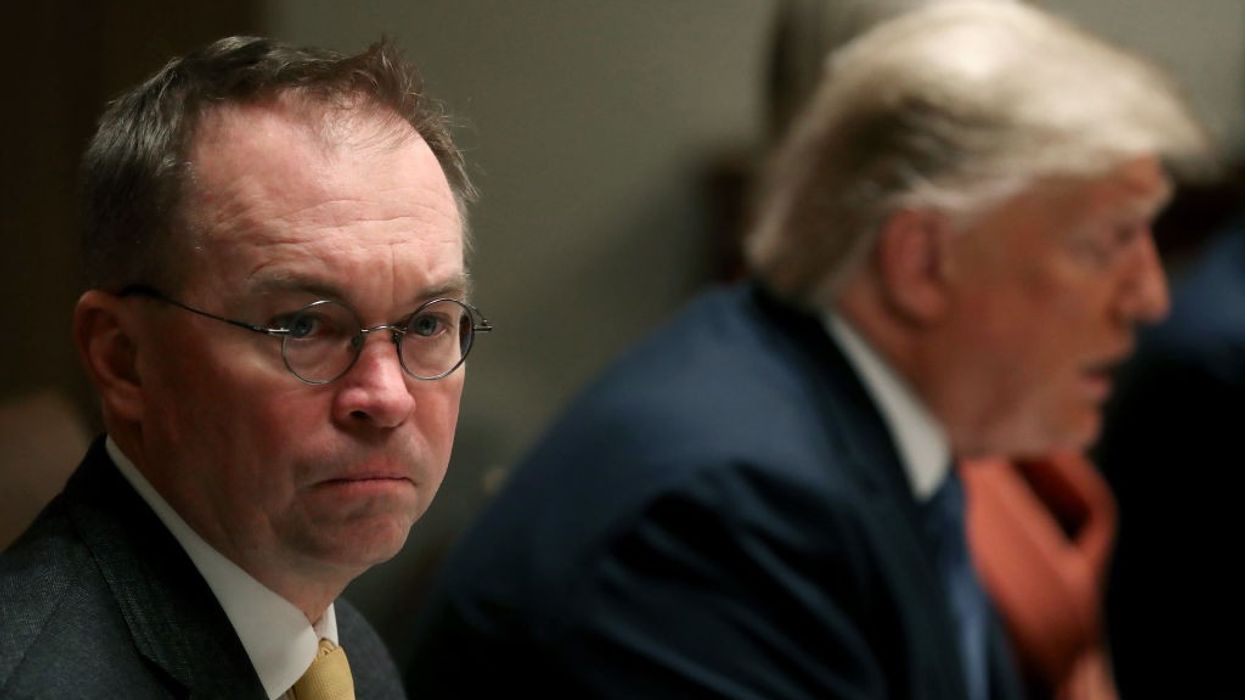
The former White House chief of staff suggested that there would be nothing untoward about targeting Democrats should Trump win reelection in November.
"What's wrong with a little revenge?"
That's what Mick Mulvaney, former President Donald Trump's one-time acting White House chief of staff—who consumer advocate Ralph Nader once described as the twice-impeached Republican's "sadist-in-chief"—asked Tuesday in a Hill opinion column suggesting that there would be nothing unseemly if his ex-boss is reelected and decides to embark on a campaign of retribution targeting Democrats.
"Would any investigation by the next Trump administration, or by an assertive state attorney general, constitute 'revenge'? Or would it simply be applying the exact same standard to Democrats that they have applied to Donald Trump?" he asked.
"Here is my question: What is the difference between 'payback' or 'a revenge-a-thon' and simply applying the same standards to other elected officials that have now been applied to Trump?" Mulvaney wrote.
"Put another way: Now that Democrats in law enforcement have established a new standard for what justifies a criminal indictment of a former elected official or a current candidate for office, what is wrong with having Republican law enforcement apply those exact same standards to Democratic officials and candidates?" he added.
Mulvaney continued:
Don't get me wrong. I abhor the fact that the standard for pursuing government leaders has been lowered so dramatically. I cringe at what precedents Trump Derangement Syndrome is bringing to our politics and civic institutions. I am extraordinarily worried over the Machiavellian trails the left is blazing in order to 'get Trump.'
But they have set the standard now. They lowered the bar. It is now not only acceptable but praiseworthy to charge a former president of the United States with 34 felonies for a bookkeeping discrepancy of which he may not even have been fully aware.
It's not just the 34 felonies in connection with hush money payments to cover up alleged extramarital affairs for which Trump was found guilty last month by a New York jury his legal team helped select. The presumptive 2024 GOP nominee also faces 54 additional federal and state criminal charges over his alleged mishandling of classified documents—including at least one file related to a foreign nation's nuclear capabilities—and his role in trying to overturn the 2020 presidential election and fomenting the January 6 Capitol insurrection.
Trump argues that he should be shielded by presidential immunity from charges in the election cases. A ruling from the U.S. Supreme Court—to which he appointed three of the six right-wing justices—is forthcoming.
Last week, a Georgia appeals court
paused proceedings in the election interference case against Trump and other defendants until an appellate panel determines whether the prosecuting district attorney should be disqualified for an alleged conflict of interest.
Trump has attempted to brush off last month's conviction by disparaging the prosecution and jury and declaring that the "real verdict is going to be November 5 by the people," a reference to Election Day.
The former president also raised eyebrows last week by threatening to imprison political opponents including the president, First Lady Jill Biden, and former Secretary of State Hillary Clinton.
Last November, Trump was accused of using Nazi rhetoric when he vowed to "root out" those he described as "radical left thugs that live like vermin within the confines of our country" if he's elected this year.
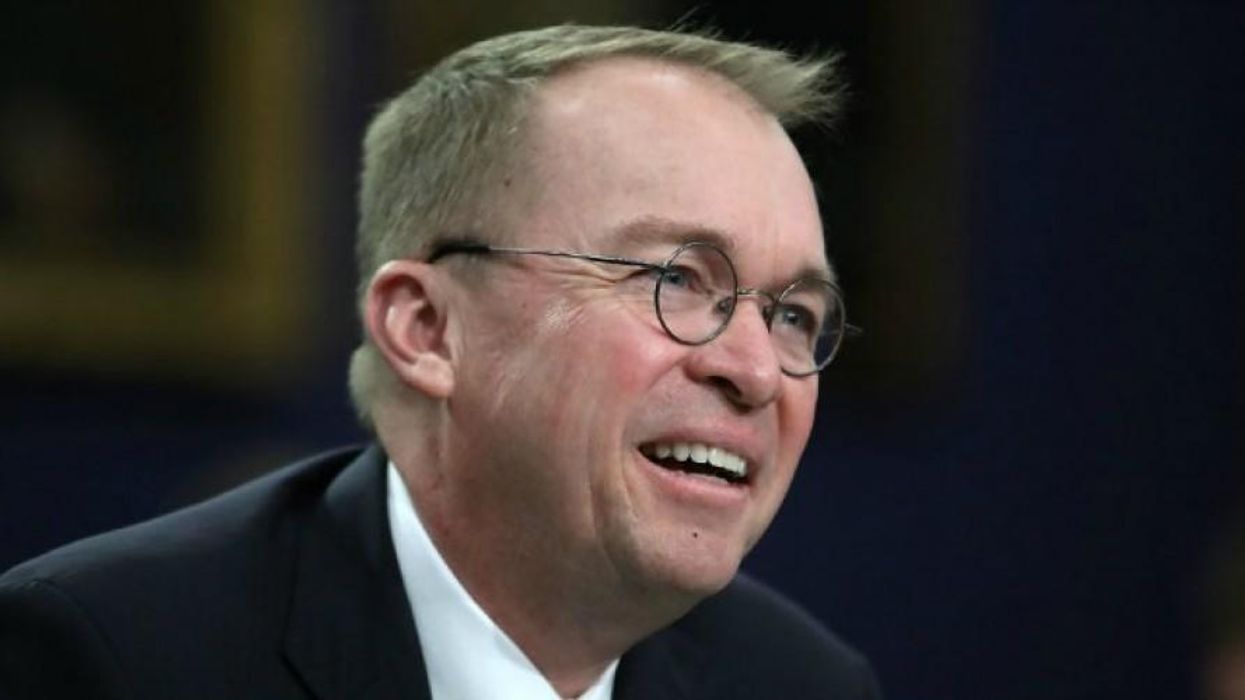
"It's time to stop pretending this case is anything but a brazen power grab by corporate criminals and their loyal bagmen," one researcher said of a payday lender trade association's attack on the CFPB's funding structure.
Critics of Mick Mulvaney are calling out the former Republican congressman and Trump administration official this week for submitting an amicus brief to the U.S. Supreme Court urging the justices to gut a federal agency he once directed.
The case Mulvaney weighed in on Monday, Community Financial Services Association of America (CFSA) v. Consumer Financial Protection Bureau (CFPB), involves the payday lender trade association challenging the agency's funding structure.
After then-President Donald Trump appointed him as acting director of the CFPB in November 2017, Mulvaney spent the next year trying to sabotage it. He was fiercely criticized, with U.S. Sen. Elizabeth Warren (D-Mass.), who played a key role in establishing the bureau, saying in 2018 that "this is what happens when you put someone in charge of an agency they think shouldn't exist."
Revolving Door Project senior researcher Vishal Shankar said in a statement Tuesday that "by authoring an amicus brief supporting his former campaign donor, Mick Mulvaney has again proven himself to be a shameless corporate shill."
"As a congressman and CFPB director, Mulvaney repeatedly tried to kill the CFPB after raking in whopping sums from big banks and predatory lenders who wanted the bureau dead," Shankar noted. "Now, with the help of his disgraced former lieutenant, Mulvaney wants SCOTUS to finish the job. It's time to stop pretending this case is anything but a brazen power grab by corporate criminals and their loyal bagmen."
"As a congressman and CFPB director, Mulvaney repeatedly tried to kill the CFPB after raking in whopping sums from big banks and predatory lenders who wanted the bureau dead."
Mulvaney's brief—which names Eric Blankenstein, a Trump appointee who resigned from the CFPB in 2019 over racist blog posts, as one of his two attorneys—claims that "how the CFPB is funded is contrary to the separation of powers that undergirds our entire system of constitutional government."
"It gives a single director control over hundreds of federal workers and hundreds of millions of dollars," the document states. "It deprives Congress of any meaningful oversight of one of the most impactful federal financial services regulators. By extension, it denies the American citizenry the opportunity to effect change, even if a majority of them want to do so."
Accountable.US spokesperson Jeremy Funk warned in response to the filing on Monday that "if the Supreme Court gives those with an ax to grind against the CFPB what they want, it will likely lead to the worst rollback of consumer protections in U.S. history."
"Financial industry stooge Mick Mulvaney and hate crime denier Eric Blankenstein may be the least credible former Trump officials to weigh in on whether the CFPB should keep protecting consumers from industry abuse and discrimination," Funk declared.
"If the idea is to make predatory lenders who filed this baseless lawsuit look good in comparison, these would be the right-wing trolls to do it," he continued. "It says it all about the merits of this case that it's being pushed by a coalition of predatory lenders, industry money chasers, an author of racist internet ravings, and a seminal architect of the insurrection."
Among the other backers of the CFSA's argument is former Trump attorney John Eastman, infamous for his contributions to the former president's "Big Lie" about the 2020 election, which led to the January 6, 2021 attack on the U.S. Capitol.
Along with also taking aim at Mulvaney—who was hired as a CBS contributor last year—experts at the Revolving Door Project have blasted Eastman's brief.
"If the CFPB weren't so popular, corrupt bankers and their proxy members of Congress would have succeeded in killing it legislatively," Jeff Hauser, the project's executive director, said Tuesday. "Since the CFPB is too popular to take on legislatively, sellout has-beens like Mulvaney and Blankenstein are shifting to Plan B, seeking action by a judiciary which is as corrupted by big money as it is blinded by right-wing zealotry."
CBS News hiring former Trump aide Mick Mulvaney speaks volumes about systemic problems in our media. Mulvaney notoriously defended various Trump chicaneries--including withholding military aid to Ukraine in an attempt to extort its president for political gain--and no democracy worthy of the name should give him a prominent media platform. But once again, commercial values trumped democratic principles in mainstream news media.
A recording of a staff meeting captured CBS News co-president Neeraj Khemlani explaining how the hiring decision was based on maintaining "access" to Republican elites (Washington Post, 3/30/22). He told the staff of CBS's morning show:
Being able to make sure that we are getting access to both sides of the aisle is a priority because we know the Republicans are going to take over, most likely, in the midterms.
Such media malpractice recalls the now-disgraced former CBS CEO Les Moonves (Extra!, 4/16) enthusing in 2016 how the Trump campaign "might not be good for America, but it's damn good for CBS."
De-prioritizing democracy is a recurring failure in our commercial news media, often enabled by misguided norms. As Washington Post media critic Margaret Sullivan (4/3/22) aptly noted, hiring Mulvaney reveals
the news media's blind and relentless pandering to the outdated notion that both sides of the aisle are pretty much equal...just with different governing philosophies.
The tendency to rely on "he said/she said" false equivalence has long stained professional news practices--simultaneously presenting a veneer of neutrality while also accentuating partisan conflict. But this practice is especially egregious now that the Republican Party has become an openly anti-democratic force, often supporting the "Big Lie" that the 2020 election was stolen, and refusing to properly condemn the January 6 insurrection and broader efforts to overturn election results--in some cases even encouraging them. The recent revelation that Sen. Mike Lee supported such attempts--a coup by any other name--barely registered with major television media.
News outlets have increasingly normalized this fascistic threat, at least partly because to call it out and condemn it--as news outlets would in any functioning democracy--counters a key cornerstone in the commercial media model. "Bothsidesism" is arguably one of the worst symptoms of our media's structural pathologies. Fixating on access to official sources, this practice typically indexes media coverage to the parameters of elite opinion, and naturalizes status quo power relationships instead of challenging them.
To confront the GOP's neofascist turn would amount to a departure that, in the words of media critic Jay Rosen (PressThink, 9/25/16), "fries the circuits of the mainstream press." A profit-driven media so closely wedded to the political elites within a two-party system could never dare alienate a large swathe of Americans who ensure the ratings that advertisers covet.
As former MSNBC producer Ariana Pekary (8/3/20) has publicly written, commercial media's obsession with ratings warps and degrades media coverage. She described how it's "practically baked into the editorial process," but remains "taboo to discuss how the ratings scheme distorts content."
Yet the damage is all around us. Ratings-driven news outlets focus more on facile coverage of pressing social issues--or provide no coverage at all--to privilege entertainment over information. This commercial logic drives media to emphasize dramatic and sensational storylines that keep our eyes glued to various screens, from online clickbait to cable television's barking heads.
Several years ago, Chris Hayes made a revealing comment on Twitter (7/24/18) to this effect when he acknowledged that covering climate change is a "palpable ratings killer. So the incentives are not great"--which begs the observation that we must change the incentives driving our news media.
But why are commercial media so ratings-obsessed? It isn't just a popularity contest, but rather stems from the core business model that undergirds the American media system: capturing our attention to deliver to advertisers. In the US, most commercial media organizations--from cable news to social media--rely on revenues from delivering eyes and ears to advertisers.
Even for many newspapers, it's long been about an 80/20 split (80% from advertisers/20% from reader-support like subscriptions, though this ratio is changing with the collapse of ad revenue). At the same time, the US is almost literally off the chart compared to democracies around the globe for how little it allocates towards public media.
Progressives often attribute mainstream media's failings to its corporate ownership. While news media's allegiance to corporate power deserves ruthless criticism, it's also important to underscore how these pathologies are baked into the very DNA of a commercial press, resulting in media's capture by unfettered capitalism.
Democratic theorists have long warned us against this kind of market censorship, a filtering process that creates patterns of omission and emphasis in which some voices and views are elevated, and others muffled, according to commercial values, especially the need for profit to satisfy media owners and investors. They rightly observe that much of this power traces back to the influence of advertising, which privileges some narratives and some audiences over others, thereby essentially redlining the news by serving whiter and wealthier audiences.
A commercial press that's overly reliant on advertising revenue and "access journalism" based on elite sources, simply is--and always will be--ill-equipped to defend democracy. Despite noble exceptions, such a profit-first system will consistently marginalize progressive issues and favor news frames that align with elite interests and worldviews.
For many journalists who have internalized these norms--a code of professional ethics that traces back to the first half of the 20th century when publishers assumed a semblance of "social responsibility" to stave off public criticism of commercial excesses in the press--these practices are carried out in the name of objectivity. It's this orientation that led a board member of the Society of Professional Journalists to recently suggest that journalists shouldn't adopt a pro-democracy bias in reporting.
This commercial system's shortcomings are symptomatic of core structural maladies--namely, profit imperatives that overwhelm commitments to democratic principles. It's not simply a few bad journalists and news organizations; it is deeply systemic. While critiquing corporate media is an important exercise--public pressure can help push the needle toward more progressive and democratic narratives--at least part of our focus needs to be on apprehending and changing the underlying structures that help produce bad journalism.
This media reform project is especially urgent now, as much of the professional journalism ranks have been decimated in the last two decades. Our long-term strategies for democratizing media should include building nonprofit and public alternatives to failing commercial models.
Today, exciting new experiments are taking root across the country--many are independent, grassroots-driven and noncommercial--but we still need a society-wide approach to ensure that all members of the public not only have access to reliable and diverse news and information, but also have opportunities to make their own media and tell their own stories. Ultimately, we must democratize our media, but first we must remove journalism from the market as much as possible.
This task of de-commercializing our media is made more feasible by the market itself, as profit-seeking entities (with the unfortunate exception of vulture hedge funds) abandon local journalism altogether. We're faced with a historic opportunity to create a new media system from the ground up. It's incumbent upon all of us who have a pro-democracy bias to work towards building true structural alternatives to the run-amok commercial system we've inherited in the US. Because what's damn good for CBS is really bad for democracy.
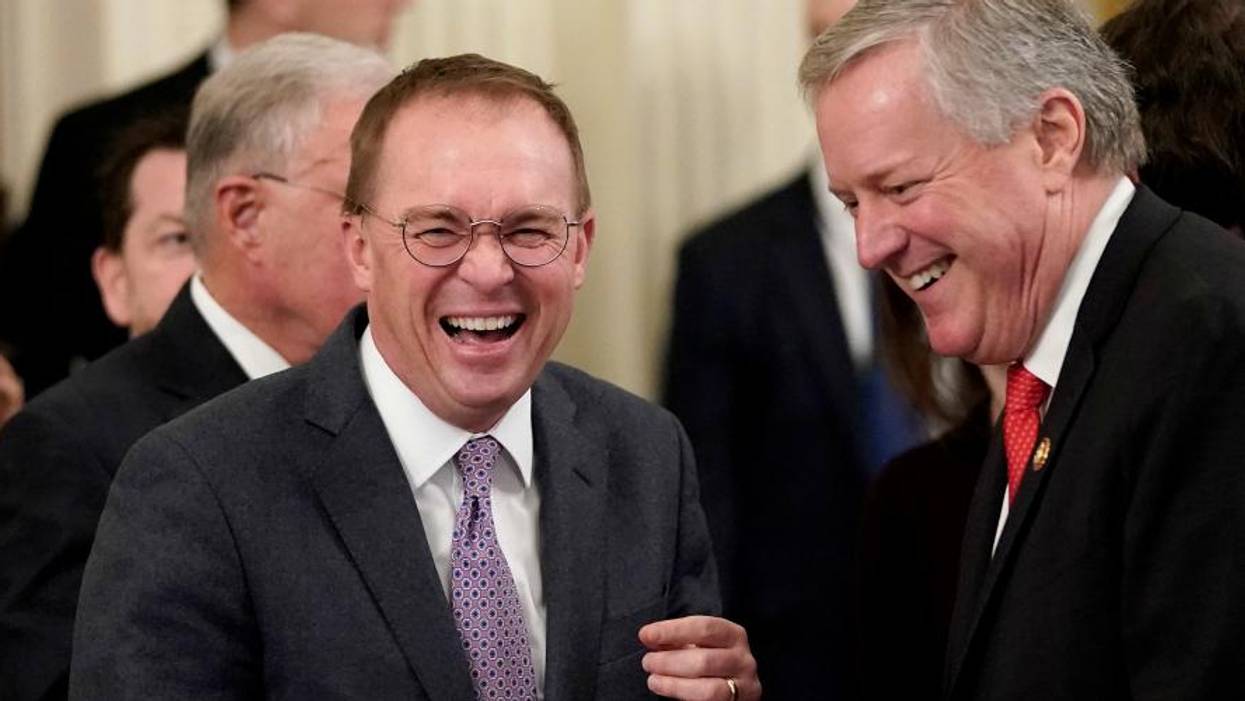
CBS News faced a firestorm of criticism Tuesday for making Mick Mulvaney a contributor, with one opponent calling the network's decision to hire the ex-aide of former President Donald Trump "a new low."
"Mulvaney is a discredited liar and crackpot."
Introducing Mulvaney to discuss President Joe Biden's proposal to tax rich Americans, anchor Anne-Marie Green said: "He's a former Office of Management and Budget director and today I am pleased to welcome him as a CBS News contributor. So happy to have you here. Thank you so much. You're the guy to ask about this."
Some journalists, media critics, progressives, and others familiar with the former Republican congressman's track record in the Trump administration--during which he also served as acting director of the Consumer Financial Protection Bureau, acting White House chief of staff, and U.S. special envoy for Northern Ireland--disagreed.
"Normalizing the villains," tweeted podcast host and writer Bob Cesca. "You mean there's no one else who's capable of talking about this crap, CBS?"
Seth Hanlon, a senior fellow at the Center for American Progress, also responded on Twitter.
"There are plenty of conservative budget experts who (1) chose not to serve as an apologist and lackey for the racist-in-chief, (2) have integrity, and (3) aren't clueless hacks who once wrote a budget with a $2 trillion math error," he said. "Shame on [CBS News]."
Matt Gertz, a senior fellow at Media Matters for America, wrote Tuesday that CBS "rehabilitating" one of Trump's "cronies" is not only an "embarrassment" but also a risk to "its credibility."
Pod Save America co-host Dan Pfeiffer similarly said that "this is embarrassing for every journalist that works at CBS. Mulvaney is a discredited liar and crackpot, but the yahoos that run the network think this hire will make the right stop attacking them as 'liberally biased.' (It won't.)"
The network "has plenty of actual business journalists and if I were one of them right now I'd be livid," said writer Christopher Ingraham, adding that he was "frankly dumbfounded" by the hire.
"Neither Mulvaney's extensive roles in the Trump administration, nor his time as a GOP member of Congress and co-founder of the Freedom Caucus, are ever mentioned," Ingraham highlighted. "He's introduced simply as "former OMB director and CBS News contributor."
While CBS failed to detail Mulvaney's past roles and related controversies, those outraged by his new job wasted no time filling in the blanks, including when he--while serving as chief of staff--admitted to reporters in October 2019 that the Trump White House withheld military aid to pressure the government of Ukrainian President Volodymyr Zelenskyy to launch a probe targeting Democrats, which critics at the time called "a quid pro quo."
"Mick Mulvaney is Donald Trump's former chief of staff who openly bragged about freezing $400 million in assistance to Ukraine and then defied a congressional subpoena. He was THE key figure in Trump's first impeachment," tweeted Jeremy Slevin, a staffer for Rep. Ilhan Omar (D-Minn.). "His punishment? A plush contributor gig with CBS News!"
Gertz pointed out that Mulvaney's comment on the quid pro quo was: "Get over it."
Also highlighting Mulvaney's admission about the attempt to force a "bogus investigation" and Trump's first impeachment, investigative reporter Jordan Fischer said that it is "absolutely disturbed to try to rehabilitate Mulvaney right now," amid Russia's war on Ukraine.
"Why not have him comment on Ukraine?" Fischer asked. "He can identify which of the armaments they're using to fight for their lives his boss withheld in an attempt to corrupt our democracy."
Esquire senior staff writer Jack Holmes had a similar question for CBS: "Are you going to ask him about his role in withholding aid to Ukraine until Zelenskyy agreed to smear Biden?"
"Outlets that are trying to be reputable shouldn't pay liars to lie and spread bad-faith right-wing propaganda."
Referencing the January 6, 2021 attack that led to Trump's historic second impeachment, Holmes added: "We now invite Mick Mulvaney on to discuss these revelations. Mick--what do you think your old boss was up to while the Capitol was getting sacked by his fanboys?"
Warren Gunnels, majority staff director for Senate Budget Committee Chair Bernie Sanders (I-Vt.), noted other parts of Mulvaney's past on Capitol Hill, including that "in 2009, Mulvaney supported an amendment declaring that Social Security and Medicaid 'are directly in violation of the 10th Amendment to the U.S. Constitution.'"
"As Trump's budget director, he wanted to repeal the estate tax which would only benefit the top 0.2%," Gunnels said, concluding with a sarcastic quip: "Brilliant move, CBS."
In a series of tweets featuring clips of Mulvaney from the Trump era, journalist Aaron Rupar said that "the point of journalism is to inform people. Outlets that are trying to be reputable shouldn't pay liars to lie and spread bad-faith right-wing propaganda. Shame on [CBS]."
"Mick Mulvaney lied to us for four years to advance the cause of authoritarianism, and now we're supposed to take seriously his analysis of Biden's economic policies?" he added. "Hardest of hard passes."
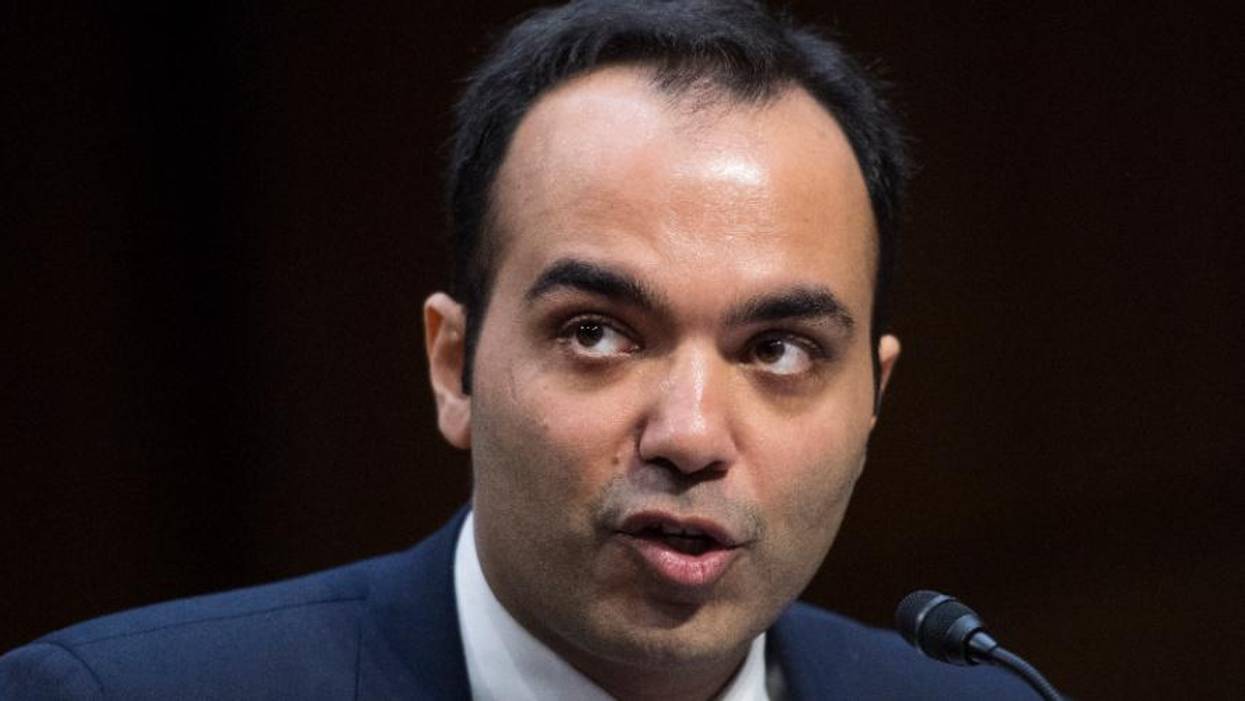
Sen. Elizabeth Warren on Monday morning applauded as "terrific" President-elect Joe Biden's decision to nominate FTC Commissioner Rohit Chopra to lead the Consumer Financial Protection Bureau, an independent agency that the Trump administration worked relentlessly to undermine and divert from its original mission of protecting ordinary people from corporate abuse.
"There are a lot of financiers who get incredibly rich taking advantage of lax 'regulators' of both parties in order to essentially defraud the American people. Those people are nervously conducting Zooms with high priced lawyers right now."
--Jeff Hauser, Revolving Door Project
Warren, a key architect of the CFPB in the wake of the 2008 financial crisis, tweeted that Chopra has "been a fearless champion for consumers at the FTC and will be a fearless champion leading the consumer agency."
"I worked closely with Rohit Chopra to set up the CFPB and fight for America's students," said the Massachusetts Democrat. "It's terrific that President-elect Biden picked Rohit to run the CFPB."
Consumer advocacy groups echoed Warren, pointing to Chopra's record of challenging the monopoly power of corporate behemoths like Facebook during his time at the FTC. If confirmed by the Senate, Chopra would replace current CFPB chief Kathy Kraninger, who has drawn ire for pushing policies that favor payday lenders and other predatory institutions while ignoring the needs of consumers. Under the leadership of Kraninger and her predecessor, Mick Mulvaney, CFPB enforcement actions against corporations declined dramatically.
"Financial predators, watch out," Robert Weissman and Lisa Gilbert of Public Citizen said in a statement Monday. "Rohit Chopra has proven himself a dedicated consumer champion and passionate defender of Main Street Americans against corporate wrongdoing. He will be an extraordinary director of the Consumer Financial Protection Bureau."
Previously the CFPB's student loan watchdog, Chopra used his post to publicly call out corporations for their abusive practices and treatment of borrowers, frequently angering industry giants and trade groups like the Consumer Bankers Association, which represents private loan firms.
"In my job, every day I get calls, emails, letters from people who are drowning in debt," Chopra told the Wall Street Journal in 2014. "I hear the panic in their voices as they worry about their financial future. They aren't numbers on a spreadsheet. I want to help make things better for them."
Jeff Hauser, director of the Revolving Door Project--a watchdog group that has closely examined and often been sharply critical of Biden's Cabinet picks--applauded the president-elect's nomination of Chopra to lead the CFPB and Gary Gensler to chair the Securities and Exchange Commission.
"There are a lot of financiers who get incredibly rich taking advantage of lax 'regulators' of both parties in order to essentially defraud the American people," Hauser told CNN on Sunday. "Those people are nervously conducting Zooms with high-priced lawyers right now. Biden's financial regulatory regime right now is exactly what he needs to produce tangible, positive results for everyone who is not a slimy banker."
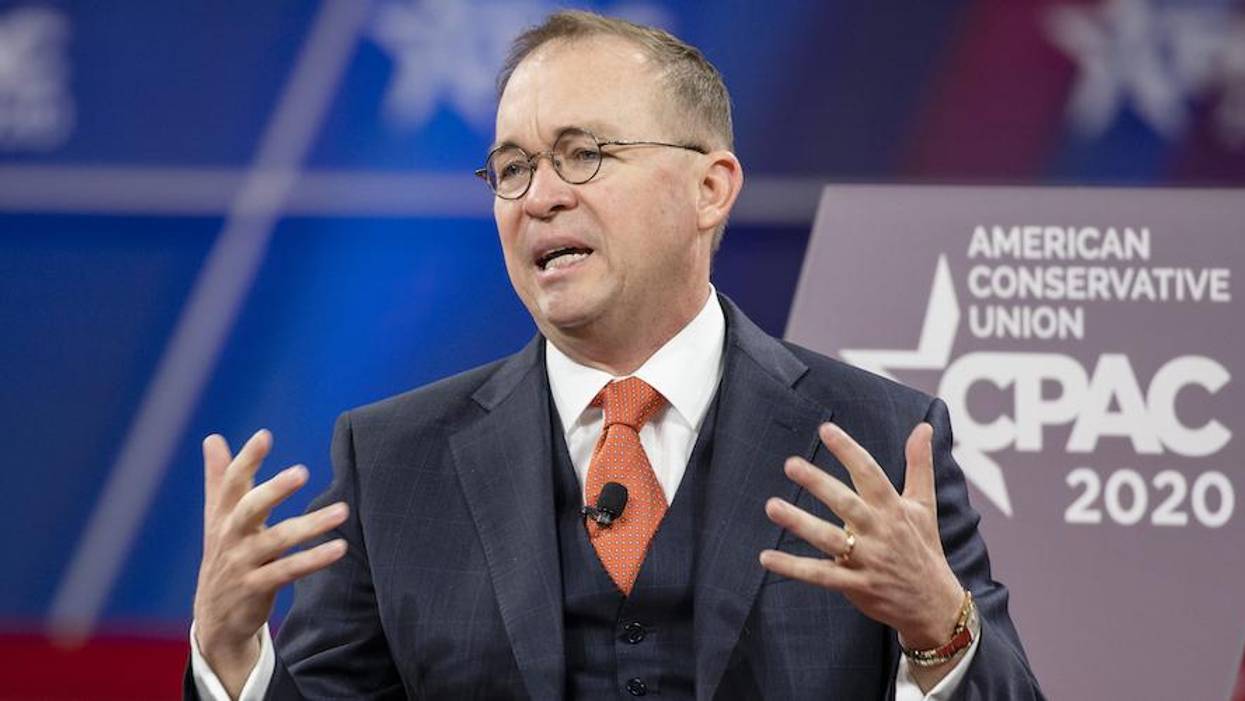
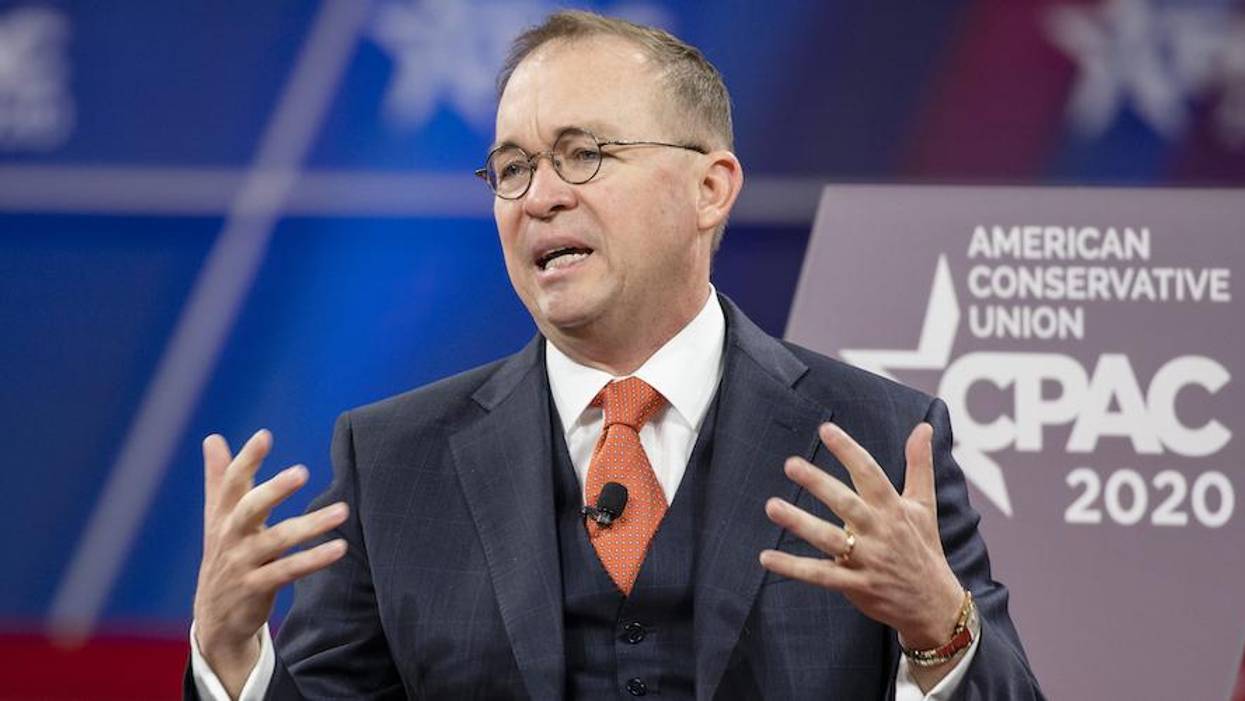
President Donald Trump's acting Chief of Staff Mick Mulvaney on Friday morning said that media coverage of the coronavirus is aimed at attacking the White House and not informing the American public about the illness spreading across the U.S. and the world.
Mulvaney made the remarks to a crowd at the Conservative Political Action Conference (CPAC) at the Gaylord National Resort and Convention Center in Fort Washington, Maryland.
"The reason you're seeing so much attention paid to it today is that they think this is what brings down the president," said Mulvaney. "This is what it's all about."
Mulvaney then recounted an exchange he allegedly had with a reporter.
"I got a note today from a reporter saying, 'What are you going to do today to calm the markets,'" said Mulvaney. "I'm like, 'Really what I might do today to calm the markets is tell people to turn their televisions off for 24 hours.'"
Watch:
Mulvaney also downplayed the risk of the virus, telling the CPAC crowd "this is not Ebola."
"As Mulvaney spews this disinformation for political reasons, he highlights the grave danger of politicizing the response to an emergency for the benefit of a corrupt president at the expense of American families," tweeted attorney Walter Shaub, former director of the Office of Government Ethics.
The president's chief of staff was not the only right-wing luminary to comment on the virus. Donald Trump, Jr., the president's son, suggested on Fox News morning show "Fox and Friends" Friday that Democratic lawmakers were salivating at the prospect of coronavirus killing Americans.
"For them to try to take a pandemic and seemingly hope that it comes here and kills millions of people so that they can end Donald Trump's streak of winning is a new level of sickness," said Trump Jr.
Rep. John Garamendi (D-Calif.), whose northern California district is where the country's first known coronavirus outbreak occurred this week, said in response to those comments on MSNBC that the president's son should not say something like that in front of him.
Despite his comments at CPAC downplaying the threat of the virus, Mulvaney acknowledged that the spread of the virus will likely impact day-to-day life for Americans.
"Are you going to see some schools shut down? Probably," said Mulvaney. "May you see impacts on public transportation? Sure."
As Bloomberg News reported, the comments came just before markets opened with an immediate loss:
Mulvaney's remarks indicate that the administration is planning for potentially bigger disruptions. He spoke a day after stock markets plunged the most since 2011 over concerns that the coronavirus outbreak would continue to spread and drag down the global economy. There are now more than 83,000 cases of the virus worldwide, with infections spreading in Europe, Asia, and Latin America.
"What an inspired course of action for public confidence as we face a mounting pandemic," tweeted Montana-based progressive activist Reilly Neil. "How about the truth and a solid plan instead?"
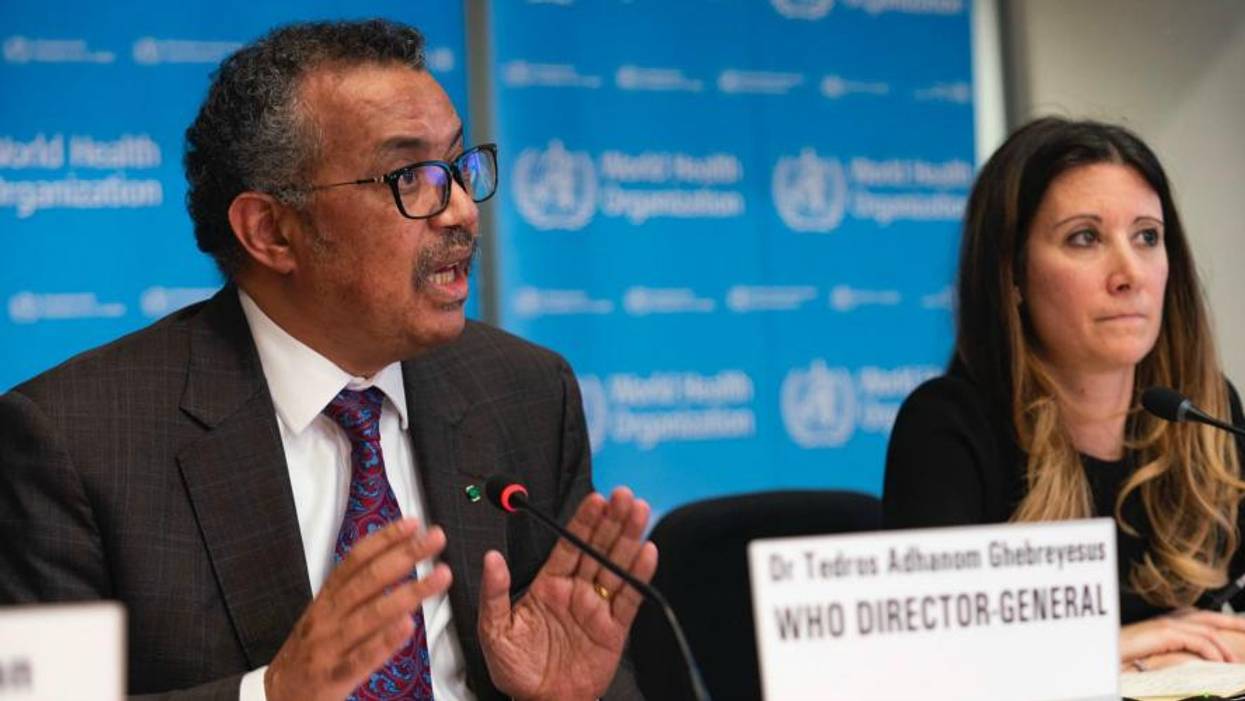
The World Health Organization on Friday raised the global risk of the new coronavirus to its highest level and reiterated the necessity of worldwide containment efforts as U.S. President Donald Trump continued to face widespread criticism over how his administration has handled the public health crisis so far.
Since the coronavirus disease (COVID-19) outbreak began in Wuhan, China late last year, it has infected more than 83,000 people globally, killing over 2,800, according to the Associated Press. A large majority of the cases have been in mainland China; however, the virus has reached more than 50 countries, with hundreds of confirmed cases in South Korea, Japan, Italy, and Iran.
"Our epidemiologists have been monitoring these developments continuously, and we have now increased our assessment of the risk of spread and the risk of impact of COVID-19 to very high at a global level," WHO Director-General Tedros Adhanom Ghebreyesus explained Friday during a press conference in Geneva with other officials from the United Nations agency.
"What we see at the moment are linked epidemics of COVID-19 in several countries, but most cases can still be traced to known contacts or clusters of cases. We do not see evidence as yet that the virus is spreading freely in communities," Tedros said. "As long as that's the case, we still have a chance of containing this virus, if robust action is taken to detect cases early, isolate and care for patients and trace contacts."
Mike Ryan, executive director of WHO's Health Emergencies Program, told reporters Friday that "this is a reality check for every government on the planet: Wake up. Get ready. This virus may be on its way and you need to be ready. You have a duty to your citizens, you have a duty to the world to be ready."
Ryan added that it "unhelpful" to ask whether the outbreak is now considered a pandemic, because doing so would mean "we're essentially accepting that every human on the planet will be exposed to that virus. The data does not show that." However, he warned, "if we don't take action... that may be a future that we have to experience."
As Common Dreams reported Tuesday, Harvard epidemiology professor Marc Lipsitch has predicted that the virus could ultimately infect between 40 and 70% of the global population, and the Centers for Disease Control and Prevention is encouraging U.S. residents to prepare for "significant disruption in their daily lives."
The CDC is tracking COVID-19 cases in the United States on its website. The federal agency has also published information about the virus and the national containment response, which includes deploying CDC staffers to dozens of sites across the country.
Despite the agency's efforts, Trump has come under fire for his administration's response to the outbreak. Democratic presidential candidate Sen. Elizabeth Warren (D-Mass.) tweeted Friday that "we're looking at a serious economic downturn because of coronavirus--and the Trump administration is bungling every aspect of this crisis."
Trump announced Wednesday night that he was appointing Vice President Mike Pence to lead the administration's coronavirus task force--a move that was pilloried as "utterly irresponsible" by Rep. Alexandria Ocasio-Cortez (D-N.Y.). The congresswoman and other critics highlighted Pence's problematic track record on handling public health issues, including while he was the governor of Indiana.
Pence announced early Thursday that he was appointing a global health official, Ambassador Debbie Birx, as the "White House Coronavirus Response Coordinator," a decision which Politico described as "installing a czar-like figure under him to guide the administration's response to the outbreak after a protracted public dance around how to display the power of the federal bureaucracy to the American people."
The New York Times reported late Thursday that the White House moved to "tighten control of coronavirus messaging by government health officials and scientists, directing them to coordinate all statements and public appearances" with Pence's office, citing multiple unnamed sources. According to the Times, "Officials insist Mr. Pence's goal is not to control what experts and other officials say, but to make sure their efforts are coordinated, after days of confusion with various administration officials making contradictory statements on television."
However, the news generated concerns among individuals and watchdogs groups--and came amid reporting that a whistleblower from the Department of Health and Human Services has accused the Trump administration of attempting to cover up possibly exposing federal workers to coronavirus by sending them to process Americans evacuated from Wuhan without providing essential training or equipment.
"There's nothing wrong with a coordinated process inside the federal government to make sure it is sending out clear, fact-based information about the widening coronavirus epidemic," said Dr. Michael Carome, director of Public Citizen's Health Research Group. "But there's every reason to suspect something else is happening--that public health experts are being instructed to stay silent because they are sharing truthful information that the Trump administration finds inconvenient or that contradicts the random musings of the president."
"As we have seen in China's response to the outbreak, muzzling public health experts at a time of a potentially emergent public health crisis is reckless and endangers the public," Carmone added in his statement Thursday. "It should be obvious to the Trump administration, though perhaps it is not, that silencing truthful information about the coronavirus is likely to speed--not stop--its spread."
Trump and his allies, meanwhile, continue to tout the administration's efforts and dismiss critiques as politically motivated attacks. Trump's acting Chief of Staff Mick Mulvaney on Friday characterized news coverage of coronavirus as "an attempt to bring down the president" and downplayed its threat level. As Common Dreams reported, some critics responded by charging that Mulvaney was the one politicizing the crisis at the expense of American families.
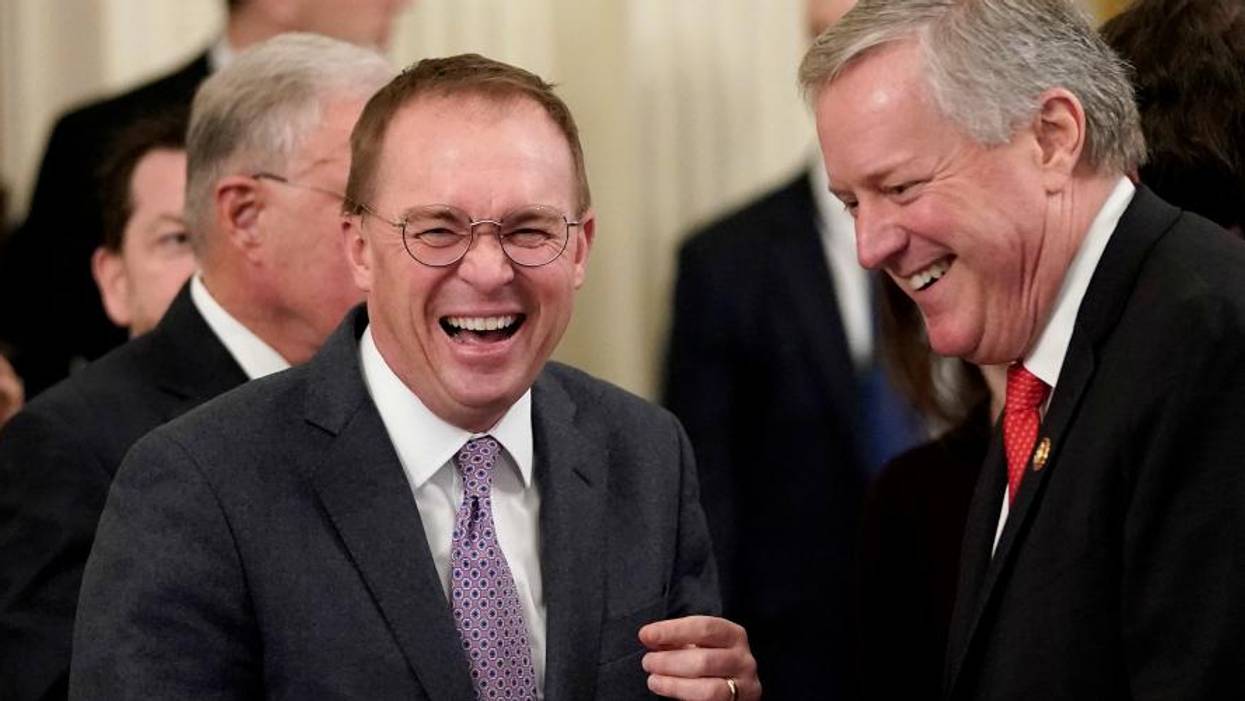
Acting White House Chief of Staff Mick Mulvaney said in a speech Wednesday night that Republicans won't act on the climate crisis because the party doesn't want to raise taxes or ask people to change their "lifestyle."
"We take the position in my party that asking people to change their lifestyle dramatically, including by paying more taxes, is simply not something we are interested in doing," Mulvaney said in response to a question on why the U.S. government is not doing more to combat the climate emergency.
The audience in attendance at the speech in the United Kingdom laughed at Mulvaney's response, according to an audio recording obtained by the Washington Post.
Nathan Richardson, a law professor at the University of South Carolina and a fellow at the non-profit research organization Resources for the Future, tweeted that Mulvaney and the GOP's position on climate "is increasingly a political loser."
"And it is naive and shortsighted: Inaction is a choice that will force 'lifestyle changes,'" Richardson added. "The water will come."
Another Twitter user put it more bluntly: "Drowning is also a lifestyle change."
Mulvaney, who in 2017 called federal spending on climate research "a waste of your money," questioned whether human activity is driving global temperature rises--despite the near-unanimous consensus among climate scientists.
The debate over climate in the U.S., said Mulvaney, is "less so as to whether or not it's happening, more so as to its causes."
The Hill reported Thursday that President Donald Trump's budget proposal for fiscal year 2021 calls for slashing "funding for the National and Regional Climate Adaptation Science Centers, eliminating all $38 million for research to help wildlife and humans 'adapt to a changing climate.'"
Joel Clement, senior fellow at the Center for Science and Democracy at the Union of Concerned Scientists, told The Hill that "the presidential budget is all about sending signals."
"The signal they're trying to send is: We do not value climate science," said Clement.
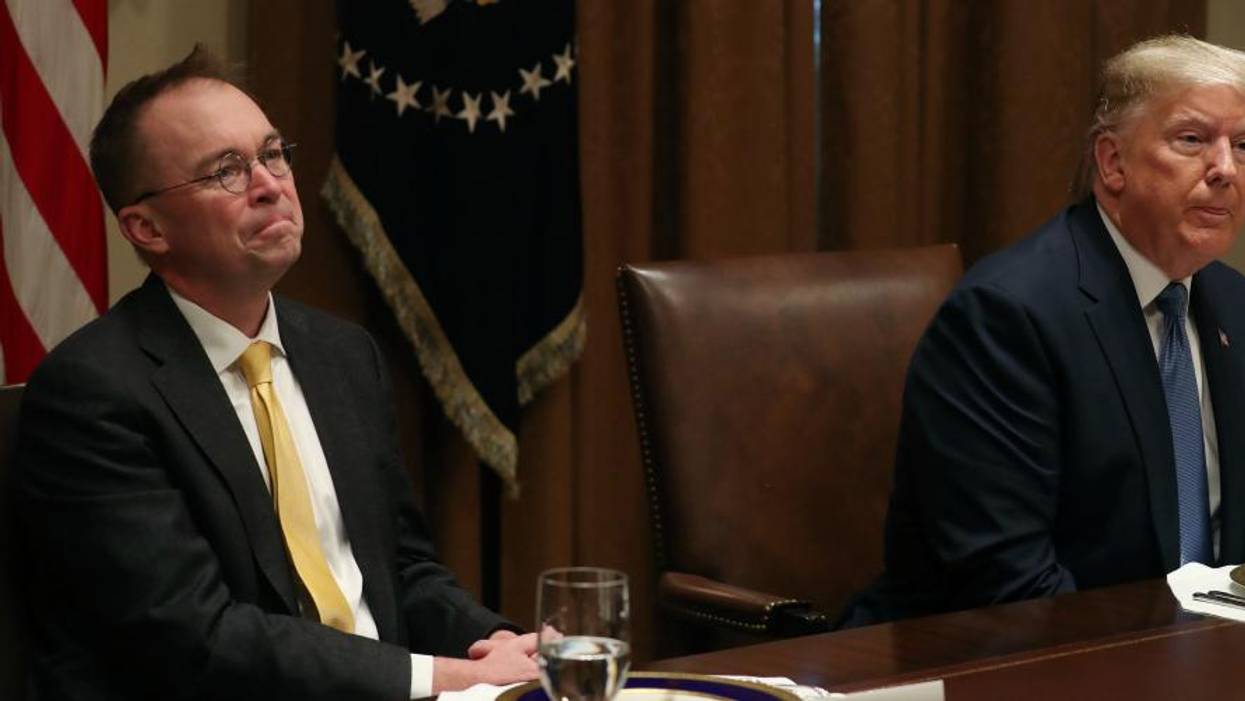
Internal White House emails obtained late Friday night by the Center for Public Integrity showed that a budget official ordered the Pentagon to put a hold on congressionally appropriated military aid to Ukraine--and to keep quiet about the freeze--just 90 minutes after President Donald Trump's infamous July 25 phone call with Ukrainian leader Volodymyr Zelensky.
"The White House treated the suspension of aid as a secret so dangerous that if if were discovered it would be a disaster."
--Paul Waldman, Washington Post
"Given the sensitive nature of the request, I appreciate your keeping that information closely held to those who need to know to execute the direction," Michael Duffey, a Trump-appointed senior official with the Office of Management and Budget (OMB), wrote in a July 25 email to Pentagon Comptroller Elaine McCusker and other Trump administration officials.
The email was just one revelation in the 146 pages of heavily redacted documents obtained by the Center for Public Integrity (CPI) after it won a Freedom of Information Act lawsuit against the Trump administration.
As CPI national security editor R. Jeffrey Smith wrote Friday, U.S. law mandates that "once Congress appropriates funds--like the Ukraine assistance--and the president signs the relevant spending bill, the executive branch must spend those funds."
"A president cannot simply ignore Congress' direction, no matter how inconvenient or unappealing that instruction might be," Smith noted. "If funds are withheld or shifted elsewhere, this cannot be done in secret, and Congress must approve."
Senate Minority Leader Chuck Schumer (D-N.Y.) quickly seized upon the email as further evidence that Duffey, Acting White House Chief of Staff Mick Mulvaney, and other witnesses must testify in Trump's impeachment trial in the Senate.
"What were they hiding?" Schumer, holding a copy of Duffey's email to the Pentagon, asked during a press conference on Sunday. "This email is explosive. A top administration official, one that we've requested, is saying 'stop the aid' 91 minutes after Trump called Zelensky, and said 'keep it hush-hush.' What more do you need to request a witness?"
"If there's nothing wrong with withholding the aid, why didn't Mr. Duffey want anyone to know about what he was doing?" Schumer added. "If this is a perfect conversation, if this is [an] OK action, why are they trying to hush it up?"
Duffey's email was made public just days after the House of Representatives approved two articles of impeachment against Trump, paving the way for a trial in the Republican-controlled Senate.
In a column on Monday, the Washington Post's Paul Waldman argued that the email "directly undermines the justification Trump's defenders have so often offered for holding up the aid: that it was not to coerce Ukraine into helping Trump's reelection campaign but was merely a product of Trump's passionate commitment to fighting corruption (please stop laughing)."
"If that were true, the White House would have wanted to make sure that every relevant official in the government was informed about the suspension of aid and why it was being undertaken," Waldman wrote. "The White House might even have wanted to talk about it publicly. Instead, the White House treated the suspension of aid as a secret so dangerous that if if were discovered it would be a disaster."
"And they were right," added Waldman. "When it finally did become public, the result was the impeachment of the president."