

SUBSCRIBE TO OUR FREE NEWSLETTER
Daily news & progressive opinion—funded by the people, not the corporations—delivered straight to your inbox.
5
#000000
#FFFFFF
To donate by check, phone, or other method, see our More Ways to Give page.
Daily news & progressive opinion—funded by the people, not the corporations—delivered straight to your inbox.
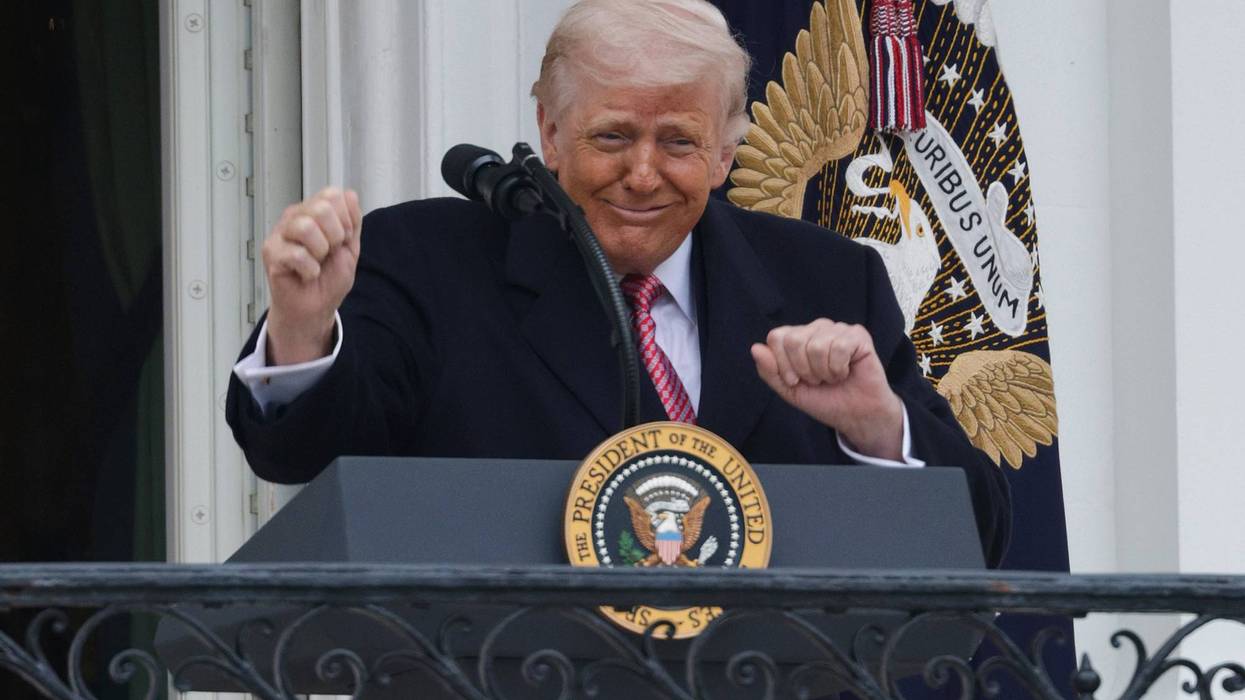
One campaigner urged the administration to "focus on real solutions to support more transparent and diverse supply sources and make targeted investments for the supply of key medicines."
On Thursday, the one-year anniversary of President Donald Trump's so-called Liberation Day, US advocacy groups sounded the alarm about his new tariffs targeting "patented pharmaceuticals and their ingredients under Section 232 of the Trade Expansion Act of 1962 to bolster American national security and public health."
The administration announced a year ago that the US Department of Commerce would conduct a related investigation under that law. The resulting report was recently sent to the president, and although the findings have not been made public, Trump's executive order summarizes key takeaways and Secretary Howard Lutnick's recommended actions.
According to the order, the secretary's recommendations included "continuing to negotiate onshoring agreements related to most favored nation (MFN) pharmaceutical pricing agreements; imposing significant tariffs on pharmaceuticals and pharmaceutical ingredients, so that such imports will not threaten to impair the national security of the United States; and granting preferential treatment to those companies that commit to onshore production of pharmaceuticals and pharmaceutical ingredients."
Citing an unnamed Trump administration official, The Washington Post reported Thursday that "the White House has reached agreements with 13 drugmakers and expects to soon conclude an additional four." As part of these deals, companies are planning to invest at least $400 billion in new US plants.
The Post also pointed out that "some imported drugs will face much lower tariffs under trade deals Trump negotiated with five US trading partners. Goods from the European Union, Japan, South Korea, and Switzerland will face 15% levies, while drugs from the United Kingdom, which was the first to sign a deal with Trump, will be hit with a 10% tariff."
Thanks to Trump's new order, brand-name pharmaceuticals made in other countries could be hit with tariffs as high as 100%.
Merith Basey, CEO of Patients for Affordable Drugs, warned in a statement that "while these tariffs aim to pressure pharmaceutical corporations into US manufacturing and most favored nation agreements, the current MFN deals remain opaque and voluntary, and have not delivered meaningful savings for the vast majority of American patients. There's a real risk these tariffs will drive up costs and create more uncertainty for millions of patients already struggling to afford their medications."
Experts at Public Citizen, another advocacy group that has sued to expose the secretive MFN agreements, were similarly critical.
"By announcing these tariffs without even producing the evidence from the investigation that supposedly justifies them, Trump is continuing his pattern of grabbing headlines by using the word 'tariff' while engaging in secretive ongoing negotiations and opaque exemptions processes that are ripe for corporate corruption," said Public Citizen Global Trade Watch director Melinda St. Louis—who also wrote a broader takedown of Trump's trade policy published Thursday by Common Dreams.
"While strategic tariffs can be used to support domestic manufacturing and good jobs, they must be paired with real public investments and support for workers' rights, which Trump has systematically undermined," she said. "Instead, he's bullying other countries like the UK into paying more for medicines, which will lead to windfall profits for Big Pharma and do nothing to reduce US prices."
Peter Maybarduk, director of Access to Medicines at Public Citizen, stressed that "Trump's tariffs will be either ineffective or harmful for what people need, which is a reliable, plentiful, affordable supply of medicine."
Also taking aim at the "secretive arrangements that allow Trump to claim specious victories on manufacturing and high drug prices," Maybarduk explained that "in reality, many manufacturing commitments claimed under the deals were part of previously planned projects and the drug pricing commitments appear designed to largely spare drug company profits rather than earnestly address affordability concerns."
"Meanwhile the administration has given drugmakers perks like lucrative vouchers to accelerate FDA review of their medicines and a promise from the Trump administration that it will bully other countries into adopting higher prescription drug prices, using tariffs as leverage," he continued, referring to the Food and Drug administration.
"If the administration wants to fix problems like medicines shortages and fragile supply chains," he argued, "it should focus on real solutions to support more transparent and diverse supply sources and make targeted investments for the supply of key medicines."
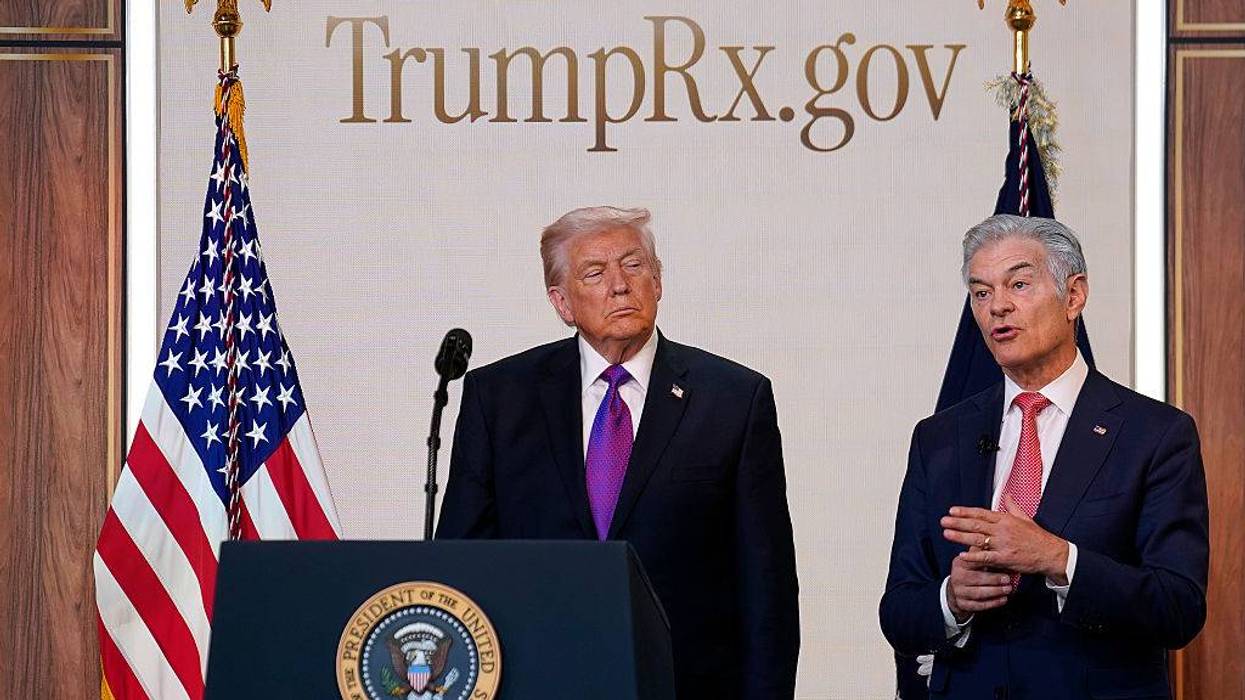
"As they continue to hike prices, the pharmaceutical industry is also working overtime to block reforms that would lower them, and patients are paying the price."
A report released Monday found that Big Pharma has continued raising prices on dozens of cancer drugs, despite President Donald Trump's repeated false claims that he and his administration have slashed drug prices by a mathematically impossible 600%.
The analysis, conducted by Patients for Affordable Drugs, found that pharmaceutical companies increased prices on 64 oncology drugs in the first weeks of 2026, with the vast majority of price hikes coming in above the rate of inflation.
Patients for Affordable Drugs noted the heavy financial toll that paying for treatments takes on US cancer patients, and said the latest price increases would only exacerbate the crisis.
"Cancer drugs are among the most expensive drugs on the market, costing $74,000 more on average than non-cancer drugs," the group explained. "More than 42% of cancer patients in the US fully depleted their savings within two years of diagnosis to cover their care. More than half of Americans with cancer go into debt because of the cost of their care."
Making matters worse, the group added, is that Big Pharma is heavily lobbying Congress to pass legislation that would further delay small molecule drugs, including "widely used, high-cost cancer treatments," from becoming eligible for Medicare price negotiations.
Merith Basey, CEO of Patients for Affordable Drugs, stressed that the latest price increases were unacceptable given that "cancer is a leading cause of death among American seniors, and the treatments patients rely on are already among the most expensive."
"Yet as they continue to hike prices, the pharmaceutical industry is also working overtime to block reforms that would lower them," added Basey, "and patients are paying the price."
While the Patients for Affordable Drugs report focuses on cancer drugs, a December report from Reuters found that at least 350 branded medications are set for price hikes in 2026, including “vaccines against Covid, RSV, and shingles,” as well as the “blockbuster cancer treatment Ibrance.”
The total projected number of drugs seeing price increases in 2026 is significantly higher than in 2025, when 3 Axis Advisors estimated that pharmaceutical companies raised prices on 250 medications. The median price increase for drugs in 2026 is projected at 4%, roughly the same as in 2025.
All of these price increases have come despite Trump's false claims that he has lowered the prices of drugs to the point where pharmaceutical companies would actually be paying patients to take them.
An analysis released last week by the Center for American Progress (CAP) found that the president's TrumpRx initiative, which was created to purportedly offer Americans cheaper prescription drugs, offered genuinely lower prices on "exactly one" of the 54 medications listed on its website.
CAP also found that nearly one-third of the drugs available on the TrumpRx website have generic alternatives that were cheaper than what was being offered, and that the website made no mention of this.
One critic charged that Trump's earlier deals with pharmaceutical companies "just nibble around the margins in terms of what is really driving high prices for prescription drugs in the US."
President Donald Trump in recent months has made ludicrously false claims about his administration slashing prescription drug prices in the US by as much as 600%, which would entail pharmaceutical companies paying people to use their products.
In reality, reported Reuters on Wednesday, drugmakers are planning to raise prices on hundreds of drugs in 2026.
Citing data from healthcare research firm 3 Axis Advisors, Reuters wrote that at least 350 branded medications are set for price hikes next year, including "vaccines against COVID, RSV, and shingles," as well as the "blockbuster cancer treatment Ibrance."
The total projected number of drugs seeing price increases next year is significantly higher than in 2025, when 3 Axis Advisors estimated that pharmaceutical companies raised prices on 250 medications.
The median price increase for drugs next year is projected at 4%, roughly the same as in 2025.
Reuters also found that some of the companies raising prices on their drugs are the same ones who struck deals with Trump to lower the costs of a limited number of prescriptions earlier this year, including Novartis, Pfizer, Boehringer Ingelheim, and GSK.
In announcing the deals with the pharmaceutical companies, Trump declared that "starting next year, American drug prices will come down fast and furious and will soon be the lowest in the developed world."
But Dr. Benjamin Rome, a health policy researcher at Brigham and Women's Hospital in Boston, told Reuters that the projected savings for Americans under the Trump deals are a drop in the bucket compared with the continued price hikes on other drugs.
"These deals are being announced as transformative when, in fact, they really just nibble around the margins in terms of what is really driving high prices for prescription drugs in the US," Rome explained.
Merith Basey, CEO of Patients For Affordable Drugs Now, a patient advocacy organization focused exclusively on lowering the cost of medications, also said she was unimpressed by Trump's deals with drugmakers.
"Voluntary agreements with drug companies—especially when key details remain undisclosed—are no substitute for durable, system-wide reforms," she said earlier this month. "Patients are overwhelmingly calling on Congress to do more to lower prescription drug prices by holding Big Pharma accountable and addressing the root causes of high drug prices, because drugs don’t work if people can’t afford them."
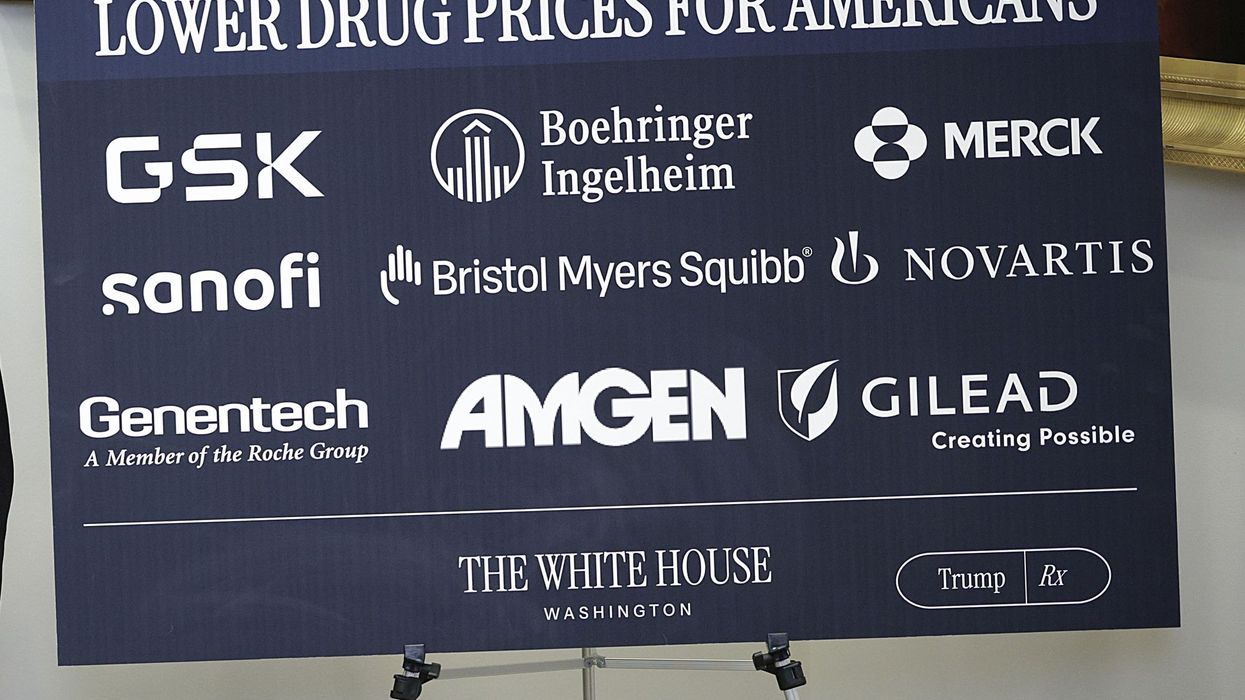
"Patients are overwhelmingly calling on Congress to do more to lower prescription drug prices by holding Big Pharma accountable and addressing the root causes of high drug prices," said one campaigner.
"Starting next year, American drug prices will come down fast and furious and will soon be the lowest in the developed world," President Donald Trump claimed Friday as the White House announced agreements with nine pharmaceutical manufacturers.
The administration struck most favored nation (MFN) pricing deals with Amgen, Bristol Myers Squibb, Boehringer Ingelheim, Genentech, Gilead Sciences, GSK, Merck, Novartis, and Sanofi. The president—who has launched the related TrumpRx.gov—previously reached agreements with AstraZeneca, EMD Serono, Eli Lilly, Novo Nordisk, and Pfizer.
"The White House said it has made MFN deals with 14 of the 17 biggest drug manufacturers in the world," CBS News noted Friday. "The three drugmakers that were not part of the announcement are AbbVie, Johnson & Johnson, and Regeneron, but the president said that deals involving the remaining three could be announced at another time."
However, as Trump and congressional Republicans move to kick millions of Americans off of Medicaid and potentially leave millions more uninsured because they can't afford skyrocketing premiums for Affordable Care Act (ACA) plans, some critics suggested that the new drug deals with Big Pharma are far from enough.
"When 47% of Americans are concerned they won't be able to afford a healthcare cost next year, steps to reduce drug prices for patients are welcomed, especially by patients who rely on one of the overpriced essential medicines named in today's announcement," said Merith Basey, CEO of Patients for Affordable Drugs Now, in a statement.
"But voluntary agreements with drug companies—especially when key details remain undisclosed—are no substitute for durable, system-wide reforms," Basey stressed. "Patients are overwhelmingly calling on Congress to do more to lower prescription drug prices by holding Big Pharma accountable and addressing the root causes of high drug prices, because drugs don't work if people can't afford them."
As the New York Times reported Friday:
Drugs that will be made available in this way include Amgen's Repatha, for lowering cholesterol, at $239 a month; GSK's asthma inhaler, Advair Diskus, at $89 a month; and Merck's diabetes medication Januvia, at $100 a month.
Many of these drugs are nearing the end of their patent protection, meaning that the arrival of low-cost generic competition would soon have prompted manufacturers to lower their prices.
In other cases, the direct-buy offerings are very expensive and out of reach for most Americans.
For example, Gilead will offer Epclusa, a three-month regimen of pills that cures hepatitis C, for $2,492 a month on the site. Most patients pay far less using insurance or with help from patient assistance programs. Gilead says on its website that "typically a person taking Epclusa pays between $0 and $5 per month" with commercial insurance or Medicare.
While medication prices are a concern for Americans who face rising costs for everything from groceries to utility bills, the outcome of the ongoing battle on Capitol Hill over ACA tax credits—which are set to expire at the end of the year—is expected to determine how many people can even afford to buy health insurance for next year.
The ACA subsidies fight—which Republicans in the US House of Representatives ignored in the bill they passed this week before leaving Capitol Hill early—has renewed calls for transitioning the United States from its current for-profit healthcare system to Medicare for All.
"At the heart of our healthcare crisis is one simple truth: Corporations have too much power over our lives," Rep. Pramila Jayapal (D-Wash.), former chair of the Congressional Progressive Caucus, said on social media Friday. "Medicare for All is how we take our power back and build a system that puts people over profits."
Jayapal reintroduced the Medicare for All Act in April with Rep. Debbie Dingell (D-Mich.) and Senate Health, Education, Labor, and Pensions Committee Ranking Member Bernie Sanders (I-Vt.). The senator said Friday that some of his top priorities in 2026 will be campaign finance reform, income and wealth inequality, the rapid deployment of artificial intelligence, and Medicare for All.
Earlier this month, another backer of that bill, US Sen. Chris Van Hollen (D-Md.), said: "We must stop tinkering around the edges of a broken healthcare system. Yes, let's extend the ACA tax credits to prevent a huge spike in healthcare costs for millions. Then, let's finally create a system that puts your health over corporate profits. We need Medicare for All."
It's not just progressives in Congress demanding that kind of transformation. According to Data for Progress polling results released late last month, 65% of likely US voters—including 78% of Democrats, 71% of Independents, and 49% of Republicans—either strongly or somewhat support "creating a national health insurance program, sometimes called 'Medicare for All.'"
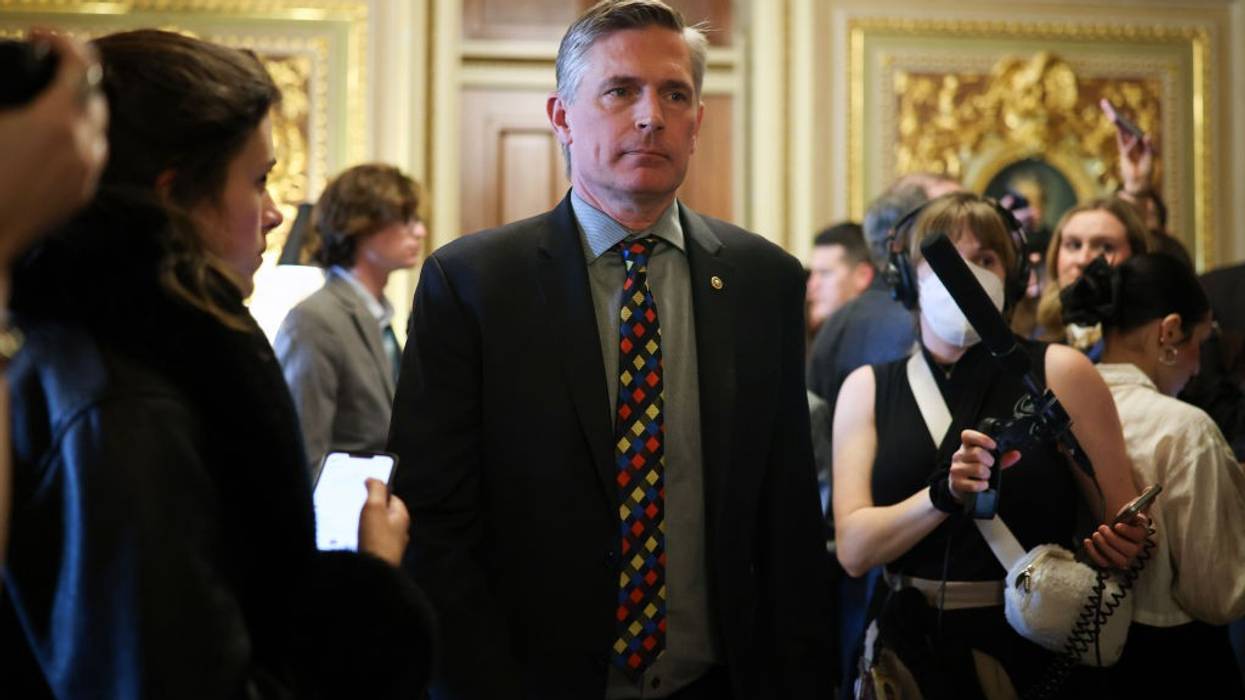
The provision, part of the Senate budget bill, was described as "a blatant giveaway to the pharmaceutical industry that would keep drug prices high for patients while draining $5 billion in taxpayer dollars."
The deep-pocketed and powerful pharmaceutical industry notched a significant victory on Monday when the Senate parliamentarian ruled that a bill described by critics as a handout to drug corporations can be included in the Republican reconciliation package, which could become law as soon as this week.
The legislation, titled the Optimizing Research Progress Hope and New (ORPHAN) Cures Act, would exempt drugs that treat more than one rare disease from Medicare's drug-price negotiation program, allowing pharmaceutical companies to charge exorbitant prices for life-saving medications in a purported effort to encourage innovation. (Medications developed to treat rare diseases are known as "orphan drugs.")
The consumer advocacy group Public Citizen observed that if the legislation were already in effect, Medicare "would have been barred from negotiating lower prices for important treatments like cancer drugs Imbruvica, Calquence, and Pomalyst."
Among the bill's leading supporters is Sen. Martin Heinrich (D-N.M.), whose spokesperson announced the parliamentarian's decision to allow the measure in the reconciliation package after previously advising that it be excluded. Heinrich is listed as the legislation's only co-sponsor in the Senate, alongside lead sponsor Sen. John Barrasso (R-Wyo.).
"Sen. Heinrich should be ashamed of prioritizing drug corporation profits over lower medicine prices for seniors and people with disabilities," Steve Knievel, access to medicines advocate at Public Citizen, said in a statement Monday. "Patients and consumers breathed a sigh of relief when the Senate parliamentarian stripped the proposal from Republicans' Big Ugly Betrayal, so it comes as a gut punch to hear that Sen. Heinrich welcomed the reversal and continued to champion a proposal that will transfer billions from taxpayers to Big Pharma."
"People across the country are demanding lower drug prices and for Medicare drug price negotiations to be expanded, not restricted," Knievel added. "Sen. Heinrich should apologize to his constituents and start listening to them instead of drug corporation lobbyists."
The Biotechnology Innovation Organization, a lobbying group whose members include pharmaceutical companies, has publicly endorsed and promoted the legislation, urging lawmakers to pass it "as soon as possible."
"This is a blatant giveaway to the pharmaceutical industry that would keep drug prices high for patients."
The nonpartisan Congressional Budget Office has estimated that the ORPHAN Cures Act would cost U.S. taxpayers around $5 billion over the next decade.
Merith Basey, executive director of Patients For Affordable Drugs Now, said that "patients are infuriated to see the Senate cave to Big Pharma by reviving the ORPHAN Cures Act at the eleventh hour."
"This is a blatant giveaway to the pharmaceutical industry that would keep drug prices high for patients while draining $5 billion in taxpayer dollars," said Basey. "We call on lawmakers to remove this unnecessary provision immediately and stand with an overwhelming majority of Americans who want the Medicare Negotiation program to go further. Medicare negotiation will deliver huge savings for seniors and taxpayers; this bill would undermine that progress."
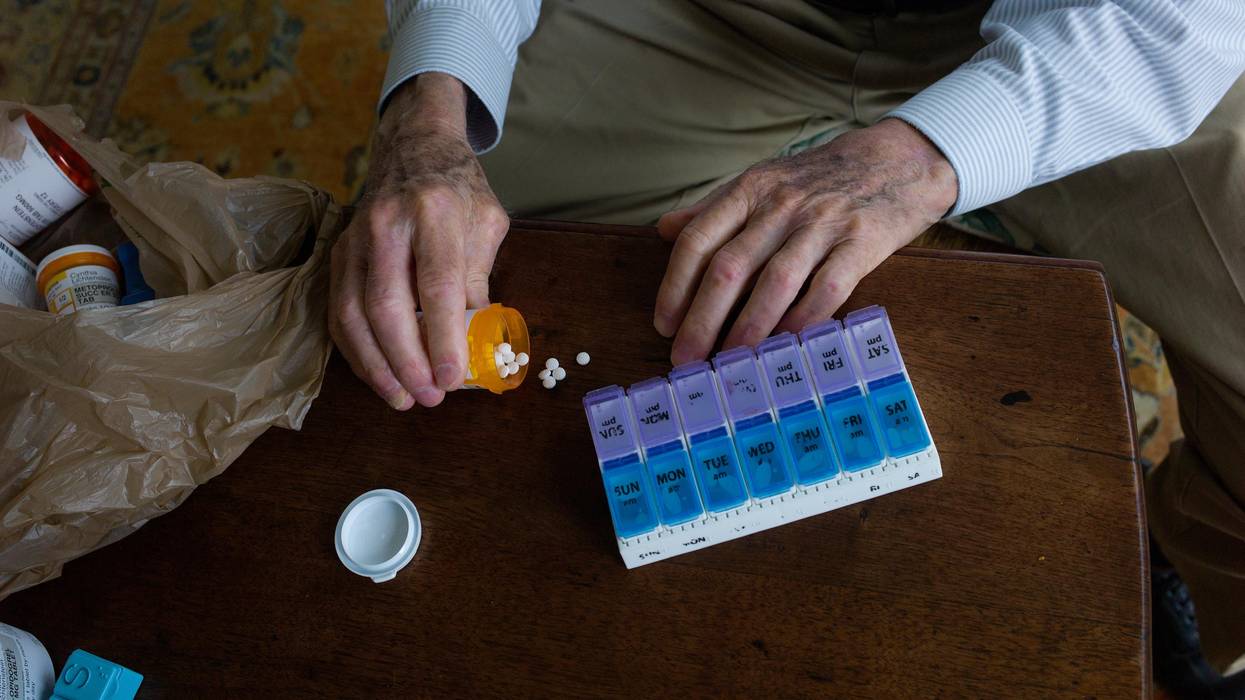
"Elected officials who align themselves with this unpopular and greedy industry, against the will of voters, do so at their own political risk," said one patient advocate.
Republican lawmakers who support Big Pharma's efforts to block Medicare from negotiating for lower drug prices do so at their own peril, said an advocacy group Tuesday as it released polling data that shows the U.S. public overwhelmingly opposes drug companies' scheme.
Along with Hart Research Associates and GS Strategy Group, Patients for Affordable Drugs Now (P4ADNOW) polled 1,000 likely voters from August 23-27 and found that respondents opposed the numerous lawsuits the pharmaceutical industry has filed to block implementation of the Inflation Reduction Act's provision allowing Medicare to negotiate.
Seventy-two percent of voters said the law should be implemented, and 77% said they didn't believe the industry's claim that it's suing because of concerns about the provision's constitutionality—saying they think companies are only concerned it will reduce their profits, which reached a combined $110 billion last year for the eight largest pharma firms.
"The American people understand the lawsuits to block lower drug prices through Medicare negotiation are not about looking after the best interests of patients and consumers, but about the industry seeking to restore its unilateral power to dictate prices of brand name drugs without limits in the United States," said David Mitchell, founder of P4ADNOW. "The lawsuits are a naked assault against the will of the American people, and we stand with the people."
Ninety percent of respondents said lowering drug prices should be an important or a top priority for Congress, and 53% said they had an unfavorable view of drug companies after learning of the lawsuits they have filed against the Biden administration. Eighty-four percent supported allowing Medicare to negotiate directly with drug companies to lower costs for patients.
The poll was released less than a month after the Biden administration announced the first 10 prescriptions that will be subject to the negotiations, drawing applause from Democratic lawmakers and patient advocates.
Republicans such as Sens. Marsha Blackburn of Tennessee and Mike Crapo of Idaho—who received a combined $468,900 in campaign donations from pharma companies and their political action committees from 2017-22—have joined the industry in attacking the law, claiming it will "stunt the development of lifesaving treatments and cures," as Blackburn said last month.
Only 18% of voters included in the poll agreed that the law will harm research and development in the industry, while 67% believed drug companies will still be able to make huge profits and find new treatments and cures for diseases.
"Efforts in Congress to undermine implementation of the Inflation Reduction Act fly in the face of the wishes of the overwhelming majority of voters—84% of whom support the law, including 93% of Democrats, 78% of independents and 80% of Republicans," said Mitchell. "Elected officials who align themselves with this unpopular and greedy industry, against the will of voters, do so at their own political risk."
Merith Basey, executive director of P4ADNOW, noted that pharmaceutical companies draw huge profits in other high-income countries, despite the fact that they negotiate drug prices with federal agencies working on behalf of patients.
"Those nations have better health outcomes, longer life expectancy, and for lower cost," said Basey. "It's in the United States that the drug industry seeks to fleece patients with unlimited pricing power."

"It is vital that affordable insulin access is provided to everyone, including those who do not have insurance," wrote healthcare advocates.
More than three dozen healthcare and consumer advocacy groups on Monday applauded recently passed legislation to expand access to lifesaving insulin—but with more than a million people in the U.S. still forced to ration the diabetes treatment due to skyrocketing costs, the groups said U.S. Senate Majority Leader Chuck Schumer must take further action to ensure no more Americans risk their health, or even die, due to insulin prices.
With the Senate expected to advance a packages that will address high drug prices, groups including Public Citizen, Metro New York Health Care for All, and Patients for Affordable Drugs told the Democratic leader, who represents New York, that any legislation must pass "the Alec Smith test."
Alec Smith died at the age of 26, less than a month after he aged out of his parents' insurance plan. He made just enough money to not qualify for any insurance subsidies or patient assistance programs and so was forced to pay for insulin for his Type 1 diabetes out of pocket—$1,300 per month. Unable to afford the medication on top of housing costs, bills, and other essentials, Smith rationed his insulin supply and died of ketoacidosis in 2017.
"Any insulin legislation that would not have prevented this tragedy fails the Alec Smith test," wrote the groups. "It is vital that affordable insulin access is provided to everyone, including those who do not have insurance, in addition to those who are privately insured."
"Insulin legislation advanced through the Senate should put an end to perverse arrangements between drug corporations and middlemen that stifle potential savings from lower-priced insulins and put patients' lives at risk."
The groups said the legislation must include three key elements, including:
"Insulin legislation advanced through the Senate should put an end to perverse arrangements between drug corporations and middlemen that stifle potential savings from lower-priced insulins and put patients' lives at risk," they added.
The organizations credited the Democratic Party with passing medication price reforms in the Inflation Reduction Act and the American Rescue Plan, guaranteeing access to insulin for Medicare recipients for no more than $35 per month and lifting a cap on Medicaid rebates.
A recent study published in the Annals of Internal Medicine, however, showed that 1.3 million people in the U.S. are still forced to ration insulin, including 29.2% of people without insurance and nearly 20% of those with private insurance.
"Hopefully soon, some of these patients will feel improvements in access and pricing due the policies that have been enacted," wrote the groups, "but many require further relief—the Senate's work is far from complete."

"Cancer patients—the majority of whom are on Medicare—can face annual out-of-pocket costs of more than $16,500."
Major pharmaceutical companies are
profiting immensely from the second-leading cause of death in the United States by saddling cancer patients with tens of thousands of dollars in out-of-pocket costs, often forcing them to choose between treatment and other basic necessities.
But many people living with cancer in the U.S. will soon see long-overdue relief thanks to provisions of the Inflation Reduction Act (IRA), a law that the pharmaceutical industry lobbied aggressively against and is still fighting tooth and nail.
According to a report published Wednesday by Patients for Affordable Drugs, cancer patients will benefit substantially from the IRA's $2,000 cap on annual out-of-pocket medicine spending for Medicare Part D enrollees—a limit that's set to take effect in 2025.
Of the nearly 62,000 people on traditional Medicare who receive a brand-name cancer drug through Medicare Part D, 99% will see savings from the out-of-pocket spending cap, said Patients for Affordable Drugs, which partnered with the National Opinion Research Center (NORC) at the University of Chicago on the new analysis.
On average, that population will see savings of more than $7,500 once the spending cap is in place in 2025. Some will see savings of over $19,000 in 2025.
"To afford it, I have fundraised, searched for grants, sold furniture and my husband's truck, and zeroed out our savings."
The coming savings highlight the extent to which cancer patients and the Medicare program are currently being gouged by cancer drug manufacturers, which often raise prices on their products annually after developing them with government support.
"Between 2017 and 2021, the average initial price of a new Part D cancer drug rose by more than 25% to over $235,000 yearly when adjusted for inflation," Patients for Affordable Drugs noted in its new report, citing a recent investigation by Rep. Katie Porter's (D-Calif.) office. "Pharmaceutical companies then raise the prices on these drugs year after year."
David Mitchell, the founder of Patients for Affordable Drugs and a blood cancer patient whose medications come with a list price of more than $900,000 a year, said in a statement Wednesday that "cancer patients—the majority of whom are on Medicare—can face annual out-of-pocket costs of more than $16,500."
"The historic Inflation Reduction Act includes policies that will bring needed relief to millions of patients, especially older Americans with cancer," said Mitchell. "We've been waiting for this relief for far too long."
The new report spotlights several high-priced brand-name cancer medications sold by Pfizer, Bristol Myers Squibb (BMS), Johnson & Johnson, and other major pharmaceutical companies.
Pfizer has hiked the price of Ibrance, a breast cancer medication, every year since it came to market in 2015. Today, the list price is "more than $15,000 per bottle," Patients for Affordable Drugs observed.
"Celgene/BMS has almost tripled the price of Revlimid—a drug to treat multiple myeloma—since it came to market in 2006," the group added. "Despite being on the market for more than 15 years, the drug remains one of the best-selling products in the world. Much of these sales are paid for by taxpayers, with Medicare Part D spending over $5.8 billion on the drug in 2021 for 45,601 beneficiaries."
Jackie Trapp, a multiple myeloma patient in Wisconsin, told Patients for Affordable Drugs that Revlimid costs her "$20,000 each year on Medicare."
"To afford it, I have fundraised, searched for grants, sold furniture and my husband's truck, and zeroed out our savings," she said. "The price of Revlimid has had real impacts on my husband and my quality of life. It is already unfair that I am likely to leave my husband all alone sooner than I would like, but now I fear of leaving him bankrupt as well."
Trapp's case is hardly an outlier.
A recent American Cancer Society Cancer Action Network survey of 1,218 cancer patients and survivors found that "more than 70% of respondents said they made significant lifestyle changes in order to afford care, including delaying major purchases (36%), depleting most or all of their savings (28%), going into more credit card debt (28%), and borrowing money from relatives and friends (20%)."
Trapp said the $2,000 out-of-pocket spending cap "will be huge," helping "bring me and my husband peace of mind, knowing that my portion of my sky-high drug prices will be lower than it is now and that we'd have a reasonable limit if I lost my grant."
The new report comes as the Biden administration is facing pressure to build on the Inflation Reduction Act, which will also require Medicare to negotiate the prices of a small number of high-cost prescription drugs.
Merck, whose cancer drug Keytruda carries an annual list price of $175,000, sued the Biden administration last week in an attempt to block the price negotiation provision.
Patients for Affordable Drugs pointed out that Keytruda and Revlimid are in the top ten drugs for U.S. sales in 2021 and their manufacturers have applied for more than 180 patents on each drug."
"Research shows that when drug corporations amass dozens of patents, competition from lower-priced generics and biosimilars is delayed, leaving patients and taxpayers footing the bill for billions in unjust profits," the group said. "Fortunately, there are bills in the 118th Congress that crack down on abuse of the patent and regulatory system. If these bills become law, they will enable more affordable drugs to come to market more quickly, providing relief for patients struggling to pay for overpriced medications."
Rep. Pramila Jayapal (D-Wash.) and Sen. Elizabeth Warren (D-Mass.) have also outlined steps the United States Patent and Trademark Office can take immediately and unilaterally to curb abuses of the patent system.
"For decades," the lawmakers wrote in April, "powerful pharmaceutical companies and other large corporate actors have repeatedly abused the patent system to stifle competition and prolong their market power, showing no regard for the harm done to patients through sustained high prices."
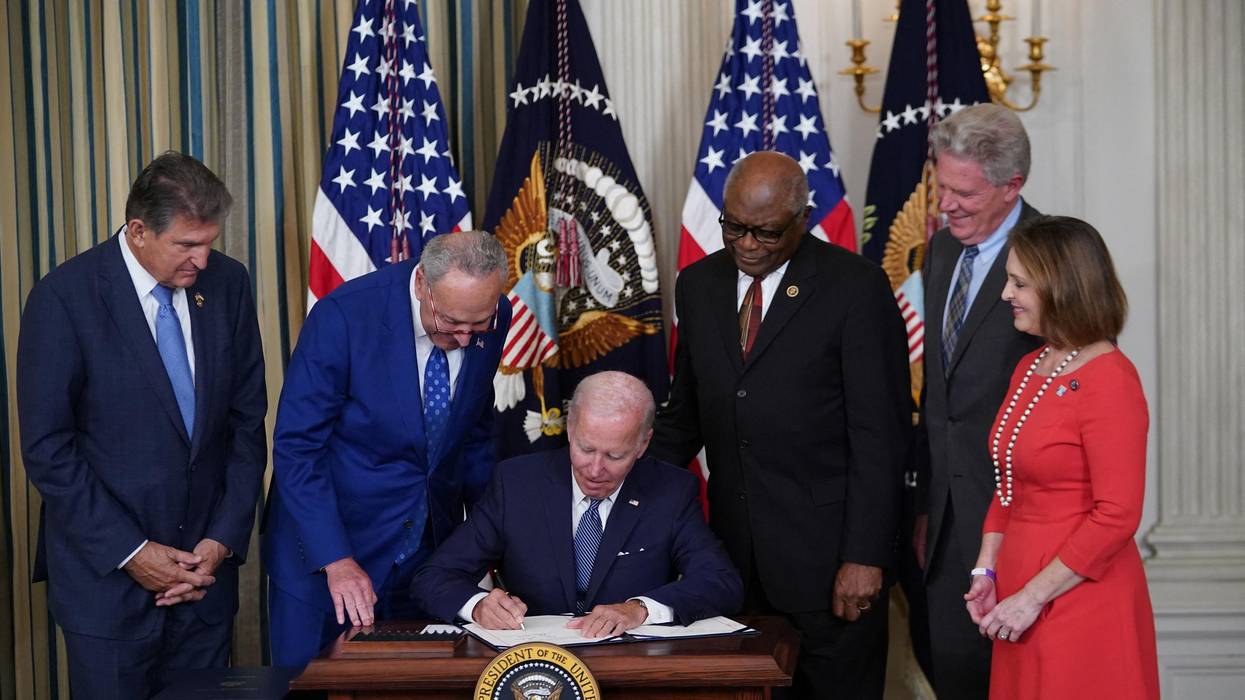
Economic and climate justice groups on Tuesday applauded as U.S. President Joe Biden signed into law the Inflation Reduction Act, with advocates hailing the $740 billion investment in climate action, corporate tax reform, and healthcare as "landmark legislation" while they pledged to continue working to secure more ambitious reforms.
"It's law," Biden said as he signed the IRA, which includes a historic investment of $370 billion to expand renewable energy infrastructure, caps prescription drug costs for senior citizens, and pays for badly needed reforms by raising taxes on corporations.
As the bill was signed more than a year after Biden's original proposal for the Build Back Better Act, Rep. Cori Bush (D-Mo.) said the IRA "is a reminder that we must never stop fighting to address the climate crisis--because our planet and future is at stake."
"This bill is the biggest step forward on climate ever," Biden told the crowd gathered at the White House for the signing.
"More attention is still needed to address provisions included in the bill that could perpetuate harms communities face from fossil fuel pollution."
Lisa Frank of Environment America's Washington legislative office applauded the president and the Democratic Party for taking a "huge step" toward reducing U.S. carbon emissions.
The law is "a start to, not the culmination of, our work to reduce global warming pollution and ensure clean air, clean water, and the preservation of open spaces," said Frank.
Union of Concerned Scientists president Johanna Chao Kreilick said that by offering tax credits and rebates for the use of renewable energy sources and creating an estimated nine million jobs over the next decade, the IRA "marks a win for future generations who deserve our best efforts to secure a safer and healthier world."
"More attention is still needed to address provisions included in the bill that could perpetuate harms communities face from fossil fuel pollution," she added. "The administration must follow up today's signing with strong environmental and public health rules that will help speed the transition to clean energy and reduce pollution that especially harms Black, Brown, Indigenous, and low-income communities."
"Today's bill signing marks a success--one that we must build on in the months and years to come," Kreilick said.
Varshini Prakash, executive director of the Sunrise Movement, called the law "a forced compromise between corporate oil lobbyists and young people who are fighting for a livable future," noting the IRA's continuation of oil and gas lease sales "is unacceptable, and will hurt the predominantly Black, Brown, and poor communities on the frontlines of extraction."
The group--led by young climate activists--also gave credit to campaigners who have pushed the Democratic Party to embrace the Green New Deal and adopt ambitious climate action.
"Today, it's clear that young people have organized the impossible into existence," Prakash said, noting that activists and Rep. Alexandria Ocasio-Cortez (D-N.Y.) sat in the office of House Speaker Nancy Pelosi (D-Calif.) "in 2018 to make climate action a political priority."
"We pushed until 23 out of 25 Democratic presidential candidates endorsed the Green New Deal--and until they understood climate and jobs were inextricably tied," she continued. "We helped inspire record youth turnout after helping Biden write a more ambitious climate plan. And in 2021, we never let lawmakers forget they had an obligation to deliver climate legislation."
"Simply put, the movement for a Green New Deal created the conditions to make Biden's agenda and this climate investment possible," Prakash added. "Without the Green New Deal, there is no IRA."
Other advocates hailed IRA provisions requiring Medicare to negotiate lower prescription drug prices, limiting out-of-pocket insulin costs to $35 per month for Medicare beneficiaries, making all adult vaccines free for program enrollees, and capping out-of-pocket prescription medication costs at $2,000 per year for Medicare Part D.
"President Biden, along with Democrats in the Senate and House, fulfilled their promises to the American people by standing firm in the face of assaults from Big Pharma and passing unprecedented reforms," said David Mitchell, a cancer patient and founder of Patients for Affordable Drugs Now. "As a result, they have changed the trajectory of drug pricing in the United States."
"Patient advocates across the country who shared their personal experiences of the burden of high drug prices made this monumental victory possible," Mitchell added. "We are humbled and energized by patient advocates' power to move the will of Congress. Our work to ensure all patients can afford the medications they need will continue."
The IRA provision allowing Medicare to negotiate prescription drug costs could result in lower prices for five to seven million Medicare recipients, according to the Alliance for Retired Americans.
Alliance president Robert Roach Jr. said in a statement that "this victory for older Americans is especially sweet because it shows seniors defeating the pharmaceutical industry. Fortunately, the efforts of 4.4 million alliance members and our allies overcame the efforts of the 1,600 lobbyists the pharmaceutical corporations employed in 2021."
Richard Fiesta, the group's executive director, added that activists "have been fighting to allow Medicare to negotiate lower prescription drug prices for two decades. Our members first took bus trips to Canada to obtain more affordable medications as far back as 2002."
Economic justice group Patriotic Millionaires praised the bill's provisions imposing taxes on corporate stock buybacks and other minimum taxes on large companies, as well as increased funding to hold wealthy tax dodgers accountable.
"The vast majority of working Americans pay every cent they owe in federal taxes--it's time for wealthy criminal tax evaders to do the same," said Morris Pearl, chair of the group. "The American people are tired of doing their part daily to keep this country running while criminal tax evaders and corporate tax cheats pay nothing. The rich are required to pay the bare minimum back to the society responsible for their success, and the IRA will make them do just that."
This post has been updated with additional details about the law and comments from multiple groups.