

SUBSCRIBE TO OUR FREE NEWSLETTER
Daily news & progressive opinion—funded by the people, not the corporations—delivered straight to your inbox.
5
#000000
#FFFFFF
To donate by check, phone, or other method, see our More Ways to Give page.
Daily news & progressive opinion—funded by the people, not the corporations—delivered straight to your inbox.
AIUSA media office
202-544-0200 x302
Amnesty International today
called on the government of the U.K. to give the lawyers for Binyam Mohamed,
a former U.K. resident imprisoned at Guantanamo Bay, information which
it holds and which might help him to show that he has been a victim of
torture and other ill-treatment in the U.S.-led program of renditions and
secret detention.
"Providing this information would be
a first step towards accountability for the U.K.'s involvement in the U.S.
program of rendition and secret detention, as well as in the torture and
other ill-treatment of terrorist suspects," said Halya Gowan, a spokesperson
on Europe at Amnesty International.
Binyam Mohamed was arrested at Karachi airport
in April 2002 and transferred to U.S. custody three months later. In July
2002, he was transferred on a Central Intelligence Agency (CIA)-registered
plane to Morocco, where he was held for about 18 months. There, Binyam
Mohamed reports he was tortured, including having his penis cut by a razor
blade. He was allegedly subjected to further torture after his further
rendition to the "dark prison" in Kabul, Afghanistan, in January
2004. After five months, he was transferred to the U.S. airbase in Bagram,
and suffered further alleged ill-treatment there. Binyam was transferred
in mid-September 2004 to Guantanamo where he has remained ever since.
"Statements that Binyam Mohamed made
in the course of his unlawful detention will form the basis of charges
against him if he is tried before a military commission at Guantanamo Bay
- a trial which would be unfair, and could involve charges which could
be punishable by death. Any information the U.K. authorities have which
relates to violations of his human rights or could affect Binyam Mohamed's
defense should be disclosed to his lawyers without any further delay,"
said Gowan.
Following last week's ruling by the High
Court of England and Wales, that the United Kingdom has a duty to disclose
this information to lawyers for Binyam Mohamed, today the High Court postponed
its decision on an application made by the U.K. Foreign Secretary to be
allowed to withhold this information. The Foreign Secretary claimed that
its disclosure would damage the U.K.'s intelligence-sharing arrangements
with the United States, and thus threaten the United Kingdom's national
security. The Foreign Secretary has been given another week to provide
the court with a fuller explanation for continuing to withhold this information.
Binyam Mohamed's lawyers need the information
now, before a decision is taken about whether he should be tried by a military
commission in the United States. It is essential to their claim that the
information on which the charges against him are based was improperly obtained.
Recent revelations of secret detainee transfers
through Diego Garcia, and around the Untied Kingdom's involvement in the
rendition and secret detention of U.K .residents Bisher al-Rawi and Jamil
el-Banna, show that the United Kingdom can no longer hide its involvement
in these human rights violations.
"Secrecy with the excuse of protecting
diplomatic relations can no longer be used to justify the failure to investigate
the involvement of U.K. agents in human rights violations," Gowan
said.
Amnesty International calls on the U.K. authorities
to immediately instigate a genuinely independent and impartial public inquiry
into all allegations of U.K. involvement in the renditions program.
BACKGROUND
Binyam Mohamed, an Ethiopian national, claims
that he was subjected to torture and other ill-treatment in Pakistan, Morocco,
Afghanistan and Guantanamo. The detainee claims that statements he made--which,
as the High Court affirmed, will form the basis of evidence against him
if he is tried by a military commission -were the products of his unlawful
detention, torture and ill-treatment.
In August 2007, after a sustained campaign
by human rights activists and lawyers in the United Kingdom, the U.K. government
requested the release from Guantanamo Bay a number of former U.K. residents,
including Binyam Mohamed. Although three men were returned in December
2007, the U.S. authorities refused the request for the release and return
of Binyam Mohamed. The U.K. authorities say that they are continuing to
request the release and return of Binyam Mohamed.
The U.K. government has disclosed the information
that it holds about Binyam Mohamed to the U.S. authorities; and the U.S.
authorities have given the U.K. a promise that this information will be
given to Binyam Mohamed's military lawyer in the event that his case should
be sent for trial before a military commission. But to date neither the
United Kingdom nor the United States has disclosed that information--relevant
to the rendition of Binyam Mohamed and his subsequent treatment in detention--to
his lawyers.
Amnesty International believes that the military
commission procedures at Guantanamo Bay are fundamentally unfair, and has
called for the military commission system to be abandoned, and for all
those still held at Guantanamo Bay to be released or given a genuinely
fair trial before federal civilian courts without delay.
For more information, please visit Amnesty
International's website at www.amnestyusa.org
or contact the AIUSA media office.
Amnesty International is a global movement of millions of people demanding human rights for all people - no matter who they are or where they are. We are the world's largest grassroots human rights organization.
(212) 807-8400
"Drug suspects should be arrested and prosecuted, not summarily executed," a human rights expert said.
The Trump administration continued its illegal bombing of small boats in the Caribbean and eastern Pacific on Friday, killing two and leaving one survivor in its third such strike in five days.
US Southern Command announced the attack on social media, claiming that "intelligence confirmed the vessel was transiting along known narco-trafficking routes in the Eastern Pacific and was engaged in narco-trafficking operations."
"Under [President Donald] Trump's illegal orders, the US military conducted its third boat strike in five days against supposed drug smugglers, killing at least two. Each of these is a murder. Drug suspects should be arrested and prosecuted, not summarily executed," former Human Rights Watch executive director Kenneth Roth wrote on social media Saturday in response to the news.
Friday's strike marks the 57th by the Trump administration and raises the death toll from the boat-strike campaign, which experts say is illegal even if every boat targeted is ferrying drugs, to 192.
"Really absurdly, there’s been no impact on flows of drugs toward the United States."
"What do you call a US citizen who smuggles drugs, SOUTHCOM? A 'narco-terrorist'?" social media user Andrew Marinelli said in response to the Southern Command announcement. "If a US citizen [allegedly] drove drugs into Canada and they blew him away with a drone strike, would you accept it?"
The administration has also not provided evidence for its claims that the boats belong to drug traffickers, and relatives of the victims say at least some of those killed were simply on the water to fish.
Friday's strike was notable in that it left behind a survivor and that US Southern Command said it had activated the US Coast Guard to conduct a search and rescue operation.
The announcement may reflect a response to backlash after news broke last year that, in the administration's first such strike, commanders had ordered a vessel bombed twice when it became clear there were survivors, in keeping with Pentagon chief Pete Hegseth's directive to "kill everybody."
Despite scrutiny, the campaign has continued and even escalated in the past few weeks. There have been three such bombings since the beginning of May, according to The Intercept: One on May 4 in the Caribbean that killed two, one on May 5 in the Pacific that killed three, and the Pacific strike on May 8 that killed two. The reported survivor remains missing.
While the Trump administration claims the strikes have dramatically reduced the flow of illegal drugs into the US, evidence reveals this is not the case, according to an Intercept analysis published May 4.
For example, Trump claimed that drugs entering the US by sea had decreased by 97%, but the administration's own data contradicts this claim, retired Rear Adm. William Baumgartner told The Intercept.
Adam Isacson, the director for defense oversight at human rights group Washington Office on Latin America, said, "Really absurdly, there’s been no impact on flows of drugs toward the United States,” noting that Customs and Border Protection seized 6,000 pounds more cocaine at all US borders in the seven months following the strikes than in the seven months before.
As Sanho Tree, who directs the Institute for Policy Studies' Drug Policy Project, put it, "It wouldn’t be the first time this administration just made up something out of whole cloth."
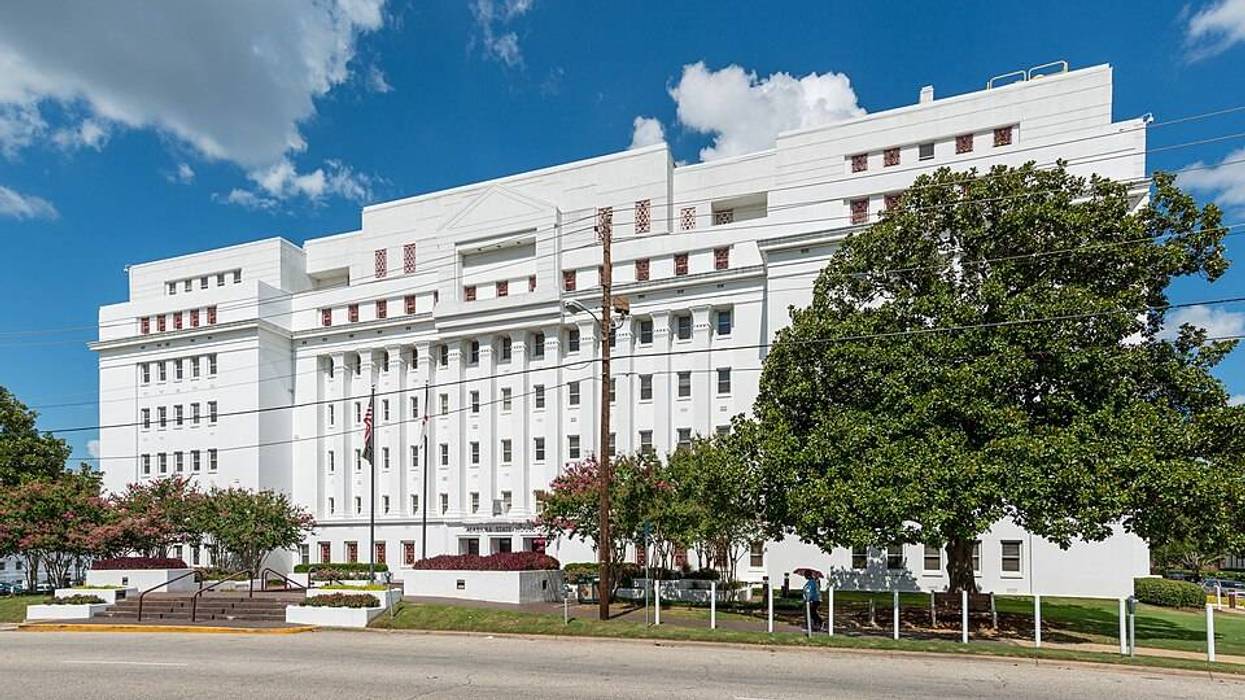
"Across the South, states are rushing to suppress Black voting power now that they mistakenly believe they can get away with it," one advocate said.
In the latest fallout from the Supreme Court's further weakening of the Voting Rights Act in Louisiana v. Callais on April 29, Alabama and South Carolina on Friday both took steps to further gerrymandering plans that would reduce representation for Black and Democratic voters in their states.
Alabama Gov. Kay Ivey signed legislation on Friday that would ignore the results of May 19 primaries and hold a new election if federal courts agree to rescind the creation of a second near-Black majority congressional district in the state.
At the same time, the South Carolina legislature held a meeting to consider creating new maps that could grant the Republican Party the chance to win all of the state's seven seats in the US House of Representatives by redrawing the state's only majority-Black district.
“I was out there in 1965 marching for the right to vote, and now we are back here in 2026 doing the same thing,” Betty White Boynton, who joined a protest outside the Alabama Statehouse on Friday, told The Associated Press.
“What happened here today is that we were set back as a people to the days of Reconstruction.”
The moves, with risk eroding the gains of the civil rights movement, also come in the midst of a redistricting battle set off when President Donald Trump called on GOP-led states to redraw their maps to help his party retain control of the House in the 2026 midterm elections
In Alabama, the Supreme Court case Allen v. Milligan led to the creation of a second district with close to a Black majority and the election of Democratic Rep. Shomari Figures. The new map would leave Black voters with a chance to elect a representative in just 1 of the state's 7 districts, despite the fact that they make up 30% of the population.
“Despite remaining under a court order that bars Alabama from redrawing its congressional map and that voters have already cast ballots in the state’s congressional primary elections, Alabama Republicans are desperately and shamelessly moving to pave the way for reversion to a map that robs Black voters of equal access to representation in the US House," John Bisognano, president of the National Democratic Redistricting Committee, said in a statement.
Bisognano continued: "What is happening in Alabama is not happening in a vacuum. Across the South, states are rushing to suppress Black voting power now that they mistakenly believe they can get away with it. The Alabama legislature’s fevered rush to diminish Black voting power in their state is clear proof that protections once afforded under Section 2 of the Voting Rights Act remain vital still today. Alabamians across the state are rising up in protest to this immoral power grab—their voices must not be silenced.”
After the Republican-majority Alabama legislature passed the bill on Friday, state Sen. Rodger Smitherman (D-18) said, “What happened here today is that we were set back as a people to the days of Reconstruction,” according to AP.
However, it is unclear how successful the Republican effort will be in Alabama, given that the Supreme Court explicitly said in Louisiana v. Callais that its decision did not apply to Alabama, as Figures pointed out at a town hall Friday evening. Also on Friday, a three-judge panel refused to lift an injunction on changing the state's maps, meaning the decision will rest with the Supreme Court on Monday, May 11.
"I feel pretty confident that the lines will stay the same in the immediate future, but it has not changed the efforts of Republicans here in the state of Alabama and across the country," Figures said, as Alabama Reflector reported.
In South Carolina on Friday, legislators held a meeting that would be the first step toward redrawing their districts to eliminate the one currently represented by Democratic Congressman Jim Clyburn. While lawmakers agreed that the Supreme Court's ruling in Louisiana v. Callais would allow for the redistricting, some questioned the wisdom and morality of the act.
“I agree if the law allows us to do it, then we can do It,” state Rep. Justin Bamberg (D-90) said. “But I can slap somebody’s mama and it’s not the right thing to do.”
Bisognano also linked the South Carolina plan to Louisiana v. Callais:
Following the Supreme Court’s shameful decision to gut the Voting Rights Act, South Carolina Republicans are now racing to be second to push through an immoral gerrymander that would demolish the lone congressional district that gives South Carolina’s Black voters a meaningful opportunity for representation in the US House.
This gerrymander is a deliberate attempt by South Carolina Republicans to tear apart a long-standing Black-opportunity district and diminish their vote by spreading Black voters into six districts that stretch over a hundred miles in every direction. On this gerrymander, all South Carolinians would lose. South Carolinians deserve maps that respect communities of interest and protect the fundamental right to vote.
Rep. Clyburn, meanwhile, stood up for his district and criticized state Republicans for prioritizing loyalty to Trump over loyalty to voters.
"Republicans are trying to break apart South Carolina’s 6th District. Not because voters demanded it, but because Donald Trump requested it," Clyburn wrote on social media Thursday.
He continued: "This fight is bigger than one district. It’s about whether our democracy belongs to the people, or to politicians who change the rules when they don’t like the results. We cannot let them succeed."
The Alabama and South Carolina developments capped a dramatic week for national redistricting battles. On Thursday, the Tennessee House voted to break up the state's only Black congressional district. The Senate followed suit, and Gov. Bill Lee promptly signed the new map into law.
On Friday, the Virginia state Supreme Court dealt a blow to Democratic efforts to counteract the new Republican maps, striking down a voter-approved redistricting in Virginia that would favor Democrats.
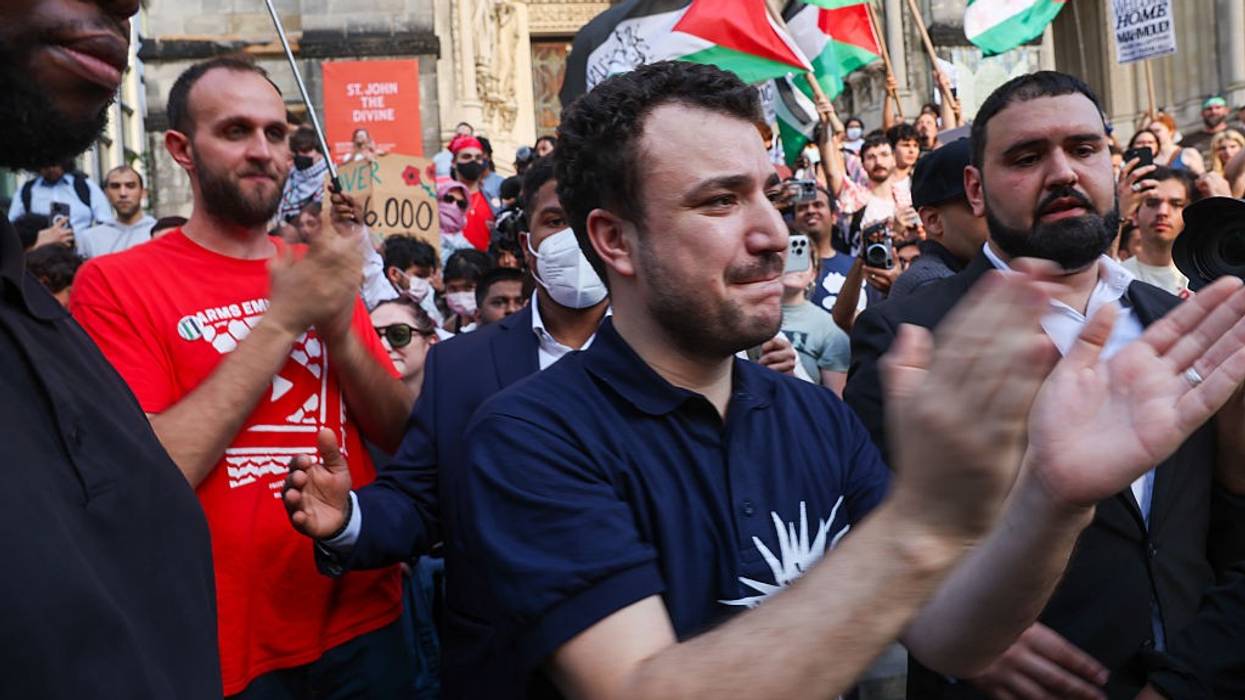
They put me through a sham immigration process while guaranteeing the outcome in advance," Mahmoud Khalil said.
An immigration court decision that could hasten the deportation of Palestinian rights activist Mahmoud Khalil was marked by irregularities, including unusual speed and the recusals of several judges, The New York Times reported Friday.
The Board of Immigration Appeals (BIA), which is housed in the Department of Justice (DOJ) but is legally enjoined to make independent decisions, ruled on April 9 that Khalil could be deported from the US. However, documents obtained by the Times show that the case was fast-tracked in a manner that experts say is unusual.
"This is the due process the administration is offering me, corrupt and unprecedented," Khalil posted on social media Friday in response to the Times' reporting.
Khalil, a student leader of Columbia University protests against the Gaza genocide, was an early target of the Trump administration's crackdown on pro-Palestinian speech when he was abducted by Department of Homeland Security agents while returning to his New York home in March 2025. Despite being a permanent resident married to a US citizen, Khalil was detained in Louisiana for over three months, where he missed the birth of his son.
“In all my decades as an immigration lawyer, I have never seen such a baseless and politically motivated decision."
Despite the BIA's ruling, Khalil cannot be deported while his separate habeas corpus case proceeds through federal courts. However, the Times' reporting raises questions about how fairly he is being treated by the Trump administration and how quickly he could face removal if the federal case falls through.
"This story proves that the Trump administration's treatment of my case has always been corrupt and retaliatory. They put me through a sham immigration process while guaranteeing the outcome in advance," Khalil wrote.
According to the Times:
The case was considered high priority even before the board officially received it. A note from an internal case-tracking file from June said that, even though Mr. Khalil had been released several days earlier, the case was to be handled as if he were still in detention, which would speed it along.
"Please process as quickly as possible,” said another note, from October. Another document shows that the court’s chair—its highest ranking member—oversaw the case from early on.
The decision was made nine days after all the paperwork was submitted, a timeline that Biden BIA appointee Homero López called "unprecedented," as the board often takes years to decide similar cases.
“It’s an insane turnaround, particularly for such a high-profile case on a novel legal issue,” López, who was fired under President Donald Trump, told the Times.
At the same time, people familiar with the situation told the Times that at least three judges had recused themselves from the case, one before it was decided and the others once it became clear it would be published, meaning it would be considered precedent setting.
Former board judge Andrea Sáenz, also fired by Trump, told the Times that judges often recuse themselves because they have somehow been involved with the case before it is appealed.
“How many people touched this case when the immigration judge was handling it the first time?” Sáenz asked.
Former DOJ official David McConnell, who has experience with the immigration appeals process, said that both the quick processing and the recusals were "very unusual." However, he added this did not mean the board necessarily did anything wrong.
However, the BIA's decision was heavily criticized by Khalil's legal team in April, as it upholds Secretary of State Marco Rubio's determination that Khalil could be deported because his activism posed a threat to US foreign policy, which a federal judge in New Jersey said was "likely" unconstitutional and could not be the basis for his detention or deportation. It also justified removal on the grounds that Khalil omitted certain details on green card paperwork, but the government only added those charges after Rubio's foreign policy gambit was challenged.
“In all my decades as an immigration lawyer, I have never seen such a baseless and politically motivated decision. The BIA's decision has absolutely no support in the record, violates a federal court order, and we’ll be fighting it until the end,” Khalil's lead lawyer Marc Van Der Hout said in a statement when the decision was first issued. “Federal courts have already agreed that Mahmoud was targeted for his speech, and there is likely much more evidence of the government’s unlawful retaliation that has yet to come to light. This is a clear continuation of the administration’s retaliation against Mahmoud for exercising his First Amendment rights.”
Responding to the new reporting on Friday, Van Der Hout told the Times that the case's handling suggests it “has been controlled from Day 1 by higher-ups in the administration.”