

SUBSCRIBE TO OUR FREE NEWSLETTER
Daily news & progressive opinion—funded by the people, not the corporations—delivered straight to your inbox.
5
#000000
#FFFFFF
To donate by check, phone, or other method, see our More Ways to Give page.
Daily news & progressive opinion—funded by the people, not the corporations—delivered straight to your inbox.
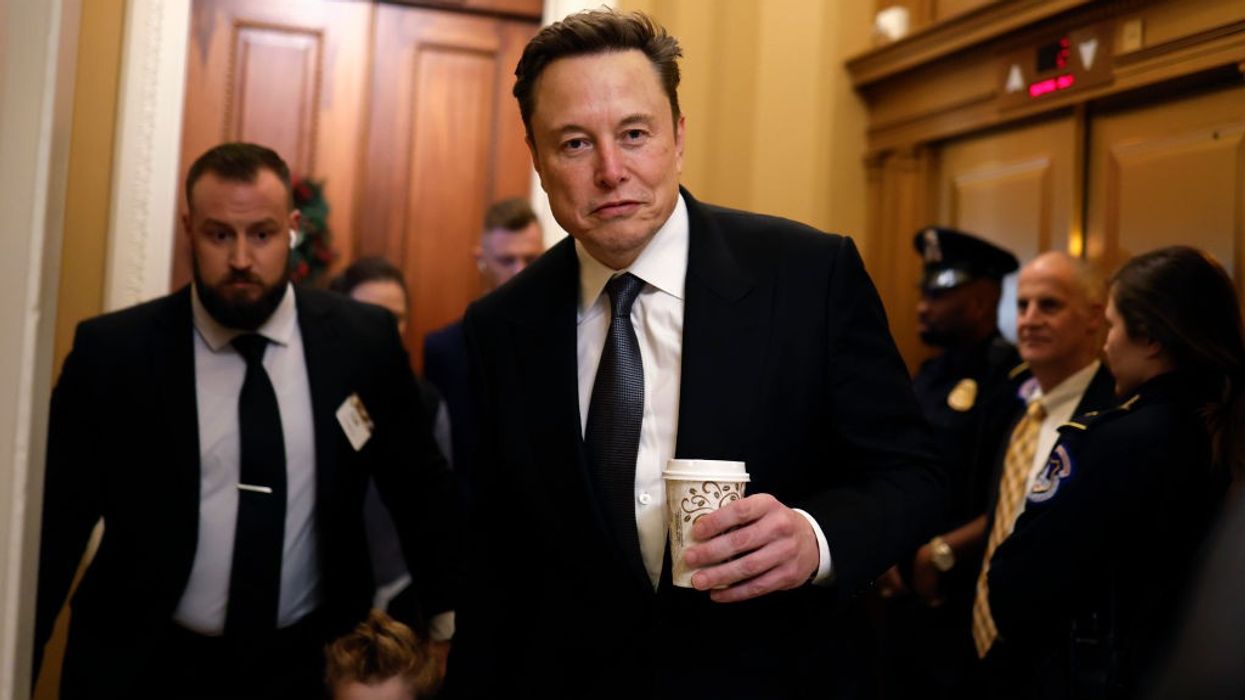
"Congress famously has the power of the purse," wrote one expert. "But it looks like DOGE is trying to snatch it."
Reporting Friday that aides to Elon Musk—the billionaire backer of Republican President Donald Trump who runs the Department of Government Efficiency—locked career civil servants out of computer systems containing the personal data of millions of federal employees raised alarms among observers who said the move is consistent with the administration's efforts to assert authoritarian control over the federal government.
An unnamed official at the Office of Personnel Management (OPM) told Reuters that "we have no visibility" into what Musk aides "are doing with the computer and data systems," and "that is creating great concern."
"There is no oversight," the official said, adding that "it creates real cybersecurity and hacking implications."
No one elected Musk and he holds no official position—and yet: “Aides to Elon Musk charged with running the US government human resources agency have locked career civil servants out of computer systems that contain the personal data of millions of federal employees” www.reuters.com/world/us/mus...
[image or embed]
— Leah McElrath (@leahmcelrath.bsky.social) January 31, 2025 at 12:50 PM
The Reuters report came on the same day that The Washington Post reported that David Lebryk, who has worked in nonpolitical positions at the U.S. Treasury Department since the George H.W. Bush administration, will retire following "a clash with allies of billionaire Elon Musk over access to sensitive payment systems."
As the Post noted:
Run by the Bureau of the Fiscal Service, the sensitive systems control the flow of more than $6 trillion annually to households, businesses, and more nationwide. Tens, if not hundreds, of millions of people across the country rely on the systems, which are responsible for distributing Social Security and Medicare benefits, salaries for federal personnel, payments to government contractors and grant recipients, and tax refunds, among tens of thousands of other functions.
The clash reflects an intensifying battle between Musk and the federal bureaucracy as the Trump administration nears the conclusion of its second week. Musk has sought to exert sweeping control over the inner workings of the U.S. government, installing longtime surrogates at several agencies, including the Office of Personnel Management, which essentially handles federal human resources, and the General Services Administration, which manages real estate.
On Friday, the Trump administration ordered the General Services Administration to create a plan to slash 50% from the independent agency's budget, according to journalist Ken Klippenstein, who reported senior officials were left looking "shell-shocked'" by the directive.
Lebryk's announcement underscored what critics have warned is an aggressive push by Musk and other unelected Trump acolytes to sideline civil servants as part of an agenda in which MAGA sycophants are empowered to weaken government checks and balances and ensure total loyalty to the president, who has repeatedly flirted with authoritarianism.
In a Friday article highlighting Lebryk's announcement, Gizmodo's Matt Novak reported that "while it's not clear why [Department of Government Efficiency] wants access, experts are alarmed because there's basically no plausible explanation that doesn't involve tinkering with critical government functions by sidestepping Congress."
"Lebryk's departure is apparently related to the interference by DOGE-affiliated goons to access these payment systems," Novak asserted.
Common Dreams reported earlier this week that Trump loyalists in the OPM and Office of Management and Budget associated with Project 2025—the Heritage Foundation-led blueprint for a far-right takeover of the federal government—are leading a sweeping effort to purge career civil servants and replace them with officials who will do the president's bidding without question.
Don Moynihan, a professor at the University of Michigan's Ford School of Public Policy, told Reuters Friday that "this makes it much harder for anyone outside Musk's inner circle at OPM to know what's going on."
Despite its name, DOGE is a presidential advisory committee, not a federal department—and critics including Novak have accused the billionaire Trump supporter of reaching "his tentacles into virtually every agency."
"Congress famously has the power of the purse," he wrote. "But it looks like DOGE is trying to snatch it."
Earlier this week, Congressman Gerry Connolly (D-Va.), the ranking member of the House Committee on Oversight and Government Reform, warned that Trump "is trying every trick he and his Project 2025 cronies can think of to circumvent established civil service protections so they can purge the civil service of experts and replace them with political loyalists."
"The victims here, as is always the case with Donald Trump, are the American people who will see government services and benefits allocated not by nonpartisan civil servants, but by partisan hacks," Connolly added.
Mark Mazur, who served in senior Treasury Department roles during the Obama and Biden administrations, told the Post Friday that the prospect of government officials using the federal payments system in service of personal political motives is without precedent.
"It's never been used in a way to execute a partisan agenda," Mazur stressed. "You have to really put bad intentions in place for that to be the case."
"Elon Musk, who NO ONE VOTED FOR, wants to mess with our earned benefits," said one advocacy group. "Hell no."
President Donald Trump has claimed the spending cuts he proposes won't impact Medicare and Social Security, but new reporting on the sudden departure of the U.S. Treasury Department's highest-ranking career official after a dispute over the payment systems that distribute those benefits sparked concern that Trump's billionaire backer, Elon Musk, could have plans for the popular programs relied on by millions of Americans.
The Washington Post reported Friday that David Lebryk, who has served in numerous high-level roles at the Treasury Department since 1989 and was temporarily named acting treasury secretary by Trump before the confirmation this week of his nominee, Scott Bessent, would soon leave the department.
According to the newspaper, Lebryk has clashed with allies of Musk, whom Trump has named to lead his new Department of Government Efficiency (DOGE), over access to payment systems that the agency uses to distribute more than $6 trillion annually to households and businesses.
Social Security and Medicare benefits, paychecks for federal employees, and payments to government contractors and grant recipients all flow through the payment systems run by the Bureau of Fiscal Service, among thousands of other functions.
Since Trump won the election in November, officials Musk has named as DOGE staffers have been asking for access to the payment systems, and the demands have been reiterated since the president took office last week, the Post reported.
Mark Mazur, who served in the department under Presidents Barack Obama and Joe Biden, said the push for access to the systems from an advisory committee aligned with a partisan agenda suggests "bad intentions" from Musk and his allies.
"This is a mechanical job—they pay Social Security benefits, they pay vendors, whatever," said Mazur. "It's not one where there's a role for nonmechanical things, at least from the career standpoint. Your whole job is to pay the bills as they're due. It's never been used in a way to execute a partisan agenda."
Since Trump's inauguration, the new administration has signaled its desire to disrupt government funding of long-established programs, most notably when the Office of Management and Budget (OMB) issued a memo directing federal agencies to "pause all activities related to obligations or disbursement of all federal financial assistance."
That memo, which was later rescinded, raised alarm about a freeze on the funding of programs like Head Start, Meals on Wheels, and Medicaid.
The executive order that created DOGE last week ordered agencies to ensure the advisory body has "full and prompt access to all unclassified agency records, software systems, and IT systems." DOGE's push for access to the Bureau of Fiscal Services payment systems suggests that it also wants control of those mechanisms.
Lindsay Owens, executive director of the progressive advocacy group Groundwork Collaborative, said the dispute that led to Lebryk's imminent departure showed that "the Trump administration's claims that they won't touch Social Security and Medicare are obviously lies."
"Musk and his DOGE cronies are already demanding unprecedented access to the payment system that distributes these funds and are ousting any civil servant who gets in their way," said Owens. "It's barely been two weeks and Musk has already caused a level of chaos and inefficiency we've never before seen in government."
The idea that "good government technocrats could work with Musk and DOGE to improve technology and services" has been proven to be "all grift," added Owens in a post on Musk's social media platform, X.
While advocates and lawmakers have said DOGE could work to reduce military spending, which has risen by 50% since the beginning of the 21st century and hit $820 billion in 2023 despite the Pentagon failing seven consecutive audits, the Trump administration has appeared laser-focused in its first weeks on addressing spending that impacts millions of low-income and working Americans.
" Elon Musk, who NO ONE VOTED FOR, wants to mess with our earned benefits," said Social Security Works, an advocacy group that works to protect the benefit for retired Americans. "Hell no."

"Policymakers across the country should see this data as a blaring warning that they can no longer ignore the alarm bells of a climate-driven financial crisis," said one advocate.
As communities across the Los Angeles area continued to grapple with catastrophic wildfires, the U.S. Treasury Department on Thursday released the most far-reaching report ever on the climate emergency's impact on home insurance—shedding light on how disasters like the one devastating Southern California this month could increasingly push U.S. families toward financial ruin.
More than three years after President Joe Biden issued an executive order directing the Federal Insurance Office to assess "the potential for major disruptions of private insurance coverage in regions of the country particularly vulnerable to climate change impacts," the FIO released an analysis showing that homeowner insurance costs are rapidly rising across the U.S.—8.7% faster than the rate of inflation in 2018-22.
During that period, homeowners in the 20% of ZIP codes in coastal areas and other regions vulnerable to climate disasters faced insurance premiums that averaged $2,321—82% higher than people in the ZIP codes with the lowest risk.
"Climate change is already increasing our cost of living—and it's only going to get worse," said Steven Rattner, an investor and New York Times opinion writer.
For a growing number of homeowners, rising insurance costs have led to a cost-benefit analysis that puts them at risk for financial ruin, as they have given up on keeping current with their payments.
Analyzing 246 million insurance policies issued by 330 insurers nationwide from 2018-22, the FIO found that insurers canceled at least 10% of policies in 2022 due to nonpayment. Cancellation rates were highest in hurricane-prone areas such as Hilton Head, Charleston, and Myrtle Beach, South Carolina, as well as places that are vulnerable to increasingly fast-moving wildfires like California and Arizona.
During the time period analyzed, five wildfires in the Southwest caused more than $100 million in damages, with homeowners claiming an average of $27,000.
"While insurance companies will no doubt find ways to profit from the crisis, households across the country cannot sustain rising costs indefinitely."
"Treasury's analysis comes at a time of devastating tragedy, loss of life, and destruction from the wildfires in the Los Angeles area," said Secretary of the Treasury Janet Yellen. "While it's far from clear what the exact financial costs of this disaster will be, it is a stark reminder of the impacts of the growing magnitude of natural disasters on the U.S. economy."
"This report identifies alarming trends of rising costs of insurance—to consumers and insurers themselves—as well as lack of availability of insurance, all of which threaten the long-term prosperity of American families," Yellen added.
In other words, said Carly Fabian, senior insurance policy advocate with Public Citizen's Climate Program, the climate-fueled insurance crisis is helping to push the American Dream of home ownership "out of reach" for a growing number of families.
"This report shows exactly what we feared: Climate change is creating an insurance crisis for households across the country. For many Americans, home ownership is a key part of the American Dream," said Fabian. "While insurance companies will no doubt find ways to profit from the crisis, households across the country cannot sustain rising costs indefinitely."
In 2022, Public Citizen joined more than 75 consumer advocacy and environmental justice groups in calling on the Treasury Department to promptly follow Biden's executive order and collect data on how the climate emergency is affecting homeowners.
"While this report is an essential step, it is only a first window into the data necessary to monitor this crisis," said Fabian. "The fact that the Federal Insurance Office had to be the first to propose collecting and now publishing this data shows the utter failure of the fragmented state regulatory system to protect the public. In the aftermath of the fires in Los Angeles and the devastation in Asheville [from Hurricane Helene], policymakers across the country should see this data as a blaring warning that they can no longer ignore the alarm bells of a climate-driven financial crisis."
The Los Angeles fires this month could ultimately cost as much as $275 billion, AccuWeather reported this week, and the National Oceanic and Atmospheric Administration revealed this month that from 2018-22, 84 billion-dollar climate disasters—excluding floods, which are typically not covered by home insurance—cost more than $609 billion. The costs of such events have continued rising since 2022.
Climate reporter Kate Aronoff of The New Republic likened the burgeoning home insurance crisis to the for-profit health insurance industry, in which corporate consolidation is also pushing premiums higher and contributing to medical debt that's owed by about 20 million people.
"Everyone gets sick. Dealing with that's a nightmare even if you have good coverage," said Aronoff. "Not everyone's house will burn down or flood but [there are] some real parallels in terms of human tragedy and suffering being mediated through an infuriating for-profit bureaucracy with haphazard public backing."
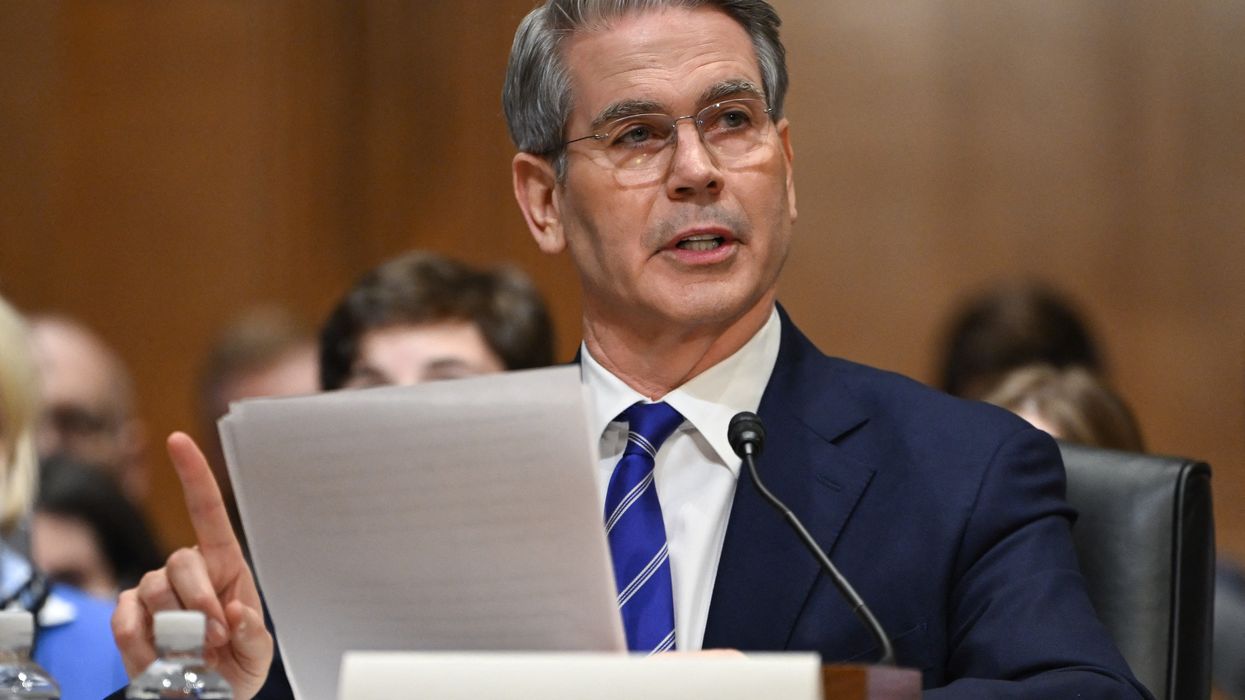
Scott Bessent's "3-3-3" agenda "requires brutal cuts to health and nutrition and higher costs for families at the grocery store," said analysts at the Center for American Progress.
At his confirmation hearing on Thursday, hedge fund manager and U.S. treasury secretary nominee Scott Bessent told the Senate Finance Committee that at the helm of the Treasury Department he would usher in an "economic golden age."
But a report by two policy analysts details how Bessent's signature "3-3-3" plan would only be achievable by gutting programs for some of the nation's most vulnerable households—extending the "golden age" only to wealthy people and corporations for whom the Trump administration plans to slash taxes.
At the Center for American Progress, senior director of economic policy Brendan Duke and senior director of federal budget policy Bobby Kogan completed "the accounting to determine what it would take to achieve" Bessent's 3-3-3 agenda, particularly his plan to cut the federal budget deficit down to 3% of the gross domestic product (GDP). The plan also calls for real GDP growth to reach 3% and the production of 3 million barrels of oil by 2028.
While reducing the budget deficit and simultaneously protecting programs American families rely on is a "laudable goal," wrote Duke and Kogan, Bessent has "explicitly stated that extending the expiring 2017 tax cuts is a priority, and he would likely rule out tax increases on the wealthy to pay for them"—suggesting that the Treasury nominee's 3-3-3 agenda would require new taxes on imported goods and "massive cuts to anti-poverty programs."
The Congressional Budget Office has projected that the budget deficit will represent 5.8% of the nation's GDP in 2028.
"The president-elect is stacking his cabinet with one goal in mind: more tax breaks for his billionaire boys club and major corporations."
With Bessent proposing an extension of the 2017 tax cuts—which are projected to grow the budget deficit by about $4 trillion over a decade—the elimination of Inflation Reduction Act energy investments, and a pause on nondefense discretionary spending increases, said Duke and Kogan, Bessent's plan would "actually increase the projected 2028 budget deficit from 5.8 to 6.0% of GDP, or $1 trillion above the 3% target.
Without any cuts to Medicare and Social Security—which Trump has said he would exempt from cuts—or defense spending, says the analysis, Bessent's deficit target would require both:
"The combination of policies that would deliver the deficit reduction proposed in Bessent's 3-3-3 economic plan would raise taxes on low- and middle-income families and gut healthcare, nutrition assistance, and veterans' programs while still cutting taxes for the wealthy," wrote Duke and Kogan. "Such a plan would hike families' costs both because broad-based tariffs would increase prices and because Americans would have to pay more for healthcare and food due to cuts to federal programs that help lower the cost of living."
With families across the U.S. facing "brutal cuts to health and nutrition" and higher prices at the grocery store under Bessent's plan, said Duke, the wealthiest households would still get "a net tax cut."
At The Washington Post, columnist Catherine Rampell wrote that "the magnitude of cuts required to make Bessent's arithmetic work is breathtaking."
"If you add up all the tax-cut promises Trump made during his campaign, the budget hole swells to almost $10 trillion," wrote Rampell. "To compensate, government programs would have to shrink by two-thirds. Alternatively, Trump could raise taxes on the middle class. Pick your poison."
On social media, government watchdog Accountable.US denounced Bessent's defense of Trump's tax cuts—under which "the top 1% saw benefits nearly three times larger than families in the bottom 60%"—and of the president-elect's proposed tariffs, which leading economists say would "reignite" inflation.
"Scott Bessent's nomination isn't about helping American families," said the group. "It's about lining the pockets of the ultra-wealthy and doubling down on policies that hurt the middle class."
Meanwhile, critics of Bessent on Thursday pointed to new reporting from Politico that Senate Democrats have accused the Treasury nominee of dodging $910,182 in Medicare taxes for income he made through his hedge fund from 2021-23. A memo circulated by Democrats stated that Bessent argued that as a "limited partner" in his fund, he was not liable for taxes on certain income.
Sen. Ron Wyden (D-Ore.) addressed the memo at Bessent's hearing, saying: "Like a number of Wall Street fund managers, Mr. Bessent makes use of a tricky legal maneuver to opt out of paying into Medicare."
"The billionaire hedge fund manager Trump handpicked to oversee a massive tax giveaway for the ultra-wealthy doesn't pay his own taxes," said Lindsay Owens, executive director of Groundwork Collaborative. "It's almost too on the nose. The president-elect is stacking his cabinet with one goal in mind: more tax breaks for his billionaire boys club and major corporations."
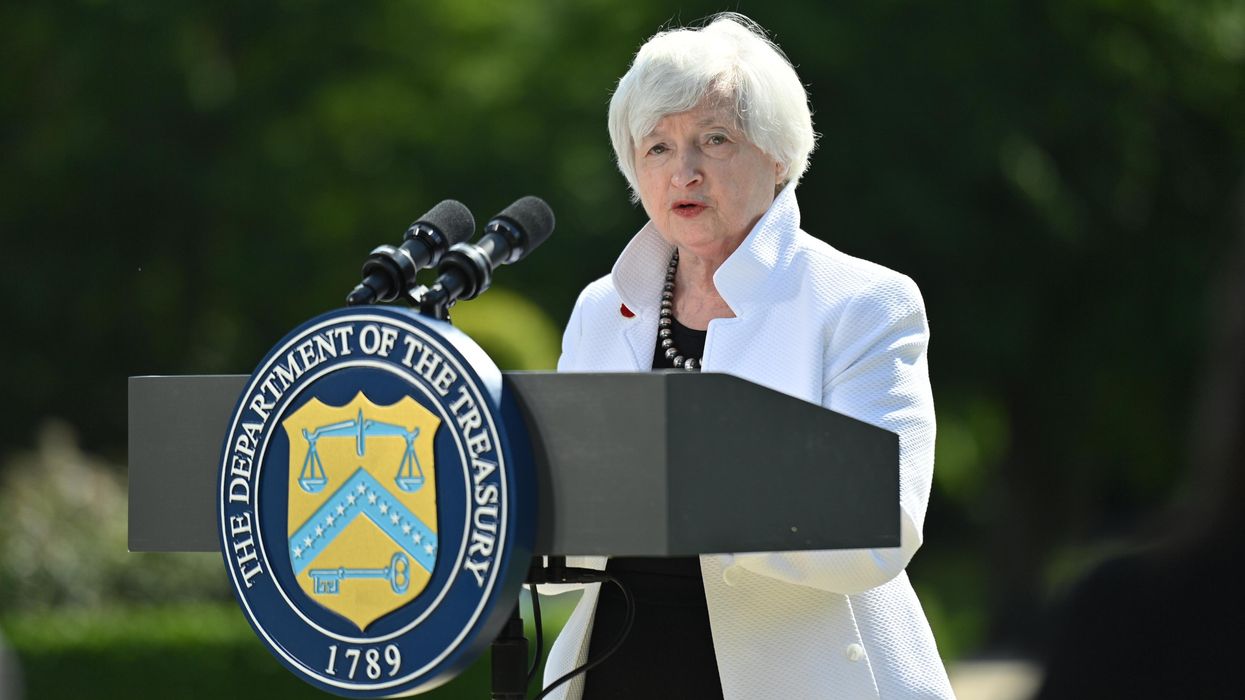
Treasury Secretary Janet Yellen implored Congress to "protect the full faith and credit of the United States" or face imposition of "extraordinary measures."
U.S. Treasury Secretary Janet Yellen warned Congress on Friday that—absent imminent action to raise or suspend the nation's debt limit—her agency would likely have to take "extraordinary measures" as soon as January 14 to avert hitting the debt ceiling.
"As you know, the debt limit is the total amount of money that the United States government is authorized to borrow to meet its existing legal obligations, including Social Security and Medicare benefits, military salaries, interest on the national debt, tax refunds, and other payments," Yellen wrote in a letter sent to congressional leaders. "In June 2023, the Fiscal Responsibility Act of 2023 was enacted, suspending the debt limit through January 1, 2025."
DEBT LIMIT: New letter this afternoon from Treasury Secretary Janet Yellen projects debt limit will be reached a bit later than the earlier projection of Jan. 1; new limit to be reached between Jan 14-23 at which point Treasury will have to take extraordinary measures
[image or embed]
— Jane Norman (@janenorman.bsky.social) December 27, 2024 at 1:53 PM
Yellen continued:
On January 2, 2025, the new debt limit will be established at the amount of outstanding debt subject to the statutory limit at the end of the previous day. However, on January 2, the outstanding debt subject to the limit is projected to decrease by approximately $54 billion, mostly due to a scheduled redemption of nonmarketable securities held by a federal trust fund associated with Medicare payments. As a result, the debt is currently projected to temporarily decrease, and accordingly, Treasury does not expect that it will be necessary to start taking extraordinary measures on January 2 to prevent the United States from defaulting on its obligations. Treasury currently expects to reach the new limit between January 14 and January 23, at which time it will be necessary for Treasury to start taking extraordinary measures.
"I respectfully urge Congress to act to protect the full faith and credit of the United States," Yellen added.
Recent past extraordinary measures—which are invoked by the U.S. Treasury Department to prevent a binding debt limit—have included the declaration of a debt issuance suspension period, suspension of new investments, and suspension of reinvestment of certain securities.
Yellen's admonition comes less than one month before Republican President-elect Donald Trump takes office. Both Trump and Yellen have called for the elimination of the debt ceiling. The end-of-year spending bill signed into law last week by U.S. President Joe Biden did not include Trump's demand to raise or suspend the debt ceiling.
According to USDebtClock.org, the nation is currently more than $36.2 trillion in debt—or more than $107,000 for each of the country's more 346.3 million people.

"For all his talk of looking out for working class Americans, President-elect Trump's choice of a billionaire hedge fund manager to lead the Treasury Department shows he just wants to keep a rigged system," said one critic.
With the stock market surging Monday morning after U.S. President-elect Donald Trump's nomination of hedge fund manager Scott Bessent to be treasury secretary, some Wall Street executives said they were celebrating a "reasonable" pick who would moderate some of Trump's most extreme proposals.
But economic justice advocates and experts said the jubilation was likely over expectations that Bessent will deliver "trillions in tax cuts to the ultra-wealthy."
Jeffrey Sonnenfeld, founder and president of the Yale Chief Executive Institute, told CNN that the billionaire Key Square Group executive is a "pragmatic" choice who supports only "selective tariffs" and could dial back Trump's plan to introduce across-the-board tariffs of up to 20% on imported goods—a plan that economists say would raise prices for U.S. households.
But Bessent himself told radio host Larry Kudlow on Saturday that tariffs "can't be inflationary."
David Kass, executive director of the economic justice group Americans for Fair Taxation (ATF), said that during Bessent's confirmation process, the organization will work to ensure lawmakers get answers to questions about whether the Wall Street billionaire plans to use tariffs to fund another Trump plan Bessent has endorsed: the renewal of the 2017 tax cuts.
"As income inequality is soaring and Americans are being crushed by the rising costs of living, we have to ask why billionaire Scott Bessent supports renewing the Trump tax bill, which gives trillions in tax cuts to the ultra-wealthy and mega-corporations," Kass said. "Moreover, we also need to know how Mr. Bessent would fund this massive tax giveaway. Will he make working and middle-class Americans foot the bill by enacting wide-ranging cuts to vital government programs like Social Security and Medicare? Will he squeeze Main Street by raising prices on essential goods through tariffs?"
The government watchdog Accountable.US noted that Bessent has defended Trump's tariff plan, which analysts found would raise annual household costs by an average of $3,900, while backing the extension of Trump's tax plan, which overwhelmingly benefited the wealthy and corporations.
"For all his talk of looking out for working-class Americans, President-elect Trump's choice of a billionaire hedge fund manager to lead the Treasury Department shows he just wants to keep a rigged system that only works for big corporations and the very wealthy," said Accountable.US executive director Tony Carrk. "If confirmed, Scott Bessent's first order of business will be to push trillions of dollars in more tax giveaways to the very well-off and at the same time essentially enact a $3,900 tax increase for the typical American family."
"This is yet another disastrous cabinet nomination by Donald Trump, and a further indication of the administration's plans for massive giveaways to the superrich and slashing of regulatory safeguards that guarantee the well-being of the American people."
As the Dow Jones Industrial Average surged by 500 points on Monday, National Association of Manufacturers CEO Jay Timmons told CNN that Bessent is likely to try to rein in what he called President Joe Biden's "out-of-control government spending." Republican leaders have signaled that with the GOP set to control both chambers of Congress as well as the White House starting in January, the party is likely to try to make cuts to Medicare and Social Security—long derided by the right as too expensive and wasteful.
"Wall Street may be breathing a sigh of relief at Scott Bessent's nomination, but working people see no help coming their way," Sen. Elizabeth Warren (D-Mass.), who is set to be the highest-ranking Democrat on the Senate Banking Committee, said Monday. "Mr. Bessent's expertise is helping rich investors make more money, not cutting costs for families squeezed by corporate profiteering."
Earlier this year, Bessent told his clients at Key Square Group that a second Trump turn would mean an "economic lollapalooza" for them, with the Republican lowering taxes for his wealthy investors and bringing about an era of deregulation.
The Republican megadonor has proposed a "3-3-3" policy approach to Trump, which would include cutting the budget deficit by 3% by 2028, boosting GDP growth by 3%, and urging Big Oil to produce another 3 million barrels of crude oil per day.
Bessent has also expressed support for Trump's embrace of the cryptocurrency industry, which poured more than $110 million into federal election spending this year and spent an all-time high of $24.7 million on anti-regulatory lobbying in 2023.
Brad Garlinghouse, CEO of financial tech firm Ripple, said Friday that he expects Bessent to be "the most pro-innovation, pro-crypto treasury secretary we've ever seen." Critics have warned that the unregulated and highly speculative crypto industry has little to offer working people.
"America doesn't need a hedge fund executive to lead its economic policymaking, least of all one under the delusion that tax cuts for the rich, rollbacks of public regulatory protections, and an increase in oil drilling is somehow the way to strengthen the nation's economy," said Robert Weissman, co-president of consumer advocacy group Public Citizen. "This is yet another disastrous cabinet nomination by Donald Trump, and a further indication of the administration's plans for massive giveaways to the superrich and slashing of regulatory safeguards that guarantee the well-being of the American people."
Despite some proponents' claims that Bessent is a more mainstream pick than some other names that were floated for treasury secretary, Carrk said the nomination is from "the same old playbook, and it will have the same results of an economy that only works for a select few, not everyone."

"The science is clearer than ever: LNG exports and natural gas-sourced hydrogen pose grave risks to our planet and will undermine President Biden's own climate goals," said one campaigner.
More than 125 climate, environmental, and health scientists and researchers on Thursday implored the Biden administration to "follow legitimate science and reject the expansion of fossil fuel programs," pointing to a new study showing liquefied natural gas has a 33% greater greenhouse gas footprint than coal.
"As U.S. scientists and researchers we are closely following efforts by the U.S. Department of Energy and the U.S. Department of Treasury to develop greenhouse gas analyses of liquefied natural gas (LNG) and hydrogen, and implore you to use the best available science when conducting this analysis," the scientists wrote in a letter to Energy Secretary Jennifer Granholm and Treasury Secretary Janet Yellen.
"The stakes could not be higher," the letter asserts. "The choices that you make relating to modeling assumptions for the heat-trapping potential of natural gas will determine if the federal government will make decisions based on climate science or wishful thinking."
The scientists continued:
The main constituent in natural gas is methane, a powerful climate-disrupting pollutant that traps more than 80 times more heat in the atmosphere than carbon dioxide over 20 years, the relevant timeframe in which we must act. We agree with President [Joe] Biden's declaration to world leaders that this is the decisive decade. As the climate crisis becomes more urgent, we are rapidly approaching planetary thresholds that, once breached, cannot be reversed.
The fossil fuel industry wants you to distort the scientific evidence and asserts, falsely, that decisions to expand natural gas production and consumption are consistent with U.S. and global climate goals. They are advocating for flawed modeling assumptions that would hide the true climate impact of gas. It is imperative that the Departments of Energy and Treasury reject these efforts.
The letter's signers cite a study published this month by Cornell University climate scientist Robert Howarth which—when properly accounting for LNG's full life cycle, including extraction, liquefaction, transportation, and end-source combustion—found that the fracked gas has a 33% greater greenhouse emissions impact than coal.
"An abundance of scientific evidence now shows that natural gas is at least as damaging to the climate as coal and may be worse due to inevitable leaks and disproves the claim that natural gas can serve as a 'bridge fuel' while renewable energy sources ramp up," the scientists wrote.
Jim Walsh, policy director at Food & Water Watch, said in a statement that "the science is clearer than ever: LNG exports and natural gas-sourced hydrogen pose grave risks to our planet and will undermine President Biden's own climate goals."
"This administration must ignore industry propaganda, follow legitimate science, and reject the expansion of fossil fuel programs like LNG exports and gas-sourced hydrogen," Walsh added.
Noting that "over 20 years, methane is a far more powerful climate villain than ever previously appreciated," Science & Environmental Health Network senior scientist Sandra Steingraber said that "methane is the Houdini of greenhouse gasses, escaping into the atmosphere from all parts of the natural gas system at a pace that far exceeds earlier estimates."
"Taken together, these findings mean that the stakes for the modeling assumptions chosen for estimating the climate impacts of LNG and hydrogen fuels could not be higher," Steingraber stressed. "It's imperative that our Departments of Energy and Treasury base their climate modeling assumptions on the abundance of scientific evidence and not the distorted claims and wishful thinking of the fossil fuel industry."
Despite campaign pledges to center climate action—including by banning new fossil fuel drilling on public lands—Biden oversaw the approval of more new permits for drilling on public land during his first two years in office than former President Donald Trump, the 2024 Republican nominee, did in 2017 and 2018.
The Biden administration has also held fossil fuel lease sales in the Gulf of Mexico and has approved the highly controversial Willow project and Mountain Valley Pipeline. Biden also increased liquefied natural gas production and export before pausing LNG exports earlier this year.
Despite the pause—which activists are calling on the Biden administration to make permanent—the president has also overseen what climate defenders have called a "staggering" LNG expansion, including Venture Global's Calcasieu Pass 2 export terminal in Cameron Parish, Louisiana and more than a dozen other projects that, if all completed, would make U.S. exported LNG emissions higher than the European Union's combined greenhouse gas footprint.
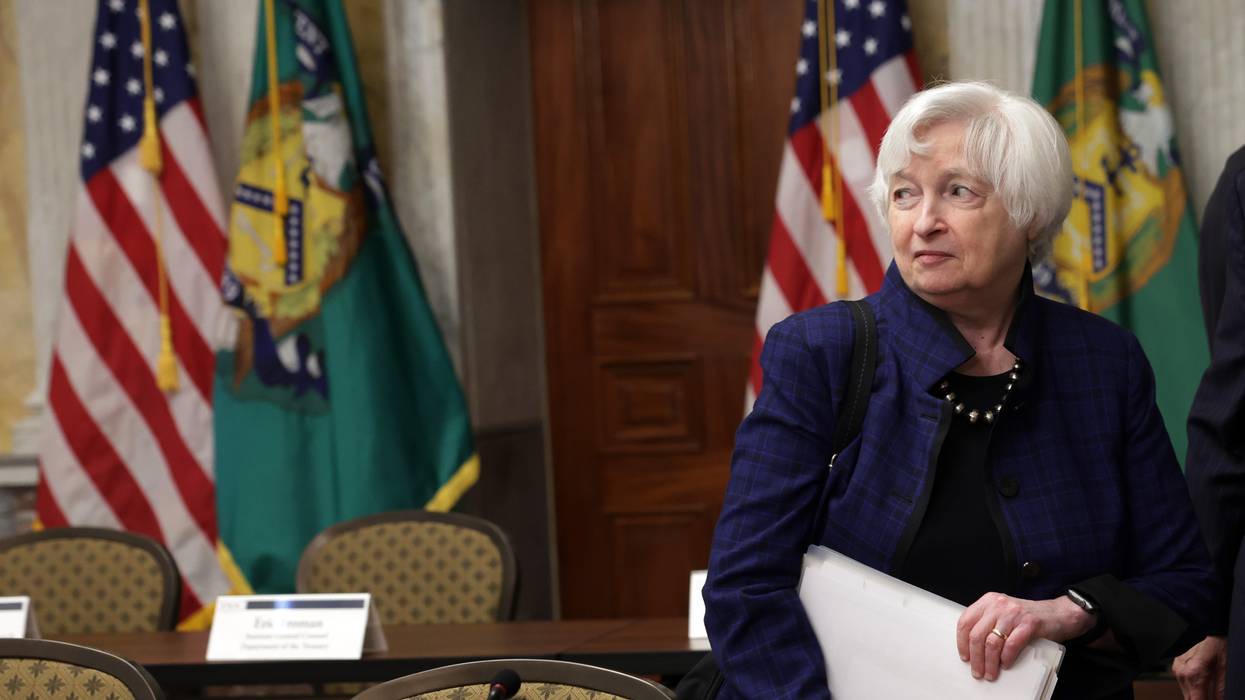
The treasury secretary's warning came as a Biden administration official said the president won't invoke the 14th Amendment in order to avoid a first-ever U.S. default.
U.S. Treasury Secretary Janet Yellen on Friday warned Congress that the United States government will run out of money to pay its bills on June 5 if lawmakers don't reach an agreement to raise the nation's debt ceiling.
"Based on the most recent available data, we now estimate that Treasury will have insufficient resources to satisfy the government's obligations if Congress has not raised or suspended the debt limit by June 5," Yellen wrote in a letter to House Speaker Kevin McCarthy (R-Calif.).
"We have learned from past debt limit impasses that waiting until the last minute to suspend or increase the debt limit can cause serious harm to business and consumer confidence, raise short-term borrowing costs for taxpayers, and negatively impact the credit rating of the United States," Yellen noted. "In fact, we have already seen Treasury's borrowing costs increase substantially for securities maturing in early June."
Earlier this month, Yellen said that the so-called "X-date"—the day on which the first-ever U.S. default will occur—could come as early as June 1.
"If Congress fails to increase the debt limit, it would cause severe hardship to American families, harm our global leadership position, and raise questions about our ability to defend our national security interests," she stressed in Friday's letter.
As The New York Times notes:
Ms. Yellen's letter comes as the White House and House Republicans have been racing to agree on a deal that would lift the nation's $31.4 trillion borrowing cap and prevent the United States from defaulting on its debt. The Treasury Department hit the debt limit on January 19 and has since been employing accounting maneuvers to ensure the United States can continue paying its bills on time...
On Friday, she detailed that the federal government is due to make more than $130 billion in scheduled payments during the first two days of June—including payments to veterans and Social Security and Medicare recipients—leaving the Treasury Department with "an extremely low level of resources"...
While negotiators have been in round-the-clock talks, no deal has been announced. Still, the contours of an agreement between the White House and Republicans are taking shape. That deal would raise the debt limit for two years while imposing strict caps on discretionary spending not related to the military or veterans for the same period.
Biden administration officials and congressional Democrats have accused Republicans of "hostage-taking" during the debt limit standoff, an allegation embraced by Rep. Matt Gaetz (R-Fla.) earlier this week.
Scores of Democratic lawmakers and progressive advocates have called on President Joe Biden to exercise his constitutional authority and invoke the 14th Amendment—which states in part that "the validity of the public debt of the United States... shall not be questioned."
However, Deputy Treasury Secretary Wally Adeyemo said Friday that Biden will not invoke the 14th Amendment.
"The 14th Amendment can't solve our challenges," Adeyemo asserted on CNN. "Now, ultimately, the only thing that can do that is Congress doing what it's done 78 other times, raising the debt limit."
"We don't have a Plan B that allows us to meet the commitments that we've made to our creditors, to our seniors, to our veterans, to the American people," Adeyemo added ominously.