SUBSCRIBE TO OUR FREE NEWSLETTER
Daily news & progressive opinion—funded by the people, not the corporations—delivered straight to your inbox.
5
#000000
#FFFFFF
To donate by check, phone, or other method, see our More Ways to Give page.
Daily news & progressive opinion—funded by the people, not the corporations—delivered straight to your inbox.
As the nation reflects on how Ferguson changed the world, I’m asking that you think about what we have to do in the next 10 years to ensure that we’re moving closer to a world where uprisings like that one aren’t necessary.
On August 9, 2014, I was at the United Nations, attending the Convention on Eliminating Racial Discrimination, or UN CERD, as part of a delegation of Black organizers and activists who were testifying to the conditions of Black people in the United States organized by the U.S. Human Rights Network. I cried for the greater part of that day, sitting with the weight of the injustices and murders of Black people.
There was a chill in the air and not a dry eye in the room at the UN CERD as Trayvon Martin’s mom, Sybrina Fulton, testified about the murder of her son. I remember the testimony of Jordan Davis’ father, Ron Davis, about the murder of his son and the silence that fell as he broke into tears. Both of their sons were murdered by state-sanctioned violence—by the state emboldening police, or even neighborhood watch volunteers, to take Black lives with impunity. I can still hear the testimonies of Black feminist organizations like Black Women’s Blueprint and activists from Chicago who spoke about police violence and murders of Black women and men. I spoke and testified about housing insecurities and violence against LGBTQI+ people. For us, all of those stories were connected and shared—they were all about Black lives not being valued and Black folks needing to build people power in order to stop it.
While at U.N. CERD, an African diplomat asked, “What is happening in Ferguson?” This was the first time I had heard of Ferguson, Missouri. I quickly researched all I could about Ferguson and what was happening. As a parent, I immediately felt another profound loss of another child, Mike. The murder of Mike Brown Jr. felt as intimate, as close, and as violating as that of Trayvon Martin, Jordan Davis, Aiyanna Jones, and the many others taken by state-sanctioned violence before August 9.
Our work continues as we navigate the rapidly growing rise and threat of fascism, a complex electoral landscape, an ever-worsening climate crisis, and the continued murder of Black people by the police, such as the killing of Sonya Massey
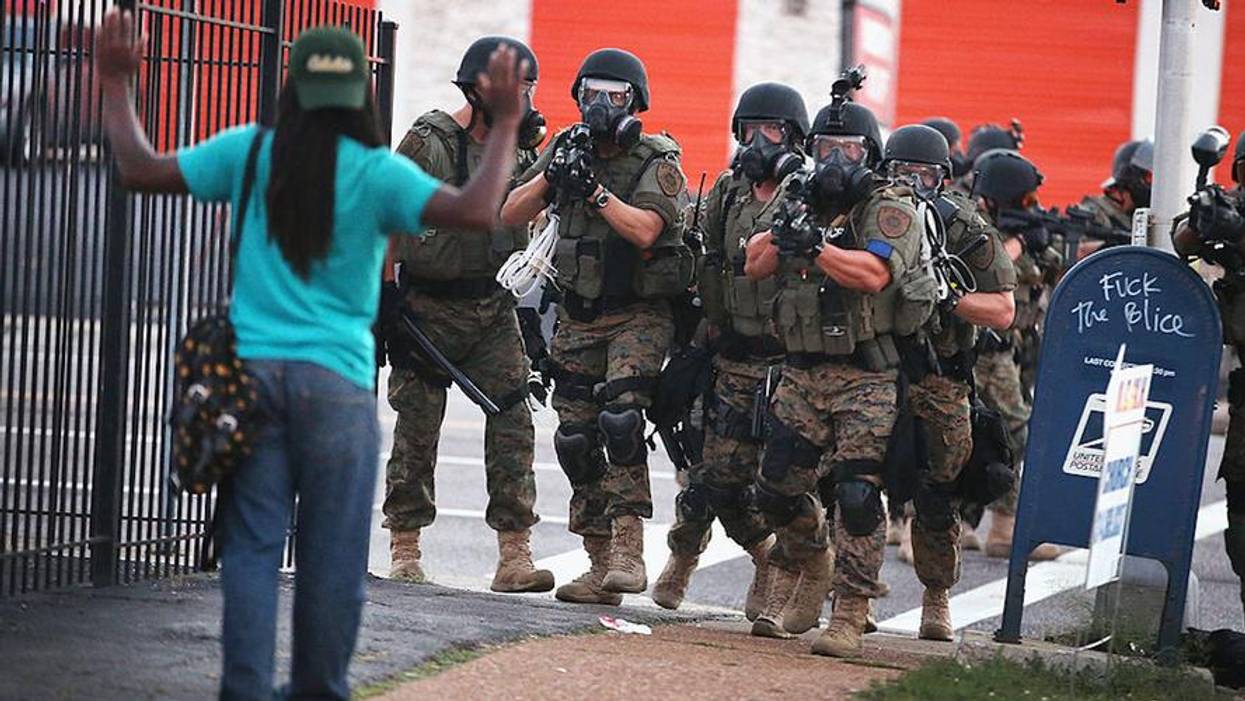
It was all overwhelming. It was clear that, as a people, we had lost too much. In our time of deepest need, the state responded by further declaring war against its people with tanks, tear gas, and militarized occupation. We were outraged. We knew that we had to take action; we didn’t know what to do, but we knew we needed to be there with those brave freedom fighters in Ferguson. A few comrades and I left the U.N. CERD meeting and headed straight to Ferguson.
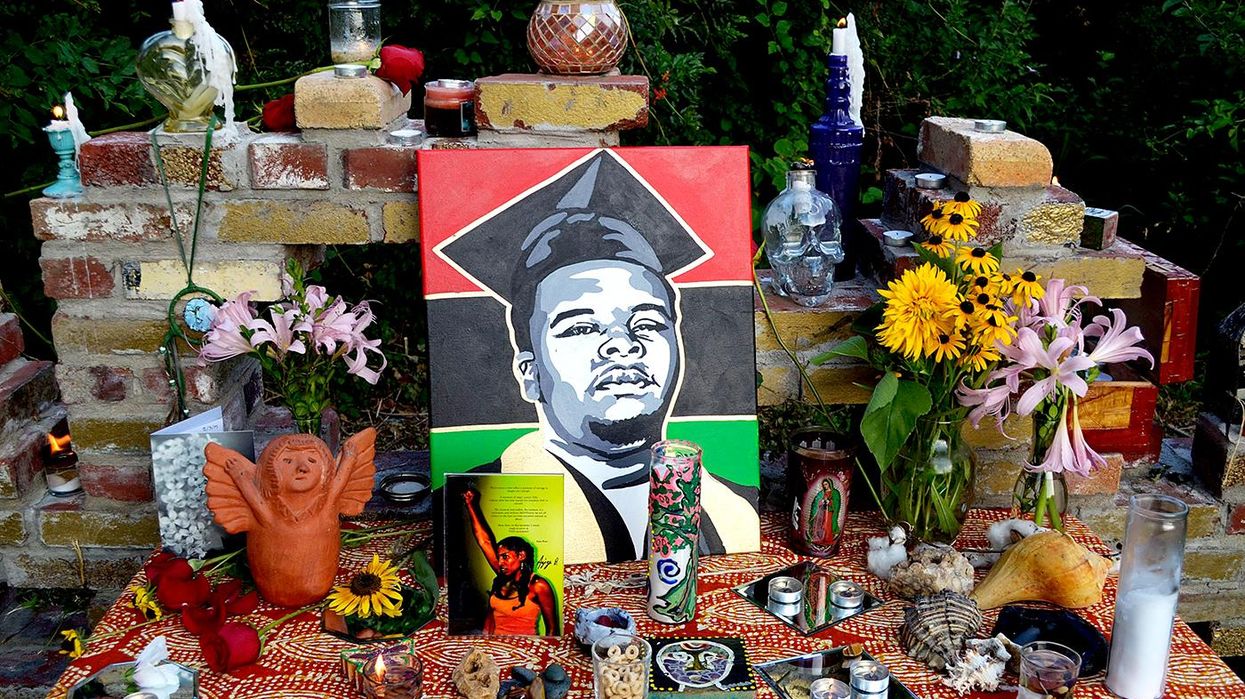
Upon arriving in Ferguson, we learned about Mike through the memories his people shared of him. He was beloved by the community, and more than that, he represented so many of us, and we all shared so many similarities with him—Mike’s life was not abstract; it was real, tangible, and familiar. Mike Brown Jr. looked like many in our families and neighborhoods. Mike Brown Jr. looked like my nephew and other young men in my own life. It is a psychological terror when faces and bodies so much like your own are hunted down and killed. We still grieve and mourn Mike, and his memory continues to fuel our fight for power and liberation.
As revolutionaries, our role is not only to grieve and mourn but to honor our people—present, past, and those who will come after us—by acting to create the society we deserve. For months, Mike Brown Jr. was honored through the sustained action and rebellion in the streets of Ferguson and actions around the globe. Uttering his name invited millions to say the names of Black people killed by police, and that reverberation ignited a new conversation about racialized violence. Each day, each hour, there was resistance against police murders and state-sanctioned violence and an assertion that Black people deserve to live without the fear and threat of police terror. The days were consumed with marches, rallies, escalations, and time in community, and the nights were long and filled with strategy meetings, event prep, and far less rest than our bodies needed. But even when those protests ended, the work did not. Mike Brown Jr. and the Ferguson Uprisings woke something up in us, inspiring a new era of the Black liberation movement that has sustained for a decade and counting. Our lives, my life, changed forever.
At the Movement 4 Black Lives (M4BL), we are fighting for a fundamentally different world, one where he and all of us would be safe, protected, and given the best conditions to thrive and determine our own outcomes.
Since the Ferguson Rebellion, M4BL has remained committed to advancing abolition, anti-capitalism, and Black Queer Feminism. We organize and advance our vision in local communities and nationally. Our strategies range from advancing policy and electoral shifts to building our own institutions and alternatives to oppressive systems. We are proud of the organizing of our member organizations in Ferguson and St. Louis, who have been vital in the resistance and power building, such as Action St. Louis and the Organization for Black Struggle.
In our 10 years of building social movement power within Black communities, we are proud of our interventions to create policy and legislative change through the Vision 4 Black Lives, Breathe Act, and People’s Response Act that all emphasize divesting from the carceral state and instead investing in alternatives that support and nourish Black lives and communities. We are excited to report about the dozens of campaigns that have won and advanced local wins, ranging from removing police officers from schools to creating housing, changing educational policies, creating safety pods and alternatives to policing, advancing reproductive justice, and engaging communities in environmental and climate change preparedness.
Our work continues as we navigate the rapidly growing rise and threat of fascism, a complex electoral landscape, an ever-worsening climate crisis, and the continued murder of Black people by the police, such as the killing of Sonya Massey. We are clear about our need to build more power to position ourselves to create the world we need and deserve. Now and forever, we honor Mike Brown Jr. in our organizing work and all those who have been taken from us. Today, as the nation reflects on how Ferguson changed the world, I’m asking that you think about what we have to do in the next 10 years to ensure that we’re moving closer to a world where uprisings like the one that rattled the foundation of our nation aren’t necessary. We are still feeling the impact of what happened 10 years ago across all aspects of society: culturally, politically, socially, and economically. And we are less than 80 days away from a presidential election where the freedom to engage in our democracy is literally on the ballot.
We know that much of what is being promised in Project 2025 is a direct response to the transformational change that came out of the Ferguson Uprising. So, I’m asking that you keep that front of mind as you consider the change you want to see in the next four years. I’m asking that you don’t overlook the communities in Ferguson who never asked for their city to be thrust into the spotlight but acted quickly to demand change and accountability from their local police and from the system of policing at large. Please remember Mike’s family, loved ones, and the organizers on the ground who carry on liberatory work in ways that can only be described as revolutionary and rooted in a deep love for their people. Today, consider your personal responsibility in changing our world over the next 10 years.
We began seeding M4BL during the Uprising because we knew there were necessary things we could do together that we could not do apart. And we still believe that. Join us in building people's power to make liberation more than a freedom dream; let’s make it a reality.
"Wesley Bell is now the No. 1 recipient of AIPAC cash this cycle—receiving $3 million and counting," Justice Democrats noted.
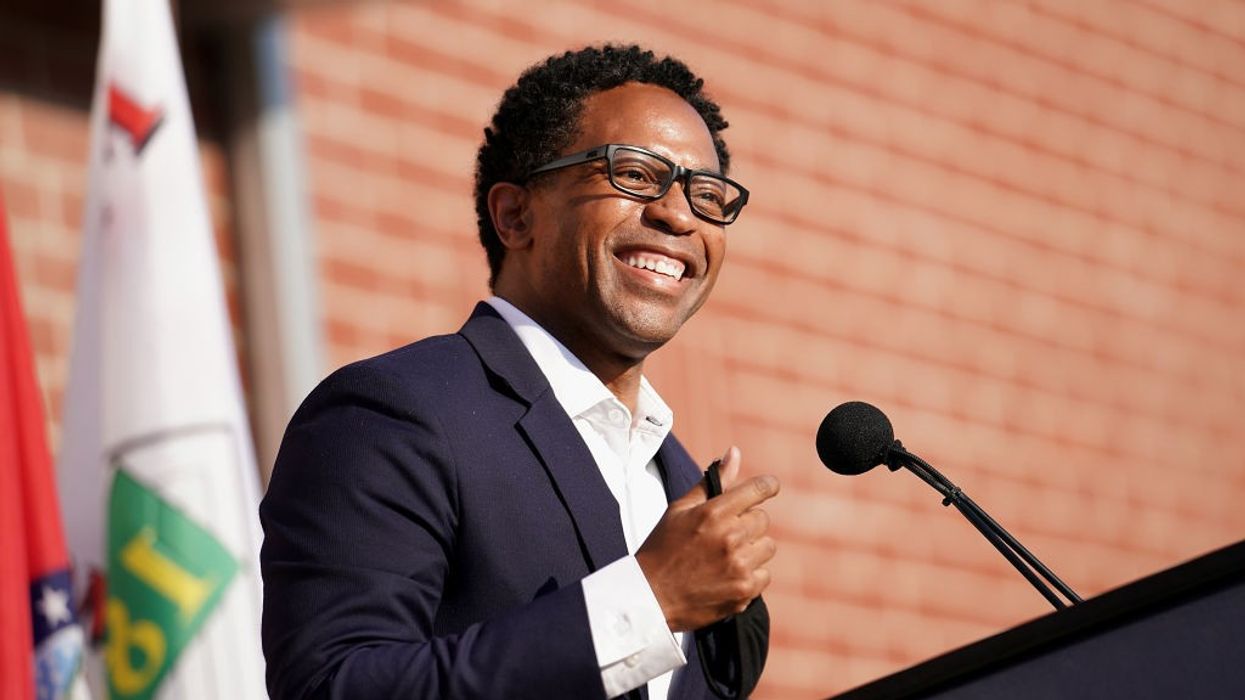
Almost two-thirds of all campaign donations to St. Louis County Prosecutor Wesley Bell—who is seeking to oust Congresswoman Cori Bush in next week's Democratic primary for Missouri's 1st Congressional District—came from the American Israel Public Affairs Committee's super PAC, according to reporting on Tuesday.
Sludge reported that Bell enjoys a 5:1 cash-on-hand advantage over Bush, according to Federal Election Commission filings. Overall, Bell's campaign raised $4.8 million while Bush's took in $2.9 million as of July 17 in what AdImpacts Politics says is already the fifth-most expensive House primary race in U.S. history.
The most expensive House primary took place earlier this year, when AIPAC's super PAC, United Democracy Project (UDP), spent $14.5 million on Westchester County, New York Executive George Latimer's successful bid to unseat Congressman Jamaal Bowman (D-N.Y.).
Like Bowman, Bush has been a vocal critic of Israel's war on Gaza, which has killed or wounded more than 140,000 Palestinians and is the subject of an International Court of Justice genocide case. Bush co-led a House cease-fire resolution introduced less than two weeks after Israel began bombarding Gaza. She has accused Israel of genocide.
Bell, meanwhile, has vowed to "fight to make sure the United States remains Israel's strongest ally."
UDP has spent heavily against candidates critical of Israel, and Bell is now the top recipient of AIPAC money this election cycle. St. Louis
NBC affiliate KSDK reported Monday that UDP and other pro-Israel PACs have spent $7.6 million boosting Bell.
Bell launched his primary bid in October after the Hamas-led attacks on Israel that left more than 1,100 Israelis and others dead and around 240 people kidnapped. At the time, he was already running for Republican U.S. Sen. Josh Hawley's seat. His House bid came despite a promise to Bush that he would not run against her. On Tuesday, Drop Site's Ryan Grim published an audio recording of Bell's promise.
According to Drop Site, AIPAC recruited Bell from a list of Black politicians with a chance of unseating Bush. AIPAC called this assertion "false and absurd."
Bell portrays himself as a progressive. However, he formerly managed the 2006 House campaign of Republican Mark Byrne, an anti-abortion and gun control candidate. More recently, he reneged on a promise to the family of Michael Brown—the 18-year-old who was fatally shot by Ferguson, Missouri police officer Darren Wilson—to pursue justice in the case by declining to criminally charge Wilson. Bell has also overseen a steady increase in the St. Louis County Jail's population at a time when the overall U.S. prison and jail population declined.
Bell's campaign is funded by Republicans including billionaire hedge fund founder and prolific GOP donor Daniel Loeb, billionaire tech CEO David Steward, and former Missouri House Speaker Steven Tilley. An analysis published last month by Politico revealed that 46% of donors who have given to Democratic candidates via AIPAC this election cycle have also funded Republicans since the 2020 cycle.
Such support doesn't always buy results, as Congresswoman Summer Lee (D-Pa.) showed when she defeated her Democratic primary opponent Bhavini Patel, who took money from Republican megadonors including billionaire businessman Jeffrey Yass. UDP spent $5 million trying—and failing—to unseat Lee, who crushed Patel by over 20 percentage points in the April primary.
AIPAC's largesse has sparked a #RejectAIPAC campaign urging Democrats to refuse to take money from the group.
"Thank you to these senators for their solidarity with frontline communities against more fossil fuel pollution!" said one activist.
Environmental justice campaigners on Thursday welcomed a letter from eight senators demanding separate votes on a government funding resolution and Sen. Joe Manchin's fossil fuel-friendly federal permitting bill.
The letter to Senate Majority Leader Chuck Schumer (D-N.Y.)—who made a backroom deal with Manchin (D-W.Va.) on permitting reform to pass the Inflation Reduction Act—echoed a message that dozens of Democrats sent to House Speaker Nancy Pelosi (D-Calif.) last week.
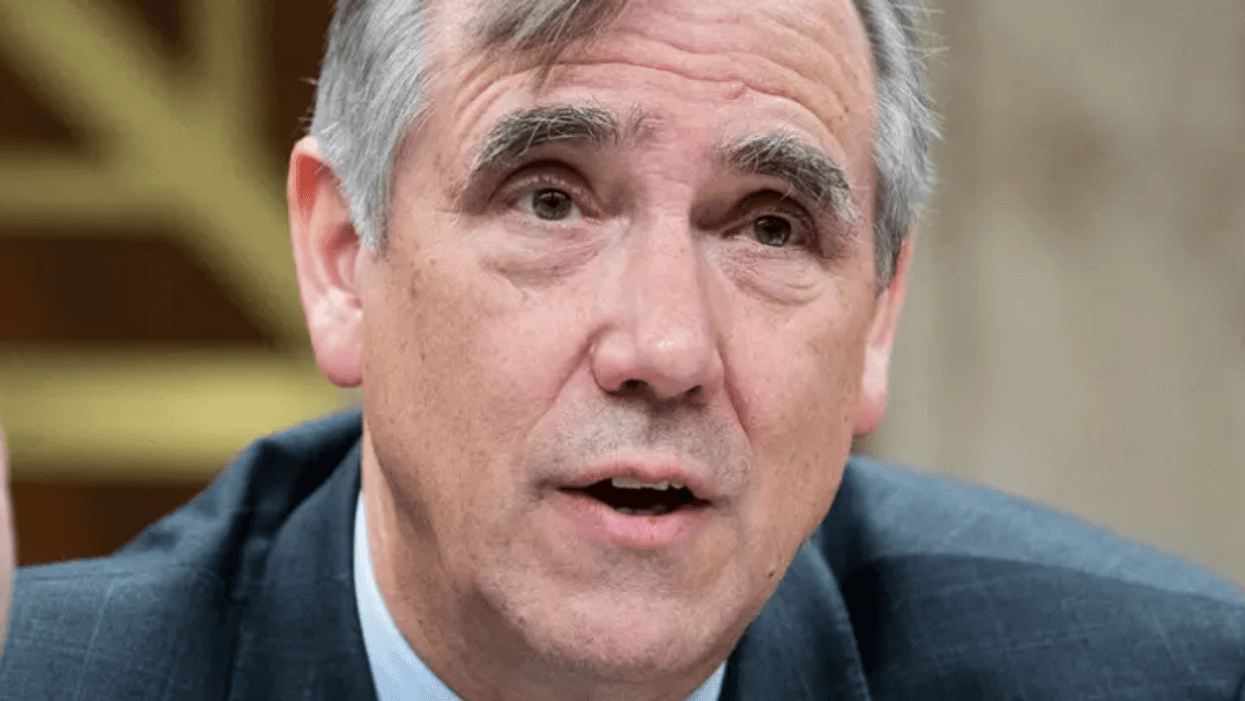
The new call, spearheaded by Sen. Jeff Merkley (D-Ore.), came a day after Manchin unveiled the full text of his Energy Independence and Security Act, which would restrict frontline communities' input on fossil fuel projects and endorse the Mountain Valley Pipeline (MVP). According to the People vs. Fossils coalition:
"We need more of this! Thank you to everyone who has signed below!"
Adrien Salazar of the Grassroots Global Justice Alliance similarly said, "Thank you to these senators for their solidarity with frontline communities against more fossil fuel pollution!"
"Such important issues should be examined through detailed committee consideration and a robust floor debate separate from the urgent need to see that the government stays open."
The other signatories are Sens. Cory Booker (D-N.J.), Ben Cardin (D-Md.), Tammy Duckworth (D-Ill.), Ed Markey (D-Mass.), Bernie Sanders (I-Vt.), Chris Van Hollen (D-Md.), and Elizabeth Warren (D-Mass.).
Another woman in the area was being treated
"I fight for environmental justice, not fast-tracking fossil fuels," Markey said Thursday. "Don't make us choose between keeping the government open and keeping communities' rights."
Earlier this week, nearly 80 organizations had pressured Booker, Duckworth, and Sen. Tom Carper (D-Del.)—the founding members of the Senate Environmental Justice Caucus—to reject Manchin's "pernicious" bill.
Some of the senators' constituents on Thursday thanked them for signing on to Merkley's letter while residents of other states called on their elected officials to join the fight against the "dirty deal."
Congressional progressives this week urged top Biden administration officials to end the transfer of military weapons to local law enforcement agencies under a program that critics say disproportionately harms communities of color.
"It's time we demilitarize the police and abolish the 1033 program."
In a letter led by Rep. Ayanna Pressley (D-Mass.), Sen. Brian Schatz (D-Hawaii), and Rep. Hank Johnson (D-Ga.), the 22 lawmakers called on Cabinet members to implement part of a May executive order signed by President Joe Biden aimed at reforming federal policing standards.
"Police militarization has never made our communities safer," Pressley tweeted. "It's time to stop transferring military-grade weapons to local police."
A provision of Executive Order 14704 requires administration agency heads to review military weapons transfers to law enforcement agencies, with an eye toward prohibiting such transfers when possible.
"Militarized law enforcement increases the prevalence of police violence without making our communities safer," the lawmakers wrote in the letter.
"For example, many types of equipment transferred under the Department of Defense's 1033 program have contributed to increasingly militarized law enforcement, which has in turn led to more prevalent police violence," the signers wrote, a reference the program facilitating the transfer of military equipment to federal, state, local, and tribal police.
According to the Policing Project at the New York University School of Law, "since its inception in 1990, the 1033 program has transferred more than $7.5 billion worth of surplus military equipment to subnational policing agencies," over 11,000 of which have registered for the program.
Noting the disproportionate impact of police militarization on communities of color, the letter asserts that "when law enforcement has access to military equipment, they are more likely to use it."
"The property listed in E.O. 14074 includes firearms and ammunition of .50 or greater caliber, firearm silencers, bayonets, grenades and grenade launchers, certain explosives, tracked and armored vehicles, weaponized drones and combat aircraft, and certain long-range acoustic devices," equipment that the lawmakers assert "should be prohibited from being transferred to or purchased by law enforcement agencies either with federal funds or from federal agencies or contractors," the letter states.
Widespread public concern about the 1033 program surfaced after the 2014 police killing of unarmed Black teen Michael Brown in Ferguson, Missouri and the subsequent militarized police response to protests led by the nascent Black Lives Matter movement.
In 2015 then-President Barack Obama signed an executive order banning the transfer of tracked armored vehicles, bayonets, grenade launchers, and large-caliber weapons and ammunition. Agencies with such weapons in their arsenals were required to return them. The Pentagon said agencies returned 126 tracked armored vehicles, 138 grenade launchers, and 1,623 bayonets in response to the order.
The 1033 program was in the news again during and after the 2020 racial justice protests following more police killings of Black people, including George Floyd, Breonna Taylor, and Tony McDade.
Related Content

In the wake of the 2020 protests, Pressley introduced amendments to the National Defense Authorization Act that would have ended the 1033 program. She re-introduced the failed measures earlier this year.
More than 170 families of people killed by U.S. police officers during the past three decades joined with over 270 civil society groups Monday to call for a United Nations inquiry into law enforcement violence and systemic racism in the United States, including responses to recent racial justice demonstrations.
"If the Biden administration is serious about addressing police violence and its pledge to lead by the power of example, it should welcome international scrutiny into the nation's domestic human rights record."
--Jamil Dakwar, ACLU
"Extrajudicial killings of Black Americans by policemen in the United States is one of the most egregious examples of human rights violations recorded in history," said Collette Flanagan, founder and CEO of Mothers Against Police Brutality, which is among the group signatories.
"I am in hopes that the U.N. will summon the courage from its previous extraordinary works to hold the U.S. accountable for its violations of human rights by establishing a commission of inquiry," said Flanagan, whose son, Clinton Allen, was shot to death by a Dallas police officer in March 2013.
The letter to U.N. High Commissioner for Human Rights Michelle Bachelet comes ahead of her report on systemic racism and law enforcement abuses against people of African descent, which is expected to include the context of slavery and colonialism.
That report was ordered by a U.N. Human Rights Council (UNHRC) resolution passed less than a month after Minneapolis police killed George Floyd, an unarmed Black man, last year. His death prompted an earlier letter signed by victims' families and hundreds of groups. The new letter to Bachelet notes that "the council adopted a watered-down resolution due to enormous diplomatic pressure from the United States under the Trump administration and other allied countries."
The signatories--which include relatives of Floyd, Daunte Wright, and Michael Brown as well as the ACLU, the Leadership Conference on Civil and Human Rights, U.S. Human Rights Network, and the International Service for Human Rights--urge the UNHRC to establish an independent commission of inquiry into the police killings and attacks on racial justice activists and journalists covering protests.
"Police violence is not a uniquely American problem, but the impunity and disproportionate killing of Black, Brown, and Indigenous people at the hands of law enforcement are, and it requires the entire international community to act," said Jamil Dakwar, director of the ACLU's Human Rights Program, in a statement.
"If the Biden administration is serious about addressing police violence and its pledge to lead by the power of example, it should welcome international scrutiny into the nation's domestic human rights record," he added. "The administration must heed the pleas of George Floyd's family and hundreds of other family members of victims of police violence to establish a U.N. commission of inquiry to hold the U.S. accountable for the rampant systemic racism that perpetuates law enforcement violence."
"While we commend the Biden administration for leading a cross-regional joint statement on countering racism and signaling other policy changes to address racial inequities," the letter says, "we believe that a robust international accountability mechanism would further support and complement, not undermine, efforts to dismantle systemic racism in the United States, especially in the context of police violence against people of African descent."
The families and groups highlight that U.S. police kill nearly 1,000 people per year--including over 300 so far in 2021--but national data show that "98.3% of killings by police from 2013-2020 have not resulted in officers being charged with a crime. Between 2005 and 2015, only 54 officers were charged after police-involved killings, despite the thousands of such incidents that occurred over the same time period."
"Impunity for police killings in the United States, especially those of people of African descent, continues unabated despite the recent settlement in the George Floyd civil lawsuit and the guilty verdict against Derek Chauvin, the Minneapolis City police officer who murdered him," the letter adds. "Furthermore, federalism in the United States, long-standing legal obstacles to achieving justice for police killings, and decentralized police institutions of over 18,000 law enforcement agencies (that are not directly accountable to the federal Executive Branch) make it extremely daunting to end impunity, even for well-intentioned federal administrations."
The signatories urge Bachelet to remind members of the UNHRC "that the transatlantic slave trade and colonialism were grave violations of international law that require states to make reparations proportionate to the harms committed and to ensure that structures in the society that are perpetuating the injustices of the past are transformed" as well as to call on them to "adopt a national plan of action to eliminate systemic racism and racial discrimination and to double their efforts and allocation of resources to achieve racial equality including through the adoption of reparations schemes to remedy historic racial injustices."
The families and groups also sent a second letter Monday to ministers of foreign affairs of African states, expressing appreciation for their governments' leadership on the topic and urging them to continue pressuring the UNHRC to establish an inquiry. They write, "We share the high commissioners assessment that we cannot let the urgency felt in the council in June 2020 subside."
"It's past time for our nation to tackle racial inequity, injustice, and discrimination that permeates American life and institutions," said Sakira Cook, senior director of the Justice Reform Program at the Leadership Conference on Civil and Human Rights. "While progress has come slowly, hopefully an international inquiry can help produce transformative change more rapidly."
Vickie Casanova-Willis, executive director of the U.S. Human Rights Network, applauded the "courageous and historic actions of family members and allies which generated an outcry that has reverberated around the world."
"Their heart-wrenching cries for justice demand full accountability and implementation of the recommendations in [the June 2020 resolution] to ensure that not one more person is murdered by state violence, as police continue to execute African American/African/African Descendant people at a genocidal rate," she declared. "Continued solidarity demanding human rights standards of accountability is vital to ensure they did not die in vain."
A broad range of progressive advocates welcomed Tuesday's reintroduction of a House bill that would limit a Defense Department program under which thousands of domestic law enforcement agencies have received billions of dollars worth of military equipment.
"Black and brown communities are policed one way--with a warrior mentality--and white and more affluent communities are policed another way."
--Rep. Hank Johnson
More than 70 House Democrats and one Republican reintroduced the Stop Militarizing Law Enforcement Act of 2021 (pdf)--sponsored by Rep. Hank Johnson (D-Ga.)--which would place restrictions and transparency requirements on the 1033 program, the Pentagon's excess equipment transfer initiative.
"Our neighborhoods need to be protected, but Americans and our founding fathers opposed blurring the line between police and the military," Johnson said in a statement. "What has been made perfectly clear, especially in the aftermath of George Floyd's murder, is that Black and brown communities are policed one way--with a warrior mentality--and white and more affluent communities are policed another way."
"Before another town is transformed into a war zone with gifts of grenade launchers and high-caliber rifles, we must rein in this program and revisit our view of the safety of American cities and towns," Johnson added.
As Johnson's office summarized, the Stop Militarizing Law Enforcement Act would:
Human rights advocates hailed the bill's reintroduction.
"With over 1,000 deaths at the hands of police every year, we should be looking to restrain police, not arm them with deadly militarized weapons," said Jose Woss, legislative manager at the Friends Committee on National Legislation, one of dozens of organizations supporting the measure. "Sadly, that's exactly what we're doing with the 1033 program."
"As a Quaker, I know that each and every single life is precious," added Woss. "It's alarming that peaceful protestors and everyday citizens are treated like threats in a war zone. The dehumanization and violence on display in communities of color is even worse. The 1033 program has no place in our streets, it must be ended."
More than 11,500 U.S. law enforcement agencies have participated in the 1033 program since its widespread implementation in the 1990s during then-President Bill Clinton's escalation of the so-called war on drugs. Over $7.4 billion worth of military equipment--including armored vehicles, heavy machine guns, aircraft, and surveillance gear--has been transferred under the program.
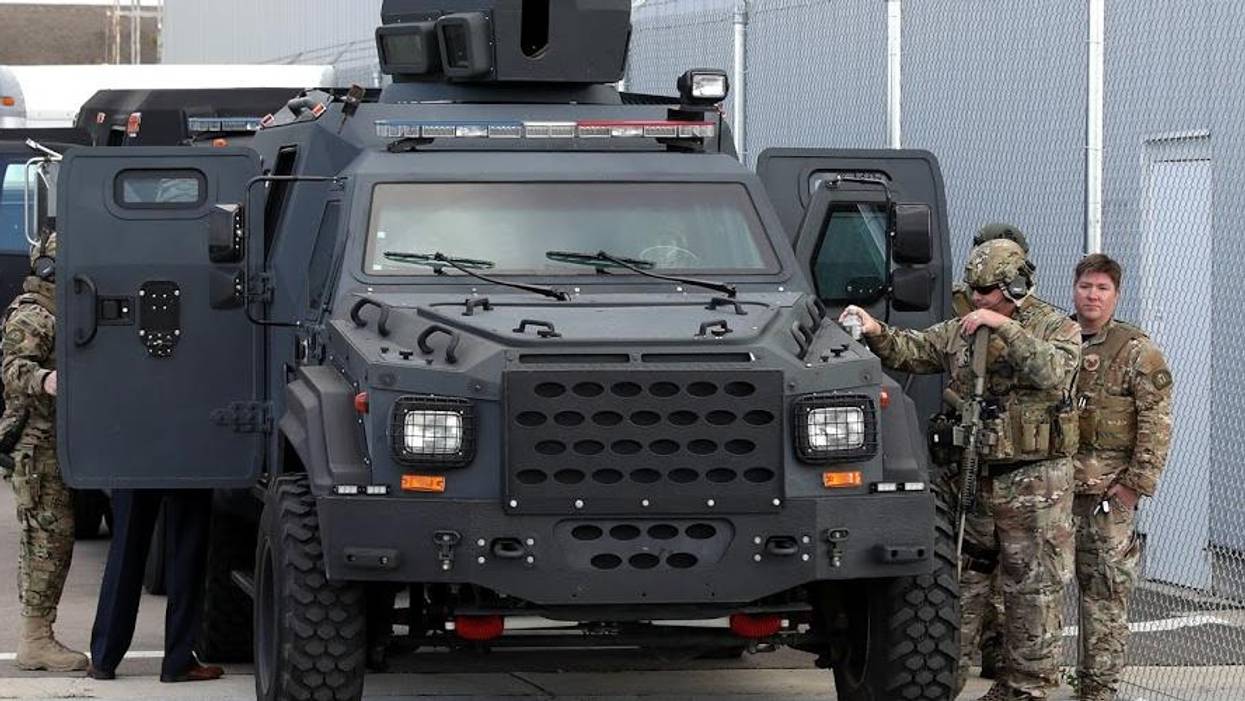
Activists have long decried the program's acceleration of police militarization. Images of heavily armed officers and mine-resistant ambush-protected (MRAP) heavy armored combat vehicles deployed against protesters following the 2014 police killing of unarmed Black teenager Michael Brown in Ferguson, Missouri brought widespread attention to the issue. Around the same time, numerous school districts around the nation made headlines when their police officers acquired MRAPs under the Pentagon program.
Largely in response to public backlash after Ferguson, then-President Barack Obama in 2015 limited the equipment available to law enforcement agencies under the 1033 program, banning the transfer of tanks, grenade lauchers, heavy machine guns, and other battlefield weaponry. However, former President Donald Trump signed a 2017 executive order lifting many of his predecessor's restrictions.
President Joe Biden is expected to issue an executive order reinstating the Obama-era proscriptions. Recent developments including Johnson's bill and last week's House passage of the George Floyd Justice in Policing Act could affect the content and scope of the president's order.
The Stop Militarizing Law Enforcement Act has been introduced numerous times in both the House and Senate since 2015. Last year, Rep. Nydia Velazquez (D-N.Y.) also introduced the Demilitarizing Local Law Enforcement Act, which would have ended the 1033 program.
As a former Hill staffer, I know how the sausage gets made: the backroom deals, the pet projects, and the extreme partisanship. Our current moment requires far more than the ego, moderation, and compromise that is typically reflected in federal legislation. This country's recognition--finally--of the devastation and destruction that comes from the over-policing and over-criminalization of black bodies and communities warrants real, meaningful change. The acknowledgment that Black Lives Matter--finally--demands bold and visionary leadership at the national level.
Elected officials must dramatically reduce law enforcement budgets and put that savings into systems that could enfranchise black and brown people--housing, education, employment, and healthcare.
That audacious vision is divestment. We must stop investing in racist and brutal policing systems. Instead, we must start resourcing the black and brown communities that have been harmed by these "law and order" institutions. Elected officials must dramatically reduce law enforcement budgets and put that savings into systems that could enfranchise black and brown people--housing, education, employment, and healthcare. And providing full access to these segments of our society means removing police from them. School discipline, mental health crises, and homelessness should not be met with a police response.
Divesting from police must happen at all levels of government. At the federal level, divestment looks like an end to the Department of Defense's 1033 program, which gives law enforcement military weapons and equipment that are used against communities and protestors. It is an end to COPS grants that put police in schools and fuel the school to prison pipeline. Divestment is prohibiting Byrne JAG dollars from being used to continue low-level arrests, the failed drug war, and the destruction of black and brown communities. These dollars can and need to be better spent.
We know what policies and practices will not work because we have been here before. Michael Brown. Eric Garner. Breonna Taylor. George Floyd. The list of names does not stop here. Their lives deserve more than hashtags and slogans. They deserve much more than what elected officials have done to date. Members of Congress cannot continue to throw taxpayer money at another commission or study to determine the failings of law enforcement. Federal dollars cannot support more training, more technical assistance, more "checking the box" in the name of reforming the police.
If federal lawmakers are truly up for taking on the country's entrenched, racist, and violent policing systems, born out of slave patrols, they have the vocal and organized backing of constituents to get this done.
The federal government must invest in state and local communities differently. It must get out of the business of funding arrests and incarceration. And in the limited instances in which there would be law enforcement and community encounters, there must be measures to protect against police violence and ensure accountability when there is misconduct. Congress must model a national use of force standard that makes deadly force a rare, last resort. This respect for the sanctity of life must also be reflected in federal laws that prohibit the use of chokeholds and carotid holds. And if these laws are violated, there must be transparent and certain policies with which to hold police responsible.
As we mourn and protest the black lives lost, 21st century policing should look dramatically different than the current status quo. If federal lawmakers are truly up for taking on the country's entrenched, racist, and violent policing systems, born out of slave patrols, they have the vocal and organized backing of constituents to get this done. Now is not the time to dust off old bills and offer them as the way forward. Now is the time for divestment.
When the brutal murder of George Floyd occurred on May 25 in Minneapolis, Minnesota, few people could have imagined that it would have such far-reaching repercussions. Following the equally egregious killings of Ahmaud Arbery and Breonna Taylor, some of us assumed that Floyd's name would join the miserable rollcall of names of black Americans such as Trayvon Martin, Michael Brown, and Eric Garner, slain at the hands of racist police and their civilian counterparts.
But Floyd's murder has ignited a breadth of protests seldom seen in the United States, and the current tension-filled climate has aspects that are still unfolding, and implications that are not yet fully appreciated.
One of the most unexpected and remarkable aspects of the nationwide protests is how these demonstrations have spread to other parts of the world, including continental Europe and the United Kingdom. Protests are occurring
not just in British cities with sizable communities of black people--such as London, Birmingham, and Manchester--but also in cities north of the English border, like Glasgow and Edinburgh. The rallies that have taken place across the United Kingdom have reflected the outrage of people of many different ethnicities.Like the United States, Britain has a protracted and shameful history of black deaths in police custody. A significant number of the placards held by British protesters have drawn attention to the abuse of black people in Britain, even as these signs also demanded an end to the transatlantic pandemic of racism--a pandemic which, like Covid-19, has claimed a grotesquely disproportionate number of black lives.
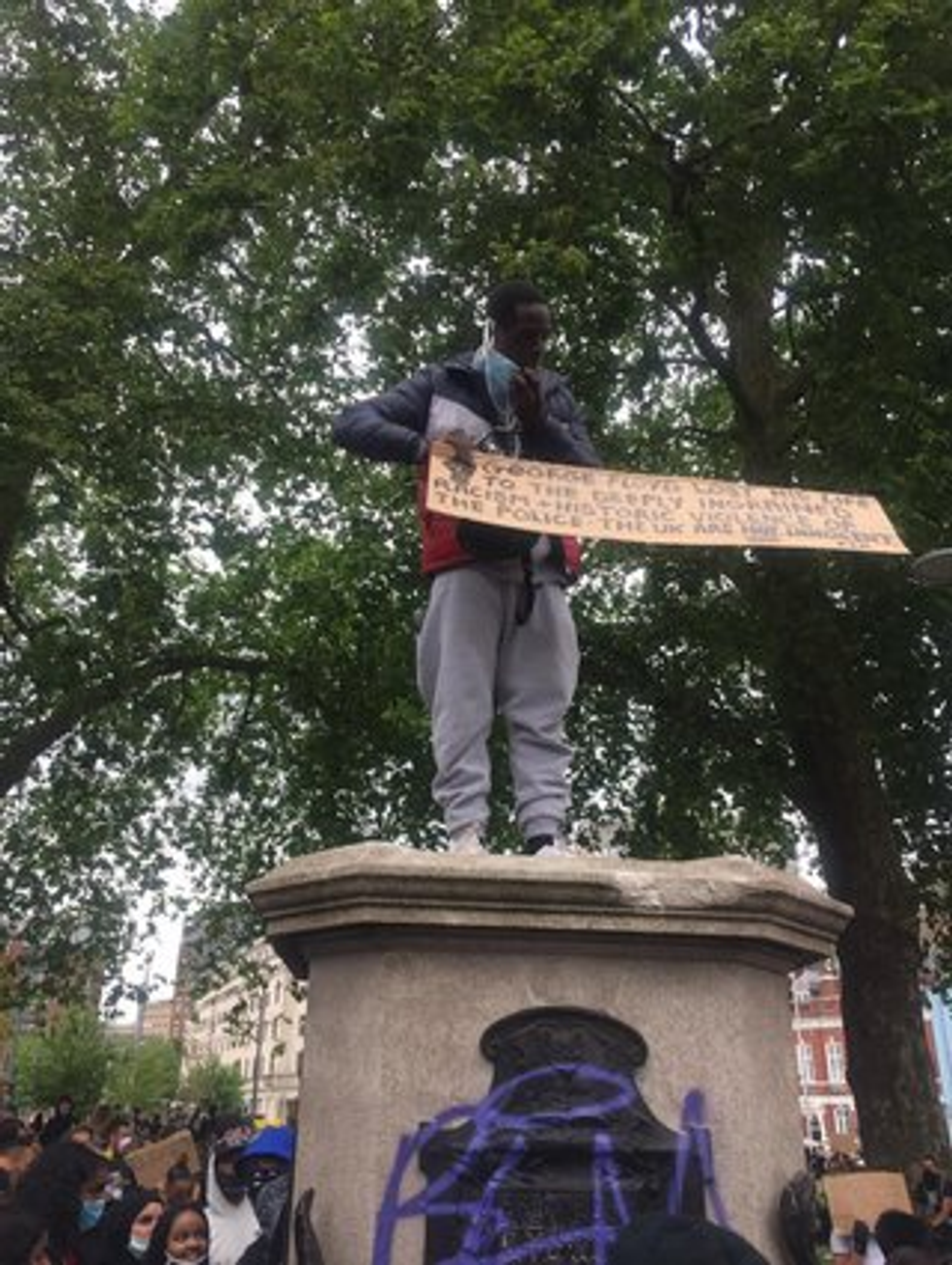
As could be expected, Black Lives Matter protests took place in Bristol, a city in the west of England with a long history of activism and protest emanating from its black communities. But few could have predicted that in the aftermath of the rally, activists would seek, in particularly dramatic fashion, to right a specific wrong and an injustice that had been well over a century in the making.
In Bristol's city center there has stood, from the late-nineteenth century onward, a statue of a merchant who shipped captured African men, women, and children, as part of what historians refer to as the Atlantic Slave Trade, or the Triangular Slave Trade. The merchant, Edward Colston, amassed considerable wealth from his trading activities and in doing so became an important philanthropist within the city, the benefits of his largesse still being enjoyed by modern-day Bristolians.
But just as there's a long history of activism in the United States around the removal of confederate monuments, people have spoken out against Colson's statue since it was erected in the late 19th century. In more recent years, those voices became more animated. Some sought a compromise by asking that a plaque be appended to the monument, drawing attention to how Colston amassed his fortune, and the price paid by hundreds of thousands of African people in this endeavor.
On June 7, matters came to a dramatic head when a number of Black Lives Matter protesters tore down the statue of Colston. For good measure, the damaged statue was rolled to the nearby docks in Bristol city center and dumped into the water of Bristol's harbor--the same harbor from which vessels set sail on their murderous voyages.
Prime Minister Boris Johnson and senior government figures such as Home Secretary Priti Patel were quick to condemn what they declared to be acts of "thuggery," a racially loaded term if ever there was one.
Ironically, just as Johnson, Patel, and others have demanded the vigorous prosecution of those allegedly responsible for the toppling of the statue of Colston, politicians across the U.K. and throughout Europe began, at long last, to take preemptive action to remove statues of equally offensive figures.
These include a statue of the infamous King Leopold II of Belgium, who presided over unspeakable horrors inflicted on the people of the Congo. He was a monarch who ruthlessly and mercilessly exploited both the land and the people of a vast expanse of central Africa. One of his preferred methods to induce harder labor in the Congo, and punish those he believed to be slackers, was to amputate the hands, feet, and limbs of men, women, and children.
What started in Minnesota has the potential to do more than address systemic problems in the United States; people on the other side of the Atlantic have taken these protests into remarkable, extraordinary, and wholly unforeseen directions.
There are numerous statues of him across Belgium, and one of them, in a supposed gesture of retribution, had a hand severed some years ago; another was unceremoniously removed. But one Leopold II statue that's still standing bears a particularly deplorable inscription: "I have undertaken the work in the Congo in the interest of civilization and for the good of Belgium."
In London, Mayor Sadiq Khan, in response to the toppling of the Colson statue, announced a review of the many statues and street names with explicit links to Britain's involvement in the slave trade. A statue of the notorious slaveholder Robert Milligan was already being removed from outside the Museum of London Docklands. Milligan owned several sugar plantations and hundreds of enslaved people in the British colony of Jamaica--He was just one of the many slaveholders and imperialists that were honored in public spaces in Britain.
Parallels can--and should--be drawn between the belated removal of Confederate statues and monuments throughout the South, and the similarly belated removal of statues of brutes such as Colston and Milligan.
What started in Minnesota has the potential to do more than address systemic problems in the United States; people on the other side of the Atlantic have taken these protests into remarkable, extraordinary, and wholly unforeseen directions.
Names of some of those taken by police brutality in the United Kingdom (as seen on placard above): Mark Duggan, Sean Rigg, Sheki Bayoh, Leon Briggs, Christopher Aider, Joy Gardner, Cynthia Jarrett, Cherry Groce, Smiley Culture, Michael Powell, Ricky Bishop, Brian Douglas, Leon Patterson, Derek Bennett, Sarah Reed, Roger Sylvester, Azelle Rodney, Mzee Mohammed, Edson Da Costa, Rashan Charles, Kevin Clarke, Luigi Basile, Leroy Junior Medford, Shane Bryant, Oghene Abboh, Demetre Fraser.
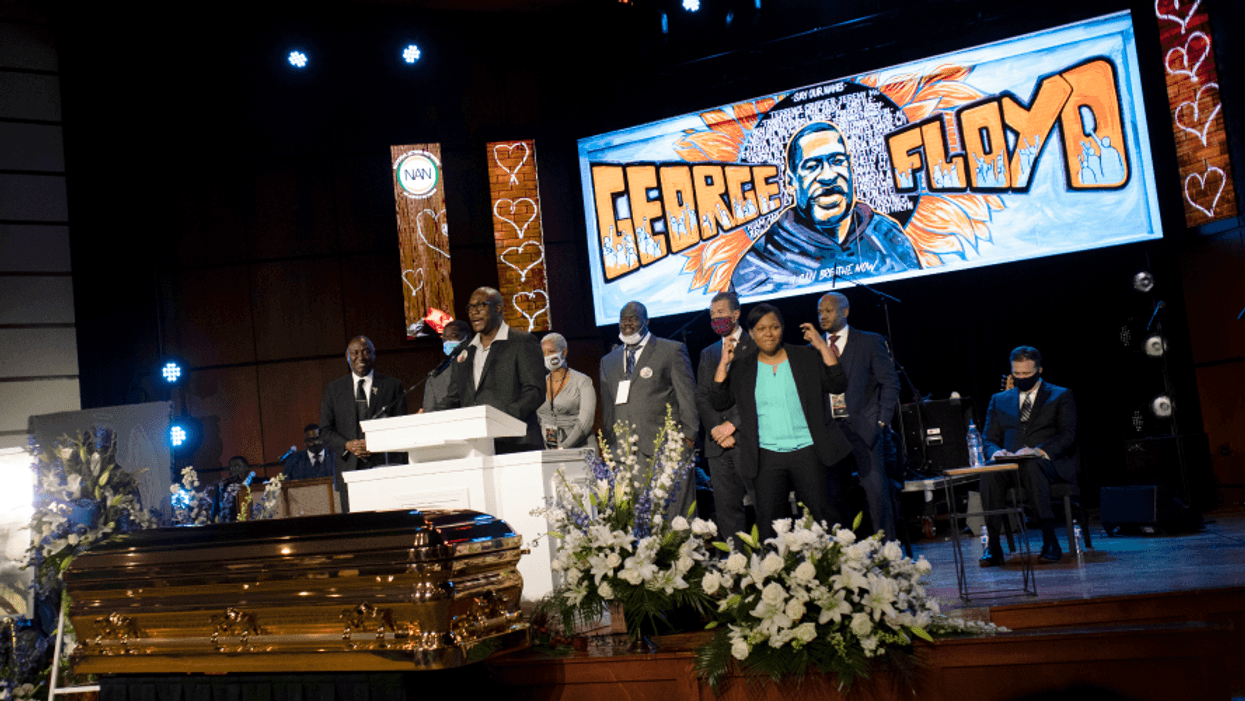
Relatives of four black Americans killed by police--George Floyd, Breonna Taylor, Michael Brown, and Philando Castile--joined with over 600 rights groups Monday to demand a United Nations probe into racist policing and law enforcement's violent suppression of ongoing mass protests against police brutality and systemic racism in the United States.
"I want people across the world and the leaders in the United Nations to see the video of my brother George Floyd, to listen to his cry for help, and I want them to answer his cry."
--Philonise Floyd
The demand came in a letter to members of the U.N. Human Rights Council (HRC) signed by Floyd's brother Philonise Floyd and son Quincy Masond; Taylor's mother Tamika Palmer; Castile's mother Valerie Castile, and Brown's mother Lezley McSpadden.
Led by the ACLU and the U.S. Human Rights Network, hundreds of groups from across the globe also endorsed the letter, including Black Lives Matter, the Center for Constitutional Rights, and the NAACP.
"Mamie Till Mobley made a decision to open the casket of her son Emmett Till so the world could see the atrocities black people faced in America," Philonise Floyd said in a statement. "I want people across the world and the leaders in the United Nations to see the video of my brother George Floyd, to listen to his cry for help, and I want them to answer his cry. I appeal to the United Nations to help him. Help me. Help us. Help black men and women in America."
"The George Floyd family appeals to the United Nations to intervene in his murder," explained their attorney Ben Crump. He said that the nation has a "pattern and practice of condoning the torture and extrajudicial killing of African Americans" and "we have exhausted our domestic legal remedies on prior countless occasions to no avail."
"Now, even though the murder of black people is consistently captured on camera," Crump added, "we have yet to capture the minds and hearts of legislatures and jurors, and we have yet to capture the justice and equality promised in our Constitution and inherent in our human rights."
The letter urges the HRC to urgently convene a special session to address "the unfolding grave human rights crisis borne out of the repression of nationwide protests" that erupted after the May 25 police killing of Floyd in Minneapolis, "which was only one of a recent string of unlawful killings of unarmed black people by police and armed white vigilantes."
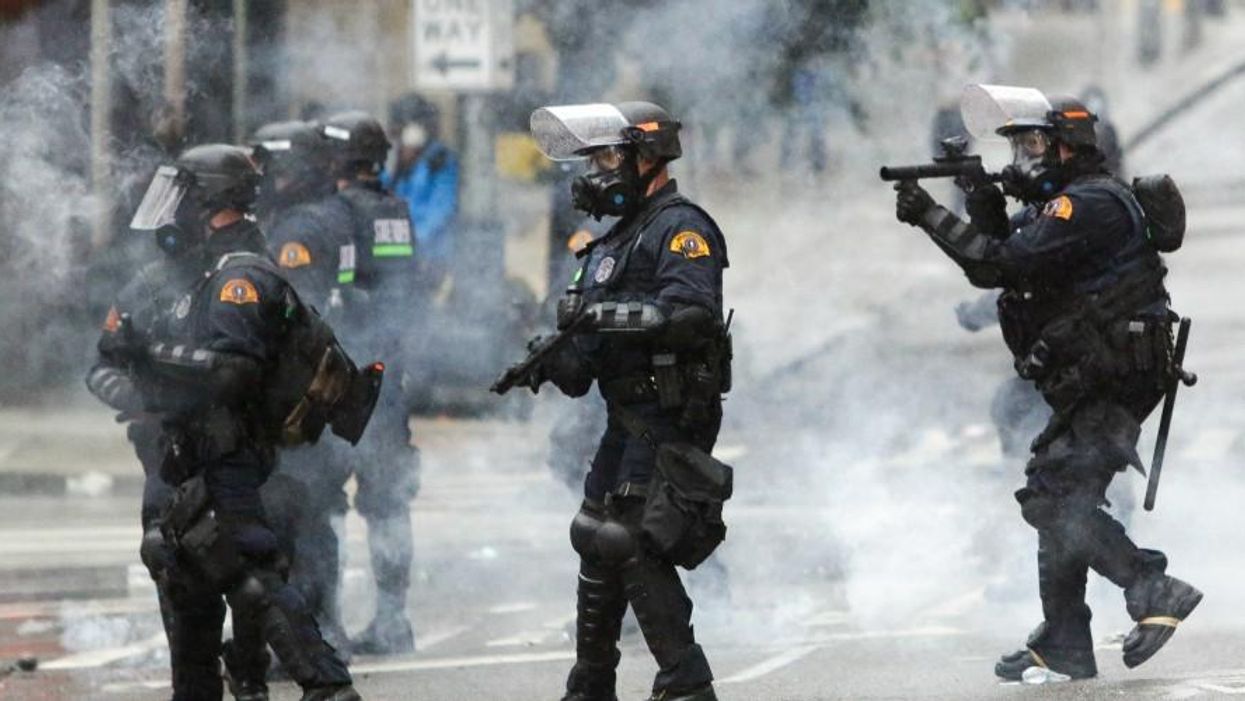
As Common Dreams has reported, law enforcement across the country has responded with widespread violence to the mass demonstrations demanding that communities defund the police and reinvest in community-led public safety. Peaceful protesters and reporters have endured tear gas, rubber bullets, and physical attacks by officers.
The purpose of convening a special session, the letter says, should be to mandate an independent inquiry into:
The letter calls for the inquiry to report its findings to the HRC and "include recommendations on how to ensure that the United States upholds its human rights obligations, including in the context of policing, protests, and assemblies."
"We believe it is important to move this issue to the international stage to highlight the hypocrisy of the U.S. government's stance, where it calls out human rights abuses abroad, but ignores government-sanctioned violence at home."
--Salimah Hankins, U.S. Human Rights Network
"Further," the letter says, "the report should address the responsibility of the United States to end impunity for police violence and other serious human rights violations through appropriate disciplinary actions, prosecutions, and fair trials."
The letter adds that the HRC should pressure the U.S. to give U.N. officials "full and unrestricted access to interview witnesses, including members of the police, to inspect places of detention, and to monitor trials related to the protests and their aftermath."
In addition to expressing concern about how law enforcement has responded to the protests, the signatories also "note with particular concern the deployment of at least 62,000 National Guard soldiers in two dozen states, the encouragement of the use of violence and mass arrests by President Donald Trump on social media, and his labeling of the protesters as 'terrorists.'"
U.S. Human Rights Network executive director Salimah Hankins said Monday that "we believe it is important to move this issue to the international stage to highlight the hypocrisy of the U.S. government's stance, where it calls out human rights abuses abroad, but ignores government-sanctioned violence at home."
Jamil Dakwar, director of the ACLU's Human Rights Program, echoed that sentiment, declaring that "it is time the United States face the same scrutiny and judgement it is quick to pass on to other countries."
"This accountability appeal to the United Nations follows the legacy of great black leaders such as W.E.B. Du Bois, Martin Luther King, Jr., and Malcolm X who believed in internationalizing the struggle for human rights and racial justice in the United States," Dakwar noted.
"As communities in the United States call on their leaders to divest from policing and end structural racism," he said, "the United Nations must support these domestic demands by holding the United States accountable for its human rights violations."
The letter comes after U.N. High Commissioner for Human Rights Michelle Bachelet said last week that the voices calling for an end to the killings of unarmed black Americans, police violence, and the "endemic and structural racism that blights U.S. society need to be heard." She also condemned violence against protesters and journalists and called for "a profound examination of a wide range of issues, including socio-economic factors and deep-seated discrimination."
Michael Brown Sr. lies stock-still on his back on the floor of an art studio in St. Louis as an artist layers papier-mache on his arms, chest, and torso.
Brown Sr. is a stand-in, the model for a life-size replica that St. Louis artist Dail Chambers is creating to represent Michael Brown Jr.--his deceased son.
In the days and weeks that followed, other artists added their own interpretations to the cast, and community leaders, family, friends, and activists affixed messages of remembrance, of hope, as well as photos and tributes to Brown Jr.
"Although everybody else has left since your death, we are still here fighting," one 16-year-old girl wrote.
The final exhibit, called "As I See You," will be part of a memorial Aug. 9-11 for Brown Jr., five years after a police officer took the 18-year-old's life in Ferguson, Missouri.
The memorial weekend's events will include a private unveiling of the exhibit for the family members of 25 victims of police killings across the country, and will coincide with the first national reparations convening in Ferguson, beginning Aug. 8.
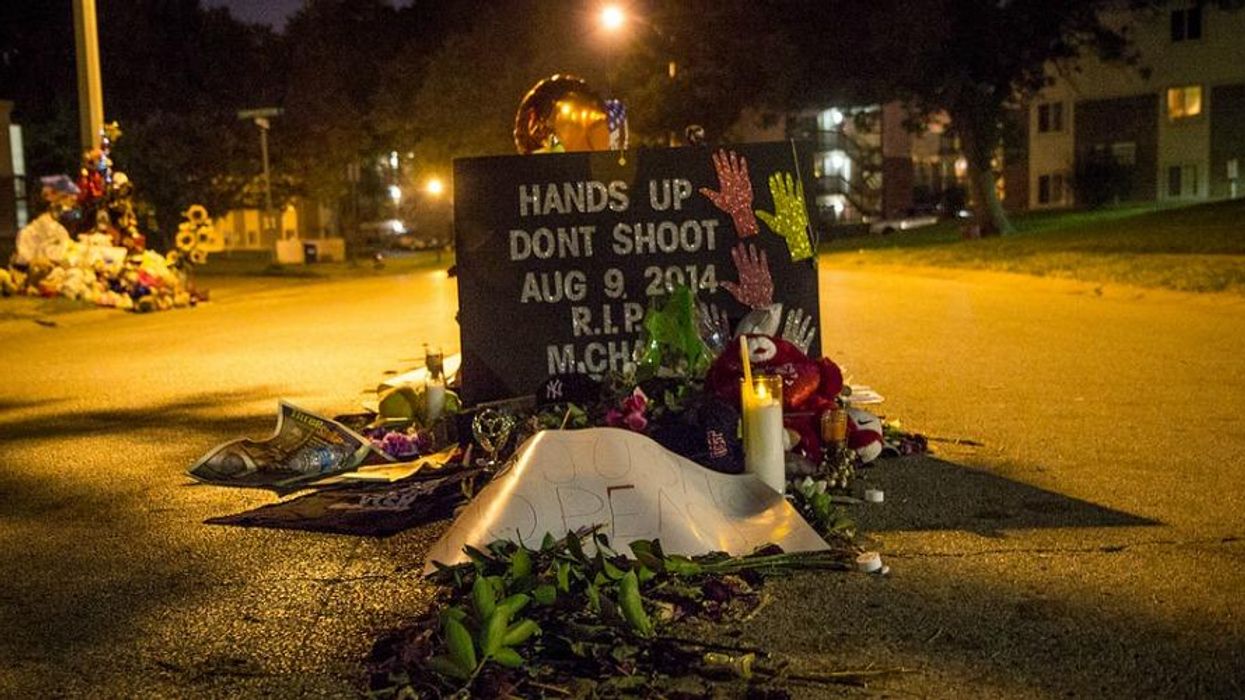
Brown Jr. was not the first unarmed Black man killed by a White police officer. But his death on Aug. 9, 2014, grabbed the world's attention, exposing long-festering issues of race and inequality in the United States and bringing new energy to a simmering Movement for Black Lives.
In death, Brown Jr. became a household name, and the small, mostly Black city where he died became the movement's ground zero. Both will be forever linked to the tragedy and trauma around police shootings and the will of a frustrated people to rise up against injustice.
For more than four hours, Brown Jr.'s lifeless body lay uncovered on the street where he fell, blood flowing from his head as bystanders watched in horror and outrage. For weeks following the shooting, and months after a St. Louis grand jury failed to indict officer Darren Wilson, protests and demonstrations engulfed the region.
Images on television and on social media caught the sporadic violent clashes between demonstrators and police, who used tear gas and armored vehicles intended for war zones to try to control the crowds.
"The media spent so much time dehumanizing Mike, people forgot he was somebody's brother, somebody's son, somebody's cousin."
"People, protestors were coming in from all over ... coming to ground zero to stand up for what they believed in," Brown Sr. says. "We are so grateful to them for making this happen, for having the courage to know it was wrong and to stand up for their beliefs. Before Mike, this kind of thing was mostly swept under the rug; now it's happening almost all the time."
The Ferguson Uprising raised awareness around the level of racial disparity on issues from policing and mass incarceration to economics--not just in that region, but across the country.
And in the months and years afterward, protests and demonstrations elsewhere would follow police shootings of other Black people whose names many have now come to know: Philando Castile, Tamir Rice, Freddie Gray, Eric Harris, Terence Crutcher, Walter Scott, Sandra Bland, Antwon Rose, and on.
David Ragland, cofounder of the Truth Telling Project of Ferguson, which got its start in the early days of the Uprising, described the spontaneity of protests that grew out of the shootings as moments that built into movements.
"Each generation has its own way, and Ferguson questioned the entire American project," Ragland says. "These were people from marginalized communities demanding human rights, human dignity ... They were average people--nurses, postal workers, people who came out because they were tired--saying we are good people, we deserve dignity."
For years, Cal Brown thought about how she might honor and keep alive the memory of her stepson, who was a recent high school graduate and had been preparing to begin vocational training classes just two days before he was killed. At the same time, she wanted to acknowledge and give voice to those who saw his death as a catalyst for change.
As the fifth anniversary neared, she searched for ways to do both.
"The media had spent so much time dehumanizing Mike, people forgot he was somebody's brother, somebody's son, somebody's cousin," Brown says. "So many people say, 'I love Mike Brown; he belongs to me.' I wanted to take the time and show people why they love this young man."
Collaborating with Elizabeth Vega, a St. Louis "artivist" (artist and activist) who uses art to empower and inspire change, she settled on the idea of using Brown Jr.'s father as the model for a body cast of his son. Chambers, a local artist, would create the cast.
The new exhibit would also help to counter a controversial one in a Chicago museum in 2015 that graphically depicted Michael Brown Jr.'s death scene. Already, Brown says, other venues across the country have started requesting "As I See You."
Brown Sr. recalls his reaction when his wife first suggested the idea of using his body as a model for the cast. "It took me a minute," he said. "I went outside and smoked a cigarette to get my mind together, get myself together to prepare for it."
Police have been shooting unarmed people long before cases like Brown Jr.'s called attention to the injustice of it. A Washington Post database has recorded about 1,000 fatal police shootings each year since 2015, when the paper first began tracking them--4,453 fatal shootings in total. Just under one-quarter of the victims have been Black.
In that time, 58 officers were charged and 13 convicted of murder or manslaughter, says Philip Stinson, a criminologist at Bowling Green State University who tracks and studies arrests of police nationwide.
"Between 900 and 1,000 times each year, on-duty police officers across the U.S. shoot and kill someone," Stinson says. "And yet, only a few times each year is an officer charged with murder or manslaughter resulting from one of those shootings."
Based on his research, Stinson says the number of officers charged since 2005 in any given year has varied from zero to 18; any increase in recent years is not statistically significant. Basically, he says, "it's business as usual in the police subculture."
Just last month, after a five-year civil rights investigation, federal prosecutors announced they would not bring charges against Staten Island police officer Daniel Pantaleo, who applied a department-banned chokehold, killing Eric Garner a month before Brown Jr. was shot in 2014.
With a grand jury also declining to bring charges, the most severe punishment Pantaleo faces is termination from his job. He was suspended after an administrative judge recommended he be fired.
The dying gasps of "I can't breathe" by the father of six became a rallying cry in nationwide protests.
In the five years since Garner's and Brown Jr.'s deaths, heightened activism by the Movement for Black Lives and more extensive national discourse have raised awareness around issues of police accountability and use of force--particularly when it comes to people of color.
President Barack Obama, who appealed for calm following Brown Jr.'s death and the nonindictment of Wilson, created the President's Task Force on 21st Century Policing in December 2014. The following spring, it issued a report that called for the removal of policies that reward police for producing more arrests and convictions, and for independent prosecutors to investigate civilian deaths in police custody or in officer-involved shootings.
In 2015, the U.S. Department of Justice issued a scathing report on Ferguson, highlighting how disproportionate enforcement by courts and the police, intended to generate city revenue, targeted African Americans. In a city where Black people make up two-thirds of the population, the 54-person police force had only four African Americans.
That report led to a consent decree between the Justice Department and the city requiring body camera use for police officers, use-of-force policies, and a municipal court overhaul.
The police chief in place during the Uprising and the city manager and municipal judge were all forced out of their jobs. In 2015, residents elected two Black city council members, and last year replaced the prosecutor who declined to charge Wilson in Brown Jr.'s death.
In his place, they elected Wesley Belle, a progressive African American lawyer who understood the system needed to "change from the inside."
The dying gasps of "I can't breathe" by the father of six became a rallying cry in nationwide protests.
Last June, the city appointed a Black police chief--a police captain from the Atlanta suburb of Forest Park.
Residents appear to have mixed feelings about how far the city has come in five years.
Cathy "Mama Cat" Daniels of the activist group Potbangerz, whose organizing around housing and feeding the unhoused began with the Uprising, says she'd hoped the community would be further ahead given "all that we did on the streets and are still fighting for."
She feels hopeful, though. "We have a lot of young Black folks who went from protest to politics and doing some dope, amazing stuff," she says. "They are fighting hard, but we need some people power behind them."
And while applauding the political progress, Ragland says that real substantial change has yet to be seen. Black people in the region are still more likely to be targeted for enforcement, he says.
Pointing to the recent decision in the Garner case, Ragland adds: "We now have a federal government that is less willing to hold law enforcement accountable."
"I think there's a deep power imbalance between law enforcement and everyday citizens," he says. "And I don't think it's helpful for a democracy."
Brown Sr. is also working to help empower and uplift young people through the Michael Brown Chosen for Change Foundation, which he and his wife, Cal, formed the year after his son's death.
It is one of many ways the elder Brown is working to preserve his son's memory.
Through the group Conscious Campus, Ragland and Brown Sr. have been working together to take the story about what happened in Ferguson five years ago to college campuses across the country. The idea is to fill the gaps and correct the misinformation that exists, Brown Sr. says.
He and Brown Jr.'s mother, Leslie McSpadden, were featured in the 2017 documentary about the shooting, Stranger Fruit. And in 2014, the two traveled to Geneva to testify before the United Nations Committee Against Torture.
Brown Sr. is hopeful that the sculpture will be a lasting reminder of the promise of youth and the potential for change.
"Everything is a process," he says. "Just us making noise and standing together and getting in the right rooms and having these discussions, I can see it moving forward. But there's still a lot of work to be done."