

SUBSCRIBE TO OUR FREE NEWSLETTER
Daily news & progressive opinion—funded by the people, not the corporations—delivered straight to your inbox.
5
#000000
#FFFFFF
To donate by check, phone, or other method, see our More Ways to Give page.
Daily news & progressive opinion—funded by the people, not the corporations—delivered straight to your inbox.
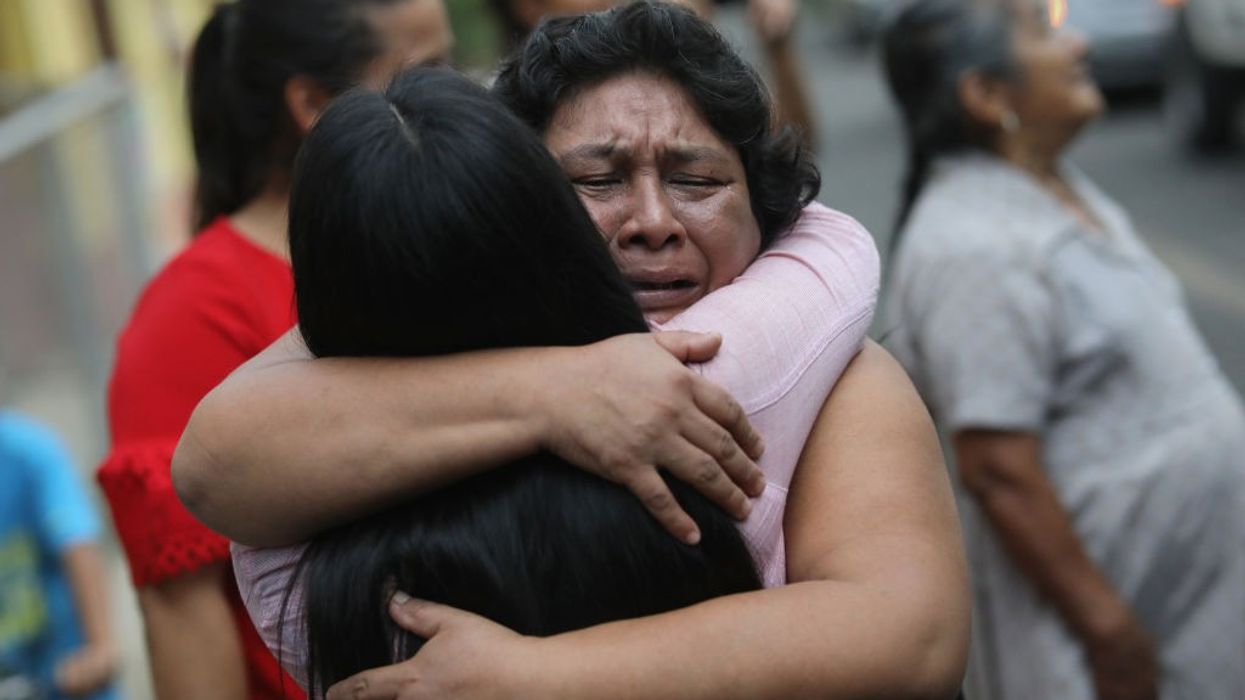
Up to 1,360 children who were separated from their parents under the Trump administration have not been reunited six years later, according to the new report from a trio of human rights groups.
A report published Monday by a coalition of human rights groups estimates that as many as 1,360 children who were separated from their parents under the first Trump administration's "zero tolerance" policy have yet to be reunited, causing immense suffering for families ensnared in the punitive effort to deter border crossings.
The 135-page report was produced by Human Rights Watch (HRW), the Texas Civil Rights Project (TCRP), and the Lowenstein International Human Rights Clinic at Yale Law School, and it comes as immigrant rights advocates brace for President-elect Donald Trump's return to power alongside officials who helped develop and implement the large-scale family separations.
"Forcible separation of children from their families inflicted harms that were severe and foreseeable," states the report, which examines public and internal government documents, materials from legal proceedings, and the findings of government investigations and features interviews with parents and children who were forcibly separated by the Trump administration.
"Once parents realized they would not be immediately reunited with their children, they were distraught," the report continues. "Some children sobbed uncontrollably. Many felt abandoned. Nearly all were bewildered, not least because immigration officials would not tell them where their parents were or gave responses that proved to be lies."
The groups estimate that the first Trump administration separated more than 4,600 children from their families during its four years in power, and nearly 30% of the children are unaccounted for and "may remain separated from their parents."
"A government should never target children to send a message to parents."
While family separations predated Trump's first term and have continued under President Joe Biden, experts argue the Trump administration's policy was uniquely expansive and cruel. The groups behind the new report said the Trump administration's family separation efforts "constituted enforced disappearance and may have constituted torture."
"We need to take away children," Jeff Sessions, then Trump's attorney general, reportedly said during a May 2018 call with five federal prosecutors, the report observes, citing handwritten notes from one of the prosecutors.
Michael Garcia Bochenek, senior children's rights counsel at HRW and an author of the new report, said in a statement Monday that "it's chilling to see, in document after document, the calculated cruelty that went into the forcible family separation policy."
"A government should never target children to send a message to parents," Bochenek added.
The separations traumatized both parents and children, according to the report.
"Migrant children who have been forcibly separated from their parents demonstrate greater emotional and behavioral difficulties than children who have never been separated," the report notes. "Parents repeatedly told Al Otro Lado, a legal services organization based in Tijuana, that forced separation from their children was 'the worst thing they had ever experienced' and reported 'continued disturbances in sleep, nightmares, loss of appetite, loss of interest, fear for the future, constant worry, hopelessness, and loss of the ability to concentrate.'"
"In May 2018," the report adds, "a man killed himself after [U.S. Customs and Border Protection] agents forcibly separated him from his children."
HRW, TCRP, and the Lowenstein International Human Rights Clinic called on Congress and the Biden administration to "put in place comprehensive measures to remedy the wrongs these families suffered" and urged the U.S. Department of Homeland Security—soon to be led by far-right South Dakota Gov. Kristi Noem—to "adopt standards that presumptively keep families together, separating them only when in a child's best interest."
Trump campaigned during the 2024 election on a pledge to launch the "largest domestic deportation operation in American history," and he said during an interview aired last week that "we don't have to separate families."
"We'll send the whole family, very humanely, back to the country where they came," Trump said, suggesting he'll also deport children who are U.S. citizens.
When pressed on whether he intends to revive the "zero tolerance" policy, Trump said, "We need deterrence."
"When somebody comes here illegally, they're going out. It's very simple," he added. "Now if they come here illegally but their family is here legally, then the family has a choice. The person that came in illegally can go out, or they can all go out together."
The ACLU, which has represented separated families in court, has pledged to take swift legal action if the incoming Trump administration brings back "zero tolerance."
"I am hopeful that the Trump administration recognized the outpouring from the American public and the worldwide revulsion to ripping little children away from their parents and will not try to separate families again," ACLU attorney Lee Gelernt told TIME magazine last month. "But if it does we will be back in court immediately."
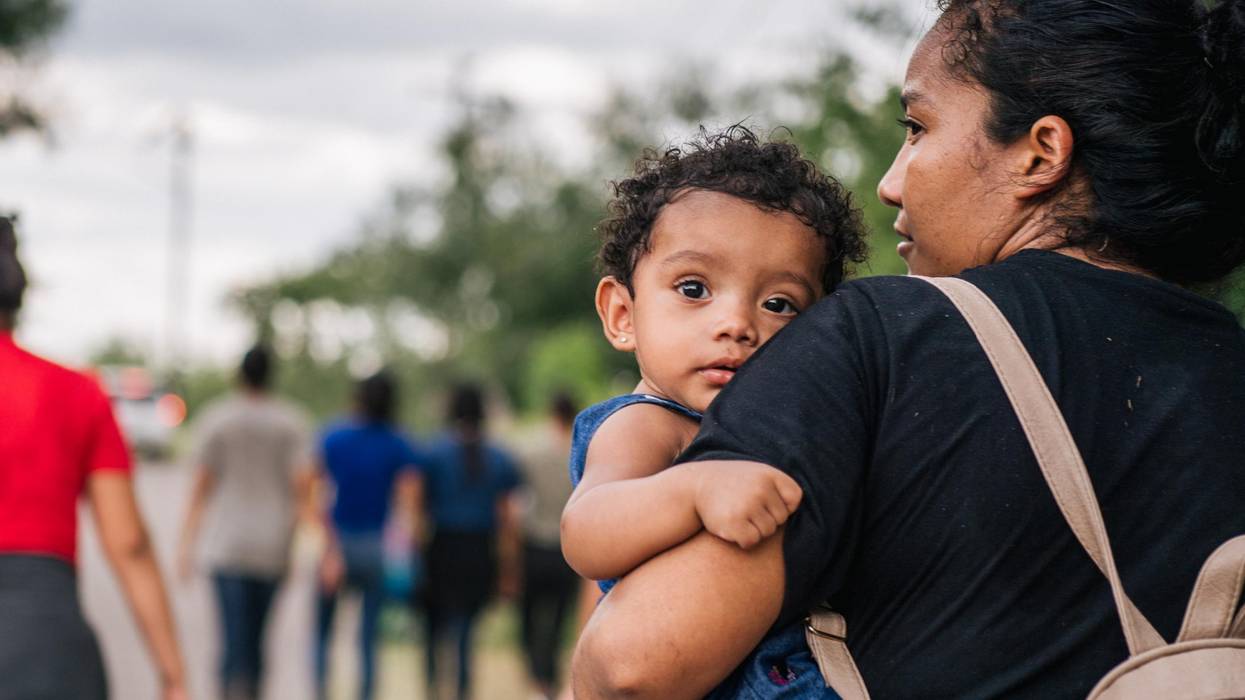
Immigrant rights advocates hailed the Wednesday reversal by U.S. Attorney Merrick Garland of a Trump-era rule denying asylum in the United States to victims of domestic or gang violence as a "critically important" step toward restoring the right of refuge to migrants fleeing countries where their lives are often in danger.
"This was the right move. We are thrilled for our client and for the many deserving individuals fleeing persecution who will have a fair chance to seek refuge in the United States."
--Karen Musalo, CGRS
In a pair of decisions, Garland vacated a 2018 guidance from then-Attorney General Jeff Sessions that declared migrants would no longer automatically qualify for asylum if they presented concerns of domestic abuse or gang violence in their home countries.
Later that year, a federal judge in Washington, D.C. struck down much of the contentious Justice Department guidance, calling it "arbitrary, capricious," and unlawful.
According to the New York Times, Wednesday's decision involves the cases of two asylum-seeking Salvadoran women known as A-B- and L-E-A-. In 2016 and 2017, the Justice Department's Board of Immigration Appeals ruled that the women qualified for asylum since the government of El Salvador did not adequately protect people suffering domestic abuse.
A 2020 Human Rights Watch investigation found that at least 138 people deported from the United States to El Salvador since 2013 were killed, and that at least 70 others were kidnapped, sexually assaulted, or tortured. Many of the victims were murdered or harmed by the gangs they originally fled.
However, Sessions overruled the board's decision regarding A-B; his successor, William Barr, responded similarly to the board's finding in L-E-A-'s case.
"These decisions involve important questions about the meaning of our nation's asylum laws, which reflect America's commitment to providing refuge to some of the world's most vulnerable people," Associate Attorney General Vanita Gupta wrote on Wednesday in a memo to the Justice Department's Civil Division.
Migrant advocates hailed news of the DOJ policy reversal.
"This was the right move. We are thrilled for our client and for the many deserving individuals fleeing persecution who will have a fair chance to seek refuge in the United States," Karen Musalo, director of the Center for Gender & Refugee Studies (CGRS) and co-counsel in Matter of A-B-, said in a statement.
"Now it's time to build on this progress," she added. "We're ready to work with the administration to create an asylum system that provides every person a fair opportunity to apply for protection, in line with our human rights obligations."
Bradley Jenkins, federal litigation attorney at the Catholic Legal Immigration Network, Inc. (CLINIC) and one of the lawyers representing L-E-A-, said that "families facing persecution qualify for asylum under any reasonable interpretation of the law, and it is encouraging to see Attorney General Garland take this step toward restoring the asylum system."
"We hope that the rule-making process will result in further progress toward a fair and humane asylum policy," he added.
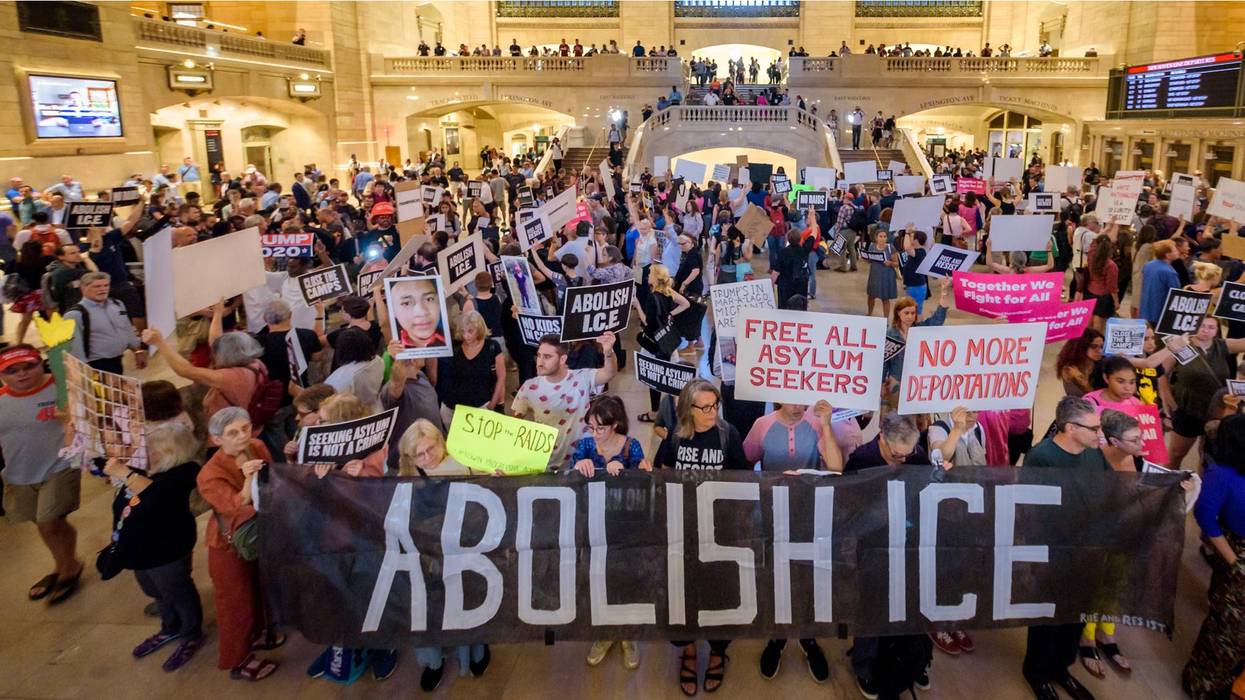
U.S. Attorney General Merrick Garland earlier this month rescinded a Trump administration policy that denied hundreds of millions of dollars in federal grants to law enforcement agencies in sanctuary jurisdictions, Reuters revealed Wednesday.
The news agency viewed an internal Justice Department memo sent by Maureen Henneberg, acting head of the Office of Justice Programs, revoking a May 2017 directive from then-Attorney General Jeff Sessions that limited $250 million in federal funding for law enforcement to states, counties, and municipalities that cooperate with U.S. Immigration and Customs Enforcement (ICE).
Henneberg's memo instructs DOJ employees to "pull down and revise all solicitations that describe requirements or priority consideration elements or criteria pertaining to immigration."
The memo also orders DOJ staff to rescind any pending grant applications conditioned upon cooperation with ICE. "These solicitations will be reposted and grantees will be required to reapply," she wrote.
Garland ordered department officials to implement the new policy on April 14, according to Reuters. The move followed President Joe Biden's signing of an executive order overturning one of Trump's first directives, an order aimed at pressuring jurisdictions into cracking down on undocumented immigration.
The DOJ's Community-Oriented Policing website states that "grant-making components issued revised guidance on April 22, 2021 regarding conditions on certain department grants," and that consistent with Biden's executive order and Garland's April 14 directive, "DOJ informed grant recipients and applicants that they will continue receiving certain department grants."
Numerous states and cities sued the DOJ over the grant prohibition policy. Last February, the U.S. Court of Appeals for the Second Circuit ruled in favor of the Trump administration, setting up a potential U.S. Supreme Court showdown that was averted by Biden's election. Last month, the DOJ urged the Supreme Court to dismiss pending sanctuary city cases.
Former President Donald Trump's "zero tolerance" immigration policies targeting undocumented migrants and refugees and the communities that offered them sanctuary coincided with a broader campaign against progressive cities that included designating New York, Seattle, and Portland, Oregon "anarchist jurisdictions."
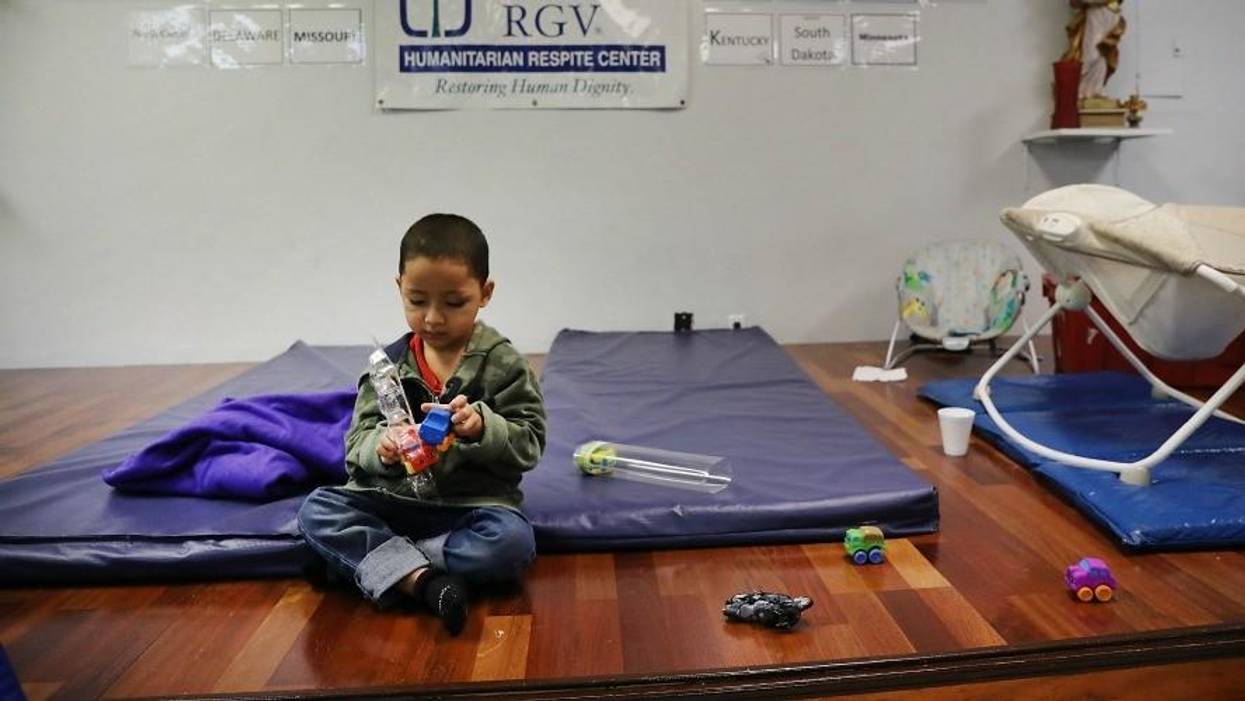
As a former leading U.S. Justice Department official on Thursday said he regretted the role he played in the Trump administration's "zero tolerance" migrant family separation policy in the wake of a scathing inspector general report, human and civil rights groups pointed to the probe's findings as "damning" proof of the administration's cruelty toward people seeking refuge in the United States.
"The incoming administration must reunite the separated families in the United States, but we cannot stop there. These families deserve citizenship, resources, care, and a commitment that family separation will never happen again."
--Lee Gelernt, ACLU
The inspector general's report (pdf) concluded that President Donald Trump, ex-Homeland Security Secretary Kirstjen Nielsen, then-Attorney General Jeff Sessions, and other senior officials were woefully unprepared when U.S. agents started seizing thousands of migrant children from their asylum-seeking parents and relatives who were often imprisoned in concentration camps after entering the United States, first in a 2017 DOJ pilot program and then nationwide the following year.
The report, based on interviews with dozens of DOJ officials and a review of over 200,000 emails and other electronic files, directly implicates Trump in the disastrous policy. It also found that senior administration officials were "fully aware" that the policy would result in children being separated from their families but pressed ahead with it anyway.
In response to the report, former Deputy Attorney General Rod Rosenstein on Thusday released a statement of regret.
"Since leaving the department, I have often asked myself what we should have done differently, and no issue has dominated my thinking more than the zero tolerance immigration policy," Rosenstein told NBC News. "It was a failed policy that never should have been proposed or implemented. I wish we all had done better."
The ACLU--which successfully sued to block family separation and immediately reunite families--led human and civil rights groups in reacting to what it called the "damning" report.
"The barbaric family separation practice was immoral and illegal," said Lee Gelernt, the ACLU lawyer who led the family separation suit, in a statement on Thursday. "This new report shows just how far the Trump administration was willing to go to destroy these families. Just when you think the Trump administration can't sink any lower, it does."
The new DOJ report's findings correspond with those of a 21-month House Judiciary Committee investigation published last October that accused the Trump administration of "reckless incompetence and intentional cruelty" in its implementation of the zero tolerance policy. In November, Conmon Dreams reported that 666 children--about 20% of whom were under the age of 5 when they were ripped away from their parents--remained separated from their families.
As a result of the separation policy, both parents and children--who were often told by U.S. officials that they would never see each other again--have suffered tremendous emotional and psychological trauma that Physicians for Human Rights has called "torture" and "state-sanctioned child abuse."
Some of the seized children have been placed in U.S. families, who are sometimes able to petition for permanent custody, and it is feared that some of the children may indeed never see their parents again.
In late June 2018, as public outrage mounted in the face of stories like a breastfeeding baby being torn away from her mother and a father driven to suicide after being separated from his wife and child, the administration reluctantly rolled back the policy--which, along with forced surgical removal of reproductive organs of migrant women has been called the Trump administration's worst domestic human rights violation.
During the 2020 election, President-elect Joe Biden vowed to form a task force to reunite all of the separated children with their relatives. Gelernt stressed that he must now follow through on his promise.
"The Biden-Harris administration will inherit the legacy of family separation, and we don't doubt that more horrific details will continue to emerge," the ACLU attorney said. "We need them to act with urgency--every day without action makes it harder to find and reunite families."
"The incoming administration must reunite the separated families in the United States, but we cannot stop there," Gelernt added. "These families deserve citizenship, resources, care, and a commitment that family separation will never happen again."
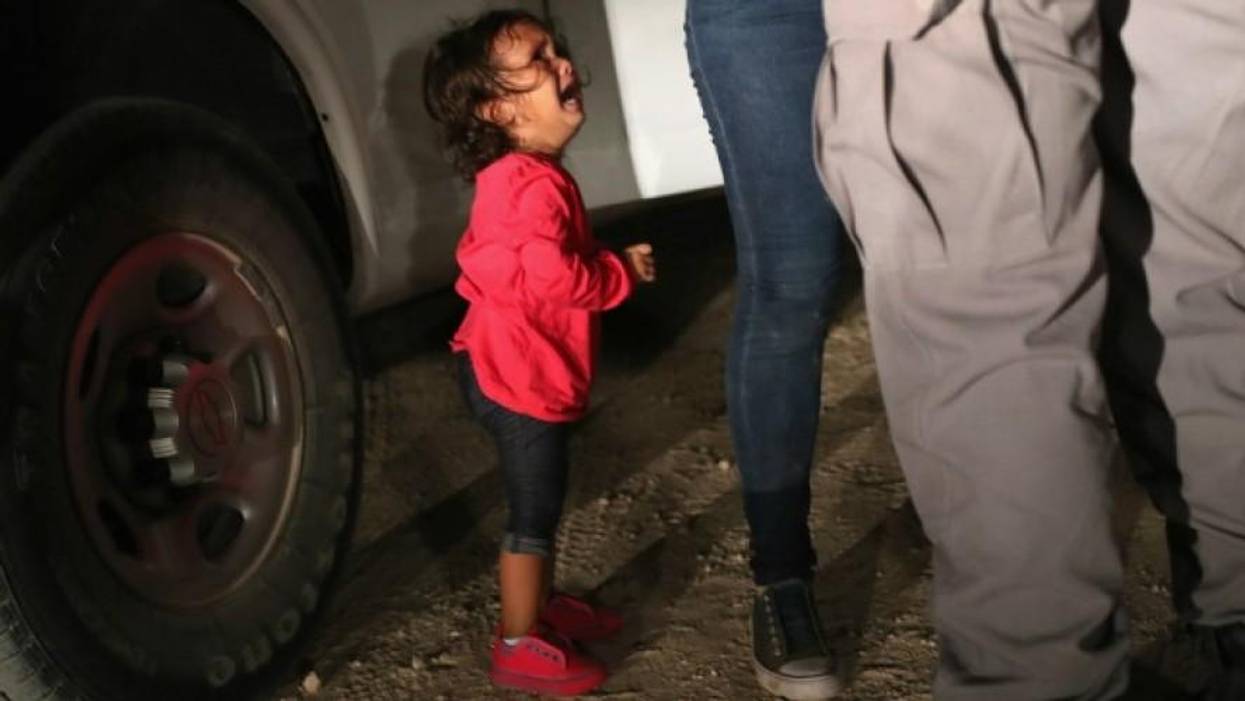
Lawyers appointed by a federal judge to locate members of families separated in 2017 during a clampdown along the U.S.-Mexico border reported Tuesday night that they have yet to find the parents of 545 migrant children, according to a new court filing by the ACLU, prompting renewed denunciations of President Donald Trump's cruel immigration policies.
"This isn't an unintended consequence, this is the predictable outcome of an incompetent administration that thought ripping families apart would send a message."
--Rep. Gregory Meeks
The filing (pdf) says that roughly two-thirds of the missing parents are believed to be in their Central American countries of origin after having been deported without their children, who remain in the U.S. with foster families or distant relatives.
"People are constantly asking me when we will find all the families and I unfortunately do not know," attorney Lee Gelernt, the deputy director of the ACLU's Immigrants' Rights Project, told BuzzFeed News. "The numbers tell one story, but each individual child has his or her own story with its own human dimension."
According to BuzzFeed News:
In 2018, the Trump administration systematically separated thousands of children from their parents under a so-called "zero tolerance policy" in which parents were sent to federal prison before going to court on charges of entering the U.S. without authorization. Because children can't be sent to federal prison with their parents, the government separated them, listed them as unaccompanied minors, and transferred them to the custody of the Office of Refugee Resettlement.
It was later revealed and confirmed that the White House had actually begun separating families in 2017 under a pilot program.
The ACLU found that between 2017 and 2018, the Trump administration separated at least 4,200 migrant children from their guardians and deported hundreds of parents without their kids, often prior to collecting adequate contact information.
NBC News noted that "the ACLU and other pro-bono law firms were tasked with finding the members of families separated during the 2017 pilot program," while "a separate court order directed that the Trump administration reunite families separated under zero tolerance in 2018."
NBC News continued:
Unlike the 2,800 families separated under zero tolerance in 2018, most of whom remained in custody when the policy was ended by executive order, many of the more than 1,000 parents separated from their children in 2017 under the pilot program had already been deported before a federal judge in California ordered that they be found.
Human rights advocates and legal organizations constituting a court-appointed steering committee have "been able to contact the parents of more than 550 children," NBC News reported. Of those, it is predicted that "about 25 of them may have a chance to come back to the U.S. for reunification."
In addition to the obstacles to reunification created by U.S. policy, Gelernt described how some of the parents who have been located have made the difficult decision to keep their children in the U.S. "due to fear of what will happen to their child if they return" to their country of origin.
In an interview Tuesday night with MSNBC's Chris Hayes, journalist Jacob Soboroff pointed out that the trauma endured by migrant children separated from their parents has been characterized as "government-sanctioned child abuse" by the American Academy of Pediatrics and as "torture" by Physicians for Human Rights.
"Because of the Trump administration's calculated cruelty, 545 children have not seen their parents since 2017," Sen. Patty Murray (D-Wa.) said Wednesday in a statement. "And have no idea if or when they will ever see them again."
"Evil is too kind a word for what the Trump administration has done here," the legislator said, calling for the passage of the Stop Cruelty to Migrant Children Act she introduced in 2019.
"Evil is too kind a word for what the Trump administration has done."
--Sen. Patty Murray
"The staggering inhumanity of this president's treatment of these children," Murray added, "belongs in the darkest chapters of our nation's history--the ones we can never forget and must never repeat."
According to Soboroff, the White House pursued family separation even after being warned by some officials in the Department of Health and Human Services, the Department of Homeland Security, and the Department of Justice (DOJ) that implementing this policy "was going to have the exact consequences we're talking about right now."
"The record-keeping wasn't there, they wouldn't be able to track these families down," he added, "and here we are... almost three years later."
Furthermore, Soboroff noted on social media that "most of these parents, if ever found, will face insurmountable hurdles to reunification with their children in the U.S."
"We know from reporting that the cruelty of this policy was intentional," Rep. Gregory Meeks (D-N.Y.) tweeted Wednesday. "This isn't an unintended consequence, this is the predictable outcome of an incompetent administration that thought ripping families apart would send a message."
As Common Dreams detailed earlier this month, a recent report by the inspector general of the DOJ reveals that former Attorney General Jeff Sessions and then-Deputy AG Rod Rosenstein pushed for enforcing Trump's family separation policy, with Sessions saying that "we need to take away the children" to deter asylum seekers from entering the U.S.
The Center for American Progress on Tuesday released a heart-wrenching video depicting the "horrors of family separation and the lasting harms... [of] inhumane immigration policies."
"There is so much more work to be done," Gelernt said, referring to the hundreds of parents yet to be found.
"The contact information the government gave us was largely stale, so we've been looking for the families on the ground in Central America," he added, "but because of Covid-19, the on-the ground-search [had] halted."
However, the filing states that "limited physical on-the-ground searches for separated parents has now resumed where possible to do so while protecting the health of personnel working with the steering committee and members of vulnerable communities in separated parents' home countries."
"Some of these children have been separated for years and were just babies at the time," Gelernt said.
"We will not stop looking until we have found every one of the families," he added, "no matter how long it takes."
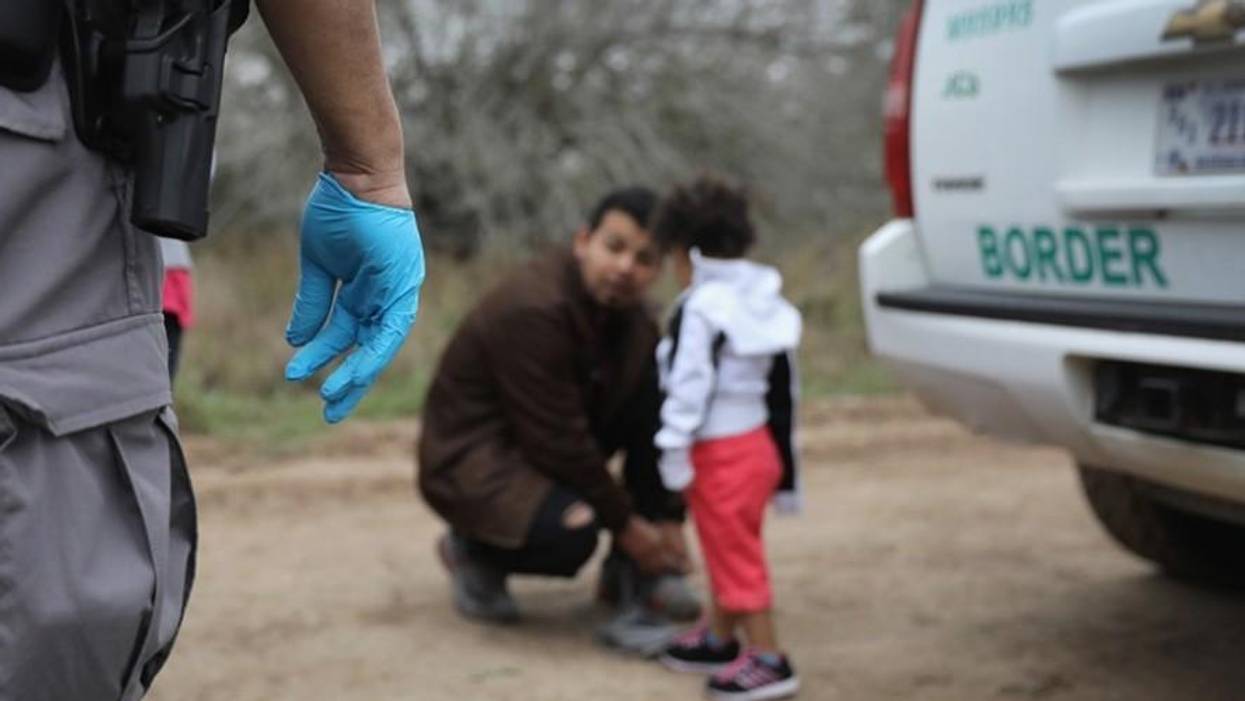
A damning new draft report by the inspector general of the U.S. Department of Justice details how former Attorney General Jeff Sessions and his deputy attorney general, Rod Rosenstein, were the driving force behind enforcement of the Trump administration's family separation policy and pressured officials who spoke out to go along with prosecuting parents of children as young as infants.
Drawing from nearly 50 interviews with DOJ officials as well as internal documents, the report by Inspector General Michael Horowitz refutes claims by DOJ officials who sought to distance themselves from President Donald Trump's "zero tolerance" policy, under which government attorneys were directed to prosecute all cases of undocumented immigrants who crossed the southern U.S. border, even if they arrived with their children, and calling for families to be separated upon arrival to deter future immigrants.
"It is vile that our officials failed to stop this. No indictments, not even impeachment for it. These are crimes against humanity."
--Sarah Kendzior, host, "Gaslit Nation"
As the New York Times reported, U.S. attorneys who met with former Attorney General Jeff Sessions in the spring of 2018 noted that Sessions told them, "We need to take away children," according to internal documents. One prosecutor wrote in notes from a meeting in May 2018 a summary of the administration's view on why family separation should be U.S. policy: "If [asylum seekers] care about kids, don't bring them in. Won't give amnesty to people with kids."
Deputy Attorney General Rod Rosenstein rebuked U.S. attorneys who declined to prosecute two cases against parents of very young children, the report found.
Horowitz's findings called into question Sessions' claim, made just after Trump was forced to sign an executive order in June 2018 ending the family separation policy, that the DOJ had never intended to separate children from their parents.
Months before the policy was officially announced in April 2018, a secret pilot program was launched in southwestern states with the explicit goal of separating families as a means to cut down on immigration.
A Border Patrol official told the U.S. attorney in New Mexico in October 2017 that "it is the hope that this separation will act as a deterrent to parents bringing their children into the harsh circumstances that are present when trying to enter the United States illegally."
The report also refutes claims by DOJ officials that they believed families would only be separated for a matter of hours, indicating that the officials knew parents were being sentenced to jail terms as long as 14 days, necessitating family separation for at least that long.
"We found no evidence, before or after receipt of the memorandum, that DOJ leaders sought to expedite the process for completing sentencing in order to facilitate reunification of separated families," Horowitz wrote in the draft.
Times immigration reporter Caitlin Dickerson tweeted that Horowitz's report confirms once and for all that the DOJ has lied repeatedly in the last two years about the intent of the policy.
In an interview with the inspector general's office, Rosenstein said that although the DOJ was behind the family separation policy, the department was not responsible for keeping track of where the thousands of children ended up or for their welfare.
"I just don't see that as a DOJ equity," Rosenstein said, according to the report.
Last year, the ACLU reported that more than 5,400 children were taken away from their parents by the Trump administration--far more than previously acknowledged--between July 2017 and October 2019. With the DOJ's failure to track the locations of children, many families were separated for months. In July 2019, the Texas Tribune reported that hundreds of children had been forcibly separated from their parents after the policy officially ended.
According to Horowitz's investigation, former Homeland Security Secretary Kirstjen Nielsen was resistant to the policy but relented in May 2018 when she signed a memo referring all adults who crossed the U.S.-Mexico border without going through a port of entry for prosecution.
Soon after, Nielsen became a staunch defender of the policy, vehemently denying that the Trump administration was trying to deter asylum-seekers from coming to the United States.
Critics on social media expressed disgust at the report, with calls for Sessions and Rosenstein to testify publicly on their involvement in the policy and warnings that the president must be voted out of office in November to prevent further abuses of immigrant families.
"If Trump wins a second term expect more heartless, cruel, barbaric behavior towards infants and children," tweeted Susan Church, an immigration attorney in Massachusetts. "He only stopped the first time because it affected his poll numbers."

The ACLU and other attorneys filed a federal lawsuit in the Arizona U.S. District Court Thursday "seeking damages on behalf of thousands of traumatized children and parents who were forcibly torn from each other under the Trump administration's illegal practice of separating families at the border."
"We think that the family separations was so extreme and so unprecedented that if ever there was a case warranting damages, it's this one."
--Lee Gelernt, ACLU
The new lawsuit covers all forced separations from 2017 to present.
"The suffering and trauma inflicted on these little children and parents is horrific," Lee Gelernt, deputy director of the ACLU's Immigrants' Rights Project, said in a statement. "Tragically, it could take years for these families to heal. Some may never recover, but we are fighting to give them a chance."
The administration's so-called "zero tolerance" policy was officially unveiled by former Attorney General Jeff Sessions in May of 2018 and, in another case brought by the ACLU, a federal judge issued a nationwide injunction against it and ordered the reunification of separated migrant families the following month.
In January of this year, the inspector general for the Department of Health and Human Services (HHS) confirmed in a report that President Donald Trump's administration had separated thousands more children from their parents at the southern U.S. border than was previously known--dating back to July of 2017, almost a year before Sessions publicly introduced the policy.
Announcing the case on Thursday, the ACLU referenced an HHS inspector general report from last month which found that "according to program directors and mental health clinicians, separated children exhibited more fear, feelings of abandonment, and post-traumatic stress than did children who were not separated."
"Separated children experienced heightened feelings of anxiety and loss as a result of their unexpected separation from their parents after their arrival in the United States," the HHS report continued. "For example, some separated children expressed acute grief that caused them to cry inconsolably."
The children weren't alone in enduring severe emotional trauma because of the administration's policy of ripping apart migrant families in a bid to drive down immigration rates through fear. According to the ACLU, "Several parents attempted suicide, and some tragically occurred."
Six-year-old Andres "was torn kicking and screaming from the arms of his father," Jacinto, "as Jacinto struggled to make uninterested guards aware of Andres' heart murmur."
--lawsuit
Some separated families have since been reunited, but others have not. The ACLU noted that "the administration's care and tracking for the separated children was so deficient that when a federal court finally ordered the government to reunify families, government officials were unable to identify which child belonged to which parent."
Plaintiffs in the lawsuit, docketed as A.I.I.L. v. Sessions, include families from Guatemala and Honduras who were separated at Arizona-Mexico border. In one case, 13-year-old Karina was separated from her mother Lorena, "on Christmas Day, and kept handcuffed to control her as her mother was taken away and then subjected to the trauma of 16 months of separation, without any regard for her preexisting mental health issues."
Three-year-old Beatriz was taken from her father Jairo "after watching U.S. immigration officials violently remove another child from her mother. Later, Beatriz was physically abused by her caretaker while in the custody of the U.S. government," the complaint says. Six-year-old Andres "was torn kicking and screaming from the arms of his father," Jacinto, "as Jacinto struggled to make uninterested guards aware of Andres' heart murmur. Jacinto was deported without Andres, and Andres did not see his father again for nearly 10 months."
For the lawsuit, The Associated Press reported Thursday,
the ACLU wants class action status, meaning if it wins, thousands of families who are not plaintiffs can also be compensated. Attorneys didn't list a dollar amount requested, but have also filed complaints with the Department of Homeland Security that seek $3 million per family. Those complaints could be eventually tied into this lawsuit.
"We think that the family separations was so extreme and so unprecedented that if ever there was a case warranting damages, it's this one," Gelernt told the AP. Gelernt added that he hoped families could use some of the money to get mental health assistance and "put their lives back together."
The suit names several former and current Trump administration officials as defendants, including Sessions; HHS Secretary Alex Azar; former White House Chief of Staff and Homeland Security Secretary John Kelly; former Homeland Security Secretary Kirstjen Nielsen; and Stephen Miller, a senior adviser to the president.

Let America be America again.
Let it be the dream it used to be.
Let it be the pioneer on the plain
Seeking a home where he himself is free.
-- Langston Hughes, Let America be America Again
Let America be America again.
Let it be the dream it used to be.
Let it be the pioneer on the plain
Seeking a home where he himself is free.
-- Langston Hughes, Let America be America Again
It all started in September 2017. That was when the Trump, acting through his attorney general, Jeff Sessions, let it be known that the program known as the Deferred Action for Childhood Arrivals (DACA) was coming to an end. The program provided protection for 800,000 young undocumented immigrants who had entered the United States illegally.
DACA was the culmination of years of failed efforts by Congress to take steps to protect illegal immigrants. Those efforts began in 2002 with the introduction of legislation known as the "Development, Relief, and Education for Alien Minors Act" or "Dream Act." In its early incarnations, it was focused on providing financial aid for children who were in the country illegally. As it continued to be introduced in subsequent years, it was modified to include a pathway to citizenship for "dreamers." Although the legislation was introduced repeatedly following its initial introduction in Congress in 2002, it never became law. As a result, the plight of "dreamers" remained in limbo. There are reportedly 3.6 million undocumented immigrants living in the United States who were brought into the United States before they attained age 18 and would be the beneficiaries of the legislation were it ever to pass. Without it they live under the constant threat of deportation.
In 2012, supporters of the legislation to protect dreamers persuaded President Obama to take steps to protect children who had been brought into this country illegally. On June 15, 2012, President Obama created DACA. Describing the program, the Department of Human Services said that immigrants who had been brought into the country illegally as children could be considered for temporary lawful status with work authorization, subject to taking certain steps to establish eligibility. Those steps included, among other things, demonstrating that on June 15, 2012 they were under the age of 31, had arrived in the United States, before attaining age 16, and had lived in the United States continuously since June 15, 2007, 5 years before DACA was created. DACA did not provide its beneficiaries the more comprehensive protection they would have received had Congress passed the Dream Act, but it was considerably better than nothing. And it was DACA that the Trump through his henchman Sessions, let the country know was coming to an end.
Here are some coincidences affecting DACA recipients and federal workers. There are approximately 800,000 people who are beneficiaries of DACA. There are approximately 800,000 federal workers who are not being paid because of the federal shutdown that the Trump has petulantly imposed on the country and its workers until he gets what he wants. There are also similarities in the words the Trump used to describe the effects of ending DACA and the effects of not paying federal workers.
On September 5, 2017, after Jeff Sessions announced that DACA was ending, the Trump said that the program had been created by President Obama using his executive authority and "It is now time for Congress to act. As I've said before, we will resolve the DACA issue with heart and compassion-but through the lawful Democratic process. . . while at the same time ensuring that any immigration reform we adopt provides enduring benefits for the American citizens we were elected to serve. We must also have heart and compassion for the unemployed struggling and forgotten Americans." In speaking with reporters after his prepared remarks, he expressed compassion for the immigrants but said: "long term it's going to be the right solution." He went on to say: "I have a great heart for these folks we're talking about. A great love for them and people think in terms of children but they're really young adults. I have a love for these people and hopefully now Congress will be able to help them and do it properly."
The Trump sounded the same note about the federal workers who are not being paid, although he was not as effusive in expressing his love for the federal workers as he was in expressing his love for the immigrants. "Mr. President, can you relate to the pain of federal workers who can't pay their bills?" a reporter asked the Trump outside the White House in early January. "I can relate," the Trump responded. "And I'm sure that the people that are toward the receiving end will make adjustments, they always do. And they'll make adjustments. People understand exactly what's going on." Addressing the federal workers during the fourth week of the shutdown he had an encouraging tweet: "To all of the great people who are working so hard for your Country and not getting paid I say, THANK YOU - YOU ARE GREAT PATRIOTS! We must now work together, after decades of abuse, to finally fix the Humanitarian, Criminal & Drug Crisis at our Border. WE WILL WIN BIG!"
His words made DACA recipients feel a lot better. His words and tweets made unpaid federal employees feel a lot better. The Trump is a real word wizard.

Following reports on Thursday that federal officials forcibly separated thousands more migrant children from their families than previously reported, Sen. Jeff Merkley (D.-Ore.) released a document to NBC News revealing the Trump administration intended to "traumatize children and intentionally create a humanitarian crisis at the border."
The December 2017 draft memo--which Merkley shared with NBC News after receiving it from a government whistleblower--shows that Trump administration officials wanted to deport children more quickly by denying them asylum hearings after taking them away from their parents.
"It appears that they wanted to have it both ways--to separate children from their parents but deny them the full protections generally awarded to unaccompanied children," concluded ACLU attorney Lee Gelernt, who led a class-action lawsuit on behalf of migrant parents.
President Donald Trump's "child immigration strategy is immoral and comes from a dark place in the heart of this administration," Merkley declared, responding to the revelations on Twitter. "Children are NOT expendable commodities in political battles."
The leaked document, as NBC reports,
also shows officials wanted to specifically target parents in migrant families for increased prosecutions, contradicting the administration's previous statements. In June, Department of Homeland Security (DHS) Secretary Kirstjen Nielsen said the administration did "not have a policy of separating families at the border" but was simply enforcing existing law.
The authors noted that the "increase in prosecutions would be reported by the media and it would have a substantial deterrent effect."
The memo was shared with high-ranking members of DHS and the Justice Department before then-Attorney General Jeff Sessions, an ex-senator infamous for his anti-immigrant positions, officially unveiled the administration's cruel "zero tolerance" policy in the spring.
Merkley, a vocal critic of Trump's immigration policies, appeared on MSNBC's "All In With Chris Hayes" to discuss the developments:

In what the ACLU called "another defeat for the Trump administration's all-out assault on the rights of asylum-seekers," a federal judge on Wednesday struck down much of a "horrific" U.S. Justice Department guidance issued by ousted Attorney General Jeff Sessions in June which declared that migrants fleeing domestic abuse or gang violence would no longer automatically qualify for asylum.
"The government's attempt to obliterate asylum protections is unlawful and inconsistent with our country's longstanding commitment to provide protection to immigrants fleeing for their lives."
--Jennifer Chang Newell, ACLU
Judge Emmet G. Sullivan of the U.S. District Court for D.C. detailed in his ruling (pdf) how the administration's "new credible fear policies are arbitrary, capricious, and in violation of the immigration laws."
In addition to permanently blocking the guidance, Sullivan also ordered the federal government "to return to the United States the plaintiffs who were unlawfully deported and to provide them with new credible fear determinations" that align with national immigration legislation.
In other words, the court found that "the government's attempt to obliterate asylum protections is unlawful and inconsistent with our country's longstanding commitment to provide protection to immigrants fleeing for their lives," as Jennifer Chang Newell of the ACLU's Immigrants' Rights Project, who argued the case, put it.
"Judge Sullivan's decision ensures that our asylum system remains open to refugees at our border, including those fleeing domestic violence and gang violence," added Eunice Lee, co-legal director of the Center for Gender & Refugee Studies, which joined the ACLU in the case. "These individuals raise legitimate claims under U.S. and international law, and have an unequivocal right to seek asylum."
The guidance issued by Sessions--who was forced out by President Donald Trump hours after the midterm elections and replaced with Acting Attorney General Matthew Whitaker--had been denounced by immigrant rights advocates, legal experts, and dozens of Democratic lawmakers as not only cruel, but in clear violation of U.S. and international law. Sullivan's ruling comes as the Trump administration is engaged in a multi-pronged effort to curb all forms of migration at the U.S. southern border.
"This administration has engaged in a years-long attack on the asylum system, designed to punish refugees in order to score cheap political points," declared the group Human Rights First. "We're glad that today the court saw these policies for what they are: illegal, and incompatible with our values."
"Survivors of domestic violence and gang violence have already been terrorized at home and have made the dangerous journey to the U.S. to seek protection. They have the right to seek protection in the United States as they flee to escape violence, trauma, and extreme danger in Central America," Tarah Demant, director of Amnesty International USA's Gender, Sexuality, and Identity Program, said in a statement.
"The U.S. government was wrong to turn its back and unlawfully deport them under this dangerous policy, which we know can mean life or death for many," Demant added. "In light of this ruling, the U.S must allow others to return they can finally seek the protection they need before it's too late."
While celebrating the court victory in D.C., the advocacy group United We Dream pointed to federal agents firing rubber bullets and tear gas at migrants last month, and reiterated its call that Congress defund two key agencies overseen by the Department of Homeland Security: Immigration and Customs Enforcement (ICE) and Customs and Border Protection (CBP).
This post has been updated with comment from Amnesty International USA.