SUBSCRIBE TO OUR FREE NEWSLETTER
Daily news & progressive opinion—funded by the people, not the corporations—delivered straight to your inbox.
5
#000000
#FFFFFF
To donate by check, phone, or other method, see our More Ways to Give page.
Daily news & progressive opinion—funded by the people, not the corporations—delivered straight to your inbox.
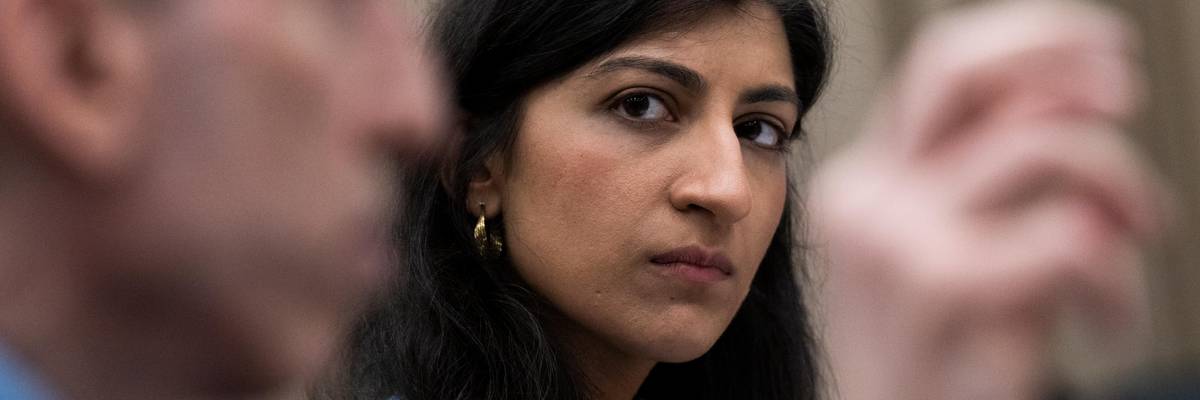
FTC Chair Lina Khan and SEC Chairman Gary Gensler testify during a House hearing on May 18, 2022.
"Anyone who cares about the free press should be concerned by the FTC's demand that Twitter identify journalists who have received information that might embarrass the administration," said one critic.
Press freedom defenders on Wednesday expressed outrage after it was revealed that the Federal Trade Commission, as part of its investigation into Twitter's data privacy practices, demanded that the social media giant "identify all journalists" given access to company records, including in relation to owner Elon Musk's dissemination of the so-called "Twitter Files" purporting to expose censorship on the platform.
"Anyone who cares about the free press should be concerned by the FTC's demand that Twitter identify journalists who have received information that might embarrass the [Biden] administration, regardless of what they think of Elon Musk or Twitter," Freedom of the Press Foundation (FPF) advocacy director Seth Stern said in a statement.
According to FPF: "Government-compelled identification of journalists is dangerous on its own and enables further surveillance of those identified. Administrations from both political parties have overreached to spy on journalists—especially journalists investigating those in power."
"The Department of Justice has adopted policies against surveilling journalists," the advocacy group noted, "but other agencies like the FTC have not."
The Wall Street Journal reported Tuesday that in addition to the names of journalists granted access to Twitter records, the FTC also sought internal communications related to Musk as well as information regarding layoffs, which the agency said could undermine the corporation's capacity to protect users, and the launch of the Twitter Blue subscription service.
FTC spokesperson Douglas Farrar told the newspaper that the agency is "conducting a rigorous investigation into Twitter's compliance with a consent order that came into effect long before Mr. Musk purchased the company."
Farrar explained Wednesday on social media that Twitter in 2011 "agreed to a 20-year consent order over its data security practices and how it uses your private information."
"In 2022, the FTC charged Twitter with violating the 2011 order for misusing personal information. The company then paid a $150 million penalty and entered a new consent order," he continued. "Besides the penalty, the FTC added further provisions to protect consumers' sensitive data. This order was issued in May of 2022," several months before Musk's acquisition of the company was finalized.
"The FTC should not have to violate the privacy of journalists to protect the privacy of Twitter users."
Farrar added that the 12 demand letters the FTC has sent to Twitter since Musk took over in late October "are nonpublic, but cherry-picked portions of some have recently been made public."
This happened after the Republican-led House Judiciary Committee's Select Subcommittee on the Weaponization of the Federal Government published excerpts of the letters in an interim staff report about the FTC's Twitter probe.
As part of its investigation, the FTC on December 13 "asked about Twitter's decision to give journalists access to internal company communications, a project Mr. Musk has dubbed the 'Twitter Files' and that he says sheds light on controversial decisions by previous management," the Journal reported.
According to the newspaper: "The agency asked Twitter to describe the 'nature of access granted each person' and how allowing that access 'is consistent with your privacy and information security obligations under the order.' It asked if Twitter conducted background checks on the journalists, and whether the journalists could access Twitter users' personal messages."
Journalist Matt Taibbi—whose December 2 thread on Twitter's 2020 decision to suppress the Hunter Biden laptop story and subsequent reporting have put him at the center of the "Twitter Files" saga—tweeted Tuesday: "Which journalists a company or its executives talks to is not remotely the government's business. This is an insane overreach."
In response, Matt Stoller of the American Economic Liberties Project, an anti-monopoly think tank, wrote that "the FTC is seeing whether Twitter is violating its consent decree on privacy."
Farrar doubled down on that claim Wednesday, writing: "FTC investigations are straightforward and nonpolitical. They are to ensure that companies are following the law, including protecting people's privacy. The consent order the FTC has with Twitter isn't about Musk's acquisition of the company or their content moderation policies. This isn't about free speech, it's about the FTC doing its job to protect Americans' privacy."
Stern, for his part, was unconvinced by Farrar and Stoller's attempts to justify the FTC's actions as an exercise in protecting consumers' data.
"The FTC," said Stern, "should not have to violate the privacy of journalists to protect the privacy of Twitter users."
"It's especially disturbing," he continued, "that the demand could enable future efforts to obtain the journalists' newsgathering materials."
The FTC's actions underscore why Americans of all political persuasions "should support passing the PRESS Act," Stern added. "It's the only way to ensure that all administrations, and all government agencies, are prohibited from surveilling or retaliating against journalists."
Dear Common Dreams reader, It’s been nearly 30 years since I co-founded Common Dreams with my late wife, Lina Newhouser. We had the radical notion that journalism should serve the public good, not corporate profits. It was clear to us from the outset what it would take to build such a project. No paid advertisements. No corporate sponsors. No millionaire publisher telling us what to think or do. Many people said we wouldn't last a year, but we proved those doubters wrong. Together with a tremendous team of journalists and dedicated staff, we built an independent media outlet free from the constraints of profits and corporate control. Our mission has always been simple: To inform. To inspire. To ignite change for the common good. Building Common Dreams was not easy. Our survival was never guaranteed. When you take on the most powerful forces—Wall Street greed, fossil fuel industry destruction, Big Tech lobbyists, and uber-rich oligarchs who have spent billions upon billions rigging the economy and democracy in their favor—the only bulwark you have is supporters who believe in your work. But here’s the urgent message from me today. It's never been this bad out there. And it's never been this hard to keep us going. At the very moment Common Dreams is most needed, the threats we face are intensifying. We need your support now more than ever. We don't accept corporate advertising and never will. We don't have a paywall because we don't think people should be blocked from critical news based on their ability to pay. Everything we do is funded by the donations of readers like you. When everyone does the little they can afford, we are strong. But if that support retreats or dries up, so do we. Will you donate now to make sure Common Dreams not only survives but thrives? —Craig Brown, Co-founder |
Press freedom defenders on Wednesday expressed outrage after it was revealed that the Federal Trade Commission, as part of its investigation into Twitter's data privacy practices, demanded that the social media giant "identify all journalists" given access to company records, including in relation to owner Elon Musk's dissemination of the so-called "Twitter Files" purporting to expose censorship on the platform.
"Anyone who cares about the free press should be concerned by the FTC's demand that Twitter identify journalists who have received information that might embarrass the [Biden] administration, regardless of what they think of Elon Musk or Twitter," Freedom of the Press Foundation (FPF) advocacy director Seth Stern said in a statement.
According to FPF: "Government-compelled identification of journalists is dangerous on its own and enables further surveillance of those identified. Administrations from both political parties have overreached to spy on journalists—especially journalists investigating those in power."
"The Department of Justice has adopted policies against surveilling journalists," the advocacy group noted, "but other agencies like the FTC have not."
The Wall Street Journal reported Tuesday that in addition to the names of journalists granted access to Twitter records, the FTC also sought internal communications related to Musk as well as information regarding layoffs, which the agency said could undermine the corporation's capacity to protect users, and the launch of the Twitter Blue subscription service.
FTC spokesperson Douglas Farrar told the newspaper that the agency is "conducting a rigorous investigation into Twitter's compliance with a consent order that came into effect long before Mr. Musk purchased the company."
Farrar explained Wednesday on social media that Twitter in 2011 "agreed to a 20-year consent order over its data security practices and how it uses your private information."
"In 2022, the FTC charged Twitter with violating the 2011 order for misusing personal information. The company then paid a $150 million penalty and entered a new consent order," he continued. "Besides the penalty, the FTC added further provisions to protect consumers' sensitive data. This order was issued in May of 2022," several months before Musk's acquisition of the company was finalized.
"The FTC should not have to violate the privacy of journalists to protect the privacy of Twitter users."
Farrar added that the 12 demand letters the FTC has sent to Twitter since Musk took over in late October "are nonpublic, but cherry-picked portions of some have recently been made public."
This happened after the Republican-led House Judiciary Committee's Select Subcommittee on the Weaponization of the Federal Government published excerpts of the letters in an interim staff report about the FTC's Twitter probe.
As part of its investigation, the FTC on December 13 "asked about Twitter's decision to give journalists access to internal company communications, a project Mr. Musk has dubbed the 'Twitter Files' and that he says sheds light on controversial decisions by previous management," the Journal reported.
According to the newspaper: "The agency asked Twitter to describe the 'nature of access granted each person' and how allowing that access 'is consistent with your privacy and information security obligations under the order.' It asked if Twitter conducted background checks on the journalists, and whether the journalists could access Twitter users' personal messages."
Journalist Matt Taibbi—whose December 2 thread on Twitter's 2020 decision to suppress the Hunter Biden laptop story and subsequent reporting have put him at the center of the "Twitter Files" saga—tweeted Tuesday: "Which journalists a company or its executives talks to is not remotely the government's business. This is an insane overreach."
In response, Matt Stoller of the American Economic Liberties Project, an anti-monopoly think tank, wrote that "the FTC is seeing whether Twitter is violating its consent decree on privacy."
Farrar doubled down on that claim Wednesday, writing: "FTC investigations are straightforward and nonpolitical. They are to ensure that companies are following the law, including protecting people's privacy. The consent order the FTC has with Twitter isn't about Musk's acquisition of the company or their content moderation policies. This isn't about free speech, it's about the FTC doing its job to protect Americans' privacy."
Stern, for his part, was unconvinced by Farrar and Stoller's attempts to justify the FTC's actions as an exercise in protecting consumers' data.
"The FTC," said Stern, "should not have to violate the privacy of journalists to protect the privacy of Twitter users."
"It's especially disturbing," he continued, "that the demand could enable future efforts to obtain the journalists' newsgathering materials."
The FTC's actions underscore why Americans of all political persuasions "should support passing the PRESS Act," Stern added. "It's the only way to ensure that all administrations, and all government agencies, are prohibited from surveilling or retaliating against journalists."
Press freedom defenders on Wednesday expressed outrage after it was revealed that the Federal Trade Commission, as part of its investigation into Twitter's data privacy practices, demanded that the social media giant "identify all journalists" given access to company records, including in relation to owner Elon Musk's dissemination of the so-called "Twitter Files" purporting to expose censorship on the platform.
"Anyone who cares about the free press should be concerned by the FTC's demand that Twitter identify journalists who have received information that might embarrass the [Biden] administration, regardless of what they think of Elon Musk or Twitter," Freedom of the Press Foundation (FPF) advocacy director Seth Stern said in a statement.
According to FPF: "Government-compelled identification of journalists is dangerous on its own and enables further surveillance of those identified. Administrations from both political parties have overreached to spy on journalists—especially journalists investigating those in power."
"The Department of Justice has adopted policies against surveilling journalists," the advocacy group noted, "but other agencies like the FTC have not."
The Wall Street Journal reported Tuesday that in addition to the names of journalists granted access to Twitter records, the FTC also sought internal communications related to Musk as well as information regarding layoffs, which the agency said could undermine the corporation's capacity to protect users, and the launch of the Twitter Blue subscription service.
FTC spokesperson Douglas Farrar told the newspaper that the agency is "conducting a rigorous investigation into Twitter's compliance with a consent order that came into effect long before Mr. Musk purchased the company."
Farrar explained Wednesday on social media that Twitter in 2011 "agreed to a 20-year consent order over its data security practices and how it uses your private information."
"In 2022, the FTC charged Twitter with violating the 2011 order for misusing personal information. The company then paid a $150 million penalty and entered a new consent order," he continued. "Besides the penalty, the FTC added further provisions to protect consumers' sensitive data. This order was issued in May of 2022," several months before Musk's acquisition of the company was finalized.
"The FTC should not have to violate the privacy of journalists to protect the privacy of Twitter users."
Farrar added that the 12 demand letters the FTC has sent to Twitter since Musk took over in late October "are nonpublic, but cherry-picked portions of some have recently been made public."
This happened after the Republican-led House Judiciary Committee's Select Subcommittee on the Weaponization of the Federal Government published excerpts of the letters in an interim staff report about the FTC's Twitter probe.
As part of its investigation, the FTC on December 13 "asked about Twitter's decision to give journalists access to internal company communications, a project Mr. Musk has dubbed the 'Twitter Files' and that he says sheds light on controversial decisions by previous management," the Journal reported.
According to the newspaper: "The agency asked Twitter to describe the 'nature of access granted each person' and how allowing that access 'is consistent with your privacy and information security obligations under the order.' It asked if Twitter conducted background checks on the journalists, and whether the journalists could access Twitter users' personal messages."
Journalist Matt Taibbi—whose December 2 thread on Twitter's 2020 decision to suppress the Hunter Biden laptop story and subsequent reporting have put him at the center of the "Twitter Files" saga—tweeted Tuesday: "Which journalists a company or its executives talks to is not remotely the government's business. This is an insane overreach."
In response, Matt Stoller of the American Economic Liberties Project, an anti-monopoly think tank, wrote that "the FTC is seeing whether Twitter is violating its consent decree on privacy."
Farrar doubled down on that claim Wednesday, writing: "FTC investigations are straightforward and nonpolitical. They are to ensure that companies are following the law, including protecting people's privacy. The consent order the FTC has with Twitter isn't about Musk's acquisition of the company or their content moderation policies. This isn't about free speech, it's about the FTC doing its job to protect Americans' privacy."
Stern, for his part, was unconvinced by Farrar and Stoller's attempts to justify the FTC's actions as an exercise in protecting consumers' data.
"The FTC," said Stern, "should not have to violate the privacy of journalists to protect the privacy of Twitter users."
"It's especially disturbing," he continued, "that the demand could enable future efforts to obtain the journalists' newsgathering materials."
The FTC's actions underscore why Americans of all political persuasions "should support passing the PRESS Act," Stern added. "It's the only way to ensure that all administrations, and all government agencies, are prohibited from surveilling or retaliating against journalists."