
SUBSCRIBE TO OUR FREE NEWSLETTER
Daily news & progressive opinion—funded by the people, not the corporations—delivered straight to your inbox.
5
#000000
#FFFFFF
To donate by check, phone, or other method, see our More Ways to Give page.


Daily news & progressive opinion—funded by the people, not the corporations—delivered straight to your inbox.
“The 2026 prize winners are proof positive that courage, hard work, and hope go a long way toward creating meaningful progress," one foundation leader said.
The Goldman Environmental Foundation announced the six winners of the 2026 Goldman Environmental Prize on Monday, honoring an all-female slate of advocates who protected wildlife, took on extractive industries, and won important legal victories in the movement to halt the climate crisis.
The announcement comes as world leaders have failed to make progress in addressing environmental challenges, and President Donald Trump, leader of the world's largest historical climate polluter, has withdrawn the US from the Paris Agreement, rolled back climate and environmental regulations domestically, and made efforts to supercharge the extraction and use of fossil fuels.
“While we continue to fight uphill to protect the environment and implement lifesaving climate policies—in the US and globally—it is clear that true leaders can be found all around us,” John Goldman, vice president of the Goldman Environmental Foundation, said in a statement. “The 2026 prize winners are proof positive that courage, hard work, and hope go a long way toward creating meaningful progress."
The 2026 prize is notable because it marks the first time that all of the winners—Iroro Tanshi of Nigeria, Borim Kim of South Korea, Sarah Finch of the United Kingdom, Theonila Roka Matbob of Papau New Guinea, Alannah Acaq Hurley of the US, and Yuvelis Morales Blanco of Colombia—are women.
'There's lots of people doing really good things and, together, we are going to make the world a better place than it would otherwise have been."
"I am especially thrilled to honor our first-ever cohort of six women, as this is a powerful reflection of the absolutely central role that women play in the environmental community globally,” Goldman said.
The winners also exemplify the prize's 2026 theme "Change Starts Where You Stand," as each of them began with a fight to protect a local community or ecosystem that has global implications for the climate, biodiversity, and environmental justice.
As US-based winner Alannah Acaq Hurley said, "At the end of the day, this is a fight for humanity, and, honestly, our ability to continue as humans on this planet."
Here is how six remarkable women waged this fight and won.
Iroro Tanshi is a Nigerian conservation ecologist who has worked successfully with local communities to protect endangered bats and their rainforest habitat from wildfires.
Tanshi was elated in 2016 when she discovered the short-tailed roundleaf bat, previously believed to be extinct in the area, living in Nigeria's Afi Mountain Wildlife Sanctuary. However, two weeks later, a devastating wildfire ignited, forcing Tanshi to evacuate and ultimately impacting around half of the park.
Tanshi then turned her attention to preventing wildfires, which are sparked by traditional farming practices rubbing against the climate crisis.
"The way people manage these farms is they use fire to clean the farms every year, but climate change has completely toppled the pattern of rainfall and people can no longer predict when to burn safely," she explained in a video.
Tanshi and her team worked with local communities on a Zero Wildfire Campaign, which includes educating farmers on when it is safe to burn and forming a team of "forest guardians" to patrol and fight fires on high-risk days. Due to her efforts, these guardians put out 74 fires between 2022 and 2025, preventing any of them from becoming major blazes.
"My hope for the future is that people would take these small-scale projects as signals for what the future should look like," she said. "Let's stay nimble. Let's try to work in our small communities and solve those problems there on the ground."
Borim Kim helped win Asia's first successful youth climate lawsuit, inspiring people across the region to demand government action on climate.
Kim was first motivated to take collective action when a heatwave baked Seoul in 2018, killing 48 people including a woman near her mother's age, who died in her home.
"I realized that even home wasn't safe from the climate crisis," she said in a video. "I started looking for what I could do."
Inspired by the international youth climate movement, she founded Youth 4 Climate Action (Y4CA) and helped organize school strikes and walkouts. After her activism led to meetings with policymakers, she realized that national leaders had no real plans to address the climate crisis. In 2020, she and Y4CA mobilized 19 young people to sue the South Korean government for violating the constitutional rights of future generations. Once the case was launched, she also continued to build a social movement for climate action.
In August 2024, the country's Constitutional Court ruled in favor of the young people, mandating that South Korea reduce its emissions in line with the scientific consensus, a decision the environmental minister accepted. The ruling is projected to prevent between 1.6-2.1 billion tons of carbon dioxide from reaching the atmosphere.
"Youth may be seen as having a lower position in society, but now this decision has affirmed our right to live safely and the state's duty to protect us," Kim said.
On the other side of the world, Sarah Finch also secured a precedent-setting legal climate victory.
Finch lives in a part of southeastern England called the Weald. While it is currently a rural area, it hosts oil and gas reserves that were eyed for exploitation during the fracking boom of the 2010s. Finch helped form the Weald Action Group to push back against many potential wells, but they were not able to stop the Surrey County Council from approving the operation and expansion of a drilling site called Horse Hill in 2018.
In gearing up to challenge the decision, Finch discovered that the council's environmental impact statement had only considered emissions from direct drilling at the site, but not the emissions generated from the burning of the fuel once it was extracted, also known as Scope 3 emissions, which make up around 90% of oil and gas' contribution to the climate emergency.
"It became apparent that it was actually the norm that Scope 3 emissions were being emitted from these kinds of decisions, and we realized that actually it was happening everywhere and in much bigger developments than Horse Hill," Finch said in a video.
She and her team challenged the environmental impact statement over its failure to consider Scope 3 emissions, losing multiple times before finally securing a groundbreaking victory from the UK Supreme Court in 2024, which has come to be known as "the Finch ruling."
The UK government cited the "Finch ruling" when it revoked its backing of two North Sea oil developments. Overall, the projects canceled or delayed in 2024 due to the ruling would have generated enough Scope 3 emissions to equal the UK's domestic greenhouse gas emissions that year.
"It wasn't just a win on Horse Hill," Finch said. "It wasn't even just a win on a handful of sites. It was a win on the whole future of the UK oil and gas industry. And I feel like, there's lots of people doing really good things and, together, we are going to make the world a better place than it would otherwise have been."
Theonila Roka Matbob was born into an environmental disaster. Rio Tinto's Panguna Mine had devastated the ecosystem of Bougainville in Papua New Guinea’s (PNG) Autonomous Region of Bougainville (ARB), destabilized its society, and led to a civil war that killed 15,000-20,000 Bougainvilleans, including her father.
"Our environment was tortured, and then the land was tortured, and the third party that was tortured were my people," Roka Matbob said in a video.
Rio Tinto closed its copper, silver, and gold mine in 1989 due to the war, but had done nothing to clean up the 150,000 tons of tailings it had dumped into local rivers or take responsibility for the havoc the mine had caused. As an adult, Roka Matbob began to wonder why justice had not been done and to gather testimony from people impacted by the mine.
This led to a successful campaign that persuaded Rio Tinto first to fund an assessment of the mine's impacts and then to sign a memorandum of understanding in 2024 to act on the assessment's findings and develop a plan with local communities to remediate the area.
"It doesn't mean we will restore everything as it was, but at least the story that my grandchildren and my great-grandchildren can remember [is] that our grandparents fought," she said.
As Theonila Roka Matbob secured justice for the impacts of one major mine, Alannah Acaq Hurley helped prevent another one from being dug in the first place.
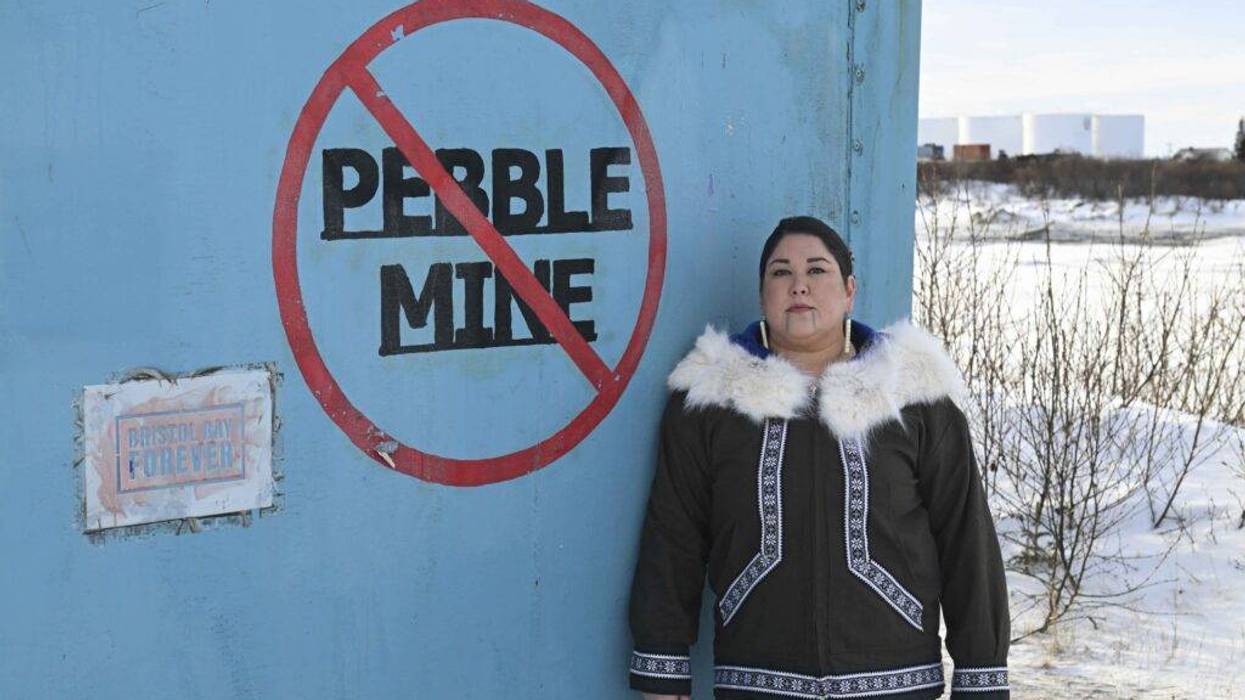
Hurley grew up as a member of the Yup’ik Indigenous group in Alaska's Bristol Bay, a haven of biodiversity that also hosts the world's largest wild sockeye salmon run. But in 2001 a new danger emerged: Canadian company Northern Dynasty Minerals announced plans to construct the Pebble Mine, the largest open-pit mine in North America.
"The pit would be so big, you could literally see it from the moon," Hurley said in a video. "It didn't take long for us to understand the level of threat that this mine posed—acid mine drainage, toxic tailings left in perpetuity. It was not a matter of if something goes wrong, it was a matter of when."
Chosen to lead the United Tribes of Bristol Bay in 2013, Hurley built a coalition to oppose the mine, uniting tribes, commercial fishers, and environmentalists to make their cause to the US Environmental Protection Agency and push back against the company's multiple attempts to move forward with the copper-and-gold mining project. Finally, in 2023, the EPA canceled the project via its rarely used veto power.
"It's just really a testament to the power of the people," she said. "We just never stopped until we were heard."
Yuvelis Morales Blanco also defended her community from an extractive industry.
Blanco was born to subsistence fishers on Colombia's Magdalena River in the Afro-Colombian community of Puerto Wilches.
“We had nothing but the river—she was like a mother who took care of me," she said in a statement.
However, even as a child she saw the river was threatened by oil spills from Ecopetrol, Colombia's leading oil company headquartered nearby. The potential threat level was raised even further when she learned while attending college in 2019 that Ecopetrol planned to build two pilot fracking projects near Puerto Wilches.
"Man, I'm like, 'They're going to do that in Wilches?' No sir!'" she recalled in a video.
Blanco joined the Colombia Free from Fracking Alliance and began to raise awareness in her community about the plans. As the campaign's momentum grew, so did her reputation as a spokesperson. This ultimately led to threats of violence against her that forced her to seek asylum in France in 2022, yet she continued to mobilize against the fracking plans from abroad.
She and the alliance saw success in 2022, as a local court halted the permitting process, newly elected President Gustavo Petro pledged there would be no fracking during his administration, and Ecopetrol suspended its contracts. In 2024, the Colombian Constitutional Court further ruled that the fracking projects had violated the Afro-Colombian community of Puerto Wilches' right to free, prior, and informed consent.
Blanco continues to fight for a ban on fracking and for legal protections for environmental defenders—over 140 of whom were reported missing or killed in 2024, the most recent year for which Global Witness has a full tally. Colombia was also the most dangerous countries for defenders that year, with 48 deaths.
"I am very hopeful because I have a river that always accompanies me, and I know we're going to win," she said.
The Goldman Environmental Prize was founded in 1989 by Rhoda and Richard Goldman, and has since honored 239 winners in 37 years. The 2026 awards will be presented live in San Francisco on Monday evening at 8:30 pm ET. Watch it on YouTube here.
"There's so much that worries us, stresses us, outrages us, and keeps us divided," said one foundation leader. "However, for me, these environmental leaders and teachers... are the antidote."
Seven grassroots Earth defenders from around the world were announced on Monday as the 2025 Goldman Environmental Prize winners.
"It's been a tough year for both people and the planet," said Jennifer Goldman Wallis, vice president of the Goldman Environmental Foundation, in a statement. "There's so much that worries us, stresses us, outrages us, and keeps us divided. However, for me, these environmental leaders and teachers—and the global environmental community that supports them—are the antidote."
"If we apply the same passion and logic that we use in the protection of our own families to our broader communities and ecosystems, then we will win," she continued. "In these difficult times for environmental activists, these seven individuals serve as powerful reminders of what is possible through determination, resilience, and hope."
Since 1989, the foundation has awarded the annual prize to individuals from the world's six inhabited continental regions "for sustained and significant efforts to protect and enhance the natural environment, often at great personal risk."
Gharbi, a 57-year-old scientist and environmental educator, led a campaign against a corrupt waste trafficking scheme between Italy and Tunisia that led to the arrest of over 40 people from both countries and stronger European Union export rules.
After being born to a nomadic herder family and working as an electrical engineer for construction and mining projects, 81-year-old Luvsandash used his expertise to fight to protect 66,000 acres of Dornogovi province from extractive activities.
The efforts of Guri, a 37-year-old who trained as a social worker, and Nika, a 39-year-old biologist and aquatic ecologist, to safeguard the Vjosa River from a hydropower dam development led to Albania and Europe's first new national park protecting a wild river and its tributaries.
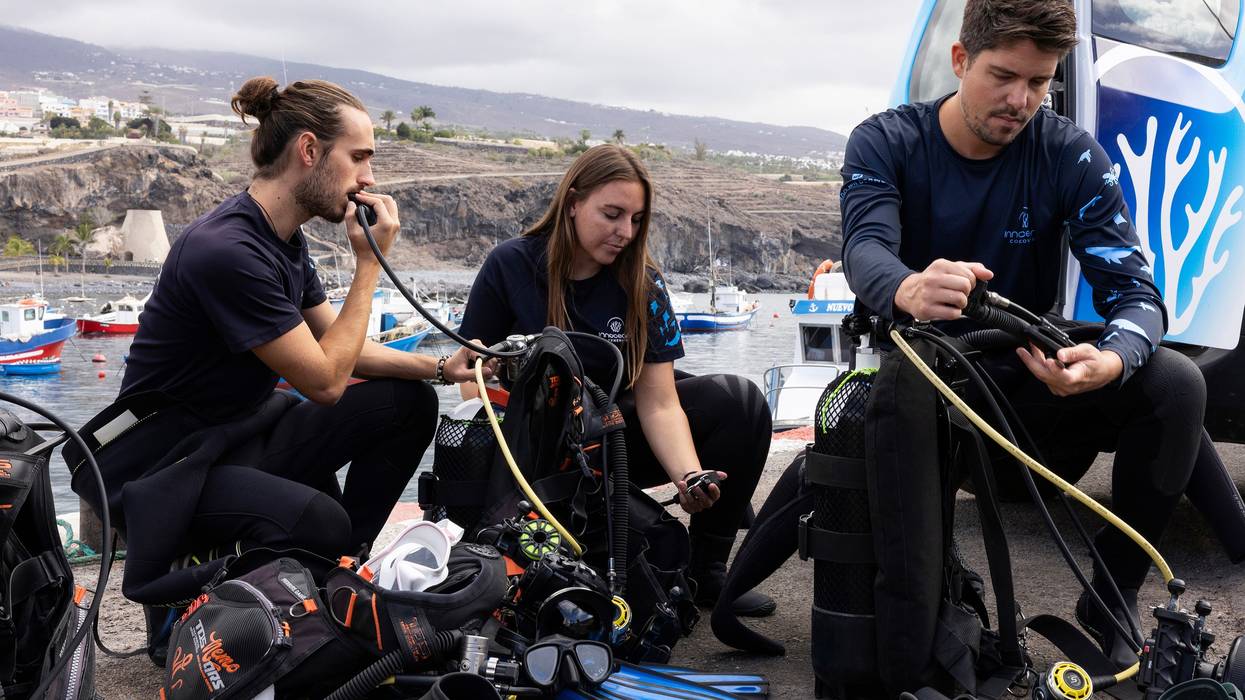
Mallo Molina, a 36-year-old born in mainland Spain, left his job as a civil engineer specializing in port construction to launch the conservation group Innoceana, which fought to protect the Canary Islands' marine ecosystem from the proposed Fonsalía Port.
Allen, a 62-year-old clinical social worker, campaigned for the closure of the Saint-Gobain Performance Plastics plant in Merrimack, New Hampshire, and continues to fight for cleanup efforts and stricter regulations regarding per- and polyfluoroalkyl substances (PFAS), commonly called "forever chemicals" because they persist in the environment and people's bodies for long periods.
Canaquiri Murayari is the 56-year-old president of the Kukama women's organization Asociación de Mujeres Huaynakana Kamatahuara Kanawon, which won a landmark Rights of Nature court ruling that granted legal personhood to the Marañón River.
This year's prize winners are set to be celebrated on Monday at an in-person and livestreamed ceremony in San Francisco, California, at 5:30 pm Pacific Daylight Time.
"The invaders and their main business partners—loggers and meatpacking companies—make the profits their own while passing on to society the costs of environmental damage," notes one of numerous lawsuits.
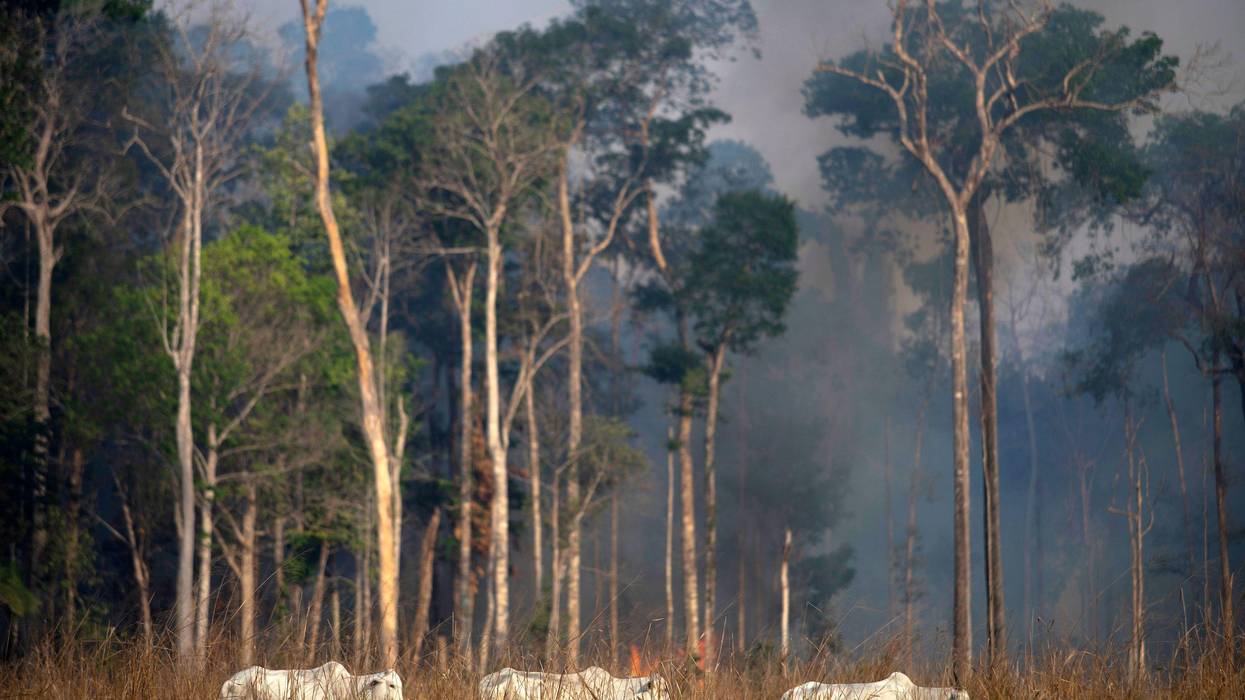
A Brazilian judge on Thursday ordered two slaughterhouses and three ranchers to pay $764,000 in combined penalties for trading cattle raised in a protected area of the Amazon rainforest.
The decision by Judge Inês Moreira da Costa in Rondônia—the most severely deforested state in the Brazilian Amazon—came in response to a flurry of lawsuits filed by green groups seeking millions of dollars in damages from defendants including Distriboi and Frigon, two meat processing firms accused of trading cattle in the Jaci-Parana protected zone.
"When a slaughterhouse, whether by negligence or intent, buys and resells products from invaded and illegally deforested reserves, it is clear that it is directly benefiting from these illegal activities," the plaintiffs' complaint states. "In such cases, there is an undeniable connection between the company's actions and the environmental damage caused by the illegal exploitation."
The slaughterhouses and ranchers are but two of numerous parties being sued, including other ranchers and JBS, the Brazilian meat giant that bills itself as the world's largest protein producer.
According to The Associated Press—whose reporting on the cattle trading documents prompted the lawsuits:
Brazilian law forbids commercial cattle inside a protected area, yet some 210,000 head are being grazed inside Jaci-Parana, according to the state animal division. With almost 80% of its forest destroyed, it ranks as the most ravaged conservation unit in the Brazilian Amazon. A court filing pegs damages in the reserve at some $1 billion.
The plaintiffs in the lawsuits are seeking to put a price on the destruction of old-growth rainforest, asserting that "the invaders and their main business partners—loggers and meatpacking companies—make the profits their own while passing on to society the costs of environmental damage."
The Amazon rainforest is one of the world's most biodiverse ecosystems and is a crucial carbon sink, meaning it absorbs carbon dioxide from the atmosphere.
The world lost around 3.7 million hectares of primary tropical forests last year—a rate of approximately 10 soccer fields per minute, according to data from the University of Maryland's Global Land Analysis and Discover laboratory. While this marked a 9% reduction in deforestation compared with 2022, the overall deforestation rate is roughly the same as in 2019 and 2021. Felling trees released 2.4 metric gigatons of climate pollution into the atmosphere in 2023, or almost half of all annual U.S. emissions from burning fossil fuels.
In Brazil, the government of leftist President Luiz Inácio Lula da Silva has taken steps to combat deforestation, resulting in a more than one-third reduction in forest loss. Progress in reversing the rampant forest destruction wrought by the previous far-right administration of former Brazilian President Jair Bolsonaro—who was nicknamed "Captain Chainsaw"—were partially offset by a 43% spike in deforestation in the Cerrado region last year.
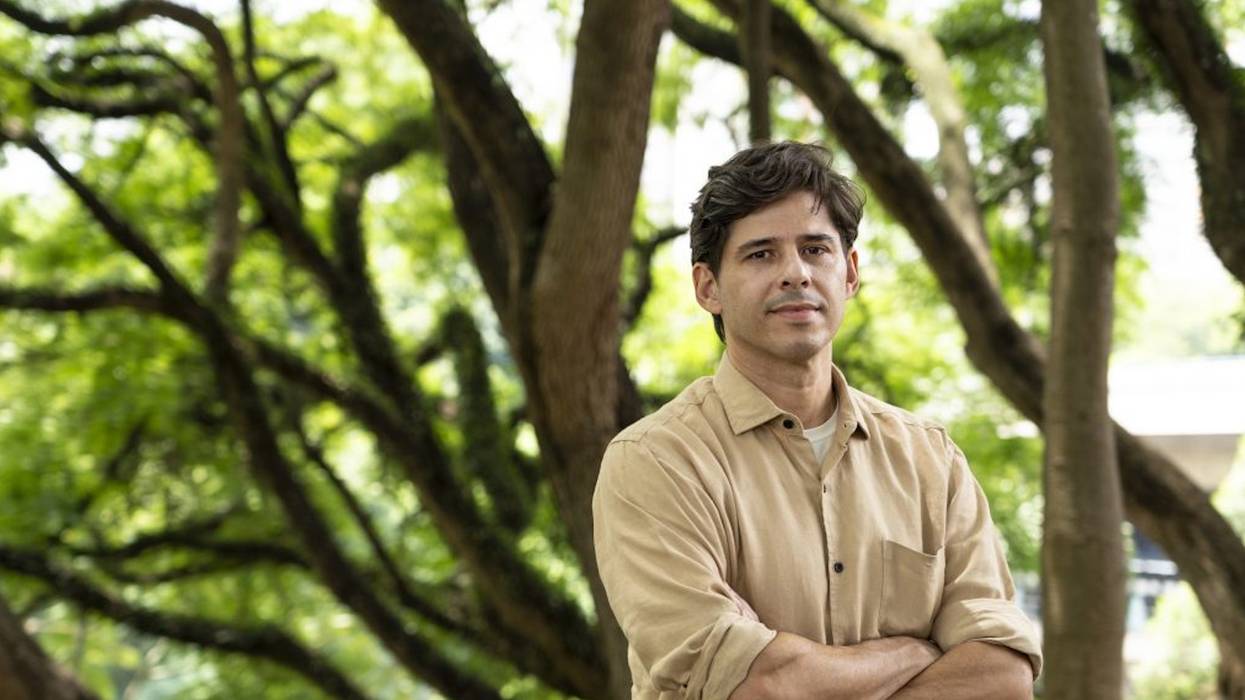
Earlier this year, Marcel Gomes—a Brazilian journalist who worked with colleagues at Repórter Brasil to coordinate "a complex, international campaign that directly linked beef from JBS... to illegal deforestation"—was one of seven winners of the prestigious Goldman Environmental Prize.
One winner said the award "signifies an international recognition that we are facing a new stage in humanity," one in which "human beings understand they are part of nature."
Activists who blocked fossil fuel development, protected vulnerable ecosystems, and helped enact clean air regulations are among the seven winners of this year's prestigious Goldman Environmental Prize.
The San Francisco-based Goldman Environmental Foundation announced Monday that the winners of the 35th annual Goldman Prize—which some call the "Green Nobels"—are:
Goldman Prize winners receive a $200,000 award and can apply for additional grants to fund their work.
Reacting to his win, Gomes said: "This award recognizes the impact that journalism can have to protect the environment and ultimately improve people's lives. Repórter Brasil was able to track the Brazilian meat chain from the farm to supermarkets abroad, which companies said was not possible to do."
Vicente told the AP that the prize "signifies an international recognition that we are facing a new stage in humanity," one in which "human beings understand they are part of nature."
Shukla told The New York Times that he hopes his award will inspire frontline communities around the world.
"There is a way," he said, "that local communities can actually resist even the most powerful corporations using just their resolve and peaceful, democratic means."
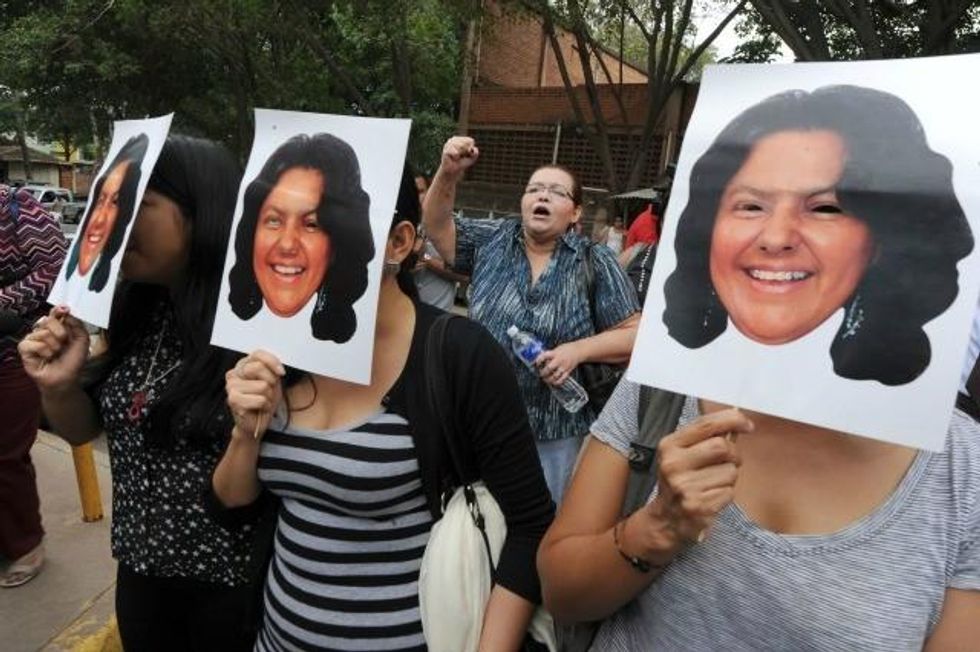
More than 50 humanitarian and environmental groups from around the world called on Friday for an independent international investigation into the assassination of Honduran Indigenous rights activist Berta Caceres, who was murdered in her sleep at 1 am on Thursday by two unknown assailants.
"Mrs. Caceres' case is the most high-profile killing within a growing trend in the murder, violence, and intimidation of people defending their indigenous land rights in Honduras," wrote the groups in their letter to the Honduran president.
"We know that in Honduras, it is very easy to pay people to commit murders," Zuniga Caceres said of her mother's death to teleSUR. "But we know that those behind this are other powerful people with money and a whole apparatus that allows them to commit these crimes."
The Guardian reported that Caceres was a prominent leader in the Indigenous movement in Honduras against one of Central America's most significant hydropower projects, four enormous dams known as "Agua Zarca" in the Gualcarque river basin. The Indigenous group Caceres founded, the Civil Council for Popular and Indigenous Organizations of Honduras (COPINH), has successfully prevented the project from moving forward.
Caceres was awarded the prestigious Goldman Environmental Prize last year for her activism.
"Berta Caceres devoted her life to protecting natural resources, public spaces, land rights, rivers from the privatization process that's underway and that gained speed after the 2009 military coup," said Karen Spring, the Honduras-based coordinator of the social justice network Honduras Solidarity Group, in an interview with Free Speech Radio News on Thursday. "She spent her life defending land and supporting communities, mostly indigenous communities all over the country."
As a result of her activism, Caceres had received death threats and feared for her life, the Los Angeles Times reported, and the Inter-American Commission on Human Rights (IACHR), a prominent human rights organization, had last year formally called on the Honduran government to put protections in place for Caceres, according to the Guardian. The UN has condemned the Honduran government for failing to protect her, and activists have accused the government of having a hand in her death.

In its most recent report (pdf) released in December, IACHR warned of the violence and threats to their lives that activists such as Caceres suffer under in Honduras. The group blamed "the increased presence of organized crime and drug traffickers, the recruitment of children and adolescents, and an inadequate judicial response that fuels impunity, corruption, and high levels of poverty and inequality. In addition, according to the information received, part of that insecurity comes from the National Police, the Military Police, and the Army, through their illegitimate use of force, in some cases in complicity with organized crime."
Student protesters took to the streets in Tegucigalpa on Thursday to mourn the widely beloved environmentalist's death, the Guardian reported, and the Honduran government, in power since a U.S.-backed coup in 2009, responded with riot police.
The Honduran government confirmed that one suspect had been arrested in a statement to teleSUR on Friday. There were reportedly two assassins involved in Caceres' death. But the Caceres family is demanding "an independent, international investigation [into her death] not led by the Honduran government," teleSUR reported.
"Honduras has the world's highest murder rate," noted School of the Americas Watch, a group that seeks to close the infamous U.S. Army School of the Americas, in a statement on Thursday. "Honduran human rights organizations report there have been over 10,000 human rights violations by state security forces, and impunity is the norm--most murders go unpunished. The Associated Press has repeatedly exposed ties between the Honduran police and death squads, while U.S. military training and aid for the Honduran security forces continues."
The environmental group International Rivers demanded Thursday that "the U.S government, in particular, end its support for the Honduran military through loans and training at the School of the Americas," drawing attention to the United States' significant responsibility for the oppressive regime in Honduras today, in order "to honor Berta Caceres' lifelong struggle and her ultimate sacrifice for rivers and rights."
Democracy Now! remembered Caceres in the following segment on Thursday:
This year's recipients of the international Goldman Environmental Awards were announced on Monday, with six individuals from four continents being honored for their "fearless" efforts and working "against all odds to protect the environment and their communities."
"For the past 25 years, the Goldman Environmental Prize has honored heroic grassroots environmentalists for their achievements around the world and this year is no exception," said David Gordon, executive director of the Goldman Environmental Foundation which bestows the awards. "From fracking to palm oil development, the 2014 Goldman Prize recipients are not only tackling some of the world's most pressing environmental problems; they are also achieving impressive environmental victories and inspiring others to do the same."
The winners will each receive $175,000 in cash reward and be honored Monday night in San Francisco. Each winner and the work for which the have now been honored were documented in short videos produced by the award committee:
RAMESH AGRAWAL, India
With a small internet cafe as his headquarters, Ramesh Agrawal organized villagers to demand their right to information about industrial development projects and succeeded in shutting down one of the largest proposed coal mines in Chhattisgarh:
Ramesh Agrawal, 2014 Goldman Environmental Prize, IndiaWith a small internet café as his headquarters, Ramesh Agrawal organized villagers to demand their right to information about ...
RUTH BUENDIA MESTOQUIARI, Peru
Overcoming a history of traumatic violence, Ruth Buendia united the Ashaninka people in a powerful campaign against large-scale dams that would have once again uprooted indigenous communities still recovering from Peru's civil war:
Ruth Buendía, 2014 Goldman Environmental Prize, PeruOvercoming a history of traumatic violence, Ruth Buendía united the Asháninka people in a powerful campaign against ...
DESMOND D'SA , South Africa
Desmond D'Sa rallied south Durban's diverse and disenfranchised communities to successfully shut down a toxic waste dump that exposed nearby residents to dangerous chemicals and violated their constitutionally protected right to a safe and clean environment:
Desmond D'Sa, 2014 Goldman Environmental Prize, South AfricaDesmond D'Sa rallied south Durban's diverse and disenfranchised communities to successfully shut down a toxic waste dump ...
SUREN GAZARYAN , Russia
An internationally recognized bat expert and zoologist, Suren Gazaryan led multiple campaigns exposing government corruption and illegal use of federally protected forestland along Russia's Black Sea coast near the site of the 2014 Winter Olympics:
Suren Gazaryan, 2014 Goldman Environmental Prize, RussiaAn internationally recognized bat expert and zoologist, Suren Gazaryan led multiple campaigns exposing government corruption ...
RUDI PUTRA , Indonesia
A biologist by training, Rudi Putra is dismantling illegal palm oil plantations that are causing massive deforestation in northern Sumatra's Leuser Ecosystem, protecting the habitat of the critically endangered Sumatran rhino:
Rudi Putra, 2014 Goldman Environmental Prize, IndonesiaA biologist by training, Rudi Putra is dismantling illegal palm oil plantations that are causing massive deforestation in northern ...
HELEN HOLDEN SLOTTJE, USA
Using a clause in the state constitution that gives municipalities the right to make local land use decisions, Helen Slottje helped towns across New York defend themselves from oil and gas companies by passing local bans on fracking:
Helen Slottje, 2014 Goldman Environmental Prize, USAUsing a clause in the state constitution that gives municipalities the right to make local land use decisions, Helen Slottje provided ...
Established in 1989 by late San Francisco civic leaders and philanthropists Richard and Rhoda Goldman, the annual prize winners are selected by an international jury from confidential nominations submitted by a worldwide network of environmental organizations and individuals.
Details of each of the winners and their work is contained in this comprehensive packet (pdf) released by the award committee. Previous winners can be seen on the group's website here