SUBSCRIBE TO OUR FREE NEWSLETTER
Daily news & progressive opinion—funded by the people, not the corporations—delivered straight to your inbox.
5
#000000
#FFFFFF
To donate by check, phone, or other method, see our More Ways to Give page.
Daily news & progressive opinion—funded by the people, not the corporations—delivered straight to your inbox.
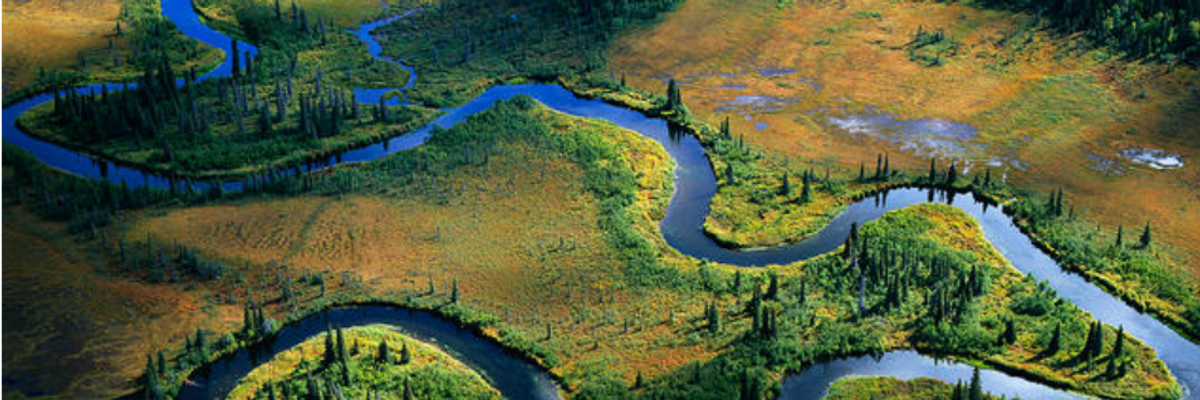
A portion of the Bristol Bay watershed is seen from above.
"Thousands of Alaskans and over a million Americans from across the political spectrum have called for protection of Bristol Bay's one-of-kind salmon resource from massive open pit mining and today, the EPA delivered."
Environmental advocates in Alaska and across the United States on Tuesday applauded what one Indigenous campaigner called "historic progress" in the fight to protect Bristol Bay's ecosystems from the developers of Pebble Mine, a proposed open-pit copper and gold mine that would have led to the dumping of waste in the world's largest sockeye salmon run.
The Environmental Protection Agency (EPA) announced on Tuesday its long-awaited "Final Determination" regarding protections for Bristol Bay, following more than a decade of litigation and campaigning by Alaska Natives and advocates.
Under Section 404(c) of the Clean Water Act, the agency said, the EPA will prohibit "certain waters of the United States in the South Fork Koktuli River and North Fork Koktuli River watersheds from being used as disposal sites," and "prohibits future proposals to construct and operate a mine to develop the Pebble deposit."
"Today is a new day for Bristol Bay," said Earthjustice.
The decision is the outcome of a 2019 lawsuit filed by Earthjustice on behalf of tribal organizations and the advocacy group Earthworks, and follows "a fierce, decades-long battle waged by the people of Bristol Bay and so many others," said Earthjustice senior attorney Erin Colón.
"EPA today followed the law and science to establish enduring protections for the Bristol Bay watershed under the Clean Water Act," said Colón in a statement. "This is a major victory worth celebrating, but we cannot rest until even more permanent protections are in place. The Bristol Bay watershed is one of the world's great ecosystems, and the way of life and the abundant future it supports is worth the fight."
Advocates first challenged Pebble Limited Partnership's plan for the mine in 2010, when six tribes in the Bristol Bay area called on the EPA to protect the watershed, which is home to a 37.5 million salmon annually, supports a $2 billion commercial fishing industry, and has provided sustenance for Alaska Natives for generations.
The EPA restricted parts of the watershed from being used by the mining company in 2014, but the developers challenged those protections. In 2017, the agency withdrew them in a settlement with Pebble Limited Partnership.
The U.S. Army Corps of Engineers also denied a key permit for the project in 2020—a decision that is now under appeal by the company.
Dyani Chapman, state director for Alaska Environment Action, said the previous restrictions and Tuesday's determination are in line with what Alaska Natives and environmental advocates have known for decades: "The headwaters of Bristol Bay are, quite simply, a really bad place for a mine."
"The region is home to an incredible range of wildlife and remains healthy because it's been spared a lot of the harsher touches of industrialization," said Chapman. "Over the past 20 years, scientists, the local Indigenous communities, fishermen, and broader public have asked repeatedly for strong and permanent protections for Bristol Bay. This EPA determination is a long-awaited win for sockeye salmon and the entire Bristol Bay region."
Advocacy group SalmonState noted that with two out of three Alaskans opposing the Pebble Mine, the EPA's decision "may be the most popular thing the federal government has ever done for Alaska."
"Thousands of Alaskans and over a million Americans from across the political spectrum have called for protection of Bristol Bay's one-of-kind salmon resource from massive open pit mining and today, the EPA delivered," said executive director Tim Bristol. "This is a victory for every single person—from Bristol Bay's tribal citizens, commercial fisherman, sport anglers, business leaders, chefs, scientists, and so many more—who [has] spoken out over the years, and we thank the EPA and the Biden administration for this well-considered, heavily documented, overwhelmingly popular move."
While celebrating the EPA's determination, advocates said they will continue pushing for congressional protections for the Bristol Bay watershed and acknowledged that the Biden administration's decision could be overturned by a future president. Pebble Limited Partnership also said it will likely appeal the decision.
"Today is a great day for Bristol Bay, and one that many thought would never come," said Bristol Bay Native Corporation CEO Jason Metrokin. "While the immediate threat of Pebble is behind us, BBNC will continue working to protect Bristol Bay's salmon-based culture and economy and to create new economic opportunities across the region."
Verner Wilson, senior oceans campaigner at Friends of the Earth, called the action "a positive step forward" but expressed concern that "it doesn't go far enough."
"Given that Bristol Bay is the largest wild salmon fishery on the planet," said Wilson, "Congress and the state of Alaska must work together to protect it permanently."
Dear Common Dreams reader, It’s been nearly 30 years since I co-founded Common Dreams with my late wife, Lina Newhouser. We had the radical notion that journalism should serve the public good, not corporate profits. It was clear to us from the outset what it would take to build such a project. No paid advertisements. No corporate sponsors. No millionaire publisher telling us what to think or do. Many people said we wouldn't last a year, but we proved those doubters wrong. Together with a tremendous team of journalists and dedicated staff, we built an independent media outlet free from the constraints of profits and corporate control. Our mission has always been simple: To inform. To inspire. To ignite change for the common good. Building Common Dreams was not easy. Our survival was never guaranteed. When you take on the most powerful forces—Wall Street greed, fossil fuel industry destruction, Big Tech lobbyists, and uber-rich oligarchs who have spent billions upon billions rigging the economy and democracy in their favor—the only bulwark you have is supporters who believe in your work. But here’s the urgent message from me today. It's never been this bad out there. And it's never been this hard to keep us going. At the very moment Common Dreams is most needed, the threats we face are intensifying. We need your support now more than ever. We don't accept corporate advertising and never will. We don't have a paywall because we don't think people should be blocked from critical news based on their ability to pay. Everything we do is funded by the donations of readers like you. When everyone does the little they can afford, we are strong. But if that support retreats or dries up, so do we. Will you donate now to make sure Common Dreams not only survives but thrives? —Craig Brown, Co-founder |
Environmental advocates in Alaska and across the United States on Tuesday applauded what one Indigenous campaigner called "historic progress" in the fight to protect Bristol Bay's ecosystems from the developers of Pebble Mine, a proposed open-pit copper and gold mine that would have led to the dumping of waste in the world's largest sockeye salmon run.
The Environmental Protection Agency (EPA) announced on Tuesday its long-awaited "Final Determination" regarding protections for Bristol Bay, following more than a decade of litigation and campaigning by Alaska Natives and advocates.
Under Section 404(c) of the Clean Water Act, the agency said, the EPA will prohibit "certain waters of the United States in the South Fork Koktuli River and North Fork Koktuli River watersheds from being used as disposal sites," and "prohibits future proposals to construct and operate a mine to develop the Pebble deposit."
"Today is a new day for Bristol Bay," said Earthjustice.
The decision is the outcome of a 2019 lawsuit filed by Earthjustice on behalf of tribal organizations and the advocacy group Earthworks, and follows "a fierce, decades-long battle waged by the people of Bristol Bay and so many others," said Earthjustice senior attorney Erin Colón.
"EPA today followed the law and science to establish enduring protections for the Bristol Bay watershed under the Clean Water Act," said Colón in a statement. "This is a major victory worth celebrating, but we cannot rest until even more permanent protections are in place. The Bristol Bay watershed is one of the world's great ecosystems, and the way of life and the abundant future it supports is worth the fight."
Advocates first challenged Pebble Limited Partnership's plan for the mine in 2010, when six tribes in the Bristol Bay area called on the EPA to protect the watershed, which is home to a 37.5 million salmon annually, supports a $2 billion commercial fishing industry, and has provided sustenance for Alaska Natives for generations.
The EPA restricted parts of the watershed from being used by the mining company in 2014, but the developers challenged those protections. In 2017, the agency withdrew them in a settlement with Pebble Limited Partnership.
The U.S. Army Corps of Engineers also denied a key permit for the project in 2020—a decision that is now under appeal by the company.
Dyani Chapman, state director for Alaska Environment Action, said the previous restrictions and Tuesday's determination are in line with what Alaska Natives and environmental advocates have known for decades: "The headwaters of Bristol Bay are, quite simply, a really bad place for a mine."
"The region is home to an incredible range of wildlife and remains healthy because it's been spared a lot of the harsher touches of industrialization," said Chapman. "Over the past 20 years, scientists, the local Indigenous communities, fishermen, and broader public have asked repeatedly for strong and permanent protections for Bristol Bay. This EPA determination is a long-awaited win for sockeye salmon and the entire Bristol Bay region."
Advocacy group SalmonState noted that with two out of three Alaskans opposing the Pebble Mine, the EPA's decision "may be the most popular thing the federal government has ever done for Alaska."
"Thousands of Alaskans and over a million Americans from across the political spectrum have called for protection of Bristol Bay's one-of-kind salmon resource from massive open pit mining and today, the EPA delivered," said executive director Tim Bristol. "This is a victory for every single person—from Bristol Bay's tribal citizens, commercial fisherman, sport anglers, business leaders, chefs, scientists, and so many more—who [has] spoken out over the years, and we thank the EPA and the Biden administration for this well-considered, heavily documented, overwhelmingly popular move."
While celebrating the EPA's determination, advocates said they will continue pushing for congressional protections for the Bristol Bay watershed and acknowledged that the Biden administration's decision could be overturned by a future president. Pebble Limited Partnership also said it will likely appeal the decision.
"Today is a great day for Bristol Bay, and one that many thought would never come," said Bristol Bay Native Corporation CEO Jason Metrokin. "While the immediate threat of Pebble is behind us, BBNC will continue working to protect Bristol Bay's salmon-based culture and economy and to create new economic opportunities across the region."
Verner Wilson, senior oceans campaigner at Friends of the Earth, called the action "a positive step forward" but expressed concern that "it doesn't go far enough."
"Given that Bristol Bay is the largest wild salmon fishery on the planet," said Wilson, "Congress and the state of Alaska must work together to protect it permanently."
Environmental advocates in Alaska and across the United States on Tuesday applauded what one Indigenous campaigner called "historic progress" in the fight to protect Bristol Bay's ecosystems from the developers of Pebble Mine, a proposed open-pit copper and gold mine that would have led to the dumping of waste in the world's largest sockeye salmon run.
The Environmental Protection Agency (EPA) announced on Tuesday its long-awaited "Final Determination" regarding protections for Bristol Bay, following more than a decade of litigation and campaigning by Alaska Natives and advocates.
Under Section 404(c) of the Clean Water Act, the agency said, the EPA will prohibit "certain waters of the United States in the South Fork Koktuli River and North Fork Koktuli River watersheds from being used as disposal sites," and "prohibits future proposals to construct and operate a mine to develop the Pebble deposit."
"Today is a new day for Bristol Bay," said Earthjustice.
The decision is the outcome of a 2019 lawsuit filed by Earthjustice on behalf of tribal organizations and the advocacy group Earthworks, and follows "a fierce, decades-long battle waged by the people of Bristol Bay and so many others," said Earthjustice senior attorney Erin Colón.
"EPA today followed the law and science to establish enduring protections for the Bristol Bay watershed under the Clean Water Act," said Colón in a statement. "This is a major victory worth celebrating, but we cannot rest until even more permanent protections are in place. The Bristol Bay watershed is one of the world's great ecosystems, and the way of life and the abundant future it supports is worth the fight."
Advocates first challenged Pebble Limited Partnership's plan for the mine in 2010, when six tribes in the Bristol Bay area called on the EPA to protect the watershed, which is home to a 37.5 million salmon annually, supports a $2 billion commercial fishing industry, and has provided sustenance for Alaska Natives for generations.
The EPA restricted parts of the watershed from being used by the mining company in 2014, but the developers challenged those protections. In 2017, the agency withdrew them in a settlement with Pebble Limited Partnership.
The U.S. Army Corps of Engineers also denied a key permit for the project in 2020—a decision that is now under appeal by the company.
Dyani Chapman, state director for Alaska Environment Action, said the previous restrictions and Tuesday's determination are in line with what Alaska Natives and environmental advocates have known for decades: "The headwaters of Bristol Bay are, quite simply, a really bad place for a mine."
"The region is home to an incredible range of wildlife and remains healthy because it's been spared a lot of the harsher touches of industrialization," said Chapman. "Over the past 20 years, scientists, the local Indigenous communities, fishermen, and broader public have asked repeatedly for strong and permanent protections for Bristol Bay. This EPA determination is a long-awaited win for sockeye salmon and the entire Bristol Bay region."
Advocacy group SalmonState noted that with two out of three Alaskans opposing the Pebble Mine, the EPA's decision "may be the most popular thing the federal government has ever done for Alaska."
"Thousands of Alaskans and over a million Americans from across the political spectrum have called for protection of Bristol Bay's one-of-kind salmon resource from massive open pit mining and today, the EPA delivered," said executive director Tim Bristol. "This is a victory for every single person—from Bristol Bay's tribal citizens, commercial fisherman, sport anglers, business leaders, chefs, scientists, and so many more—who [has] spoken out over the years, and we thank the EPA and the Biden administration for this well-considered, heavily documented, overwhelmingly popular move."
While celebrating the EPA's determination, advocates said they will continue pushing for congressional protections for the Bristol Bay watershed and acknowledged that the Biden administration's decision could be overturned by a future president. Pebble Limited Partnership also said it will likely appeal the decision.
"Today is a great day for Bristol Bay, and one that many thought would never come," said Bristol Bay Native Corporation CEO Jason Metrokin. "While the immediate threat of Pebble is behind us, BBNC will continue working to protect Bristol Bay's salmon-based culture and economy and to create new economic opportunities across the region."
Verner Wilson, senior oceans campaigner at Friends of the Earth, called the action "a positive step forward" but expressed concern that "it doesn't go far enough."
"Given that Bristol Bay is the largest wild salmon fishery on the planet," said Wilson, "Congress and the state of Alaska must work together to protect it permanently."