

SUBSCRIBE TO OUR FREE NEWSLETTER
Daily news & progressive opinion—funded by the people, not the corporations—delivered straight to your inbox.
5
#000000
#FFFFFF
To donate by check, phone, or other method, see our More Ways to Give page.
Daily news & progressive opinion—funded by the people, not the corporations—delivered straight to your inbox.
"The Mexican government is both wise and on solid ground in refusing to allow its people to participate in the experiment that the U.S. government is seeking to impose."
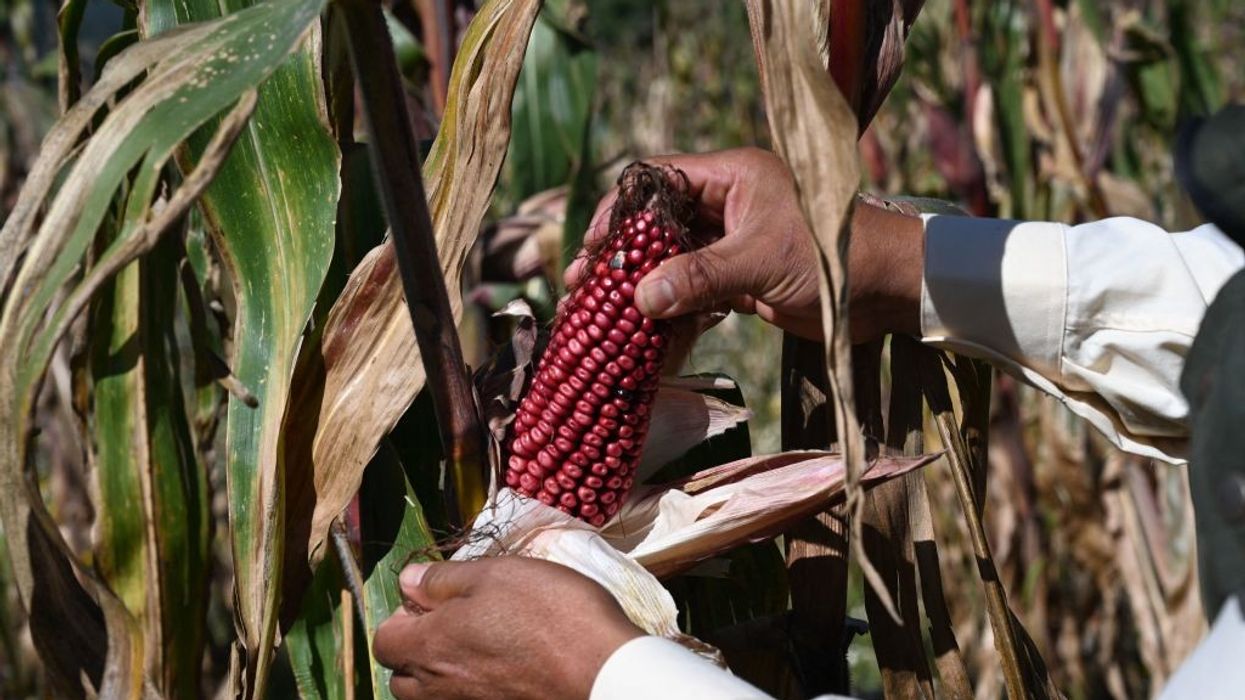
Friends of the Earth U.S. on Monday released a brief backing Mexico's ban on genetically modified corn for human consumption, which the green group recently submitted to a dispute settlement panel charged with considering the U.S. government's challenge to the policy.
Mexican President Andrés Manuel López Obrador announced plans to phase out the herbicide glyphosate as well as genetically modified (GM) or genetically engineered (GE) corn in 2020. Last year he issued an updated decree making clear the ban does not apply to corn imports for livestock feed and industrial use. Still, the Biden administration objected and, after fruitless formal negotiations, requested the panel under the United States-Mexico-Canada Agreement (USMCA).
"The U.S. government has not presented an 'appropriate' risk assessment to the tribunal as called for in the USMCA dispute because such an assessment has never been done in the U.S. or anywhere in the world," said agricultural economist Charles Benbrook, who wrote the brief with Kendra Klein, director of science at Friends of the Earth U.S.
"The U.S. is, in effect, asking Mexico to trust the completeness and accuracy of the initial GE corn safety assessments carried out 15 to 30 years ago by the companies working to bring GE corn events to market."
The group's 13-page brief lays out health concerns related to GM corn and glyphosate, and the shortcomings of U.S. analyses and policies. It also stresses the stakes of the panel's decision, highlighting that "corn is the caloric backbone of the Mexican food supply, accounting, on average, for 50% of the calories and protein in the Mexican diet."
Blasting the Biden administration's case statement to the panel as "seriously deficient," Klein said Monday that "it lacks basic information about the toxins expressed in contemporary GMO corn varieties and their levels. The U.S. submission also ignores dozens of studies linking the insecticidal toxins and glyphosate residues found in GMO corn to adverse impacts on public health."
The brief explains that "since the commercial introduction of GE corn in 1996 and event-specific approvals in the 1990s and 2000s, dramatic changes have occurred in corn production systems. There has been an approximate fourfold increase in the number of toxins and pesticides applied on the average hectare of contemporary GE industrial corn compared to the early 1990s. Unfortunately, this upward trend is bound to continue, and may accelerate."
The U.S. statement's assurances about risks from Bacillus thuringiensis or vegetative insecticidal protein (Bt/VIP) residues "are not based on data and science," the brief warns.
"The U.S. is, in effect, asking Mexico to trust the completeness and accuracy of the initial GE corn safety assessments carried out 15 to 30 years ago by the companies working to bring GE corn events to market," the document says. "The Mexican government is both wise and on solid ground in refusing to allow its people to participate in the experiment that the U.S. government is seeking to impose on Mexico."
"The absence of any systematic monitoring of human exposure levels to Bt/VIP toxins and herbicides from consumption of corn-based foods is regrettable," the brief adds. "It is also unfortunate that the U.S. government rejected the Mexican proposal to jointly design and carry out a modern battery of studies able to overcome gaps in knowledge regarding GE corn impacts."
"The U.S. government's case against Mexico has no more scientific merit than its sham GMO regulatory regime, and should be rejected by the USMCA dispute resolution panel."
Friends of the Earth isn't the only U.S.-based group formally supporting the Mexican government in the USMCA process. The Center for Food Safety sent a 10-page submission by science director Bill Freese, an expert on biotech regulation, to the panel on March 15. His analysis addresses U.S. regulation of genetically modified organisms (GMO) along with the risks of GM corn and glyphosate.
"GMO regulation in the U.S. was crafted by Monsanto, now owned by Bayer, and is a critical part of our government's promotion of the biotechnology industry," Freese said last week, referring to the company known for the glyphosate-based weedkiller Roundup. "The aim is to quell concerns and promote acceptance of GMOs, domestically and abroad, rather than critically evaluate potential toxicity or allergenicity."
His submission notes that the U.S. Food and Drug Administration "does not require a GE plant developer to do anything prior to marketing its GE crop or food derived from it. Instead, FDA operates what it calls a voluntary consultation program that is designed to enhance consumer confidence and speed GE crops to market."
"When governmental review is optional; and even when it's conducted, starts and ends with the regulated company's safety assurance—what's the point?" Freese asked. "Clearly, it's the PR value of a governmental rubber stamp."
"The Mexican government's prohibition of GM corn for tortillas and other masa corn products is fully justified," he asserted. "The U.S. government's case against Mexico has no more scientific merit than its sham GMO regulatory regime, and should be rejected by the USMCA dispute resolution panel."
In a Common Dreams opinion piece last week, Ernesto Hernández-López, a law professor at Chapman University in California, pointed out that Mexico's recent submission to the panel also "offers scientific proof and lots of it," including "over 150 scientific studies, referred to in peer-review journals, systemic research reviews, and more."
"Mexico incorporates perspectives from toxicology, pediatrics, plant biology, hematology, epidemiology, public health, and data mining, to name a few," he wrote. "This clearly and loudly responds to American persistence. The practical result: American leaders cannot claim there is no science supporting the decree. They may disagree with or dislike the findings, but there is proof."
The Biden administration's effort to quash the Mexican policy notably comes despite the lack of impact on trade. While implementing its ban last year, "Mexico also made its largest corn purchase from the U.S., 15.3 million metric tons," National Geographic reported last month.
Kenneth Smith Ramos, former Mexican chief negotiator for the USMCA, told the outlet that "right now, it may not have a big economic impact because what Mexico is using to produce flour, cornmeal, and tortillas is a very small percentage of their overall imports; but that does not mean the U.S. is not concerned with this being the tip of the iceberg."
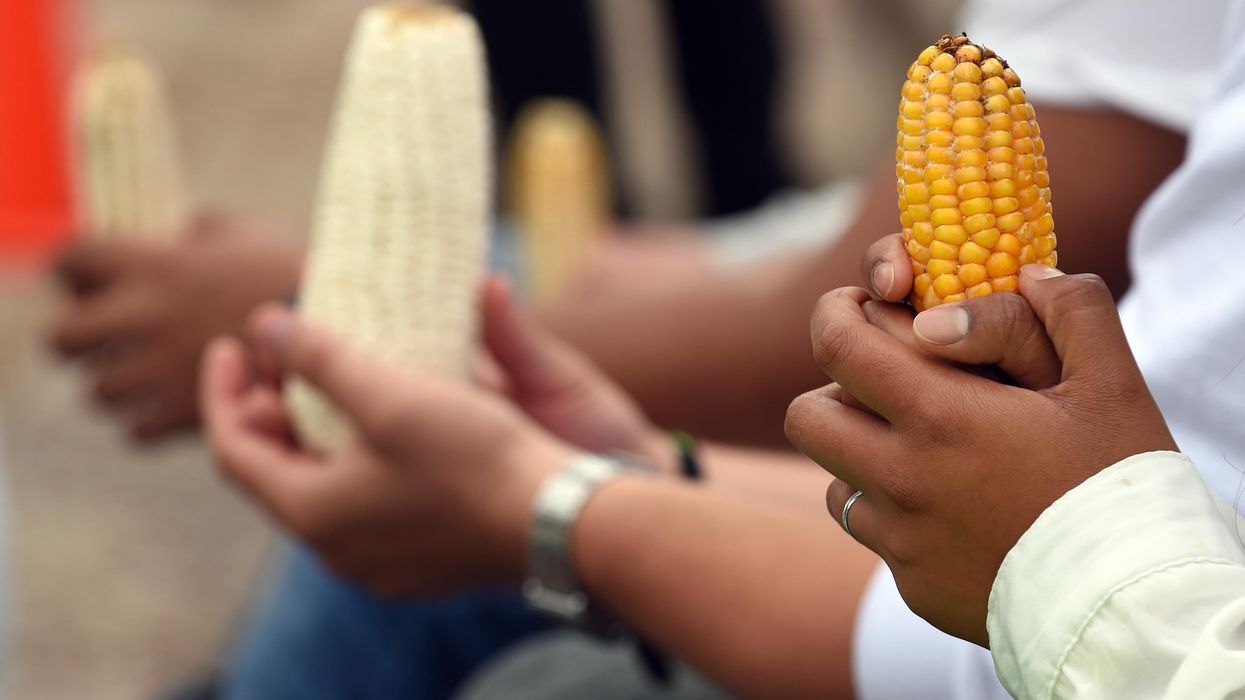
What right does our government, our research institutions, or a group of multi-national corporations have to tell anyone what they must eat, what chemicals they must use, and that their culture and environment are of little concern?
Corporate money has always corrupted the political process in order to create laws and trade agreements that protect corporate profits at the expense of not just American citizens, but citizens of the world.
We can find, perhaps, no better case in point than Genetically Modified Organisms (GMOs). Developed over the decades by seed and chemical companies Monsanto, Calgene, Dow, DuPont, Bayer and others, Genetically Modified (GM) corn, soy, cotton and canola were touted as the solution to world hunger, the key to increased farm profitability, lower pesticide use, and a better environment.
It all sounded good, but none of it was true. The real truth was—and this was never mentioned—that these commodity crops were designed to produce vast corporate profit as they helped usher in a wave of corporate consolidation, loss of small farms, declining rural economies, and a foisting of untested GM food on unknowing consumers.
While these GM crops dominate the fields of North America, the seed and chemical companies saw the world as their target for even more profit. Their grants to university researchers, lobbying pressure and campaign contributions to state and federal legislators made GM the so-called face of "progressive" and profitable farming.
Crop yields did go up with increased application of fertilizer and pesticides, while farm crop prices went down. Farmers got bigger to survive, planted more acres, and saw the GM bandwagon as the only way—produce more cheap grain for a growing world market. A market that would feed the growing confined animal feeding operations (CAFOs) that, hand in hand with the GM mono-cultures, were driving small farmers, not just in America, but around the world off their land.
The North American Free Trade Agreement (NAFTA) pushed GM corn into the Mexican market, underselling Mexican farmers. Because they lost their way of life, many moved to low-wage factory work in the maquiladoras or across the border into the U.S., looking for work in the fields, CAFOs, and processing plants of the North.
Not only were the livelihoods of Mexican farmers ruined by the dumping of GM grain, but the areas of origin of corn were also put at risk of pollen contamination from the GM imports. Growing corn is a part of Mexico's culture. Domesticated 8,700 years ago it is sacred and a staple of the everyday diet. Mexicans didn't want our GM corn, but in an economy pushed towards depression by NAFTA, people were forced to rely on what was available and affordable.
And NAFTA wasn't the end of it. Today under a new (free but not fair) trade agreement, the USMAC, the U.S. aims to force Mexico to not only accept GM corn, but also to overturn their ban on the herbicide Roundup (glyphosate), a probable carcinogen. Mexico wants neither, they want to grow their own non-GM corn and to import only non-GM corn to meet domestic demand. Glyphosate also threatens biodiversity, not just of their native corn, but of pollinators—the bees, butterflies, and birds that winter in Mexico—so why would they want either?
Yet under USMAC, the Biden administration, through the US Trade Representative, said they would take all steps to enforce U.S. rights. The rights of the U.S. and the rights of Mexico will, in all likelihood, come down to the trade tribunals and the bullying of the U.S. government and its unending support of U.S. corporations and agricultural trade groups. The National Corn Growers Association (NCGA), note that allowing the ban to move forward (or in simple language, allowing Mexico to protect their farmers, their environment, and their culture) would be catastrophic to America's corn producers, but their real concern lies not with a potential drop in U.S. farm income, but rather a reduction of corporate profit.
America's corn producers can grow the non-GM corn Mexico would like to buy and they would be paid a premium to do so. But the power of the seed and pesticide corporations, the multi-national grain companies, and industry trade groups like NGCA make growing and marketing of non-GM corn more difficult. Growers of non-GM corn must bear the entire burden of preventing any contamination and U.S. farmers in general are trapped in a system of GM mono-cultures and CAFOs that are immensely profitable for agri-business while the growers produce commodities at prices so low their very survival depends on taxpayer-funded subsidy payments.
What right do we have to force our excess production on the people of Mexico who don't want it? What right does our government, our research institutions, or a group of multi-national corporations have to tell anyone what they must eat, what chemicals they must use, and that their culture and environment are of little concern? Short answer, Mexico has every right under USMAC to reject GM corn from the United States.
Yet—as has been the case for over 30 years—sorry, but corporate profit outweighs anyone's right to choose and the U.S. government will do whatever it takes to keep corporate profits flowing.
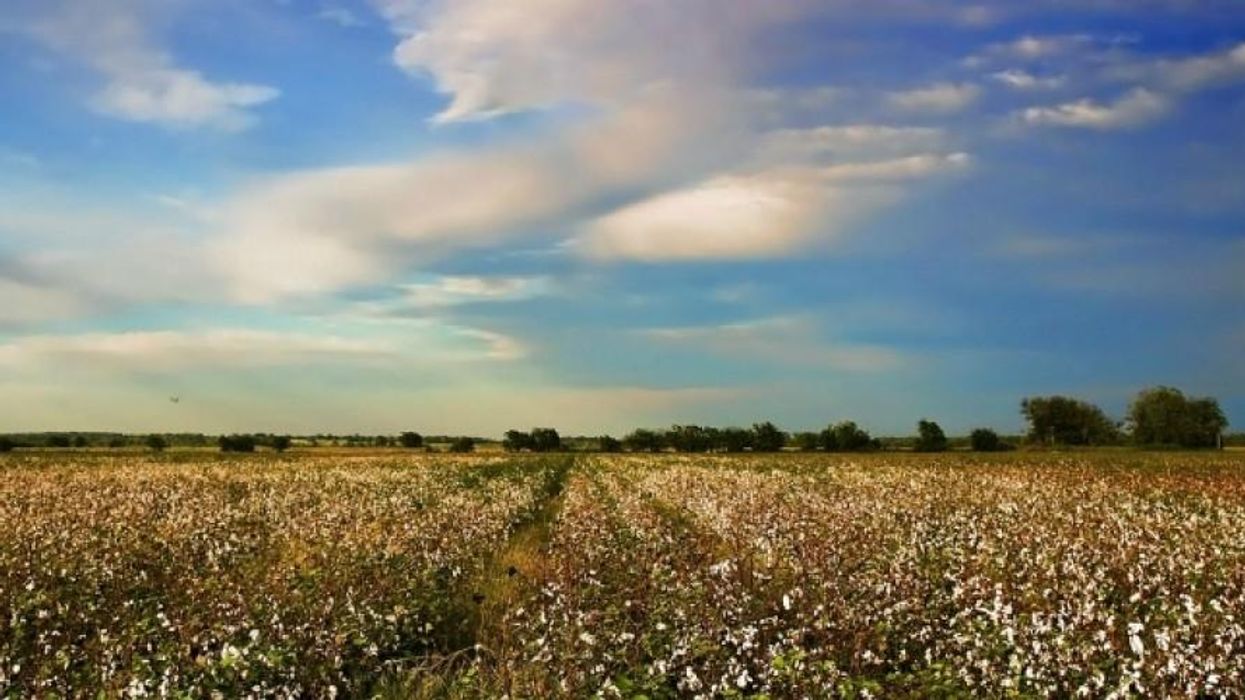
As the U.S. faces an unemployment crisis, economic meltdown, and a public health emergency with the coronavirus, the Trump administration moved quietly on Friday to further threaten dozens of endangered species in the southeastern United States by proposing the planting of genetically engineered crops on wild public lands.
The administration proposal this week aims to allow the planting of GE seeds in the 44,000 acres of farmland within the Southeastern Region of the national wildlife refuge system--a reversal of existing policy.
The move would increase the use of glyphosate and other pesticides that have been linked to harmful effects on bees, butterflies, and other pollinators necessary to humans' food supply, as well as other species that live in the wildlife refuges.
"It's a no-brainer that this kind of pesticide-intensive agriculture shouldn't be allowed on public lands that are critical to wildlife conservation and preservation of the unique ecosystems of the southeastern U.S," said Hannah Connor, an attorney with the Center for Biological Diversity, in a statement.
The new proposal comes two years after President Donald Trump reversed the Obama administration's 2014 order to phase out the use of genetically engineered crops in wildlife preserves. If approved, the decision could result in the escalation of pesticide use in up to 131 refuges in 10 states, the U.S. Virgin Islands, and Puerto Rico, comprising about four million acres.
"Permitting genetically engineered crops and neonicotinoid pesticides on the refuges threatens one of the few places that pollinators and protected species should be able to find shelter from the onslaught of toxic pesticides threatening their existence," said Sylvia Wu, an attorney at the Center for Food Safety, one of the groups which pushed the Obama administration to ban the crops.
Critics said Trump's move would worsen the threats already faced by the region's wildlife, including pollution and habitat destruction.
"We are in the midst of a biodiversity crisis," said Ben Prater, Southeast program director at Defenders of Wildlife. "Industrial agriculture with genetically engineered crops has no place on national wildlife refuges dedicated to conservation of our most vulnerable species, including pollinators like hummingbirds, bumblebees and monarch butterflies."
Monsanto accepted Bayer's $66 billion takeover offer--the largest all-cash deal ever--on Wednesday morning.
While anti-trust agencies around the world review the proposed mega-merger, environmental and consumer advocates roundly condemned the creation of what will be the largest pesticide and GMO corporation in the world.
"This new mega corporation would be the world's biggest seed maker and pesticide company, defying important antitrust protections and giving it unacceptable control over critical aspects of our food supply--undermining consumer choice and the freedom and stability of farmers worldwide," said Anne Isakowitsch, head of international corporate watchdog SumOfUs.
"[...] these megadeals are being made to benefit the corporate boardrooms at the expense of family farmers, ranchers, consumers and rural economies."
--Andrew Johnson, National Farmers Union
"The merger of Bayer and Monsanto should make the connection between Big Pharma, Big Biotech, and Big Food all the more apparent to consumers," said Ronnie Cummins, director of the Organic Consumers Association (OCA), in an email to Common Dreams.
"This may be a move to take pressure off the manufacturer of glyphosate, the most profitable pesticide in the world," Cummins added. "But it really doesn't matter who manufactures or sells glyphosate, or any other dangerous chemical. The damage to human health and the environment remains the same, as does our commitment to getting these chemicals out of our food system."
The merger between the two chemical behemoths has been long anticipated, and antitrust experts and environmental groups have been warning against the takeover for months.
A legal opinion by two former Justice Department officials released in August decried the merger as "a five-alarm threat to our food supply and to farmers around the world."
"[T]he antitrust enforcers must not allow this merger to proceed," the officials said.
Thanks to widespread protests and organizing from groups such as the National Farmers Union, next week the Senate Judiciary Committee is set to review the recent spate of consolidation--including deals such as Dow-Dupont and ChemChina-Syngenta--within the biotech industry.
"We are pleased that next week the Senate Judiciary Committee will be reviewing the alarming trend of consolidation in agriculture that has led to less competition, stifled innovation, higher prices and job loss in rural America," said National Farmers Union president Andrew Johnson. "We underscore the importance that all mergers, including this recent Bayer/Monsanto deal, be put under the magnifying glass of the committee and the U.S. Department of Justice."
"Wars were fought, lives lost, nations carved into holy lands [...] while Bayer and Monsanto sold chemicals as bombs and poisons and their brothers provided the loans to buy those bombs."
--Dr. Vandana Shiva
"We will continue to express concern that these megadeals are being made to benefit the corporate boardrooms at the expense of family farmers, ranchers, consumers, and rural economies," Johnson said.
Meanwhile, Sydney Peace Prize-winning environmental activist Dr. Vandana Shiva recently explored Bayer and Monsanto's longstanding relationship and dark history--pointing out that they worked together as chemical weapons manufacturers and war profiteers during several of the 20th century's bloodiest conflicts:
Monsanto and Bayer have a long history. They made explosives and lethally poisonous gases using shared technologies and sold them to both sides in the two world wars. The same war chemicals were bought by the Allied and Axis powers, from the same manufacturers, with money borrowed from the same bank.
MoBay [Monsanto and Bayer] supplied ingredients for Agent Orange in the Vietnam War. Around 20 million gallons of MoBay defoliants and herbicides were sprayed over South Vietnam. Children are still being born with birth defects, adults have chronic illnesses and cancers, due to their exposure to MoBay's chemicals. Monsanto and Bayer's cross-licensed Agent Orange resistance has also been cross-developed for decades. Wars were fought, lives lost, nations carved into holy lands--with artificial boundaries that suit colonization and resource grab--while Bayer and Monsanto sold chemicals as bombs and poisons and their brothers provided the loans to buy those bombs.
"The Farben family chemical cartel [that includes Bayer and Monsanto] was responsible for exterminating people in concentration camps," adds Shiva. "It embodies a century of ecocide and genocide, carried out in the name of scientific experimentation and innovation."
"Today, the poison cartel is wearing [genetic engineering] clothes and citing the mantra of 'innovation' ad nauseam. Hitler's concentration camps were an 'innovation' in killing," Shiva writes, "and almost a century later, the Farben family is carrying out the same extermination--silently, globally, and efficiently."
The "compromise" food-labeling bill announced Thursday by leaders of the U.S. Senate Agriculture Committee is nothing less than a "rollback of democracy at the behest of the world's largest agribusiness and biotech corporations," said Food & Water Watch executive director Wenonah Hauter.
The legislation in question would create the first mandatory, nationwide labeling standard for food products containing genetically modified organisms that are commonly referred to as GMOs.
Unlike Vermont's GMO-labeling law, which would require items to be clearly marked "produced with genetic engineering," the compromise bill would allow food companies to use a text label, a symbol, or electronic "QR codes" accessed by smartphone--a system "that will send shoppers on a wild scavenger hunt to figure out what GMOs might be in their food," wrote Jo Miles of Food & Water Watch on Friday.
It would supersede Vermont's law and prohibit states from setting their own labeling requirements; exempt foods that have meat, poultry, and egg products as main ingredients; and include no federal penalties for violating the labeling requirements.
While the Senate in March rejected a similarly controversial bill known colloquially as the Deny Americans the Right to Know (DARK) Act, GMO-labeling proponents say the legislation proposed Thursday is just more of the same.
The Organic Consumers Association (OCA) was just one of several groups to issue a blistering response to the news.
"The anti-consumer bill unveiled by [Debbie Stabenow, D-Mich.] and [Pat Roberts, R-Kansas], bought and paid for by Big Food corporations, nullifies Vermont's mandatory GMO labeling law, and replaces it with a law that replaces the requirement for clear, on package labels, with a convoluted, inconvenient and discriminatory scheme involving barcodes and 1-800 numbers," said Ronnie Cummins, international director of OCA.
"This is not a labeling bill; it is a non-labeling bill," added Center for Food Safety executive director Andrew Kimbrell. "This kind of labeling system is inadequate and inherently discriminatory against one-third of Americans who do not own smartphones, and even more so against rural, low-income, and elderly populations or those without access to the internet."
Polls have shown that an overwhelming majority of Americans think GMO foods should be labeled accordingly.
According to the Associated Press, Sen. Bernie Sanders' (I-Vt.) office "said he will place a hold on the legislation, which will require at least 60 votes in the 100-member body to overcome."
Sanders said in a statement: "I am very proud that Vermont has led the country in GMO labeling. This bill would preempt what Vermont and other states have done. GMO labeling exists in dozens of countries around the world. It is not controversial. Already major food companies in our country have begun labeling their products. People have a right to know what is in the food they eat. I am going to do everything I can to defeat this legislation."
This week thousands of Americans took time out of their busy days to call their Senators to demand that they vote against the DARK Act, a bill sponsored by Kansas Senator Pat Roberts, which would prevent consumers from knowing if the food they eat and feed their families contains genetically engineered (GMO) ingredients. Their support for GMO labeling was echoed by more than 600 organizations, including farming and fishing groups and food companies, representing tens of millions of members and customers who this week also urged the Senate to reject this troubling bill.
GMO crops are created by transferring genetic material from one organism into another to create specific traits, such as resistance to treatment with herbicides, or to make a plant produce its own pesticide to repel insects. Unlike traditional plant and animal breeding, which tries to develop better varieties by selecting traits from the same species, genetic engineering techniques can insert specific genes from any plant, animal or microorganism into the DNA of a different species.
The DARK Act passed out of committee last week by a 14-6 vote and is expected to hit the Senate floor any day now. The House already passed a similar bill in July. If passed in the Senate, it will block state laws that require labeling of GMOs, instruct the USDA to implement a voluntary labeling program and kick off a USDA propaganda program to sell the public on GMOs.
But an overwhelming majority of Americans--over 90 percent in many polls--support GMO labeling. Three states-- Vermont, Connecticut and Maine--have passed laws to that effect. Now, some in the Senate want to thwart these efforts. Why is it that so many politicians are all about letting states make decisions on controversial issues--until some states want to do something that Big Food companies oppose?
As with most battles brewing inside the Beltway, the answer can be found at the end of a paper trail--a green paper trail. Monsanto, a leading manufacturer of GMO seeds (and the herbicides used with them) has spent millions of dollars over the past several years to block GMO labeling efforts, most notably state and local ballot initiatives in California, Colorado, Hawaii and Oregon that failed.
Follow the Money
Since 1999, the fifty largest agricultural and food patent-holding companies and two of the largest biotech and agrochemical trade associations have spent more than US $572 million in campaign contributions and lobbying expenditures, much of it to create a favorable political context to allow GMOs to proliferate. The Grocery Manufacturers Association (GMA), which represents food companies like Kraft and PepsiCo, has spent millions of dollars lobbying in favor of the DARK Act too. Washington's Attorney General recently accused the GMA of maintaining an "egregious" plot to conceal the identity of the corporate donors behind its $11 million campaign to defeat that state's 2013 food-labeling initiative.
What's happening here is painfully obvious. The public is rejecting GMOs, a dubious technology upon which Big Food has built its empire, and now it's pulling out all the stops to protect its market shares and its profit margins.
The public is rightfully suspicious of GMOs. We simply don't know enough about their long-term effects, so it's logical that consumers would want to know whether or not they are eating them. Support for GMO labeling is so strong in fact that Campbell's recently announced it would label GMOs in its products, and even withdrew its support for anti-labeling efforts. But we can't rely on individual corporations to decide these matters for us.
And "voluntary" labeling is not the answer, either, since it effectively upholds the status quo and translates to very little, if any, labeling at all. While there is talk of amending the DARK Act to include an amendment to encourage voluntary labeling, it's crucial to note that this so-called "compromise" will do little to help consumers know if the food they're eating contains GMOs. This clearly won't do.
Reclaiming Democracy
Industry's attempt to block GMO labeling laws is yet another symptom of a democracy hijacked by corporate interests. We the people have elected our leaders to Congress to represent our interests, because we live in a democracy--not a nation controlled by a corporate oligarchy. At least, that's the way it should be. That's why we're urging the Senate to reject the DARK Act and any compromise that results in anything less than on-package labeling that tells consumers if a product contains GMO ingredients.
"The agrochemical industry is plainly quite threatened by this teenage schoolgirl, so that's why they're after her."
The U.S. agrochemical lobby targeted a Canadian teenager as part of its "increasingly nasty and divisive public relations war over GMOs," according to new reporting from Global News.
Rachel Parent was 14 years old when her activism around labeling genetically modified organisms (GMOs) in food caught the eye of pro-GMO corporations and lobby groups.
According to emails and thousands of other pages of documents released in a freedom of information request by U.S. Right to Know (USRTK), a non-profit advocacy group funded by the Organic Consumers Association, these industry forces conspired to think of ways to discredit Parent and counter her message.
"It's mostly scientists that they attack, but Rachel is a standout," Gary Ruskin, the co-director of USRTK, told Global News. "The agrochemical industry is quite threatened by this teenage schoolgirl, so that's why they're after her."
The news outlet reports, among other things, that University of Florida professor Kevin Folta—whom Ruskin describes as "one of the principal attack dogs of the agrochemical industry"—was hired by public relations firm Ketchum to make a video about Parent.
According to Global News:
The video discussed Parent's activism, her belief that all GMO food products should be labeled, and addressed her apparent lack of scientific knowledge.
"So when I think about answering Rachel Parent, who's the activist child - well, young woman - who's running the website 'Kids Right to Know...The things I just adore about Rachel is that she's clearly very articulate, clearly intelligent," Folta said in the video.
"The problem that I have is when Rachel starts to let non-scientific thinking really kind of cloud her final decision-making process."
Parent said she finds the tone of the video "almost degrading."
A poll earlier this month commissioned by a coalition of consumer and environmental groups found that nearly 90 percent of Americans want GMO foods to be labeled.
For more, see the Global News video below:
In an op-ed published by Forbes last week, a pro-biotechnology mouthpiece who used to work for the tobacco industry wrote a provocative piece arguing that a recent U.S. Supreme Court decision imperiled the constitutionality of mandatory genetically engineered food labeling. The claim is flat out wrong and shows no understanding of constitutional law or the issue of labeling of genetically engineered foods. Before rebutting it, some context is helpful.
Genetically Engineered Foods
Right now Americans in every state are working to secure labeling for genetically engineered (GE) foods, which have been subject to significant controversy since their introduction in 1996. Polls regularly show that over 90% of Americans support their mandatory labeling. Unfortunately, unlike sixty-four countries across the globe--including all of the Europe Union, Japan, New Zealand, Australia, Brazil, Russia, China, and many others--the United States has so far declined to require labeling for genetically engineered foods, leaving the public in the dark about whether the foods we buy are transgenic.
"People are recognizing that genetically engineered crops are a key cog of inherently unsustainable industrial agriculture, and cause significant adverse environmental impacts."
What is driving this nationwide outcry for labeling? Consumers are becoming more aware that while few whole foods are genetically engineered, a substantial majority of processed foods are now produced with genetic engineering. The public recognizes that having thousands of processed foods produced with genetic engineering, yet unlabeled, is deceptive, or at best confusing, to consumers.
Further, Americans are increasingly aware of the risks and negative impacts of genetically engineered crops, correctly seeing through several decades of myths that were carefully constructed by agrochemical companies to promote their products. On the human health side, the public is realizing that the U.S. Food and Drug Administration (FDA) does not actually test the food safety of engineered foods or "approve" them; rather, it has confidential meetings with industry in which it merely reviews the industry's own testing--and even that is voluntary. Americans are also realizing that no long-term or epidemiological studies in the United States have examined the safety of human consumption of genetically engineered foods, and that without labeling, there is no accountability or traceability to link such foods to proliferating public health problems.
On the environmental side, people are recognizing that genetically engineered crops are a key cog of inherently unsustainable industrial agriculture, and cause significant adverse environmental impacts. Genetically engineered crops are essentially a pesticide-promoting technology: They are overwhelmingly engineered to be resistant to pesticides or produce pesticides, and consequently have dramatically increased overall pesticide output into our environment. Monsanto's Roundup Ready varieties, resistant to glyphosate, have made glyphosate the most used pesticide in history, with over 280 million pounds applied in U.S. agriculture in 2012 alone. Earlier this year, the World Health Organization's International Agency for Research on Cancer concluded that glyphosate is probably carcinogenic to humans.
On the agricultural side, transgenic contamination of traditional crops from engineered crops has caused U.S. farmers billions of dollars in market losses. And the widespread adoption of crops engineered for pesticide resistance has proliferated an epidemic of resistant "superweeds" now covering more than 60 million acres of U.S. farmland.
Juxtaposed against these risks and impacts, the U.S. public is discovering that industry's hype is false. Namely, despite billions of dollars in research and nearly two decades of commercialization, there are no crops that are engineered to increase crop yields, reduce world hunger, or mitigate global warming; instead, the agrochemical companies that engineer crops have largely succeeded in making these crops resistant to their own products--pesticides. Nor is there any "consensus" that such foods are safe.
Labeling GE Foods
For these reasons, into the federal breach, state-required labeling efforts have proliferated, in the venerable "states-as-laboratories" tradition of American federalism. Overall over 30 states in 2014-2015 introduced labeling bills. Connecticut and Maine passed labeling laws in 2013, albeit with clauses tying their effective dates to similar laws in other states, and in May 2014, Vermont became the first state to pass a stand-alone labeling law, which goes into effect in July 2016. And despite spending over $100 million dollars, crushing election spending records, biotech industry has also barely beaten back three state ballot initiatives, in California (2012), Washington (2013), and Oregon (2014), by increasingly narrow 51%-49% margins (Oregon lost by 812 votes, total).
Industry's All Out Assault on Democracy and Your Right to Know
Industry immediately challenged the Vermont GE labeling law, Act 120, seeking an injunction stopping its implementation, but after a year of litigation, in May of this year the Federal District Court for the District of Vermont resoundingly rejected their arguments, upholding the law. The Court agreed with what many labeling supporters have argued for years, concluding that state labeling was not preempted by federal law, that it did not impermissibly interfere with interstate commerce, and that food manufacturers did not have any First Amendment right to keep consumers in the dark about whether their food is genetically engineered. The Court found the reasons Vermont gave for the mandated disclosure labeling--those described above, promoting public health and environment protection, and preventing consumer confusion and deception--were substantial state interests to support requiring labeling. Industry appealed, with briefing over this summer and the Second Circuit Court of Appeals set to hear argument on October 8 in New York City.
Meanwhile, the chemical industry and "Big Food" have continued to pour millions into their assault on States' Rights and the People's Right to Know in Washington, DC, making their top priority legislation that would prohibit all state labeling (and any oversight of genetically engineered crop production), known as the "Denying Americans The Right to Know" or DARK Act. It passed the House of Representatives in July, and is headed for a Senate showdown this fall.
And the industry's onslaught has been in the media too: following the tobacco industry playbook, Big Food and agrochemical companies deliberately mislead the public on the facts about genetically engineered crops by spending hundreds of millions of dollars, creating front groups, and paying for the help of neutral-appearing academics. Among other scare-tactics is the claim that labeling will increase food prices, which has now been debunked by independent studies by Consumer Reports.
Reed v. Town of Gilbert, Commercial Speech and GE Labeling
The decision Reed v. Town of Gilbert, Arizona described in the Forbes article received little media attention. Like many towns, the town of Gilbert, Arizona had passed a code prohibiting the display of outdoor signs without a permit, while exempting several sign categories. Applying the code, the town cited a local church for posting signs about the time and place of their weekly service, but based on the code's exceptions, other types of signs, such as election signs, were not similarly ticketed. The church successfully challenged the ordinance as violating of their 1st Amendment Freedom of Speech rights. Reversing the lower court decision, Justice Thomas's opinion striking down the ordinance explained that the town's sign code was a "content-based" speech restriction, and thus subject to the highest level of 1st Amendment judicial scrutiny, strict scrutiny, which it failed
The level of judicial scrutiny, or how closely the court will examine a law, is often the critical question in in free speech cases. Strict scrutiny requires a government to show that its restriction on speech furthers a compelling governmental interest, and is narrowly tailored to achieve that interest. Gilbert offered the aesthetic appeal of curbsides and traffic safety for interests. The court found these interests too insufficient and too under inclusive in their application in the sign code to survive strict scrutiny. Justices Breyer, Ginsberg, and Kagan concurred only in the judgement and wrote separately, explaining that while Gilbert's sign law would fail under any test (noting that "does not pass strict scrutiny, intermediate scrutiny, or even the laugh test"), they disagreed with Justice Thomas's broad language of when and how strict scrutiny was the appropriate standard.
With even a cursory understanding of these facts, attempts to apply this case to the GE labeling context quickly fall apart. The first thing to understand-- that is not present in Reed, nor ever mentioned in the Forbes piece--is that commercial speech, like consumer product labeling, is fundamentally different than other forms of traditionally protected speech, like political or religious speech. Commercial speech is a lesser form of speech, generally entitled to less protection; in fact, until 1978, commercial speech was not protected under the First Amendment at all. The Supreme Court has subsequently explained that the "extension of First Amendment protection to commercial speech is justified principally by the value to consumers of the information such speech provides," not any inherent constitutional rights of manufacturers. As a consequence, laws regarding commercial speech do not receive strict scrutiny review, instead courts apply lesser burdens on governments in such circumstances.
Indeed, the crux of Vermont's GE labeling litigation has been whether an intermediate form of scrutiny should apply instead of rational basis review, not whether strict scrutiny should apply. The district court in the GE labeling litigation held that the lowest level of judicial review, rational basis review, was the proper standard for laws requiring the labeling of genetically engineered foods. Tellingly, industry has not even argued that content-based review or strict scrutiny should apply to the Court of Appeals.
The second major doctrinal point is the difference between a speech prohibition, like the sign postings in Reed, and a speech disclosure, like product labeling. This is also entirely absent from the Forbes piece. In speech doctrine there are material differences between disclosure requirements and prohibitions, with prohibitions having more 1st Amendment protection, for obvious reasons: any interests affected by a disclosure are substantially weaker than those suppressed, particularly in the commercial speech context, where the whole point of the constitutional protection is the value to consumers that speech provides. Thus a company's interests in "not providing any particular factual information" are merely "minimal." Balanced against that are the many substantial reasons in favor of labeling discussed above--health, environment, and preventing consumer deception and confusion--all of which courts have long held to be substantial governmental interests for purposes of mandated product disclosures.
In short, it is difficult to imagine that forty years of commercial speech precedent would be implicitly overturned by a non-commercial speech case, without the Court even mentioning the sea-change it was making. There is not a single case in which a court has found a commercial disclosure, like a product label, to be "content based" and thus subject to strict scrutiny. Based on the position presented by the Forbes piece, all kinds of commercial product labeling requirements would be potentially be struck down, because all factual disclosure requirements require specific content. However, that doesn't mean they are "content-based" for purposes of strict scrutiny, and Reed does not say otherwise. It is extremely unlikely that the Supreme Court would hide such an elephant in such a mouse hole.
On Monday, Germany became the latest country in the European Union to oppose the use of genetically modified (GMO) crops in its food supply.
German Agriculture Minister Christian Schmidt told government officials that he will seek to implement the European Union's "opt-out" rule to stop GMO crop cultivation in the country, including those varieties that may be approved by the EU, according to documents seen by Reuters this week.
Individual regions in Germany will have until September 11 to inform Schmidt if they wish to be included in the opt-out. Germany will then have until October 3 to tell the EU whether or not it will participate in the cultivation program.
Agriculture ministry spokesperson Christian Fronczak told Bloomberg, "The German government is clear in that it seeks a nationwide cultivation ban."
"There's resistance from all sides, from the public to the farmers," Fronczak said.
Scotland was the most recent country to ban GMOs, which it announced earlier this month. At the time, rural affairs secretary Richard Lochhead said concerns over GMO crops are "shared by other European countries and consumers, and which should not be dismissed lightly."
In response to Germany's move, Scottish National Party (SNP) minister Rob Gibson on Tuesday said, "Like Scotland, the German Government recognizes the importance of protecting its food and drink sector and keeping its environment said on Tuesday... The German decision shows that Scotland is now also leading Europe on GM crops.".
"Germany has committed a true act of food democracy by listening to the majority of its citizens that oppose GMO cultivation and support more sustainable, resilient organic food production that doesn't perpetuate the overuse of toxic herbicides," Lisa Archer, food and technology director at environmental nonprofit Friends of the Earth, told Common Dreams in response to the move. "We are hopeful that more members of the EU will follow suit and that the U.S. Congress will protect our basic right to know what we are feeding our families by requiring mandatory GMO labeling."
Schmidt's letter said the new effort continues a previous GMO policy. As of October 2014, more than 200 regions in the country had elected to ban the cultivation of such crops.
In April, the EU approved the import of 19 GMOs, including 11 made by agrochemical giant Monsanto, but it gave individual nations in the union the choice to opt out of selling such crops. At the time, food safety spokesperson for the Greens in the European Parliament, Bart Staes, said the approval was "an affront to democracy."
"European citizens do not want GMOs," Staes said.
India is the home of oilseed diversity--coconut, groundnut, linseed, niger, mustard and rapeseed, safflor, and sesame. Our food cultures have evolved with our biodiversity of oilseeds. Sarson is called "Sarsapa" and "Rajika" in Sanskrit. Diverse Varieties of Sarson are grown and used in India, including Krsna Sarsapa (Banarsi Rai), Sita Sarsapa (Pila Sarson), Rakta Sarsapa (Brown Sarson), Toria, and Taramira.
On August 27th, 1998, the government announced a policy of free import of soyabean, while simultaneously banning sale of mustard oil using the tragedy of adulteration of mustard oil in Delhi with argemone, diesel, waste oil. While it was referred to as the dropsy epidemic, our visits to hospitals showed multiple symptoms because of the multiple sources of adulteration. The interesting thing about the mustard tragedy was that ALL brands were affected, and only in Delhi. . A typical adulteration is in one brand across the supply chain.
Women from the slums of Delhi called us at Navdanya and said, "Our children are going to bed hungry because they cannot eat food cooked in soya oil." They also said, "Bring our mustard back."
Women prefer natural oils such as mustard to hydrogenated fats such as Dalda for health reasons and taste. Hydrogenated fats contain trans fats, which contribute to heart problems and strokes. Soya oil, too, is an industrial oil that uses benzene, a known carcinogen. Food should give us health, not disease; the poorest women know this fundamental fact.
Navdanya, with the National Women's Alliance for Food Sovereignty (Mahila Anna Swaraj), started the Sarson Satyagraha to bring back pure mustard oil. In 1998, the sound of "Sarson Bacao, Soyabean Bhagao" rang on the streets of Delhi. The first bottle of the Satyagraha Mustard Oil was gifted to the then Chief Minister of Delhi, Sahib Singh Varma. Today, we can enjoy our mustard oil because of the Sarson Satyagraha 1998.
Our mustard is again under threat from Dr. Deepak Pental of Delhi University, who has genetically engineered it for sterility and herbicide tolerance.
Not only do we not need genetically engineered mustard, but the traits being introduced in it are known to be hazardous and illegal under international and national law. Dr Pental has spent time in Tihar jail for stealing a colleague's Mustard work, but blatantly violating national and international laws that have been put in place to protect our biodiversity and farmers' rights is a far more serious crime.
The GMO mustard is based on what has been called "Terminator Technology," which sterilizes the harvested seed. The UN Convention on Biodiversity has banned the use of Terminator Technology, and it is also illegal under India's Plant Variety Protection and Farmers Rights Act. The US Department of Agriculture and Delta and Pine Land (now owned by Monsanto) hold the patent for this technology.
Dr. Pental used Terminator Technology based on the barnase gene, which is lethal to cells.
In addition to the terminator trait, GMO mustard has been engineered to be resistant to the herbicide Glufosinate. This herbicide halts photosynthesis, resulting in plant death. When Glufosinate is sprayed on fields, all other plants die except the herbicide-resistant GMO.
These are technologies for killing life, not technologies for growing food. They must be banned.
In India, we grow mustard with wheat on our small farms. Such mixtures increase productivity and farmers' incomes. However, herbicide-resistant GMO mustard kills wheat, lowers farm productivity, and undermines food security. Herbicide-resistant crops also put evolutionary pressure on weeds, contributing to the emergence of superweeds. Due to increased herbicide use, 50% of farmlands in the US are overrun by superweeds.
Additionally, GM mustard contaminates non-GMO mustard through pollination. Percy Scmeiser, a seed breeder in Canada, lost his canola line (canola is derived from mustard and gets its name from the breeding done in Canada) to contamination by Monsanto's RoundUp Ready Canola. Steve Marsh, an Australian Organic farmer, lost his Organic Certification because of Monsanto's GM canola.
The demand for pure organic mustard oil is growing in India since most edible oils are "blended" with GMO soya oil or GMO BT cotton seed oil. The introduction of GMO mustard with Terminator traits will deny Indian citizens the right to safe and pure mustard oil because of the risk of contamination.
The GM DNA can enter cells of unrelated species and be incorporated into the cell's genome through horizontal gene transfer. The genes involved are fatal.
Barnase is known to be harmful, if not lethal, to all cells, animals and humans included. When perfused into rat kidneys, barnase causes kidney damage. When the recombinases used for gene splicing are expressed at high levels in the sperm cells of transgenic mice, the males became 100% sterile. Sterility is caused directly by the recombinase enzyme scrambling the genome, essentially by breaking and rejoining DNA at inappropriate sites on the same or different chromosomes.
Because we need an independent assessment of these far-reaching Biosafety impacts, the Technical Expert Committee (TEC) of the Supreme Court has recommended a ten-year moratorium on GMO trials to create a robust system for Biosafety Regulation. Such regulation cannot be left to those involved in risky experiments who are also trying to push hazardous GMOs onto our farms and into our food.
In addition, the TEC has recommended that no herbicide-resistant crops be introduced in India because our farmers are small, and herbicides will destroy our biodiverse food crops, which are the basis of India's food and nutritional security. The TEC also recommended that we do not genetically engineer crops for which we are a 'center of diversity.' India is the home of the genetic diversity of mustard.
Thus, every law and scientific principle of Biosafety is being undermined to push Terminator Mustard on India's farmers and thalis. GMO mustard is justified because we are importing edible oils, which will reduce imports by increasing production. The claim that this Terminator Mustard will increase yields by 30% is scientifically false and a blatant lie.
The GMO hybrid cannot have higher yields than the non-GMO hybrid.
India imports edible oils because we were forced to. When Soya oil started flooding India's market in 1998, the International price was $150/ton, while the US government's subsidy to its soya producers was $190/ton. In effect, this was dumping.
The Indian government further subsidized soya oil for the PDS by Rs 15,000/ton, making imported soya oil artificially cheaper than domestically produced mustard oil.
We need to get rid of these distorting subsidies and unjust trade rules to defend our food sovereignty and ensure Indian's can have healthy and safe food Made in India by Indian farmers.
We need to stop the insanity of transforming mustard - the symbol of spring and abundance in our culture - into a toxic crop with terminator genes, sprayed with lethal herbicides that kill everything green, including the rich diversity of our crops and directly damage our health.
On July 31, 2015 we renewed the Sarson Satyagraha by taking a pledge at Gandhi Ji's memorial at Rajghat to protect the diversity, purity and safety of our mustard.
Join the Sarson Satyagraha. Commit to boycotting chemical and GM foods and eating organic and local foods. Food Freedom (Anna Swaraj) is our birthright.