

SUBSCRIBE TO OUR FREE NEWSLETTER
Daily news & progressive opinion—funded by the people, not the corporations—delivered straight to your inbox.
5
#000000
#FFFFFF
To donate by check, phone, or other method, see our More Ways to Give page.
Daily news & progressive opinion—funded by the people, not the corporations—delivered straight to your inbox.
"The damage this administration has already done throughout the world is pretty staggering."
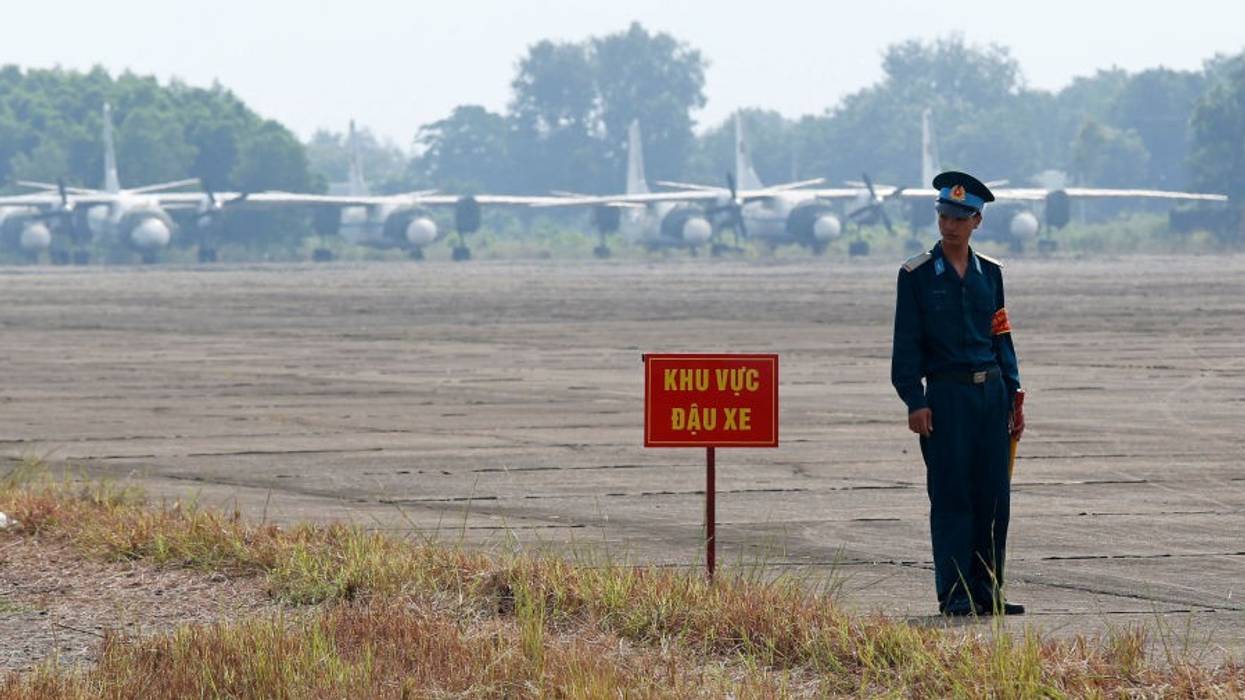
The Trump administration's unlawful dismantling of the U.S. Agency for International Development has ground to a halt critical Agent Orange cleanup efforts in Vietnam, which American forces sprayed extensively with the toxic, cancer-linked chemical between 1961 and 1971—impacting an estimated 3 million people.
ProPublica reported Monday that "workers were in the middle of cleaning up the site of an enormous chemical spill, the Bien Hoa air base, when Secretary of State Marco Rubio abruptly halted all foreign aid funding" last month.
"The shutdown left exposed open pits of soil contaminated with dioxin, the deadly byproduct of Agent Orange," the investigative outlet noted. "After Rubio's orders to stop work, the cleanup crews were forced to abandon the site, and, for weeks, all that was covering the contaminated dirt were tarps, which at one point blew off in the wind."
"And even more pressing, the officials warned in a February 14 letter obtained by ProPublica, Vietnam is on the verge of its rainy season, when torrential downpours are common. With enough rain, they said, soil contaminated with dioxin could flood into nearby communities, poisoning their food supplies," the outlet continued, observing that hundreds of thousands of people live around the air base.
Officials who sounded the alarm didn't receive a response from the Trump administration, according to ProPublica. The officials in Vietnam warned their colleagues in Washington that "we are quickly heading toward an environmental and life-threatening catastrophe."
The Vietnamese Red Cross estimates that more than 150,000 children in the country have been born with ailments attributable to Agent Orange.
Last month, as U.S. President Donald Trump and billionaire Elon Musk took aim at USAID, The New York Times spotlighted the story of Nguyen Thi Ngoc Diem, who the newspaper noted was "born with a malformed spine and misshapen limbs—most likely because her father was exposed to Agent Orange."
"It makes no sense," Diem told the Times in response to the Trump administration's assault on USAID. "Agent Orange came from the U.S.—it was used here, and that makes us victims. A little support for people like us means a lot, but at the same time, it's the U.S.'s responsibility."
In the wake of Trump's illegal funding freeze at USAID, the Times noted that "bulldozers that were cleaning up contamination at a former American air base in southern Vietnam—which both countries might eventually want to use—have gone silent."
"Around 1,000 mine-removal workers in central Vietnam have been sent home," according to the Times. "Even if funding returns, in a year meant to mark recovery from the darkness of a cruel war, fundamental damage has already been done in ways that feel—for partners and victims in both countries—like a knife shoved into old wounds."
ProPublica stressed Monday that the Trump administration has not just ordered cleanup work to stop. It has also "frozen more than $1 million in payments for work already completed by the contractors the U.S. hired."
Jan Haemers, the CEO of Haemers Technologies—a company that has worked on Agent Orange cleanup in Vietnam—told ProPublica that "halting a project like that in the middle of the work" amounts to "an environmental crime."
"If you stop in the middle," Haemers said, "it's worse than if you never started."
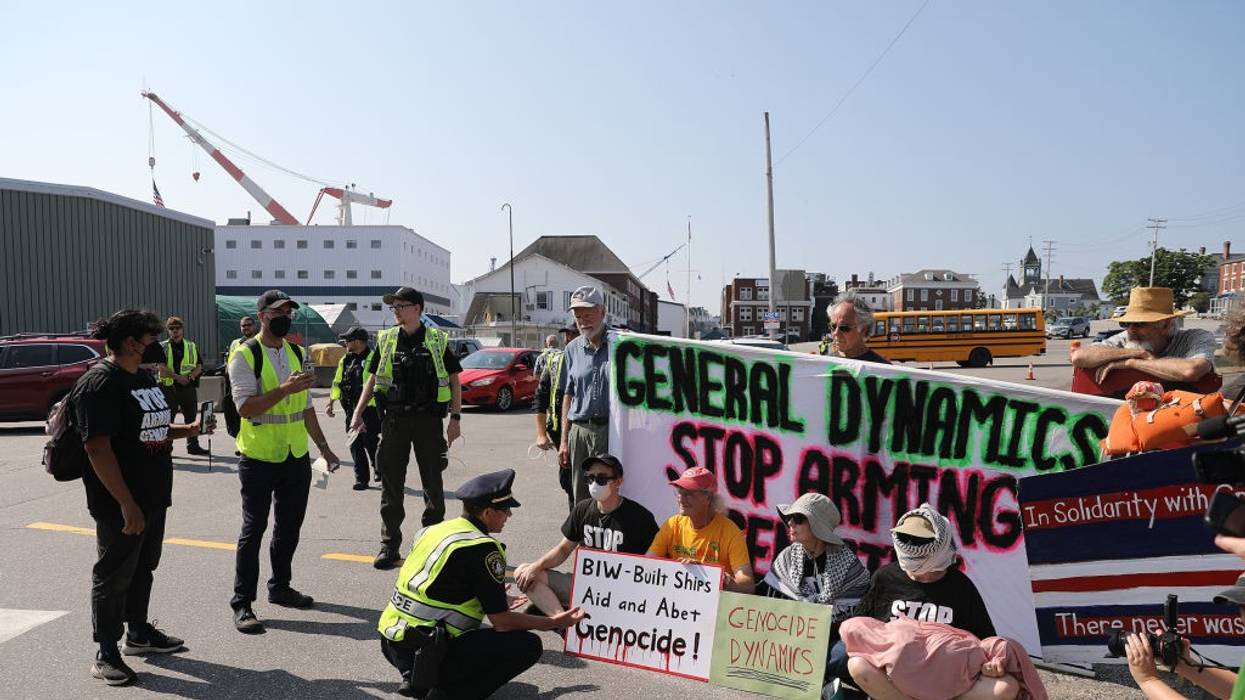
Because we strongly believe, nay absolutely know, that the U.S. does not need another warship.
To Whom It May Concern:
Because I have twice visited the West Bank and know the personal stories of 40 year-old Palestinian men who were imprisoned as boys for simply yelling at Israeli soldiers—and beaten and dehumanized for months before being released without trial;
And because I now know that those horrific, forever haunting experiences were and remain commonplace for Palestinian youth and are symptomatic of a world where, “we (Israelis) believe they are worth more than they” (Palestinians);
And because by paying close attention to non-main-stream American and foreign media I know the horrific truth of Gaza;
And because I have a good sense that when thousands are killed under months of ceaseless bombing and thousands more remain buried under the rubble yet to be found, the crime rises beyond war to become, inarguably, a “genocide”;
And because I know of the influence of AIPAC and U.S. defense industry corporations on U.S. Congress members and, hence, on American foreign policy;
And because I know well that the siege of Gaza could not continue without U.S. cover and support;
And because, as not much more than an adolescent, as a consequence of the fiction fed me by a conventional education, I volunteered to go off to Vietnam;
And because I know that, as a consequence of that war of choice, two to three million Vietnamese were killed in defense of their country---and that 2-3 million others are institutionalized today unable to take care of themselves as 2nd and 3rd generation victims of Agent Orange;
And, because I also mourn the 58,281 Americans commemorated on “the wall”, lost in that war, generally, perhaps, believing the same fiction I had;
And because I know that millions, yes millions, of innocents have died in my lifetime, arguably victims of American wars of choice, endorsed and promoted by the American defense industry, in Grenada, Iraq, Afghanistan, Libya, Panama, Somalia, Bosnia, Kosovo, Syria, Yemen, etc., (hardly an all-inclusive list);
And because I and others, on many occasions since the Berrigan brothers, in a Prince of Peace Plowshares action on February 12, 1997, have returned again and again to protest other
christenings” at Bath;
And because we strongly believe, nay absolutely know, that the U.S. does not need more warships, but rather that General Dynamics ought to be “converting” to the manufacture of “green” technologies.
It is for these reasons, in the spirit of the “Plowshares” movement, we chose to inconvenience the so-called “christening” attendees on July 27th—that they might give pause to consider the merits of our actions. That they too, might join us in a virtual revolution—to turn away from violence, to demand that our country do the same, to be a force for cooperation among the brotherhood of nations, rather than endorsing endless militarism.
For these reasons I chose to join like-minded fellow citizens in our efforts to make more widely known our nation’s reckless conduct. I proclaim my innocence and will be very pleased to have the opportunity to defend that position in court.
Not in my name!
Dud Hendrick
Deer Isle, Maine
USNA Graduate —1963
USAF Officer — 1963-1967
"Honestly, I never thought this day would come," said the head of the citizens advisory commission overseeing the destruction.
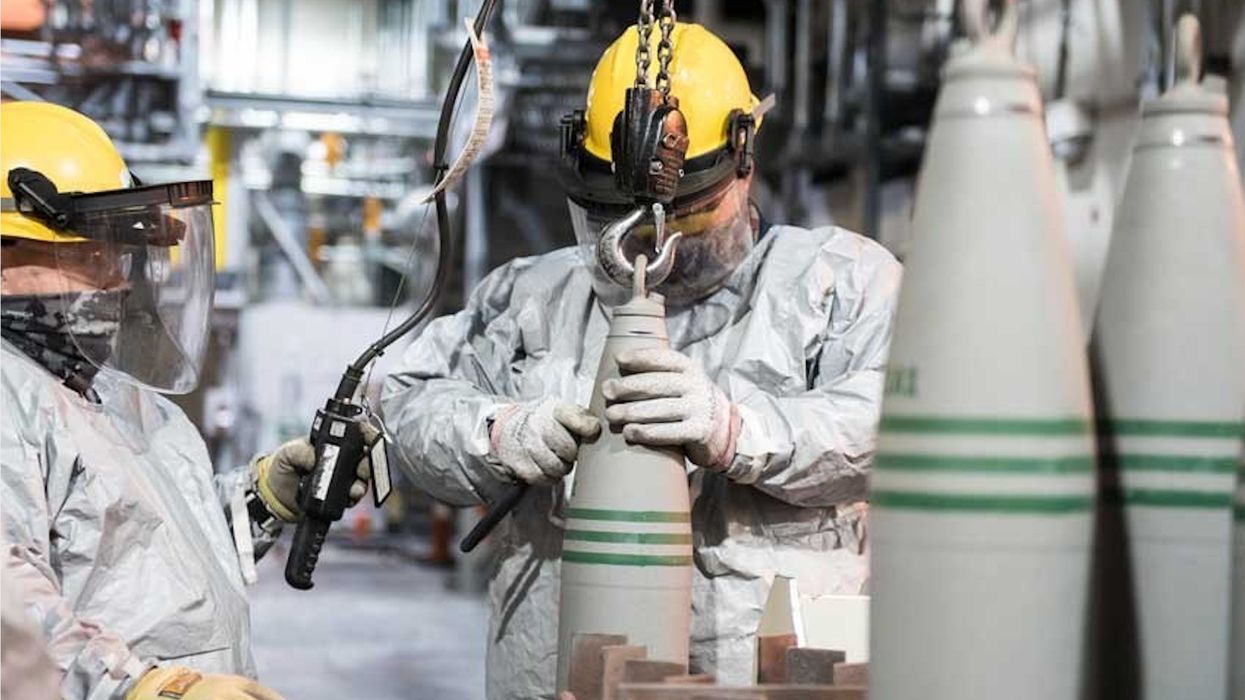
The White House announced Friday that the United States has destroyed what remains of its once-massive military chemical weapons arsenal, while vowing to "prevent the stockpiling, production, and use" of the internationally banned weapons of mass destruction.
"For more than 30 years, the United States has worked tirelessly to eliminate our chemical weapons stockpile. Today, I am proud to announce that the United States has safely destroyed the final munition in that stockpile—bringing us one step closer to a world free from the horrors of chemical weapons," President Joe Biden said in a statement.
"Successive administrations have determined that these weapons should never again be developed or deployed," the president continued, "and this accomplishment not only makes good on our long-standing commitment under the Chemical Weapons Convention, it marks the first time an international body has verified destruction of an entire category of declared weapons of mass destruction."
While the U.S. military no longer has a chemical stockpile, tear gas—a chemical weapon banned in war—remains an integral part of law enforcement crowd suppression arsenals.
"Today—as we mark this significant milestone—we must also renew our commitment to forging a future free from chemical weapons," Biden said. "I continue to encourage the remaining nations to join the Chemical Weapons Convention so that the global ban on chemical weapons can reach its fullest potential."
Under the treaty, the U.S. committed to destroying its chemical arsenal by 2007; that deadline was later extended to 2012.
The Organization for the Prohibition of Chemical Weapons (OPCW) confirmed Friday that "all declared chemical weapons stockpiles" around the world have now been "verified as irreversibly destroyed."
"The end of the destruction of all declared chemical weapons stockpiles is an important milestone for the organization. It is a critical step towards achieving its mission to permanently eliminate all chemical weapons," OPCW Director-General Fernando Arias said in a statement.
"Yet, more challenges lie ahead of us, which require the international community's continued attention," Arias added. "Four countries have yet to join the convention. Abandoned and old chemical weapons still need to be recovered and destroyed."
Egypt, Israel, North Korea, and South Sudan are not party to the Chemical Weapons Convention, which took effect in 1997.
As The New York Times reported Thursay:
The American stockpile, built up over generations, was shocking in its scale: Cluster bombs and landmines filled with nerve agent. Artillery shells that could blanket whole forests with a blistering mustard fog. Tanks full of poison that could be loaded on jets and sprayed on targets below.
They were a class of weapons deemed so inhumane that their use was condemned after World War I, but even so, the United States and other powers continued to develop and amass them. Some held deadlier versions of the chlorine and mustard agents made infamous in the trenches of the Western Front. Others held nerve agents developed later, like VX and Sarin, that are lethal even in tiny quantities.
American armed forces are not known to have used lethal chemical weapons in battle since 1918, though during the Vietnam War they used herbicides like Agent Orange that were harmful to humans.
The United States once also had a sprawling germ warfare and biological weapons program; those weapons were destroyed in the 1970s.
Even after the Cold War ended, the United States was drafting plans for the possible use of chemical weapons. In service of U.S. global hegemony, then-Undersecretary of Defense Paul Wolfowitz and his deputy Scooter Libby authored a 1992 strategy plan, "Defense Policy Guidance," that called for possible preemptive nuclear, biological, or chemical warfare against countries that potentially posed threats to American dominance—even if they did not have or use weapons of mass destruction.
"Honestly, I never thought this day would come," Irene Kornelly, who chairs the citizens' advisory commission that has overseen the destruction of U.S. chemical weapons at the Army's Pueblo Chemical Depot in Colorado for 30 years, told the Times. "The military didn't know if they could trust the people, and the people didn't know if they could trust the military."
As Kornelly spoke, the depot's manager blasted the rock band Europe's 1986 hit "The Final Countdown" and handed out red, white, and blue Bomb Pop popsicles.
"Most people today don't have a clue that this all happened—they never had to worry about it," Kornelly said. "And I think that's just as well."

And the least secret agent of all . . . Agent Orange!
On August 10, 1961, the United States, several years before it actually sent troops, started poisoning the forests and crops of Vietnam with herbicides. The purpose: to deprive our declared enemy, the commies of Ho Chi Minh, of food and ground cover that allowed them to trek from North to South. It was called, innocuously, Operation Ranch Hand.
To sum it up as simply as possible, war is insane--and growing ever more so.
Agent Orange, the most powerful of the herbicides used in Operation Ranch Hand, contained dioxin, one of the most toxic substances on the planet. We dropped 20 million gallons of this and other herbicides on Vietnam, contaminating 7,000 square miles of its forests. Half a century later, we are fully aware of the consequences of this strategic decision, not just for the Vietnamese, the Laotians, the Cambodians, but also for many American troops: hundreds of thousands of deaths and debilitating illnesses, horrific birth defects, unending hell.
History, in all its moral primness, has relegated our use of Agent Orange to the status of "controversial."
Much to my amazement, I learned the other day that August 10 is now a day with official status. Numerous international organizations, many of them Vietnamese, have declared it Agent Orange Awareness Day.
I say, let's keep this awareness alive and evolving at least for the next decade, which is how long the United States continued to wage its chemical warfare on Vietnam, Laos and Cambodia. And they didn't wage it in ignorant innocence. Top military leaders, whose personal lives, of course, were unaffected by Agent Orange, were fully aware of its toxicity.
This raises what I choose to call The Question from Hell: How is it possible to make such a decision--to place short-term military strategy ahead of moral restraint and compassion for civilians? And this leads to a second, larger question: Why are military and political leaders so unwilling or unable to envision the long-term consequences of their decisions, that is to say, the consequences that utterly transcend the significance of the war they're trying to win? Why are they so indifferent? Why are they so . . . stupid?
Pondering these questions was how I spent Agent Orange Awareness Day. Whether the U.S. won or lost the war, stopped or failed to stop the communist dominoes from tipping, the landscape would still be ravaged, the infected would still be dying, newborns would still have shocking birth defects (missing limbs, extra limbs, misplaced organs and so much more).
As the War Legacies Project notes on its website, the U.S. was trying to fight an "invisible enemy" who was hiding in the jungle, living off the land, by--what's the big deal?--killing the jungle itself. As a result: "Ever since the war's ending, the people of Vietnam, Laos and Cambodia have been saddled with an invisible enemy of their own."
To sum it up as simply as possible, war is insane--and growing ever more so. The military establishment isn't just brutal and cruel. It is so advanced in the technology of lethality that its capable of destroying the world. Hasn't the time come to defund war--completely!--and rethink how we deal with conflict?
Well yes, of course, but we all know this isn't going to happen. Nonetheless, the creation of Agent Orange Awareness Day could well be a moment of human awakening, a chance for there to be a collective focus on that Question from Hell: Why?
Here's a starting place, thanks to psychologist Albert Bandura, as quoted by Russell P. Johnson in an essay published by the University of Chicago Divinity School. In essence, Bandura has sought an answer to the Question. What gives political leaders the wherewithal to violate basic human values--established moral standards--and perpetrate the inhumanity of war?
He calls the phenomenon of doing so "moral disengagement" and posits four forms that this behavior takes:
1. Euphemistic labeling: We may drop bombs and kill dozens or hundreds or thousands of civilians, including children, but the action is described by the lapdog media as, simply, an "airstrike." We may torture Iraqi detainees but it's not such a big deal when we call it "enhanced interrogation." We may poison the jungles of Southeast Asia, but what the heck, there's Jed Clampett leading the way in "Operation Ranch Hand." The list of military euphemisms goes on and on and on.
2. Advantageous comparison. If the enemy you're fighting is evil--and he always is--the actions you take to defeat him, whatever they are, are ipso facto justified. The alternative is doing nothing, a la Neville Chamberlain, appeasing Hitler. Violent response to evil--carpet-bombing Hamburg or Tokyo, nuking Hiroshima and Nagasaki--is not simply justifiable but the essence of morally necessity.
3. Displaced responsibility. I was just following orders, cries the Buchenwald guard. I did what I was told. As Johnson writes: "Decisions are made and justified without anyone ever having the sense of a moral threshold being crossed." Indeed, "an entire society can rely on displacement of responsibility to shield themselves from moral scrutiny." A pernicious side effect of this is known as "moral injury." Once a soldier is out of the military, the justification for killing someone may completely vanish; the result is a high suicide rate among vets.
4. Attribution of blame. They made us do it! "One's actions are treated as mere reactions, caused not by one's own decisions but by the actions of the enemy," Johnson writes. ". . . If our actions are excessive or barbaric, it is the other side's fault for driving us to such extremes." When both sides in the conflict resort to this, which is almost always the case, Bandura calls the result "reciprocal escalation." The war gets increasingly bloody.
Agent Orange Awareness Day, as I noted, was Aug. 10. I think we should spend the rest of the year honoring War and Dehumanization Awareness Day.

A court in France on Monday heard a case brought by a French-Vietnamese woman against over a dozen multinational corporations she accuses of causing grievous harm by selling the defoliant Agent Orange to the United States government, whose use of the deadly chemical during the Vietnam War has killed, maimed, or seriously sickened hundreds of thousands of people to this day.
"I asked myself, what have I done to transmit this incurable disease to my children? Now I know that I am not at fault."
--Tran To Nga,
Agent Orange victim
Agence France-Presse reports the suit was brought by Tran To Nga, 78, an activist and journalist who was working in Vietnam when she was exposed to Agent Orange. Tran suffers from diabetes and a blood disorder she transmitted to her second daughter; her first daughter died of a heart defect when she was 17 months old. Tran also contracted tuberculosis twice, had cancer, and suffers from an extremely rare insulin allergy.
Initially, Tran blamed herself for the afflictions that have plagued her and her children.
"I asked myself, what have I done to transmit this incurable disease to my children?" she said in a 2015 France 24 interview.
"Now I know that I am not at fault," she said. "We can identify the culprit of my children's illnesses... It's these dioxins."
In 2014, Tran sued 14 companies that made or sold Agent Orange, including Monsanto--now owned by the German firm Bayer--and Dow Chemical for their roles in selling the chemical to the U.S. government.
Agent Orange contains TCDD dioxin, a known carcinogen and one of the most toxic chemicals ever invented. In addition to numerous cancers, research has shown that Agent Orange exposure causes severe birth defects, diabetes, spina bifida, cardiovascular, digestive, neurological, respiratory, skin, and other ailments.
The U.S. government knew about the dangers of Agent Orange when the John F. Kennedy administration approved Operation Ranch Hand (pdf) in 1961 as part of a growing counterinsurgency operation in Vietnam.
"When we initiated the herbicide program in the 1960s, we were aware of the potential for damage due to dioxin contamination in the herbicide," Dr. James R. Clary, a former senior scientist at the Chemical Weapons Branch of the U.S. Air Force Armaments Development Laboratory, later admitted.
"We were even aware that the military formulation had a higher dioxin concentration than the civilian version due to the lower cost and speed of manufacture," added Clary. "However, because the material was to be used on the enemy, none of us were overly concerned."
The communist Viet Cong insurgency against the oppressive U.S.-backed Ngo Dinh Diem dictatorship was proving more difficult to defeat than anticipated by U.S. planners, who sought novel ways to combat the resistance. In a bid to deny fighters the cover provided by the dense jungle foliage, the U.S. sprayed an estimated 76 million liters (20 million gallons) of Agent Orange over Vietnamese, Laotian, and Cambodian rainforests.
Agent Orange was also sprayed over farmland, as U.S. planners sought to eradicate the crops that were feeding Viet Cong and North Vietnamese fighters, their families, and supporters.
The effects on the people of Vietnam have been devastating. As many as 4.8 million Vietnamese were exposed, with the country's government claiming 400,000 deaths and millions of cancer cases caused by the decadelong spraying. More than 50,000 babies over three generations have suffered severe birth defects, which will continue to affect future generations.
Soil and water contamination due to Agent Orange continue to sicken and kill to this day. Around 800,000 Vietnamese currently require medical and other assistance due to the lingering effects of exposure.
Tens of thousands of U.S., South Vietnamese, South Korean, and Australian troops were also exposed to Agent Orange, which has caused serious health problems for many of them, and some of their children.
While U.S. victims of Agent Orange were awarded $180 million in a class-action lawsuit in 1984, nearly all attempts by the people of Vietnam to gain desperately needed direct compensation have been rejected by the U.S. government and American courts.
This, despite a U.S. promise as part of the 1973 Paris Peace Agreement to pay $3.25 billion over a five-year period, plus an additional $1.5 billion, in reparations to Vietnam. Not a penny was paid.
"We were aware of the potential for damage due to dioxin contamination in the herbicide... However, because the material was to be used on the enemy, none of us were overly concerned."
--Dr. James R. Clary,
former senior U.S. military scientist
Vietnamese also watched with great interest as Monsanto was ordered to pay $289 million in damages to an American man who said that its Roundup weed killer caused his cancer.
Since 2007, the U.S. Congress has appropriated (pdf) nearly $60 million for dioxin cleanup and related healthcare services in Vietnam as relations between Washington and Hanoi have improved, but victims' advocates say this is nowhere near enough, as some 6,000 children are diagnosed with congenital deformities each year due to Agent Orange.
Tran says her lawsuit is meant for these and other victims who have been denied relief over the decades.
"I'm not fighting for myself, but for my children and the millions of victims," she told AFP.
Vietnam is not the only place the U.S. has used toxic weapons in recent decades. The firing of depleted uranium rounds in Iraq during the 1991 Gulf War, the 1999 NATO air war against Yugoslavia, and during 2003-2011 Iraq War have been blamed for a rise in birth defects and other often deadly ailments.

In a letter to the editor published Tuesday by the journal Nature, two dozen scientists from around the world urged the United Nations' International Law Commission to adopt a Fifth Geneva Convention that creates protections for the environment in armed conflicts.
"We call on governments to incorporate explicit safeguards for biodiversity, and to use the commission's recommendations to finally deliver a Fifth Geneva Convention to uphold environmental protection during such confrontations."
--24 scientists
The four existing Geneva Conventions and their three additional protocols are globally recognized treaties that establish standards under international humanitarian law for the treatment of wounded troops in the field, soldiers shipwrecked at sea, prisoners of war, and civilians during armed conflicts. Violating the treaties amounts to a war crime.
"Despite calls for a fifth convention two decades ago, military conflict continues to destroy megafauna, push species to extinction, and poison water resources," notes Tuesday's letter. "The uncontrolled circulation of arms exacerbates the situation, for instance by driving unsustainable hunting of wildlife."
The letter--entitled "Stop Military Conflicts From Trashing Environment"--was spearheaded by Sarah M. Durant of the Zoological Society of London and Jose C. Brito of the University of Porto in Portugal. The 22 additional signatories (pdf) are affiliated with organizations and institutions in Egypt, France, Hong Kong, Mauritania, Morocco, Niger, Libya, Portugal, Spain, the United Kingdom, and the United States.
"We call on governments to incorporate explicit safeguards for biodiversity, and to use the commission's recommendations to finally deliver a Fifth Geneva Convention to uphold environmental protection during such confrontations," says the letter, which recognizes that the U.N. commission is meeting this month to discuss expanding on the principles it has drafted (pdf) about protecting the environment in war zones.
Adopting an environment-focused convention "would provide a multilateral treaty that includes legal instruments for site-based protection of crucial natural resources," the letter explains. It also highlights the importance of companies and governments collaborating to regulate weapons transfers, and holding the military industry accountable for its impact on the environment.
"The brutal toll of war on the natural world is well documented, destroying the livelihoods of vulnerable communities, and driving many species, already under intense pressure, towards extinction."
--Sarah M. Durant, Zoological Society of London
Zoological Society of London's Durant told The Guardian in an interview published Wednesday that "the brutal toll of war on the natural world is well documented, destroying the livelihoods of vulnerable communities, and driving many species, already under intense pressure, towards extinction."
"We hope governments around the world will enshrine these protections into international law," she said. "This would not only help safeguard threatened species, but would also support rural communities, both during and post-conflict, whose livelihoods are long-term casualties of environmental destruction."
Durant's co-author Brito added that "the impacts of armed conflict are causing additional pressure to imperiled wildlife from the Middle East and North Africa. Global commitment is needed to avoid the likely extinction of emblematic desert fauna over the next decade."
A 2008 article from Worldwatch Institute--a U.S.-based environmental research group--details how "widespread concern about the environmental effects of warfare began with the American war in Vietnam," when soldiers infamously used the powerful herbicide known as Agent Orange to wipe out forest cover and crops.
Global concerns over the environmental effects of war arose again in the 1990s, when Iraqi forces burned Kuwaiti oil fields, and the United States used bombs and missiles that contained depleted uranium on Iraq. As The Guardian reported in 2014, "researchers have suggested the radiation from these weapons has poisoned the soil and water of Iraq, making the environment carcinogenic."
The letter in Nature is not the first demand that international rules of war be crafted to protect the environment. In 2007, the Chartered Institution of Water and Environmental Management (CIWEM), a U.K.-based charity, issued one such call.
CIWEM's then-executive director Nick Reeves said at the time that "long-term environmental damage is an inevitable consequence of war. The environment may seem a minor casualty but combined with the destruction of democratic informed decision-making, war prolongs human suffering and undermines the foundation for social progress and economic security."
"CIWEM demands a convention to examine the establishment of U.N. protocols for the protection of the environment," said Reeves. "We also need to acknowledge that fighting occurs where resources are scarce due to over population, meaning we need sensible population policies. We must treat the environment and each other with more respect."
Read the full letter published by Nature Tuesday below:
The United Nations' International Law Commission is meeting this month to push forward a 2013 programme to protect the environment in regions of armed conflict (go.nature.com/2ewdyj). We call on governments to incorporate explicit safeguards for biodiversity, and to use the commission's recommendations to finally deliver a Fifth Geneva Convention to uphold environmental protection during such confrontations.
Despite calls for a fifth convention two decades ago, military conflict continues to destroy megafauna, push species to extinction and poison water resources (see, for example, J. C. Brito et al. Conserv. Lett. https://doi.org/gfhst9; 2018). The uncontrolled circulation of arms exacerbates the situation, for instance by driving unsustainable hunting of wildlife.
A Fifth Geneva Convention would provide a multilateral treaty that includes legal instruments for site-based protection of crucial natural resources. Companies and governments need to work together to regulate arms transfer (see go.nature.com/2lgtfx). And the military industry must be held more accountable for the impact of its activities.
This month I got two of the most distressing pieces of news I could imagine. The first was a headline: US to use Galapagos island as a military airfield. The second came from my grandmother: two of our family friends are in the end stages of Agent Orange poisoning.
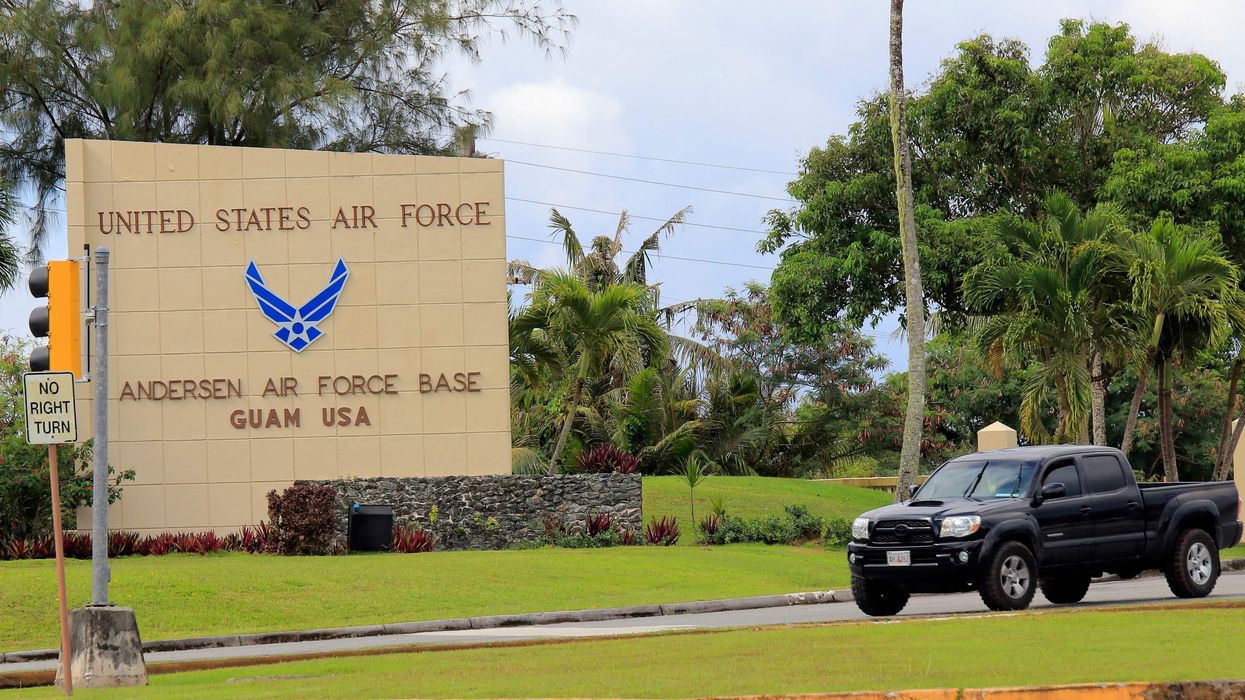
I'm from Guam; one of the countless islands of the Pacific used by the United States military as a base. At just 8 miles wide and 30 miles long, about a third of our island is covered by military installations with more build-up expected. My family and my community know all too well what being used as an airfield means. 52,000 veterans have organized into the group Agent Orange Survivors of Guam to lobby for benefits related to their exposure to the infamous herbicide while serving in the Pacific.
While we are home to a vibrant indigenous community, beautiful and sadly rare flora and fauna, and a rich history, we are also home to stockpiled chemical weapons, countless ammunitions, regular bombings and live-fire trainings, and more consequences of a military positioned for a world of constant danger.
Former Ecuadorian president, Rafael Correa, took to Twitter after the announcement of the airfield saying, "Galapagos NO es un 'portaaviones' para uso gringo." Galapagos is "not an aircraft carrier" for the Americans. The sentiment is a familiar one. Many know my island as the United States' "unsinkable aircraft carrier." While we are home to a vibrant indigenous community, beautiful and sadly rare flora and fauna, and a rich history, we are also home to stockpiled chemical weapons, countless ammunitions, regular bombings and live-fire trainings, and more consequences of a military positioned for a world of constant danger.
Along with the physical consequences of being used as a military base, CHamorus (the indigenous people of Guam) and others around the US's more than 600 bases globally know the threats to sovereignty these installations bring with them. For CHamorus this has meant 500 years without self-determination as well as a system of rights that is left to the discretion of a Congress 8,000 miles away from Guam. The inhabitants of the island Diego Garcia experienced forcible removal from their homes as build up began. Panama created a constitution that would specifically allow United States military intervention resulting in 24 invasions between 1856 and 1989.
Ecuador's constitution explicitly states, "establishment of foreign military bases or foreign facilities for military purposes shall not be allowed," as the nation is "a territory of peace." Defense Minister Oswaldo Jarrin insists that no installation will have "permanence".
This reasoning has been seen in justification of United States presence at the Soto Canal Air Base in Honduras. While officials insist that the U.S. forces are simply "guests" on the site of the Honduran Air Force Academy, the installation is now more than 30 years old. As reported by the Associated Press in the late 80's, some U.S. officials describe the build-up as "temporary but indefinite."
Many of these bases are within indigenous communities, particularly communities whose natural environment is deeply integrated to a nation or a people's culture.
My family's home has been forced to leave our ecological future in the hands of the United States military, one of the largest polluters globally. In the Department of Defense's latest plans, about 1,000 acres (about 8%) of Guam's remaining native limestone forest will be razed. The sites of planned build-up are culturally significant to CHamoru people and artifacts continue to be unearthed as construction continues.
CHamoru activists and members of the State Historic Preservation Office have expressed needs to halt construction. Linda Aguon, the office's divisional supervisor, said, "We keep discovering things, we keep discovering things. Can't we just stop?" She was joined in questioning the planned build up by Senators Therese Terlaje and Kelly Marsh.
An environmental director with Marine Corps Activity Guam, Al Borja, responded insisting, "Will we preserve in place for latte shards from a pot that was dropped? That's not going to happen because I know the ranges have to be where they are, and that's not going to force us to reconsider this." Sentiments like this from representatives of the United States military, for me, are a reminder of the massive land seizures by the Department of Defense following the liberation of my grandmother and about 13,000 other CHamorus from a World War II era concentration camp.
In August of 1944, Guam was to become the forward base for United States attacks targeting Japan and to accomplish this goal the military seized 82% of the land of the island for military purposes (this is the high water mark of American land holdings on the island). Anyone without explicit authorization to access American military bases would be shot on sight if they were found on what had been taken as military land. Eighteen construction and engineering battalions immediately began construction of military outfits including what is now known as Anderson Airforce Base and began using it as the flight strip from which daily bombings of Japanese territory would occur by way of B-29's.
Since then just a few families have received little, in any, compensation for their lost land or severe health problems consistent with exposure to continuous simulated war.
This is a problem that has global importance. A report by Brown's Watson Institute published last week found that the average annual carbon footprint of the United States' military-industrial complex is about on par with that of the Netherlands: 153 million metric tons per year. And this is a conservative number given the secrecy of the Pentagon and the reporting loopholes for military organizations written into the Kyoto Protocol.
The Pentagon has significantly acknowledged the threats that continued carbon consumption poses. One of the report's authors, Neta Crawford, explains "We have defense forces so they protect us. If in the long run, these defense forces make us less secure then we need to rethink what we're doing." Still, build-up continues in Guam and, apparently, on Galapagos.
For the communities affected by these military installations, the continued political, cultural, and medical issues represent a far greater threat than that which the bases supposedly protect us from. They are an affront to self-determination and spell the end for a place's environment.

A new peer-reviewed study shows that eating a completely organic diet--even for just one week--can dramatically reduce the presence of pesticide levels in people, a finding that was characterized as "groundbreaking" by critics of an industrial food system that relies heavily on synthetic toxins and chemicals to grow crops and raise livestock.
Published in the Environmental Research, the study--titled Organic Diet Intervention Significantly Reduces Urinary Pesticide Levels in U.S. Children and Adults (pdf)--found that switching to an organic diet significantly reduced the levels of synthetic pesticides found in all participants.
"We all have the right to food that is free of toxic pesticides. Farmers and farmworkers growing our nation's food and the rural communities they live in have a right not to be exposed to chemicals linked to cancer, autism and infertility."
-- Kendra Klein, PhD, Friends of the Earth
"This study shows that organic works," said study co-author Kendra Klein, PhD, senior staff scientist at Friends of the Earth. "We all have the right to food that is free of toxic pesticides. Farmers and farmworkers growing our nation's food and the rural communities they live in have a right not to be exposed to chemicals linked to cancer, autism and infertility. And the way we grow food should protect, not harm, our environment. We urgently need our elected leaders to support our farmers in making healthy organic food available for all."
The study tested the urine of four diverse American families in Oakland, Minneapolis, Atlanta, and Baltimore after eating their typical diet of conventional food for six days and then after a controlled diet of all organic food for six days.
Featuring the families that participated and the scientist who carried it out, watch a video produced by FOE Action about the study:
According to FOE, the pesticide and pesticide metabolite levels detected in participants dropped by an average 60.5 percent after just six days of eating the all-organic diet. Specifically, the testing showed significant reductions in pesticides associated in the past with increased risk of autism, cancers, autoimmune disorders, infertility, hormone disruption, Alzheimer's, and Parkinson's disease.
Among the key findings:
"Everyone has the right to clean organic food. That is a human right," said Tara, one study participant from Baltimore.
"This important study shows how quickly we can rid our bodies of toxic pesticides by choosing organic," said Sharyle Patton, director of the Commonweal Biomonitoring Resources Center and co-author of the study. "Congratulations to the families who participated in the study and their willingness to tell their stories in support of creating a food system where organic is available to all."
Read or download the full report here (pdf).

In what critics described as a "consciously racist" and immensely cruel move that has the fingerprints of White House senior adviser Stephen Miller all over it, the Trump administration is reportedly working to make Vietnam War refugees who have lived in the United States for decades eligible for deportation.
"Donald Trump's cruelty knows no bounds."
--Rep. Mark PocanFirst reported by The Atlantic on Wednesday, the White House plan seeks to reinterpret a long-standing agreement with Hanoi that protects from deportation all Vietnamese people who arrived in the U.S. before July 12, 1995--the date the two nations officially reestablished diplomatic relations after the Vietnam War, in which the U.S. killed millions of people and inflicted damage that lives on to this day.
"In essence, the administration has now decided that Vietnamese immigrants who arrived in the country before the establishment of diplomatic ties between the United States and Vietnam are subject to standard immigration law--meaning they are all eligible for deportation," The Atlantic noted.
Winnie Wong, progressive organizer and founder of People for Bernie, offered a succinct translation of the proposed policy change: "Trump wants to deport Vietnamese grannies who have been living here for more than 40 years."
"Donald Trump's cruelty knows no bounds," declared Congressional Progressive Caucus chair Rep. Mark Pocan (D-Wis.).
"Considering the deportation of people who have lived in this country for decades, and who are largely here because of the U.S.'s involvement, is an utter disgrace."
--Ryan Mac, Buzzfeed
In addition to the sheer Trumpian cruelty of the policy shift, several commentators were quick to note that the plan also bears all the signs of Miller's pernicious influence.
"Let's see here. This is 1) Unnecessary 2) Cruel 3) Trolls the Libs 4) Secures the existence of our people and a future for white children," author Mike Duncan wrote on Twitter. "Yes, we see you Stephen Miller."
The Week's Ryan Cooper also argued that Miller is clearly a key force behind the "despicable" proposal.
"If there is a hell Stephen Miller will be fed magma-hot ethnic food for eternity," Cooper added.
"You don't need need to be the child of Vietnamese immigrants, like me, to find this shameful," concluded Buzzfeed reporter Ryan Mac. "Considering the deportation of people who have lived in this country for decades, and who are largely here because of the U.S.'s involvement, is an utter disgrace."

It is 8 a.m. I am in the small offices of Street Roots, a weekly newspaper that prints 10,000 copies per edition. Those who sell the newspaper on the streets--all of them victims of extreme poverty and half of them homeless--have gathered before heading out with their bundles to spend hours in the cold and rain.
"There is foot care on Mondays starting at 8 a.m. with the nurses," Cole Merkel, the director of the vendor program, shouts above the chatter. "If you need to get your feet taken care of, come in for the nurses' foot care. Just a really quick shout-out and thank you to Leo and Nettie Johnson, who called up to City Hall this week to testify about the criminalization of homelessness to City Council and the mayor. Super awesome."
The men and women, most middle-aged or elderly, sit on folding chairs that hug the walls. They are wrapped in layers of worn and tattered clothing. Some cradle small dogs. Others cup their hands around disposable coffee cups and take small sips. The weekly newspaper was founded in 1998. It focuses on issues surrounding social and environmental justice as well as homelessness. It also reprints poems and artwork by the 180 vendors, who buy the paper for 25 cents a copy and sell it for a dollar.
On the walls there are poignant reminders of the lives these people lead, including posters of missing men and women, notices about where to find free food or clothing, and scattered one-page obituaries of those who died recently, many discovered in parks or on sidewalks. The average age at death for a man is 51 and for a woman 43. Nearly half succumb to alcohol or drugs, 28 percent are hit by vehicles and 9 percent commit suicide. Life expectancy plummets once you become homeless. From 50 to 80 homeless people die on the streets of Portland every year, and many more in its hospitals.
"Missing: Robert Gary Maricelli, not seen since Feb. 10, 11:00 pm," reads another. Maricelli, 22, was last sighted near the Steel Bridge in Portland.
These men and women, and increasingly children, are the collateral damage of the corporate state, their dignity and lives destroyed by the massive transference of wealth upward, deindustrialization and the slashing of federal investment in affordable housing begun during the Reagan administration. The lack of stable jobs that pay a living wage in the gig and temp economy, the collapse of mental health and medical services for the poor, and gentrification are turning America into a living hell for hundreds of thousands of its citizens. And this is just the start.
Though federal estimates put the nation's homeless number at 554,000, most cities--including Portland, which officially has about 4,000 people without shelter--estimate the homeless, notoriously hard to count, to be at least three times higher. Portland schools, like most public schools throughout the country, are seeing growing homelessness among their students--1,522 children in the Beaverton School District, or 4 percent of the total enrollment, and 1,509 in the Portland Public Schools, or 3 percent of total enrollment. The problem extends to many of Oregon's smallest towns. In Butte Falls (population 429 in 2010) in Jackson County, there are 56 homeless students, or 30 percent of the district's total enrollment. Many homeless students, because they often drift from one temporary space to another, never appear in the official statistics.
As we barrel toward another economic collapse, the suffering endured by those on the streets will become ever more familiar, especially with the corporate state intent on further reducing or eliminating social services in the name of austerity. Nothing will halt the downward spiral other than sustained civil disobedience. The two ruling political parties are wedded to an economic system that serves the corporate rich and punishes and criminalizes the poor and the working poor. Over half the country is probably only a few paychecks away from being on the streets.
This gritty section of Portland was once known as Nihonmachi or Japantown. The Street Roots newspaper is housed in the former Chitose Laundry. Across the street is the old Oshu Nippo News, the Japanese-language daily newspaper that was raided by the FBI on Dec. 7, 1941, when Pearl Harbor was attacked. It was shut down and its staff arrested. The neighborhood's Japanese population was rounded up, stripped of all possessions and placed in concentration camps, part of the 120,000 Japanese-Americans, most from California and the Northwest, who were interned during the war. People who were only one-sixteenth Japanese were arrested. Sixty-two percent of those displaced by the internment order were U.S. citizens. There were no credible reports of them being a security risk. It was a policy grounded in racism.
The Japanese community in Portland never resurrected itself after the war. The past crimes of the state merge, in the eyes of Kaia Sand, the executive director of Street Roots, with the present ones.
"Those families were rendered homeless and incarcerated by order of the federal government," she says. "Their possessions were reduced to what fit in suitcases. Now, on these same streets, people also carry their bags and their sorrows without a home."
Charles McPherson, 34, stands looking at the collection of recent obituaries posted on the wall near the front door. He was about 2 when his father died. In his senior year in high school he was taken hostage by an escaped convict and held for 12 hours during a standoff with police. He never went back to school.
"PTSD," he says of his dropping out of school. "I could not be in crowds."
He drifted from one short-term job to another. He lived for two years in an RV. He filed countless requests for housing but was turned down. By 2014 he was homeless.
I ask him what he finds hardest about being homeless.
"Not being able to get ahead," he says. "Just barely keeping from losing everything we've got."
Throughout the day I hear a lot about "losing everything." Small piles of possessions, along with tents or tarps, precious to the homeless and very hard to procure, are confiscated during police sweeps. The victims find themselves standing in the rain in the middle of the night with nothing. The confiscated possessions are supposed to be stored by two subcontractors, Pacific Patrol Services and Rapid Response Bio Clean, for 30 days, but many on the streets say they never see their belongings again.
Leo Rhodes, 53, a Pima Indian, grew up in poverty on the Gila River Indian reservation south of Phoenix. He joined the Army when he was 19. When he returned from the Army after three years he started abusing drugs and alcohol. He has been homeless, on and off, for 30 years. He has also been one of the most effective advocates for the homeless in Seattle and Portland. He helped found and organize the governance of two tent cities and a rest area in Portland where the homeless can sleep in 12-hour shifts in a safe environment called Right to Dream Too. He keeps notebooks full of his poetry. He divides the world into the "homeless and the non-homeless."
He hands me one of his poems, published in Street Roots, titled "Being Human?" It reads:
I am the voice you never hear
If I spoke would you listen?
I am the ugly duckling
Visible in your pretty little world
I am the criminal when I sleep
I am the nuisance
Trying to keep dry out of the rain
I am the homeless person
Looking for dignity and a safe secure place
"The problem is that when you get a job and they find out you are homeless they fire you," he says. "It does not matter if you are sober and a hard worker. As soon as your co-workers know you are homeless or formerly homeless they put this stigma on you. They think you are a drunk, a druggie, a criminal or mentally ill and can't be trusted."
The stress of living on the streets takes a toll on mental health and often pushes those who already have mental health issues over the edge.
"When you're outside, any little noise, it is a real threat," says Dan Newth, an Army veteran who says he tried to commit suicide in January 2015 by overdosing on prescription pills. "I've been kicked in the head when I was asleep. I've woken up to a beating from people I didn't know. They're just doing it because they see a homeless person there on the sidewalk. We try to hide when we sleep, get out of the way. I got my tent, sleeping bag, air mattress, and a pillow. It's critical. When I don't sleep for two days, I see things that aren't there. I hear things that nobody said. And they're negative. My hallucinations become very negative. Anybody who doesn't sleep for a number of days is going to hallucinate. When you see someone on the street and they're going off for no reason, they're not getting enough sleep. They've dealt with so much negativity. It can be a look. Saying hello to somebody and you're ignored. All this stuff adds up. You blame yourself. Subconsciously, you start hating yourself. Even though you are trying to think, you start blaming things in every direction. You will react to people who aren't necessarily there to hurt you. But you feel everybody is. It's overwhelming."
"You jump all these hoops," he says of the city's social services. "And then they exclude you and you don't know why. They don't let you get into housing. You never know why. You just get frustrated. Portland needs another MSW [master of social work] like they need another panhandler. The money goes to the salaried people. They keep making their money. And they will use up a homeless person's energy, jumping through the hoops, going to meetings with this person, going to that meeting, all this stuff. We're exhausted most of the time. At the end, you're still homeless. In some ways, MSWs are like vampires. I don't like the way the system is set up. I avoid it. I sleep outside. I sell Street Roots. I meet my needs the best I can."
Jasmine Rosado, 39, works periodically as a stripper. She is currently in subsidized housing, where she pays $530 a month for a studio apartment. Her only child, a 24-year-old son, Darius, is in the Army in Syria. She has not seen him in over four years. When she mentions his name her eyes well up.
"It's been very hard on me," she admits. "I love him a lot. There's nothing we can do. He's in God's hands."
She studied music and dance at the University of Oregon and plays the violin and cello. Her instruments are in storage.
"The strip club owners are very tight knit," she said of her employers. "If they have a problem with a girl, they will call around and you won't get a job anywhere."
Art Garcia, 71, sits holding his 5-pound dog on his lap.
"Migo," he says when I ask the dog's name. "Like Amigo without the A. It's a Chihuahua. I've had Migo for four years. I got him when he was a little over 9 months old from the shelter. My best friend. This guy has really helped me a lot. I have anxiety disorder. Around a lot of people I can't breathe. He calms me down a lot. He helps a lot. Sometimes he'll wake me up at night if I have an attack or something. In my sleep, my breathing changes."
Garcia was raised in an abusive home and later an orphanage. When he graduated from high school in 1966 he joined the Marine Corps and was sent to Vietnam. He was 19. He fought at Da Nang during the Tet Offensive.
"People were dying all around us," he says. "It was like a movie. Getting blown up. Killed our own man in the bathroom who was hiding in there. We didn't know who it was. The lieutenant yelled, 'If you're an American come out.' He was scared. He took his chances and hid in there. We just leveled it. Shot. Killed our own man."
"I was as scared as I'd ever been," he says of the war. "All these people shooting at you. That's when I started my drug habit. You didn't know if you were going to live or die. Heroin. At first, I was taking speed. We worked seven days a week. Got no days off. Couldn't stay awake. Got some liquid speed, the guy said, 'Here take this, it will keep you awake.' It got us all wired to stay awake. But then you couldn't go to sleep. So, I got heroin to go to sleep. But after you use that you get all strung out."
He returned from the war a heroin addict with no home. He slipped in and out of homelessness and was often in prison. He worked odd jobs in construction. He has been clean for a decade and is on methadone. He self-published two books. The one about the war is called "Sitting on the Edge." The one about returning home as an addict is called "Falling Off the Edge."
"I missed 10 Christmases in a row for going to prison," he says. "Going for three years, getting out for a month, going back. Being out for a couple of weeks, going back. Selling drugs. Robbing people for drugs. All drug-related. I spent a lot of years in there. I was on parole for a lot of years. I went to fire camp in California. During a fire, we'd make $1 an hour. That was really good."
In 2012 Garcia received a monetary settlement from a class-action lawsuit stemming from the military's use of Agent Orange, which damaged his heart and mobility. He gave Street Roots a $10,000 check and used the rest of the money to find a place to live and help out relatives.
Rhodes takes me around the city. He laconically remembers being beaten in parks, forced off street corners and wakened in the middle of the night by police and told to move.
"You want to know what it is like to be homeless?" he asks. "Set your alarm clock to go off every two hours, pick up everything around you and walk for a few blocks to find another place to sleep."
"We used to sleep on that loading dock," he says, pointing to a warehouse. "Then the owners started turning on the sprinklers at 3 a.m. We got soaked. We would walk the streets in our wet clothes carrying our wet things."
Rhodes said that even when homeless people find a place to live inside it is often difficult to sever themselves from the community of other homeless people.
"I have voluntarily gone back out on the street a few times," he says. "I missed my friends, the good times, the bad times. You feel guilty for leaving them behind. And I am a homeless advocate. These are my people."
He is carrying a child's umbrella with a wooden handle shaped like a duck's head. In 2009 he was in the rain trying to sell Street Roots outside a Panera Bread restaurant when a passerby handed it to him. He calls it Ducky.
"It's like my security blanket," he says. "Ducky has been everywhere with me, in the heat, the rain, the freezing cold. He's been with me when the rent-a-cops threw us out of doorways where we were sleeping. I say to Ducky, 'Don't worry, one day we will have a place. One day we'll be inside.' When you are homeless, when you are abandoned, you need something like Ducky. It is why you will see homeless people with dolls or pets. And it's why they talk to them. It helps us deal with the negativity, all those in society who shun us."
Rhodes, affable and articulate, regales me with tales of life on the street, the repeated and exhausting efforts to create small communities and the sudden "sweeps" by the police that shatter them.
"I was in a tent city, it was our second move," he says. "It was right next to a freeway. Traffic was always going by. People honking their horn even at nighttime. Diesels going by. It took us literally three days to acclimate ourselves to that loud noise. You know who was sleeping there because they all had big puffy eyes. Couldn't sleep because of the noise. But after three days we started sleeping really well. The next place we went to, it was quiet. The only noise there was just a rooster or crow. Every two hours. When we went to the first place, people said, 'Man, I can't sleep here, it's too noisy.' Then they settle down. At the next place they said, 'Man, I can't sleep here, it's too quiet. I gotta have some noise!' "
He laughs.
In his poem "Excuse Me if I Don't Cry" he writes:
Excuse me if I don't cry
I'm putting on my game face
The world is big
And they don't understand
So, I will fight till the world understands
Or till I'm too tired to fight
Until then
Excuse me if I don't cry
I'm putting on my game face
Rest in Peace
My brothers and sisters