

SUBSCRIBE TO OUR FREE NEWSLETTER
Daily news & progressive opinion—funded by the people, not the corporations—delivered straight to your inbox.
5
#000000
#FFFFFF
To donate by check, phone, or other method, see our More Ways to Give page.
Daily news & progressive opinion—funded by the people, not the corporations—delivered straight to your inbox.
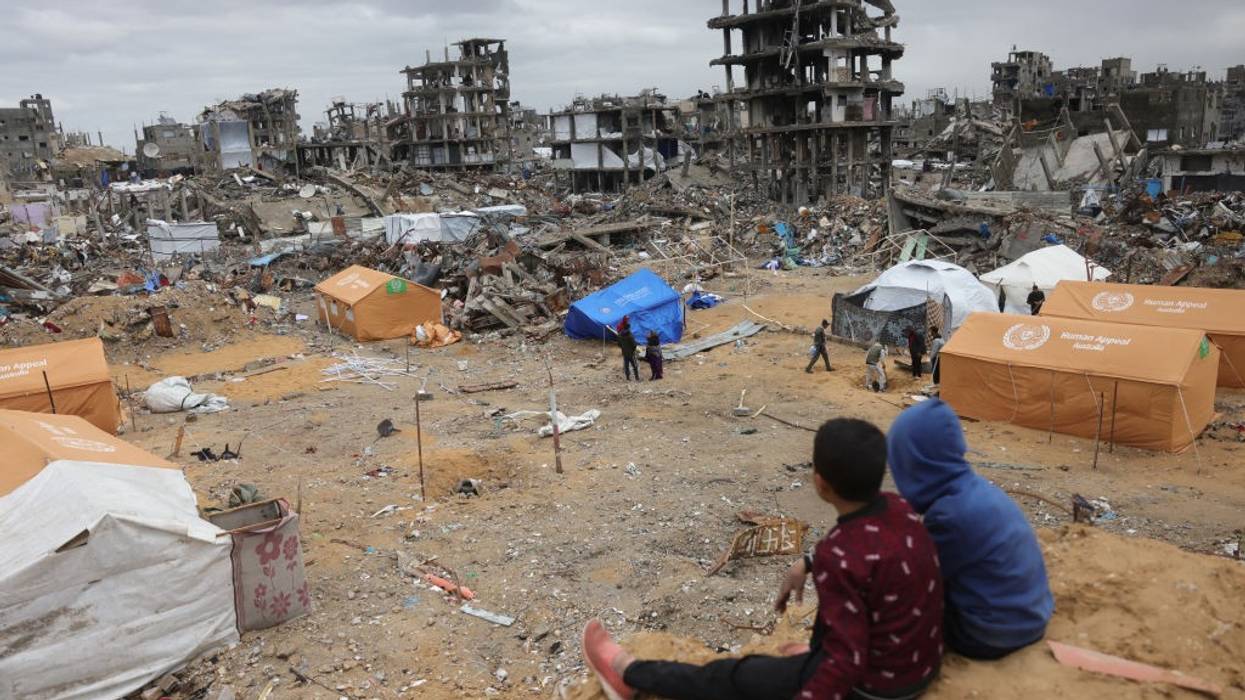
"Palestine is not just an idea—it is a place. It is a homeland to the Palestinian people," the coalition wrote.
A coalition of over 100 organizations on Monday forcefully denounced U.S. President Donald Trump's plan to ethnically cleanse the Gaza Strip of Palestinians and take over the coastal enclave recently decimated by an Israeli military campaign conducted with American weapons.
Led by A New Policy—a group founded by Biden administration officials who resigned in protest—and the Quaker organization Friends Committee on National Legislation, the coalition said that "we are deeply alarmed by President Trump's recent statements, tracing them back to January 25, just days after the Republican returned to power.
"We, the undersigned organizations, decry and oppose any effort or initiative, and any calls for, the forcible displacement of Palestinians from Gaza, and support the joint statement of Egypt, Jordan, Saudi Arabia, the United Arab Emirates, Qatar, the Palestinian Authority, and the Arab League that similarly rejected any such steps," the coalition wrote, citing the Fourth Geneva Convention.
The letter highlights the ethnic cleansing of Palestine in the 1940s during the formation of the modern state of Israel, which Palestinians call the Nakba, Arabic for catastrophe; that since 2006, Gaza "has been in a state of siege," with residents enduring repeated bombardment and restrictions on necessities; and that since the Hamas-led October 7, 2023 attack on Israel, they have faced what various experts have found to be a plausible case of genocide, with over 48,000 people killed.
"Through this all, the Palestinians in Gaza have stood with remarkable dignity and perseverance, insisting throughout the immense suffering and loss that they will never abandon their homeland," the letter continues, echoing recent remarks from residents. "We are deeply concerned by clear statements of intent from Israeli government officials over the past year concerning the creation of new Israeli settlements within the Gaza Strip, which further reinforce the intent of ethnic cleansing."
"The United States has no right to dictate to the Palestinian people in Gaza to leave, and direct other countries to participate in their displacement. We are also aware that even a temporary external displacement could be used by Israel to enact permanent exile," the letter says. "While we agree that the short and medium-term humanitarian needs of the people of Gaza may be difficult to meet given the nearly complete destruction that Israel has wrought, if the necessary services cannot be provided in Gaza, the people of Gaza must be able to access them elsewhere within the historic borders of Palestine and must be able to return."
The coalition also expressed alarm over "an uptick in settler violence" and deadly Israel Defense Forces operations in the illegally occupied West Bank, writing that "these actions are part and parcel of a strategy that seeks to make not just Gaza, but all Palestinian areas across historic Palestine, unlivable for the Palestinian people, and are thus contributory to a process of ethnic cleansing."
"Palestine is not just an idea—it is a place. It is a homeland to the Palestinian people," the groups stressed. "To participate in, facilitate, or endorse their removal from it would violate every precept of international law, devastate the rules-based international order that protects us all, do irreversible harm to America's global influence, and be an act of unconscionable immorality."
The letter concludes with a poem from Palestinian Mahmoud Darwish, who wrote:
My country is not a suitcase
I am not a traveler
I am the lover and the land is the beloved.
The archaeologist is busy analyzing stones.
In the rubble of legends he searches for his own eyes
to show
that I am a sightless vagrant on the road
with not one letter in civilization's alphabet.
Meanwhile in my own time I plant my trees.
I sing of my love.
In addition to the coalition leaders, signatories to the letter include ActionAid USA, CodePink, Democracy for the Arab World Now, Demand Progress Education Fund, Democratic Socialists of America, IfNotNow Movement, Just Foreign Policy, Madre, National Iranian American Council, Oil Change International, Peace Action, Progressive Democrats of America, and September 11 Families for Peaceful Tomorrows, and U.S. Campaign for Palestinian Rights.
The letter came amid a fresh wave of alarm over Trump's latest comments about Gaza and Palestinians, which aired Monday morning on "Fox & Friends." He said: "We'll build safe communities a little bit away from where they are, where all of this danger is. In the meantime, I would own this—think of it as a real estate development for the future. It would be a beautiful piece of land."
Asked by Fox News' Bret Baier whether Palestinians would have the right to return to Gaza, the president said, "No, they wouldn't."
The letter also came as Hamas on Monday suspended its next planned release of hostages taken in October 2023, citing Israel's deadly violations of a fragile cease-fire deal that took effect last month.
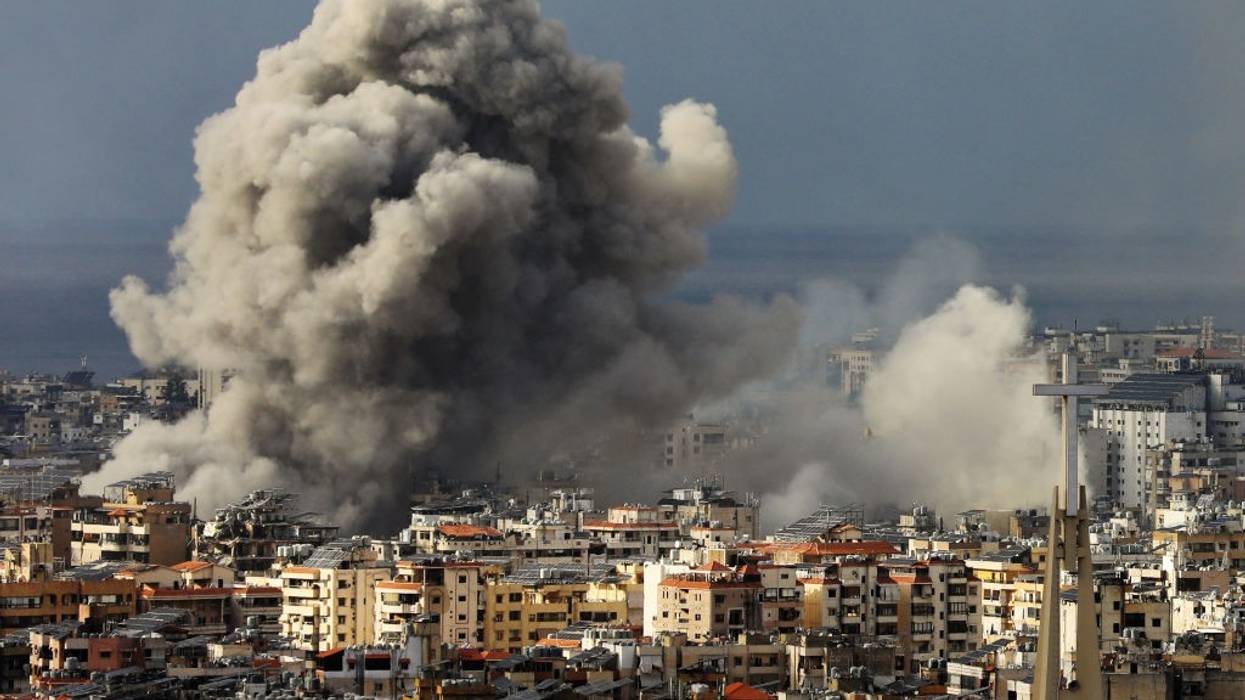
"It has long been clear that a cease-fire in Gaza is crucial to sustain any lasting cessation of hostilities across the region," said one group.
Peace advocates on Tuesday cautiously celebrated Israel agreeing to a cease-fire with the Lebanese political and paramilitary group Hezbollah while also stressing the need for an immediate end to the Israeli assault on the Gaza Strip.
Despite concerns about whether the truce will actually happen, the Friends Committee on National Legislation (FCNL), a U.S.-based Quaker group, welcomed the plans for it and called on "all parties to ensure this agreement is swiftly enacted."
"The time for peace is now—not just in Lebanon, but in Gaza and across the region," FCNL declared on social media. "We urge U.S. officials to ensure this agreement brings an immediate end to the Israeli government's devastating and indiscriminate bombing and attacks against Lebanese civilians, which have been fueled by U.S. weapons."
Israeli Prime Minister Benjamin Netanyahu's office announced that the National Security Cabinet approved the cease-fire in Lebanon with a 10-1 vote—only far-right National Security Minister Itamar Ben-Gvir voted no. The office added that "Israel appreciates the U.S. contribution to the process, and reserves the right to act against any threat to its security."
Netanyahu said in a speech to Israelis that "the length of the cease-fire depends on what happens in Lebanon. With the United States' full understanding, we maintain full freedom of military action. If Hezbollah violates the agreement and tries to arm itself, we will attack. If it tries to rebuild terrorist infrastructure near the border, we will attack. If it launches a rocket, if it digs a tunnel, if it brings in a truck carrying rockets, we will attack."
Speaking from the White House Rose Garden, outgoing U.S. President Joe Bidensaid that he worked with French President Emmanuel Macron to negotiate the cease-fire, which is set to begin at 4:00 am local time on Wednesday. The United States has spent at least tens of billions on Israeli military operations and related U.S. operations in the region since the Gaza-based Palestinian group Hamas led the October 7, 2023 attack on southern Israel.
"As Biden spoke tonight, Israel was raining U.S. bombs down on Lebanon and Gaza," noted Drop Site journalist Jeremy Scahill.
Lebanese Prime Minister Najib Mikati on Tuesday thanked France and the United States for negotiating the truce, which he said is "a fundamental step towards establishing calm and stability in Lebanon" and "helps to establish regional stability." He also reiterated his government's intention to "strengthen the army's presence in the south."
Cross-border battles between Israeli forces and Hezbollah over the past nearly 14 months have displaced tens of thousands of people in Israel and over 1 million in Lebanon. The Lebanese Ministry of Public Health said Tuesday that Israel's assault—which has intensified since September—has killed at least 3,823 people and injured another 15,859.
In Gaza, the death toll is at least 44,249, with 104,746 wounded, according to local officials. Israeli forces have also decimated civilian infrastructure and displaced most of the enclave's 2.3 million residents, who are struggling to access necessities, due to limits on aid. Israel faces a genocide case at the International Court of Justice and the International Criminal Court last week issued arrest warrants for Netanyahu, former Israel Defense Minister Yoav Gallant, and a Hamas leader.
"It has long been clear that a cease-fire in Gaza is crucial to sustain any lasting cessation of hostilities across the region," said FCNL. "More violence and suffering in Gaza will not make Israel, the U.S., or anyone safer or more secure. It must end now. We reiterate our calls for our government to use all U.S. leverage to bring about a full regional cease-fire to end the horrific suffering of Palestinians, protect all civilians, return all hostages home, de-escalate regional tensions, and begin the long road toward healing."
"That must include prohibiting more offensive weapons shipments and U.S. military involvement, which would send a message of impunity to the Israeli [government] in the face of repeated and grave violations of U.S. and international law in Gaza, Lebanon, the West Bank, and beyond," the group added—just days after a bipartisan majority of the U.S. Senaterejected a trio of resolutions from Sen. Bernie Sanders (I-Vt.) that would have halted some arms sales to Israel.
Nancy Okail, president and CEO of the U.S.-based Center for International Policy, responded similarly to the Tuesday development, saying in a statement that "we welcome news of a cease-fire agreement in Lebanon and hope that it can be implemented and sustained to prevent further harm to civilians who have been under threat of attack or suffered other great loss during the fighting."
"This agreement nonetheless comes too late. While Israel has the right to legitimate self-defense against Hezbollah, the Netanyahu government's deliberate escalation of the conflict in September resulted in disproportionate harm to civilians, hundreds of whom have been wounded or killed, with hundreds of thousands more displaced," Okail said. "Mixed messages and prevaricating by the Biden administration on its position on Israel's escalation and the need for a cease-fire [have] further prolonged the fighting and exacerbated the death and destruction it has brought."
"The U.S. and its partners must ensure that the terms of this agreement are fully honored so that civilians on both sides of the border can safely return to and rebuild their communities," she added. "What remains of the utmost urgency, however, is also ending the war in Gaza, where the U.S. arming of the Netanyahu government's campaign of displacement, starvation, slaughter and—per the repeated vows of senior Israeli officials—settlement continues in violation of American and international law."
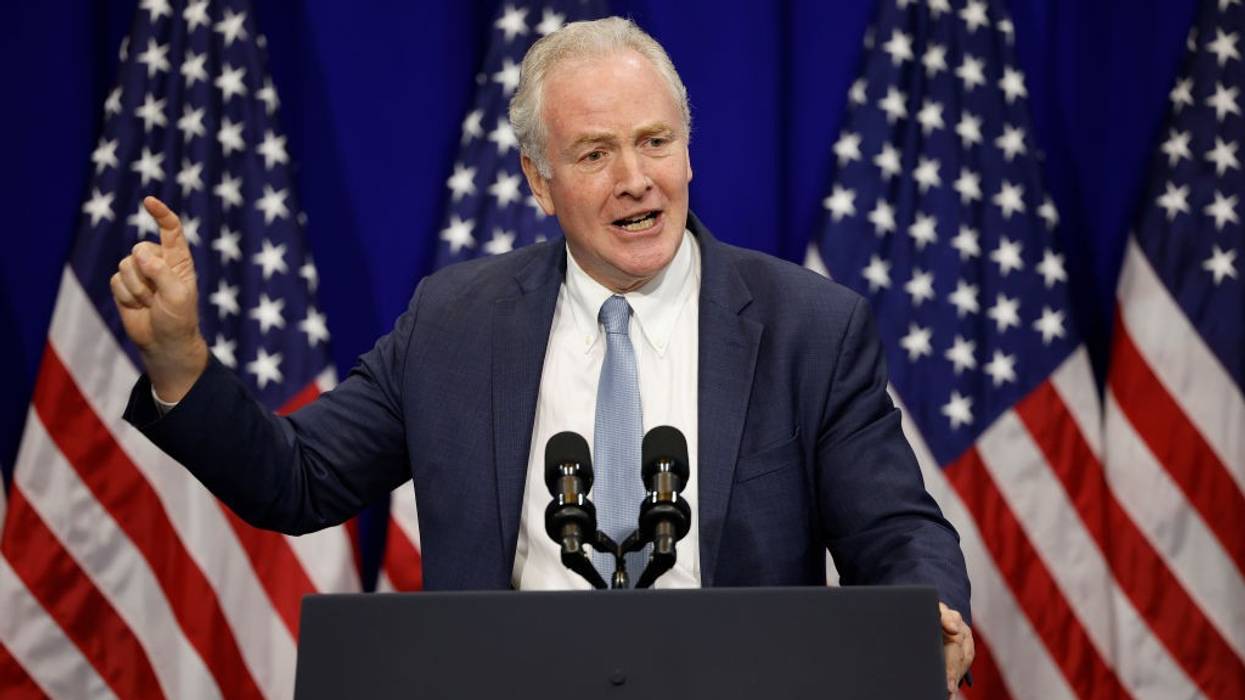
"President Biden has failed to hold Netanyahu accountable—ignoring U.S. law and undercutting his own stated policies as well as America's interests and values," said the Democratic senator from Maryland.
Support for U.S. Sen. Bernie Sanders' resolutions that would block U.S. weapons sales to Israel continued to grow on Monday, with Sen. Chris Van Hollen releasing a letter to colleagues urging them to join him in trying to pass the measures later this week.
Sanders (I-Vt.)—backed by Sens. Peter Welch (D-Vt.), Jeff Merkley (D-Ore.), and Brian Schatz (D-Hawaii)—introduced the joint resolutions of disapproval (JRDs) in September and announced last week that he would bring them to the floor for a vote.
Sen. Elizabeth Warren (D-Mass.) endorsed the JRDs last week, citing the failure of U.S. President Joe Biden's administration "to follow U.S. law and to suspend arms shipments" after warning Israeli Prime Minister Benjamin Netanyahu's government last month that it could be cut off from American weapons absent serious action to improve humanitarian conditions in the Gaza Strip.
Van Hollen (D-Md.) followed suit Monday, unveiling his letter and saying in a statement that "U.S. taxpayer-funded assistance should not come in the form of a blank check—even to our closest partners. We need assurances that U.S. interests, values, and priorities will be respected by foreign governments that receive American support. That principle should apply universally, including to the Netanyahu government."
"We've seen Prime Minister Netanyahu repeatedly violate the terms of American security assistance, disregard U.S. priorities, and ignore our requests, only to be rewarded by President Biden."
"But even as the United States has provided billions of dollars of American taxpayer-financed bombs and other offensive weapons systems, we've seen Prime Minister Netanyahu repeatedly violate the terms of American security assistance, disregard U.S. priorities, and ignore our requests, only to be rewarded by President Biden," he continued. "That pattern undermines the credibility of the United States and should not persist."
Van Hollen highlighted that he has "repeatedly supported Israel's right to defend itself and end Hamas' control of Gaza" since the Palestinian group's October 7, 2023 attack—which includes his vote for an April aid package—but also argued that "a just war must be waged justly."
"That's why recipients of U.S. weapons must comply with American laws and policies. Recipients of security assistance must facilitate and not arbitrarily restrict the delivery of humanitarian assistance into war zones where U.S. weapons are being used, and American-supplied weapons must be used in accordance with international humanitarian law. The Netanyahu government is violating both of these requirements in Gaza," he explained. "It is also rejecting a host of other priorities advanced by the United States, yet President Biden has failed to hold Netanyahu accountable—ignoring U.S. law and undercutting his own stated policies as well as America's interests and values."
"Doing so undermines American global leadership and is a disservice to the American people, the people of Israel, and people throughout the Middle East," the senator warned. "That is why I have repeatedly stated that the United States should pause the delivery of offensive weapons to the Netanyahu government until it complies with U.S. law and policy and until we can advance the security interests, priorities, and values of the American people."
While stressing his support for "the transfer of defensive systems, like the Iron Dome," and his opposition to an arms embargo, which many rights groups have called for, Van Hollen concluded that he will vote for the JRDs this week because "a partnership must be a two-way street, not a one-way blank check."
The JRDs would have to pass both the Democrat-controlled Senate and the Republican-held House of Representatives to reach Biden's desk. They would require a two-thirds majority in both chambers to override presidential vetoes. The push to pass the resolutions comes as lawmakers prepare for the GOP to control Congress and the White House next year following the elections earlier this month.
"The United States government must stop blatantly violating the law with regard to arms sales to Israel," Sanders wrote in The Washington Post on Monday. "The Foreign Assistance Act of 1961 and the Arms Export Control Act are very clear: The United States cannot provide weapons to any country that violates internationally recognized human rights. Section 620I of the Foreign Assistance Act is also explicit: No U.S. assistance may be provided to any country that 'prohibits or otherwise restricts, directly or indirectly, the transport or delivery of United States humanitarian assistance.'"
The resolutions are also backed by over 100 organizations, including the Center for Civilians in Conflict and Friends Committee on National Legislation (FCNL), which led a letter to senators last month.
Hassan El-Tayyab, legislative director for Middle East policy, described the upcoming vote as "historic," telling Al Jazeera on Monday, "Just the fact that this is happening is already sending that political signal that it's not business as usual."
"There is no military solution to the conflict in Gaza—only a diplomatic one that addresses root causes of violence," El-Tayyab said as the death toll in the Palestinian enclave neared 44,000.
"Instead of sending more weapons, Congress and the administration should leverage military aid with Bibi [Netanyahu] and the Knesset to finally get them to accept a cease-fire deal in Gaza and Lebanon," he added. "And that, I think, is a far better strategy to secure Israel's defense and protect Palestinian human rights."
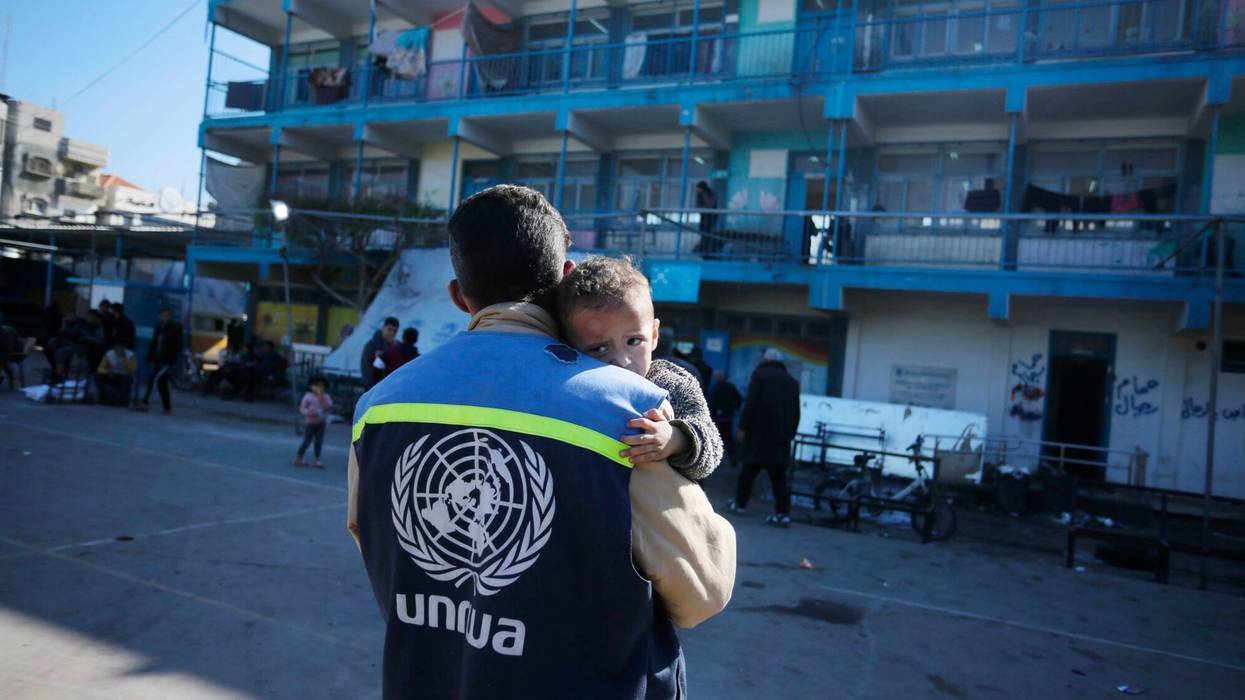
"The need for U.S. support is more urgent than ever," said one advocate. "The lives and well-being of millions depend on it."
Rights groups on Thursday applauded three Democratic lawmakers for their proposal of a bill to restore United States funding to the United Nations' key agency tasked with providing services and humanitarian assistance to Palestinians in Gaza, six months after the U.S. suspended contributions following unverified accusations against the agency.
James Zogby, president of the Arab American Institute, expressed gratitude to Reps. André Carson (D-Ind.), Pramila Jayapal (D-Wash.), and Jan Schakowsky (D-Ill.) for introducing the UNRWA Emergency Restoration Act of 2024, aimed at restoring funding to the U.N. Relief and Works Agency for Palestine Refugees in the Near East—legislation that Zogby said would be "lifesaving" if passed into law.
" UNRWA plays a vital role in providing essential services to millions of Palestinian refugees across the occupied Palestinian territory, Lebanon, Jordan, and Syria," said Zogby. "The ongoing genocide in Gaza has resulted in increased displacement, starvation, and death. It is both inhumane and unconscionable to continue withholding financial support from UNRWA."
The U.S.—the largest international funder of the agency, which relies almost entirely on voluntary contributions from donor states—promptly suspended funding for UNRWA last January after Israel claimed without evidence that 12 out of the agency's 13,000 staff members in Gaza had been involved in a Hamas-led attack on southern Israel last October.
Congress later passed a bill prohibiting UNRWA funding through at least March 2025.
In 2022, the U.S. contributed more than $343 million to the agency.
"UNRWA is the backbone of humanitarian aid in the Gaza Strip. U.S. funding should be restored immediately."
The Biden administration's decision to suspend donations to UNRWA pushed a number of U.S. allies to do the same, but countries including Germany, Sweden, Japan, and the United Kingdom have since reinstated their funding after an independent probe found that Israel had provided no supporting evidence of its claim.
"The United States should join our key allies in restoring this urgently needed funding for UNRWA. There is no time to lose," said Hassan El-Tayyab, legislative director for Middle East policy at the Friends Committee on National Legislation, expressing support for the newly introduced bill.
Bridget Moix, general secretary for the group, added that cutting of funding was "simply unconscionable" because the U.S.—as the Israeli military's largest international funder—bears responsibility for the "horrific violence and a massive humanitarian crisis" in Gaza.
"UNRWA is the backbone of humanitarian aid in the Gaza Strip," said Moix. "U.S. funding should be restored immediately."
Cavan Kharrazian, senior policy adviser for Demand Progress, noted that since the U.S. suspended funding to UNRWA, the humanitarian crisis in Gaza has worsened, with U.N. experts warning in July that famine had spread across the enclave.
"The need for U.S. support is more urgent than ever," said Kharrazian. "The lives and well-being of millions depend on it."
"We call on leaders in Congress to take principled stands like this as future funding bills move," he added, "removing these harmful prohibitions against UNRWA funding."
As militarism increasingly demonstrates that it is incapable of resolving conflict with non-state armed groups, the need to reevaluate the approach to such violence is as pressing as ever.
More than 38,000 dead in Gaza. Fighting with the Houthis in the Red Sea and Yemen. A never-ending stream of back and forth strikes between American forces and Iran-backed groups in Iraq and Syria.
Conflict in the Middle East is escalating, fueled by weapons and military actions that increase the very real risk of a greater regional war. All the while a wave of military coups in Africa continues, aided by training and assistance carried out in the name of “counterterrorism.”
As militarism increasingly demonstrates that it is incapable of resolving conflict with non-state armed groups, the need to reevaluate the approach to such violence is as pressing as ever.
It is long past time to move beyond Band-Aid counterterrorism that only fuels the very injustices that cause the formation and growth of violent non-state groups in the first place.
Following the horrific events of 9/11 and the beginning of the so-called “Global War on Terror,” the United States embarked on more than two decades of using war as the foundation for its response to terrorism threats abroad. Today, it remains in armed conflict with numerous non-state groups across the Middle East and Africa, including ISIS, al-Shabaab, al Qaeda, and others.
However, while the War on Terror was intended to quash terrorism, the United States’ violent approach has instead served to fuel it. Annual attacks from non-state groups increased by 1900%—or 20 fold—in the seven countries the U.S. either invaded or conducted air strikes in between 2001 and 2018. Annual attacks worldwide increased fivefold during the same time period. And as the U.S. continued to pour billions of dollars into training foreign forces to combat “militants,” the result was increasing reports of gross violations of human rights by government forces, exacerbated violence, instability, and military coups. This approach has proven deeply counterproductive while failing in combatting terrorism worldwide.
So, what can the U.S. do to more effectively address the threat of international terrorism?
A new report from the Friends Committee on National Legislation (FCNL) provides concrete recommendations for critical non-military tools to both prevent and respond to this complex issue. These recommendations fall into three broad categories: (1) diplomacy; (2) development and peacebuilding; and (3) law enforcement, intelligence gathering, and restorative justice.
The report details the need for increased investment in and use of State Department experts in strengthening state stability and other core competencies, as well as using leverage to support negotiated settlements to wars with non-state armed groups. This requires properly resourcing and deploying the State Department’s Negotiations Support Unit of trained, experienced experts in negotiating and implementing peace agreements; effectively executing long-term economic development and peacebuilding programs like the Global Fragility Act; and moving away from a war paradigm and the use of lethal force as a first resort in responding to international terrorism. Instead, the U.S. should prioritize the use of law enforcement and intelligence gathering to disrupt plots and hold individuals accountable through Article III courts—a strategy which has been highly effective and grossly underappreciated throughout the post-9/11 period.
Rather than partnering with autocratic regimes and training their militaries to kill suspected militants, we must pursue nonviolent means that are grounded in respect for human rights and help address the root causes of violence. In regions suffering from discrimination and corruption, non-state militants rise up to oppose the current power structure. By addressing the issues that contribute to the formation and expansion of these groups, the U.S. and its partners can more effectively counter global terrorism. But responding to the emergence of violent groups through greater violence and oppression, with resulting civilian casualties and destabilizing impact, serves only to reinforce the beliefs of non-state actors and bolsters their ability to recruit others to their cause.
For too long, the focus in the executive branch and Congress has been on the question of whether or not to utilize force against non-state actors. It is time to expand this question and prioritize other avenues for counterterrorism. These nonviolent approaches have proven to be highly successful: Peaceful negotiations have accounted for the resolution of 43% of conflicts involving non-state actors. In contrast, just 7% of these conflicts were resolved through military action.
It is long past time to move beyond Band-Aid counterterrorism that only fuels the very injustices that cause the formation and growth of violent non-state groups in the first place. Addressing the core reasons for international terrorism and responding to it strategically and skillfully is the only realistic avenue toward a safer, more just world.