

5
#000000
#FFFFFF
To donate by check, phone, or other method, see our More Ways to Give page.
Daily news & progressive opinion—funded by the people, not the corporations—delivered straight to your inbox.
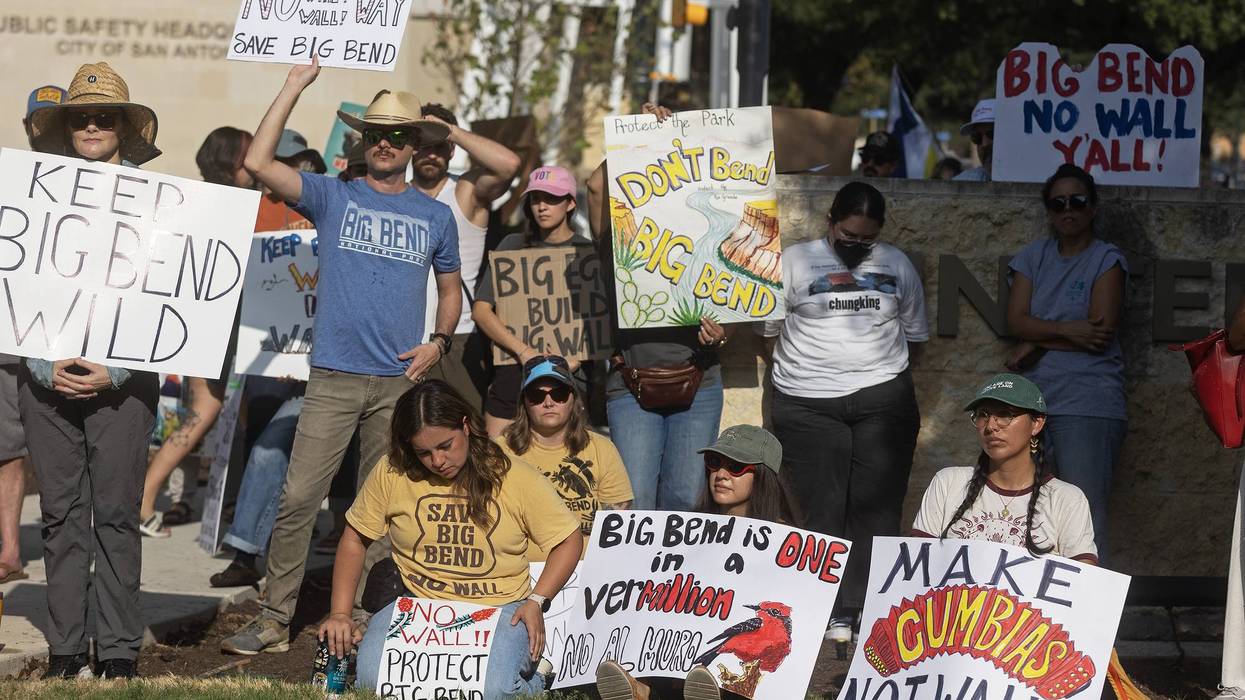
"This fight is far from over," said one campaigner. "We won’t rest until Big Bend’s environmental protections are fully restored and the illegal waiver that allowed so much destruction is gone for good.”
A federal judge in El Paso on Friday temporarily blocked the Trump administration from continuing construction of border barriers, roads, and other infrastructure across the Big Bend region, a win for environmentalists, landowners, and other Texans from across the political spectrum who are united in their opposition to the project.
US District Judge Kathleen Cardone—who was appointed by former President George W. Bush—granted a preliminary injunction sought by the Center for Biological Diversity (CBD) and other plaintiffs.
"The court finds that plaintiffs are likely to succeed on the merits of at least one of the claims in [their] suit, that there is a likelihood that they will suffer serious, irreparable harm without an injunction, and that the balance of the equities and the public interest weigh in their favor," Cardone wrote in her two-page decision.
BIG WIN FOR BIG BEND!! A federal judge just issued an emergency injunction to block border barrier and road construction across the #BigBend region. The injunction will remain in place while the court considers a lawsuit challenging the federal government’s waiver to fast-track construction.
— Center for Biological Diversity (@biologicaldiversity.org) October 2, 2026 at 2:18 PM
Cardone's order immediately prohibits the Department of Homeland Security and its agencies from building “border barrier or related infrastructure” or engaging in “any construction or ground-disturbing activities” in the Big Bend Sector until they comply with applicable laws. It also stays the effect of three Trump administration waivers that had allowed officials to bypass numerous federal protections.
“This is a historic victory for Big Bend and everyone who loves this wild corner of Texas,” said Laiken Jordahl, CBD's national public lands advocate. “No administration has the right to destroy a crown-jewel national park for political theater."
"With a federal court ordering the bulldozers to stop, Big Bend gets to breathe," Jordahl added. "But this fight is far from over. We won’t rest until Big Bend’s environmental protections are fully restored and the illegal waiver that allowed so much destruction is gone for good.”
Clara Bensen, director of communications for No Big Bend Wall and a board member of Conserve Big Bend, also welcomed the ruling.
"For months we've watched the federal government send bulldozers into a national park that belongs to all of us. Today a federal judge told them to stop," she said in a statement.
"Since we learned the Trump administration planned to seize public and private land and destroy the Big Bend region as we know it, this community has come together across the political aisle to fight back," Bensen added. "The government tried to ignore the law to build unnecessary border infrastructure, and the court made clear it can't. This is a victory, but we are not letting our guard down."
🚨 BREAKING NEWS: A federal judge just HALTED the destruction of Big Bend.This is a massive victory for the landowners, local communities, and everyday Texans who stood up to protect one of our state's greatest treasures.The fight isn't over, but today, the people won.
[image or embed]
— Clayton Tucker (@claytontuckertx.com) October 2, 2026 at 2:16 PM
The ruling comes after contractors began bulldozing roads and building other infrastructure in and around Big Bend National Park in August, including near Santa Elena Canyon and Mariscal Mountain. US Customs and Border Protection (CBP) temporarily halted construction on August 17, but that pause expired earlier this week.
The Trump administration has argued that the project—which initially included plans for a 30-foot-high reinforced steel wall—is necessary to achieve what it calls “operational control” of the border. Plaintiffs in the case challenged the administration's determination under Section 102 of the Illegal Immigration Reform and Immigrant Responsibility Act of 1996 that the region is an area of “high illegal entry,” noting that the government's claim is contradicted by its own statistics.
The Big Bend Sector is among the least-trafficked portions of the southern border, accounting for roughly a quarter of the international boundary's length, but no more than 3% of annual migrant apprehensions. The sector recorded just 1.3% of total border apprehensions in 2025, according to CBP data.
Plaintiffs in the case argued that the administration unlawfully used extraordinary powers to waive environmental and other laws, including the Endangered Species Act, National Park Service Organic Act, and National Wild and Scenic Rivers Act. Indigenous groups alleged violations of the Native American Graves Protection and Repatriation Act and the Archaeological and Historic Preservation Act.
At Friday's hearing, Rio Grande river guide and landowner Danny William Miller described the prospect of a barrier cutting across his property and blocking access to the river as “a bullet to the head," according to The Big Bend Sentinel.
Miller testified that once the landscape is altered, it cannot simply be restored. His guide work, he said, would become “a tour of the military-industrial complex, rather than a tour of the wilderness.”
Another local resident, Bill Guerra-Addington, told the court, “They’re taking the river away from us, and it’s devastating.”
Friday's injunction is temporary. The underlying lawsuit will continue, and the broader legal battle over Trump's Big Bend border project—and the administration's legally dubious waivers—remains unresolved. On Wednesday, US District Judge Orlando Garcia, an appointee of former President Bill Clinton, rejected a request from an Indigenous group and business owners for a temporary restraining order in one of several separate cases seeking to halt work on the project.
Still, National Parks Conservation Association president and CEO Tiernan Sittenfeld called Cardone's order “a victory for Big Bend and for all of America’s national parks.”
"While national park advocates are grateful for this halt to border construction in Big Bend, the devastating toll it has already taken on this national park must be studied and remediated," she said. "The administration must repair the damage it has done to the beautiful, fragile desert ecosystems that make Big Bend National Park one of America’s most iconic places."
“The administration’s border plan at Big Bend has faced strong bipartisan opposition from local landowners, experienced local borderland sheriffs, and conservationists alike," Sittenfeld added. "Big Bend is no place for border barriers. It’s time for the administration to come to the table with the border communities that know Big Bend best, repair the damage from this ill-conceived project, and find new solutions.”
s

"If it comes to pass, this deal would bulldoze America’s most important wildlife law," said one campaigner.
A bipartisan Senate proposal to overhaul federal permitting rules drew fierce opposition Wednesday from environmental and wildlife advocates, who warn that the legislation could significantly weaken the Endangered Species Act and other key protections in service of boosting President Donald Trump's pro-fossil fuel and artificial intelligence agenda.
Senate negotiators—chiefly Democrats Martin Heinrich (NM) and Sheldon Whitehouse (RI) and Republicans Shelley Moore Capito (W.Va.) and Mike Lee (Utah)—reportedly reached an agreement Monday on the text of a sweeping permitting package intended to speed construction of energy and infrastructure projects.
While the full legislative text of the “Bipartisan American Affordability and Jobs Act of 2026" had not been publicly released as of Wednesday, reported provisions have prompted alarm among conservation groups, who warn that the proposal would weaken endangered species protections, shift federal authority and responsibility to states, limit scientific review and judicial oversight, and exempt some projects from key environmental consultations.
“If it comes to pass, this deal would bulldoze America's most important wildlife law,” Defenders of Wildlife president and CEO Andrew Bowman said Wednesday. “We can build the infrastructure America needs without sacrificing the wildlife we have a responsibility to protect and that Americans cherish. Development should not come at the expense of science, accountability, or the ability of America’s most imperiled wildlife to survive.”
Oil Change International called the proposal "a blatant giveaway to Big Oil and Big Tech."
“This ‘dirty deal’ threatens to raise electricity prices for working families by accelerating the buildout of energy-guzzling AI data centers and liquefied natural gas export projects," said Oil Change International US campaigns manager Collin Rees. "Our recent research shows that the Trump administration’s support for reckless AI development and greater gas exports drives up energy costs for households."
Brett Hartl, government affairs director at the Center for Biological Diversity (CBD), said that “this is a climate kill shot that condemns our most vulnerable communities to suffer decades more fossil fuel pollution."
"It’s absurd to ensure our planet chokes with greenhouse gases, gut endangered species protections, and eviscerate the Clean Water Act for what seems to be a nearly meaningless victory against Trump’s war on offshore wind,” Hartl continued. "The minor benefits for renewable energy corporations are massively dwarfed by the gifts to the fossil fuel industry."
"If this grotesque legislation becomes law, the paltry increases in renewable energy will be instantly devoured by AI data centers," he added. "The only winners here are Elon Musk, Mark Zuckerberg, tech oligarchs, and the shareholders of fossil fuel companies.”
According to CBD:
Today’s package contains numerous provisions that lock in thousands of fossil fuel projects, including oil and gas pipelines, [liquefied natural gas] export terminals, and expanded fossil fuel drilling onshore and offshore approved by President Trump over the past two years. It also ensures that future fossil fuel pipelines and methane gas-generated electricity can never be challenged in court.
Additional provisions gut parts of the Clean Water Act, including the Section 401 authority of states to protect their rivers and streams from the impacts of building pipelines and the [Environmental Protection Agency's] Section 404(c) permit veto authority, which has been used to stop projects like the Pebble Mine in Alaska.
The legislation weakens the National Historic Preservation Act and Tribal consultations, leaving most Tribal nations with no meaningful way to protect their sovereignty when faced with potential fossil fuel projects on their lands.
Furthermore, CBD noted, "the legislation guts the Endangered Species Act by allowing states to take over the Section 7 consultation process with minimal safeguards, turning one of the law’s strongest provisions into a state-run rubber stamp of dangerous projects."
The Western Environmental Law Center described the proposal as a “five-alarm fire,” warning that it could weaken the Clean Water Act, Endangered Species Act, [National Environmental Policy Act], and other safeguards.
“The permitting deal is a betrayal of public lands, water, and wildlife, and environmental justice values that Westerners depend on,” said Erik Schlenker-Goodrich, the group's executive director, who warned that the measure could ultimately “hobble the ability of future administrations to enact an ambitious climate and conservation agenda.”
Hartl called out Democrats Heinrich and Whitehouse for "giving away our most cherished environmental laws based on fantastical models that project a renewable energy utopia."
"They’re rewarding a ruthless fossil fuel industry that will always put its quarterly profits ahead of a livable planet and future generations,” he said. "Trump promised fossil fuel companies that he’d do everything in his power to assist them in his second term, and Sen. Heinrich and Sen. Whitehouse seem hell-bent on helping Trump fulfill that promise."
Bowman contended that "Congress should be looking for ways to make permitting more efficient rather than a Trojan horse to weaken the Endangered Species Act."
“Efficiency and conservation are not opposing goals," he added. "A durable permitting bill should deliver both. Congress should not lock in permanent damage to the Endangered Species Act simply to get a deal today.”
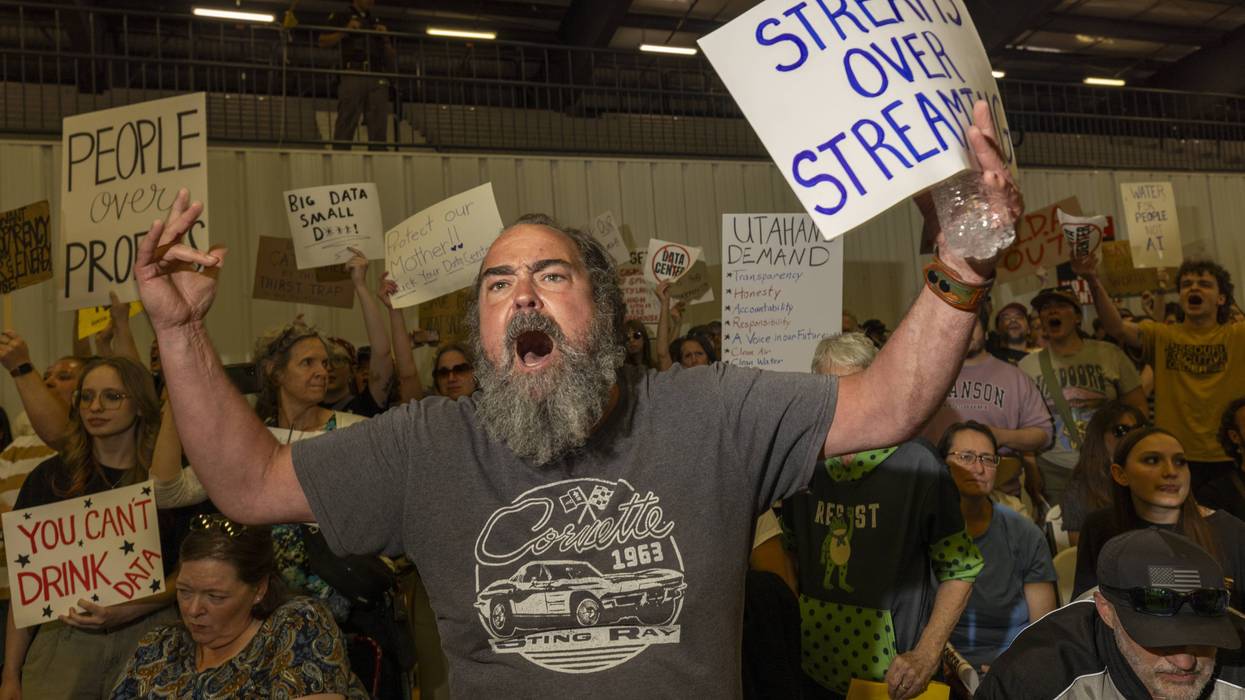
One expert asserted that "the tax breaks are a windfall rewarding Big Tech companies for building what they would build anyway."
The Trump administration is considering construction of at least a dozen artificial intelligence data centers on thousands of acres of public land across six Western states, reporting revealed Friday, while a separate analysis found that Big Tech is receiving tens of billions of dollars in tax breaks for AI investments they were already likely to make.
The US Bureau of Land Management (BLM) is reviewing proposals for at least 12 data centers and related infrastructure projects on 17,600 acres of public land across Arizona, Idaho, Nevada, Oregon, Utah, and Wyoming, according to an investigation published Friday by The Washington Sun's Mara Hoplamazian and Jade Lozada. Many of the proposals had not previously been publicly reported.
The Sun's report came on the heels of an Institute on Taxation and Economic Policy (ITEP) analysis published Thursday that found that five major technology companies—Amazon, Alphabet, Meta, Microsoft, and Oracle—received approximately $70 billion in federal tax breaks in 2025.
The Trump administration is considering proposals for at least 12 data centers and data center-related infrastructure projects to be built on federal public lands — far more than previously known.
[image or embed]
— The Washington Sun (@washingtonsun.bsky.social) September 18, 2026 at 4:00 AM
Matthew Gardner, who authored the ITEP analysis, wrote that "AI leaders have acknowledged that the demand from other companies for data centers is 'insatiable,' suggesting that the tax breaks are a windfall rewarding Big Tech companies for building what they would build anyway."
According to Gardner:
Few investments in the American economy look less in need of encouragement right now than the hundreds of billions of dollars the world’s largest technology companies are already racing to spend on AI. And it’s hard to think of an investment that American taxpayers value less: Polling shows that Americans dislike data centers, distrust AI, and are concerned about the economic and environmental effects it may bring.
At the same time, Interior Secretary Doug Burgum has directed BLM officials to identify federal lands "ripe for data center development," according to the Sun. State BLM officials were reportedly given only three days to compile lists, with the effort described as a "top priority."
Burgum has also been meeting with Big Tech executives about accelerating data center development, an effort stemming from an executive order President Donald Trump signed in July 2025 directing the federal government to identify lands that could be used for data centers.
Mary Jo Rugwell, president of the Public Lands Foundation—a nonprofit advocacy group—and a former BLM state director, recently accused the Trump administration of “bending [the] knee to the tech oligarchs and letting them do whatever they need to do” without adequate consideration for the impact of data centers on public lands.
Environmentalists warn that building on public land would help tech companies skirt growing public opposition to data centers, which is increasingly transcending the political divide. It would also have outsized consequences for Western states where public lands comprise a disproportionate share of total land area.
“In Oregon, this would be a really bad precedent,” Ben Brint , the senior climate program director at the Oregon Environmental Council, told the Sun. “Some very large percentage of the state is public lands, and if we’re starting to allow that, that’s large swaths of the state that really could be at risk of further development.”
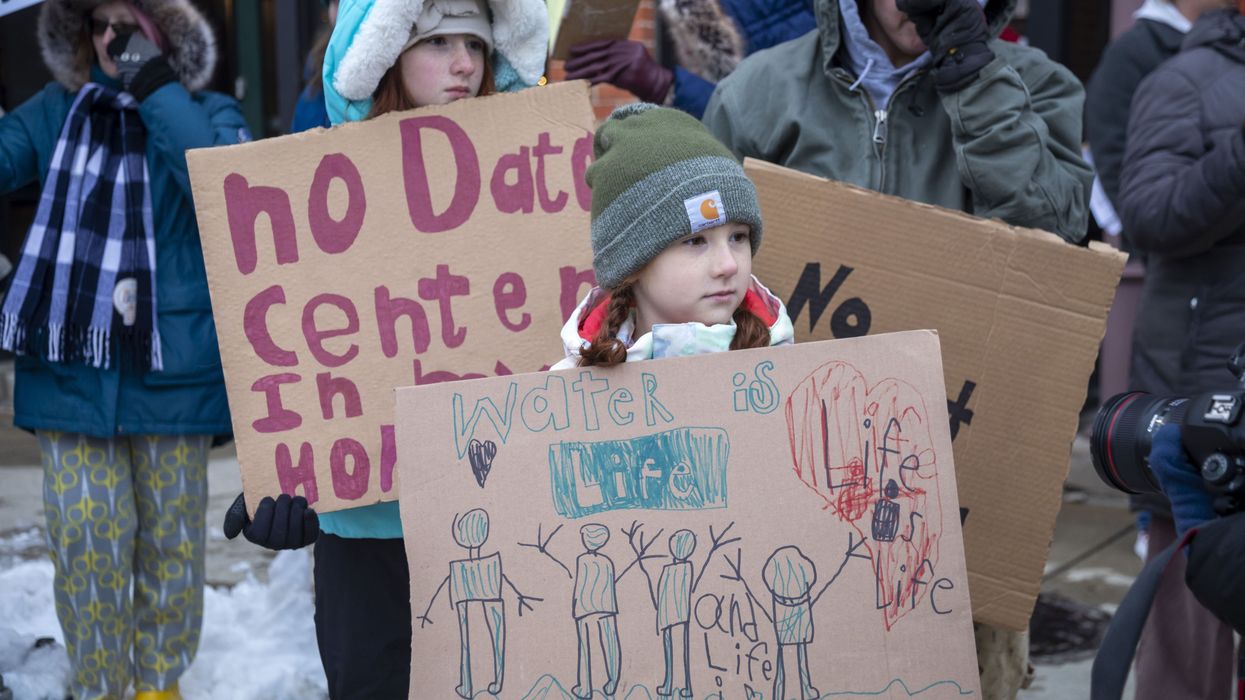
To fight back against Big Tech, the movement must articulate a clear diagnosis of the problem, adapt to changing political landscapes, translate early wins into lasting policy, and forge broad alliances.
As data centers sprout across the nation, a new movement is emerging to challenge the tech companies building them. The rapid spread of these facilities raises critical environmental, health, economic, and political questions, positioning health, climate, and social justice activists to play a central role in elevating these questions for the 2028 elections.
To date, the movement against data centers has made impressive gains. In the first four months of 2026, local opposition disrupted at least 75 data center projects worth approximately $130 billion. In June 2026, more than 200 advocacy organizations urged Congress to reject legislation fast-tracking the financing and permitting for large AI data centers. By July, New York State Gov. Kathy Hochul imposed a statewide moratorium on new hyperscale data centers—a model other states and cities are considering. National groups such as Food and Water Watch, the NAACP, Union of Concerned Scientists, and the Democratic Socialists of America have distributed resources to support local campaigns.
Public opposition has shifted dramatically alongside this activism. In August 2025, a poll of 4,000 Americans showed 43% supported having a data center built near their home. Just eight months later, in Spring 2026, support plummeted to 21%—a drop described by the pollster as “a scale of change in public opinion that I didn’t know was still possible in the US.”
However, the movement also faces significant headwinds. Big tech companies like Meta, Google, Microsoft, and Open AI are investing hundreds of billions of dollars to support new data centers to meet AI’s growing computing demands. As Karen Hao explains in Empire of AI, tech owners believe being first and largest will ensure dominance, driving relentless expansion.
Data center and AI activists are raising core questions: Who should decide whether communities allow data centers? Who pays the long-term costs and reaps the benefits?
Earlier environmental movements received some support from presidents seeking environmental legacies, but President Donald Trump provided public subsidies enabling the AI industry to bypass opponents.
Despite widespread local opposition to data centers and bipartisan support for regulation, the movement lacks a comprehensive national narrative to counteract the industry claim that AI will solve all problems. To tell such a story, previous and current movements must articulate a clear diagnosis of the problem, adapt to changing political landscapes, translate early wins into lasting policy, and forge broad alliances. My analysis of past successes of health and environmental movements suggests five strategic pathways emerge for the data center movement.
Successful movements link distinct problems to create multiple paths into activism. The women’s movement brought together advocates for sexual and reproductive healthcare, women of color, working women, lesbians, and people with disabilities. This inclusive alliance built the power needed to expand access to abortion, ban pregnancy discrimination, and protect women from insurance industry bias. Even when differences among its supporters emerged, the movement’s unifying goals provided a framework for common action.
Data center activists have raised health, environmental, and social justice concerns: increasing air pollution, water depletion, and excess noise. One study estimates that by 2028, the annual public health costs of data center air pollution will reach $20 billion. Activists also recognize that data center expansion enables AI and tech companies to deepen surveillance, target harmful social media campaigns, and facilitate harms to mental health.
Organizers can build a unified constituency by addressing both immediate harms (unregulated construction) and systemic issues (AI expansion enriching billionaires at public expense).
Effective movements united diverse groups around shared economic and social interests. The Fight for $15 movement successfully raised the minimum wage to at least $15 an hour, in at least 68 cities, counties, and states, winning more than $150 billion in higher pay for more than 26 million workers. It united low-wage workers, unions with the resources to pay organizers, and activists from Black Lives Matter and #MeToo.
Data centers activists can replicate this coalition approach. They can link residents concerned about the impact of local data centers and workers and labor unions whose jobs will be displaced by the growth of AI. They can enlist advocates for democracy, social justice, and tax reform who object to the political influence and low taxes of tech billionaires.
Movements frequently debate whether to emphasize immediate or long-term goals. In the movement for universal healthcare, organizers argued whether to support the Affordable Care Act as a step forward or to demand Medicare for All to reduce healthcare industry power.
Mark Hannay, from Metro New York Health Care for All, suggested a “both-and framework.” Metro fought for Medicare for All, but also for funding for New York City’s public hospitals and Medicaid and stronger regulation of the healthcare industry.
Data center and AI activists adopt this approach by pairing immediate demands—such as construction moratoria and stronger air and water protections—with long-term systemic reforms, including antitrust enforcement, elimination of corporate subsidies, and higher taxes on tech billionaires.
ACT UP, a leading force in the fight to get the government to respond more effectively and rapidly to the AIDS epidemic, used inside-outside, disruptive and conventional, and litigation and community organizing to achieve its goals. ACT UP found that multiple approaches increased pressure on the government to respond and mobilized more constituencies.
The data center movement has already used community organizing, demonstrations, litigation, legislation, and media campaigns to advance its goals. Maintaining this diversity, aligning its deployment to maximize impact, and developing a strategic plan for 2028 and beyond will help sustain momentum and drive policy wins.
Enduring movements unite people around a vision grounded in shared values. Martin Luther King Jr.’s vision of a world where character triumphed over skin color provide a moral vision for the civil rights movement. For more than a decade, environmental justice activists have proposed that all people have the right to environmental protections and a voice in shaping their communities’ environments. This expansive vision has enabled this movement to win local, state, and national policy changes and bring together environmental, climate, people of color, and women’s activists across the country.
Data center and AI activists are raising core questions: Who should decide whether communities allow data centers? Who pays the long-term costs and reaps the benefits? What role should voters—rather than tech industry executives—have in directing the future of AI?
By offering clear, practical answers and using the experiences of past activist campaigns, the growing data center-AI movement can put these questions on the nation’s electoral and political agenda. In doing so, they can become a powerful force for healthier, safer, and more just communities and a world where AI is used to benefit humanity.

Green Amendments rely upon the highest legal authorities we have in the US–our state and federal constitutions–and use their placement within the Bill of Rights to make environmental rights an unquestionable, enforceable legal entitlement for everyone.
Sometimes defeat can be clarifying.
Last week, the US Fifth Circuit Court of Appeals upheld the dismissal of a lawsuit against the City of Jackson, Mississippi, in which the plaintiffs alleged that city officials knowingly allowed residents to drink water that was unsafe, tainted with lead and dangerous microbes.
The facts are not in dispute. “The City’s public-water system is fraught with vexing shortcomings,” the court found. “In recent years, it produced water containing lead, E. Coli, and other bacteria, allegedly violated the Safe Drinking Water Act and EPA regulations, shut down and left residents without water for weeks, and necessitated the issuance of dozens of boil-water notices.”
Despite this, the court ruled that the lawsuit could not move forward. The problem for the plaintiffs, as the court found, was that these harms do not rise to the level of constitutional harm. “These deprivations, while grievous,” the court wrote, “do not infringe upon any deeply rooted constitutional right.” And so the court rejected their arguments.
Green Amendments legally elevate our rights to a clean, safe, healthy, and quality environment to the same level as our rights to speech, religion, and a free press.
What are we to make of a situation where a city can neglect its responsibilities, knowingly expose its residents to dangerous and life-altering contamination, and get away with it because, in the eyes of our legal system, “mismanagement of the public-water system resulting in Plaintiffs’ lead exposure is wholly different” from “sexual assault by a police officer,” “forced surgical examination,” “forced stomach pumping for evidence,” “and medicating prisoners against their will”?
Is it truly all that different? Just because the law excuses it, should we truly accept injustices that contaminate our bodies, make us sick, and cause lifelong learning disabilities in children?
We don’t have to–there is another option. We regroup. We reorganize. And we fight back. And in this case, we have a solution.
“It is undisputed that the [US] Constitution does not guarantee clean water,” the court wrote. That’s true. But it's not the whole story.
In Mississippi and in most states across our nation there is no constitutional right to clean water. But in three states, with dozens more on the same path, there is.
In Pennsylvania, the Commonwealth’s Constitution guarantees the “right to clean air, pure water, and to the preservation of the natural, scenic, historic, and esthetic values of the environment.” It adds: “Pennsylvania's public natural resources are the common property of all the people, including generations yet to come,” and requires all government officials–both state and local–to conserve and maintain the state's natural resources for the benefit of the people.
The State Constitution of Montana recognizes the inalienable right “to a clean and healthful environment and the rights of pursuing life’s basic necessities.”
And New York’s constitution declares, “Each person shall have a right to clean air and water, and a healthful environment.”
It’s called a Green Amendment, and it is explicitly designed to protect people from harm like that suffered by the residents of Jackson, Mississippi.
Green Amendments are self-executing provisions added to a state constitution’s Bill of Rights or Declaration of Rights that recognize, protect, and guarantee the inalienable rights of all people to an environment of quality, including pure water, clean air, a safe climate, and healthy environments.
Green Amendments legally elevate our rights to a clean, safe, healthy, and quality environment to the same level as our rights to speech, religion, and a free press. Green Amendments are clear in their protections, deriving their strength from plain and clear language, proven legal theories, and robust constitutional court precedent.
In short, Green Amendments rely upon the highest legal authorities we have in the US–our state and federal constitutions–and use their placement within the Bill of Rights to make environmental rights an unquestionable, enforceable legal entitlement for everyone.
When our rights to free speech or religion, to a free press or freedom of assembly are infringed upon by government action, we do not sit idly by and accept it. We rise up and demand our rights be protected, secure in the knowledge that we are backed by the clear and powerful language of our constitutions. Why should our right to pure water, clean air, or a healthy environment be any different? With Green Amendments they do not have to be.
Today pollution and environmental desecration are seen as entitlements of powerful industrial and political interests. Recall that in Sterling v. City of Jackson the court agreed that the city was poisoning its residents–but wouldn’t let the plaintiffs sue to rectify it with a remedy that protected all city residents from harm. Instead the court suggested that pursuit of tort claims, likely resulting in money damages for those who could document harm from the contaminated water, was good enough. That’s just the way it is, the court shrugged.
With Green Amendments, we transform this expectation. Our entitlement to a clean, safe, and healthy environment becomes the baseline government must responsibly protect.
Environmental issues are all around us these days: rising carbon emissions driving ever-hotter summers; PFAS, lead, mercury, and other toxic chemicals leaching into our drinking water; the hyperscaling of data centers slurping up ever growing amounts of land, water, and power.
With Green Amendments we may not always win when we experience environmental injustice, but they give us the constitutional ability to say, “No,” to push back, and to fight for our rights.
A Mississippi Green Amendment could have meant a very different outcome for communities living in the City of Jackson.
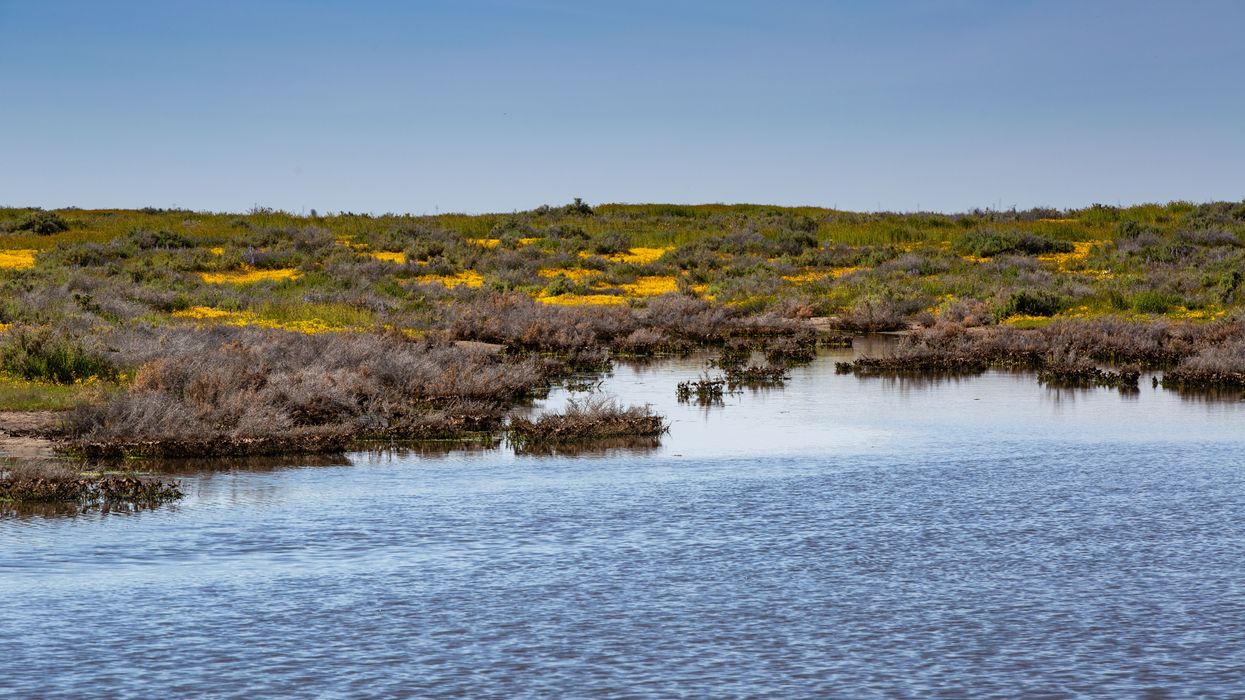
"This proposal declares open season on the nation's waterways," one critic charged.
President Donald Trump's administration sparked fresh fury on Friday when it proposed a supplemental rule to further gut Clean Water Act protections for streams and wetlands in the wake of a "catastrophic" US Supreme Court ruling three years ago.
The supplemental proposal from the Department of the Army and Environmental Protection Agency builds on their widely criticized proposed rule from November for defining "waters of the United States" (WOTUS)—both of which go further than the high court did with its 2023 decision in Sackett v. EPA.
While the American Petroleum Institute and some Republicans in Congress joined Assistant Secretary of the Army for Civil Works Adam Telle and EPA Administrator Lee Zeldin in promoting the new proposal, environmental and public health advocates sounded the alarm.
"What the Supreme Court did in its Sackett decision was an inexcusable assault on clean water," Jon Devine, director of freshwater ecosystems at the Natural Resources Defense Council, said in a Friday statement. "Communities and wildlife will pay the price until Congress fixes it. The Trump administration's answer has been to make a bad situation worse."
"This proposal declares open season on the nation's waterways. It denies federal protection to virtually all wetlands and more than three-quarters of our streams, endangering drinking water supplies and flood-prone communities—and the agencies admit it themselves," he noted. "The proposal would virtually eliminate protection for freshwater wetlands. Their own analysis says most streams would lose protection, with the West hit hardest."
Food & Water Watch legal director Tarah Heinzen declared that "Trump is taking yet another sledgehammer to our bedrock Clean Water Act, shamelessly doubling down on his initial terrible proposal to strip protections from countless streams and wetlands."
"Make no mistake: This unlawful proposal gives bad actors the green light to fill, drain, and poison sensitive waterways from coast to coast," she warned. "The result will be dirtier water for everyone. The administration must reverse course on this dangerous proposal."
Gary Belan, senior director of American Rivers' Clean Water Program, stressed that "our nation's water resources are precious and increasingly at risk. This is not the moment to be jeopardizing the nation's water security by narrowing the safeguards of the Clean Water Act."
The public comment period for the initial proposal has closed but, as Belan noted, the publication of the supplemental rule in the Federal Register kicks off a new 30-day period. He said that "while we appreciate EPA's effort to seek more public comment, the proposed changes will have consequences that will impact communities across the nation if finalized."
"The proposed definitions do not reflect the established science on how rivers function and would significantly reduce the scope of the Clean Water Act," he continued. "When headwater and intermittent streams and wetlands lose protection, downstream flooding worsens, the costs of drinking water treatment rises, and water supplies become less reliable."
Jim Murphy, the National Wildlife Federation’s associate vice president for legal advocacy, pointed out that "this is now the fifth effort to define the scope of the waters protected by the Clean Water Act in the past decade. We need Congress' help to get off this merry-go-round at a place that protects our waters, our wildlife, and our way of life."
"The administration is clearly struggling to craft a rule that will hold up in court while satisfying their donors' desire to effectively scrap these protections wherever possible," he added. "One thing is clear: If we don’t protect our streams and wetlands, the cost of dirtier drinking water and increased flooding will flow downstream to households at a time when most Americans are living paycheck to paycheck."
Musk indulges in the kind of fantasy that drove Berry to distraction (and to work)—all about control and domination, all done by the few to the many, utterly ignorant of context. Immodest in every way.
Wendell Berry, who died Monday at the age of 92, was such a great man that I hardly know where to start. He was on the very short list of the best writers of our time: His essays on rural America were the words that launched 10,000 farmers markets; his poems, the staple of many happy weddings (and I’ve peed in a dozen different bathrooms where the Manifesto of the Mad Farmer’s Liberation Front was framed above the toilet). If you’ve never read his short stories of the Port William Membership, or his finest novel, Jayber Crow, you can count yourself lucky that you’ll get to encounter them for the first time.
Berry was also, of course, politically engaged. I remember standing with him 20 years ago, at a protest against the Capitol Hill power plant that I’d asked him to attend. It was a bitterly cold day, and at one point he turned to me and smiled and said, "Do you think maybe they’ll arrest us soon?" He didn’t particularly like movements, but he understood the power of moral witness; he occupied the Kentucky governor’s office, in a protest against mountaintop removal coal mining, with a toothbrush and volume of Shakespeare in his pocket.
And, perhaps above all, his life was a work of both art and politics—his decision to give up a New York lit’ry career and to return instead to the Kentucky of his boyhood, settling along the Ohio River where he and his wife Tanya farmed and he wrote, embodying the commitment to place and community that animated his writing. (His family is asking that in lieu of flowers people might send a donation to the Berry Center that is carrying on his agrarian work).
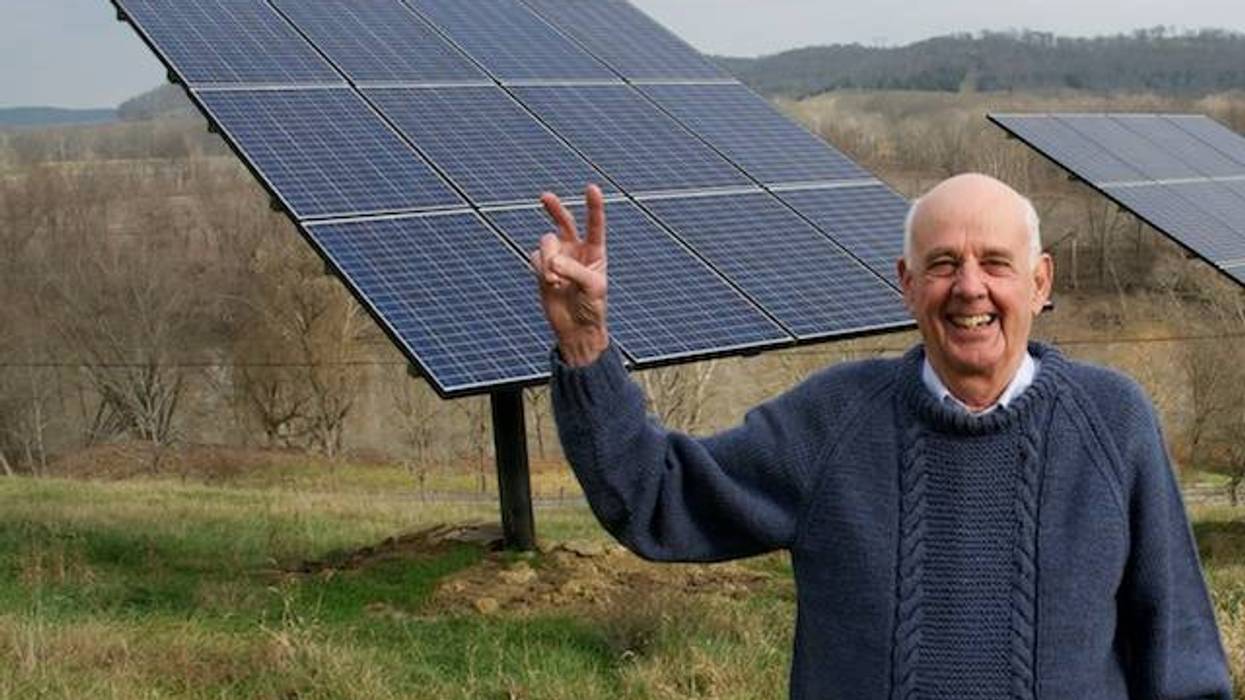
I was very lucky that my wife handed me a copy of his essay collection Home Economics about 40 years ago, when we were still courting. If I hadn’t fallen under his spell I’m not sure I would have spent my life in rural America, red state and blue; I know that he taught me how to see my town and my county, and my country and my species, in new-old ways that have undergirded all my work. And I’m very glad that we became friends, visiting and writing back and forth. His droll good humor rarely faltered, in my experience. I did not agree with him at all times, nor he with me—though he had solar panels behind his house, for instance, he didn’t think they belonged on farmland, while I think they’re a boon to both farmer and planet. But we agreed on most things of real dimension, and I was always delighted to see in the mailbox a letter with the return address of Port Royal Kentucky. He was one of the last people with whom I had a true written, as opposed to electronic, correspondence. Sometimes he’d tap things out on a manual typewriter, but more often it would be in pencil, on lined yellow paper.
The most recent arrived in July, and after news about grandsons and granddaughters it contained his newest discovery, a 1940 volume titled Stops, A Handbook for Those Who Know Their Punctuation and Those Who Aren’t Quite Sure. He was recommending it to me on the grounds that it is the “only book of my acquaintance that makes grammar delightful,” but also because he’d noted that it was published by the press (now defunct) at Middlebury College, where I teach. So while the rest of us were figuring out how to enlist Claude to help with our composition, one of the best writers of our age was still enjoying sharpening his prose, just as he enjoyed sharpening the tools of his work in field and forest. “I’m writing this on the porch of the ‘camp house,’ still unwired, built, I think, in 1964, in the woods between the river and the road.” He died on that farm on Monday, surrounded by family.
I got the news about his passing even as I was trying to grapple with the latest from a man who will attract more notice when he dies, but less affection. Elon Musk is always advancing his own vision of the world, of course—in fact, he’s just pledged to spend $100 million helping Republicans this fall. Or maybe $200 million—neither would be a noticeable sum to a trillionaire, of course. Whatever good he did with his early advocacy for electric vehicles has now been undone 100 times over with his advocacy for the people who hate EVs and all the other things we need. (He’s, as of last week, building gas turbines to make more electricity for his right-wing Grok AI project, already polluting the air of Black neighborhoods in Memphis).
He offers the Nazi salute; we are at his behest settling thousands of refugees from white South Africa (and no others) in our country; his rancid racism has destroyed Twitter. It would be a pleasure never to think of him again, but because he’s the richest man in the world, one has to monitor what he says. And here’s Monday’s installment, from of course his own social media site:
Extremely severe extinction events happen every 100M years or so and just switching to sustainable energy will not be enough to stop them.
Space satellites to control temperature and massive geo-engineering will be needed or it will be game over.
The disingenuousness of this is remarkable. Extremely severe extinction events have indeed happened just five times in the last half-billion years, which means it would be extremely unlikely we’d spontaneously come across one any time soon: Human civilization is, after all, just 10,000 years old. And yet of course we face one, not because of anything nature has done, but because we’ve filled the air with carbon dioxide from burning fossil fuel, which his allies wish to continue indefinitely. “Just switching to sustainable energy” is in fact the one good, scalable weapon we have to fight that, but since he’s a part of the political movement against this idea, he is now backing an alternative: “space satellites to control temperature,” which he further explains will be accomplished by a “super-intelligent swarm” of “sentient satellites, launched into Earth-Sun Lagrange points by mass drivers on the Moon.”
This is the kind of fantasy that drove Berry to distraction (and to work)—all about control and domination, all done by the few to the many, utterly ignorant of context. Immodest in every way.
But in Musk’s case it was accompanied by another revelation that began to emerge over the weekend. It turns out that the human toll of the horrific rampaging floods on the Nepal-Tibet border may well have been exacerbated by Musk’s decision to destroy the US Agency for International Development early in the DOGE assault on our government. USAID, in collaboration with NASA, helped maintain a network of monitors high in the Himalayas and Hindu Kush. Musk, in February 2025, “spent the weekend feeding USAID into the wood chipper. Could gone to some great parties. Did that instead.” One casualty was apparently this network. As Jeremy Konyndyk, who oversaw America’s response to the 2015 Nepal earthquake, wrote this weekend on (ironically) X:
DOGE famously used keyword searches for terms like "climate" to terminate federal grants. Among the victims: a collab between USAID and NASA for flood prediction, early warning, disaster readiness, glacier inventories, and mapping dangerous glacial lakes in Nepal.
As Konyndyk added:
Could these programs have helped foresee or mitigate this week's glacial flooding catastrophe? Hard to say with an outlier event like this. But that was their purpose.
Sadly, it's hard to anticipate or mitigate climate hazards which your ideology has decreed do not exist.
Musk’s victims already number in the millions—a Lancet study predicts 14 million by 2030 as the indirect results of shutting down America’s humanitarian work, which puts him up there in the Stalin-Mao category, and almost certainly the most deadly human of this millennium. So maybe a few thousand more people hardly matter.
But contrast what Musk did with the actions of a principal at a school along the river. When a friend upstream phoned one of his teachers a blurted warning, he immediately evacuated the entire student body, saving at least 900 lives. Given a warning, he acted (precisely what the world has not done with climate change). “I thought that even if the warning turned out to be wrong, the worst it would cost us was one day of study,” Rajendra Dawadi said. “But taking it lightly could mean the loss of hundreds of lives.”
Principal Dawadi will spend the rest of his life going to the weddings of the students whose lives he saved, and I imagine there will be no small number of babies named in his honor. Elon Musk’s name will be cursed—the richest man in human history, who used his wealth and power to kill the most vulnerable people on the planet.
Here is a recent poem of Wendell Berry’s, published in The New Yorker less than a year ago and titled "The Loved Ones":
The loved ones we call the dead
depart from us and for a while
are absent. And then as if
called back by our love, they come
near us again. They enter our dreams.
We feel they have been near us
when we have not thought of them.
They are simply here, simply waiting
while we are distracted among
our obligations. At last
it comes to us: They live now
in the permanent world.
We are the absent ones.

“I was taught that taking care of land was one of the primary human responsibilities,” Berry said in 2009.
The death of poet, activist, and conservationist Wendell Berry on Monday was called by one labor organizer "a loss of morality and clarity and compassion," as admirers of Berry's lifelong crusade to defend the environment honored his memory by sharing favorite poems and other works.
Berry died at the age of 92 at his home in Port Royal, Kentucky, where he spent decades writing about his farming the land, teaching, and writing about the need to fight "the concentration of farmland into larger and larger holdings and fewer and fewer hands," as he wrote in one of his best-known works, The Unsettling of America: Culture and Agriculture.
"The true measure of agriculture is not the sophistication of its equipment, the size of its income, or even the statistics of its productivity, but the good health of the land," wrote Berry in the essay collection, published in 1977.
He stressed that the "increase in overhead, debt, and dependence on machines" in the agricultural sector "is a matter of complex significance, and its agricultural significance cannot be disentangled from its cultural significance."
The Unsettling of America was one of more than 50 works published by Berry, whose commitment to interdependent community-building, small farms, and the protection of nature was woven into his fiction, poems, and essays alike.
In America magazine in 2021, Jon Sweeney wrote in a review of What I Stand On, a collection of Berry's writing, that "he writes about what he has experienced, what he has learned, and always with humility for what he does not know."
"The natural world is his primary teacher: its rhythms, its largesse, its mysteries,” Sweeney wrote. “And in the essays, the natural world often reflects how change in humans is also natural, inexplicable, and possible. I think this is what many who love his writing appreciate most about Berry, whether they realize it or not."
Berry traveled and taught briefly at New York University as a young man before returning to his Kentucky roots, remaining there for six decades. He told The New York Times in 2018 that writing and working in rural Kentucky "made a permanent connection between me and my native place, and with its landscape. The landscape was there to check me if I was wrong. I could never go away and make up stuff at cocktail parties about the backwoods of Kentucky. I worked with people here in all walks of life and learned from them."
In his 1969 essay "The Long-Legged House," named for the two-room cabin his ancestors had lived in, to which Berry returned to write his books and other works, he offered an early warning about the harm humans and their industries—agribusiness and fossil fuels—were doing to the Earth.
“We have lived our lives by the assumption that what was good for us would be good for the world," wrote Berry. "We have been wrong. We must change our lives so that it will be possible to live by the contrary assumption, that what is good for the world will be good for us. And that requires that we make the effort to know the world and learn what is good for it.”
The writer Joyce Carol Oates said on social media on Monday that "long before it became a more familiar subject, Wendell Berry was conscious of the endangered natural environment; indeed, Berry helped to raise this consciousness."
In addition to making his views on the environment and corporate control over the natural world known through his writing, Berry took part in direct actions to protest mining, war, and capital punishment.
He rallied against the US war in Vietnam, saying, "Peace is more important than victory," and was arrested in 1979 for protesting the Marble Hill Nuclear Power Plant in Madison, Indiana. Thirty years later he was one of thousands who marched on Washington against the Capitol Power Plant, and two years after that, in 2011, Berry spent the night at a sit-in in the Kentucky governor's office to protest mountaintop removal mining.
In 2009 he also withdrew his writings from the collection of University of Kentucky, his alma mater, to express opposition to the university's $7 million donation from a coal producer; the school then named a dormitory Wildcat Coal Lodge.
“I was taught that taking care of land was one of the primary human responsibilities,” Berry told the student newspaper, the Kentucky Kernel, at the time. “In the long run, the top soil, the forests, and the woodland of this state will be more valuable than the coal deposits.”
Silas House, another writer who hailed from Kentucky, said that with Berry's death, "another great light" had gone out.
House described the writer as "complex. Brilliant. Revolutionary."
They are telling the story of a city under pressure, a story of institutions struggling to maintain essential services, a story of workers trying to do their jobs under increasingly difficult circumstances.
The world knows Bethlehem as the city of the Nativity. It is a city of churches, olive groves, ancient stone streets, and a history that attracts pilgrims and visitors from across the globe. For many, Bethlehem symbolizes peace, hope, and human resilience.
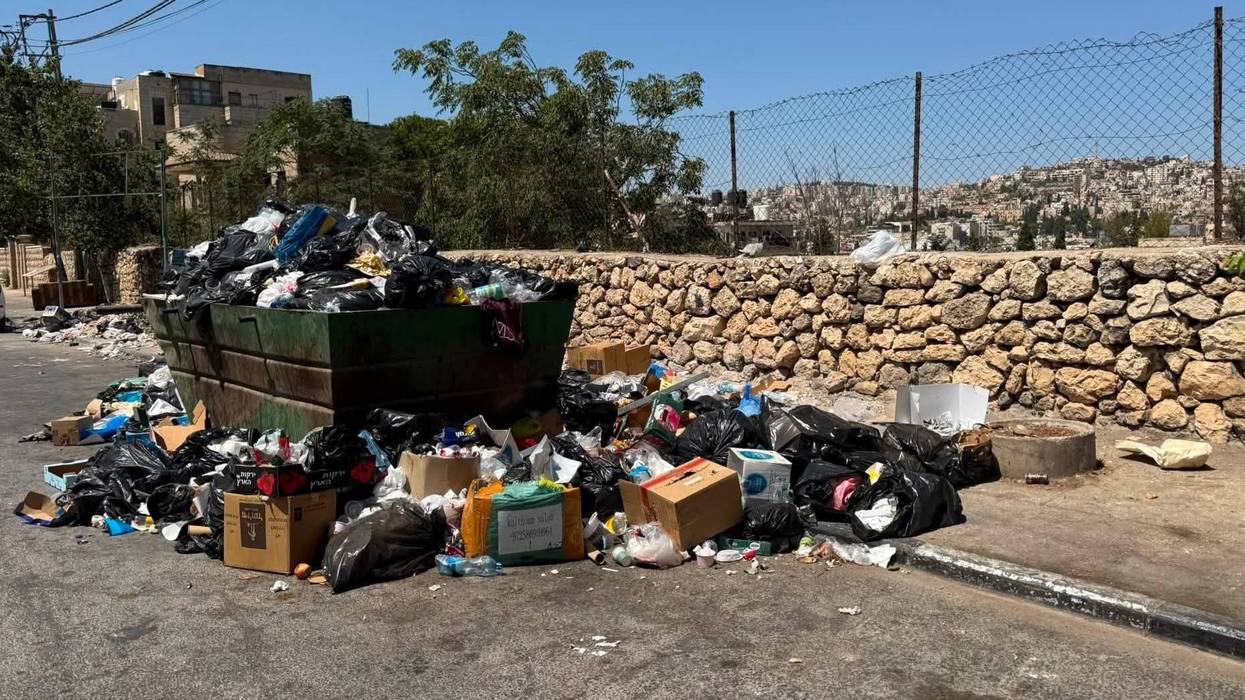
Yet in recent weeks, another image has emerged. Overflowing garbage containers. Piles of waste left uncollected for days. Unpleasant odors drifting through neighborhoods. Stray dogs searching through torn plastic bags. Flies, rodents, and growing public concern about health and sanitation.
For residents, these scenes are disturbing. For visitors, they are difficult to reconcile with the image of one of the world's most recognized and beloved cities. But the garbage accumulating in Bethlehem's streets is not the real story. It is merely the most visible symptom of a much larger crisis. The question is not why a container is overflowing. The question is what happened to the system behind it.
At first glance, it may seem like a simple municipal problem. A shortage of fuel. A broken truck. Workers on strike. Delayed collection rounds. The reality is far more complicated.
The environment does not understand politics. It understands only what we do—or fail to do—to protect it.
Waste management depends on an entire chain of institutions, workers, vehicles, roads, fuel supplies, disposal facilities, municipal revenues, and public cooperation. When enough pressure is placed on that chain, it begins to break. And in Bethlehem, pressure has been building for years.
The city has suffered repeated economic shocks. The tourism sector, once a major source of income, was devastated by the Covid-19 pandemic. Before it could fully recover, the war and the broader economic crisis brought new hardships. Businesses struggled. Workers lost jobs. Household incomes declined. Many families found themselves prioritizing food, rent, and basic necessities over municipal fees.
As revenues declined, local institutions found it increasingly difficult to sustain essential services. At the same time, operational costs continued to rise. Fuel became more expensive and, at times, harder to secure. Vehicles required maintenance. Equipment aged. Service providers struggled to balance growing needs with shrinking resources.
The crisis does not stop there.
Road closures, military gates, and movement restrictions have increasingly complicated daily life throughout Bethlehem Governorate. What should be a routine collection route can suddenly become longer, slower, or more expensive. A delayed truck today may become an overflowing container tomorrow.
Even the final destination of the waste is not immune from these pressures.
The Al-Minya landfill, which serves communities in southern parts of the West Bank, represents a critical component of the region's waste management system. Any disruption affecting access, transportation, security, or operations along this chain eventually reaches the streets of Bethlehem and surrounding communities.
The result is a problem that residents experience every day. A container left uncollected. A street corner filled with waste. A smell that lingers in the summer heat. A growing sense that something is no longer working as it should.
When waste accumulates, the consequences extend beyond appearance.
Overflowing garbage attracts stray dogs, insects, rodents, and other disease vectors. It increases environmental risks and can create fire hazards during hot weather. It affects public health, community well-being, and the quality of life in neighborhoods already facing multiple challenges.
This is why waste management should never be viewed as a secondary service. It is not simply about removing garbage from the street. It is about protecting public health. It is about preserving human dignity. It is about maintaining the environmental quality of cities and communities. It is also about protecting the people who perform this difficult work.
One night, at around 2:00 am in the morning, I drove into Bethlehem to take my wife to catch an early bus to Allenby Bridge Boarder with Jordan. While most of the city slept, sanitation workers were already on the streets. Wearing reflective orange uniforms, they swept roads, emptied containers, and loaded waste onto trucks. Few residents would ever see them. By sunrise, most traces of their work would have disappeared.
Their presence reminded me that waste management is not an abstract system. It depends on real people working under difficult conditions, often exposed to hazards that most citizens never think about.
But workers alone cannot solve this crisis, neither can municipalities, nor can citizens. Responsibility is shared.
Citizens must reduce the waste they generate, support cleaner public spaces, and contribute to the sustainability of essential services whenever possible.
Municipalities and service providers need stronger planning, better resource management, and long-term financial stability.
National institutions must support local governments struggling under extraordinary economic and political pressures.
And international partners should recognize that environmental services are not luxuries. They are fundamental to public health, social stability, and human dignity.
There is another reason this issue deserves greater attention. Pollution does not recognize borders. Smoke from burning waste does not stop at a checkpoint. Contaminated water does not respect political divisions. Air pollution travels wherever the wind takes it.
The environment does not understand politics. It understands only what we do—or fail to do—to protect it. That is why environmental protection requires cooperation, shared responsibility, and long-term vision.
Bethlehem does not simply need more garbage trucks or more containers. It needs investment in sustainable solutions. It needs stronger institutions. It needs public awareness. It needs serious efforts to reduce waste generation, expand reuse and recycling, and create economic opportunities through a circular economy approach.
Most importantly, it needs recognition that environmental challenges are not isolated technical problems. They are deeply connected to economic conditions, governance, public services, and the daily lives of ordinary people.
The overflowing containers seen today across Bethlehem are telling a much bigger story. They are telling the story of a city under pressure, a story of institutions struggling to maintain essential services, a story of workers trying to do their jobs under increasingly difficult circumstances, a story of economic hardship, environmental vulnerability, and a community searching for sustainable solutions.
And perhaps they are also reminding us of something simple: Garbage does not appear overnight. Neither do environmental crises. Both are the result of problems left unresolved for too long.
If Bethlehem is to remain the beautiful city that the world knows and cherishes, addressing those problems can no longer wait.
Virginia spent years asking how quickly it could build data centers. But Maryland and other states have an opportunity to ask a better question: How do we embrace innovation without sacrificing the affordability, environment, and quality of life that make our communities worth living in?
I’ve lived in Northern Virginia my whole life, but no one told us we would soon be living alongside one of the largest concentrations of data centers in the world.
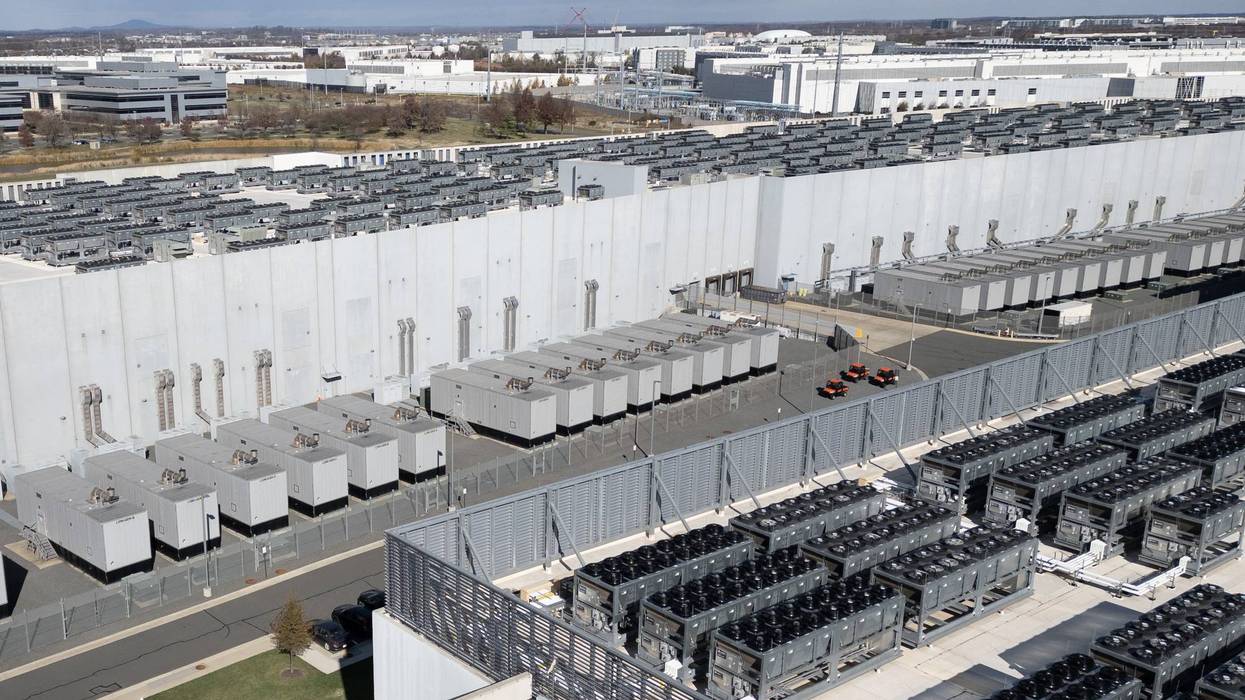
No one asked our community whether we wanted them. No one explained what they would mean for our neighborhoods, our landscape, or our monthly bills. Then, almost overnight, they were everywhere. Massive industrial buildings rose where open space once stood. The constant hum became part of daily life. And one month, our electricity bill didn't gradually creep upward, it nearly doubled.
We were told these projects would bring jobs, innovation, and economic growth. What we weren't told was what residents would be expected to give up in return.
Now, as I watch Maryland debate whether to accelerate data center development, I can't help but feel like I've seen this story before.
As someone living with the consequences of Virginia's choices, my advice is simple: Don't wait until the bills arrive, the forests are gone, and the data centers are already built to ask whether they were worth it.
For years, Virginia has been held up as the nation's data center success story. But if Maryland leaders only see Virginia's balance sheet, they're missing the growing backlash from the people who live here.
I have watched forests disappear, industrial buildings replace open land, electricity demand surge, and communities be transformed by sprawling server farms. Everyone I know is asking whether the promised economic benefits outweigh the environmental and financial costs.
Maryland has a choice. You can rush to replicate Virginia's model, or you can learn from our mistakes before it's too late.
The conversation surrounding data centers has largely centered on artificial intelligence and economic development. But too often, what gets left out are the communities expected to absorb the costs.
Supporters frequently describe data centers as major job creators, but the reality is more complicated. Construction creates temporary employment, yet once operational, many hyperscale facilities require relatively few permanent workers. Communities are often asked to trade farmland, forests, neighborhoods, and increased pressure on utilities for projects that may never deliver the long-term economic engine they were promised.
That trade-off deserves far more scrutiny than it has received.
The race to build data centers is being driven largely by the explosive growth of artificial intelligence. Every major technology company wants more computing power, faster infrastructure, and greater capacity. But history teaches us that economic booms rarely continue unchecked. America has seen speculative waves in office construction, shopping malls, and commercial real estate that far exceeded demand before markets eventually corrected.
No one can say with certainty whether today's data center boom will follow the same path. But uncertainty itself is reason for caution, not acceleration.
Maryland should pause before repeating Virginia's mistakes. A statewide moratorium would give policymakers time to complete a comprehensive assessment of the environmental, economic, and energy impacts of these facilities; strengthen safeguards for communities; ensure developers bear the costs of new infrastructure; and give the public a meaningful voice in decisions that will shape their neighborhoods for generations.
Virginia spent years asking how quickly it could build data centers.
Maryland has an opportunity to ask a better question: How do we embrace innovation without sacrificing the affordability, environment, and quality of life that make our communities worth living in?
As someone living with the consequences of Virginia's choices, my advice is simple: Don't wait until the bills arrive, the forests are gone, and the data centers are already built to ask whether they were worth it.
By then, the answer may come too late.