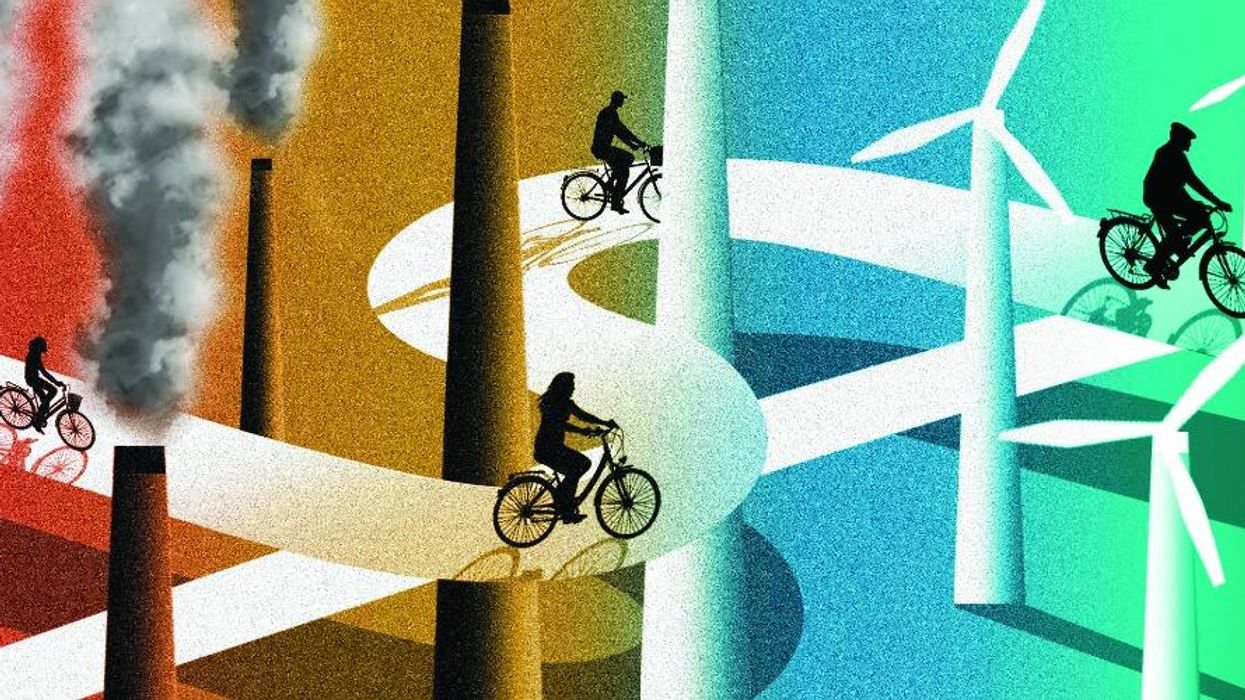
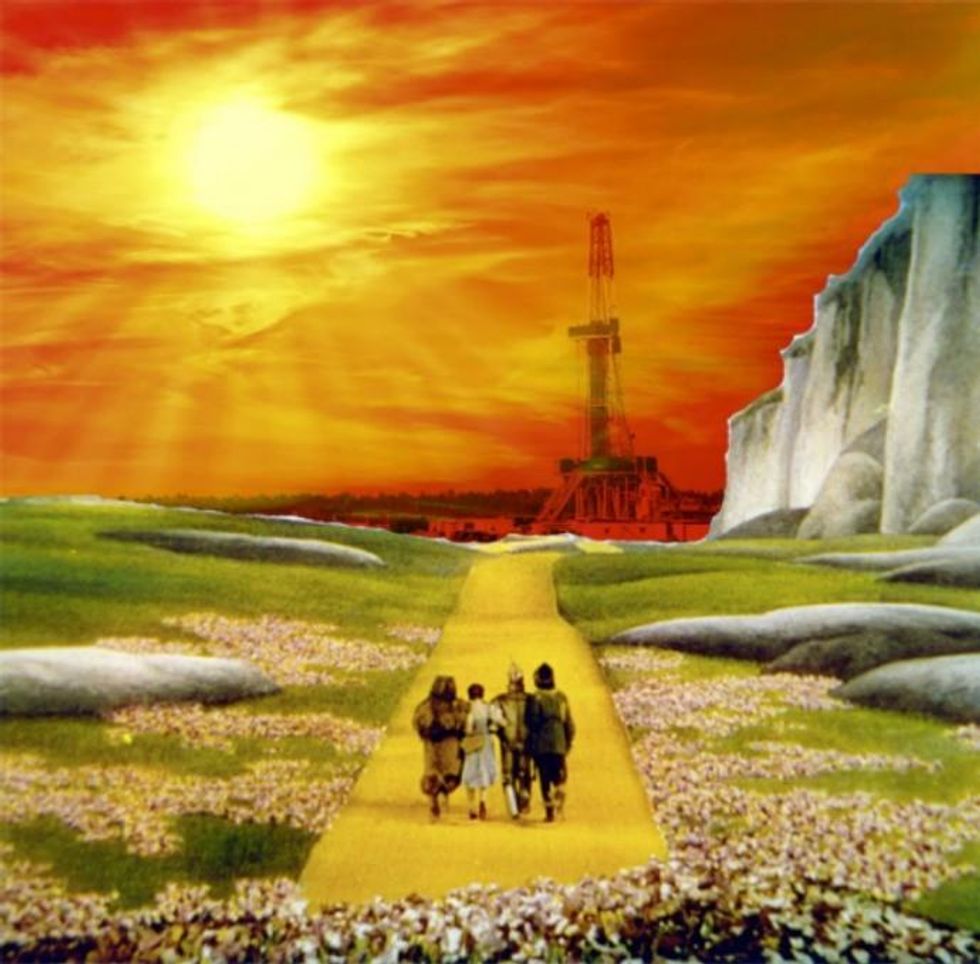
However, we also happen to live in a human social world in which a decades-long spurt of economic and population growth, based on the snowballing exploitation of a finite supply of fossil fuels, has become normalized, so that world leaders have come to agree that growth can and must continue forever. In response to this situation, clear-eyed systems and environmental scientists have, during the past few decades, proposed policies either to transition the global economy away from its near-suicidal requirement for infinite growth, or to cushion the impact when growth limits are finally reached.
At first, this post-growth train of thought was so marginalized by mainstream economists that few educated people were even aware of its existence. In other words, it lay entirely outside the Overton window of acceptable public discourse.
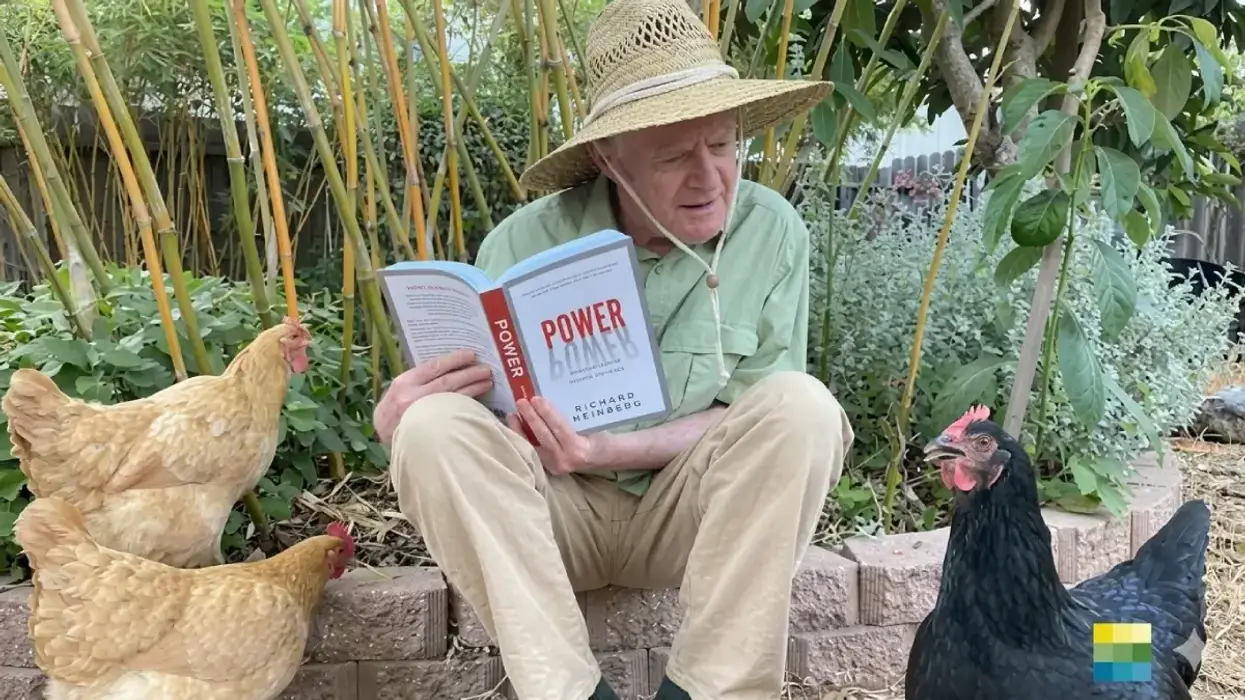
Then, in 2008, the wheels of the financial bus that we were all riding fell off, and there was an opening for discussion about different ways of organizing the economy. During the early recovery period after the global financial crisis, I presented a natural-limits-based view of economics in my book The End of Growth, in which I summarized heterodox policy proposals for getting society on a sustainable track without destroying livelihoods. However, central banks and national governments managed temporarily to bail out the wizards and quants who had precipitated the crisis, restarted the growth machine, and thereby narrowed the Overton window once again.
Still, during the decade that followed, a seed of post-growth economic thinking was planted and began to sprout. In Europe, ecological economists and environmental activists organized "degrowth" conferences. The tiny nation of Bhutan, which had been experimenting since the 1970s with Gross National Happiness (GNH) as an alternative to Gross Domestic Product (GDP), tallied up its findings and argued at the United Nations that other countries should likewise aim for widespread social satisfaction rather than growth in monetary exchange. Groups promoting public banking mushroomed across the U.S., and articles about Modern Monetary Theory (MMT) and Universal Basic Income (UBI) appeared in major news outlets; the latter was even promoted by an early contender for the Democratic Party presidential nomination.
Still, the economic priesthood held tight to its dogma. Although it was patently illogical, the demand for endless growth continued to be defended using tortured reasoning and cherry-picked statistics. We can grow in green ways, the orthodox economists insisted--ways that don't impact the environment. Well, it's true that we can use resources more efficiently, we can recycle more, and we can find ways to reduce the toxicity of the wastes we produce. But the fact remains: over time, a growing economy will eventually and inevitably take up more ecological space than one that does not grow. Even the richest man in the world, who made his hundreds of billions of dollars from consumers, came to the conclusion that there are limits to energy and gains in efficiency, and that we face a future on this planet of limits. (He, less surprisingly, came to a different solution than I and other "limits to growthers" would offer, his being that we should harvest the moon and colonize space.)
Now, the coronavirus pandemic has seismically shifted the discussion once again. The Overton window is broken and the wall that held it has caved in. Suddenly the first priority of world leaders is no longer economic growth; instead, it is public safety. Lives must be saved and health care systems salvaged regardless of the short-term hit to profits, employment, and investment returns. This sea change in priorities requires entirely different thinking and policies--ones much more closely aligned with heterodox post-growth thinking than with pro-growth economic orthodoxy.
Here is a quick survey of the post-growth economic policies recently introduced by sustainability theorists, and a brief discussion of how and whether each is relevant to our new pandemic-obsessed moment.
Universal Basic Income (UBI)
UBI is a government plan for providing all citizens with a given sum of money, regardless of their income or employment status. The purpose is to prevent or reduce poverty and inequality. However, UBI would also be useful in a post-growth scenario. Suppose, for example, that a nation decided to lower its greenhouse gas emissions by restructuring its economy so as to substantially reduce energy usage and material throughput. Eventually, many people could transition from jobs in airlines and other energy-intensive industries to become food producers and small-scale manufacturers within more localized economies (see below). But, over the short run, substantial numbers would be thrown out of work; how to avoid widespread economic hardship and social instability in the interim? Answer: UBI.
The U.S. federal government's just-passed stimulus plan includes the equivalent of a nascent UBI: It mandates one-time cash payments of $1,200 for each adult and $500 per child. It also sets aside $367 billion to help small businesses and $500 billion for loans to larger industries. (The Fed is meanwhile buying corporate bonds and securities from hedge funds, to the tune of trillions, putting the Treasury on the hook for them.) There is ongoing discussion among policy wonks about longer-term cash payments to individuals; if this indeed happens, the U.S. will be officially experimenting with UBI.
But where's the money to come from? For the time being, it's being conjured through a cozy arrangement between Congress and the Federal Reserve: Congress issues debt, which the Fed buys--without requirement for interest payments. This brings us to:
Modern Monetary Theory (MMT)
MMT says that monetarily sovereign countries like the U.S., U.K., Japan, and Canada are not limited by tax revenues or borrowing when it comes to federal government spending. They can create as much digital or paper money as they need, and are (or should be) the legal monopoly issuers of their currency. Therefore, they should be able to create and spend as much energy as needed to create full employment.
I must confess some skepticism with regard to MMT. It's obvious how it would be useful in a crisis; but, over the longer term, if the money supply is growing faster than energy and materials, the result must be inflation. In fairness, Modern Monetary Theorists have given considerable thought to the problem of inflation, and have come up with ways of limiting it--such as by levying deficit-reducing taxes, during times of full employment, to reduce aggregate demand. Yet, in my experience, most Modern Monetary Theorists follow conventional economists in mistakenly assuming that energy and natural resources are effectively infinite, rather than finite and depleting. By focusing just on employment, they miss the essential basis of all economic productivity.
In any case, a crisis is what we have: Governments and central banks are being forced to resort to a form of MMT because of a sudden, dramatic spike in unemployment. And, over the short term, money printing is an essential economic tonic. However, over the longer term, the best outcome would be achieved if the current crisis forces economists to think anew about the nature of money itself--what it is, how it is created, and what are is social effects. Most economists still think of money as simply a medium of exchange, but it is better understood as storable, quantifiable, and transferrable social power. Renegade economist Steve Keen points out that conventional economic theory does a surprisingly poor job of explaining money and debt. Alternative currency theorists like Thomas Greco do a much better job of it.
Ecological and biophysical economists--the vanguard of post-growth economists--go even further. They start with realistic assessments of finite energy sources and natural resources, then explore how economic systems could fairly harvest and distribute resources without depleting nature's stores over time. For starters, they propose taxing all financial transactions and requiring banks to hold 100 percent reserves. They also tend to hold to the principle, first propounded by American economist Henry George (1839-1897), that each person should own what he or she creates, but that everything found in nature, most importantly land, should belong equally to all humanity.
Public Banks
Today most money is created by private banks through the process of issuing loans. Digital money is called into existence when a loan is granted; when the loan is repaid, that money vanishes. The problem is, interest must be paid on the loan, and the money needed to pay that interest isn't created when the loan is issued. The borrower must earn or borrow money for interest payments from elsewhere. As long as the overall economy is growing, that's usually possible. But if the economy isn't growing, defaults ensue. Lending slows to a dribble, with more money disappearing than is being created. That's called a deflationary depression, and it's something to be avoided if possible--though it's an inevitable feature of debt-based economies in a finite world.
As a solution, why not create government-run public banks that loan money at no interest, at least in the cases of businesses that are operating for the public good? For example, if a state decided that it was in the public interest to promote renewable energy, its state bank could make zero-interest loans to solar installers.
Public banks have a long history, and operate in many nations. In the U.S., the prime example is the Bank of North Dakota, which partners with private banks to loan money to farmers, schools, and small businesses.
The idea of public banks is closely tied to MMT; think of public banks as MMT at the retail level. So far, the pandemic has not provoked wide interest in public banking; but, as the incipient recession deepens and lengthens, expect this to be a subject of increasing discussion.
Gross National Happiness (GNH)
In 1972, Bhutan's 16-year-old King Jigme Singye Wangchuck used the phrase "Gross National Happiness" to describe the economy that would serve his country's Buddhist-influenced culture. The label stuck, and soon the Centre for Bhutan Studies set out to develop a survey instrument to measure the Bhutanese people's general sense of well-being. That survey instrument measures nine domains:
- Time use
- Living standards
- Good governance
- Psychological well-being
- Community vitality
- Culture
- Health
- Education
- Ecology
Bhutan's efforts to boost GNH have led to the banning of plastic bags and re-introduction of meditation into schools, as well as a "go-slow" approach toward the standard economic development pathway paved by costly infrastructure projects paid for with huge loans from international banks.
There's nothing in the recent stimulus package that resembles GNH, but policy makers increasingly could be forced into considering something like it, out of necessity. As people are stuck at home for long periods, some are descending into loneliness and depression brought on by isolation; others are filling their time with art, music, home schooling, and gardening. Leaders will eventually realize they must do something to discourage the former and encourage the latter. They may eventually conclude that gauging their success using GDP is pointless, and that directly measuring safety, health, and life satisfaction makes a lot more sense.
The Sharing Economy
The last time the U.S. suffered through an economic depression, in the 1930s, government economists and leaders of industry responded by creating a new economic paradigm--consumerism. Henceforth American citizens would be termed consumers, whose duty is to buy and discard products at an ever-accelerating rate so as to steadily increase overall employment levels, the size of the economy, returns on investments, and government tax revenues. Two key strategies of consumerism were planned obsolescence, in which products were designed to have limited useful lifetimes, or to soon become aesthetically undesirable in comparison with new versions of the same product; and redundant consumption, in which individuals were encouraged through advertising to prefer owning their own products (such as cars and lawn mowers) rather than sharing them with family members, neighbors, or friends.
Unfortunately, while consumerism succeeded in overcoming the problem of overproduction (which was one of the causes of the Great Depression), it resulted in the steady ramping up of resource consumption. At the same time, it had a negative impact on many people's psychological health, as they spent more time viewing advertising messages and shopping, and less time engaging with family, friends, and nature.
The idea of the sharing economy took hold around the time of the Great Recession of 2008; it proposed a peer-to-peer (P2P) way of organizing the economy in which the sharing of goods and services is facilitated by community-based online platforms. Many pioneers of the sharing economy were motivated by the ecological ideal of reducing overall consumption levels.
Unfortunately, however, the sharing economy quickly became equated with the gig economy, and with ride-sharing apps like Uber and Lyft--which promised to eliminate the perceived need for everyone to own a car, and thereby reduce carbon emissions from transportation. Unfortunately, it turned out that Uber and Lyft generate more carbon emissions than the trips they displace, and aren't always model employers.
Nevertheless, the original ideals of the sharing economy persist among advocates of the maker movement, collaborative consumption, the solidarity economy, open source software, transition towns, open government, and social enterprise--as well as bridging organizations like
Shareable, whose founder, Neal Gorenflo, has some ideas on why sharing is even more important during the pandemic, and how we could seize the current moment this as an opportunity to come together in cooperation and mutual aid even though we remain separated physically.
Green New Deal (GND)
GND proposals circulating in the U.S. prior to the pandemic aimed to provide 100 percent renewable energy in 10 to 20 years while supporting job retraining and aiding communities impacted by climate change. Some proposals also included a carbon tax (often with a fee-and-dividend structure that would rebate funds to low-income people so they could afford more costly energy services), incentives for green investment, public banks, measures to re-regulate the financial system, and the first steps toward a global Marshall Plan.
While GND advocates seldom publicly acknowledge that economic growth is both ephemeral and antithetical to a livable environment, their proposals are nevertheless largely consistent with policy advice post-growth thinkers.
The coronavirus pandemic cuts both ways with regard to climate change. Emissions are down, because businesses are closed and people are staying home. But the transition to renewable energy has slowed to a crawl. If we're to move to a post-carbon economy, we'll need massive investment in post-carbon transportation, building heating, manufacturing, and agriculture. President Trump has signaled he wants Congress to appropriate a couple of trillion dollars for infrastructure spending, but what he has in mind are subsidies for existing fossil fuel-dependent industries. MMT notwithstanding, the nation's money pot is not bottomless. If we are to have a Green New Deal, it must come soon.
Resilience
We have made the world more economically efficient by lengthening supply chains to take advantage of the cheapest labor and raw materials anywhere they exist, and by minimizing inventories with just-in-time supply strategies; but the result has been a withering of resilience--the ability to recover and adapt to a crisis or disruption. Post-growth thinkers tend to agree that the structural unsustainability of modern industrial economies has created a series of crises that are lined up to bite--from climate change to the threat of global pandemics. Therefore, preparing for the post-growth era requires building resilience--particularly at the community level.
Suddenly, in this moment of broken supply chains, and shortages of toilet paper, masks, and ventilators, the argument for resilience is easier to make: there are perfectly obvious reasons to shorten supply chains, and establish strategic stockpiles that are distributed locally. Trump's ham-fisted attempt to renegotiate globalization via tariffs hardly counts as a step in that direction. Unfortunately, because world leaders previously didn't listen to resilience advocates sooner, we will all be paying a price for some time to come.
Localism
The lengthening of supply chains is the essence of globalization; if this has made us more vulnerable to crisis, then it stands to reason that we should re-localize some of our economic activity.
Post-growth thinkers have been advocating localism for decades. Naturally there are objections and questions: What about xenophobia? What about sharing knowledge and best practices across cultures? What about global cooperation to meet global challenges like climate change? In answer, localists say we needn't view the recovery of local knowledge, local culture, and local economic vitality as all-or-nothing. Think of it as the rebalancing of a system that has become lopsided and dangerously unstable.
Meanwhile, in nations like the United States, where national leadership during the pandemic is absent or inept, citizens are being forced into thinking and acting more locally. Localism can have either a welcoming or an exclusionary face; it's up to us to choose. Fortunately, many people so far seem to be choosing to be neighborly.
* * *
The end of growth is painful. We had a foretaste of it in 2008, but the current crisis promises to be much worse. Our leaders are flying blind, just as they were during the Global Financial Crisis over a decade ago. We were unprepared for it, just as we were for the pandemic and the economic carnage that is accompanying it.
However, there are people who have been anticipating a moment like this for decades. If we are willing now to listen and learn from post-growth thinkers, the crisis and its aftermath can be a process of adaptation that leaves us more locally resilient, happier, and more connected.
That's not to downplay the immensity of the task. Redesigning national economies in the midst of crisis is a challenge perhaps comparable to redesigning an airplane in mid-air, while attempting to make a safe landing. Navigating the end of growth will require courage, new thinking, flexibility, and a willingness to make mistakes. It's understandable why, during "normal" times, people want to stick with what's familiar. But we're no longer in normal times. We are in a moment that requires us to undertake bold changes that have been put off for far too long.