

5
#000000
#FFFFFF
To donate by check, phone, or other method, see our More Ways to Give page.
Daily news & progressive opinion—funded by the people, not the corporations—delivered straight to your inbox.
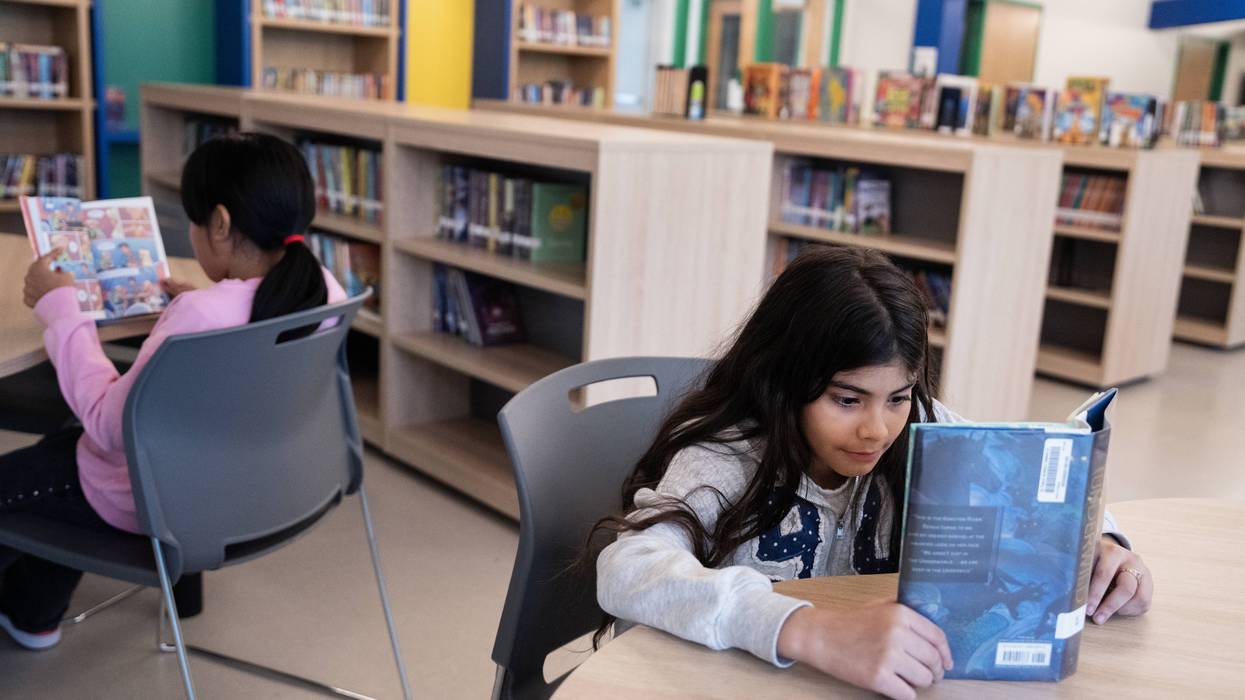
"Instead of strengthening public education," said one union leader, "Trump is diverting $500 billion in taxpayer cash into private hands, with everyone else left fighting for scraps in a real-life Hunger Games."
The US Department of the Treasury this week released proposed regulations for the first federal "school choice" program, as proponents call it, drawing a fresh wave of condemnation from critics who have expressed concerns since President Donald Trump signed last year's Republican budget package.
"The Trump administration's proposed rules confirm what we expected, that their federal private school voucher program is designed to direct public resources to private schools and organizations and will provide little benefit to the 90% of children who attend public schools," said Demetria McCain, director of policy at the Legal Defense Fund, in a Friday statement.
"Instead of using federal resources to serve all children, this administration has dismantled the Department of Education, weakened long-standing civil rights protections, and worked to build a two-tiered system of education that benefits a select few," McCain continued. "Our children deserve better."
The One Big Beautiful Bill Act established the Education Freedom Tax Credit, which is set to begin next year. According to the Treasury Department, under the proposed rules, eligible taxpayers could claim an annual credit of up to $1,700—or $3,400 for married couples filing jointly—for contributions to scholarship granting organizations (SGOs).
The program is widely seen as a scheme to funnel tax dollars toward private school tuition, but the department noted that the rules would also allow scholarships to support "academic tutoring, special needs services, books, supplies, computers and other equipment, and other qualifying expenses connected with a student's enrollment or attendance."
That "aspect of the program has put Democratic governors in a bind," The Washington Post reported Thursday. There is no cost to states that participate, but "governors must approve all SGOs that meet the rules. States that want to opt into the program for the benefit of public school students will have to allow private school vouchers as well, and vice versa."
As the Post detailed:
Governors have until January 1 to opt in. Thirty mostly Republican-led states have already joined. Most of the remaining states that have not rejected the plan are led by Democrats.
The proposed regulations include income limits for eligible families, protections for scholarship funds, and details on how the funds can be used. States cannot restrict the types of schools that benefit, Treasury and Education department officials said, meaning public funds could go toward a religious school that bars LGBTQ students or a private school that doesn't have certified teachers.
Among the Democrats facing some calls to opt out are New York Gov. Kathy Hochul—who, as Chalkbeat pointed out, "has said she plans to participate unless she finds a 'poison pill' in the program," but "declined Thursday to make it official."
New York State United Teachers president Melinda Person declared Thursday that "the regulations are loaded with poison pills. If New York opts in, the state would be prohibited from setting standards for scholarship organizations, deciding which organizations can participate, or limiting the types of schools and expenses that receive these federal tax dollars."
"That means New York could be forced to help funnel taxpayer-subsidized dollars to private schools that have admissions policies and practices that would never be acceptable in our public schools, while being denied the authority to put stronger safeguards around the program," Person warned. "New York puts its name on the program, but Washington writes the rules."
"We take responsibility for participating, but surrender much of our ability to determine where the money goes and what standards recipients must meet," she added. "This isn't local control. It is a one-way door into a federally designed voucher program, one that could use public resources to support schools that discriminate, while stripping New York of the ability to provide the protections New Yorkers expect. Gov. Hochul should make clear now that New York will not walk through that door."
Josh Cowen, a Michigan State University education policy professor who authored the book The Privateers: How Billionaires Created a Culture War and Sold School Vouchers, laid out the "good" and "bad" of the regulations on social media Thursday.
It’s striking that the FSTC has clear revenue streams for public schools and families, guided by sensible rules to promote service access and quality—such as you might expect from progressive policymakers——jammed Frankenstein-style alongside rules permitting anything-goes on the private side.
[image or embed]
— Josh Cowen (@joshcowenmi.bsky.social) October 1, 2026 at 5:37 PM
So the decision basically comes down to eating a sh-t sandwich with some stuff we really don’t like in the private sector, with some meaningful money that you might expect any number of progressive lawmakers to have crafted.
— Josh Cowen (@joshcowenmi.bsky.social) October 1, 2026 at 5:37 PM
Leaders at the nation's two largest teachers unions also weighed in. National Education Association president Princess Moss said that "with back-to-school in the rearview mirror, more Americans are struggling to make ends meet as the cost of school supplies, packed lunches, and gas continues to outpace salaries and paychecks."
"Instead of helping families make ends meet, the Trump administration is once again putting its thumb on the scale for private school vouchers at the expense of the public schools that serve 90% of America's students," she asserted. "At a time when educators, students, and families are calling for more resources to strengthen neighborhood public schools, this administration is advancing a plan to divert taxpayer dollars to subsidize private education for a select few."
"We will closely review the Treasury Department's new voucher regulations and continue fighting to ensure public funds remain invested in public schools where every student—regardless of their race, ZIP code, disability, family income, or immigration status—can learn, grow, and thrive," Moss pledged. "America's students deserve policies that expand opportunity, not vouchers that leave most children behind."
American Federation of Teachers president Randi Weingarten similarly charged that "this scheme is a poison pill for the 90% of American children who attend public schools. Instead of strengthening public education, President Trump is diverting $500 billion in taxpayer cash into private hands, with everyone else left fighting for scraps in a real-life Hunger Games."
While the Congressional Budget Office estimated the program would cost the federal government $26 billion in lost revenue over the next decade, the Institute on Taxation and Economic Policy has found it could cost up to $51 billion per year. A January report from US Senate Health, Education, Labor, and Pensions Committee Ranking Member Bernie Sanders (I-Vt.) noted that's more than the combined federal spending on programs to support students with disabilities and those who are from low-income backgrounds.
Weingarten said that "state governors should reject it—not least of all because they will have no say or oversight over how the vouchers operate. The reality is that for every precious public dollar funneled to private schools—money that could be spent on instruction, lowering class sizes, modern buildings, or new books in the library—public school parents will be hunting for pennies on the floor."
"This isn't about 'school choice'; it's the about the school's choice: Private schools can simply refuse to accept poor kids, those with special needs, or those with different religions. And they can refuse to submit to the basic accountability measures their backers hypocritically demand of public schools," she stressed. "If this were really about 'choice' then the administration would be trying to help public schools succeed, rather than eviscerating them."
"This is yet another cruel chapter in the Trump's administration's war on families after the Big, Ugly Bill slashed trillions in support for young people by gutting Medicaid, food assistance, and student loans," she continued. "If we are serious about the promise of education, then we have an obligation to make every public school a place where parents want to send their kids, educators want to work, and kids thrive."
The union leader argued that "instead of this voucher scheme, we should commit to creating safe and welcoming schools with a curriculum that is engaging, relevant, and rigorous. That means multiple pathways to career and college, expanding community schools, focusing on literacy and critical thinking, and protecting children against the perils of artificial intelligence while harnessing its potential. These regulations do the exact opposite."
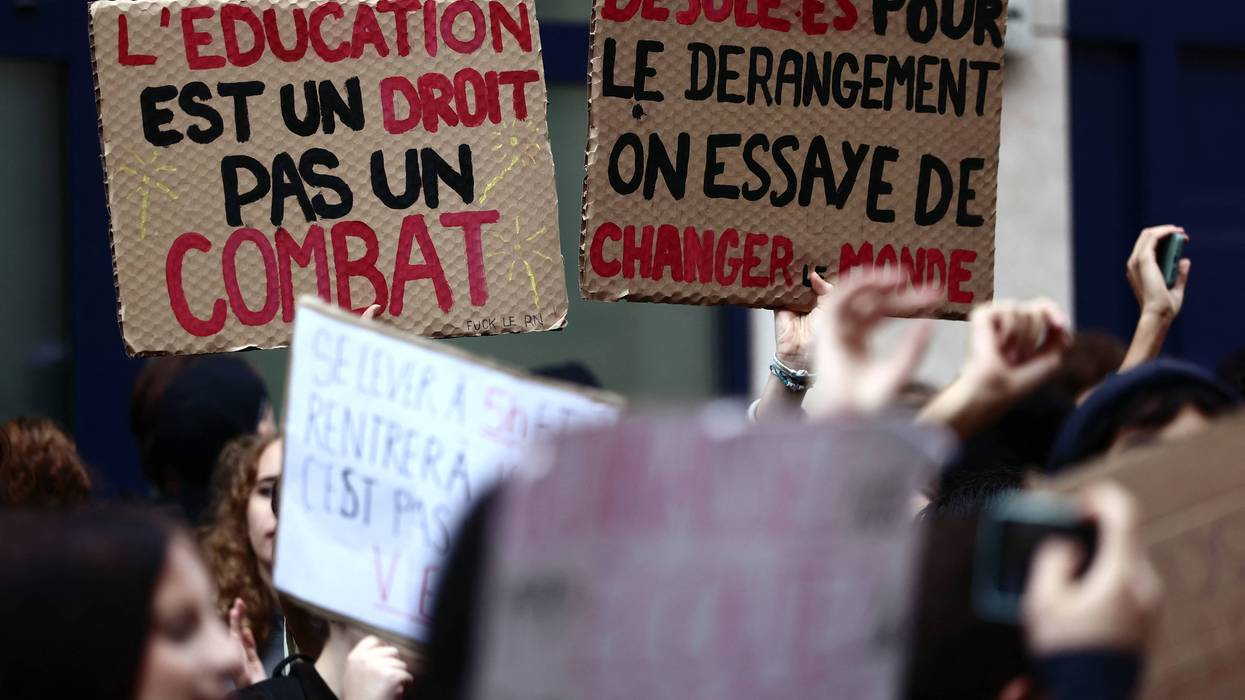
Some protests at schools have devolved into chaos in recent days, but students maintained they are peacefully demanding more support for schools.
Left-wing French political leader Jean-Luc Mélenchon said Friday that labor unions across the country were planning to strike next week alongside students who have been protesting poor school conditions and teacher shortages, as demonstrators reported unwarranted force by the police and the protests devolved into violence in parts of France.
The French justice minister said Friday that "an active and violent minority" of demonstrators has pushed widening protests against poor education funding into chaos, with fires being set at some schools, dozens of teachers an principals injured, and a police officer in northeastern France reportedly attacked by a mob.
Meanwhile, one student outside Lycée Voltaire in Paris held a sign that read, “School is a right, not a privilege," and a 17-year-old identified as Yves by The Guardian said he and his classmates were "totally pacifist" as they peacefully blocked the entrance to the school, joined by some of their teachers.
“The atmosphere on this barricade is generally very calm,” Yves said. “But there have been other people from outside school who have come past and tried to set fire to things, so we’ve tried to move the bins to stop that.”
The high school is one of many that students say have suffered from teacher shortages and neglect by the government, with students struggling to learn in classrooms packed with 40 children or more. Some protesters reported dilapidated school buildings in the European Union's second-largest economy, inequality in which a child's "social background" decides their success in school, excessively long school days that have done nothing to improve international rankings, and infrastructure that is ill-equipped for the soaring temperatures the climate emergency brought this summer.
“It was unbearable sitting exams in 35°C-40°C heat, even the teachers said those were impossible conditions," a 19-year-old student named Sofiane told The Guardian. Sofiane also expressed concerns that the government may end food assistance for low-income students.
On Thursday, the French government announced spending cuts in its 2027 budget.
“The education budget is being cut to shreds while so much extra funding is being put into the army,” a student named Sophia told The Guardian.
Justice Minister Gérald Darmanin told RTL Radio that officials are "not entirely sure" that protesters who have set fires to schools and perpetrated violence in the protests, which began last month in Paris before spreading across the country, "are even high school students themselves."
"We have gone from high school student demonstrations to a public order disturbance," said Darmanin.
Authorities said more than 560 schools were closed Friday due to the unrest, and Darmanin said police have made about 2,000 arrests of young people.
In Marseille, prosecutors said Thursday that two teachers had been assaulted by students who poured gasoline on them, but The Guardian reported Friday that the teachers had been inadvertently hit with the gasoline when a student was throwing it into a trash can.
At least two high schools in Paris were damaged by fire on Friday morning.
But Mélenchon, a presidential candidate and the leader of the left-wing party France Unbowed, suggested that demands for order from his opponent, the far-right National Rally leader Marine Le Pen, were disingenuous.
"Ms. Le Pen calls for the restoration of order," said Mélenchon. "What order is she talking about?! The daily disorder that our youth experience? Our adversaries live in a parallel reality."
Students on Friday accused police of using tear gas to disperse protests, and an investigation was being conducted into a police officer's alleged beating of a 14-year-old boy in Val d’Oise, outside Paris. The boy suffered severe injuries to his mouth and jaw. The officer also reportedly launched a rubber bullet, and the family's lawyer said the boy had thought he was "going to die."
"The government has opted for a crude and dangerous escalation," said Mélenchon on Friday.
On Thursday, one student in Saint-Denis held a sign that read, "Can we explain ourselves without being tear-gassed?"
Mélenchon said a strike in solidarity with the students by French labor unions was "taking shape for October 6, thanks to the decisive action of the trade union confederations."
"Everywhere, delegations of workers are forming to ensure the protection of young people," he said. "The government must stop playing at violence and festering. And completely revise its 'education' copy in the budget!"
"Join the October 6 demonstrations by wearing a white armband!" Mélenchon urged workers. "Step in to protect our youth!"
"The fact that they’re dropping this rule into place abruptly, without a comment period," said one advocate, "shows how little they care about the safety of our students.”
Education Secretary Linda McMahon's announcement that the Trump administration was formally rescinding Biden-era anti-discrimination protections was enough to spark outrage among women's rights and LGBTQ+ advocates on Monday—but one group pointed to officials' decision to make the change without gathering feedback from the public as even more reason for outcry.
"You get no say," said Human Rights Campaign (HRC) as the Education Department announced it was taking former President Joe Biden's Title IX rules off the books and returning to President Donald Trump's 2020 regulations, which set stricter standards for what constitutes sexual harassment and requires colleges to hold court-like hearings regarding complaints of sexual misconduct, complete with witnesses who can challenge the credibility of survivors or the accused.
HRC said the administration was displaying "contempt for the rule of law and democratic governance" as it "denied the public any opportunity to comment on the dangers of returning to these prior rules, and has announced that the changes will go into effect tomorrow."
"In its typical Orwellian fashion, the administration claims that 'engaging in public notice and comment would be contrary to public interest," said HRC.
Biden had amended Title IX regulations in 2024, clarifying protections against discrimination for students who are pregnant or are parents, transgender, or have other sex differences, and strengthening protections against sexual harassment and assault. The guidelines were subject to court challenges brought by Republican states.
The Trump administration has already been enforcing aspects of its own interpretation of Title IX, including by targeting schools that allow transgender students to play on women's and girls' sports teams. The Education Department said on social media Monday that in rescinding Biden's Title IX rules, "the Trump administration is formally putting into regulation what the law has said all along: Title IX’s protections are based on SEX, not 'gender identity.'"
Kelley Robinson, president of HRC, said Monday that Title IX "is, quite simply, about protecting students and ensuring that they are safe from abuse, harassment, and discrimination while they pursue their education. But Donald Trump and his cronies aren’t interested in any of that."
"Instead of enforcing protections for students, they’re rescinding them," said Robinson. "They don’t care if sexual harassment and assault go unaddressed. And they’re happy to strip funding away from school districts and states that are actually trying to keep students safe. We know who will be hurt: women, girls, and others who are vulnerable to sexual harassment, assault, and abuse—including LGBTQ+ students. The fact that they’re dropping this rule into place abruptly, without a comment period, denying families, educators, loved ones and the students themselves a say in how they should be treated, shows how little they care about the safety of our students.”
Democratic Gov. JB Pritzker of Illinois, a vocal critic of Trump and a potential 2028 presidential contender, said Monday that his state would continue working to ensure that all students of all gender identities are safe on campuses. He accused Trump of "once again attacking the civil rights protections that help make our country great."
At the National Women's Law Center, Shiwali Patel, the group's senior director of education justice, noted that the decision came as prosecutors reopened a high-profile sexual assault case at Cornell University, following public outrage.
“The Cornell University case is a devastating example of why robust federal Title IX enforcement matters,” said Patel. “Sexual harassment and assault continue to be pervasive in schools and, to the fullest extent possible, we should be working to enforce the laws that protect student survivors of sexual violence. Yet, Education Secretary Linda McMahon and the Trump administration have decided to ignore what survivors need, instead weaponizing Title IX to attack trans students."
“While the administration is unlawfully eroding protections for trans students under the guise of ‘protecting women and girls,’ they are systematically weakening the very laws that keep students safe and schools accountable," added Patel. "‘Protecting women and girls’ means not limiting Title IX protections based on students’ reproductive traits and anatomy and enforcing Title IX to make sure schools are inclusive spaces that provide equal educational opportunity for all students.”
At HRC, Robinson said the decision "drives home how essential it is that we take action at the polls this November to start bringing some accountability to an administration that has turned its back on the very students Title IX was written to protect.”
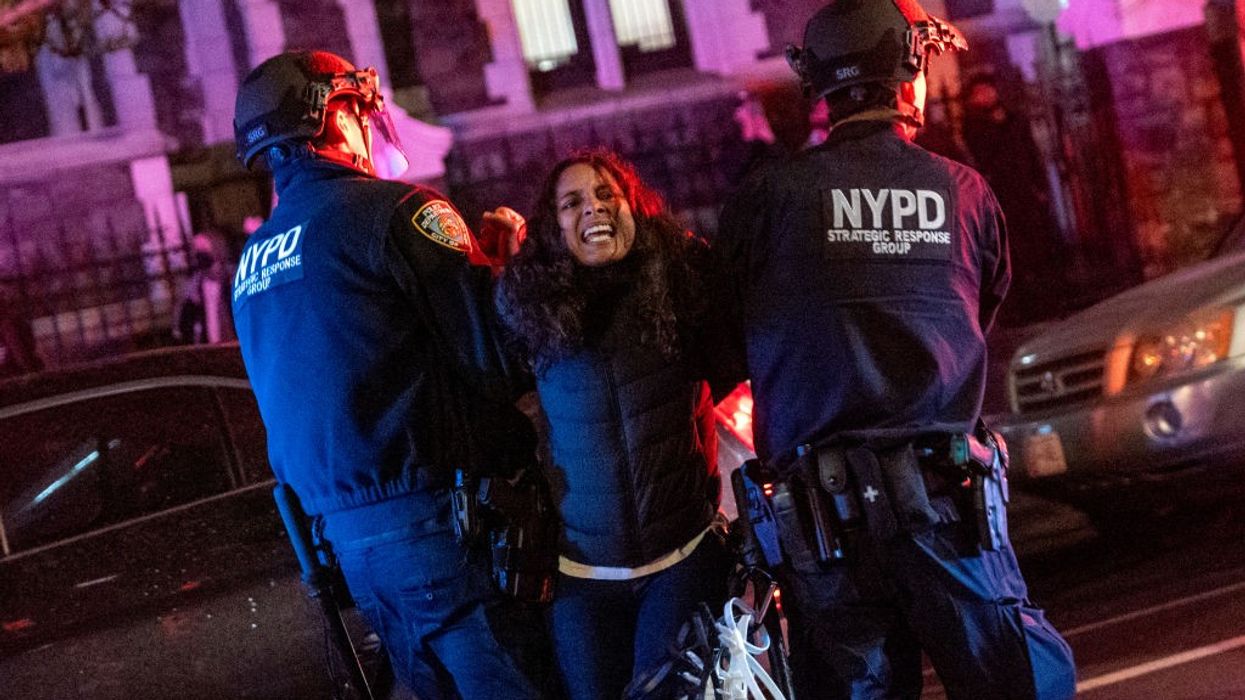
"The Trump administration’s targeting of students and faculty who oppose Israel’s ongoing genocide in Gaza is dangerously reminiscent of McCarthy-era censorship and a blatant violation of academic freedom."
While the traumatic experiences of foreign-born scholars such as Mahmoud Khalil and Rümeysa Öztürk have drawn international headlines, a report released Wednesday by a pair of leading rights groups highlights how their arrests by immigration agents were part of a wider assault "on free speech and association on college campuses, particularly against students, faculty, and staff protesting Israel's war on Gaza and the US government’s political, economic, and military support of the war."
Titled "Student Speech Under Attack: Suppression of Pro-Palestine Speech and Dissent on Campus," the new report from the ACLU and Amnesty International USA catalogs university and law enforcement responses to protests and encampments, schools' actions to restrict speech, the Trump administration's crackdowns on institutions and foreign scholars, and how all of that has had a chilling effect.
The report also features case studies on six schools—City College of New York, Columbia University, Tulane University, University of Michigan, University of Texas at Austin, and University of California, Los Angeles—and various targeted scholars, including Khalil and Öztürk as well as Yunseo Chung, Badar Khan Suri, Leqaa Kordia, and Mohsen Mahdawi.
Like Khalil, Mahdawi was a Columbia student and lawful permanent resident of the United States. At his citizenship interview last year, masked US Immigration and Customs Enforcement (ICE) agents arrested and detained him for his advocacy in support of Palestinian rights. The Trump administration's attempt to deport Mahdawi, who was raised in the Israeli-occupied West Bank, is ongoing.
"At the time of his arrest and detention, he was an undergraduate student at Columbia University majoring in philosophy and planning to start a master's degree program at Columbia's School of International and Public Affairs. Mahdawi said he dedicated himself 'to understanding how to achieve a lasting peace for Palestinians and Israelis, particularly through the study of conflict resolution,'" the report notes.
"As a student at Columbia, Mahdawi was an outspoken critic of Israel's military campaign in Gaza and an activist and organizer in student protests on Columbia's campus until March 2024, after which he took a step back and was not involved in organizing," the document details. "Mahdawi attended protests opposing military escalations in the region and gave speeches at several of these protests advocating for Palestinian human rights and a permanent ceasefire. Mahdawi appeared in numerous televised interviews and print news articles regarding the military campaign in Gaza and related protests."
While Mahdawi was targeted by the Trump administration, not Columbia, the publication points out that he "had contacted university administrators asking for help in finding safe housing, stating that he feared abduction by ICE agents," and, according to him, the school "did nothing in response to his request."
The report also notes Columbia's decadeslong reputation as "the activist Ivy," and how "student activism in support of Palestinian rights began in October 2023... sparking a multiyear, nationwide movement of campus anti-war demonstrations calling for academic institutions to divest from what organizers and Amnesty International characterize as Israeli apartheid."
The ACLU and Amnesty laid out how Columbia suspended student groups that held peaceful demonstrations, refused to divest from Israel, threatened to expel students who joined an encampment, and had New York Police Department officers forcibly remove protesters who occupied a campus building and dubbed it "Hind's Hall" for a Palestinian child killed by Israeli forces.
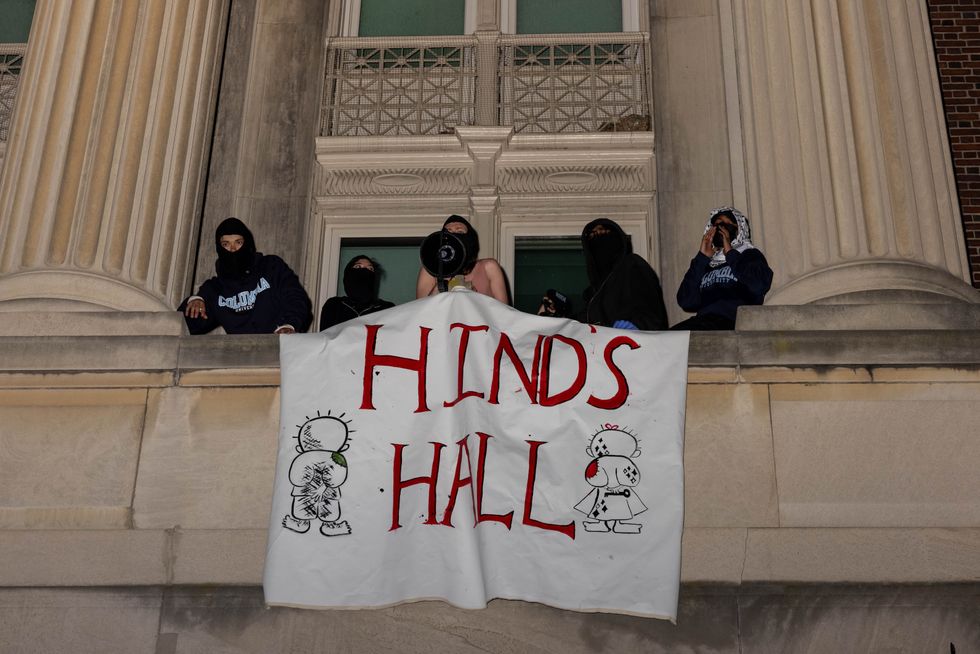 Columbia University student demonstrators unfurl a banner that reads "Hind's Hall" as they barricade themselves inside a campus building on April 30, 2024 in New York City. (Photo by Alex Kent/Getty Images)
Early last year, as Khalil was arrested outside his home and President Donald Trump threatened to pull $400 million in university funding, Columbia promised to the administration that it would add three dozen "special patrol officers" with arrest powers, and later announced that its University Judicial Board punished over 70 students.
However, as the report stresses, it's not just Columbia. After Israel began what many experts have called a genocidal assault on Gaza following the October 2023 Hamas-led attack, "students across more than 100 universities organized, calling for educational institutions to end their financial ties to corporations linked to the war," and their protests and encampments were often met with "university leaders' swift and punitive responses."
"Universities and colleges faced pressure from wealthy donors, trustees, and figures outside of university or college leadership, including members of Congress, to suppress pro-Palestinian protests and dismantle encampments," the publication acknowledges. "By restricting or banning protests outright, involving campus police and external law enforcement in the surveillance, intimidation, and repression of participants, and pursuing students with legal and administrative consequences, university and college administrators escalated tensions."
"During the disbandment of encampments, law enforcement forcefully pushed and arrested demonstrators, leading to concussions, cuts dislocations, and other severe injuries," the report continues. "In many instances, demonstrators posed no threat, did not resist arrest, and were sometimes attempting to deescalate or document the protest."
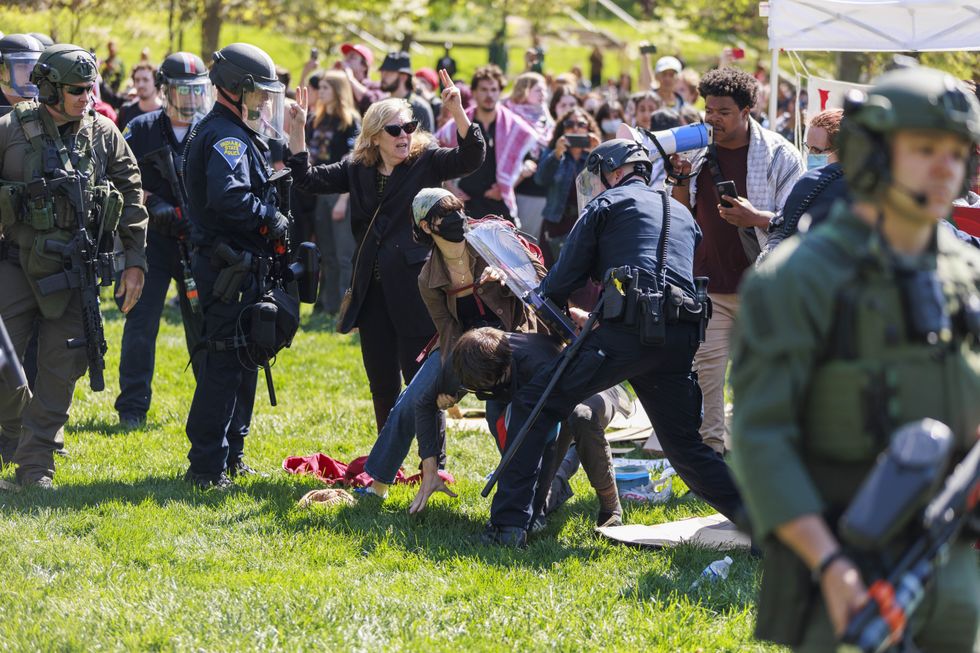 Police crack down on a pro-Palestinian protest at Indiana University in Bloomington on April 25, 2024. (Photo by Jeremy Hogan/SOPA Images/LightRocket via Getty Images)
Justin Mazzola, Amnesty's deputy director of research, said in a statement that "universities and colleges should prepare students for open discourse in a pluralistic society. Instead, campus leadership has suppressed free speech and peaceful protest while enabling the Trump administration to advance its anti-rights agenda and seek ideological control over higher education."
Mazzola also called out the Trump administration—which, as the report lays out, has issued related executive orders, conducted campus visits, abused Title VI investigations, conditioned funding on acquiescence, revoked student visas, targeted scholars for deportation for protected speech, and attempted to evade court reviews of deportations.
"The Trump administration's targeting of students and faculty who oppose Israel's ongoing genocide in Gaza is dangerously reminiscent of McCarthy-era censorship and a blatant violation of academic freedom," he asserted. "The Trump administration must stop stifling political expression on campus and end its relentless push for ideological conformity in higher education. Students' rights must be respected, protected, and fulfilled."
The report features recommendations for schools, campus and local law enforcement, the Trump administration, and Congress. It also details rights on campus, reminding students and educators that they "have the right to peacefully protest, and the government has a duty to respect, protect, and facilitate that right—not suppress it."
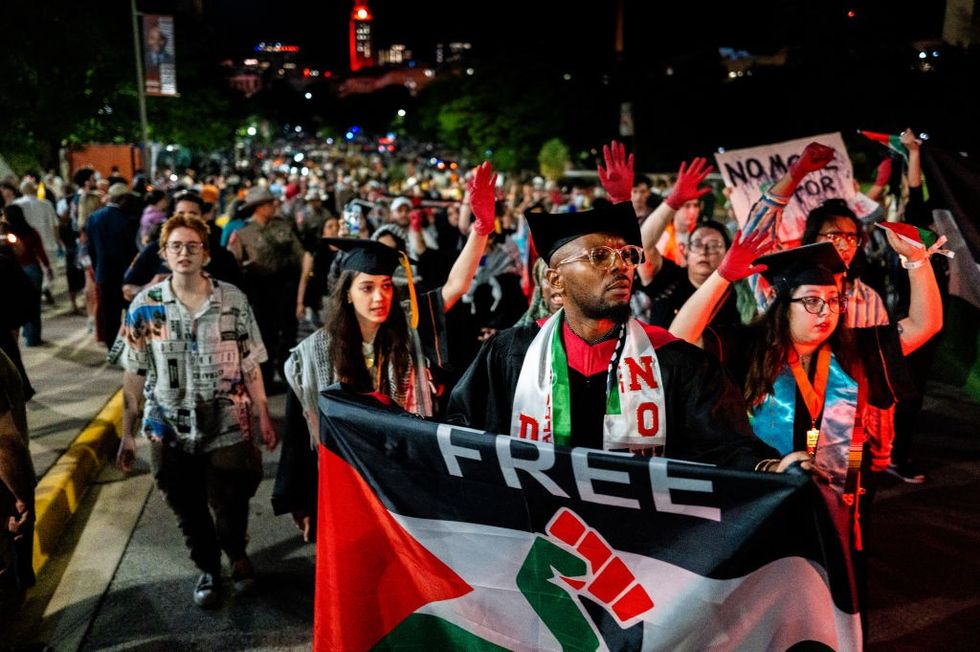 University of Texas at Austin graduate students, faculty, and demonstrators protest Israel's war on the Gaza Strip after walking out of commencement on May 11, 2024. (Photo by Brandon Bell/Getty Images)
As for US colleges and universities, they "must take all possible measures to ensure that their campuses are spaces where students may exercise their rights to freedom of speech and expression without fear of unwarranted punishment or retaliation regardless of viewpoint," said Jennifer Turner, principal researcher in the ACLU's Human Rights Program.
"Schools should resist the pressures placed on them to silence and punish students or faculty who engage in protest or advocacy for Palestinian rights," Turner added. "Instead, they should stand up to the federal government's intimidation tactics and defend the university's core mission of fostering free-flowing inquiry and debate."
The groups' report was released after Khalil and other Palestine defenders sued Columbia in federal court last week over what Khalil called "gross and systemic discrimination against Palestinian students." He vowed that "next, I will turn to the hateful individuals at Columbia who were also responsible for what we endured."
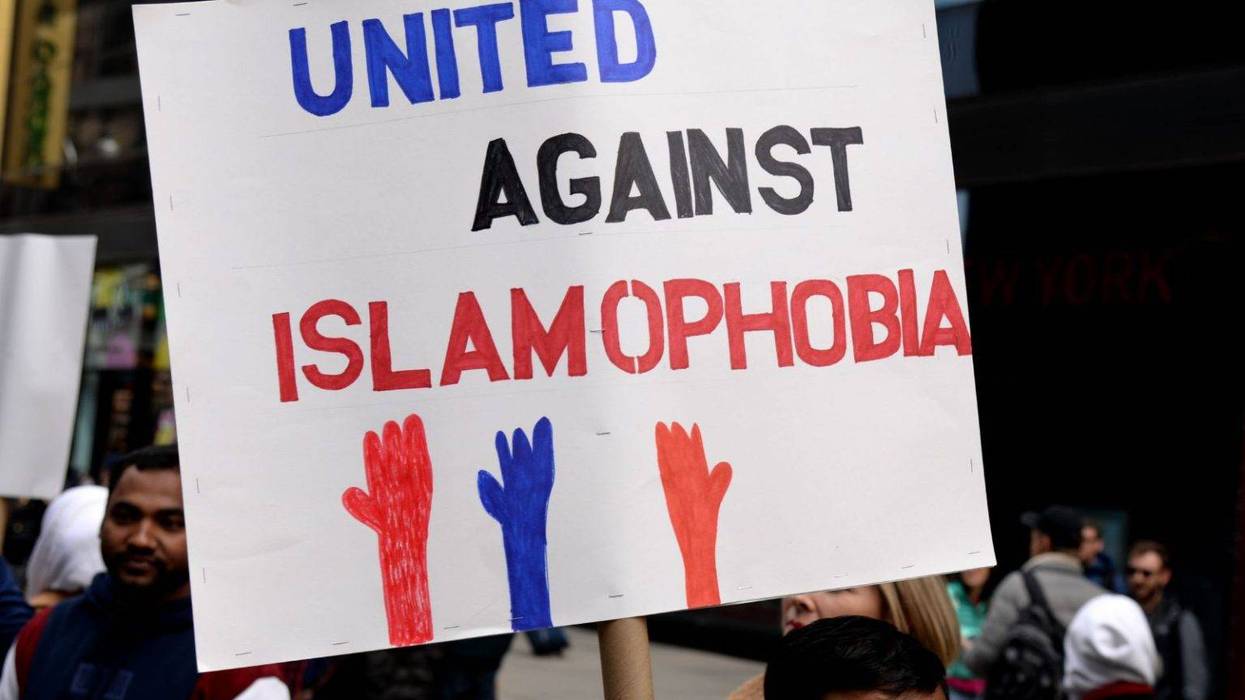
Every child should learn about the devastating consequences of hatred, extremism, and violence, but no child should be made to feel responsible for those events simply because they share a faith with the perpetrators.
Muslim children were not born carrying the weight of 9/11. Society placed it on their shoulders. It is time for us to take it off.
As a child, I was called a "camel queen" by my teachers. Years later, while I was pregnant, a college professor looked at my stomach and joked in front of the whole class that I might have a "bomb" under there.
He was talking about my unborn child.
What has stayed with me all these years is not only the cruelty of the remark. It was where it happened. The comment came from a professor, in a classroom, an environment that should have been a place of learning, respect, and safety.
I hear from young people who become anxious when classroom discussions turn to terrorism or September 11. Not because they do not want to learn history, but because they worry the conversation will somehow become about them.
In that moment, I was not seen as a student, a mother-to-be, or a human being. I was seen through the lens of a vicious stereotype.
That moment taught me something I have never forgotten: Anti-Muslim prejudice is not always loud or obvious. Sometimes it appears as a joke. Sometimes it appears as an assumption. Sometimes it appears in the expectation that Muslims must constantly prove that they are not what others fear they might be.
My experience is not unique. In May, a 12-year-old Muslim student in Connecticut was reportedly subjected to repeated harassment and called anti-Muslim names. In a sign of the times, the Danbury Police Department searched the family’s home for weapons after allegations were made against the student.
In a 2025 survey of Muslims, the Institute for Social Policy and Understanding (ISPU), found, “Forty-seven percent of Muslim families with school-aged children report having a child who faced religious-based bullying in the past year, compared with 23% among the general public.”
Like many Muslim children, I learned early what it felt like to be viewed as different, foreign, or less worthy. Those experiences leave scars that are difficult to explain to people who have never lived them.
Today, I see those same burdens carried by Muslim students.
I hear from young people who become anxious when classroom discussions turn to terrorism or September 11. Not because they do not want to learn history, but because they worry the conversation will somehow become about them.
They wonder whether classmates will look at them and make jokes.
They wonder whether they will be expected to condemn atrocities they had nothing to do with.
No child should have to carry that burden.
This week, the organization I work for issued its Back to School Resource Guide for 2026-2027, which I authored. The guide gives teachers tips on how to discuss challenging topics with students, including providing comprehensive lesson plans that address the 9/11 attacks, specifically the victims and families impacted; the aftermath of the attacks, such as the war in Afghanistan; changes in national security; and the rise of hate crimes and discrimination against American Muslim communities.
The purpose of educational resources that address bias and inclusion is not to rewrite history or erase the tragedy of September 11. Muslims, like millions of other Americans, mourned the victims of al Qaeda’s vicious attacks. We condemned the perpetrators then, and we continue to condemn them today.
The purpose is much simpler: to help ensure that students can learn about difficult moments in history without becoming targets themselves.
Every child should be able to learn about 9/11. Every child should learn about the devastating consequences of hatred, extremism, and violence. But no child should be made to feel responsible for those events simply because they share a faith with the people who hijacked it.
I am no longer the little girl being mocked on the playground by teachers. I am no longer the college student sitting in a classroom while a professor jokes about my unborn child. But children today face many of the same assumptions.
Our children deserve better than that. They deserve classrooms where they are seen as students, not suspects. They deserve the freedom to learn about history without being associated with its worst actors. And they deserve a future in which their identity is not treated as a source of suspicion.
Most of all, they deserve to be children, free from the burden of defending themselves against crimes they did not commit.

Teachers, said one union leader, "forged a hard-fought, ironclad privacy agreement... because no one else, including the federal government, has stepped up to do the real work."
The advocacy group Fairplay on Wednesday applauded education union leaders for spearheading efforts to ensure students and teachers in the US are protected by safety and privacy standards as artificial intelligence companies push for their products to be used in schools.
But the organization's executive director, Josh Golin, emphasized that the American Federation of Teachers (AFT) and United Federation of Teachers (UFT) "should never have been in this position in the first place," and Congress and states should have already passed legislation to create "industry-wide standards that are enforceable through attorneys general and a private right of action."
"With our elected leaders failing to live up to their responsibilities, we are left with an agreement that places an unfair burden on schools and doesn't do enough to keep kids safe," said Golin.
The deal reached Wednesday was between AFT, UFT, and Microsoft, so it will pertain only to the Silicon Valley giant's AI products.
It includes 10 "legally enforceable protections," reported Politico, including a commitment from Microsoft not to use student or teacher data to train AI models, except in narrow "safety and security" circumstances.
Other requirements of the deal include:
AFT said the "first-of-its-kind" agreement came after months of painstaking negotiations "in the absence of any meaningful federal and state rules governing artificial intelligence in schools."
The deal was announced on the same day that Jacob Coxon, a researcher at AI firm Anthropic, resigned in protest of an industry that he said is pushing to build "superhuman systems" without guardrails.
He told The Wall Street Journal he was "worried such systems could spiral out of control and destroy humanity.”
Coxon's warning intensified calls for Congress to pass legislation to rein in AI, such as Sen. Bernie Sanders' (I-Vt.) proposed moratorium on AI data centers and his bill, introduced with Rep. Greg Casar (D-Texas), to ban artificial superintelligence.
Bipartisan legislation has also failed to pass.
More than 80% of Americans believe the government is not doing enough to regulate AI, according to one recent NBC poll, and President Donald Trump has joined the industry in pushing to block states from passing their own regulations.
Randi Weingarten, president of AFT, said the unions had "forged a hard-fought, ironclad privacy agreement with real teeth that protects students and families, because no one else, including the federal government, has stepped up to do the real work."
“We can get angrier and angrier, or we can act decisively; anything less than legally enforceable provisions is simply a wish list," said Weingarten.
Golin emphasized that the deal "elides the most important question of all: Should student-facing AI products be used in schools at all?"
"There is no evidence that AI products are effective teaching tools for children and growing evidence that they undermine learning and create a number of risks for kids," said Golin. "That’s why Fairplay and its network of experts are calling on schools to implement a five-year pause on all [generative] AI products until it can be determined whether those products are safe for young people and beneficial to their education."
“We hope this agreement does not fool schools into thinking that GenAI products are safe and effective for use with schoolchildren or hoodwink policymakers into thinking legislation restricting AI use in schools is not needed," he added. "It also places the burden on schools to execute and enforce the contract, which they are not in a position to do, and which should be the job of regulators."
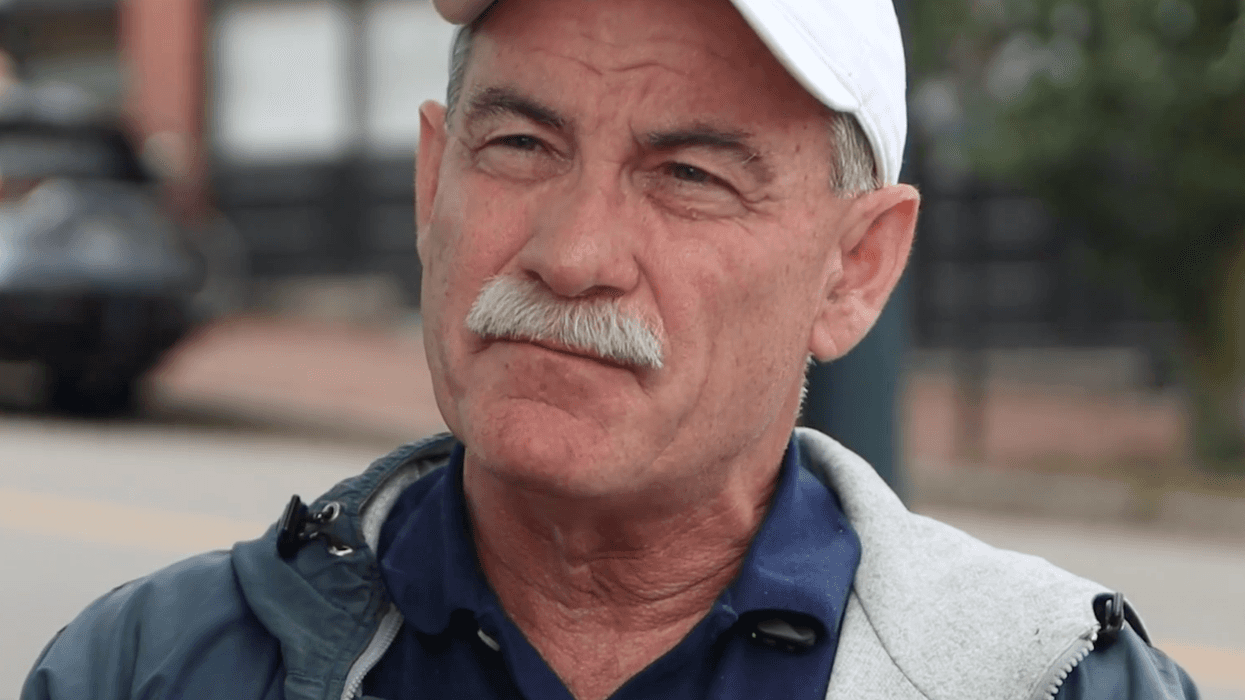
"Under the anti-choice positions Bobby holds today, even in cases of rape, I would not have been able to make a decision about my own body should that have become necessary," said Anita Charles, a sexual assault survivor.
Just two weeks after Maine gubernatorial candidate Bobby Charles drew national headlines with his comments about sending immigration agents to polling stations, the Republican's sister publicly explained why she won't be voting for him in November, calling out his campaign rhetoric and platform as well as his relationship with an infamous pedophile.
The campaign website for Bobby Charles, a former Washington, DC lobbyist, highlights that their mother was a public school teacher. In a Wednesday opinion piece for The Portland Press Herald, Anita Charles, a longtime educator herself, wrote that their mother taught them both "that how we treat other people matters."
"She taught us to be compassionate, not to name-call or judge people by their race, gender, religion, country of origin, or who they love. She taught us that differences do not diminish us, and that we have a responsibility to treat others with dignity. Those lessons shaped my entire life, as well as my career," according to Anita Charles. "They are also the reason I cannot support my brother's campaign for governor."
Anita Charles acknowledged that "Bobby and I have never agreed politically. For most of our adult lives, we have managed those differences with civility. But as divisive rhetoric has become central to his campaign, I can no longer remain silent. It shows up in how he talks about our schools, our vulnerable communities, and about women's healthcare."
She noted that "there is one issue I cannot discuss without speaking from the deepest part of my own experience: sexual assault."
As she detailed:
Bobby was a close friend and colleague of former House Speaker Dennis Hastert from 1995 to 1999. He praised Hastert and benefited from their relationship as he built his career in Washington. Hastert later admitted to sexually abusing children and was convicted of illegally paying hush money to conceal that abuse. Bobby has never publicly renounced that association.
That is difficult for me to understand because my own childhood was marked by sexual violence. Someone who was part of our lives for more than a decade was a pedophile who repeatedly assaulted me. My brother has known what happened to me for 50 years.
Under the anti-choice positions Bobby holds today, even in cases of rape, I would not have been able to make a decision about my own body should that have become necessary. This isn't a debate I'm observing from a distance; it's about my childhood. And it's about my ongoing health and well-being as a woman.
As the Bangor Daily News noted Wednesday, Bobby Charles' current "campaign website doesn't list any proposals about abortion," but he has "called abortion 'abhorrent' and supported the 2022 US Supreme Court decision overturning Roe v. Wade."
Arguing that "Maine deserves leadership rooted in empathy, dignity, intellectual honesty, and respect for every person who calls this state home," Bobby Charles' sister concluded that she will be voting for Democrat Hannah Pingree for governor.
The op-ed quickly circulated on social media after its publication. Local writer Anthony Emerson said that an "atom bomb dropped in the Maine governor’s race this morning."
Anita Charles' article came as her brother continues to face criticism for boasting about his ties to President Donald Trump's border czar, Tom Homan, at a Maine Young Republicans event and claiming that he would ask the federal offical to send US Immigration and Customs Enforcement (ICE) and US Marshals to the state's voting booths.
Maine AFL-CIO president Cynthia Phinney said in a Wednesday statement that "in Maine and the United States, voters elect our leaders in free and fair elections. Calling for masked federal agents to be deployed around polling locations is a cynical attempt to intimidate voters."
"No one should be afraid to show up and exercise their constitutional right to vote, but that's exactly what this is trying to do," Phinney continued. "Our union movement rejects this desperate political tactic, and we know our democracy is strongest when all of us show up to exercise our democratic rights in peaceful elections free from fear or intimidation."
Trump's weaponization of ICE has been a key issue in Maine politics this cycle—including the contest between Republican US Sen. Susan Collins and Democratic challenger Troy Jackson—particularly since an agent fatally shot Biddeford resident Johan Sebastián Durán Guerrero in July.
"Every Mainer deserves to feel safe in their own neighborhood," Pingree said last month. "As governor, I'll demand real, independent oversight, not empty promises. I'll keep fighting for accountability. ICE out of Maine."
The US National Domestic Violence Hotline can be reached at 1-800-799-SAFE (7233), by texting "START" to 88788, or through chat at thehotline.org. It offers 24/7, free, and confidential support. DomesticShelters.org has a list of global and national resources.
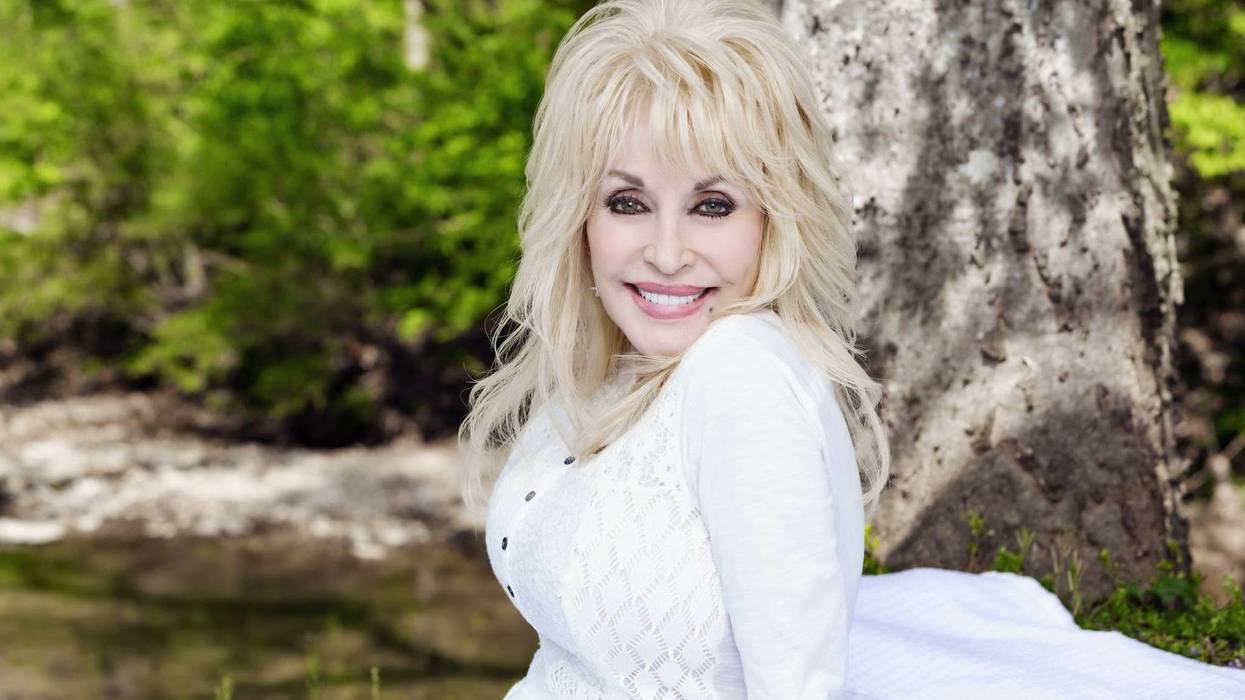
The best way to honor Dolly Parton’s legacy is to counter Trump’s cruel inhumanity with generosity, kindness, compassion, respect, and unity.
I’ve been a fan of Dolly Parton since her terrific 1980 movie (and hit song) 9-5, on the struggle of working women organizing for dignity and respect—and against sexual harassment. Along with millions of others, I’m saddened by the Queen of Country’s passing.
But I’m miffed about people who opposed what Dolly stood for now trying to claim her legacy as their own.
For instance, President Donald Trump has claimed that Parton was a supporter of his, even sharing a fake AI photo of the two of them together. Dolly’s sister Stella set the record straight, calling Trump’s behavior “deranged, ugly, and nasty.”
In life Dolly Parton was the opposite of Donald Trump. She was compassionate, humble, generous, humorous (including poking fun at herself), and accepting of people from all walks of life.
She never forgot where she came from and acted on her religious beliefs of “Love your Neighbor” and “Do unto others as you would have them do unto you.”
Dolly Parton turned down the presidential medal of freedom three times, saying she didn’t deserve it. Trump brags of his own self-importance, flies giant self-portraits from federal buildings, places his picture in passports, demands the Nobel peace prize, renamed the Kennedy Center after himself, and declares he is a genius.
As a tribute to her hardworking sharecropping father who never had the opportunity to learn to read, Dolly Parton created and funded the Imagination Library, providing hundreds of millions of books to young children—my grandchildren included. President Trump, who never lacked financial opportunity, is now pushing to slash funding for education, libraries, and literacy.
Dolly Parton embraced Diversity, Equity, and Inclusion (DEI.) She was supportive of the LGBTQ community, expressed support for Black Lives Matter, and uplifted those with disabilities. Trump has attacked DEI as “woke” and un-American, ridiculed the trans community, mocked people with disabilities, and labeled Black Lives Matter protesters as domestic terrorists.
Dolly Parton appeared with PBS’s Sesame Street characters to promote values of inclusivity and equality among children. Trump defunded PBS and Sesame Street, declaring them “radical left monsters.”
Dolly Parton celebrated women workers and was a proud union member for over 60 years. Trump crushed the union rights of over 1 million federal workers, paid millions in a lawsuit for sexual abuse, and carries on with the massive cover-up of Jeffrey Epstein’s sex trafficking.
Dolly Parton donated millions to medical research, including to children’s hospitals, cancer research, and the Covud-19 vaccine. Trump threatens the existence of rural hospitals with cuts to Medicaid, slashed federal funding for medical research, and eliminated the agency overseeing patient safety.
Dolly Parton donated substantial relief funds to those in her Tennessee Appalachian region whose property and lives were shattered by natural disasters. The Trump administration has undermined, delayed, and politicized disaster relief.
Dolly Parton had empathy toward the homeless and was known to give the “shawl off her back” to those in need. Donald Trump criminalizes the homeless and sent thousands of National Guard troops to rid DC of its homeless population.
Dolly Parton empathized with the plight of migrant workers. She loved John Steinbeck’s famous book The Grapes of Wrath and covered Woody Guthrie’s song “Deportee.” Trump demonizes hardworking immigrants as rapists and criminals and has unleashed an army of violent masked Immigration and Customs Enforcement agents to terrorize our neighbors and communities.
I don’t have to agree with everything Dolly Parton did or didn’t do over the decades to recognize that she was a generous soul. She never forgot where she came from and acted on her religious beliefs of “Love your Neighbor” and “Do unto others as you would have them do unto you.” Donald Trump hoards his riches and uses the power of the presidency to enrich himself, his family, and oligarch cronies to the tune of billions.
The best way to honor Dolly Parton’s legacy is to counter Trump’s cruel inhumanity with generosity, kindness, compassion, respect, and unity. And while we are celebrating her life, sit back with family and friends (as I have done) and watch, or rewatch, 9-5. You will laugh, cry, and applaud!
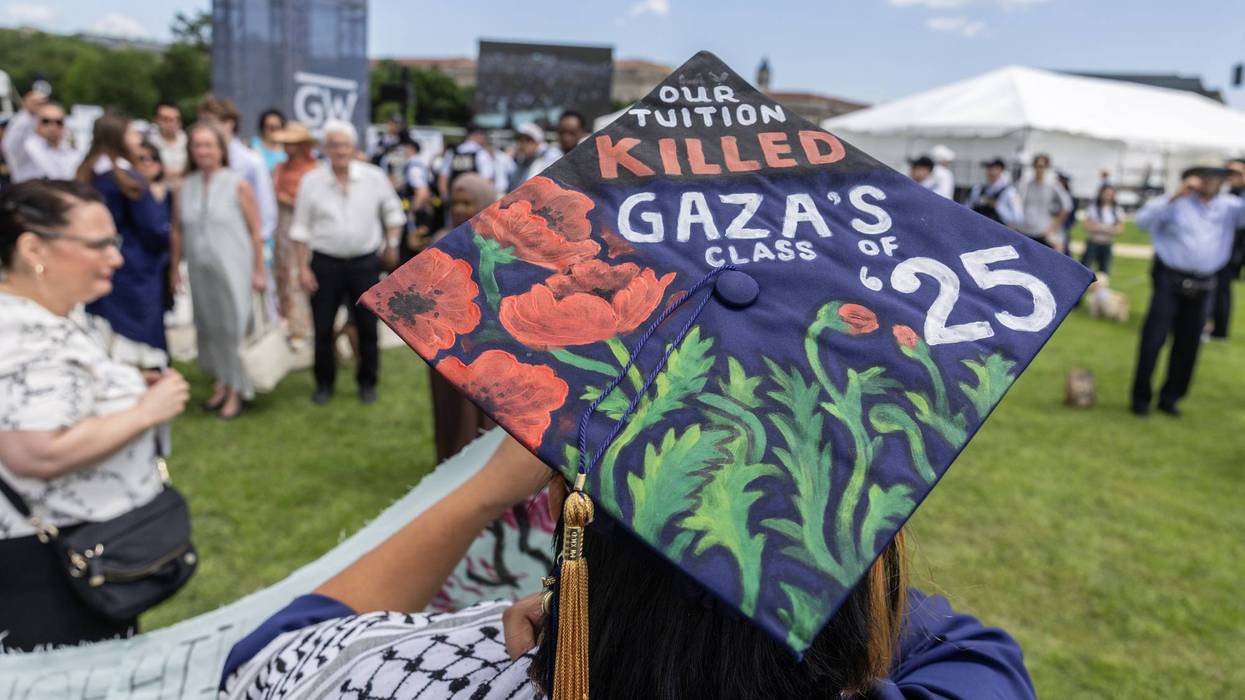
"The goal here is to basically say every university not only cannot refuse cooperation with Israel but must actively seek every opportunity to cooperate with Israel,” said one analyst.
The US House of Representatives on Thursday passed what critics say could be one of the most severe infringements on free expression in recent memory—a bill that could effectively require colleges and universities to do business with Israel or risk losing federal funds.
As Israel's genocide in Gaza and accelerating ethnic cleansing of Palestinians in the West Bank continue to fuel protests, the bill is the latest piece of legislation aimed at punishing the Boycott, Divestment, and Sanctions (BDS) movement, which uses nonviolent economic tactics to pressure Israel to end its illegal occupation of Palestinian territory and human rights abuses.
HR 4795, introduced in July 2025 by Reps. Virginia Foxx (R-NC) and Josh Gottheimer (D-NJ), is known as the Protect Economic and Academic Freedom Act. But Lara Friedman, the president of the Foundation for Middle East Peace, described it as an "Orwellian" turn of phrase for what the legislation actually does.
"The goal here is to basically say every university not only cannot refuse cooperation with Israel but must actively seek every opportunity to cooperate with Israel,” she told Responsible Statecraft. “And if they're not doing that, they're pro-BDS and anti-Israel.”
As the outlet described:
[The bill] would bar colleges that receive federal funds from engaging in what it defines as a “nonexpressive commercial boycott” of Israel, including “refusals to deal” or terminating business relationships in order to limit commercial ties without a “valid business reason.” The law would require these institutions to submit annual certification that they were giving students and faculty access to academic programs in Israel on the same terms as programs in other countries.
In a brief opposing the bill, Friedman argued that it was not just forcing universities to do business with Israel, but with its settlements in the West Bank, which are considered illegal under international law. With backing from the Israeli state, violence by Israeli settlers against Palestinians in the West Bank has exploded to never-before-seen highs this year, according to the United Nations.
"This legislation," Friedman wrote, "sets up a situation in which the alleged absence of engagement with any Israeli partner/party, including in settlements, will become the basis for an accusation of boycott, putting universities in the position where, if they universities want to avoid being accused of boycotting Israel/settlements, they will need to adopt an affirmative policy of prioritizing maximal engagement/partnership with Israeli entities (including in settlements)."
The bill passed by a 237-169 vote, with support from all but two Republicans—Reps. Thomas Massie (R-Ky.) and Warren Davidson (R-Ohio). And although the vast majority of Democratic voters now hold negative views of Israel, 33 Democrats also voted in favor of the bill.
The legislation now heads to the narrowly Republican-controlled US Senate, where it would need 60 votes to advance.
Introducing the bill last year, Gottheimer said it was necessary because BDS was an "antisemitic, hate-fueled... movement" that "seeks to destroy Israel—and has no place on our college campuses."
But even critics of the BDS movement, like Rep. Jerry Nadler (D-NY), chafed at its potential chilling effect on protected speech.
"No matter how strongly I oppose the BDS movement, I also believe that those who engage in BDS have a First Amendment right to do so," Nadler said before voting against the bill. "The First Amendment right to free speech does not apply only to agreeable speech."
He cited a letter sent to Congress by the ACLU opposing the bill's contention that schools should need a "valid business reason" to cut ties with Israel.
"Many of those engaged in boycotts of Israel do so not for commercial reasons, but because they wish to express their political opposition to the policies of the Israeli government—matters of overwhelming public concern and debate in the present moment. HR 4795’s labeling such boycotts as ‘non-expressive’ does nothing to change this reality," the letter said.
The bill comes as members of Congress, especially Democrats, are under increasing scrutiny for their support from pro-Israel lobbying groups like the American Israel Public Affairs Committee (AIPAC), whose political spending arm has poured more than $104 million into supporting its preferred candidates this election cycle.
Meanwhile, President Donald Trump has spent more than six months embroiled in a costly war with Iran that Israeli Prime Minister Benjamin Netanyahu played a key role in persuading him to launch.
"We just got dragged into a war by Benjamin Netanyahu. He's bragging about it," Rep. Mark Pocan (D-Wis.) told Julian Andreone of Drop Site News. "That's about as embarrassing as you can get... So let's leave universities alone."
Aaron Regunberg, a contributing editor at The New Republic, described it as outrageous that Democrats who supported the bill were "actively joining the far-right's war on higher education in order to shield a genocidal ethnostate that most Americans increasingly want nothing to do with."
Dylan Williams, the vice president for government affairs at the Center for International Policy, said the bill was "another effort to single out Israel for special treatment and erode Americans’ rights on its behalf."
"Will it be your child who can’t afford to go to college after 33 Democrats voted with Republicans to help Trump defund US universities? Because it certainly won’t be any of theirs," he said. "Shame on them for joining the attack on our schools and constitutional rights on behalf of Israel."
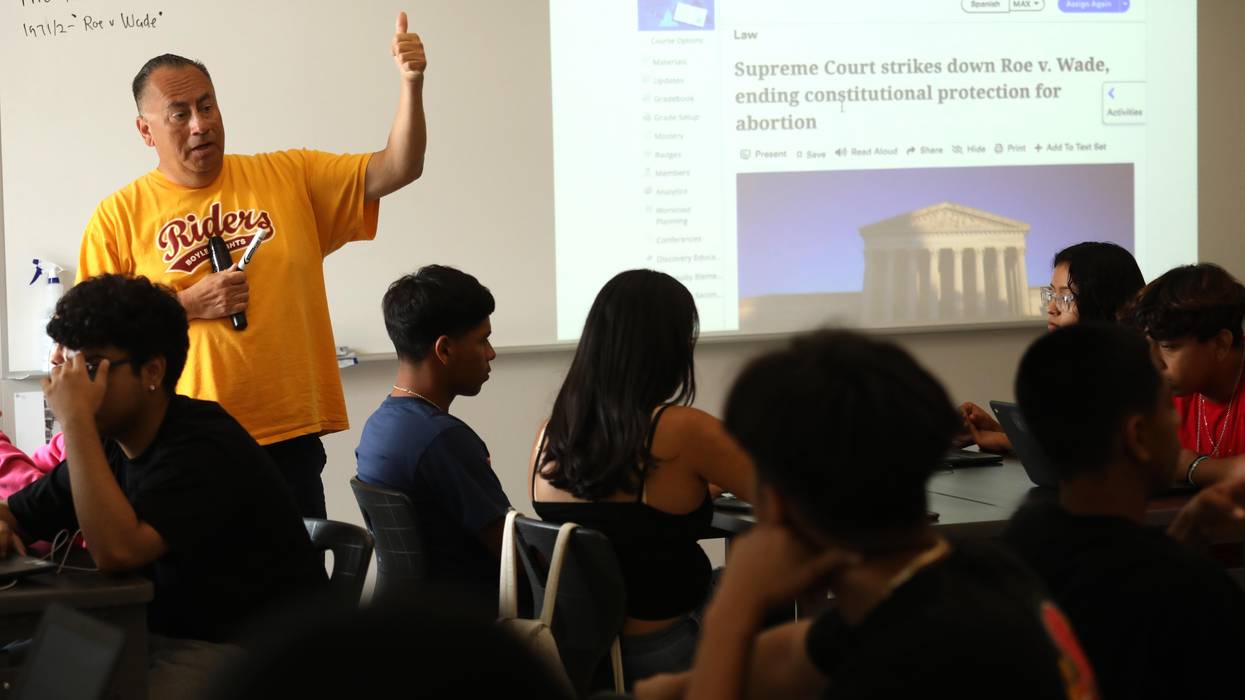
"They are battling education funding cuts, out-of-control Immigration and Customs Enforcement agents, limitations on what they can say, much less teach, and an affordability crisis," said one union leader.
As the academic year kicks off, survey results released Wednesday by the second-largest teachers union in the United States show how educators are struggling because of underinvestment in schools and high prices under a Republican-controlled White House and Congress.
In the lead-up to classes resuming, Grow Progress last month surveyed 2,112 American Federation of Teachers (AFT) members who teach kindergarten through 12th grade about spending, stress, President Donald Trump's policies, and more.
The pollsters found that a majority of respondents anticipate spending at least $100 to $600 on supplies for their classrooms without being reimbursed. Over a quarter said that school funding issues shift costs to teachers, and supply prices keep rising.
While 61% said they are buying basic supplies, that's not all that teachers are shopping for this year. Nearly a third are spending on food, hygiene, and student care items, and around a quarter are purchasing specialized tools and accessibility supports as well as items for classroom setup, organization, and decor. Roughly a fifth are buying books and rewards for students.
Half of the teachers surveyed said they anticipate needing to buy food for their students at some point during this school year.
Over three-quarters of them reported seeing negative impacts of the Trump administration's policies in their schools and communities, with 61% selecting "very negative." They pointed to funding cuts and privatization of schooling, immigration enforcement that "traumatizes students and families," rising costs, vulnerable students losing support and protection, political pressure that restricts teaching and inclusion, and issues with bigotry and hostility.
Gasoline prices have stayed at record highs lately thanks to Trump's illegal war on Iran, which has responded by restricting traffic through the Strait of Hormuz, a key trade route. Just 15% of teachers said their commute will cost about the same this year, compared with 36% who expect it to be "a little more" and 47% worried it will be "much more."
A plurality—48%—blamed Trump and Republicans specifically for "the rising costs of groceries, gas, and other goods," while 28% pointed to government policies and leadership, 18% said tariffs and global instability, and 11% cited corporate greed and profiteering.
Prices for everything are climbing while the national debt races past $40 trillion. The bottom line? The current economy is not working for hardworking Americans. www.nytimes.com/2026/08/29/u...
[image or embed]
— AFT (@aft.org) September 2, 2026 at 9:45 AM
Asked to rank their stress level on a 1-10 scale, with 10 being extremely stressed, 62% selected somewhere in the 7-10 range.
Almost a third of teachers said they were somewhat or very likely to leave the profession in the next year. While over half of all respondents said they can't afford to lose their salary, pension, and benefits, and a quarter pointed to their love for teaching and students, nearly a fifth said the stress and workload make the job unsustainable.
"Teachers are at a breaking point," said AFT president Randi Weingarten said in a statement. "Many work more than one job to make ends meet, and they still dig into their pockets each year for basic classroom supplies, from books to art materials and even food for their students."
"They are battling education funding cuts, out-of-control Immigration and Customs Enforcement agents, limitations on what they can say, much less teach, and an affordability crisis that's making it even harder for working families to get by, let alone get ahead," she emphasized. "No wonder they're stressed and talking about leaving the profession. All of this is taking its toll."
The survey results followed a report released late last month by the Center for Economic and Policy Research and the Economic Policy Institute that suggests leaving the field could lead to a pay boost. Sylvia Allegretto, a senior economist at CEPR and research associate at EPI, found that "in 2025, the teacher pay penalty stood at an estimated 25.2%—meaning teachers earned about a quarter less than comparable college graduates in other professions."
"Inflation-adjusted weekly wages for public school teachers fell 6.2% over the last three decades, while wages for other college graduates rose 28.8% over the same period," according to the report. "Teachers typically receive better benefits packages than other professionals, but after accounting for the difference in benefits, teachers' total compensation penalty was 14.5% in 2025."
Allegretto said in a statement that "the decades-long teacher pay penalty has taken a heavy toll on public education. Yet, policymakers have failed to make the needed investments to reverse course. That failure is especially troubling in a country as wealthy as the United States, with more than enough resources for its public schools to be the envy of the world."
It's not just teachers who are contending with soaring costs as school resumes; parents and students are also facing high prices for academic supplies and other essentials, including food, fuel, healthcare, and housing, due to the Iran War, Trump's tariffs, and GOP cuts to key programs.
With the midterm elections just two months away, Senate Democrats on Wednesday released a roundup of recent reporting on how families are struggling with back-to-school season, and said that "as Trump continues to claim affordability is a 'hoax' and a 'con job,' Americans are feeling the strain of Trump's policies on their pocketbooks."
"Headlines from across the country this summer lay bare Trump's cost-of-living crisis as families get ready to send their kids back to school," Senate Democrats stressed. "Parents are worried about the cost of school supplies and their kids' lunches, gas prices are at an all-time high for August, and families' vacations had to be cut short as rising inflation and the cost of airfare hit wallets."
"Trump's attempts to pass the buck belie Americans' reality: His illegal war in Iran, his tariffs, and the rest of Republicans' failed economic policies have made life unaffordable for families nationwide," they added. "Because of President Trump and Republicans' broken promises, working families across the country are now paying more but getting less—and they're fed up."