

SUBSCRIBE TO OUR FREE NEWSLETTER
Daily news & progressive opinion—funded by the people, not the corporations—delivered straight to your inbox.
5
#000000
#FFFFFF
To donate by check, phone, or other method, see our More Ways to Give page.
Daily news & progressive opinion—funded by the people, not the corporations—delivered straight to your inbox.
"While claiming to protect all Americans, the administration is rolling back systems that communities have long turned to for relief.”
Eighteen months into President Donald Trump's second term in the White House, the administration has systematically gutted the infrastructure within the federal government that for decades had worked to ensure that civil rights and anti-discrimination laws were being enforced—and has turned agencies "against the communities they were meant to protect," as one researcher at Human Rights Watch said Thursday.
In a new report, the organization detailed how four key agencies have been substantially weakened since Trump took office and almost immediately, with the help of tech billionaire Elon Musk and the Department of Government Efficiency, set about slashing the federal workforce and demanding that the civil servants who remained be "fully on board" with the president's right-wing agenda.
The report, titled "Remedies Abandoned: US Civil Rights Enforcement Under the Trump Administration," explains how the US Department of Justice's (DOJ) Civil Rights Division lost about 75% of its attorneys after the White House told staff that they were not to operate independently from the president; the Office of Civil Rights (OCR) at the Department of Education closed more than half of its regional offices and laid off nearly half its staff in one day; the Fair Housing Office at the Department of Housing and Urban Development (HUD) shrank from 31 staffers to 11; and the Equal Employment Opportunity Commission reached its lowest staffing level in over four decades.
With the federal civil rights enforcement workforce decimated, the White House has abandoned discrimination complaints at the four agencies and has carried out demands outlined in Project 2025, the right-wing policy blueprint put forward by the Heritage Foundation. In addition to pushing for the administration to reclassify civil servants like those who were pushed out of their civil rights enforcement roles, the document called for presidential control of the Justice Department and an end to "disparate impact enforcement."
In April 2025, three months after taking office, Trump signed an executive order directing all federal agencies to eliminate their analysis of disparate impact—the framework that confronts discriminatory policies based on their impacts rather than their intent—to the "maximum degree possible."
Disparate impact analysis, said HRW, "allows people to challenge hiring criteria, lending practices, school discipline policies, and housing regulations that produce discriminatory outcomes even when no one can identify a smoking gun like a policy that explicitly says 'exclude Black applicants.'"
The executive order and related directives that followed had a sweeping impact, with HUD dropping seven major housing discrimination and environmental justice cases months later, after they had been ongoing for years.
For example, the agency informed Chicago officials it would no longer monitor the civil rights agreement that had required zoning reform to end concentrated industrial pollution in Black and Latino neighborhoods.
"Department leadership said it would no longer treat environmental harms as fair housing violations in situations without explicit indication of intentional discrimination, in line with President Trump’s April 2025 order seeking to end disparate impact enforcement," reads the HRW report.
HUD has closed at least 115 fair housing complaints without issuing findings on the claims of discrimination, and career attorneys at the agency filed a whistleblower complaint last September showing they'd been barred from contacting complainants and working with the DOJ to resolve the matters.
"One of the ways we know that our democracy is functioning and healthy is that your rights don't just disappear because the political winds shift," said Trey Walk, a US program researcher at HRW.
NEW: The Trump administration has gutted federal civil rights enforcement in the United States, leaving the people the laws were built to protect without adequate remedies.
In a new report, HRW documents the administration’s efforts to unravel the work of four key agencies… pic.twitter.com/4VADDpmFDR
— Human Rights Watch (@hrw) August 13, 2026
The Education Department's OCR also appears to have resolved no racial harassment cases in 2025, despite the fact that in 2024, such complaints reached a new record among Black and Latino students.
The case of a 12-year-old boy in Lubbock, Texas, who had been interrogated by school officials without his parents present and falsely accused of a sexual offense, had been close to being resolved when the OCR office for the region abruptly closed in March 2025. When an attorney for families in Lubbock who had had open cases emailed the federal investigator who had been working on the complaints, they received an autoreply, saying the employee no longer had access to any of the case files.
"Numbers illustrate the scale of abandonment," reads the report. "With 11,985 education-related civil rights cases pending when the administration took office, OCR reached just 112 resolution agreements across all of 2025—1% of the caseload, and 78% fewer than the year before on the same budget. OCR reported no resolution agreements for sexual harassment, none for sexual violence, none for racial harassment, none for discriminatory school discipline, and none for seclusion and restraint of students with disabilities. The 2025 case resolution number is low, even compared to previous years when the agency was not adequately staffed or funded."
Walk said that the Trump administration "is targeting efforts to address discrimination without offering any alternatives. While claiming to protect all Americans, the administration is rolling back systems that communities have long turned to for relief.”
More than half of OCR's nationwide staff were among the 1,300 Education staffers whose jobs were cut in a single day in March 2025. Vince L., a career attorney at OCR who was one of 40 people interviewed by HRW for the report, said that in the administration's first weeks, he and his colleagues had received a directive essentially saying: "Stop all work. Decimate staffing. Divert resources to political witch hunts."
"Seven of 12 regional offices shut with no notice," he said. "Some people didn’t even know until their computers didn’t work. You’d come in the next morning and your badge wouldn’t work. That’s how you’d find out you were being terminated.”
Similar scenes played out at the DOJ's Civil Rights Division, where an attorney identified as Gloria A. described how the department's independence from the White House "flew out the window" early in Trump's term when lawyers were directed to carry out the president's political agenda.
“We viewed ourselves as attorneys for the United States,” another civil rights lawyer who was reassigned to complete administrative work, told HRW. “Which is different.”
A significant sign of the gutting of civil rights enforcement at the DOJ came when the agency moved to dismiss multiple consent decrees to reform police departments.
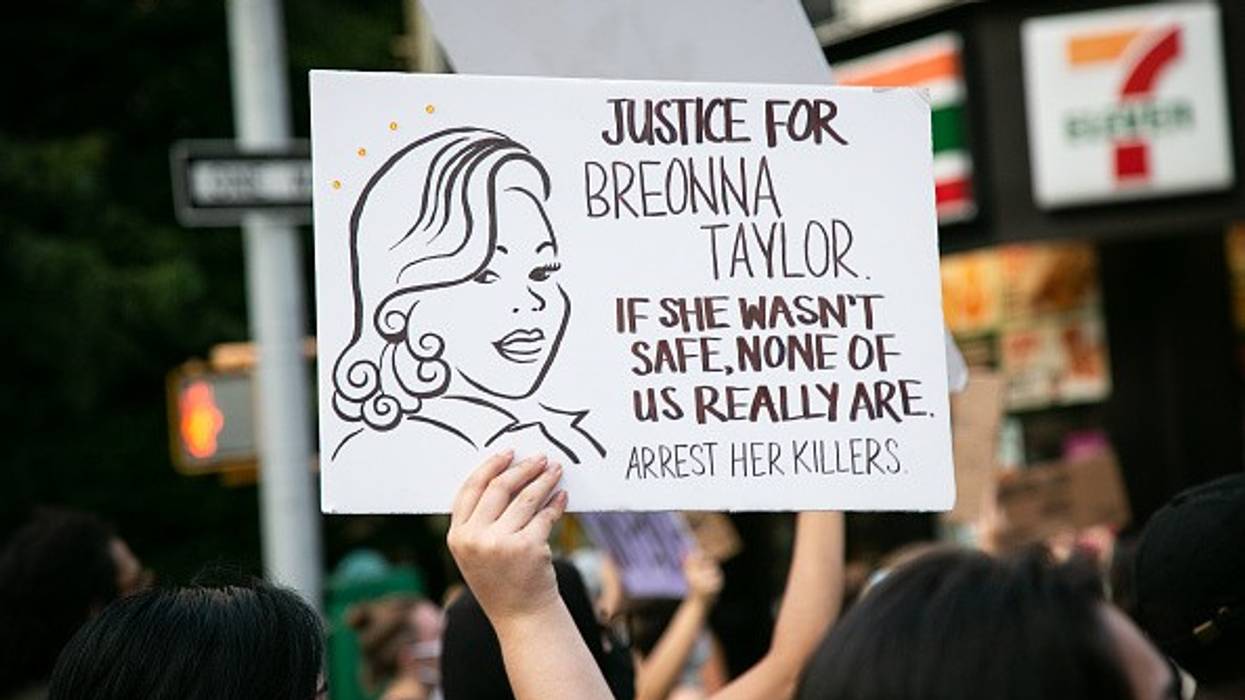
A two-year DOJ probe had found a pattern of racially discriminatory force by the Louisville Metro Police Department, where officers fatally shot Breonna Taylor in 2020, but the DOJ moved to dismiss the consent decree that had demanded reform at the police department just six months after it was signed.
A similar consent decree was dismissed around the same time, in May 2025, in Minneapolis—almost exactly five years after George Floyd was murdered by a police officer there.
"At least four other consent decrees to reform police departments across the US were dismissed in the same period," reads the report. "In each case, the department withdrew before any independent finding that the underlying violations had stopped."
HRW called on Congress to conduct oversight hearings on "the collapse of enforcement capacity at key federal agencies" and urged state legislatures to pass or strengthen disparate impact standards, create or fund state fair housing enforcement agencies with investigative authority, and create private rights of action under state law for discrimination claims previously only covered by federal enforcement.
It called on state agencies to expand intake capacity to take complaints currently not being accepted at the federal level and urged state attorneys general to consider challenging federal agency decisions, including case closure policies that have harmed state residents.
The group emphasized that it was not making formal recommendations to the White House or any federal agencies.
"The leadership of these agencies have not demonstrated good faith interest in improving anti-discrimination enforcement in the US," said HRW. "The immediate remedies lie with Congress, state and local actors, the media and civil society, and international bodies. A future administration will need to rebuild what has been dismantled by this executive branch."
"By moving special education from the Department of Education to the Department of Health and Human Services, the administration is taking us back to a dark period in American history."
The Trump administration accelerated its assault on the US Education Department on Tuesday by announcing that the agency's work defending civil rights and students with disabilities will be placed under the authority of other federal departments, a move that teachers, Democratic lawmakers, and advocacy organizations condemned as illegal and disastrous for vulnerable children.
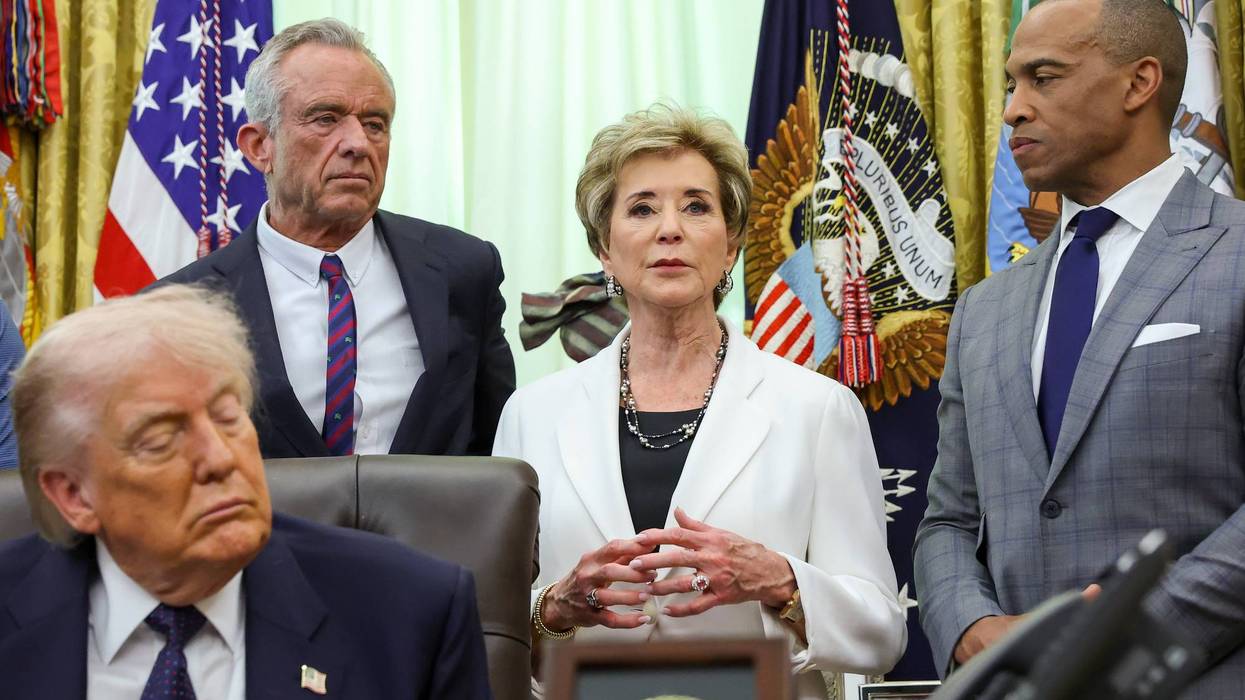
Linda McMahon, the billionaire education secretary who has enthusiastically advanced the destruction of her own agency, announced the transfer of the Office of Special Education and Rehabilitative Services—which oversees the Individuals With Disabilities Education Act (IDEA)—to the US Department of Health and Human Services, headed by Robert F. Kennedy Jr. Additionally, the Justice Department will oversee the work of the Education Department's Office for Civil Rights, McMahon said, claiming the changes would "break down the bureaucratic barriers and strengthen the coordination of resources to improve programs that serve infants, toddlers, children, and adults."
Critics argued the moves would do the opposite, scattering crucial programs across departments that lack the expertise and resources to fulfill the education offices' mandates, ultimately depriving children and their families of support.
“Moving IDEA out of the Department of Education is not an administrative adjustment—it is an attack on the educational and civil rights foundation of the law," said Becky Pringle, president of the National Education Association. "It would drag us backward by treating disability as a medical issue instead of an educational right and by unraveling decades of progress. The Department of Education is the only federal agency with the expertise, infrastructure, and specialists needed to protect students’ rights and ensure they receive the services they are guaranteed."
"Relocating the Office for Civil Rights to the Department of Justice as part of this scheme would further erode federal oversight and endanger disability-rights enforcement nationwide," Pringle added.
The Arc of the United States, a nonprofit that advocates for the rights of people with intellectual and developmental disabilities, said that "moving special education to HHS and civil rights enforcement to DOJ would split apart the offices responsible for making disability rights real in schools, leaving families chasing answers across the federal government instead of getting accountability from one education agency."
"Moving IDEA oversight into HHS pushes students with disabilities toward a medical model, where disability is treated as a diagnosis to manage instead of a natural part of human life," said Katy Neas, the group's CEO. "When that mindset drives education decisions, students are more likely to be segregated, underestimated, or treated as separate from the school community."
"It’s an outrageous betrayal that undoes decades of hard-won progress for students."
The changes that McMahon announced Tuesday are part of the Trump administration's effort to completely dismantle the Education Department, which cannot be legally abolished without congressional approval. The Washington Post noted that the newly targeted offices were among the last Education Department segments to "outsource major functions," underscoring that the administration's assault "has advanced far more than most observers predicted would be possible."
In addition to displacing agency functions, the Trump administration has gutted the Education Department's staff, firing nearly half of its workers in what opponents say is an obvious effort to decimate public education.
Rep. Rosa DeLauro (D-Conn.), the top Democrat on the House Appropriations Committee, said the transfer of critical functions out of the Education Department is unlawful, "usurping the power of the purse while the Republican majority stands idly by, forfeiting their authority as a co-equal branch of government." DeLauro pointed to language in a 2026 appropriations measure enacted earlier this year that prohibits the Education Department from transferring responsibilities to other federal agencies without congressional approval.
“This is a disgraceful violation of the law," DeLauro said Tuesday. "By moving special education from the Department of Education to the Department of Health and Human Services, the administration is taking us back to a dark period in American history. One where individuals with disabilities were viewed not as whole persons deserving of an education, but as medical patients whose education is not a priority."
The top Democratic appropriator in the Senate, Patty Murray of Washington, warned that "the Trump administration is abandoning kids with disabilities and its most basic legal responsibility to protect the rights of every student in the classroom."
"Instead of helping kids get a great education, this administration is spending its time, energy, and taxpayer resources fixated on where employees sit and illegally trying to shutter the Department of Education," said Murray. "It’s an outrageous betrayal that undoes decades of hard-won progress for students."
"There is absolutely no basis for what the Department of Education is doing, and it is unimaginably cruel," said a leader at the National Women's Law Center.
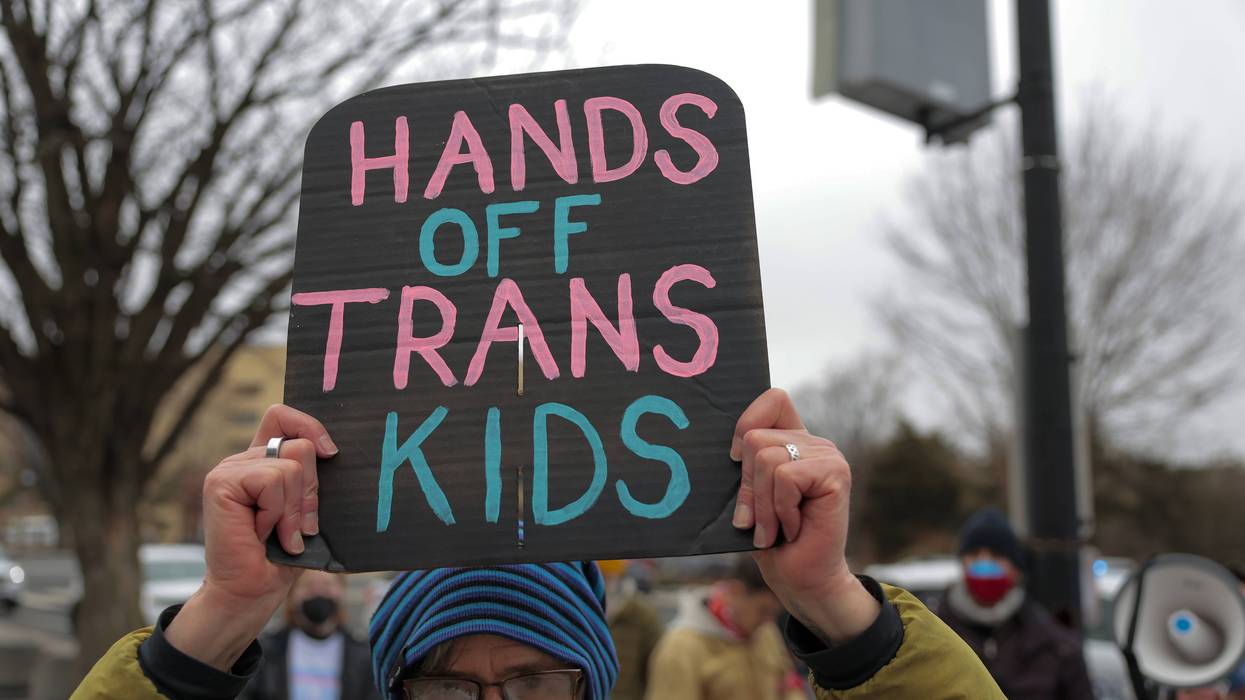
Continuing the assault on transgender people that President Donald Trump launched as soon as he returned to power last year, the US Department of Education's Office for Civil Rights rescinded portions of settlements intended to protect trans students at five school districts and one college.
The department framed the move as "freeing schools" from the Biden and Obama administrations' "illegal and burdensome enforcement of Title IX of the Education Amendments of 1972," a landmark civil rights law that bars sex-based discrimination in schools that receive federal funding.
According to The Associated Press, "One of the school systems, Delaware Valley School District in rural eastern Pennsylvania, received notice of the change from the Trump administration in February and has since voted to roll back its antidiscrimination protections for transgender students."
The administration also rescinded provisions of resolution agreements with Cape Henlopen School District in Delaware and Fife School District in Washington, as well as California's La Mesa-Spring Valley School District, Sacramento City Unified, and Taft College.
This is a cruel step by the Trump administration that will make our schools less safe and welcoming for all.Trans kids deserve what every student deserves — a school that supports their freedom to thrive.
[image or embed]
— ACLU (@aclu.org) April 6, 2026 at 6:05 PM
"The Trump administration has opened at least 40 civil rights investigations into educational institutions that provide protections for transgender students," and filed lawsuits in California and Minnesota, The New York Times reported. However, "Education Department officials said there was no precedent for the federal government terminating previously negotiated civil rights settlements with schools. Civil rights lawyers who worked under Democratic and Republican administrations said they were unaware of previous examples of such a move."
Advocates for trans people sharply condemned the rollback, which came on the heels of last week's International Transgender Day of Visibility.
"This sends a chilling alarm that trans students really are a target of this administration," Shelby Chestnut, executive director of the California-based Transgender Law Center, told the Times. "It's extremely concerning. Students should be safe to go to school and get an education."
Shiwali Patel, senior director of education justice at the National Women's Law Center, said in a statement that "there is absolutely no basis for what the Department of Education is doing, and it is unimaginably cruel. Title IX exists to ensure that students are protected from discrimination and treated with dignity so that they can learn and thrive in our schools. It's always been about that. It's what students, families, lawmakers, and advocates fought for when Title IX was passed decades ago. But the Trump administration's Department of Education has spent its limited resources to strip Title IX of that very purpose."
"Real complaints of discrimination and sexual assault are going unanswered by the Department of Education while conservative lawmakers continue to escalate their attacks on a small minority of students," Patel noted. "Parents, teachers, and students need the department to focus on addressing real harms on campuses instead of rolling back policies that keep all students safe."
"We should all be alarmed at the Trump administration's cruel escalation of their anti-trans agenda," she added. "When they push laws that explicitly target trans people or attempt to use scientifically inaccurate language to define sex, they are also inevitably targeting all women and girls. They want to control what we do, how we look, and how we act until we are pushed out of public life. But we are not going anywhere."

More than 7 million borrowers booted from a Biden-era loan forgiveness program will have to quickly switch to a new plan using a system that's been backed up for months.
After axing a Biden-era student loan repayment program, the Trump administration is threatening to kick its millions of mostly low-income beneficiaries onto the government's most expensive plan unless they switch to a new one quickly.
The Washington Post reported on Friday that the Department of Education was beginning to email the more than 7 million people enrolled in the Saving on a Valuable Education (SAVE) program, telling them they needed to change their plan within the next 90 days.
Around 4.5 million of those borrowers earn incomes between 150% and 225%, allowing them to qualify for zero-dollar monthly payments under SAVE, which the Trump administration effectively killed in December after settling with Republican states who'd brought lawsuits against the program under former President Joe Biden.
Anonymous officials told The Post that those who do not switch plans within three months of receiving the email will automatically be re-enrolled in the Standard Plan. Unlike SAVE, which is income-based, the Standard plan has borrowers pay a fixed rate over 10 years.
Standard typically carries the highest monthly payments, and those transitioning to it from SAVE could pay more than $300 extra per month in some cases, with the poorest borrowers seeing the sharpest increases.
While 90 days may seem like plenty of time to switch to a less expensive repayment plan, it's not nearly that simple.
Due to the large exodus of borrowers, the Department of Education has struggled to process all the forms, processing only about 250,000 per month. Many borrowers who have tried to transition have found themselves waiting months for a reply.
To make matters more confusing, many of these borrowers will have to switch programs again soon, since all but one repayment program will be dissolved on July 1, 2028 as a result of last year's Republican budget law. The remaining plan will also be income-driven, though it is still expected to cost borrowers more each month.
According to a report released last month by the Century Foundation and Protect Borrowers, two groups that support loan forgiveness, nearly 9 million student loan borrowers are in default. During Trump's first year back in office, the student loan delinquency rate jumped from roughly zero to 25%, which it called "precedent-shattering."
"Much of the rise in delinquencies can be linked to the Trump administration’s actions aimed at increasing student loan payments," the report said. “The US Department of Education blocked borrowers from accessing more affordable payments through income-driven plans, having ordered a stoppage in application processing for three months and mass-denying 328,000 applications in August 2025. As of December 31, 2025, a warehouse’s worth of 734,000 applications sat unprocessed.”
Being in default has major ramifications for borrowers' finances. Those with delinquent loans saw their credit scores decrease by an average of 57 points during the first three quarters of 2025, dragging around 2 million of them into "subprime" territory, which forces them to pay thousands of dollars more for auto and personal loans and makes them more likely to have difficulty finding housing and employment.
The report estimated that if those booted from SAVE defaulted at the same rate as other borrowers, the number of student loan borrowers in distress could rise as high as 17 million.
According to Protect Borrowers, the typical family will pay more than $3,000 per year in additional costs as a result of the end of SAVE.
The end of SAVE comes as oil shocks caused by Trump's war in Iran have spiked gas prices and threaten to raise them throughout the economy, adding to the already elevated costs of food, housing, and transportation resulting from the president's aggressive tariff regime.
"In the middle of an affordability crisis driven by Donald Trump," said Sen. Elizabeth Warren (D-Mass.), "Trump is killing a plan that lowers student loan costs. It's shameful."
Advocates warned wage garnishment "would have risked pushing nearly 9 million defaulted borrowers even further into debt."
Billionaire US Education Secretary Linda McMahon has temporarily suspended the Trump administration's plan to resume garnishing the wages of defaulted student loan borrowers, a reversal that came after advocates warned the pay seizures would have had devastating economic consequences for people across the country amid a worsening cost-of-living crisis.
McMahon, who is actively working to dismantle her department from within, told reporters earlier this week that wage garnishment efforts have "been put on pause for a bit," without providing specifics. The Trump administration, which last summer ended a pause on student loan repayments that had been in place since the start of the Covid-19 pandemic, was reportedly set to begin notifying defaulted borrowers of plans to withhold a portion of their wages last week.
Aissa Canchola Bañez, policy director at the advocacy group Protect Borrowers, said in a statement Friday that "after months of pressure and countless horror stories from borrowers, the Trump administration says it has abandoned plans to snatch working people’s hard-earned money directly from their paychecks simply for falling behind on their student loans."
"Amidst the growing affordability crisis, the administration’s plans would have been economically reckless and would have risked pushing nearly 9 million defaulted borrowers even further into debt," Canchola Bañez added. "Earlier this month, a coalition of partners sent an urgent letter to ED urging them to do just this. We are pleased to see they have heeded our calls.”
That letter—sent on January 7 by Protect Borrowers, the American Federation of Teachers, Debt Collective, and other groups—called the administration's earlier decision to resume wage garnishment "calloused and unnecessary," warning that it came at a time when "struggling borrowers have been forced to wait amidst a nearly 1 million application backlog to enroll in an Income-Driven Repayment (IDR) plan, and as mass layoffs at the department have made it even harder for borrowers to get help with their student loans or if they are experiencing issues with their student loan servicer."
According to an analysis by Protect Borrowers, 3.6 million new student loan borrowers fell into default during the first year of President Donald Trump's second term in the White House. That's one new default every nine seconds.
"Nearly two-thirds of the borrowers who defaulted during the Trump administration—more than 2.6 million people—live in states that President Trump won in the 2024 election," the analysis found.
Under federal law, the Education Department can withhold up to 15% of a borrower's after-tax income to pay down defaulted debt. The Trump administration has already begun seizing income tax refunds from student borrowers in default.
The National Consumer Law Center (NCLC) noted in a Thursday blog post that "if you have received a notice of proposed garnishment, there are steps you can take to object to the garnishment notice and request a hearing, which is typically conducted through a written review of your objections."
"You must act quickly to avoid a potential garnishment order from being sent to your employer," the group stressed.
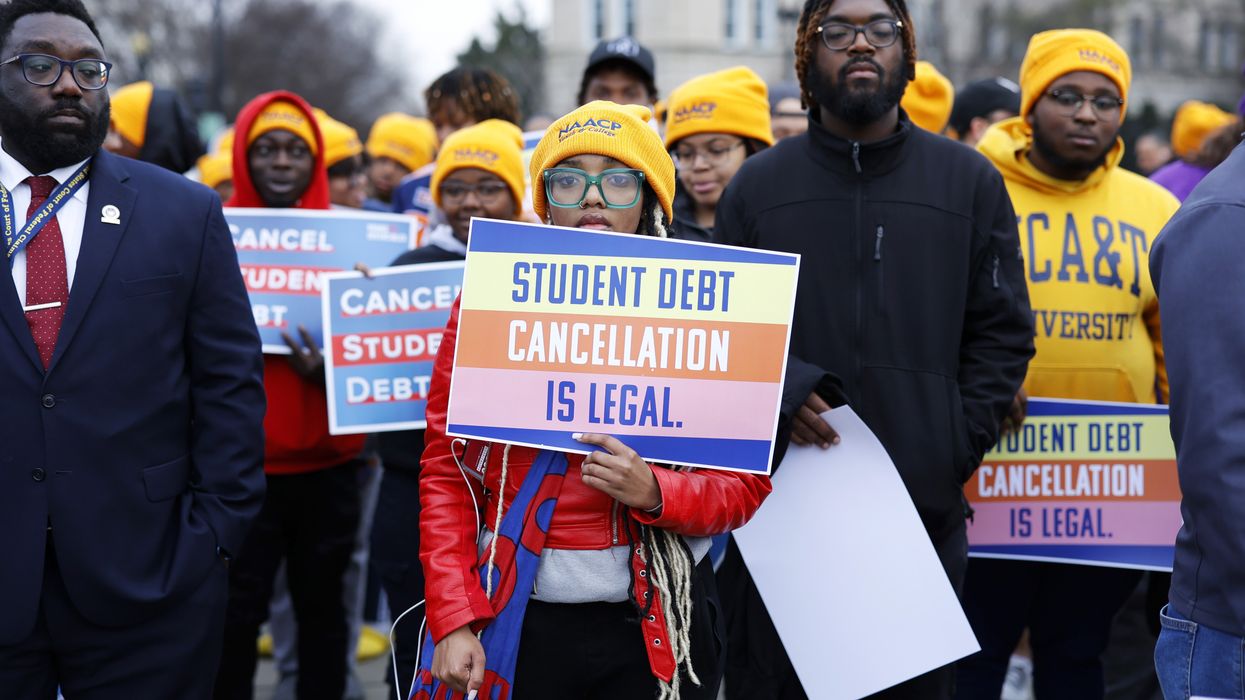
One group noted "the irony of a billionaire being in charge of collecting pennies from debtors."
The US Education Department confirmed Monday that, starting next month, it will resume seizing the pay of student loan borrowers in default as the Trump administration wages a broader war on debt relief and cancellation efforts.
The department, led by billionaire Linda McMahon—who is working to gut the agency from the inside—told the Washington Post that "it will notify about 1,000 defaulted borrowers of plans to withhold a portion of their wages to pay down their past-due debt," beginning the week of January 7, 2026.
"After that, the department said, notices will be sent to larger numbers of borrowers each month," the Post reported. "There were about 5.3 million borrowers who had not made a payment on their federal student loans for at least 360 days as of June 30, according to the latest available data from the Education Department. Many of them were in default before the federal government stopped collecting defaulted loans because of the pandemic nearly six years ago."
Persis Yu, deputy executive director and managing counsel of the advocacy group Protect Borrowers, said in a statement Tuesday that "at a time when families across the country are struggling with stagnant wages and an affordability crisis, this administration's decision to garnish wages from defaulted student loan borrowers is cruel, unnecessary, and irresponsible."
"As millions of borrowers sit on the precipice of default, this administration is using its self-inflicted limited resources to seize borrowers' wages instead of defending borrowers' right to affordable payments," said Yu. "There are still nearly a million unprocessed Income-Driven Repayment applications, and this administration has admitted to denying en masse borrowers who applied and requested the US Department of Education’s help in accessing the most affordable payment option."
“Finally, during the last Trump administration, hundreds of thousands had their wages improperly taken at the peak of the pandemic because the US Department of Education was unable to control this tool," Yu added. "It is irresponsible to turn on a debt collection tool that the administration cannot turn off."
In May, the Trump administration ended a pause on student loan repayments that had been in place since the onset of the Covid-19 pandemic in 2020.
The administration has also attacked student debt relief efforts launched under former President Joe Biden. Earlier this month, the Trump Education Department cut a deal to effectively end the Saving on a Valuable Education (SAVE) plan, jacking up monthly payments for millions of borrowers enrolled in the Biden-era program.
"While millions of student loan borrowers struggle amidst the worsening affordability crisis—as the rising costs of groceries, utilities and healthcare continue to bury families in debt—billionaire Education Secretary Linda McMahon chose to strike a backroom deal with a right-wing state attorney general and strip borrowers of the most affordable repayment plan that would help millions to stay on track with their loans while keeping a roof over their head," Yu said in a statement after the deal was announced.
"The real story here," Yu added, "is the unrelenting, right-wing push to jack up costs on working people with student debt."
"The federal government also wields vast extrajudicial powers to collect student debt, including garnishing wages and seizing Social Security payments."
The Education Department is legally allowed to withhold up to 15% of a borrower's after-tax income to pay down defaulted debt. As the Post noted, the Trump administration has already resumed seizing tax refunds and Social Security benefits student loan borrowers in default.
The Debt Collective, the first debtors' union in the US, noted "the irony of a billionaire being in charge of collecting pennies from debtors."
"The Department of Education pushes debtors toward payment to get out of default," the group added. "They don’t want you to know that you have other options. These include traditional repayment options, nonpayment options, and lesser-known options."
The Trump administration's decision to resume garnishing borrowers' wages comes as advocates are warning of a "default cliff" as borrowers struggle to afford basic necessities, leaving them unable to keep up with loan repayments. A Data for Progress survey released earlier this month found that more than 40% of borrowers report making tradeoffs between covering basic needs and staying current on student loan debt payments."
"Student loan default comes with severe and punitive consequences," Michele Zampini, associate vice president of federal policy and advocacy at the Institute for College Access and Success, wrote in a blog post earlier this month.
"In addition to ongoing credit score damage and hefty collection fees, the federal government also wields vast extrajudicial powers to collect student debt, including garnishing wages and seizing Social Security payments and tax refunds that are targeted to households with very low incomes, including the Child Tax Credit and the Earned Income Tax Credit," Zampini added. "These seizures compound financial hardship for those who can least afford it."

The Education Department has been at the center of Trump's push to "bring back religion in America" and promote “Judeo‑Christian principles.”
The union for US Department of Education workers has raised alarm about a top department official's display of a flag with Christian nationalist associations that was flown during the January 6, 2021, insurrection at the Capitol building.
The flag was spotted outside the Washington, DC, office of Murray Bessette, the principal deputy assistant secretary in the Office of Planning, Evaluation, and Policy Development, according to a report on Monday from USA Today. However, it's not clear how long it's been displayed there.
The stark white banner, emblazoned with a pine tree and the phrase "An Appeal to Heaven"—a reference to John Locke's “Second Treatise on Government”—was first used during the American Revolution and flown by six schooner privateers known as "Washington's Cruisers" for naval operations and supply capture missions.
The flag was flown sporadically throughout the 19th and 20th centuries, most prominently in New England. But it remained relatively obscure until recently.
As the Southern Poverty Law Center explained in November, it has undergone a revival among proponents of Christian nationalism over the past decade:
Its affiliation with Christian supremacist politicians largely began in 2013 after being reintroduced as a symbol of supremacy by Dutch Sheets, a highly influential leader in the New Apostolic Reformation, today’s most powerful Christian supremacist movement.
The NAR is an anti-democratic Christian supremacist movement that seeks to control all areas of national life, from the halls of Congress to one’s living room, compelling all Americans to align their lives with NAR’s worldview. According to NAR leaders, those who oppose them are not just wrong but under the control of the demonic, and are even possibly demonic entities themselves.
Sheets, a prominent supporter of President Donald Trump, helped to mobilize thousands of Christian followers to the Capitol leading up to the January 6 riot, where supporters of the president sought to violently overturn the electoral victory of his opponent, former President Joe Biden. The pastor referred to the recognition of Biden's election as "an evil attempt to overthrow the government of the United States of America."
The "Appeal to Heaven" flag was spotted on multiple occasions at the Capitol on that day and at other "Stop the Steal" events protesting Trump's 2020 election loss. It has continued to cause controversy in the years since.
In 2023, the right-wing Supreme Court Justice Samuel Alito was seen flying the flag outside his New Jersey beach house. Alito blamed his wife for the flag flying outside their property just weeks before a documentarian published a secret recording of him expressing his desire to return the country to “a place of godliness,” and agreeing with radical right-wing groups who he said refuse to “negotiate with the left.”
The flag has also been displayed by several Republicans in Congress, including House Speaker Mike Johnson (R-La.), who has expressed many Christian nationalist viewpoints, including a distaste for the idea that the Constitution requires the separation of church and state.
Its appearance outside Bessette's office is not the first time a government agency has displayed the flag during the second Trump presidency. In June, the Small Business Administration also displayed it during a ceremony, though only for about a day, according to Wired.
Rachel Gittleman, the president of the union for Education Department workers nationwide, said in a statement that the agency "has no place for symbols that were carried by insurrectionists."
“Since January, hardworking public servants at the US Department of Education have been subjected to threats, harassment, and sustained demoralization," she added. "Now, they are being asked to work in an environment where a senior leader is prominently displaying an offensive flag—one that, regardless of its origins in the American Revolution, has come to represent intolerance, hatred, and extremism."
The use of a flag with Christian nationalist affiliations is especially noteworthy at the Education Department, which has been at the center of Trump's push to "bring back religion in America" and promote “Judeo‑Christian principles.”
Trump has endorsed state-level policies requiring the Ten Commandments to be posted in classrooms, which he called a "major step in the revival of religion." In September, he also said that he would soon roll out a policy to provide "total protection" for prayer in public schools, which has long been considered unconstitutional when sponsored by school or state officials.
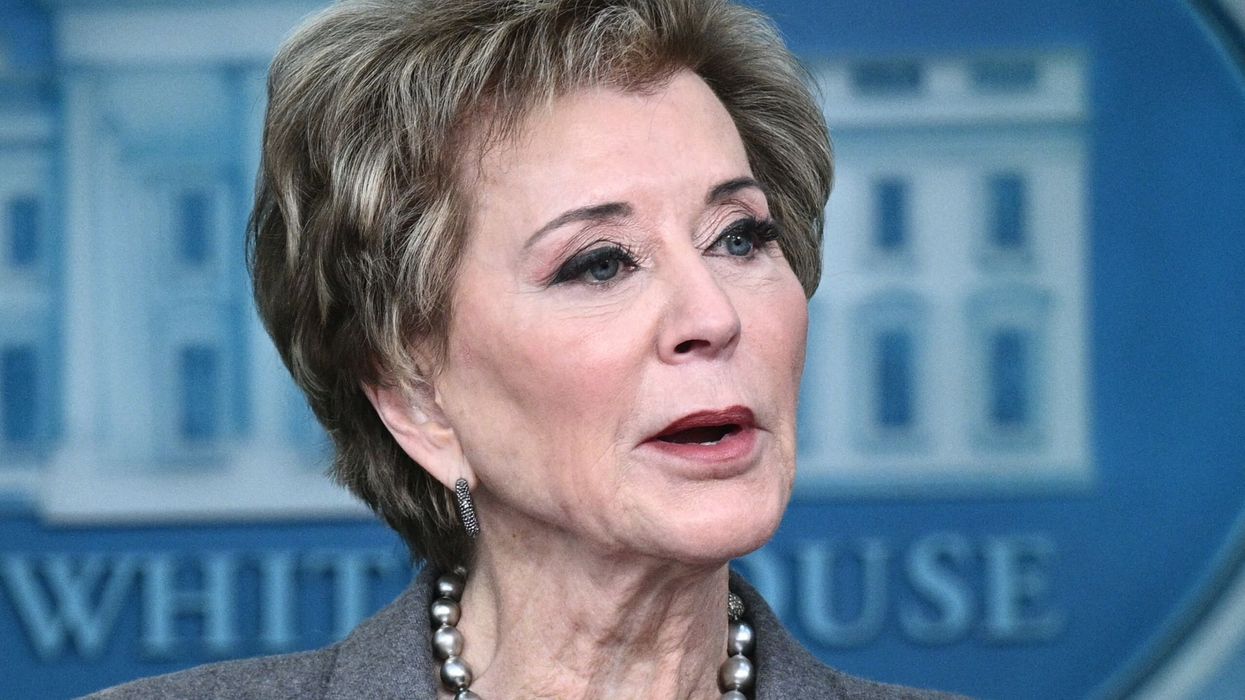
Amid a cost-of-living crisis, millions of low-income borrowers may now be forced to spend several hundred more dollars a month paying for student loans.
As student debt exacerbates the financial struggles of millions of Americans, the Trump administration has taken a major step toward killing the Biden administration's student loan forgiveness program.
On Tuesday, the Department of Education announced that it had reached a settlement with the state of Missouri to end the Saving on a Valuable Education (SAVE) program, which allowed more than 7 million mostly low-income Americans to reduce their federal student loan payments.
Rather than setting monthly payments based on income, the SAVE program bases them on how much borrowers earn and the size of their families, which is referred to as an income-driven repayment option, or IDR. SAVE cut most enrollees' monthly loan payments in half and left 4.5 million of them, mostly those earning between 150–225% of the federal poverty level, paying $0 per month.
In March 2024, a coalition of 11 states led by Kansas Attorney General Kris Kobach sued in federal court to stop the SAVE plan. The next month a similar lawsuit was filed by another coalition of seven states led by Missouri's former attorney general, Andrew Bailey.
In February, the 8th Circuit Court of Appeals ruled in favor of the states, blocking 8 million borrowers from accessing lower payments under the program. Now President Donald Trump's administration which aggressively opposes student loan forgiveness, has agreed to settle the lawsuit, effectively killing SAVE.
“For four years, the Biden administration sought to unlawfully shift student loan debt onto American taxpayers, many of whom either never took out a loan to finance their postsecondary education or never even went to college themselves, simply for a political win to prop up a failing administration,” said Undersecretary of Education Nicholas Kent. "The Trump administration is righting this wrong and bringing an end to this deceptive scheme. The law is clear: if you take out a loan, you must pay it back."
The settlement also includes a provision requiring that, for the next 10 years, the Department of Education notify the state of Missouri at least 30 days in advance before instituting broad-based student debt relief.
As the Debt Collective, a membership-based debtors' union, explained in a post on social media: "30 days is enough notice that Missouri will find standing to sue for relief before it even happens. So not only is Trump gutting the SAVE plan, they're essentially putting a moratorium on cancellation for the next 10 years with this agreement."
"What Republicans admit is that the executive administration does have authority to cancel federally held student debt," the group added. "They just want to make it so that it will be administratively and practically impossible to deliver it because of this technicality. It's stealing in advance."
SAVE was already slated to end in 2028 following July's passage of Republicans' One Big Beautiful Bill Act, which replaced it with a pair of less generous income-based repayment plans that require many debtors to pay hundreds more per month. The deadline to switch to one of the new plans will now move up, though the administration has not yet clarified when borrowers will have to switch.
The Debt Collective predicted that the end of SAVE "means many more debtors will likely be forced to default on their loans," which the group added "is bad for millions of families and our economy."
According to an analysis of federal student loan data from the American Enterprise Institute, a libertarian think tank, more than 12 million borrowers in the US are already in default or otherwise behind on their student loan payments.
Since their introduction, former President Joe Biden's student loan forgiveness policies have been chipped away at bit by bit through litigation. In 2023, the conservative US Supreme Court struck down the administration's plans to forgive up to $20,000 in student loan debt for millions of Americans, ruling that the plan exceeded the administration's executive authority. A year later, it halted SAVE as well while it considered the merits of the Missouri lawsuit.
The group Protect Borrowers, which supports student loan forgiveness, argues that SAVE is "not a novel use of executive power," noting that Congress gave the Education Department the authority to create IDRs in 1993 and that several other programs have been created since.
"This settlement is pure capitulation—it goes much further than the suit or the 8th Circuit order requires," said Persis Yu, the group's deputy executive director and managing counsel. "The real story here is the unrelenting, right-wing push to jack up costs on working people with student debt.”
A September survey by Data For Progress found that student loans make it more difficult for many borrowers to keep up with other bills amid a growing cost-of-living crisis: 42% of respondents said their debt payments had a negative impact on their ability to pay for food or housing. More than a third, 37%, said it had a negative impact on their ability to cover healthcare costs for themselves or their dependents, while the majority, 52%, said it had a negative impact on their ability to save for retirement.
“While millions of student loan borrowers struggle amidst the worsening affordability crisis as the rising costs of groceries, utilities, and healthcare continue to bury families in debt," Yu said, "billionaire Education Secretary Linda McMahon chose to strike a backroom deal with a right-wing state attorney general and strip borrowers of the most affordable repayment plan that would help millions to stay on track with their loans while keeping a roof over their head."
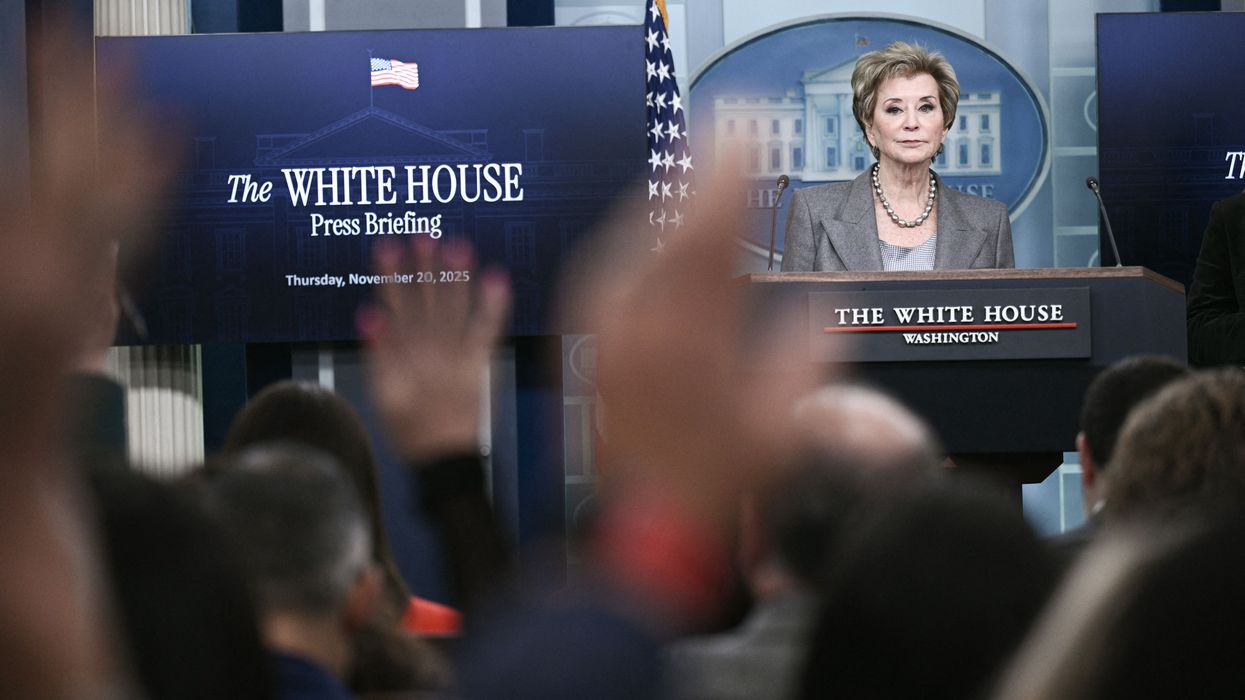
Billionaire Linda McMahon "has no business leading the Department of Education," said US Sen. Elizabeth Warren.
Democratic US Sen. Elizabeth Warren on Monday called on President Donald Trump's billionaire education secretary, Linda McMahon, to step down over her sweeping attempt to dismantle the Department of Education from within.
In an op-ed for USA Today, Warren (D-Mass.) warned that "both families and schools will suffer" from McMahon's mass layoffs and transfer of key Education Department functions and programs to other federal agencies—an effort to circumvent the fact that only Congress can legally shutter the department.
McMahon is carrying out what she's described as her department's "final mission" at the direction—and with the enthusiastic support—of the president, who reportedly told McMahon earlier this year that "when we actually close down the department, you and I are going to stand on the steps, and we’re going to have a padlock that we’re going to put on it and invite the press."
Warren wrote Monday that under McMahon and Trump's plan, "the Department of Labor will be in charge of supporting K-12 literacy, American history and civics, and Title I funding."
"Drink that in: Labor Department employees will decide which reading readiness programs to support for kindergartners," she wrote. ""No part of public education will remain untouched by this move. Title I provides the biggest federal fund for K-12 schools and is used to help pay for good teachers and new textbooks all across America. School administrators are concerned that these changes may result in bigger class sizes, fewer afterschool and tutoring programs, and not enough workbooks for our kids because federal funding isn’t coming through."
Warren argued that McMahon, a longtime supporter of school privatization, "has no business leading the Department of Education" and "should resign."
"When a secretary of Education is actively dismantling our public education system, it’s time to reconsider her role in government," she wrote. "When the secretary is working to make class sizes bigger, take away aides for kids with special needs, leave college students at the mercy of financial predators, and make the whole department nonfunctional, it’s time for new leadership."
The senator's op-ed came after a coalition of labor unions, educators, and school districts took legal action against the Trump administration's over its ongoing destruction of the Education Department.
The lawsuit argues the administration's actions "violate the Constitution, authorizing statutes, appropriations statutes, and the Administrative Procedure Act."
"More importantly, defendants’ actions will harm millions of students and their families, school districts, and educators across the nation," the complaint reads. "Scattering Department of Education programs among agencies with no expertise in education or lacking key agency infrastructure will reduce the efficiency and effectiveness of these programs and will prevent the type of synergy that Congress intended to achieve by consolidating federal education activities in one cabinet level agency."
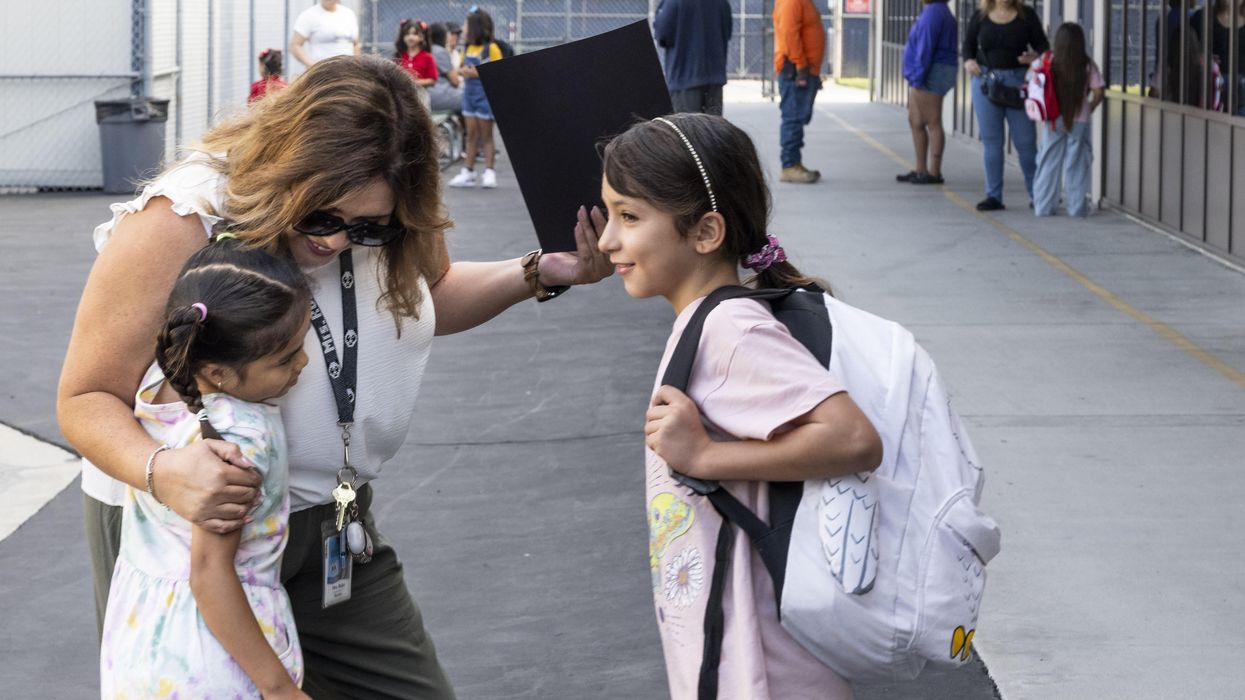
"This contemptible assault on American education must be condemned by everyone who strives towards a prosperous future for our country and our children," said one opponent of the new partnerships.
Teachers union leaders, Democratic lawmakers, and other critics of President Donald Trump's efforts to dismantle the US Department of Education on Tuesday forcefully denounced what the administration is calling "new agency partnerships to break up federal bureaucracy."
Although the Education Department cannot be fully shuttered without approval from Congress, Trump has signed an executive order aimed at starting the process "to the maximum extent appropriate and permitted by law" and laid off over 1,300 workers.
Shortly after journalists began reporting on the new plans Tuesday, citing unnamed sources, Secretary of Education Linda McMahon confirmed the agreements with the departments of Health and Human Services, the Interior, Labor, and State.
One federal official told Politico that the partnerships are a "proof of concept strategy to show Congress how this can be done," and said that the Education Department will work with lawmakers "on making these agreements permanent."
A succinct description of so much that this administration does: if they don’t like longstanding, duly enacted laws and Congress isn’t prepared to amend them, they’ll just hack them to bits illegally.wapo.st/4i6ZRr5
[image or embed]
— Heidi Kitrosser (@heidikitrosser.bsky.social) November 18, 2025 at 4:52 PM
Becky Pringle, president of the National Education Association, the nation's largest labor union representing nearly 3 million employees, noted in a statement that "Donald Trump and his administration chose American Education Week, a time when our nation is celebrating students, public schools, and educators, to announce their illegal plan to further abandon students by dismantling the Department of Education."
"Not only do they want to starve and steal from our students—they want to rob them of their futures," Pringle said. "Ensuring a brighter future for our children should be a top priority for any administration, but this administration is taking every chance it can to hack away at the very protections and services our students need."
"Just last week, they went to the Supreme Court to avoid feeding families. And they're still pushing to gut healthcare programs," she continued. "Now, they're neglecting the basic responsibility to educate our children. It's cruel. It's shameful. And our students deserve so much better."
American Federation of Teachers president Randi Weingarten, whose union represents 1.8 million people, declared that "this move is neither streamlining nor reform—it's an abdication and abandonment of America's future."
"Spreading services across multiple departments will create more confusion, more mistakes, and more barriers for people who are just trying to access the support they need."
"What's happening now isn't about slashing red tape. If that were the goal, teachers could help them do it, and we invite Donald Trump and Linda McMahon to sit down with educators and hear from the people who actually do this work every day," she emphasized. "Teachers know how to make the federal role more effective, efficient, and supportive of real learning—if only the administration would listen."
"Instead, spreading services across multiple departments will create more confusion, more mistakes, and more barriers for people who are just trying to access the support they need," she warned.
Aissa Canchola Bañez, policy director for nonprofit Protect Borrowers, similarly said that "shuffling certain functions of the US Department of Education across four different agencies is a political stunt that will only lead to more chaos and confusion for working families who just want their kids to get a quality education, to be able to pay for college, and to pay off their student loans."
Lisa Gilbert, co-president of the watchdog group Public Citizen, also slammed the announcement, saying that "in his ongoing rampage against everything that makes our country what it is, President Trump is now acting on the plan to destroy the Department of Education."
"Short of toppling the Statue of Liberty, there is perhaps nothing that could capture the agenda of this administration more than what they are in fact doing right now: Making an enemy out of education itself," she suggested. "This contemptible assault on American education must be condemned by everyone who strives towards a prosperous future for our country and our children."
Senate Appropriations Committee Vice Chair Patty Murray (D-Wash.)—a former preschool teacher and local school board member—also piled on, saying that "Donald Trump and Linda McMahon are lawlessly trying to fulfill Project 2025's goal to abolish the Department of Education and pull the rug out from students in every part of the country."
"But instead of seeking congressional approval of their reckless actions to weaken our education system—which McMahon has acknowledged is necessary—Trump and McMahon are now pretending that our laws and the constitutional separation of powers are a mere suggestion," said Murray, who used to lead and remains a member of the Senate Committee on Health, Education, Labor, and Pensions.
"This is an outright illegal effort to continue dismantling the Department of Education," she argued, "and it is students and families who will suffer the consequences as key programs that help students learn to read or that strengthen ties between schools and families are spun off to agencies with little to no relevant expertise and are gravely weakened—or even completely broken—in the process."
The senator stressed that she is "always ready and willing to talk about reforms to our education laws to improve educational outcomes for students," and urged her Republican colleagues to join Democrats in standing up against the administration's attacks.
The GOP controls both chambers of Congress. According to Murray, "The fact that Trump and McMahon are choosing to break the law to do this on their own—despite having unified Republican control of Washington—tells us they know just how unpopular their plans are and can't win the approval of members of their own party."