

SUBSCRIBE TO OUR FREE NEWSLETTER
Daily news & progressive opinion—funded by the people, not the corporations—delivered straight to your inbox.
5
#000000
#FFFFFF
To donate by check, phone, or other method, see our More Ways to Give page.
Daily news & progressive opinion—funded by the people, not the corporations—delivered straight to your inbox.
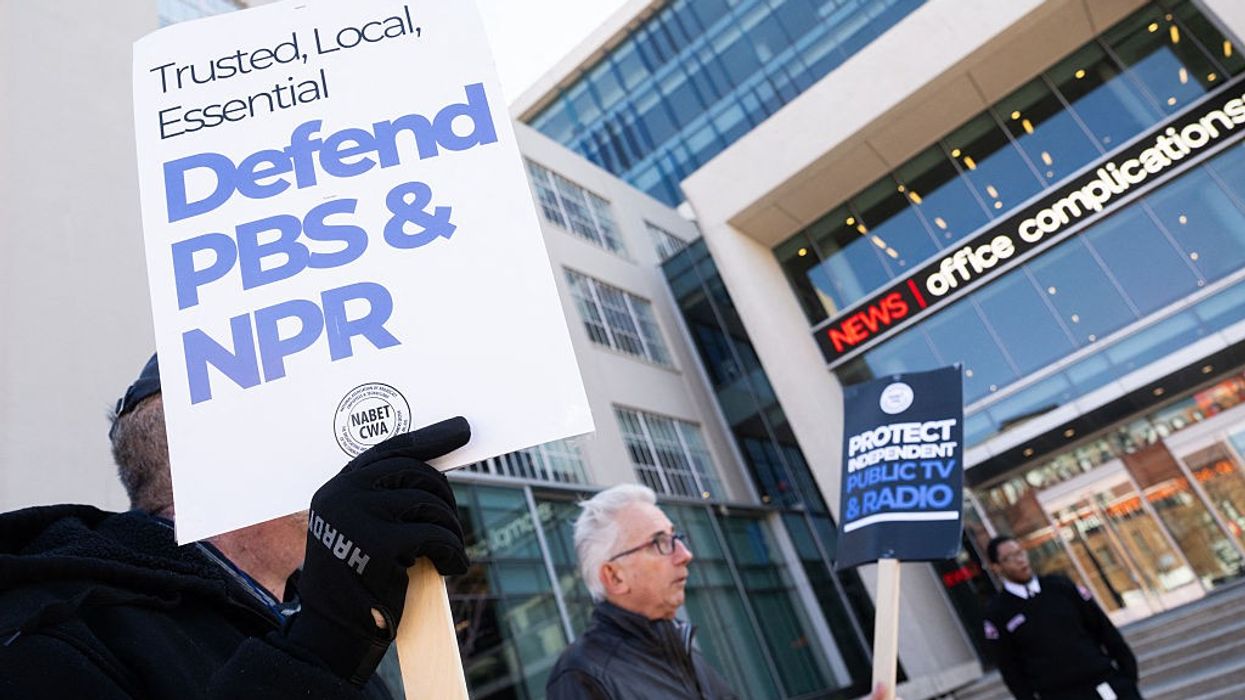
"The dissolution of CPB is a direct result of Donald Trump and his MAGA Republican allies' reckless crusade to destroy public broadcasting and control what Americans read, hear, and see," said Sen. Ed Markey.
The Corporation for Public Broadcasting—which helped fund NPR, PBS, and many local public television and radio outlets—announced Monday that its board of directors has voted to dissolve the 58-year-old private nonprofit, a move one Democratic US senator blamed on Republican efforts to destroy the venerable American institution.
CPB said in a statement that Sunday's board of directors vote "follows Congress’ rescission of all of CPB’s federal funding and comes after sustained political attacks that made it impossible for CPB to continue operating as the Public Broadcasting Act intended."
Patricia Harrison, CPB's president and CEO, said Monday that "for more than half a century, CPB existed to ensure that all Americans—regardless of geography, income, or background—had access to trusted news, educational programming, and local storytelling."
"When the [Trump] administration and Congress rescinded federal funding, our board faced a profound responsibility: CPB’s final act would be to protect the integrity of the public media system and the democratic values by dissolving, rather than allowing the organization to remain defunded and vulnerable to additional attacks," Harrison added.
CPB board chair Ruby Calvert said: “What has happened to public media is devastating. After nearly six decades of innovative, educational public television and radio service, Congress eliminated all funding for CPB, leaving the board with no way to continue the organization or support the public media system that depends on it."
"Yet, even in this moment, I am convinced that public media will survive, and that a new Congress will address public media’s role in our country because it is critical to our children's education, our history, culture, and democracy to do so," Calvert added.
The dissolution of CPB won't end NPR, PBS, or other public media outlets—which are overwhelmingly funded via contributions by private donors and by viewers and listeners.
President Donald Trump, congressional Republicans, and conservative advocacy groups—including the Heritage Foundation, which led work on Project 2025, the right-wing roadmap for remaking the federal government whose agenda includes stripping CPB funding—argue that NPR, PBS and other public outlets have become too "woke" and liberally "biased." In May, Trump signed an executive order calling for an end to taxpayer support for CPB-funded media.
Critics counter that Republican attacks on CPB have little to do with ensuring balanced coverage and fiscal responsibility and more to do with punishing media outlets that are critical of Trump and his policies.
"The dissolution of CPB is a direct result of Donald Trump and his MAGA Republican allies' reckless crusade to destroy public broadcasting and control what Americans read, hear, and see," US Sen. Ed Markey (D-Mass.) said in a statement Monday.
“Today’s decision to dissolve the Corporation for Public Broadcasting marks a grave loss for the American public," Markey continued. "For generations, CPB helped ensure access to trusted news, quality children’s programming, local storytelling, and vital emergency information for millions of people in Massachusetts and across the country."
"CPB nurtured and developed our public broadcasting system, which is truly the crown jewel of America’s media mix," he added. “This fight is not over. I will continue to fight for public media and oppose authoritarian efforts to shut down dissent, threaten journalists, and undermine free speech in the United States of America.”
Free press defenders also lamented CPB's imminent dissolution, as well as consolidation in the corporate mainstream media.
"Meanwhile," said human rights attorney Qasim Rashid on Bluesky, "billionaires continue to buy up major legacy media to prevent criticism of Trump."

"For nearly 60 years, CPB has carried out its congressional mission to build and sustain a trusted public media system that informs, educates, and serves communities across the country," said the organization.
The organization that has been funding public media in the United States for more than half a century said on Friday that it is shutting down its operations.
In a press release, the Corporation for Public Broadcasting (CPB) said that "it will begin an orderly wind-down of its operations following the passage of a federal rescissions package" that clawed back more than $1 billion in previously approved funding for public broadcasting. President Donald Trump, who pushed for the rescissions, signed the package into law last month.
CPB also cited Senate Republicans’ release of an appropriations package that excluded public broadcasting funds "for the first time in more than five decades."
"For nearly 60 years, CPB has carried out its congressional mission to build and sustain a trusted public media system that informs, educates, and serves communities across the country," said CPB. "Through partnerships with local stations and producers, CPB has supported educational content, locally relevant journalism, emergency communications, cultural programming, and essential services for Americans in every community."
The majority of staffers at CPB will see their employment end after this coming September, though the organization plans to keep a small crew of employees on board through January "to ensure a responsible and orderly closeout of operations."
CPB President and CEO Patricia Harrison described the decision to shut down as a "difficult reality" and praised the role that the organization has played over the years in educating and informing Americans.
"Public media has been one of the most trusted institutions in American life, providing educational opportunity, emergency alerts, civil discourse, and cultural connection to every corner of the country," she said. "We are deeply grateful to our partners across the system for their resilience, leadership, and unwavering dedication to serving the American people."
Throughout its existence, the CPB was responsible for distributing funds to regional National Public Radio and Public Broadcasting Service stations across the United States. These stations would air both local content relevant to their specific markets as well as nationally syndicated shows including "Sesame Street," "NOVA," and "Frontline."
Earlier this week, Kate Riley, the president and CEO of America's Public Television Stations, lambasted Republicans on the Senate Appropriations Committee who failed to restore CPB funding.
"With this vote, the Senate Appropriations Committee missed an opportunity to extend a desperately needed lifeline to local public media stations that are already cutting essential services and staff and, in some cases, planning for their closure as a result of the rescissions of public media funding earlier this month," she said.
She went on to say that the negative effects of the cuts to public broadcasting are "real and imminent" and have "already begun to dramatically impact the vital services that local stations provide to communities across our country."
"This bill was an opportunity to acknowledge the dire situation that local stations are in and reverse their devastating fate," she added. "Instead, today the Senate Appropriations Committee turned a blind eye to local public media stations and the communities that rely on them for critical services."
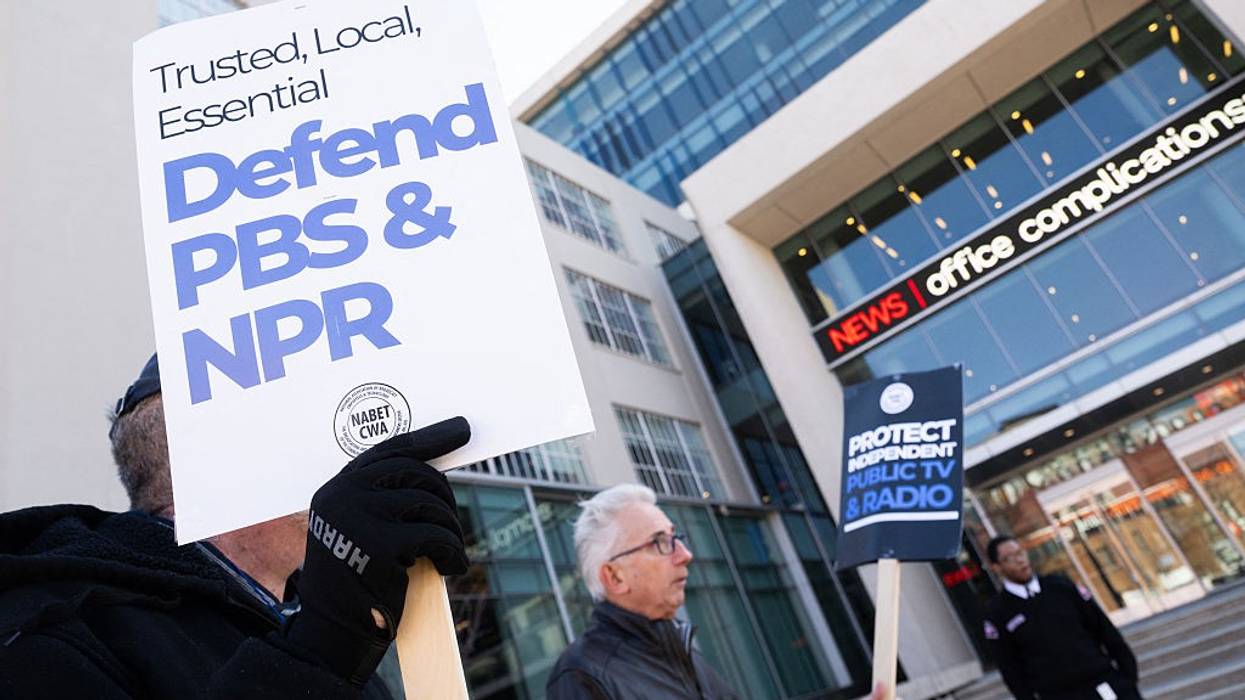
The Trump purge of federal spending is about stripping our democratic system of all accountability mechanisms—including the sorts of journalism that hold our country’s rich and powerful accountable—and replacing it with propaganda.
U.S. Congress’ decision early Friday morning to completely defund the Corporation for Public Broadcasting is a blow to anyone who cares about the role the media must play to sustain the health of a democracy. The move follows a request by President Donald Trump to claw back more than $1 billion lawmakers had already allocated to the entity, which supports National Public Radio and Public Broadcasting Service stations across the country.
Zeroing out federal funding for public media has been a dream of Republicans since the Nixon administration. But it’s one that, until now, never came true. Past efforts ran up against a noisy public—including people of every political persuasion—who believe federal funding for public media is taxpayer money well spent.
Many were engaged in the current fight, too; they dialed their members of Congress by the thousands to urge them to preserve essential funding for favorite local radio and television stations. But Republican members of Congress chose to listen to their Dear Leader instead. The week prior to the rescission vote, Trump threatened to withhold his “support or endorsement” in upcoming elections to any Republican who didn’t back the clawback. And with far too few exceptions Republicans willingly got in line
The loss of CPB funding will be felt for years. “This is a vote to evade public accountability and hide the Trump administration’s destructive actions from independent scrutiny,” Free Press Action co-CEO Craig Aaron said.
It won’t be easy to rebuild what Trump has ruined, but we must because the health of our democracy depends on having independent public media. And the less than $2 per person that U.S. taxpayers willingly paid to fund the CPB was paltry by comparison with what other modern democracies spend on their own public media.
Congress is acting on the false belief that the November 2024 election—which Trump won with less than a majority of the popular vote—delivered them a mandate to remake the federal government in the president’s autocratic image.
The benefits in this public-interest equation far outweighed any expense. They include essential educational programming, invaluable accountability journalism, and the broadcast of emergency information.
As senators debated Trump’s defunding request on July 16, a 7.3-magnitude earthquake struck the Alaska Peninsula, prompting rural and island-bound public-radio stations to issue tsunami alerts to affected listeners throughout the region. It’s these rural stations that rely the most on public funds to air potentially lifesaving updates during emergencies and their aftermath.
Still, Congress is acting on the false belief that the November 2024 election—which Trump won with less than a majority of the popular vote—delivered them a mandate to remake the federal government in the president’s autocratic image, regardless of the costs.
And those costs are very high. The Trump purge of federal spending is not just about downsizing the government so billionaires won’t have to pay their fair share in taxes. It’s about stripping our democratic system of all accountability mechanisms—including the sorts of journalism that hold our country’s rich and powerful accountable—and replacing it with propaganda.
If anything has a popular mandate, it’s the use of federal funds to support public media. Americans routinely rank PBS among the most trusted institutions in the country, and a “most valuable” service taxpayers receive for their money.
These benefits accrue to our democratic system. A 2021 study coauthored by University of Pennsylvania professor (and Free Press board chair) Victor Pickard finds that more robust funding for public media strengthens a given country’s democracy—with increased public knowledge about civic affairs, more diverse media coverage, and lower levels of extremist views. Other studies strongly suggest that declines in such local news and information lead to drops in civic engagement.
There’s reasonable criticism of the public-broadcasting system that had been in place since President Lyndon B. Johnson signed the Public Broadcasting Act of 1967. For example, CPB needed to offer more support to the proliferation of local noncommercial outlets serving communities too often overlooked by legacy commercial media. In addition, tax laws need to better accommodate local commercial news outlets seeking to shift their fiscal models to not-for-profit.
But we should build these changes on the foundation the CPB has established over the decades. That foundation has been swept away by a leader who cares far more about himself than the health of our nation.
It’s hard to find a silver lining to such a dark cloud. If any exists it’s in the energy and organizing for better public media at state and local levels.
New Jersey just re-upped its commitment to fund the Civic Information Consortium, a groundbreaking state-level effort that supports trustworthy, community-based news and information sources throughout the state.
These solutions are needed in addition to a federal mechanism for funding public media, not in place of it.
Local lawmakers in other states—including California, Massachusetts, New Jersey, New Mexico, Pennsylvania, and Washington—are advancing policy solutions that increase public support for and access to nonpartisan and independent local news. Noncommercial media—including existing outlets like Capital & Main, City Bureau, LAist, Mississippi Today, Outlier Media and ProPublica—are offering an antidote to a hyper-commercial media system that is too fearful of political leadership (and protective of profit margins) to act as a check against official abuses of power.
One possible solution is to impose a small tax on advertising to fund the production and distribution of local news and civic information, something Free Press has long advocated for.
But these solutions are needed in addition to a federal mechanism for funding public media, not in place of it. We still need to mobilize behind efforts to restore the CPB or a similar entity to that role. The goal—building a media system that serves the interests of the American people, and not those of a unitary executive—is vital to saving our democracy.
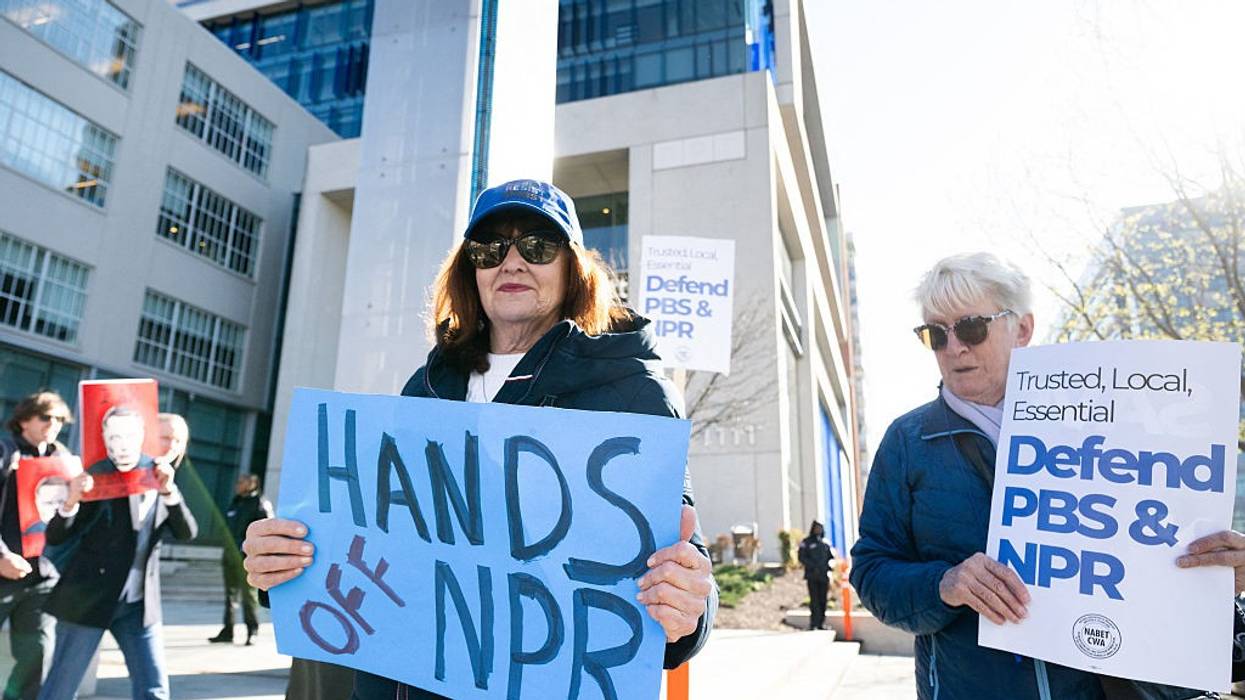
In the U.S., public broadcasting plays a unique role in our media diets as free, reliable, and trusted information. If it goes, we won’t get it back.
Our public radio and TV stations are in grave peril, and with them the unique services they perform for our communities.
By the end of day Friday July 18, we’ll know if Congress has clawed back the money it already gave to public broadcasting, through the Corporation for Public Broadcasting, or CPB. (The House will decide; this is your moment to call your representatives to ask them to support their public radio and TV stations, and to join—for free—Protectmypublicmedia.org.) Even if that money stays protected, though, public radio and TV will continue to be attacked.
I’ve studied public broadcasting here and around the world for 40 years. And I serve on the board of directors of the taxpayer-funded Independent Television Service, which coproduces a lot of the documentaries you might see on public TV. So, of course, I think it’s an important part of our media in America. But I think you probably do, too.
You might know public broadcasting through your local TV or radio station, both private nonprofits. Or you might know it through the services many such stations depend on for daily, high-quality, award-winning programs: National Public Radio (NPR) and Public Broadcasting Service (PBS). Both of them are private nonprofits that make, select, and bundle programs for public stations.
So far, public broadcasting has weathered political attacks, which didn’t begin with this administration but have reached a new high with it. But it has only done so by depending on its users—you and me—to come out and show their support.
Either way, you’re in good company. PBS and NPR are the most trusted media brands in the United States. Half of PBS viewers depend on PBS for news and information, including more than half of people who identify as “extreme conservatives” or “extreme liberals.” NPR’s news is trusted by more than half of those who have heard of it. Americans trust public media news and public affairs much more (by half) than they do commercial mainstream media.
Public stations, like those in Oklahoma, are the ones to issue emergency warnings in time of crisis. Kids learn about job opportunities from CPB’s American Graduate: Jobs Explained series—supported among others by Iowa, Tennessee, and Arizona public broadcasters. In rural Eureka, California, the public station carries program for the local indigenous communities. In south Texas, KDET provides distance learning for kids whose first language is Spanish. ITVS documentaries have brought you inside stories from small towns like Medora, Indiana; Taft, Oklahoma; Norco, Louisiana; and Huslia, Alaska.
American taxpayers contribute, overall, about 15% of the budgets of public radio and TV stations—a percentage that’s usually lower for the bigger, more urban stations, and higher for smaller, rural stations. Alleghany Mountain Radio and KTNA in Talkeetna, Alaska for instance depend on federal funds for about two-third of their budgets. Last year CPB’s budget was $535 million. (For comparison, military marching bands cost the American taxpayers more than $300 million a year.) The rest comes from us as individual donors, from private and corporate foundations, and from local and state taxes.
So it’s not big funding and cutting it would make no dent in the deficit. But it’s critical funding; it’s the money that leverages all the rest of it, and that provides the stability to be able to do the work year after year.
The people who designed public broadcasting—and that included a lot of people, from the late Bill Moyers as an aide to President Lyndon Johnson, to military experts and educators—were worried about how government funding could become censorship. So they created CPB as a private nonprofit, not as a government agency. That is why the Trump administration cannot fire its staff or its board. CPB and local stations all have First Amendment protection against government interference. And that is why the Trump administration cannot tell them what to program or which services, like NPR and PBS, to use. The designers required Congress to give CPB its budget two years in advance, to protect against political shenanigans. That is why Congress has to vote to claw that money back.
What public broadcasting’s designers created is unique in the world—most countries’ public broadcasting is just a mouthpiece for government. In the U.S., public broadcasting plays a unique role in our media diets as free, reliable, and trusted information, a connection to local communities, and a daily example of the essential role of shared public knowledge in democratic life.
If it goes, we won’t get it back.
So far, public broadcasting has weathered political attacks, which didn’t begin with this administration but have reached a new high with it. But it has only done so by depending on its users—you and me—to come out and show their support. Right now is the time to call your representatives, and to join Protectmypublicmedia.org. (Protect My Public Media makes it super-easy to connect with your reps.) We all have something to lose.
The bill threatens "emergency alerts that save lives, local journalism that informs communities, and educational tools that support families, job seekers, and teachers," according to Protect My Public Media.
The Republican-controlled U.S. Senate is on the verge of stripping more than a billion dollars from the Corporation for Public Broadcasting, which could decimate local news stations.
On Tuesday, the chamber voted 50-50, with a tie broken by Vice President JD Vance to move forward with debate on the package, which is underway as of Wednesday morning.
Three Republicans—Sens. Susan Collins (R-Maine), Lisa Murkowski (R-Alaska), and Mitch McConnell (R-Ky.)—joined Democrats in opposition.
If passed, the bill would codify President Donald Trump's illegal impoundment of more than $9 billion in funds that were already appropriated by Congress.
Defenders of public media have mobilized a last-ditch effort to stop the bill, which strips more than $1.1 billion from the CPB, which includes cuts to NPR and PBS.
The progressive group Our Revolution on Tuesday delivered more than 70,000 petitions to the Senate urging them it to vote against the bill's advancement.
"This is a coordinated, authoritarian attempt to silence dissent and dismantle the public good—not 'fiscal policy,'" the group said in a post on social media.
Despite the bill's advancement to the debate stage, the group Protect My Public Media says that the cuts can still be stopped.
"Changes to the bill are still possible," the group said. "Now is the time to urge your senators to remove the proposal targeting public media from the package."
"Taking back this funding—just $1.60 per person per year—wouldn't simply force stations to scale back," the group continued. "It would dismantle services that millions rely on every day: emergency alerts that save lives, local journalism that informs communities, and educational tools that support families, job seekers, and teachers. In many rural and underserved areas, the loss could be total. Some stations may be forced off the air entirely, leaving entire communities without access to essential information."
Legislators have similarly warned about the bill's devastating effects on local news.
This was highlighted in a letter sent Tuesday by Congressional Asian Pacific American Caucus Chair Grace Meng (D-N.Y.), Congressional Black Caucus Chair Yvette Clarke (D-N.Y.), and Congressional Hispanic Caucus Chair Adriano Espaillat (D-N.Y.).
"The federal government is the largest single funding source for public television and radio stations," the letter said. "CPB's elimination would decimate public media infrastructure, as the vast majority of its funding goes directly to local stations, many of which rely on it for over half their operating budgets."
More than 70% of CPB funding goes to local news and radio stations, according to its website. This funds more than 1,500 locally-owned public radio and television stations. Around half of those are in rural areas, which are often "news deserts" that lack other sources of regular coverage.
Murkowski, one of three Republicans who voted against the bill Tuesday, noted this at a Senate Appropriations hearing last month. Speaking about public news stations in her home state of Alaska, she said, "[A]lmost to a number, they're saying that they will go under if public broadcasting funds are no longer available to them."
In May, NPR President and CEO Katherine Maher disputed the Republican characterization of these cuts as a cost-saving measure.
"This is not about balancing the federal budget," she said. "The appropriation for public broadcasting, including NPR and PBS, represents less than 0.0001% of the federal budget."
Rather, she said, it's an investment in a local news ecosystem that pays off in the long-run.
"Every $1 of federal funding generates $7 from local sources," she said, "enabling stations to produce local journalism, support local and regional music and arts, and develop creative, informative, and entertaining programming for distribution across the nation."
The plan to cut public broadcast funding is overwhelmingly unpopular. In a poll conducted by Data for Progress last week, just 21% of voters said they wanted to defund public broadcasting including NPR and PBS, compared with 67% who said they wanted to either keep funding at its current levels or increase it.
The Senate vote on whether to pass the rescissions package could take place Wednesday following debate and amendment votes. Should it pass, it will return to the House, where the deadline for its passage is Friday.
Though it moved on to the debate stage Tuesday, just one more Republican defector could force the bill's cuts to public broadcasting to be revised.
"Now it's our job to speak up and make sure the Senate hears us," said Protect My Public Media in a final urgent plea. "Pulling back support from local stations would leave communities less safe, children less prepared for school, and all of us less connected."
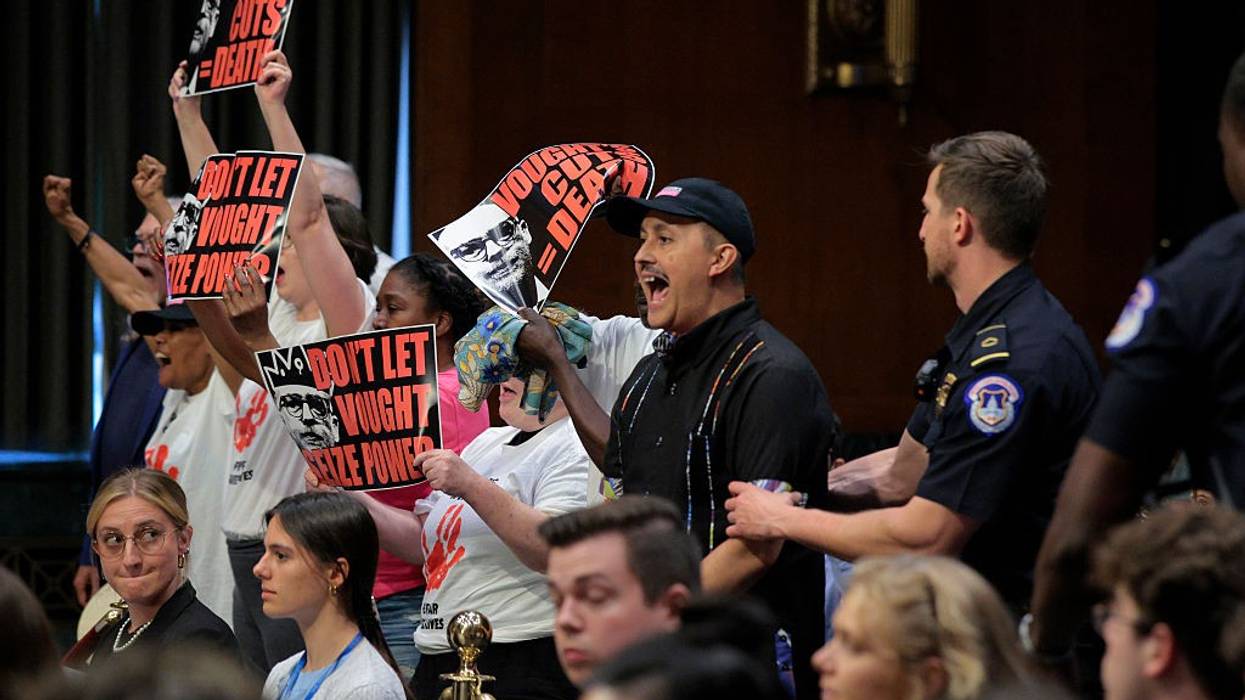
One humanitarian leader pointed out that the bill contains $1.3 billion in cuts to initiatives "every bit as lifesaving" as the AIDS prevention program that Republicans spared amid public pressure.
Progressives and public health advocates on Tuesday were among those urging U.S. senators to vote against Republican legislation that would let President Donald Trump claw back billions of dollars already appropriated by Congress, even as GOP lawmakers ditched plans to cut funding for an HIV-AIDS prevention program that has saved tens of millions of lives in Africa.
Politico reported that Senate Republicans will remove $400 million in funding cuts to the President's Emergency Plan For AIDS Relief (PEPFAR), an initiative of former President George W. Bush credited with saving more than 25 million lives in Africa since its implementation in 2003.
However, the rescission package—a version of which was passed last month by the House of Representatives—still includes $1.3 billion in cuts to humanitarian aid programs that Jeremy Konyndyk, president of the advocacy group Refugees International, called "every bit as lifesaving as PEPFAR."
These include programs to fund public health, emergency food and shelter assistance, peacekeeping, economic development, and other essential aid that helps stabilize war- and disaster-stricken populations in the Global South.
"Even though the Senate has removed $400 million in PEPFAR funding from the rescissions package, another $500 million in global health funding could still be cut," Think Global Health managing editor Nsikan Akpan noted Tuesday.
Office of Management and Budget Director Russell Vought said Tuesday that the White House has agreed to an exemption for PEPFAR funding via a substitute amendment.
"It's substantially the same package and the Senate has to work its will and we've appreciated the work along the way to get to a place where they've got the votes," he explained.
Jacob Leibenluft and Devin O'Connor, respectively senior adviser and senior fellow at the Washington, D.C.-based Center on Budget and Policy Priorities, noted that in addition to cuts to critical programs, the rescission package, combined with the Trump administration's wider campaign of unlawfully impounding funds, "could also make it far more difficult for Congress to fund the government in a bipartisan way in the future."
As the pair explained:
Most of the funds in the rescission package were enacted in March legislation that was passed by Congress—including on a bipartisan basis in the Senate—and signed into law by the president to fund the government for the rest of fiscal year 2025. To provide the 60 votes required to avoid a Senate filibuster, at least eight Democratic senators needed to join with 52 Republican senators to invoke cloture on the funding bill.
But presidential rescission requests operate under different rules and require only 51 votes to pass the Senate, so no Democratic votes are needed. If the Senate approves the package (which passed the House on a party-line vote), this would show that Republicans could quickly revise on a partisan basis, with merely 51 votes in the Senate, a bipartisan funding agreement reached only a few months earlier that required support from no fewer than 60 senators.
"Senators should keep those consequences in mind as they consider the president's current rescission request," Leibenluft and O'Connor advised.
The consumer advocacy group Public Citizen cited both PEPFAR and the billions of dollars in other cuts to foreign aid contained in the package as reasons to oppose it.
Sen. Bernie Sanders (I-Vt.) took aim at the bill's $1.1 billion in cuts to the Corporation for Public Broadcasting (CPB), which funds PBS and NPR.
"Like all authoritarians, Trump doesn't like criticism or objective reporting. He just wants flattery," the senator said on social media. "That's why he wants to defund NPR and PBS. We need media in this country that is not owned by billionaires and corporate interests. I will vote to support public broadcasting."
The chairs of the Congressional Tri-Caucus—Congressional Asian Pacific American Caucus Chair Grace Meng (D-N.Y.), Congressional Black Caucus Chair Yvette Clarke (D-N.Y.), and Congressional Hispanic Caucus Chair Adriano Espaillat (D-N.Y.)—on Tuesday led a letter urging senators to reject the rescissions bill due to CPB cuts.
"CPB's elimination would decimate public media infrastructure, as the vast majority of its funding goes directly to local stations, many of which rely on it for over half their operating budgets," the lawmakers wrote. "In rural and tribal areas, this would shut down stations that serve as lifelines for public safety, education, and culturally relevant programming. Eighty percent of Native American and Alaska Native communities are rural or remote, and public television is often the only station reaching them consistently."
Polling published Tuesday by Data for Progress revealed that the proposed cuts in the rescission package are deeply unpopular, with a majority of respondents saying that funding for global health programs, public broadcasting, and developmental aid should be maintained at current levels or increased.
NEW: As Senate Republicans approach the Friday deadline to pass Trump’s rescissions package, voters reject the proposed billions of dollars in cuts to global aid and public broadcasting.We find that less than 30% of voters want cuts to these programs.www.dataforprogress.org/datasets/pol...
[image or embed]
— Data for Progress (@dataforprogress.org) July 15, 2025 at 6:54 AM
GOP senators—who are under pressure, as the proposed cuts must be approved by Friday under the Impoundment Control Act (ICA) of 1974, the law they are using to skirt a Democratic filibuster—say they hope to pass the entire package before next month's summer recess.
On Monday, a coalition of 24 states and the District of Columbia sued the Trump administration, alleging it violated the ICA and demanding the release of $6.8 billion in approved education funds that the suit argues have been illegally withheld.
"Courts across the country have made it clear to Donald Trump that he and his administration do not have the authority to unilaterally block funding that Congress has already approved," Democratic Michigan Attorney General Dana Nessel said in a statement. "These education grants are designed to help Michigan students thrive. By freezing them, the Trump White House is not just breaking the law but jeopardizing our kids' future."
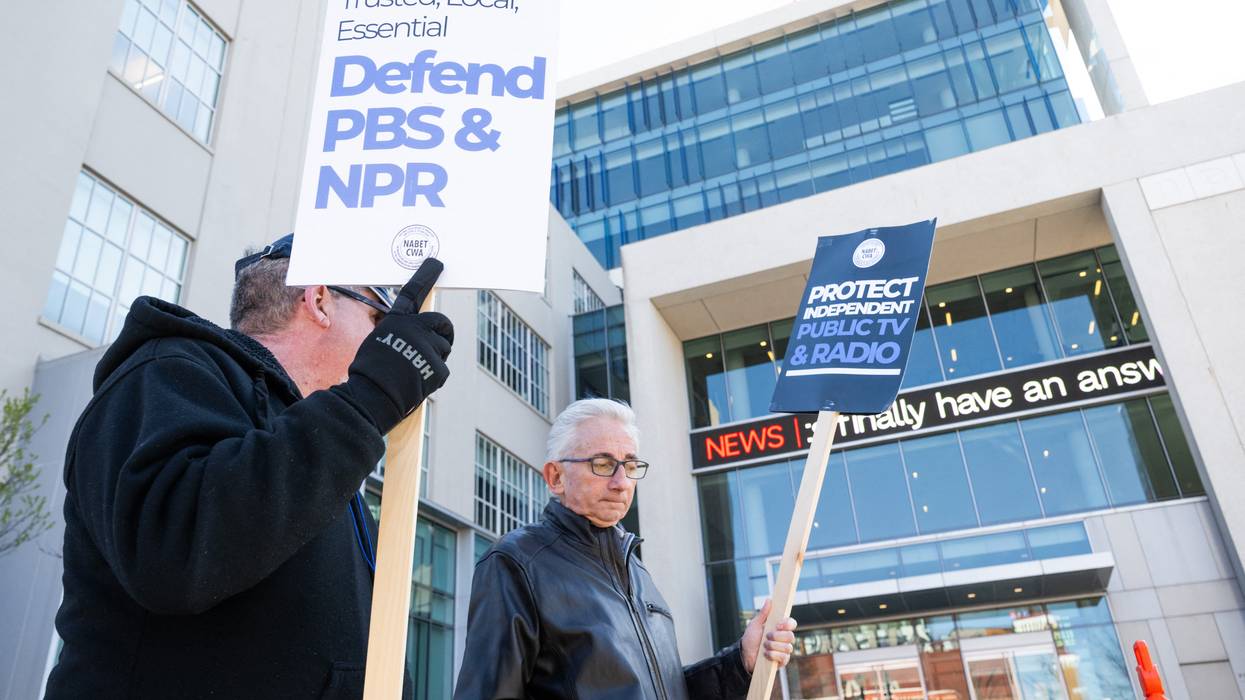
"President Trump is determined to destroy any news outlets that hold him accountable for his actions," said one free press advocate.
The U.S. House of Representatives on Thursday narrowly approved a rescission package that would take back funding for PBS and NPR, as well international aid programs—a move that supporters of public media quickly decried.
Earlier in June, the Trump White House formally asked Congress to rescind over $9 billion in approved spending, the vast majority of which would go toward foreign aid programs. However, it also includes a take back of more than $1 billion in already approved funding for the Corporation for Public Broadcasting (CPB), the congressionally funded and created company that supports public media in the United States. CPB distributes nearly all of those funds to local television and radio stations, according to NPR. The funding clawback impacts funding for the next two fiscal years.
"Public media delivers unmatched value to the American taxpayer," said Patricia Harrison, president and CEO of CPB, in a statement on Thursday. "It serves every family in every part of America."
The package passed with a 214 to 212 vote. All House Republicans except for four voted in favor of the measure, and all Democrats voted against it. It now heads to the Senate.
"From life-saving emergency alerts to local reporting and storytelling, and educational resources that support families, job seekers and teachers—these services exist because public media is committed to serving everyone, regardless of income or zip code. In many rural and underserved areas, the loss could be total," Protect My Public Media, a grassroots advocacy campaign focused on preserving federal funding for public media stations, wrote in response to the House vote. The group is driving emails to the Senate to urge lawmakers to vote against the package.
Co-CEO of the advocacy group Free Press Action, Craig Aaron, said Thursday that there is broad support for federal funding for public broadcasting.
"President [Donald] Trump is determined to destroy any news outlets that hold him accountable for his actions. As they prepare to vote on his request, senators need to know that supporting public media is healthy for their communities and our democracy. Publicly funded news outlets act as counterbalances to a commercial media system that too often puts profits before the public interest," Aaron said.
Big picture, Free Press Action says that the House vote puts the "future of public broadcasting in doubt."
In addition to slashing federal funding for NPR and PBS, the package would cut money for peacekeeping efforts, dollars for health programs that fund activities related to child and maternal health, HIV/AIDS, and infectious diseases, and funding for climate projects.
Lisa Gilbert, co-president of the watchdog group Public Citizen, highlighted some of these other cuts, as well as those to public media, and added that "Republican senators should reflect on how the rescission package threatens to blow up the annual appropriations process."
"The minority party has no reason to agree to bipartisan appropriations legislation if the president and one party alone can undo the deal," she said.

"All of us who care about an independent press, an informed populace, a responsive government, and a thriving democracy have a stake in the outcome of this fight," said one press freedom advocate.
U.S. President Donald Trump on Thursday signed an executive order calling for an end to taxpayer funding for NPR and PBS, an escalation of his dangerous assault on public media that could shutter hundreds of local stations across the country.
The president's order, which he signed behind closed doors, echoes a section of Project 2025, a far-right agenda that called for stripping public funding from NPR, PBS, and other broadcasters on the grounds that they "do not even bother to run programming that would attract conservatives."
Trump's order instructs the Corporation for Public Broadcasting (CPB)—a private nonprofit corporation created and funded by Congress—to "cease direct funding to NPR and PBS, consistent with my administration's policy to ensure that federal funding does not support biased and partisan news coverage."
The executive order, which is expected to face legal challenges, also directs all federal agencies to "identify and terminate, to the maximum extent consistent with applicable law, any direct or indirect funding of NPR and PBS."
Craig Aaron, co-CEO of the advocacy group Free Press, said in a statement Friday that "Trump's attack on public media shows why our democracy is on life support."
"After years of attacking journalists and lying about their work, it's no surprise that Trump and his minions are trying to silence and shutter any newsroom that dares to ask him questions or show the devastating impact of his policies on local communities," said Aaron. "Yet in many of those communities, the local public-media station is the only source of independent reporting. Trump, of course, prefers fawning propaganda—which too many commercial TV and radio broadcasters are willing to provide in exchange for regulatory favors, or to stay off the president's target list."
"All of us who care about an independent press, an informed populace, a responsive government, and a thriving democracy have a stake in the outcome of this fight," he added. "If we unite to defend public media—and I believe we can and will prevail—then we might just save our democracy, too."dele'
It’s not just NPR and PBS, they’re coming to fuck with your local public radio. www.whitehouse.gov/presidential...
[image or embed]
— Matt Pearce (@mattdpearce.com) May 2, 2025 at 12:50 AM
Trump's move was expected, and it came in the wake of reports that the administration intends to ask Congress to rescind previously approved funding for CPB, which is already engaged in a court fight with the president over his attempt to fire several of the organization's board members. The Associated Press reported Thursday that the rescission request "has not yet been sent to Capitol Hill."
According to the organizations' estimates, federal funding accounts for roughly 1% of NPR's annual budget and 15% of PBS's yearly revenue.
In a letter to congressional leaders earlier this week, a coalition of civil society groups led by Reporters Without Borders (RSF) warned that, if enacted, Trump's proposed funding cuts for public broadcasting "will result in the shutdown of dozens, if not hundreds, of local, independent radio and television stations serving Americans in every corner of the country."
"As it stands, public media journalists are often the only reporters attending a school board meeting, or a local zoning hearing, or at the scene of a crime," the groups wrote. "They are the journalists most likely to hold local public officials accountable and expose
corruption. Faraway digital media outlets will not replicate this coverage, and the American public will lose out."
Trump's attack on public broadcasters is part of his administration's broader effort to undermine journalism in the United States and around the world.
RSF said in a report published Friday that Trump's "early moves in his second mandate to politicize the Federal Communications Commission (FCC), ban The Associated Press from the White House, or dismantle the U.S. Agency for Global Media, for example, have jeopardized the country's news outlets and indicate that he intends to follow through on his threats, setting up a potential crisis for American journalism."
"After a century of gradual expansion of press rights in the United States," the group said, "the country is experiencing its first significant and prolonged decline in press freedom in modern history, and Donald Trump's return to the presidency is greatly exacerbating the situation."