
SUBSCRIBE TO OUR FREE NEWSLETTER
Daily news & progressive opinion—funded by the people, not the corporations—delivered straight to your inbox.
5
#000000
#FFFFFF
To donate by check, phone, or other method, see our More Ways to Give page.


Daily news & progressive opinion—funded by the people, not the corporations—delivered straight to your inbox.
The five-term Maine senator's populist opponent has seized on her ties to Wall Street, saying: "I don't think private equity deserves more time with a senator than someone who works two jobs to get by."
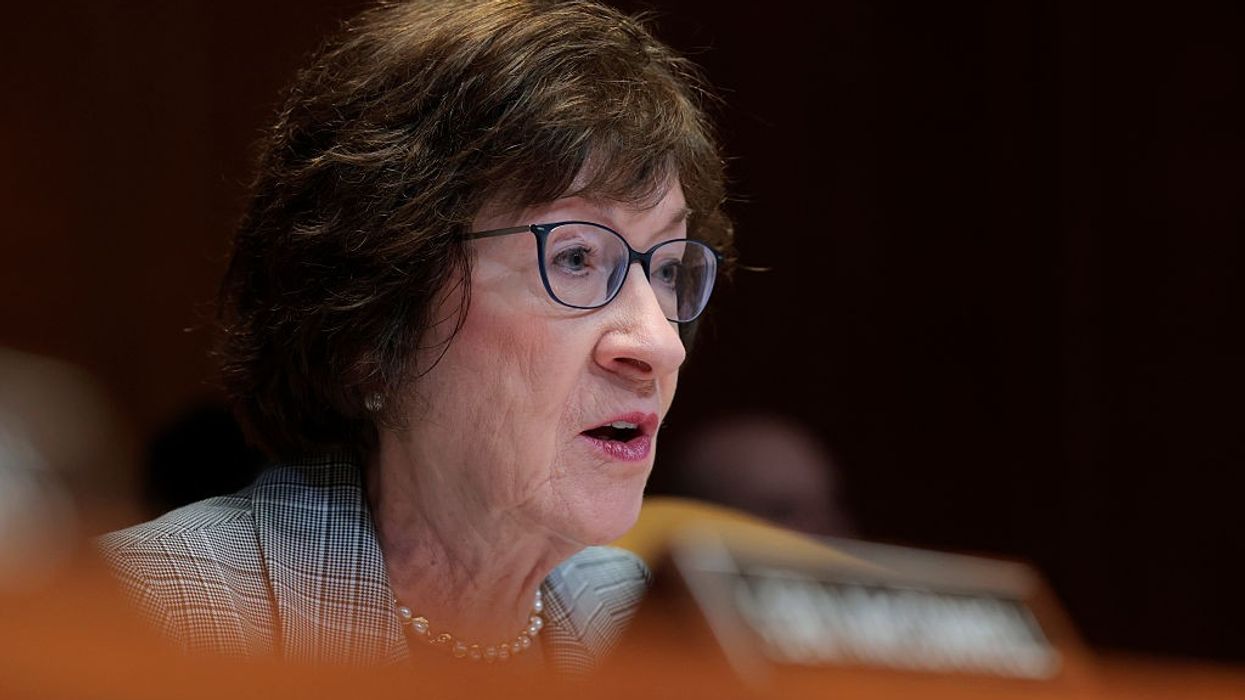
As she gears up for a tough midterm race against a progressive challenger in 2026, Sen. Susan Collins is struggling to shake her reputation as a sellout to corporate interests. A new report out Wednesday may make that even more difficult.
Collins (R-Maine) was one of just three Republican senators not to vote for President Donald Trump's "One Big Beautiful Bill" Act in July, which slashes over $1 trillion from Medicaid to help pay for tax cuts for the rich and is expected to result in over 10 million people losing health insurance coverage.
But Collins did cast a crucial vote to advance the legislation to the Senate floor. An exclusive report from Tessa Stuart in Rolling Stone gives us damning insight into a possible reason why:
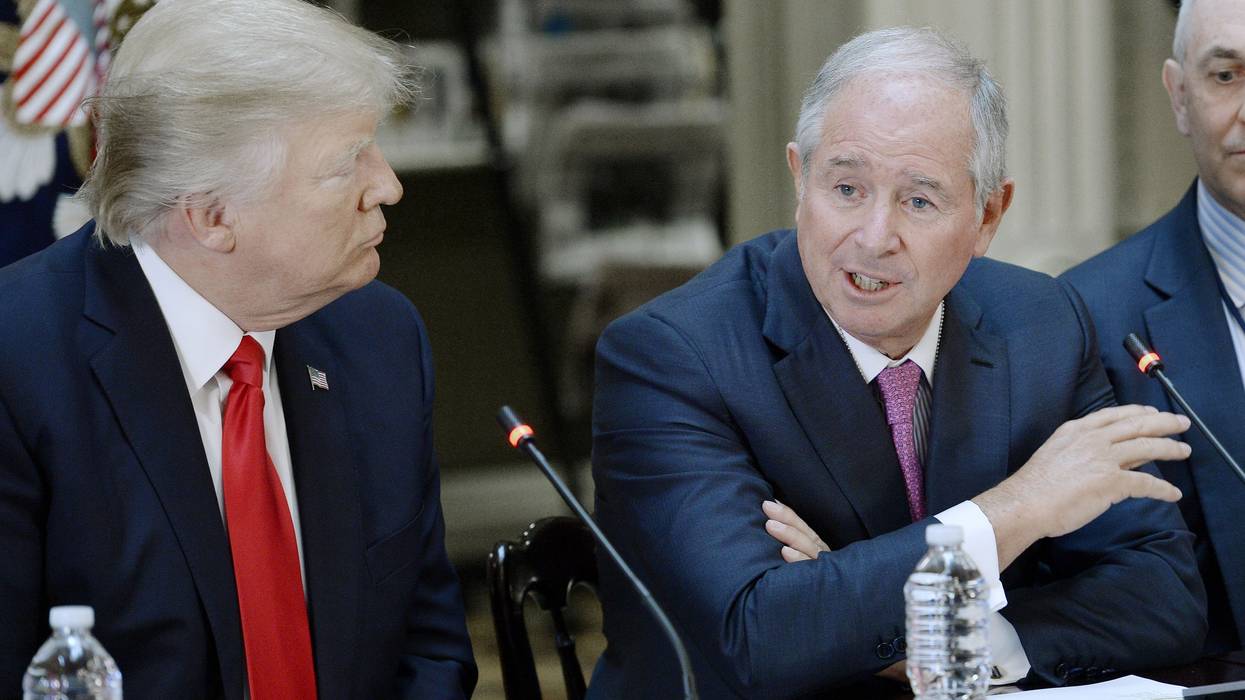
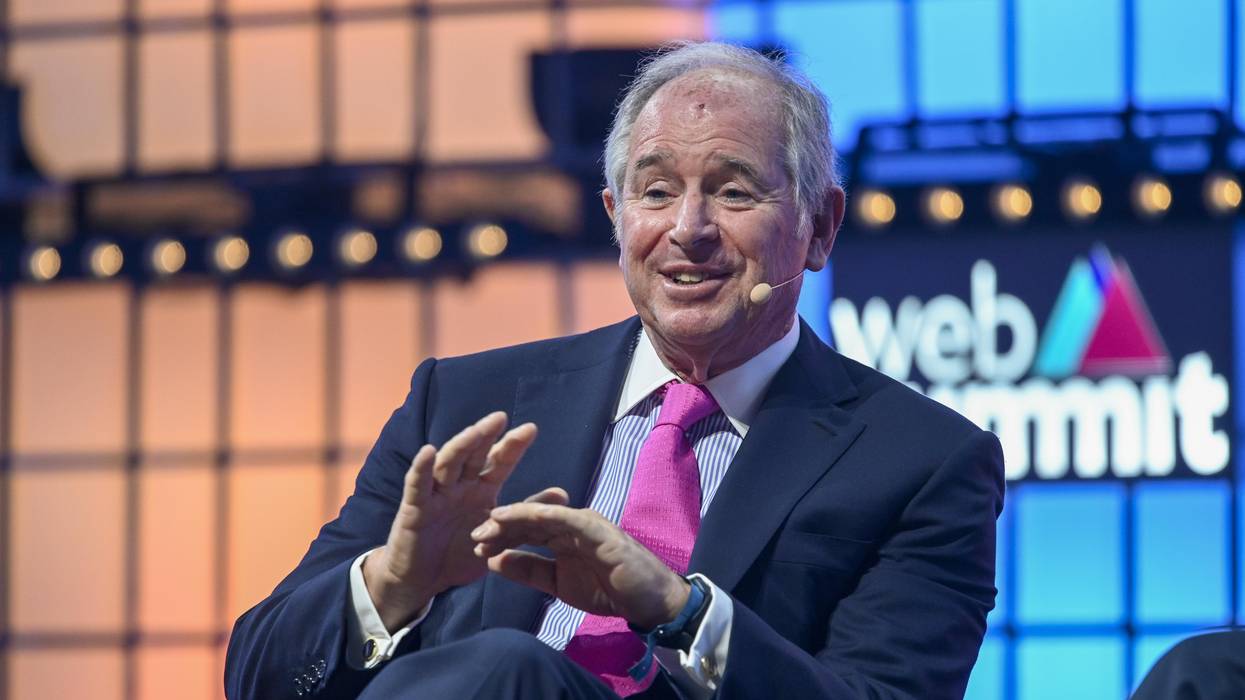
[Collins] cast that vote just one day after private equity billionaire Steve Schwarzman, the chair of the Blackstone Group and a man who will personally reap huge rewards from the bill, kicked in $2 million toward her reelection effort.
On June 27, Schwarzman gave $2 million to Pine Tree Results PAC, a Super PAC backing Collins; on June 28, Collins cast a decisive vote allowing Trump's bill to advance to the floor. The vote was 51-49. Vice President JD Vance was present at the Capitol, on hand to break a tie, but was not needed after Collins voted in favor of the bill.
The bill went on to pass the Senate just a few days later, to Schwarzman's presumed delight, since the legislation both extended the pass-through business deduction—treasured by the owners of private equity firms—and made it permanent, allowing partnerships to deduct 20% of their pre-tax income.
Collins' office has strongly denied that Schwarzman's influence had anything to do with her vote to advance the bill. As press secretary Blake Kernen noted, a tie in the Senate would have been broken by Vance, so "the motion to proceed would have passed without her vote."
However, Stuart notes that this was not Collins' first conspicuous donation from Schwarzman or the private equity industry at large.
According to OpenSecrets, Collins' campaign committee and leadership PAC received over $715,000 from private equity and investment firms—more money than any other person elected to Congress during the 2020 election cycle. It included maximum individual contributions from both Schwarzman and his wife.
That number does not include an additional $2 million that Schwarzman donated to her reelection super PAC in 2020. As Stuart points out, this donation came after Collins dropped a proposed amendment to Trump's 2017 Tax Cuts and Jobs Act, opposed by private equity. That amendment would have "[made] childcare more affordable, by making changes to the private equity industry's beloved carried interest loophole," Stuart wrote.
While Collins denies that her votes are influenced by the piles of money gifted to her by private equity, one of her most formidable challengers in 2026, oyster farmer and Marine veteran Graham Platner, has often seized on her extensive industry ties to hold her up as the poster child for the "oligarchy" he is trying to unseat from power.
"I believe that input from working people is far more important than input from someone who simply has money," Platner thundered during a Labor Day speech in Portland alongside Sen. Bernie Sanders (I-Vt.). "I believe that we shouldn't be settling for crumbs while billionaires eat the cookie we baked. I don't think private equity deserves more time with a senator than someone who works two jobs to get by."
If Democrats are going to regain the Senate in 2026, Maine will be an essential state to win, something that looks increasingly possible as approval ratings for Collins have plummeted over the first half-year of Trump's second term.
Nearly 7,000 attended Platner's speech, during which he railed against the five-term senator Collins' long history of casting "symbolic" dissenting votes against her party, like opposing Trump's tax legislation, or voting to codify Roe v. Wade, to posture as a "moderate" without actually disrupting their agenda.
"Susan Collins' charade is wearing thin," Platner said Monday. "No one cares that you pretend to be remorseful as you sell out to lobbyists. No one cares while you sell out to corporations, and no one cares while you sell out to a president, who are all engineering the greatest redistribution of wealth from the working class to the ruling class in American history."
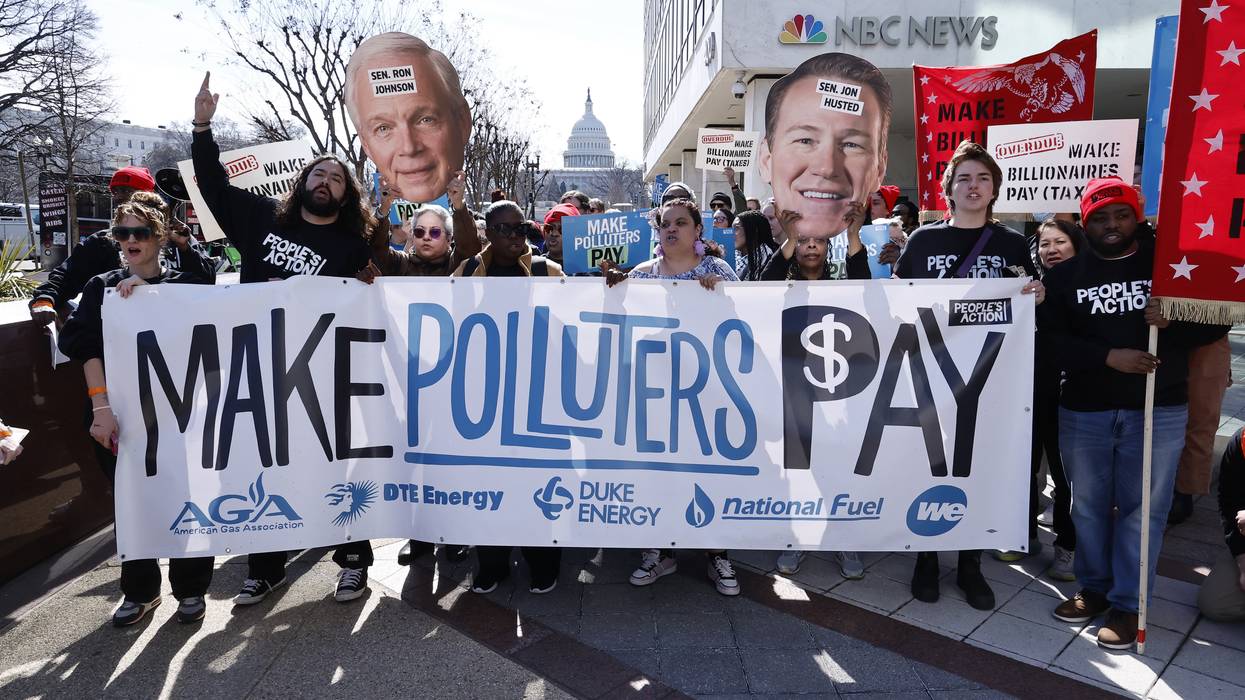
"We deserve a government that uses our money to fund our care, not one that uses our money to line the pockets of corporations," said one protester.
After meeting with their members of Congress, working-class voters on Wednesday marched to the Washington, D.C. offices of three companies behind the nation's housing, health, and climate crises that are set to cash in on federal Republicans' planned tax giveaways.
Organized by People's Action Institute, the protest targeted Blackstone, an investment company that has become the world's largest corporate landlord; UnitedHealth, the country's biggest health insurance company; and American Gas Association, which represents more than 200 energy companies that provide services to 189 million Americans.
The participants—who hailed from 60 congressional districts across 27 states—emphasized issues including unaffordable rent rates, housing insecurity, homelessness, denied medical treatment, unpayable healthcare costs, high utility bills, health harms from fossil fuels, and corporate lobbying for tax cuts that benefit companies and billionaires rather than working people.
"We're here today because we want to make the rich pay their fair share!" declared JJ Ramirez of People's Action Institute member organization VOCAL-Texas. "Blackstone is a private equity company that has over 300,000 rental properties across the country. They gobble up these homes, raise our rents, price gouge us, and then evict us when we can't afford to live in their places. We're here today because Blackstone has conspired with other corporate bad actors so they can gobble up everything that we have."
While the protesters gathered outside Blackstone, they stressed that corporate landlords in general are an issue. Ann Kiesling of Progressive Maryland, which supported tenants at the Enclave Silver Spring apartment complex, said that "I will never forget a woman with a disability telling me about the time she had to hop up, with the help of a neighbor, 15 flights of stairs to get to her apartment because the landlords refused to fix the elevators. I will never forget the parents of a four-year-old telling me how they had to heat up water on their stove to give their kid baths because their landlord refused to fix their hot water for over a month."
"An out-of-state private equity landlord, Hampshire Properties, is raking in massive profits by charging luxury rent prices while letting the building fall apart and leaving tenants with the consequences," Kiesling continued. "And while we are here fighting for basic living conditions against mold, broken elevators, pest infestations, corporate landlords like Hampshire Properties, like Greystar, like Blackstone, are pouring our rent money into lobbyists and elected officials' campaigns instead of fixing their buildings."
Hannah Peterson, a disabled veteran, seminary student, and member of the People's Lobby in Chicago, pointed out Wednesday that "just last night, House Republicans passed their budget resolution to cut millions from Medicaid."
That resolution
sets the stage for cutting not only $880 billion from the healthcare program that serves low-income Americans, but also $230 billion from the Supplemental Nutrition Assistance Program (SNAP), commonly called food stamps. Elected Republicans, who control both chambers of Congress and the White House, want to gut safety net programs to fund an expansion of tax giveaways to the rich that GOP lawmakers passed and President Donald Trump signed in 2017.
"Republicans are already funneling our tax dollars out of programs our communities need and into pockets of private corporations and billionaires," Peterson said. "We deserve a government that uses our money to fund our care, not one that uses our money to line the pockets of corporations."
As Medicare for All advocates often highlight, although the United States has Medicaid and Medicare, which serves seniors, it is the only developed country in the world without universal healthcare. Instead, the U.S. has a for-profit system that often leaves patients unable to access or afford necessary care, including because of denials from insurance companies.
"To the folks at UnitedHealthcare... if you really care about people's health, why don't you publicly come out and oppose the cuts to Medicaid?" asked Citizen Action of New York's Amelia Bittel—who has dysautonomia, a disorder that led to a heart surgery at age 35 and requires weekly blood draws.
"In my city of Syracuse, New York, 48% of the population relies on government-funded programs to get their insurance," said Bittel. "You don't need the $1.3 billion that you stand to profit from these cuts. Your company routinely reports the highest profits. Why not give back to the patients?"
At the American Gas Association, Gloria de Graves from Citizen Action of Wisconsin explained that in the Midwestern state, "if you're not familiar, we hit negative 30°F sometimes, and that means that people can freeze to death in their homes if they do not have a way to heat their homes."
"So all I'm saying is We Energies and Xcel Energy, who I have paid plenty of money to over the years, need to stop charging us so much money so that we can afford to feed ourselves, we can afford to stay housed, and when we are fleeing domestic violence, that there is a safe, electrified, and heated home to go into so that we are warm and safe in the winter," de Graves said.
Celebrating the multisite protest on Wednesday, progressive Congresswoman Rashida Tlaib (D-Mich.) said that "I want to thank you from the bottom of my heart, because there are people in my community that can't afford to come up here."
"It is so important to understand corporate greed and how it is embedded in environmental injustices, embedded in environmental racism," she said. "They want the federal government to continue to literally fund poisoning us, while we get sick here in our country. So they're making us sick, and we're subsidizing the fact that we don't have access to healthcare that supports our families."
In a dispatch earlier this week, People's Action executive director Sulma Arias wrote that her group "refuses to give up. We believe ordinary people have the power to rise and meet this and every moment, if we act together. We believe in the fundamental dignity of every person, without exception, and we believe government exists to serve all people—We the People—not the wealthy few."
The principle cause of today’s crisis of homelessness and housing affordability has one, single, primary cause: billionaires treating housing as an investment commodity.
America’s morbidly rich billionaires are at it again, this time screwing the average family’s ability to have decent, affordable housing in their never-ending quest for more, more, more. Canada, New Zealand, Singapore, and Denmark have had enough and done something about it: We should, too.
There are a few things that are essential to “life, liberty, and the pursuit of happiness” that should never be purely left to the marketplace; these are the most important sectors where government intervention, regulation, and even subsidy are not just appropriate but essential. Housing is at the top of that list.
A few days ago I noted how, since the Reagan Revolution, the cost of housing has exploded in America, relative to working class income.
It seems that everywhere you look in America you see the tragedy of the homelessness these billionaires are causing. Rarely, though, do you hear about the role of Wall Street and its billionaires in causing it.
When my dad bought his home in the 1950s, for example, the median price of a single-family house was around 2.2 times the median American family income. Today the St. Louis Fed says the median house sells for $417,700 while the median American income is $40,480—a ratio of more than 10 to 1 between housing costs and annual income.
In other words, housing is about five times more expensive (relative to income) than it was in the 1950s.
And now we’ve surged past a new tipping point, causing the homelessness that’s plagued America’s cities since former U.S. President George W. Bush’s deregulation-driven housing- and stock-market crash in 2008, exacerbated by former President Donald Trump’s bungling America’s pandemic response.
And the principal cause of both that crash and today’s crisis of homelessness and housing affordability has one, single, primary cause: billionaires treating housing as an investment commodity.
A new report from Popular Democracy and the Institute for Policy Studies reveals how billionaire investors have become a major driver of the nationwide housing crisis. They summarize in their own words:
— Billionaire-backed private equity firms worm their way into different segments of the housing market to extract ever-increasing rents and value from multi-family rental, single-family homes, and mobile home park communities.
— Global billionaires purchase billions in U.S. real estate to diversify their asset holdings, driving the creation of luxury housing that functions as “safety deposit boxes in the sky.” Estimates of hidden wealth are as high as $36 trillion globally, with billions parked in U.S. land and housing markets.
— Wealthy investors are acquiring property and holding units vacant, so that in many communities the number of vacant units greatly exceeds the number of unhoused people. Nationwide there are 16 million vacant homes: that is, 28 vacant homes for every unhoused person.
— Billionaire investors are buying up a large segment of the short-term rental market, preventing local residents from living in these homes, in order to cash in on tourism. These are not small owners with one unit, but corporate owners with multiple properties.
— Billionaire investors and corporate landlords are targeting communities of color and low-income residents, in particular, with rent increases, high rates of eviction, and unhealthy living conditions. What’s more, billionaire-owned private equity firms are investing in subsidized housing, enjoying tax breaks and public benefits, while raising rents and evicting low-income tenants from housing they are only required to keep affordable, temporarily. (Emphasis theirs.)
It seems that everywhere you look in America you see the tragedy of the homelessness these billionaires are causing. Rarely, though, do you hear about the role of Wall Street and its billionaires in causing it.
The math, however, is irrefutable.
Thirty-two percent is the magic threshold, according to research funded by the real estate listing company Zillow. When neighborhoods hit rent rates in excess of 32% of neighborhood income, homelessness explodes. And we’re seeing it play out right in front of us in cities across America because a handful of Wall Street billionaires are making a killing.
As the Zillow study notes:
Across the country, the rent burden already exceeds the 32% [of median income] threshold in 100 of the 386 markets included in this analysis….
And wherever housing prices become more than three times annual income, homelessness stalks like the grim reaper. That Zillow-funded study laid it out:
This research demonstrates that the homeless population climbs faster when rent affordability—the share of income people spend on rent—crosses certain thresholds. In many areas beyond those thresholds, even modest rent increases can push thousands more Americans into homelessness.”
This trend is massive.
As noted in a Wall Street Journal article titled “Meet Your New Landlord: Wall Street,” in just one suburb (Spring Hill) of Nashville:
In all of Spring Hill, four firms… own nearly 700 houses… [which] amounts to about 5% of all the houses in town.
This is the tiniest tip of the iceberg.
“On the first Tuesday of each month,” notes the Journal article about a similar phenomenon in Atlanta, investors “toted duffels stuffed with millions of dollars in cashier’s checks made out in various denominations so they wouldn’t have to interrupt their buying spree with trips to the bank…”
The same thing is happening in cities and suburbs all across America; agents for the billionaire investor goliaths use fine-tuned computer algorithms to sniff out houses they can turn into rental properties, making over-market and unbeatable cash bids often within minutes of a house hitting the market.
After stripping neighborhoods of homes young families can afford to buy, billionaires then begin raising rents to extract as much cash as they can from local working class communities.
In the Nashville suburb of Spring Hill, the vice-mayor, Bruce Hull, told the Journal you used to be able to rent “a three bedroom, two bath house for $1,000 a month.” Today, the Journal notes:
The average rent for 148 single-family homes in Spring Hill owned by the big four [Wall Street billionaire investor] landlords was about $1,773 a month…
As the Bank of International Settlements summarized in a 2014 retrospective study of the years since the Reagan/Gingrich changes in banking and finance:
We describe a Pareto frontier along which different levels of risk-taking map into different levels of welfare for the two parties, pitting Main Street against Wall Street… We also show that financial innovation, asymmetric compensation schemes, concentration in the banking system, and bailout expectations enable or encourage greater risk-taking and allocate greater surplus to Wall Street at the expense of Main Street.
It’s a fancy way of saying that billionaire-owned big banks and hedge funds have made trillions on housing while you and your community are becoming destitute.
Ryan Dezember, in his book Underwater: How Our American Dream of Homeownership Became a Nightmare, describes the story of a family trying to buy a home in Phoenix. Every time they entered a bid, they were outbid instantly, the price rising over and over, until finally the family’s father threw in the towel.
“Jacobs was bewildered,” writes Dezember. “Who was this aggressive bidder?”
Turns out it was Blackstone Group, now the world’s largest real estate investor run by a major Trump supporter. At the time they were buying $150 million worth of American houses every week, trying to spend over $10 billion. And that’s just a drop in the overall bucket.
As that new study from Popular Democracy and the Institute for Policy Studies found:
[Billionaire Stephen Schwarzman’s] Blackstone is the largest corporate landlord in the world, with a vast and diversified real estate portfolio. It owns more than 300,000 residential units across the U.S., has $1 trillion in global assets, and nearly doubled its profits in 2021.
Blackstone owns 149,000 multi-family apartment units; 63,000 single-family homes; 70 mobile home parks with 13,000 lots through their subsidiary Treehouse Communities; and student housing, through American Campus Communities (144,300 beds in 205 properties as of 2022). Blackstone recently acquired 95,000 units of subsidized housing.
In 2018, corporations and the billionaires that own or run them bought 1 out of every 10 homes sold in America, according to Dezember, noting that:
Between 2006 and 2016, when the homeownership rate fell to its lowest level in 50 years, the number of renters grew by about a quarter.
And it’s gotten worse every year since then.
This all really took off around a decade ago following the Bush Crash, when Morgan Stanley published a 2011 report titled “The Rentership Society,” arguing that snapping up houses and renting them back to people who otherwise would have wanted to buy them could be the newest and hottest investment opportunity for Wall Street’s billionaires and their funds.
Turns out, Morgan Stanley was right. Warren Buffett, KKR, and The Carlyle Group have all jumped into residential real estate, along with hundreds of smaller investment groups, and the National Home Rental Council has emerged as the industry’s premiere lobbying group, working to block rent control legislation and other efforts to control the industry.
As John Husing, the owner of Economics and Politics Inc., told The Tennessean newspaper:
What you have are neighborhoods that are essentially unregulated apartment houses. It could be disastrous for the city.
As Zillow found:
The areas that are most vulnerable to rising rents, unaffordability, and poverty hold 15% of the U.S. population—and 47% of people experiencing homelessness.
The loss of affordable homes also locks otherwise middle class families out of the traditional way wealth is accumulated—through home ownership: Over 61% of all American middle-income family wealth is their home’s equity.
And as families are priced out of ownership and forced to rent, they become more vulnerable to homelessness.
Housing is one of the primary essentials of life. Nobody in America should be without it, and for society to work, housing costs must track incomes in a way that makes housing both available and affordable.
Singapore, Denmark, New Zealand, and parts of Canada have all put limits on billionaire, corporate, and foreign investment in housing, recognizing families’ residences as essential to life rather than purely a commodity. Multiple other countries are having that debate or moving to take similar actions as you read these words.
America should, too.
"Billionaires see housing as a way to boost their bottom line, instead of a necessity to survive."
A new report out Monday puts "into numbers the trend that ordinary Americans have known to be true for years," said economic justice advocates behind the analysis: "Their everyday struggles of affording a home are made worse by the sweeping influence that billionaires have over the market."
The Institute for Policy Studies (IPS) joined Popular Democracy in compiling a 71-page report titled Billionaire Blowback on Housing, aiming to get to the bottom of growing concerns in recent years about how Wall Street, as Democratic vice presidential nominee and Minnesota Gov. Tim Walz said earlier this month, is "buying up housing and making them less affordable."
The two groups found that a small number of wealthy individuals and their investment arms, who control "huge pools of wealth," have spent some of their vast resources on "predatory investment and wealth-parking in luxury housing"—contributing significantly to the crises of unaffordable rents, out-of-reach homeownership, and homelessness.
Billionaires are "supercharging existing problems" in the housing market, according to the report.
The authors take issue with assumptions about what is driving the housing crisis, which is characterized by record-breaking homelessness in 2023 with more than 653,000 people unhoused; half of tenants paying more than 30% of their income on rent, making them cost-burdened; and a significantly widened gap between the income needed to buy a house and the actual cost of a home.
"The real estate industry would like you to believe the problem is entirely one based on supply and demand," and that regulations need to be changed to allow for the construction of more affordable housing, reads the report. But with 16 million vacant homes across the U.S.—28 for every unhoused person—"the reality is that the owners of concentrated wealth... are playing a more pronounced role in residential housing, thereby creating price inflation, distortions, and inefficiencies in the market."
Signifying the U.S. real estate market's "emerging status as global tax haven," the number of vacant units in some communities exceed the number of unhoused people partially because wealthy investors are acquiring property and intentionally leaving it vacant, found IPS and Popular Democracy.
"The reality is that the owners of concentrated wealth... are playing a more pronounced role in residential housing, thereby creating price inflation, distortions, and inefficiencies in the market."
For example, in 2017 there were more than 93,500 vacant units in Los Angeles and an estimated 36,000 unhoused residents, with vacancies treated as "a structural feature of the market thanks to the presence of a small class of wealthy investors who engage in speculative financial behavior."
Billionaires and their investment firms, such as Blackstone—now the world's largest corporate landlord—are also "taking advantage of the tight low-income rental market, lack of publicly funded affordable housing, displacement after the foreclosure crisis, and inaccessible homeownership to get into the business of single-family and multifamily home rentals, and buying up mobile home parks," the report reads.
In one section of North Minneapolis, private equity firms including Pretium Partners "snatched up blocks of single-family rental homes, added fees on top of rent, and then proceeded to neglect the maintenance and upkeep of their properties."
Blackstone now owns 300,000 residential units across the U.S. and nearly doubled its portfolio in 2021. With $1 trillion in assets, it owns 63,000 single-family homes, 149,000 apartment units, and 70 mobile home parks.
Corporate ownership of rental housing stock "has not translated into housing stability, particularly for working-class households and communities of color," reads the report. "Rather, corporate landlords have concentrated their predatory investment practices—flipping, rent gouging, habitability violations, and evictions—in lower-income communities of color."
The billionaire class and its private equity firms, said Chuck Collins, co-author of the report and director of the Program on Inequality and the Common Good at IPS, has "severely disrupted" the housing market.
"This is not your grandparent's gentrification—but a hyper-gentrification fueled by concentrated wealth driving up land and housing costs, expanding short-term rentals, and treating housing like a commodity to speculate on or a place to park wealth," said Collins. "The billionaires are displacing the millionaires, and the millionaires are disrupting the housing market for everyone else."
The report calls on policymakers to expand social housing—housing developed by the government or a not-for-profit entity to ensure individuals, households, and families are guaranteed housing as a human right, which cannot be sold for profit.
Social housing could be paid for by levying mansion taxes, regulating predatory practices in the real estate market, and taxing billionaires.
Local communities can also protect residents and generate revenue for affordable housing through actions including:
"Billionaires see housing as a way to boost their bottom line, instead of a necessity to survive. This current system doesn't serve our communities," said Analilia Mejia and DaMareo Cooper, co-executive directors for Popular Democracy. "We need to do better. That starts with re-shaping our systems to look out for the needs and desires of working families, instead of billionaire investment and speculation. We need to safeguard renters' rights, and drastically expand the availability of permanently and truly affordable quality housing."
And how a new social housing bill introduced Rep. Alexandria Ocasio-Cortez and Sen. Tina Smith aims to address the crisis harming families and communities nationwide.
In its most recent year-end letter, the private equity firm Blackstone gave its stockholders a seemingly counterintuitive assurance: the lack of new housing stock was reason for optimism.
Why does a stagnant growth in new living spaces benefit Blackstone? Because it is the nation’s largest corporate landlord. For the firm and its investors, chronic housing shortages mean more power to set prices and more leverage to extract wealth from vulnerable working-class tenants.
Blackstone’s letter reveals the malevolent and distortionary role private equity plays in our residential real estate market and underscores the fundamental problem with housing commodification writ large.
Our market-based system simply does not give the private sector incentives to meet the public’s demand for high-quality, permanently affordable housing. Providing it would be against the sector’s economic interests since new supply would bring down prices and negatively impact profitability.
Social housing will make certain that housing is treated as a public good that satisfies a social need, not a financial asset to profit off of.
The negative effects of housing commodification are all around us. For-profit investors are snatching up properties at an alarming rate – 1 in 6 of all residential homes in the second quarter of this year – giving them the power to charge residents junk fees on top of rent increases.
As a result, a record number of renter households – 22.4 million individuals and families, half of all renters – are now paying more than 30 percent of their income on rent and other housing-related expenses. This places a significant strain on household budgets and contributes to a range of problems related to mental health including anxiety and depression.
Tenant unions and working-class institutions across the country have spent years fighting back against the financialization of housing, organizing their communities against speculators in favor of greater tenant protections and fighting for housing to be a human right.
A promising step in this direction was taken last week when Senator Tina Smith (D-MN) and Congresswoman Alexandria Ocasio-Cortez (D-NY) introduced new legislation designed to solve our acute affordability crisis.
The Homes Act would invest in the construction of new social housing while dedicating resources to rehabilitate the existing stock. The bill proposes to establish a Housing Development Authority, authorizing $300 billion over the next ten years for the new department to finance and develop permanently affordable housing. It would also repeal the obsolete Faircloth Amendment, a provision that effectively limits the availability of public housing, removing structural barriers to the construction of new public units.
Rents would be capped at 25 percent of a household’s income for tenants, greatly easing the burden of housing for them.
Perhaps the most innovative aspect of the bill is the importance it places on equity and democracy. The new units will be built by union workers; priority will be given to protect underserved communities of color from displacement; a significant share of the affordable housing stock will be earmarked for households with low incomes; and many of the new homes will be placed under democratic and community control when transferred to eligible entities like community land trusts and tenant-owned cooperatives.
The emphasis on permanence in the provision of social housing is critical for understanding housing struggles today. Permanent affordability will not only begin the process of decommodification, but it will also protect buildings from private equity firms who see affordable housing as another sector they can plunder.
Affordable housing already accounts for eight percent of Blackstone’s BREIT portfolio, but there is no genuine commitment to providing reasonably priced homes to working-class households. The firm has opened its coffers more than once to defeat rent control ballot initiatives and it exploits programs like the Low-Income Housing Tax Credit (LIHTC) to secure the tax benefits that come with investing in affordable housing. Yet Blackstone still raises rents, evicts tenants, and underinvests in maintenance.
The permanence of affordability is the cornerstone of social housing. Social housing will make certain that housing is treated as a public good that satisfies a social need, not a financial asset to profit off of. Only when speculators and concentrated wealth are reined in will we solve the housing crisis and guarantee safe, healthy, affordable, and dignified homes for all.
Blackstone has the opportunity to cement itself as a leader in the green transition by continuing to invest in clean energy solutions and closing the deadly General J Gavin Coal Plant in Ohio.
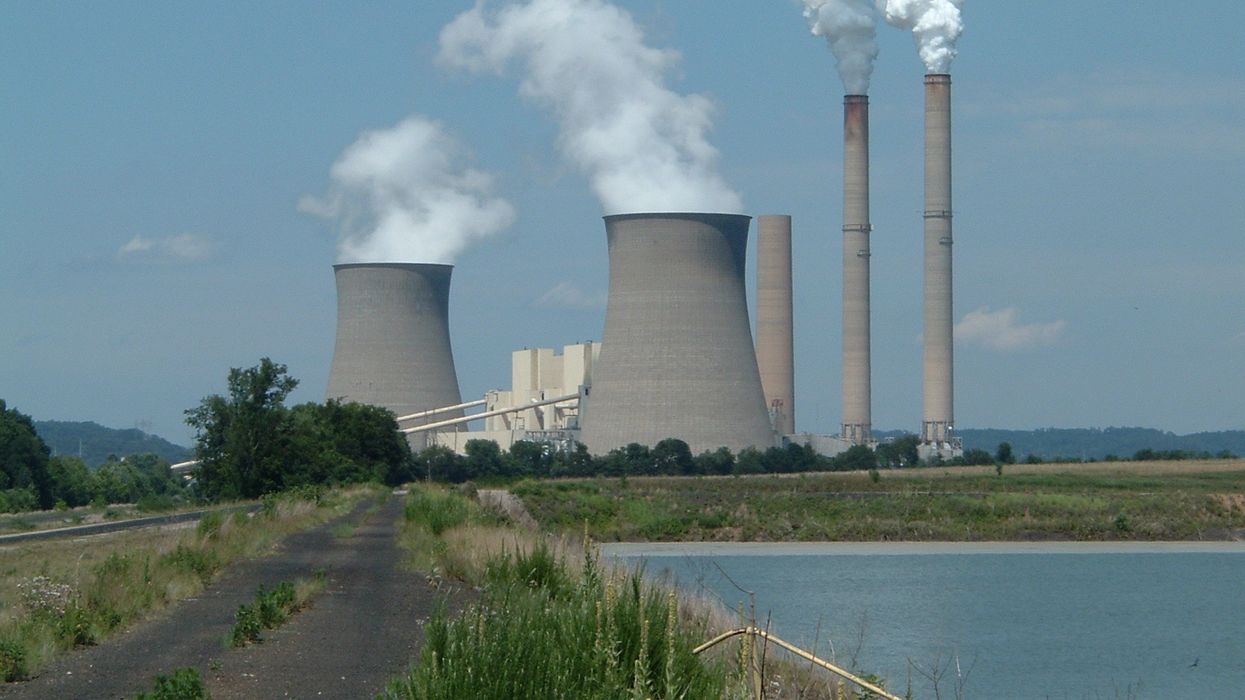
Private equity giant Blackstone is invested in one of the largest and dirtiest coal plants in the United States, the General J Gavin Coal Plant in Ohio. Despite Blackstone’s commitments to reducing carbon emissions in new assets, various investments in renovating and constructing energy efficient buildings, and a $100 million investment in businesses that support the energy transition, the firm remains invested in this aging, polluting coal plant. As the Gavin Coal Plant celebrates its 50th birthday this year, it’s time for Blackstone to start planning the plant’s retirement.
Contradicting their corporate commitments to emissions reduction, Blackstone’s Gavin coal plant has emitted 106 million metric tons of CO2 into the atmosphere since the firm acquired the plant in 2016. These emissions impact communities well beyond Cheshire, Ohio. Because of its location, the Gavin Coal Plant is upwind of several major areas across the Eastern Seaboard such as Pittsburgh, Buffalo, and Baltimore, meaning the health impacts stretch across the country as well in a widespread plume of toxins. Sierra Club modeling found Gavin to be the nation’s deadliest coal plant as of February 2023, causing an estimated 244 premature deaths each year from particulate emissions.
Not only is Gavin deadly, it’s old and expensive. As the plant turns 50 this year, Gavin is an outlier among other coal plants slated for closure. Since 2000, the average age of retirement for coal-fired generating units has been 50 years. And, as coal plants age, operations and maintenance costs increase while performance decreases. In 2020, 46% of global coal plants were running at a loss, and Carbon Tracker estimates this rising to 52% by 2030 . Yet, Blackstone has not announced a retirement date for this old, inefficient asset.
Blackstone is in danger of missing this brief opportunity to leverage this program to repurpose an old, dirty, and inefficient coal plant while delivering returns for investors.
Blackstone has the opportunity to cement itself as a leader in the green transition by continuing to invest in clean energy solutions and closing the General J Gavin Coal Plant in Ohio. There’s extra funding for that green transition through the Inflation Reduction Act (IRA,) but the window of opportunity for that financing is closing. Blackstone should close the Gavin Coal Plant and repurpose the site for the renewable energy transition, and the IRA funding provides a unique financial opportunity for the firm to do just that.
Blackstone executives are well aware of the investment opportunities that exist in the clean energy transition. In fact, in Blackstone’s 2023 Q2 earnings call, President and Chief Operating Officer Jon Gray stated that the IRA would be helpful in spurring investments in the energy transition. Gray said:
The IRA in the U.S. has made a big difference. I mean, there was $250 billion of large-scale renewable projects announced in the last seven years. And there was an equal amount announced in the last year basically since the IRA passing. So, we would say very large scale opportunity and should result in a new area for us to grow and generate incremental fees and returns for investors.
By Blackstone’s own calculus, the IRA is a critical tool for spurring investments and generating returns for investors. Blackstone should get an application in for the Energy Infrastructure Reinvestment Program by the end of the year to ensure the firm is in the running for favorable financing terms to retool, repurpose, or replace the Gavin Coal Plant.
As of March 2024, there were 203 active applications in the Department of Energy’s Loan Programs Office which oversees the Energy Infrastructure Reinvestment Program. Over $262.2 billion in loans have been requested, and the program budget is only $250 billion. Blackstone is in danger of missing this brief opportunity to leverage this program to repurpose an old, dirty, and inefficient coal plant while delivering returns for investors. Blackstone must act now and retire the Gavin Coal Plant.
If Kennedy was serious about combating the rise of corporate homeownership—or the perception that he’s a de facto Republican candidate, for that matter—he would call out Blackstone’s nefarious influence by name.
At a time when working Americans struggle to make ends meet on multiple fronts, one cost-of-living crisis stands out as particularly dire: the national housing crisis. In our largest cities, decades of systemic underbuilding—de facto mandated by bans on multifamily housing—have made housing a nightmare for longtime residents and newcomers alike. But the housing crisis extends well past New York and San Francisco: Extreme inequality and poor monetary policy have made it difficult to rent and own homes across much of rural and suburban America. The crisis has been exacerbated by the rise of corporate home ownership, which has put housing security further out of reach for working Americans.
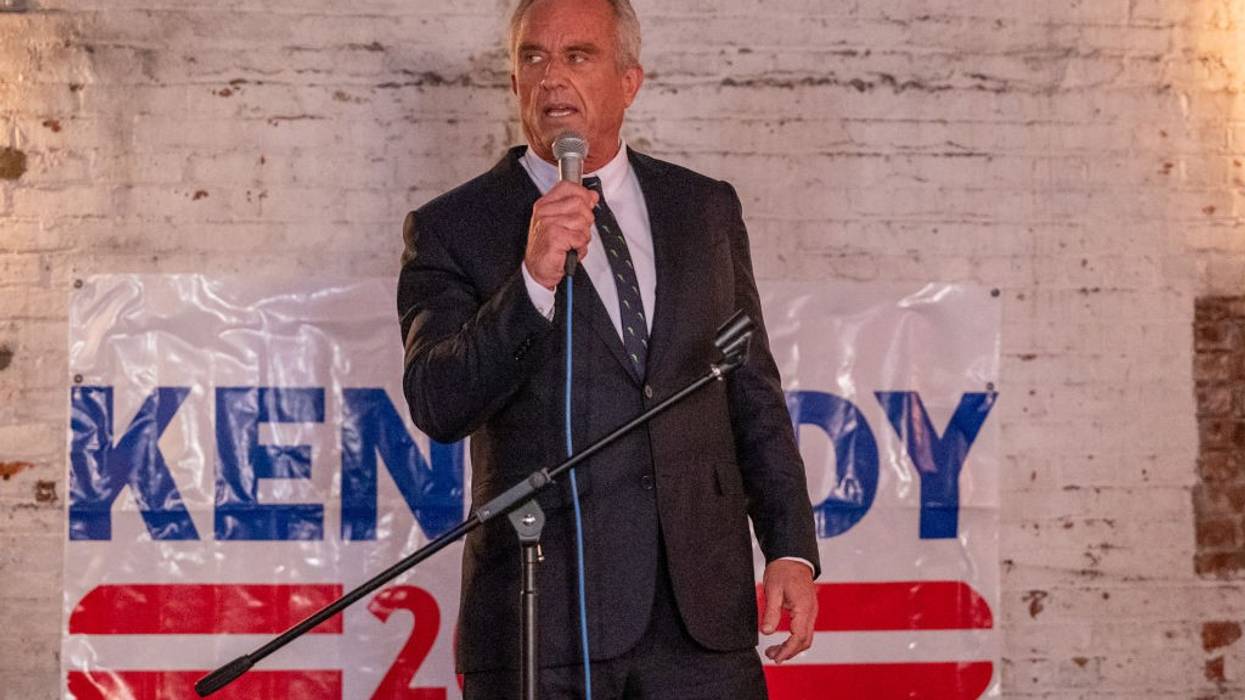
Since launching his quixotic presidential candidacy, Robert F. Kennedy Jr. has made the issue of corporate homeownership central to his campaign. On the campaign trail, Kennedy has notably criticized investment firms BlackRock, Vanguard, and State Street by name, arguing they will someday be able to “outbid your children.” But interestingly, Kennedy’s railing against corporate homeownership has not extended to the firm that best embodies the encroachment of finance into housing: Blackstone.
It’s unlikely Kennedy’s hands-off approach to Blackstone is a coincidence. Since originally entering the race as a reactionary candidate running in a Democratic primary, Kennedy has been accused of being a Republican plant. Given that Blackstone CEO Stephen Schwarzman is a Donald Trump-loving Republican mega-donor, it’s pretty easy to connect the dots on Kennedy’s rhetorical silence. In the 2022 cycle alone, Schwarzman gave over $35 million to congressional Republican campaigns. If Kennedy was serious about combating the rise of corporate homeownership—or the perception that he’s a de facto Republican candidate, for that matter—he would call out Blackstone’s nefarious influence by name.
With prospects for homeownership in coastal metropolitan areas increasingly unrealistic for middle-class Americans, Blackstone and other private investors’ push into the Sunbelt threatens remaining opportunities for homeownership.
It’s a shame, really, because at a time when Blackstone is pushing even deeper into the housing market, it would be useful to call attention to the company’s detrimental impact. The time of Blackstone being content with its status as a commercial real estate giant is long gone. Since the financial crisis, the company has established a strong presence in everything from predatory rent-to-own schemes to student housing. Blackstone’s seemingly insatiable quest for dominance in the rental home market has been met with criticism in and outside the United States.
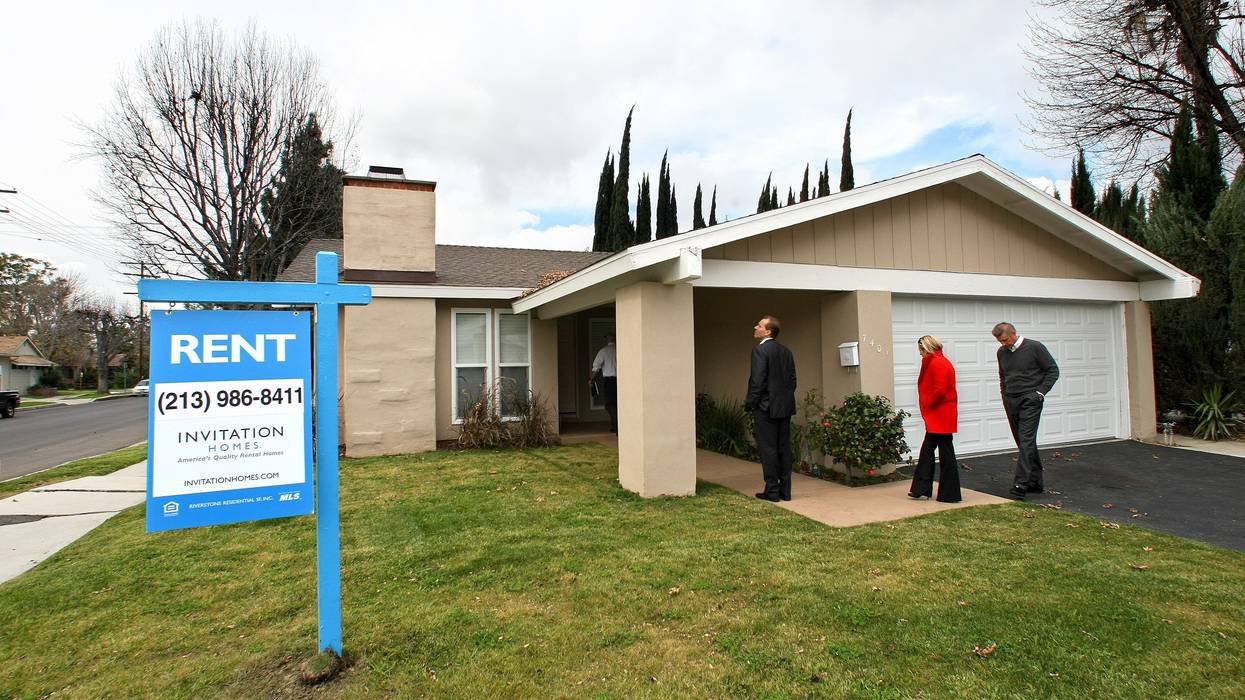
Blackstone’s early push into housing occurred in the aftermath of the subprime mortgage crisis, when it profited handsomely off home foreclosures. Like other major institutional investors that have pushed into housing, Blackstone has taken advantage of strict zoning laws that constrain the development of new housing. Invitation Homes, owned by Blackstone from 2012 to 2019, even acknowledged in an SEC filing that it invests “in markets that we expect will exhibit lower new supply.”
At a time when home prices in key markets continue to skyrocket, Blackstone and similar firms have caused further pain by accelerating the corporatization of U.S. homeownership. In America’s Sun Belt, a macroregion known for relatively affordable middle- and working-class housing opportunities, private investors’ impact has been particularly dire. By one metric, over a third of homes bought in markets including Atlanta, Phoenix, and Charlotte were made by corporate investors in the first quarter of 2021.
With prospects for homeownership in coastal metropolitan areas increasingly unrealistic for middle-class Americans, Blackstone and other private investors’ push into the Sunbelt threatens remaining opportunities for homeownership. Given the evidence that corporate homeownership efforts disproportionately target housing stock in Black-majority neighborhoods, these schemes threaten to further exacerbate the racial wealth gap.
As negative headlines surrounding Blackstone’s housing push mount, it’s no surprise that the company has desperately tried to reclaim the narrative in its favor. Blackstone has aggressively touted Home Partners of America, a rent-to-own company acquired in 2021, as a service to help tenants eventually own their own properties. Given that around 85% of renters of single-family homes by one estimate wouldn’t qualify for a mortgage, it’s not hard to see the program’s appeal.
But rather than giving renters a shot at the American dream, tenants in Home Partners’ properties have faced nightmarish housing conditions, made worse by high prices and predatory contract terms. Even worse, this has often been accompanied by harm to tenants’ credit scores, putting the dream of homeownership even further out of their reach.
The harm caused by Blackstone’s efforts to dominate rental housing extends beyond tenants and prospective homebuyers. First launched in 2017, the Blackstone Real Estate Income Trust (BREIT) has come under fire by regulators for its unconventional, if shady, investment structure. Funded largely through borrowed money—BREIT “invests with roughly 50% borrowed money” with a focus on rental apartments in Sunbelt communities, per The Wall Street Journal—BREIT’s limits on redemptions amid investor discontent has caught the ire of the SEC.
It’s not hard to see why: A trust that aggressively limits withdrawals in the face of investor discontent should not be trusted to continue its expansion in one of the country’s most crucial economic sectors. In a congressional testimony earlier this year, Duke law professor Gina-Gail S. Fletcher compared BREIT’s unethical practices to that of FTX, the notorious crypto hedge fund founded by Sam Bankman-Fried.
Given that Republicans were only able to capture the House by the narrowest of margins in 2022, it’s easy to make the case that Blackstone CEO Schwarzman’s millions played a decisive role. Amid the Republican-induced chaos of the 118th Congress in the House, party lawmakers have pushed hard for policies that would make the housing crisis even worse. This includes Republicans’ push for cuts to housing assistance and efforts to sabotage the Consumer Financial Protection Bureau (CFPB), a federal agency that has fought hard for tenants. While Kennedy has cried foul about supposedly disproportionate media criticism of his campaign, his silence on Blackstone is yet another mark against taking him seriously as a candidate.
"Firms like Blackstone should be ashamed of this sinister investment strategy that contributes to catastrophe and rebuilds after it strikes," a report author said.
In yet another instance of disaster capitalism, private equity companies like Blackstone have found two ways to profit from the climate emergency: first by investing in fossil fuel infrastructure and then by buying up restoration companies that clean up after increasingly extreme weather events.
That's one of the main takeaways from a report released Thursday by the Private Equity Stakeholder Project (PESP) and Resilience Force titled Private Equity Profits From Disaster at the Expense of Workers, Communities, and Climate.
"Firms like Blackstone should be ashamed of this sinister investment strategy that contributes to catastrophe and rebuilds after it strikes," report co-author and PESP research coordinator Azani Creeks told Common Dreams.
"The investments Blackstone has made in both ServPro and its fossil fuel companies have long-term consequences that are borne primarily by already marginalized communities in the United States."
The report documents a shift that took place in the disaster recovery industry following Hurricane Katrina in 2005. Before that historic storm, cleanup work in a given area was usually done by smaller local companies.
"After the massive efforts required post-Hurricane Katrina and the increasing frequency and magnitude of climate disasters, private equity firms saw an opportunity to consolidate the market by buying up smaller companies," Creeks wrote in the report.
And the trend continues. Private equity firms bought 72 restoration companies between January 2020 and June 2023, with the number of purchases rising each year. They acquired 13 in 2020, 20 in 2021, 25 in 2022, and 14 during just the first six months of 2023. If that pace continues through the end of the year, the 2023 total will rise to 28, more than double the yearly purchases three years ago.
The report includes a list of 14 major disaster relief companies owned by private equity firms, five of which also invest in fossil fuels. For example, Blackstone, which owns ServPro, also bought Ohio's General James Gavin Power Plant—one of the leading single sources of coal pollution in the U.S.— in 2017. In another example, Louisiana-based disaster relief company the Lemoine Company also manages Lemoine Pipeline Services. The company is owned by the private equity firm Bernhard Capital Partners.
This profit-making strategy has major environmental justice implications.
"The investments Blackstone has made in both ServPro and its fossil fuel companies have long-term consequences that are borne primarily by already marginalized communities in the United States," Creeks told Common Dreams, adding that ServPro often hires immigrants and people of color who are vulnerable to unfair and unsafe labor practices like wage theft.
"Furthermore," Creek added, "Blackstone's financing of fossil fuel assets also inflicts direct harm on these same communities, who bear the brunt of toxic emissions and climate disasters."
Even if private equity firms aren't funding fossil fuels, their acquisition of restoration companies still means they have a responsibility to workers and communities, the report argues.
As disaster restoration companies have consolidated and gone national, they have organized themselves in a series of franchises and subcontractors. Of the 72 companies acquired in the last three years, more than 80% of them were instances of larger companies buying up smaller ones. These often-opaque corporate structures can make it difficult for workers to challenge their employers over issues like wage theft or unsafe working conditions. Undocumented workers are especially vulnerable, because any complaint may be met with a threat to contact immigration authorities.
"Though issues with wage theft and worker health and safety have long existed in the construction and disaster restoration industries, with an investment from the world's largest asset manager, you would expect to see these issues less frequently as more resources can be implemented to protect workers," Creek said. "Instead, the problems at ServPro and other private equity-owned disaster restoration companies persist, with even less mechanisms for accountability and public scrutiny than before."
One worker named Joél Salazar, who is also an organizer with Resilience Force, shared his experience ServPro subcontractor Royal Services. He said the company offered to pay his way from Florida to Colorado in early 2022 to help with wildfire recovery there, and promised him 40-hour workweeks and weekly paychecks when he arrived. But the travel costs never materialized, weeks started out closer to 20 hours, and the pay ended up being every other week instead.
"The company is stealing from me."
What's more, the payment was made via a Visa card. When Salazar said he had to return to Florida, the company canceled his card despite the fact that a significant amount of his earnings were still on it.
"The company is stealing from me," he said in the report.
Salazar said he wanted private equity firms and investors to be aware of what their companies were doing.
"Investors, I'm calling to ask you to consider worker safety at the companies you invest in, especially the private equity firms you rely on for profits," he said.
Another problem is unsafe working conditions. Companies owned by private equity firms racked up a total of 194 federal Occupational Safety and Health Administration violations between January 2015 and January 2022. The most common violations were exposing workers to asbestos and failing to provide them with respiratory protection, followed by failing to communicate dangers and protect workers from falls.
Recovery workers are organizing to protect themselves through the group Resilience Force, which says it is "building a strong, stable, inclusive, million-strong workforce that will be able to perform year-round climate preparation and adaptation work, as well as rebuild after disasters."
The group's founder and director Saket Soni said in the new report, "We must ensure that these companies, and their private equity backers who profit from disaster, pay and protect the resilience workers who are essential to helping communities adapt and recover."
What's better for workers will be better for the communities they help, as well. The report found that the private equity-owned firms engage in price gouging. For example, a ServPro franchise settled with the state of North Carolina for overcharging residents following Hurricane Florence.
The report highlights the legislative efforts of U.S. Rep. Pramilla Jayapal (D-Wash.), whose Climate Resilience Workforce Act would fund jobs and training through grants and make workers less vulnerable by providing a pathway to citizenship for immigrant workers and banning employers from asking about criminal history.
"The innovative Climate Resilience Workforce Act responds to the worsening climate crisis at the scale necessary by investing in a skilled workforce that is capable of not only responding to but preparing for the destructive impacts of climate change," Jayapal said when the bill was introduced in 2022. "As we create millions of good-paying, union jobs and center the very communities who are disproportionately impacted, we are finally building back better, greener, and stronger."
The report also issues recommendations to private equity firms to better protect the workers at the companies they own, such as setting up complaint lines, minimizing the use of subcontractors, funding programs to monitor their companies, and allowing their workers to unionize.
Finally, Creeks noted that firms like Blackstone manage public pensions, and have a responsibility to these workers as well.
"Public employees, such as teachers, nurses, and firefighters, have a right to know that their pension dollars are being used to purchase fossil fuel plants that are contributing to climate disasters all over the country," Creeks told Common Dreams. "In turn, their retirement capital is also being used to buy companies that profit off of these very disasters."
A few dozen billionaires are spending tens of millions of dollars on the 2022 midterm elections--mostly to support Republican candidates, including many who have parroted the dangerous lie that the 2020 presidential election was stolen--in a bid to ensure that Congress is full of lawmakers willing "to make their wealthy benefactors even richer," according to a fresh analysis.
"What's good for billionaires--including cutting taxes on the rich and corporations--is bad for working families."
Titled Billionaires Buying Elections, the report from Americans for Tax Fairness (ATF) details how "billionaires are increasingly using their personal fortunes and the profits of connected corporations to drown out regular voters' voices and elect hand-picked candidates who further rig the nation's economy--especially the tax system."
A pair of super PACs tasked with securing Republican majorities in the House and Senate--the Congressional Leadership Fund (CLF) and the Senate Leadership Fund (SLF)--raised a combined $188.3 million through the first 16 months of the 2022 campaign cycle, according to ATF. Nearly half--$89.4 million, or 48%--came from just 27 billionaires. A whopping 86% of the GOP's billionaire money came from "Wall Street tycoons" who are arguably the biggest beneficiaries of glaring loopholes in the tax code.
The Democratic counterparts of those two super PACs--the House Majority PAC and the Senate Majority PAC--raised a combined $154 million over the same time period. A smaller share--$25.8 million, or 17%--came from 19 billionaires. A majority of billionaire contributions to Democratic candidates also came from the finance and investment sector (35%), but other industries were also well-represented, including cryptocurrency (26%), and tech (18%).
"Unlike candidates and party committees, super PACs can raise unlimited donations from individuals and corporations," ATF explained. "In return they are not supposed to coordinate activities with the campaigns they support but instead act independently, though that rule is often flouted."
Top billionaire donors to congressional super PACs include hedge fund magnate Ken Griffin, who has given more than $28.5 million to CLF and SLF, and private equity mogul Stephen Schwarzman, who has pumped $20 million into the GOP's two super PACs.
"Anti-democratic vote-buying," ATF wrote, "has been facilitated by--and is facilitating--the accelerating wealth growth of the billionaire class and the record profits of the corporations they own."
The combined net worth of the nation's roughly 750 billionaires surged by $2 trillion, or 70%, during the first two years of the Covid-19 pandemic. The collective wealth of the 27 billionaires bankrolling the GOP's super PACs alone soared by $82.4 billion over that time period, meaning that the $89.4 million they have donated to CLF and SLF constitutes less than 0.1% of their overall pandemic-era gains.
Meanwhile, the return on that modest investment could amount to billions of dollars if Republicans take back Congress in November and preserve their 2017 tax cuts or further slash taxes on superrich people and the corporations they own.
Over a recent nine-year period, the 400 wealthiest people in the U.S. paid an average effective federal income tax rate of just 8.2% when the increased value of their stock holdings is included in their income. That is a lower rate than the nationwide average of 13.3% in 2019.
As ATF explained, focusing on contributions to congressional super PACs fails "to capture the full political influence of billionaires, who in addition to personal donations also steer money to favored candidates from related corporations and organizations."
Billionaires are among the ultrawealthy Americans who control corporations through their extensive stock holdings. Many corporate giants have been distorting the upcoming midterms, ATF pointed out, by spending tens of millions to help GOP candidates who have vowed to defend special tax breaks for the top 1% get elected, including 144 far-right members of Congress who voted to overturn President Joe Biden's electoral victory.
According to the report, seven powerful corporations--AT&T, Chevron, ExxonMobil, FedEx, GM, Merck, and UPS--have collectively given nearly $1.5 million to dozens of election deniers and various Republican PACs and election committees this campaign cycle. The companies' demonstrated lack of concern for democracy, ATF noted, likely stems from their desire to keep dodging taxes. In 2021, these firms paid an average federal income tax rate of just 2.7% on a combined $78.4 billion in profits.
"We need to rein in billionaire political and economic power through campaign finance reforms and tax reforms such as a billionaires income tax."
Notably, Peter Thiel, the co-founder of PayPal who is worth about $5 billion and openly opposed to democracy, has been spending big on his preferred Republican candidates but not through the GOP's congressional super PACs.
Thiel "has so far spent almost $30 million through super PACs supporting the 2022 senatorial bids of two former employees who share his anti-democratic and anti-tax beliefs," ATF found. "J.D. Vance won the Ohio Republican U.S. Senate primary thanks in part to Thiel's $15 million in spending. Blake Masters has a fighting chance in Arizona's GOP U.S. Senate primary in August due to Thiel's $13.5 million in contributions."
Another source of "billionaire dominance of campaign financing, especially on the Republican side," wrote ATF, are so-called "dark money" groups, which are not required to disclose the identity of their donors. Some dark money groups--including Club for Growth, which has received $32 million from billionaire Wall Street trader Jeffrey Yass over the years--are "notorious for having bankrolled insurrectionist members of Congress" like Sen. Josh Hawley (R-Mo.) and Lauren Boebert (R-Colo.), ATF noted.
According to the report:
Politically active billionaire Charles Koch has not personally donated to either GOP super PAC this cycle, but his corporation--Koch Industries--has so far given them a total of $1.75 million.
Two of the biggest "dark money" groups, which do not disclose their donors, are essentially sister groups to the two congressional GOP super PACs. American Action Network gave at least $26 million to CLF in the 2020 cycle and $18.7 million so far this cycle. One Nation donated $77.5 million to SLF last cycle and has given $16.5 million so far this cycle.
The ability of the nation's wealthiest individuals to translate their disproportionate economic power into political clout has increased exponentially since the U.S. Supreme Court's 2010 Citizens United decision eliminated effective limits on campaign contributions.
According to the report:
"Billionaires, who are used to buying whatever they want, have increasingly dedicated their almost unlimited resources to buying American elections," Frank Clemente, executive director of ATF, said in a statement.
"The problem is what's good for billionaires--including cutting taxes on the rich and corporations--is bad for working families," said Clemente. "We need to rein in billionaire political and economic power through campaign finance reforms and tax reforms such as a billionaires income tax."
Several legislative proposals have emerged to tax the increased value of assets owned by the nation's wealthiest households each year regardless of whether they sell or keep them, which would ensure that income derived from wealth is taxed more like income earned from work.
Biden's plan would raise an estimated $360 billion over 10 years, while Sen. Ron Wyden's (D-Ore.) plan would raise an estimated $550 billion over a decade, and Rep. Jamaal Bowman's (D-N.Y.) proposal possibly even more.
Billionaire-backed Democratic Sen. Joe Manchin (W.Va.), however, has joined Senate Republicans in opposing such a measure.
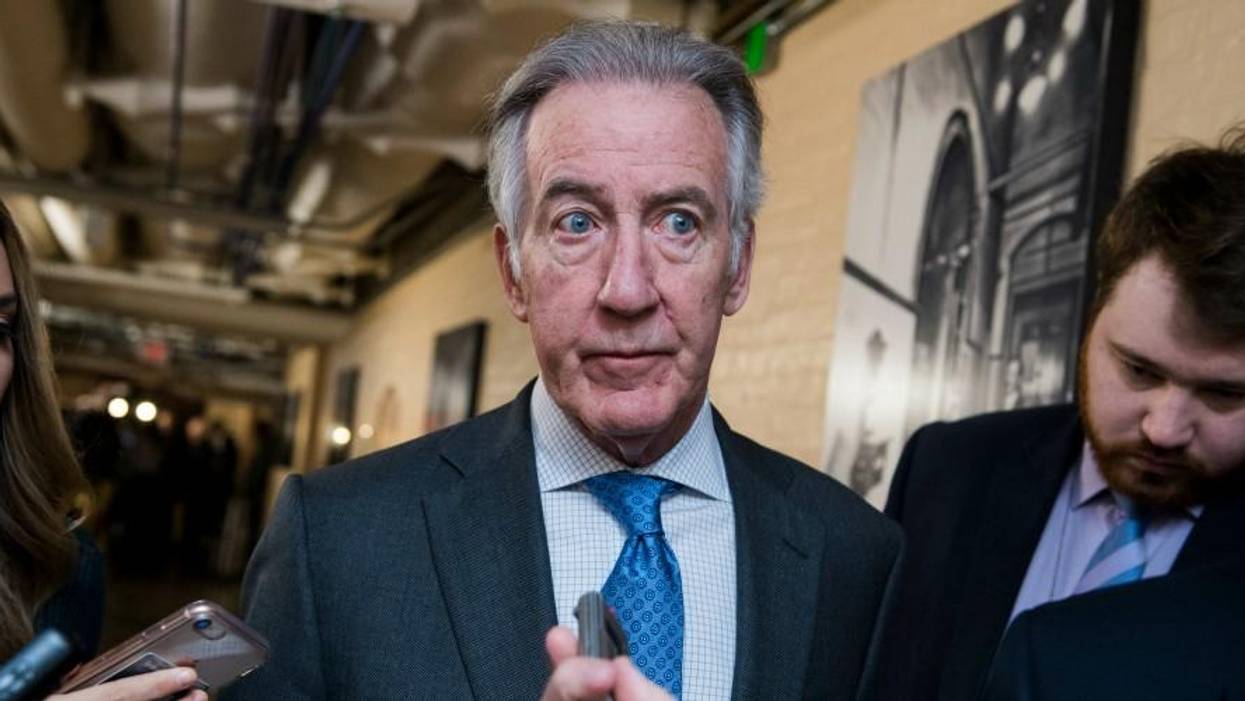
A new $300,000 ad campaign launched by an anti-monopoly non-profit group is taking aim at longtime Rep. Richard Neal, airing in the congressman's home district in western Massachusetts and drawing attention to his stonewalling of anti-surprise medical billing legislation--in favor of a proposal that would have benefited one of his top donors.
As the Fight Corporate Monopolies-sponsored ad explains, late last year the 16-term congressman blocked a bipartisan bill which would have prohibited surprise medical billing. Under the common practice, patients are hit with out-of-pocket medical costs following a surgery or other procedure, after being treated by doctors who aren't covered by their insurance--unbeknownst to the patient.
President Donald Trump was expected to sign the bill, put forward by Sen. Lamar Alexander (R-Tenn.) and Rep. Frank Pallone (D-N.J.), last year. But Neal stopped the legislation in its tracks by proposing his own measure which would have placed billing decisions in the hands of a third party.
The ad suggests that Neal's decision was likely made for the benefit of the private equity firm Blackstone, which--with $48,600 donated from employees--is Neal's biggest contributor this election cycle. Blackstone owns TeamHealth, a physician practice which sent thousands of surprise bills to patients in 2017.
"Neal protected Blackstone's profits by killing a bill that would have saved patients money," the ad's narrator says. "Now Blackstone is Richie Neal's top contributor--and one of Donald Trump's too."
Watch the ad below:
" Corporate power is corrupting democracy and Richie Neal is part of the problem," the ad continues.
According to a study published in February in the Journal of the American Medical Association, one in five Americans with health insurance reported that they had received a surprise medical bill after surgery or another procedure. The bills often demand payment to anesthesiologists or surgical assistants and the average bill was for more than $2,000.
The ad is set to air in western Massachusetts for the rest of July ahead of Neal's Sept. 1 primary in which he faces 30-year-old Holyoke, Massachusetts Mayor Alex Morse. Morse has been endorsed by progressive groups including Justice Democrats, the Sunrise Movement, and Indivisible.
Morse's campaign is not connected to Fight Corporate Monopolies' ad, but he has focused heavily on surprise medical billing as well as Neal's refusal to use his power as chairman of the House Ways and Means Committee to obtain Trump's state tax returns.
Intercept journalist Ryan Grim wrote that the ad by Fight Corporate Monopolies, the political nonprofit arm of the American Economic Liberties Project, will likely catch Democratic leaders in Congress off guard. As a 501(c)4, the group is not required to disclose its donors as long as it doesn't coordinate with a candidate.
"This amount of money coming from nowhere, undisclosed, is going to freak Democratic incumbents out," Grim tweeted.
"All of a sudden taking corporate money and crafting policy to benefit monopolies can now get you in trouble back home," Grim added.