

SUBSCRIBE TO OUR FREE NEWSLETTER
Daily news & progressive opinion—funded by the people, not the corporations—delivered straight to your inbox.
5
#000000
#FFFFFF
To donate by check, phone, or other method, see our More Ways to Give page.
Daily news & progressive opinion—funded by the people, not the corporations—delivered straight to your inbox.
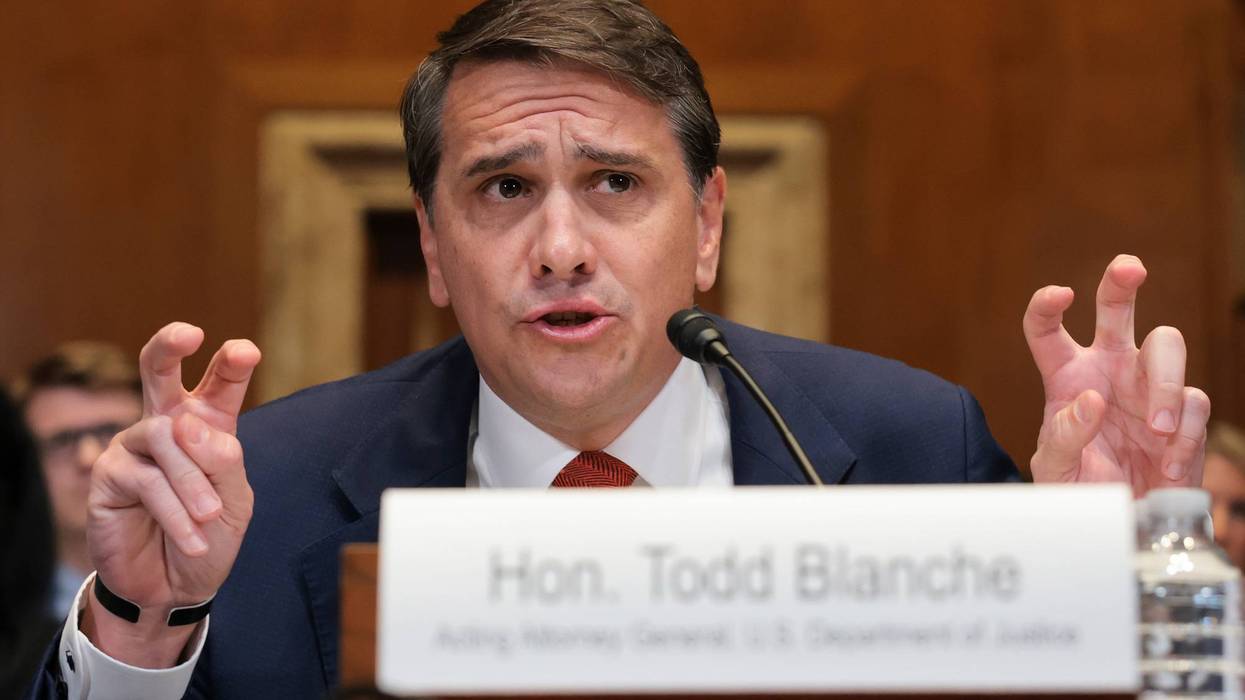
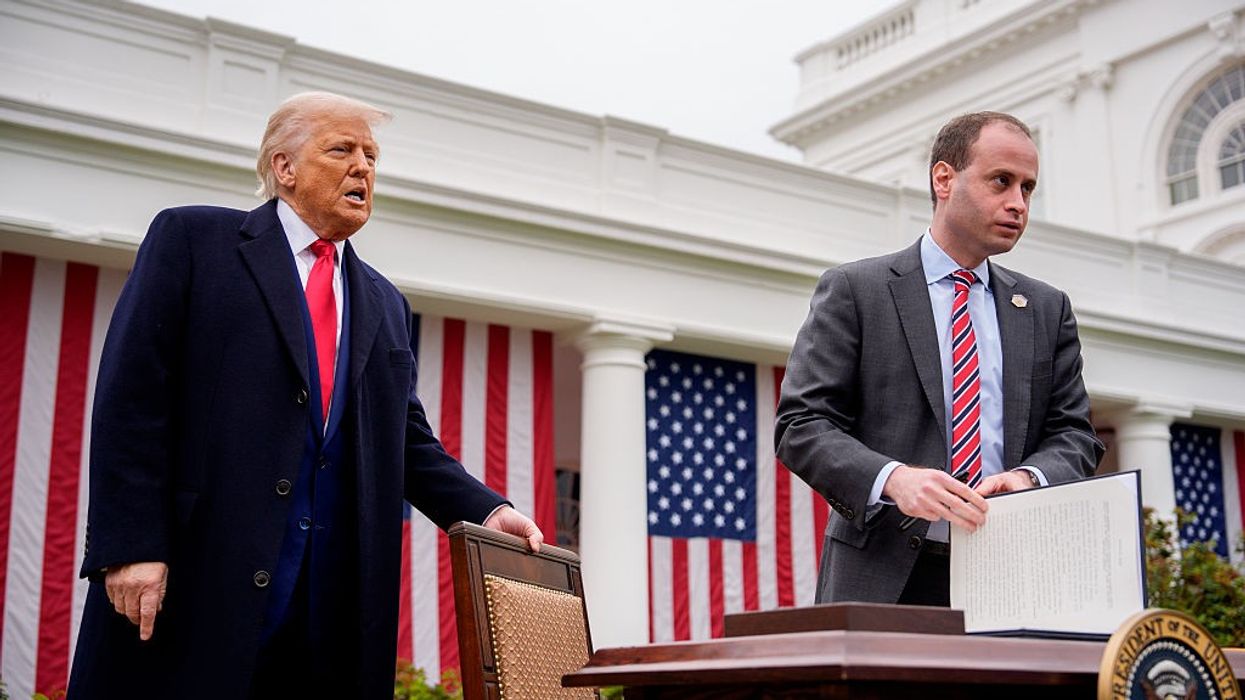
"Never in American history has a president pursued corruption this brazenly or on such a colossal scale," wrote Reps. Jamie Raskin and Richard Neal.
Top Democrats on a pair of panels in the US House of Representatives on Wednesday demanded that Justice and Treasury department leaders answer for how they settled President Donald Trump's $10 billion "sham" lawsuit against the Internal Revenue Service over the leak of his tax records.
In their letter to acting Attorney General Todd Blanche, Treasury Secretary Scott Bessent, and IRS CEO Frank Bisignano, House Judiciary Committee Ranking Member Jamie Raskin (D-Md.) and Ways and Means Committee Ranking Member Richard Neal (D-Mass.) slammed the settlement as "one of the most brazen acts of public corruption and self-dealing in American history."
"Rather than protect the public fisc from obvious plunder, this DOJ and IRS caved," the lawmakers argued, condemning the creation of a $1.776 billion "Anti-Weaponization Fund" as a "taxpayer shakedown" intended to line the pockets of the president's allies, including pro-Trump rioters who stormed the US Capitol on January 6, 2021.
"This massive slush fund will be governed by a sham commission of the president's cronies," Raskin and Neal noted—and due to the terms of the agreement, "the public and members of Congress may never know who received payments."
CNN reported Tuesday that longtime Trump adviser and former administration official Michael Caputo has filed the first known claim, describing his family as "survivors of the illegal Russiagate investigations" and seeking $2.7 million.
"Congress and Congress alone has the power of the purse under the appropriations clause of the Constitution. But Congress never authorized or appropriated funds for a $1.776 billion political slush fund," the House Democrats stressed. "This settlement is a transparent attempt to circumvent the separation of powers and use the judgment fund for a scam Congress never contemplated: rewarding the president’s political allies at the expense of American taxpayers."
Additionally, under the settlement, the IRS is "forever barred" from pursuing any other actions against Trump and his relatives.
"Essentially, the federal government threw in a super-pardon for the president, his family, and related and affiliated entities, freeing them not only from any accountability for any taxes they may have dodged, but other pending federal criminal or civil investigations like insider trading, antitrust violations, false statements, or even sexual harassment," the lawmakers wrote.
Raskin and Neal called on the federal departments to "retain all documents, including both hard copies and electronically stored information (ESI), related to the settlement and establishment of the fund," including messages sent via "private email addresses, text messages, mobile applications (e.g., Signal), or other forms of electronic communications."
They also directed the agency leaders to send over the IRS memorandum on the settlement, other related records, and answers to their list of questions by next week, before Bessent’s scheduled appearance before the Ways and Means Committee.
Blanche was on Capitol Hill Tuesday to testify about the DOJ budget request. However, he faced various other questions, and attempted to counter Democrats' framing that, as Senate Appropriations Committee Vice Chair Patty Murray (Wash.) put it, Trump is using "tax dollars to set up a slush fund to enrich his own friends."
Sen. Chris Coons (D-Del.) questioned Blanche about public disclosures of payouts and measures to ensure Trump family members don't get any fund money, while Sen. Chris Van Hollen (D-Md.) asked about the eligibility of January 6 rioters, including those who assaulted Capitol Hill police or committed sex crimes against children.
A pair of police officers who helped defend the Capitol during the 2021 attack filed a lawsuit in federal court on Wednesday with the aim of dissolving the fund, arguing that "no statute authorizes its creation, the settlement on which it is premised is a corrupt sham, and its design violates the Constitution and federal law."
After the House Democrats' letter was released Wednesday morning, Raskin introduced the No Taxpayer-Funded Settlement Slush Funds Act of 2026 to block Trump's fund. He also moved to subpoena Blanche, Bisignano, Bessent, and other individuals involved in creating the fund: Associate Attorney General Stanley Woodward and Treasury Department General Counsel Brian Morrissey.
"Mr. Blanche orchestrated this outrageous slush fund as part of the settlement with Donald Trump, which was also signed by Mr. Woodward, and Mr. Bessent will oversee the payout of these funds. Mr. Bisignano signed off on this settlement for the IRS, and Brian Morrissey remarkably resigned as this deal was being announced," Raskin said. "These individuals all possess critical insights into Trump's self-dealing scheme with his own agencies to create this fund and reward his supporters and friends."
The Republican-controlled House Judiciary Committee rejected the proposed subpoenas in a party-line vote.
This article has been updated to include Rep. Jamie Raskin's bill and the results of the subpoena vote.
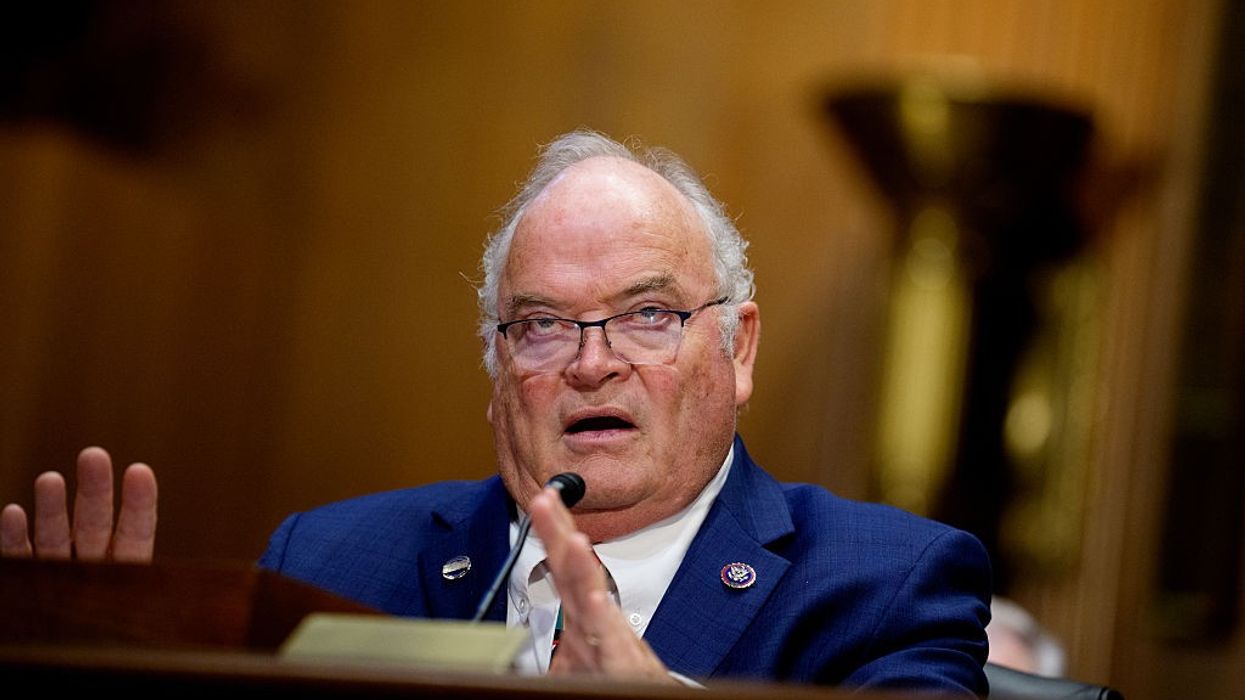
Senate Finance Committee Ranking Member Ron Wyden said that "my investigators have obtained alarming information pertaining to Long's conduct at the IRS that we have begun to investigate."
Less than two months after U.S. Senate Republicans confirmed Billy Long as head of the Internal Revenue Service, the scandal-plagued commissioner confirmed on Friday that he is leaving the IRS to serve as President Donald Trump's ambassador to Iceland.
U.S. Senate Finance Committee Ranking Member Ron Wyden (D-Ore.)—who opposed Long's IRS nomination with the rest of the chamber's Democrats—pledged in a Friday statement that a probe of the outgoing commissioner will continue.
"From the minute Trump announced Billy Long as his IRS pick it was obvious this would end badly, but every Senate Republican voted to confirm his nomination anyway," said Wyden. "He didn't even last two months on the job. Let's not forget that there wasn't a vacancy at the time Trump announced Long's nomination. Danny Werfel, a skilled leader with fans among Democrats and Republicans, had years left on his term."
The senator pointed out that "in just a handful of months, Trump and his crew have already gutted taxpayer service, weaponized IRS data against innocent taxpayers, and set us up for disaster when next year's filing season comes around. This is what Trump does—pick incompetent, unserious people for serious jobs, and sit back as the damage piles up."
"Billy Long left Congress a few years ago and went straight into the tax fraud industry, his only real experience in tax before his nomination," he added. "My investigators have obtained alarming information pertaining to Long's conduct at the IRS that we have begun to investigate, and that process will continue regardless of whether Trump stashes Long away in some foreign embassy."
The ouster was initially reported by The New York Times, which noted that "Treasury Secretary Scott Bessent will serve as acting commissioner until a permanent replacement takes office," according to a senior Trump administration official.
Long then confirmed the development on his personal social media account, saying that "it is a honor to serve my friend President Trump and I am excited to take on my new role as the ambassador to Iceland. I am thrilled to answer his call to service and deeply committed to advancing his bold agenda. Exciting times ahead!"
He later added a joke about Immigration and Customs Enforcement: "I saw where former Superman actor Dean Cain says he's joining ICE so I got all fired up and thought I'd do the same. So I called Donald Trump last night and told him I wanted to join ICE and I guess he thought I said Iceland? Oh well."
A spokesperson for Bessent's department, which includes the IRS, said in a statement: "Treasury thanks Commissioner Long for his commitment to public service and the American people. His zeal and enthusiasm to bring a fresh perspective to the federal government was evident in both the House of Representatives and as part of the Trump administration. A new candidate for commissioner will be announced at the appropriate time."
Long previously represented Missouri in the U.S. House, where Ways and Means Committee Ranking Member Richard Neal (D-Mass.) responded to the IRS commissioner's exit with a statement blasting Trump.
"We don't even need more details on Trump's latest scuttle to know how damaging his presidency has been for the IRS," Neal said. "With nearly a new commissioner each month and weakened customer service from his mass firings, the rampant instability comes at the expense of all who rely on it. One thing is for sure: Secretary Bessent should focus on his own job before collecting more responsibility."
Several critics, including Neal, highlighted that Long was preceded by several IRS leaders this year. As retired Adm. Mike Franken, a former Democratic U.S. Senate candidate from Iowa, put it on social media: "IRS Commissioner Billy Long is removed, the sixth change this year, by the guy who only hires 'the very best people.' The clown show continues."
Long's firing prompted widespread speculation that he was leaving the IRS because he refused to comply with an order from the president. Journalist Josh Marshall wondered, "How bad did the ask have to be for a Trumpy sleazebag like Billy Long to say no?"
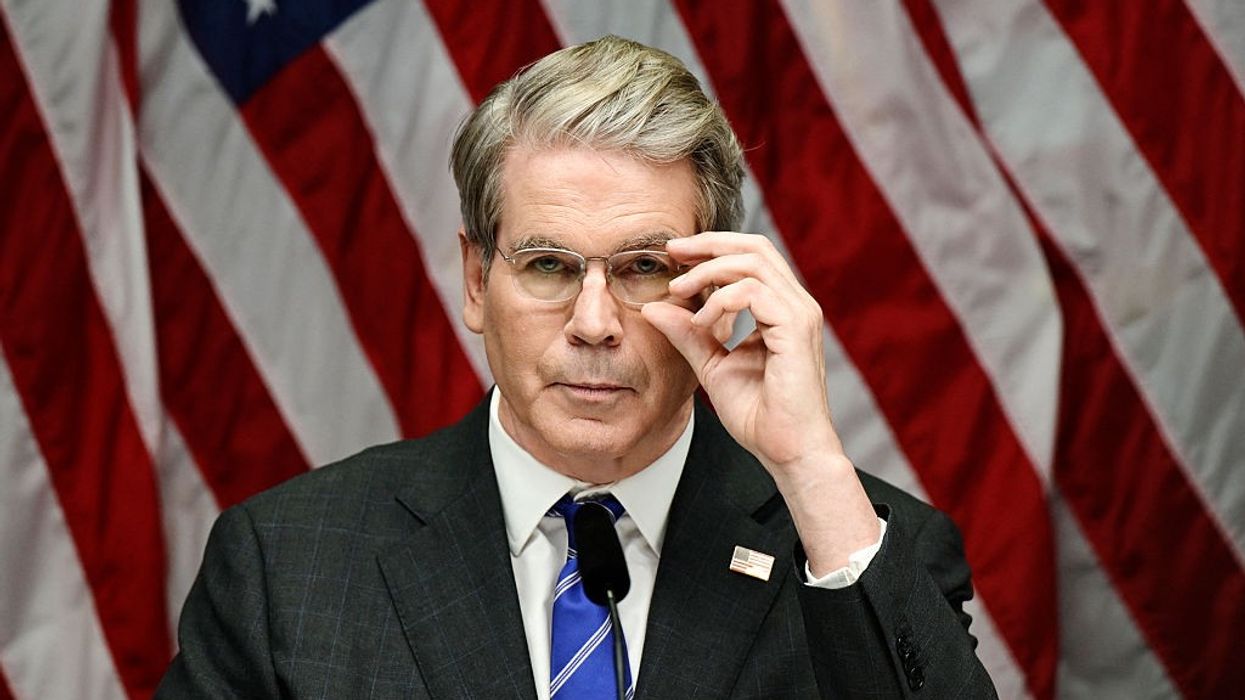
"Despite their repeated claims they wanted to protect Social Security, the Trump administration said the quiet part out loud," said one critic in response to the billionaire treasury secretary's candid comments.
U.S. Treasury Secretary Scott Bessent on Wednesday admitted that a provision in Republicans' One Big Beautiful Bill Act is a mechanism for privatizing Social Security—something President Donald Trump has repeatedly said he won't do.
Speaking at a policy event hosted by the far-right news site Breitbart, Bessent touted the so-called "Trump accounts" available to all U.S. citizen children starting next July under the OBBBA signed by the president earlier this month.
"In a way, it is a backdoor way for privatizing Social Security," the billionaire former hedge fund manager said of the accounts. "Social Security is a defined benefit plan paid out—that to the extent that if all of a sudden these accounts grow, and you have in the hundreds of thousands of dollars for your retirement, that's a game-changer."
Responding to Bessent's admission, Tim Hogan—the Democratic National Committee senior adviser for messaging, mobilization, and strategy—said that the treasury secretary "just said the quiet part out loud: The administration is scheming to privatize Social Security."
"It wasn't enough to kick millions of people off their healthcare and take food away from hungry kids," Hogan added. "Trump is now coming after American seniors with a 'backdoor' scam to take away the benefits they earned. Democrats won't stand by as Trump screws over working families in order to give more handouts to billionaires."
House Ways and Means Committee Ranking Member Richard Neal (D-Mass.) said in a statement: "Today, the treasury secretary said the quiet part out loud: Republicans' ultimate goal is to privatize Social Security, and there isn't a backdoor they won't try to make Wall Street's dream a reality. For everyone else though, it's yet another warning sign that they cannot be trusted to safeguard the program millions rely on and have paid into over a lifetime of work."
Nancy Altman, president of the advocacy group Social Security Works, mocked Trump's promises to preserve the key program upon which more than 70 million Americans rely—and called him out for eviscerating the Social Security Administration (SSA).
"So much for Donald Trump's campaign promise to protect Social Security," Altman said in a statement. "First, he gave Elon Musk the power to gut SSA. Now, Trump's treasury secretary has said the quiet part out loud. He is bragging about the administration's goal to privatize Social Security."
"First, they are undermining public confidence in Social Security by making false claims about fraud (which is virtually nonexistent) and wrecking the system's service to the public," Altman continued. "Then, once they have broken Social Security, they will say that Wall Street needs to come in and save it."
"That is a terrible idea," she added. "Unlike private savings, Social Security is a guaranteed earned benefit that you can't outlive. It has stood strong through wars, recessions, and pandemics. The American people have a message for Trump and Bessent: Keep Wall Street's hands off our Social Security!"
Alliance for Retired Americans executive director Richard Fiesta said that "Bessent let the cat out of the bag: This administration is coming for Social Security."
"We're not surprised—but we are alarmed because this administration has already taken multiple steps to weaken and dismantle Social Security," Fiesta added, highlighting the weakening of the SSA, false fraud claims, and "the massive tax breaks to the wealthy and corporations" under the OBBBA that experts say will hasten the Social Security Trust Fund's insolvency.
The progressive watchdog Accountable.US called Bessent's remarks "a shocking confession."
"Despite their repeated claims they wanted to protect Social Security, the Trump administration said the quiet part out loud: The Big Ugly Betrayal is a backdoor way to privatize Social Security," Accountable.US executive director Tony Carrk said in a statement.
"Once again the administration is risking the financial security of millions of Americans in order to protect a system rigged in the favor of big corporations and billionaires," Carrk added.
In another blow to Social Security recipients, the Trump administration is set to implement a new policy next month that is expected to further increase wait times for basic services. As Common Dreams reported Wednesday, starting in mid-August, SSA will no longer allow seniors to use their phones for routine tasks they've been able to perform for decades.
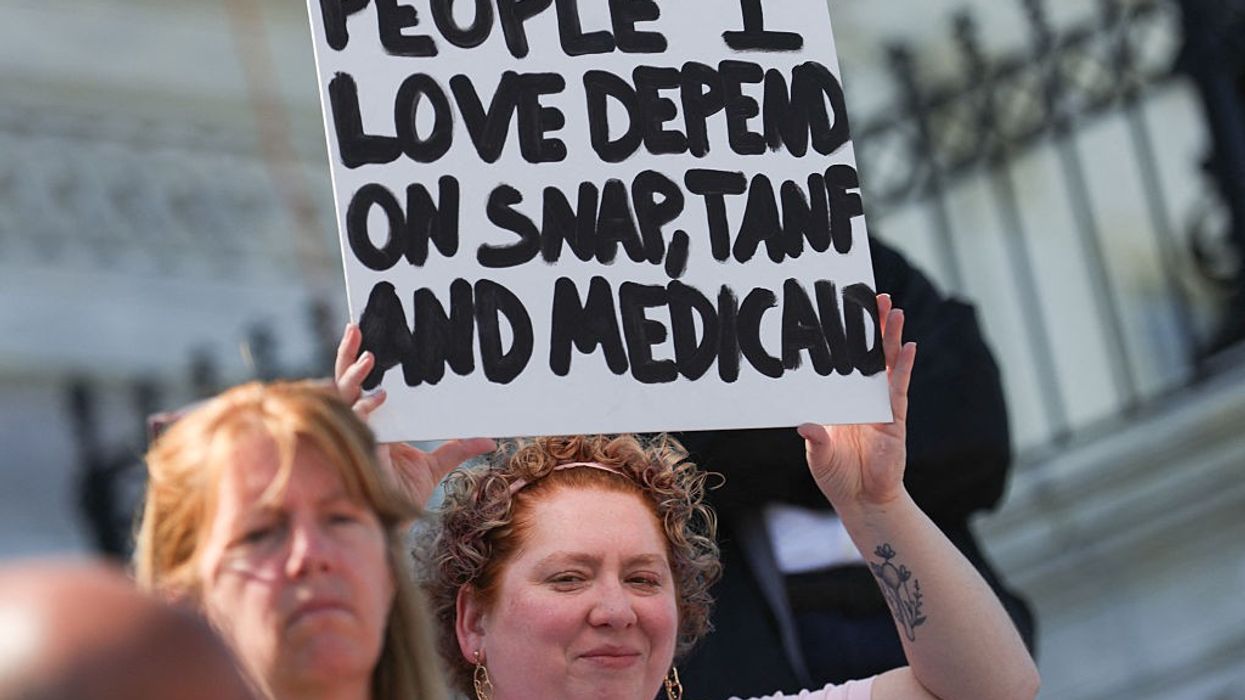
"I'll tell you what's coming: handouts for billionaires, healthcare cuts for the people," warned one Democratic lawmaker.
House Democrats and civil society groups led condemnation of legislation introduced Monday by congressional Republicans and backed by President Donald Trump that one lawmaker said is "about tax breaks for billionaires and kickbacks to corporate donors" at the expense of working class families.
The 389-page bill includes trillions of dollars in tax cuts that would disproportionately benefit the ultra-wealthy and corporations, largely by extending Trump's first-term reductions in taxation mainly for top earners derided as the "GOP tax scam." The proposal also broadens the estate tax exemption for the superrich and makes permanent a massive tax break on offshore corporate profits, a top wish-list item for Big Business.
The proposal would reduce government revenue by trillions of dollars and swell the national debt—currently a staggering $36.2 trillion, or the equivalent of 127% of U.S. gross domestic product—and cost over $5 trillion.
The bill partially offsets the revenue loss by sharply slashing social spending, including on the Supplemental Nutrition Assistance Program (SNAP) and Medicaid. The legislation would impose work and cost-sharing requirements on many Medicaid beneficiaries and increase eligibility checks. Critics warn that millions of people would lose their health insurance coverage if the bill is passed in its current form.
Former Democratic U.S. Labor Secretary Robert Reich called the proposed legislation "trickle-down economics on steroids."
The Trump-GOP tax bill proposal: -Extend 2017 cuts for top earners -Increase the "pass-through" loophole for big businesses -Expand the estate tax exemption for the ultra-rich -Make a huge tax break for offshore corporate profits permanent Trickle down economics on steroids.
— Robert Reich (@rbreich.bsky.social) May 12, 2025 at 11:32 AM
On the positive side, the popular Child Tax Credit would grow for many households under the proposal. So would the standard deduction. There would also be temporary tax breaks for overtime pay, car-loan interest, and tips. The proposal also establishes a new tax-preferred savings account for children younger than 8 years old under which the government would contribute the first $1,000 for kids born between 2025-28.
However, critics noted that millions of families would receive no benefit from the Child Tax Credit increase, wealthy business partnerships would get an even bigger passthrough deduction than in an earlier draft of the bill, and taxes on many tips and overtime work remain.
"This bill isn't about balancing the budget—it's about tax breaks for billionaires and kickbacks to corporate donors and billionaires, while silencing public voices," said Rep. Melanie Stansbury (D-N.M.). "We see the grift and we're calling it out."
Rep. Brendan Boyle (D-Pa.), the ranking member of the House Budget Committee, noted that "Trump loves to call his budget the 'big, beautiful bill.'"
"It is—for billionaires," he added. "While Trump's billionaire donors get trillions in tax cuts, working Americans get the largest Medicaid cuts in American history."
House Ways and Means Committee Ranking Member Rep. Richard Neal (D-Mass.) warned, "I'll tell you what's coming: handouts for billionaires, healthcare cuts for the people."
The GOP agenda: rip health care away from millions of Americans to pay for massive tax breaks for the ultra-rich. This is the moment to fight back with everything we’ve got.
[image or embed]
— Elizabeth Warren (@elizabeth-warren.bsky.social) May 12, 2025 at 1:50 PM
Civil society groups also sounded the alarm over the bill.
"Families across the country are struggling now more than ever to get food on the table, visit the doctor, and afford lifesaving medication," ParentsTogether Action executive director Ailen Arreaza said Monday. "But instead of finding ways to offer some relief, Republicans in Congress are racing to pass a bill to hand massive new tax breaks to the ultra-wealthy."
"Even worse? Their plan is to pay for it by ripping healthcare and nutrition aid away from millions," Arreaza added. "One thing is clear: Gutting Medicaid and SNAP to fund tax breaks for the rich is cruelty disguised as policy—and parents across the country will take note of how their representatives vote this week as evidence of who they're fighting for, their constituents or their wealthy donors."
David Kass, executive director of Americans for Tax Fairness, said in a statement that "the House GOP has revealed in broad daylight that their tax bill is a clear scam—one that hands out massive giveaways to their billionaire and corporate donors off the backs of their constituents with a price tag of over $5 trillion."
"The plan's massive cuts to vital programs like Medicaid and SNAP will drive up healthcare and food prices for millions of workers and families, while billionaires pocket the money and the national debt soars," Kass added. "Working and middle-class families—and future generations—shouldn't have to pay higher prices simply to enrich billionaire elites and the politicians in their pocket."
"What Republicans are trying to jam through Congress right now is a level of economic recklessness we’ve never seen before," said a group of Democratic lawmakers.
A new analysis indicates Republicans' plan to extend soon-to-expire provisions of their party's 2017 tax law, as well as their push to tack on additional tax breaks largely benefiting the rich and big corporations, would cost $7 trillion over the next decade, a figure that a group of congressional Democrats called "staggering."
The analysis from the nonpartisan Joint Committee on Taxation (JCT), published on Thursday, updates previous estimates that suggested the GOP effort to extend expiring provisions of the 2017 law would cost $4.6 trillion over a 10-year period. The new assessment shows that extending the law's temporary provisions—which disproportionately favored the wealthy—would cost $5.5 trillion over the next decade.
The projected cost of the GOP agenda balloons to $7 trillion after adding Senate Republicans' call for $1.5 trillion in additional tax cuts in the budget resolution they advanced in a party-line vote on Thursday. The GOP has come under fire for using an accounting trick to claim their proposed tax cuts would have no budgetary impact.
"The Republican handouts to billionaires and corporations will come at a staggering cost, and it's unconscionable that their plan to pay for those handouts includes kicking millions of Americans off their health insurance, hiking the cost of living with tariffs, and driving up child hunger," Sen. Ron Wyden (D-Ore.), Sen. Jeff Merkley (D-Ore.), Rep. Richard Neal (D-Mass.), and Rep. Brendan Boyle (D-Pa.) said in a joint statement issued in response to the JCT figures.
"Even after making painful cuts that will inflict hardship on typical American families, Republicans will still risk sending us into a catastrophic debt spiral that does permanent harm to our economy," the Democrats added. "What Republicans are trying to jam through Congress right now is a level of economic recklessness we've never seen before."
The JCT's updated cost analysis came as President Donald Trump plowed ahead with what's been characterized as the biggest tax hike in U.S. history, one that will hit working-class Americans in the form of price increases on household staples and other goods.
Trump administration officials, not known for providing reliable numbers, have claimed the president's sweeping new tariffs could produce roughly $6 trillion in federal revenue over the next decade. The Trump tariffs have sent financial markets into a tailspin, heightened recession fears, and prompted swift retaliation from targeted nations, including China.
In an appearance on MSNBC on Thursday, Boyle—the top Democrat on the House Budget Committee—said Trump's tariffs represent "the single largest tax increase in American history."
"It's a tax that everyone will pay in this country, based on the goods that they buy," said Boyle. "However, it's also a tax that is highly regressive—the poorest amongst us will end up paying a higher percentage of their income."
A previous version of this story incorrectly stated the analysis was conducted by the Congressional Budget Office. It was conducted by the Joint Committee on Taxation.
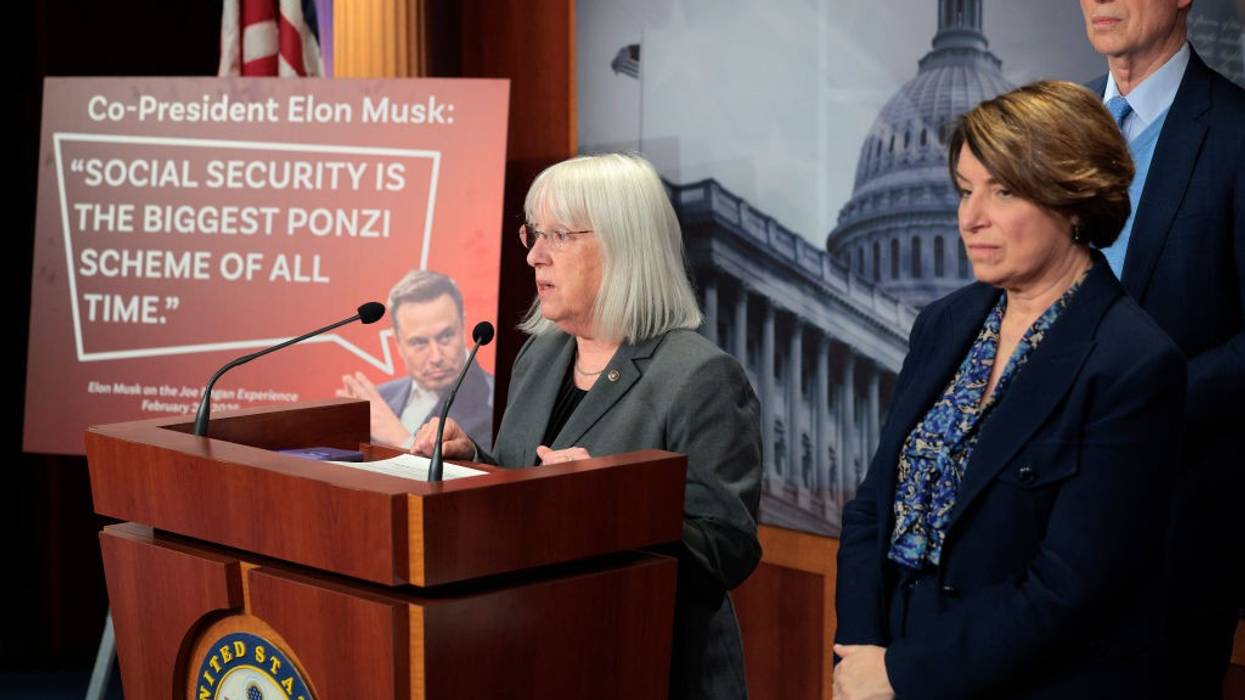
"After years of hard work and a lifetime of contributions, our seniors shouldn't have to worry about Republicans meddling with their Social Security," said one House Democrat.
A leaked email from acting Social Security Administration Commissioner Leland Dudek on Tuesday sparked a fresh wave of warnings about U.S. President Donald Trump and government-gutting billionaire Elon Musk privatizing the agency.
The Bulwark, an anti-Trump conservative news outlet, obtained Dudek's March 1 email to staff, which reportedly says in part that "we need to revitalize SSA operations by streamlining activities, outsource nonessential functions to industry experts, and reinstating human judgment and common sense into every decision at every level."
While Dudek did not elaborate on what outsourcing "nonessential functions" will look like, according to The Bulwark, Martin O'Malley, who led the agency under former President Joe Biden, warned that it could involve automation and the use of artificial intelligence to replace call centers staffed by people trained to help seniors and other beneficiaries sort out complex problems.
O'Malley also said that SSA employees he knows report a "toxic" work environment. He told the The Bulwark that "they are driving people out there with a viciousness that I believe will collapse the agency," which could result in an "interruption of benefits."
"We have a 50-year low in staffing while the baby boomer generation is swelling their ranks," O'Malley said. "That's the underlying reality here, and these guys appear hell-bent on breaking it. It seems they really want to break Social Security."
The former SSA commissioner isn't alone in expressing serious concerns about Dudek, the president, and Musk, head of the so-called Department of Government Efficiency (DOGE), which is leading the Trump administration's attack on federal agenices.
Responding to The Bulwark's reporting on the Musk-owned social media site X, House Ways and Means Committee Ranking Member Richard Neal (D-Mass.) said that "after years of hard work and a lifetime of contributions, our seniors shouldn't have to worry about Republicans meddling with their Social Security. This is an attack on our nation's seniors—plain and simple."
Also weighing in on X, Congressman Mark Pocan (D-Wis.) declared that "in no way, shape, or form, should we privatize any aspect of Social Security."
Concerns have mounted following a series of events last week, including a wave of Social Security Administration leaders retiring and the agency telling staff that it would be implementing an "organizational restructuring that will include significant workforce reductions." The SSA confirmed a goal to have only 50,000 workers, which requires forcing out 7,000 people.
"With that came an announcement that the agency will consolidate its current 10 regional offices down to four, as well as reorganize headquarters," Government Executive reported. "And Elon Musk's DOGE operatives have canceled the leases for 45 field offices across the country, as well as the Office of Hearings Operations in White Plains, New York."
House Ways and Means Social Security Subcommittee Ranking Member John Larson (D-Conn.) this week led a letter to Dudek signed by over 150 of the chamber's Democrats, who warned that office closures and layoffs "will devastate SSA's ability to serve the public and deliver Social Security payments, inflicting backdoor benefit cuts on the American people."
"Social Security helps approximately 70 million beneficiaries—including seniors, people with disabilities, children, and their families—put food on the table, pay the rent, heat their homes, cover medical bills, and more," the House Democrats wrote. "Shuttering field offices and gutting SSA staffing has nothing to do with 'governmental efficiency.'"
Like O'Malley, they cited the already low staffing level that has led to customer service issues at the SSA. They stressed that office closures "and gutting staff would only deepen the crisis, chaos, and confusion. If the Trump administration is serious about efficiency in delivering benefits to the American people, it would ensure that SSA has the staff and offices needed to serve the public."
Senate Democrats are also sounding the alarm. Government Executive noted that during a Monday press conference, Sen. Patty Murray (D-Wash.) accused Trump and Musk of "taking a wrecking ball" to the SSA while Sen. Ron Wyden (D-Ore.) warned that their actions are "a prelude to privatization."

"There are 20 years of data showing trickle-down economics doesn't work, yet today will still be a whole lot of revisionist history and wishful thinking on the singular largest failure of fiscal policy in recent memory," said Rep. Richard Neal.
As House Republicans prepare for Donald Trump's possible White House return by plotting to expand the billionaire and corporate tax cuts that were the cornerstone of the former president's first administration, congressional Democrats and advocates for working Americans warned Thursday that a second Trump term would bring more of the same inequality-exacerbating policies.
The GOP-controlled House Ways and Means Committee held a hearing Thursday on "expanding the success" of the 2017 Tax Cuts and Jobs Act (TCJA)—widely derided by opponents as the "GOP Tax Scam." Republican committee members couched a policy that the Center for Popular Democracy said "delivered big benefits to the rich and corporations but nearly none for working families" as "relief to help hardworking American families."
Rep. Richard Neal (D-Mass.), the committee's ranking member, pushed back during Thursday's hearing, noting that "in the last three decades, Republicans have skyrocketed the deficit with trillions in tax cuts for billionaires and big corporations, always with the same result: the top 1% benefits while nothing trickles down for workers."
Neal continued:
In 2017, Ways and Means Democrats saw the GOP corporate tax giveaway for what it was: a scam. We knew that their Tax Scam would disproportionately benefit the wealthy and well-connected. We knew that it wouldn't pay for itself. We knew that big corporations, not their workers, would feel the most benefit. Six years since the GOP Tax Scam was signed into law, we've been proven right on every count. It didn't pay for itself, it didn't increase revenue, and it didn't increase wages.
A recent study whose authors included [Joint Committee on Taxation] economists—let that sink in—found that ALL of the corporate gains from TCJA went to shareholders and high-paid executives, with absolutely nothing flowing to workers. Fifty-six percent of the tax cuts enriched shareholders, and the remaining 44% lined the pockets of execs. Zero percent went to workers. ZERO!
"There are 20 years of data showing trickle-down economics doesn't work, yet today will still be a whole lot of revisionist history and wishful thinking on the singular largest failure of fiscal policy in recent memory," Neal added. "If workers and the middle class are actually your priorities, putting them ahead of big corporations and billionaires is the only way."
Rep. Don Beyer (D-Va.)—who also sits on the committee—agreed, asserting on social media that "the Trump tax cuts were a huge 'success' if you were a billionaire or an executive at a large corporation. They made out like bandits, with a huge amount of the benefits from the GOP tax law going to the wealthiest. Now Republicans want to give the superrich even more tax cuts."
Trump is open about this. At an exclusive fundraiser at his Mar-a-Lago resort in Florida last week, he shouted out his "rich as hell" supporters, telling them, "We're gonna give you tax cuts, we're gonna pay off our debt."
That's the same debt that soared by around $8 trillion during Trump's term—largely as a result of his tax cuts. Meanwhile, U.S. billionaires have collectively gotten $2.2 trillion richer since the GOP tax cuts took effect.
With many provisions of the TCJA set to expire at the end of 2025, progressives are underscoring what's at stake in this November's elections.
"Today the American people got a preview of what's in store for them next year if the Trump Tax Scam expires under conservative leadership," Groundwork Collaborative executive director Lindsay Owens said following the House hearing. "The conservative playbook for the 2025 tax fight is coming into focus, and we can be sure it includes more giveaways for the wealthy and corporations."

Following "recent Republican chaos, we're now back to their regularly scheduled programming: Cutting taxes for millionaires," said Democratic Rep. Bill Pascrell. "They did it in 2017 and now Republicans are again pushing tax cuts for the rich."
House Republicans are poised to advance regressive taxation measures that would increase the federal deficit just weeks after they nearly blew up the global economy over ostensible concerns about the U.S. government's debt, eliciting condemnation from Democratic lawmakers and progressive advocates.
The Republican-led House Ways and Means Committee held a hearing Tuesday to mark up the so-called American Families and Jobs Act (AFJA), which packages three bills: the Tax Cuts for Working Families Act, the Small Business Jobs Act, and the Build It in America Act.
This trio of bills—dubbed the "GOP Tax Scam 2.0" by the panel's ranking member, Rep. Richard Neal (D-Mass.)—would expand Trump-era tax cuts whose benefits flow overwhelmingly to corporations and the wealthy. In the wake of demanding—and winning—sharp reductions in anti-poverty spending along with other reactionary reforms during negotiations to raise the debt ceiling, the GOP-controlled House is now moving to starve the federal government of essential revenue.
"It didn't take long for the MAGA majority's alleged debt 'concerns' to go right out the window in pursuit of more wasteful tax breaks for their billionaire donors and corporations."
"It didn't take long for the MAGA majority's alleged debt 'concerns' to go right out the window in pursuit of more wasteful tax breaks for their billionaire donors and corporations that ship jobs overseas," Liz Zelnick, director of Economic Security & Corporate Power at Accountable.US, said in a statement.
"If the recent past is prologue, the MAGA majority will try to pay for their trillion-dollar corporate tax giveaway on the backs of average Americans, including devastating cuts aimed at seniors, veterans, and the food insecure," said Zelnick. "Once again, the MAGA House majority has only corporations and the wealthy in mind."
Zelnick's sentiment was echoed by Democrats on the House Ways and Means Committee.
"This is the most ill-considered piece of legislation that I've witnessed in years in front of this committee," said Neal. "Just 10 days after our Republican colleagues were prepared to bring the nation to the brink of default... to the precipice, if not over the edge, they now come back with a tax cut."
"Apparently, the debt only matters if it's about spending, never about tax cuts," said Neal, who lamented "$10 trillion of tax cuts" enacted in 2001, 2003, and 2017—years when Republicans held both chambers of Congress and the White House.
Rep. Bill Pascrell (D-N.J.) derided what he called the GOP's "tax scam 2.0" as one of the worst sequels in history.
"After months of some of you actually liking the idea of keeping other people hostage, some of you are back to the single issue that unites your party: Tax cuts for the well-off," Pascrell said in a message to Republicans on the panel. "It's far past time to retire" the argument that "tax cuts 'pay for themselves.' They just don't. You can't prove it."
Among other things, the AFJA would expand corporate and business tax breaks enacted in the Tax Cuts and Jobs Act (TCJA) approved by congressional Republicans and signed into law by then-President Donald Trump in 2017.
If the new proposal were to pass, the richest 1% of U.S. households would receive $28.4 billion in tax cuts (an average of $16,560) next year, compared with $1.4 billion for the poorest 20% ($40, on average), according to Steve Wamhoff, federal policy director at the Institute on Taxation and Economic Policy. Because foreign investors own a substantial share of stock in U.S. corporations, they would also receive $23.8 billion next year under the legislation.
House Ways and Means Chair Jason Smith (R-Mo.) has claimed that the cost of the tax cuts would be offset through a repeal of the Inflation Reduction Act's clean energy tax credits. But as Wamhoff explained in an analysis published earlier this week, deliberately hindering the nation's renewable energy transition would impose additional costs "in the form of greater climate damage."
Moreover, "the true costs are hidden by budget gimmicks," Wamhoff noted. "The most important budget gimmick is that the legislation enacts the biggest tax cuts for only two years even though its proponents plan to extend them in the future, making them, in effect, permanent."
According to the Committee for a Responsible Federal Budget: "The bill would cost $80 billion over a decade with interest ($19 billion before interest), including $320 billion through the end of fiscal year (FY) 2025. The smaller 10-year cost is driven by several factors but mainly by the fact that most of the bill's tax cuts expire at the end of 2025. We estimate that the plan would cost over $1.1 trillion ($950 billion without interest) through 2033 if these temporary tax cuts and extensions were made permanent."
The benefits of the 2017 TCJA "never trickled down," Americans for Tax Fairness tweeted. "Instead, the rich got richer and corporations made bigger profits. We should be repealing the Trump tax cuts, not making them permanent."
In a blog post published Tuesday, Chuck Marr and Samantha Jacoby of the Center on Budget and Policy Priorities also urged lawmakers to "reject this bill and pursue tax policy that works better for the country as a whole—not just wealthy investors and high-income households."
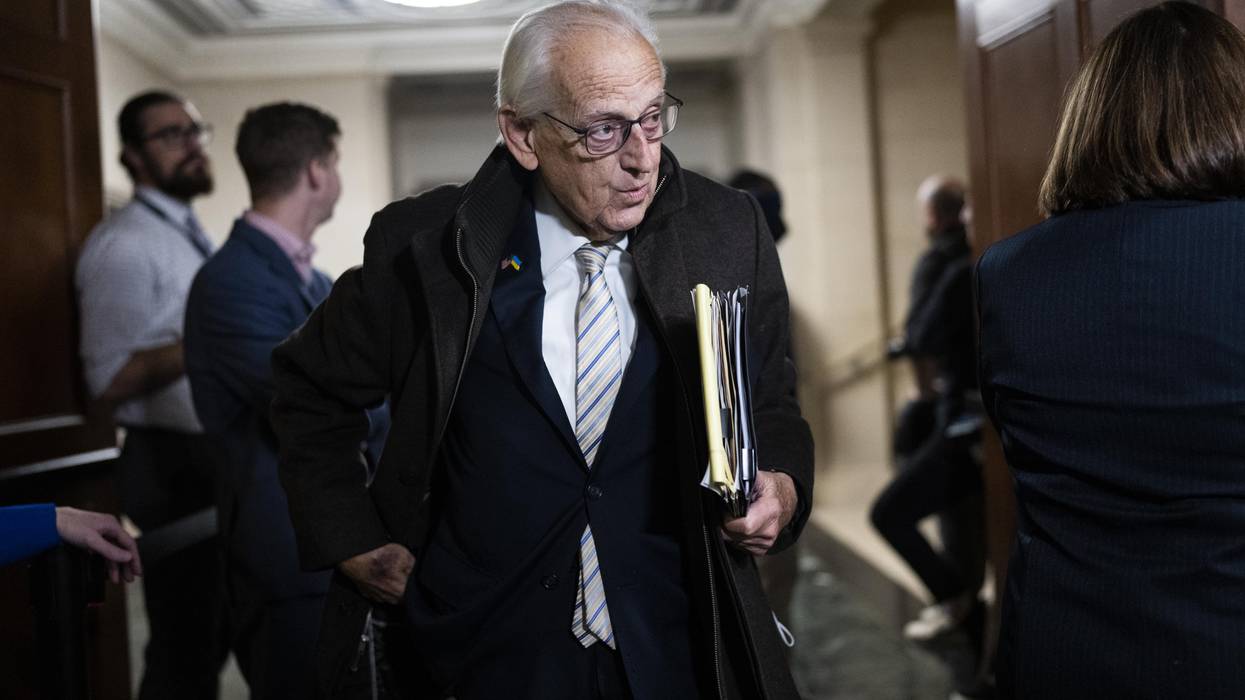
It took U.S. House lawmakers more than three-and-a-half years to get their hands on former President Donald Trump's federal tax returns, but with Republicans assuming control of the chamber next month, Democrats are quickly running out of time to examine and publish the highly sought-after records.
"There is no one in this country... that is above the law."
That's the stark warning issued Thursday by Rep. Bill Pascrell (D-N.J.), who told Punchbowl News: "There's a time factor here. We got [until] January 3. And that doesn't count up to too much time to me."
Pascrell's comments came after he and other Democratic members of the House Ways and Means Committee, which obtained six years of Trump's tax returns on Wednesday following a prolonged legal battle in which the ex-president fought against sharing the financial documents that all of his predecessors since the 1970s had willingly disclosed, met in Chair Richard Neal's (D-Mass.) office.
As Punchbowl News reported Friday, "Neal is facing pressure from Ways and Means Democrats to move quickly to analyze Trump's returns--and possibly release them to the public--before Republicans take over and make the whole question moot."
"But Neal is providing little detail about how he plans to spend the next 32 days," the outlet noted. "In fact, the Massachusetts Democrat wouldn't even acknowledge gaining access to six years of Trump's tax returns, citing privacy laws. His nonanswer comes despite the Treasury Department saying this week it had turned over the information to the panel after the Supreme Court declined to intervene in the long-running battle with Trump."
On more than one occasion, Trump--who officially launched his 2024 campaign last month--argued in court that if Democrats were to obtain his tax records, they would immediately leak them to hurt him politically. Neal's awareness of this claim was evident as he answered reporters' questions on Thursday.
"It's very sensitive information," said Neal. "We intend to deal with it professionally the way that we have."
In contrast to the committee chair's hesitant approach, multiple Democrats on the panel, including Pascrell and Rep. Lloyd Doggett (D-Texas), have made clear their desire to make Trump's tax returns publicly available.
Speaking with MSNBC on Thursday, Pascrell said, "I want them all released."
"These records are so important. The delay has been as long as the Civil War," Pascrell continued. "This is unprecedented in every way. This isn't about one man. This is not about just one part of the law. This is whether we affirm that there is no one in this country--be it the president, a congressman, or whomever--that is above the law. And we intend to follow through on this."
Democrats will be racing against the clock, however.
According to Punchbowl News:
The only real information Neal divulged was that he has appointed an undisclosed number of staff to serve as "agents"--experts who can officially review Trump's tax documents.
Democrats on the panel didn't get much more info from Neal in their closed-door meeting either, according to several members we checked with after. The discussion was tense at times, with members "extremely frustrated" about the lack of transparency regarding next steps with so little time left, one Democrat told us. Led by some of their senior colleagues on the panel, Neal was grilled about his intentions and offered little on his plans.
Doggett, for his part, predicted that "before January 3, we will get some opportunity to determine--probably in executive session--whether what [the agents] found justifies our taking some further action, which could include, but does not necessarily include, releasing those to the public."
"Personally, my opinion is that it'd be very difficult for even the most skilled agent to review these documents thoroughly," he added. "I believe that reviewing them thoroughly may well indicate the need to look at some of the documents we don't even yet have."

Insurance giants are exploiting Medicare Advantage--a corporate-managed program that threatens to result in the complete privatization of traditional Medicare--to capture billions of dollars in extra profits, Saturday reporting by The New York Times confirmed.
" Medicare Advantage shouldn't exist."
The newspaper's analysis of dozens of lawsuits, inspector general reports, and watchdog investigations found that overbilling by Medicare Advantage (MA) providers is so pervasive it exceeds the budgets of entire federal agencies, prompting journalist Ryan Cooper to call the program "a straight up fraud scheme."
Nearly half of Medicare's 60 million beneficiaries are now enrolled in MA plans managed by for-profit insurance companies, and it is expected that most of the nation's seniors will be ensnared in the private-sector alternative to traditional Medicare by next year. Six weeks ago, Sen. Ron Wyden (D-Ore.) launched an inquiry into "potentially deceptive" marketing tactics used by MA providers to "take advantage" of vulnerable individuals.
As the table below shows, almost every major player in the industry has been accused of fraud by a whistleblower or the U.S. government. In addition, the vast majority are engaged in rampant upcoding, or exaggerating patients' illnesses in order to reap more money from taxpayers--something they do while refusing to provide necessary care for tens of thousands each year.
Larry Levitt, executive vice president for health policy at Kaiser Family Foundation (KFF), which has no connection with Kaiser Permanente, wrote on social media that "the move to privatize Medicare" has "been very profitable, in part because insurers are good at making their patients seem sicker."
Journalist Natalie Shure concurred, tweeting: "Privatized Medicare plans cherry-pick healthier enrollees, fudge medical records to make them look as sick as possible, coax doctors into tacking on extra sham diagnoses to bill for, and pay themselves a profit on top of it. Medicare Advantage shouldn't exist."
"For all its faults, Medicare is a (nearly) universal program for 65+, with overhead hovering around 2%--far lower than its private counterparts," Shure added. "What inefficiencies did anyone think MA would be solving exactly[?]" she asked.
According to the Times, MA was created by congressional Republicans "two decades ago to encourage health insurers to find innovative ways to provide better care at lower cost."
Matt Bruenig, founder of the People's Policy Project, a left-wing think tank, argued that the notion that private insurers would "provide more benefit for less money" than traditional Medicare "while taking a profit" is insane on its face.
"They innovate on other margins, namely by bending and breaking rules that determine how much money Medicare gives them, as such things are hard to detect," said Bruenig, "and we are now stuck in an endless cat and mouse enforcement game with them."
As the Times reported:
The government pays Medicare Advantage insurers a set amount for each person who enrolls, with higher rates for sicker patients. And the insurers, among the largest and most prosperous American companies, have developed elaborate systems to make their patients appear as sick as possible, often without providing additional treatment, according to the lawsuits.
As a result, a program devised to help lower health care spending has instead become substantially more costly than the traditional government program it was meant to improve.
[...]
The government now spends nearly as much on Medicare Advantage's 29 million beneficiaries as on the Army and Navy combined. It's enough money that even a small increase in the average patient's bill adds up: The additional diagnoses led to $12 billion in overpayments in 2020, according to an estimate from the group that advises Medicare on payment policies--enough to cover hearing and vision care for every American over 65.
Another estimate, from a former top government health official, suggested the overpayments in 2020 were double that, more than $25 billion.
Citing a KFF study which found that companies typically rake in twice as much gross profit from MA plans as from other types of insurance, the Times pointed out that the growing privatization of Medicare is "strikingly lucrative."
MA plans "can limit patients' choice of doctors, and sometimes require jumping through more hoops before getting certain types of expensive care," the newspaper noted. "But they often have lower premiums or perks like dental benefits--extras that draw beneficiaries to the programs. The more the plans are overpaid by Medicare, the more generous to customers they can afford to be."
"By exploiting and overbilling Medicare, these companies profit off the public. Think of how this money could have been better spent."
The MA program has grown in popularity, including in Democratic strongholds, over the course of four presidential administrations. Meanwhile, regulatory and legislative efforts to rein in abuses have failed to gain traction.
Officials at the Centers for Medicare and Medicaid Services (CMS), some of whom move between the agency and industry, have not been aggressive "even as the overpayments have been described in inspector general investigations, academic research, Government Accountability Office studies, MedPAC reports, and numerous news articles," the Times reported. "Congress gave the agency the power to reduce the insurers' rates in response to evidence of systematic overbilling, but CMS has never chosen to do so."
Ted Doolittle, who served as a senior official for CMS' Center for Program Integrity from 2011 to 2014, said that "it was clear that there was some resistance coming from inside" the agency. "There was foot-dragging."
Almost 80% percent of U.S. House members, many of whom are bankrolled by the insurance industry, signed a letter earlier this year indicating their readiness "to protect the program from policies that would undermine" its stability.
David Moore, co-founder of Sludge, an independent news outlet focused on the corrupting influence of corporate cash on politics, observed on social media that "members of the health subcommittee of the House Ways and Means Committee could speak publicly on whether they think oversight of the insurance industry has been adequate."
However, Moore pointed out, committee Chair Richard Neal (D-Mass.) "has received $3.1 million from the insurance industry, the most in the House."
As the Times noted, "Some critics say the lack of oversight has encouraged the industry to compete over who can most effectively game the system rather than who can provide the best care."
"Medicare Advantage overpayments are a political third rail," Richard Gilfillan, a former hospital and insurance executive and a former top regulator at Medicare, told the newspaper. "The big healthcare plans know it's wrong, and they know how to fix it, but they're making too much money to stop."
"There's a risk" that the increased scrutiny of MA providers "blows over because the program's beneficiaries continue to have access to doctors and hospitals," Joseph Ross, a primary care physician and health policy researcher at the Yale School of Medicine, wrote on Twitter. "But by exploiting and overbilling Medicare, these companies profit off the public."
"Think of how this money could have been better spent," said Ross. "The overbilling alone could have provided hearing and vision care to ALL Medicare beneficiaries, or been used to fund any of these agency's budgets."
"The overbilling alone could have provided hearing and vision care to ALL Medicare beneficiaries."
Despite mounting evidence of widespread fraud in MA plans, the Biden administration announced in April that MA insurers will receive one of the largest payment increases in the program's history in 2023, eliciting pushback from several congressional Democrats led by Rep. Katie Porter of California.
Progressives argue that MA is part of a broader effort to privatize Medicare and must be resisted.
Another major culprit is ACO REACH, a pilot program that critics have described as "Medicare Advantage on steroids."
The pilot--an updated version of Direct Contracting launched by the Trump administration and continued by the Biden administration--invites MA insurers and Wall Street firms to "manage" care for Medicare beneficiaries and allows the profit-maximizing middlemen to pocket as much as 40% of what they don't spend on patients, all but ensuring deadly cost-cutting.
Physicians and healthcare advocates have warned that failing to stop ACO REACH could result in the total privatization of traditional Medicare in a matter of years.
"Even though Medicare is relied on by millions of seniors across the country, and precisely because it is so necessary and cost-effective, it is under threat today from the constant efforts of private insurance companies and for-profit investors who want to privatize it and turn it into yet another shameful opportunity to make money off of peoples' health problems," Rep. Pramila Jayapal (D-Wash.) said in May.
Jayapal, chair of the Congressional Progressive Caucus, has called on the Biden administration to "fully end" ACO REACH and other privatization schemes and urged lawmakers to enact the Medicare for All Act, of which she is the lead sponsor in the House.
Numerous studies have found that implementing a single-payer health insurance program would guarantee the provision of lifesaving care for every person in the country while reducing overall spending by as much as $650 billion per year.