
SUBSCRIBE TO OUR FREE NEWSLETTER
Daily news & progressive opinion—funded by the people, not the corporations—delivered straight to your inbox.
5
#000000
#FFFFFF
To donate by check, phone, or other method, see our More Ways to Give page.


Daily news & progressive opinion—funded by the people, not the corporations—delivered straight to your inbox.
"We deserve a government that uses our money to fund our care, not one that uses our money to line the pockets of corporations," said one protester.
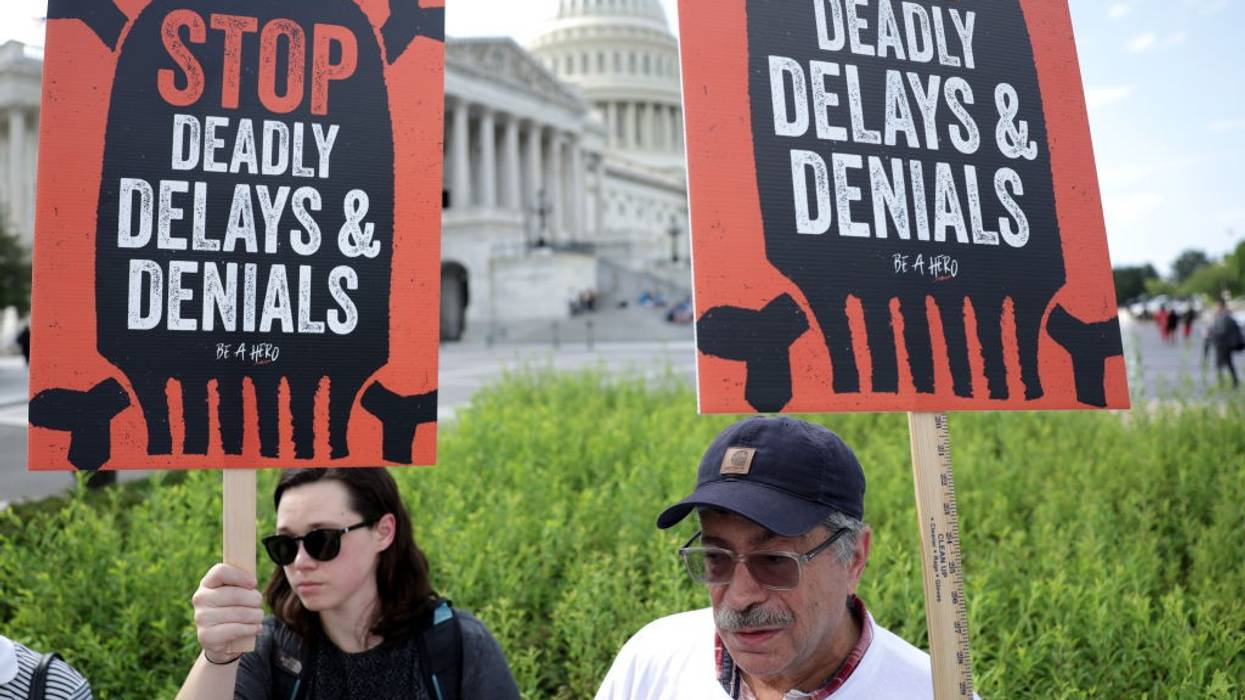
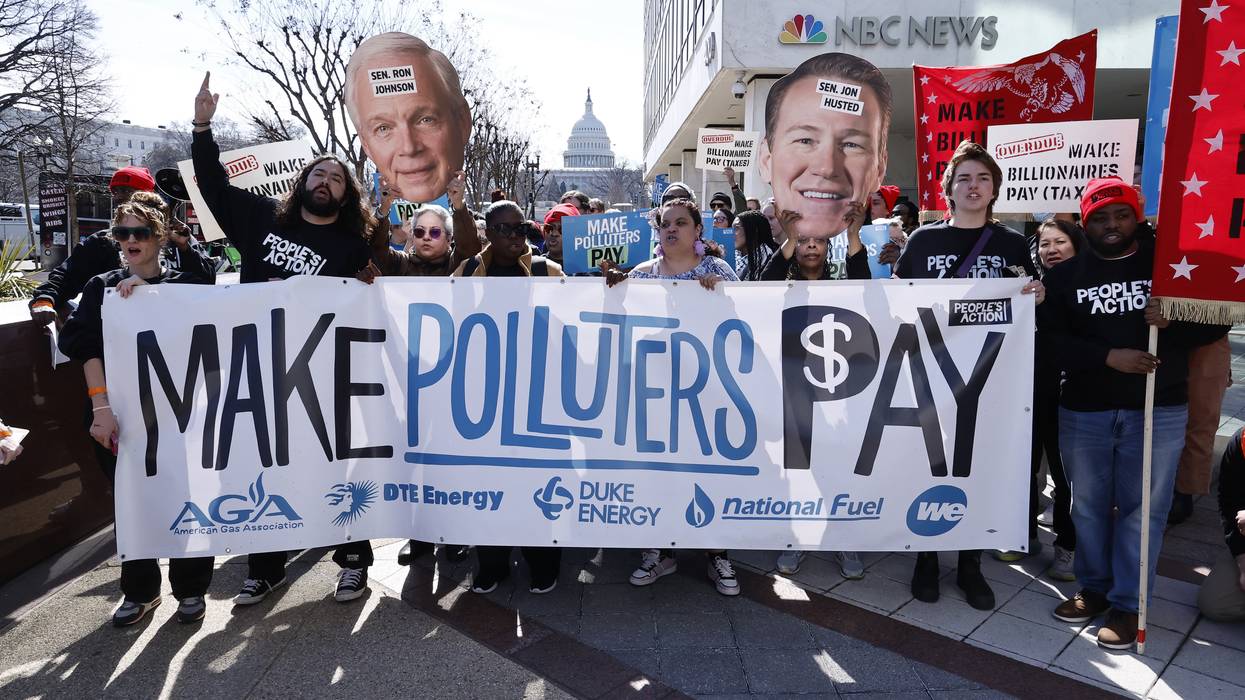
After meeting with their members of Congress, working-class voters on Wednesday marched to the Washington, D.C. offices of three companies behind the nation's housing, health, and climate crises that are set to cash in on federal Republicans' planned tax giveaways.
Organized by People's Action Institute, the protest targeted Blackstone, an investment company that has become the world's largest corporate landlord; UnitedHealth, the country's biggest health insurance company; and American Gas Association, which represents more than 200 energy companies that provide services to 189 million Americans.
The participants—who hailed from 60 congressional districts across 27 states—emphasized issues including unaffordable rent rates, housing insecurity, homelessness, denied medical treatment, unpayable healthcare costs, high utility bills, health harms from fossil fuels, and corporate lobbying for tax cuts that benefit companies and billionaires rather than working people.
"We're here today because we want to make the rich pay their fair share!" declared JJ Ramirez of People's Action Institute member organization VOCAL-Texas. "Blackstone is a private equity company that has over 300,000 rental properties across the country. They gobble up these homes, raise our rents, price gouge us, and then evict us when we can't afford to live in their places. We're here today because Blackstone has conspired with other corporate bad actors so they can gobble up everything that we have."
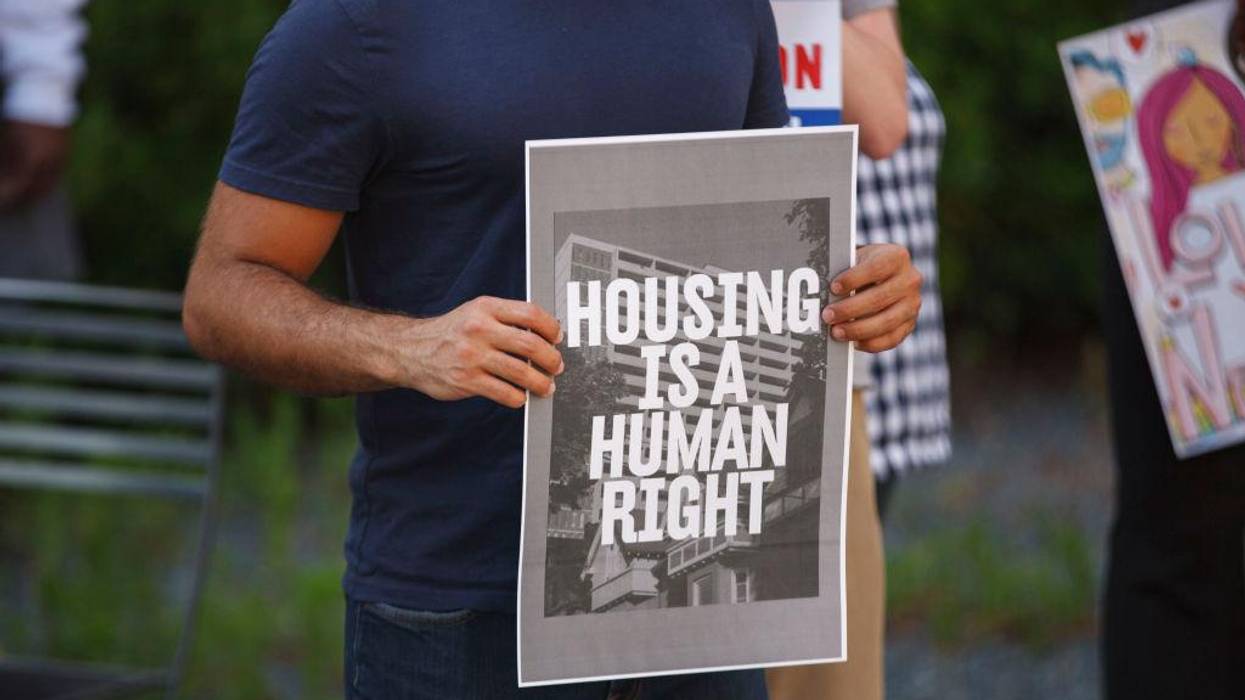
While the protesters gathered outside Blackstone, they stressed that corporate landlords in general are an issue. Ann Kiesling of Progressive Maryland, which supported tenants at the Enclave Silver Spring apartment complex, said that "I will never forget a woman with a disability telling me about the time she had to hop up, with the help of a neighbor, 15 flights of stairs to get to her apartment because the landlords refused to fix the elevators. I will never forget the parents of a four-year-old telling me how they had to heat up water on their stove to give their kid baths because their landlord refused to fix their hot water for over a month."
"An out-of-state private equity landlord, Hampshire Properties, is raking in massive profits by charging luxury rent prices while letting the building fall apart and leaving tenants with the consequences," Kiesling continued. "And while we are here fighting for basic living conditions against mold, broken elevators, pest infestations, corporate landlords like Hampshire Properties, like Greystar, like Blackstone, are pouring our rent money into lobbyists and elected officials' campaigns instead of fixing their buildings."
Hannah Peterson, a disabled veteran, seminary student, and member of the People's Lobby in Chicago, pointed out Wednesday that "just last night, House Republicans passed their budget resolution to cut millions from Medicaid."
That resolution
sets the stage for cutting not only $880 billion from the healthcare program that serves low-income Americans, but also $230 billion from the Supplemental Nutrition Assistance Program (SNAP), commonly called food stamps. Elected Republicans, who control both chambers of Congress and the White House, want to gut safety net programs to fund an expansion of tax giveaways to the rich that GOP lawmakers passed and President Donald Trump signed in 2017.
"Republicans are already funneling our tax dollars out of programs our communities need and into pockets of private corporations and billionaires," Peterson said. "We deserve a government that uses our money to fund our care, not one that uses our money to line the pockets of corporations."
As Medicare for All advocates often highlight, although the United States has Medicaid and Medicare, which serves seniors, it is the only developed country in the world without universal healthcare. Instead, the U.S. has a for-profit system that often leaves patients unable to access or afford necessary care, including because of denials from insurance companies.
"To the folks at UnitedHealthcare... if you really care about people's health, why don't you publicly come out and oppose the cuts to Medicaid?" asked Citizen Action of New York's Amelia Bittel—who has dysautonomia, a disorder that led to a heart surgery at age 35 and requires weekly blood draws.
"In my city of Syracuse, New York, 48% of the population relies on government-funded programs to get their insurance," said Bittel. "You don't need the $1.3 billion that you stand to profit from these cuts. Your company routinely reports the highest profits. Why not give back to the patients?"
At the American Gas Association, Gloria de Graves from Citizen Action of Wisconsin explained that in the Midwestern state, "if you're not familiar, we hit negative 30°F sometimes, and that means that people can freeze to death in their homes if they do not have a way to heat their homes."
"So all I'm saying is We Energies and Xcel Energy, who I have paid plenty of money to over the years, need to stop charging us so much money so that we can afford to feed ourselves, we can afford to stay housed, and when we are fleeing domestic violence, that there is a safe, electrified, and heated home to go into so that we are warm and safe in the winter," de Graves said.
Celebrating the multisite protest on Wednesday, progressive Congresswoman Rashida Tlaib (D-Mich.) said that "I want to thank you from the bottom of my heart, because there are people in my community that can't afford to come up here."
"It is so important to understand corporate greed and how it is embedded in environmental injustices, embedded in environmental racism," she said. "They want the federal government to continue to literally fund poisoning us, while we get sick here in our country. So they're making us sick, and we're subsidizing the fact that we don't have access to healthcare that supports our families."
In a dispatch earlier this week, People's Action executive director Sulma Arias wrote that her group "refuses to give up. We believe ordinary people have the power to rise and meet this and every moment, if we act together. We believe in the fundamental dignity of every person, without exception, and we believe government exists to serve all people—We the People—not the wealthy few."
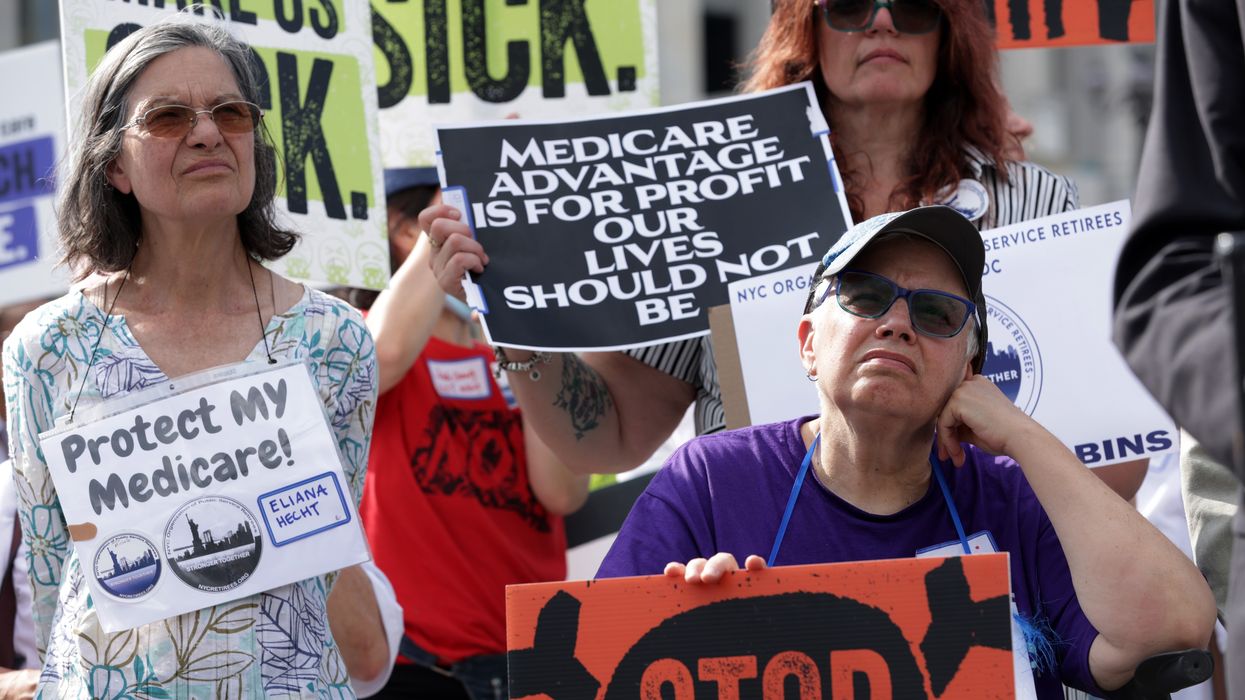
"UnitedHealth would be empowered by Trump's Project 2025 to harm more Americans than virtually any other private corporation, other than fossil fuel companies, that benefits from his plan."
Responding to UnitedHealth Group's third quarter results this week, People's Action highlighted how the insurance giant would benefit from Project 2025, the right-wing policy agenda that critics fear will be implemented if former Republican President Donald Trump returns to the White House.
"The underlying businesses, which generated more than $100 billion in revenue in the quarter, helped overcome $475 million in total cyberattack impacts in the quarter," Forbes noted Tuesday, citing the company earnings report. "Net income was $6.06 billion."
In a series of social media posts about those figures, People's Action said: "What they didn't mention? Much of that is public money. Funds meant to care for seniors and people with disabilities are lining the pockets of their executives and Wall Street investors. Money that instead UnitedHealth Group executives use to build mansions or send to Wall Street."
"UnitedHealth would be one of the largest financial beneficiaries of Project 2025."
People's Action also linked to its new report laying out how the company and its subsidiary UnitedHealthcare would likely benefit from the Heritage Foundation-led Project 2025, an initiative that Trump has tried to disavow even though its policy agenda's authors include at least 140 people who served in his first administration.
Specifically, the Tuesday report focuses on Medicare Advantage, an alternative to the government-run healthcare program that is administered by private companies. As Common Dreams has detailed, Project 2025 proposes making the privatized plans the default option for enrollees.
"UnitedHealth would be one of the largest financial beneficiaries of Project 2025, since it is the largest private health insurance corporation in America, the fourth-largest company in the country, and the largest writer of privatized Medicare Advantage plans, with 7.8 million people insured through a UnitedHealthcare Medicare Advantage plan," People's Action said.
The group pointed out that "UnitedHealthcare's revenue from Medicare Advantage, an estimated $137 billion, could be expected to double to $274 billion annually as a result of Project 2025."
"Because of UnitedHealth's massive scale, the harm it causes through its denials of care is unprecedented—whether through prior authorization denials, claim denials, and inadequate networks that prevent beneficiaries from receiving care or increase the financial strain of receiving care," the report warns. "UnitedHealth would be empowered by Trump's Project 2025 to harm more Americans than virtually any other private corporation, other than fossil fuel companies, that benefits from his plan."
As People's Action explained:
UnitedHealthcare would be expected to cover 15.6 million people via its Medicare Advantage plans as the eventual result of Project 2025's passage with a Trump victory. The Office of the Inspector General of the Department of Health and Human Services found that Medicare Advantage organizations (of which UnitedHealthcare is the largest) improperly denied care (prior-authorization denial) 13% of the time and denied payment for care improperly 18% of the time. Because this is a denial rate per procedure, not per person, an estimated 33% of people covered by Medicare Advantage experience a denial by their privatized insurer annually. With Project 2025's implementation that would mean 5.2 million people would be denied care by UnitedHealthcare alone. This figure is well above traditional Medicare denial rates due to inappropriate denials and denials outside the scope of traditional Medicare rules.
On social media, People's Action shared stories of actual patients, emphasizing that denials impact "people like Jenn Coffey, who constantly battles UnitedHealthcare for prior authorizations for the infusions that keep her alive after multiple fights with breast cancer."
"Robin Ginkel, a teacher who needs back surgery to be able to work again, faces the same fight for care," the organization said.
"We can stop this. Fight back against the full privatization of Medicare by corporations like UnitedHealthcare and UnitedHealth Group," People's Action urged. "Join us to deep canvass and protect care for ALL."
Underscoring Medicare defenders' warnings about Trump—who is facing Democratic Vice President Kamala Harris in the November 5 election, for which early voting is already underway—Mother Jones reported Wednesday that a pro-Trump super political action committee sent out an alarming mailer to older voters in Arizona saying that Medicare had been canceled.
According to David Corn, the magazine's Washington, D.C. bureau chief:
It had a big red stamp that proclaimed, "Medicare Cancellation Notice." Also emblazoned on its front was this: "Warning: Rates are going up and plans are being canceled. Details enclosed." Its return address was the "Department of Medicare Cancellation, Kamala Harris Administration."
That return address should have been a tip-off that this was not an official notification—along with a scrawled add-on in cursive: "I hope you can afford to lose your insurance! —Kamala Harris XOXO."
It's hard to know whether any recipient saw this and received a shock, fearing their Medicare was being cut off. But the group that sent out this official-looking piece of campaign literature, Make America Great Again, Inc., a pro-Trump super PAC, was spreading false and misleading information about Medicare and about Harris.
Sharing the reporting on social media, Corn said that it was "rather odious for oligarchs to be scaring folks."
"Our coalition was critical to defeating Trump in 2020," said one organizer. "We're ready to do it again in 2024."
Announcing their endorsement of U.S. Vice President Kamala Harris in the 2024 presidential election, three of the country's largest progressive organizations announced Thursday their plan to mobilize their hundreds of thousands of members to reach out to millions of swing state voters about Harris' fight for abortion rights, the climate, and democracy.
The Center for Popular Democracy Action (CPD), the Working Families Party (WFP), and People's Action pledged to knock on more than five million doors in states including Michigan, Wisconsin, Pennsylvania, Nevada, and Arizona, where they will tell voters about the key role Harris played in passing far-reaching climate action and jobs legislation in the Inflation Reduction Act, her strong support for abortion rights, and her commitment to delivering on President Joe Biden's housing agenda.
"Our coalition was critical to defeating [Republican presidential nominee Donald] Trump in 2020. We're ready to do it again in 2024," said Maurice Mitchell, national director of the Working Families Party. "This election is bigger than any one person. It’s about the kind of country we want to be and whether we will let the rights and freedoms our ancestors spent generations fighting for—the right to participate equally in our democracy, to organize our workplaces, and to control our own bodies—be taken away from us. Over the next four months, we'll be mobilizing voters in key states to elect Kamala Harris and build our ranks of WFP champions up and down the ballot."
The three groups' joint announcement of their endorsement of Harris comes four days after the vice president launched her campaign following Biden's decision to step aside under pressure from Democrats, due to concerns about his age, health, and sinking popularity among voters.
Since Sunday, the gun violence prevention group March for Our Lives has also announced its first-ever presidential endorsement of Harris, and the vice president has secured support from at least four national climate action groups.
"The Biden/Harris administration created real momentum toward an economy that puts working people before billionaires and a democracy that protects hard-won freedoms for everyone. We need to build on that momentum."
"We see an unprecedented surge of enthusiasm on the doors and from our members about Vice President Kamala Harris," said Marta Popadiak, movement governing director of People's Action. "The Biden/Harris administration created real momentum toward an economy that puts working people before billionaires and a democracy that protects hard-won freedoms for everyone. We need to build on that momentum."
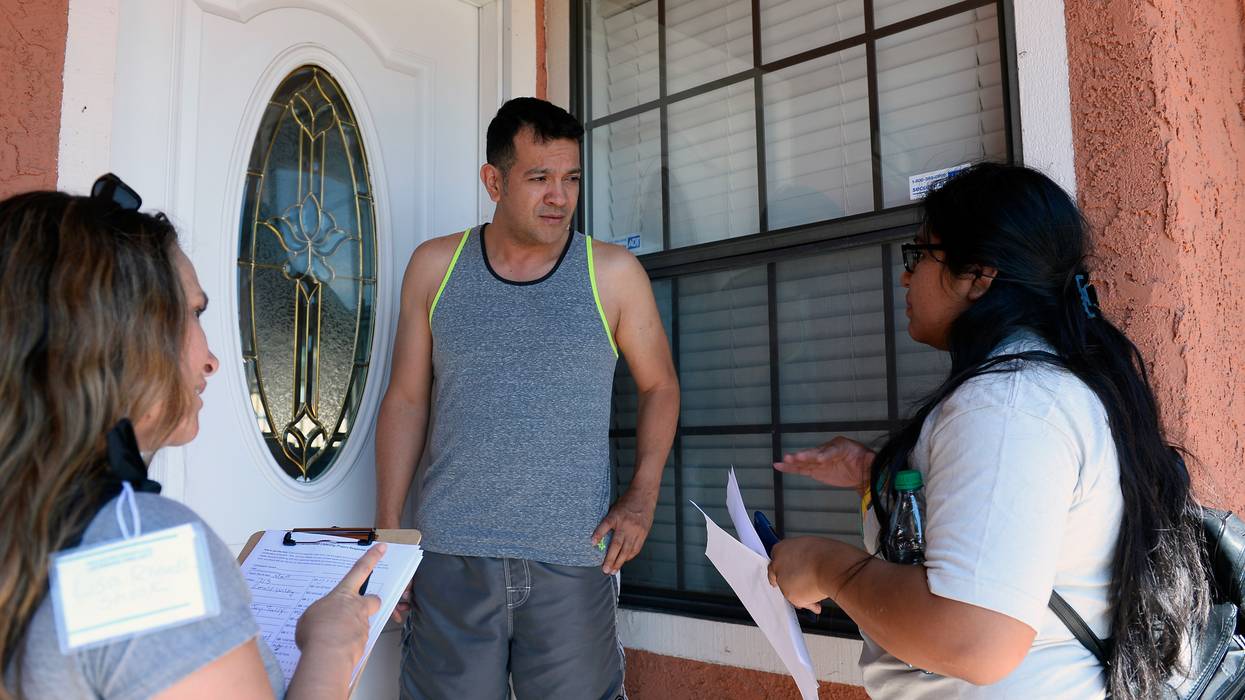
People's Action has utilized "deep canvassing," an organizing tactic that eschews the brief, scripted conversations typical in traditional phone-banking and door-knocking operations in favor of longer discussions and open-ended questions aimed at developing an understanding of voters' beliefs, priorities, and values.
"We are mobilizing tens of thousands of volunteers to have deep conversations about why voting for Harris is a vote for a future in which our families and communities will thrive," said Popadiak.
People's Action expressed hope that a Harris presidency could initiate a shift in the Biden administration's "disastrous support" for Israel.
DaMareo Cooper and Analilia Mejia, co-executive directors of CPD, called on progressives to "rally behind Vice President Harris to build upon" the achievements of the Biden administration, including strengthening the U.S. economy following the coronavirus pandemic and canceling student debt for nearly one million Americans.
"Vice President Kamala Harris is a strong candidate who will beat Donald Trump, preserve our democracy, and drive our country forward," said Cooper and Meija.
The WFP noted that 95% of its members and delegates voted this week to endorse Harris as the Democratic nominee, and said the organization plans to knock on two million doors in key states including North Carolina and Georgia.
The organizing push is kicking off as Sen. JD Vance (D-Ohio), the Republican vice presidential nominee, faces blistering criticism for comments he made in 2021 in which he described Harris and other Democratic leaders as "childless cat ladies," and for his support for a nationwide abortion ban and call to track people who cross state lines to obtain abortion care. On Wednesday, the Harris campaign warned voters about Trump's promise to oil tycoons that he would ensure they can continue drilling for planet-heating fossil fuels if they gave him $1 billion in campaign donations.
Nic O'Rourke, a member of the Philadelphia City Council who represents the WFP, said that a Harris victory in November would ensure "the best conditions possible for activists as they join with and empower their communities" to fight for economic, racial, climate, and reproductive justice.
Unlike Harris', said O'Rourke, "the GOP's vision for America doesn't hold space for the righteous demands of the constituents I serve and the people I come from."
"Health insurance coverage has expanded in America, but we are finding it is private health insurance corporations themselves that are often the largest barrier for people," said one organizer.
A day after 150 people assembled outside the headquarters of UnitedHealth Group to demand the for-profit health insurance giant stop its "systemic" denial of coverage, the company announced Tuesday the huge profits it raked in over the second quarter of 2024: $7.9 billion.
The sum, said one organizer, exemplifies why the demonstrators were willing to risk arrest to speak out against the firm's practices.
"UnitedHealth Group's $7.9 billion quarterly profit announcement is the result of a business model built on pocketing premiums and billions of dollars in public funds, then profiting by refusing to authorize or pay for care," said Aija Nemer-Aanerud, Health Care for All campaign director for People's Action Institute. "People should not have to turn to public petitions or direct actions to get UnitedHealthcare to pay for the care they need to live. That makes no sense, unless you're a shareholder or executive eyeing your next big luxury purchase."
Eleven people were detained by police at Monday's demonstration, where they blocked the street in front of UnitedHealth's headquarters in Minnetonka, Minnesota, displaying signs that read, "United (Denies) Healthcare" and "The Price Is Wrong."
The demonstration was organized by the Care Over Cost campaign at People's Action Institute, which has worked to help people across the country overturn care denials by UnitedHealth and other for-profit insurance giants.
Gina Morin of Auburn, Maine spoke at the event about having her mental health treatment denied by her Medicare Advantage plan administered by UnitedHealth.
"Two years ago my therapist was denied payment for seven of my mental health sessions she provided," she said. "I tried to pay her even though I'm on a limited income and she wouldn't take the money. If my provider, in her professional opinion, believed I needed those therapy sessions, who is UnitedHealth to deny coverage?"
As Common Dreams reported last month, UnitedHealth was named in a letter written by 52 members of the Democratic caucus in Congress as one of the healthcare companies that use artificial intelligence to decide via algorithm that coverage should be provided or denied to patients who have Medicare Advantage plans, which are billed as offering coverage that traditional Medicare doesn't include.
ProPublica reported last year on Christopher Naughton, a man with ulcerative colitis whose treatment cost $2 million per year, leading UnitedHealth to flag his account as "high dollar." The company contracted with a doctor to review Naughton's case, and the doctor found the treatment for symptoms including arthritis, debilitating diarrhea, and blood clots was "not medically necessary."
After suing the company, Naughton's family found UnitedHealth had lied about what Naughton's personal physician told the contractor in order to come to their conclusion and end coverage.
"Health insurance coverage has expanded in America, but we are finding it is private health insurance corporations themselves that are often the largest barrier for people to receive the care they and their doctor agree they need," Nemer-Aanerud told CBS News Monday.
In April, People's Action sent a letter to UnitedHealth noting that its CEO was paid nearly $10 million in 2022 while the CEO of its parent company "extracted over $90 million in executive and board pay for himself" over four years.
The company took $22.4 billion in profits in 2023 and sent $14.8 billion to shareholders through stock buybacks and dividends—yet continues to deny necessary healthcare coverage to its members.
The group called on UnitedHealth to:
"The private insurance industry is used to getting its way, but this year we out-organized them," said one People's Action leader.
As insurance companies' stock fell 6-12% on Tuesday in response to the Biden administration's Medicare Advantage announcement, one healthcare campaigner celebrated that the U.S. government didn't cave to the "greedy" industry's pressure.
"The private insurance industry is used to getting its way, but this year we out-organized them," declared Aija Nemer-Aanerud, the People's Action Health Care for All campaign director.
Medicare Advantage (MA) plans are an alternative to traditional coverage under the federal health insurance program for people with disabilities and those age 65 or older. They are administered by private insurance companies known for denying patients necessary care and overcharging the government, which costs taxpayers up to $140 billion extra each year.
"We urge President Biden to do more to rein in abuse of the Medicare program by private corporations."
The Centers for Medicare & Medicaid Services (CMS) announced Monday that "payments from the government to MA plans are expected to increase on average by 3.7%, or over $16 billion, from 2024 to 2025. The federal government is projected to pay between $500 and $600 billion in Medicare Advantage payments to private health plans in 2025."
First unveiled in January, the 3.7% is higher than what campaigners wanted. Last week, Alex Lawson of Social Security Works and Brittany Shannahan of Public Citizen delivered to the White House around 28,000 petition signatures urging President Joe Biden to "reduce MA rates to a level commensurate with traditional Medicare and recoup all overpayments."
However, the rate is also far less than what insurers and industry groups were demanding—and, as Reuters noted Tuesday, the decision was a departure from the norm, as CMS "typically raises the final reimbursement from the advanced notice."
"Medicare is one of the most popular government programs because it delivers healthcare to people when and where they need it," said Nemer-Aanerud. "Private insurance companies like UnitedHealthcare spent millions in advertising and lobbying in Washington to demand more of our public money for privatized, so-called 'Medicare Advantage' plans."
The People's Action leader pointed out that "we countered their lobbying by helping people share their stories with lawmakers about how Medicare Advantage plans harmed them by denying care when they needed it most."
"We commend the Biden administration for listening to our people and refusing to cave to the insurance lobby's demands," the campaigner added. "We urge President Biden to do more to rein in abuse of the Medicare program by private corporations and reinvest public funds into expanding and strengthening traditional Medicare."
As private insurers have grown their MA businesses, "concerns about the cost of the program have been rising for years from wonkier corners of Washington," Bloomberg's John Tozzi reported Tuesday. According to his newsletter:
"We went years without the advocacy community really paying attention to it," says Wendell Potter, who left a career doing public relations for health insurers to become an outspoken critic of the industry.
That shifted over the last year or two, he said, as a loose group of advocates coalesced around the issue... Potter said advocates now get face-to-face meetings with top Biden administration officials about the issue.
Potter partnered with Congresswoman Pramila Jayapal (D-Wash.)—a leader in the fight for Medicare for All, a single-payer healthcare system that would cover everyone nationwide—for a Newsweek op-ed published just before the CMS announcement.
The pair took aim at the insurance industry's "disinformation campaign" about what they call "Medicare (Dis)Advantage."
"First off, the industry claims that Medicare Advantage plans reduce costs. But this is simply not true," Potter and Jayapal explained. "And it gets worse. While Big Insurance touts the coverage Medicare Advantage plans provide, the reality is Medicare Advantage plans often provide worse coverage than traditional Medicare."
They wrote that "another important characteristic of Medicare Advantage plans is their aggressive use of tools to delay and deny care such as prior authorization, which is seldom used in traditional Medicare, and rarely for services like physician-administered cancer treatments (no one wants chemotherapy if they don't need it)."
"Medicare Advantage plans also drive health inequalities, contrary to Big Insurance claims," they continued. "And the industry's biggest and boldest piece of disinformation is that Medicare Advantage plans will be forced to cut benefits if the government stops massive overpayments that have been padding corporate profits for decades."
"This is wholly false," they stressed. "And you want to know how we know? Because we have reduced overpayments before."
"I'm tired of insurance companies putting profit over people," said one activist at a Chicago rally.
Pushing back against insurers' annual denial of nearly a quarter-billion healthcare claims or pre-authorization requests, activists rallied in more than a dozen U.S. cities on Wednesday to demand "an end to private health insurance industry greed so people can get the care they need when they need it."
The Care Over Cost Campaign—a national grassroots initiative launched by the advocacy group People's Action—held rallies in cities including Baltimore, Maryland; Chicago, Illinois; Denver, Colorado; Detroit Michigan; Portland, Maine; and Hartford, Connecticut, known as the "insurance capital of the world." The campaign called on the industry lobby group America's Health Insurance Plans (AHIP) to "direct its members to put people over profit."
Activists implored AHIP and private health insurance corporations including Blue Cross Blue Shield (BCBS), UnitedHealthcare, Cigna, Humana, and Aetna "focus on ending the epidemic of care denials."
"CEOs at private health insurance companies profit off our pain and deny our healthcare. That's why people are rising up across the country to expose the lie that private health insurers are there for us when we need them," People's Action Healthcare for All campaign director Aija Nemer-Aanerud said in a statement.
"We all deserve the care we need when we need it, and it's time for greedy corporations like BCBS, Aetna, Cigna, and UnitedHealthcare to pay up and stop denying care," Nemer-Aanerud added.
According to Care Over Cost, private insurers deny more than 248 million claims and pre-authorization requests each year.
The campaign's demands include "sharing claims denial data, holding public meetings, ceasing lobbying, and working with policymakers and public authorities to transform the system to people over profit."
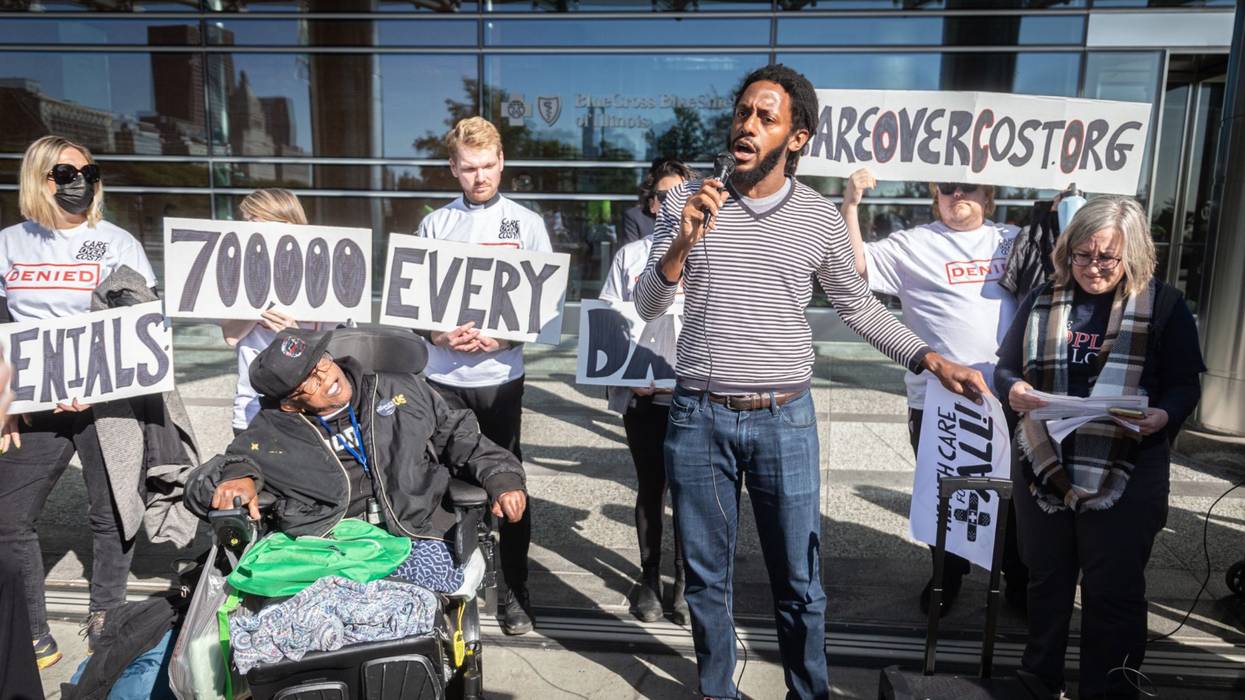
In Chicago, activists from groups including the People's Lobby, ONE Northside, and Jane Addams Senior Caucus held a "die-in" demonstration outside the downtown office of BlueCross BlueShield in support of what the organizers said are "the 700,000 Americans whose lives are impacted or lost due to lack of access to medical care from denied medical claims each day."
Activist Michael Grice, who lives with a disability, told rally attendees that "it took me over four years to get the wheelchair I'm sitting in now."
"I'm tired of insurance companies putting profit over people," Grice said. "They always do it for people with disabilities and senior citizens. I'm fed up with this garbage."
Illinois state Sen. Mike Simmons (D-7) addressed the Chicago rally, asserting that "it's not too much to ask in a developed democracy that people live long, healthy, prosperous lives."
"Those 700,00 denied claims—that's someone who needs insulin, someone who has an untreated liver condition," Simmons said. "That's somebody's aunt, somebody's mom."
Hartford rally attendee Kristen Whitney Daniels told CT Insider: "This is an untenable situation. And it's only getting worse and worse every year, getting less and less covered."
"The frustrations are gonna boil over eventually," she added. "And [insurers] can either be part of the solution and working with patients to find ways to help patients have health, or they can be a part of the problem."
Responding to the protests, Alex Kepnes, executive director of communications for Aetna, told CT Insider that the company wants to be "part of the solution."
"We believe that every American should have access to affordable, high-quality health coverage," Kepnes said. "The basic premise of making healthcare more affordable and simpler is at the core of CVS Health's transformation."
CVH Health, which owns Aetna, reported revenue of over $300 billion last year, with profits topping $4 billion—even as the company plans to lay off 500 Connecticut employees.
Daniels, who has Type 1 diabetes and other healthcare needs, said her insurance company, UnitedHealth, is part of the problem, making it extremely difficult to get the insulin she needs. She also said the company stopped covering one medication she needs a year after it was approved for coverage.
"I am tired of insurance companies getting rich off treating patients and disabled folks, like myself, as if we are expendable."
"The problem is this medication has worked so well for the last two years," Daniels said. "So I know how well it works. And then I want it and then I've been off of it for the last few months. And it's been horrible. It's like relearning to be diabetic again."
"I am tired of insurance companies getting rich off treating patients and disabled folks, like myself, as if we are expendable. I am not alone," she added. "That's why I am fighting and I will keep on fighting these claims and for affordable insurance that everyone has access to."
Phil Brewer, an emergency physician representing the single-payer healthcare advocacy group Physicians for a National Health Program (PNHP) at the Hartford rally, told CT Insider that "requiring pre-authorization used to be rare."
"Now it's routine," he added. "It also used to be that a human being actually reviewed the request, but now most requests are 'reviewed' by algorithm-driven AI programs."
At the Portland rally, Ronan Aubrey—whose family has a history of cancer—said they were surprised to receive a bill for a diagnostic ultrasound they thought would be covered by their insurance.
"Because my procedure was recommended by a doctor, I had assumed it would be fully covered. I was wrong," Aubrey told the Maine Beacon. "My insurer only covered a small part of the scan and procedure because I hadn't yet met my $3,500 deductible for the year."
"When an insurer tells us that medical care we need isn't covered, what are we going to do?" Aubrey asked. "My insurer shouldn't be deciding whether I should be getting a medical procedure—my doctor should."
"We have seen corporate landlords—who own a larger share of the rental market than ever before—use inflation as an excuse to hike rents and reap excess profits beyond what should be considered fair and reasonable."
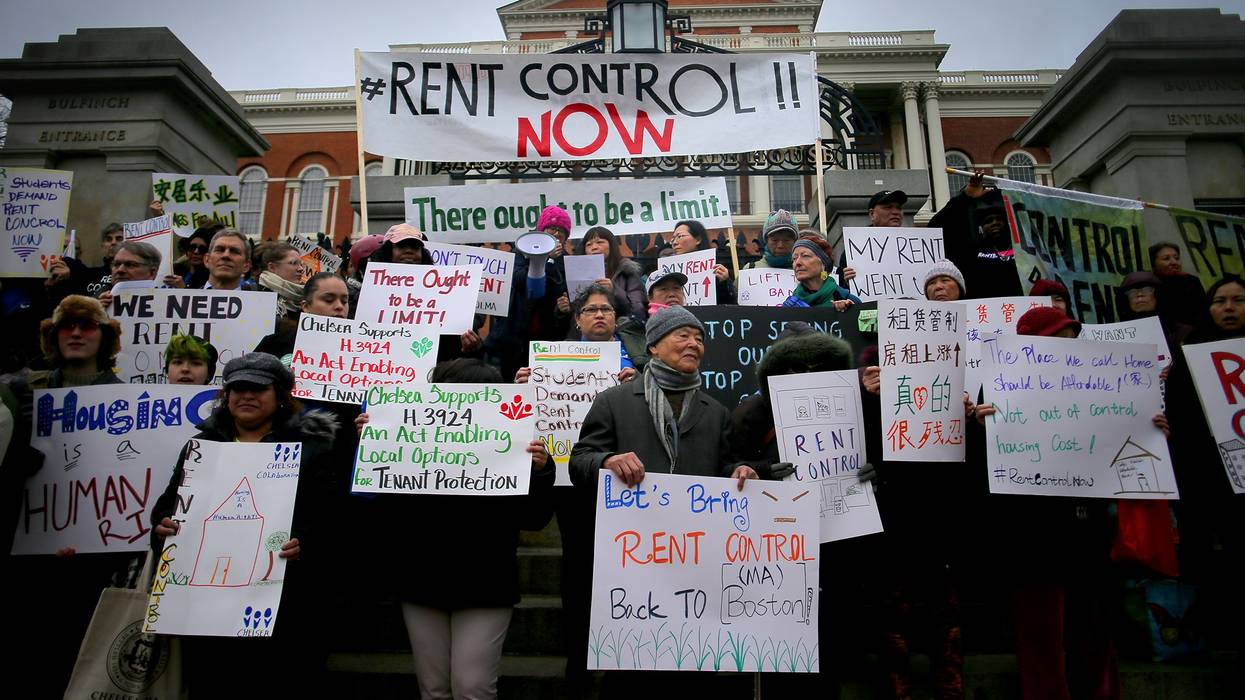
More than 30 U.S. economists have signed a letter expressing support for strong federal tenant protections and rent control as housing costs remain sky-high, even amid broadly cooling inflation.
The economists note in their letter, released Thursday, that the median rent in the U.S. "has surpassed $2,000 for the first time, and there is not a single state where a worker earning a full-time minimum wage salary can afford a modest two-bedroom apartment."
"We have seen corporate landlords—who own a larger share of the rental market than ever before—use inflation as an excuse to hike rents and reap excess profits beyond what should be considered fair and reasonable," the letter continues. "Renters are struggling as a result."
The letter's signatories—including Mark Paul of Rutgers University, James K. Galbraith of the University of Texas at Austin, and Isabella Weber of the University of Massachusetts Amherst—call on the Federal Housing Finance Agency (FHFA) to require rent regulations as a condition for federally-backed mortgages and reject the "economics 101 model that predicts rent regulations will have negative effects on the housing sector," likening it to typical arguments against raising the minimum wage.
"Empirical research on local rent control policies in San Francisco, CA and New York, NY found that rent regulations lower housing costs for households living in regulated units," the economists wrote. "In Cambridge, MA, empirical research showed that the repeal of rent stabilization laws resulted in an average rent increase of $131 for tenants."
Given that "Fannie Mae and Freddie Mac mortgages on the secondary market support nearly half of rental units in the U.S.," they argued, "Government Sponsored Entities (GSEs) have the influence needed to meaningfully change the trajectory of the housing crisis."
The economists' letter is part of a broader push by tenant rights groups and housing justice organizations to secure federal protections against egregious rent hikes and wrongful evictions.
Earlier this week, 17 U.S. senators wrote in a letter to the FHFA that "renters also have too few protections, making them vulnerable to steep rent increases and deteriorating housing conditions—factors that are out of their control."
"Tenant protections vary drastically from state to state and even sometimes from county to county, often leaving renters without recourse," the senators added. "There have been repeated reports of investors using low-cost financing from Enterprise-backed loans to buy properties and then sharply raising rents, mistreating tenants, and allowing buildings to fall into disrepair."
More than 140 academics, over 70 climate researchers, and dozens of local elected officials have also joined the call for nationwide rent regulations.
Tara Raghuveer, director of the Homes Guarantee campaign at People's Action, said in a statement Thursday that "tenants are coming for rent regulations, and everyone from senators to economists agree: tenant protections are common sense."
"Due to lack of regulation, affordable housing is lost quicker than it can be built," said Raghuveer. "Corporate landlords call the shots with federal financing through Fannie Mae and Freddie Mac. That's why tenants spent this summer organizing to win what we need: federal tenant protections like caps on annual rent increases."
In late May, the FHFA issued a request for public input on tenant protections at multifamily properties with mortgages backed by GSEs.
Tenants with the Homes Guarantee campaign responded by knocking on more than 4,000 doors at GSE-backed properties and organizing more than 2,000 comments in support of tenant protections and rent regulations.
"The system as we know it today has failed everyday people, many of whom make impossible choices between rent and food, their homes or their medications," said Raghuveer. "The status quo is not working for the people, it is only working for the profiteers, and it is time for change. It is time for the federal government to make changes to that system, to correct the imbalance of power between landlords and tenants, to protect tenants, and to stabilize the American economy."
"Beliefs are not fixed," said Eboni Taggart, training manager at the Deep Canvass Institute. "We don't want to write people off as unreachable. I think there's a real danger in that."
On the surface, it may seem implausible that at a time of heightened polarization and crises so large in scale that they often feel insurmountable, one-on-one conversations can have the capacity to spur transformative political change.
But a growing of body evidence accumulated over the past decade and a half in the United States indicates that such conversations—specifically an outreach method known as deep canvassing—are effective at connecting with people who feel alienated from the political system, altering worldviews, and impacting election results, making them critical in the fight for a more just future.
Deep canvassing has its origins in the grueling fight for marriage equality, and it differs from the traditional door-knocking of political campaigns in that it focuses on nonjudgmental listening, curiosity, and story-sharing—not bombarding people with statistics and talking points.
"We believe that stuff shuts people down," Eboni Taggart, training manager at the Deep Canvass Institute (DCI), told Common Dreams. "That's not saying they don't matter, but they don't matter right away. The first thing is to understand where people are coming from and get vulnerable with them."
DCI, a project of the People's Action Institute and the New Conversation Institute, was launched in 2021 in an effort to build on the work and successes of deep canvassers across the U.S., which continued during the devastating coronavirus pandemic and chaotic 2020 election cycle.
In a new report shared exclusively with Common Dreams, DCI takes stock of the past two years and notes that thousands of people and hundreds of organizations have taken part in its deep canvass training. Those individuals and organizations went on to hold more than 245,000 deep canvass conversations around the country on a variety of key topics, from climate to trans rights to immigration.
Starting on July 18, DCI is holding a virtual and free three-day training aimed at teaching participants how to have deep canvass conversations, which could prove key to mobilizing neglected, marginalized segments of the population as the 2024 election approaches and as the Republican Party ramps up its assault on reproductive freedoms, LGBTQ rights, environmental protections, safety net programs, and workers.
"Our main purpose and goal is to reduce the barrier of entry to training around deep canvassing, hence the Deep Canvassing Institute," Ella Barrett, a co-founder of the New Conversation Institute, told Common Dreams in an interview. "The time is now, in my opinion, to ensure that every single conversation we have with someone is intentional and is using evidence-based tactics. And I think deep canvassing is the way to do it."
"When we listen to working-class people and build campaigns around our issues, we can win."
In March, after more than a decade of debate and Republican stonewalling, the North Carolina Legislature voted to expand Medicaid—a move that's expected to provide health insurance to more than 600,000 people in the state.
Corporate media coverage of the stunning reversal focused largely on shifting attitudes among Republican lawmakers as the decisive factor, but advocates in the state say it was their years of on-the-ground work—knocking on doors, cold-calling voters, and holding rallies to build grassroots pressure on politicians opposed to Medicaid expansion—that helped turn the tide.
Down Home North Carolina, a multiracial organizing group that focuses on rural and small-town communities, said after the March vote that its campaigners "doggedly organized for Medicaid expansion" and "deep canvassed to mobilize our communities" as part of a broader effort to build political power from the ground up.
"Our fight and victory on Medicaid expansion reminds us: When we listen to working-class people and build campaigns around our issues, we can win," said the group, whose organizing work temporarily staved off a Republican supermajority in North Carolina in 2022. (The GOP only achieved veto-proof majorities in both chambers of the state Legislature after a Democrat switched parties in April.)
Down Home's Medicaid expansion efforts, which included thousands of deep canvass conversations across North Carolina, are among the examples that DCI highlights in its new report to show how its approach can deliver tangible results that dramatically alter people's material conditions and shift political landscapes.
Amy Cooper, a Down Home member, told DCI that she used her personal healthcare experiences as a conversation starter in deep canvassing sessions, which aim to foster attitude changes that last beyond just the nearest election cycle.
"If I hadn't qualified for Medicaid, with the pregnancy condition I had, I would've died," Cooper said, explaining her approach in one-on-one conversations. "For them to know that, 'Wow, this person who's talking to me, if they hadn’t been covered by insurance, they would've died.' That's a real thing."
Exchanging stories and establishing a genuine emotional connection is central to deep canvassing, particularly when navigating difficult discussions around abortion, LGBTQ rights, race, the climate crisis, and other topics.
"Compassionate curiosity is really the heartbeat of deep canvassing," Taggart, DCI's training manager, told Common Dreams. "If you're going to have a conversation where you need to change someone's heart and mind, you need to be really curious about their lived experience and why they feel the way that they do."
"People have very conflicted feelings," Taggart added. "Oftentimes they're dealing with cognitive dissonance... They're in an echo chamber and they're not being pushed or reflecting to lean into where that comes from."
In Maine, Texas, and elsewhere, Planned Parenthood and other reproductive rights organizations have been deep canvassing for years amid intensifying right-wing attacks on abortion access, knocking doors and directly engaging with voters who are opposed to or on the fence about abortion.
"When you talk to people about the actual experience of abortion and what they want for the people around them, they are way more supportive than if you ask are you pro-choice or pro-life, and are you a Democrat or a Republican," Caroline Duble, the political director of Avow Texas, told the Dallas Morning News in October.
Climate advocates have also found value in deep canvassing. After knocking on thousands of doors and speaking with hundreds of people in low- and moderate-income precincts in 2021, Kentuckians for the Commonwealth concluded that the method is "a powerful and ever-evolving practice."
"We have seen it change minds," the group wrote.
"With the research that has been done over the last seven years, it has been proven that deep canvassing can, in one conversation, have a lasting change on the way people behave and think."
The anecdotal experiences of volunteers and organizers—which pose a challenge to depictions of unbridgeable ideological divides one often gets from social media and news coverage of American politics—have been borne out in scientific research.
In 2020, building on an earlier study, University of California, Berkeley political science professor David Broockman and Yale political scientist Josh Kalla found that "non-judgmentally exchanging narratives in interpersonal conversations can facilitate durable reductions in exclusionary attitudes."
The pair's latest peer-reviewed research, published in the journal American Political Science Review, used field experiments in several locations in Tennessee and California to test whether deep canvassing methods could measurably combat prejudiced views on undocumented immigrants and trans people.
The study, in which 230 canvassers spoke with more than 6,800 voters ahead of the 2018 midterms, found that "face-to-face conversations deploying arguments alone had no effects on voters' exclusionary immigration policy or prejudicial attitudes, but otherwise identical conversations also including the non-judgmental exchange of narratives durably reduced exclusionary attitudes for at least four months"—in contrast with the rapidly fading impact of television ads and mailers.
The experiments targeting transphobic attitudes yielded similar results.
"The contexts in which these experiments took place also suggest optimism for efforts for individuals and organizations to implement the non-judgmental exchange of narratives at scale: none of the seven organizations we worked with had previously implemented such an intervention, nor had the canvassers had any such prior experience," Broockman and Kalla found.
More recently, during the 2022 midterm election cycle, DCI teamed up with Broockman, Kalla, and advocacy organizations in Missouri, Idaho, and Georgia to conduct a deep canvassing experiment focused on former President Donald Trump's election lies, specifically the false claim that mail-in voting is riddled with fraud.
"The experiment found, in a survey 10 days after the canvass, a 4.2 percentage point increase in agreement with the statement that we should 'allow all Americans to vote by mail,' after a deep canvass conversation with the script developed in collaboration with the Deep Canvass Institute," DCI notes in its new report.
"Researchers similarly found a 1.9 percentage point decrease in the belief that mail-in voting contributes to electoral fraud," the report adds. "The data shows that deep canvass conversations were particularly effective with political moderates and independent voters. Furthermore, these deep canvass conversations had positive results among voters both with and without a college degree."
Barrett of the New Conversation Institute, who helped develop deep canvassing methods at the Los Angeles LGBT Center's Leadership LAB project, told Common Dreams that "with the research that has been done over the last seven years, it has been proven that deep canvassing can, in one conversation, have a lasting change on the way people behave and think about issues and build more connection across difference."
"I think it has the power to fundamentally change culture because we're not having to go back to people time and time again," said Barrett. "We are able to have that sort of meaningful, memorable impact through one 10- to 20-minute interaction with someone, which gives me a ton of hope about what organizing and field work can do to really depolarize our country."
"I don't think that we're doing it enough, especially with how effective we have found it to be."
DCI's work to scale deep canvassing operations across the country is imbued with a sense of urgency.
"Given the severity of the attacks transgender people currently face," the new report says, "it is essential that our movement is equipped with the skills and knowledge to transform attitudes towards compassion and empathy for transgender young people and adults."
The 2024 election, and the dangerous prospect of another Trump term, also looms large.
In 2020, according to a report by People's Action, a deep canvass phone program that connected with voters in several key states "had a substantial impact on decreasing Trump's vote margin among independent women, respectively 4.9% with women and 8.5% independent women and an overall 3.1% impact on Trump's vote margin."
"That is larger than the 2016 margin of victory in nine key battleground states including Michigan, Pennsylvania, Wisconsin, and Florida which would translate to 108 electoral votes," the report found. "This tactic is one of the only proven strategies to shift presidential vote choice and is an estimated 102 times more effective per person than the average presidential persuasion program, as documented by academic research."
Such results have led prominent members of Congress to voice support for and utilize deep canvassing techniques in their efforts to build public support for progressive agenda items.
In late 2021, Rep. Ayanna Pressley's (D-Mass.) team engaged in deep canvassing across her district to build support for student debt cancellation.
Daniela Michanie, Pressley's organizing director, said in a recent interview that the congresswoman's team used the common deep canvassing technique of asking people how supportive they were of student debt cancellation on a scale of one to 10, and then working to bump them up over the course of the conversation.
"We were able to move people up this scale by an average of two points," said Michanie. "That doesn't seem like a lot, but that is really, really significant getting someone to admit to you that they now approach an issue from a different perspective."
"I don't think that we're doing it enough," Michanie said of deep canvassing, "especially with how effective we have found it to be."
For Taggart and DCI, deep canvassing is an antidote to hopelessness in the face of immense challenges and high-stakes political conflicts.
DCI's new report opens with a quote from U.S. Surgeon General Dr. Vivek Murthy, who said last month that "our epidemic of loneliness and isolation has been an underappreciated public health crisis that has harmed individual and societal health."
Speaking to Common Dreams, Taggart said that "it really is important for us to use deep canvassing as a way to inspire folks that change is possible."
"Beliefs are not fixed," said Taggart. "We don't want to write people off as unreachable. I think there's a real danger in that."
"We wouldn't even have deep canvassing if gay rights activists decided to write people off who disagreed with them," she added. "This whole tool was created with the intention to persuade individuals to lean into our shared humanity."
"The good news," the authors of a new People's Action white paper assert, "is that the antidotes to authoritarianism are in every community and available to be activated right now."
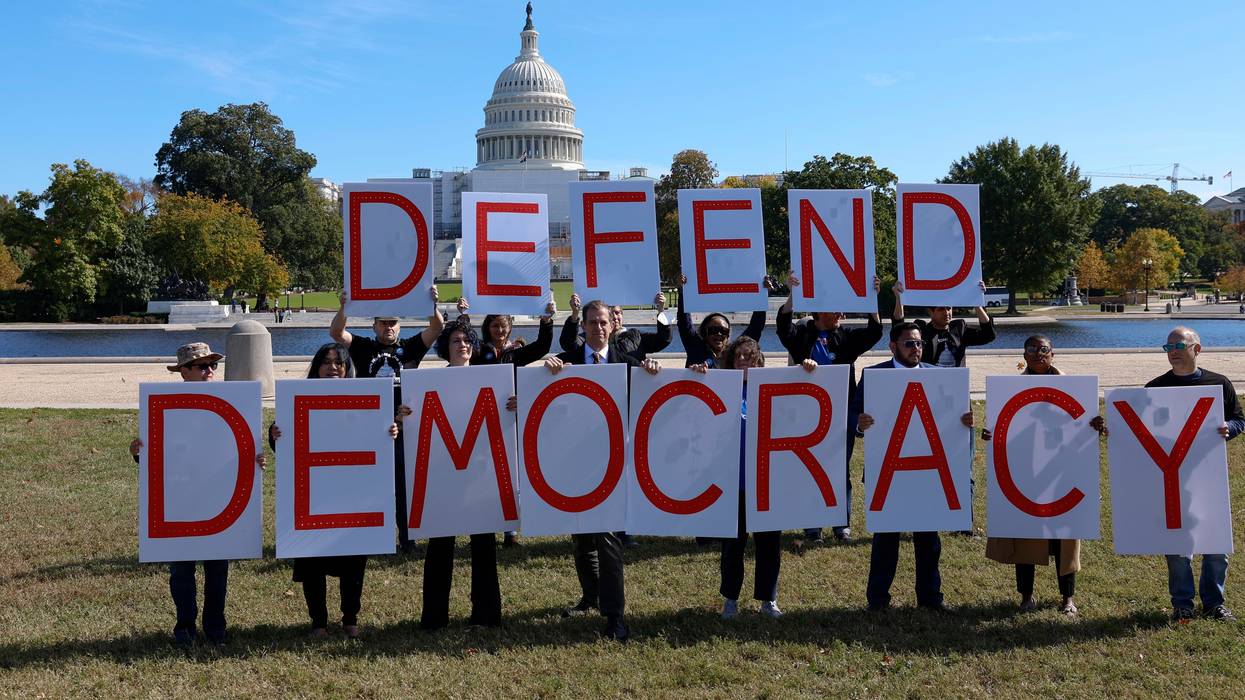
Amid what many experts fear is a Republican-led slow-march toward fascism in the United States, a report published Tuesday by a progressive advocacy group answers the question: "How can we build a multiracial and pluralistic democracy with an inclusive economy to defeat the rise of authoritarianism?"
The white paper—entitled The Antidote to Authoritarianism: How an Organizing Revival Can Build a Multiracial Pluralistic Democracy and an Inclusive Economy—was published by People's Action with support from the Democracy Fund and the endorsement of more than a dozen progressive groups.
"This simple truth—that ordinary people, organized effectively, have the power to drive social change upwards to create the conditions for justice, equity, and freedom—has been the power behind every great expansion of our democracy, from abolition and women's suffrage to civil rights and marriage equality," the paper notes.
Paper co-authors Beth Jacob and James Mumm said they interviewed more than two dozen leaders of national social change networks, academics, philanthropists, and organizers.
"A revival and expansion of community organizing is essential to reinvigorating democracy across lines of difference; this is the foundation of a multiracial pluralistic democracy," the pair asserted. "Philanthropies that want to address the root causes of racial inequity need to partner with community organizing on a long-term agenda that builds enough relationships and power to make progress on structural racism."
"Community organizing and philanthropy can reduce economic uncertainty that is fueling authoritarianism and help people win and make meaning of public investments as building blocks of an inclusive economy," the authors added.
Among the paper's key findings:
"Organizers and philanthropy have a big task before us: to strengthen and defend democracy at a time when some feel that democracy fails them and others want to throw it out to advance an authoritarian agenda," People's Action executive director Sulma Arias said in a statement.
"Community organizing is the solution, and for it to work, it must be fundamental to what we do, not just a tactic or short-term strategy," Arias added. "This white paper outlines the shifts and investments we need to make it work."
Ana Maria Archila of Action Lab, one of the groups endorsing the white paper, argued that "in order to avert the rise of authoritarianism, and address the combined crises of climate disaster, growing inequality, unprecedented levels of loneliness and political fragmentation, we must double down on efforts to build community and transform who holds power in our democracy."
"There are no shortcuts here," Archila added. "This moment requires community organizers, donors, and leaders to reinvigorate community organizing, and re-commit to a long-term strategy to bring into existence the multiracial democracy we want."
Jacob and Munn remain hopeful, as daunting as the task ahead may be.
"The good news," they wrote, "is that the antidotes to authoritarianism are in every community and available to be activated right now."
"The Biden administration has apparently decided to assume that corporate landlords are good-faith actors with their tenants' best interests at heart, despite all of the evidence to the contrary, and just plain common sense."
Economic justice advocates on Thursday said that to determine the strength of the Biden administration's new nonbinding push for renter protections from the federal and state governments and private sector, one needs to look only at the elated response from corporate landlords.
The Revolving Door Project (RDP) pointed to comments from the National Apartment Association (NAA) and the National Multifamily Housing Council (NMHC), lobbying groups that represents landlords, that followed the White House's unveiling on Wednesday of its "Resident-Centered Housing Challenge" and "Blueprint for a Renters Bill of Rights."
"What we can say with certainty is NAA's advocacy helped avert an executive order advanced by renters advocates and members of Congress, which would have imposed immediate policy changes," said the NAA in a statement on Thursday.
"The NMHC—which does the bidding of the nation's leading corporate landlords—celebrated the omission of national rent control from the White House plan while also objecting to other 'onerous regulations' contained in the release, which it claimed would 'discourage much-needed investments in housing supply,'" said Andrea Beaty, research director for the RDP.
"The Biden administration has apparently decided to assume that corporate landlords are good-faith actors with their tenants' best interests at heart, despite all of the evidence to the contrary, and just plain common sense," added Beaty. "The best the Biden administration offered is industry-approved, nonbinding measures that kick the can down the road."
The lobbying groups' response came as housing justice advocates noted that they have spent roughly a year calling on President Joe Biden to do everything in its power to address housing insecurity and the crisis facing households that are rent-burdened.
As Moody's Analytics reported on Thursday, the average U.S. tenant is now rent-burdened, which is defined as paying 30% or more of a household's income on rent.
"Tenant stories and expertise informed these actions, and tenants will continue to be central to policymaking that concerns their lives."
The firm compared the national median household income—$71,721—with 2022's average rent of $1,794. In 2021 the average renter paid 28.5% of their income on rent, and in 2020 they paid 25.7%.
The latest statistics represent "a symbolic threshold, a milestone," Thomas LaSalvia, director of economic research at Moody's, told The New York Times.
"The rent-to-income ratio continued to climb up because income growth was not able to catch up with the rent growth," Lu Chen, a senior economist at the firm, told the newspaper.
Following months of meetings between tenant groups and administration officials, as well as advocacy by Sen. Elizabeth Warren (D-Mass.) on behalf of renters, the White House on Wednesday proposed a number of actions the government will take to gather data about the housing crisis and push federal agencies—but not require them—to consider how they can curb rent costs.
The White House said it had secured commitments from the Federal Trade Commission and the Consumer Financial Protection Bureau to "collect information to identify practices that unfairly prevent applicants and tenants from accessing or staying in housing."
The Federal Housing Finance Agency (FHFA) said it would "launch a new public process to examine proposed actions promoting renter protections and limits on egregious rent increases for future investments," while a workshop by the U.S. Department of Justice will address "anti-competitive information sharing, including in rental markets."
The Biden administration also said the U.S. Department of Housing and Urban Development will propose new rules requiring public housing and rental assistance authorities to provide 30 days' notice before terminating a lease due to rent nonpayment.
The White House also released a nonbinding Blueprint for a Renters Bill of Rights, affirming tenants have the right to clear and fair leases, to organize, and to have access to safe, quality, and affordable housing. Its Resident-Centered Housing Challenge, starting in the spring, will encourage state and local governments to enhance policies that promote fairness in the rental market, urging them to "make their own independent commitments that improve the quality of life for renters."
People's Action, whose Homes Guarantee campaign helped lead efforts to secure renter protections and rent price regulations, said its organizers helped "shape this policy for the better," and said the commitment from the FHFA offers an opportunity for the agency "to create a policy that helps check the power of landlords."
But as the NAA boasted, People's Action told The Washington Post that the policies will not change "tenants' lives materially today."
"Tenant stories and expertise informed these actions, and tenants will continue to be central to policymaking that concerns their lives," said Tara Raghuveer, director of the Homes Guarantee campaign. "The rent is still too damn high. While the White House announcement affirms a role for the federal government in correcting the imbalance of power between landlords and tenants, the president can do much more to provide relief to tenants. We are counting on this administration to continue working with our campaign to make it happen."
Ahead of Biden's proposal, People's Action led 281 national and local tenant organizations in calling on the White House to direct federal agencies to: