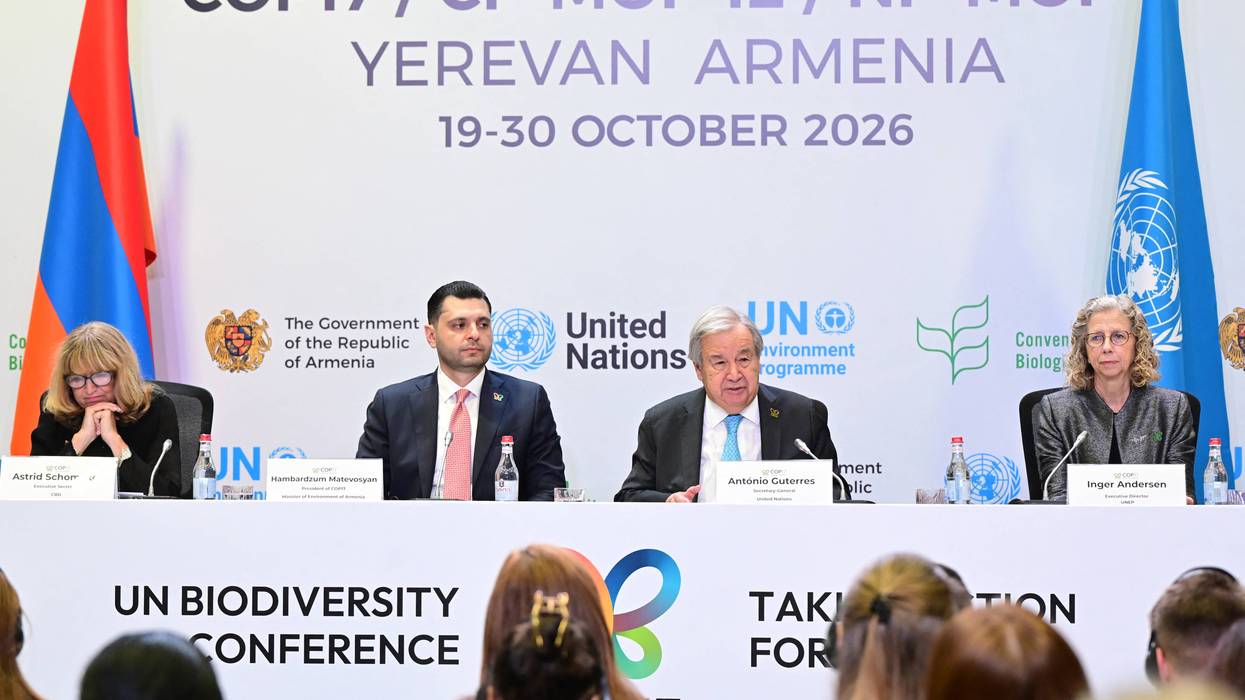
This year's official theme is “Taking Action for Nature,” aiming to turn high-level commitments into concrete delivery.
This triple COP year brings together the three UN Rio Conventions for their Conferences of the Parties in quick succession to tackle the interconnected crises in climate (UN Framework Convention on Climate Change, or UNFCCC, COP31), biodiversity (CBD COP17), and land (UN Convention to Combat Desertification COP17).
The KMGBF features four 2050 long-term goals and 23 2030 global targets to halt and reverse nature loss.
The four long-term goals are:
- Protect and Restore: Focus on ecosystem integrity and connectivity, and halt human-induced extinctions of known threatened species.
- Prosper with Nature: Ensure that biodiversity is sustainably used and managed and nature’s contributions to people, including ecosystem functions and services, are valued, maintained, and enhanced.
- Share Benefits Fairly: Ensure equitable sharing of benefits from genetic resources and traditional knowledge, especially with Indigenous peoples and local communities.
- Invest and Collaborate: Close the $700 billion per year biodiversity finance gap and align financial flows.
The State Of Biodiversity

The world is off track to meet most of its 2030 targets under the Kunming-Montreal Global Biodiversity Framework.
- Although 85% of parties have revised or updated their National Biodiversity Strategies and Action Plans (NBSAPs), delivery on the ground is far too slow.
- We are currently on track to meet only 1 of the framework's 23 global targets for 2030. This is Target 8: Minimising the impacts of climate change and ocean acidification on biodiversity.
- The central goal of protecting at least 30% of global land and sea areas by 2030 requires urgent acceleration.
- A global biodiversity financing gap of an estimated $700 billion per year remains to support the Kunming-Montreal Global Biodiversity Framework. Financial flows that subsidise or drive nature loss continue to outpace conservation investments.
- In positive news, more than 130 major global businesses and financial institutions have stepped forward to actively lobby governments for subsidy reforms.
- The UN Desertification Summit delivered a milestone $1.2 billion investment for the Rangelands Initiative, which will also benefit biodiversity goals.
- Leading the way, the European Union has remained on track to double its international biodiversity financing. It also became the first official party to submit its comprehensive 7th National Report under the Convention on Biological Diversity, setting a transparent benchmark for other nations.
Biodiversity Is A Planetary Issue: What Must We Do?
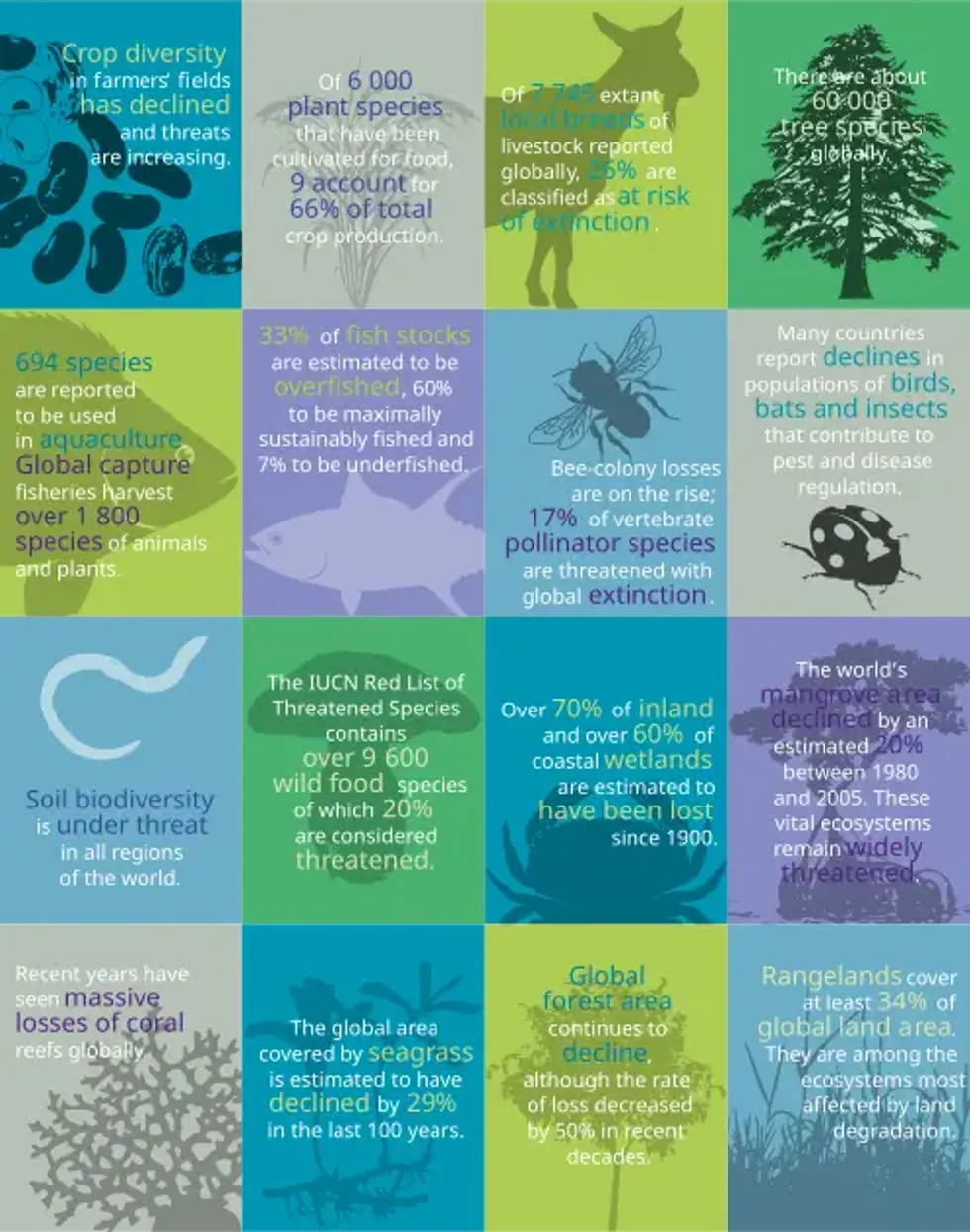
 (Image by FAO | CC BY-SA 3.0)
Managing the biodiversity crisis within political borders is impossible; we must prioritize a global approach that manages Earth’s interconnected systems.
The health of Earth’s living systems quite literally determines the long-term survival and stability of human civilization.
Biodiversity is the physical fabric that regulates the planet’s biogeochemical cycles (carbon, water, nitrogen). Losing biodiversity degrades the Earth system’s resilience and, with it, its capacity to absorb shocks like climate change, pollution, and extreme weather.
Climate change and biodiversity loss are twin crises driven by the same systemic roots. Healthy ecosystems act as essential carbon sinks and natural buffers, helping stabilize the climate.
We simply must safeguard our planet's natural boundaries. An important consideration is whether national commitments are scaling up fast enough to pull humanity back from irreversible tipping points (such as the destruction of the Amazon rainforest and widespread coral reef collapse).
To maintain a stable, habitable planet, humanity must not cross these thresholds. By shifting from extraction to regeneration, we can reduce humanity’s demands through industrial agriculture, mining, overfishing, and urban expansion. Days like Earth Overshoot Day remind us that humanity consumes more resources than the planet can regenerate annually.
Nature must be treated as a finite resource and respected as such. Harmful subsidies (like those backing fossil fuels or intensive industrial monocultures) must be redirected toward regenerative land and water use.
Youth At COP17
 Young people participate in the Global Climate Strike in London on March 15, 2019. (Photo by Garry Knight)
Children and young people are disproportionately affected by climate change and biodiversity loss; therefore, their voices are particularly important at major climate and biodiversity conferences.
Today's decisions have long-term consequences for their health, education, well-being, and future opportunities. Intergenerational justice looks at how present generations affect past and future people. Protecting ecosystems today is seen as a matter of securing a healthy, habitable future.
This COP17 recognizes children and young people as important stakeholders and constituencies. Official mechanisms have been established to support youth participation:
- YOUNGO: The official children and youth constituency of the UNFCCC. It brings together over a million young members worldwide and helps train young advocates to participate in international negotiations, coordinate regional chapters, and ensure youth voices are heard inside the official rooms
- Global Youth Biodiversity Network (GYBN): The official youth coordination platform recognized by the United Nations Convention on Biological Diversity. It unites young people and youth organisations from over 170 countries to represent the global youth voice for halting biodiversity loss.
Both groups have access to official COP processes; they monitor government commitments, participate as observers in the diplomatic Blue Zones, and have the opportunity to speak during plenary sessions.
The Green Zone is a public area open to students, activists, and young researchers attending events in Yerevan, Armenia. The COP17 Green Zone will provide open spaces for workshops, cultural events, and collaborative problem-solving.
NGOs At COP17
 People demonstrate at COP15 in Montreal, Canada on December 7, 2022. (Photo by UN Biodiversity | CC BY 2.0)
Non-governmental organisations, civil society coalitions, research bodies, and observer groups play a critical role at COP conferences. They serve as watchdogs, technical advisers, and advocates for groups that might not otherwise have a direct seat at the negotiating table.
NGOs bring local, grassroots priorities into global policy spaces, ensuring that community-level perspectives help shape international biodiversity decisions.
They provide scientific data, policy recommendations, and track national progress on targets.
Key non-state and civil society players actively shaping the discourse and engagement at COP17 include the International Institute for Environment and Development (IIED), the World Wide Fund for Nature (WWF), the International Union for Conservation of Nature (IUCN), and Conservation International.
Business for Nature is a major coalition that rallies global companies and commercial organisations to push governments for stronger nature policies, arguing that voluntary corporate action isn’t enough without systemic regulatory backing.
The Finance for Biodiversity Foundation is an accredited observer network representing financial institutions, banks, and investment funds. They focus heavily on resource mobilization, aligning financial flows with global biodiversity goals, and operationalizing funding mechanisms like the UN Cali Fund.
Indigenous Peoples’ and Local Communities’ Caucuses represent Indigenous stewards who work closely with civil society allies to ensure traditional ecological knowledge and land rights are protected in the global review process.
The CBD Women’s Caucus is an active network focused on gender-responsive biodiversity data and ensuring women, major stewards of local agriculture and ecosystems, are fairly represented in monitoring and policy systems.
After years of slow progress, these groups will push for greater accountability and real change. They will also advocate for greater biodiversity financing, ensuring it is mobilized and reaches vulnerable frontline projects where it is needed most.
COP17: Critical Stress Test For Governments
The President-Designate of COP17 is Hambardzum Matevosyan, Armenia's Minister of Environment.
COP17 will be the biggest event the country has ever held. He has already acknowledged the “many challenges and gaps” identified in the draft Global Biodiversity Framework report and even said they had to nudge leaders to submit their reports by the February deadline.
Matevosyan is adamant that “we are not changing the goals,” but rather “we are making a realistic assessment of where we stand and what is needed to achieve them. It is a course correction.”
The minister is also working on introducing environmental protection into the Armenian constitution.
As for the other government delegates, they are responsible for turning international environmental goals into domestic law, national budgets, and enforceable policies.
Key priorities include:
- The Global Stocktake and Accountability: Ministries of Environment must submit national reports and show tangible evidence of how they are working to halt and reverse biodiversity loss by 2030. They must balance strict conservation targets with economic realities.
- Financing and Resource Mobilization: They simply must close the funding gap. Developed nations must track international aid and private-sector investments, and redirect subsidies that unintentionally harm ecosystems toward nature-positive initiatives. Developing nations must push for adequate, predictable financial support from global funds.
- Holistic Government Approach: Biodiversity policy cannot be handled by environmental ministries alone. There must be close coordination across ministries of finance, agriculture, fisheries, urban planning, and foreign affairs. They must ensure that domestic policies on water security, food systems, and climate resilience support biodiversity
- Diplomatic Positioning and Consensus: Delegations work within geopolitical blocs to negotiate final treaty language. Ministers must commit to ambitious global goals while ensuring that the final agreed text does not demand targets that their domestic legislatures or industries cannot practically achieve.
Better World Info provide a valuable platform to help NGOs, young people, and all other participants and observers prepare for the events of COP17. Stay tuned as we follow key developments and report back on whether our hopes for real tangible progress were realized.
As a side note, all UN member states, except the US, have ratified the Convention on Biological Diversity. While this means US funding is absent and the framework may carry less weight, it also means progress is not constrained by its historical blocking of consensus.
As the first official global review of collective progress since the landmark GBF was signed four years ago, hopes are high that this COP will be a COP of implementation in preparation for the 2030 moment of truth.
As Astrid Schomaker, executive secretary of the CBD, said: “Armenia’s vision for COP17 is a beautiful one. It aims to inspire us all to see that transformation is possible, that nature is worth protecting, that implementation is happening and that we all have an important and active role to play."

 (Image by FAO | CC BY-SA 3.0)
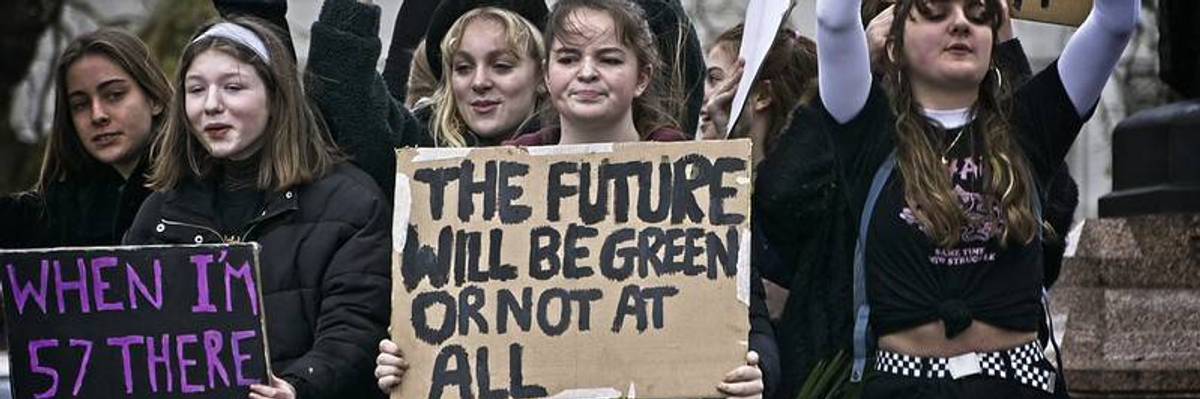 Young people participate in the Global Climate Strike in London on March 15, 2019. (Photo by Garry Knight)
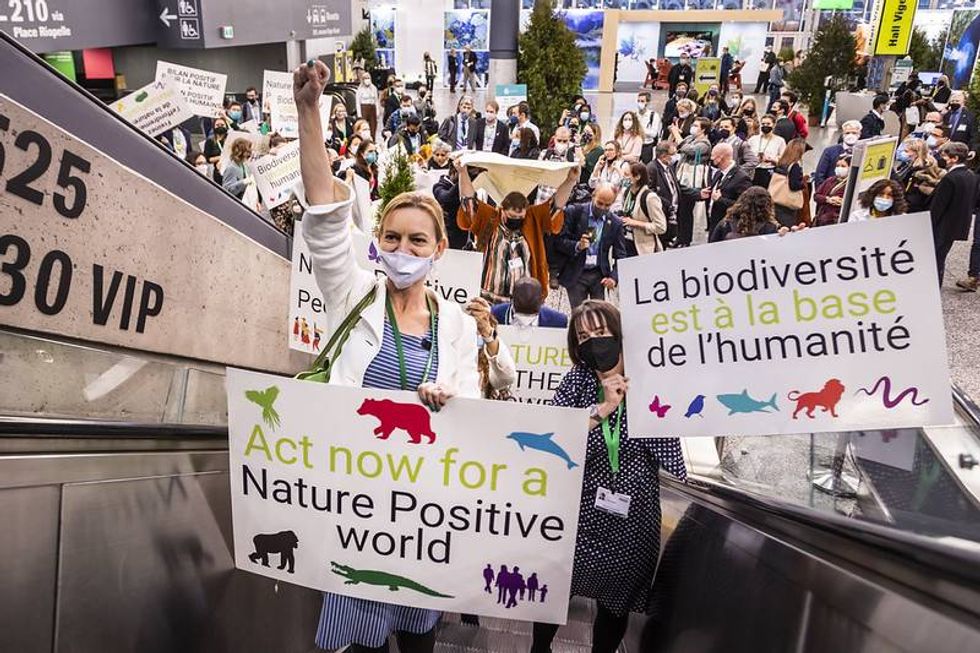 People demonstrate at COP15 in Montreal, Canada on December 7, 2022. (Photo by UN Biodiversity | CC BY 2.0)