Earth Day is a week from today, so brace yourself for cuddly, hug-the-planet blubbering from the presidential candidates. John McCain will tell you we must be the "caretakers of creation" even though he received a zero rating in 2007 from the League of Conservation Voters. Hillary Clinton will tout her 10-step personal home plan on global warming, such as recycling and using efficient light bulbs. Barack Obama will surely tell us we "cannot afford more of the same timid politics when the future of our planet is at stake."
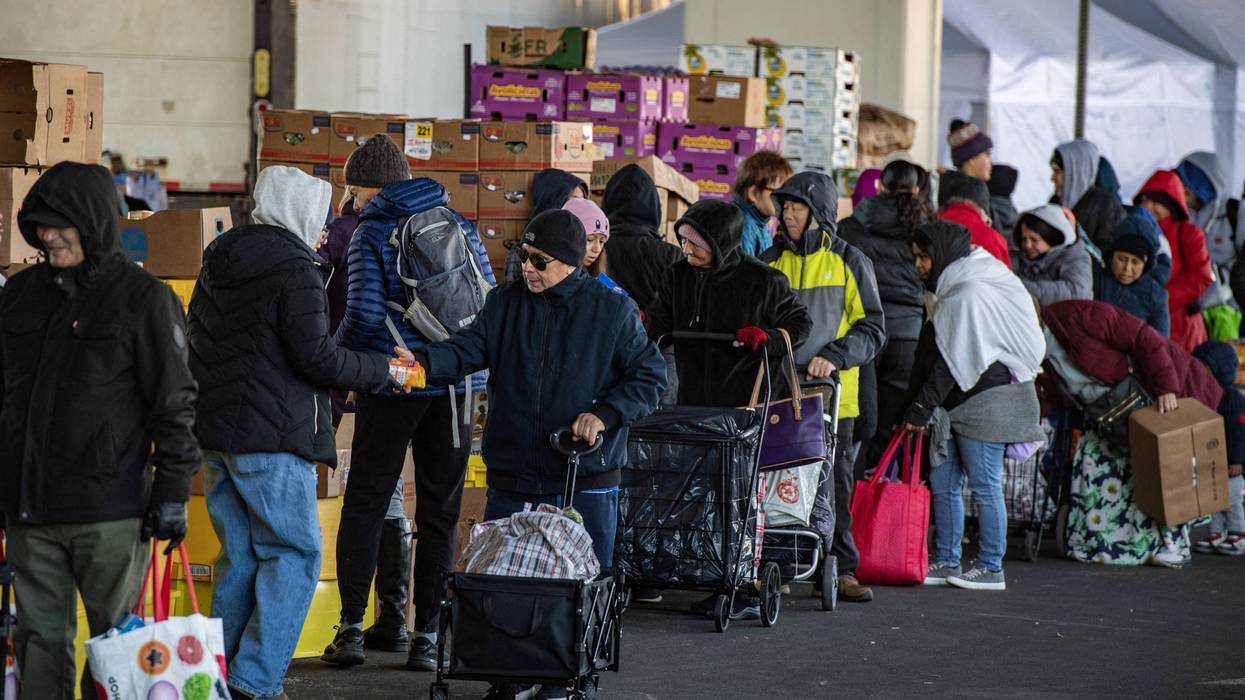
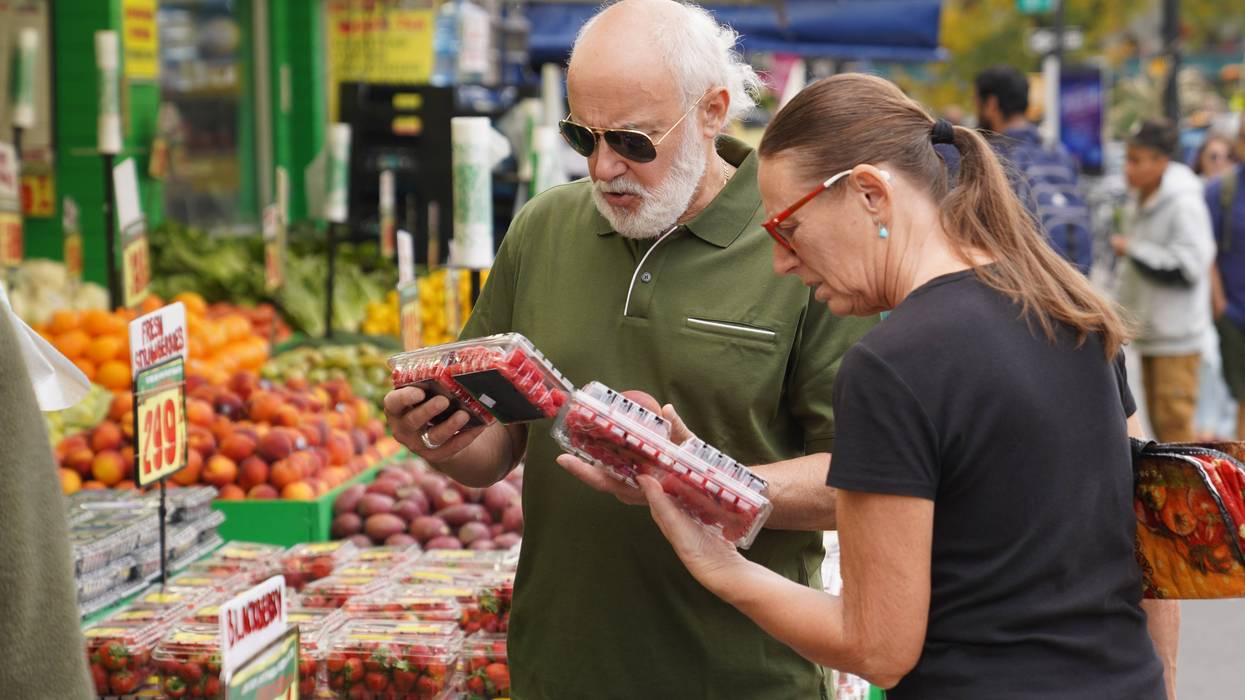
Ah, but what about hamburgers? When the candidates tell us to stay out of McDonald's, then we will know their light bulbs are on. The end of timid politics is when they say that with the planet being at stake, you must eat less steak.With fatal food riots in poor nations, and with China rapidly approaching Western levels of consumption, we in the obese United States must redefine what constitutes, to borrow from McDonald's, a "happy meal." Scientists are concluding that along with more fuel-efficient cars and curbing industrial pollution, the simple act of eating less meat could help slow global warming.
"For the world's higher-income populations, greenhouse-gas emissions from meat eating warrant the same scrutiny as do those from driving and flying," according to the authors of a study last fall in the Lancet.
This might hit you a bit in the "too-much-information" category, but those authors, from Britain, Australia, and Chile, found that with global meat and milk production being on course to double by mid-century, the methane and nitrous oxide being released (that includes flatulence and gases from manure) is significant. Livestock occupy nearly a third of the land on earth. Agricultural greenhouse gases are about 22 percent of all emissions around the world.
The study said that stabilizing agricultural emissions would require a 10 percent cut in global meat consumption. There would likely be other benefits, such as lower rates of heart disease, colorectal cancer, and obesity, and preservation of the habitat for all kinds of species. "Today, as Chinese, other Asian, European, and US farmers begin to run short of land for crop expansion," the study said, "the increasing demand for meat in developing economies is forcibly extending intensive agriculture into the tropical rain forests of South America, especially Brazil, Bolivia, and Paraguay."
Similarly, the 2008 "State of the World" report from the Worldwatch Institute calls meat and seafood "the global diet's most costly ingredients." A huge problem in wealthy nations is that even when people cut down or give up meat for health reasons, they often substitute increasingly endangered fish near the top of the oceanic food chain such as swordfish, tuna, or shark or create a demand for shrimp and salmon that overwhelms the environments they are being raised in.
The report noted that consumer pressure for "sustainable" varieties of seafood and more humanely grown meat has already resulted in pledges by corporations to provide such products, even by fast-food chains such as Burger King. But that does not get away from the ultimate realization that wealthier people at some point have to move "down the industrial food chain," choosing less of products that are disappearing or particularly damaging in their production.
"Eating less of these foods," the report said, "is a sort of investment in the future, since it will mean saving family farms, improving rangeland, reducing water pollution, and, in the case of wild fish, preserving a catch that is increasingly scarce."
This gastronomic angle to global warming will challenge the intestinal fortitude of the candidates, given the work left to them by a Bush administration that encouraged outrageous consumption and inspired no sacrifices despite Sept. 11, 2001, the subsequent loss of over 4,000 soldiers in two wars, and $100-a-barrel oil. In 1928, the Republican Party promised a chicken in every pot. In a 1984 Democratic presidential debate, Walter Mondale chided Gary Hart's "new ideas" by asking, "Where's the beef?" The next president needs to put meat on the bones of environmental policy, by telling us to eat less of it.
Derrick Z. Jackson's e-mail address is jackson@globe.com.
Copyright 2008 Globe Newspaper Company
Delicious
Digg
StumbleUpon
Newsvine
Facebook
Google
Yahoo
Technorati
46 Comments so far
Show Allg-bread April 15th, 2008 11:39 pm wrote, "The cattle and sheep are not getting fat on the 'rough land' across America, Kernel. They are eating corn out of troughs on feed lots... " and sojrnrz April 16th, 2008 4:37 am wrote "...The movie King Corn says enough for an intelligent person to make an adjustment or two to diet."
Thanks for bringing up these points. I just saw the documentary "King Corn" on PBS Independent Lens the other night. Corn, corn, corn... it's everywhere, not just in our meat! Here's the link if anyone interested in checking it out: http://www.pbs.org/independentlens/kingcorn/ There are numerous issues surrounding how our food is grown and where it comes from.
- Half the corn grown in the U.S. goes to animal feed
- The life cycle of corn-fed cattle is very short; they are slaughtered after 55 days of confinement in crowded area with no exercise. If left longer than that the cows would die anyway because their stomachs can't digest all that corn.
- Family farms taken over by con-agras
- 9 billion in farm subsidies
- Beef from corn-fed cows and foods containing other corn-by products are a major causes of obesity
- Meat from corn-fed cattle has a higher fat content than grass-fed
- Methane gas produced by high number of cattle needed to provide "enough" beef for Americans
- Corn replacing other edible food crops
Watching this movie convinced me to start making changes in my diet.
forgiveness:
first where did you get the facts? Please post article or story.
What do you do with your used water? One it does save water and if everyone did this simple thing would save billions of gallons each day. This in turn saves the costs of cleaning the extra water. Living on a farm this is common practice but could be done in the city just as well. A city that uses about up to 10 times as much water as I use per person.
As for what you eat way to go, hope you have a long healthy life now get the hell off my farm.
Kernel--if you think most farm animals are treated well, you probably think most inmates at Abu Ghraib prison are treated well too. If it's not recorded on camera, it didn't happen. See-no-evil, hear-no-evil, speak-no-evil.
Ralph 442: You've reminded me that during one of my completely vegetarian phases in life (I've gone back and forth several times re: eating meat) I was ridiculed by extended family for not eating the Easter ham. You're so right, food can be a very emotional area...
overthrowthebastards-
you didn't write much... but I love the name anyway ;)
Yo, meat eaters. Enjoy yer heart disease and/or the cancer you very well could get. SOme of you sound like some real morons, so it shouldn't be a great loss when you bite the dust.
I can hardly wait until "mad-cow" finally kicks in.
Oops! The present undisclosed science suspects that Alzheimer's is really a form of mad-cow.
Oh, crap! There goes the "whole" nutty planet! :)
One thing not mentioned so far is the need to obtain complete proteins. Meat is a complete protein, but combinations of legumes and grains are also complete protein.
In the winter, I use my crock pot a lot. Our local health food store has a combination of dried beans. I make a bean and vegetable stew and eat it with herb biscuits. Marvelous. Also, lentil bean soup with mixed grain bread. The combination of brown rice and peas is also a complete protein.
I find that I cannot completely do without meat. If I try, I get "meat hungry" and start eating a lot of it. Right now, I eat meat about every two days. Since I am concerned about humane treatment of animals and the quality of meat, I buy organically raised meat from a local source. Costs more, but. I also use organic, free-range eggs. To my mind, this is a reasonable diet.
Sluggysan
MYTH ABOUT ANIMALS AND ORGANICS
YOU SAY - "If you want organic agriculture, you'll need animal ag, too. Where d'ya think the organic material comes from?"
You can farm meat, milk, eggs etc organically, NOTHING WRONG WITH THAT.
BUT YOU DON'T NEED MORE ANIMALS TO FARM MORE CROPS ORGANICALLY, THAT IS A MYTH: I said elsewhere on this site today:
Many organic farmers do not require animal manure for fertilization.
You can balance or replace the nutrients potassium, calcium and phosphorous in organic farming which does not allow artificial chemical fertilizers by using potassium sulphate, which uses a type of rock ground into dust, instead of potassium chloride which is not acceptable in organics.
Rock phosphate is used to balance phosphate deficiencies, and lime dust which is ground limestone is used where calcium is needed. These are natural fertilizers acceptable for organically certified crops.
To increase nitrogen organic farmers plant legumes which fixate nitrogen in the soil, and also use green manures, which are crops ploughed into the land while still green.
It is a myth that an increase in animals are needed for increased organic farming, but then organically produced animal products are better for human health and the environment anyway, so meat eaters should insist on organic meat.
There are millions of Bhuddist and Hindu families that have survived without meat or eggs for generations. In India the cow is sacred to many people, and milk, butter and ghee are cherished.
You have a right to eat meat, but it is a choice, we are just saying eat less and help the planet, and better still eat organically grown meat.
Of course the chemical, pesticide, GM seed lobby don't like to hear this, their bloggers will spring into action when they see this post.
We can still save ourselves ... but we have to start telling non-CD readers about what we can all do.
http://www.drmcdougall.com/misc/2006nl/dec/truth.htm
Great article, this message needs to be consistently made - particularly to a community most amenable to it. As a veggie climate change sceptic, it is very frustrating to see meat-eaters wax lyrical about conservatives being evil and idiots for rejecting Kyoto, blaming cars, proposing more government control and new taxes etc, then contribute to the problems by chomping on a hamburger.
jcarleski-
"The amount of restriction required on personal lifestyle, even in the day-to-day habits like eating, clothing and travelling, to maintain human equality and respect for the earth is staggering."
Yeah, a lot of people need to make a great changes to their lifestyle because our society is so warped. Is it hard? Not really... It isn't that hard, but even if it was, it is our responsibility to do it. We can not abdicate the responsibility to government (I am not suggesting that you do, I am speaking generally). Government will never be able to affect true change. The only way we get the society we want to see is by living it ourselves, explaining the facts (without being too pushy and preachy), and being an example to others.
Too many people today want to use the power of the state to socially engineer their vision of a better society, using its coercive power to force people to accept their point of view. I have my views, I don't want to force them on everyone else, but I will defend and suggest my views to others. I am anti-consumerist, e.g. I don't want or need a flat-screen TV or an SUV, but I don't begrudge other people wanting them and buying them; I am vegetarian, but I would not ban meat. Things only change when we change our lifestyle. Bottom-up, not top-down.
"At this risk of sounding like I'm playing for the other team here"
there are no teams :) there are open-minded and there are closed-minded people in both camps - partisanship is the problem.
"is the balance between freedom and responsibility a zero-sum game?"
This idea is the result of a common misconception on the Left - doing whatever you want is NOT freedom. Please don't confuse freedom with licence. Liberty and freedom come with responsibility, but free of government control.
http://rebelconservative.blogspot.com
Been mostly vegan for much of the last 40 plus years. The movie King Corn says enough for an intelligent person to make an adjustment or two to diet. Extreme overpopulation of an arrogant and stupid species - what else is there to say?
Boy oh boy, but was that delmonico ever sooooogood last evening. You Vegans are really missing out....and don't tell me there's not a significant number of you out there that really want a good slice of meat, either. I'm not taunting, just trying to make a piont.
In fact, the few vegans I know were a "cool" group..odd, but cool..
There's a place in central Mass. called "Bubs"
That would be a good place to start..great BBQ and lots of BBQ beans for the vegans. Try the ribs, and don't wear a tie either.
good point about needing "poop", too. Can't use human 'poop', right?
your friend banjoman
Let's put a bolt through this thing's noggin and move on:
- If you want organic agriculture, you'll need animal ag, too. Where d'ya think the organic material comes from?
- Humans evolved to be omnivores, period. Purported evidence to the contrary is generally very poor in quality.
- The more militant vegans oft toss the baby out with the bathwater: the problem is not with meat itself, but how it is produced.
- There are no indigenous vegan cuisines anywhere in the world.
- Humans have the same right to meat as any other critter.
- You still have the right to eat what you want; defend it!
And to respond to jcarleski: It very well may be - which is why, most likely, our fates are sealed.
In "Credit Crunch? The Real Crisis Is Global Hunger. And If You Care, Eat Less Meat
A food recession is under way. Biofuels are a crime against humanity, but - take it from a flesh eater - flesh eating is worse." posted on Commmon dreams and Published on Tuesday, April 15, 2008 by The Guardian/UK
by George Monbiot, he writes:
"The Food and Agriculture Organisation calculates that animal keeping is responsible for 18% of greenhouse gas emissions"
However, in "One Less Burger, One Safer Planet
by Derrick Z. Jackson" it is stated that:
"Agricultural greenhouse gases are about 22 percent of all emissions around the world."
my question is this: "how much difference does 4% make???
Limit the animal meat to wild deer, wild turkey, etc. Limit meat consumption to something like three meals a week. This is far better for the biosphere, the animals, for the people producing and the people consuming. Better nutrition, better jobs, less plunder, less waste. Just remember there are two worlds to choose from - progressive common sense, or capitalist destructive insanity. It's your choice.
The cattle and sheep are not getting fat on the 'rough land' across America, Kernel. They are eating corn out of troughs on feed lots. Corn growers and their subsidies take land out of production for other, more directly edible crops like soy and wheat. Eating fewer burgers or steaks sounds like a pretty easy way to reduce a great number of 'ills' both personal and social.
off22__I don`t know if you realize that much if not most of the land that cattle or sheep are grazing on is rough land that would be totally impossible to grow grains on, much less veggies. My point was that the grazing land is being used for it`s best and possibly only purpose so letting millions of acres raise jackrabbits and deer which of course we would not want to kill or eat either might be a problem. People have invested their lives into that land and need to get some kind of return from owning it.
I do get disturbed over the implication that stockmen do not care about the welfare of their animals. Most that I know do the best they can and are out in blizzards or extreme heat taking care of their stock. My children as well as many others, learned in 4-H to feed, water, wash, and train their cattle for show, so do not feel sorry for those animals.
Just because a few people choose to not eat meat does not mean they have a right to try and upset a business that many want and need for food and survival. There will always be some instances of abuse but that happens with domestic pets also and we just have to try to minimize it. Most farm animals are well treated and I will agree the factory farms are not to my liking either, but I doubt we can go back to the methods of a decade or two ago because of the increasing demand for more food of all kinds.
Food is a very emotional area. I remember when I was a hippy and first turned vegetarian some 40 years ago my dear mother asked me: "So how long is this going to last." She seemed to confuse my rejection of meat (and her associated cooking) with a rejection of her. I assured her that she was still the coolest mom that I could remember.
Later when they retired they would come out and stay with me in Hawaii for a good portion of the winter (we hailed from Minnesota) and partake in the whole vegetarian foods I served them with enthusiasm. My father would always lose about 20-25 pounds and return home looking trim, and tan with a certain surfer swagger about him.
I would be very anecdotal to think your hair would fall out from not eating meat. I could happen if one's vegetarian diet was very limited in whole, healthy, unprocessed vegetarian foods. Most acupuncturists tend to follow the traditional Chinese medicine which has very little history in vegetarianism. If you just moved over a country to India you would find a rich history in Aruvedic medicine which is often vegetarian based. There are still some hundreds of millions of vegetarians in India and most still have their hair. Granted the rising rich and upper middle class in India are gravitating to the very theme of this article: that is embracing more western trends of a high meat consumtion diet. Of course many in the west are going the other way as is proven in this post.
Certainly whether for reasons, of environmental, health, cost, or conscience giving the vegetarian diet (or a least a reduced meat diet) a try is an interesting option for individuals with a bit of that adventuring spirit still surging through their veins.
Ottawa to pay farmers $50-million to slaughter hogs
PAUL WALDIE AND JOE FRIESEN
From Tuesday's Globe and Mail
April 15, 2008 at 12:27 AM EDT
TORONTO AND WINNIPEG — In an unprecedented move, the federal government plans to pay hog farmers up to $50-million in total to slaughter as many as 150,000 breeding swine.
Farmers will receive $225 for every hog they kill, so long as they agree to wipe out their entire breeding herd and stay out of the hog business for three years. The government hopes the program will reduce a glut on the market that has helped drive down prices.
"It's a pretty drastic step," said Clare Schlegel, a hog farmer near Kitchener, Ont., who is also president of the Canadian Pork Council. The $225 price is roughly four times what a farmer would get for a culled hog on the market today, he added.
Mr. Schlegel said the massive cull, which is expected to reduce the nation's breeding herd by 10 per cent, is the only way to save thousands of hog farmers across Canada. "We're under a fair bit of economic stress and turmoil," he said, adding that he is losing as much as $65 on each pig on his farm.
Rising feed prices and the stronger Canadian dollar have pummelled pork producers, pushing many out of business and leaving others struggling to get by.
This month, Stomp Farms Ltd., the second-largest hog producer in Saskatchewan, filed for bankruptcy protection and many other farmers have quietly sold off their stock.
Joe Kleinsasser, who runs a hog farm south of Saskatoon, said he is losing roughly $50 a pig even though he grows his own feed grain. "You are looking at a very dire situation," Mr. Kleinsasser said.
Hog prices have sunk more than 20 per cent in the past year, to about $100 a pig. Meanwhile, costs – especially feed grain – have soared by more than 50 per cent, pushing the overall cost per animal well above $150. Feed accounts for roughly 60 per cent of the cost of raising a pig. Hog farming has become specialized and capital intensive, making it difficult for farmers to switch to producing other commodities.
The stronger Canadian dollar has also hurt farmers because hog prices are set in the United States. So as the Canadian dollar strengthened, the return to Canadian farmers shrank. But as the U.S. dollar weakened, American farmers found new export markets for their pork. As a result, while Canadian farmers have been cutting back on their herds, U.S. farmers have been raising more hogs.
The total number of pigs on Canadian farms fell 6 per cent last year to 14 million (that includes about 1.5 million hogs used for breeding). However, the total U.S. herd increased 4 per cent in 2007 to just over 65 million hogs. It jumped 6 per cent in 2006.
"There's an awful lot of hogs out there," said Kevin Grier, a senior analyst at the George Morris Centre in Guelph, Ont., which studies agri-food issues. Canadian farmers "are losing a lot more than the Americans are," he said. "The only way it will turn around is by a reduction in hog numbers.
"
Another major headache for Canadian producers is the introduction of new country-of-origin labelling laws in the United States next September. Canadian farmers export more than half their hogs to the U.S.
The legislation has grocery retailers in the U.S. nervous about selling specially labelled meat, and many have started to refuse to take any pork products that originated in Canada because of the added regulatory burden. That has hit farmers in Manitoba, one of the largest pork-producing provinces, especially hard.
Karl Kynoch, chair of the Manitoba Pork Council, said killing pigs with no market for them is a last resort for producers, but many may have no choice but to join a mass cull.
"We're in extremely severe times here and some producers are having to make that choice, even though it goes against everything they believe in," Mr. Kynoch said.
"Every week we hear of more producers closing their operations because they're not able to feed the pigs any more," Mr. Kynoch said.
George Matheson, who farms near Stonewall, Man., said he doesn't want to take federal government money to cull his animals. He believes the industry will turn around a year from now, citing positive signs of a price increase in the futures markets.
"I haven't run out of money yet, but I'm getting pretty close," he said.
Once we learn about what happens in factory farms, the knowledge can seem so horrific or overwhelming that you want to turn away or pretend not to know. I can understand that, and often myself have wished I didn't have to think about the horrific violence done to animals.... But bad situations don't simply resolve themselves when we look away. When we face issues, remarkable things can happen. ~ Gene Baur, Co-Founder of Farm Sanctuary
Wow, Kernal, you sure like to marginalize an opposing viewpoint.
But lets be clear. Human Rights and Animal Rights have always been intertwined. Some people say that people shouldn't focus on animal rights because there are human issues to be had, but that is always pure distraction, as advocating for animal rights inherently advocates for human rights, as this and the other article on eating less meat begin to show. There are other, more detailed analyses of these entanglements, like David Nibert's book Animal Rights Human Rights: Entanglements of Oppression.
As for what that land would be used for, we could start with grains, or vegetables, or fruits, but it probably wont be necessary if the whole world actually became vegetarians, or, even better, vegans(Of course I will not see the day) because we would have a huuuuge surplus of available food for some time. Maybe we could use some of that land for wind farms, or solar power? Just an idea.
Like the others, I don't care what you eat, but I do believe it is important to know what the implications of our meat eating is, and who it impacts, and what we can do about it if we don't like it. If none of the environmental, human rights, or animal rights issues get ya, thats fine. Just don't marginalize the people who are taking a stand, or their reasons behind it.
Mr. Jackson writes, "[M]ore humanely grown meat has already resulted in pledges by corporations to provide such products, even by fast-food chains such as Burger King."
How 'bout "humanely" picked tomatoes, Burger King? See Amy Goodman:
http://www.democracynow.org/2008/4/14/did_burger_king_target_and_spy
Dudley Moore, if he were alive today, would be my choice of a poster boy for the job ad!
In the interest of levity (Goddess knows this forum could use a dose), the mention of the animal flatulence left me with a vision of a unique form of employment. (Of course the ad for it would work best in a Monty Python style skit.)
Basically, the "labor" opportunity consists of trapping the flatulence in balloons and marketing it to those in need of carbon (tax) credits. I could just see the fields a'plenty... laborers might wear masks like those who have to fog the agricultural fields while using all the "harmless" chemicals that Monsanto and its bio-tech/big agra cousins pass out to farmers.
"In 1928, the Republican Party promised a chicken in every pot. In a 1984 Democratic presidential debate, Walter Mondale chided Gary Hart's "new ideas" by asking, "Where's the beef?" The next president needs to put meat on the bones of environmental policy, by telling us to eat less of it."
And Clinton gave us "a fag in every pup tent" while bush has given us "a tax break for everyone in the top 1% income bracket".
In my opinion dietary needs are different for different people. I know one woman who had eaten no red meat for 20 years and started losing her hair; she added a small amount of red meat back into her diet and her hair stopped falling out. Myself, I get told by my accupunturist that I should eat more red meat, too.
At the same time I understand that raising animals for a food source does take a lot of resources so I'm cutting back. Also fair to say that there are best practices for raising animals i.e. humane and organic. And I think meat is probably one of the worst things you can eat if you have cancer.
Rather than get angry at each other in these posts can't we all agree to allow each other some freedom? It seems to me that our posts here would be best used to educate each other so we can all be aware enough to help the planet where / when we can. The anger that sometimes comes through in the discussions on this site is astonding. When we share with each other in a sense of helpfulness then I think the reader is more likely to actually jump on the bandwagon.
Quick quiz for "Thomas More":
Who wrote the following: "In relation to [animals], all people are Nazis; for the animals, it is an eternal Treblinka" ?
Hint: Google it (you obviously need to be told).
Banjoman illustrates an interesting defense that many use when their personal habits (i.e. diet) is confronted with truth and rational thought: character assassination (food nazi?) and thoughtless reinforcement of the destructive habit (really, how many kinds of dead animal do you need to cite for us to believe that you like your meat?).
No one said you have to explicitly give up meat (of course, that would be the best thing to do). Just cut back on the amount and where it comes from, that's all. Likewise, I would never advocate the prohibition of alcohol - but if someone was drinking destructively, and I mentioned that they might want to cut back their nightly consumption from two cases of Budweiser to a glass of scotch, would it be reasonable for them to call me a "drink nazi?"
Just a thought from a compassionate nazi . . . ;)
If you'd really like to confront your die-hard meat habits with the truth of what you're doing to your body, your community, the environment, and sentient beings, check out John Robbins' book, "The Food Revolution."
maybe i will have to change my name to globalsouth or something. but y'all are talking like it's only about usa
ok not all. but anyway in case you did not know there have been food riots all over my part of the world, and why is that? it's on account of rich people's selfish greed.like people in usa who cannot, will not consider the rest of the world or even their own grandchildren's future when making their consumption decisions. shop till we drop, and munch them burgers and fill your gastanks with corn until there is no planet left. it's really gotta stop.
I remember way back when planning meals for a Girl Guide camp. One mother had problems with my menus because she liked her children to have meat with every meal. I came from a home where once a day, fish on Fridays, was considered sufficient. I found that insight into another families food habits very surprising. Now I eat meat twice a week and probably would not miss it at all if I couldn't eat it because I now know how to cook so many more foods. It's what you get used to, expectations can be changed. There is no real need to get all self righteous about food choices. The title of the piece is "One Less Burger". Good place to start.
Chloe19808 April 15th, 2008 2:00 pm
"Do what is comfortable for you. We're all in this together."
This lady knows how it really should be. The discussion between Banjoman and others has been enlightening. I learned a few things. Thanks!
Then we come to RMouse April 15th, 2008 2:44 pm
"The correlation between cattle/pigs/chickens and how the Nazi's treated the Jews is plain for all to see."
This is such an idiotic and pitiful attempt at a comparison between two entirely unrelated events I hesitate to point out how silly it is.
But I do believe this is the type of person had in mind when he referred to food nazi's.
The early 90s, during Clinton I's run, accurate math demonstrated the measurable amount of Rain Forest that would be lost as 'Mericans continued to shovel beef into their stomachs. That quickly passed though, and a rage of Government assited corporate media reminded us that the Beef industry is worth protecting. Generally folks simply increased the velocity of animal products into their bodies to the evangelism of Atkins, and marketing from industry.
Cow flatulence may be an easy target for jokes but that doesn't change the fact that a substantial amount of methane gas is produced in this fashion.
It is easy to see that the Earth is at its limit, straining under the weight of too many people, and too many wasteful people. We are way overdue to abandon inefficient food sources, or at least cut way back.
By the way, Kernel, corporate farming results in animal abuse. It is purposefully kept from the eye of the public or there would be a lot more vegetarians.
Food Nazi? You people make me sick. Who is the Nazis??? Who takes animals and piles them into "Cattle" cars and sends them to places where they are killed? The correlation between cattle/pigs/chickens and how the Nazi's treated the Jews is plain for all to see. Except those who are blinded by their tongue. The oh so important tongue.
BEEF--IT`S WHAT`S FOR DINNER Why don`t you vegans help us eat more meat faster so that we can get rid of all of those animals and their flatulence before they ruin the world?
It is not likely you would want them disposed of in an inhuman manner so the best thing is to just eat them, and then we can all get along. If we cannot kill them in any way, we can just turn them loose to run around your yards where you can treat them humanely as they eat your garden and grass.
I have raised and taken care of animals for many years and from what I have noticed, most animals are about as happy as most humans if not more so. Dying is not enjoyable for animals, but visit a hospital and see if it is any different for humans.
What do you vegans propose to do with the millions of acres of grassland after we eat all of the animals? I am sure the property taxes will still be due on that land that is not being used so the vegans could help with those and possibly even buy some of that $300-$400 per acre land that will be useless. It will be worth it to stop that flatulence.
Banjoman, lighten up on us vegans. We can be a pretty cool bunch. Labeling us "slightly goofy" isn't fair.
I, like SecularAnimist, don't care what you eat. Everyone just has to decide for themselves.
All things considered: the environment, the rights of animals and the impact of animal products on our health, I decided years ago to eat only plants. My health is excellent and my diet is anything but bland. Even my part-time vegetarian husband is amazed.
Do what is comfortable for you. We're all in this together.
regardless of one's stance on omnivorism/vegetarianism, I find one thing constant as I read through articles such as this. The amount of restriction required on personal lifestyle, even in the day-to-day habits like eating, clothing and travelling, to maintain human equality and respect for the earth is staggering. At this risk of sounding like I'm playing for the other team here, I'm going to wonder aloud (so to speak.. er, write) -- is the balance between freedom and responsibility a zero-sum game?
banjoman wrote: "I don't know very many vegans, but the ones I do know are all slightly goofy"
This article simply points out the incontrovertible facts that raising animals for meat -- especially with the "industrial" methods used to product vast amounts of cheap meat for the US market, methods increasingly being implemented in the developing world -- is wasteful of resources and destructive to the environment; that in contrast producing a vegan/vegetarian diet conserves resources and protects the environment; and that therefore a widespread switch to a plant-based diet would significantly contribute to mitigating both human hunger and global warming.
And your reaction is to whine about "food nazis". Frankly you sound pretty goofy yourself.
For the record, I have been a vegan for 20 years, and I don't care what you eat.
I'm not a "food nazi". I am a VEGAN. It is in part because i care about our planet enough to forego something I might enjoy in order that others can enjoy their lives, too (humans and animals!). Yes, I advocate for policies that subsidize healthier food choices, incl. environmental concerns.
There are many reasons to at least go organic, if not vegetarian. The first is that most of our animals (and agriculture as well) is grown in an unsustainable, inhumane manner.
Industrial farming is not in touch with the natural process and the resulting illnesses and blights will effect those that are looking for 'cheap' food rather than healthy food.
You are what you eat. Most people in the US don't know the shit that they eat, just like they don't realize the crap that most polititians and corporate elite spout whenever they open their mouth.
Or maybe they do, but they just chew their burgers and keep their mouth (and mind) closed to everything else around them.
so it goes...
Thanx, sounds like a plan.... sorry....I just get "so fed up" (no pun intended) with these "food nazis", that's all.
I don't know very many vegans, but the ones I do know are all slightly goofy, in one way or another. They're still nice folks, just a little odd to me, that's all. You know what I mean>>>>
your friend, banjoman
Banjoman, maybe look into finding a local rancher who raises cattle humane way so you know you are getting good meat. Then go in with a few friends, buy a whole cow and have it butchered and frozen.
If it is local it is a lot less resources, great quality and you are supporting a local rancher.
What to do....what to do....give up meat..good/eat more fish/bad.....bird flue.....crazy pig flu? I give up. My cholesterol hasn't changes for 25 years now and when i get a "hankerin" for baby backs, I fire up the grill.
I cannot believe that this loon now blames "farting bovines on global warming".
Unbelievable, these "food nazis".. last time I posted 1st., I was censored. Lets see if this sticks.
Tonights menu....a "porcine" spectacular..Tomorrow night? Porterhouse delight.
your friend banjoman
I had a guy telling me about how he keeps the old shower water each day in his tub and uses that to flush the toilet.
I told him I don't eat meat and if he is concerned about saving water he should do the same. That didn't gel with his current diet as he loved his dead animals.
So I told him that for every hamburger he eats I get to flush my toilet around 300 times. Then I showed him the facts that a single 1/4 pound hamburger uses somewhere between 300-600 gallons of water.
Common sense--humans dont do it well though.