SUBSCRIBE TO OUR FREE NEWSLETTER
Daily news & progressive opinion—funded by the people, not the corporations—delivered straight to your inbox.
5
#000000
#FFFFFF
To donate by check, phone, or other method, see our More Ways to Give page.


Daily news & progressive opinion—funded by the people, not the corporations—delivered straight to your inbox.
Global movements see young people utilising their power by voicing their grievances, organising in different youth-run climate change organisations, and using all available platforms to make their demands heard and spread.
The Polluters Out's (PO) twitter campaign showed the power of social media in garnering the attention of BP's directors and chief executive.
PO argues that the campaign's pressure helped start a conversation with the very leaders of the corporation, which opened seemingly unimaginable doors.
Change
Action is required--from petitions to campaigns to evidence of the environmental harms produced by such corporations' failures to administer environmentally conscious practices.
Movements can target corporations by disrupting their ability to recruit and retain talent as perfectly exemplified by the Black Lives Matter (BLM) movement's #PullUpOrShutUp campaign which globally calls out corporations on racial inequity and discrimination.
Politicians and governments brush over climate activists because they don't find their demands realistic and credible and the fossil fuel industry has too much influence.
However, if movements can control the conversation through campaigns aimed at the industries themselves, then will we see the beginnings of policy change.
This series of articles has been published in partnership with Dalia Gebrial and Harpreet Kaur Paul and the Rosa Luxemburg Stiftung in London. It first appeared in a collection titled Perspectives on a Global Green New Deal.
Business as usual is what's doing us in.
We live on a planet that finds itself rather suddenly in the midst of an enormous physical crisis. Because we burn so much coal and gas and oil, the atmosphere of our world is changing rapidly, and that atmospheric change is producing record heat. July was the hottest month we've ever recorded. Scientists predict with confidence that we stand on the edge of the sixth great extinction event of the last billion years. People are dying in large numbers and being left homeless; millions are already on the move because they have no choice.
Scientists predict with confidence that we stand on the edge of the sixth great extinction event of the last billion years. People are dying in large numbers and being left homeless; millions are already on the move because they have no choice. And yet we continue on with our usual patterns.
And yet we continue on with our usual patterns. We get up each morning and do pretty much what we did the day before. It's not like the last time we were in an existential crisis, when Americans signed up for the Army and crossed the Atlantic to face down fascism and when the people back home signed up for new jobs and changed their daily lives.
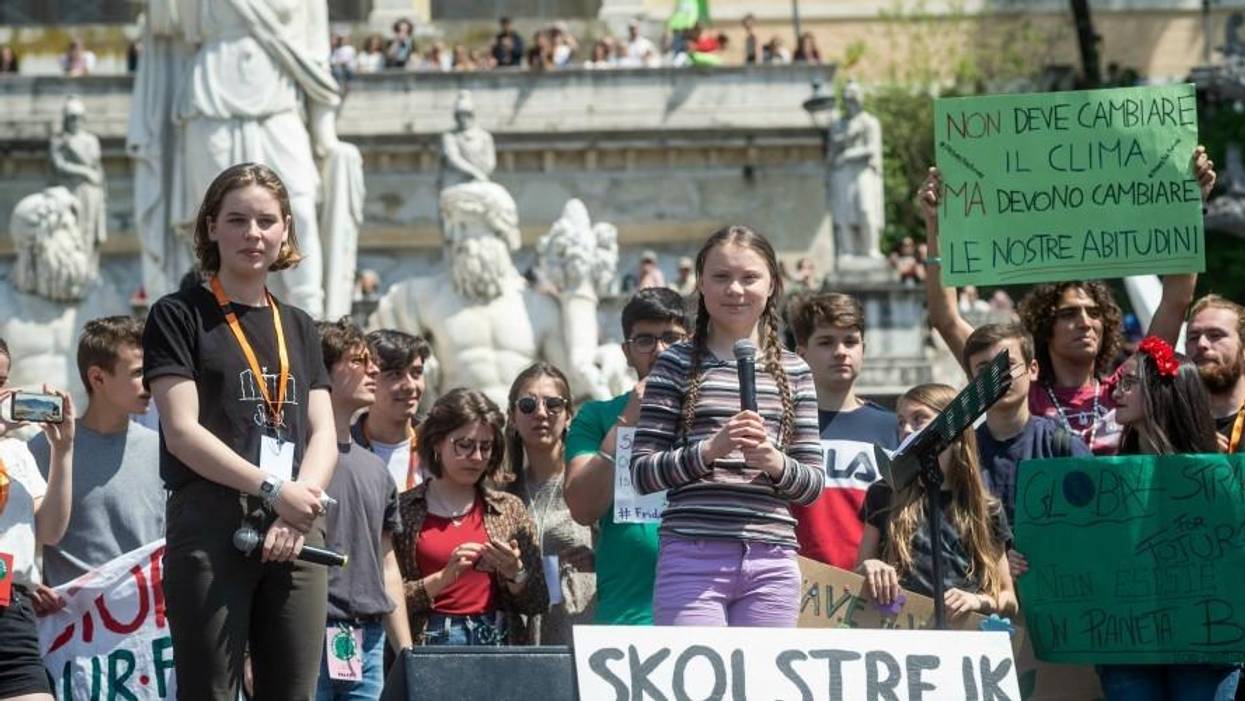
That's why it's such good news that the climate movement has a new tactic. Pioneered last August by Greta Thunberg of Sweden, it involves disrupting business as usual. It began, of course, in schools: Within months, millions of young people around the world were striking for days at a time from their classes. Their logic was impeccable: If the institutions of our planet can't be bothered to prepare for a world we can live in, why must we spend years preparing ourselves? If you break the social contract, why are we bound by it?
And now those young people have asked the rest of us to join in. After the last great school strike in May, they asked adults to take part next time. The date is Sept. 20, and the location is absolutely everywhere. Big trade unions in South Africa and Germany are telling workers to take the day off. Ben and Jerry's is closing down its headquarters (stock up in advance), and if you want to buy Lush cosmetics, you're going to be out of luck. The largest rally will likely be in New York City, where the U.N. General Assembly begins debating climate change that week--but there will be gatherings in every state and every country. It will almost certainly be the biggest day of climate action in the planet's history. (If you want to be a part--and you do want to be a part--go to globalclimatestrike.net.)
It's not a "strike" in the traditional sense, of course--no one is demanding better wages. But we are demanding better conditions. In the most literal sense, the world isn't working as it should (studies say that increased heat and humidity have already reduced human work capacity as much as 10%, a figure that will double by midcentury). And what we're saying is, disrupting business as usual is the way to get there.
This strike will not be the last such action. And activists are flooding into the electoral battles now underway and taking on the financial community, too. It's starting to add up: The polling shows that for young Americans, climate change is far and away the most important issue.
But it can't be just young people. It needs to be all of us--especially, perhaps, those of us who have been placidly operating on a business-as-usual basis for most of our lives, who have rarely faced truly serious disruptions in our careers and our plans. Our job is precisely to disrupt business as usual. When the planet leaves its comfort zone, we need to do the same. See you on the streets on Sept. 20!
I saw Greta Thunberg for the first time in Poland at the end of last year. It was during the early days of the Katowice UNclimate negotiations. She was sitting in a makeshift TV studio, having her pigtails re-tied. I was in a hurry, chasing too many stories down at once, and paid little attention to this 15-year-old girl.
Of course, I'd heard of Greta by that point. I'd received several emails inviting me to press conferences where she was speaking, but I hadn't taken the bait.
I had recently written about the Juliana v United States litigation, where a group of young people sued the government for failing to protect them against climate change, and profiled the Zero Hour campaign led by 16-year-old Seattleite Jamie Margolin. I assumed Greta was the next star of climate youth activism. What I didn't realise was that she would catalyse a shift in how climate activism works altogether.
Parliament
Climate activism isn't new, but the last year has seen a resurgence in attention devoted to the subject. For many campaigners, who have grown weary of watching their warnings fall on deaf ears, it has felt like hope has arrived at last.
Greta's rise to fame was swift.
Most people already know the story. She began striking outside the Swedish Parliament in August 2018, which garnered a certain amount of interest from journalists and fellow activists - in November, she gave a talk at TedxStockholm. But it was her explosive speech at the UN talks in Katowice that catapulted her into the limelight.
"We have not come here to beg world leaders to care. You have ignored us in the past and you will ignore us again," she said. "We have run out of excuses and we are running out of time. We have come here to let you know that change is coming, whether you like it or not. The real power belongs to the people."
At the same time as Greta was standing outside Parliament by herself, then without the eyes of the world on her, another group was travelling around the UK, testing the waters for another new movement. Between March and October 2018, they held around 60 discussions across the country. These events were called Heading for Extinction - a kind of #RoryWalks(remember that?) of climate change. Then, on the last day of October, the group declared a rebellion:
History
"Humanity finds itself embroiled in an event unprecedented in its history," reads the Declaration. "We, in alignment with our consciences and our reasoning, declare ourselves in rebellion against our Government and the corrupted, inept institutions that threaten our future."
In the following months, these two movements exploded into the mainstream. In April 2019, Extinction Rebellion forced London to a standstill with a ten day protest, with more than 1,100 people arrested. More than a million pupils participatedin a Greta-inspired school strike in March, and many have continued to strike weekly as part of the #FridaysForFuture movement.
From the English Romantics to America's John Muir and Henry David Thoreau, writers have long advocated for the preservation of nature. Rachel Carson's Silent Spring, published in 1962, ignited environmentalists' ire over the damage wrought by pesticides.
Climate change activism is newer, but still well established. Over the past decades, it has taken the form of marches, lobbying, research, and divestment. In 1988, scientist James Hansen testified before the U.S. Senate, telling lawmakers that climate change "is already happening now". The Intergovernmental Panel on Climate Change released its first assessment in 1992.
"The last few months really feel like a moment. But this isn't the first time. There were similar moments in the 2000s, 1990s and 1980s. You could even say there was a bit of a moment in the 1950s in a way, depending on how you read it. It's like we come back to the issue every decade or so," says Alice Bell, who is currently writing a book on the history of climate change.
Strikes
"The BBC had a whole climate chaos series in 2006... There were new campaign groups formed. There were Live Earth concerts. There were protests... We just called it climate chaos then, rather than climate crisis."
But if the wave of climate activism we're seeing today is part of an ongoing cycle of protest, it is also the product of external events. In 2015, nations adopted the Paris Agreement, which set out an ambition to limit global temperature rise to below 1.5C.
In 2018, the IPCC released a report on this temperature target, outlining how we get there - and the consequences of shooting past it. For young people in particular, it made sobering reading: repeated warnings that we have "twelve years to save the planet" sounds that much scarier when the consequences of failing will be felt across your own lifetime.
People involved in both Extinction Rebellion and the school strikes put the startling success of the movements down to one factor in particular: they have given individuals the power to act.
School
With Extinction Rebellion, this wasn't an accident. With the concentrated media attention that it receives today, people tend to forget that the movement stemmed from extensive outreach, research and experimentation, says Liam Geary Baulch, who has been involved since the early days of the movement.
"We really grew this through talking to people and training people in person, not just from media attention or Facebook. People really need to sit in a room with each other and feel the grief of the climate emergency."
Its tactics have instilled in people the idea that they, personally, can force politicians to listen. Greenpeace, says Baulch, by way of example, "is great, but it relies on people being highly skilled, it relies on money to make those kinds of actions happen, and it's not very inclusive or participatory."
"What we've done is say, look, all of us can make a difference. Some of us can do that through making creative artwork or feeding people on the streets. We can all be part of this and do it together, and that's really powerful."
The school strikes movement has also provided an outlet to people who had previously struggled to get seriously involved in climate activism, partly because it overcame the most severe time constraint: school.
Activist
"It's very difficult to get involved when you're young," says Izzy Warren, a 15-year-old based in London who has been striking since January. "You can't travel around as much, which is why we've put such an emphasis on decentralisation. We've been trying to make sure that it's accessible to everyone."
Warren has been involved in climate activism since she was eight, she says, but didn't feel like she was taken seriously until this year.
"I always got the sympathy voice because people were like, 'Oh, it's the young person talking,' but no one took my view seriously. I was always overshadowed by the adults in the room. We don't have the same political and economic power that adults have."
Tindra Jallhage Said is striking outside the Swedish Parliament when I speak to her on the phone. The 14-year-old has been stood alongside Greta since the beginning, and has watched the movement grow. Today, there's just a small group, and it's a strike only in name, given it's the school holidays.
Power
"I'd been frustrated about how no one did anything, no one really acted," she says. When she saw pictures of Greta on social media, she saw the chance to do something herself. "When there's a lot of youth together, it can be a lot easier and less scary than if you go to another activist event, where there can be a lot of adults."
The viral nature of the movement, where young people can broadcast their concerns to millions, highlights the potency of a concoction both timeless and modern: the anger of youth and the organising power of social media.
"We have the most to lose out of all the generations, so when we see those older generations who are responsible for causing the problem not doing anything, knowing they're not going to be the ones to experience it, that makes us really angry," says Warren. "It's that anger that motivates us."
When Greta told the UN that "real power belongs to the people", she couldn't have known the extent to which that sentiment would define the next year of climate activism. What we don't know yet is whether it's enough. Enough power. Enough people.
Dear Greta,
Thank you for travelling across the Atlantic to north America to help us do the most important work in the world. There are those of us who welcome you and those who do not because you have landed in two places, a place being born and a place dying, noisily, violently, with as much damage as possible.
It has always been two places, since the earliest Europeans arrived in places where Native people already lived, and pretended they were new and gave them the wrong names. You can tell the history of the United States - which are not very united now - as the history of Sojourner Truth, the heroine who helped liberate the enslaved, as that of the slaveowners and defenders of slavery, as a place of visionary environmental voices such as Rachel Carson and the corporate powers and profiteers she fought and exposed.
Right now the US is the country of Donald Trump and of Alexandria Ocasio-Cortez, of climate destroyers and climate protectors. Sometimes the Truths and the Carsons have won. I believe it is more than possible for Ocasio-Cortez and the Green New Deal to win, for the spirit of generosity and inclusion and the protection of nature to win - but that depends on what we do now. Which is why I'm so grateful that you have arrived to galvanize us with your clarity of vision and passionate commitment.
To be a climate activist anywhere on Earth now is to stand at a crossroads: heaven on one side and hell on the other.
Not long ago I talked to a powerful climate organizer who began her work when she was only a little older than you, and she told me that her hope right now is that people recognize that this is a moment of great possibility, of openings and momentum, and a growing alarm and commitment to what the changing climate requires of us. Something has changed, thanks to you and to the young people who have brought new urgency and vision to the climate movement. Many people have become concerned and awake for the first time, and the conversation we need to have is opening up. People are ready for change, or some of us are. This is what's being born in the US and around the world: not only new energy systems, but new social systems with more room for the voices of those who are not white or male or straight or neurotypical.
The old energy system was about centralized control and the malevolent power of Gazprom and BP, Shell and Chevron, and the governments warped into serving them rather than humanity. The new system must not only be about localized energy, but democratized decision-making, about the rights of nature and the rights of the vulnerable and the future, over profit.
Some of this is already here: not only the larger groups you're surely heard of - the Sunrise Movement, 350.org, the Sierra Club, Rainforest Action Network - but countless local and tribal groups that have arisen to stop this pipeline or that coal port or these fracking projects, to protect this forest or this mountain or these waters. They are not visible the way the United Nations or the US Congress or European Union is, but their work matters, and perhaps we will build a lot of this transition out from below - but we need the big policy agendas set from above as well.
Everywhere I see remarkable things happening. No matter how much you see of this big country, this huge continent, there is more than you can see. I hope you have a chance to see some of the beauty of the American landscapes, from rainforests to deserts; there is also beauty in the passionate commitment around the country. Coalminers in Kentucky have been blocking a coal train track for a month, because their bankrupt company stiffed them on wages, and coalminers elsewhere recently spoke to this newspaper about their clarity that coal is over and that the Green New Deal and its jobs are welcome. The gigantic coal-burning, sky-polluting Navajo Generating Station in Arizona will shut down later this year, and, Scientific American reported, "Its average annual emissions over that period are roughly equivalent to what 3.3 million passenger cars would pump into the atmosphere in a single year. The Navajo Generating Station isn't alone. It's among a new wave of super-polluters headed for the scrap heap," including giant plants in Kentucky and Pennsylvania." Last year, US coal plants with annual emissions of 83 million tonnes of carbon were shut down.
Several states - California, New York, Hawaii, New Mexico - have made commitments to 100% renewable electricity in the near future, and while the federal government tries to push us backward, many states lean forward. This summer Texas began to get more energy from wind than from coal. Iowa in the midwest now gets 37% of its electricity from wind, not because of idealism alone, but pragmatism: wind is cheaper. Science magazine reported last month, "Solar plus batteries is now cheaper than fossil power," and a Connecticut newspaper recently announced that Chubb, the largest commercial insurer in the USA, will stop insuring coal plants and coal mining.
Worldwide, we are in the midst of an energy revolution that dwarfs the industrial revolution: human beings will for the first time not use fire, will not release carbon into the sky, to get most of our energy. We will inevitably transition away from fossil fuels as a primary energy source, and the question is only when. If we do it swiftly, we minimize damage to the climate; if we wait, we maximize it. The damage is here, and it's not only destroying nature, it's killing us. When the California town of Paradise burned down last November, at least 86 people burned to death or choked on smoke; millions suffered from the smoke that spread across the region. Heat deaths are up in the south-west, where 235 people died in Arizona alone from this cause during 2017.
But we also know that there are so many uncounted deaths from poisonous fossil fuels. We know that many of the refugees on the USA's southern border are climate refugees, driven out of their homes in Central America by the failure of agriculture from unpredictable and violent weather, heat, and drought. We know that Alaska was this month for the first time ice-free all along its coast, and the hot dry weather inland led to horrific wildfires. "Starting on the fourth of July and lasting multiple days, temperatures across Alaska were 20 to 30 degrees above average in some locations," reported National Oceanic and Atmospheric Administration.
To be a climate activist anywhere on Earth now is to stand at a crossroads: heaven on one side and hell on the other. Heaven because the transition we need to make and are making - just not big enough or fast enough - is not only an power-generation revolution, but a decentralization of political power, a shift away from the big energy companies who used governments to make wars and make profits for them, a shift away from the poisonousness of fossil fuel. Hell because the destruction of what it took nature millions of years to create - the exquisite balance of ecosystems, of bird migration in harmony with seasons, of symbioses between species, of the great Himalayan and Andean glaciers whose waters feed so many people, of rainforests and temperate forests - is hideous as well as terrifying. The Amazon is burning because of one rightwing leader and a system that rewards agricultural products but not forest protection, even though we need rainforests more than we need the soybeans and beef raised on the land stolen from the rainforest and its indigenous inhabitants.
I've mentioned a bit of what is going on in my troubled, complicated country, the US, but of course these are global conflicts and global situations, and the solutions are advancing almost everywhere, because they are good solutions to terrible problems.
You have come to help us choose the former over the latter, and more of us thank you than you will ever be able to see or hear. More than that, we're with you, trying to realize the goals that the climate demands of us, to make a sustainable world for those who are young now, those yet to come, and for the beauty of the world that is still with us.
So far it's been the hottest summer ever recorded -- June was the hottest June, and July was the hottest month ever. France, Germany, Britain, Belgium, and the Netherlands had their hottest days of all time, joining countries from Cuba to Vietnam and Togo to the Reunion Islands.
This is dangerous for two reasons.
One, it's destroying the planet.
And two, it's becoming so common that people may lose hope or tune out -- the news can be almost as sapping as the heat. But that apathy would come at just the wrong moment. The price of renewable energy hit a record low last month, when a Portuguese power auction produced the cheapest electricity in history. Given the political will, we could quickly make huge strides in combatting climate change.
The climate crisis represents an assault on justice (those who have done the least to cause it suffer the most) but also an assault on the future, a future that some have a larger share in simply because they'll be alive longer.
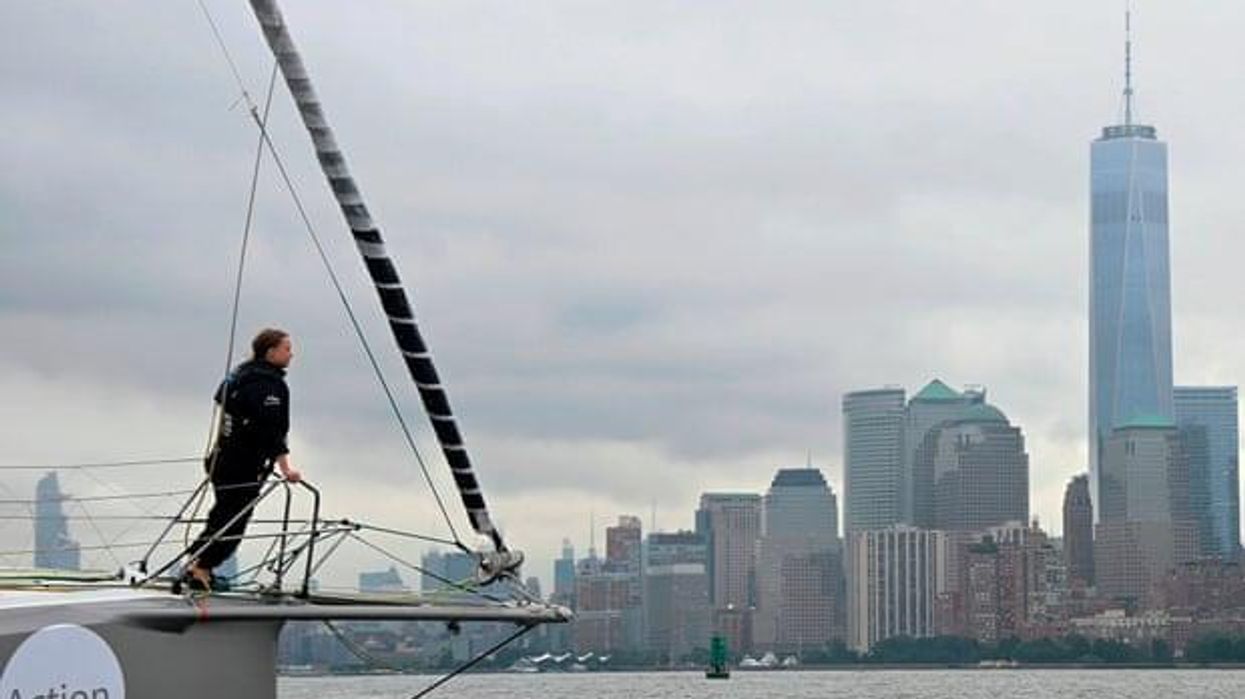
That's why we should be grateful to some of the youngest activists on the planet, people who refuse to become inured to business as usual, who won't give up. The most famous of them, Greta Thunberg, is on a sailboat for a journey to the United States, where she'll address the UN's climate summit in September. But she's far from alone. Thanks to the organization Fridays for Future, you can find Greta equivalents from Peru to Pensacola to Prague, from Ulan Bator to the gates of the UN.
Thunberg began her "school strike for the climate'' a year ago, arguing that if the world's adults weren't willing to prepare the planet for her generation, they were forfeiting their right to demand that her generation spend their youth preparing for their future. Kids across the planet saw the logic -- the biggest days of action have seen 1.4 million students out of the classroom and on the streets.
But after a year, they've done something new -- they've asked adults to join them. On Sept. 20, there will be the first all-ages climate strike (it will be Sept. 27 in some countries). People will walk off their jobs at some point during the day -- some will plant trees, others will join protests. The targets will be as diverse as the geography: In different parts of the planet, people will be sitting down in front of pipelines; demanding that their institutions divest fossil fuel stocks; urging UN nations to increase their carbon-cutting commitments; calling for carbon taxes; insisting on a Green New Deal. Athletes have pledged to join in, as have chefs and actors and politicians. Unions and even some businesses have said they'll take part. It's likely that the Global Climate Strike will mark the largest day of climate protest in the planet's history.
Will a single strike solve the climate crisis? Of course not. The students have shown persistence, and the adults will need to do the same. But the September strike will demonstrate two invaluable principles.
The first is that solving the climate crisis will involve disrupting business as usual. Even amid the greatest physical crisis human civilization has ever faced, we mostly get up each morning and do the same things we did the day before. There's nothing to indicate we're in an emergency, an emergency that grows deeper as each month passes. Adults should consider joining this walkout as a statement that they're committed to disruptive, transformative change.
The second principle is that elders need to act like elders. On what kind of world do we expect 15-year-olds to tackle our biggest problems by themselves? The climate crisis represents an assault on justice (those who have done the least to cause it suffer the most) but also an assault on the future, a future that some have a larger share in simply because they'll be alive longer. For the rest of us -- those who will die before climate change reaches its burning zenith -- the strike is a chance to show that our theoretical affection for our children and their children is sincere.
There's no guarantee that we can still solve the climate problem. One can be excused for despairing, but not for walking away. Especially at the most desperate moments, human solidarity is required. If a kid says help, you help.
As an estimated 1.8 million people in 125 countries took part in a global climate strike Friday, researchers delivered good news about such protests: they work.
A psychologist at Penn State University led a study examining the public perception of two climate marches which took place in over the course of a week in 2017 and found that bystanders who observed the demonstrations came away with the belief that protests can make people more optimistic about the possibility of effecting change.
"Marches serve two functions: to encourage people to join a movement and to enact change," lead author Janet Swim said in a statement. "This study is consistent with the idea that people who participate in marches can gain public support, convince people that change can occur, and also normalize the participants themselves."
Supporters of recent climate strikes that have taken place all over the world were buoyed by the findings.
Swim focused her research on the March for Science and the People's Climate March, both of which took place in April 2017 as the scope of the Trump administration's attack on climate science was becoming clear.
As the researchers asked survey participants about their impressions of the marches before and after they took place, they found that observers were more likely to have positive views of protesters and of people's ability to work together to fight the climate crisis.
Although researchers found that some participants had expressed negative views of protesters in general before the marches, after the People's Climate March they were less likely to view marchers as "arrogant or eccentric or otherwise outside of the norm," Swim reported.
Observers who said they consumed news via conservative sources had more "collective efficacy beliefs" after the marches, meaning they were more likely to believe that collective action could be effective and to have plans to participate in protests themselves.
The research was released as students and workers around the world were taking part in thousands of demonstrations in the second global climate strike since March.
Recent mass climate action demonstrations have supported the beliefs of participants in Swim's study, that collective action can effect change.
Weekly climate marches in countries around the world, led by 16-year-old organizer Greta Thunberg, helped secure a pledge from European Commission president Jean-Claude Juncker to spend a quarter of the European Union's budget on combating the climate crisis starting in 2021.
The governments of Scotland, Wales, England, and Ireland also declared climate emergencies over the course of a few days after the global grassroots movement Extinction Rebellion occupied landmarks in April to demand that lawmakers "tell the truth" about the climate crisis.
Energized crowds are expected to take to the streets nationwide on Saturday, President Donald Trump's 100th day in office, to protest the administration's regressive environmental policies and stand up for the climate, clean energy jobs, and a fossil-free future.
The Peoples Climate March in Washington, D.C. will feature speakers including a pastor from South Carolina, a nurse affected by Hurricane Sandy, an Indigenous community leader from the Gulf Coast, a student activist from Las Vegas, an Iraq war veteran, a Muslim imam, a local community activist, a labor leader, and a young advocate for low-income communities.
Solidarity and sister marches are planned around the country and the world; as of Saturday morning, events had already gotten underway in Denmark, the Philippines, and elsewhere.
In the U.S., the marches were preceded by a week of action that saw the introduction of ambitious clean energy legislation in Congress; a rally bringing together Indigenous, Black, and Latino communities; and pledges of intersectional support between the labor and climate movements.
"This march grew out of the relationship-building among some of the country's most important progressive organizations and movements," said Paul Getsos, national coordinator for the Peoples Climate Movement, who noted the march "was planned before the election as a strategic moment to continue to build power to move our leaders to act on climate while creating family-sustaining jobs, investing in frontline and indigenous communities, and protecting workers who will be impacted by the transition to a new clean and renewable energy economy."
Under Trump, however, the call has taken on new urgency as his climate-denying cabinet moves to dismantle critical environmental and public health protections while propping up dirty energy like coal and Big Oil.
"On the 100th day of the Trump presidency, the Peoples Climate March will show that our movements are ready to fight for our climate, jobs, and justice," said May Boeve, executive director of 350.org. "While Trump and his crony cabinet rollback hard-won protections of our communities and our climate, we are mobilizing to fight for the bold solutions we need. We will present our vision to replace the fossil fuel industry with a 100 percent clean energy economy that works for all. Today, we march. Tomorrow, we rise united across our communities to make our vision of a just and equitable world a reality."
Added Angela Adrar, executive director of the Climate Justice Alliance: "When our communities are most threatened by climate; the solutions we build must allow us to have control of our resources and the energy we produce in an equitable and truly democratic way."
"They must create meaningful work that allows people to grow and develop to their fullest capacity," she said. "They must allow us to retain culture and traditions from our ancestors and give us the freedom of self-determination we so deserve so that we can thrive. This does not come easy and it must come with resistance and visionary opposition. Our existence depends on it."
Sens. Bernie Sanders (I-Vt.), Jeff Merkley (D-Ore.), and Edward J. Markey (D-Mass.) on Thursday introduced legislation to build a 100 percent renewable energy economy by 2050--a bill that environmental group 350.org previously termed "the most ambitious piece of climate legislation Congress has ever seen," although others caution that it is not enough to meet the real challenges of climate change.
The "100 by 50" Act calls for 50 percent of U.S. electricity to be produced by renewable energy sources like wind or solar by 2030, and 100 percent by 2050. It would require zero carbon emission vehicle standards and prohibit federal approval of oil and gas pipelines, among other measures.
"With an anti-science Congress and President in power right now, some might doubt that this is the right time to push for a bold new strategy to tackle climate change and make a massive fundamental shift in the way we produce energy," Merkley wrote in a Facebook post earlier this month when he announced plans to introduce the bill. "But the fact is, we don't have four years to wait to begin this rapid transition. We must act now."
It was embraced by alternative energy groups, such as NY Renews, which said in a statement Thursday that the senators were "setting the bar for climate leadership in the wake of President [Donald] Trump's assault on our lungs, our communities, and our planet."
350.org co-founder Bill McKibben said, "100 is an important number. Instead of making changes around the margins, this bill would finally commit America to the wholesale energy transformation that technology has made possible and affordable, and that an eroding climate makes utterly essential."
"This bill won't pass Congress immediately--the fossil fuel industry will see to that--but it will change the debate in fundamental ways," McKibben said.
The group's executive director May Boeve added, "While fossil fuel billionaires supporting Trump's administration put profits before people, we now have a legislative roadmap to phase out this dirty industry once and for all. This bill deploys clean energy in communities that need it most and keeps fossil fuels in the ground."
Others were sharply critical of the bill, warning that it would not solve the climate crisis and uses a too-long timeline for a 100 percent withdrawal from fossil fuel use.
As Ezra Silk, director of strategy and policy for The Climate Mobilization, a grassroots environmental group based in Portland, Maine, wrote for Common Dreams on Sunday:
Ending the climate crisis would require:
- Building a zero greenhouse gas emissions economy in ten years or less
- Tackling all sources of greenhouse gas emissions--including the food system
- Safely removing all the excess carbon from the atmosphere to get back to pre-industrial greenhouse gas concentrations
Ending the even broader ecological crisis will require additional efforts, such as preserving half the Earth, combating overfishing to restore the oceans, slowing population growth, and phasing out planned obsolescence. Shifting to a renewable energy economy is an excellent first step--but will absolutely not save us from climate oblivion.
Still, the bill reflects a growing public demand to shift away from fossil fuels and invest in renewable energy. Similar legislation is being considered at the state and local level in California, New York, Massachusetts, and other areas.
It also comes just days ahead of the Peoples Climate March on April 29, which is expected to see global demonstrations calling for an end to dirty energy and an ushering in of policies based on climate justice.
For Boeve, it also shows the power of grassroots mobilization.
"From Standing Rock to the Peoples Climate March, movement leaders have been calling for these solutions for years," she said. "This bill is proof that organizing works, and it's the beginning of an important conversation."
Days before the Peoples Climate March, a number of labor leaders are helping to amplify the mobilization, joining the chorus demanding an "economic policy that works for working people and the planet."
Among those releasing a statement on Wednesday is Mary Kay Henry, international president of Service Employees International Union (SEIU), who called for holding "corporate polluters" accountable.
"Every day SEIU members and our communities experience the impact of toxic pollution in our air and water and the catastrophic impacts from climate change that are made worse from this pollution. We march because we are on the frontlines. As working people, people of color, and immigrants, we march because our families are disproportionately hardest hit by pollution and climate change's impacts. We march because as service and care workers we are on the frontlines of caring for and responding to impacted families and communities," she stated.
"We march because it's time to hold corporate polluters who wreak havoc on our communities accountable to us. We march because it is time to hold self-interested politicians who rig the rules to put corporate polluters before working people accountable. We march because our families, our health, and our future depend on it," Henry continued.
Added Communications Workers of America (CWA) president Chris Shelton: "We must increase economic opportunity, protect and improve public health, and address, not ignore, the problems being caused by climate change. CWA members are committed to this fight."
"The solidarity that exists between all of us is the key to having a strong, fair economy and a clean, safe environment," said Kim Glas, executive director of BlueGreen Alliance, a coalition of labor unions and environmental groups . "We can tackle climate change in a way that will ensure all Americans have the opportunity to prosper with quality jobs and live in neighborhoods where they can breathe their air and drink their water. Together we will build a clean economy that leaves no one behind."
Such intersectionality was part of the climate march's initial call, and the April 29 mobilization itself is dubbed "March for climate, jobs, and justice." Indeed, a call-to-action lists wide-ranging motivations for the march:
Playwright and V-Day founder Eve Ensler recently spoke to the intertwined issues, writing in an op-ed at the Guardian: "Every struggle we have--women's liberation, racial justice, economic inequality, immigration rights, gender rights, disability rights--happens on the Earth, because of the Earth."
"So that's why I am rising on April 29 with the climate march. Let our passion and fight for our mother be the energy and trajectory that fuels us and binds us to a larger struggle to end and transform this deadly and exploitative mindset," Enser urged.
Author and activist Naomi Klein on Tuesday released a video explaining why she is taking part in the global Peoples Climate March on Saturday, calling the event "a sacred duty."
The march on April 29 comes as the Trump administration considers withdrawing from the Paris climate accord, despite record after record showing each new year hotter than the last. Meanwhile, a new analysis by the consultancy group Climate Advisers estimates that President Donald Trump's planned climate change policies could bring about an extra 500 million tons of greenhouse gases in the atmosphere by 2025.
If the administration is successful in repealing former President Barack Obama's landmark Clean Power Plan (CPP) and other regulations, carbon emissions will begin to increase by 2020, the analysis found, while the CPP pledged to lower slash emissions by 17 percent below 2005 levels by that time.
Those dire possibilities were a clear driving force behind Saturday's march.
"I march because we can do so much better," Klein says in her video. "Climate change is a message. It's telling us we need to evolve."
"This is a moment," she says. "This a mission. It is a generational mission. It is a sacred duty. We have to march."
Similar messages abounded this week.
Rep. Keith Ellison (D-Minn.) also produced a video, stating, "This is the right time for a climate march. This is the right time for people to get out there and fight. Politicians see the light when they feel the heat."
Playwright and activist Eve Ensler wrote in an op-ed for the Guardian on Monday:
Humanity is struggling to determine whether we will accept living and dying in a world where 0.1 percent of the people reign over our Earth, our bodies, our rights in service of their own interests and profit or whether we collectively rise and fight to transform this predatory paradigm.
[...] Every struggle we have--women's liberation,racial justice, economic inequality, immigration rights, gender rights, disability rights--happens on the Earth, because of the Earth.
So that's why I am rising on April 29 with the climate march. Let our passion and fight for our mother be the energy and trajectory that fuels us and binds us to a larger struggle to end and transform this deadly and exploitative mindset.
And a Twitter feed under the hashtag #WhyIMarch displayed a vast range of voices expressing their reason for joining in the global event, from immigration to justice for frontline and communities of color.
"We have a responsibility that when fighting for black and brown liberation, it also includes access to clean air, to clean water, to green spaces, and diverse food options," said Layel Camargo of the artist collective CultureStrike.