

SUBSCRIBE TO OUR FREE NEWSLETTER
Daily news & progressive opinion—funded by the people, not the corporations—delivered straight to your inbox.
5
#000000
#FFFFFF
To donate by check, phone, or other method, see our More Ways to Give page.
Daily news & progressive opinion—funded by the people, not the corporations—delivered straight to your inbox.
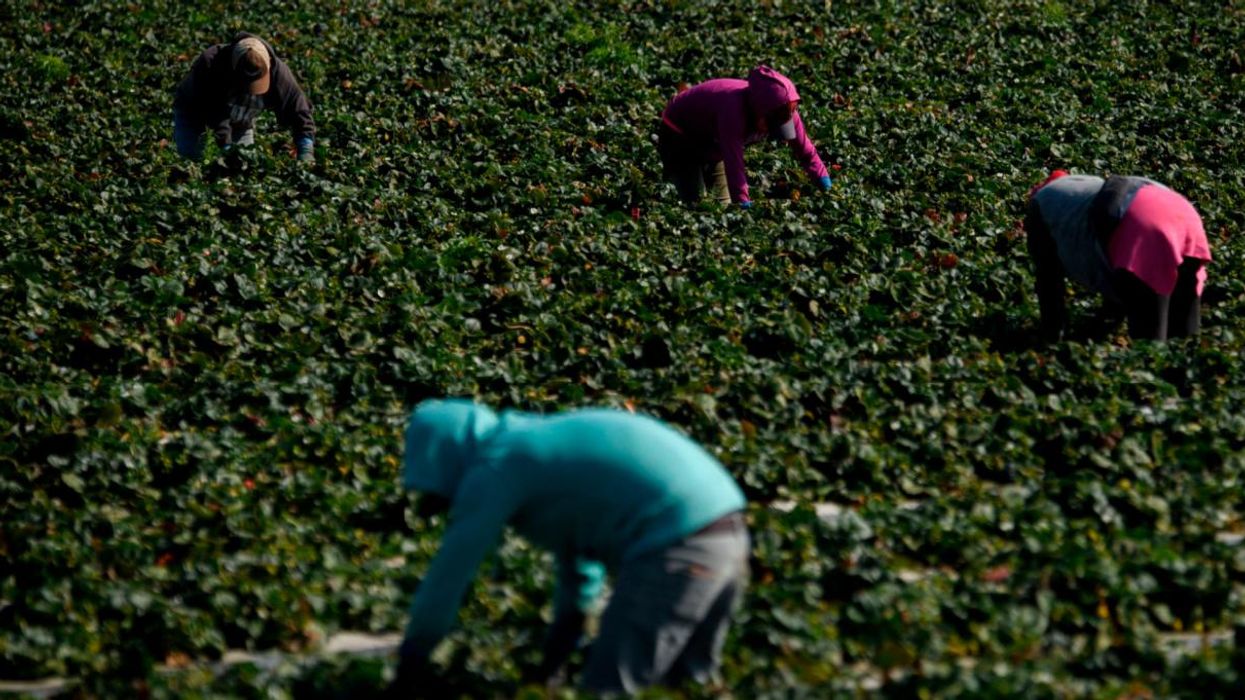
The environmental law organization Earthjustice celebrated a "huge victory" for farmworkers and children on Thursday after the 9th Circuit Court of Appeals ordered the Environmental Protection Agency to ban all food uses of a toxic pesticide linked to memory loss and developmental harms.
The EPA was given 60 days (pdf) to revoke all food uses of chlorpyrifos and retain only those that are found to have no effects on people's health.
"This ruling is a huge victory for children and communities across the country who will finally be spared by needless poisonings and lifelong learning disabilities," said Earthjustice in a statement.
Representing labor groups including United Farm Workers and public health organizations including the Learning Disability Association of America, Earthjustice filed a lawsuit against the EPA after the agency refused to ban chlorpyrifos in 2019 and in 2016 under the Trump administration.
The Obama administration had been working to ban the pesticide before former president Donald Trump took office in 2016, and environmental groups have been calling for an end to all food uses for the chemical for decades.
"We have been working for years to make this happen," Earthjustice tweeted Thursday.
Numerous scientific studies have found that exposure to organophosphate pesticides, the class of chemicals that includes chlorpyrifos, is linked to attention deficit disorders, autism spectrum disorders, hand tremors, and other symptoms in children.
Organophosphates--which also include sarin nerve gas--were originally developed by the Nazis for chemical warfare but were later adopted for agricultural uses.
Chlorpyrifos was banned for household use in 2001, but is still used widely to grow strawberries, apples, citrus, broccoli, corn, and other fruits and vegetables--putting farmworkers and rural communities most at risk for exposure but also affecting children's long-term health through exposures in food and drinking water.
"The court got it right: EPA's time is now up. EPA must now follow the law, ban chlorpyrifos, and protect children and farmworkers from a pesticide we know is linked to numerous developmental harms."
--Patti Goldman, Earthjustice
The court condemned the EPA's "egregious delay" in banning the agricultural use of the chemical and accused the agency of exposing "a generation of American children to unsafe levels of chlorpyrifos."
"By remanding back to the EPA one last time, rather than compelling the immediate revocation of all chlorpyrifos tolerances, the court is itself being more than tolerant. But the EPA's time is now up," the ruling stated.
Earthjustice called on the EPA to put the ban into effect immediately.
"The court got it right: EPA's time is now up," said Patti Goldman, managing attorney at Earthjustice. "EPA must now follow the law, ban chlorpyrifos, and protect children and farmworkers from a pesticide we know is linked to numerous developmental harms. It would be unconscionable for EPA to expose children to this pesticide for any longer."
Plaintiffs in the lawsuit denounced the agency for failing to take action without legal intervention.
"Today the court has affirmed what scientists have known for decades: chlorpyrifos is much too dangerous to be using, and EPA's lack of action has put children, farmworkers and rural communities at risk," Kristin Schafer, executive director at Pesticide Action Network (PAN), said. "Sadly, it takes legal action to force our public agencies to do their job."
"We are gratified by the court's decision in this case, yet, outraged that the EPA has dragged this out for four years after their 2015 decision based on sound science to ban all food uses of chlorpyrifos," said Jeannie Economos of the Farmworker Association of Florida. "It is unconscionable that it has taken so long to provide equal protection to these beautiful, yet vulnerable children in our agricultural communities. EPA must act immediately to comply with the court's decision. This is about health justice and a human right to a healthy workplace."
Earthjustice noted that chlorpyrifos is just one of dozens of organophosphates used on produce at farms across the country.
"While we celebrate this win today, EPA must also ban all organophosphates to fully protect public health," said Goldman.
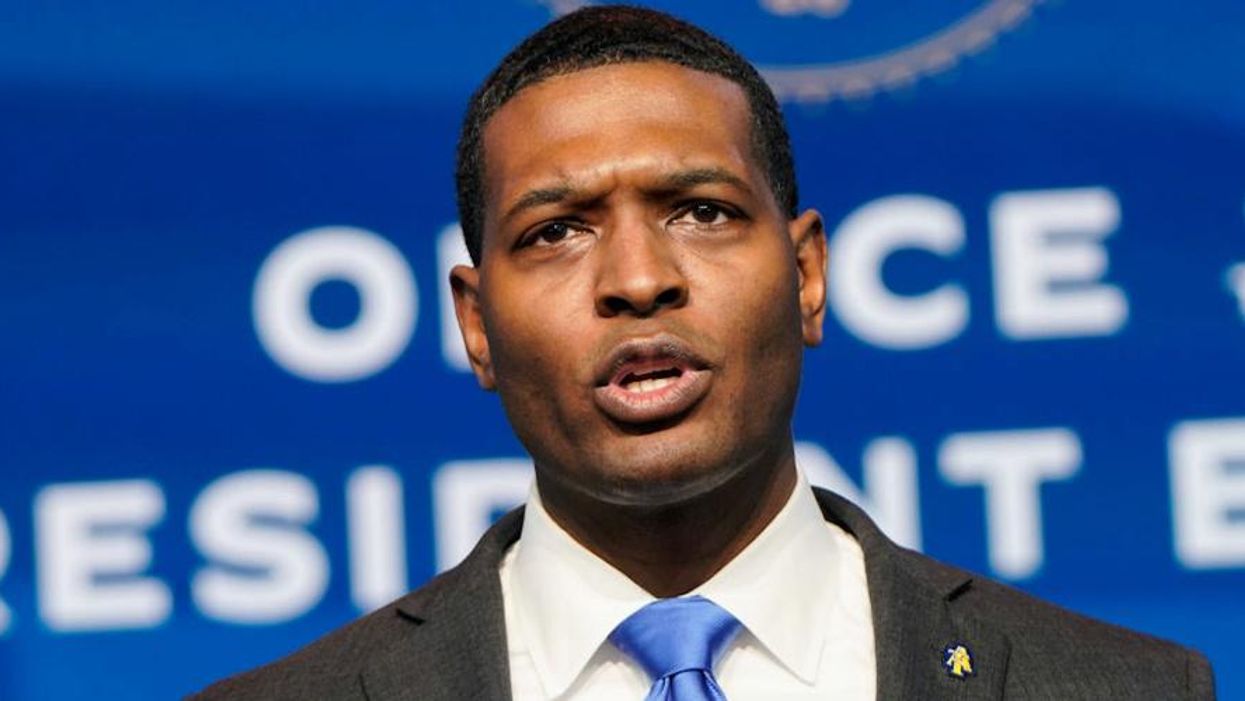
In a move aimed at restoring the role of science at--and public trust in--the Environmental Protection Agency, Administrator Michael Regan announced Wednesday that more than 40 advisers appointed by former President Donald Trump will be fired from the agency.
"When politics drives science rather than science informing policy, we are more likely to make policy choices that sacrifice the health of the most vulnerable among us."
--EPA Administrator Michael Regan
The Washington Post reports Regan's purge will include Trump appointees who informed EPA policies and actions that favored the agenda of polluting corporations and industries over protecting the environment and addressing the climate crisis.
Trump-appointed members on two EPA panels--the Science Advisory Board (SAB) and Clean Air Scientific Advisory Committee (CASAC)--helped thwart or roll back regulations related to air pollution, fracking, and other environmental issues.
"Resetting these two scientific advisory committees will ensure the agency receives the best possible scientific insight to support our work to protect human health and the environment," Regan--a former EPA regulator and head of the North Carolina Department of Environmental Quality--said in a statement.
EPA Administrator Michael Regan has dismissed more than 40 Trump-appointed advisory panel members, in an effort to focus on science and reduce Industry influence.
He has also revived the EPA's climate change web page that was removed by Trump. https://t.co/WMEzDqWjBG
-- Keith Boykin (@keithboykin) March 31, 2021
Regan's move is one of numerous steps taken by the Biden administration to restore scientific integrity throughout the federal government after the anti-science years of the Trump administration.
The former administration downplayed or outright denied the climate crisis; the coronavirus pandemic; the harmful effects of fossil fuel extraction and use; the dangers of carcinogenic pesticides, asbestos, and other toxins; and many other facts that conflicted with its pro-corporate and pro-polluter agenda.
Declaring that the American people "deserve access to science and data," Regan earlier this month restored the EPA's climate change website, which had been shut down under former Administrator Scott Pruitt.
Pruitt also led a purge of scientific advisers who refused to toe the fossil fuel industry line, and along with his successor Andrew Wheeler--a former coal lobbyist--raised alarm by elevating individuals with industry connections and often scientifically dubious views to imporant agency panels.
One of these people, former Big Oil and chemical consultant Tony Cox, was chosen by Pruitt in 2017 to lead an EPA air pollution advisory board.
In a letter to EPA staff earlier this month, Regan wrote that "when politics drives science rather than science informing policy, we are more likely to make policy choices that sacrifice the health of the most vulnerable among us."
Regan added that "manipulating, suppressing, or otherwise impeding science has real world consequences for human health and the environment."
Environmental advocates applauded Regan's dismissals.
"It only makes sense to go back to the drawing board," Genna Reed, a senior analyst at the Union of Concerned Scientists, told the Post.
Christopher Zarba, a retired EPA official who led the agency's office that coordinates with scientific panels, called Regan's move "absolutely warranted." Zarba told the Post that during the Trump era, "lots and lots of the best people were excluded from being considered" for positions on science committees, and that individuals who were tapped for posts "did not accurately represent mainstream science."
While green groups and activists welcomed moves like restoring the EPA climate site and purging advisory boards, they stressed that the Biden administration must act more urgently to combat the climate crisis, protect the planet, pursue environmental justice, and curb the influence of polluters.
Donna Chavis, senior fossil fuels campaigner at Friends of the Earth, said earlier this month that "Regan and the EPA have a new opportunity to place environmental justice at the center of the agency and the United States' approach to the climate crisis."
Chavis, who is also an elder of the Lumbee Nation, urged Regan to "take bold and visionary steps to rebuild the EPA and address the very real climate crisis we face in the U.S. and globally."
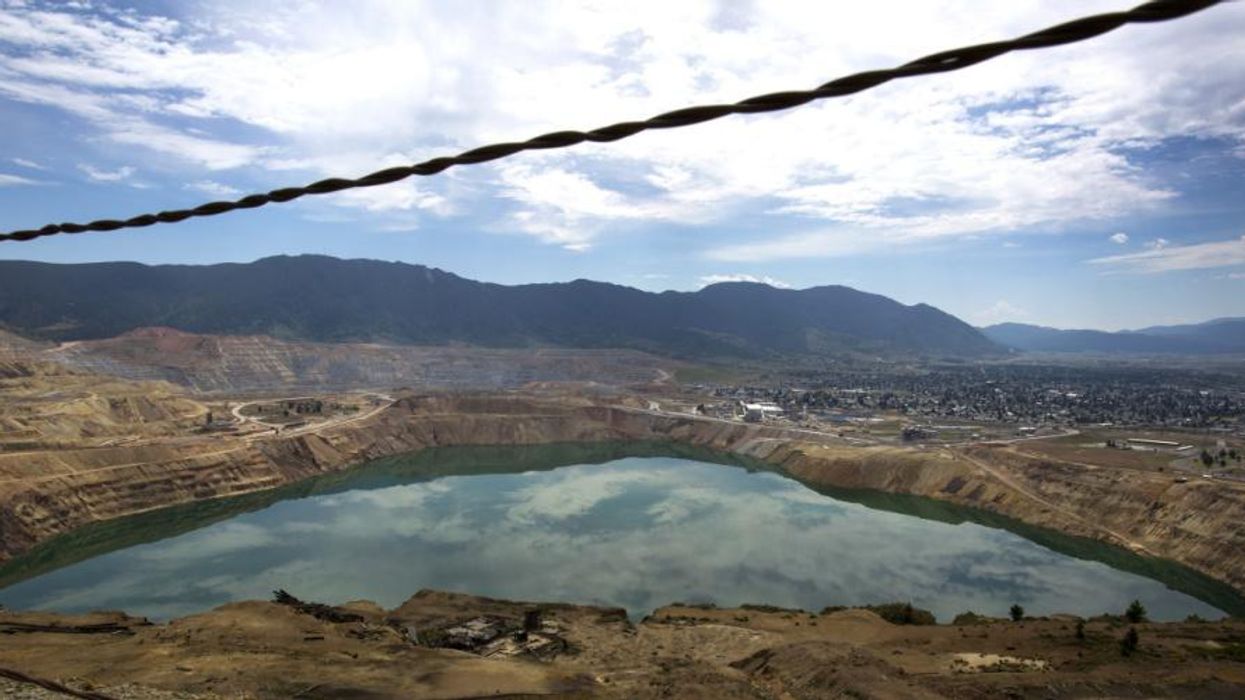
A joint report on Monday highlighted the pressure that President-elect Joe Biden is already facing to deliver on his environmental justice campaign promises--particularly when it comes to the 34 Superfund sites nationwide for which there is no reliable cleanup funding--the largest backlog of "unfunded" sites in 15 years.
The federal Superfund program began with the Comprehensive Environmental Response, Compensation, and Liability Act (CERCLA), passed by Congress in 1980. While cleanup efforts were initially paid for by a trust fund created by taxing the chemical and petroleum industries, lawmakers let the tax expire 25 years ago.
The new report on the cleanup program from NBC News, InsideClimate News, and The Texas Observer is the fifth installment of the "Super Threats" series about Superfund sites and climate change. The first report, published in late September, detailed how hundreds of hazardous waste sites across the United States are threatened by hurricanes, floods, and wildfires, which are all exacerbated by a climate crisis that the Trump administration often refused to acknowledge let alone act to address.
Both reports pointed to a 2019 Government Accountability Office (GAO) analysis which found that 945 Superfund sites are vulnerable to extreme weather events that are intensifying because of human-caused climate change, including hurricanes, flooding, sea level rise, increased precipitation, or wildfires. The news outlets behind the series created an interactive map for all the locations on the office's list, which includes over half of the unfunded sites--19 of 34.
The outlets reported Monday that Democrats in Congress, environmentalists, and former officials at the Environmental Protection Agency are urging Biden to consider climate change when creating cleanup plans for not only the unfunded backlog--which has grown under President Donald Trump--but all 1,570 Superfund sites.
"Even before taking office, the Biden administration accomplished one of the GAO's key recommendations: acknowledge the climate threat," said Sen. Sheldon Whitehouse (D-R.I.). "A Biden EPA will need to assess every federal Superfund project and help states do the same. As the GAO showed, climate change brings a new priority to rapid Superfund cleanup work."
As the outlets reported:
Beyond Whitehouse's call for climate-threat assessments at every site, one senior former EPA official said the incoming Biden administration should review all of the agreements negotiated by the Trump EPA at Superfund sites with corporations liable for cleanups.
"You will want to see if the responsible parties were being given preferential treatment," said Mathy Stanislaus, who served as assistant administrator of the EPA's Office of Land and Emergency Management during the Obama administration.
Stanislaus said such reviews should focus first on any agreements negotiated since the election by the lame-duck Trump EPA.
Earlier this month, Public Citizen launched an online tool to track Trump's "most corrupt, norm-breaking, dangerous, and unjust actions during the lame-duck session," noting that the past four years have featured "cruelty, recklessness, and cronyism" from the outgoing administration.
The watchdog group has been critical of Trump's EPA administrators. Currently the agency is run by former coal industry lobbyist Andrew Wheeler, who was confirmed by the Republican-controlled Senate in early 2019. His predecessor, Scott Pruitt, stepped down in July 2018 in the face of several ethics scandals.
The Monday report noted that "the Superfund program is led by Peter C. Wright, a lawyer who previously worked for Dow Chemical and represented the company in negotiations with the EPA over Superfund sites."
Although party control of the Senate will be determined by a pair of runoff elections in Georgia on January 5, Biden has already announced several of his preferred Cabinet picks, including Michael Regan, the top environmental official in North Carolina, to head the EPA--a move that drew a range of responses from campaigners.
On the campaign trail, Biden promised to take bold climate action with a focus on frontline communities. His $2 trillion green energy and environmental justice plan, unveiled in July, earned praise from various activists, including Varshini Prakash, co-founder and executive director of the youth-led Sunrise Movement.
Writing for The Hill on Monday, Prakash and Green 2.0 executive director Andres Jimenez welcomed Biden's selection of Regan for EPA and Rep. Deb Haaland (D-N.M.) for interior secretary as "an encouraging sign that his administration is prioritizing the voices of the populations who are most in need of serious attention and aggressive action on some of the most important environmental challenges our nation faces."
"Still, much difficult work remains to be done if the concerns of frontline and at-risk communities are to be truly prioritized with forging and implementing equitable environmental policies," Prakash and Jimenez wrote, emphasizing that "communities of color have been disproportionately affected by our federal government's lack of action to solve ongoing environmental problems" and "are also at higher risk of the consequences of human-induced climate changes."
The pair urged Biden to "follow through on his promises to root out systemic racism when it comes to our nation's environmental policy," appoint environmental leaders of color to positions at all levels of his administration, and "take urgent action to curb the global climate crisis and to restore justice for communities impacted by air, water, and land polluters."
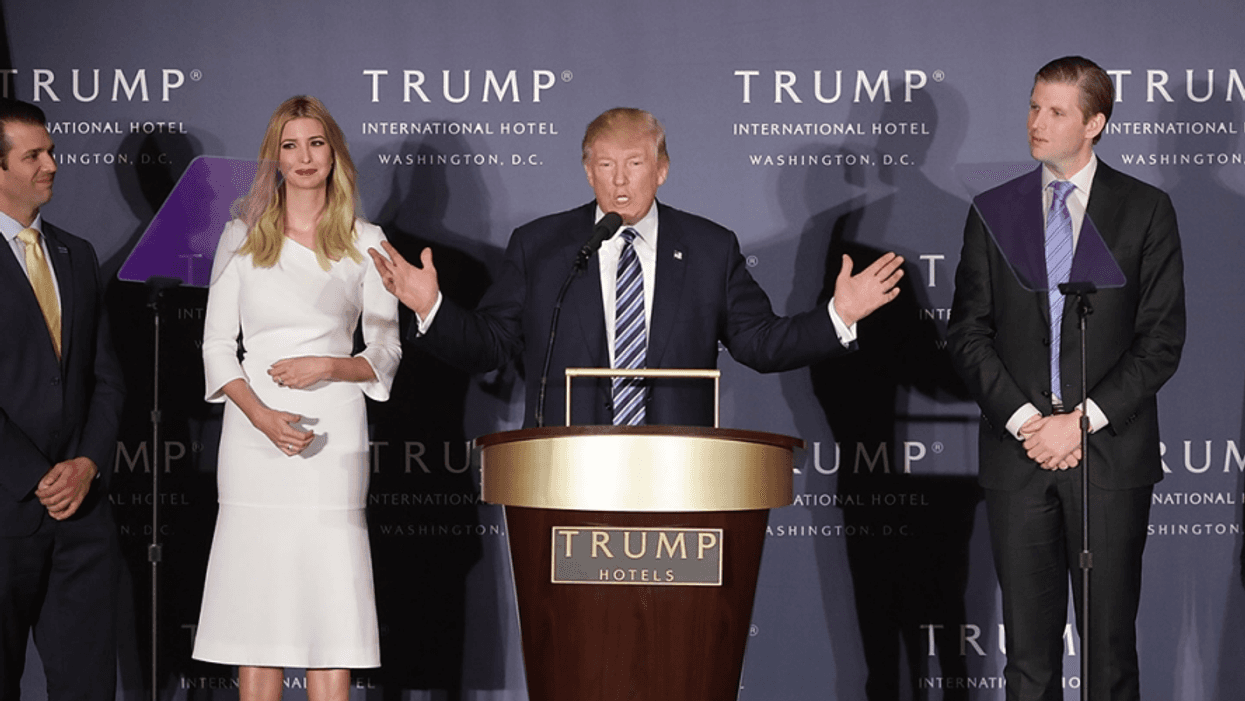
Donald Trump promised to "drain the swamp" of corruption in Washington, DC. Instead, he not only brought his own corruption and that of his family to the nation's capital. He also opened the door of his administration to a whole slew of influence-peddlers, scam artists, and sleazy lobbyists.
Here are just a few of the worst examples:
Rot Starts at the Top: Donald Trump has violated the U.S. Constitution by using his office to enrich himself. He took from taxpayers more than a million bucks alone for the rooms the Secret Service detail used at his hotels. In his first two years of office, the president raked in $73 million from his foreign businesses and deals with autocratic countries like the Philippines and Turkey. Despite all the profits, the president paid virtually no income tax.
Where's Jared and Ivanka? Since Trump took office, the firm that his son-in law Jared Kushner founded earned more than $90 million from foreign sources channeled through off-shore accounts. While Jared worked on a Middle East peace deal, he tried to get the Qatari government to bail out his father's teetering real estate empire. Ultimately, a Qatar-linked fund provided over a billion dollars. In 2018, as her father was negotiating with the Chinese, Ivanka Trump acquired 34 trademarks from Beijing to sell her apparel and bling in China.
Profiting from the Pandemic: In the government bailout package to help businesses weather the pandemic-induced economic crisis, 27 clients of Trump-connected lobbyists received up to $10.5 billion. And as much as $273 million went to more than 100 companies owned or operated by major donors to Trump's election efforts.
Cabinet Corruption Scandals: Several Trump administration officials have resigned under a cloud. Scott Pruitt stepped down as head of the Environmental Protection Agency during several ethics investigations over his cozy relations with lobbyists. Secretary of the Interior Ryan Zinke resigned over corrupt real estate deals. Health and Human Services Secretary Tom Price was forced out for using almost $1 million in taxpayer money for traveling on private jets and military planes instead of cheaper commercial flights.
They're Corrupt and They Haven't Resigned! At the Department of Transportation, Elaine Chao has orchestrated deals to help her family's Hong-Kong-based shipping business as well as the state of Kentucky, which husband Mitch McConnell represents in the Senate. Interior Secretary David Bernhardt, once a lobbyist for western mining, oil, and gas companies, has taken at least 25 actions favorable to the interests of former clients. Commerce Secretary Wilbur Ross profited from foreign holdings - Chinese state-owned enterprises, a Russian shipping company - even as he was involved in negotiations with those countries.
For more details on the administration's corruption, check out this map of Trump's swamp.

Environmental justice groups condemned the Trump administration Thursday for catering to the chemical industry after the Environmental Protection Agency finalized a rollback of Obama-era disaster prevention measures that were implemented to protect workers at and residents of communities with chemical plants.
"Today's action by the EPA has only increased the chances that people who live in these fence line neighborhoods, which are disproportionately lower-income communities of color, could be seriously harmed or killed."
--Ken Cook, EWG
The Trump EPA's changes to Chemical Disaster Rule (pdf) crafted under former President Barack Obama came after years of delays and industry opposition to stricter regulations.
"Those who work in or live near a chemical or petroleum plant are already at far greater risk than the average American," Environmental Working Group (EWG) president Ken Cook said in a statement. "Today's action by the EPA has only increased the chances that people who live in these fence line neighborhoods, which are disproportionately lower-income communities of color, could be seriously harmed or killed."
"Safety requirements at these facilities should be stepped up, not rolled back," Cook added. "But this is what we've come to expect from the Trump EPA."
Dr. Andrew Rosenberg, director of the Center for Science and Democracy at the Union of Concerned Scientists (UCS), echoed Cook's criticism.
"Fence line communities continue to suffer the extraordinary risks brought on by big industrial facilities and all too frequent chemical accidents," said Rosenberg. "This rule adds insult to injury by refusing to address the need to reduce disaster risks and consider community needs. That is completely unacceptable."
A few months after a 2013 explosion at a fertilizer plant in West, Texas killed 15 people, injured over 160, and leveled hundreds of homes, Obama signed an executive order calling for chemical safety improvements nationwide. The Chemical Disaster Rule to strengthen federal Risk Management Program (RMP) regulations was published just before President Donald Trump took office and set to take effect in 2017.
However, Trump's first EPA administrator, Scott Pruitt, delayed its implementation, which prompted an ongoing legal battle. In May 2018, the Trump administration proposed changes to the RMP that aligned with the chemical industry's wishes.
The EPA claimed Thursday that the Trump administration's final rule "modifies and improves the existing rule to remove burdensome, costly, unnecessary amendments while maintaining appropriate protections and ensuring first responders have access to all of the necessary safety information."
Former coal lobbyist and current EPA administrator Andrew Wheeler said, "Today's final action addresses emergency responders' longstanding concerns and maintains important public safety measures while saving Americans roughly $88 million per year."
The EPA also circulated praise for the final rule from from a few first responders, the trade organization Agricultural Retailers Association, and Republican state attorneys general and secretaries as well as members of Congress. E&E News reported that the American Chemistry Council, another trade group, also welcomed the new rule.
Critics, however, highlighted concerns that the RPM changes will endanger workers and community members.
"Once again, workers, communities of color, and low-income communities have been placed squarely in harm's way by the Trump administration," declared Michele Roberts, national co-coordinator of the Environmental Justice Health Alliance for Chemical Policy Reform. "EPA's own analysis demonstrated that our communities are at disproportionate risk of chemical disasters, on top of the many other toxic hazards we experience daily. Ignoring that evidence is further proof that this administration has no regard for the health and safety of workers and communities. This is environmental racism."
EWG explained that the Trump rule rescinds:
"This administration is gutting the few protections we have against chemical explosions and other toxic disasters, just to appease chemical companies who only worry about their own profit," 13 groups said in a joint statement. "Yet for the millions of families and children who live by chemical facilities, this is not about money, it's about surviving chemical disasters. Lives depend on this rule."
The 13 groups, which won a legal battle in August 2018 vacating the Trump EPA's delay of the rule, were represented by the nonprofit law firm Earthjustice. In response to the EPA's announcement Thursday, Earthjustice attorney Emma Cheuse said that "there is no excuse for exposing families and children to preventable chemical disasters."
"We will continue working with people in the most affected communities," Cheuse vowed, "to defend public safety and to oppose Trump's dangerous rollback of the Chemical Disaster Rule."

Advocates of strong public health protections responded with alarm to a Monday night New York Times report on the Environmental Protection Agency's new draft proposal for the Trump administration's drawn-out effort to dramatically scale back the scientific research that can be used in government policymaking.
"Let's call this what it is: an excuse to abandon clean air, clean water, and chemical safety rules," said Andrew Rosenberg, director of the Center for Science and Democracy at the Union of Concerned Scientists. "This is a blatant removal of well-established science from the policymaking process, to the benefit of polluters and at a huge cost to the marginalized communities who face the biggest threat from pollution."
The draft proposal (pdf), titled "Strengthening Transparency in Regulatory Science," would force the agency to only consider research that discloses all raw data, including private medical files. It follows a similar proposal unveiled by former EPA chief Scott Pruitt in April 2018 that provoked nearly 600,000 comments from the public, the majority of which were critical.
Pruitt's successor as EPA administrator, ex-lobbyist Andrew Wheeler, delayed the prior proposal, purportedly to consider concerns from environmental and public health groups. However, the new version "headed for White House review and obtained by The New York Times shows that the administration intends to widen its scope, not narrow it."
According to the Times:
The measure would make it more difficult to enact new clean air and water rules because many studies detailing the links between pollution and disease rely on personal health information gathered under confidentiality agreements. And, unlike a version of the proposal that surfaced in early 2018, this one could apply retroactively to public health regulations already in place.
"This means the EPA can justify rolling back rules or failing to update rules based on the best information to protect public health and the environment, which means more dirty air and more premature deaths," said Paul Billings, senior vice president for advocacy at the American Lung Association.
Public health experts warned that studies that have been used for decades--to show, for example, that mercury from power plants impairs brain development, or that lead in paint dust is tied to behavioral disorders in children--might be inadmissible when existing regulations come up for renewal.
One key example of scientific research that wouldn't be permissible for government use under the EPA proposal is a 1993 Harvard University project known as the Six Cities study, which connected air pollution to premature deaths and subsequently informed nationwide air quality policies.
"A separate internal EPA memo viewed by The New York Times shows that the agency had considered, but ultimately rejected, an option that might have allowed foundational studies like Harvard's Six Cities study to continue to be used," the newspaper reported Monday.
As journalist Emily Atkin put it in her HEATED newsletter Tuesday: "In other words, air pollution denial is becoming U.S. policy for the first time." She noted that this proposal "is a key priority of Steve Milloy, a former tobacco and fossil fuel industry lobbyist who served on Trump's EPA transition team."
Atkin recalled speaking with Stan Glantz, a professor of tobacco control at the University of California San Francisco, when reporting on Pruitt's version of the proposal last year. The tobacco industry, Glantz told her, "realized that, rather than fighting every single study that came out linking them to cancer, if they could get the rules of evidence changed, they wouldn't have to worry about it."
The Times report on Wheeler's revived and expanded version elicited impassioned warnings and critiques on Twitter:
An EPA spokesperson told the Times in an emailed statement that "the agency does not discuss draft, deliberative documents, or actions still under internal and interagency review." Wheeler, for his part, said in September that "we're moving forward [with the proposal] to ensure that the science supporting agency decisions is transparent and available for evaluation by the public and stakeholders."
UCS's Rosenberg said Tuesday that "Wheeler's claims about the need for these restrictions don't pass the laugh test. Everything about this rule makes a mockery of the EPA's claim that this change is necessary for transparency. This rule was driven by political operatives. It's being rushed through with minimal opportunity for public comment. And it introduces pointless hurdles and delays into the policymaking process that will compromise the federal government's ability to protect the public."
"The Trump administration has a clear pattern of sidelining science and undermining public health protections," he added. "If this rule is finalized, it would be one of the most damaging and far-reaching policy changes enacted by the administration. It would put the entire enterprise of developing science-based public health safeguards at risk."
The Times report came ahead of a Wednesday morning hearing planned by the Democrat-controlled U.S. House Science, Space, and Technology Committee about the Trump administration's effort to restrict the use of scientific research in federal policymaking, which will feature testimony from various scientists and public health experts.

The environmental advocacy group Food & Water Action threatened the Trump administration with legal action Thursday in response to a New York Times report that detailed the Environmental Protection Agency's plans to roll back an Obama-era regulation that aimed to protect waterways near coal-fired power plants from toxins.
"By now, nothing from this nefarious administration shocks us, but each new rollback of a common-sense rule meant to keep families healthy and safe enrages us more and more."
--Wenonah Hauter, Food & Water Action
"By now, nothing from this nefarious administration shocks us, but each new rollback of a common-sense rule meant to keep families healthy and safe enrages us more and more," the organization's executive director, Wenonah Hauter, said in a statement Thursday.
Hauter warned that "this latest rollback would lead directly to more water contamination, more birth defects, more childhood cancer, and more pain and suffering for American families--all for the sake of a dirty industry's last grasp at profits."
President Donald Trump, a close ally of the coal industry, "may be immune from public shaming or the motivations of simple common decency, but his administration is now on notice," she added. "If this unconscionable handout to polluters is allowed to proceed, we will sue to stop it."
The regulation, enacted by the Obama administration in 2015, tightened disposal rules for coal combustion residuals (CCR)--commonly called coal ash--that are created when coal is burned by power plants. Designed to safeguard nearby waterways from contaminants like arsenic, lead, and mercury, the regulation followed a series of environmental disasters involving coal ash, such as when a busted pipe polluted the Dan River in North Carolina in 2014.
Exposure to toxic metals in coal ash, as Physicians for Social Responsibility and Earthjustice noted in a 2010 report, "can cause several types of cancer, heart damage, lung disease, respiratory distress, kidney disease, reproductive problems, gastrointestinal illness, birth defects, impaired bone growth in children, nervous system impacts, cognitive deficits, developmental delays, and behavioral problems."
Before the Obama-era rule took effect in November 2018, then-EPA Administrator Scott Pruitt announced in September 2017 that its implementation would be delayed until 2020 to provide "relief" to energy utilities and allow the agency to review the regulation--a move that critics denounced as "deeply disturbing."
Since then, the EPA--which is now under the direction of former coal industry lobbyist Andrew Wheeler--has taken steps to weaken the 2015 regulation.
This year, the Times noted, the agency "proposed a number of separate amendments to the coal-ash regulations, including extending by 18 months the time that industry could use certain sites adjacent to groundwater areas for dumping."
The Times reported Thursday on a "series of new rules expected in the coming days." According to the newspaper, the EPA
will move to weaken the 2015 regulation that would have strengthened inspection and monitoring at coal plants, lowered acceptable levels of toxic effluentm and required plants to install new technology to protect water supplies from contaminated coal ash.
The EPA will relax some of those requirements and exempt a significant number of power plants from any of the requirements, according to the two people familiar with the Trump administration plan, who requested anonymity because they were not authorized to speak about the new rules.
Although the EPA, which reportedly "held a conference call Tuesday with supporters of the Trump administration's deregulatory efforts," declined the Times' request for comment, environmentalists readily shared their alarm.
Lisa Evans, general counsel for the environmental law organization Earthjustice, told the Times the administration's plan is "a huge step backward and incredibly dangerous."
Evans pointed to an analysis released in March by Earthjustice and other environmental groups which showed that 91 percent of the 265 U.S. coal plants required to test nearby groundwater found unsafe levels of at least one coal ash contaminant, based on EPA standards.
"That knowledge should lead EPA to move to establish greater protections for our health," Evans said. "But EPA is running the other way under the direction of the utilities."

On July 8, President Trump hosted a White House event to unabashedly tout his truly abysmal environmental record. The following day, coincidentally, marked the one-year anniversary of Andrew Wheeler at the helm of the Environmental Protection Agency (EPA), first as acting administrator and then as administrator after the Senate confirmed him in late February.
The good news, if there is any, is that Wheeler is an Eagle Scout compared to his ethically challenged predecessor, Scott Pruitt. The bad news is, as predicted, Wheeler has been more effective than Pruitt in rolling back and eliminating EPA safeguards.
My organization, the Union of Concerned Scientists, has compiled a list of 80 Trump administration attacks on science since taking office, and Wheeler has been the driving force behind many of them. Below are 10 of the more egregious ways he has undermined the EPA's time-honored role to protect public health and the environment so far.
1. Sidelined Scientists
Wheeler, a former coal industry lobbyist, has taken a number of steps to systematically reduce the role of scientists in the agency's policymaking process. Last fall, for example, he eliminated the agency's Office of the Science Advisor, which counseled the EPA administrator on research supporting health and environmental standards, and placed the head of the EPA's Office of Children's Health Protection on administrative leave. He also disbanded a 20-member scientific advisory committee on particulate matter, or soot; failed to convene a similar panel on ozone; and packed a seven-member advisory committee on air quality standards with industry-friendly participants.
2. Proposed to Restrict the Use of Scientific Data
Claiming his intent is to increase "transparency," Wheeler is promoting a rule Pruitt proposed that would dramatically limit the scientific studies the agency considers when developing health standards. If adopted, the rule would restrict the use of scientific studies in EPA decisions if the underlying data are not public and reproducible, which would disqualify many epidemiological and other health studies the EPA relies on to set science-based public safeguards. Given that EPA health standards often rely on studies that contain private patient information, as well as confidential business information that cannot be revealed, the rule would significantly hamper the agency's ability to carry out its mission. Wheeler plans to finalize the rule sometime this year.
3. Gutted the Coal Ash Rule
The first major rule Wheeler signed as acting administrator refuted his claim that he could fulfill President Trump's directive to "clean up the air, clean up the water, and provide regulatory relief" at the same time. By rolling back the Obama-era coal ash rule, Wheeler provided regulatory relief to his old friend the coal industry by weakening environmental protections established in 2015 to clean up coal ash ponds, which are laced with toxic contaminants that leak into groundwater. The move was a top priority for coal baron Bob Murray, owner of Murray Energy, Wheeler's most lucrative client when he worked for the Faegre Baker Daniels law firm.
Coal-fired power plants have been dumping this residue from burning coal into giant, unlined pits for decades. According to the EPA, there are more than 1,000 coal ash disposal sites across the country, and a recent analysis by Earthjustice and the Environmental Integrity Project found that 91 percent of the coal plants filing monitoring data required by the 2015 rule are polluting water with unsafe levels of toxic contaminants. Wheeler's EPA says the new rule--which extends the deadline for closing some leaking ash ponds and allows states to suspend groundwater monitoring and set their own standards--will save utilities as much as $31 million. But the agency ignored the enormous costs of cancer and neurological and cardiovascular diseases linked to coal ash ingredients, which include arsenic, chromium, lead and mercury.
4. Recommended Unsafe Levels of Drinking Water Contaminants
Poly- and perfluoroalkyl substances (PFAS), which are used in firefighting foam and a variety of nonstick, cleaning, packaging and other household products, have been linked to thyroid disease and kidney, liver, pancreatic and testicular cancer. According to a recent study by the Environmental Working Group and Northeastern University, these chemicals threaten the drinking water supplies of an estimated 19 million Americans. A 2018 Union of Concerned Scientists report, meanwhile, found that PFAS water contamination at 130 military bases across the country exceed the 11-parts-per-trillion safety threshold determined by the Department of Health and Human Services Agency for Toxic Substances and Disease Registry. Nearly two-thirds of the sites had contamination that was more than 100 times higher than the safe level.
In February, Wheeler announced the "first-ever nationwide action plan" to regulate PFAS chemicals in water, saying the agency would develop and set a limit for two of the most prevalent PFAS chemicals, perfluorooctanoic acid and perfluorooctanesulfonic acid. During the announcement, he told reporters he believes the agency's voluntary 70-part-per-trillion health-advisory level for the chemicals is "a safe level for drinking water," despite the fact that this level is more than six times higher than what the Disease Registry considers safe.
While Wheeler slow-walks the EPA's response, members of Congress have introduced at least a dozen bills to address PFAS contamination, and the Senate recently passed a defense bill that would require the EPA to set a science-based standard for PFAS in drinking water.
5. Rolled Back Clean Water Act Protections
Clearing up a decade-long dispute over the scope of the Clean Water Act, the Obama EPA adopted a broad, science-based definition of the law that included protecting intermittent and ephemeral streams and wetlands that do not have surface water connections to other waterways. A 2015 EPA meta-analysis of more than 1,200 peer-reviewed studies concluded that even infrequently flowing small streams and isolated wetlands can affect "the integrity of downstream waters." Trash them and that pollution could wind up in rivers, lakes, reservoirs and estuaries.
Regardless, Wheeler announced plans during a December telephone press briefing to reverse the Obama EPA definition of waters protected by the Clean Water Act, a thinly disguised gift to land developers and the agriculture industry. When asked what wetlands would no longer be protected, Wheeler replied, "We have not done ... a detailed mapping of all the wetlands in the country." Likewise, EPA Office of Water head David Ross--who represented industry clients against the EPA before joining the Trump administration--told reporters on the call that the agency had no idea how many streams would be dropped from Clean Water Act protection under the proposal.
In fact, Wheeler and Ross were well aware of the damage their new definition would do. At least 18 percent of streams and 51 percent of wetlands across the country would not be covered under their proposed definition, according to an internal 2017 slideshow prepared by the EPA and the Army Corps of Engineers and obtained by E&E News under the Freedom of Information Act.
6. Suppressed an Inconvenient Formaldehyde Report
Last August, Wheeler disingenuously told a Senate committee that the EPA was holding up the release of a report on the risk of cancer from formaldehyde to confirm its veracity. "I am sure we will release it," he said, "but I need to make sure that the science in the report is still accurate."
In fact, the report--which concluded that formaldehyde can cause leukemia and nose and throat cancer--was completed by EPA scientists a year before Wheeler testified, according to a Senate investigation, and their conclusion was hardly a surprise. Both the World Health Organization's International Agency for Research on Cancer and the U.S. Department of Health and Human Services National Toxicology Program have already classified formaldehyde as a known human carcinogen.
The EPA's review process normally takes 60 to 90 days. The formaldehyde report has been in limbo for at least a year and a half, a blatant giveaway to the American Chemistry Council, the U.S. chemical industry's premier trade association, which has blocked tighter restrictions on formaldehyde for decades.
7. Ignored EPA Scientists' Advice to Ban Asbestos
Instead of heeding the advice of agency scientists and lawyers to follow the example of 55 other countries and ban asbestos completely, the EPA announced in April that it would tighten restrictions on asbestos--not ban it--despite overwhelming scientific evidence of its dangers. Manufacturers will be able to continue to use the substance if they obtain EPA approval.
Asbestos has not been produced in the United States since 2002, but is still imported for use in a wide range of commercial and consumer products, including auto brake components, roofing, vinyl floor tile, fire-resistant clothing, and cement pipes, sheets and shingles. One of the deadliest known carcinogens, asbestos kills nearly 40,000 Americans annually, mainly from lung cancer.
8. Weakened the Mercury Emissions Rule
In late December, the EPA proposed to significantly weaken a rule restricting mercury emissions from coal-fired power plants by recalculating its costs and benefits. The Obama EPA, which issued the rule in 2011, estimated it would cost utilities $7.4 billion to $9.6 billion annually to install pollution controls and lead to $37 billion to $90 billion in health benefits by reducing not only mercury, a potent neurotoxin, but also sulfur dioxide and soot, thus preventing 130,000 asthma attacks, 4,700 heart attacks, and as many as 11,000 premature deaths. The Wheeler EPA ignored the "co-benefits" of limiting sulfur dioxide and soot, and flagrantly lowballed the health benefits of curbing mercury alone at only $4 million to $6 million annually.
Most utilities have already complied with the mercury rule at a fraction of the estimated cost, but health advocates fear that this new, industry-friendly accounting method, which makes it appear that the cost to polluters far outweigh the rule's benefits, will set a precedent for the EPA to sabotage an array of other public health protections.
9. Slammed Vehicle Emission Rules Into Reverse
Last August, the EPA and the Transportation Department issued a proposal to freeze vehicle tailpipe pollution and fuel efficiency standards, rolling back a 2012 Obama-era rule requiring automakers to boost passenger vehicle fuel economy to a fleetwide average of 54 miles per gallon by 2025. In a Wall Street Journal opinion piece titled "Make Cars Great Again" published a few days before the two agencies announced their proposal, Wheeler and Transportation Secretary Elaine Chao charged that the Obama-era standards--the first to limit vehicle carbon emissions--are too burdensome for automakers and "raised the cost and decreased the supply of newer, safer vehicles."
Parroting the Trump administration's line of reasoning, Wheeler and Chao argued that fuel-efficient cars--which weigh less than gas-guzzlers--are not as safe, a contention that has been widely debunked. In fact, a 2017 study concluded that reducing the average weight of new vehicles could result in fewer traffic fatalities.
In any case, freezing the standards at 2020 levels would be hard on the planet, not to mention Americans' wallets, according to the Union of Concerned Scientists. It would result in an additional 2.2 billion metric tons of global warming emissions by 2040, amounting to 170 million metric tons in 2040 alone--the equivalent of the annual output of 43 average size coal-fired power plants. It also would cost drivers billions of dollars. In 2040 alone, they would have to pay an additional $55 billion to fill their gas tanks. Meanwhile, the design improvements automakers have made so far to meet the standards have already saved drivers more than $86 trillion at the pump since 2012, and off-the-shelf technological fixes, the Union of Concerned Scientists says, would enable automakers to meet the original 2025 target.
10. Rescinded the Clean Power Plan
Perhaps Wheeler's most damaging move to date came late last month when he signed a final rule to repeal and replace the Obama-era Clean Power Plan, which would have required coal-fired power plants to dramatically cut their carbon emissions. Yet another gift to the coal industry, Wheeler's so-called Affordable Clean Energy rule grants states the authority to determine emissions standards but sets no targets, leaving them the option to do absolutely nothing.
Before Wheeler released the final rule, an April study in the journal Environmental Research Letters found that his draft version would boost carbon emissions in 18 states and the District of Columbia and increase sulfur dioxide emissions in 19 states. The EPA's own analysis of the draft rule, meanwhile, found that the proposal could have led to as many as 1,400 premature deaths annually by 2030 due to an increase in soot, and as many as 15,000 cases of upper respiratory problems.
Reversing Decades of Bipartisan Protections
If Wheeler truly cared about transparency, he would petition the Trump administration to change the name of his agency to "Every Polluter's Ally." In just 12 months, he has killed or weakened dozens of safeguards with the sole intention of bolstering polluting industries' profit margins even after Congress slashed the corporate tax rate. As a result, millions of Americans will be drinking filthier water and breathing dirtier air, and more will suffer from serious diseases, according to his agency's own accounting.
Wheeler and his predecessor Pruitt have sullied the bipartisan track record of one of the nation's agencies entrusted with protecting public health and safety. So it is little wonder that three former EPA administrators who, notably, served under Republican presidents, recently sounded the alarm on Capitol Hill, urging legislators to step up their oversight of the agency and denouncing its attempts to hamstring science.
"There is no doubt in my mind that under the current administration the EPA is retreating from its historic mission to protect our environment and the health of the public from environmental hazards," former EPA Administrator Christine Todd Whitman, who served under President George W. Bush, stated in her written testimony for the House Committee on Energy and Commerce Subcommittee on Oversight and Investigations. "This administration, from the beginning, has made no secret of its intention to essentially dismantle the EPA.... Therefore, I urge this committee, in the strongest possible terms, to exercise Congress's oversight responsibilities over the actions and direction of the EPA."
This article was produced by Earth | Food | Life, a project of the Independent Media Institute, and originally published by Truthout.
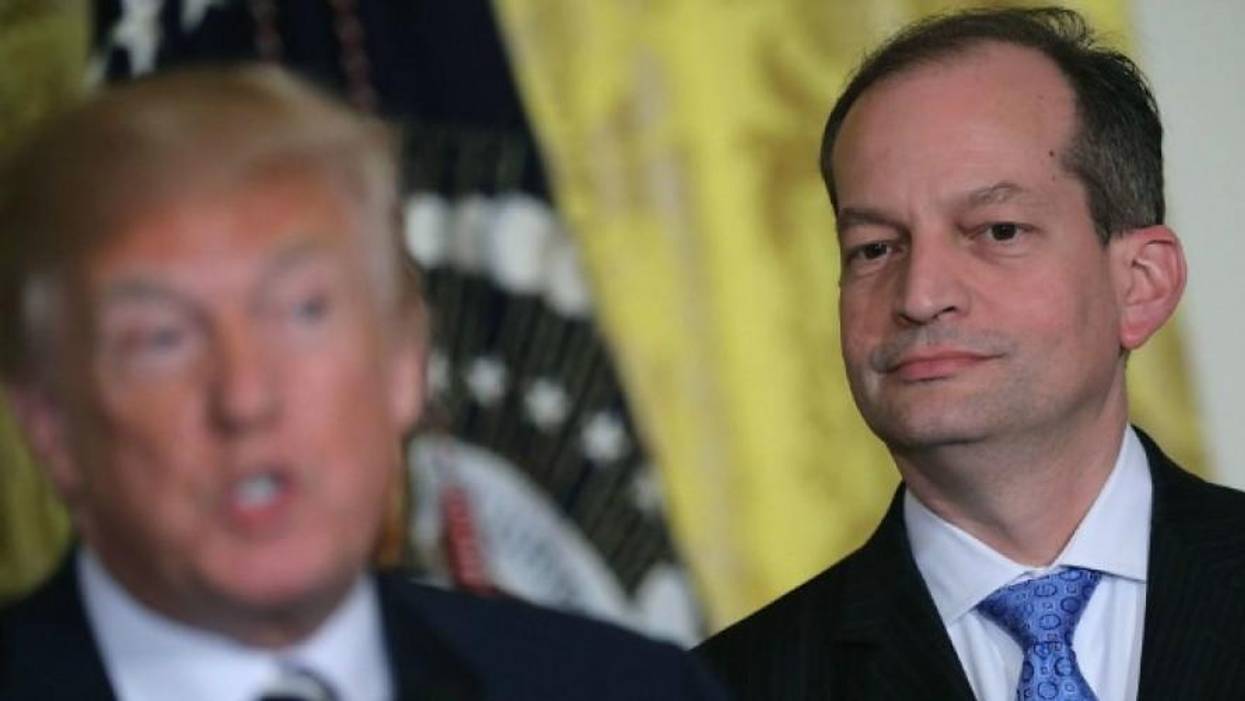
The resignation of Trump's Labor secretary, Alex Acosta, is only the most recent in a string of such scandals for Trump. In fact, what with all the things Trump himself has done plus those around him, his is surely the most scandal-ridden presidency in history. Let us just review the record, because it gets hard to remember them all after a while.
1. Secretary of Labor Alex Acosta resigned because when he was a South Florida federal prosecutor, he gave accused pedophile and Trump party-buddy Jeffrey Epstein an incredibly soft plea deal in 2008. Also a scandal: he was no friend of labor.
2. Scott Pruitt is former secretary of the EPA (which in the age of Trump does not stand for Environmental Protection Agency but for Environmental Protection Abolition). He accepted a $50 a night sweet condo deal from an oil and gas lobbyist for his pied-a-terre when he was occasionally in DC, and charged taxpayers $4.8 million for his security detail and made it a point always to fly first class on the taxpayer dime, amid other financial irregularities too numerous to mention. Oh, and the real scandal was that he destroyed the environment, including allowing the pesticide chlorpyrifos, even small amounts of which can damage babies' brains.
3. Former Interior Secretary Ryan Zinke is under scrutiny for a Montana land deal and fully 17 other possibly illegal activities while in office. Oh, and he also helped destroy the environment.
4. Nominee to be secretary of defense, Patrick Shanahan, withdrew over a 2010 domestic abuse investigation launched by the FBI. But the real scandal was that Shanahan had been a career high executive of Boeing and so would have been running the US government agency that buys all those shiny weapons Boeing produces.
5. Not a cabinet secretary, but former National Security Adviser Michael Flynn had to resign over repeated calls before Trump was sworn in to the Russian ambassador to the US, Sergey Kislyak, which he lied about. But Flynn's security company also developed a harebrained scheme to kidnap Turkish religious figure Fethullah Gulen, who was granted asylum in the US in 1998, and render him back to Turkey. Flynn may also have been an agent of Turkish influence in Ankara's attempt to help elect Trump and defeat Hillary Clinton.
There is so much more, I just have to go to bed sometime and this subject of Trump administration scandals is fit for a multi-volume book set, not a little blog entry.
And we haven't even gotten into Trump himself.
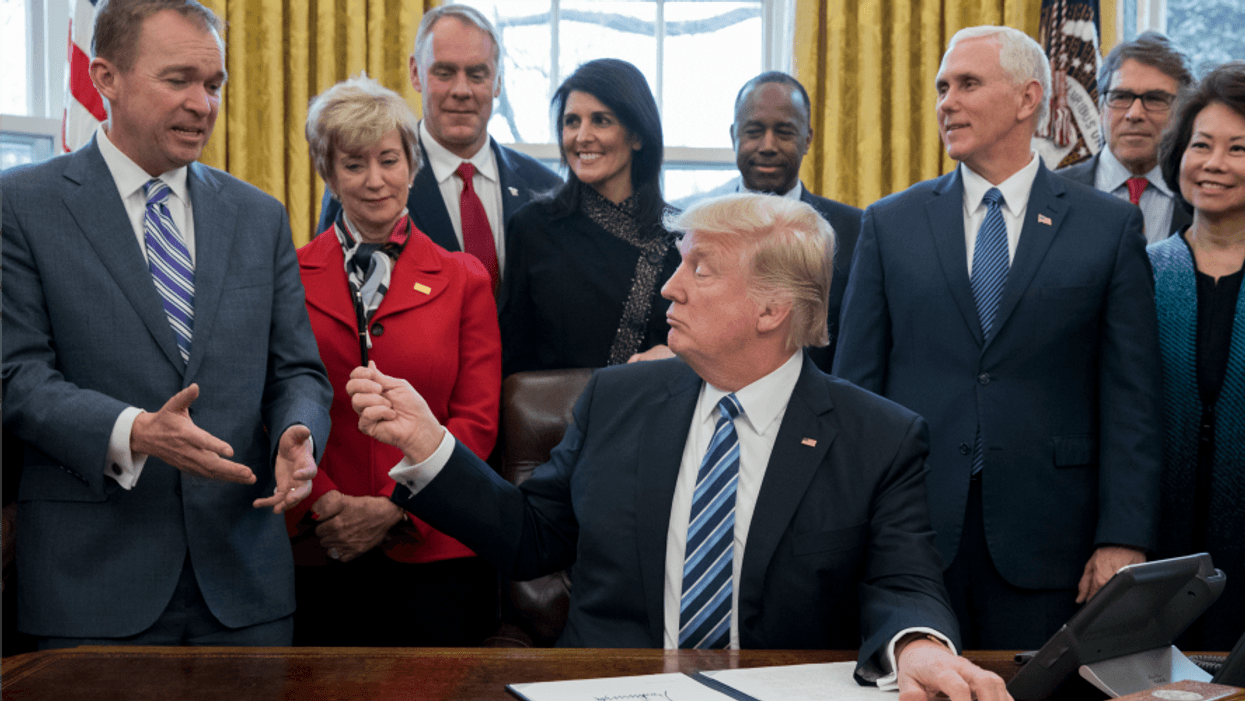
In the 1960s, at the very dawn of the New Right rebellion, William F. Buckley, Jr., declared that he would rather be governed by persons selected from the phone directory than the faculty of Harvard. Conservative egghead bashing has a long pedigree, and even Buckley, an aspiring patrician with one of the most laboriously affected accents ever heard, felt obliged to join in the populist trolling.
Over the succeeding five decades, the conservative movement and its chosen vehicle, the Republican Party, have substantially achieved the goal of systematically devaluing expertise, thereby accomplishing one of their most cherished ideological goals: to prove to the American people that government doesn't work.
As I have written before, the Republican push for non-expertise got a big boost during the Gingrich speakership. It continued its long march through institutions during the riotously incompetent planning and conduct of the Iraq war under George W. Bush, and has reached ghastly perfection with Donald Trump.
Just look at a few of the uniquely awful Trump personnel at the top tier: Mike Pompeo, John Bolton, Stephen Miller, Ben Carson, Betsy DeVos, departing Sarah Huckabee Sanders. Their unsuitability is matched by Trump appointees at lower levels.
The conclusion is inescapable: one could get better people for the jobs by recruiting candidates from the checkout line at a dollar store. Would such people be qualified for their positions? Probably not. But they might occasionally heed reasonable advice rather than reflexively doing the opposite, and they almost certainly would not unanimously possess the iron and unerring resolve of the current Trump team always to do the stupid, unethical or immoral thing.
Recently leaked vetting documents show what the Trump administration looks for in personnel. Despite warnings that former EPA administrator Scott Pruitt and former HHS Secretary Tom Price had considerable ethics and management problems, they were hired anyway. In their jobs, they proceeded to demonstrate just those same qualities the administration had been warned about.
Their downfall was less the result of their grifting and self-dealing than the fact that the capo in the White House was irritated by the conspicuous swaggering of these two arrogant underlings. They ought to have realized that such public flaunting of their bad-assery is reserved for the mob boss and his immediate family.
The vetting criteria for General David Petraeus, who was mooted for either secretary of state or national security adviser, are particularly telling. There were legitimate grounds for rejecting Petraeus: he was a major player in the Iraq debacle, a policy disaster that Trump roundly condemned during his campaign. The general's government career as CIA director ended abruptly when the FBI found he had been sharing code-word level classified information with his lover, who just happened not to be his wife. Petraeus compounded the damage by lying to the FBI.
But why was he rejected for a position in the Trump administration? Vetting personnel at the Republican National Committee "red flagged" Petraeus because he opposed torture - possibly the one unambiguously praiseworthy thing about the man.
As with personnel, so inevitably with policy. Flipping a coin before deciding among critical policy options would seem statistically to produce a better result than what we have seen in the Trump administration. By some strange reverse-Darwinian principle, Trump and his coat-holders invariably default to the worst conceivable option. Examples follow.
Let us imagine you are in charge and want to improve this country's terms of trade with China. Three broad options present themselves:
Of course, Trump picked option 3 because it was objectively the worst option.
Now, let's try tax cuts:
Naturally, Trump, with united assistance from the Republican Congress, chose option 3.
Now let us assume that for some reason you are dissatisfied with the Iran nuclear agreement (The Joint Comprehensive Plan of Action, or JCPOA) that your predecessor signed. Let us run though the options:
The answer to the Iran policy conundrum is of course now playing out in the news headlines.
Throughout American history, there has always been a strident minority opinion that aggressive and self-righteous stupidity is nobler and more virtuous in the sight of God than prudent and circumspect intelligence. This view now controls most of our government and is in a position to make its will the law of the land. Sooner or later, we shall see whether the higher laws of natural selection act to weed out stupidity in as spectacular and unpleasant a fashion as occurred with the Habsburg and Ottoman empires.