

SUBSCRIBE TO OUR FREE NEWSLETTER
Daily news & progressive opinion—funded by the people, not the corporations—delivered straight to your inbox.
5
#000000
#FFFFFF
To donate by check, phone, or other method, see our More Ways to Give page.
Daily news & progressive opinion—funded by the people, not the corporations—delivered straight to your inbox.
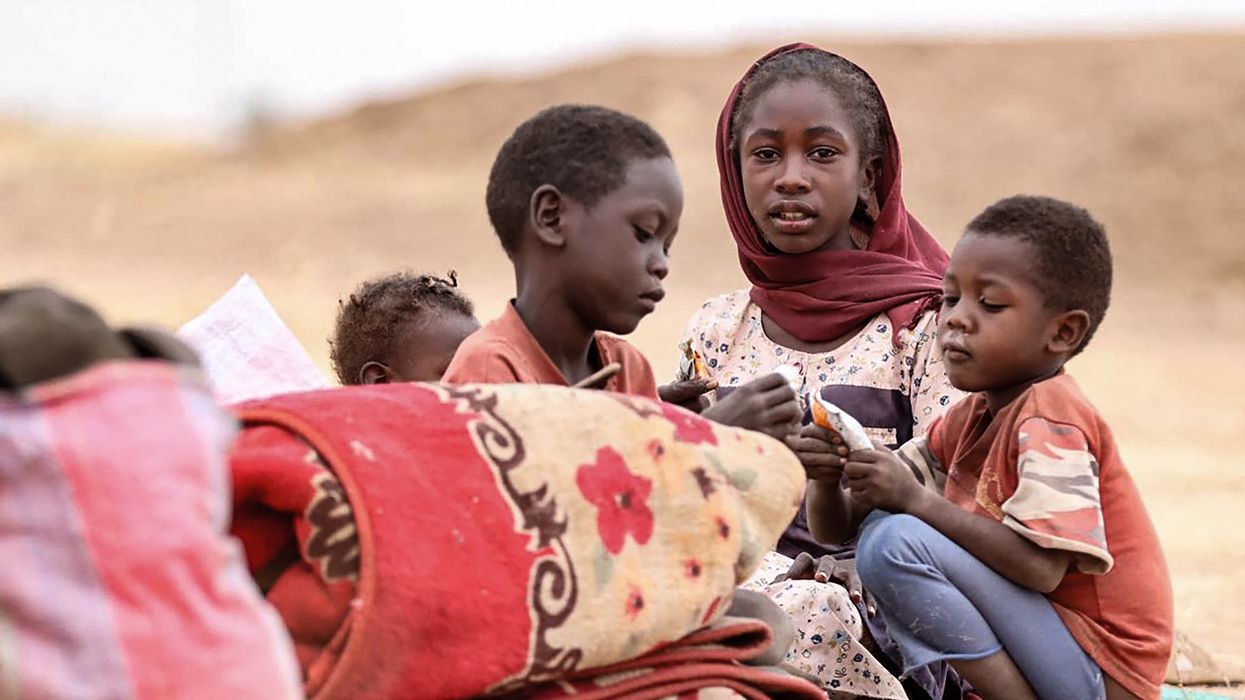
"Now is the time to renew focus on the human rights crisis in Sudan and take all necessary measures to protect civilians and prevent further violations and abuses," said one U.N. official.
Warning of potential war crimes including summary executions and deliberate attacks on civilians in Sudan, the United Nations human rights office on Tuesday issued a report calling for an expanded arms embargo and other measures to protect people caught in the crossfire of nearly two years of civil war there.
Volker Türk, the U.N. High Commissioner for Human Rights, issued the report on the conflict between Sudanese government forces and the government's former allied militia, the Rapid Support Forces (RSF), which has left 30 million people in need of humanitarian assistance and protection.
The Office of the United Nations High Commissioner for Human Rights (OHCHR) said forces on both sides of the conflict have used sexual violence as a weapon of war, with at least 203 victims affected by at least 120 documented incidents.
"Cases are likely vastly underreported due to fear, stigma, and the collapse of medical and judicial institutions," said the OHCHR.
More than 12 million people have been forced from their homes as violence has targeted civilian areas and acute food insecurity has spread across the country. Famine was declared in several refugee camps and other areas late last year, with experts projecting it would spread across war-torn northern Darfur.
Nearly 25 million people in Sudan are now suffering from "acute" levels of hunger, according to the OHCHR.
The hunger crisis is spiraling as armed forces attack civilian infrastructure including healthcare facilities, schools, and markets, with hundreds of civilians killed in recent weeks. More than 150,000 people have been killed since the war began, and the U.N. documented more than 4,200 civilian killings last year—noting that the actual civilian death toll is likely far higher.
On Tuesday, the rights group Emergency Lawyers reported that more than 200 civilians, including children, were killed by the RSF in White Nile state over the past three days.
"The attacks included executions, kidnapping, forced disappearance, looting, and shooting those trying to escape," the group reported.
The Sudanese Foreign Ministry said the RSF had killed 433 people in the al-Gitaina area in White Nile, while the Preliminary Committee of Sudan Doctors' Trade Union said 300 people had been killed.
"The continued and deliberate attacks on civilians and civilian objects, as well as summary executions, sexual violence, and other violations and abuses, underscore the utter failure by both parties to respect the rules and principles of international humanitarian and human rights law," said Türk.
Li Fung, who leads the OHCHR office in Sudan, said in a video statement posted to social media that "the situation in Sudan has reached a dangerous tipping point."
"Now is the time to renew focus on the human rights crisis in Sudan and take all necessary measures to protect civilians and prevent further violations and abuses," said Fung.
Ravina Shamdasani, a spokesperson for the human rights office, said Tuesday's report calls for the arms embargo in place for Darfur to be expanded to all of Sudan, and for the entire country to be covered by the jurisdiction of the International Criminal Court.
The international community, said Fung, "must stand with the people of Sudan."
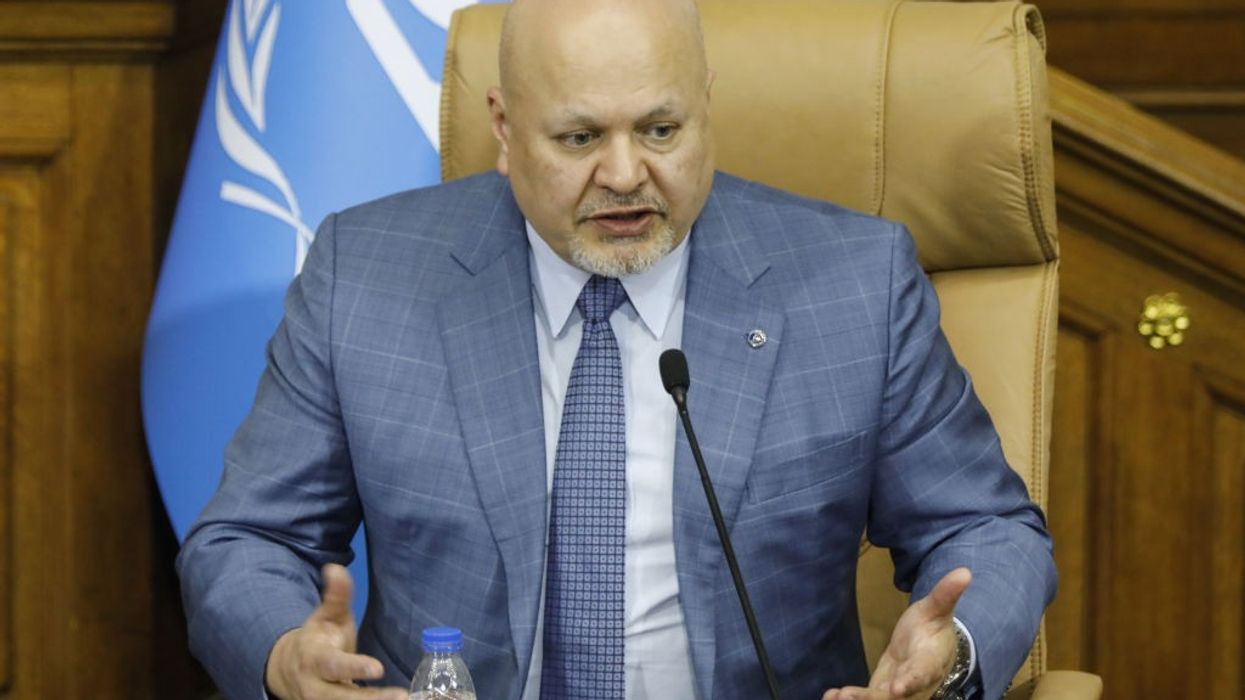
"The rule of law remains essential to our collective peace and security," said a United Nations spokesperson.
The International Criminal Court on Friday denounced U.S. President Donald Trump's executive order sanctioning the ICC in response to arrest warrants issued for Israeli leaders over their devastating 15-month military assault on the Gaza Strip.
"The ICC condemns the issuance by the U.S. of an executive order seeking to impose sanctions on its officials and harm its independent and impartial judicial work," the tribunal said in a statement. "The court stands firmly by its personnel and pledges to continue providing justice and hope to millions of innocent victims of atrocities across the world, in all situations before it."
"We call on our 125 states parties, civil society, and all nations of the world to stand united for justice and fundamental human rights," added the Hague-based ICC, which was established by a global treaty known as the Rome Statute to prosecute individuals for genocide, war crimes, crimes against humanity, and the crime of aggression.
A spokesperson for the United Nations' Office of the High Commissioner for Human Rights (OHCHR), Ravina Shamdasani, also slammed Trump's order targeting the ICC, which she called "a central institution of the international criminal justice system and fundamental to ensuring justice and achieving accountability for the most serious crimes."
"We fully support the independent work of the court—across all situations within its jurisdiction," Shamdasani said Friday. "We deeply regret the individual sanctions announced yesterday against court personnel, and call for this measure to be reversed."
"The court should be fully able to undertake its independent work—where a state is unwilling or unable genuinely to carry out the investigation or prosecution, as stated in the Rome Statute. The court is an essential part of the human rights infrastructure," she added. "The rule of law remains essential to our collective peace and security. Seeking accountability globally makes the world a safer place for everyone."
Since Trump signed the order—which specifically cites the court's November warrants for Israeli Prime Minister Benjamin Netanyahu and his former defense minister, Yoav Gallant—civil society groups around the world have also spoken out against the U.S. president, who previously targeted ICC officials with sanctions during his first term.
"This reckless action sends the message that Israel is above the law and the universal principles of international justice. It suggests that President Trump endorses the Israeli government's crimes and is embracing impunity," said Amnesty International secretary general Agnès Callamard, a former U.N. special rapporteur, in a statement.
The "aggressive" and "vindictive" order, she continued, "is a brutal step that seeks to undermine and destroy what the international community has painstakingly constructed over decades, if not centuries: global rules that are applicable to everyone and aim to deliver justice for all. The sanctions constitute another betrayal of our common humanity."
"At an historic moment when we are witnessing a genocide against Palestinians in Gaza, Russia's aggression against Ukraine, and the global rule of law coming under threat from multiple fronts," she argued, "institutions like the court are needed more than ever to advance human rights protections, prevent future atrocities and secure justice for victims."
Trump's sanctions will not only "embolden perpetrators," Callamard warned, "they will negatively impact the interests of all victims globally and those who look to the court for justice in all the countries where it's conducting investigations, including Darfur, Libya, the Philippines, Palestine, Ukraine, and Venezuela."
"The sanctions are also an affront to 125 member states who have collectively resolved that the court must be able to effectively pursue justice—which means it must be able to undertake independent judicial functions, such as issuing arrest warrants, for example, against Benjamin Netanyahu or Vladimir Putin," said added, referring to the Russian president.
"Governments around the world and regional organizations must do everything in their power to mitigate and block the effect of President Trump's sanctions," Callamard concluded. "Through collective and concerted actions, ICC member states can protect the court and its staff. Urgent action is needed, like never before."
While some governments, such as Hungary, have backed Trump's move, others have joined the chorus of condemnation and reiterated support for the ICC.
"We reaffirm our continued and unwavering support for the independence, impartiality, and integrity of the ICC," 79 nations—including France, Germany, and the United Kingdom—said in a joint statement reported by Reuters. "The court serves as a vital pillar of the international justice system by ensuring accountability for the most serious international crimes, and justice for victims."
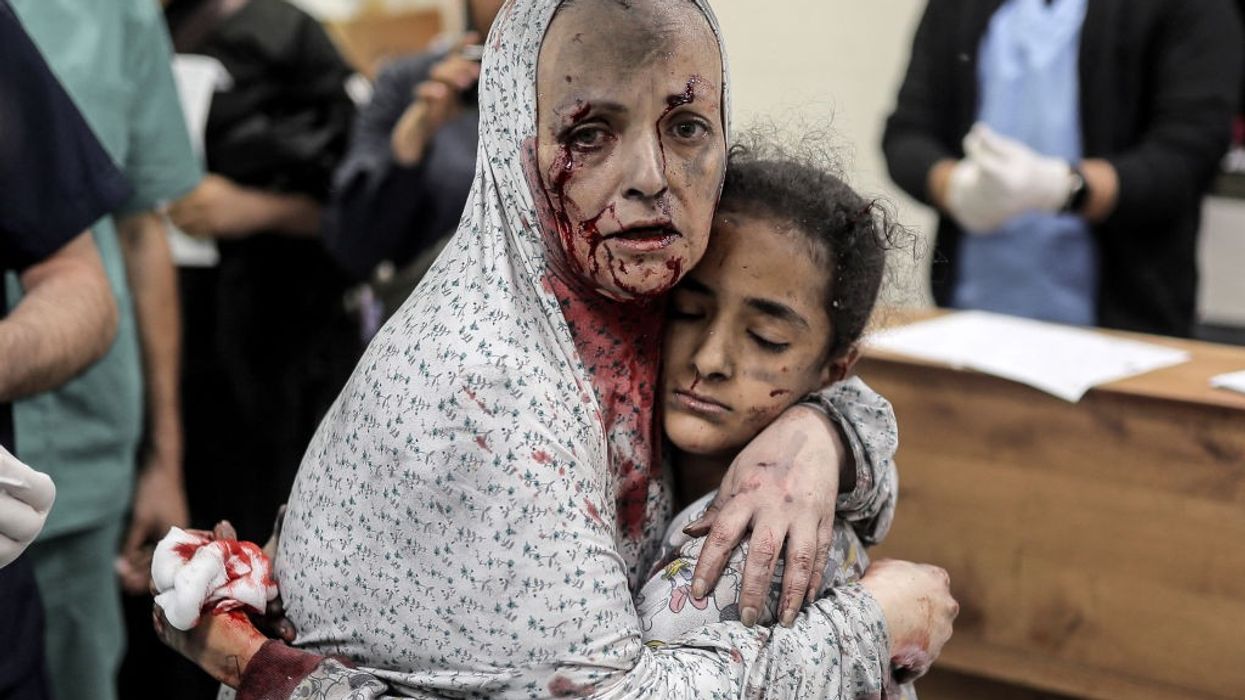
The United Nations human rights office noted the "unprecedented levels of killings, death, injury, starvation, illness, disease, displacement, detention, and destruction" wrought by Israel's 13-month onslaught.
Nearly 7 in 10 people killed by Israeli forces in Gaza during an earlier six-month period of the ongoing assault on the Palestinian enclave were women and children, the United Nations human rights office said this week.
The U.N. Office of the High Commissioner for Human Rights (OHCHR) verified 8,119 of the more than 34,500 Palestinians killed by Israel Defense Forces (IDF) bombs and bullets between November 2023 and April 2024. Among those killed were 3,588 children and 2,036 women ranging in age from newborns to nonagenarians. Minors under the age of 18 made up 44% of the victims in the analysis.
The OHCHR report noted the "unprecedented levels of killings, death, injury, starvation, illness, disease, displacement, detention, and destruction" wrought by Israel's onslaught, as well as the "wanton disregard" by Israeli forces and Hamas of international humanitarian law.
The analysis also highlights "the Israeli government's continuing unlawful failures to allow, facilitate, and ensure the entry of humanitarian aid, the destruction of civilian infrastructure, and repeated mass displacement."
"If committed as part of a widespread or systematic attack directed against a civilian population... these violations may constitute crimes against humanity," OHCHR said. "And if committed with intent to destroy—in whole or in part—a national, ethnical, racial, or religious group, they may also constitute genocide."
South Africa is leading a genocide case against Israel at the International Court of Justice (ICJ) in The Hague. On Thursday, Ireland became the latest of around 30 countries and regional blocs to announce its intent to intervene in the case on behalf of Palestine.
OHCHR found that 88% of the verified Palestinian fatalities from Israeli attacks on residential buildings were people killed in strikes that claimed at least five lives. In recent weeks, Israel's renewed offensive in northern Gaza—which some experts believe is an attempt to ethnically cleanse the area by bombing and starving its people before forcibly expelling them to make way for Israeli recolonization—has wiped out a staggering number of civilians, including many women and children, in single strikes on homes, hospitals, and refugee camps.
"The high number of fatalities per attack was due to the IDF's use of weapons with wide area effects in densely populated areas," the analysis states, adding that some Palestinians may have been killed by errant projectiles launched by Hamas or other Gaza-based militants.
The new report also raises concerns over Isrsel's forcible transfer of Palestinians, systematic attacks on medical workers, journalists, and reported use of white phosphorus munitions—which are banned in populated areas.
Israel has not yet responded to the OHCHR report but has previously said that it "will continue to act, as it always has done, according to international law."
Since October 7, 2023, when Israeli forces launched their assault on the densely populated coastal enclave of 2.3 million people in response to the Hamas-led attack on Israel, the Gaza Ministry of Health and U.N. agencies say that more than 43,600 Palestinians have been killed and over 102,500 others wounded. More than 10,000 others are missing and believed dead and buried beneath the ruins of bombed homes and other structures.
Among those killed, say officials, are more than 18,000 children. Last month, the U.K.-based charity Oxfam International said that Israel's yearlong assault on Gaza has been the deadliest year of conflict for women and children anywhere in the world over the past two decades.
The relentless death and destruction has caused the "complete psychological destruction" of Gaza's youth, according to the charity Save the Children. The same has been said of many Gazans of all ages.
Last December, the U.N. Children's Fund called Gaza "the world's most dangerous place to be a child." Earlier this year, U.N. Secretary-General António Guterres for the first time added Israel to his so-called "List of Shame" of countries that kill and injure children during wars and other armed conflicts.
The ICJ—which is a U.N. body—has issued three provisionsal orders in the ongoing genocide case, including directives for Israel to prevent genocidal acts, stop its assault on Rafah, and allow humanitarian aid into Gaza. Israel has been accused of flouting all three orders.
"The trends and patterns of violations, and of applicable international law as clarified by the International Court of Justice, must inform the steps to be taken to end the current crisis," U.N. High Commissioner for Human Rights Volker Türk said in a statement Friday.
"The violence must stop immediately, the hostages and those arbitrarily detained must be released, and we must focus on flooding Gaza with humanitarian aid," he added.
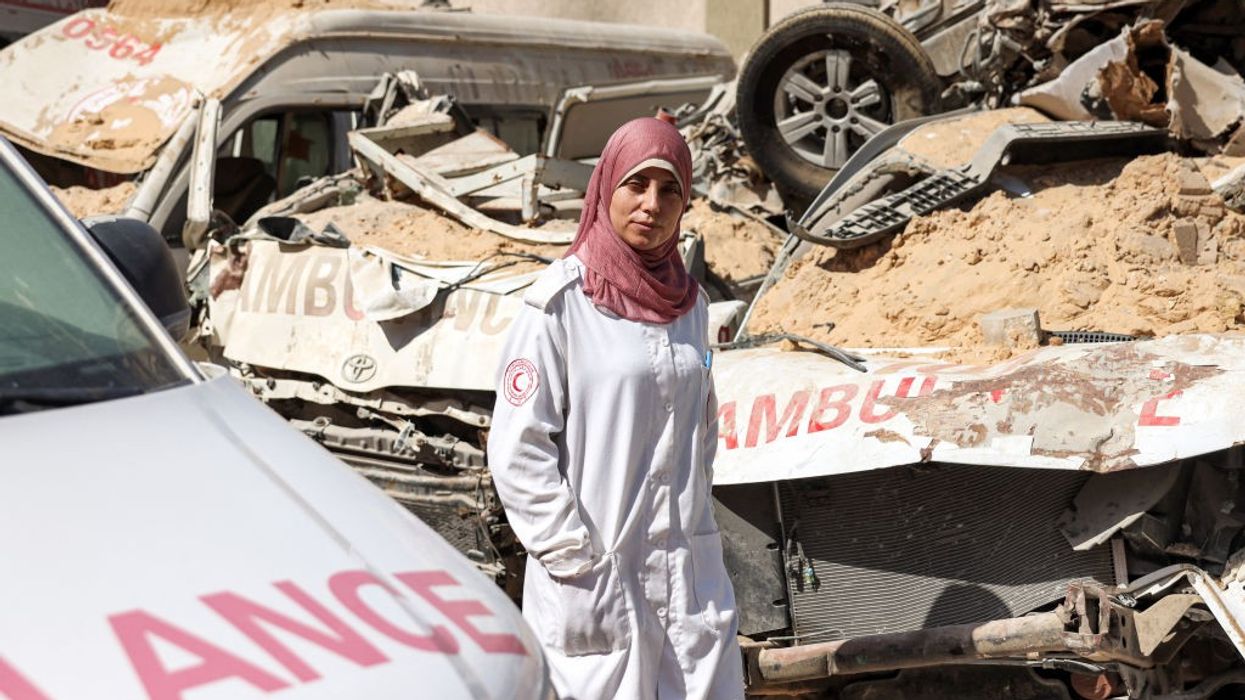
"Israel must immediately stop its unprecedented wanton destruction of healthcare facilities in Gaza," the head of the inquiry stressed.
For the second time this year, a United Nations commission tasked with investigating Israel's conduct during its yearlong invasion and blockade of Gaza has found that the U.S.-armed Israeli military is committing crimes against humanity against Palestinians.
The Independent International Commission of Inquiry on the Occupied Palestinian Territory released a report Thursday detailing how "Israel has perpetrated a concerted policy to destroy Gaza's healthcare system as part of a broader assault on Gaza, committing war crimes and the crime against humanity of extermination with relentless and deliberate attacks on medical personnel and facilities."
"The commission also investigated the treatment of Palestinian detainees in Israel and of Israeli and foreign hostages in Gaza since October 7, 2023 and concluded that Israel and Palestinian armed groups are responsible for torture and sexual and gender-based violence," the Office of the U.N. High Commissioner for Human Rights (OHCHR) said in a summary of the report.
The report cites the U.N. World Health Organization's findings that Israel carried out 498 attacks on healthcare facilities in the Gaza Strip between October 7, 2023—when Hamas launched the deadliest-ever attack on Israel—and July 30, 2024.
"A total of 747 persons were killed directly in those attacks, and 969 others were injured, and 110 facilities were affected," the publication states. The report calls the attacks "widespread and systematic."
The commission continued:
Israeli security forces carried out air strikes against hospitals, causing considerable damage to buildings and surroundings, as well as multiple casualties; surrounded and besieged hospital premises; prevented the entry of goods and medical equipment and exit/entry of civilians; issued evacuation orders but prevented safe evacuations; and raided hospitals, arresting hospital staff and patients. Israeli security forces also obstructed access by humanitarian agencies.
"Israel must immediately stop its unprecedented wanton destruction of healthcare facilities in Gaza," said commission chair Navi Pillay. "By targeting healthcare facilities, Israel is targeting the right to health itself with significant long-term detrimental effects on the civilian population. Children in particular have borne the brunt of these attacks, suffering both directly and indirectly from the collapse of the health system."
OHCHR said that "attacks on medical facilities in Gaza, particularly those devoted to pediatric and neonatal care, have led to incalculable suffering of child patients, including newborns."
"In continuing these attacks, Israel has violated children's right to life, denied children access to basic healthcare, and deliberately inflicted conditions of life resulting in the destruction of generations of Palestinian children and, potentially, the Palestinian people as a group," the agency added.
The commission's inquiry found that as of July 15, "113 ambulances had been attacked and at least 61 had been damaged," including vehicles used by the U.N., International Committee of the Red Cross (ICRC), the Palestine Red Crescent Society (PRCS), and other organizations.
"Access was also reduced owing to closure of areas by Israeli security forces, [and] delays in coordination of safe routes, checkpoints, searches, or destruction of roads," the report notes.
The commission investigated the January 29 attack that killed 6-year-old Hind Rajab and six of her relatives, as well as two paramedics who had Israeli permission to attempt to rescue them.
"They were attacked while trying to evacuate in their car," the report said of the family. "The ambulance, carrying two paramedics, Yousef Zeino and Ahmed al-Madhoun, was dispatched after its route had been coordinated with Israeli security forces. It was hit by a tank shell at a distance of some 50 meters from the family's car."
"Hind was still alive at the time that the ambulance was dispatched," the publication noted. "The presence of Israeli security forces in the area prevented access. As a result, the family members' bodies could not be retrieved from their bullet-ridden car until 12 days after the incident."
Israel Defense Forces officials have repeatedly claimed that no IDF troops were in the area at the time of the attack. Multiple journalistic investigations, including one published Tuesday by Sky News, showed that Israeli tank and machine gun fire killed the family and paramedics.
The new report's authors also noted that "hundreds of medical personnel, including three hospital directors and the head of an orthopedic department, as well as patients and journalists were arrested by Israeli security forces" during raids on Gaza medical facilities.
"Reportedly, 128 health workers remain detained by Israeli authorities as of July 15, including four PRCS staff members," the publication states.
"The institutionalized mistreatment of Palestinian detainees, a longstanding characteristic of the occupation, took place under direct orders from the Israeli minister in charge of the prison system, Itamar Ben-Gvir, and was fueled by Israeli government statements inciting violence and retribution," said OHCHR.
The commission report also detailed crimes committed by Hamas and other Palestinian armed groups against Israelis on and after October 7, 2023, when more than 1,100 Israelis and others were killed—at least some by so-called "friendly fire" and under the fratricidal Hannibal Directive—and over 240 people abducted.
Hostages "were mistreated to inflict physical pain and severe mental suffering, including physical violence, abuse, sexual violence, forced isolation, limited access to hygiene facilities, water and food, threats and humiliation," OHCHR said. "Hamas and other Palestinian armed groups committed the war crimes of torture, inhuman or cruel treatment, and the crimes against humanity of enforced disappearance and other inhumane acts causing great suffering or serious injury."
In June, the same U.N. commission found Israel's far-right government responsible for a range of war crimes and crimes against humanity in the Gaza Strip, including "extermination, torture, forcible transfer, and the use of starvation as a weapon of warfare."
Over the course of its 370-day assault on Gaza, Israeli forces have killed at least 42,010 Palestinians in the coastal enclave—most of them women and children—and wounded more than 97,700 others, according to the Gaza Ministry of Health and international agencies.
At least 10,000 Palestinians are missing and believed to be dead and buried beneath the rubble of hundreds of thousands of bombed buildings. Israel's "complete siege" of Gaza has forcibly displaced more than 90% of Gaza's 2.3 million people, and has contributed to the starvation and sickening of hundreds of thousands of Gazans.
Israel is on trial for genocide at the U.N. International Court of Justice. Meanwhile, International Criminal Court Prosecutor Karim Khan is seeking arrest warrants for Israeli Prime Minister Benjamin Netanyahu, Israeli Defense Minister Yoav Gallant, and three Hamas leaders—at least one of whom, political chief Ismail Haniyeh, has been assassinated—for alleged war crimes and crimes against humanity, including extermination.
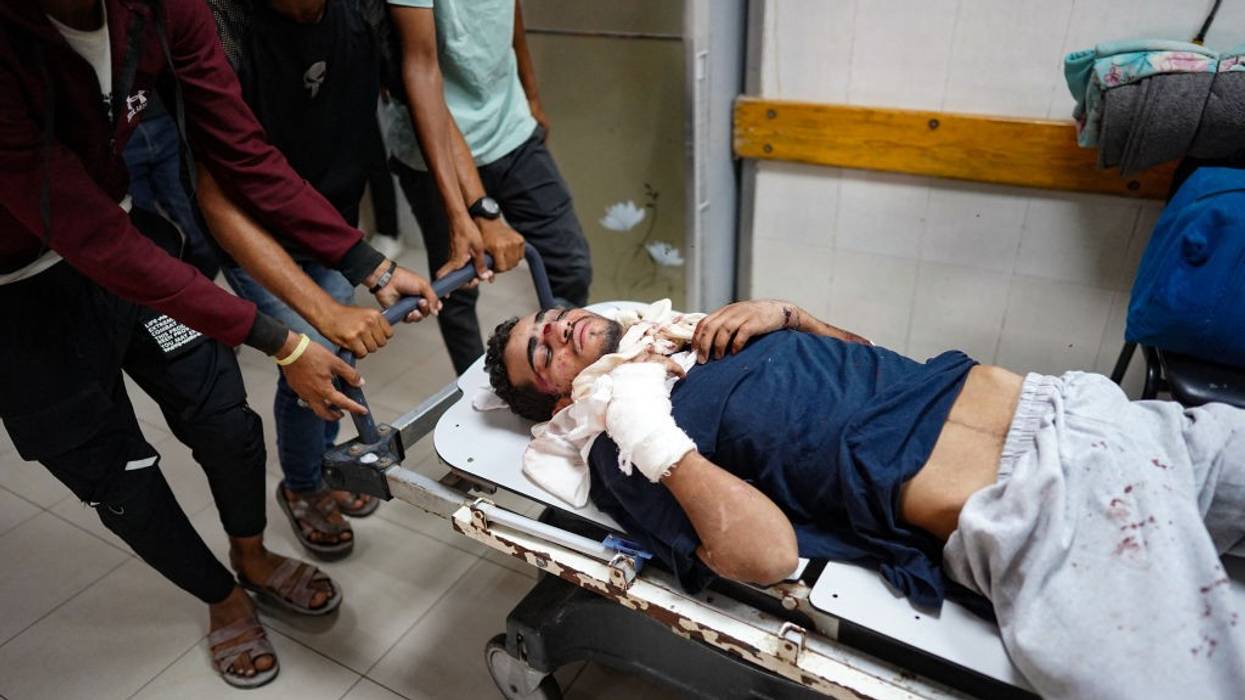
The U.N. report found evidence of sexual violence, waterboarding, and the use of dogs against detainees, many of whom were deprived of food, water, sleep, and toilet access.
The Office of the United Nations High Commissioner for Human Rights on Wednesday released a report detailing torture and abuse of Palestinians at Israeli detention centers, including sexual violence, waterboarding, and the use of dogs.
Israeli security forces have also used electric shocks, burned detainees with cigarettes, and deprived them of food, water, sleep, and toilet access, according to the 23-page OHCHR report, based largely on interviews with released detainees. Some detainees said they were held with their arms suspended from the ceiling; were forced to be naked for prolonged periods, wearing only diapers; and were blindfolded for extended periods.
Israel security forces have arrested thousands of Palestinians from the West Bank and Gaza since October, many of them arbitrarily; they held more than 9,400 "security detainees" as of the end of June, often in secret and incommunicado, without providing a reason for the detainment, the report says.
"The testimonies gathered by my office and other entities indicate a range of appalling acts, such as waterboarding and the release of dogs on detainees, amongst other acts, in flagrant violation of international human rights law and international humanitarian law," U.N. Human Rights chief Volker Türk said in a statement accompanying the report.
New @UNHumanRights report addresses arbitrary, prolonged & 'incommunicado' detention of thousands of Palestinians by Israeli authorities since October.
The report also covers allegations of torture & other forms of cruel, inhumane & degrading treatment. https://t.co/z1Nn52l2qv pic.twitter.com/0ts5Yzo2Y9
— United Nations (@UN) July 31, 2024
Most of the detainees have been men and adolescent boys, though some are also women and adolescent girls, and there are many reported instances of sexual and gender-based violence, the report says, including "the forced nudity of both men and women; beatings while naked, including on the genitals; electrocution of the genitals and anus; being forced to undergo repeated humiliating strip searches; widespread sexual slurs and threats of rape; and the inappropriate touching of women by both male and female soldiers."
OHCHR also said it had video evidence of detainees filmed in "deliberately humiliating positions" while handcuffed and blindfolded, and noted it received "consistent reports" of Israeli security forces "inserting objects into detainees' anuses."
Some detainees also reported "cage-like" facilities and overcrowding. The report says that 13 to 20 male detainees were kept in cells designed for five people, forcing many to sleep on the floor. There were "poor living, hygiene, and health conditions, with reports of water running only one hour per day over several weeks" and detainees faced "exposure to cold temperatures due to the confiscation of blankets and removal of windows panes in cold weather."
At least 53 Palestinian detainees have died in Israeli detention centers since October, according to the report, which suggests that the detention system appears "to constitute a collectively punitive measure against Palestinians," citing the words of Itamar Ben-Gvir, Israel's minister of national security, who has said that "terrorists" deserve the most "stringent conditions." Male detainees reported losing between about 55 and 120 pounds while in custody.
The OHCHR report comes as a highly controversial case involving detention abuse unfolds in Israel. The Israeli military is investigating nine soldiers for alleged "substantial abuse" of a Palestinian detainee who reportedly had to be hospitalized and could not walk after they attacked him. Far-right Israeli groups and political figures have protested the investigation.
Concern about Israeli detentions of Palestinians has been high for many months. In January, a Palestinian watchdog group issued a report condemning the forced disappearance of Gazans, and The New York Times found evidence of detainees being stripped and beaten.
Not all of the alarms about the situation in Israeli detentions centers have come from abroad. In February, Israeli's public defender's office issued a report calling for improved prison conditions, including for Palestinians. In April, local human rights groups called for a closure of the Sde Teiman military base detention center, due to its notorious conditions.
The calls were prompted in part by gruesome reports including amputations of detainees' limbs due to handcuff injuries. The United Nations Relief and Works Agency for Palestine Refugees in the Near East then issued a damning report on detainee treatment, including of its own staff, some of whom had been detained and subjected to harsh interrogation.
Last week, Save the Children called for an end to the Israel's arbitrary detainment of Palestinian minors, with a regional director saying that "these children are trapped, unable to move or see the sun, forced into crowded cells with appalling, unsanitary conditions, and subject to severe abuse and violence."
Experts said Wednesday that the OHCHR report served mainly to confirm previous findings on Israeli detention centers. Neil Sammonds, a campaigner at the U.K.-based progressive advocacy group War on Want, said on social media that leaders of the new U.K. government haven't spoken up about abuses at Israeli detention centers. He also said that the report could be used as evidence by the International Criminal Court, which has sought arrest warrants for both Israeli and Hamas leaders.
Latest UN report on Israel's abusive detention & torture adds little to what we've known for months, but underscores inertia of political leaders (I personally briefed still silent @DavidLammy & @Keir_Starmer in March) & opens door even wider for the ICC https://t.co/qOjDsR2ikN
— Neil Sammonds نيل سامنز (@neilsai) July 31, 2024
The new report also addresses abuses of Israelis held by Hamas and affiliated groups. The Palestinian militants killed roughly 1,200 people in a horrific set of attacks in southern Israel on October 7 and kidnapped about 250 Israelis, more than 100 of whom have since been released. Like Palestinian detainees, the released Israelis reported "appalling" conditions, the report says, including beatings, receiving surgery without anesthetic, and sexual and gender-based violence. The Israeli government has reported that 44 of the remaining hostages in Gaza have died.
Both Israel and Hamas have refused to allow the International Committee of the Red Cross to visit detainees or hostages. The OHCHR called for both sides to allow such independent monitoring.
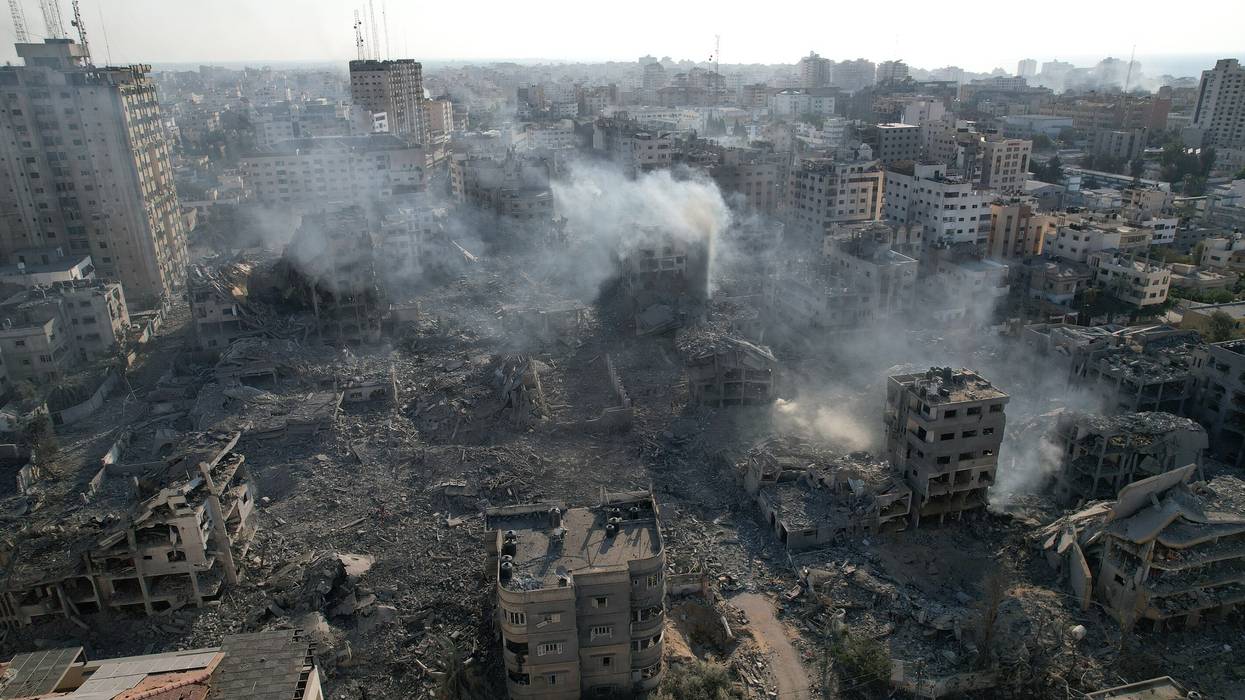
"Time is running out to prevent genocide and humanitarian catastrophe," the special rapporteurs stressed—while other experts said such conditions already exist in the pulverized Palestinian enclave.
As the death toll from over three weeks of relentless Israeli bombardment of Gaza from air, land, and sea topped 9,000 on Thursday, a group of United Nations human rights experts warned that "time is running out to prevent genocide and humanitarian catastrophe"—conditions that others argue already exist in the besieged Palestinian strip.
"The situation in Gaza has reached a catastrophic tipping point," the seven U.N. special rapporteurs said, noting the "dire need for food, water, medicine, fuel, and essential supplies and the risk of looming health hazards."
"We remain convinced that the Palestinian people are at grave risk of genocide," the U.N. special rapporteurs said. "The time for action is now. Israel's allies also bear responsibility and must act now to prevent its disastrous course of action."
The experts—Pedro Arrojo Agudo, Michael Fakhri, Tlaleng Mofokeng, Paula Gaviria Betancur, Irene Khan, Francesca Albanese, and Ashwini K.P.—expressed "deepening horror" at multiple Israeli bombings of the Jabalia refugee camp, Gaza's largest, in recent days. Palestinian officials said hundreds of people were killed or wounded in the strikes.
"The Israeli airstrike on a residential complex in the Jabalia refugee camp is a brazen violation of international law—and a war crime," they wrote. "Attacking a camp sheltering civilians including women and children is a complete breach of the rules of proportionality and distinction between combatants and civilians."
While the experts welcomed a nonbinding resolution passed on October 27 by the U.N. General Assembly calling for an "immediate, sustained humanitarian truce" in Gaza, they stressed that every day that passes without a cease-fire brings untold new misery to Palestinians.
"We received the resolution with hope, but the need for action is now," they asserted. "All signs are that we have reached a breaking point."
The U.N. Office of the High Commissioner for Human Rights (OHCHR) reported "people desperately grabbing flour and other essentials from a U.N. warehouse... alarming news of children being forced to drink sea water in the absence of clean water, distressing reports of patients including children undergoing surgery without anesthetics, and persons with disabilities and older persons displaced and living in tents because houses have been turned to rubble."
"The Palestinian people in Gaza—particularly women, children, persons with disabilities, youth, and older persons—have endured decades of hardship and deprivation," the U.N. experts said. "We call on Israel and its allies to agree to an immediate cease-fire. We are running out of time."
According to OHCHR:
An estimated 1.4 million people in Gaza are internally displaced, with approximately 629,000 seeking refuge in 150 U.N. Relief and Works Agency (UNRWA) emergency shelters. The UNRWA reports that 70 U.N. workers have died as a result of Israeli bombardment in Gaza.
UNRWA said Thursday that four of its shelters in Gaza have been destroyed or damaged in the past 24 hours, including a school in the Jabalia camp where 20 people died in an Israeli strike.
Numerous experts say Israel is already perpetrating genocide in Gaza, including Israeli Holocaust scholar Raz Segal and former longtime U.N. official Craig Mokhiber, who recently resigned from his OHCHR post while calling out "the current wholesale slaughter of the Palestinian people, rooted in an ethno-nationalist settler-colonial ideology, in continuation of decades of their systematic persecution and purging."
Both Segal and Mokhiber called Israel's attacks and deprivation in Gaza a "textbook case of genocide."
Many Jewish peace activists in diaspora nations and even Israel itself have accused Israeli forces of genocide in Gaza, while also condemning genocidal statements by Israeli leaders including Prime Minister Benjamin Netanyahu and members of his far-right Cabinet and ruling Likud Party.
U.S. President Joe Biden, on the other hand, has vowed his "rock-solid and unwavering" support for Israel—which includes requesting $14 billion in military aid for Israel, atop the nearly $4 billion already given annually—while drawing accusations of genocide denial for casting aspersions on casualty figures published by Palestinian agencies his administration previously cited as reliable.
Responding to the U.N. experts' warning of a "grave risk" of genocide, prominent Palestinian rights advocate Sarah Wilkinson wrote on social media: "Grave risk? What's over 9,000 murdered?"
In addition to at least 9,025 people killed by Israel's assault on Gaza—including over 3,700 children—Palestinian officials said Thursday that upward of 22,000 people have been injured and nearly 178,000 homes have been destroyed since October 7, when Israel began bombarding the densely populated strip of 2.3 million people in retaliation for Hamas-led attacks that left over 1,400 people dead in southern Israel and around 240 others taken hostage.
Meanwhile, in the illegally occupied West Bank and East Jerusalem, Israeli soldiers and settlers have killed at least 134 Palestinians, while wounding around 2,100 others. The emergence in recent days of videos showing Israeli troops torturing bound, blindfolded, and often naked men in the West Bank sparked fresh war crimes allegations against occupation forces and settlers.
While taking a more cautious approach, over 800 legal scholars earlier this month signed a public statement in which they "sound the alarm about the possibility of the crime of genocide being perpetrated by Israeli forces against Palestinians in the Gaza Strip."
Gustavo Petro, Colombia's leftist president, earlier this month accused Israel of committing genocide in Gaza. Colombia, Chile, Jordan, and Bahrain have recalled their ambassadors from Israel, while Bolivia on Tuesday became the world's first country to sever diplomatic ties with Tel Aviv, citing Israeli "crimes against humanity" in Palestine.
On Thursday, the Israeli Committee Against House Demolitions (ICAHD), a Jerusalem-based advocacy group that for decades has opposed Israel's illegal settler colonization of the occupied West Bank and East Jerusalem, published a statement calling for "an end to Israeli genocide against the Palestinian people and the restoration of their national rights."
The group—which argued that Israel's conduct is consistent with the definition of genocide under the 1948 Genocide Convention—explained:
Genocide is often not a single event, but rather a series of deliberate events and processes over time whose ultimate intent is to destroy, in whole or in part, a national, ethnical, racial, or religious group. The Indian Wars in America lasted three centuries. If we step back from the war crime that is Israel's current assault on Gaza to the concerted effort since Israel's establishment to erase the country of Palestine and its Arab heritage, the picture that emerges is one of genocide, cultural as well as physical. Zionism's and later Israel's necessarily violent project to displace the country's Palestinian population, take its land, and replace it with a Jewish one constitutes deliberate destruction of the Palestinian people in part or in whole.
ICAHD "calls on the international community—the U.N., governments, and peoples—to hold Israel accountable for its decades of genocidal colonization," by "isolating and sanctioning Israel until its destruction of Gaza and its people ends, and the violent displacement of Palestinians from their lands and communities by Israeli settlers and soldiers cease."
"We call on the International Criminal Court to bring to trial for war crimes the responsible Israeli political and military leaders," the group added, while urging the U.N. "to enforce Article 3(e) of the Geneva Convention punishing for 'complicity in genocide' the United States, Canada, Europe, and other countries—including Arab and Muslim governments pursuing normalization with Israel."
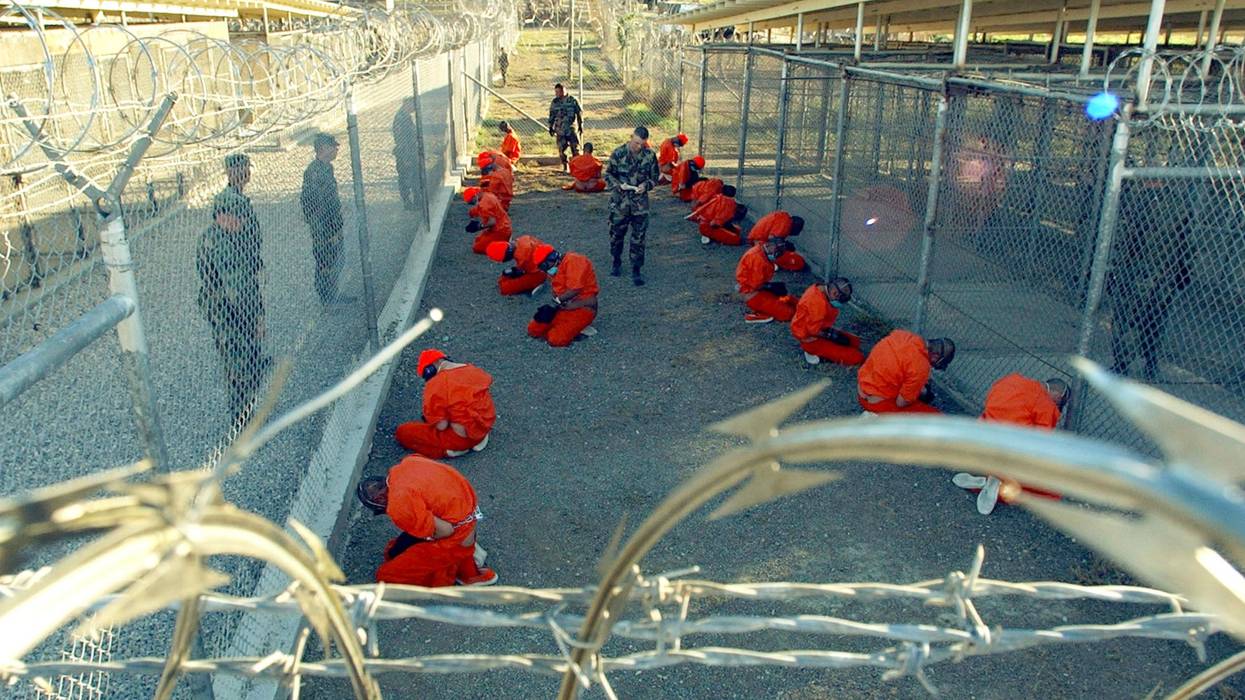
"It's hard to exaggerate the importance of this visit more than two decades since Guantánamo was open to hold detainees beyond the reach of the law," said one ACLU official.
For the first time ever, a United Nations human rights and counterterrorism expert will visit the U.S. military prison at Guantánamo Bay, Cuba, a U.N. office announced Wednesday.
The United Nations Office of the High Commissioner for Human Rights (OHCHR) said Irish attorney and law professor Fionnuala Ní Aoláin—the U.N. special rapporteur on the promotion and protection of human rights and fundamental freedoms while countering terrorism—will visit Guantánamo as part of a "technical visit to the United States" from February 6-14.
In addition to visiting the prison, OHCHR said Ní Aoláin will "carry out a series of interviews with individuals in the United States and abroad, on a voluntary basis," including victims and relatives of those killed in the 9/11 attacks and former Guantánamo detainees in countries where they have been repatriated or resettled.
Human rights advocates welcomed the development.
"We commend the Biden administration for agreeing to let a U.N. human rights expert visit Guantánamo, finally ending a shameful U.S. government moratorium that sought to establish a prison outside the reach of law," Hina Shamsi, director of the ACLU's National Security Project, said in a statement.
"International human rights norms and institutions are integral to preventing the torture, indefinite detention, and unfair trials that now symbolize Guantánamo globally," Shamsi added. "It should never have taken two decades, but we're encouraged to see the basic principle of U.N. rights officials' independent access to all sites of detention and detainees respected at long last by our country."
Since it was first opened in January 2002 by the George W. Bush administration in the early months of the so-called War on Terror, Guantánamo, or Gitmo in U.S. military parlance, has imprisoned 779 men and boys. Many of them were tortured, and only a handful were ever charged with any crime. According to retired U.S. Army Col. Lawrence Wilkerson—who served as chief of staff to Bush-era Secretary of State Colin Powell—Bush, along with Dick Cheney, his vice president, and Donald Rumsfeld, the secretary of defense, knew that most Gitmo prisoners were innocent, but kept them locked up for political reasons.
Although then-Presdident Barack Obama—under whom President Joe Biden served as vice president—signed executive orders meant to close Guantánamo and end torture, he was blocked by Congress from implementing the former policy, while torture continued at Gitmo during his tenure.
"International human rights norms and institutions are integral to preventing the torture, indefinite detention, and unfair trials that now symbolize Guantánamo globally."
Hundreds of Guantánamo detainees were released during the Bush and Obama administrations, with a relative handful freed under Biden. Today, 35 men remain locked up at Gitmo. According to the Pentagon, 20 of them are cleared for release while nine—including alleged 9/11 mastermind Khalid Sheikh Mohammed—have ongoing cases before military commissions from which numerous prosecutors have resigned amid allegations of rigging to secure convictions.
September 11th Families for Peaceful Tomorrows, an activist group, said in a statement that it "deeply appreciates the willingness of the special rapporteur's office and the Biden administration to work together to make her visit to Guantánamo possible."
"As 9/11 family members, we remain gravely concerned about the absence of justice within the military commission system," the group added. "We welcome the commitment of the special rapporteur to the human rights of victims of terrorism and we hope that her work can inform a path forward to judicial finality for family members, the accused, and all those affected by 9/11 and its aftermath."
Biden—whose former press secretary said closing Guantánamo is "our goal and our intention"—has been criticized for failing to do so two years into his administration and 21 years after the prison opened.
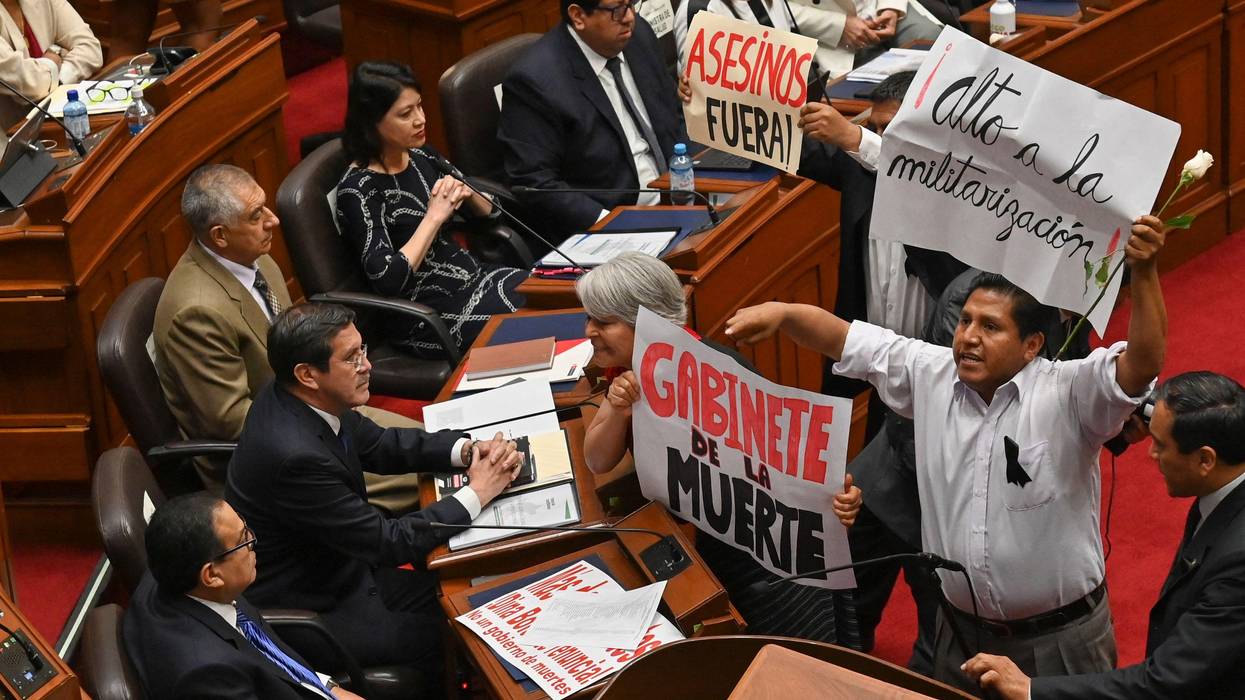
The governor of Puno province has declared three days of mourning for the victims of the killing in Juliaca, who include a 17-year-old girl.
At least 17 people were killed by state security forces in southern Peru Monday while protesting the government of unelected President Dina Boluarte and the ouster and imprisonment of former leftist leader Pedro Castillo.
The Peruvian Health Ministry published the names and ages of 17 victims of what's being called the Juliaca massacre, which took place in the Indigenous Aymara city of Juliaca, the capital of San Román province in the Puno region of southeastern Peru near Lake Titicaca and the Bolivian border. The youngest of the slain protesters is a 17-year-old girl, Nataly Aroquipa, who was reportedly shot in the abdomen.
"At nine o'clock at night on January 9, 2023, we recorded 17 deaths in Juliaca, and one further death due to events related to the road blockade in Chucuito, Puno. The total number dead since the coup is now at 46," Defensoría del Pueblo, the national ombudsman's office, said on Twitter. In addition to the deaths, at least 500 protesters have been injured, according to officials.
Local media report one Peruvian National Police officer, identified as Sonco Quispe José Luis, was burned to death in his patrol vehicle during a protest, and two pistols and a rifle were stolen from his car.
Puno Gov. Richard Hancco Soncco on Tuesday
declared three days of official mourning in honor of those killed in Juliaca, while rejecting "any act of violence and the exaggerated use of public force by the Peruvian National Police and the Peruvian Armed Forces."
The killings happened on the seventh day of a national strike. Protesters—who Anahí Durand, Castillo's minister for women and vulnerable populations, said are "the excluded, marginalized, informal, rural, and Indigenous"—are demanding Boluarte's resignation, the closure of Congress, immediate elections, and a new constitution.
Peru's National Coordinator for Human Rights (CNDDHH) condemned the killings and asserted that "Boluarte and her ministers" are "responsible for the massacre in Juliaca."
Marta Hurtado, a spokesperson for the United Nations Office of the High Commissioner for Human Rights, on Tuesday called on "security forces to comply with human rights standards and ensure that force is only used when strictly necessary, and, if so, in full compliance with the principles of legality, precaution, and proportionality."
Hurtado, who also asked protesters to "show restraint," urged Peruvian authorities to "carry out prompt, impartial, and effective investigations into the deaths and injuries, holding those responsible to account and ensuring victims receive access to justice and redress."
Speaking Monday evening in a televised address, Peruvian Prime Minister Alberto Otárola defended the actions of state security forces. Otárola declared that "we will not cease in our defense of the rule of the law," while blaming the violence on groups backed by "foreign interests and the dark money of drug trafficking" who want to "destroy the country."
While condemning the "seizure of airports, aggression against other people—including law enforcement—preventing the movement of ambulances, and all forms of attack on public or private property" perpetrated by some protesters, the national ombudsman reminded police and military forces of their "duty to comply with current regulations and international standards on the use of force."
The current protests began following the December 7 overthrow and arrest of Castillo—a democratically elected former rural teacher and union organizer—by the country's right-wing-controlled Congress after he moved to dissolve the legislature in a bid to preempt a move to dismiss him for "permanent moral incapacity."
Incensed by Castillo's promise of sweeping social reforms and a new constitution, Peru's oligarchs and the National Society of Industries, the country's leading business group, had long sought his removal.
On December 16, a judicial panel of Peru's Supreme Court of Justice ordered Castillo imprisoned for 18 months while prosecutors investigate charges of rebellion and conspiracy against the former Peruvian president.
Boluarte has proposed holding elections in April 2024.
Countries recognizing Boluarte's government include the United States, Canada, Chile, Costa Rica, Ecuador, and Uruguay. The leftist leaders of Latin American and Caribbean nations including Argentina, Bolivia, Colombia, Cuba, Mexico, Nicaragua, and Venezuela have condemned Castillo's removal.
While there is no evidence of direct U.S. involvement in Castillo's ouster, the ex-president sounded the alarm over a meeting held the day before his removal at the Government Palace in Lima between Boluarte and U.S. Ambassador Lisa Kenna, a former longtime CIA agent appointed by then-President Donald Trump.
The United States has a long history of supporting right-wing dictatorships in the region. During the 1970s and '80s, successive U.S. administrations backed "Operation Condor," a coordinated effort by right-wing military dictatorships in Chile, Argentina, Uruguay, Bolivia, Paraguay, Brazil, and, later, Peru and Ecuador in which around 60,000 leftists were killed and tens of thousands others arrested and tortured.