SUBSCRIBE TO OUR FREE NEWSLETTER
Daily news & progressive opinion—funded by the people, not the corporations—delivered straight to your inbox.
5
#000000
#FFFFFF
To donate by check, phone, or other method, see our More Ways to Give page.


Daily news & progressive opinion—funded by the people, not the corporations—delivered straight to your inbox.
During the United Nations biodiversity summit in Montreal, an international conversation group on Friday highlighted how humanity is dangerously failing marine life with illegal and unsustainable fishing, pollution from agricultural and industrial runoff, and activities that drive up global temperatures.
"If we are to secure a new future for the world's oceans and the essential biodiversity they harbor, we must act now."
The International Union for Conservation of Nature (IUCN) Red List of Threatened Species now features 150,388 species, 42,108 of which face possible extinction. Of the 17,903 marine animals and plants on the list, more than 1,550 are at risk.
"Today's IUCN Red List update reveals a perfect storm of unsustainable human activity decimating marine life around the globe. As the world looks to the ongoing U.N. Biodiversity Conference to set the course for nature recovery, we simply cannot afford to fail," Bruno Oberle, the group's director general, warned Friday. "We urgently need to address the linked climate and biodiversity crises, with profound changes to our economic systems, or we risk losing the crucial benefits the oceans provide us with."
The primary aim of the 15th Conference of the Parties (COP15) of the Convention on Biological Diversity (CBD)--which is hosted by China but kicked off earlier in Canada this week due to Covid-19 restrictions--is the development of post-2020 global biodiversity framework (GBF).
A top priority for many parties to the treaty--along with the United States, which has failed to ratify the CBD over the past three decades but is still participating in the summit--is to protect 30% of lands and waters by 2030. However, as activists and Indigenous leaders from around the world have noted, there are serious human rights concerns regarding implementation of the 30x30 goal.
COP15 comes after the fifth round of discussions about establishing a U.N. treaty for the high seas, or the two-thirds of oceans outside territorial waters. Those August talks failed to produce an agreement--which, as Laura Meller of Greenpeace's Protect the Oceans campaign warned at the time, "jeopardizes the livelihoods and food security of billions of people around the world."
"While progress has been made, particularly on ocean sanctuaries, members of the High Ambition Coalition and countries like the USA have moved too slowly to find compromises, despite their commitments," Meller continued. "Time has run out. Further delay means ocean destruction. We are sad and disappointed. While countries continue to talk, the oceans and all those who rely on them will suffer."
Similarly urgent warnings came with the update Friday. Ashleigh McGovern, vice president of the Center for Oceans at Conservation International, said that "with this devastating IUCN Red List update on the status of marine species, it is clear that business as usual is no longer an option."
"Human activity has had devastating effects on marine ecosystems and biodiversity, but it can also be harnessed to drive action as a matter of survival, equity, and climate justice," she added. "If we are to secure a new future for the world's oceans and the essential biodiversity they harbor, we must act now."
Jon Paul Rodriguez, chair of the IUCN Species Survival Commission (SSC), pointed out that "most of the Earth's biosphere, 99% of all livable space on our planet, is underwater."
"Humanity acts as if oceans were inexhaustible, capable of sustaining infinite harvest of algae, animals, and plants for food and other products, able to transform vast quantities of sewage and other pollutants that we pour in coastal areas, and absorb the CO2 generated by land-use change and burning fossil fuel," he said. "This Red List update brings to light new evidence of the multiple interacting threats to declining life in the sea."
According to the IUCN Red List, 20 of the 54 abalone species--some of the world's most expensive seafood--are threatened with extinction.
"Abalones reflect humanity's disastrous guardianship of our oceans in microcosm: overfishing, pollution, disease, habitat loss, algal blooms, warming, and acidification, to name but a few threats. They really are the canary in the coal mine," said Howard Peters, a member of the IUCN SSC Mollusc Specialist Group and research associate at the U.K.'s University of York who led the abalone assessment.
"The most immediate action people can take is to eat only farmed or sustainably sourced abalones. Enforcing fishery quotas and anti-poaching measures is also critical," Peters noted. "However, we need to halt the changes to ocean chemistry and temperature to preserve marine life including abalone species over the long term."
The update also raised the alarm about dugongs, particularly in East Africa and New Caledonia. Populations of the large herbivorous marine mammals are threatened by fishing gear, oil and gas exploration and production, chemical pollution, and the destruction of seagrasses they rely on for food.
"Strengthening community-led fisheries governance and expanding work opportunities beyond fishing are key in East Africa, where marine ecosystems are fundamental to people's food security and livelihoods," said Evan Trotzuk, who led the region's assessment.
Another focus of the list is the pillar coral in the Caribbean, given that its population has shrunk by more than 80% across most of its range over the past three decades.
"The awful status of these species should shock us and engage us for urgent action."
Noting that it is just one of 26 corals now listed as critically endangered in the Atlantic Ocean, Arizona State University associate professor Beth Polidoro, Red List coordinator for the IUCN SSC Coral Specialist Group, said that "these alarming results emphasize the urgency of global cooperation and action to address climate change impacts on ocean ecosystems."
Amanda Vincent, chair of the IUCN SSC Marine Conservation Committee, declared that "the awful status of these species should shock us and engage us for urgent action."
"These magical marine species are treasured wildlife, from the wonderful abalone to the charismatic dugong and the glorious pillar coral, and we should safeguard them accordingly," she added. "It is vital that we manage fisheries properly, constrain climate change, and reverse habitat degradation."
Nodding to the conference, Jane Smart, director of IUCN's Science and Data Center, said the update reinforces her group's "urgent call for a post-2020 global biodiversity framework that will be ambitious enough to cease destruction of our life support system and catalyze the necessary action and change to secure life on this planet."
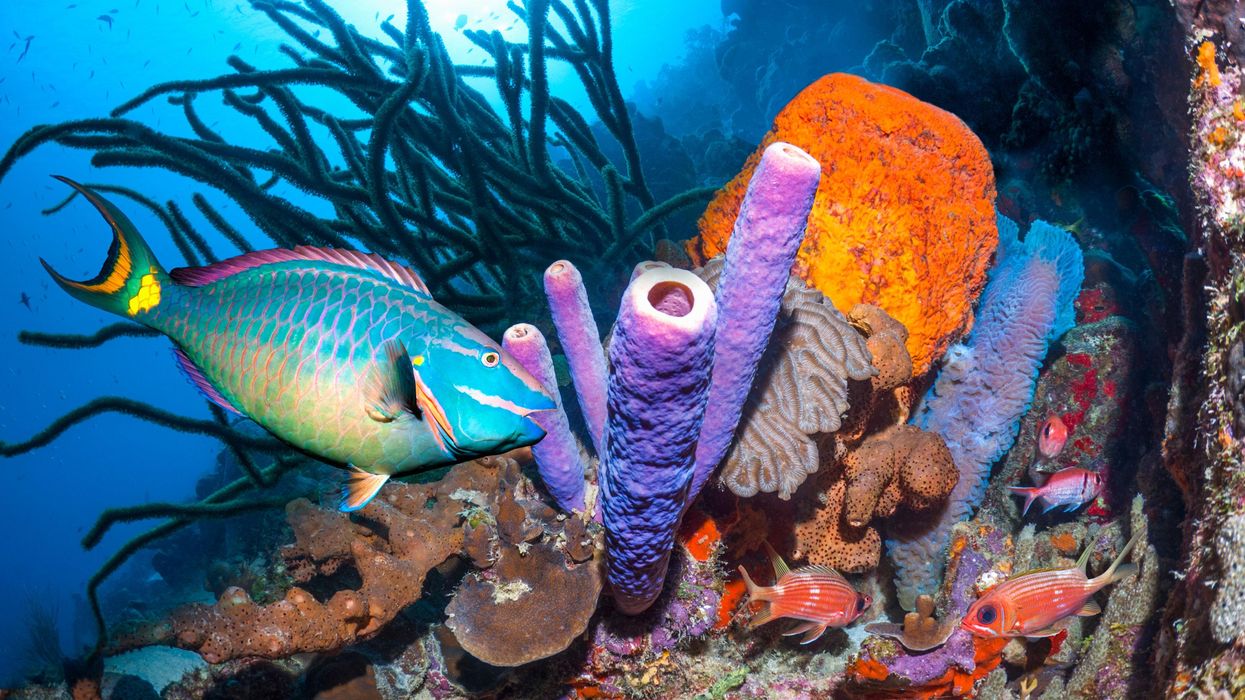
Scientists who conducted new research into the future of coral reefs on Wednesday called for swift action to save the "diverse and valuable ecosystems."
"The fact that we're going to see these changes by 2050 is a strong wake-up call."
Using computer models, researchers from Louisiana State University, Rice University, and the University of Colorado Boulder analyzed the "ominous threats" that ocean acidification and warming pose to coral reefs in the Caribbean and Gulf of Mexico under a "business as usual" emissions scenario and one in which planet-heating pollution is reduced.
Their study, published this summer in the Journal of Geophysical Research: Biogeosciences, shows that "ocean temperatures increase by 2degC-3degC over the 21st century, and surpass reported regional bleaching thresholds by midcentury."
Bleaching is when corals expel algae--with which they have a symbiotic relationship--and turn white. Though the corals are not yet dead, they are at higher risk of mortality. Mass bleaching events around the world in recent years have heightened concerns about the fate of reefs--especially given governments' inadequate plans to rapidly transition away from fossil fuels driving the global climate emergency.
Study co-author Adrienne Correa, a marine biologist and assistant professor at Rice, said Wednesday, "The fact that we're going to see these changes by 2050 is a strong wake-up call."
"We get a lot of bad news about reefs, but we can still draw hope and motivation from this," she noted. "Some of the reefs that are included in this analysis are really special, like the Flower Garden Banks, and reefs off of Cuba and in some other parts of the Caribbean where there's still really high coral cover. We can help protect and keep the high coral cover reefs we have if we take immediate action to shift how much energy we use and where we get our energy."
"There are reefs in the Gulf that are really worth saving," Correa added. "Some of the healthiest reefs that we still have in the United States are in the areas covered by these projections."
Related Content

Allison Lawman, a postdoctoral associate in Colorado, explained that the study shows projected coral mortality through the next century is largely tied to the number of months each year that the reefs are exposed to high marine temperatures.
"There's always one month that is the hottest of the year," Lawman said. "Let's say it's August and the average baseline temperature for that month is 29degC in the region we're studying. A 'degree heating month' in that region is any month in the future that has a higher average temperature than 29degC."
The researchers found that under the business as usual scenario, degree heating months could become the new normal by the late 2100s, with parts of the Caribbean seeing such conditions for as many as 10 months per year.
"That's a huge number of months in which corals could experience thermal stress beyond the usual levels to which they are adapted," Lawman said. "These projections are very concerning... I think the takeaway message is that the time to act is now."
Rice climate scientist and assistant professor Sylvia Dee similarly stressed the urgency of reef-saving action.
"In one case, we have more time to mitigate, and in the other we don't," she said. "People need to be aware this is coming up fast, and the time to explore mitigation techniques is now."
The areas examined by the researchers "contain more than 10% of the world's reefs and host hundreds of fish species, and they provide more than $6 billion in economic benefits courtesy of fisheries, tourism, and other ecosystem services," according to Eos. "But over the past four decades, climate change and local stressors like overfishing, pollution, and invasive species have taken a heavy toll. On average, live coral covers less than 10% of the surface of most reefs in the region."
In a summary of the study, the researchers wrote that "we hope that this work will inform and streamline mitigation efforts to protect vulnerable coral reef ecosystems and the valuable benefits and resources they provide to local communities."
The scientists' calls for action come as world leaders prepare for COP27, a United Nations climate summit set to kick off in Egypt next month.
"Refineries, storage facilities, toxic waste sites, pipelines, and oil trains are poisoning neighborhoods. Children suffer debilitating asthma, loved ones die painful deaths, land is sinking, coastlines are eroding, and the seas are rising from relentless fossil fuel development. Enough is enough."
" Offshore drilling is harming our communities, wreaking havoc on the environment, and contributing to the 'code red' crisis of global climate change."
That's what a coalition of 193 organizations--including four dozen groups from Alaska and the Gulf Coast--wrote to a pair of Biden administration leaders on Wednesday, the day before the conclusion of a comment period for the U.S. Department of the Interior's five-year offshore drilling plan.
"Offshore drilling is harming our communities, wreaking havoc on the environment, and contributing to the 'code red' crisis of global climate change," the coalition's letter argues. "The proposal of 95+ million acres for more oil and gas development turns its back on the people who have been living with the effects of the industry for generations. It locks in this pain for generations more."
"It overlooks the ongoing, unprecedented, and soon irreversible damage from fossil fuels, only to pad the pockets of the industry under the guise of 'energy security.' It undermines the broken promise of no new leases," the letter continues. "We maintain our unified demand despite Congress's recent passage of the Inflation Reduction Act, which contains distressing language concerning offshore drilling."
While the Inflation Reduction Act has been heralded as a historic climate package, it conditions using federal lands and waters for wind and solar development on future fossil fuel leasing and enabled drilling in parts of Alaska and the Gulf of Mexico previously blocked by the Biden administration.
"These provisions do not reflect public sentiment or the will of the people, who predominantly oppose continued offshore drilling," the letter asserts. "Of paramount concern is the perpetuation of the central and western Gulf of Mexico and Alaska's Cook Inlet as the nation's sacrificial zones to offshore drilling."
"Insultingly, the proposal concludes that cumulative impacts of 11 additional sales will be felt less in these areas due to the very fact that they are already sacrificial zones replete with industrial development," the letter states. "This is akin to telling a cancer patient they do not need treatment, because they are already sick."
Related Content

The groups also highlighted that "catastrophic oil spills are one of the many inevitable consequences of offshore drilling," detailing some of the impacts of previous disasters.
"When combined with sea level rise and more extreme storms, offshore drilling also places coastal communities at the frontlines of the climate crisis," the coalition noted. "Communities and tribes in the area are already climate migrants, having been displaced due to fossil fuels and climate change."
The organizations also declared that "extractivism perpetuates the ethnocide of Indigenous people that began hundreds of years ago with the first colonists" and emphasized that the federal government "must ensure that it has free, prior, and informed consent--meaning consent that is given freely, by people fully informed of the consequences--before development can proceed."
Given the harms and risks of offshore drilling, the coalition told Bureau of Ocean Energy Management Director Amanda Lefton and Interior Secretary Deb Haaland that "we must reverse course with swift and meaningful action, starting with no new leases in the final five-year program, and instead investing resources toward clean, justly sourced renewable energy."
Representatives from groups that signed on to the letter reiterated its main arguments in a statement Wednesday.
"In an era when we can plainly see that climate chaos is escalating and we know that we must reduce emissions immediately and drastically, continued fossil fuel extraction is a universal and existential threat," said Virginia Richard, Gulf program manager at SouthWings.
While the worsening climate emergency endangers all life on Earth, some campaigners stressed that the impacts of the fossil fuel-driven crisis are not equally endured.
"With rising sea levels causing more frequent and extreme storms, offshore drilling forces coastal communities right into the climate crisis' line of fire," said Friends of the Earth campaigner Raena Garcia. "People and ecosystems are enduring tremendous harm at the expense of the fossil fuel industry's ballooning wealth. We cannot continue down a path that overlooks the irreversible damage of Big Oil."
"Every oil spill begins with a lease sale and that is not the story we want to tell our future generations."
CLEO Institute executive director Yoca Arditi-Rocha pointed out that "in 2010, the Gulf Coast region of Florida was devastated by the BP Oil spill that caused 4.9 million barrels of oil to leak into the Gulf, making it the largest oil spill in U.S. history."
"Twelve years later, our Gulf has not recovered and our coastal communities are still feeling the direct and indirect impacts of our fossil fuel addiction," Arditi-Rocha added. "Hurricane Irma, Michael, and now Ian are a testament of that."
Taylor Kendal Smith, communications director at Cook Inletkeeper, noted that "every oil spill begins with a lease sale and that is not the story we want to tell our future generations."
"Alaskan economies, subsistence, tourism, and health depend upon our lands and waters," she said. "We have stood up repeatedly to say no to oil and gas leasing in our waters and frontline communities cannot afford for us to continue down this path."
Greenpeace U.K. on Thursday announced that a government body has blocked the environmental group from expanding an underwater limestone boulder boundary created last week to safeguard a protected marine area from destructive fishing.
"We'd much rather the government just did their job."
After the group revealed plans to load more boulders onto the ship Arctic Sunrise in Poole Quay, "the Marine Management Organization (MMO) threatened Poole Harbour Commissioners with legal action if they allowed the boulders into port," Greenpeace said in a statement. "The gates to Bulwark Quay where the ship is berthed were also locked this morning, and the haulage company transporting the boulders also received a legal threat."
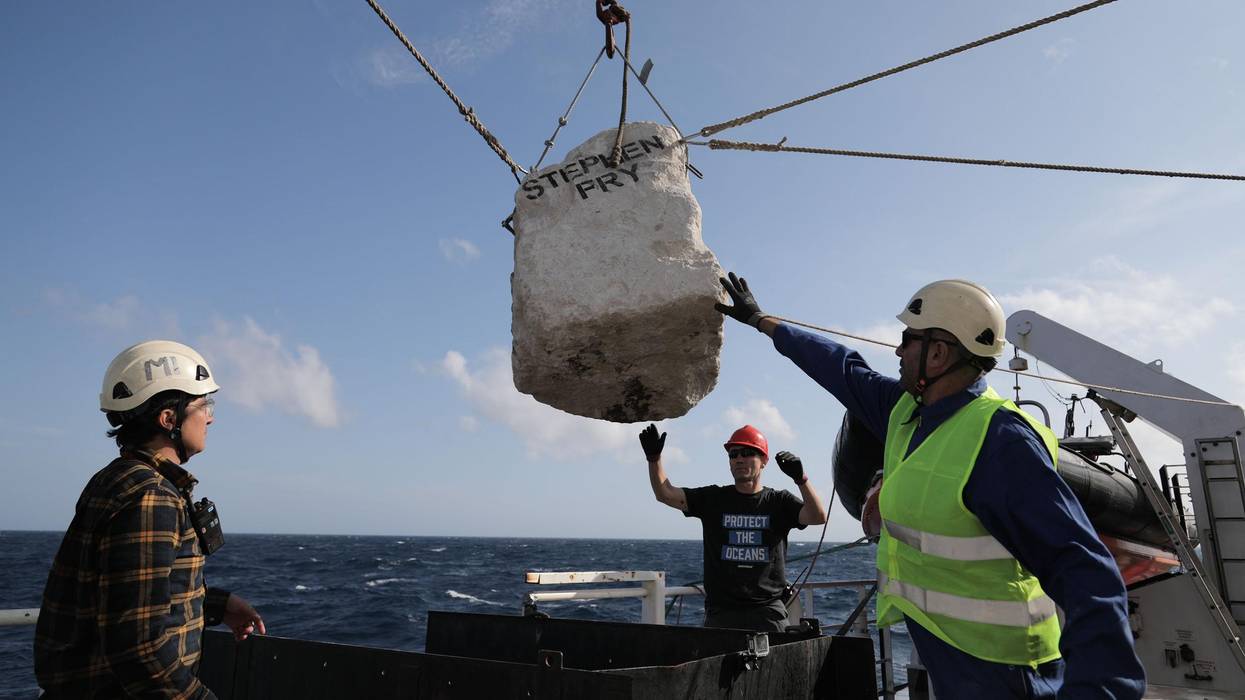
A week ago, in the wake of the fifth round of failed negotiations for a global ocean treaty, the Greenpeace ship sailed to a marine protected area (MPA) in the English Channel to drop boulders--emblazoned with names of celebrities and politicians supporting the action--to prevent bottom trawling, a fishing practice that involves dragging a net along the seafloor.
"Right now, there's an industrial fishing frenzy happening in U.K. waters, and what's our government doing about it?" Will McCallum, head of oceans at the group, said at the time. "Greenpeace U.K. has created this underwater boulder barrier as a last resort to protect the oceans. We'd much rather the government just did their job."
"Ocean protection is even more urgent now that our leaders have failed to help secure a global ocean treaty," he stressed, calling on the incoming Tory prime minister--Liz Truss, who took on the role Tuesday--to "protect local fishing communities and immediately ban industrial fishing in marine protected areas by tweaking commercial fishing licenses."
The campaigner reiterated Greenpeace's call for action to block destructive fishing in MPAs after the government thwarted plans "to protect our oceans" by dropping more boulders in the South West Deeps (East) MPA.
"The Marine Management Organization has put an astonishing amount of energy into trying to stop marine protection," he said Thursday. "They are using intimidation tactics to block ocean defenders, while brazenly allowing industrial fishing vessels to destroy seabed habitats in our so-called marine protected areas."
According to McCallum: "The MMO is failing the U.K.'s small-scale fishermen. Their livelihoods are quickly becoming unviable; many are returning home with empty nets while huge factory boats scoop up all the fish in sight. It's no wonder that two-thirds of our fish species are in decline."
Related Content

"It's clear that the government can act quickly when it wants to--so they have no excuse for their painstakingly slow approach to ocean protection," he declared. "We stand by our demand that industrial fishing is banned in every U.K. marine protected area, by adding a simple clause to commercial fishing licenses. We won't stop until our oceans are truly protected."
Greenpeace U.K. also continues to call for interactional action on ocean protection.
"Our blue planet is suffering. Precious marine habitats are home to lots of sealife and store huge amounts of carbon. But industrial fishing, the climate crisis, plastic pollution and more threaten them," Anna Diski wrote for the group's blog last week. "Scientists agree: To ensure marine ecosystem survival, we must protect at least 30% of the global oceans by 2030."
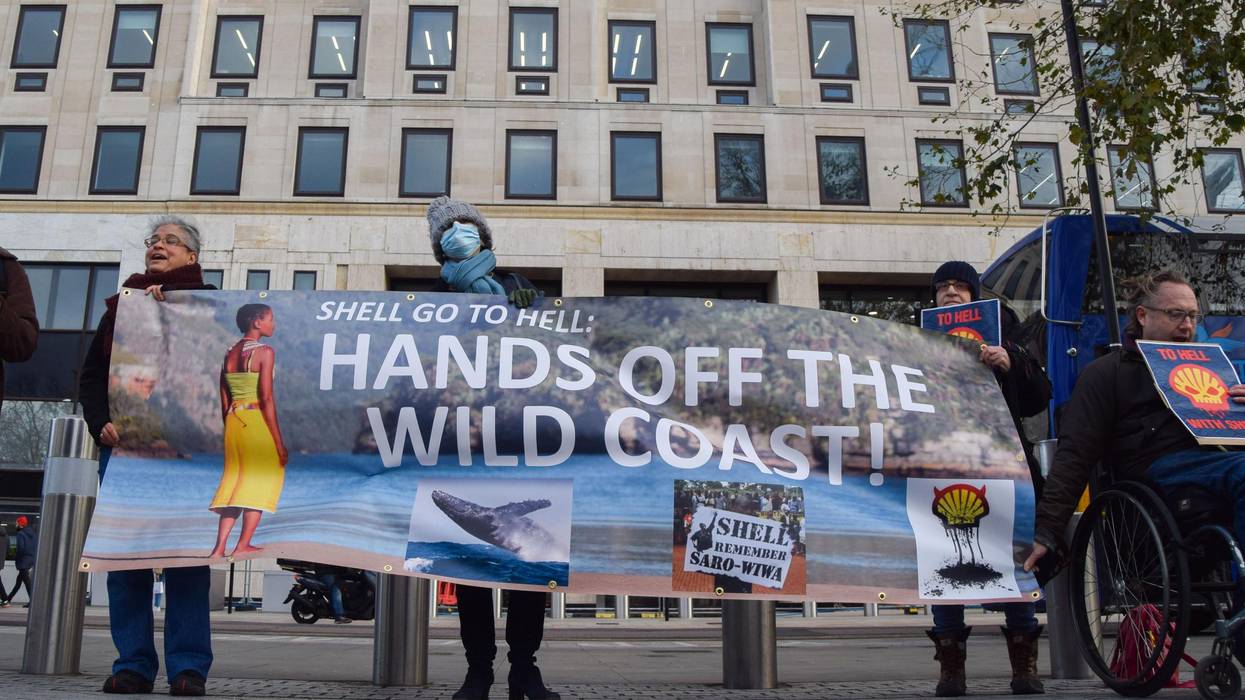
Climate campaigners across South Africa and beyond celebrated a Thursday court ruling against Shell seismic blasting in search of fossil fuels along the country's Wild Coast, which opponents warned threatened both the local marine life and fishing industry.
"The fight of coastal communities versus Shell is a struggle for environmental justice, for the protection of rural livelihoods, for sustainable development, and for the life of the planet."
Like its interim decision last December, the new ruling by the Makhanda-based court is a win "for the people and planet," and "sets an important precedent during this climate emergency," said Pooven Moodley, director of the group Natural Justice.
The judgment set aside the Department of Mineral Resources and Energy's 2014 decision giving Shell the right to explore local waters, concluding that it was not lawfully granted.
"The court was clear that communities need to be properly consulted and that environmental impact assessments are critical. The cultural and spiritual connection to the land and ocean featured strongly in the judgment," Moodley noted, adding that the decision "provides hope and momentum" for those standing up against other planet-wrecking projects.
Greenpeace Africa interim program director Melita Steele similarly called the ruling "proof that the world is moving into an era of social and environmental justice, where the voices of people are put before the profits of toxic fossil fuel companies."
"There is still much work to be done to undo the destructive colonial legacy of extractivism in Africa, but this decision gives South Africans renewed hope that people's lives and precious ecosystems are valuable and worthy of protection from climate criminals," she added. "The future is renewable!"
Natural Justice and Greenpeace Africa applied to join the court case, which was brought by Sustaining the Wild Coast NPC, All Rise Attorneys for Climate and the Environment NPC, and local communities and small-scale fishers.
As Agence France-Presse detailed:
Shell planned to map more than 6,000 square kilometres (2,300 square miles) by bouncing sonic waves off the sea floor and using the reflection to build up a 3D image.
The area lies off South Africa's so-called Wild Coast. The 300-kilometer (185-mile) stretch boasts rich waters housing exquisite marine life and natural reserves.
Campaigners argued that the research would have sent... "extremely" loud shockwaves every 10 seconds, 24 hours a day for five months, potentially harming migration, feeding, and other routines for marine mammals and other species.
A Shell spokesperson did not address whether the company will appeal the decision, only saying that "we respect the court's decision and are reviewing the judgment to determine our next steps regarding the Wild Coast block. We remain committed to South Africa and our role in the just energy transition."
Meanwhile, critics of the fossil fuel giant celebrated at the courthouse.
"Winning this means we are all moving towards an understanding that we need to find sustainable livelihoods; we need to move away from fossil fuels," said Sinegugu Zukulu of Sustaining the Wild Coast.
"It is not about us," Zukulu emphasized. "We are in this fight for the good of the planet and the good of future generations. The fight of coastal communities versus Shell is a struggle for environmental justice, for the protection of rural livelihoods, for sustainable development, and for the life of the planet. Shell and the government are fighting for profit in the face of climate change that is putting the future of humanity at risk."
Nonhle Mbuthuma of the Amadiba Crisis Committee similarly declared that "this victory is not just a victory for Wild Coast communities and making our voices heard. This is a victory against capitalist extraction and destruction of our future."
"This victory is not just about protecting the ocean upon which rural coastal communities depend. This is about protecting the planet and the whole of humanity," Mbuthuma added.
As Wild Coast resident Siyabonga Ndovela explained, "we live off the land and the ocean," and "the ocean is our best defender against climate change, shielding us from its worst impacts. By helping the ocean we help ourselves. Ocean action is climate action."
As the fifth and final round of talks for an international treaty to protect the high seas began at the United Nations headquarters in New York City on Monday, conservationists across the globe warned world leaders that this may be the "last chance" for a necessarily ambitious agreement.
"Negotiators must know that the world is watching as they decide the future of our blue planet."
The ocean has absorbed over 90% of heat from human-caused global warming--which scientists have tied to not only accelerated melting of ice sheets and rising sea levels but also negative impacts on marine life.
"As these delegates meet, the oceans continue to decline," noted Greenpeace USA's Arlo Hemphill. "Overfishing, destructive fishing practices, plastic pollution, and climate change are weakening the systems we depend upon. We can no longer afford the delay and inaction that have plagued these talks for over a decade."
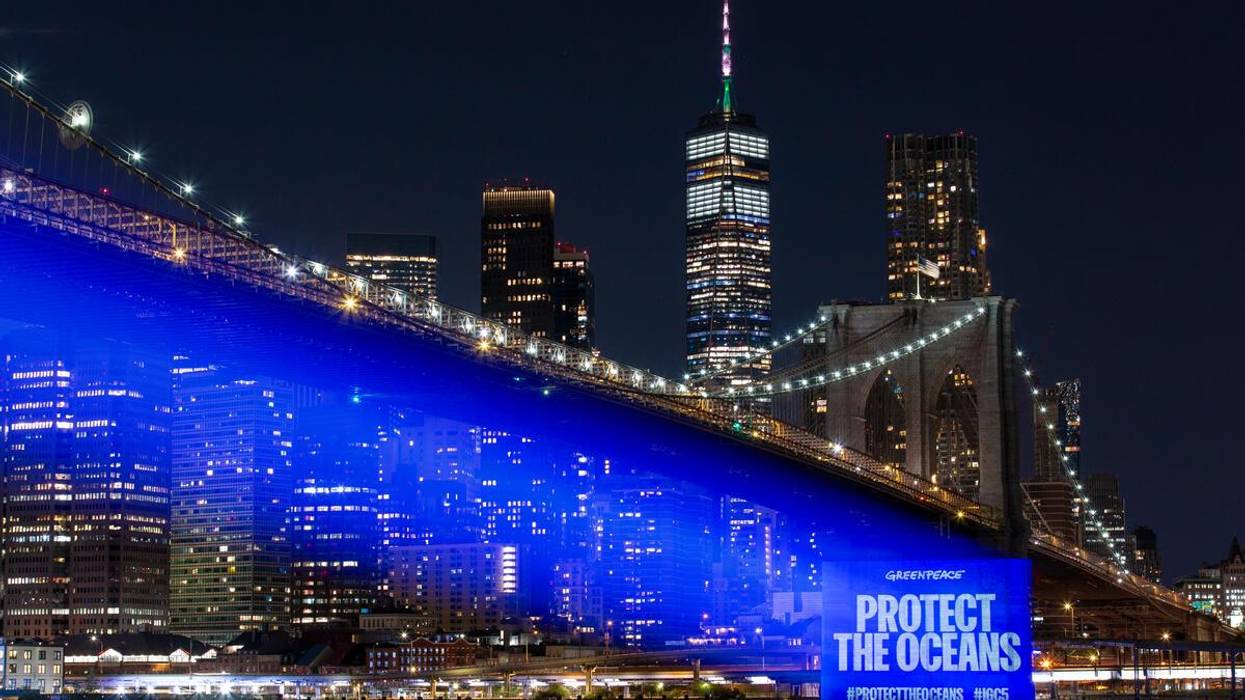
"Now is the moment to set aside the politics, special interests, and inertia and approve a truly transformative treaty that provides the strongest possible protection for the ocean," asserted Hemphill, whose group projected related messages on the Brooklyn Bridge late Sunday.
Aakash Naik, Greenpeace International's head of communications and engagement for the Protect the Oceans campaign, emphasized that "the oceans support all life on Earth, but centuries of neglect have pushed them into crisis."
"The strength of the new global ocean treaty will decide whether we can fix this crisis or if we will continue with the broken status quo," Naik said. "That's why we've lit up the Brooklyn Bridge, turning this iconic New York spot into a monument to ocean beauty."
"Over five million people have joined our call for a strong treaty to be finalized in 2022," the campaigner added. "Negotiators must know that the world is watching as they decide the future of our blue planet."
Marco Lambertini, director general of World Wide Fund for Nature (WWF) International, similarly stressed the urgency of the current moment as U.N. members gathered in NYC with the hope of reaching a deal by August 26.
"The high seas epitomize the tragedy of the commons. Because they don't 'belong' to anyone, they have been treated recklessly with impunity," the WWF leader declared. "We need a common governance mechanism for our ocean to ensure that nobody's waters become everybody's waters--and everyone's responsibility."
Oceanographic highlighted Monday that international waters "make up 64% of the global ocean and cover 46% of Earth's surface," but just 1.3% of the high seas are protected, compared with 17% of land worldwide.
Since the fourth round of talks faltered in March, campaigners have been ramping up warnings of the need for a treaty on biodiversity beyond national jurisdiction (BBNJ) to help meet the global 30x30 goal--which aims to protect 30% of all lands and waters.
Progress on the treaty has been hampered by the Covid-19 pandemic and disagreements over what to include, the BCC pointed out Monday, explaining that "some nations such as Russia and Iceland want fisheries to be excluded."
Noting that over four dozen countries "have already pledged to achieve an ambitious ocean treaty that would lay the groundwork for protecting 30% of the ocean and assess the environmental impact of activities on the high seas," WWF's Lambertini called on the holdouts to do the same and "deliver a robust and equitable biodiversity treaty for the high seas that can help us reverse nature loss this decade and secure, for all, a healthier and sustainable future."
According to Greenpeace, this fifth round of talks must deliver a deal that:
The Guardian reported Monday that the High Seas Alliance plans to "name and shame countries they say are dragging their heels during negotiations" and dole out grades for each nation's positions.
"Time is running out," Sophia Tsenikli, senior strategic adviser for the alliance, told the newspaper. "We want a really strong treaty that will allow the ocean to recover from cumulative threats."
Scientists are warning this week that the prolonged and above-average temperatures gripping the Mediterranean Sea are causing a "marine wildfire" that could permanently alter the ecosystem and cause species extinction.
David Diaz of the Spanish oceanographic institute told Le Monde such ocean heatwaves were "the equivalent of underwater wildfires, with fauna and flora dying just as if they had been burned."
The region has suffered an extreme heatwave this month, producing record air temperatures and low winds, causing a significantly hotter and deeper layer of ocean surface water.
As Reuters reported, "The warmer air along with shifting ocean currents and a stable sea surface have warmed coastal Mediterranean waters several degrees Celsius beyond the average temperature of 24degC to 26degC for this time of year."
Some of the highest water temperatures were recorded on the eastern coast of Corsica which hit a peak of 30.7degC in July--more than 6degC warmer than normal for this time of year. Spain's Balearic Islands and the Italian coast saw an increase of 5degC.
"Keep in mind water has more than 4X the heat capacity of air, which means it's much harder for water to warm than air," tweeted Colin McCarthy from his US StormWatch account. "A 6.2degC sea surface temperature anomaly in the Mediterranean is simply astonishing."
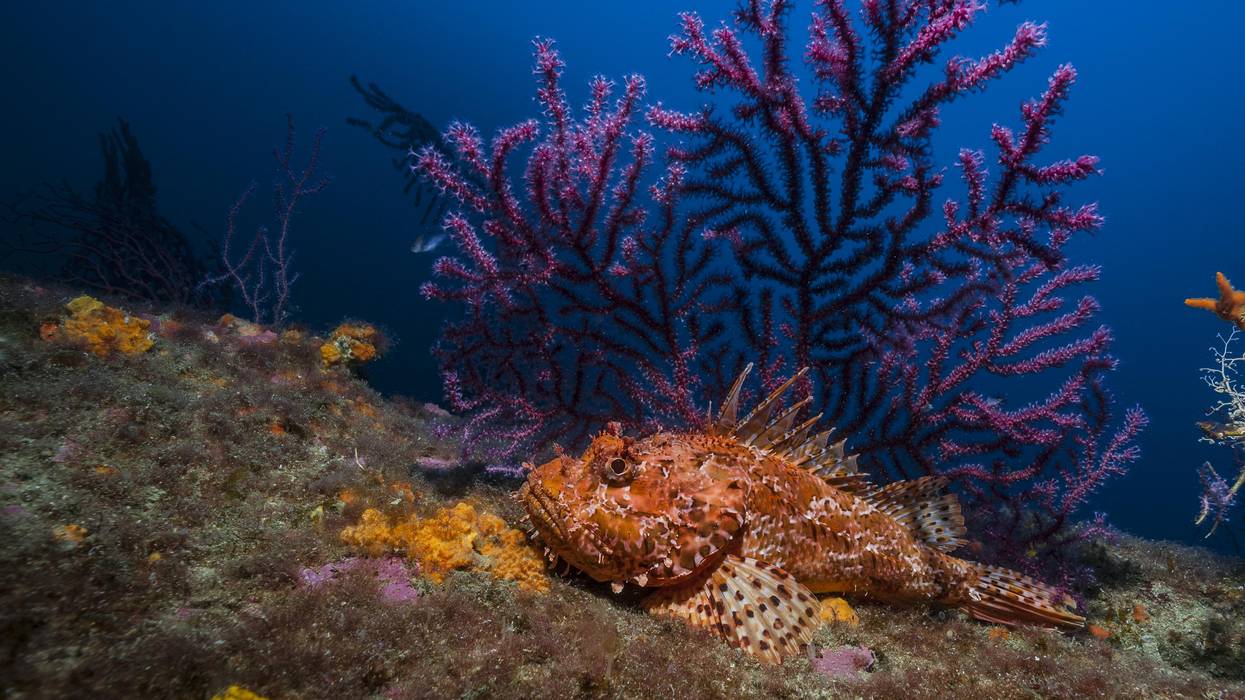
The Mediterranean Sea is considered a biodiversity hotspot by scientists--accounting for less than 1% of the world's ocean surface but inhabited by about 10% of all marine species.
Ruben del Campo of the Spanish national meteorological service told Le Monde that the Mediterranean's native populations of "corals, of shellfish, and of fish are suffering enormously."
The Mediterranean hosts up to 20,000 marine species of fauna and flora, 25% of which are native to the region. The sea's endemic Posidonia and Neptune grasses play a vital role in the ecosystem by storing carbon--a hectare of the grass is capable of absorbing 15 times more carbon dioxide every year than a similarly sized piece of the Amazon rainforest.
Emilie Villar, a Marseille-based marine ecologist, told the La Provence 700 Mediterranean species are threatened with extinction and "if the shock lasts too long, or if the species is fixed and cannot migrate, others will fill the void--or, if conditions become too harsh, the Mediterranean risks dying out."
A recent study published in the journal Proceedings of the Royal Society B found that marine heatwaves associated with the climate crisis have already destroyed up to 90% of coral populations in parts of the Mediterranean. Additionally, a World Wildlife Fund report last year "found that water temperatures in the Mediterranean were rising 20% faster than the global average, making it the world's fastest-warming sea."
Karina von Schuckmann, an oceanographer at the nonprofit research group Mercator Ocean International, said "Since at least 2003 [marine heatwaves] have become more common and in future they will last longer, cover more sea, and be more intense and severe."
Schuckmann said the most effective course of action to mitigate marine heatwaves is for governments to reduce greenhouse gas emissions contributing to global warming.
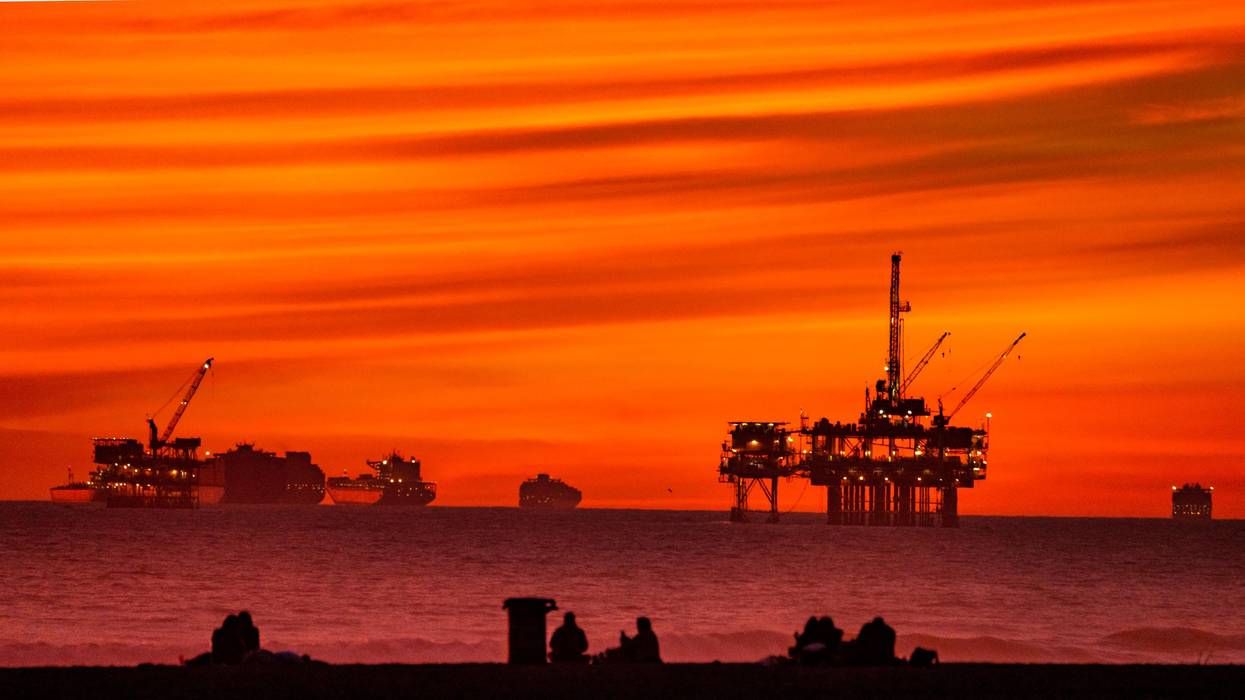
While welcoming the Biden administration's decision to cancel three oil and gas lease sales in the Gulf of Mexico and off the coast of Alaska, conservation and climate groups on Thursday also renewed demands for an end to all offshore drilling in U.S. waters.
"We need to end new leasing and phase out existing drilling."
The U.S. Interior Department explained in a statement late Wednesday that the Gulf decision was "a result of delays due to factors including conflicting court rulings that impacted work on these proposed sales," and it wasn't moving forward with the Cook Inlet sale "due to lack of industry interest in the leasing area."
Kristen Monsell, the Center for Biological Diversity's Oceans Program legal director, said that "I'm glad Cook Inlet belugas won't be forced to face even more oil drilling in their only habitats, but much more must be done to protect these endangered whales from offshore drilling."
"To save imperiled marine life and protect coastal communities and our climate from pollution, we need to end new leasing and phase out existing drilling," she said.
CBS News noted that "the Interior Department's Bureau of Ocean Energy Management has previously canceled lease sales in Cook Inlet three times--in 2007, 2008, and 2011--also citing 'lack of industry interest' at the time as the reason for scrapping the sales."
Drew Caputo, vice president of litigation for lands, wildlife, and oceans for Earthjustice, told CBS that the administration's decision is "good for the climate, which can't handle new oil and gas development."
"It's good for Cook Inlet because offshore drilling is dangerous and disruptive," he continued. "And it's good for the people of Cook Inlet, including native people, who cherish the inlet in its natural state. So it's a really good thing."
"The scientists are telling us the time to shift from fossil fuel energy is not years from now," Caputo added. "It's today. We need to end offshore oil leasing."
Both Caputo and Oceana's Diane Hoskins countered criticism from the fossil fuel industry and Republicans by pointing out how long it would take for those leases to impact gas prices, which are soaring for a range of reasons, including Russia's war on Ukraine and corporate price gouging.
" Big Oil is using anything they can find to try to extend the life of a dying fossil fuel industry. They are lying when they say they need more leases," Hoskins told The Washington Post. "We cannot drill our way out of high gas prices, and it would take years or decades for any new leases to begin producing."
While President Joe Biden promised as a candidate to end new oil and gas leasing, a federal judge last year struck down his moratorium and the administration has claimed it is obligated to keep up sales--a position climate groups have contested.
As the Post detailed Wednesday:
Barring unexpected action, the current five-year offshore drilling program will lapse at the end of June. Interior cannot hold any new oil and gas lease sales until it has completed a replacement plan. But though the federal government is legally obligated to prepare one, the administration has not released its proposal, nor have officials said when it might be coming...
Replacing the current plan won't happen overnight. The timeline spelled out in regulations governing the program requires a three-step process involving environmental analysis, public comment periods and a review by the president and Congress.
It typically takes the government at least six months to a year to finalize a new offshore drilling plan. This means that even if the Interior Department unveils a new proposal in the coming weeks, the soonest energy companies will learn whether they will have access to new leases, and where, is probably early 2023.
Linking to the newspaper's report, climate journalist Antonia Juhasz tweeted that "by not releasing a new plan, the administration is effectively putting a halt to any new offshore oil and gas leasing, thereby fulfilling a campaign pledge to do so."
In a Thursday blog post about the "big win for Alaskan and Gulf of Mexico communities," Natural Resources Defense Council senior attorney Irene Gutierrez wrote that "existing production allows us to meet our energy needs for the next decade" and "more drilling today will not make gas any cheaper for consumers, while costing us billions of dollars in climate change-related damages and public health impacts."
The Interior Department "has ample authority to shape the nation's offshore energy program to move away from fossil fuels and advance renewable energy sources," Gutierrez noted in anticipation of the forthcoming five-year plan. "It is time for the U.S. to commit to no new offshore oil and gas leasing and to invest in the clean energy future that we--and our planet--need."
While thawing permafrost on land tied to human-driven global temperature rise has generated worldwide alarm in recent years, a new study out this week is garnering attention for researchers' discoveries underwater.
"As climate change continues to reshape the Arctic, it's critical that we also understand changes in the submerged permafrost offshore."
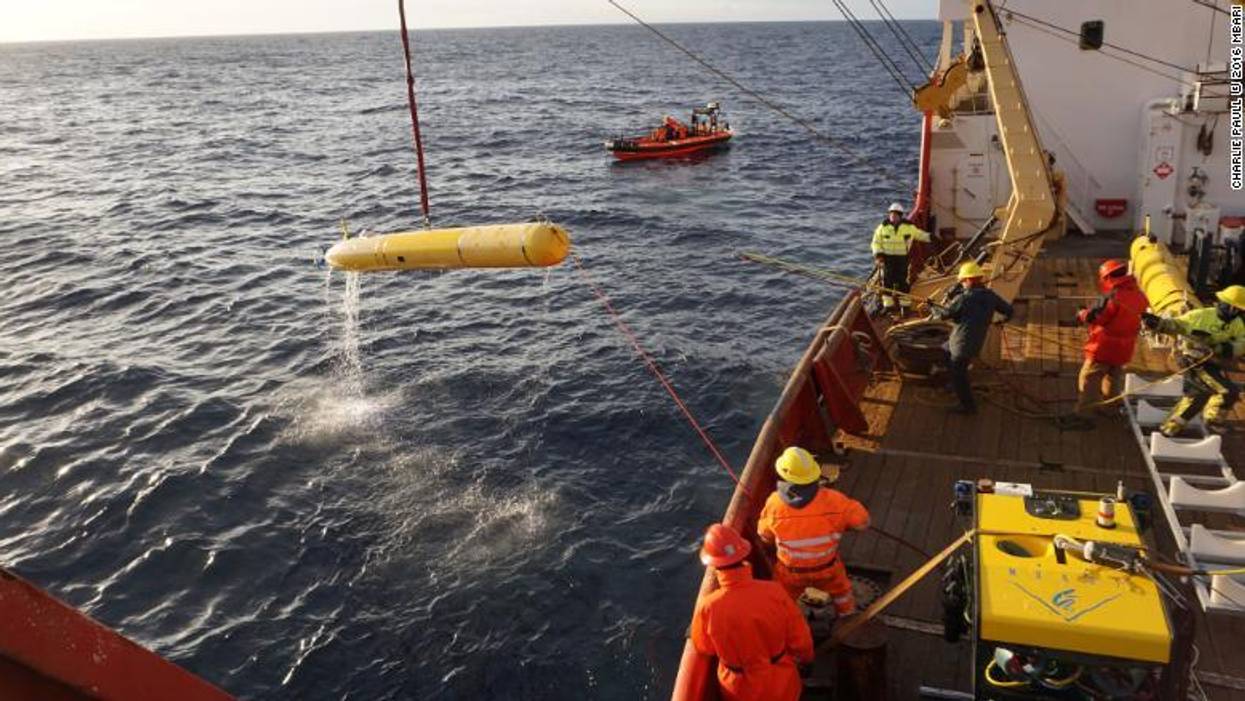
An international team of researchers led by Charlie Paull, a geologist at the Monterey Bay Aquarium Research Institute in California, and Scott Dallimore of the Geological Survey of Canada published their findings in the peer-reviewed journal Proceedings of the National Academy of Sciences (PNAS).
Permafrost is a mix of ice, rocks, sand, and soil that remains frozen year-round. The thawing of terrestrial permafrost in places like Siberia has fueled concerns about not only damage to at-risk infrastructure but also the release of planet-heating gases as well as ancient bacteria and viruses.
However, Paull and Dallimore's team analyzed changes in the permafrost that lies beneath Arctic waters. Specifically, they focused on 10 square miles of the Canadian Beaufort Sea, using underwater vehicle and ship-mounted sonar for surveys of the seafloor in 2010, 2013, 2017, and 2019.
The researchers found craters--including one that was 92 feet deep, 738 feet long, and 312 feet wide, or bigger than a city block of six-story buildings--as well as ice-cored hills resembling "pingos" previously documented on land.
"We know that big changes are happening across the Arctic landscape, but this is the first time we've been able to deploy technology to see that changes are happening offshore too," Paull noted in a statement Monday.
Unlike terrestrial permafrost thawing, the limited data available signals that human-caused global heating is not "driving the dramatic changes in the seafloor terrain," Paull explained. "Instead, heat carried in slowly moving groundwater systems is driving these changes."
Though the team connected the seafloor changes to climatic shifts related to the planet's emergence from the last ice age nearly 12,000 ago, Paull stressed that research like his first-of-its-kind study are important in an era of rising temperatures from human activities like burning fossil fuels.
"While the underwater sinkholes we have discovered are the result of longer-term, glacial-interglacial climate cycles, we know the Arctic is warming faster than any region on Earth," he said. "As climate change continues to reshape the Arctic, it's critical that we also understand changes in the submerged permafrost offshore."
Sue Natali, Arctic Program Director and senior scientist at the Woodwell Climate Research Center in Massachusetts--who was not involved in the study--made a similar point to CNN on Monday.
"Changes described in this study are responding to events that occurred over the centennial to millennial time frame. That said, these changes can still impact climate if they are resulting in emissions of greenhouse gases as the subsea permafrost thaws," she explained.
Related Content

The underwater research was released the same day as multiple studies on terrestrial permafrost. One paper, published in the journal Nature Communications, found that alpine permafrost is expected to melt at a faster rate than Arctic permafrost under current conditions.
"Our findings were very surprising and highlight the fact that we need to put more effort into monitoring the stability of the permafrost in the alpine region," said lead author Feng Cheng of China's Peking University.
Paper co-author Carmala Garzione, dean of the University of Arizona College of Science, agreed. As she put it:
We need better and broader studies of the vulnerability of alpine regions under global warming scenarios. There's been a lot of focus on the stability of Arctic permafrost, because it covers more land area and contains a huge reservoir of organic carbon trapped in permafrost, but we also need to be aware that alpine regions stand to lose more permafrost proportionally and are important in understanding of potential carbon release under global warming scenarios.
Another study, published in the journal Nature Climate Change, warned that peatlands in Europe and Western Siberia--which store up to 39 billion tons of carbon--are closer to a climatic tipping point than previously thought.
"Our modeling shows that these fragile ecosystems are on a precipice and even moderate mitigation leads to the widespread loss of suitable climates for peat permafrost by the end of the century," said lead author Richard Fewster of the University of Leeds in the United Kingdom.
"But that doesn't mean we should throw in the towel," he said. "The rate and extent to which suitable climate are lost could be limited, and even partially reversed, by strong climate change mitigation policies."
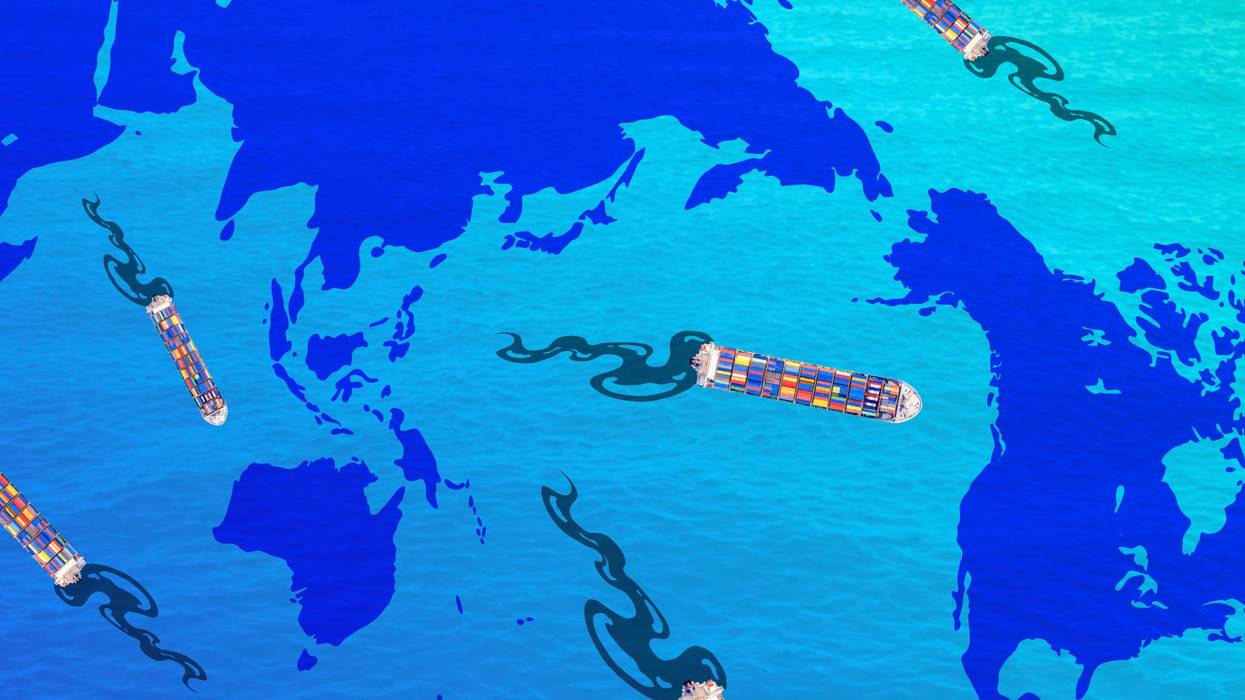
As shoppers scoured the internet for holiday deals on Cyber Monday, a pair of environmental groups published a report that exposes the planet-heating maritime shipping practices of four major global retailers: Amazon, IKEA, Target, and Walmart.
"Pandemic-fueled demand increases, record-breaking profits, and the supply chain crisis reveal the current maritime shipping system is ripe for transformation."
Entitled Shady Routes: How big retail and their carriers pollute along key ocean shipping corridors, the new report is from Pacific Environment and Stand.earth, environmental groups that belong to the Ship It Zero coalition, which pressures retail giants to "lead the way to climate-friendly, clean-air shipping practices."
"Until recently, the massive climate-disrupting and human health-harming emissions from international container shipping--and the companies that are buying their services--have sailed under the radar of public scrutiny," the report states.
This despite international shipping "accounting for 3% of global emissions," the report continues. "If it were a country, it would be the world's sixth largest climate polluter."
According to the environmental groups, "Goods imported via maritime shipping to the U.S. by Walmart, Target, Amazon, and IKEA between 2018-2020 accounted for an estimated 20 million tonnes of carbon dioxide equivalent emissions (CO2e)."
"These goods were predominantly shipped by a small group of major maritime cargo carriers who have long-term relationships with each company," Shady Routes notes. "The most common shipping routes for these goods are between Chinese and West Coast U.S. ports, where vessels left idling due to the current shipping crisis are pushing pollution levels for port communities to all-time highs."
In what the groups called "groundbreaking" research, their analysis found that Walmart, the top importer of goods in the United States, has the highest volumes traded and the most emissions. The retailer relies heavily on CMA CGM, the biggest polluter among the carriers in the report.
Other top carriers featured in Shady Routes include Cosco, Evergreen, Hapag-Lloyd, Maersk, MSC, and Yang Ming, as well as Amazon's AMZD, an "ocean forwarder, which means that other carriers are shipping cargo on the company's behalf."
"Major cargo carriers are lagging in moving towards zero emissions, citing that costs have been prohibitive," said Madeline Rose, climate campaign director at Pacific Environment, in a statement. "Container industry profits are unprecedentedly strong, consumers support clean shipping, and the technology is available. There are no longer any excuses left to set goals to meet zero emissions for 2030."
Rose called on retailers to "engage with cargo carriers that will give them zero-emission freight options to get their goods to market." That call to action was echoed by Kendra Ulrich, shipping campaigns director at Stand.earth.
"Pandemic-fueled demand increases, record-breaking profits, and the supply chain crisis reveal the current maritime shipping system is ripe for transformation," Ulrich said. "There is ample room for retail brands and cargo carriers to absorb the cost of transitioning to fossil-free, zero-emissions shipping and deliver healthier air to our port communities and a livable climate future."
"Retail companies can choose to be industry leaders and early adopters of zero-emissions technology," she added, "or they can put short-term profit over public health and the climate by making empty commitments that put off action on climate change until it's too late."
Shady Routes details steps the four retailers must take to be "leaders" in shipping:
Dawny'all Heydari, Ship It Zero campaign lead at Pacific Environment, highlighted that "Target and Amazon have played an outsized role in the current congestion and pollution crisis at the ports of Los Angeles and Long Beach."
"The retail brands that fill our homes and lives with their products bear a direct responsibility for the pollution their supply chains create."
"As Target faces a swell of demand in places like California and a doubling of its digital sales, and as Amazon increases its control over its own gas-guzzling shipment and parcel delivery, it is past time to hold these retailers accountable for their responsibilities at the ports," Heydari said. "Both companies will continue to favor West Coast routes, which means they'll also keep clogging West Coast ports, spewing cancer-causing emissions and threatening our climate future."
The report notes that IKEA sends a share of its products from China to Europe via rail, then uses maritime transport to get the goods to the United States--which "could be part of" a strategy to cut emissions. It also points out that last month, IKEA joined with Amazon and other retailers for an initiative called coZEV, committing to fossil-free maritime shipping by 2040.
While demanding bolder action, the campaigners on Monday also welcomed recent progress, including coZEV and rising awareness. Ulrich said that "consumers, corporations, and governments are waking up to the massive climate impact stemming from goods being shipped across our oceans."
"Reducing, and ultimately eliminating, maritime emissions will not happen without bold commitments and concrete actions from the companies paying for cargo carriers to transport their goods," she said. "The retail brands that fill our homes and lives with their products bear a direct responsibility for the pollution their supply chains create, and for taking the necessary actions to demand a transition to zero-emissions shipping this decade."