
SUBSCRIBE TO OUR FREE NEWSLETTER
Daily news & progressive opinion—funded by the people, not the corporations—delivered straight to your inbox.
5
#000000
#FFFFFF
To donate by check, phone, or other method, see our More Ways to Give page.


Daily news & progressive opinion—funded by the people, not the corporations—delivered straight to your inbox.
"Years of grossly insufficient action from richer nations and continued climate deception and obstruction by fossil fuel interests are directly responsible for bringing us here," one expert said.
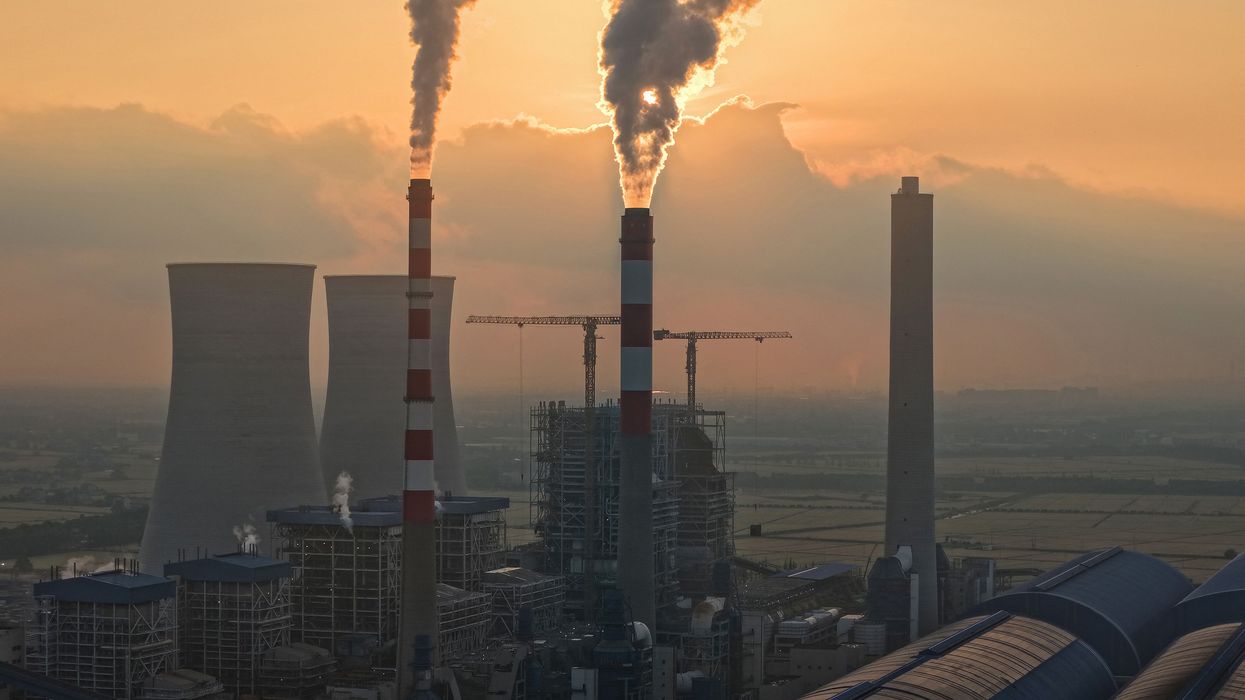
A United Nations assessment released Tuesday—less than a week before the UN Climate Change Conference summit in Brazil—warns that countries' latest pledges to cut greenhouse gas emissions under the Paris Agreement could push global temperatures to 2.3-2.5°C above preindustrial levels, up to a full degree beyond the treaty's primary goal.
A decade after that agreement was finalized, only about a third of state parties submitted new plans, officially called Nationally Determined Contributions (NDCs), for the United Nations Environment Programme's (UNEP) Emissions Gap Report 2025: Off Target.
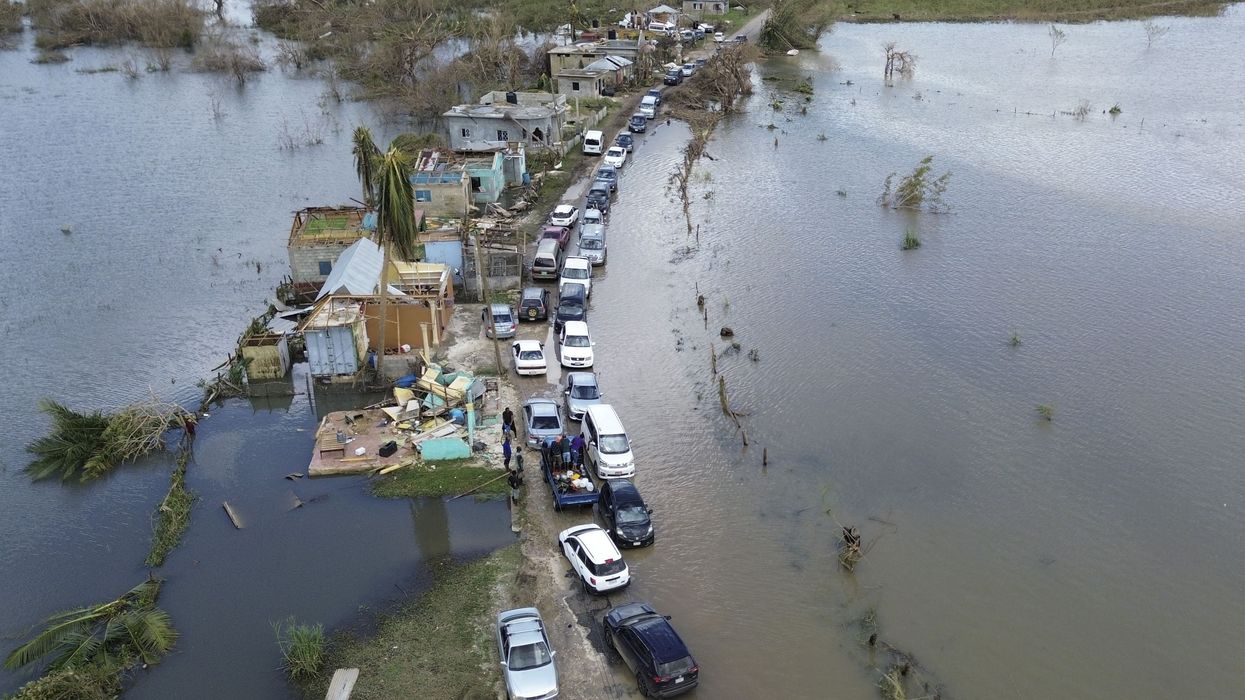
While the updated NDCs—if fully implemented—would be a slight improvement on the 2.6-2.8°C projection in last year's report, the more ambitious Paris target is to limit global temperature rise this century to 1.5°C. Already, the world is beginning to experience what that looks like: Last year was the hottest on record and the first in which the global average temperature exceeded 1.5°C, relative to preindustrial times.
As with those findings, UNEP's report sparked calls for bold action at COP30 in Belém next week, including from UN Secretary-General António Guterres. He noted that "scientists tell us that a temporary overshoot above 1.5°C is now inevitable—starting, at the latest, in the early 2030s. And the path to a livable future gets steeper by the day."
"1.5°C by the end of the century remains our North Star. And the science is clear: This goal is still within reach."
"But this is no reason to surrender," Guterres argued. "It's a reason to step up and speed up. 1.5°C by the end of the century remains our North Star. And the science is clear: This goal is still within reach. But only if we meaningfully increase our ambition."
UNEP Executive Director Inger Andersen also stressed that while inadequate climate policies have created the conditions in which now "we still need unprecedented emissions cuts in an increasingly tight window, with an increasingly challenging geopolitical backdrop," reaching the Paris goal "is still possible—just."
"Proven solutions already exist. From the rapid growth in cheap renewable energy to tackling methane emissions, we know what needs to be done," she said. "Now is the time for countries to go all in and invest in their future with ambitious climate action—action that delivers faster economic growth, better human health, more jobs, energy security, and resilience."
NEW – UNEP: New country climate plans ‘barely move needle’ on expected warming | @ayeshatandon.carbonbrief.org @ceciliakeating.carbonbrief.org @unep.org Read here: buff.ly/U0XaME9
[image or embed]
— Carbon Brief (@carbonbrief.org) November 4, 2025 at 9:03 AM
Climate campaigners responded with similar statements. Savio Carvalho, head of regions at the global advocacy group 350.org, said that "this report confirms what millions already feel in their daily lives: Governments are still failing to deliver on their promises. The window to keep 1.5°C within reach is closing fast, but it is not yet gone."
"All eyes are now on Belém," Carvalho declared. "COP30 must be a turning point, where leaders stop making excuses, phase out fossil fuels, and scale up renewable energy in a way that is fast, fair, and equitable."
Rachel Cleetus, senior policy director for the Climate and Energy Program at the US-based Union of Concerned Scientists, said that "this report's findings, confirming that a crucial science-based benchmark for limiting dangerous climate change is about to be breached, are alarming, enraging, and heartbreaking."
"Years of grossly insufficient action from richer nations and continued climate deception and obstruction by fossil fuel interests are directly responsible for bringing us here," she highlighted. "World leaders still have the power to act decisively to sharply rein in heat-trapping emissions and any other choice would be an unconscionable dereliction of their responsibility to humanity."
Cleetus—a regular attendee of the annual UN climate talks who will be at COP30, unlike President Donald Trump's administration—continued:
Costly and deadly climate impacts are already widespread and will worsen with every fraction of a degree, harming people's health and well-being, as well as the economy. Policymakers must seize the opportunity now to accelerate deployment of renewable energy and energy efficiency—solutions that are plentiful, clean, and affordable—and transition away from polluting fossil fuels. Protecting people, livelihoods, and ecosystems by helping them adapt to climate hazards is also critical as higher temperatures unleash rapidly worsening heat, floods, storms, wildfires, drought, and sea-level rise.
Ambitious climate action can cut energy costs, improve public health, and create a myriad of economic opportunities. Richer, high-emitting countries' continued failure to tackle the challenge head-on is undermining the well-being of their own people and is a monumental injustice toward lower-income countries that have contributed the least to this problem yet bear the most acute harms. It’s past time for wealthy countries to heed the latest science and pay up for their role in fueling the climate crisis. With alarms blaring, the upcoming UN climate talks must be a turning point in global climate action. Powerful politicians and billionaires who willfully ignore urgent realities and continue to delay, distract, or lie about climate change will have to answer to our children and grandchildren.
Jean Su, director of the Center for Biological Diversity's Energy Justice Program, also plans to attend COP30.
"This report shows Earth's livable future hanging in the balance while Trump tells climate diplomacy to go to hell," she said. "The US exit from Paris threatens to cancel out any climate gains from other countries. The rise of petro-authoritarianism in the US shouldn't be an excuse for other countries to backpedal on their own commitments. This report sends alarm bells to rich countries with a conscience to exercise real leadership and lead a fossil fuel phaseout to protect us all."
The UNEP report was released on the same day that the German environmental rights group Urgewald published its Global Oil and Gas Exit List, which shows that a green transition is being undercut by fossil fuel extraction and production.
Other publications put out in the lead-up to COP30 include an Oxfam International report showing that the wealthiest people on the planet are disproportionately fueling the climate emergency, as well as a UN Food and Agriculture Organization analysis warning that human-induced land degradation "is undermining agricultural productivity and threatening ecosystem health worldwide."
There have also been mounting demands for specific action, such as Greenpeace and 350.org urging governments to pay for climate action in part by taxing the ultrarich, and an open letter signed by advocacy organizations, activists, policymakers, artists, and experts urging world leaders to prioritize health during discussions in Brazil next week.
As Common Dreams reported earlier Tuesday, COP30 Special Envoy for Health Ethel Maciel said that "this letter sends an unequivocal message that health is an essential component of climate action."
“The truth is that we have failed to avoid an overshooting above 1.5°C in the next few years," said UN chief António Guterres. "We don’t want to see the Amazon as a savannah. But that is a real risk if we don’t change course."
Ahead of the United Nations' global summit on the climate emergency in Belém, Brazil, a report on countries' climate plans released Tuesday served as both "a progress update and a warning siren," one campaigner said.
According to the Nationally Determined Contribution (NDC) Synthesis Report, governments have submitted plans to the UN that would reduce fossil fuel emissions by just 10% by 2035 compared to 2019 levels, a fraction of what is needed to keep the planet from warming more than 1.5°C above preindustrial temperatures.
The report includes climate action plans from fewer than a third of the nations that signed the Paris Agreement, the legally binding treaty demanding countries take action to limit planetary heating to 1.5°C, a decade ago.
China and the European Union have not yet submitted their NDCs ahead of the UN Climate Change Conference (COP30), and in the United States, President Donald Trump ordered the country's withdrawal from the Paris Agreement for a second time earlier this year and has been pushing for more fossil fuel extraction while dismantling renewable energy projects.
The report's projection includes a plan that was submitted by the US in the last weeks of the Biden administration, which Trump has said he has no plans to fulfill.
Without officially submitting an NDC, China has pledged to cut its carbon emissions by 7-10% of their peak by 2035, and the EU has been debating a reduction of 62-72.5%.
Judging from the commitments that have been made so far, UN Secretary-General António Guterres told The Guardian and Amazon-based news outlet Sumaúma that the 1.5°C goal will be breached, at least temporarily,
"Overshooting is now inevitable," he said, noting that an international goal should now be to reverse course on emissions in time to return to the 1.5°C mark by the end of the century.
“Let’s recognize our failure,” he told the outlets. “The truth is that we have failed to avoid an overshooting above 1.5°C in the next few years. And that going above 1.5°C has devastating consequences. Some of these devastating consequences are tipping points, be it in the Amazon, be it in Greenland, or western Antarctica or the coral reefs."
Guterres said it is "absolutely indispensable to change course in order to make sure that the overshoot is as short as possible and as low in intensity as possible to avoid tipping points like the Amazon. We don’t want to see the Amazon as a savannah. But that is a real risk if we don’t change course and if we don’t make a dramatic decrease of emissions as soon as possible.”
"The success of COP30 now hinges less on the maths of new targets and more on the politics closing the ambition gap and accelerating a fair and fast transition from fossil fuels to renewables.”
The report was released a week after Brazil's government announced it was opening up the Amazon rainforest to oil drilling even as the country is set to host COP30, where campaigners hope to focus on implementing climate action plans. Earlier this month, researchers in the United Kingdom found that the world's coral reefs have been driven to a tipping point by surging global temperatures.
“Ten years on from Paris, governments are still allowing fossil fuel companies to call the shots," said Illan Zugman, managing director for Latin America at 350.org. "We see progress in words, but not yet in the numbers. Every new oil field or gas terminal wipes out the gains made in these NDCs. Just kilometers from where COP30 will take place, new licenses are being given out. Real climate leadership means drawing the line on fossil fuels now."
Steffen Menzel, program lead for climate diplomacy and geopolitics at the think tank E3G, noted that "while some developed and developing countries are providing clear examples to follow, delays and lackluster pledges from major emitters such as the EU and China have undermined the effectiveness of the Paris Agreement.”
Despite their power and resources, said World Wildlife Fund global NDC enhancement coordinator Shirley Matheson, "major G20 economies still haven’t submitted their targets with less than a fortnight to go before COP30 begins."
“While countries are making genuine progress, the gap between words and action remains dangerously wide," said Matheson. “At COP30, the G20 must stop hesitating and start delivering. It’s time to turn the slow jog into a sprint by supercharging a clean and fair energy transition. This means increasing the share of renewable energy while phasing out fossil fuels, mobilizing climate finance, and ending deforestation and the wider destruction of nature. The world can’t afford delay disguised as diplomacy.”
Andreas Sieber, associate director of policy and campaigns at 350.org, emphasized that renewables in many countries "are booming and meet all new electricity demand this year and fossil fuels are finally showing signs of peaking."
"Yet, all progress is still far too slow," said Sieber. "The success of COP30 now hinges less on the maths of new targets and more on the politics closing the ambition gap and accelerating a fair and fast transition from fossil fuels to renewables.”
Zugman stressed that many governments around the world "have the technology, the money, and the public support for a clean energy transition."
"What’s missing is political courage," said Zugman. "Until we stop funding fossil fuels and start taxing their billions, we will keep losing precious time.”
With Donald Trump beginning his term next month, "it'll be up to states and other national leaders to defy Trump and move us quickly away from planet-heating fossil fuels."
With U.S. President-elect Donald Trump set to take office in just over a month, green groups on Thursday greeted President Joe Biden's new climate goal with a blunt assessment of the likelihood of significantly slashing plant-heating fossil fuel emissions in the coming years.
Under Trump, said several advocates, meeting the goal set by Biden will take far-reaching action by state and local governments—as the incoming Republican president, who has dismissed the climate crisis as a "scam" and a "hoax," is expected to ramp up emissions with his plans to repeal key federal regulations.
Biden's announcement on Thursday pertained to the country's nationally determined contribution (NDC), which is required by the 2015 Paris climate agreement—a pact Trump has said the U.S. will exit after he takes office, as it did during his first term. The government's new climate target, Biden said, is a 61-66% emissions reduction from 2005 levels by 2035.
The administration anticipates methane reductions of at least 35% from 2005 levels in 2035—a key component of achieving the NDC, as methane is more than 28 times as potent as carbon dioxide at trapping heat in the atmosphere.
The target is a significant step up from the one set in 2021, when Biden pledged to cut greenhouse gas emissions by at least 50% below 2005 levels by 2030.
But Oil Change International said the goal set on Thursday underscores the Biden administration's overall approach to emissions reductions: a "failed strategy of counting on clean energy to displace fossil fuels without simultaneous efforts to stop fossil fuels," as U.S. campaign manager Collin Rees said.
In a video address, Biden said his efforts to invest billions of dollars into renewable energy technology and to regulate fossil fuel emissions from some power plants and other sources have amounted to "the boldest climate agenda in American history."
But by approving fossil fuel infrastructure like ConocoPhillips' Willow project, Biden has angered groups that have demanded the U.S. act on climate experts' warnings that continued oil and gas extraction has no place on a pathway to limiting planetary heating to 1.5°C above preindustrial levels.
"Under Biden, even as clean energy surged, America became the world's planet wrecker-in-chief, planning the largest oil and gas expansion of any country over the next decade," said Rees. "As history's largest polluter and second-biggest current emitter, the U.S. has a unique responsibility to lead on climate action. This NDC fails to deliver the bold commitments needed to halt America's booming oil and gas expansion and support vulnerable Global South nations bearing the brunt of a crisis they didn't cause."
Oil Change International applauded the president's acknowledgment that fossil fuels must be phased out—but emphasized that the NDC "doesn't commit to doing it."
The Rhodium Group estimated in a study this week that Biden's current climate policies could achieve a 38-56% emissions reduction below 2005 levels by 2035.
Last year, emissions were reduced about 17% from 2005 levels, but no significant reduction is expected this year because rising electricity demand has offset renewable energy progress, according to the U.S. Energy Information Administration.
But if Trump rolls back a majority of Biden's policies, like methane regulations unveiled earlier this year and subsidies and tax incentives for clean energy included in the Inflation Reduction Act, the U.S. may only be able to reduce its emissions by 24-40% by 2030.
"As history's largest polluter and second-biggest current emitter, the U.S. has a unique responsibility to lead on climate action."
The new percentage reduction goal in the new NDC was "good to see," said Jean Su, energy justice director at the Center for Biological Diversity.
"But it'll be up to states and other national leaders to defy Trump and move us quickly away from planet-heating fossil fuels," said Su. "While Biden's pledge rightly reiterates the need to get off dirty energy, the real work lies in rooting out the corrupting political influence of oil, gas, and utilities. As climate deniers and corporate grifters sleaze into the White House, leaders at every level who actually care about the planet will have to fight twice as hard to hold polluters accountable for the economic and environmental havoc they're wreaking around the globe."
The U.S. Climate Alliance, a bipartisan coalition of 24 governors whose states represent 57% of the U.S. economy and 54% of the population, pledged on Thursday to work together to achieve the NDC announced by Biden.
The alliance—whose governors represent states including California, New York, Pennsylvania, and Minnesota—said it has already "reduced its collective net greenhouse gas emissions by 19% between 2005 and 2022, while increasing collective GDP by 30%, and is on track to meet its near-term climate goal by reducing collective greenhouse gas emissions 26% below 2005 levels by 2025."
"The coalition's states and territories are collectively employing more workers in the clean energy sector, achieving lower levels of dangerous air pollutants, and preparing more effectively for climate impacts than the rest of the country," said the alliance.
U.S. Climate Alliance co-chair Kathy Hochul, the governor of New York, said the NDC "will serve as our North Star, guiding us in the years to come and keeping America on track toward a cleaner, safer future."
Rachel Cleetus, policy director and lead economist for the Climate and Energy Program at the Union of Concerned Scientists, said that though Biden's new NDC falls short "of what the science requires," it will also provide "an important benchmark to propel further climate action by cities, states, Tribal nations, and businesses in the years ahead."
"The strengthened U.S. NDC announced today by the Biden administration underscores that working together to collectively address climate change is in the best interest of the United States and the world," said Cleetus. "Cutting fossil fuel pollution sharply and building a thriving economy powered by clean energy is good for national prosperity and people's health and pocketbooks. It's encouraging to see the NDC also call for measures to address the full breadth and scope of heat-trapping emissions, including potent methane, across the economy."
But Cleetus emphasized that "much work remains to be done by world leaders and policymakers, especially if President-elect Trump—who seems hellbent on dismantling widely popular clean energy policies and boosting fossil fuel company profits—once again exits the Paris climate agreement."
"Today marks one of many important milestones on the path toward keeping the goals of the Paris Agreement within reach for the betterment of current and future generations," she said.
Rees called on Biden to take other specific steps to cement his climate legacy and reduce U.S. emissions, including rejecting pending liquefied natural gas exports, shutting down the Dakota Access Pipeline, and ending financing for international fossil fuel projects.
"With Trump looming, Biden is squandering his last chance to lock in ambitious commitments to stop the massive growth of oil and gas production—commitments that could guide future federal action and inspire immediate state and local initiatives," said Rees. "The clock is ticking—for the Biden administration and our planet."
With world leaders now gathering for this year’s United Nations climate summit in Baku, Azerbaijan, the urgency of collective action has never been greater. And it’s clear that governments can’t do it alone.
Recently I had the opportunity to speak with and learn from members of an Inuit community in East Greenland. One of the Indigenous leaders recounted how her mother was saved by the men and women of her community when she went into premature labor as they were crossing one of the fjords in a storm. Banding together, with only their survival skills and traditional practices, they were able to safely deliver the baby and save the mother.
Her story reveals the secret behind this Indigenous community’s success in such harsh and unforgiving conditions. Their strength lies in their deep connection to the land and sea, using age-old knowledge passed down through generations to live in harmony with nature. In a world of extreme cold and scarcity, they’ve built communities that endure, embodying resilience and resourcefulness. Watching their way of life, it’s clear: Humanity is built to do hard things.
That same potent mix of tenacity and ingenuity is now required on a global scale. With world leaders now gathering for this year’s United Nations climate summit in Baku, Azerbaijan (COP29), new climate targets for 2035 are due at the start of next year. The urgency of collective action has never been greater. And it’s clear that governments can’t do it alone. It takes the entire tribe—a whole-of-society approach that includes businesses, civil society, and communities as well as governments working together—to achieve real progress.
Even without further federal support, high-ambition efforts from these groups alone could reduce U.S. emissions by 48% to 60% by 2035.
Last year’s summit saw nearly 200 countries make historic pledges to accelerate global renewable energy capacity and increase improvements in energy efficiency by 2030. They also committed to transitioning away from fossil fuels and deploying emerging technologies. Despite these commitments, we are still headed for a 2.9°C rise in global temperatures—far beyond the limits required to avoid the most severe impacts of climate change. And the window to close the gap between our ambitions and the reality of our current situation is narrowing rapidly. To stabilize our climate, we must, like the Inuit and countless other societies around the world and throughout history, commit ourselves to doing hard things.
We are making progress towards our goals. The world is currently on a path to increase renewable power capacity by about two-and-a-half times from 2022 levels by the end of the decade. Likewise, energy efficiency is improving, with current annual gains of 2%. And yet, we must go even farther and faster.
To meet our renewable energy goals under the Paris agreement, we need to triple global renewable capacity in the next decade, and double energy efficiency to over 4% by 2030. Global fossil fuel demand needs to decline by more than a quarter by the end of the decade, instead of continuing to rise. This will require a dramatic and immediate acceleration in clean energy adoption and infrastructure development, such as the replacement of fossil fuels to heat and cool our buildings, and the expansion of electric vehicle charging networks. While wind power generation recently surpassed coal for the first time in U.S. history, a remarkable achievement, we need to push harder, putting in place a comprehensive solution for phasing out coal entirely.
COP29 presents an opportunity for a reset, as governments are expected to establish more ambitious Nationally Determined Contributions (NDCs)—formal pledges under the Paris agreement outlining each nation’s plan to reduce emissions. The U.S., which is the world’s largest economy and second-largest emitter, can and should lead by example, showcasing how all levels of society—federal, state, city, and business—can implement climate action at scale.
The U.S. has set a strong foundation, with its 2030 NDC including a goal for a carbon-free electricity sector by 2035 supported by historic investments from the Inflation Reduction Act (IRA). Reaching this ambitious target also requires action by non-federal actors—state and local governments, businesses, and civil society—to close the gap. Renewable portfolio standards, state emission limits, and state electric vehicle incentives are effective tools to increase climate action. Even without further federal support, high-ambition efforts from these groups alone could reduce U.S. emissions by 48% to 60% by 2035.
Through the right policies, U.S. state and local governments can incentivize investments in local energy sources like rooftop solar panels. By reducing reliance on centralized energy production. individuals, communities, and businesses are empowered to take climate action into their own hands. Likewise, local and state-level coordination can avoid bottlenecks and streamline approvals needed to expand our clean energy infrastructure. Communities and frontline workers can identify areas of investment needed to make the transition to a low carbon future inclusive and equitable, so that no segment of society is left behind.
Nations around the world must adopt a similar whole-of-society approach if they hope to meet their climate targets and benefit all their citizens. The story of the Inuit saving one of their own in a storm is a vital reminder that survival takes teamwork. As we face the enormity of the climate crisis, let’s not forget that it’s in our bones to do hard things—and that we are strongest when we work together.
Will politicians seize this narrowing window of opportunity to do what is both daunting and necessary for safeguarding the future of people around the world especially our children?
This week, New York City is hosting the United Nations General Assembly meetings and the annual Climate Week events. With the continued trend of extreme climate-fueled disasters around the world—including deadly and damaging heatwaves, floods, fires, and storms—the urgency of solutions for the climate crisis couldn’t be clearer.
What we hear from world leaders this week will give us an indication of their seriousness in helping to secure an ambitious outcome at the annual U.N. climate talks, COP29, in Baku, Azerbaijan in November. Civil society groups will also be at Climate Week to demand action and remind world leaders of their responsibilities. And business leaders will have the opportunity to show whether they truly want to be part of the solution—or are just engaged in greenwashing while seeking short-term profits from carbon-intensive activities.
Here are three key international climate priorities that I will be paying close attention to this year.
The latest data from the National Oceanic and Atmospheric Administration (NOAA) and the E.U.’s Copernicus climate service show that the 2024 January-August period is the hottest ever by far, putting this year well on track to be the warmest ever on record. Meanwhile, the global emissions trajectory is dangerously off track from where it needs to be to meet global climate goals, with heat-trapping emissions continuing to rise.
When countries signed on to the 2015 Paris agreement, they made initial voluntary commitments (the so-called Nationally Determined Contributions or NDCs) to reduce their heat-trapping emissions, and agreed to revisit them every five years to reflect the “highest possible ambition.” (see Articles 4.2 and 4.3 of the Paris agreement). By February 2025, the next round of NDCs is due and it’s clear that all countries—especially richer nations like the United States—will need to step up significantly if we are to have any chance of meeting the goals of the Paris agreement.
In its last NDC, back in 2021, the U.S. committed to cutting its emissions 50-52% below 2005 levels by 2030. A range of state and federal policies—including the Inflation Reduction Act—currently puts it on track to cut emissions about 32-43% below 2005 levels by 2030. That means we’ll need to quickly add additional clean energy policies and policies to phase out fossil fuels just to meet our 2030 goals.
To meet global climate goals, all nations must increase their emissions reduction commitments and enact the enabling policies to meet them—especially richer nations and major emitting countries.
For the next round of NDCs, the U.S. should commit to cutting its heat-trapping emissions at least 70% below 2005 levels by 2035, a level that UCS modeling shows is possible, but that will require political will and significant new policies to achieve. In this context, the potential increase in energy demand to meet the emerging needs of AI data centers is worrisome and threatens to erode progress unless proactive measures are taken to manage possible impacts on the energy system in line with the pace of the clean energy transition. The next U.S. NDC should also be explicit about commitments to phase out fossil fuels in a fast and fair way and set ambitious sectoral targets for a clean energy transition, while addressing the need to invest in climate resilience as well.
A comprehensive suite of policies is needed to deliver on our NDC goals. For the decade ahead and beyond, we’ve got to think boldly and deploy policies and investments that help cut overall energy demand and enable a thriving lower-carbon economy and healthier lifestyles—including through better land use planning and development; more public transit; and more livable, walkable neighborhoods.
To meet global climate goals, all nations must increase their emissions reduction commitments and enact the enabling policies to meet them—especially richer nations and major emitting countries. In addition to the U.S., that includes the E.U. countries, Canada, Australia, Japan, Russia, China, and India. But we’re not going to get anywhere if each nation tries to dodge its responsibilities and points at the inaction of others. Rather, fostering cooperation and a shared commitment to increased ambition are the needs of the hour as we confront this collective action problem.
This year, at COP29, nations will also have to agree on the quantum of international climate finance that richer nations will provide post-2025 to help lower-income nations cut their heat-trapping emissions and adapt to climate change. These outcomes are being determined through multi-year negotiations on the “New Collective Quantified Goal (NCQG) on Climate Finance” leading up to COP29, which is being billed as the climate finance COP.
Climate action will require considerable resources that low-income nations are unlikely to be able to marshal on their own. Furthermore, countries that have contributed the least to climate-warming emissions are now facing a disproportionate brunt of climate impacts stemming from the failure of richer nations to cut their outsize emissions. Article 2.1(c) of the Paris agreement calls for “Making finance flows consistent with a pathway toward low greenhouse gas emissions and climate-resilient development.” The latest IPCC report also underscores how crucial this finance is to meet climate goals.
Back in 2009, richer nations committed to a goal of providing $100 billion a year in climate finance by 2020, a goal that was reaffirmed in Paris in 2015. That goal was finally met in 2022, according to the Organization for Economic Cooperation and Development.
The U.S. and other richer nations should agree to collectively marshaling climate finance on the order of $1 trillion per year, starting in 2025.
The NCQG negotiations are aimed at delivering the next tranche of finance commitments. This time around, it’s clear that much more finance is necessary to meet the moment: funding to dramatically accelerate the clean energy transition and fossil fuel phaseout in lower-income nations, funding to help them adapt to the relentless impacts of climate change, and funding to help address extreme climate loss and damage. Failing to provide this finance not only risks the world’s ability to cut emissions sharply and quickly, it is also imposing an increasingly unjust toll on the least developed nations. A recent report from the World Meteorological Organization shows that, “On average, African countries are losing 2-5%of Gross Domestic Product (GDP) and many are diverting up to 9% of their budgets responding to climate extremes.”
The U.S. and other richer nations should agree to collectively marshaling climate finance on the order of $1 trillion per year, starting in 2025. And additional countries in a position to do so should also step up to contribute funding on a voluntary basis. Most of this funding should be grant-based or grant-equivalent to avoid trapping low-income nations in a worsening spiral of indebtedness as is the case currently. Innovative sources of funding—such as pollution taxes and wealth taxes—should be part of the discussion. Reforming international multilateral lending architecture to be fairer and more aligned with climate and sustainable development objectives is also critical.
U.S. contributions to international climate finance have repeatedly fallen short of what’s necessary. Congress, too, must step up since it holds the power of the purse. The United States must also help lead the ongoing negotiations at the OECD to restrict export credit support for all unabated fossil fuel projects, as it committed to do at COP26 in Glasgow, and as we have called for in a recent joint letter to U.S. Treasury Secretary Yellen and U.S. Export-Import Bank Chair Lewis.
Fossil fuel interests are a perennial threat to climate progress, at home and abroad. Their presence at the annual climate talks has been increasing alarmingly. Unfortunately, at COP29 in Baku we are likely to see them out in full force again, trying to undermine and dilute global climate agreements. The crucial question is: Will policymakers stand up to that pressure from polluters and deliver what people need?
Last year at COP28, nations were finally able reach an agreement calling for a phase down of fossil fuels—the first time the root cause of climate change was addressed in a global climate agreement. The follow-through has been pretty mixed globally thus far. The U.S., for example, is still enabling surging levels of production of oil and gas. We need domestic policies that explicitly ensure that fossil fuels are being phased down, alongside ramping up renewable energy and energy efficiency.
Litigation efforts to hold fossil fuel companies accountable for damage caused by their products and for deceiving consumers and investors are gaining ground in domestic and international courts. These additional avenues to secure climate progress are likely to increase in importance, especially if policymakers’ efforts to curtail heat-trapping emissions and stand up to the fossil fuel lobby continue to fall short.
Around the world, wars and extreme disasters are exacting a punishing toll on people and require urgent action from political leaders to seek solutions that bring peace and safety. The climate crisis, too, requires urgent attention. These intersecting crises must be dealt with at the same time and should not be cynically traded off against each other in competing for political attention or funding.
This year has been extraordinarily volatile politically, with “change” elections around the world inserting uncertainty in the future direction of climate policy. One thing we cannot lose sight of is that the measure of climate ambition is not set by politics but by what science shows is necessary to help limit the worst impacts of climate change. Ambition should also encompass justice, to help ensure that the climate outcomes we strive to secure meet the needs of those with the fewest resources on the frontlines of a crisis that is not of their making. Equally, the necessary phaseout of fossil fuels must be accompanied by just transition policies and investments for affected communities.
Here in the United States, regardless of the forthcoming election outcomes, we know the climate crisis is set to worsen and that without robust action, people and our economy will suffer as a result. That’s why we must push for policy solutions that increase the pace and magnitude of cuts in U.S. heat-trapping emissions, ramp up investments in climate resilience, and significantly increase our commitments toward international climate finance.
This will likely be the hottest year to date, and maybe one of the coolest in the years to come. Will politicians seize this narrowing window of opportunity to do what is both daunting and necessary for safeguarding the future of people around the world especially our children? Right now, the signs are not encouraging. We must demand much more of our leaders.
"The Fair Share NDC is more than just a pledge, it is a road map for how the U.S. can prevent the coming catastrophe," said one campaigner.
A coalition of climate campaigners on Tuesday published a proposal "for how the U.S. can play a bigger role in tackling the global climate emergency."
Described as "a civil society model document for the U.S. climate action pledge submission to the United Nations Framework Convention on Climate Change" under the landmark Paris agreement, the Fair Share Nationally Determined Contribution (NDC) is a "comprehensive plan for the United States to significantly reduce greenhouse gas emissions and enhance climate action in an equitable way both domestically and internationally."
Russell Armstrong, international policy liaison at the U.S. Climate Action Network, a member of the coalition, explained that "the Fair Share NDC is more than just a pledge, it is a road map for how the U.S. can prevent the coming catastrophe."
The plan sets targets for the U.S. to slash domestic carbon dioxide emissions by 80% by 2035 from 2005 levels, in line with "scientific standards and universally accepted global justice principles."
Allie Rosenbluth, U.S. program manager at coalition member Oil Change International, said: "The U.S. has a long way to go to become the climate leader the world needs. It's the largest producer of oil and gas in human history, and it plans to expand fossil fuels far beyond what's compatible with a livable climate."
"The Fair Share NDC shows what the U.S. must do to change course, starting with an equitable phaseout of fossil fuels and paying its fair share to the countries dealing with the consequences of U.S. extraction," she added.
The proposal is centered on a phased approach to ending all fossil fuel production, with coal to be eliminated by the end of the decade and oil and gas by 2031. The plan also proposes the development of "robust public transportation infrastructure and transitioning to 100% clean energy by 2030."
"This transition will also be fair, funded, feminist, and equitable," the report states. "A funded fossil fuel phaseout means that wealthy Global North countries commit to paying their fair share for fossil fuel phaseout in their own countries and in the Global South. A feminist fossil fuel phaseout means a gender-just energy transition from an extractive, fossil-fueled economy to a regenerative, care-based economy that sustains life and well-being for all."
According to Oil Change International:
The U.S.' historic emissions are so large that the U.S. cannot mitigate enough emissions domestically to fulfill its "fair share" of responsibility for the climate crisis. It must also provide Global South countries annually with $106 billion in mitigation funding and $340 billion worth of adaptation and loss and damage funding by 2030. To mobilize money on such a scale, the U.S. can redirect funding for fossil fuel subsidies and military weaponry, and make wealthy elites and big polluters pay for the damages they've already caused. Finally, changing global rules on debt, taxes, trade, and technology will also significantly expand the fiscal space Global South countries have to finance their own transitions, lowering the overall bill.
The report warns that the U.S. must commit "to avoiding dangerous distractions and unproven technological solutions, such as
forest offsets; carbon market mechanisms; carbon capture and storage, direct air capture, enhanced oil recovery, and other false solutions that act as dangerous distractions to only delay phasing out of fossil fuel production."
Tuesday is False Solutions Day during the Global Week of Action for Climate Finance and a Fossil-Free Future, which runs from September 13-20 and focuses on pressuring Global North governments to "stop making empty promises" and "cease pandering to corporations to perpetuate fossil fuels."
Basav Sen, climate policy director at the Institute for Policy Studies, a member of the coalition, said in a statement that "the U.S. is the world's largest oil and gas producer and largest cumulative greenhouse gas emitter."
"It's time the U.S. took responsibility for its outsized role in causing the climate crisis," Sen added. "The Fair Share NDC is a pathway for the U.S. to actually become the climate leader it claims to be, both internationally and at home."
The United Nations assessment coincided with the release of "the world's most comprehensive roadmap of how to close the global gap in climate action across sectors."
That's how United Nations Secretary-General António Guterres began his Tuesday remarks about a new U.N. Framework Convention on Climate Change (UNFCCC) report on nationally determined contributions (NDCs), or countries' plans to meet the goals of the Paris agreement, including its 1.5°C temperature target.
The UNFCCC analysis "provides yet more evidence that the world remains massively off track to limiting global warming to 1.5°C and avoiding the worst of climate catastrophe," said Guterres. "As the report shows, global ambition stagnated over the past year and national climate plans are strikingly misaligned with the science."
" COP28 must be the place to urgently close the climate ambition gap."
Under current NDCs from the 195 Paris agreement parties, global greenhouse gas emissions are set to rise by nearly 9% by 2030, compared with 2010 levels, according to the analysis. While that's a slight improvement on the 10.6% increase from last year's assessment, it's still nowhere near the cuts that experts say are needed.
The analysis of NDCs comes as scientists project that 2023 will be the hottest year in 125,000 years and just over two weeks before the U.N. Climate Change Conference (COP28) in Dubai, United Arab Emirates, a summit controversially led by Sultan Ahmed Al Jaber, CEO of the Abu Dhabi National Oil Company.
"As the reality of climate chaos pounds communities around the world—with ever fiercer floods, fires, and droughts—the chasm between need and action is more menacing than ever," Guterres declared. "COP28 must be the place to urgently close the climate ambition gap."
U.N. Climate Change Executive-Secretary Simon Stiell echoed Guterres' call to action, stressing in a statement that the new assessment makes clear governments are merely "taking baby steps to avert the climate crisis."
"It shows why governments must make bold strides forward at COP28 in Dubai, to get on track," Stiell said. "This means COP28 must be a clear turning point. Governments must not only agree what stronger climate actions will be taken but also start showing exactly how to deliver them."
The UNFCCC document was released on the same day as State of Climate Action 2023, which its crafters called "the world's most comprehensive roadmap of how to close the global gap in climate action across sectors."
Published under Systems Change Lab, the latter report highlights that only one of the dozens of indicators assessed, the share of electric vehicles in passenger car sales, is on track to meet its 2030 target.
As the publication details:
Recent rates of change for 41 of the 42 indicators across power, buildings, industry transport, forests and land, food and agriculture, technological carbon removal, and climate finance are not on track to reach their 1.5°C-aligned targets for 2030. Worryingly, 24 of those indicators are well off track, such that at least a twofold acceleration in recent rates of change will be required to achieve their 2030 targets. Another six indicators are heading in the wrong direction entirely. Within this subset of lagging indicators, the most recent year of data represents a concerning worsening relative to recent trends for three indicators, with significant setbacks in efforts to eliminate public financing for fossil fuels, dramatically reduce deforestation, and expand carbon pricing systems.
To get back on track, the international community must "dramatically increase growth in solar and wind power" while also phasing out "coal in electricity generation seven times faster—which is equivalent to retiring roughly 240 average-sized coal-fired power plants each year through 2030," the report warns.
The publication also emphasizes the need for shifting to healthier, more sustainable diets eight times faster, increasing the coverage of rapid transit six times faster, reducing the annual rate of deforestation four times faster, and scaling up global climate finance by nearly $500 billion annually until 2030.
"Despite decades of dire warnings and wake-up calls, our leaders have largely failed to mobilize climate action anywhere near the pace and scale needed," declared the report's lead author, Sophie Boehm of the World Resources Institute (WRI). "Such delays leave us with very few routes to secure a livable future for all. There's no time left to tinker at the edges. Instead, we need immediate, transformational changes across every single sector this decade."
Every world leader is under pressure to ramp up efforts to cut emissions, including U.S. President Joe Biden, who on Tuesday received a letter from hundreds of scientists urging him to "increase the ambition of domestic climate action—including through accelerating a just and equitable clean energy transition, rejecting the expansion of new long-lived fossil fuel infrastructure, investing in climate resilience, and ramping up climate finance—while working toward the strongest possible agreement at COP28."
The United States now ranks behind China as the top emitting country but still leads the world in cumulative planet-heating emissions. According to a U.S. government assessment released Tuesday, the nation is "warming faster than the global average," and "the effects of human-caused climate change are already far-reaching and worsening across every region."