

SUBSCRIBE TO OUR FREE NEWSLETTER
Daily news & progressive opinion—funded by the people, not the corporations—delivered straight to your inbox.
5
#000000
#FFFFFF
To donate by check, phone, or other method, see our More Ways to Give page.
Daily news & progressive opinion—funded by the people, not the corporations—delivered straight to your inbox.
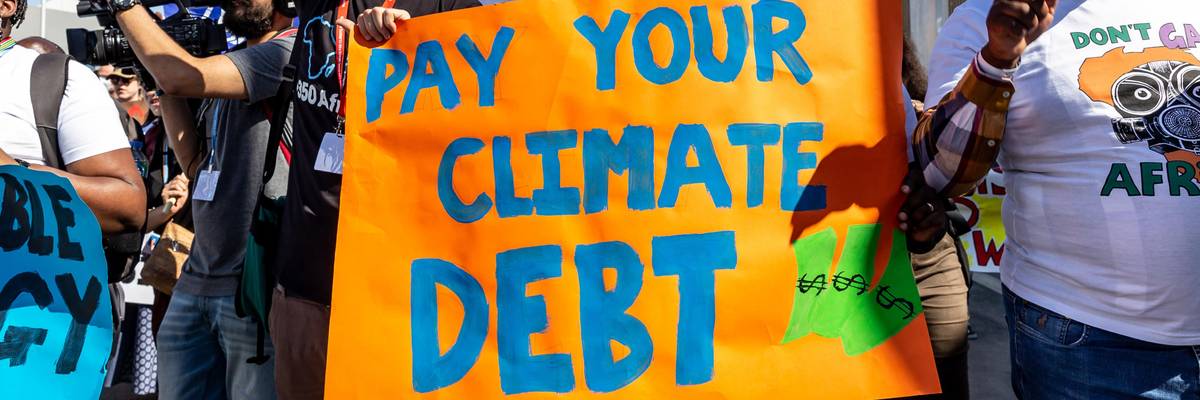
Activists demand climate action and loss and damage reparations at the COP27 U.N. Climate Change Conference in Sharm El-Sheikh, Egypt on November 12, 2022.
"The Fair Share NDC is more than just a pledge, it is a road map for how the U.S. can prevent the coming catastrophe," said one campaigner.
A coalition of climate campaigners on Tuesday published a proposal "for how the U.S. can play a bigger role in tackling the global climate emergency."
Described as "a civil society model document for the U.S. climate action pledge submission to the United Nations Framework Convention on Climate Change" under the landmark Paris agreement, the Fair Share Nationally Determined Contribution (NDC) is a "comprehensive plan for the United States to significantly reduce greenhouse gas emissions and enhance climate action in an equitable way both domestically and internationally."
Russell Armstrong, international policy liaison at the U.S. Climate Action Network, a member of the coalition, explained that "the Fair Share NDC is more than just a pledge, it is a road map for how the U.S. can prevent the coming catastrophe."
The plan sets targets for the U.S. to slash domestic carbon dioxide emissions by 80% by 2035 from 2005 levels, in line with "scientific standards and universally accepted global justice principles."
Allie Rosenbluth, U.S. program manager at coalition member Oil Change International, said: "The U.S. has a long way to go to become the climate leader the world needs. It's the largest producer of oil and gas in human history, and it plans to expand fossil fuels far beyond what's compatible with a livable climate."
"The Fair Share NDC shows what the U.S. must do to change course, starting with an equitable phaseout of fossil fuels and paying its fair share to the countries dealing with the consequences of U.S. extraction," she added.
The proposal is centered on a phased approach to ending all fossil fuel production, with coal to be eliminated by the end of the decade and oil and gas by 2031. The plan also proposes the development of "robust public transportation infrastructure and transitioning to 100% clean energy by 2030."
"This transition will also be fair, funded, feminist, and equitable," the report states. "A funded fossil fuel phaseout means that wealthy Global North countries commit to paying their fair share for fossil fuel phaseout in their own countries and in the Global South. A feminist fossil fuel phaseout means a gender-just energy transition from an extractive, fossil-fueled economy to a regenerative, care-based economy that sustains life and well-being for all."
According to Oil Change International:
The U.S.' historic emissions are so large that the U.S. cannot mitigate enough emissions domestically to fulfill its "fair share" of responsibility for the climate crisis. It must also provide Global South countries annually with $106 billion in mitigation funding and $340 billion worth of adaptation and loss and damage funding by 2030. To mobilize money on such a scale, the U.S. can redirect funding for fossil fuel subsidies and military weaponry, and make wealthy elites and big polluters pay for the damages they've already caused. Finally, changing global rules on debt, taxes, trade, and technology will also significantly expand the fiscal space Global South countries have to finance their own transitions, lowering the overall bill.
The report warns that the U.S. must commit "to avoiding dangerous distractions and unproven technological solutions, such as
forest offsets; carbon market mechanisms; carbon capture and storage, direct air capture, enhanced oil recovery, and other false solutions that act as dangerous distractions to only delay phasing out of fossil fuel production."
Tuesday is False Solutions Day during the Global Week of Action for Climate Finance and a Fossil-Free Future, which runs from September 13-20 and focuses on pressuring Global North governments to "stop making empty promises" and "cease pandering to corporations to perpetuate fossil fuels."
Basav Sen, climate policy director at the Institute for Policy Studies, a member of the coalition, said in a statement that "the U.S. is the world's largest oil and gas producer and largest cumulative greenhouse gas emitter."
"It's time the U.S. took responsibility for its outsized role in causing the climate crisis," Sen added. "The Fair Share NDC is a pathway for the U.S. to actually become the climate leader it claims to be, both internationally and at home."
Dear Common Dreams reader, It’s been nearly 30 years since I co-founded Common Dreams with my late wife, Lina Newhouser. We had the radical notion that journalism should serve the public good, not corporate profits. It was clear to us from the outset what it would take to build such a project. No paid advertisements. No corporate sponsors. No millionaire publisher telling us what to think or do. Many people said we wouldn't last a year, but we proved those doubters wrong. Together with a tremendous team of journalists and dedicated staff, we built an independent media outlet free from the constraints of profits and corporate control. Our mission has always been simple: To inform. To inspire. To ignite change for the common good. Building Common Dreams was not easy. Our survival was never guaranteed. When you take on the most powerful forces—Wall Street greed, fossil fuel industry destruction, Big Tech lobbyists, and uber-rich oligarchs who have spent billions upon billions rigging the economy and democracy in their favor—the only bulwark you have is supporters who believe in your work. But here’s the urgent message from me today. It's never been this bad out there. And it's never been this hard to keep us going. At the very moment Common Dreams is most needed, the threats we face are intensifying. We need your support now more than ever. We don't accept corporate advertising and never will. We don't have a paywall because we don't think people should be blocked from critical news based on their ability to pay. Everything we do is funded by the donations of readers like you. When everyone does the little they can afford, we are strong. But if that support retreats or dries up, so do we. Will you donate now to make sure Common Dreams not only survives but thrives? —Craig Brown, Co-founder |
A coalition of climate campaigners on Tuesday published a proposal "for how the U.S. can play a bigger role in tackling the global climate emergency."
Described as "a civil society model document for the U.S. climate action pledge submission to the United Nations Framework Convention on Climate Change" under the landmark Paris agreement, the Fair Share Nationally Determined Contribution (NDC) is a "comprehensive plan for the United States to significantly reduce greenhouse gas emissions and enhance climate action in an equitable way both domestically and internationally."
Russell Armstrong, international policy liaison at the U.S. Climate Action Network, a member of the coalition, explained that "the Fair Share NDC is more than just a pledge, it is a road map for how the U.S. can prevent the coming catastrophe."
The plan sets targets for the U.S. to slash domestic carbon dioxide emissions by 80% by 2035 from 2005 levels, in line with "scientific standards and universally accepted global justice principles."
Allie Rosenbluth, U.S. program manager at coalition member Oil Change International, said: "The U.S. has a long way to go to become the climate leader the world needs. It's the largest producer of oil and gas in human history, and it plans to expand fossil fuels far beyond what's compatible with a livable climate."
"The Fair Share NDC shows what the U.S. must do to change course, starting with an equitable phaseout of fossil fuels and paying its fair share to the countries dealing with the consequences of U.S. extraction," she added.
The proposal is centered on a phased approach to ending all fossil fuel production, with coal to be eliminated by the end of the decade and oil and gas by 2031. The plan also proposes the development of "robust public transportation infrastructure and transitioning to 100% clean energy by 2030."
"This transition will also be fair, funded, feminist, and equitable," the report states. "A funded fossil fuel phaseout means that wealthy Global North countries commit to paying their fair share for fossil fuel phaseout in their own countries and in the Global South. A feminist fossil fuel phaseout means a gender-just energy transition from an extractive, fossil-fueled economy to a regenerative, care-based economy that sustains life and well-being for all."
According to Oil Change International:
The U.S.' historic emissions are so large that the U.S. cannot mitigate enough emissions domestically to fulfill its "fair share" of responsibility for the climate crisis. It must also provide Global South countries annually with $106 billion in mitigation funding and $340 billion worth of adaptation and loss and damage funding by 2030. To mobilize money on such a scale, the U.S. can redirect funding for fossil fuel subsidies and military weaponry, and make wealthy elites and big polluters pay for the damages they've already caused. Finally, changing global rules on debt, taxes, trade, and technology will also significantly expand the fiscal space Global South countries have to finance their own transitions, lowering the overall bill.
The report warns that the U.S. must commit "to avoiding dangerous distractions and unproven technological solutions, such as
forest offsets; carbon market mechanisms; carbon capture and storage, direct air capture, enhanced oil recovery, and other false solutions that act as dangerous distractions to only delay phasing out of fossil fuel production."
Tuesday is False Solutions Day during the Global Week of Action for Climate Finance and a Fossil-Free Future, which runs from September 13-20 and focuses on pressuring Global North governments to "stop making empty promises" and "cease pandering to corporations to perpetuate fossil fuels."
Basav Sen, climate policy director at the Institute for Policy Studies, a member of the coalition, said in a statement that "the U.S. is the world's largest oil and gas producer and largest cumulative greenhouse gas emitter."
"It's time the U.S. took responsibility for its outsized role in causing the climate crisis," Sen added. "The Fair Share NDC is a pathway for the U.S. to actually become the climate leader it claims to be, both internationally and at home."
A coalition of climate campaigners on Tuesday published a proposal "for how the U.S. can play a bigger role in tackling the global climate emergency."
Described as "a civil society model document for the U.S. climate action pledge submission to the United Nations Framework Convention on Climate Change" under the landmark Paris agreement, the Fair Share Nationally Determined Contribution (NDC) is a "comprehensive plan for the United States to significantly reduce greenhouse gas emissions and enhance climate action in an equitable way both domestically and internationally."
Russell Armstrong, international policy liaison at the U.S. Climate Action Network, a member of the coalition, explained that "the Fair Share NDC is more than just a pledge, it is a road map for how the U.S. can prevent the coming catastrophe."
The plan sets targets for the U.S. to slash domestic carbon dioxide emissions by 80% by 2035 from 2005 levels, in line with "scientific standards and universally accepted global justice principles."
Allie Rosenbluth, U.S. program manager at coalition member Oil Change International, said: "The U.S. has a long way to go to become the climate leader the world needs. It's the largest producer of oil and gas in human history, and it plans to expand fossil fuels far beyond what's compatible with a livable climate."
"The Fair Share NDC shows what the U.S. must do to change course, starting with an equitable phaseout of fossil fuels and paying its fair share to the countries dealing with the consequences of U.S. extraction," she added.
The proposal is centered on a phased approach to ending all fossil fuel production, with coal to be eliminated by the end of the decade and oil and gas by 2031. The plan also proposes the development of "robust public transportation infrastructure and transitioning to 100% clean energy by 2030."
"This transition will also be fair, funded, feminist, and equitable," the report states. "A funded fossil fuel phaseout means that wealthy Global North countries commit to paying their fair share for fossil fuel phaseout in their own countries and in the Global South. A feminist fossil fuel phaseout means a gender-just energy transition from an extractive, fossil-fueled economy to a regenerative, care-based economy that sustains life and well-being for all."
According to Oil Change International:
The U.S.' historic emissions are so large that the U.S. cannot mitigate enough emissions domestically to fulfill its "fair share" of responsibility for the climate crisis. It must also provide Global South countries annually with $106 billion in mitigation funding and $340 billion worth of adaptation and loss and damage funding by 2030. To mobilize money on such a scale, the U.S. can redirect funding for fossil fuel subsidies and military weaponry, and make wealthy elites and big polluters pay for the damages they've already caused. Finally, changing global rules on debt, taxes, trade, and technology will also significantly expand the fiscal space Global South countries have to finance their own transitions, lowering the overall bill.
The report warns that the U.S. must commit "to avoiding dangerous distractions and unproven technological solutions, such as
forest offsets; carbon market mechanisms; carbon capture and storage, direct air capture, enhanced oil recovery, and other false solutions that act as dangerous distractions to only delay phasing out of fossil fuel production."
Tuesday is False Solutions Day during the Global Week of Action for Climate Finance and a Fossil-Free Future, which runs from September 13-20 and focuses on pressuring Global North governments to "stop making empty promises" and "cease pandering to corporations to perpetuate fossil fuels."
Basav Sen, climate policy director at the Institute for Policy Studies, a member of the coalition, said in a statement that "the U.S. is the world's largest oil and gas producer and largest cumulative greenhouse gas emitter."
"It's time the U.S. took responsibility for its outsized role in causing the climate crisis," Sen added. "The Fair Share NDC is a pathway for the U.S. to actually become the climate leader it claims to be, both internationally and at home."

