
SUBSCRIBE TO OUR FREE NEWSLETTER
Daily news & progressive opinion—funded by the people, not the corporations—delivered straight to your inbox.
5
#000000
#FFFFFF
To donate by check, phone, or other method, see our More Ways to Give page.


Daily news & progressive opinion—funded by the people, not the corporations—delivered straight to your inbox.
Reinvesting just 15% of global military spending, roughly $387 billion, would be more than enough to cover the annual costs of climate adaptation in developing countries. The money exists. The will does not.
Last week, the British government quietly informed the United Nation's Green Climate Fund that it would halve the contribution it pledged just two years ago, not because the climate crisis has eased, but because it is spending more on weapons. The move was framed as a "hugely difficult decision," not ideological, and necessary to deliver what United Kingdom Foreign Minister Yvette Cooper called "the biggest increase in defence spending since the Cold War." The planet, apparently, can wait.
It cannot.
The UK's retreat from climate finance is not some isolated budget decision. It is part of a choice being made across the Global North: to rearm, to retreat from development commitments, and to leave the countries least responsible for the climate crisis to deal with its worst consequences on their own.
Global military expenditure reached $2.887 trillion in 2025, pushing the global military burden to 2.5% of GDP, its highest level since 2009. Europe's alone surged 14% to $864 billion, the highest level ever recorded for the continent. Meanwhile, the UN's own analysis found that reinvesting just 15% of global military spending, roughly $387 billion, would be more than enough to cover the annual costs of climate adaptation in developing countries. The money exists. The will does not.
More conflict and more military spending will only deepen the crisis and make millions more people vulnerable to it.
The UK's Green Climate Fund cut does not happen in a vacuum; the US has refused to deliver any further money to the GCF under President Donald Trump and has also given up its seat on the fund's board. According to the Organisation for Economic Co-operation and Development, international development assistance fell by 23.1% in 2025, the steepest annual decline on record, with the United States slashing its aid budget by 57%, Germany by 17%, and France and the UK by 11% each.
The countries that industrialized on the back of fossil fuels, with the highest historical emissions and the highest per capita carbon footprints, are the ones least bothered by any of this.
And yet for the Global South, the signal being sent today is unmistakable: The nations least responsible for the climate catastrophe bearing down on them will have to bear its consequences largely alone, watching the world burn while the architects of that burning pivot to missiles and military budgets. The prospect of just and equitable climate finance from the developed world is beginning to look not merely uncertain, but futile.
The same wars that are killing climate finance are generating record profits elsewhere. Oil and gas companies' profits are soaring as the Iran conflict continues. Chevron, Shell, BP, ConocoPhillips, Exxon, and TotalEnergies are projected to make $2,967 a second in profits in 2026, nearly $37 million more per day than in 2025, with total projected profits across the six companies reaching approximately $94 billion for the year. None of that windfall is going toward the energy transition. BP has slashed planned investment in renewable energy and increased oil and gas spending, Shell has watered down its 2030 climate targets, ExxonMobil has cut its planned low-carbon investment by a third, and TotalEnergies has declined to adopt a transition plan aligned with 1.5°C of warming.
If a handful of fossil fuel corporations are posting billions in profits in a single year, profits made possible by geopolitical instability, then holding them liable through regulation and taxation is not radical but logical. Windfall profit taxes on fossil fuel companies, long discussed and rarely enacted, could generate precisely the kind of revenue that developed governments claim they no longer have for climate finance.
A February 2026 report by Climate Action Network Europe shows the framework already exists, recommending a differentiated corporate tax on fossil fuel profits with revenues recycled directly into the energy transition and international climate finance. Oxfam makes the same case, calling for a Rich Polluter Profit Tax and an equity-based road map that reflects the historical responsibility and financial capacity of different states. The United States and Europe built their wealth on fossil fuels. Many countries in the Global South remain dependent on them not by choice, but by circumstance. Demanding they exit on the same timeline is neither fair nor realistic.
The tools and the arguments exist. What is missing is political will, and the Global South cannot afford to keep waiting for it. The path forward lies in demanding structural reform of the international tax regime that allows fossil fuel super profits and billionaire fortunes to escape accountability; of the debt architecture that forces climate-vulnerable nations to choose between servicing loans and financing adaptation; and of the COP process itself, which has too long allowed wealthy nations to treat climate finance pledges as suggestions rather than obligations.
So, while the world heats up and vulnerable countries face worsening heatwaves, floods, and disasters, while thousands lose lives and livelihoods, one thing is becoming painfully certain: More conflict and more military spending will only deepen the crisis and make millions more people vulnerable to it. The Global South did not start these wars. It should not be made to pay for them, not with its people, its economies, or its climate.

In addition to cutting our own renewable programs to spend more on the carbon-intensive Pentagon, we’re also spending nearly 40 times more helping other countries do the same rather than helping them adapt to our warming planet.
Ten years ago as of December 2025, nearly every country in the world made a promise. By signing the Paris Agreement, governments committed to limit global temperature rises to no more than 2°C—and ideally 1.5°C— to avoid the most devastating impacts of a warming planet.
Recognizing their historic responsibility for greenhouse gas emissions, the Paris Agreement called on wealthier countries like the United States to contribute funding to help poorer countries adapt. And it envisioned the economic and social transformations needed to keep the planet from overheating to unlivable levels.
In practice, that means phasing out fossil fuels, scaling up renewable energy, and investing in sustainable systems—from agriculture to transportation—to keep our world powered and going.
Unfortunately, that’s not what our leaders are doing.
The Pentagon is the most carbon intensive institution on the planet, with emissions exceeding those of entire nations like Sweden, Denmark, and Portugal. And those emissions will likely grow as Pentagon spending continues to skyrocket.
With the world’s largest economy and the greatest chunk of historical emissions, the United States should be contributing an estimated $446 billion per year to meet its fair share of global climate action. Instead, Washington has repeatedly abandoned global leadership—joining the Paris Agreement in 2016, pulling out in 2020, rejoining a year later, and withdrawing again this year.
For the past century, at least 80% of US energy consumption has come from fossil fuels like natural gas, coal, and oil. Today, domestic energy demand is soaring as Big Tech and private corporations race to build massive, water- and energy-intensive AI data centers—further locking in fossil fuel dependence.
Meanwhile, rather than aligning its national priorities with climate commitments, the US government has doubled down on a different and dangerous path: wars and weapons.
The Pentagon is the most carbon intensive institution on the planet, with emissions exceeding those of entire nations like Sweden, Denmark, and Portugal. And those emissions will likely grow as Pentagon spending continues to skyrocket.
Congress recently approved a $900 billion Pentagon budget. When combined with the $156 billion boost for the Pentagon from President Donald Trump’s so-called “Big Beautiful Bill,” that brings the total to over $1 trillion for the US war machine.
That’s right: a trillion dollars.
At the same time, the Trump administration made sweeping cuts to environmental programs that took decades to build.
The Environmental Protection Agency’s budget was slashed by more than half—from $9.14 billion for 2025 to just $4.16 billion for 2026. And President Donald Trump has cancelled or frozen $29 billion in environmental grants for local communities, undermining efforts to secure clean air and water, clean up contaminated sites, improve public health, and create jobs.
The National Priorities Project of the Institute for Policy Studies, my organization, found that we’ve spent $79 billion on Foreign Military Financing over the last decade alone. In these deals, the US provides grants to other countries to purchase US-made weapons. On the flip side, only $2 billion has gone to the Green Climate Fund, the primary pool of money supporting nations most impacted by, yet least responsible for, climate change. (Under Trump, the figure is actually $0.)
So in addition to cutting our own renewable programs to spend more on the carbon-intensive Pentagon, we’re also spending nearly 40 times more helping other countries do the same rather than helping them adapt to our warming planet.
Ordinary people are already paying the price for these choices. Floods, hurricanes, and wildfires are growing more frequent and destructive, driving up recovery expenses and insurance costs. Utility bills are climbing, too, due to extreme temperatures and energy-thirsty AI data centers.
Ten years after the Paris Agreement, the choice is clear. We can continue down a path of fossil fuels and endless wars, or we can invest in climate solutions that actually keep people safe. Business as usual will leave homes destroyed, families hungry, and people sicker and more vulnerable.
The clock is ticking. It’s time to stop funding destruction and start putting money towards just, healthy futures for all.
"We're calling on World Bank President Ajay Banja to phase out these investments, which are undermining his climate agenda," said one researcher.
The Green Climate Fund and 11 of the 15 multilateral development banks together invested at least $2.27 billion in factory farming in 2023, undercutting their stated climate goals, according to a report published Monday by the Stop Financing Factory Farming coalition.
The report, launched the same day as the start of the International Monetary Fund and the World Bank's annual meetings in Washington, D.C., found that the World Bank was the worst offender. The bank—principally through its private-sector lending arm the International Finance Corporation (IFC)—put nearly $750 million toward industrial agricultural projects, five times more than any of the other banks.
"Factory farming is a leading driver of greenhouse gas emissions, deforestation, biodiversity loss, animal cruelty, and water pollution," Merel van der Mark, head of Animal Welfare and Finance at Sinergia Animal, said in a statement. "Development banks have all pledged to align their investments with the Paris climate agreement, yet are failing to make the kinds of investments needed to keep the goal to limit global temperature rises to 1.5°C within reach."
"There are examples of better practices out there."
The report was based on 2023 disclosure information scraped from project webpages by the Early Warning System. It found that the Green Climate Fund and 11 of the 15 multilateral development banks had invested a total of $3.3 billion in animal agriculture generally, funding 62 projects. The banks also mobilized another $3.4 billion for the sector from other sources including banks and governments. The World Bank Group also led the pack in animal agriculture financing overall at over $1.5 billion.
Factory farming—or industrial agriculture—received most of that money, representing 68.3% of investments and 76.7% of supported projects. Only 2.3% of investments and 6.7% of projects involved non-industrial farming that might potentially be sustainable.
The report's authors said their research "reveals a concerning trend toward support for the industrialization of animal agriculture." This can occur through more monocropping of plants like soy or corn for animal feed; more warehousing of large numbers of animals in concentrated feed operations that release large amounts of climate-, land-, and water-polluting waste; and the construction of slaughterhouses.
The World Bank's investments in factory farming go against its own research. The bank released a report in May finding that the agrifood system generates a third of total greenhouse gas emissions, and that animal production and consumption make up almost 60% of those emissions. It even stopped serving meat in its staff cafe.
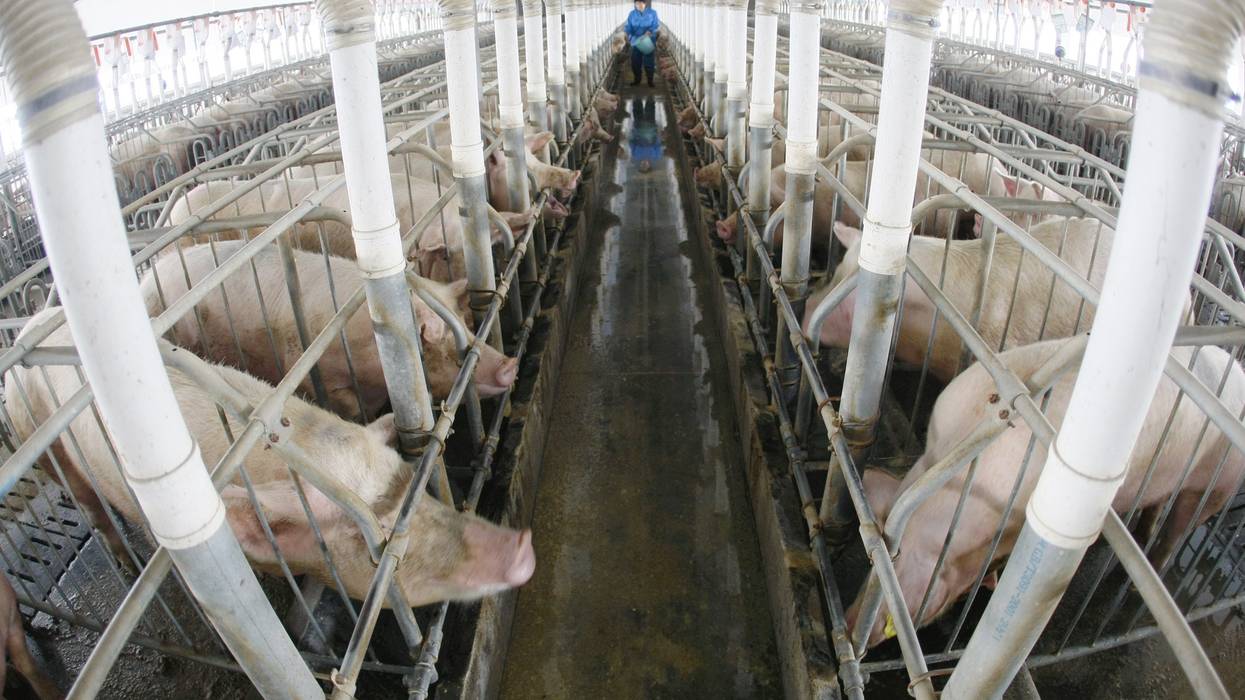
"The World Bank has set out an ambitious road map to drastically cut agricultural emissions while feeding the world. However, this good work is being undermined by its private sector arm, the International Finance Corporation," said International Accountability Project researcher Alessandro Ramazzotti. "Last year IFC invested $501 million in factory farming including a $47 million loan to a Chinese company for a multi-story pig farm, making it the largest investor of all the development banks. We're calling on World Bank President Ajay Banja to phase out these investments, which are undermining his climate agenda."
In addition, the groups behind the Stop Financing Factory Farming coalition—which is headed by Bank Information Center, Friends of the Earth U.S., Global Forest Coalition, International Accountability Project, Sinergia Animal, and World Animal Protection—call on all development banks to move their money from industrial agriculture to regenerative agriculture that boosts biodiversity, helps the environment, and strengthens local communities, following the model of the five banks in the report that did not invest in factory farms in 2023.
"There are examples of better practices out there," said Ladd Connell, environment director at Bank Information Center. "The Green Climate Fund supports some low-carbon projects, such as providing financial and technical support to smallholder women farmers in Cote D'Ivoire to help them adapt to climate change. Where banks invest in new livestock projects, they should be innovative and sustainable, following agroecological principles."
"Parties missed a pivotal opportunity for developed countries to walk the talk regarding their commitments to combating the climate crisis," one campaigner lamented.
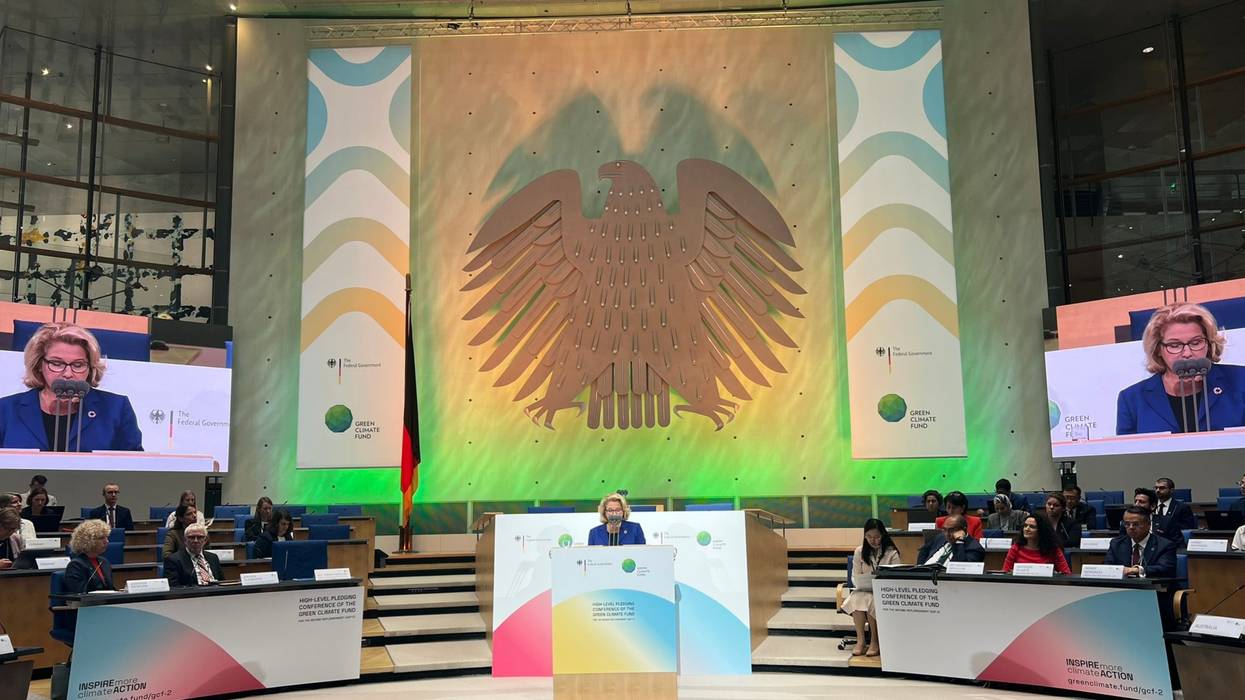
Climate defenders admonished several rich nations for falling short of the $10 billion fundraising goal set for Thursday's Green Climate Fund Pledging Summit in Bonn, Germany, with the United States singled out for what one campaigner called its "glaring and inexcusable" failure to contribute this round, even as the climate emergency worsens.
The Green Climate Fund (GCF)—established in 2010 under the United Nations Framework Convention on Climate Change (UNFCCC) to finance projects in developing nations to help them adapt to the climate emergency—presented an opportunity for wealthier nations to make new and increased pledges ahead of the U.N. Climate Change Conference, or COP28, which begins November 30 in Dubai.
However, Thursday's summit raised just $9.3 billion, falling short of its $10 billion goal and coming nowhere near the $200-$250 billion the UNFCCC estimates is needed every year until 2030. Twenty-five countries promised to donate to the fund, with Denmark, Ireland, and Liechtenstein doubling their previous pledges.
Germany and the United Kingdom promised $2 billion apiece. France offered $1.7 billion, while Japan said it would contribute $1.1 billion. Australia, Switzerland, Italy, and Sweden said they were working on their commitments and would donate later.
The U.S.—which previously pledged $3 billion—also signaled its intent to contribute, but offered nothing on Thursday. China, the world's largest polluter, did not pledge.
"Time is not on our side. And promises made must be promises kept," Selwin Hart, special climate adviser to U.N. Secretary-General António Guterres, said in a statement following the summit. "This is the only way to rebuild the trust needed to confront the climate crisis."
Harjeet Singh, head of global political strategy at the advocacy group Climate Action Network International, said in a statement that "the Green Climate Fund, envisioned as the lifeline for climate action in developing nations, is held back by the indifference of wealthy countries."
"It's vital to underscore that public finance is key to ensuring vulnerable nations receive the support they need, particularly for boosting adaptation efforts," he stressed.
Singh continued:
While Ireland's 150% pledge increase is praiseworthy, the tepid commitments—or outright stagnation—from nations such as Japan and Norway are deeply concerning. Some countries, like Sweden, seem to sidestep their obligations by urging developing nations to contribute to the fund. The silence of the United States, even as it participates on the GCF Board and shapes policies without meeting its financial obligations, is glaring and inexcusable.
"With COP28 on the horizon, the GCF replenishment conference has fallen short of expectations," he added. "However, it's important to remember that nations are not restricted to making pledges only during set intervals; they can and should step forward with contributions at any time to support climate action."
Tara Daniel, senior program manager at the Women's Environment and Development Organization, said that "today, parties missed a pivotal opportunity for developed countries to walk the talk regarding their commitments to combating the climate crisis."
"As the flagship fund for implementing the Paris agreement, one that prioritizes adaptation as much as mitigation, and governed more equitably than multilateral development banks, the GCF is central to our collective efforts to achieve transformative climate action," Daniel asserted.
"Unfortunately, the pledging conference today showed that while climate impacts continue to increase, collective climate finance through the GCF has not increased," she lamented. "The U.S. in particular has failed to put any money where its climate rhetoric is."
"Yet the opportunity is not irrevocably lost; the pledging conference does not have to be the end of the road," Daniel added. "We wait to see if COP28 unlocks the ambition the world needs and deserves."
Climate finance must be redirected away from greenwashing and towards real solutions like a just transition, helping frontline communities, conservation, protection of land and forests, and reforestation.
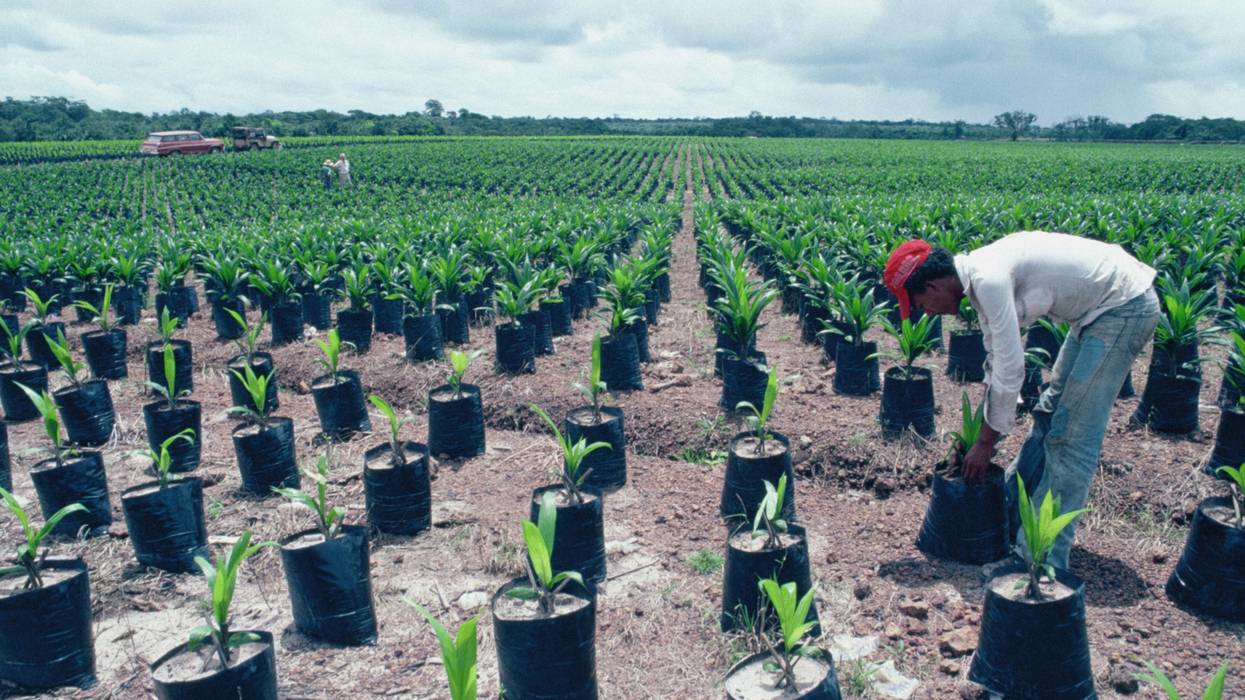
On July 12, 2023, the United Nations Framework Convention on Climate Change’s Green Climate Fund, the largest global fund dedicated to combating climate change, approved a funding proposal by the &Green Fund for more than $189.3 million for monoculture plantations of oil palm, cocoa, and rubber, and for unsustainable industrial cattle farming. It was passed during the fund’s 36th Board Meeting, held in the Republic of Korea.
Civil society organizations had earlier raised concerns that the Green Climate Fund (GCF) was considering more investments in false climate change solutions such as monoculture plantations and intensive livestock farming, which exacerbate the impacts of climate change. The GCF Observer Network had put forward their concerns prior to and during the board meeting outlining why &Green Fund’s proposal should not be approved. Despite strong opposition that the project—which has the Dutch Development Bank (FMO) as the accredited entity—would further undermine the rights of Indigenous Peoples and enable greenwashing, the proposal was passed.
The &Green portfolio includes agribusiness such as the multinational food processing company Marfrig from Brazil, which has been accused of repeatedly being involved in illegal tree cutting, “cattle laundering,” and extensive palm oil monoculture tree plantations in Indonesia.
The GCF, established in 2010, is mandated by the U.N. Framework Convention on Climate Change and the Paris agreement to support countries of the Global South in countering the impacts of climate change. However, the GCF has historically approved and funded other highly-controversial projects, such as a $25 million equity agreement with the Arbaro Fund, a Germany-based private equity investment firm, for monoculture tree plantations that have led to devastating social, environmental, and economic harm particularly in the Global South, to Indigenous peoples, local communities, and women in all their diversities.

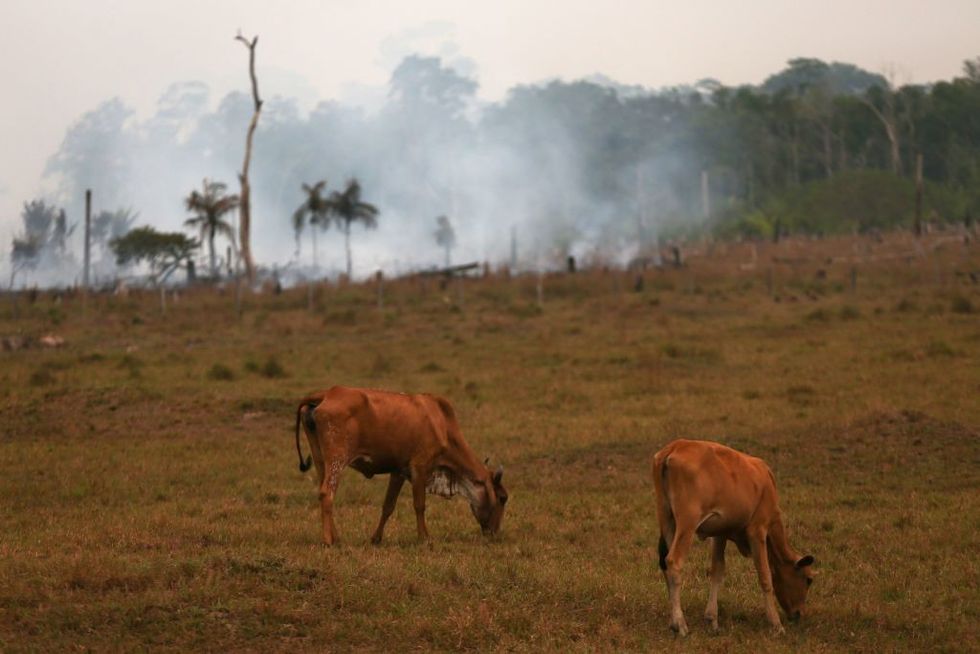
Cattle graze amongst the hazy smoke caused by fires along the BR-230 (Transamazonica) highway in Manicoré, in Amazonas, Brazil on September 22, 2022.
(Photo: Michael Dantas /AFP via Getty Images)
The &Green Fund has been fully operational since 2017 and currently has a portfolio of seven ongoing projects, mainly consisting of intensive cattle farming and monocultures. The funding proposal submitted to the GCF basically consisted of a request for public finance to de-risk private sector investments in “deforestation-free and socially inclusive commodity supply chains”—in other words, for monoculture plantations of oil palm, cocoa, and rubber, and unsustainable industrial cattle farming. The &Green portfolio includes agribusiness such as the multinational food processing company Marfrig from Brazil, which has been accused of repeatedly being involved in illegal tree cutting, “cattle laundering,” and extensive palm oil monoculture tree plantations in Indonesia.
The funding proposal had many other concerning aspects such as a very complex financing structure, overly optimistic claims of CO2 reduction, and the fact that their projects could include GMO seeds. It demands public climate finance to support agribusinesses that already have access to large amounts of finance. If this funding proposal is approved, we will very likely see some of the same impacts and mistakes that are being reported in the sub-projects part of the Arbaro Fund.

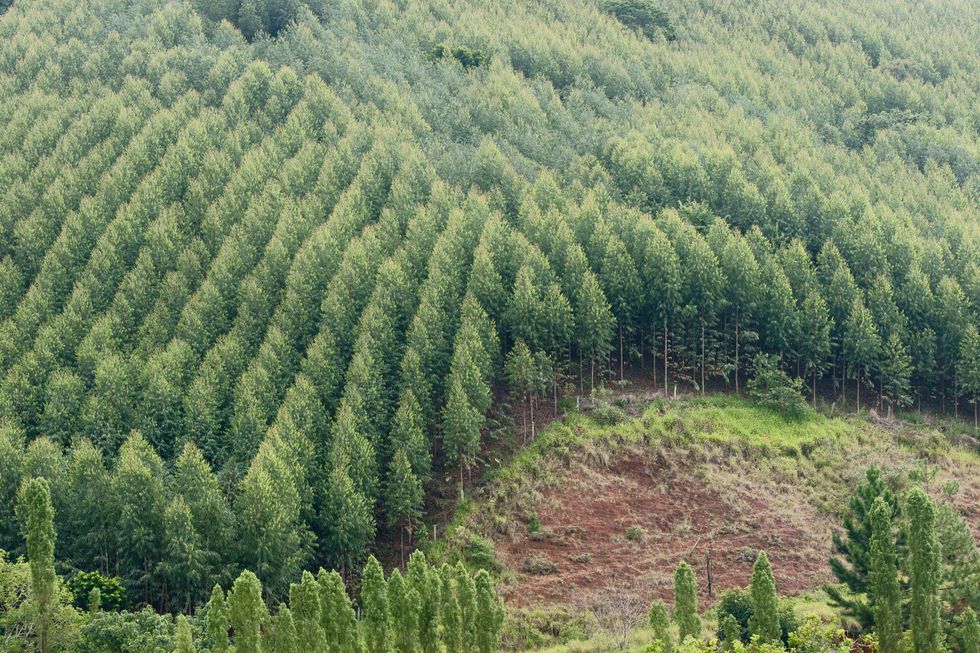
A eucalyptus plantation is seen in Sao Luis do Paraitinga, Brazil on January 1, 2015.
(Photo: Laurent Guerinaud/AGB Photo Library/Universal Images Group via Getty Images)
The Arbaro Fund proposal approved by the GCF in 2020 led to the establishment of 75,000 hectares of new tree plantations across seven target countries in Latin America and sub-Saharan Africa. Since its creation, the Arbaro Fund has been critiqued by more than 100 civil society organizations due to the negative social, environmental, and economic impacts of extensive monoculture tree plantations for industrial purposes. These include the displacement of local communities from their traditional land and livelihoods, increasing insecurity in land tenure, a disruption in the local peasant economy, the worsening of economic difficulties, rising divisions within the communities, and the further erosion of the rights and agency of women in all their diversities.
These impacts have been documented in studies and reports by the World Rainforest Movement, the Global Forest Coalition, and Centro de Estudios Heñói. More recently, an investigation led by Lighthouse Reports showed how European development finance institutions, including the FMO, where the Dutch state is the bank's largest shareholder, fund forestry businesses that use agrochemicals that are banned by the European Union itself.
As the studies show, the territorialization of agribusiness and, in recent years, of eucalyptus plantations, has led to the large-scale displacement of communitie
False promises of development and mitigation of climate change and the expansion of industrial monoculture tree plantations have been a common pattern in the countries where Arbaro operates. The Centro de Estudios Heñói has highlighted the tendency of the forestry industry to reproduce the predominant agro-export model in Paraguay. Quite contrary to the declarations of good intentions and the greenwashed claims of carbon capture and greenhouse gas reduction, these eucalyptus trees end up as charcoal to dry soybeans, corn, wheat, and others.
As the studies show, the territorialization of agribusiness and, in recent years, of eucalyptus plantations, has led to the large-scale displacement of communities. The inhabitants also experience biodiversity loss, as animals, food crops, water, and soil are affected. There are cases of overt and potential land conflicts with the companies (in Santaní, area of influence of Forestal Apepú, a timber production business fully owned by Arbaro) and other historical cases such as the case of Barbero Kue (area of influence of Forestal San Pedro). Contrary to the companies’ claims about their social commitment to the communities, the inhabitants report that they do not receive any type of assistance. Most jobs are temporary and dangerous and disassociate the workers from their peasant culture.

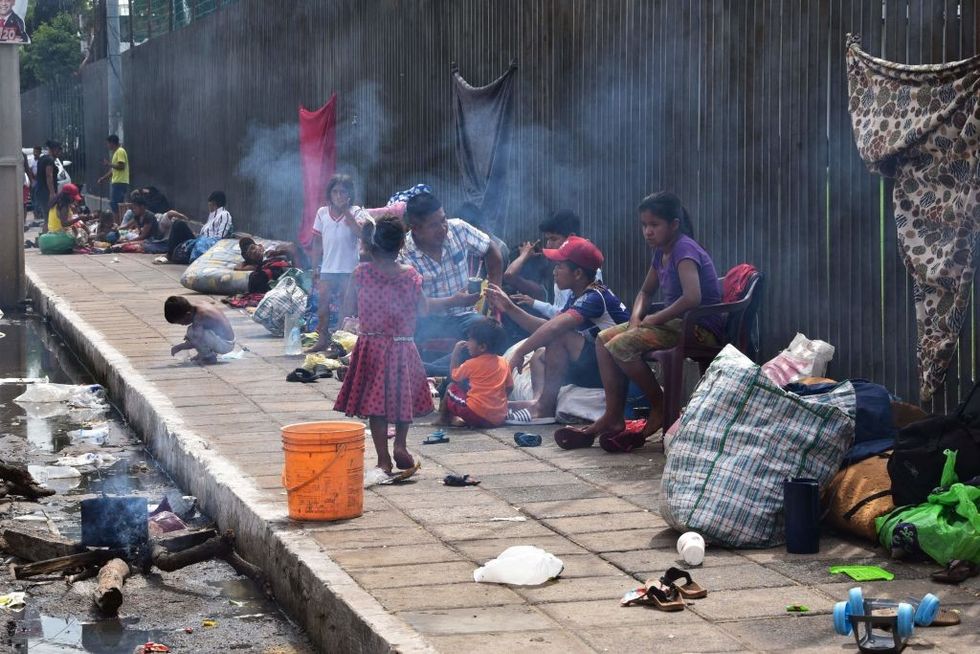
Indigenous people camp outside the National Institute of the Indigenous headquarters during a protest asking assistance for agricultural production, land purchase and better health service in Asunción, Paraguay, on January 23, 2023.
(Photo: Norberto Duarte/AFP via Getty Images)
In June 2023, Heñói Centro de Estudios conducted field visits to communities near Apepú Forestry. The villagers told Heñói that they were economically impoverished and that the rural youth are being forced to relocate to other regions for work. They also noted that there were threats looming over the Indigenous Peoples and the local communities, owing to the interests of big businesses and large-scale landowners. They stated that they have been dispossessed of their lands, and were going to starve in the cities.
A farmer stated: "The eucalyptus plantations have ruined the water and the soil. Nothing grows here anymore, no beans, cassava, corn, nothing. Before the eucalyptus, our corn was big and beautiful, and we had bountiful harvests. We have lost everything, even after all the sacrifices we have made.”
The weakening food security in the region also impacts the culinary culture of the region. Villagers reported that it is no longer possible to make Vorí vorí, Paraguay soup, or chipa guasú. Food is fundamental to primary socialization, and the communal binding of the peasantry is being lost.
"Though we are the ones who produce food for everyone, farmers are not prioritized by the state or by the companies."
The peasants receive no assistance from the state. "Though we are the ones who produce food for everyone, farmers are not prioritized by the state or by the companies. If food production ends, what will happen to all of us? They do not value us," said another peasant farmer. The local community has been discussing the importance of working together to find a resolution and to demand technical assistance for small producers.
To honor the pledge and recognize the Paris Agreement benchmark of 1.5°C, climate finance must be redirected away from greenwashing and towards real solutions—just transition, climate resilience of frontline communities, conservation, protection of land and forests, and reforestation—and provide direct funding access to Indigenous Peoples, women from frontlines communities, and local communities. Their land rights must be secured, as must their rights to resources, their territories, and their right to govern. Real solutions that are rights-based and gender-just do exist, and they are the only way to prevent catastrophic global climate change.
As the Green Climate Fund (GCF), the financial mechanism for the UN climate agency, meets this week in South Korea, more than 170 civil society groups are calling on the international body to reject bids from big banks HSBC and Credit Agricole to receive and manage funds to help poorer nations tackle climate change.
Given their role in financing climate pollution and their poor records on human and environmental rights, approving the financial giants' applications would run counter to the Fund's goals, the groups say.
"Creating new business for big banks with large fossil fuel portfolios and poor records on human rights and financial scandal would undermine the very purpose of the Fund," said Karen Orenstein of Friends of the Earth U.S. on Monday.
"There is no profit to be made in building the resilience of those adversely impacted by climate change," added Sam Ogallah of the Pan African Climate Justice Alliance. "Public funds must be used to support local communities in developing countries, not to subsidize big banks."
What's more, "accrediting HSBC and Credit Agricole would be inconsistent with...the Paris Agreement," said Annaka Peterson of Oxfam, referring to the deal hammered out at the COP21 climate talks. "Any private sector partner of the GCF must have a credible strategy in place to make its entire portfolio and operations consistent with keeping global temperature rise to no more than 2 degC, let alone well below 1.5 degC."
Friends of the Earth, Pan African Climate Justice Alliance, and Oxfam are just three of 172 NGOs that released a statement (pdf) earlier this month arguing that offering accreditation to HSBC and Credit Agricole "would pose serious reputational and moral risk to the GCF" due to the banks' historic conduct, including:
For example, a report from BankTrack has shown that HSBC and Credit Agricole provided $7 billion and $9.5 billion, respectively, to the coal industry between 2009 and 2014, "and their coal financing does not show a clear downward trend," notes BankTrack's Yann Louvel.
The Fund's board meeting runs Tuesday through Thursday in Songdo, South Korea. GCF executive director Hela Cheikhrouhou told the Thomson Reuters Foundation last week that she will ask for an increase of between 80 and 120 new staff in order to meet its targets. She also said it was too early to say whether the Fund could meet the board's goal to allocate $2.5 billion in 2016.
This isn't the first time the Fund has engendered criticism from climate justice groups or frontline communities, who say developed nations, despite their role in driving global warming, have been slow to pony up the necessary--and just--financing.
Last year, environmental and social justice organizations expressed outrage when the Fund accredited Deutsche Bank, one of the world's largest financiers of coal, to receive and distribute climate adaptation and mitigation funds.
"We want the Green Climate Fund to succeed," groups wrote at the time. "But for it to do so, it needs to change direction away from accrediting controversial big banks that are heavily invested in fossil fuels and thus actually exacerbating climate change. If the [Green Climate Fund] continues in such a direction, this would reinforce our fears that in the near future we may have to protest an institution we have thus far been supportive of and integral to creating."