

SUBSCRIBE TO OUR FREE NEWSLETTER
Daily news & progressive opinion—funded by the people, not the corporations—delivered straight to your inbox.
5
#000000
#FFFFFF
To donate by check, phone, or other method, see our More Ways to Give page.
Daily news & progressive opinion—funded by the people, not the corporations—delivered straight to your inbox.
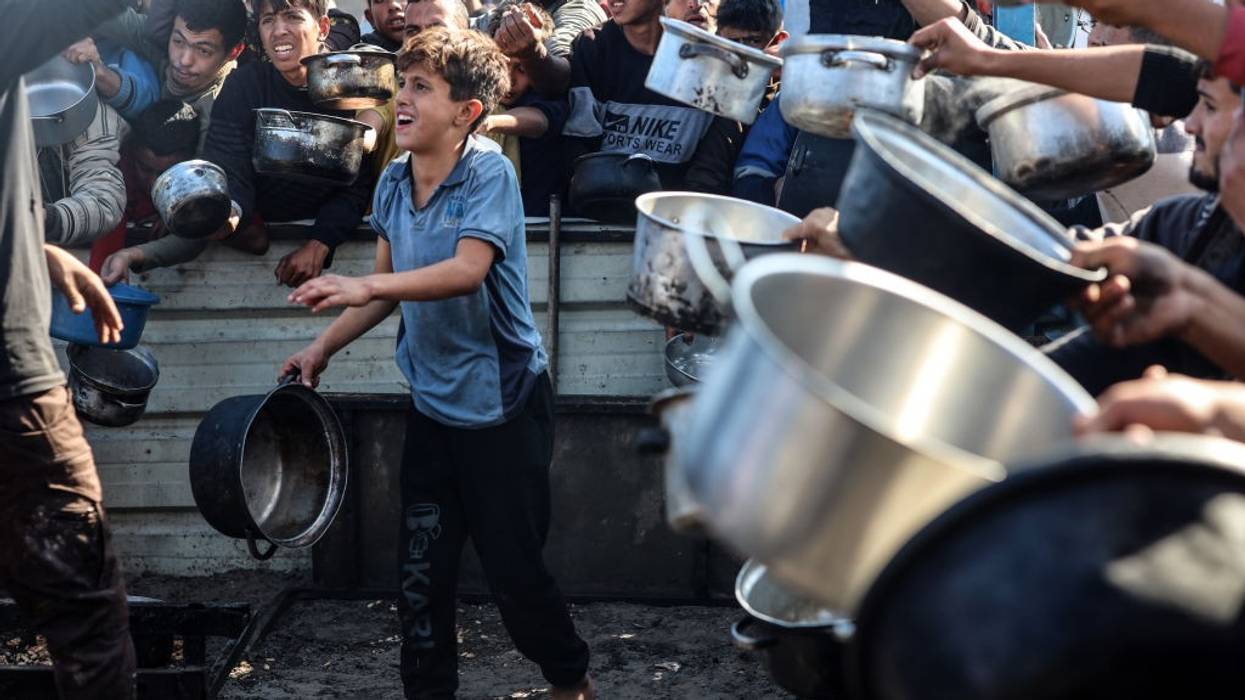
"The window of opportunity to deliver assistance is now, today, not tomorrow," said the deputy director-general of the United Nations Food and Agriculture Organization.
A top official at the United Nations Food and Agriculture Organization said Monday that food availability across Gaza has reached "an all-time low" under Israel's suffocating blockade, which has heavily restricted the entrance of lifesaving humanitarian assistance and plunged the enclave into famine.
"Food supply has sharply deteriorated," FAO Deputy Director-General Beth Bechdol said at a conference in Cairo, Egypt. "The window of opportunity to deliver assistance is now, today, not tomorrow. Food, medicine, and fuel are self-evident priorities, but we must also prioritize the ability to grow food locally where it is needed most to ensure survival."
Bechdol's grim assessment came weeks after the Biden administration pressured Israel to improve conditions on the ground in Gaza, which has been utterly devastated by more than a year of bombing.
Aid organizations say that far from improving, Gaza's humanitarian crisis has only gotten worse since the Biden administration threatened to cut off the supply of U.S. weapons to Israel. Last month, the U.S. effectively dropped its pressure campaign by concluding that Israel was not violating international law by blocking American humanitarian assistance.
Most of Gaza's population is currently experiencing "high levels of food insecurity," according to the latest Integrated Food Security Phase Classification (IPC) figures, and the "risk of Famine persists across the whole Gaza Strip."
"The catastrophe in Gaza is nothing short of a complete breakdown of our common humanity. The nightmare must stop."
In addition to obstructing aid deliveries, Israeli forces have decimated Gaza's agricultural infrastructure and cropland, repeatedly attacked aid workers, and facilitated the looting of humanitarian supplies, fueling desperation among Gaza's starving population. Last week, as The Associated Press reported, "two children and a woman were crushed to death... as a crowd of Palestinians pushed to get bread at a bakery in the Gaza Strip amid a worsening food crisis in the war-ravaged territory."
Amina Mohammed, the U.N.'s deputy secretary-general, said at the Cairo conference on Monday that "conditions for Palestinians in Gaza are appalling and apocalyptic," with malnutrition running "rampant" and famine "imminent."
"In the past four months alone, nearly 19,000 children were hospitalized due to acute malnutrition—nearly double the cases in the first half of the year," Mohammed said. "In the face of the gigantic needs, humanitarian aid is—outrageously—being blocked. This flies in the face of the clear requirements under international humanitarian law to respect and to protect civilians and to ensure their essential needs are met."
"It's past time for an immediate cease-fire and the immediate and unconditional release of all hostages," she added. "The catastrophe in Gaza is nothing short of a complete breakdown of our common humanity. The nightmare must stop. We cannot continue to look away."
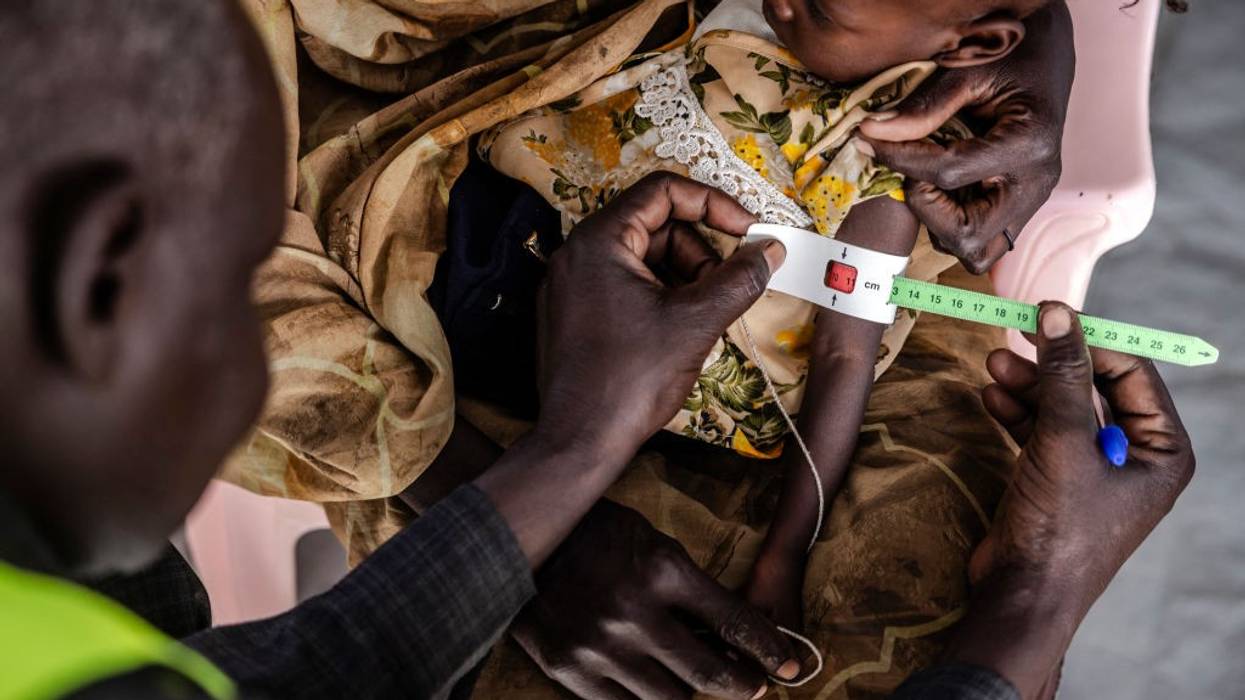
More than 730 million people around the world faced hunger last year, including 1 in 5 Africans, with over half a billion people set to be chronically malnourished by the decade's end if current trends continue, according to a report published Wednesday by a United Nations agency.
One in 11 people globally went hungry in 2023, the latest U.N. Food and Agriculture Organization (FAO) State of Food Security and Nutrition in the World (SOFI) report revealed.
"The report shows that the world has been set back 15 years, with levels of undernourishment comparable to those in 2008-2009," according to the FAO. "An alarming number of people continue to face food insecurity and malnutrition as global hunger levels have plateaued for three consecutive years."
"Hunger is not something natural. Hunger is something that requires a political decision."
The agency noted significant variation in regional trends as "the percentage of the population facing hunger continues to rise in Africa (20.4%), remains stable in Asia (8.1%)—though still representing a significant challenge as the region is home to more than half of those facing hunger worldwide—and shows progress in Latin America (6.2%)."
"If current trends continue, about 582 million people will be chronically undernourished in 2030, half of them in Africa," FAO said, warning that "the world is falling significantly short of achieving Sustainable Development Goal (SDG) 2, Zero Hunger, by 2030."
FAO Director-General Qu Dongyu said in a statement that "transforming agrifood systems is more critical than ever as we face the urgency of achieving the SDGs within six short years. FAO remains committed to supporting countries in their efforts to eradicate hunger and ensure food security for all."
"We will work together with all partners and with all approaches, including the G20 Global Alliance against Hunger and Poverty, to accelerate the needed change," Qu added. "Together, we must innovate and collaborate to build more efficient, inclusive, resilient, and sustainable agrifood systems that can better withstand future challenges for a better world."
FAO argued that "achieving SDG 2 Zero Hunger requires a multifaceted approach, including transforming and strengthening agrifood systems, addressing inequalities, and ensuring affordable and accessible healthy diets for all."
"It calls for increased and more cost-effective financing, with a clear and standardized definition of financing for food security and nutrition," the agency added.
The new report comes ahead of this November's scheduled G20 Global Alliance against Hunger and Poverty Task Force Ministerial Meeting in Rio de Janeiro, Brazil. On Wednesday, Qu praised Brazilian President Luiz Inácio Lula da Silva—who currently chairs the G20—for centering food security in the bloc's agenda.
In the 2000s, Lula's leftist government implemented plans including Fome Zero (Zero Hunger) and Bolsa Familia (Family Allowance) that significantly reduced malnutrition and poverty in Brazil.
"We need to build on the progress achieved in this region, and share this experience with other regions, especially Africa," Qu said.
Speaking in Rio de Janeiro on Wednesday, Lula said that "hunger is not something natural. Hunger is something that requires a political decision."
Cindy McCain, executive director of the U.N.'s World Food Program (WFP), said Wednesday that "a future free from hunger is possible if we can rally the resources and the political will needed to invest in proven long-term solutions."
"I call on G20 leaders to follow Brazil's example and prioritize ambitious global action on hunger and poverty," she continued. "We have the technologies and know-how to end food insecurity—but we urgently need the funds to invest in them at scale."
"WFP is ready to step up our collaboration with governments and partners to tackle the root causes of hunger, strengthen social safety nets, and support sustainable development so every family can live in dignity," McCain added.
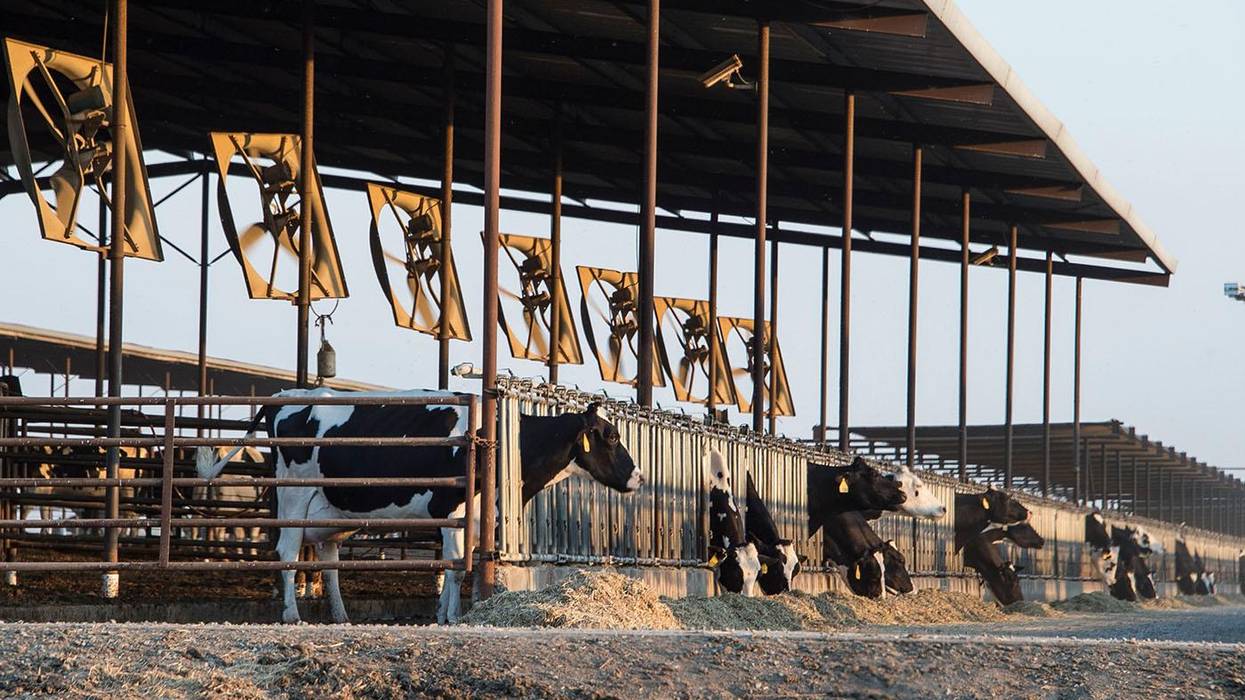
"Wherever you go, whatever you do, if it involves revealing anything about the devastating impacts of animal agriculture... you are beaten down for it," said one advocate.
A landmark report by the United Nations Food and Agriculture Organization forced global policymakers to consider greenhouse gas emissions from livestock and the corporate farming industry nearly two decades ago—and current and former officials at the agency revealed Friday that they were subjected to censorship and internal pressure from meat and dairy industry lobbyists for years afterwards, with ramifications that likely persist today.
As policymakers prepare to discuss agriculture and the climate crisis at the upcoming 2023 United Nations Climate Change Conference (COP28), The Guardian spoke to 20 former and current FAO officials about the response from the industry after the FAO revealed in 2006 that about 18% of global greenhouse gas emissions were attributable to livestock.
Between 2006 and at least 2019, the staffers said, FAO management frequently tried to suppress further investigations into the connection between livestock, factory farming, and the climate crisis—in an attempt to prevent the agency from building on its findings in the landmark report.
Big Ag lobbyists were a major driver of the suppression attempts, said ex-officials.
"There was substantial pressure internally and there were consequences for permanent staff who worked on this, in terms of their careers."
"They had a strong impact on the way things were done at the FAO and there was a lot of censorship," said one of the former staffers, many of whom spoke anonymously. "It was always an uphill struggle getting the documents you produced past the office for corporate communications and one had to fend off a good deal of editorial vandalism."
The "editorial vandalism" included the rewriting and diluting of key passages regarding greenhouse gas emissions and livestock, while management also "buried" a paper critical of Big Ag. Some officials who focused on the issue were excluded from meetings and summits.
"It's not that anyone would come to you and say: 'Stop this! We don't like this work,'" one former official told The Guardian. "They would just make your work difficult. They would not invite you to a meeting with a donor. You would not get a slot when you should be speaking. You would not get the support from project development, from capacity building, from all kinds of other units in the FAO that others would get."
Henning Steinfeld, the head of the FAO's livestock policy division who led the publication of the 2006 report, titled Livestock's Long Shadow, told The Guardian that he and like-minded staffers came to be seen as "a pest that needs to be eradicated," while lobbyists for the meat and dairy industries, which were each valued at close to $1 trillion in recent years, complained that the FAO had "fallen into the hands of vegan activists."
"There was substantial pressure internally and there were consequences for permanent staff who worked on this, in terms of their careers," said another former official. "It wasn't really a healthy environment to work in."
Joanna Randall, a plant-based food advocacy campaigner with the Humane Society International in the U.K., said considering the "absolutely historic impact" that the FAO's 2006 report had on public understanding of the greenhouse gas emissions caused by livestock, she was "absolutely not" surprised to learn about the censorship that followed.
The Guardian noted that the pressure felt by officials in recent years at FAO may have resulted in questionable official estimates regarding the current state of methane emissions from livestock and their contribution to planetary heating.
After estimating in 2006 that 18% of global emissions came from livestock, a 2013 paper by the agency claimed the number ws only 14.5%. The FAO currently estimates that about 11.2% of emissions are attributed to the meat and dairy industry.
"This seems counter-intuitive, given that during the same period, the FAO recorded a 39% increase in global meat production," The Guardian noted.
Other studies completed outside the FAO have concluded between 16.5% and 20% of greenhouse gas emissions come from animal products
"It's no coincidence that industry's involvement has led to lower overall relative estimates of emissions for livestock," University of Miami environmental science professor Jennifer Jacquet told the outlet. "Industry was taken aback by Livestock's Long Shadow. It caught them on the backfoot and they had to regroup, double down, and figure out how to get control of the narrative—and over the science to some degree."
At COP28 next month, policymakers will participate in the first-ever dedicated "food day" at a U.N. climate change summit, and will discuss food, agriculture, and water at at least 22 major events at the conference in Dubai.
"The emissions from farming is a huge driver of the climate crisis," Jennifer Larbie of Christian Aid told The Guardian, "and one which needs to be tackled at COP28 if we are to keep global heating in check."
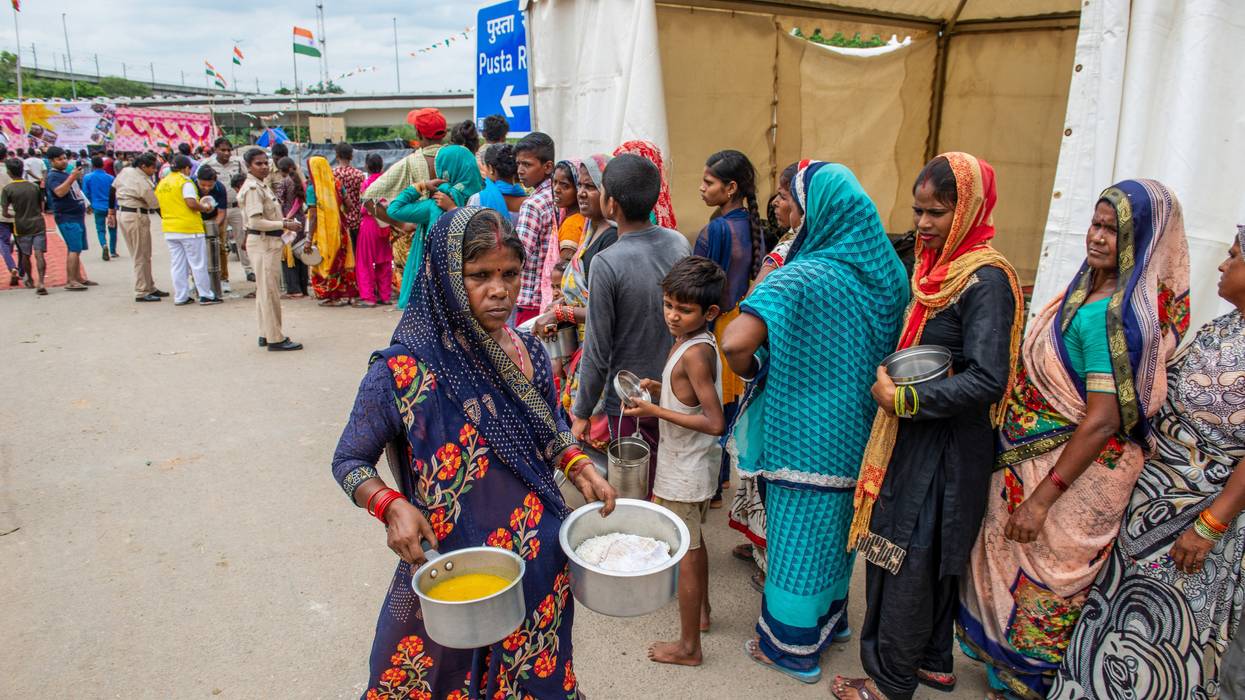
"Policymakers across sectors should consider how the socioeconomic links between heat, health, income, and food insecurity can be integrated into research, heat action plans, food programs, and labor regulations."
People impacted by extreme heat can struggle to put food on their tables after just a few days—and not months as previously thought—research published Monday revealed.
The study, published in Nature Human Behaviour by Carolin Kroeger of University of Oxford's Department of Social Policy and Intervention (DSPI), shows for the first time how quickly food insecurity can hit households impacted by very hot weather.
"Usually, research focuses on a country level and the fact that heat damages crops, which can lead to food insecurity in months." Kroeger wrote. "But this research, at the household level, shows heat can lead to food insecurity in a matter of days."
"Rising temperatures are expected to stall progress on food insecurity by reducing agricultural yields in the coming decades," she added. "But hot periods may also increase food insecurity within days when it gets too hot to work and earn an income, thus limiting households' capability to purchase food."
Kroeger surveyed families in 150 countries "to show that heat is associated with higher food insecurity within days of exposure and that this increase is mediated by reductions in income and health with stronger effects in countries with lower incomes and higher shares of agricultural or precarious employment."
According to the study, if a country with the population of India—nearly 1.41 billion—"were to experience a particularly hot week, an additional 8.07 million people would be likely to experience moderate-to-severe food insecurity."
"The analyses suggest that these effects are mediated by worse health, declining local job markets, and tighter household budgets with stronger effects in regions with higher agricultural or vulnerable employment and lower incomes," the publication states.
"The results underline the importance of labor market disruptions and socioeconomic factors, such as precarious forms of labor, for food security and climate impact modeling," the study adds. "With the frequency, duration, and intensity of extreme heat days rising across the world due to climate change, researchers and policymakers across sectors should consider how the socioeconomic links between heat, health, income, and food insecurity can be integrated into research, heat action plans, food programs, and labor regulations."
DSPI professor Aaron Reeves said in a statement that "this paper greatly advances our understanding of the impacts of extreme heat on the lives of people subjected to it and will provoke important discussions about how to protect people in the climate emergency."
"Such research could not be more timely as the world experienced its hottest month on record in July," Reeves added.
According to the United Nations Food and Agriculture Organization (FAO), up to 828 million people—more than 10% of humanity—were considered food insecure last year. The U.N. World Food Program (WFP) estimates that over 345 million people in 79 nations are facing elevated hunger levels in 2023.
Earlier this year, FAO and WFP warned that "acute food insecurity is likely to deteriorate further in 18 hunger hot spots" in 22 nations from June to November.

"This report makes it clear: We must act now to save lives, help people adapt to a changing climate, and ultimately prevent famine," said the World Food Program chief. "If we don't, the results will be catastrophic."
As El Niño looms and fighting in Sudan rages on, a pair of United Nations agencies on Monday warned that "acute food insecurity is likely to deteriorate further in 18 hunger hot spots" across 22 countries from June to November.
The Food and Agriculture Organization (FAO) and the World Food Program (WFP) delivered that warning in a joint report.
"Afghanistan, Nigeria, Somalia, South Sudan, and Yemen remain at the highest concern level," the report states. "Haiti, the Sahel (Burkina Faso and Mali), and the Sudan have been elevated to the highest concern levels; this is due to severe movement restrictions of people and goods in Haiti, as well as in Burkina Faso and Mali, and the recent eruption of conflict in the Sudan."
" Pakistan, the Central African Republic, Ethiopia, Kenya, the Democratic Republic of the Congo, and the Syrian Arab Republic are hot spots with very high concern, and the warning is also extended to Myanmar," the publication continues. "Lebanon, El Salvador, and Nicaragua have been added to the list of hunger hot spot countries, since the September 2022 edition. Malawi, Guatemala, and Honduras remain hunger hot spot countries."
The document stresses that worsening conditions in the hot spots occur in the context of a "global food crisis," so "the countries and situations covered in this report highlight the most significant deteriorations of hunger expected in the outlook period" but do not represent all nations facing high levels of acute food insecurity.
"Conflict will disrupt livelihoods—including agricultural activities and commercial trade—as people are either directly attacked or flee the prospect of attacks, or face movement restrictions and administrative impediments," the report states. "New emerging conflicts, in particular the eruption of conflict in the Sudan, will likely drive global conflict trends and impact several neighboring countries."
"The use of explosive ordnance and siege tactics in several hunger hot spots continues to push people into catastrophic levels of acute food insecurity," the document adds, "highlighting the critical role of humanitarian access in preventing the worst outcomes of hunger."
The new report notably came as the WFP announced that on Saturday, six weeks since the fighting broke out in Sudan—displacing nearly 1.4 million people—the U.N. program was able to begin distributing food assistance to the thousands affected by the conflict in and around the capital Khartoum.
"This is a major breakthrough. We have finally been able to help families who are stuck in Khartoum and struggling to make it through each day as food and basic supplies dwindle," said Eddie Rowe, WFP's country director in Sudan, in a statement.
"We have been working round-the-clock to reach people in Khartoum since the fighting began," Rowe added. "A window opened late last week which allowed us to start food distributions. WFP must do more, but that depends on the parties to the conflict and the security and access they realistically guarantee on the ground."
Along with armed conflict, drivers of the deterioration in the report's focal regions include economic issues and the climate emergency. The publication points out that last year, "economic risks were driving hunger in more countries than conflict was," and "the global economy is expected to slow down in 2023—amid monetary tightening in advanced economies—increasing the cost of credit."
"Weather extremes, such as heavy rains, tropical storms, cyclones, flooding, drought, and increased climate variability, remain significant drivers in some countries and regions," the document explains, noting that experts anticipate El Niño conditions—or the warming of sea surface temperatures across the tropical Pacific Ocean—in the months ahead, "with significant implications for several hunger hot spots."
The report emphasizes that "urgent and scaled‑up assistance" in all hot spots "is essential to avert a further deterioration of acute food insecurity and malnutrition," and in some cases, "humanitarian actions are critical in preventing further starvation and death."
Agency leaders echoed the publication's call to action. Cindy McCain, WFP's executive director, said in a statement that "not only are more people in more places around the world going hungry, but the severity of the hunger they face is worse than ever."
"This report makes it clear: Ae must act now to save lives, help people adapt to a changing climate, and ultimately prevent famine," McCain declared. "If we don't, the results will be catastrophic."
FAO's director-general, Qu Dongyu, stressed that "business-as-usual pathways are no longer an option in today's risk landscape if we want to achieve global food security for all, ensuring that no one is left behind."
"We need to provide immediate time-sensitive agricultural interventions to pull people from the brink of hunger, help them rebuild their lives, and provide long-term solutions to address the root causes of food insecurity," he said. "Investing in disaster risk reduction in the agriculture sector can unlock significant resilience dividends and must be scaled up."

"This trend will probably continue to worsen the food and nutrition situation and therefore we must address the root causes of this crisis in a concerted manner and immediately," said one United Nations expert.
United Nations humanitarian officials on Tuesday renewed warnings that as many as 48 million people across West and Central Africa will likely go hungry in the coming months due to severe food insecurity driven by armed conflict, Covid-19, inflation, and the worsening climate emergency.
Officials from four U.N. agencies—the World Food Progam (WFP), Food and Agriculture Organization (FAO), Office for the Coordination of Humanitarian Affairs, and United Nations Children's Fund (UNICEF)—this week amplified calls for help, underscoring a December 2022 analysis warning that the number of hungry people in West and Central Africa would reach a "record high" in 2023 "if urgent and long-lasting solutions to address this crisis" aren't implemented soon.
"The spiraling food security and nutrition situation in Western Africa is just heartbreaking," WFP regional director Chris Nikoi said in a statement. "There is a crucial need for massive investment in strengthening the capacities of communities and individuals to withstand shocks while prioritizing local and long-term solutions to food production, transformation, and access for vulnerable groups."
For the first time in the Sahel—a semi-arid strip running from Senegal and southern Mauritania on the Atlantic coast to Sudan and Eritrea on the Red Sea—45,000 people are at risk of experiencing catastrophic levels of hunger, or one step away from famine.
Most of the affected people are in Mali and Burkina Faso, which has replaced Mali as the epicenter of the ongoing fight against militant Islamist groups including the al-Qaeda-affiliated Jama'at Nusrat al-Islam wal-Muslimin. French, U.S., and mostly private Russian forces, as well as the militaries of some African nations, have intervened in the war to support regional government forces.
In the wider region, lengthy droughts, heatwaves, floods, and other extreme weather have negatively impacted water supplies, crops, livestock, and agricultural production in a region whose people overwhelmingly live off the land.
Nikoi told Axios that "if you go deeper, climate is a large contributor to why these things have now reached the level they have reached."
As in much of the world, food prices have soared in Africa following Russia's invasion of Ukraine. The war has driven up the cost of fertilizer and fuel, while trade restrictions have exacerbated shortages across the continent.
"The situation is worrying," Ann Defraye, a regional nutrition specialist for UNICEF in West and Central Africa, told The Associated Press. "Last year, we saw a large increase—31%—in the number of children admitted to health facilities with severe wasting across the Sahel."
"In many areas, it is getting much more difficult for families to find nutritious food to eat, especially where we have communities under blockade," she added.
According to Bloomberg:
Burkina Faso has halted grain exports to Niger, Nigeria has stopped rice shipments to Benin, and Ivory Coast has halted exports of plantains to Burkina Faso, according to data collected by the WFP...
The town of Menaka in eastern Mali and Djibo in northern Burkina Faso are among 30 localities identified by the WFP as areas where food transport has been blocked because of insecurity.
"We see areas that are completely blocked," Alexandre Lecuziat, the WFP's senior emergency preparedness and response adviser, said at a press conference in Dakar.
Robert Guei, FAO's sub-regional coordinator for West Africa, called the food security situation in the region "unacceptable."
"This trend will probably continue to worsen the food and nutrition situation and therefore we must address the root causes of this crisis in a concerted manner and immediately," he said. "It is time for action to boost agricultural production to achieve food sovereignty in our region."
Much of Africa beyond the Sahel is also facing a historic food crisis. According to the Red Cross, 146 million Africans are going hungry.

"It is important to remain vigilant and keep a strong focus on mitigating global food insecurity given that world food prices remain at elevated levels, with many staples near record highs," said the FAO's chief economist.
Russia's war on Ukraine, climate change-intensified drought, and other factors drove global food prices to a record high and worsened hunger around the world in 2022, the United Nations Food and Agriculture Organization said Friday.
The FAO Food Price Index—which tracks monthly changes in the international prices of grain, vegetable oils, and other commonly traded food commodities—averaged 143.7 points last year. That marked the highest level since records began in 1961 and an increase of 14.3% over the 2021 average, according to the Rome-based U.N. agency.
As The Associated Press reported:
Russia's invasion of Ukraine in February exacerbated a food crisis because the two countries were leading global suppliers of wheat, barley, sunflower oil, and other products, especially to nations in parts of Africa, the Middle East, and Asia that were already struggling with hunger.
With critical Black Sea supplies disrupted, food prices rose to record highs, increasing inflation, poverty, and food insecurity in developing nations that rely on imports.
The war also jolted energy markets and fertilizer supplies, both key to food production. That was on top of climate shocks that have fueled starvation in places like the Horn of Africa. Ethiopia, Somalia, and Kenya are badly affected by the worst drought in decades, with the U.N. warning that parts of Somalia are facing famine. Thousands of people have already died.
In the month of December, the FAO Food Price Index fell to an average of 132.4 points, a slight decrease from the previous year. The U.N. attributed most of the decline to a recent drop in the price of palm, soy, rapeseed, and sunflower oils. Lower vegetable oil prices, which hit an all-time high in 2022, came as a result of reduced global import demand, expectations of a seasonal boost in soy oil production in South America, and declining crude oil prices, according to the FAO.
While world prices of wheat and maize surpassed previous records in 2022, the price of both cereals declined slightly in December, the organization said, thanks to ongoing harvests in the Southern Hemisphere, which increased global supply.
The price of rice, however, rose last month, as did the price of sugar and cheese, FAO noted. Beef and poultry prices fell slightly in December, but that came at the end of a year in which dairy and meat prices reached their highest levels since 1990.
"Calmer food commodity prices are welcome after two very volatile years," FAO Chief Economist Maximo Torero said in a statement. "It is important to remain vigilant and keep a strong focus on mitigating global food insecurity given that world food prices remain at elevated levels, with many staples near record highs, and with prices of rice increasing, and still many risks associated with future supplies."