

SUBSCRIBE TO OUR FREE NEWSLETTER
Daily news & progressive opinion—funded by the people, not the corporations—delivered straight to your inbox.
5
#000000
#FFFFFF
To donate by check, phone, or other method, see our More Ways to Give page.
Daily news & progressive opinion—funded by the people, not the corporations—delivered straight to your inbox.
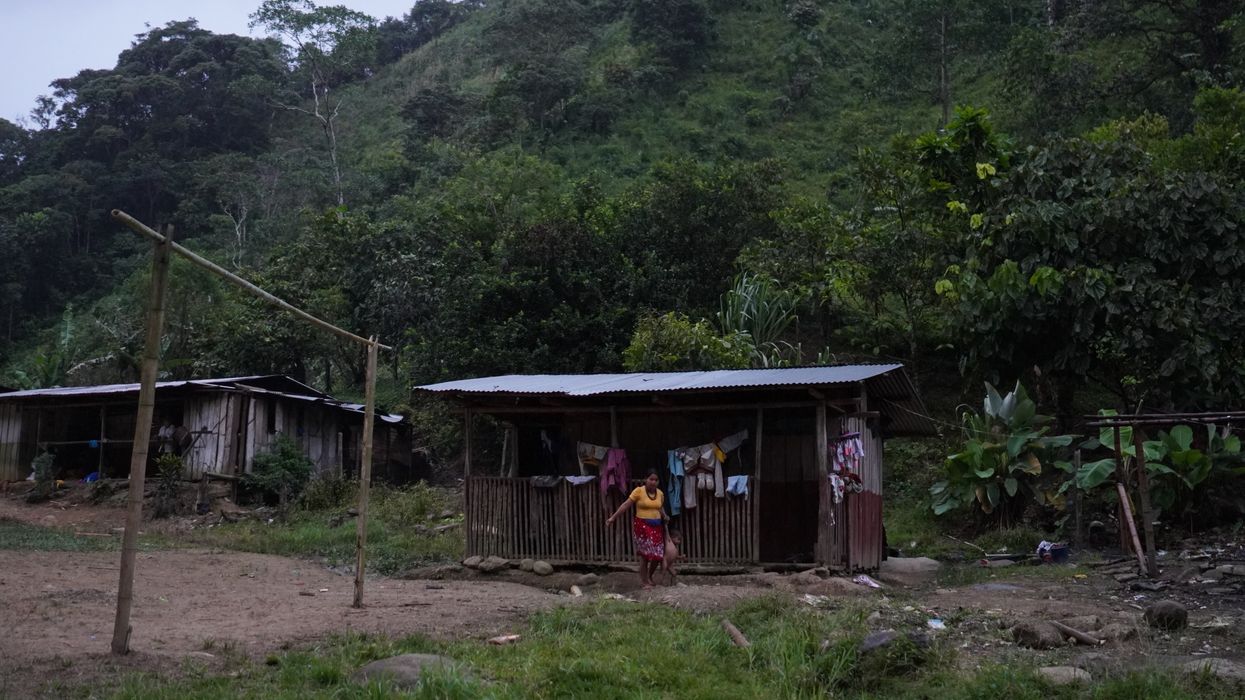
The International Conference on Global Land Grabbing in Bogotá this week is a step towards strengthening alliances across social justice movements.
The length of the journey from the sun-scorched Malian lowlands to Colombia's sprawling high-altitude capital wasn't lost on Ibrahima Coulibaly, a longtime leader of the National Coordination of Peasant Organizations of Mali. He is one of 500 activists, academics, and policymakers from 69 countries converging in Bogotá this week to take stock of the state of global land grabbing and define tactics for the way forward.
"We have been engaged in the fight against land grabbing in our community for many years," offered Coulibaly. "And it is equally important for us to articulate our struggles at the international level to carry out the political work necessary to see change."
Mali made headlines as a hotbed of the global land grab in the wake of the 2008 food price crisis when massive tracts of its arable red earth were swept up by foreign investors. The ensuing rural devastation and displacement reflected a bleak new reality for peasant communities throughout the Global South. At the time, Mali had not passed a land law of its own, and a legal hangover from colonial times stipulated state ownership over land. So when foreign agribusiness came knocking, large-scale land deals were easily rolled out across the countryside. Mali's peasant movement resisted, winning a partial victory when it helped put forward agrarian legislation in 2017 that halted some of its most notorious land grabs. But the battle is far from over.
A critical way that local communities work to win back land is through social movements that are active at the global level.
A decade after its apex, the global land grab has slipped out of the spotlight. Rather than having become any less of a problem, a growing number of activists and scholars argue that the current land rush is becoming increasingly complex and entrenched.
"While communities in many countries are still having their land expropriated for large-scale farming, there are also land grabs for energy, carbon, conservation, and infrastructure, with major impacts on livelihoods and human rights," said Ian Scoones, a professor at the University of Sussex.
"Today's land grabs overlap with the most dangerous issues on the planet, including a resurgence of authoritarian politics and the escalating climate crisis," he added.
Colombia is a microcosm of these dynamics, and its selection as the host country of the global gathering organized by the Land Deal Politics Initiative scholar-activist network carries significant political weight. In the 50 years of armed conflict that came to an end with the Colombian peace accord of 2016, some 8 million peasants and Indigenous peoples were displaced across 6 million hectares in multiple iterations of land grabs. Colombia's new government is amenable to resolving these damages; however, the process to implement comprehensive rural reform as outlined in the peace agreement has been arduous.
"Land grabbing, armed conflict, and climate change are interconnected in a cycle that deeply affects rural communities and the environment in Colombia," said Jhenifer Mojica, the minister of agriculture. "The concentration and hoarding of land has generated structural inequality, and is the main reason for violent conflict across the country. It has exacerbated the displacement of rural and Indigenous communities from their territory, so we must put into place policies that stop land grabbing and democratize land access to ultimately achieve peace and stability."
Puerto Gaitán, Meta, is one of many cases in Colombia where land grabs have reached a boiling point—resulting in a standoff between Mennonite settlers of European origin and the local Sikuani Indigenous peoples. According to the Mennonites, who have been in the area for less than a decade, the fertile earth of Puerto Gaitán is a promised land on which to grow corn and soybeans. For the Sikuani, however, these actions amount to an unequivocal land grab—made worse by existing agribusiness operations exporting "flex crops" like palm oil that can withstand market fluctuations because of their multiple functions as food, animal feed, and fuel.
The Sikuani people have filed a case with the government of Colombia, which, unlike some neighboring countries in Latin America, does not cap the amount of land foreigners can own. Even if the peace accords are able to stop internal land grabs, external ones loom large—making any real peace with justice all but impossible. At present, some 1.4 million hectares are controlled by 30 corporations.
"They are only interested in selling the harvest to make more money, but for us, this land is territory," said Jaime Ortiz, a Sikuani leader.
"We are asking the state to return our motherland back to us," added Héctor Estrada, who is also Sikuani.
A critical way that local communities work to win back land is through social movements that are active at the global level.
"Peasant movements play a key role in organizing the solidarity necessary to defend communities that are threatened by land grabs," explained Morgan Ody, a French vegetable farmer and general coordinator of La Vía Campesina. "This resistance often involves joining forces between Indigenous peoples, environmental organizations, feminist movements, and human rights defenders."
The International Conference on Global Land Grabbing in Bogotá this week is a step towards strengthening such alliances across social justice movements, as well as between movements and politically aligned researchers and policymakers. This gathering will help expose the grave risks of a new global land rush and explore options for collective resistance.
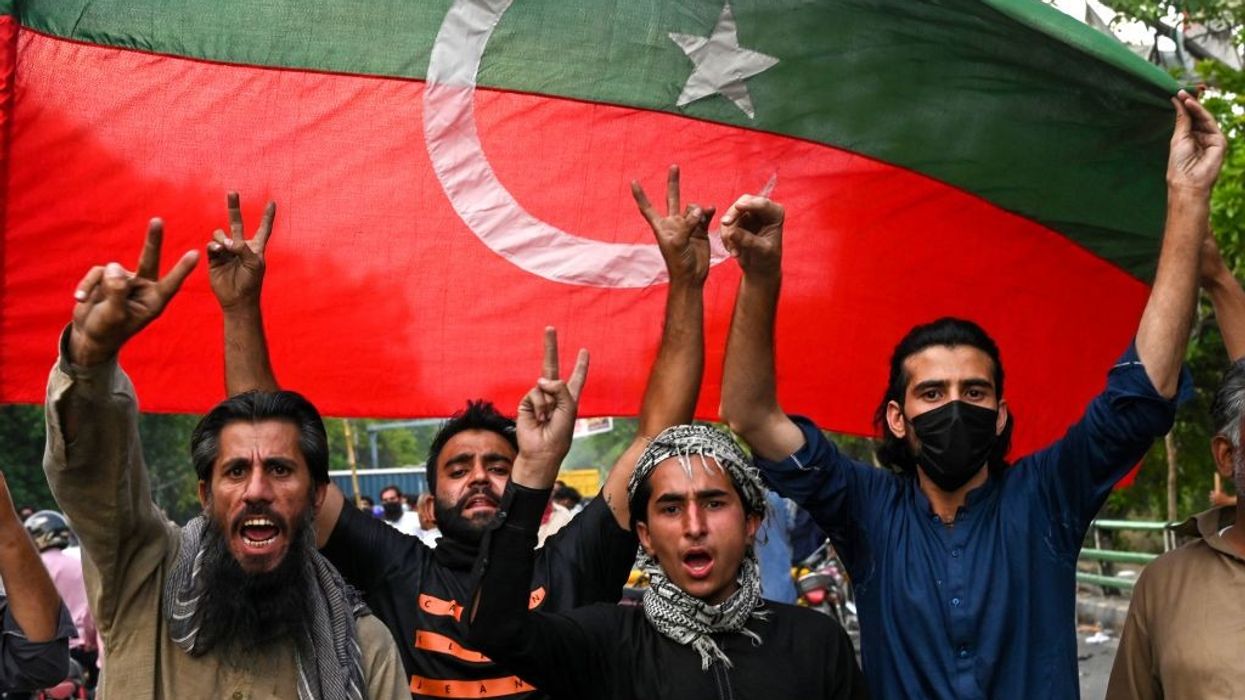
Some of these nations have been dealing with simmering unrest which could erupt this year and seize the global spotlight.
Sadly, 2023 was a violent one on the global stage. War broke out between Israel and Hamas in Gaza, leading to the deaths of thousands of Palestinians and hundreds of Israelis, including many children on both sides. And the bitter war between Russia and Ukraine continued with no end in sight.
As a result of the focus on these two conflicts, other countries have dropped off the radar for many people. Some of these nations have been dealing with simmering unrest, however, which could erupt in 2024 and seize the global spotlight.
So, where should we be watching in the coming year? Here are five places where I believe civil conflicts or unrest could worsen and potentially lead to violence.
Myanmar descended into chaos in 2021 when a military coup overthrew the democratically elected government led by Aung San Suu Kyi and sparked widespread civil protests that eventually morphed into an armed resistance.
The country, home to 135 ethnic groups, has rarely known peace. For years before the coup, there was a ongoing, low-grade civil conflict between the military and several minority ethnic groups who have long sought control over natural resources in their regions and independence from the state.
This exploded after the coup as ethnic militia groups joined forces with pro-democracy fighters from the Bamar majority protesting the junta.
The country’s civil war may worsen considerably in 2024 and regain international attention.
Their resistance escalated in late 2023 with a coordinated northern offensive dealing the military its most significant losses in many years.
Insurgents won control of towns and villages on the northeastern border with China, including control over key trade routes. This led to renewed fighting in western Rakhine state, as well as in other areas.
The tenacity of the resistance of these minority groups, paired with the refusal of the military to compromise, suggests the country’s civil war may worsen considerably in 2024 and regain international attention.
In Mali, a nation in the turbulent Sahel region of Africa, tensions escalated throughout 2023 and now threaten to erupt into full-scale civil war.
Mali has long battled insurgent activity. In 2012, Mali’s government fell in a coup and Tuareg rebels, backed by Islamist militants, seized power in the north.
A United Nations peacekeeping mission was established in 2013 to bring stability to Mali. Then, in 2015, key rebel groups signed a peace agreement with the Mali government.
With the 2015 peace agreement now all but dead, we can expect increased volatility in 2024.
After two more coups in 2020 and 2021, military officers consolidated their power and said they would restore the state’s full territorial control over all of Mali. The regime insisted the U.N. peacekeeping mission withdraw from the country, which it did in June 2023. Subsequently, violence broke out between the military and rebel forces over future use of the U.N. bases.
In November, the military, reportedly backed by Russia’s Wagner Group, took control of the strategic northern town of Kidal which had been held by Tuareg forces since 2012. This undermines the fragile peace that has held since 2015.
It is unlikely the military will regain complete control over all rebel-held areas in the north. At the same time, insurgents are emboldened. With the 2015 peace agreement now all but dead, we can expect increased volatility in 2024.
In 2019, widespread civil protest broke out in Lebanon against leaders who were perceived not to be addressing the day-to-day needs of the population.
The situation continued to deteriorate, with a reshuffled government, escalating economic crisis, and a massive port explosion that exposed corrupt practices.
Most recently, the war between Israel and Hamas has threatened to spill over to Lebanon, home to the Hezbollah militant group, which claims to have an army of 100,000 fighters.
The International Monetary Fund criticized Lebanon in September for a lack of economic reform. The Lebanese government has also failed to reach agreement on appointing a president, a post that has been vacant for more than a year.
This risks undermining the fragile power-sharing arrangement in Lebanon in which the key political posts of prime minister, speaker, and president are allocated to a Sunni-Muslim, Shia-Muslim, and Christian Maronite, respectively.
Most recently, the war between Israel and Hamas has threatened to spill over to Lebanon, home to the Hezbollah militant group, which claims to have an army of 100,000 fighters. Importantly, this jeopardises tourism as a key hope for Lebanon’s economic recovery.
These factors may precipitate a more serious economic and political collapse in 2024.
Since Pakistan’s independence in 1947, the military has played an interventionist role in politics. Though Pakistani leaders are popularly elected, military officials have at times removed them from power.
In 2022, Pakistani Prime Minister Imran Khan fell out of favor with Pakistan’s militant leaders. He was subsequently ousted from power in a parliament vote and later arrested on charges that his supporters claim are politically motivated.
Violent demonstrations broke out nationwide after his arrest—a display of anger against the military that was once unthinkable.
Pakistan also faces spillover from instability in neighboring Afghanistan and increased terror attacks. These security challenges have been compounded by a struggling economy and ongoing costs from the devastating 2022 floods.
Pakistan is expected to hold parliamentary elections in February 2024, after which the current military caretaker government is expected to transfer power back to civilian rule. Many are watching the military closely. If this transfer of power does not take place, or there are delays, civil unrest may result.
Sri Lanka faced a debilitating economic crisis in 2022 that led to critical fuel, food, and medical shortages. Civil protests caused then-President Gotabaya Rajapaksa to flee the country. He was quickly replaced by current President Ranil Wickremesingh.
Stability returned in 2023 as Sri Lanka began implementing economic reforms as part of a bailout agreement with the International Monetary Fund. However, widespread dissatisfaction with political elites and the underlying drivers of the country’s economic hardship have not been addressed.Elections are also due in Sri Lanka by late 2024. While Wickremesingh, the incumbent, is likely to run for a second term, he has low trust with the public. He is viewed as too close to corrupt political elites.
This dissatisfaction could lead to renewed protests—particularly if the economy stumbles again—in a repeat of the situation that led to Rajapaksa’s ousting in 2022.
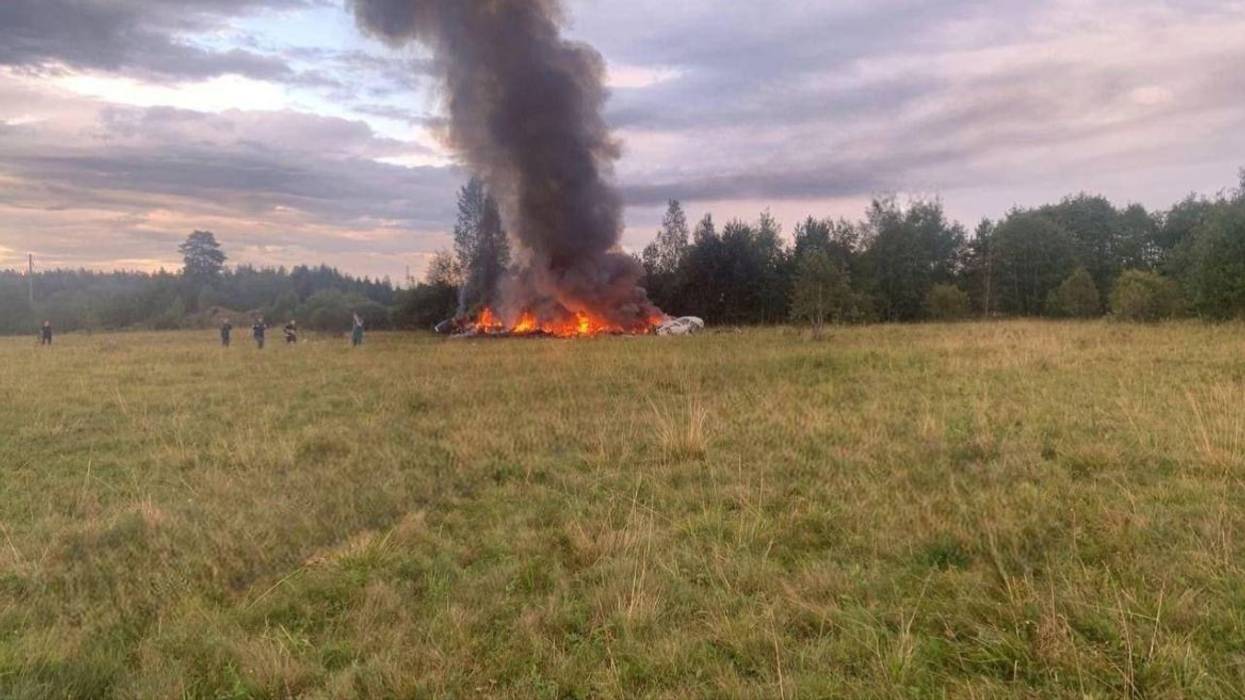
Suspicions quickly turned to Russian President Vladimir Putin, with U.S. President Joe Biden saying that "there's not much that happens in Russia" without his involvement.
Yevgeny Prigozhin, the billionaire head of the Wagner Group mercenary firm who recently led an aborted rebellion against Russian President Vladimir Putin—an erstwhile close ally—was on the passenger list of a plane that crashed on Wednesday north of Moscow, according to Russian officials and media.
The Russian Emergencies Ministry said there were no survivors among the 10 passengers aboard the Embraer Legacy 600 private business jet, which reportedly belonged to Prigozhin and was en route from St. Petersburg to Moscow when it crashed in the Tver region more than 60 miles north of Moscow.
Rosaviation, Russia's civil aviation regulator, confirmed that Prigozhin was on the passenger list—but it remains unclear whether he was actually aboard the doomed jet.
The fate of the 61-year-old oligarch—once known as "Putin's chef" because the Russian president ate at his restaurants and contracted his catering business—has confounded observers since he led his Wagner mercenaries in a short-lived mutiny in which they captured and briefly occupied the city of Rostov-on-Don in June.
Prigozhin then ordered his men to march on Moscow to seek "revenge," accusing Russian military leaders of killing his troops during the ongoing invasion of Ukraine. Wagner forces played a critical role in Russia's battlefield successes and suffered heavy losses—especially among prisoners who volunteered to fight in exchange for their freedom.
In a deal brokered by Belarusian President Alexander Lukashenko—a close Putin ally who has allowed Russian troops to invade Ukraine from his country—Prigozhin called off his coup attempt in exchange for safe passage to Belarus. However, Lukashenko said last month that Prigozhin and thousands of his fighters were still in Russia, while brushing off speculation that Putin would try to assassinate him.
"If you think Putin is so malicious and vindictive that he will wipe him out tomorrow... no, this will not happen," Lukashenko said at the time.
Earlier this week, Prigozhin published his first recruitment video since the mutiny, seeking soldiers of fortune to fight in African conflicts, including in Mali—where Wagner fighters, along with U.S.-backed government forces, are accused of committing widespread atrocities.
While the cause of Wednesday's plane crash remains unknown for now, speculation and suspicion of Putin's involvement came quickly, as the president vowed to severely punish what he called Wagner's "internal betrayal" and a "stab in the back of our country and our people."
U.S. President Joe Biden—a staunch supporter of Ukraine's defense against Russia's invasion—told reporters after the crash that "there's not much that happens in Russia that Putin's not behind."
"But I don't know enough to know the answer," he added. "I've been working out for the last hour-and-a-half."
Numerous prominent Putin opponents have suffered mysterious and usually fatal poisonings, falls, and shootings over the years.
In a 2018 interview, Putin was asked if he knew how to forgive. "Yes, but not everything," the Russian leader replied. When asked what he could not forgive, Putin answered with one word: "Betrayal."
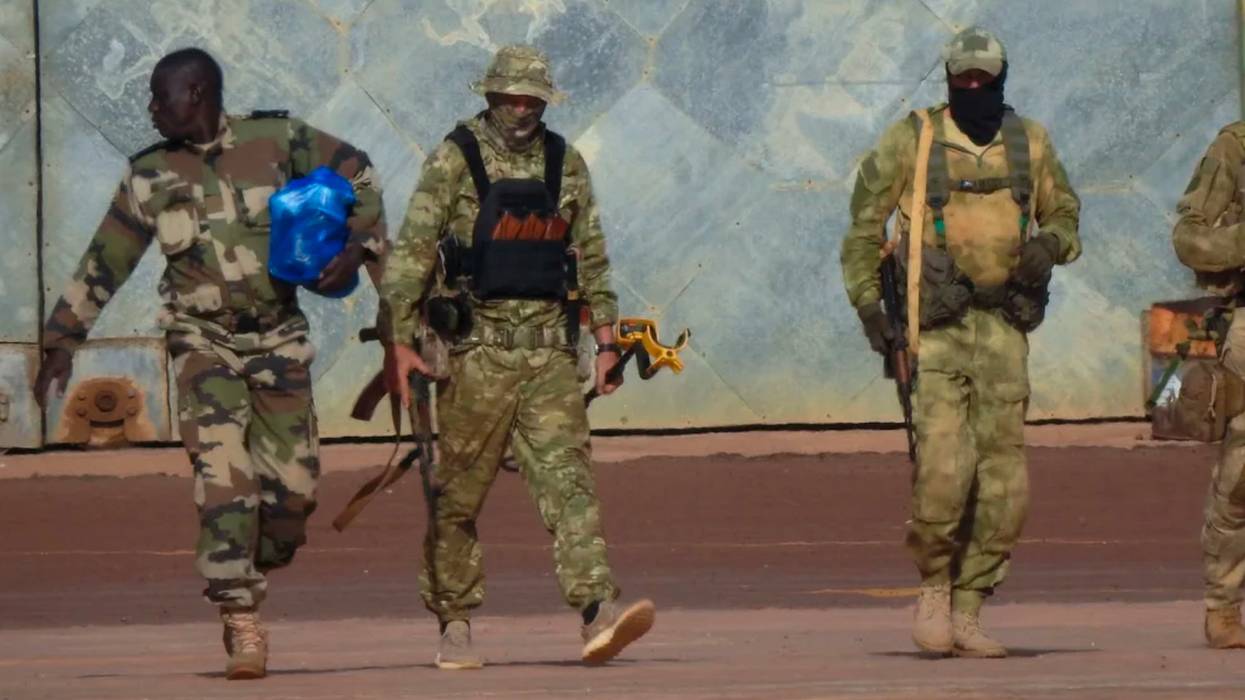
"Here we have the AFRICOM/Wagner overlap," said journalist Nick Turse, referring to U.S. troops and Russian hired guns in the African nation.
Mali's U.S.-backed army and foreign fighters apparently from the Russian mercenary firm Wagner Group have forcibly disappeared and murdered dozens of civilians in the African nation's central region since last December, Human Rights Watch said Monday.
HRW interviewed 40 people including 20 eyewitnesses to atrocities perpetrated by Malian forces in the villages of Ouenkoro, Séguéla, Sossobé, and Thioffol, as well as numerous victims' relatives, community leaders, activists, and representatives of international organizations.
A 45-year-old mother of seven from Thioffol who was shot in the foot described a December 18, 2022 raid by Malian troops.
"One [soldier] asked us: 'Where are the men?' We said they were out grazing animals," she told HRW. "He replied: 'If we found your men, we would have massacred them.' He ordered us out, while other soldiers stole our silver bracelets, kitchen utensils, and water cans... As soldiers started leaving, one turned back, stood on the doorstep, and opened fire. Four of us died on the spot, including a girl."
Mali's army and mercenaries have been waging a U.S.-backed war against al-Qaeda-affiliated Jamaa Nusrat al-Islam wal-Muslimin (JNIM) and rival Islamic State in the Greater Sahara (ISGS) in the Mopti and Ségou regions. The Pentagon's U.S. Africa Command (AFRICOM) is present and conducts operations in Mali.
As Nick Turse noted at The Intercept on Monday:
The U.S. has poured billions of dollars in military assistance into Mali and its neighbors over roughly two decades—enabling human rights abuses by providing weapons and training to militaries that have terrorized civilians, according to the United Nations, human rights advocacy groups, and the U.S. State Department. U.S.-trained military officers have also repeatedly conducted coups, including the putsch leader who toppled Mali's governments in 2020 and 2021. While the coups triggered restrictions on U.S. aid, Pentagon officials have pointed to Wagner's growing influence across Africa as a reason to keep the money flowing.
While Mali's military government, led by Interim President Col. Assimi Goïta since May 2021, has said that Russian military trainers are in the country as part of a bilateral agreement, it denies the presence of Wagner mercenaries.
"However," says HRW, "there is growing evidence of activities and abuses in Mali by [the] private military security company run by Yevgeny Prigozhin, a close ally of Russian President Vladimir Putin until tensions between the Russian defense ministry and Wagner Group escalated in Russia on June 24."
Survivors and witnesses in Ouenkoro, Séguéla, and Sossobé reported the participation of foreign, non-French-speaking fighters in the raids. These men were described as "white," "Russian," and "Wagner" and, according to HRW, committed just a fraction of the reported abuses.
Residents of Séguéla described how foreign fighters in three helicopters attacked the village on February 3, going door-to-door and rounding up men.
"There were almost only white Wagner soldiers, they led the whole operation," one man said. "They were heavily armed, masked, and wore camouflage uniforms and spoke a language we did not understand, but which was not French."
"They took random people, including very old men."
Another man claimed that "two white soldiers broke into my house, searched it, and took away all my wife's jewelry."
The invaders arrested 17 men between the age of 27 and 82, almost all of them members of the Fulani ethnic group.
"They selected 17 men whom they suspected were jihadists or their accomplices," one eyewitness said. "They took random people, including very old men."
More than three weeks later, a group of Séguéla villagers found the bodies of 13 men—including eight of those arrested on February 3—in a deserted area outside a nearby village. All of the victims were bound and appeared to have been shot; four also had their throats slit "to the point where the heads were almost completely cut off," according to one witness.
People interviewed by HRW also said that Malian and foreign forces tortured detainees to force confessions regarding their membership in Islamist groups. HRW has previously documented alleged summary executions, enforced disappearances, and incommunicado detentions by Malian forces in the region.
The apparent presence of Wagner mercenaries in Mali comes as the country's military government has expelled both the United Nations Multidimensional Integrated Stabilization Mission in Mali (MINUSMA) and the thousands of French troops who had occupied parts of the country for nearly a decade, sometimes harming civilians, like in the January 2021 airstrike on a wedding party that killed 19 people.
The U.N. says 187 peacekeepers died during the 10-year Mali operation, which is set to fully wind down by the end of the year following Mali's request to leave.
According to the Armed Conflict Location & Event Data Project (ACLED), a data collection, analysis, and crisis mapping project, at least 5,750 people have been killed in over 1,740 incidents across Mali between January 2022 and March 2023. The conflict has spilled over into neighboring Sahel countries including Burkina Faso and has worsened a humanitarian crisis in which hundreds of thousands of people have been displaced and nearly 9 million people require humanitarian assistance.
The United States, United Kingdom, and European Union have sanctioned Ivan Maslov, who commands Wagner Group forces in Mali.
HRW, meanwhile, is calling on African transnational organizations to act against human rights violators in Mali.
"The U.N. peacekeepers' impending withdrawal makes it more crucial than ever for the Malian authorities to protect civilians and prevent further abuses during military operations," Carine Kaneza Nantulya, HRW's deputy Africa director, said in a statement Monday.
"The African Union and the Economic Community of West African States should express their concerns about grave abuses by the Malian armed forces and allied apparent Wagner Group fighters," she added, "and increase pressure on the Malian authorities to end these violations and hold those responsible to account."

The United States--whose military has killed more foreign civilians than any other armed force on the planet since the end of World War II--on Friday joined 79 other nations in signing a declaration aimed at protecting civilians from explosive weapons in populated areas.
"It is time for all states to endorse and implement the declaration to help civilians and their communities during and after conflict."
The signing of the declaration at the Explosive Weapons in Populated Areas (EWIPA) Conference in Dublin, Ireland follows three years of international negotiations. While the U.S., U.K., France, and 20 other NATO members signed the agreement, major military powers including Russia, China, India, and Israel did not.
The declaration's signatories committed to "strengthening the protection of civilians and civilian objects during and after armed conflict, addressing the humanitarian consequences arising from armed conflict involving the use of explosive weapons in populated areas, and strengthening compliance with and improving the implementation of applicable international humanitarian law."
Irish Foreign Minister Simon Coveney said in a statement that "today's political declaration sets out actions to be taken in military operations to strengthen the protection of civilians."
"Its implementation will change how militaries operate in populated areas, including a commitment around restricting or refraining from the use of explosive weapons when their use may be expected to cause harm to civilians or civilian objects," he added.
Laura Boillot, coordinator for the International Network on Explosive Weapons (INEW), which includes 49 advocacy groups, said that "this declaration sends a clear message that using explosive weapons in populated areas causes unacceptable civilian suffering and devastation and must stop."
"It is time for all states to endorse and implement the declaration to help civilians and their communities during and after conflict," she added.
According to the U.K.-based group Action on Armed Violence (AOAV), an INEW member, over 90% of the people killed or injured by explosive weapons around the world are civilians.
AOAV explained:
The declaration requires states to impose limits on the use of explosive weapons in populated areas, which is the leading cause of harm to civilians in conflicts today. It also requires states to assist victims and affected communities both during and after conflict and to address the long-term suffering that stems from the use of explosive weapons in populated areas.
Of note, of the 80 countries who signed up to the declaration, 57 have witnessed explosive violence in their own territories since 2010. Over two-thirds of explosive violence incidents witnessed by the signatory countries were in populated areas, and in those incidents 87% of victims have been civilians--almost 25,000 people.
The new declaration comes as civilians are being killed, injured, displaced, and traumatized in countries around the world in conflicts and actions including Russia's invasion of Ukraine; Russian, Turkish, and U.S.-led coalition bombing and artillery bombardment of Syria; Syrian government attacks; Saudi-led coalition airstrikes in Yemen; Houthi rebel attacks; bombing and shelling by Myanmar forces targeting Kachin, Karen, and Rohingya people; Israeli attacks on Palestine; and, until recently, French bombing of Mali and the Tigray war in Ethiopia.
Unmanned aerial drone and other airstrikes by U.S. forces also continue in nations including Afghanistan, Somalia, and Syria during the 21-year, open-ended War on Terror--in which more than 387,000 civilians have been killed, according to the Costs of War Project at Brown University's Watson Institute for International and Public Affairs.
"We are encouraged by the number of countries that have signed the declaration today," Federico Borello, executive director of the Washington, D.C.-based Center for Civilians in Conflict, another INEW member, said in a statement. "However the protection of civilians is the responsibility of all states. We call on countries that have not signed yet the political declaration to join in this international effort to protect civilians from bombing and shelling in towns and cities."
INEW's Boillot asserted that "the adoption of this declaration is a milestone, but it is not the end of the journey. We have a long path ahead of us--one that will require committed and sustained work from all of us, in the spirit of partnership and collaboration that has been the hallmark of the process to date."
"Only by continuing to work together in a collaborative, committed, and transparent manner, and by never forgetting the people at the heart of our efforts, can we ensure that the declaration's goals will be pursued with the urgency and unwavering commitment they deserve," she added.
Last month in Mali, an African nation twice the size of Texas, military rebels overthrew the government. It was the kind of event that Americans barely notice: another coup in another distant country where people can't find ways to live together. The truth is more damning. This coup was not the result of personal rivalries or "ancient hatreds." Instability in Mali, and across North Africa, is a long-term result of the NATO attack on Libya in 2011.
That attack, in which the United States played a key role, may now be ranked among the most recklessly self-defeating military interventions of the 21st century. It was sold as "humanitarian intervention," but wound up producing a human rights disaster. It turned Libya, once one of the most stable and prosperous countries in Africa, into a failed state and breeding ground for terror. In nearby countries, it has nourished a generation of murderous militias. The coup in Mali shows that after-effects of the Libya attack are still reverberating.
Libya's leader, Muammar Qaddafi, had been a thorn in America's side for decades. He had aided terrorists, including those who blew up an airliner over Lockerbie, Scotland, in 1988. In his later years, though, he came out of the political cold. Under an agreement painstakingly negotiated by the George W. Bush administration, Libya paid $1.7 billion to a fund for victims of Lockerbie and other terror attacks. Then, eager to show his good will, Qaddafi went a step further. He agreed to give up his nuclear weapons program. That may have been his fatal mistake. Stripped of his nuclear deterrent, he was exposed to those in the West who wanted to punish him for years of defiance.
When Libyan protesters took to the streets at the beginning of 2011, Qaddafi's police fired on them. He threatened to hunt down the rest "house by house." That gave his foreign enemies the motive--or excuse--they needed to attack. France, which has a colonial history in Libya, pushed the idea of a NATO bombing campaign. The stated purpose would be to defend civilians. All understood, however, that such an attack would probably also topple a dictator who had thumbed his nose at the West for decades.
"Secretary Clinton reveled in the triumph: 'We came, we saw, he died.' Very soon, however, this victory began turning sour."
Intense debate broke out within the Obama administration. Secretary of Defense Robert Gates, Vice President Joe Biden, and military commanders argued against bombing Libya. Secretary of State Hillary Clinton, Ambassador to the United Nations Susan Rice, and two National Security Council aides, Samantha Power and Ben Rhodes, argued in favor. Obama, in what he called a "51-49" decision, ultimately sided with the bombers. Gates later wrote that they "failed to anticipate the chaos that would follow." That was an understatement.
American and allied forces bombed Libya for several months in mid-2011. By that autumn, Libya's government had collapsed and Qaddafi had been murdered. Secretary Clinton reveled in the triumph: "We came, we saw, he died." Very soon, however, this victory began turning sour.
During his more than 40 years in power, Qaddafi had allowed no political opposition and tolerated no civil society. As a result, there was no group, party, or institution to replace him. Libya quickly fell into violent chaos. It turned out that Qaddafi had maintained hundreds of arms warehouses at which he stored mind-boggling arrays of weaponry. They had been under the control of squads personally loyal to him, recruited not from Libya but from among Tuareg tribes that populate much of northwest Africa. With Qaddafi gone, the Tuaregs looted the warehouses they had once guarded. Inside were not just infantry rifles but heavy machine guns, anti-tank and anti-aircraft weapons, all-terrain vehicles, and other weapons systems that had not been widely seen in North Africa. The Tuaregs began sending caravans of these arms back to their homeland, Mali, where they hoped to revive a separatist war.
Tuareg fighters lost much of their new weaponry in battles with jihadist groups associated with al Qaeda and ISIS. Arms dealers acquired large troves and sold them to militant gangs across North Africa. According to a UN report, "arms originating from Libya have significantly reinforced the military capacity of terrorist groups operating in different parts of the region, including in Algeria, Egypt, Mali, and Tunisia."
Not all violence in North Africa is the work of fighters carrying weapons looted from Libya, and it is not clear whether any were used in the recent Mali coup. It was those weapons, however, that fueled the breakdown of societies over the last decade and produced today's upheaval.
In 1996, the New York Times described Mali as one of Africa's "most vibrant democracies." Now it is racked by conflict and upheaval. Last month's coup was the second in a decade. Several thousand French troops, reinforced by American drones, British helicopters, and UN peacekeepers, strike occasional blows but have little prospect of crushing well-armed insurgents. Weaponry that flooded out of Qadaffi's arsenal has decisively changed security calculations in North Africa. For tens of millions of people, that means poverty, hunger, displacement, fear of marauding raiders, and the destruction of families, economies, and nations.
Americans don't feel the results of our foreign misadventures. In other parts of the world, though, a "51-49" decision by an American president can have shattering effects. Obama has described his failure to anticipate the after-effects of bombing Libya as his "biggest mistake." Many people in North Africa would agree.

The outbreak of COVID-19 initially looked like a gift to autocrats around the world. What better pretext for a state of emergency than a pandemic?
It was a golden opportunity to close borders, suppress civil society, and issue decrees left and right (mostly right). Donald Trump in the United States, Viktor Orban in Hungary, Rodrigo Duterte in the Philippines, and others took advantage of the crisis to advance their me-first agendas and consolidate power. Best of all, they could count on the fear of infection to keep protestors off the streets.
However, as the global death toll approaches a million and autocrats face heightened criticism of their COVID responses, the pandemic is looking less and less like a gift.
The news from Mali, Belarus, and the Philippines should put the fear of regime change in the hearts of autocrats from Washington to Moscow. Despite all the recent signs that democracy is on the wane, people are voting with their feet by massing on the streets to make their voices heard, particularly in places where voting with their hands has not been honored.
The pandemic is not the only factor behind growing public disaffection for these strongmen. But for men whose chief selling point is strong leadership, the failure to contain a microscopic virus is pretty damning.
Yet, as the case of Belarus demonstrates, dictators do not give up power easily. And even when they do, as in Mali, it's often military power, not people power, that fills the vacuum.
Meanwhile, all eyes are fixed on what will happen in the United States. Will American citizens take inspiration from the people of Belarus and Mali to remove their own elected autocrat?
People Power in Mali
Ibrahim Boubacar Keita (IBK) won the presidential election in Mali in 2013 in a landslide with 78 percent of the vote.
One of his chief selling points was a promise of "zero tolerance" for corruption. Easier said than done. The country was notoriously corrupt, and IBK had been in the thick of it during his tenure as prime minister in the 1990s. His return to power was also marked by corruption--a $40 million presidential jet, overpriced military imports, a son with expensive tastes--none of which goes over well in one of the poorest countries in the world.
Mali is not only poor, it's conflict-prone. It has been subject to military coups at roughly 20-year intervals (1968, 1991, 2012). Several Islamist groups and a group of Tuareg separatists have battled the central government--and occasionally each other--over control of the country. French forces intervened at one point to suppress the Islamists, and France has been one of the strongest backers of IBK.
Mali held parliamentary elections in the spring, the first since 2013 after numerous delays. The turnout was low, due to coronavirus fears and sporadic violence as well as the sheer number of people displaced by conflict. Radical Islamists kidnapped the main opposition leader, Soumaila Cisse, three days before the first round. After the second round, IBK's party, Rally for Mali, claimed a parliamentary majority, but only thanks to the Constitutional Court, which overturned the results for 31 seats and shifted the advantage to the ruling party.
This court decision sparked the initial protests. The main protest group, Movement of June 5--Rally of Patriotic Force, eventually called for IBK's resignation, the dissolution of parliament, and new elections. In July, government security forces tried to suppress the growing protests, killing more than a dozen people. International mediators were unable to resolve the stand-off. When IBK tried to pack the Constitutional Court with a new set of friends, protestors returned to the street.
On August 18, the military detained IBK and that night he stepped down. The coup was led by Assimi Goita, who'd worked closely with the U.S. military on counterinsurgency campaigns. Instead of acceding to demands for early elections, however, the new ruling junta says that Malians won't go to the polls before 2023.
"Mali is a potent reminder that one alternative to autocrats is a military junta with little interest in democracy." The people of Mali showed tremendous courage to stand up to their autocrat. Unfortunately, given the history of coups and various insurgencies, the military has gotten used to playing a dominant role in the country. The United States and France are also partly to blame for lavishing money, arms, and training on the army on behalf of their "war on terrorism" rather than rebuilding Mali's economy and strengthening its political infrastructure.
Mali is a potent reminder that one alternative to autocrats is a military junta with little interest in democracy.
Democracy in Action in Belarus
Alexander Lukashenko is the longest serving leader in Europe. He's been the president of Belarus since 1994, having risen to power like IBK on an anti-corruption platform. He's never before faced much of a political challenge in the country's tightly controlled elections.
Until these last elections.
In the August 9 elections, Lukashenko was seeking his sixth term in office. He expected smooth sailing since, after all, he'd jailed the country's most prominent dissidents, he presided over loyal security forces, and he controlled the media.
But he didn't control Svetlana Tikhanovskaya. The wife of jailed oppositionist Sergei Tikhanovsky managed to unite the opposition prior to the election and brought tens of thousands of people onto the streets for campaign rallies.
Nevertheless, Lukashenko declared victory in the election with 80 percent of the vote (even though he enjoyed, depending on which poll you consult, either a 33 percent or a 3 percent approval rating). Tikhanovskaya fled to Lithuania. And that seemed to be that.
Except that the citizens of Belarus are not accepting the results of the election.
As many as 200,000 people rallied in Minsk this Sunday to demand that Lukashenko step down. In U.S. terms, that would be as if 6 million Americans gathered in Washington to demand Trump's resignation. So far, Lukashenko is ignoring the crowd's demand. He has tried to send a signal of defiance by arriving at the presidential palace in a flak jacket and carrying an automatic weapon. More recently, he has resorted to quiet detentions and vague promises of reform.
"As many as 200,000 people rallied in Minsk this Sunday to demand that Lukashenko step down. In U.S. terms, that would be as if 6 million Americans gathered in Washington to demand Trump's resignation." Just like the Republicans who appeared as speakers at the Democratic convention, key people are abandoning Lukashenko's side. The workers at the Minsk Tractor Factory are on an anti-Lukashenko strike, and many other workers at state-controlled enterprises have walked off the job. Police are quitting. The ambassador to Slovakia resigned. The state theaters have turned against the autocrat for the first time in 26 years.
Despite COVID-19, Belarus doesn't have any prohibitions against mass gathering. That's because Lukashenko has been a prominent COVID-19 denialist, refusing to shut down the country or adopt any significant medical precautions. His recommendations: take a sauna and drink vodka. Like Boris Johnson and Jair Bolsonaro, Lukashenko subsequently contracted the disease, though he claims that he was asymptomatic. The country has around 70,000 infections and about 650 deaths, but the numbers have started to rise again in recent days.
There are plenty of oppositionists ready to usher in democratic elections once Lukashenko is out of the way. A new coordinating council launched this month includes former culture minister Pavel Latushko as well as prominent dissidents like Olga Kovalkova and Maria Kolesnikova.
Even strong backing from Russia won't help Lukashenko if the whole country turns against him. But beware the autocrat who can still count on support from a state apparatus and a militant minority.
The End of Duterte?
Nothing Rodrigo Duterte could do seemed to diminish his popularity in the Philippines. He insulted people left and right. He launched a war on drugs that left 27,000 alleged drug dealers dead from extrajudicial murders. Another 250 human rights defenders have also been killed.
Still, his approval ratings remained high, near 70 percent as recently as May.
But Duterte's failure to deal with the coronavirus and the resulting economic dislocation may finally unseat him, if not from office then at least from the political imagination of Filipinos.
"But Duterte's failure to deal with the coronavirus and the resulting economic dislocation may finally unseat him, if not from office then at least from the political imagination of Filipinos." The Philippines now has around 200,000 infections and 3,000 deaths. Compared to the United States or Brazil, that might not sound like much. But surrounding the Philippines are countries that have dealt much more successfully with the pandemic: Thailand (58 deaths), Vietnam (27 deaths), Taiwan (7 deaths). Meanwhile, because of a strict lockdown that didn't effectively contain the virus, the economy has crashed, and the country has entered its first recession in 29 years.
Like Trump, Duterte has blamed everyone but himself for the country's failings, even unleashing a recent tirade against medical professionals. But Duterte's insult politics is no longer working. As sociologist and former member of the Philippines parliament Walden Bello observes, "The hundreds of thousands blinded by his gangster charisma in the last 4 years have had the scales fall from their eyes and are now asking themselves how they could possibly have fallen in love with a person whose only skill was mass murder."
In the Philippines, presidents serve one six-year term, and Duterte is four years into his. He may well attempt to hold on for two more years. He might even pull a Putin and change the constitution so that he can run again. A group of Duterte supporters recently held a press conference to call for a "revolutionary government" and a new constitution. Another possibility, in the wake of recent bombings in southern Philippines, might be a declaration of martial law to fight Abu Sayyaf, which is linked to the Islamic State.
But the combination of the pandemic, the economic crash, and a pro-China foreign policy may turn the population against Duterte so dramatically that he might view resignation as the only way out.
Democracy in the Balance
Plenty of autocrats still look pretty comfortable in their positions. Vladimir Putin--or forces loyal to him--just engineered the poisoning of one of his chief rivals, Alexei Navalny. Xi Jinping has just about turned Chinese politics into a one-man show. Viktor Orban has consolidated his grip on power in Hungary, Recep Tayyip Erdogan has suppressed or co-opted the opposition parties in Turkey, and Bashar al-Assad has seemingly weathered the civil war in Syria.
Even Brazilian President Jair Bolsonaro, despite an atrocious record on both the pandemic and the economy, has somehow managed to regain some popularity, with his approval rating nudging above his disapproval rating recently for the first time since April.
"Voting out Trump may not simply resuscitate American democracy. It may send a hopeful message to all those who oppose the Trump-like leaders in their lands." The U.S. presidential elections might tip the balance one way or the other. Although America still represents a democratic ideal for some around the world, that's not the reason why the November elections matter. Donald Trump has so undermined democratic norms and institutions that democrats around the world are aghast that he hasn't had to pay a political price. He escaped impeachment. His party still stands behind him. Plenty of his associates have gone to jail, but he has not (yet) been taken down by the courts.
That leaves the court of public opinion. If voters return Trump to office for a second term, it sends a strong signal that there are no penalties for ruining a democracy. Trump operates according to his own Pottery Barn rule: he broke a democracy and he believes that he now owns it. If voters agree, it will gladden the hearts of ruling autocrats and authoritarians-to-be all over the world.
Voting out Trump may not simply resuscitate American democracy. It may send a hopeful message to all those who oppose the Trump-like leaders in their lands.
Those leaders may have broken democracy, but we the people still own it.

French President, Emmanuel Macron, is in no position to pontificate to Lebanon about the need for political and economic reforms. Just as thousands of Lebanese took to the streets of Beirut demanding "revenge" against the ruling classes, the French people have relentlessly been doing the same; both peoples have been met with police violence and arrests.
Following the August 4 blast which killed over 200 people and wounded thousands more, the irony was inescapable when Macron showed up in a bizarre display of "solidarity" on the streets of Beirut. Macron should have taken his roadshow to the streets of Paris, not Beirut, to reassure his own people, burdened by growing inequality, rising unemployment and socio-economic hardship.
However, the French show went on, but in the Middle East. It was a perfectly choreographed scene, engineered to be reminiscent of France's bygone colonial grandeur. On August 6, Macron stood imperiously amidst the ruins of a massive Beirut explosion, promising aid, accountability and vowing to never abandon France's former colony.
A young Lebanese woman approached the French President, tearfully imploring him "Mr. President, you're on General Gouraud Street; he freed us from the Ottomans. Free us from the current authorities."
It is unconvincing that all of this: the sudden visit, the pleas for help, the emotional crowd surrounding Macron, were all impromptu events to reflect Lebanon's undying love and unconditional trust of France.
Macron could have easily assessed the damage caused by the devastating explosion at the Beirut port. If the thousands of images and endless video streams were insufficient to convey the unprecedented ruin created by the Hiroshima-like blast, satellite and aerial footage certainly would have.
But Macron did not come to Lebanon to offer sincere solidarity. He came, like a 'good' French politician would - to exploit the shock, panic and fear of a dumbstruck nation, while it is feeling betrayed by its own government, bewildered and alone.
"I will talk to all political forces to ask them for a new pact. I am here today to propose a new political pact to them," Macron said.
Certainly, Lebanon is in urgent need of a new pact, but not one that is engineered by France. Indeed, France was never a source of stability in Lebanon. Even the end of formal French colonialism in 1946 did not truly liberate Lebanon from Paris' toxic influence and constant meddling.
Alas, devastated Lebanon is now receptive to another bout of 'disaster capitalism': the notion that a country must be on its knees as a prerequisite to foreign economic takeover, political and, if necessary, military intervention.
If the words of the woman who beseeched Macron to 'liberate' Lebanon from its current leadership were not scripted by some clever French writer, they would represent one of the saddest displays of Lebanon's modern politics - this woman, representing a nation, calling on its former colonizer to subjugate it once more, in order to save it from itself.
This is the crux of 'disaster capitalism'.
"In moments of crisis, people are willing to hand over a great deal of power to anyone who claims to have a magic cure - whether the crisis is a financial meltdown or ... a terrorist attack," wrote the acclaimed Canadian author, Naomi Klein, in her seminal book "The Shock Doctrine: The Rise of Disaster Capitalism".
The political fallout of the explosion - whatever its causes - were triggered perfectly from the perspective of those who want to ensure Lebanon never achieves its coveted moment of stability and sectarian harmony. Unprecedented in modern history, the country's current economic crisis has dragged on interminably, while the ruling classes either seem to have no answers or are, largely, not keen on finding any.
On August 7, a United Nations-backed tribunal was scheduled to issue its final verdict regarding the assassination of former Lebanese Prime Minister, Rafic Hariri. Hariri's killing, also by a massive blast in Beirut on February 14, 2005, has torn the country apart and, somewhat, placed Lebanon at the hands of foreign entities.
Whether the now postponed verdict was going to further divide Lebanese society or help it achieve closure, is moot. The port explosion will surely renew the French-led Western mandate over the country.
On August 6, four former Lebanese prime ministers called for an 'international investigation' into the causes of the blast, hoping to win political leverage against their political opponents, setting the stage for another sectarian and political crisis.
Local forces are quickly scrambling to position themselves behind a winning political strategy. "We have no trust at all in this ruling gang," leading Lebanese Druze politician, Walid Jumblatt, said. He, too, is demanding an international investigation.
Times of national crisis often lead to unity, however temporary, among various communities, since mass tragedies often harm all sectors of society. In Lebanon, however, unity remains elusive, as most political camps have allegiances that transcend the people and nation. People often hold onto their clans and sects due to their lack of trust in the central government. Politicians, instead, are beholden to regional and international powers - as in Macron's France.
But France should not be the last lifeline for the Lebanese people, despite their desperation, anger and betrayal. France is currently involved in two of the ugliest and protracted conflicts in the Middle East and West Africa: Libya and Mali. Predictably, in both cases, Paris had also promised to be a force for good. While Libya has essentially been turned into a failed state, Mali persists under total French subjugation. It is no exaggeration to argue that France is currently involved in an active military occupation of Mali, one of the poorest countries in the world.
Lebanon should be aware that its current tragedy is the perfect opportunity for its former colonial masters to stage a comeback, which would hardly save Lebanon and her people from their persisting calamity.
Macron's bizarre and dangerous political act in the streets of Beirut should worry all Lebanese, at least those who truly care about their country.

For the third straight year, President Donald Trump has issued waivers to a law that prohibits US military assistance to nations whose armies or proxy militias include children among their ranks.
The White House recently announced the US was granting full or partial waivers to the Child Soldiers Prevention Act (CSPA) to Afghanistan, Democratic Republic of Congo (DRC), Iraq, Mali, Somalia, South Sudan and Yemen, seven of the 11 nations identified in the State Department's 2019 Trafficking In Persons Report (TIP) as being eligible for sanction under the law. CSPA, which was signed into law by President George W. Bush in 2008, prohibits US military aid and arms sales to countries whose armed forces recruit, conscript, employ or enslave children under the age of 18. The law contains a provision granting the president the authority to issue full or partial waivers if it is determined that doing so serves the US national interest, and if the country in question has taken steps to end the use of child soldiers.
The other four CSPA violators listed in the 2019 TIP are Burma (Myanmar), Iran, South Sudan and Syria. The State Department had also identified Saudi Arabia -- the world's leading buyer of US weapons -- as a violator due to its use of underage fighters in Yemen's civil war. However, Secretary of State Mike Pompeo blocked the inclusion of the kingdom on the CSPA violators list. The law lists eight types of military assistance, from weapons sales to training and education to peacekeeping operations. It is meant to leverage US aid by encouraging governments to stop using child soldiers, although Washington's frequent waivers have sent mixed signals about America's commitment to this laudable goal.
The Usual Suspects
The 2019 TIP detailed CSPA violations in the seven nations granted waivers by the Trump administration:
Afghanistan: According to the report, "Afghan security forces continued to unlawfully recruit and use child soldiers and exploit boys in bacha bazi," or "boy play," in which men buy and sell prepubescent children and teenagers who are exploited as sex slaves, servants and status symbols. The boys are forced to dress in women's clothing and to sing, dance, and sexually service their owners. Although bacha bazi is illegal under Afghan law, it endures --and is largely ignored by the US--due to the participation of powerful warlords who are America's allies in the war against the the Taliban, Al-Qaeda and Islamic State. The State Department has called bacha bazi "a widespread and culturally sanctioned form of male rape."
Democratic Republic of Congo: While this year's TIP commends the Congolese National Army (FARDC) for its significant efforts to end the use of child soldiers, it still lists the nation as a CSPA violator for, among other offenses, using proxy militias that recruited child soldiers and enslaved children for sex.
Iraq: The TIP states that Iraq's government "did not investigate or hold anyone criminally accountable for continued allegations of unlawful recruitment and use of child soldiers" by militias. The report also notes that there were "no reports of child soldiers used within the Iraqi military."
Mali: The report charges that Mali's government failed to take any action against child soldier traffickers. It also states that a Malian general commanded a militia that recruited and used child soldiers.
Somalia: The Somali National Army (SNA) and allied militias continue to recruit and use soldiers between the ages of 8 and 17, according to the TIP, although the government has taken steps to implement a 2012 action plan to eliminate the use of child soldiers. However, "efforts to do so remain incomplete," the report notes.
South Sudan: Despite taking some steps to address the issue of child soldiers, the TIP states that the South Sudanese government "continued to use and recruit child soldiers... at times by force," and did not fully implement its own action plan to demobilize children from security forces. Furthermore, the government did not hold any members of the South Sudan People's Defense Forces (SSPDF) criminally accountable for child soldier violations.
Yemen: The TIP notes that the Yemeni government has pledged to address the issue of child soldiers, although allied militias "continued to unlawfully recruit and use some child soldiers."
Exceptions Are the Rule
Last year, Trump issued CSPA waivers to Iraq, Mali, Niger, Nigeria, Somalia, South Sudan and Yemen. In 2017, he granted waivers to five nations. While the Trump administration was widely criticized for green-lighting US military support to child soldier violators, it was in fact continuing a practice that began during President Barack Obama's tenure. In 2010, Obama surprised many observers when he granted CSPA waivers to Chad, the DRC, Sudan and Yemen. Obama sent a memo to his secretary of state, Hillary Clinton, arguing that it was "in the national interest" in the war against terrorism to continue providing training and equipment to these countries' armed forces, despite their violations. Clinton signed off on the waivers without any public objection.
The following year Obama--who had assured critics in 2010 that the waivers were a one-off -- shocked human rights advocates around the world when he again exempted the same four countries from the CSPA. There was less surprise when he did so in 2012, and again every year during his second term. Other child soldier violators granted waivers by the Obama administration include South Sudan, Libya, Somalia, Rwanda, Central African Republic, Nigeria and Myanmar.
In 2017 Rep. Chris Smith (R-NJ), who was chairman of the House Panel on Africa, introduced a bill meant to foster more effective implementation of the CSPA by increasing congressional oversight and limiting presidential waivers. Smith said his bill would "ensure that the US is not complicit in partnering with child traffickers." The measure failed to advance.

At least 95 people were killed Monday morning in the West African nation of Mali, the latest escalation of continued violence in the country in the last six years.
Central Mali villagers belonging to the Dogon ethnic group were the victims of the nighttime raid. The Mali government blamed "suspected terrorists" for the incursion, the BBC reported.
"About 50 heavily armed men arrived on motorbikes and pickups," a survivor who called himself Amadou Togo told the AFP agency. "They first surrounded the village and then attacked--anyone who tried to escape was killed."
"No-one was spared--women, children, elderly people," he added.
The first evidence coming from the village indicates the conflict was part of a longstanding ethnic grudge between the Dogon and the nomadic Fulani, as NPR's Ofeibea Quist-Arcton reported Monday.
"Local officials blame Fulani-Peulh herdsmen for the attack," said Quist-Arcton, "and say it's difficult to identify badly burned bodies and that many in the village of 300 are yet to be accounted for."
In a statement, Amnesty International's West and Central African director Marie-Evelyne Petrus Barry said that the killings were only "the latest episode of a spiral of violence which hit the country" and showed "a total and utter contempt for human life."
"The growing unrest and subsequent violence reported in the center of the country are characterized by killings, enforced disappearances, and burning of villages, on an appalling scale," said Barry. "The authorities should immediately investigate these unlawful killings and bring those responsible to justice."
Mali has been riven with conflict since 2013, when Islamist militants who had captured much of the country's desert north began incursions into the country's central and southern regions. They were pushed back to the Sahara in 2013 but eventually, per the BBC, "the uprising--which had spread to the centre of Mali by 2015--decreased government control and increased the availability of weapons," making conflicts more likely to be met with violence than negotiation.