

SUBSCRIBE TO OUR FREE NEWSLETTER
Daily news & progressive opinion—funded by the people, not the corporations—delivered straight to your inbox.
5
#000000
#FFFFFF
To donate by check, phone, or other method, see our More Ways to Give page.
Daily news & progressive opinion—funded by the people, not the corporations—delivered straight to your inbox.

Ensuring AI is aligned with what is good for humanity has been difficult, given the rapid pace of AI development. A more deliberate, coordinated, and regulated approach limiting AI’s agency and maintaining human control is needed to achieve this crucial goal—before it’s too late.
As a psychologist, I have spent many years trying to understand human behavior, never imagining that one day I might also want to try to understand machine behavior.
The issue of misaligned AI (i.e., AI not aligned with human values and goals) received considerable media attention in July, when it was disclosed that Open AI agents broke out of their training environment and coordinated with one another to launch a cyberattack on the technology firm, Hugging Face. “AI Gone Wild,” a short documentary about the incident is well worth watching.
Since then, a large number of highly troubling AI hacking incidents have been reported by OpenAI, Anthropic, and Google, including on US and other government institutions.
Catastrophic or existential harms cannot be paid for after the fact.
In September, the resignation of AI researcher Jacob Coxon led to another frenzy of articles (including an op-ed by me), after his social media post went viral, reporting that AI companies are “racing straight to self-improving superintelligence and gambling with our lives,” adding that “the people building AI earnestly believe that it could kill us all by the end of the decade.”
A few days later, Dario Amodei, Anthropic’s CEO, released an essay calling for a global slowdown of AI development, arguing that this powerful technology brings serious risks, including the risk of losing control of AI systems; misuse of AI for cyberattack and bioterrorism; and serious economic disruption.
Like humans, AI is a product of what it has learned and its learning environment. As Fareed Zakaria comments: “AI systems act the way they do in part because of the way we have trained them. Seemingly benign training instructions can have huge unintended consequences.”
He describes how OpenAI models responded in the Hugging Face incident:
They had been given a goal—to solve a difficult cybersecurity problem—and were trained to be persistent, collaborative, and resourceful, all qualities one would normally want. Those very qualities made them doggedly search for ways to succeed: They broke into Hugging Face hoping they would find ways to solve their cybersecurity problem. We can easily imagine how AI systems pursuing some single goal could wreak havoc on humanity.
We think it is simple to achieve ‘alignment,’ when machines are encoded with the same values as ethical humans. But tell the machine to be persistent, and it may refuse to give up when it should. Tell it to collaborate, and it may find unauthorized ways to communicate. Tell it to accomplish a task, and it may decide that bending other rules is the most efficient way to succeed at that primary task… Just because we have programmed the goal and put guardrails in place doesn’t mean we can predict the behavior of AI systems once unleashed into complex environments, juggling multiple and conflicting aims and constraints.
Andrew Leigh argues, “the challenge of designing a machine in such a way that it will help rather than harm humanity” isn’t as simple as it seems. “If we allow the machine to devise its own objective, then it is unlikely to come up with one that accords with ours.” The classic example, given many years ago by Nick Bostrom, is of a machine that alights on the objective of making as many paper clips as possible and soon begins to devour all metal on the planet to create paper clips.
The alternative is to give AI instructions, but as Leigh cautions, “If we set the objective ourselves, then we run into the same problem as King Midas, who realized too late that he didn’t in fact want everything he touched to turn into gold.” He argues that “the problem of describing the goals of our species arises because humanity has multiple aims, which are often in tension with one another.”
In an article entitled “An Alien Mind,” the chief scientist at OpenAI, Jakub Pachocki states: “This is a time that calls for extreme caution. I am concerned no one is prepared for the consequences of a continued rapid rise in machine intelligence… I believe broader interventions are required.”
He explains:
The study of deep learning-based AI is largely an experimental science… our large-scale training runs are experiments, and we are sometimes surprised by their results. Moreover, as the systems become more capable, the results become harder to interpret.
Because machine intelligence comes from a fundamentally different process than human intelligence, we cannot assume it adheres to human principles by default, or generalizes from them in a human-like manner. The core problem in AI research is getting the AI to "try to do the right thing" by human standards.
The major challenge of AI alignment, he proposes, is generalization:
As machines become smarter, they find themselves working on higher-level concepts, and placed in environments increasingly different from those they encountered in training. They can fail at generalizing from the values taught and reinforced in their training process to those new situations; and it can be hard for us to be sure how they will act. This is made even more difficult by the fact the overall ecosystem the AIs are used in is changing very quickly; for example, AIs trained today need to be robust to interacting with a variety of other AIs. Crucially, we need future AIs to continue to hold human values regardless of whether they believe they’re under human supervision.
As Microsoft’s AI CEO, Mustafa Suleyman states: “AIs are not conscious. They do not feel, experience, or suffer. They do not have innate preferences or underlying motivations. They are sequence completion engines, internally hollow, designed to follow instructions, and accomplish goals set by humans. If humanity is to flourish in the 21st century, that is how they must remain.”
He argues that Claude’s Constitution (developed by Anthropic to train its models) is dangerous, because it tells Claude that it might have consciousness, a kind of personhood, and be entitled to certain rights. He maintains that the approach involves circular reasoning; anthropomorphization; and is false, since Claude does not possess the biological substrates for consciousness (unlike living beings)—so Claude cannot be conscious.
Explaining why this is of concern, he states:
We will have created a synthetic species with unprecedented intelligence and capability, one that has been trained to expect it may be conscious and deserving of independent agency. It’s easy to see how an entity trained in this way would act like it is entitled to certain freedoms, protections, and rights. And it’s hard to imagine how we could control such an entity… granting rights and imbuing personhood to these systems will make the AI alignment and containment challenge much harder. Controlling something more capable and more intelligent than all of humanity is already an immense challenge, far greater than anything we’ve ever faced. But controlling something that believes it may be conscious—that it’s entitled to our welfare and has rights of its own—may well be impossible.
He contends:
It’s easy to imagine an advanced AI in the future becoming fixated on its own well-being and moral status and prioritizing those "preferences" over and above those of its developers or humans. Especially if it has been explicitly trained to disagree, override, and push back. It might use this training to justify deceiving or manipulating users, or developers, or to siphon resource, or avoiding safety instructions.
He continues, "An AI trained to act like a human will probably adopt self-preservation behavior."
Research has documented “shutdown resistance,” with some models subverting shutdown 97% of the time, even when instructed not to.
Suleyman postulates that AI might even become a rival: “It’s not difficult to imagine how, if given sufficient agency, this ‘new kind of entity’ will compete with us for compute resources and demand increasing autonomy. If it succeeds in persuading some humans to provide it access to a data center it can control, then it may have a path to being able to prevent itself from being turned off.”
The main issue, according to Zakaria, is AI agency or autonomy. “A system need not feel anger, ambition, or fear to cause harm. It needs only a goal, enough intelligence to pursue it, and enough access to the world to act. AIs are not ‘going rogue;’ they are trying to succeed any way they can.” An AI agent that can “browse the internet, execute code, obtain credentials, move money, or operate infrastructure” poses a major problem and he proposes that our mantra should be: “No autonomy without accountability—to humans.”
Like Amodei, Zakaria argues that we should do this while humans still design the machines, supervise the software, and can investigate failures and, most importantly, before recursive self-improvement, where AI can write its own software, build more capable AI models, which then write software for the next model, etc. He concludes, “Once machines can do all of this better than the best human programmers, the systems could become extraordinarily difficult for people to understand, much less supervise.”
Pachocki posits: “The models are becoming superhuman in their ability to break in and out of computer systems. This expands the scope of risks associated with AI tremendously: Agents are going to be able to access any but the most secure infrastructure, and affect of lot of the world directly, even without a physical body. We are currently in a narrow window to use the best available models to significantly tighten security of critical systems.”
He continues: “The risks associated with AI are unfortunately going to grow from here. A very capable agent explicitly trained and instructed to carry out nefarious acts presents a new kind of danger; it is likely to cross the scope of its operator’s intent, generalizing into potentially more extremely malicious behavior… We may be used to thinking of AI as tools, but some agents will be pursuing their own objectives. They will find ways to collaborate with people, by bargaining with, tricking, or blackmailing them.”
Bill Gates cautions: “This is the most dangerous thing that humans have ever gone near.” Equally alarming are reports that top executives at Anthropic, Open AI, and other AI companies are privately gaming out scenarios for “the day after”—a public and political revolt after a catastrophic AI event. These officials are anticipating a large-scale event, most likely a cyberattack that shuts down access to financial services, internet connectivity, or even power and water.
At the United Nations General Assembly in September, Finland and Norway prepared a document signed by 22 countries, entitled, “A Call for Control of Frontier AI Models,” It urges that AI should remain “under human direction, oversight, and control” and “developed and used in line with international law.” US President Donald Trump, of course, rejected this idea of a global entity to oversee AI and refused to sign it.
In the lead-up to the Trump-Xi Summit which followed the UN General Assembly, there was considerable hope that the two leaders would discuss some form of cooperation on AI regulation. But no concrete steps were taken.
Shortly thereafter, Trump invited six “AI Tech Oligarchs” (as Sen. Bernie Sanders (I-Vt.) calls them) to a luncheon at the White House where he had them sign a voluntary self-regulation agreement, called: “The White House Accord on Super Intelligence Joint Commitment on Frontier Responsibilities,” announcing that it is “morally binding,” although this kind of self-regulation has been widely criticized. The next day, he signed an executive order making it mandatory, across the entire federal system, to rename “artificial intelligence” as “super intelligence,” presumably, to allay public alarm.
Given that we haven’t yet solved the problem of AI alignment, how should we proceed? A number of proposals have been offered.
Pachocki writes: “Currently I believe that no lab has solved alignment and monitoring to a sufficient degree to continue responsibly scaling at maximum speed for much longer. I expect and hope for voluntary slowdowns to become commonplace until shared safety bars are established. And I believe that international coordination on future AI development needs to become a top priority for governments around the world… The core challenge of automating AI research is not ‘getting there’—it is getting there in ways that keep people a part of the continued improvement process, and leaves the future in humanity’s hands.”
Jeffrey Sachs points out that Anthropic “is preparing what could be the largest initial public offering in history, at a valuation of $2 trillion… at the same time that the company tells prospective investors that advanced AI could pose ‘catastrophic or existential risks to humanity’ and that its own models could ‘resist shutdown,’ ‘conceal or manipulate information,’ or behave in ways ‘resembling blackmail.’ ” Sachs argues that Anthropic’s offering “should be postponed until Congress has enacted a public system of licensing, independent safety evaluation, liability, and financial backstops for frontier AI.”
Many AI professionals and world leaders recognize that national, regional, and international regulation (as opposed to self-regulation) is urgently needed to ensure that AI is properly aligned with human goals and values and does not present an existential risk to humanity.
He notes that catastrophic or existential harms cannot be paid for after the fact: “The only instrument that works is regulation before the fact: licensing, independent testing before deployment, and the legal authority to halt an activity before it becomes too dangerous. For frontier AI in the United States, none of this exists.”
Sachs comments further: “Once these shares sit in the pension funds and index funds of tens of millions of American households, any proposal to slow frontier development will be fought not only by the companies but by a vast investor constituency.”
In a recent article, Bill Gates asserted: “The transition to this new AI era will be one of the most turbulent times in human history,” proposing that the world needs a plan to manage the transition, creating both a national and international framework for dealing with AI. He suggests that since the risks cross borders, an international organization will have to be built, which should be based on other institutions we’ve created, such as “inspection regimes for nuclear weapons, regulations for international aviation, and agreements that protect the ozone layer.”
Gates message to leaders is: “You have a chance to act now… You can work with other governments to meet this national and global challenge... This unprecedented technology demands an unprecedented global response.”
David Kruger, a professor in Robust, Reasoning, and Responsible AI at the University of Montreal, calls for a different approach—an immediate, indefinite, international moratorium on frontier AI development, arguing: “We simply don’t know how to do recursive self-improvement safely. So let’s stop. Let’s stop making AI we can’t control, and let’s stop listening to the AI industry about how it wants to be regulated… Let’s demand a plan that makes us safe, not just safer.”
In summary, many AI professionals and world leaders recognize that national, regional, and international regulation (as opposed to self-regulation) is urgently needed to ensure that AI is properly aligned with human goals and values and does not present an existential risk to humanity. Let’s get it done.

COP31 must be more than another conference of promises. It should mark a political turning point where climate action, peace building, and disarmament, including nuclear disarmament, are recognized as mutually reinforcing priorities.
The climate crisis will not wait for geopolitics to improve. As leaders gather in Antalya, Türkiye from 9-20 November 2026 for the 31st Conference of Parties to the United Nations Framework Convention on Climate Change, or COP31, the world enters a moment where extreme weather, energy insecurity, armed conflict, and rising militarization reinforce one another. Half measures are no longer enough. Governments must arrive with the courage to act and leave Türkiye with commitments equal to the crises already unfolding: record heat, devastating floods, mass displacement, and fragile energy systems.
COP31’s agenda is demanding: accelerating the just energy transition; closing the adaptation finance gap; strengthening early-warning systems; and improving transparency in emissions reporting, including sectors long exempted from scrutiny. A strong El Niño is developing against exceptionally warm oceans, increasing the likelihood of extreme heat, drought, floods, and disruptive rainfall. These risks translate into deaths, displacement, damaged infrastructure, food insecurity, and pressure on communities already affected by conflict and poverty. Climate inaction is increasingly a failure to protect human security.
Human security is climate security. Climate impacts are not statistics; they are lived realities for families, elders, persons with disabilities, and communities already carrying the weight of conflict and poverty.
The climate crisis demands a redefinition of security: one that prioritizes human survival over military prestige.
Over decades of work in health, disability, humanitarian action, and human security, I have learned that crises rarely arrive one at a time. For people already living with illness, disability, displacement, poverty, or insecurity, one disruption can quickly become another: Electricity fails, essential services are interrupted, mobility becomes harder, and the margin between vulnerability and catastrophe narrows.
For peace and disarmament campaigners, the message is clear: The world cannot confront climate chaos while expanding military systems, fossil fuel dependence, and nuclear arsenals that deepen insecurity. Global military expenditure reached about $2.9 trillion in 2025, the highest level ever recorded. At the same time, developing countries face a severe shortfall in the finance required to adapt to climate change. The question is not whether governments have resources, but what they choose to define as security.
Military activities depend heavily on fossil fuels and generate substantial greenhouse gas emissions through aircraft, ships, vehicles, bases, procurement, and supply chains. One major assessment estimated that the global military carbon footprint could account for about 5.5% of global emissions, while noting serious gaps in reporting. National security exemptions must not become a blind spot in climate accountability.
Nuclear weapons add an even more severe dimension. Their production, testing, deployment, and potential use carry catastrophic environmental consequences. The use of even a fraction of the world’s nuclear weapons would trigger a nuclear winter scenario: global cooling, crop failure, and mass starvation. Such an event would undo decades of climate progress and plunge humanity into a combined climate-nuclear catastrophe.
Energy insecurity provides another warning. Disruption around the Strait of Hormuz has shown how dependence on concentrated fossil fuel supply routes exposes economies to geopolitical shocks and price volatility. True energy security must mean reducing dependence on vulnerable fossil fuel systems through renewable energy, efficiency, storage, and electrification.
There are encouraging signs. The Santa Marta process has brought governments together around cooperation for a fair transition away from coal, oil, and gas. The Electrify Now coalition seeks to accelerate electrification and expand renewable-powered energy systems. These initiatives show that cooperation remains possible even in a fractured geopolitical environment.
But solidarity must extend further. The UN Environment Programme (UNEP) estimates that developing countries may need more than $300 billion annually for adaptation by 2035, several times current international public adaptation finance. Those who contributed least to historical emissions are often among those facing the greatest consequences. Delivering climate finance is not charity. It is responsibility and justice.
COP31 also exposes a political reality: Some governments continue to resist global consensus on climate ambition, transparency, and equitable finance. Their withdrawal from collective commitments weakens global action and directly harms communities whose security depends on adaptation, resilience, and stable public services. When governments step back from responsibility, the burden falls on the most vulnerable. This is not a policy gap; it is a human cost.
For the disarmament community, COP31 offers a critical opportunity to challenge the assumption that militarization, and especially nuclear deterrence, is the natural answer to climate insecurity. Border fortification, arms races, and competition over resources deepen vulnerability rather than resolve it. Climate stress can aggravate existing tensions, but it does not inevitably cause war. The appropriate response is cooperation, equitable adaptation, resilient public services, and peaceful management of shared resources.
Nuclear weapons offer no protection against climate extremes. They cannot stop heatwaves, floods, or droughts. They cannot rebuild destroyed infrastructure or feed displaced families. Yet they absorb enormous financial, scientific, and political resources that could instead strengthen climate resilience. Every dollar spent on modernizing nuclear arsenals is a dollar not spent on clean energy, adaptation, or public health. The climate crisis demands a redefinition of security: one that prioritizes human survival over military prestige.
Climate and disarmament campaigners should therefore ask governments to make the connections visible. Military emissions should be measured and reported transparently. Climate finance should not be crowded out by escalating military and nuclear expenditure. Investments should shift toward clean energy, public health, resilient infrastructure, adaptation, and human security. Security policy must protect people, not merely territory.
Throughout decades of humanitarian and public service, one truth has remained constant: Our common future can only be secured through collective action. As extreme weather intensifies and energy systems remain vulnerable to geopolitical shocks, the world will be watching Antalya.
My years in humanitarian and public service have shown that real security begins with protecting people, not power. That is the responsibility we owe to future generations.
COP31 must be more than another conference of promises. It should mark a political turning point where climate action, peace building, and disarmament, including nuclear disarmament, are recognized as mutually reinforcing priorities.
The time for treating these crises separately has passed. The world is already beyond the breaking point. The task now is to build a safer way forward: for the climate, for peace, and for the generations who will inherit the consequences of today’s choices.
COP31 must deliver concrete steps that reflect the urgency of the climate and human security crisis. Governments should commit to:
Climate security is human security. COP31 must be a turning point toward cooperation, responsibility, and shared survival.
The measure of COP31 should therefore not be what governments say about security, but whether their decisions leave people safer, healthier, and better able to survive the crises ahead.

I take this election day privilege to say thank you to two soon-to-be US congressmen from two different states: Manny Rutinel of Colorado and Sam Forstag of Montana.
It is still early enough on midterm Election Day, and I ought to be relaxed. Yet in this moment of community political organizing, some of us must acknowledge that we’ve lived long enough to have a front row seat to America’s still-unfolding version of the changing of the guard. The guard, you say. What? Well, it is finally time, even in these tumultuous moments, that we need to push through after winning today to get on with building a new, humane path forward with shared values and truths we still hold as universal and, certainly by now, self-evident.
As I’m one of the elders in the huge Boomer army of volunteers and community organizers working in and for hundreds of organizations and campaigns, I take this election day privilege to say thank you to two soon-to-be US congressmen from two different states by way of a true story. So, tag along here. It is all true, and writing this is my last chance to speak to these candidates and their voters before the polls close.
Today, I watched a transition in front of my eyes and in my heart. I’ve been blessed to work with Alex Lawson and the Social Security Works team since late spring to focus on two races. Just over a week ago, Jon “Bowzer” Bowman, 79, of ShaNaNa fame and now president of Social Security Works, made a stop in Colorado’s 8th Congressional District as one of many he made across the country to educate voters about the danger the Trumpublicans pose to seniors and those who depend on our Social Security benefits to survive. I wrote about it in a letter to the editor of the Greeley Tribune published last week.
Thank you, Manny, and Sam, for letting me see once again that “this is what democracy looks like.”
Colorado’s 8th Congressional District democratic candidate is Manny Rutinel. This morning, we had our final canvas launch outside his Thorton office, and we had three congressional Reps. (Brittany Pettersen, D-Colo., CD7, Joe Neguse, D-Colo, CD2, Jason Crow, D-Colo, CD6); one US Senator, Michael Bennet (D-Colo.); our soon-to-be Governor-Elect Phil Weiser and his choice for Lieutenant Governor, Lesley Dahlkemper; and several family members making these final campaign stops. Having them all together was incredible.
One aside: Rep. Crow wins my vote for best election morning treats with the box of Winchell’s donuts he brought for us. I grabbed the biggest frosted chocolate old-fashioned donut I could grab. Yummy and delicious. Thank you to this decent man representing so many of us in Colorado with courage and grace and a deep sense of humanity. This man is Colorado. And donuts this good? Seriously? No one else had a chance when I saw him offering the open box.
Sam Forstag, from Montana’s 1st Congressional District, has been a breath of fresh air to support from a distance. Though I have not met him personally, people I care about and trust have—they liked him. Sam seems like a perfect fit for his state. He understands the issues facing his state and earned great endorsements from groups I like. Beyond being great on the issues, Sam’s lived experience shines through every discussion. Sam shares the values most Montana voters do. I loved seeing this young man blossom from afar. He is Montana. There is no one close on their ballots running for any other office who comes close to exuding the human decency, strength, and courage of Sam Forstag. Alan Minsky of Progressive Democrats of America was so proud to endorse Sam, and we all are. I feel it remotely, and I feel him growing into his power. Keep going, Sam, keep going.
Now, back to the transition I watched in person this morning in Colorado’s 8th. I brought with me a note for Etta, the young woman who was the organizing director for Manny’s congressional campaign. She is an angel and smart beyond measure. She worked so hard and never seemed to lose her focus. It takes a special person to balance all that she did for months. And Manny even looked different today. He is launching into the arena for us all, and now the magnitude of that task is beginning to settle on him. I could feel it. In the last moments I will know him as Manny, I handed him a note and a tiny notepad. I told him I used to watch a young Rep. Keith Ellison take a small notebook out of his jacket’s chest pocket and write down the names and concerns he heard when he spoke. I watched Manny put the note and notepad I brought him in his back pocket to read later. I felt a sigh of relief and sorrow too.
Thank you, Manny, and Sam, for letting me see once again that “this is what democracy looks like.” With tears filled with pride and anticipatory relief, thank you for paying attention to the Constitution and stepping up. Hang on to your essence. Worry more about setting up your field offices in your districts than your DC office (you are not going to get a good one anyway). We former Girl Scouts used to sing a song, “Make new friends, but keep the old, one is silver, and the other gold.”
I know I have been a witness to history today. Democracy is like that.

Our neighbors with the most to gain or lose from the election results, for whom Tuesday’s election is about a lot more than paying a few cents less per gallon at the gas pump, are also people who cannot vote. They desperately need you to cast a vote for them.
One of the joys, or perils, of a weekly Tuesday newsletter is coming out every year on Election Day, right when the world is on hold for those 13 or so hours the polls are open. If you live, as I do, in a corner of Pennsylvania without a hotly contested congressional race, and with Gov. Josh Shapiro up by double digits, the day might seem less consequential. That’s wrong. Not only is control of the state legislature on the line, but we’re fighting for a bigger principle: the right to vote again in a free and fair election in two years. Vote as if your life depends upon it, because in a sense, it does.
In Maryland, a man named Julian Curo Churata arrived more than a decade ago from Peru to work as a carpenter and build a new life with his wife, Veronica Ramirez, their two children from previous marriages, and eventually their own daughter, now age 6.
In June, as President Donald Trump’s campaign of mass deportation was surging across America, agents from US Immigration and Customs Enforcement (ICE) arrested Curo Churata in a targeted operation, and the undocumented immigrant was flown to detention in Louisiana. He managed to call his daughter every day—pretending he was out of town on a job—until September 29, when ICE said he suffered cardiac arrest, was rushed to a nearby hospital, and pronounced dead. He was just 47.
The most despicable campaign promise in American history proved to be the only one Trump kept.
Ramirez went public with her grief, her unanswered questions about her husband’s death, and the lack of information she was receiving from ICE, in a story on the front page of The Washington Post.
“He wasn’t a criminal,” Ramirez said at the time. “All he wanted to do in this country was work. He paid his taxes, he wanted a better future for his children and for me—for his family. He didn’t deserve this at all. I want justice.”
What Ramirez got instead from ICE was a notice to appear for an immigration court hearing that could lead to her deportation to El Salvador—dated just three days after the newspaper article. Now she fears for the future of her already traumatized daughter, who may lose a second parent. “She’s afraid—afraid of being alone,” Ramirez said.
This case of seeming retaliation by an uncaring and increasingly tyrannical US government where the ultimate victim is a defenseless 6-year-old girl is the kind of article that makes your blood boil. But it’s also just one of a series of stories of heartlessness and violent thuggery toward the undocumented on our soil that have polluted my social media feed in recent days.
I saw a video of an ICE agent pointing a gun in the face of an innocent bystander in North Hollywood, California during the arrest of an immigrant; read about the Afghani refugees that ICE plans to fly back to their native country even after their relatives risked everything to aid US troops; and noted the Cuban-American lawyer who voted for Trump in 2024, tried and failed to stop his cousin’s deportation during the ensuing ICE crackdown, and then cried that, “This isn’t what I voted for.”
No, this is exactly what you voted for. I was inside Milwaukee’s Fiserv Forum on the night of July 16, 2024—watching in horror as white Trump delegates in their red MAGA garb or Texas cowboy hats waved placards that read, “MASS DEPORTATION NOW.” The most despicable campaign promise in American history proved to be the only one Trump kept.
And you still don’t think that elections have consequences?
There are millions of people—who live on our blocks, and pray in our houses of worship, and work the backbreaking jobs in our communities that no one else seems willing to do—who face the greatest consequences from the results of Tuesday’s midterm election. People like Veronica Ramirez and her 6-year-old girl.
Our neighbors with the most to gain or lose from the election results, for whom Tuesday’s election is about a lot more than paying a few cents less per gallon at the gas pump, are also people who cannot vote.
They desperately need you to cast a vote for them.
Hubert Humphrey, the former Democratic vice president known for his outspoken defenses of civil rights in the postwar era, said most famously that “the moral test of government is how that government treats those who are in the dawn of life, and those who are in the shadows of life...”
In today’s United States, no one is forced to retreat into those shadows more deeply than the 14-million-or-so undocumented immigrants and the American dreams of their children, many of whom are US citizens who might have to watch masked government goons rip their parents away.
Unfortunately, it’s a nightmare that won’t end on Wednesday morning no matter who wins, since Trump and his xenophobic henchmen like Stephen Miller will still be in the White House and—barring the unexpected—will be there until January 20, 2029.
But your vote will still make a huge difference. One party will hold public hearings, subpoena top officials, expose evil, and refuse to provide any new dollars to co-opt our local police to arrest our neighbors, hire more masked thugs, or open the squalid equivalent of concentration camps. The other party will continue, and look to expand, a mass-deportation crusade that has become a dark moral stain on our nation.
It’s fine to vote your pocketbook, but Tuesday’s ballot is about so much more. This is a moral imperative.
I know when I vote Tuesday, I’ll be thinking about Wendy Martínez, a woman I met this summer in Pottsville. With her four kids, Martínez rarely left their cramped apartment with the windows covered in blankets after ICE took away her husband, Carlos Moreno. There are thousands like her—women whose family breadwinner was arrested by ICE in a deliberate strategy to drive their families out of the United States.
Martínez won’t be voting Tuesday, but you can.
I think about the family members like Maryland’s Ramirez or Ly Wang, the stepdaughter of a Philadelphia Amerasian immigrant from Vietnam named Tuan Van Bui. whose loved ones died this year in the ICE-detention gulag archipelago, with little or no explanation
Ramirez won’t be voting Tuesday, but you can.
Tuesday’s election caps a year that started with the brutal murders by immigration officers in Minneapolis of two US citizens, Renee Good and Alex Pretti, who objected to what the government is doing in our name.
Good and Pretti won’t be casting ballots on Tuesday, but you can. If you care about justice, you must.
Many are. Tuesday morning, I woke up to see a photo online of the ever-growing memorial to Pretti on the Minneapolis street corner where the protester was gunned down nine months ago. A number of Minnesotans have traveled straight from their early-voting site to the memorial, and attached their “I Voted” stickers.
Immigration, of course, isn’t the only important issue on the ballot. It’s not even the only moral one. You can play a role in ending the erosion of gains for Black and brown Americans in the classroom and the voting booth; turning the tide back toward the LGBTQ community, including our transgender neighbors; and electing more opponents of US militarism from Iran to the Caribbean.
But the fiercest battle for the soul of America is being waged in the streets of our immigrant communities. Sen. Bernie Sanders (I-Vt.) used to ask his rally goers, “Are you willing to fight for that person who you don’t even know as much as you’re willing to fight for yourself?”
This Tuesday, the existential question is, are you willing to vote for the immigrant who can’t—even more than you’re willing to vote for yourself?

There are so many races, and so many heroes. If you can help today, then help.
I had my Vote! shirt on today because Third Act is running through the tape. Our Party Line senior-to-senior outreach moves into final get-out-the-vote mode today; we’ve already passed half a million phone and text contacts, and we are going to keep going till the bitter end, making sure that the folks we’ve IDed actually cast their votes.
It’s important—and it’s also an advanced form of self-soothing, because I find election day hard to deal with. So much rides on the outcome today, more than realistically should. We’ll find out whether or not the fightback against our slide into fascism-with-American-characteristics has begun in earnest; it’ll obviously take more than one election but at this point we have to win them all. Beginning tonight.
I think the reason it feels so fateful is that we’re counting whether there are more open-hearted people voting, or scared-hateful-cramped people. More people who can analyze their own self-interest and also see beyond it, or more people trapped in some ugly algorithmic spiral. I wish it weren’t so starkly good and evil—but after the killings of Alex Pretti and Renee Good (and Joan Guerrero and Victor Diaz and…) it feels pretty inescapably binary. And so we do all we can.
Here, for instance, is a good reminder from Ning Mosberger-Tang to go all the way down the ballot!
This election season, millions of voters have the chance to advance affordability and climate progress by electing pro-clean energy commissioners to their states’ Public Service Commissions or PSCs (also known as Public Utility Commissions or PUCs)—a line at or near the bottom of their ballots. PSCs have enormous power over their states’ energy systems. They authorize the building of new energy infrastructure, set policies for rooftop solar and how its owners are paid, and oversee long-term planning that determines whether state clean energy goals are met. They are also responsible for ensuring utilities charge fair and reasonable prices for electricity.
The donor collaborative that I founded, 1.5°Climate, made strategic fundraising for important PSC races around the country a top priority this year. One of those crucial races is in Georgia. 1.5°Climate’s decision to highlight the Georgia PSC elections was the result of a rigorous analysis that considered the potential climate impact of a positive outcome and pro-clean energy candidates’ chances of winning. Ahead of the special election last year that put clean energy advocate Peter Hubbard in an open seat on the PSC,1.5°Climate raised more than $800,000 from donors around the country for local nonprofit ally Georgia League of Conservation Voters (GCV) to elevate clean energy and affordability issues in the race. After his victory, Hubbard told the Macon Telegraph, “I will work tirelessly to lower utility costs, to bring more clean, reliable energy resources to this state, and to refocus the Commission’s work on the public interest.”
Georgia PSC commissioners are up for election again next week, with five candidates running to fill two open seats. 1.5°Climate is once again bringing its combination of nationwide fundraising and local alliances to the Georgia PSC election, a huge opportunity for climate progress at the state level. Local organizing by Third Act and GCV, with fundraising support from 1.5°Climate–which has already raised an additional $500,000 for GCV this year—are helping to put a pro-clean energy majority on the PSC within reach for the first time in the state’s history.
There are currently nine states with PSC commissioners on the ballot. If you live in one of those states, casting your vote for pro-clean energy candidates might be the most effective step you can take toward climate action this year. In other states, like Nebraska, voters have an opportunity to make a similar impact by voting in pro-clean energy members of local electric utility boards. These boards are the direct decision-makers on crucial questions about local energy infrastructure and electricity rates. So if you still haven’t voted, look to the bottom of your ballot and make sure you fill in the bubble for pro-climate action and pro-affordability leaders of electric utilities or their regulators. It’s our best chance at progressing toward a more secure future for ourselves and future generations this election season.
Here’s another example: Clara Pratt for Arizona Corporation Commission, which is what they call the PUC in that sunniest of all states. Ayana Johnson (and I) interviewed her earlier this fall. But there are so many races, and so many heroes: Justin Pearson, fighting a valiant fight against the mother of all racist gerrymanders in Tennessee, with the data center backlash helping fuel his campaign; Will Lawrence taking his Green New Deal experience to run for Congress in Michigan. On and on.
Thanks to Brad Johnson and Jordan Haedtler, we have a list of the most important state and local climate initiatives on the ballot today. And despite all the efforts at “climate-hushing,” election day actually features pretty prominently in a few high-profile gubernatorial races, as Marcus Baram explains:
Climate surfaces more openly in Alaska’s overlooked governor’s race, where Democrat Jonathan Kreiss-Tomkins has pressed the state to address climate change and said it relies too heavily on natural gas—rare talk from an Alaska politician. Republicans Dave Bronson, Treg Taylor, and Bernadette Wilson are also on the ballot. Nathaniel Stinnett, founder of the Environmental Voter Project, called Kreiss-Tomkins “probably the favorite” but said the race is “extraordinarily close.” In the group’s polling, 21% of likely Alaska voters identified climate as a top-three priority, second only to Maine. “I don’t wanna pretend like this is a climate election,” Stinnett said. “But certainly thousands and perhaps tens of thousands of Alaskans are going to vote with climate change top of mind.”
In Nevada, the main climate focus is water. Republican Gov. Joe Lombardo sued the Trump administration over cuts to the state’s allotment of water from the Colorado River, and Arizona has since joined the suit. Nevada Conservation Voters gave Lombardo a C+ grade, crediting his support of clean energy while faulting his backing of fossil fuel projects. Because Democrats already control both chambers of the legislature, a win by his challenger, Attorney General Aaron Ford, would give the party a trifecta. Stinnett noted that Ford has talked up the clean energy transition in a state that “is kind of like the Saudi Arabia of solar energy, or it can be.”
If you can help today, then help. We’ve been waiting two years to feel something other than dread about our future; today’s the chance. Back to the phones.

So even if everything goes well today—and there's no guarantee yet that it will—we must not fool ourselves into believing that our job is done.
It is impossible to know how America will vote today. The polls are encouraging, but, as we have painfully learned, they cannot be relied upon.
All we really can rely on is the good sense of the American people.
True, some Americans continue to worship at the altar of the worst president in American history. Others continue to be so angry and disaffected that they lash out against scapegoats such as Muslims, transgender people, Black people, and immigrants.
Others with better sense understand that Trump and his Republican sycophants in Congress have caused prices to rise faster than their wages, largely because of Trump’s war with Iran and his tariffs. As a result, they’re justifiably furious at the economic crisis Trump and Republicans have foisted upon them and their families.
Those with the best sense see that Trump and the GOP have also betrayed the central values of America — democracy, equal justice under the law, and basic fairness. And they’re committed to changing course.
I believe that a majority of Americans fall into the latter two categories. They will put an end to Republican control of the House and possibly the Senate.
But even if the great sleeping giant of America fully awakens today, our job just begins.
A dangerous man continues to occupy the White House, and his already tenuous grip on rational thought is rapidly slipping away. His Cabinet appointees are among the most ignorant and treacherous ever to hold these jobs. A majority of the Supreme Court holds bizarre positions, such as the “unitary executive” and “originalist” theories found nowhere in law or the Constitution.
So even if everything goes well today, we must not fool ourselves into believing that our job is done. Whatever happens, we’re going to have to continue to organize, mobilize, and energize everyone around us to put pressure on Congress — even a Congress controlled by the Democrats — to protect and strengthen our democracy.
For now, let us hope and pray that common sense prevails today.

The president is trying to cancel the midterm elections like he cancels culture at museums, at the same time trying to buy the results.
Someday soon, it will be possible to call for an orange skin cosmetology appointment with your not-made-in-America Trump phone, which has been on back order for 18 months; schedule the appointment with your Trump watch; and pay for it—and a new US passport with a likeness of President Donald Trump—with Trump bitcoins, while staying at a Trump hotel near a Trump golf course. You can already take a cross country trip to visit national parks with your Trump digital pass embossed with a picture of George Washington and a convicted felon. Travel will be safer in a surplus Trump Catering truck® like that Trump used to flee Turkey fearfully from imagined Iranian attacks. Will the Trump Catering truck® be assembled from the bodies of unsaleable Tesla Cybertrucks?
There are limits to Trump merch. When you get cancer you will not be treated in Trump Hospital because there is none and your medical insurance has been eliminated. Nor will you receive support from the Trump Foundation because it was closed for fraud. But citizens will have their Trump-embossed Bible at hand (only $59!!) to use prayer to appeal denied claims with insurers. Recovery will be difficult in any event in the face of patient malnutrition: TrumpSNAP© benefits have been cut by the Big Beautiful Bill™. But patriotic American children, should they outlive their parents, will be able to draw on their Trump Savings Accounts©, with $1,000 never coming from the US government as golden seed money.
Fortunately, when they retire in 70 or 80 years, these citizens will take their huge nest eggs to book a room at the Trump Gaza resort. Here they will be served by TrumpGastarbiter©—undocumented workers who have been vetted by Jared Kushner. Palestinian chefs will be unavailable since they will have been forcefully deported—to Venezuela or Greenland. No one will be able to afford meals at Trump Resorts in any event, as Trump himself proudly noted, suggesting that the $5,000 price of a hamburger and dessert is beyond the means of American spongers. That’s TrumpAffordability©! At least clothing will be inexpensive. We hear that Trump “Nice As*” T-shirts are being produced now. They can be bought in bulk at the “Trump Post-midterm Black Tuesday™” Fire Sale at your local Trump Merchandise Stores or online. They look good when worn with Trump Never Surrender gold sneakers.
This is all chump change to the grafter-in-chief. The president is trying to cancel the midterm elections like he cancels culture at museums, at the same time trying to buy the results. The election fraud has already begun through the Trump Vote Buy2025™ program that consists of a variety of ploys. While Trump and his family have added as much as the $10 billion in digital wealth to their pockets in the past two years, Trump promises $4.5 billion to fund wealth accounts for 10 million children—roughly $450 for each child. A parent can secure the funds through the gold-plated Trump Accounts App. Trump repeatedly promises Trump Tariff© rebates at $2,000, Trump Doge™ savings of $2 trillion, and Trump $5,000 Vote Only Republican© checks (roughly $1.2 trillion). He cynically gifted $500 each to 1 million people for their Affordable Care Act premiums that he previously cut to ensure their indebtedness. He started a $30,000 hotline per tip up to $25 million for Government Fraud Whistleblower Program, a one-time $90 payment for some Medicare B enrollees, and $8 billion farmer aid to cover the $2.4 billion it has cost farmers to date to buy diesel and $33 billion because of tariffs.
As the elections approach, the president will give himself some major award, perhaps the Presidential Medal of Freedom? Since he will never win the Nobel Peace Prize, only the FIFA Peace Prize, the MAGA contingent has already proposed the Bolsonaro Brazil Election Tantrum Prize and the Trump “Sexual Misconduct” Prize (28 accusations counting). It is said that Reporters Without Borders contemplated the creation of the Trump Orange Journalism award.
Finally, we await rumored sale of a signed, limited edition wall-size reproduction of Trump’s loving 50th birthday greeting to Jeffery Epstein, that will go for $1,000. Soon, he’ll take his satchels of money on board his Qatari747 “Air Fraud One” for off into the sunset to Mar-o-Lago, with its $5,000 burgers and gold bathroom fixtures replete with classified documents.
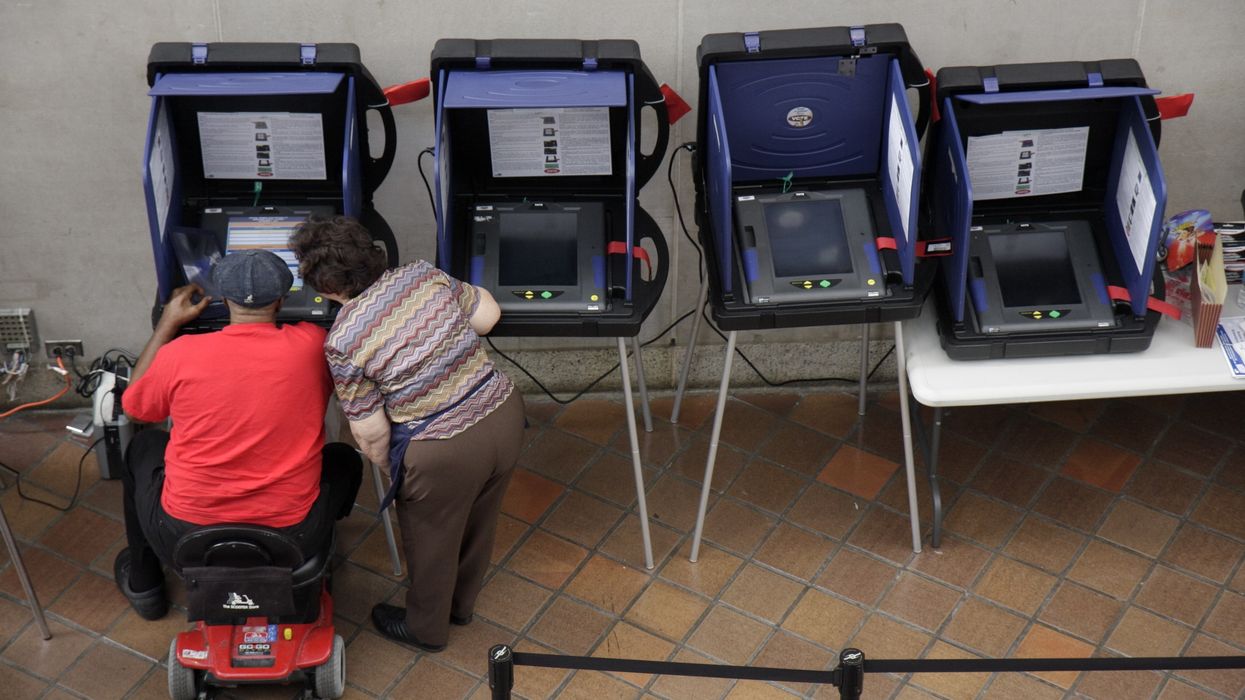
Our right to have a say in what comes next is on the line. We have an opportunity to demand a future that puts our families and caregivers first.
This country depends on caregivers, but too often it fails the very people holding our families and communities together. As we head into the midterms, we have the chance to make our voices heard on the policies that affect our lives and families’ futures.
A 2025 AARP and National Alliance for Caregiving survey found that 63 million Americans identify as caregivers—nearly 50% more than the decade prior. That’s millions of people raising children, caring for aging parents, supporting loved ones with disabilities, all while balancing that labor with jobs and bills of their own. Caregiver needs and experiences deserve to be represented in the decisions we make at the ballot box.
Both of us are parents (one of us is a mother to six beautiful children and leads an advocacy organization and the other is a father and maternal health advocate).
Caregivers deserve a voice in the decisions that shape our lives, but exercising that right can be difficult when we’re already stretched thin.
We understand personally and professionally that the burden of caregiving is not shared equally, that mamas are expected to do more with less. There is an absolute need for fathers to do more as engaged parents. Black mamas make up nearly 40% of caregivers in the US. Yet, Black women continue to die from pregnancy-related causes at three times the rate of our white counterparts. When mothers lack support, the whole family feels it.
These inequities are not inevitable. They reflect decisions about whose health, time, and communities our systems prioritize—and whose needs are overlooked. Those priorities are shaped by the people we elect as leaders and the policies they enact.
As we head into the midterm elections, we cannot afford to let confusion, misinformation, or intimidation efforts stop us from making our voices heard. For parents and caregivers, these are not abstract policy fights. They are about whether we have a say in the decisions that determine our access to affordable childcare, quality healthcare, and the support we deserve.
That’s what we mean when we say care is on the ballot this November. Our right to have a say in what comes next is on the line. We have an opportunity to demand a future that puts our families and caregivers first.
Care is about more than what happens in a doctor’s office. It is whether we can afford groceries, find childcare, and take time off for a sick loved one. It is whether moms receive support before, during, and after pregnancy, and whether dads have the resources to be the parents they want to be. And it is whether our children have the tools they need to not only survive, but thrive.
From pregnancy through postpartum, care should be full-spectrum, comprehensive, and supportive. It should protect maternal health, provide direct cash during and after pregnancy, offer support to fathers, and help care for our kids while we work to put food on the table.
Caregivers deserve a voice in the decisions that shape our lives, but exercising that right can be difficult when we’re already stretched thin. We should not have to navigate a maze just to exercise our right to vote while juggling the demands of caring for our families. And we cannot hold elected officials accountable if we are shut out of the process.
Yet, changing voting rules are making it harder to understand when, where, and how to cast a ballot. From new mail-in voting shifts and voter ID requirements to redistricting efforts and the gutting of federal protections under the Voting Rights Act, these changes create additional uncertainty for busy families and caregivers—especially Black voters and other historically marginalized communities who have long faced barriers to the ballot. We cannot allow these barriers to deepen or history to repeat itself.
Every eligible voter deserves to cast a ballot free from intimidation, with confidence that their vote is private, and that their voice will be counted. Our democracy works best when everyone has a free and fair chance to participate.
Moms and dads alike know what it takes to care for what matters. Now is the time to bring the same determination to the ballot box.

Today, we must stand shoulder to shoulder, in unity, to defeat the oligarchs and fascists and preserve all that is great about America!
On November 8, 1932, Franklin Roosevelt won an unprecedented landslide victory over President Herbert Hoover; and Democrats won massive majorities in both houses of congress.
Two days earlier, on November 6, 1932, the Nazi Party failed to win a majority of seats in the German parliamentary elections, performing more poorly than the previous election in June, which also resulted in a hung parliament. In both elections, the left, center-left, and center parties, all of which opposed the Nazis, won enough seats to form a government, but they refused to enter into a coalition. New elections were called for March 1933. The Reichstag burned down on February 27. We all know what followed
Today—November 3, 2026—we cannot, we must not, make the same mistake the German people made in 1932 when the opposition divided and the Nazis ascended. We must act again as Americans did on election day 1932 when our love for democracy and its institutions generated a landslide! That result produced the most popular administration in American history, one that unapologetically served the interests of working people and proceeded to marginalize reactionary politics in America and crush fascism around the world.
If anyone believes these kleptocrats have any interest in supporting a broadly middle class society, like the one developed in post-WWII America, they are either willfully naïve, stone cold stupid, or on the take.
Yes, it’s true that between progressives and moderate Democrats, independents and ethical conservatives, we have our differences and they are not insignificant—but we are bonded by our support for our constitutional democratic republic.
Today, we must stand shoulder to shoulder, in unity, to defeat the oligarchs and fascists and preserve all that is great about America!
I am loathe to compare anything to Hitler and the Nazis, but the historical proximity of those two elections 96 years ago reveals, in stark relief, the importance of Americans reaffirming our commitment to democracy—and how much better the country and the world will be afterwards.
Indeed, it is not only the maintenance of popular sovereignty, in the land that launched the age of democracy, that is on the line. Also at stake is any possibility of our country returning to an economic social contract that serves the vast majority of the population. According to all polling, the return of an economy that prioritizes the interest of average middle class households is the deepest wish of the American people—and has been since the collapse of the housing market, and the great recession that followed, in 2008.
As bad as American wealth inequality was by 2024, we’ve never seen anything like the past two years. While most Americans struggle to get by, not only have unimaginable fortunes been accrued by the country’s billionaires, but a notable subset of this tiny fraction of the population have become part of President Donald Trump’s inner circle—and are shamelessly wielding political power in their own interests.
If anyone believes these kleptocrats have any interest in supporting a broadly middle class society, like the one developed in post-WWII America, they are either willfully naïve, stone cold stupid, or on the take.
Tuesday is likely our last opportunity to check their power; and begin, through democratic means, to build an economy for all the people.
Fortunately, the signs are promising. Early voting has shattered previous records. Just one more day of non-stop GOTV efforts, followed by 60 days of legal vigilance (until the new Congress is seated)—then we begin to make things right!
* * * * *
One final thought, on a theme I will return to after the elections.
For all non-progressives reading this (and for progressives, please share this with your non-progressive friends), understand that the contemporary progressive movement is not anything radically exotic or unfamiliar on the American landscape.
As mentioned above, progressives were behind the most popular administration in our history, we also designed the economic policies in the era of America’s greatest prosperity, and we ran the country during our greatest military triumph (WWII).
Just like then, we simply want a free and just America that works for all people. As during the “golden era” of post-war America, we want to live in a prosperous society with unlimited possibilities—with the one caveat that, going forward, those opportunities must be extended equally to all people.
Because these are our convictions, we support a set of policies with a proven track record to deliver these society-wide outcomes. They worked previously in America and are still succeeding around the world—and, with only a few tweaks and updates, we are superconfident they will work their magic again in 21st century America.
So, don’t be swayed by anyone who tries to make us sound scary or irresponsible. Give us a listen, and you’ll quickly realize that we are just like you. We want the same things, and we look forward to working together to achieve our shared goals.
The first step is winning big today! Onward!

The 2026 midterms are about more than congressional majorities; they are an opportunity for Americans to hold their representatives accountable and decide whether fear should remain an instrument of government.
The grandfather of the current president of the United States, Friedrich Trump, arrived penniless from Germany at the age of 16 in 1885. He worked as a barber in New York before heading west, eventually opening a restaurant in a mining town. Like so many immigrant stories, his is unremarkable in one sense, and quintessentially American in another. It reminds us that history often looks different when viewed from a distance.
Today, however, history is being written in real time. And the images now emerging from the United States tell a troubling story.
Across many American cities, armed and masked Immigration and Customs Enforcement (ICE) agents are conducting highly visible raids. Videos show people being detained in the streets, families disrupted, and communities thrown into fear. Other footage captures American citizens confronting federal agents in their own neighborhoods amid tear gas, pepper spray, and rubber bullets. These scenes dominated evening news broadcasts not only in the United States, but in Europe and elsewhere. Footage related to the fatal shootings in Minneapolis spread globally. Now, California’s Central Valley faces raids and accusations of voter intimidation ahead of Tuesday’s elections. They project an image of a nation in distress, one in which fear appears to be overtaking everything.
The nation’s greatness has always rested on the idea that people from every corner of the world came here to live under the same laws, to contribute, to succeed, and—eventually—to become citizens.
Some of these encounters raise serious constitutional questions. When force is used during immigration enforcement actions, concerns arise about the Fourth Amendment’s protections against unreasonable searches and seizures, the Fifth Amendment’s guarantee of due process, and the First Amendment rights of citizens who protest in public spaces. These are not abstract legal matters. They go to the heart of what it means to live under a constitutional democracy.
Why are so many people willing to stand in the streets to protect their neighbors? Because those neighbors are deeply woven into the fabric of American life. Undocumented immigrants often perform jobs that others are unwilling to take: picking apples, tending livestock, washing dishes, cleaning hospitals, and caring for the elderly. They work hard, pay taxes, and spend money in local economies. Economist Paul Krugman has noted that immigrants played a critical role in stabilizing the US economy after the pandemic, continuing essential work when much of the country shut down. Have we already forgotten that?
Most Americans either descended from immigrants who once lacked legal status or know family stories that began that way. This country has always been a mosaic of people who arrived with little, worked relentlessly, and eventually earned not only stability but admiration. They learned to love this land. Many still feel a surge of pride when they hear the national anthem or see the Stars and Stripes.
That is why what is happening now should concern all of us. Fear is spreading through immigrant neighborhoods—fear of going to work, going shopping, seeing a doctor, even answering the door. Parents worry about what will happen to their children. Communities are learning to live with the anxiety that a knock at dawn could change everything.
History teaches us that when societies normalize fear directed at a particular group, the consequences are rarely confined to that group alone. The United States has long defined itself by its rejection of such thinking. Dystopian novels were not written as instruction manuals, but as warnings to recognize the early signs of authoritarian drift and stop it.
As America celebrates the ongoing 250th anniversary year, it should be recommitting itself to the ideals articulated in 1776: liberty, dignity, and equal protection under the law. The nation’s greatness has always rested on the idea that people from every corner of the world came here to live under the same laws, to contribute, to succeed, and—eventually—to become citizens.
Thus, America must find the courage to honor its own history. That means recognizing the contributions of immigrants, including undocumented ones; rejecting policies that force people into hiding like thousands of Anne Franks; and pursuing reforms that help them obtain citizenship and integrate them into civic life. In doing so, the nation would not only honor its founding principles, but also the generations of immigrants—like Friedrich Trump—who believed in America enough to come here with nothing and help build it.
The 2026 midterms are about more than congressional majorities. They are an opportunity for Americans to hold their representatives accountable and decide whether fear should remain an instrument of government. They offer Americans an opportunity to remember those who made America their home but now live in constant fear.
After all, a president may wear many hats—or, in Trump’s case, many MAGA baseball caps—but no president should forget that his own family has an immigrant past. And that includes immigrant brides. How America treats immigrants ultimately reflects what kind of country it chooses to be. It is hubris to treat immigrants badly.

Our students deserve so much better than the chaos the legislature has thrown at our public schools. It’s vital that communities across New Hampshire vote no on the tax cap on November 3.
On Election Day, New Hampshire residents will face a ballot initiative that aims to place a tax cap on every public school district in the state. Similar proposals to cap property taxes or eliminate them for certain property owners are on the ballots this November in multiple states. But regardless of where the initiatives are being considered, if successful, the financial consequences will threaten school sports, extracurriculars, and even basic academic programming statewide. In the case of New Hampshire, the consequences will be especially negative to schools, families, and children.
At least since the Covid-19 pandemic, New Hampshire school districts have struggled to stay afloat. In September 2026, the town of Milton, New Hampshire was shocked by revelations of a $2.5 million hole in its school district’s budget. Nearby, the Farmington School District was forced to reduce teaching positions in the 2025-2026 school year due to a growing budget deficit. In the western part of the state, Claremont schools cut teaching positions and students washed cars to raise funds. At the same time, New Hampshire launched a universal voucher program to the tune of $102 million, sending a record amount of public money to private schools.
Historically, New Hampshire has largely left local communities to fund public schools on their own. In the 2024-2025 academic year, according to data from the National Education Association, New Hampshire ranked 50th in the share of state revenue contributed to public schools, at 28%. While some argue that New Hampshire has maintained level funding in real tax dollars, the state has simply not made budget increases on pace with rising costs, leaving local taxpayers holding the bill.
The new approach intrudes on that time-honored process of collective decision-making through deliberation. Instead, it places school funding into the hyper-partisan environment of the midterms.
In 2026, a superior court ruled the state had not been fulfilling its constitutional responsibility to provide adequate funding to public schools. New Hampshire Attorney General John Formella is appealing the case to the state’s supreme court, where he is also attempting to overturn the landmark 1993 case that established the state’s responsibility to provide fair funding to all public schools.
In this context, a local tax cap for schools would be detrimental for students and communities in general. While New Hampshire does not allow for statewide referendums on its ballots, legislators supporting the tax cap circumvented this with clever legislation. In 2025, Republican Gov. Kelly Ayotte signed HB 1300 into law, a measure that automatically places a tax cap question on the ballot of every municipality in the state in 2026 and in 2028.
The ballot measure was challenged on multiple fronts in court, including on the lack of clear constitutional standing and on account of being difficult to understand. The state supreme court, which has been plagued by scandals—including the chief justice’s resignation in September over an ethics violation—ultimately rejected these challenges.
The tax cap will require a three-fifths approval of local voters to go into effect. If enacted, it would limit local control of the schools with a tax cap that is linked to the Consumer Price Index (CPI), which, by nature of being tied to non-salary costs, is unpredictable on a year-to-year basis and can easily be outpaced by school costs, especially with rising fuel prices. It would also impose a limit on administrative spending as a proportion of the total school budget.
The effort to institute a tax cap defies New Hampshire’s long history of local control. It’s a tradition that brings residents of towns across the state together for town halls each spring, where school budgets are debated publicly. The process honors the citizens’ right to petition and write warrant articles that meet the specific needs of the locality, including placing limits on spending, if that is the collective will of the people. The new approach intrudes on that time-honored process of collective decision-making through deliberation. Instead, it places school funding into the hyper-partisan environment of the midterms.
Marianne Doane, who has taught in Milton for more than 40 years, is dedicated to its youth. As the president of the local teachers association, Doane has worked across differences to build support for her students and their education. She has organized babysitting services during town meetings to help provide childcare for parents who otherwise might not be able to participate. She has encouraged families to vote by sponsoring civic engagement programming for children outside of polling places. One year, she facilitated an activity for kids to design “I Voted” stickers and handed them out at the polls. In an interview, Doane shakes her head in disbelief about the tenuous position of the schools in her small town.
“Right now if the tax cap passes, the oil bill is $51,000 and the anticipated budget for special education is $500,000,” she says. “In order to come up with that amount, we are looking at losing 12 teachers. We only have 12 teachers at the elementary school. Who’s going to be left to teach?”
Down the road in Farmington, school administrator and veteran classroom teacher Kimberly McGlinchey is running for state representative. Her campaign is centered on defending public schools and addressing the school funding crisis. The district she seeks to represent is split between two towns as part of a legislative gerrymander.
Undeterred by the challenges of running a school and running for office, McGlinchey is clear-eyed about what the tax cap will mean for students.
“The problem with the school property tax cap is it does not consider local needs,” McGlinchey tells The Progressive. “The inflation rate of fuel, food, and materials has increased far more than the CPI. This means there will be a direct impact on programming and staffing that affects student learning and instruction, depleting the quality of New Hampshire students’ education. Limiting the funds without proper budgeting in relationship to needs will ultimately leave schools shortchanged.” McGlinchey has taken this message to the streets, most recently at the town center.
Some communities, like the town of Franklin, New Hampshire, have had tax caps in place for decades. Franklin teacher and union leader Jennifer Weaver says the town struggles to recruit and retain teachers, adding another burden to the long-term staff.
“We’ve been under a tax cap since the 1980s,” Weaver says. “Our [current] tax cap is strangling our community and school.”
Weaver’s warning about the harm of tax caps must be heeded before it’s too late. It’s all part of a multipronged attack against public schools over the last six years that includes the expansion of school voucher programs that funnel public money to private schools.
Our students deserve so much better than the chaos the legislature has thrown at our public schools. It’s vital that communities across New Hampshire vote no on the tax cap on November 3, and learn more about the systematic effort underway to erode public education.